Archive for the ‘Space News’ Category

Credit: National Geographic

For those local to the Boulder, Colorado area, I hope you can take part in my presentation at the Chautauqua Community House this Wednesday, January 16 with doors open at 6:30 PM; Showtime: 7:00 PM.

Are we at a crossroad in exploring the space frontier? Are we opting out as a nation – to build upon a legacy of sending humans and robots to delve into the mysteries of our solar system and beyond? Since the “Space Race” of the 1960’s, the portrait of space exploration has changed – one that is now a growing commercial and government endeavor. Still, the diplomatic value of pushing the boundaries of discovery in space is one that many nations are now pursuing.

Join me, Leonard David, space journalist, reporting on the future of the global space exploration program for more than five decades. I’ll be discussing what the next decade may hold around the world for space exploration – in low Earth orbit, the Moon, Mars… and beyond!

Space race rivals: Soviet Union’s Premier
Nikita Khrushchev with U.S. President, John F. Kennedy.
Credit: Kennedy Library

Credit: Jemal Countess/Getty Images for National Geographic Channel

About the Speaker

Leonard David is author of the highly-acclaimed National Geographic Society’s 2016 book: Mars – Our Future on the Red Planet. He is also co-author with Apollo 11’s Buzz Aldrin of Mission to Mars – My Vision for Space Exploration released in 2013 and also published by the National Geographic Society.

Leonard’s new book — Moon Rush – The New Space Race — will be published by National Geographic in May.


For more information go to:

Special Invite to Colorado Space Community: The Future of Moon and Mars Exploration

The State Council Information Office of China (SCIO) has held a press conference to discuss the January 3 landing of the country’s Chang’e-4 farside mission.
Credit: CNSA/CLEP


The State Council Information Office of China (SCIO) held a press conference to discuss the January 3 landing of the country’s Chang’e-4 farside mission.

Discussed at the January 14 event were future Moon exploration plans by China, particularly the launch by year’s end of the Chang’e-5 mission to bring lunar samples back to Earth.

China’s next Moon exploration phase: Sample return from the Moon.
Credit: CCTV/Screengrab/Inside Outer Space

Subsequent projects

“Experts are still discussing and verifying the feasibility of subsequent projects, but it’s confirmed that there will be another three missions after Chang’e-5,” said Wu Yanhua, deputy head of the China National Space Administration (CNSA) at the press briefing.

According to Wu, the Chang’e-6 mission will be designed to bring samples back from the South Pole of the Moon. “Whether the probe will land on the nearside or the farside of the Moon, we will make the decision according to the performance of Chang’e-5,” he said.

As reported by the state-run Xinhua news agency, the Chang’e-7 mission will carry out comprehensive surveys around the South Pole, including studying terrain and landform, physical composition as well as the space environment in the region.

Apollo 15 image captures landing locale of China’s Chang’e-5 Moon lander – the Mons Rümker region in the northern part of Oceanus Procellarum.
Credit: NASA

Science, research base

The Chang’e-8 mission, in addition to scientific surveys and experiments, will test key technologies to lay the groundwork for the construction of a science and research base on the Moon, Xinhua reported.

China, the United States, Russia and some European countries all want to try out technologies needed for such a scientific lunar base. “For example, can we build houses on the moon with lunar soil using 3D printing technology?” Wu said.

The European Space Agency is exploring 3D printing of habitats and other structures on the Moon.
Credit: RegoLight, visualization: Liquifer Systems Group, 2018

“We hope that Chang’e-8 will help test some technologies, and do some exploring for the building of a joint lunar base shared by multiple countries,” Wu said.

Rover challenges

In a related Xinhua news story, Chinese space experts at the SCIO press briefing noted that China’s second lunar rover — Yutu-2 (Jade Rabbit-2 — will face great challenges in its survey of the Von Karman Crater landscape in the South Pole-Aitken (SPA) Basin on the Moon’s farside.

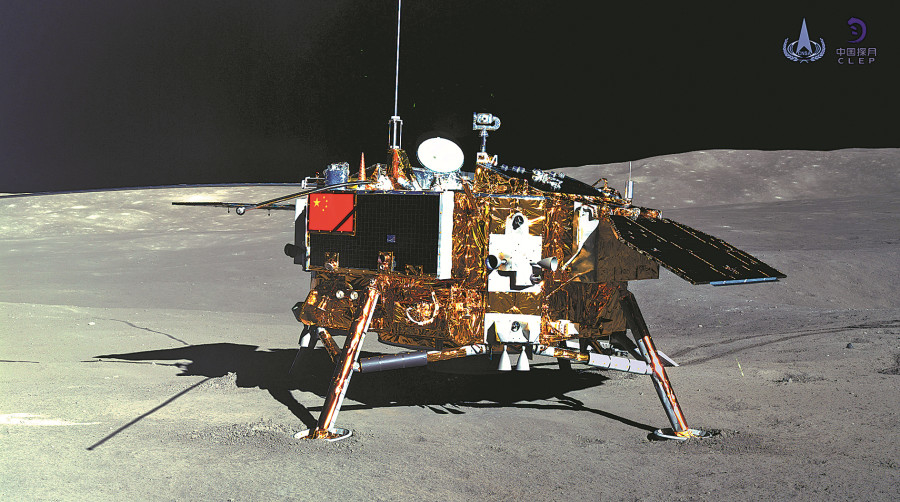
Yutu-2 rover as imaged by Chang’e-4 lander.
Credit: CNSA/CLEP

“From the images sent back from Chang’e-4, we can see the area surrounding the probe is dotted with craters of different sizes, and it’s very difficult for the rover to drive in the region,” Sun Zezhou, chief designer of the Chang’e-4 probe, explained.

“We’ll try to find the relatively safe areas and make a reasonable plan for the route of the rover based on the images taken by it,” Sun said, adding “we haven’t found any insurmountable obstacle in the region.”

Science phase

The Chang’e-4 mission is equipped with 13 payloads, including four scientific payloads jointly developed by scientists from the Netherlands, Germany, Sweden, Saudi Arabia and China.

Wu Weiren, general designer of China’s lunar exploration program, said that three major aspects will be carried out by Chang’e-4 probe as the mission transfers from commission phase to scientific exploration phase.

First is exploring the topography of the landing area and carrying out a geological profile of the farside. The second, Wu said, is primarily about the space environment around the Moon, including the impact of cosmic radiation, solar radiation and solar flare explosion on the lunar space. And the third is the study of the material composition of the lunar landscape.

The Chang’e-4 lander and Yutu-2 rover have entered lunar night. The rover will be reactivated after 14 days when the Moon enters daytime.

Wu Weiren, general designer of China’s lunar exploration program.
Credit: SCIO

U.S.-China cooperation?

Meanwhile, China Daily reports that former NASA chief, Charles Bolden, said that Congressional prohibitions on space cooperation with China-as stipulated by the 2011 Wolf Amendment to NASA appropriations bills-is a “significant legal constraint” and “hindrance” that should be relaxed or reversed, Bolden said.

“I’m incredibly optimistic. I just think cooler heads will prevail,” Bolden said in an exclusive interview, according to China Daily.

A former astronaut, Bolden ran the U.S. space agency from July 2009 to January 2017.

Open airlock for China on the International Space Station?
Credit: Roscosmos

Remove restriction

“If this administration went to the Congress and said, ‘Look, we want to relax the stipulations on the Wolf Amendment’ or ‘We want to eliminate the Wolf Amendment’, it could get passed in a heartbeat, and that would remove the restriction and we’d be able to collaborate in human spaceflight,” Bolden was reported as stating.

“My firm belief is that we should integrate China into the International Space Station program. It doesn’t have a lot of time left,” Bolden said, referring to the planned retirement of the ISS in a few years. That would help China “avoid some of the mistakes that were made with building the International Space Station,” he said in the China Daily story.

To view the SCIO press briefing, go to:

https://www.youtube.com/watch?v=v7FiaHwv-BI


Chang’e-4 lander and Yutu-2 rover. Images of each other taken by the respective machinery.
Credit: CNAS/CLEP

China’s Chang’e-4 lander/rover is about to be cold-soaked, as darkness falls on the Von Kármán crater landing site.

On January 3, the probe softly touched down on the South Pole’s Aitken Basin on the farside of the Moon.

China’s Xinhua news agency reports that the farside Moon mission is equipped to measure the moody Moon swings of temperatures. The lunar day equals 14 days on Earth, and a lunar night is the same length.

Sleep mode

“Without our own data about lunar temperatures, we don’t know how cold a lunar night can actually be,” Zhang He, executive director of the Chang’e-4 probe project from the China Academy of Space Technology (CAST) told Xinhua.

Tan Mei, a Chang’e-4 consultant from CAST, said the lander will switch to a “sleep mode” during the lunar night due to the lack of solar power, and rely on a radioisotope heat source to maintain warmth. This power supply is the product of collaboration between Chinese and Russian scientists.

“We need to transform heat into power to run the thermometry to measure the temperatures of the lunar surface at night,” Tan said.

Moon Control room.
Credit: CCTV/Screengrab/Inside Outer Space

Data collectors

The lander is equipped with dozens of temperature data collectors, and the data they collect at night will be transmitted after the probe is wakened during the Moon’s daytime, said Li Fei, a designer of the lander from CAST.

As reported by Xinhua, Sun Zezhou, the chief designer of the Chang’e-4 probe from CAST, said the probe will get first-hand data by directly measuring the temperatures of the lunar soil, probe’s surface, and its key interior equipment during the lunar night.

Used for the first time in a Chinese spacecraft, the isotope thermoelectric generation technology on Chang’e-4 is a prototype for future deep-space explorations, Sun said.

Queqiao relay spacecraft is in a halo orbit around the second Lagrangian (L2) point of the Earth-Moon system, utilized to set up a communication link between the Earth and the Moon’s farside. Credit: CCTV/Screengrab/Inside Outer Space

In 2013, China launched Chang’e-3, the country’s first spacecraft to soft-land on the moon. The scientific instruments on its lander are still operating after more than 60 lunar nights in the past five years.

Relay link

In May of last year, China sent a relay satellite, named Queqiao, meaning Magpie Bridge, to the halo orbit around the second Lagrangian (L2) point of the Earth-Moon system to set up a communication link between the Earth and the Moon’s farside. It is the first communication satellite operating in that orbit.

According to Xinhua, Chinese space experts hope Queqiao will be able to assist other countries that intend to send probes to the farside of the Moon within the relay spacecraft’s life span.

China’s lunar exploration will continue with Chang’e–5, which is expected to bring samples of lunar soil back to Earth.

Courtesy of New China TV, posted on January 13, watch this video about the Chang’e-4 mission and outreach to other nations:

https://youtu.be/ItqM0WEvmLw

Chang’e-4 lander on Moon’s farside. Image taken by Yutu-2 rover. Credit: CNSA/CLEP

China’s Chang’e-4 farside mission toted to the Moon a unique biological experiment.

China Global Television Network (CGTN) reports that a team of scientists from Chongqing University developed a small biological payload that’s aboard the Chang’e-4 lander.

This small tin weighs less than 7 pounds (3 kilograms) and carries seeds of cotton, potato, Arabidopsis, rapeseed, fruit fly pupa and yeast.

Micro-ecosystem carried to Moon’s farside aboard China’s Chang’e-4 lunar lander.
Credit: Chongqing University

Micro-ecosystem

Professor Xie Gengxin is the Chief Designer of this biological experiment payload on the Chang’e-4. He told CGTN that there are animal, plants and microorganisms in this payload, creating a micro-ecosystem. They used a light pipe to guide the sunlight inside the tin, they will study their photosynthesis under strong sunlight.

The lunar environment features low gravity, bright sunlight and radiation. Professor Xie says the water inside the payload has been released, and the seeds will soon sprout.

To better understand how plants and animals grow in different environments, researchers have set up two identical payloads which start simultaneously: One on Earth, one on the Moon.

Growth data

Professor Xie says one of the key challenges is to control and adjust the temperature within such a small area. They have tried many new materials and technologies. Researchers from Chongqing University are now monitoring the growth data 24 hours a day, and recording the latest condition accordingly. Since 2015, researchers and scientists from Chongqing University have brought this project from idea to reality.

Liu Hanlong, the Vice President of Chongqing University told CGTN that this biological experiment payload was chosen from almost 300 projects nationwide. Professors and researchers from Chongqing led the way, but they also cooperated with researchers from over 20 domestic institutes and universities.

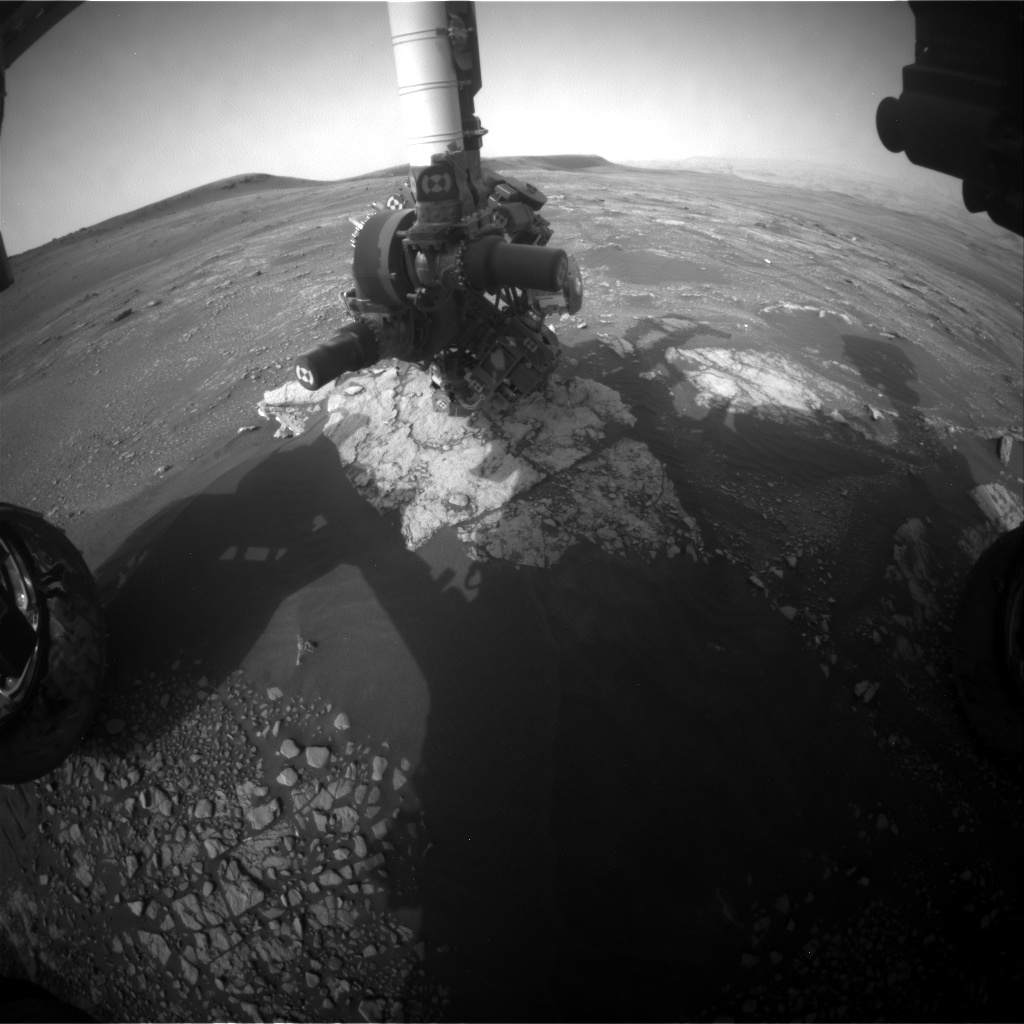
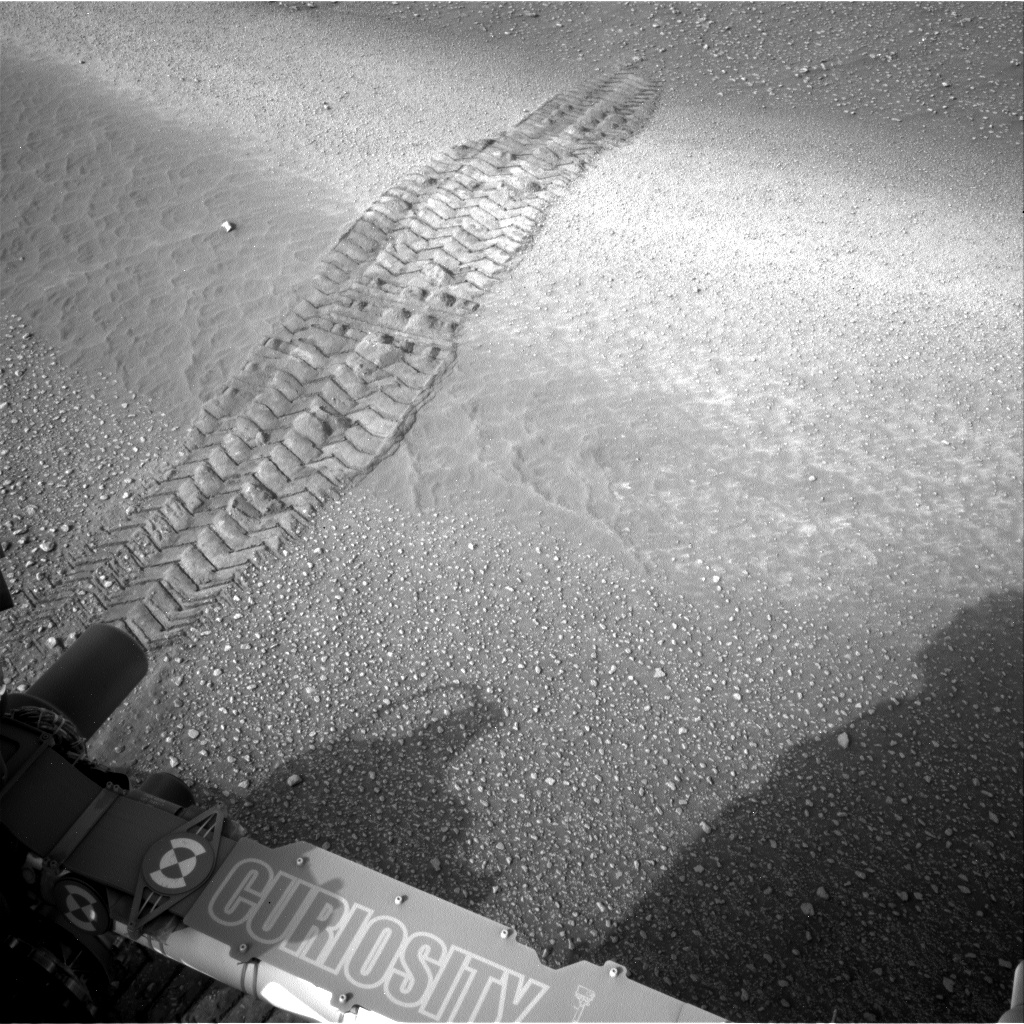
Curiosity Front Hazcam Left A image taken on Sol 2288, January 13, 2019.
Credit: NASA/JPL-Caltech

NASA’s Curiosity Mars rover has just begun Sol 2289 activities.

Reports Susanne Schwenzer, a planetary geologist at the Open University; Milton Keynes, the U.K.: “We will soon be leaving the Rock Hall area, thus this one last look at the drill site from a hazard camera perspective. Seeing those holes always is special, even for #19!”

Front Hazcam Left A image taken on Sol 2288, January 12, 2019.
Credit: NASA/JPL-Caltech

Rock powder dumping

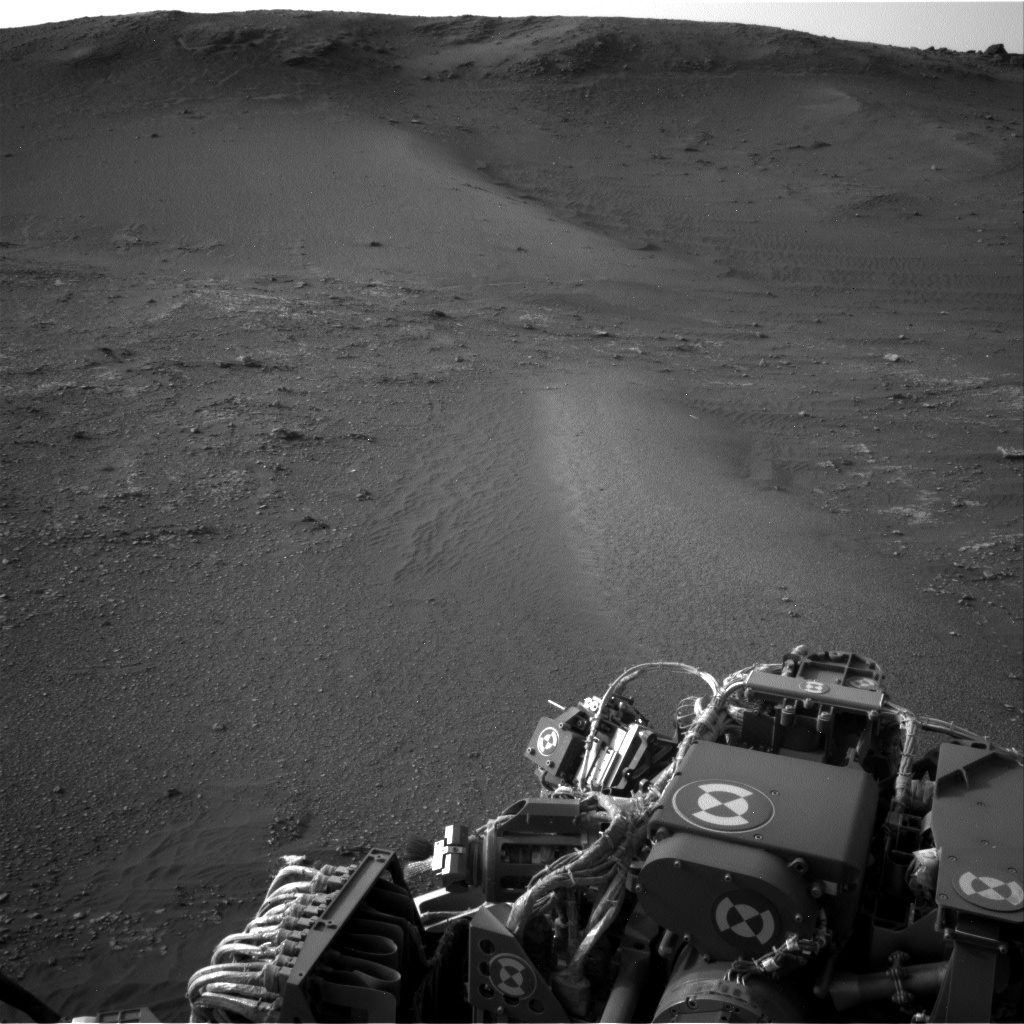
Curiosity Navcam Left A image acquired on Sol 2288, January 13, 2019.
Credit: NASA/JPL-Caltech

In recent planning, the rover was slated to dump the remaining rock powder from the drill and investigate it with all instruments, starting with the Alpha Particle X-Ray Spectrometer (APXS).

Schwenzer notes that Sol 2288 plans included a range of environmental investigations, with a dedicated morning science block on sol 2288 to a passive sky observation and a Mastcam tau to see how the dust loading in the atmosphere is changing.

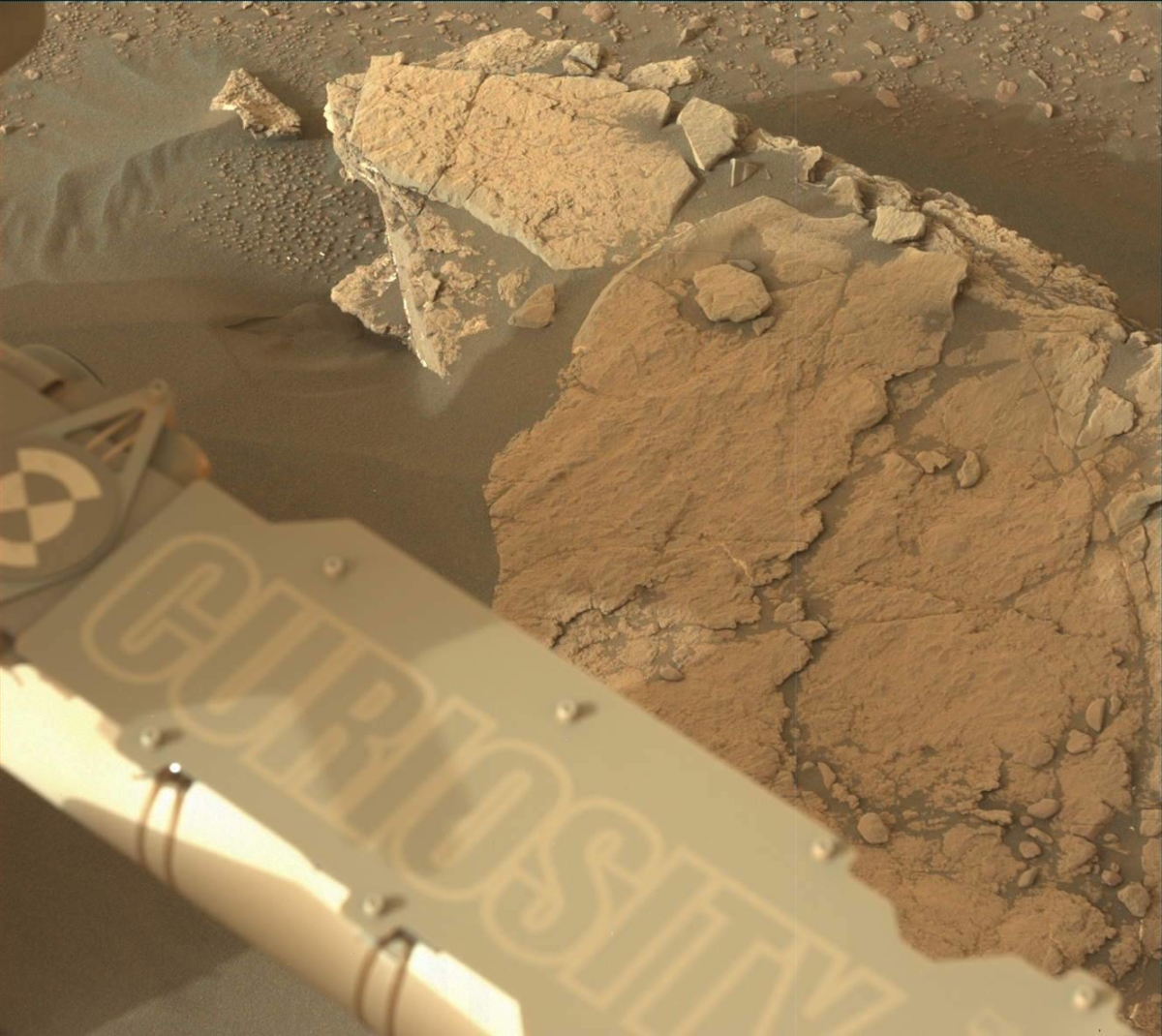
Curiosity Mars Hand Lens Image (MAHLI) photo produced on Sol 2288, January 13, 2019. MAHLI is located on the turret at the end of the rover’s robotic arm.
Credit: NASA/JPL-Caltech/MSSS

Bedrock observations

The science block of sol 2289 is dedicated to spectral analysis of the dump pile with Chemistry and Camera (ChemCam) passive and Mastcam multispectral investigations.

ChemCam is holding off on its active Laser-Induced Breakdown Spectrometer (LIBS) observations of the dump pile until scientists know that APXS and the spectral analysis completed successfully. Thus there are two bedrock observations in the sol 2290 plan: the targets are Dufftown and Lairg.

Curiosity ChemCam Remote Micro-Imager photo taken on Sol 2287, January 12, 2019.
Credit: NASA/JPL-Caltech/LANL

Curiosity Mastcam Right image acquired on Sol 2287, January 12, 2019.
Credit: NASA/JPL-Caltech/MSSS

“Both will be investigated with 10-point rasters to further capture the bedrock variability we have been seeing,” Schwenzer adds. “Monday’s plan will be the last one at Rock Hall before we start our descent of the ridge and into the clay unit. I am excited to explore the new terrain, and so is the entire team!”

Credit: NASA/JPL-Caltech

Credit: NASA/JPL-Caltech

Credit: NASA/JPL-Caltech

Credit: NASA/JPL-Caltech


Artist concept showing the protective role of the wind and thermal shield (WTS) at the martian surface.
Credit: IPGP/David Ducros


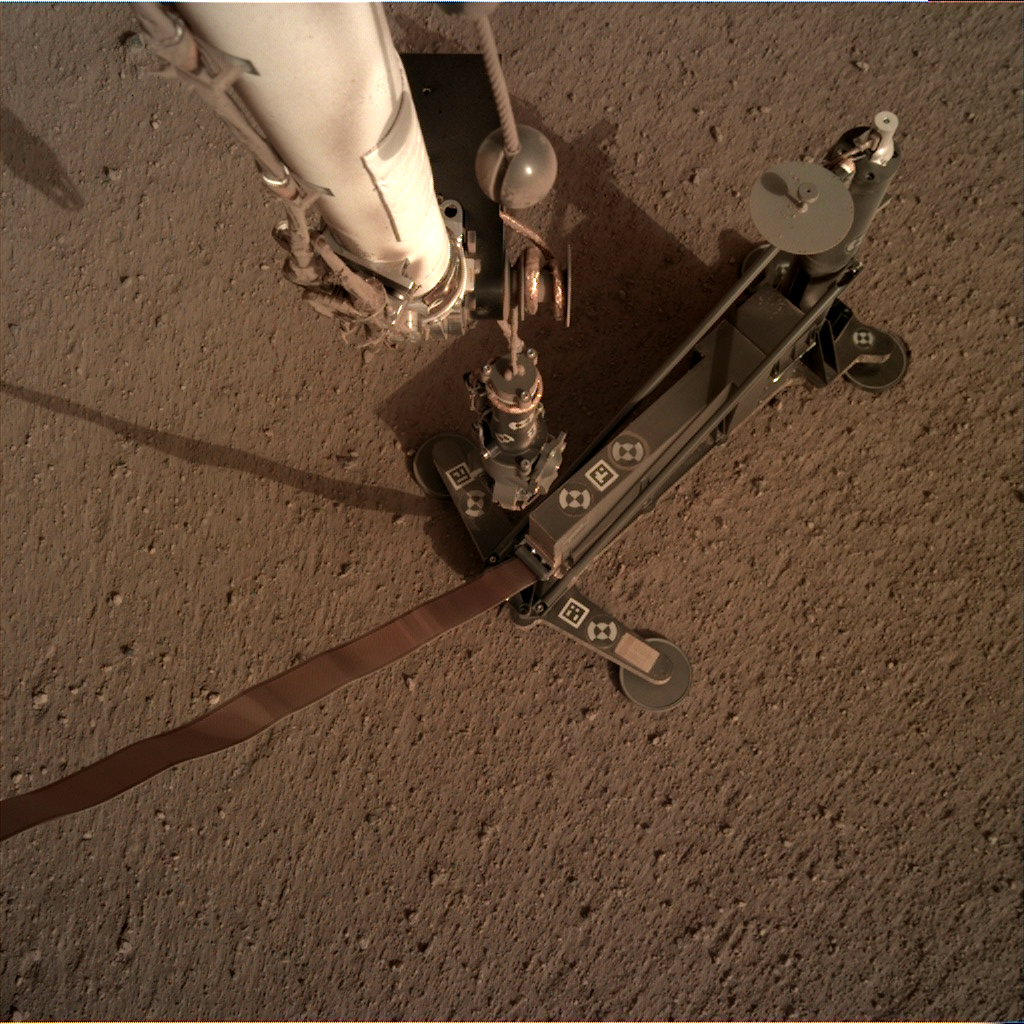
Now in Sol 46, NASA’s InSight Mars lander acquired these images on January 13 using its robotic arm-mounted, Instrument Deployment Camera (IDC).

Operators will soon make use of the five mechanical fingers of the grapple to pick up the Wind and Thermal Shield, placing it on top of the Seismic Experiment for Interior Structure (SEIS) now in position on the surface of Mars.

Insight’s robotic arm will also deploy the heat flow probe – a mole that burrows 16 feet (five meters) into the ground. That’s deeper than any instrument that has ever been to Mars.

The grapple fingers close around a handle that resembles a ball on top of a stem. Each of the three items the arm will lift has one of these handles.


Credit: NASA/GSFC/Arizona State University/CNSA/CLEP

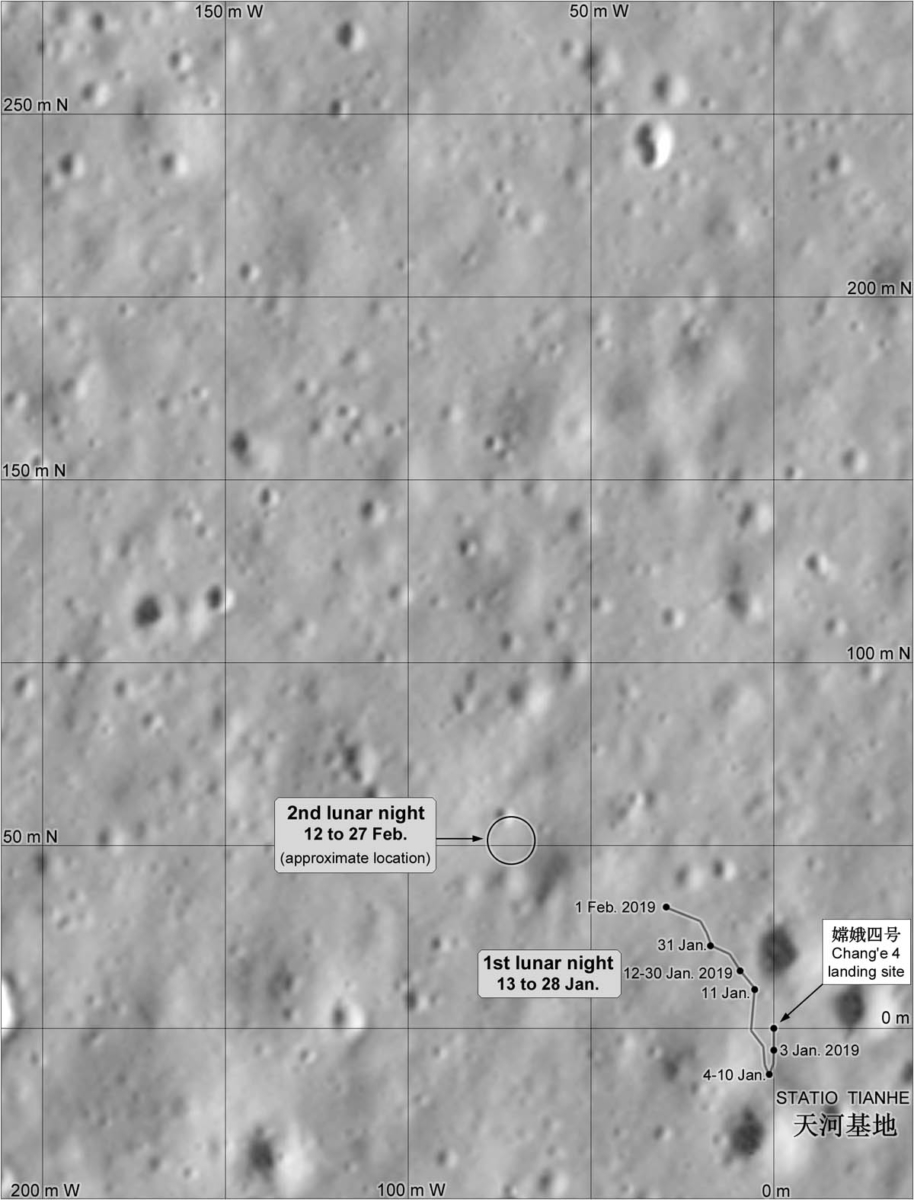
NASA Lunar Reconnaissance Orbiter (LRO) imagery has been used to further pinpoint the landing locale of China’s Chang’e-4 farside lander.

Looking at the just released Chang’e-4 descent frames to the surface made it easy to find the exact landing spot in a Narrow Angle Camera image produced by the Lunar Reconnaissance Orbiter Camera, or LROC. That image was taken prior to the Chang’e-4’s touchdown, explains Mark Robinson, the principal investigator of the LROC at Arizona State University in Tempe.

The LROC is a system of three cameras mounted on the Lunar Reconnaissance Orbiter that capture high resolution black and white images and moderate resolution multi-spectral images of the lunar surface.

A prominent crater, roughly 80 feet (25 meters) in diameter, is in front of the lander and can be seen in the LROC imagery, just below and to the left of the bottom arrow.
Credit: NASA/GSFC/Arizona State University

Prominent crater

China’s Chang’e-4 safely set down on the plains of Von Kármán crater last week, on January 3.

Soon thereafter a color image of the immediate surroundings was relayed back to the Earth from the farside.

In reviewing the imagery, Robinson says the prominent crater, roughly 80 feet (25 meters) in diameter, in front of the lander can be seen in the LROC imagery.

Toward the end of the month, LRO will be overflying the Von Kármán crater and may provide imagery of the lander and the Yutu-2 rover.

Future plans

Meanwhile, a senior Chinese space expert reports that China will deepen its lunar exploration plans, including establishing a scientific research station at the south polar region of the Moon.

Credit: China Central Television (CCTV)/China National Space Administration (CNSA)/Screengrab/Inside Outer Space

Wu Weiren, an academician of the Chinese Academy of Engineering and chief designer of China’s lunar exploration program, told China’s Xinhua news service that the country’s current lunar program includes three phases: orbiting, landing, and returning.

The first two phases have been accomplished, and the next step is to launch the Chang’e-5 probe to collect roughly four pounds (2 kilograms) of samples and bring them back to the Earth, Wu said.

“We are discussing and drawing up the plan for the fourth phase of the lunar exploration program, including missions to the polar regions of the Moon,” Wu added.

Research station

Next phase: sample return.
Credit: CCTV/Screengrab/Inside Outer Space

Some places at the south pole of the Moon receive sunlight for over 180 consecutive days, and some areas in craters there are never exposed to sunlight and might hold frozen water, scientists say.

“We hope to build a scientific research station in the south polar region of the Moon. It would be operated automatically and visited by people for short periods,” Wu envisioned.

According to Xinhua, a heavy-lift carrier rocket, with a takeoff weight of about 4,000 tons and a diameter of 10 meters, is a goal for 2030. It would help realize the aim of bringing Mars samples back to the Earth and sending Chinese astronauts to the Moon.

New videos

Zhang Hongbo, chief designer of Chang’e-4’s ground application system, explains Chang’e-4’s landing in the Von Karman Crater, located in the Aitken Basin, in the South Pole region on the far side of the Moon, on 3 January 2019, at 02:26 UTC (10:26 Beijing time).

Credit: China Central Television (CCTV)/China National Space Administration (CNSA)

The landing of the Chang’e-4 lunar mission seen from the onboard camera. Chang’e-4 (嫦娥四号) lander and the rover Yutu-2 (玉兔二号, Jade Rabbit-2) landed in the Von Karman Crater, located in the Aitken Basin, in the South Pole region on the far side of the Moon, on 3 January 2019, at 02:26 UTC (10:26 Beijing time).
Credit: China National Space Administration (CNSA)
Music: Lau Tzu Ehru by Doug Maxwell courtesy of YouTube Audio Library

Chang’e-4 lunar rover took panoramic photos of its landing site, the Von Karman Crater, located in the Aitken Basin, in the South Pole region on the far side of the Moon. Chang’e-4 (嫦娥四号) lunar mission, the lander and the rover Yutu-2 (玉兔二号, Jade Rabbit-2), landed in the crater on 3 January 2019, at 02:26 UTC (10:26 Beijing time). Communications with Earth are provided by the relay satellite Queqiao (鹊桥, Magpie Bridge).
Credit: China Central Television (CCTV)/China National Space Administration (CNSA)

Site-seeing

To explore more of the area around the Chang’e-4 landing site, go to LROC zoomify mode via:

http://lroc.sese.asu.edu/posts/1087

China National Space Administration (CNSA) has also released a video recording of the entire soft landing on the Moon’s farside by China’s Chang’e-4 probe.

Go to:

https://news.cgtn.com/news/3d3d774e7755544f31457a6333566d54/share_p.html

Also, go to this side by side video of the landings of Chang’e-3 (December 2013) and Chang’e-4 (January 3) by clicking image:

Chang’e-4 lander on Moon’s farside. Image taken by Yutu-2 rover. Credit: CNSA/CLEP

Image of China’s Yutu-2 lunar rover taken by Chang’e-4 lander.
Credit: CNSA/CLEP

Yutu-2 lunar rover, ready for exploration duties. Credit: CNSA/CLEP


Image credits: Chinese Academy of Sciences / Chinese Lunar Exploration Program / China National Space Administration (CNSA).


Chang’e-4 views its landing site, including the Yutu-2 rover just to the south, in the first panorama taken after landing, on  January 10, 2019.


Go to:

http://www.360cities.net/image/first-lunar-far-side-panorama-change-4

Chang’e-4 farside lander and Yutu-2 rover.
Credit: CNSA/CLEP

China’s CGTN has posted new imagery of China’s Chang’e-4 probe and its rover Yutu-2. The lunar twosome took photos of each other on Friday.

China’s Chang’e-4 landing image taken from video.
Credit: CNSA/CLEP


Chang’e-4 probe touched down at the preselected landing area at 177.6 degrees east longitude and 45.5 degrees south latitude in the Von Karman Crater in the South Pole-Aitken (SPA) Basin on the farside of the Moon on January 3, and the rover drove onto the lunar surface late that night.

At 4:47 p.m. BJT on Friday, the images of the lander and the rover appeared on a large screen at the Beijing Aerospace Control Center, showing the Chinese national flag on both the lander and the rover with the desolate landscape dotted with craters on the farside of the Moon as the background.

CGTN on January 11 offered a 45-minute special program on Chang’e-4, the farside of the Moon and lunar exploration.

Go to:

https://news.cgtn.com/news/3d557a4e304d545a326c4754/share_p.html

China National Space Administration (CNSA) has also released a video recording of the entire soft landing on the Moon’s farside by China’s Chang’e-4 probe.

Go to:

https://news.cgtn.com/news/3d3d774e7755544f31457a6333566d54/share_p.html


Image of China’s Yutu-2 lunar rover taken by Chang’e-4 lander.
Credit: CNSA/CLEP

Post-nap restart

The Yutu-2 restarted its exploration on Thursday after taking a “nap” as solar radiation raised the temperature on the lunar surface to over 100 degrees Centigrade.

The 360-degree panorama image was published by CNSA on Friday, pieced together from 80 photos taken by a camera on the lander, according to Li Chunlai, deputy director of the National Astronomical Observatories of China and commander-in-chief of the ground application system of Chang’e-4.

Rugged terrain

As reported by China’s Xinhua news service: “From the panorama, we could see the probe was surrounded by many small craters. It was really thrilling,” Li said.

Image of Chang’e-4 lander taken by Yutu-2 rover.
Credit: CNSA/CLEP

“One of the craters close to the rover Yutu-2 has a diameter of about 20 meters and a depth of about 4 meters. The rugged terrain will pose great challenges for planning the route of the rover,” Li said. “Compared with the landing site of the Chang’e-3, which was sent to the Sinus Iridum, or the Bay of Rainbows, on the Moon’s nearside, fewer rocks can be found in the area surrounding Chang’e-4, indicating the landing area of Chang’e-4 might be older.”

Avoiding obstacles

The CNSA released video of the landing process of the Chang’e-4, which was produced by processing more than 4,700 pictures taken by a camera on the landing craft. The video, lasting about 12 minutes, shows the lander adjusting its altitude, hovering and avoiding obstacles during the descent.

China’s first Moon lander, Chang’e-3, taken by Yutu-1 rover during 2013 nearside exploration.
Credit: CNSA/CLEP

“From the video, we can see more dust was thrown up when the Chang’e-4 touched down on the farside of the Moon compared with the landing of Chang’e-3, indicating that the lunar dust at the landing area of Chang’e-4 is thicker than the region where Chang’e-3 landed,” said Zhang Hongbo, chief designer of the ground application system of Chang’e-4, as reported by Xinhua.

“The thicker dust shows that the lunar regolith in the region has undergone longer space weathering, which also gives strong evidence of the region being older. We will conduct comparative research between the landing areas of Chang’e-3 and Chang’e-4,” Li said.


Artist’s concept of the New Horizons spacecraft encountering Pluto and its largest moon, Charon (foreground) in July 2015.
Credit: NASA/Johns Hopkins University Applied Physics Laboratory/Southwest Research Institute/Steve Gribben/Alex Parker


The Johns Hopkins University’s Applied Physics Laboratory issued impressive videos – “Summiting the Solar System” – that spotlights the voyage of NASA’s New Horizons spacecraft and the flyby a small Kuiper Belt Object known scientifically as 2014 MU69, but nicknamed “Ultima Thule.”

New Horizons Principal Investigator Alan Stern of Southwest Research Institute (SwRI), Boulder, CO., left, with print of a U.S. stamp with suggested update since the New Horizons spacecraft explored Pluto in July 2015.
Credit: NASA/Bill Ingalls

Ultima, four billion miles from Earth, is the most ancient and most distant world ever explored close up. It offers discoveries about the origin and evolution of our solar system.

Big passions, small team

But “Summiting” is much more than the story of a sophisticated, plutonium-fueled robotic spacecraft exploring far from the Sun.

The New Horizons mission is powered as much by the passions of a small team of humans—men and women, scientists and engineers—for whom pushing the frontiers of the known, climbing the very peaks of the possible, has been the dream of many decades.

Credit: Johns Hopkins University Applied Physics Laboratory/Southwest Research Institute (JHUAPL/SwRI)


Behind the scenes

“Summiting” goes behind the scenes of the most ambitious occultation campaigns ever mounted, as scientists deployed telescopes to Senegal and Colombia in 2018, and Argentina, South Africa and New Zealand in 2017, to glimpse Ultima as it passed in front of a star, and gathered data on the object’s size and orbit that has been essential to planning the flyby.


Mission scientists recall the astonishing scientific success of flying through the Pluto system in 2015, and use comparative planetology to show how Earth and Pluto are both amazingly different and—with glaciers, tall mountains, volcanoes and blue skies—awesomely similar.

Along for the ride

Appealing to all, “Summiting” brings viewers along for the ride of a lifetime as New Horizons pushes past Pluto and braves an even more hazardous unknown.

These videos were produced by Geoff Haines Stiles of Geoff Haines Stiles Productions (GHSPi) and can be found here at:

https://www.youtube.com/watch?v=gLjgJKIFzOQ

https://www.youtube.com/watch?v=FjTuzrI07qY

Yutu-2 lunar rover, ready for exploration duties. Credit: CNSA/CLEP


China’s Yutu-2 lunar rover has been reactivated on Thursday, following a planned “nap,” reports China’s Global Television Network, or CGTN.

“China’s space engineers care about the reactivation as the last model [Yutu-1] failed its first awakening in February 2014,” CGTN said.

Safe on the farside, Chang’e 4 set down somewhere in this NASA Lunar Reconnaissance Orbiter LROC image obtained July 17, 2010. The lines connect craters seen in the Chang’e 4 descent image (CNSA/CLEP) with the same craters seen in the LROC image.
Credit: NASA/GSFC/Arizona State University

Chang’e-4 landed on January 3 within the South Pole-Aitken (SPA) Basin, the largest and deepest basin in the solar system. The touchdown was in Von Kármán crater, a 110 miles (186-kilometers) wide region.

International payloads

Meanwhile, a suite of international payloads carried on the farside Chang’e-4 mission have started operation.

A neutron radiation detector aboard the lander, developed by Germany, and a neutral atom detector on the rover, developed by Sweden, have both been switched on, according to China National Space Administration (CNSA) statement. Both detectors have been booted up and are under testing.

Advanced Small Analyzer for Neutrals (ASAN) device.
Credit: Swedish Institute of Space Physics


Moon water

Sweden’s Advanced Small Analyzer for Neutrals (ASAN) device is to study how the solar wind interacts with the lunar surface. ASAN was built in collaboration with the Chinese National Space Science Center (NSSC). It is the first time an energetic neutral atom sensor is deployed on the lunar surface. From a vantage point of only a few decimeters above the regolith surface, ASAN will measure energy spectra of energetic neutral atoms originating from reflected solar wind ions under different solar wind illumination conditions.

“Yes, we have successfully started commissioning of ASAN and expect the first science data before mid February…it depends on the rover being in a favorable position,” Martin Wieser, researcher at the Swedish Institute of Space Physics and principal investigator of ASAN, told Inside Outer Space.

ASAN is mounted on the Yutu-2 rover making it possible to perform measurements at different locations. The measurements could shed light on the processes responsible for the formation of water on the Moon.

Relay satellite for handling farside operations.
Credit: CNSA’s Lunar Exploration and Space Engineering Center (CNSA-LESEC)

Data from these instruments will be transmitted to the ground via the relay satellite Queqiao (Magpie Bridge), which was launched in May 2018 to set up the communication link between Earth and the Moon’s farside, and jointly studied by Chinese and foreign scientists, CNSA said.

Tricky landing

In a Xinhua news item, Yang Yuguang, a professor at the China Aerospace Science and Industry Corporation, said the farside landing was tricky. The terrain at the farside of the Moon is entirely different compared to the nearside. There are more highlands, craters, and mountains and the landform is much steeper.

Credit: NASA/GSFC/Arizona State University

Yang underscored a new low-frequency spectrometer carried on the Chang’e-4 mission that will conduct a radio-astronomical study from the farside, an ideal place to conduct the study as there is no radio disturbance from Earth.

Lunar Reconnaissance Orbiter

Chinese space officials have noted the cooperation offered by NASA, specifically orbital data from the space agency’s Lunar Reconnaissance Orbiter (LRO). The Chinese side has provided the landing timing and location, CNSA said.

NASA’s LRO is slated to overfly the area in coming weeks and may possibly spot the Chang’e-4 and its rover. LRO will be able to scout for the Chang’e-4 lander and Yutu-2 rover about midnight, January 31st, Mark Robinson told Inside Outer Space. He is principal investigator for the Lunar Reconnaissance Orbiter LROC camera system at Arizona State University in Tempe.

Credit: China Central Television (CCTV)/China National Space Administration (CNSA)/Screengrab/Inside Outer Space

Cooperation

An Argentina-based ground station built by China has played an important role in the monitoring and control of the mission. Furthermore, ground stations run by the European Space Agency will also offer support, according to Xinhua.

The Chang’e-4 mission also includes a radioisotope heat source, a collaboration between Chinese and Russian scientists, to thwart the 14 day/14 night temperature swings on the Moon.

“International cooperation is the future of lunar exploration,” said Wu Weiren, chief designer of China’s lunar exploration program. The participating countries would share the costs, risks and achievements, and learn from each other. We hope to have more international cooperation,” Wu told Xinhua.

Landing region

A summary of the geology of the Chang’e-4 landing region can be found in the Journal of Geophysical Research: 5294 – Huang, J., Z. Xiao, J. Flahaut, M. Martinot, J. W. Head III, X. Xiao, M. Xie, and L. Xiao (2018), Geological characteristics of Von Kármán crater, northwestern South Pole-Aitken basin: Chang’E-4 landing site region, J. Geophys. Res., 123, doi: 10.1029/2018JE005577.

Go to:

http://www.planetary.brown.edu/pdfs/5294.pdf