Archive for the ‘Space News’ Category
 Author:
  April 22nd, 2019
Credit: SpaceX
The SpaceX Crew Dragon capsule mishap on April 20 is sure to be a hot topic at the forthcoming meeting of the Aerospace Safety Advisory Panel.
Established by Congress in 1968 to provide advice and make recommendations to the NASA Administrator on safety matters, the Aerospace Safety Advisory Panel (ASAP) is holding its second quarterly meeting for 2019 this Thursday at NASA’s Marshall Space Flight Center in Huntsville, Alabama.

Frames from purported video of Crew Dragon test shows capsule undergoing a serious “anomaly.”
Screengrab/Inside Outer Space
Detecting anomalies
SpaceX technicians were performing a series of engine tests on the test vehicle.
“The initial tests completed successfully but the final test resulted in an anomaly on the test stand,” SpaceX said in a statement.
“Ensuring that our systems meet rigorous safety standards and detecting anomalies like this prior to flight are the main reasons why we test. Our teams are investigating and working closely with our NASA partners.”
Perils inherent to space flight
In the ASAP’s last report, Dr. Patricia Sanders Chair of ASAP noted in an open letter to NASA Administrator,  Jim Bridenstine:
“As both the Commercial Crew Program and Exploration Systems Development move beyond design into hardware production and test, we continue to note that NASA maintains focus on the requisite details for risk management and mission success without apparent neglect or omission of planned content. To date, but with technical challenges remaining, there has been no direct evidence that schedule pressure is driving decisions that will adversely impact safety,” Sanders explains.
“As NASA transitions from development to operational launch and flight of its astronauts—something it has not done for several years, since the end of the Shuttle era—it is essential to remain cognizant of the perils inherent to space flight,” Sanders adds.
“Given the great uncertainties of the space operational environment,” Sanders continues, “it is critical to maintain vigilance and attention to test results, engineering understanding, disciplined processes, and consideration of mitigation alternatives. We have often commented on the need for constancy of purpose for exploration, but along with that must go constancy of standards for certification, flight test, and acceptable risk.”

Credit: ASAP
Required actions
In the 2018 ASAP report, a number of recommendations were provided to NASA, including:
Required Actions for Crewed Flight Test Risk Reduction: NASA should confirm and then clearly communicate the required content and configuration for the upcoming CCP test flights-Demo-1 and Orbital Flight Test (OFT)-specifically, those items that must be successfully demonstrated prior to the first crewed flights.
Action to Ensure U.S. Access to the International Space Station Given Commercial Crew Program Schedule Risk: Due to the potential for delays in the schedule for the first Commercial Crew Program (CCP) flights with crew, senior NASA leadership should work with the Administration and the Congress to guarantee continuing access to ISS for U.S. crew members until such time that U.S. capability to deliver crew to the International Space Station (ISS) is established.
The entire Aerospace Safety Advisory Panel report for 2018 is available here:
https://oiir.hq.nasa.gov/asap/documents/2018_ASAP_Report-TAGGED.pdf
 Posted in

International Space Station
Credit: Roscosmos/NASA
A catalog of the bacteria and fungi found on surfaces inside the International Space Station (ISS) has been presented in a study published in the open access journal Microbiome.
The study — Characterization of the total and viable bacterial and fungal communities associated with the International Space Station surfaces – reveal a diverse population of bacteria and fungi on ISS environmental surfaces that changed over time but remained similar between locations.
The dominant organisms are associated with the human microbiome and may include opportunistic pathogens is a study finding.

Illustration of the eight locations sampled on the ISS over three flight sampling sessions. a Schematic of the US module of the ISS depicting various nodes and modules. The red arrows point to locations sampled during this study. b Detailed images of the sampled area at each location as outlined by blue lines. Location #1, port panel next to cupola (Node 3); location #2, waste and hygiene compartment (node 3); location #3, advanced resistive exercise device (ARED) foot platform (node 3); location #4, dining table (node 1); location #5, zero G stowage rack (node 1); location #6, permanent multipurpose module (PMM) port 1 (PMM); location #7, panel near portable water dispenser (LAB); and location #8, port crew quarters, bump out exterior aft wall (node 2).
Credit: Aleksandra Checinska Sielaff, et. al
Comprehensive catalog
“This study provides the first comprehensive catalog of both total and intact/viable bacteria and fungi found on surfaces in closed space systems and can be used to help develop safety measures that meet NASA requirements for deep space human habitation,” the study explains. “The results of this study can have significant impact on our understanding of other confined built environments on the Earth such as clean rooms used in the pharmaceutical and medical industries.”
The research work was led by Aleksandra Checinska Sielaff and Camilla Urbaniak of the Biotechnology and Planetary Protection Group at the Jet Propulsion Laboratory in Pasadena, California.
Microbial communities
The study points out that the ISS is a closed system inhabited by microorganisms originating from life support systems, cargo, and crew that are exposed to unique selective pressures such as microgravity.

ISS safety measures regarding the human microbiome are prelude to NASA requirements for deep space human habitation.
Credit: Bob Sauls – XP4D/Explore Mars, Inc. (used with permission)
“To date, mandatory microbial monitoring and observational studies of spacecraft and space stations have been conducted by traditional culture methods, although it is known that many microbes cannot be cultured with standard techniques.”
To fully appreciate the true number and diversity of microbes that survive in the ISS, molecular and culture-based methods were used to assess microbial communities on ISS surfaces. Samples were taken at eight pre-defined locations during three flight missions spanning 14 months and analyzed upon return to Earth.
To read the full report, go to:
https://microbiomejournal.biomedcentral.com/track/pdf/10.1186/s40168-019-0666-x

A Dutch radio antenna on the farside of the Moon has successfully provided its first data.
The Netherlands-China Low-Frequency Explorer (NCLE) is onboard China’s Queqiao relay satellite in a halo orbit about the Earth-Moon L2 Lagrange point.
From that position, Queqiao is enabling communications between the China’s Chang’e-4 farside lander and Yutu-2 rover and the Earth.
NCLE is an instrument designed to measure radio waves from the Universe and was developed by a team from the Radboud Radio Lab of the Radboud University, the Netherlands Institute for Radio Astronomy (ASTRON) and the company Innovative Solutions in Space (ISIS).
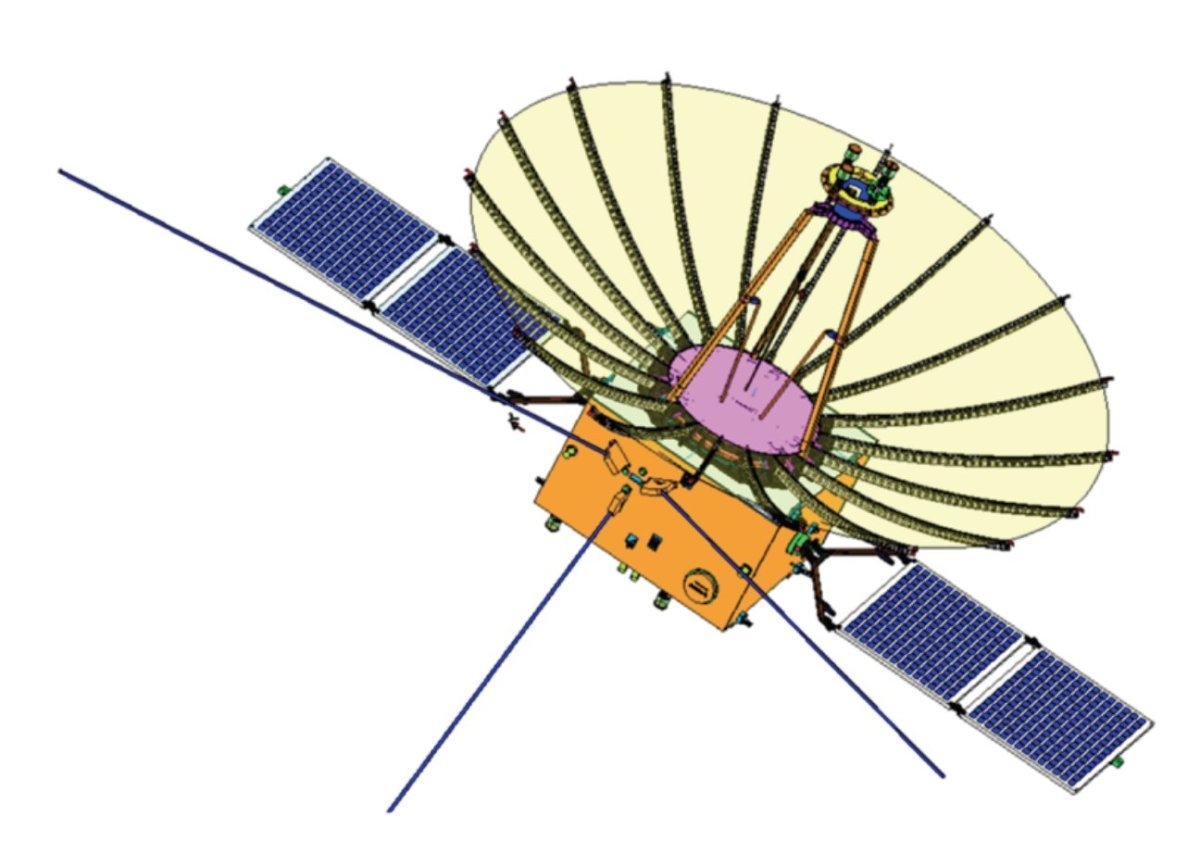
The Netherlands-China Low-Frequency Explorer (NCLE) is onboard China’s Queqiao relay satellite.
Credit: Radboud Radio Lab of the Radboud University, the Netherlands Institute for Radio Astronomy (ASTRON) and the company Innovative Solutions in Space (ISIS)
Data looks good
The NCLE data show that the radio antenna is doing well under the extreme conditions in space and operates as planned.
“Now, the most dangerous phase of the mission is behind us,” says Christiaan Brinkerink from Radboud Radio Lab in a statement. “We are very happy to see that NCLE is in perfect health. The data look good, and we can now proceed with the next phases of our research.”

Radio antennas of the Netherlands Chinese Low-Frequency Explorer (NCLE), developed by ASTRON, Radboud Radio Lab, ISIS and the National Astronomical Observatories of China (NAOC).
Credit: Radboud Radio Lab/ASTRON/Albert-Jan Boonstra
Next phase
The next phase lasts for one month, and is meant to investigate how the performance of NCLE varies under the changing conditions during one orbit around the Earth.
After the first full month of commissioning is done with stowed antennas, the following run of measurements will be performed with partially deployed antennas.
“This process will allow us to perform a complete characterization of the instrument response at different positions in space and for different antenna lengths. It will provide data that we need to calibrate science measurements in the future”, says Albert-Jan Boonstra from ASTRON.

Image from Queqiao relay satellite shows NCLE stowed antenna, the Earth, and farside of the Moon. Queqiao is in a halo orbit at L2 Lagrange point.
Courtesy: Radboud Radio Lab
Full length deployment
The collection of actual scientific data by NCLE is planned to start in six months. At that point, the antennas will be deployed to their full length of a little over 16 feet (5 meters).
“This is what we are really looking forward to,” adds Eric Bertels from ISIS. “The calibration of the instrument is a crucial step in the project, but in the end we are looking for science data.”
According to Marc Klein Wolt from the Radboud Radio Lab: “We are taking it step-by-step working towards doing real science, but getting the first data of the instrument is a major step in the right direction.”
Pathfinder experiment
NCLE focuses on measurements at low radio frequencies, spanning the spectrum from 1 to 80 megahertz. The science cases of NCLE are diverse, and include the study of solar storms, the interaction of planetary magnetospheres with the solar wind, the mapping of low-frequency Galactic emission and ultimately to study the signature of neutral hydrogen in the early Universe.
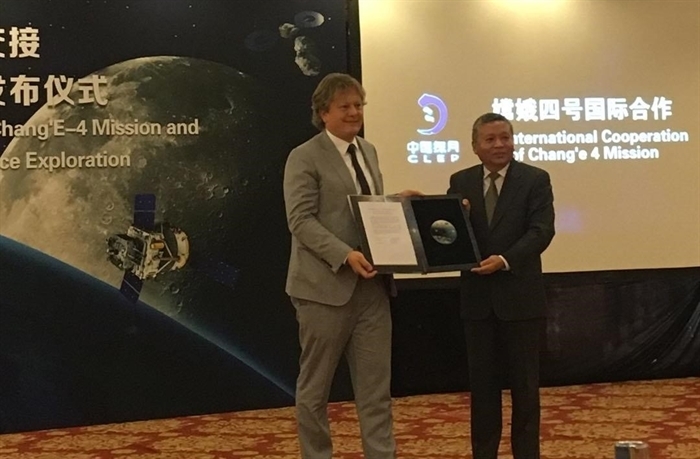
The Dutch radio instrument the Netherlands-China Low-Frequency Explorer (NCLE) on the Chinese Queqiao satellite behind the moon, has successfully collected data.
The DVD with the data is handed over to Taake Manning, counsel for science and technology of the Dutch Embassy in Beijing.
Courtesy: Radboud Radio Lab/Radboud University
NLCE is described as a pathfinder experiment. Experience with its operation and data will be useful to aid in the development of future radio astronomy instruments.
The Chinese Queqiao relay satellite and Dutch antenna were launched from China in May 2018, prior to the Chang’e-4 farside. Queqiao means “Bridge of Magpies” referring to a Chinese folktale about magpies forming a bridge with their wings to allow Zhi Nu, the seventh daughter of the Goddess of Heaven, to reach her husband.
Go to this video showing one of the NCLE antenna elements deploying during a pre-launch test.
https://www.youtube.com/watch?time_continue=16&v=hca3MeX-8rw

Chang’e-5 and Chang’e-6 missions are intended to return lunar samples back to Earth.
Credit: CCTV/Screengrab/Inside Outer Space
The China National Space Administration (CNSA) has invited international partners for cooperation on the country’s Chang’e-6 lunar mission and an asteroid exploration effort.
China announced its cooperation plan for the future Chang’e-6 mission, offering to carry a total of over 40 pounds (20 kilograms) of solicited payloads.
The orbiter and lander of the Chang’e-6 mission will each reserve 10 kilograms for payloads, to be selected from both domestic colleges, universities, private enterprises and foreign scientific research institutions, said Liu Jizhong, director of the China Lunar Exploration and Space Engineering Center of the CNSA.

Credit: CCTV/Screengrab Inside Outer Space
The deadline for applying to join the cooperation plan is Aug 31, 2019.
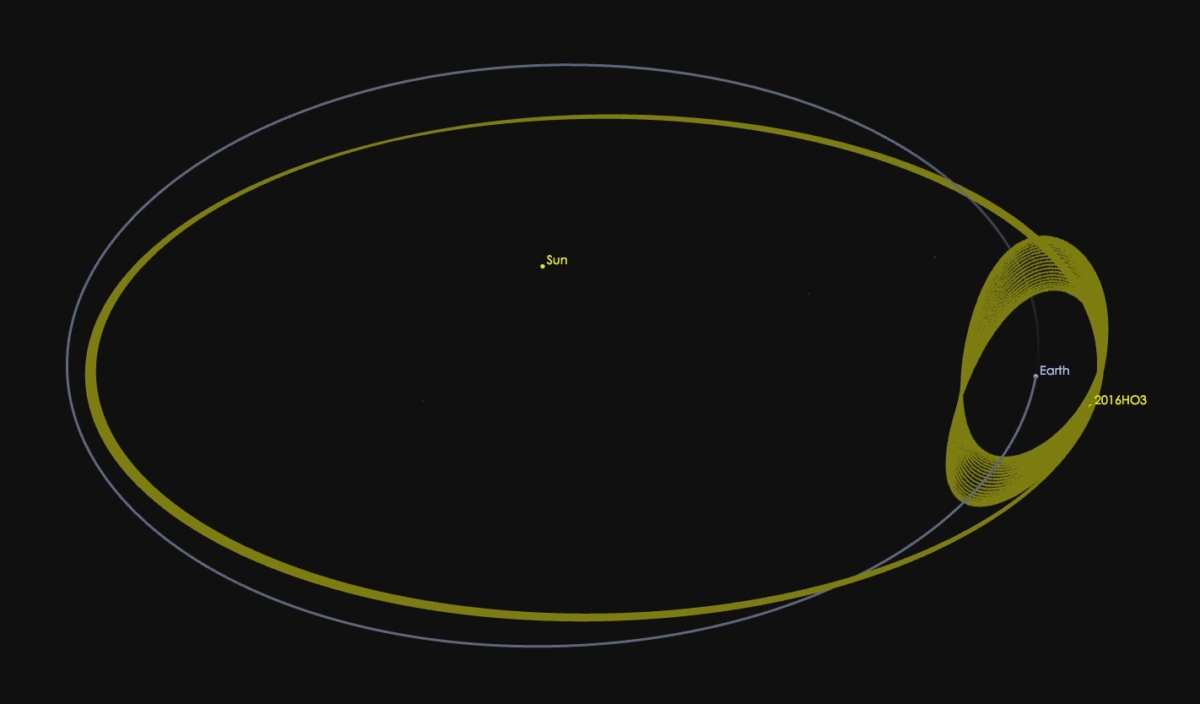
Asteroid sample return mission. Credit: NASA/JPL-Caltech
According to China’s state-run Xinhua news agency, China’s asteroid project involves a decade-long sojourn to return samples from the near-Earth asteroid, known as 2016 HO3, as well as exploration of a main asteroid belt comet, known as Comet 133P/(7986) Elst–Pizarro.
Moon sampling
Next up for China’s lunar exploration activities is launch by year’s end of the Chang’e-5 sample return mission. However, that venture will be governed by a successful return to flight of the Long March-5 booster this July.

Long March-5 booster’s first liftoff occurred in early November 2016. Mishap on launcher’s second flight in July 2017. A return-to-flight Long March-5 mission is slated for this year.
Credit: CASC
As the backup of the Chang’e-5 mission, the Chang’e-6 mission will also collect lunar samples automatically for comprehensive analysis and research, Liu said. Its launch time and landing site will depend on the performance of the Chang’e-5 mission, he explained.
According to Liu, like Chang’e-5, the Chang’e-6 return sample lunar mission will be comprised of an orbiter, a lander, an ascender and an Earth-return capsule.

Chang’e-4 farside mission – lander and Yutu-2 rover
Credit: CNSA/CLEP
Farside science data
Meanwhile, the scientific data from international payloads onboard the Chang’e-4 farside mission has been delivered to the Netherlands, Sweden and Germany.
The Dutch radio instrument the Netherlands-China Low-Frequency Explorer (NCLE) on the Chinese Queqiao satellite behind the Moon, has successfully collected data.
The DVD with the data is handed over to Taake Manning, counsel for science and technology of the Dutch Embassy in Beijing.
Courtesy: Radboud Radio Lab/Radboud University
The Chang’e-4 farside mission carries four payloads developed by the Netherlands, Germany, Sweden and Saudi Arabia.
The CNSA delivered the data collected by the neutral atom detector aboard the Chang’e-4 rover to Sweden, the data from the neutron radiation detector aboard the Chang’e-4 lander to Germany and the data from the low-frequency radio astronomical instrument aboard the Chang’e-4 relay satellite Queqiao to the Netherlands.
Letters of intent
Pei Zhaoyu, deputy director of Lunar Exploration and Space Engineering Center of CNSA, said China has signed memorandums in space exploration cooperation with dozens of countries so far.
“China has already signed letters of intent for cooperation with dozens of countries. We have signed a memorandum of understanding with Russia on lunar and deep space exploration and an agreement with France this year on the Chang’e-6 carrier cooperation,” Pei said.
Go to this CGTN video that details China’s cooperative space overture:
https://news.cgtn.com/news/3d3d514f3345544d34457a6333566d54/share_p.html
Also go to this CNSA/CCTV provided video:
https://youtu.be/LsVBzPRa0G8?list=PLpGTA7wMEDFjz0Zx93ifOsi92FwylSAS3
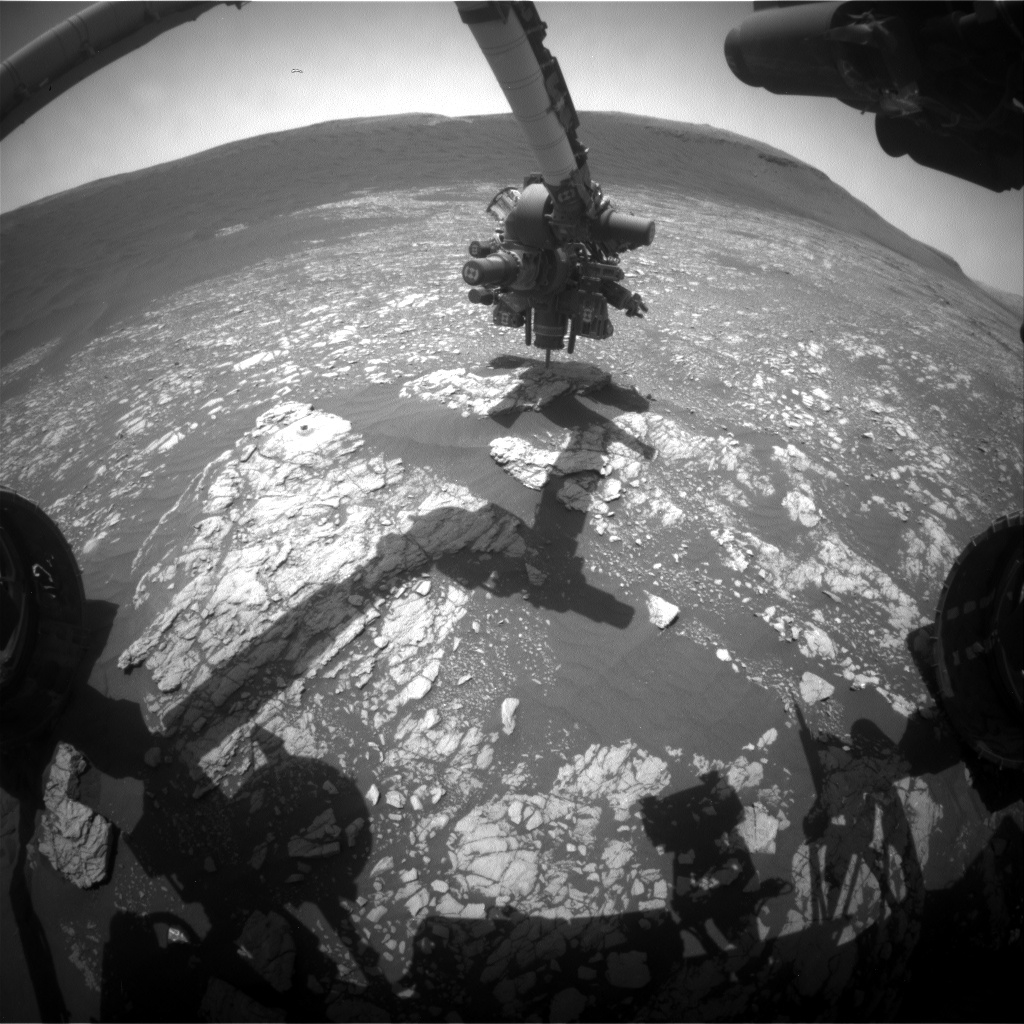
Curiosity Front Hazcam Right B photo acquired on Sol 2382, April 19, 2019.
Credit: NASA/JPL-Caltech
NASA’s Curiosity Mars rover is now performing Sol 2383 duties.
A recent drill pre-load test was successful, so a go has been given for a drill attempt at “Kilmarie,” reports Abigail Fraeman, a planetary geologist at NASA/JPL in Pasadena, California.
The new drill location is nearby the last drilling area at “Aberlady.”
Recent imagery taken by the robot shows the point of the drill on the future Kilmarie drill target along with the old Aberlady drill hole, a little to the left of the arm.

Curiosity Navcam Left B image acquired on Sol 2382, April 19, 2019.
Credit: NASA/JPL-Caltech
Drilling irregularities
“It’s been a while since we’ve drilled two locations so close together,” explains Fraeman. “We decided to drill again in this area because we saw some irregularities during drilling Aberlady.”
Specifically, scientists were not sure Curiosity collected enough drill material for both the Chemistry & Mineralogy X-Ray Diffraction/X-Ray Fluorescence Instrument (CheMin) and the Sample Analysis at Mars (SAM) Instrument Suite at the Aberlady location, “so we’re hoping we can be more confident in the amount of sample we collect at Kilmarie,” Fraeman adds.

Curiosity Mastcam Right photo acquired on Sol 2381, April 18, 2019.
Credit: NASA/JPL-Caltech/MSSS
Stable parking position
Fraeman notes her role as Surface Properties Scientist (SPS).
“One of my responsibilities as SPS is to help assess whether the terrain Curiosity is parked on is stable. Curiosity’s arm is so big and heavy that moving it causes the rover’s center of gravity to shift,” Fraeman explains. “If Curiosity isn’t firmly parked, moving the arm could inadvertently move the entire ~1 ton rover, which could result in hardware damage.”
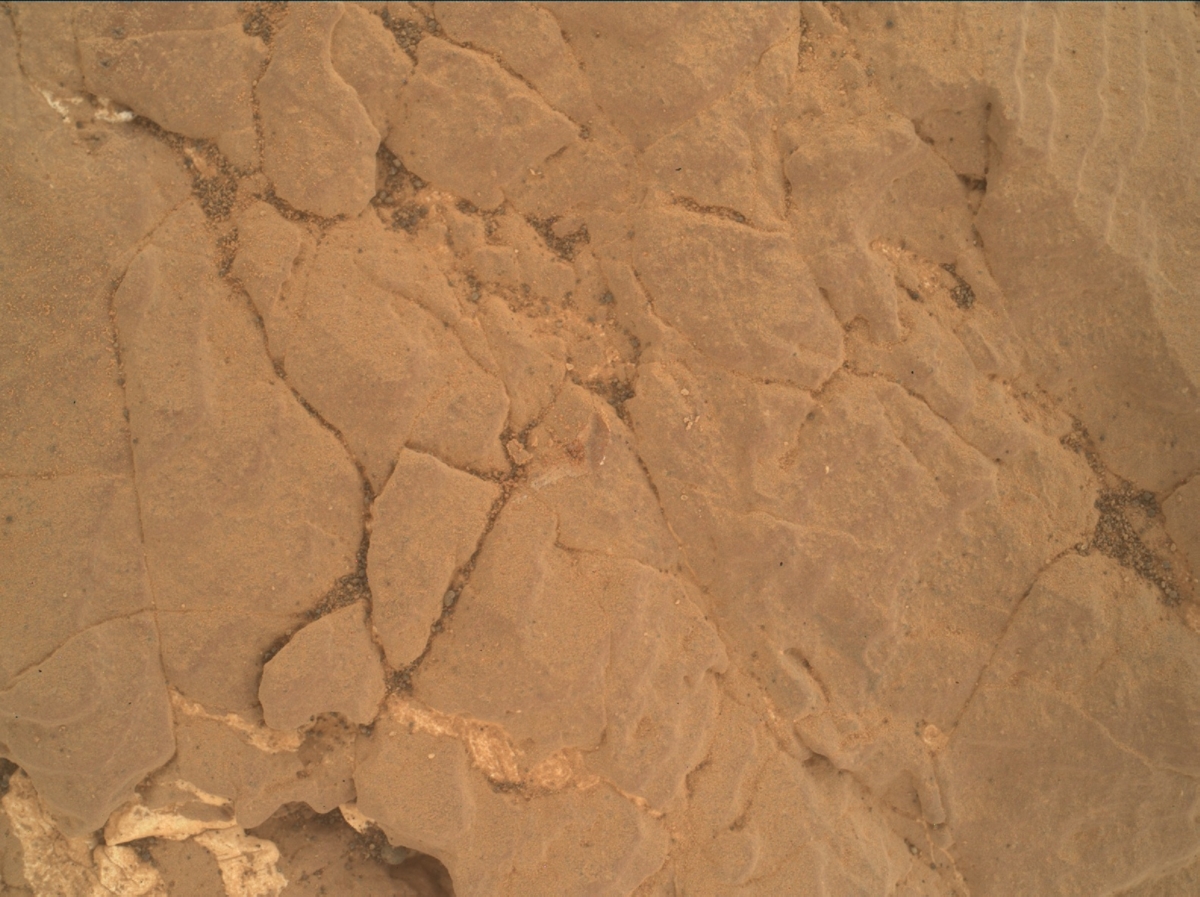
Curiosity Mars Hand Lens Imager (MAHLI) photo produced on Sol 2382, April 19, 2019. MAHLI is located on the turret at the end of the rover’s robotic arm.
Credit: NASA/JPL-Caltech/MSSS
Vehicle slipping
It was determined that Curiosity had parked on a flat surface and five of the wheels were firmly in contact with the ground.
“However, the right front wheel appeared to be sitting on a very small rock (~2-3 centimeters) that was located right in the middle of the wheel. We had a lot of conversations about what the risk of the vehicle slipping was and whether we thought the rock we were sitting on might shift,” Fraeman notes.
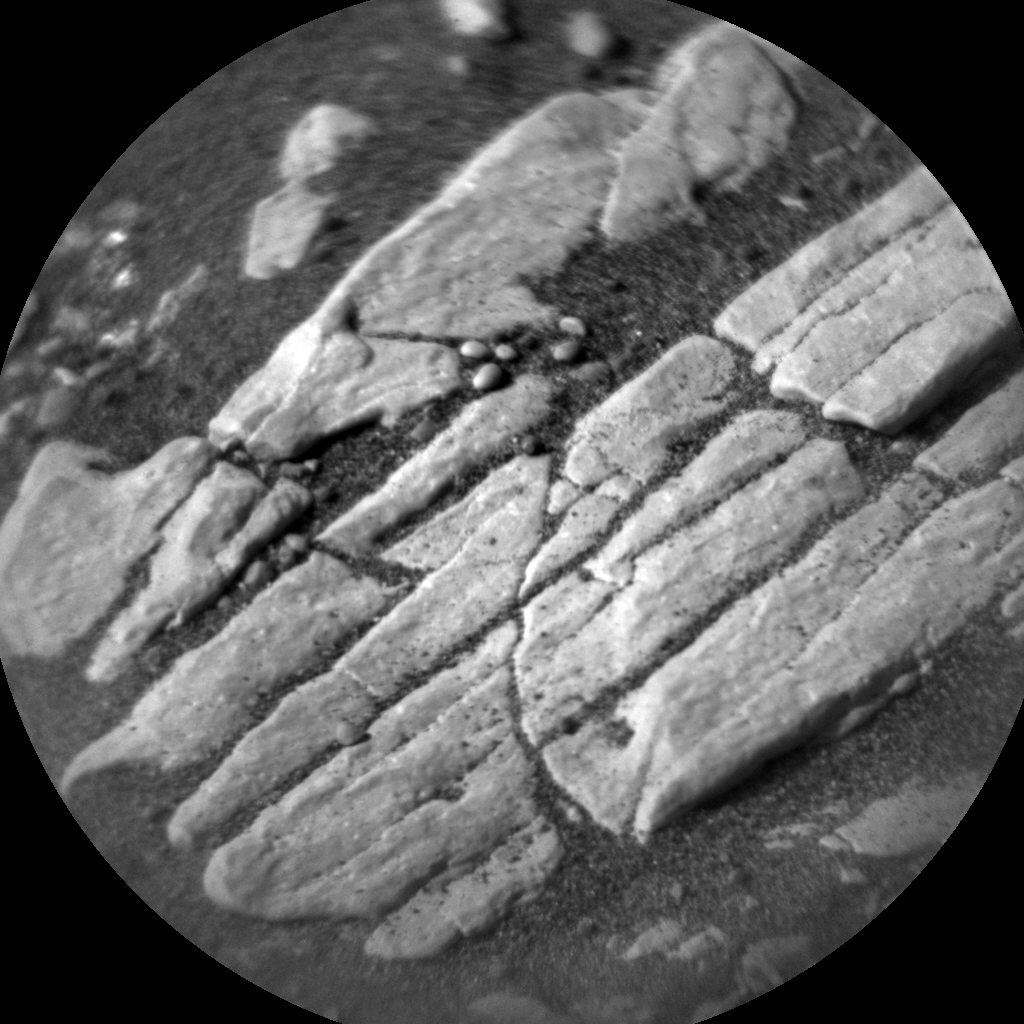
Curiosity ChemCam Remote Micro-Imager photo taken on Sol 2382, April 19, 2019.
Credit: NASA/JPL-Caltech/LANL
“Using our experience testing similar situations in the Mars Yard at JPL and knowledge of properties of the terrain around the rover, we decided the risk we’d slip was very small, and gave the ‘OK’ to go ahead with arm activities,” Fraeman says. “Images taken before and after the drill pre-load yesterday confirmed we hadn’t moved at all and were correct in our assessment.”

Space Launch System (SLS) Credit: NASA/MSFC
The U.S. Government Accountability Office (GAO) has issued Priority Open Recommendations: NASA.
In March 2018, GAO identified 18 priority recommendations for NASA. Since then, NASA has implemented 10 of those recommendations by, among other things, taking actions to better align its strategic sourcing practices with those used by leading commercial companies and improving controls over some of its information systems.

Credit Roscosmos/NASA
SLS and ISS
In April 2019, GAO identified one additional priority recommendation for NASA, bringing the total number to nine. These recommendations involve the following areas: monitoring program costs and execution as well as improving efficiency and effectiveness.
“NASA’s continued attention to these issues could lead to significant improvements in government operations,” the GAO document points out.
Among topics spotlighted in the report is developing a contingency plan for access to the International Space Station, as well as Space Launch System (SLS) Block I, as well as Exploration Mission (EM) 1 and 2.
To read the full GAO document, go to:

Intelsat 29e.
Courtesy: Arianespace
Luxembourg-based Intelsat reports that its Intelsat 29e (IS29e) is now a total loss, reporting earlier that the spacecraft suffered an anomaly.
Late on April 7, the Intelsat 29e propulsion system experienced damage that caused a leak of the propellant on board the satellite resulting in a service disruption to customers on the satellite.
That event caused a service outage on the Intelsat 29e satellite that impacted maritime, aeronautical and wireless operator customers in the Latin America, Caribbean and North Atlantic regions.
While working to recover the satellite, a second anomaly occurred, after which all efforts to recover the satellite were unsuccessful.
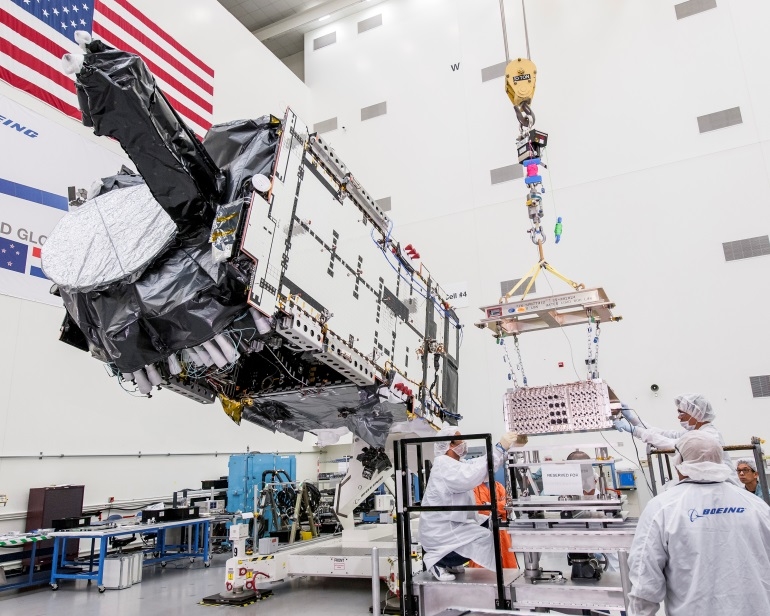
Intelsat 9e pre-launch image.
Credit: Boeing
Affected customers
“Since the anomaly, Intelsat has been in active contact with affected customers,” the global satellite operator said in a statement.
“Restoration paths on other Intelsat satellites serving the region and third-party satellites have been provided for a majority of the disrupted services. Migration and service restoration are well underway; highlighting the resiliency of the Intelsat fleet and the benefit of the robust Ku-band open architecture ecosystem,” the statement explains.
Quite troubling
Given that Intelsat has declared its IS-29E a total loss, “means it will continue to drift uncontrolled along its current orbit in GEO,” explains T.S. Kelso, the operator of CelesTrak, a leading source for orbital element sets and related software to keep an eye on satellites and orbital debris.
Kelso tweeted back on April 16th that the current situation with IS-29E “continues to be quite troubling,” with the troubled satellite spiraling around IS-11 & IS-32E. Additionally there are reports of 13 pieces of associated debris, he reported.

Errant IS-29E is not the only threat in GEO today. Here is a view of everything tracked in that region of the GEO Protected Zone. Green are operational satellites, orange are dead ones, red are rocket bodies, yellow are other debris.
Credit: CelesTrak
Nightmare scenario
In an earlier tweet, on April 11th, Kelso said: “Watched nervously” this morning as IS-29E and NASA’s Tracking Data Relay Satellite 3 “had what we consider a ‘nightmare scenario’ in GEO — a high-speed encounter — (~1 km/s). Let’s wish Intelsat luck on getting IS-29E back under control.”
The Intelsat 29e satellite was launched on January 27, 2016 atop an Ariane 5 booster.
Meanwhile, according to the Intelsat statement, “a failure review board has been convened with the satellite’s manufacturer, Boeing, to complete a comprehensive analysis of the cause of the anomaly.”
“At this point, we know that it continues to spiral around the GEO belt drifting at about 1.2 degrees of longitude per day,” Kelso told Inside Outer Space. “That means it will be making a circuit of the belt in a little less than a year and we will have one more large object to stay on our toes about and steer clear of for all of the other 500+ operational GEO satellites.”
Interactive tool
To keep an eye on this troublesome event, go to this interactive 3D view at:
https://celestrak.com/NORAD/elements/
Note: Click the globe icon for GEO; search for IS-29E (then clear the filter); click on IS-29E on right & track; click dots to see what they are.

Credit: Subcommittee on Space, Committee on Science, Space, and Technology/Screengrab
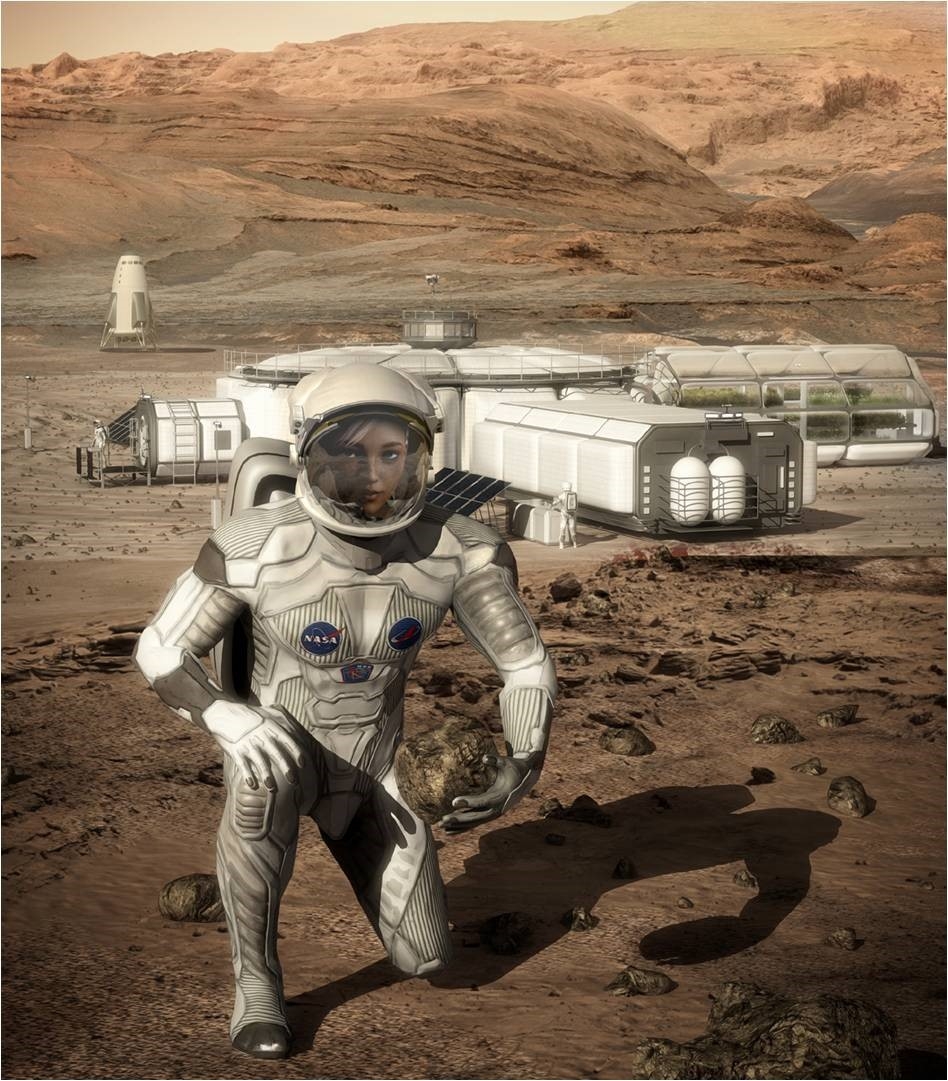
If you want boots on Mars by 2033, forget it.
A new study has found that a 2033 departure date for a Mars orbital mission is “infeasible under all budget scenarios and technology development and testing schedules.”
However, 2035 may be possible under budgets that match 1.9 percent real growth, but carries high risks of schedule delays due to complex technology development, testing, and fabrication schedules for the Deep Space Transport.

Mars ship.
Credit: National Geographic TV
“2037 is the earliest the mission could feasibly depart for Mars,” the report states, “assuming a small budget increase or smoothing budgets over two time periods in the 2030s, with 2039 being a more realistic timeframe.”
Credit: Bryan Versteeg
Mandated study
The study — Evaluation of a Human Mission to Mars by 2033 — was carried out by the Institute for Defense Analyses’ Science and Technology Policy Institute (STPI).
The NASA Transition Authorization Act of 2017 mandated that NASA ask an independent organization to study a Mars human spaceflight mission to be launched in 2033, including an evaluation of technologies, schedules, estimated costs, and budget profiles for the mission to Mars and its precursor missions.
NASA requested STPI to conduct this analysis and base the study’s schedule for human spaceflight on NASA’s current and notional plans leading to a mission to Mars orbit.
The research work was done under a National Science Foundation contract.

Phobos, the larger of Mars’ two moons as seen by the High-Resolution Imaging Sciences
Experiment (HiRISE) on NASA’s Mars Reconnaissance Orbiter in March, 2008. The illuminated portion of the
image is some 21 km across and objects as small as some 6-meters across can be resolved. Courtesy of
NASA/JPL/University of Arizona.
High-level recommendations
In summary, the report’s findings have led to three high-level recommendations.
- First, given that there is near-certainty that NASA cannot meet the 2033 goal, and 2037 and beyond is a more realistic timeline, NASA has time to consider a mission with value greater than that obtained from just orbiting Mars and returning. For example, NASA could consider making the first Mars mission a journey to one of the Martian moons, Phobos.
- Second, regardless of what the specific mission to Mars is, the organizational challenges of managing combined developments and missions to the International Space Station (ISS), the Gateway (a small human-tended station in orbit around the Moon), the lunar surface, and Mars are significant and should be addressed. If Congress would like NASA to abide by a specific timeframe in which to reach Mars, a goal not unlike Apollo, there may be value to creating an Associate Administrator position in charge of the Mars missions, with discrete budget authority over the required Mars elements (distinct from Associate Administrator oversight of the Gateway and the ISS).
- Lastly, from the point of view of human health risks, given the knowledge gaps, NASA may benefit from developing a unified research plan intended to prioritize its approach to fill in gaps in knowledge, especially on the combined effects of radiation, microgravity, and isolation that may be encountered on a human mission to Mars and precursor missions.
To read the full report — Evaluation of a Human Mission to Mars by 2033 – go to:
https://www.ida.org/idamedia/Corporate/Files/Publications/STPIPubs/2019/D-10510.pdf

Israel’s Beresheet lunar lander imagery taken before crash landing on April 11.
Credit: SpaceIL and Israel Aerospace Industries (IAI)
Next week, NASA’s Lunar Reconnaissance Orbiter (LRO) will attempt to look for the crash site of Israel’s Beresheet Moon lander.
The spacecraft careened into the lunar surface on April 11, a crash landing apparently due to a “manual command” that was entered into the spacecraft’s computer.
“This led to a chain reaction in the spacecraft, during which the main engine switched off, which prevented it from activating further,” according to a SpaceIL and Israel Aerospace Industries (IAI) statement.

Last image from failed Beresheet lunar lander, at a distance of 9 miles (15 kilometers) from the surface of the Moon.
Credit: SpaceIL and Israel Aerospace Industries (IAI)
Finding the crash site
“The first opportunity to try to image or range to the Beresheet site is April 22 when the orbit of LRO is over the likely crash site. Attempts are expected to be made on a few orbits at that time at varying off-nadir angles,” said MIT’s David Smith, the principal investigator for the LRO-carried Lunar Orbiter Laser Altimeter (LOLA) He is also emeritus researcher at NASA’s Goddard Space Flight Center in Greenbelt, Maryland.
LRO is only over the landing site twice each month and only one of those is in sunlight. That’s when the orbiter can use its Lunar Reconnaissance Orbiter Camera (LROC) – a system of three cameras mounted on the LRO that captures high resolution photos of the lunar surface.

Lunar Reconnaissance Orbiter (LRO).
Credit: NASA/GSFC
Lunar surface search
“We think it unlikely LROC will be able to see actual debris on the surface, just a scarring of the surface,” Smith told Inside Outer Space. “We understand that it is likely that the actual impact site could be a kilometer or more away from the best estimate of the impact site today, so it may take some searching, even for the camera. Our best hope is that LROC can see a fresh mark on the lunar surface to help pin down the precise location,” he said.

Integrated on Israeli lunar lander, a NASA scientific payload consisting of a small Lunar Retroreflector Array (LRA).
Credit: NASA/Goddard Space Flight Center
Along with high-power camera sweeps, LRO will be using the onboard LOLA, trying to detect a NASA-provided laser retro-reflector array in the Beresheet wreckage zone.
Retro-reflector array
The size of a computer mouse, the NASA Goddard Space Flight Center/MIT Laser Retro-reflector Array (LRA) for Lunar Landers is comprised of eight mirrors made of quartz cube corners that are set into a dome-shaped aluminum frame. That array is lightweight, radiation-hardened and long-lived.
From the high-flying orbiter, laser beams generated by LOLA would strike the device and then are backscattered from the lunar surface. For each laser beam, LOLA measures its time of flight, or range.

NASA experiment after installation (the array is mounted on the top of the spacecraft, lower left, at about 7 o’clock position).
Credit: SpaceIL/Courtesy Xiaoli Sun/GSFC
LOLA would operate when LROC looks for the crash site since they are co-boresighted, Smith said, but also when the site is in darkness.
“Our chances of a return from LOLA will be improved when LROC identifies the site, but our chances may never be great, but we will try for several weeks, maybe months,” Smith said.

The Israeli lunar spacecraft weighed only 1,322 pounds, or 600 kilograms.
Credit: Eliran Avital

Curiosity Mastcam Left photo taken on Sol 2378, April 15, 2019.
Credit: NASA/JPL-Caltech/MSSS
NASA’s Curiosity Mars rover is now performing Sol 2380 duties.
The science team has been focused on determining which target in the vicinity of “Aberlady” will become the focus of the next drill campaign, reports Brittney Cooper, an atmospheric scientist at York University in Toronto, Ontario, Canada.
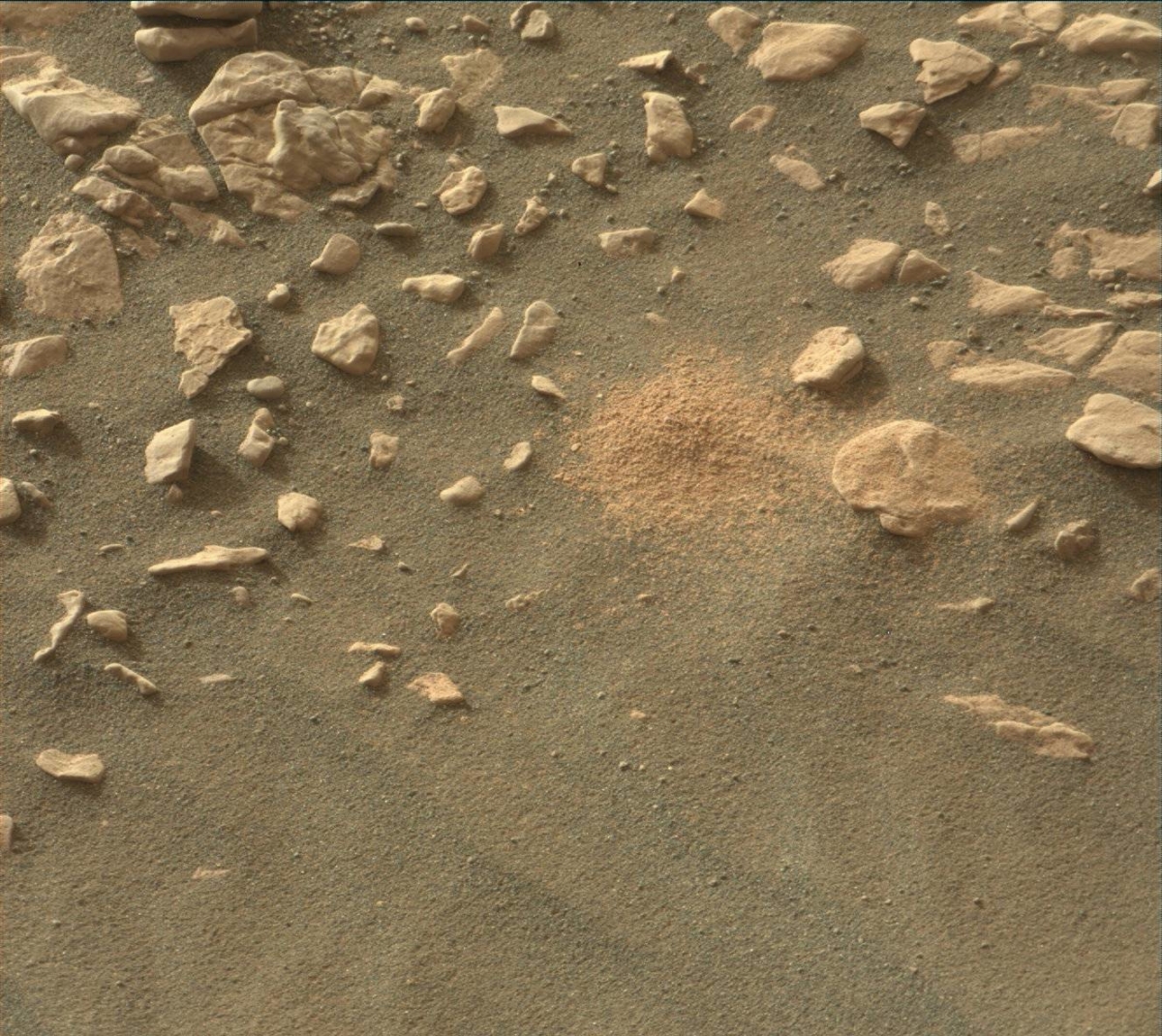
Curiosity Mastcam Right image acquired on Sol 2377, April 14, 2019.
Credit: NASA/JPL-Caltech/MSSS
Target 3
“In the end, target 3 was recommended by rover planners for its flatter texture,” Cooper adds, as an Alpha Particle X-Ray Spectrometer (APXS) raster of other targets showed there wasn’t a large difference in composition between the two.
“Once formally included in plan activities, target 3 will be given a proper name consistent with those being used in the ‘Glen Torridon’ region,” Cooper notes.
Dump pile
The rover recently took a Mars Hand Lens Imager (MAHLI) open cover image of the Aberlady sample dump pile and then an arm retract to get it out of the way for a Mastcam multispectral observation of the dump pile that was to follow.
“Next, a Navcam dust devil survey and suprahorizon movie are included to monitor clouds and dust devils in the current transition from dusty to cloudy season,” Cooper explains.
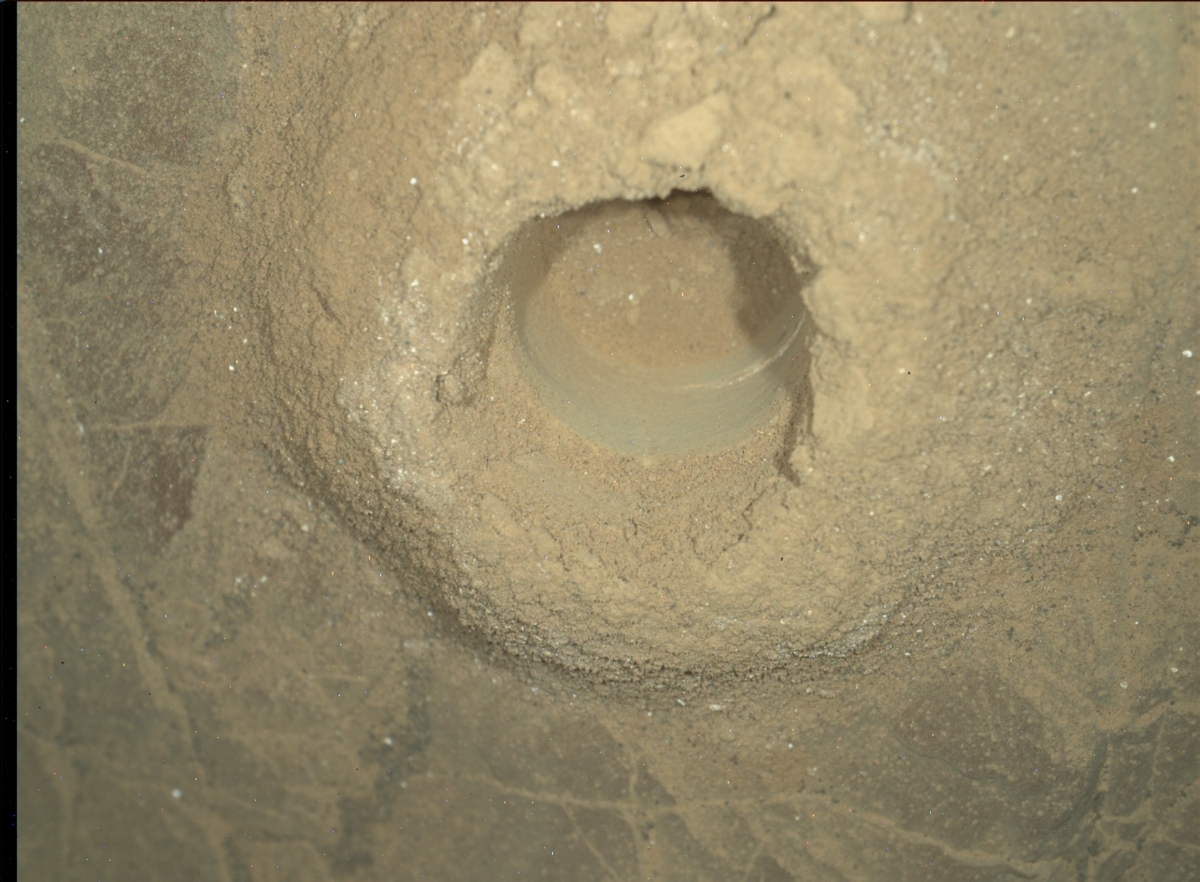
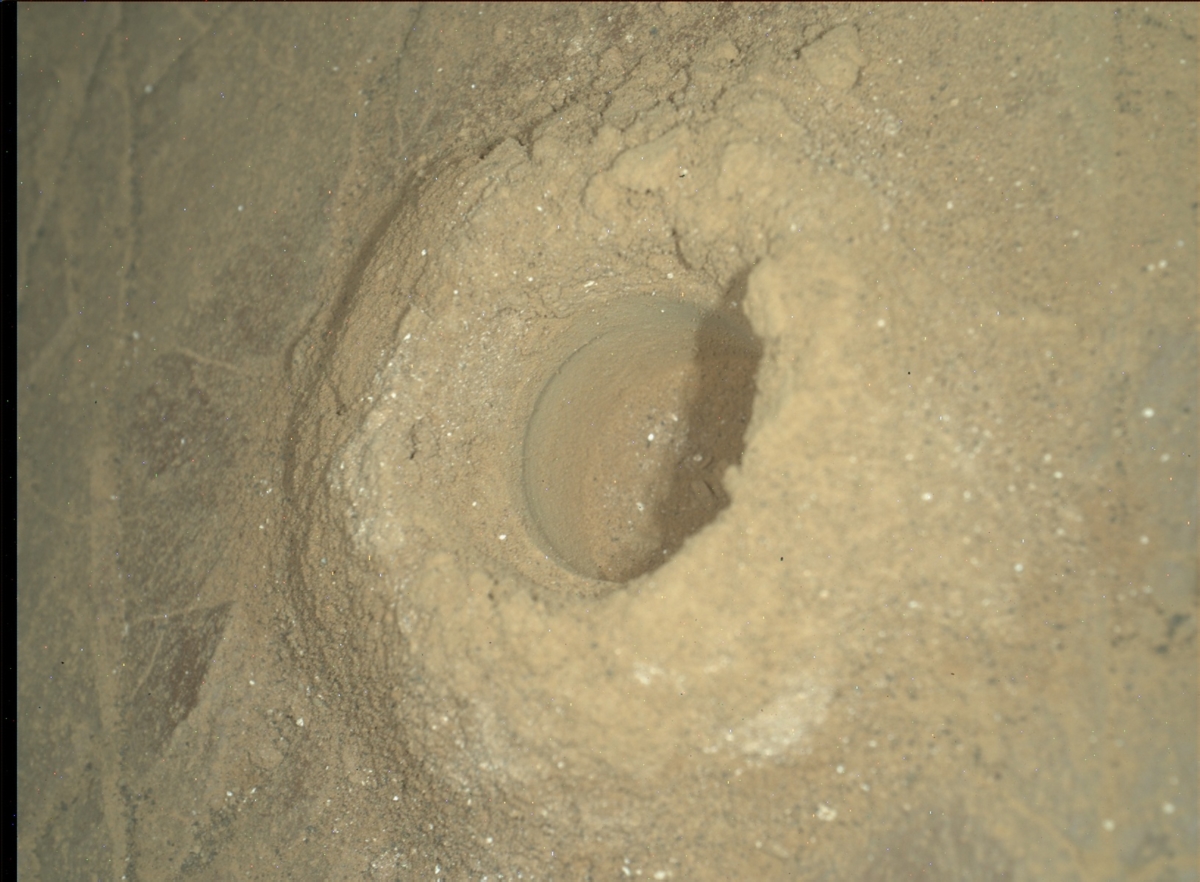
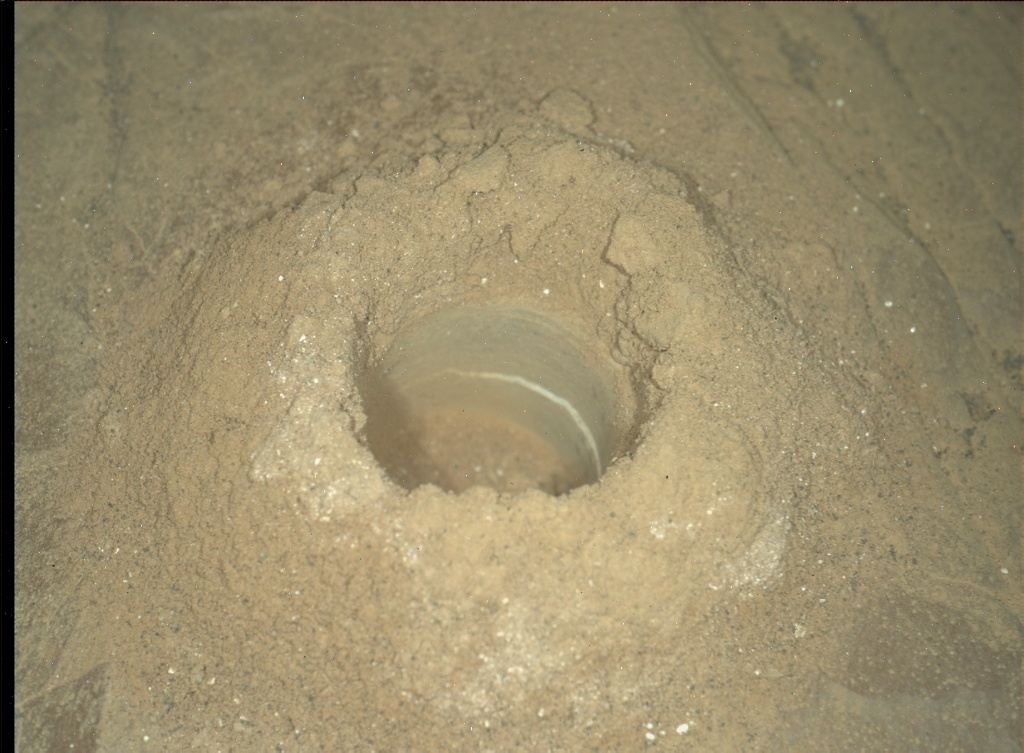
Curiosity Mars Hand Lens Imager (MAHLI) photos produced on Sol 2379, April 16, 2019, inspecting latest drill hole.
Credit: NASA/JPL-Caltech/MSSS
Science block
Then a Chemistry and Camera (ChemCam) 10×1 vertical Laser Induced Breakdown Spectroscopy (LIBS) and Remote Micro-Imager (RMI) observation on the Aberlady drill tailings and a Mastcam documentation image, Cooper says, will wrap up a one-hour science block.
“After sunset, two APXS rasters on two differently toned drill tailing targets are planned to run until the wee hours of the night,” Cooper reports, when Chemistry & Mineralogy X-Ray Diffraction/X-Ray Fluorescence Instrument (CheMin) will take over with its third integration on the Aberlady drill sample, “using X-ray diffraction to identify the signals of the minerals present in the sample.”
Bump ahead
Lastly, standard Dynamic Albedo of Neutrons (DAN) passives and Rover Environmental Monitoring Station (REMS) observations were included to continue monitoring the environmental conditions at the current workspace.
For Curiosity, Cooper concludes, the goal is to finish up at Aberlady, and bump to target 3 for “Drill Sol 0.”

Curiosity Navcam Right B image taken on Sol 2379, April 16, 2019.
Credit: NASA/JPL-Caltech

