Archive for the ‘Space News’ Category
 Author:
  May 21st, 2019
Early praise for Moon Rush – The New Space, published by National Geographic:
“We are in the middle of the ‘New Space’ era, and Moon Rush is the roadmap that shows us how we got here, where we are going, and why. Leonard David’s keen insight into space exploration puts the Moon into its proper context – as the next destination for humans as we take our first steps into the solar system.” — Colonel Terry Virts (ret.), NASA veteran of two spaceflights – a two-week mission onboard the Space Shuttle Endeavour in 2010 and a 200-day flight to the Space Station in 2014-2015

Geologist Harrison Schmitt performs Moon tasks during Apollo 17 mission in December 1972.
Credit: NASA
“Written with Leonard David’s trademark wry humor and the product of thorough research, Moon Rush is a comprehensive, accessible and entertaining book addressing the value of a return to the Moon. Deftly tying together the rich past of U.S. and Russian lunar expeditions (robotic and human) with present developments and an optimistic view of the future, Mr. David lays out the geopolitical case for a return to the Moon for the United States, our international allies, and our competitors, with attention to human space exploration, planetary science, the discovery of lunar resources and the eventual development of a lunar economy.” — Dr. Mary Lynne Dittmar, President & CEO, Coalition for Deep Space Exploration; Member U.S. National Space Council Users’ Advisory Group

Credit: NASA
“Leonard David has now managed to make sense of the new rush to the Moon where scientists, engineers, entrepreneurs, and artists are looking to uncover its hidden secrets, utilize its precious resources, and continue finding inspiration from its otherworldly beauty. And he has done it by skillfully describing how these seemingly contrasting goals fit in humanity’s ‘unquenchable thirst to press onward and outward.’” — Dr. Angel Abbud-Madrid, Director, Center for Space Resources, Colorado School of Mines

A source of water on the Moon could help make future crewed missions more sustainable and affordable.
Credit: RegoLight, visualization: Liquifer Systems Group, 2018
“In Moon Rush, Leonard David has provided a comprehensive, clearly written, and convincing account of why the returning to the Moon, ‘this time to stay,’ will be the central feature of the world’s space activities of the next few decades. He suggests that ‘the United States is hungry to take to lead’ in that return. I hope that he is right about that, and that the country that sent 12 men to the Moon a half-century ago will once again be in the vanguard of a sustained global public-private effort to make the Earth’s off-shore island an essential element of this planet’s future.” — Dr. John Logsdon, Professor emeritus and founder, Space Policy Institute, George Washington University

Credit: NASA
“Leonard David explores multiple dimensions of our Moon: mythology, history, robotic and human exploration, science, technology, utilization, inspiration, education, strategy, national and international programs, governments, and new private space actors. It will enrich everybody’s own personal and collective lunar experience! This book is an amazing resource for learning, reflecting, and engaging towards our next steps to build a ‘MoonVillage’ sustainable community and settlement on our 8th continent, the Moon.” — Professor Bernard H. Foing, Executive Director, The International Lunar Exploration Working Group (ILEWG), European Space Agency Lead scientist for SMART-1 Mission, and EuroMoonMars program
 Posted in
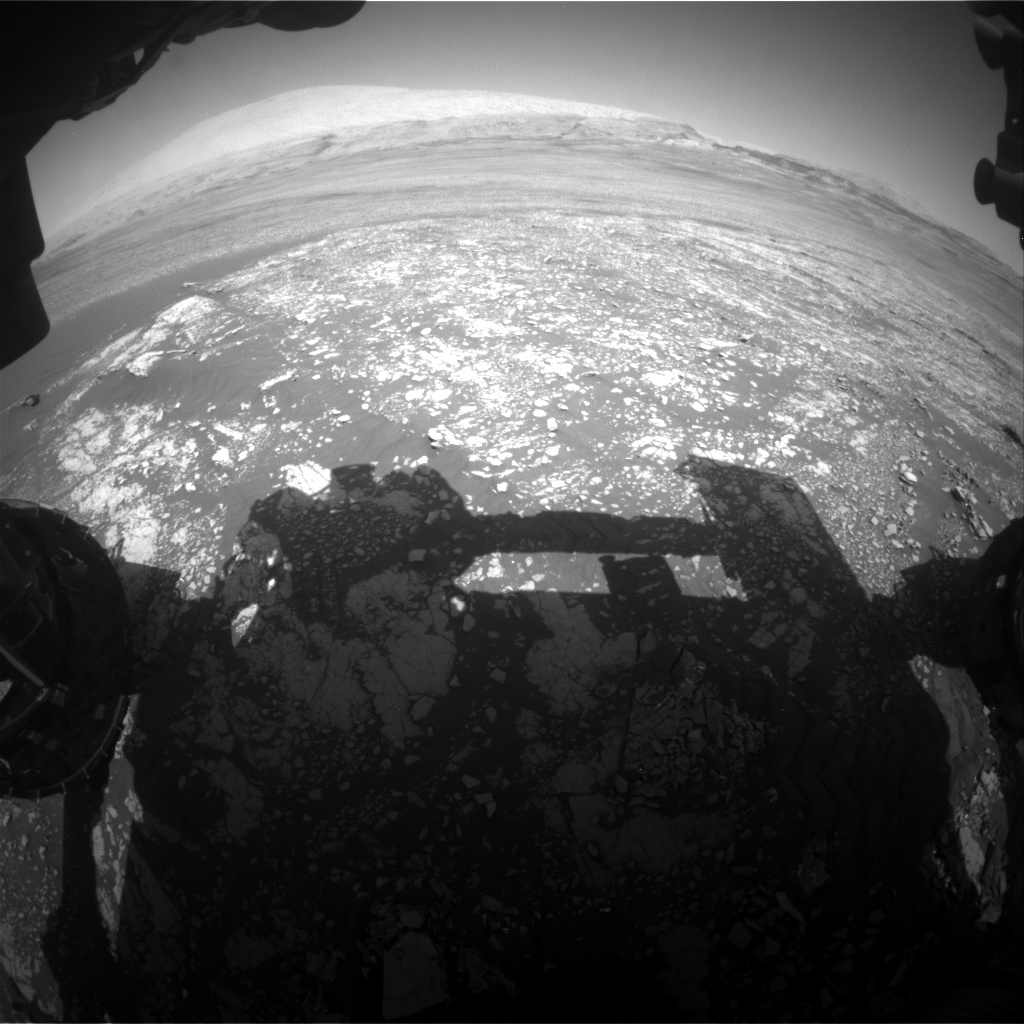
Curiosity Front Hazcam Left B image taken on Sol 2412, May 20, 2019.
Credit: NASA/JPL-Caltech
NASA’s Curiosity Mars rover is now performing Sol 2412 duties.
Curiosity is continuing the investigations at “Rigg,” reports Susanne Schwenzer, a planetary geologist at The Open University; Milton Keynes, U.K.
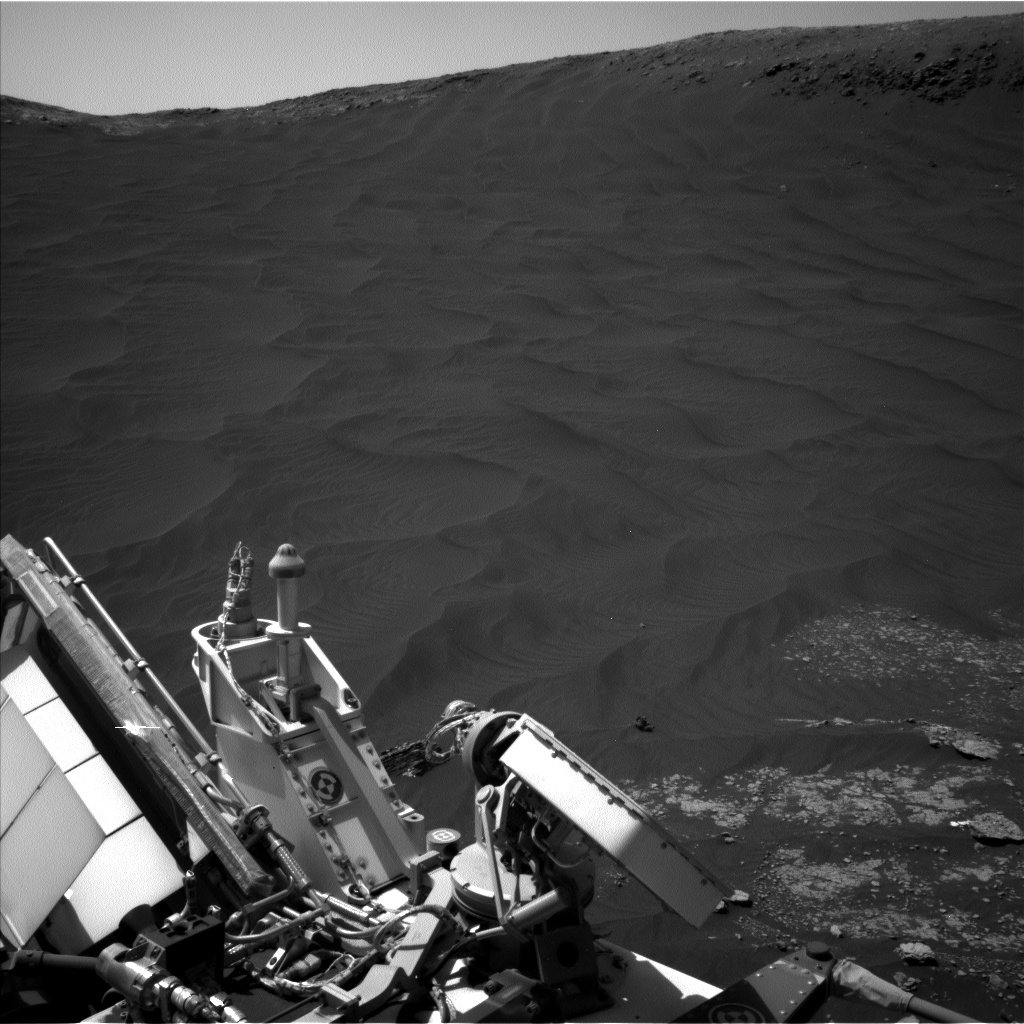
Curiosity Navcam Left B image acquired on Sol 2412, May 20, 2019.
Credit: NASA/JPL-Caltech
The robot’s Mars Hand Lens Imager (MAHLI) is allowing detailed investigation of the materials that make up the field of sand ripples.
Color and luster
“Things the team is looking for are grain size and grain size distribution, and the shape of the grains,” Schwenzer adds. “In addition to that, the color and luster of the different grain varieties are of interest to allow us to analyze the variation of phases in the sand. One feature to note, for example, are the pinkish grains on the surface, which appear to be larger than all others.”
Curiosity science planners have prepared a three-sol plan with many activities imaging the sand ripples and investigating their chemistry.

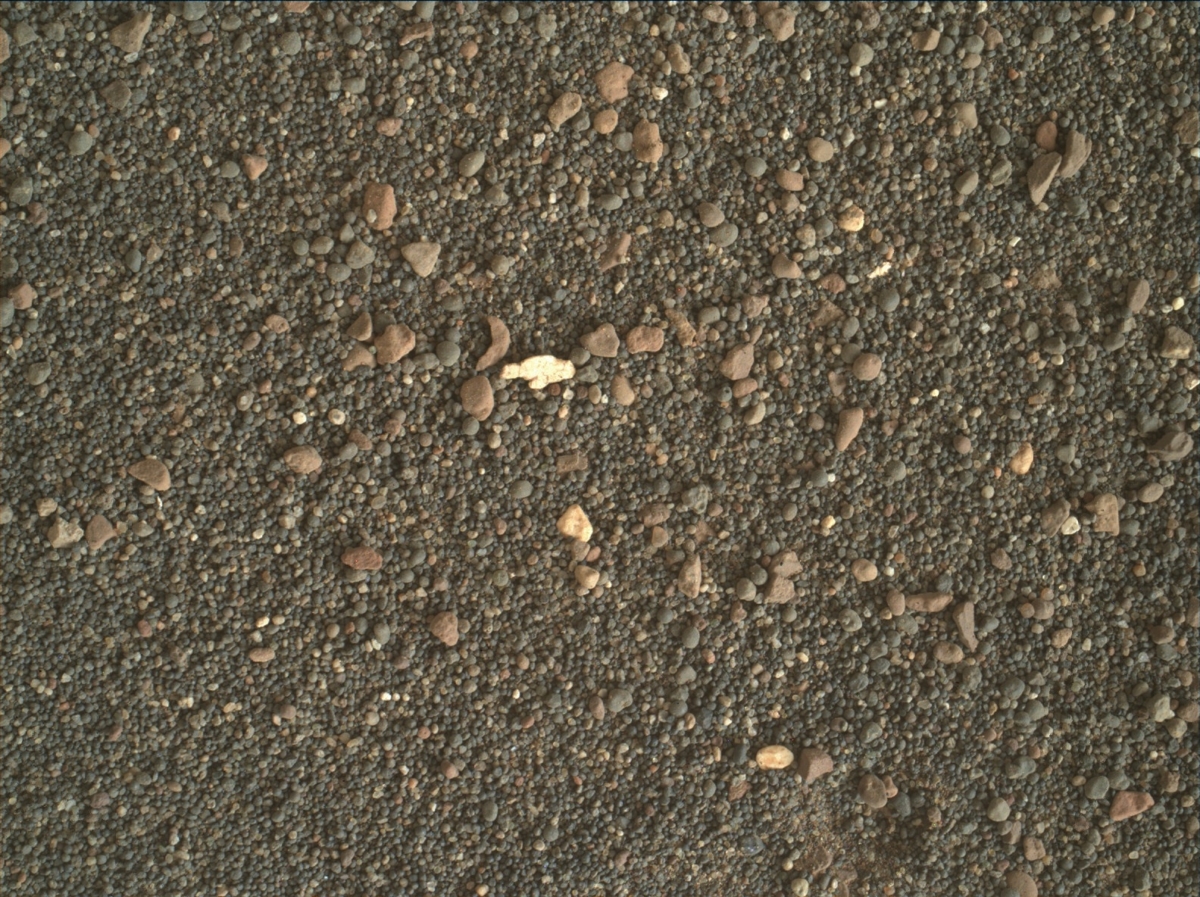
Curiosity Mars Hand Lens Imager (MAHLI) photo produced on Sol 2412, May 20, 2019.
Credit: NASA/JPL-Caltech/MSSS
Grain sizes
The rover’s Alpha Particle X-Ray Spectrometer (APXS) will measure the targets “Nairn” and “Ellon,” to investigate the differences of the different soil colors and grain sizes.
Chemistry & Camera (ChemCam) plans include the soil targets “Seafield Tower,” “Saltire” and “Selkirk,” whereby Seafield Tower and Saltire are on ripple crests and Selkirk is on a ripple flank. There also is one rock target to investigate a rock color variation at the target: “Camustianavaig.”

Image taken by the Mars Hand Lens Imager (MAHLI), on Sol 2409. It shows the target Dunoon. This image is about 45 mm by 34 mm.
Credit: NASA/JPL-Caltech/MSSS
Workspace imagery
Schwenzer explains that Mastcam will document all ChemCam targets, but also take two mosaic images, one of the workspace and one looking back at the “Aberlady” and “Kilmarie” drill target area.
MAHLI will take a look at the APXS targets from the past and this plan, which are “Donoon,” “Gairsay,” “Ellon” and “Nairn.” Also in the plan are environmental activities and Dynamic Albedo of Neutrons (DAN) active and passive measurements.
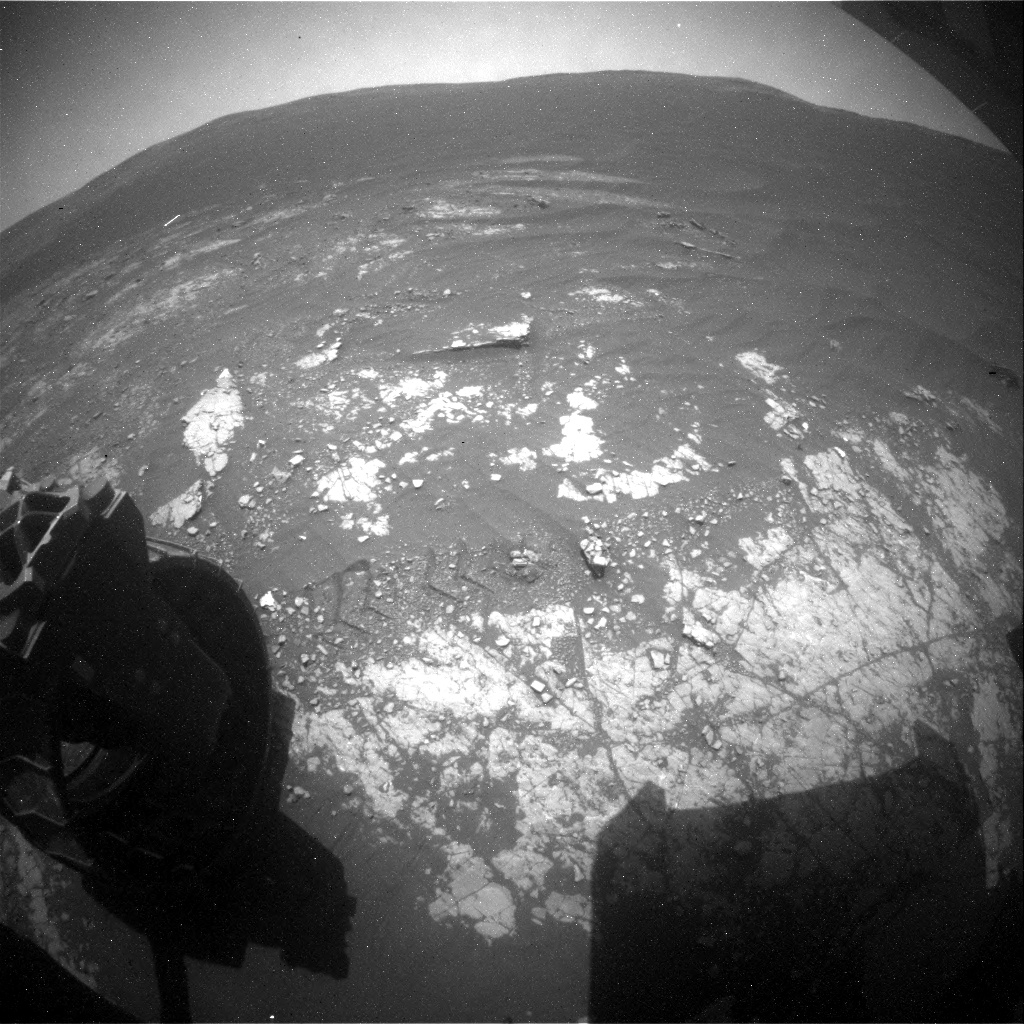
Rear Hazcam Right B image taken on Sol 2412, May 20, 20019.
Credit: NASA/JPL-Caltech
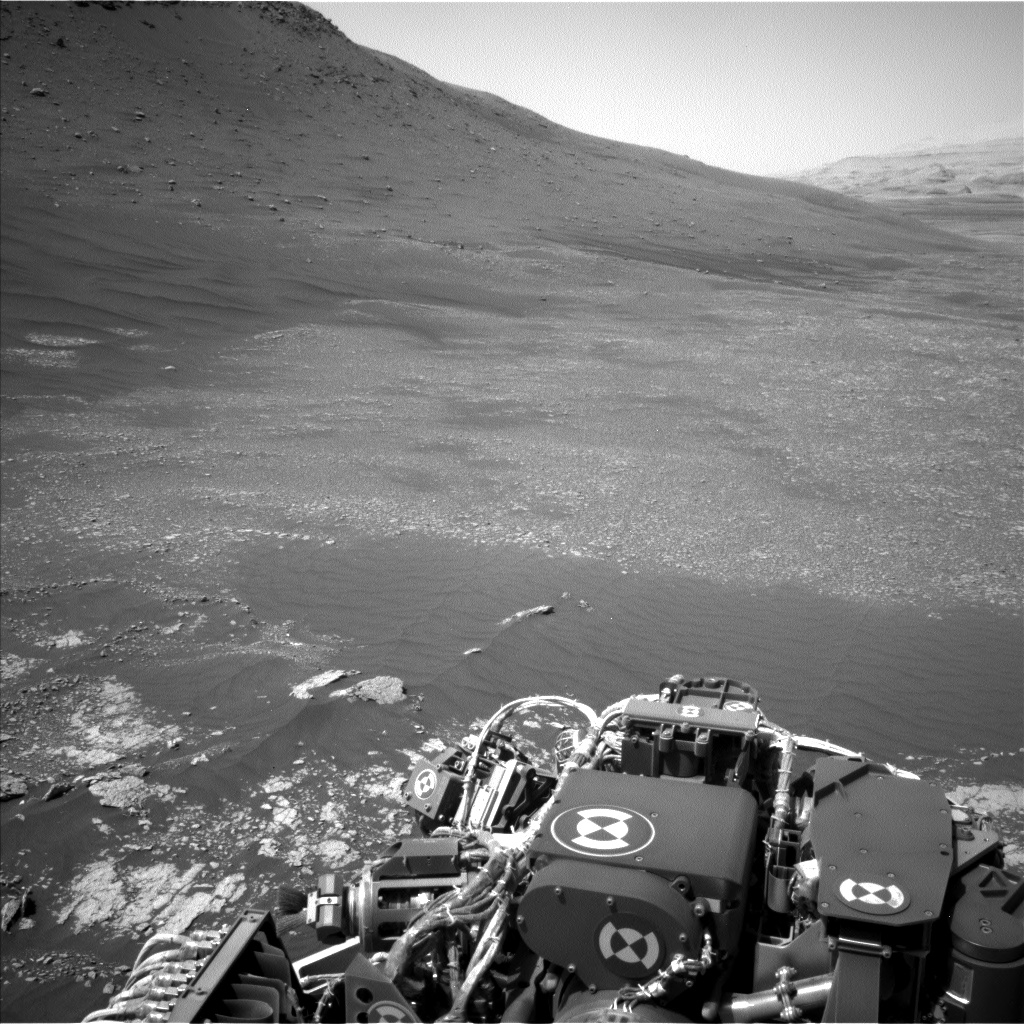
Curiosity Navcam Right B photo taken on Sol 2412, May 20, 2019.
Credit: NASA/JPL-Caltech
“Besides all the science, housekeeping activities are prominent in the plan, too,” Schwenzer concludes. “Curiosity will take images of the drill bit, and do a ChemCam calibration activity.”

Curiosity Front Hazcam Left B image taken on Sol 2410, May 18, 2019.
Credit: NASA/JPL-Caltech
NASA’s Curiosity Mars rover is now performing Sol 2410 duties.
The robot has used its front wheel to dig a small trench in a ripple at the ripple field named “Rigg,” reports Ryan Anderson, a planetary geologist at the U.S. Geological Survey in Flagstaff, Arizona.
The plan then called for focus on what that scuff uncovered.
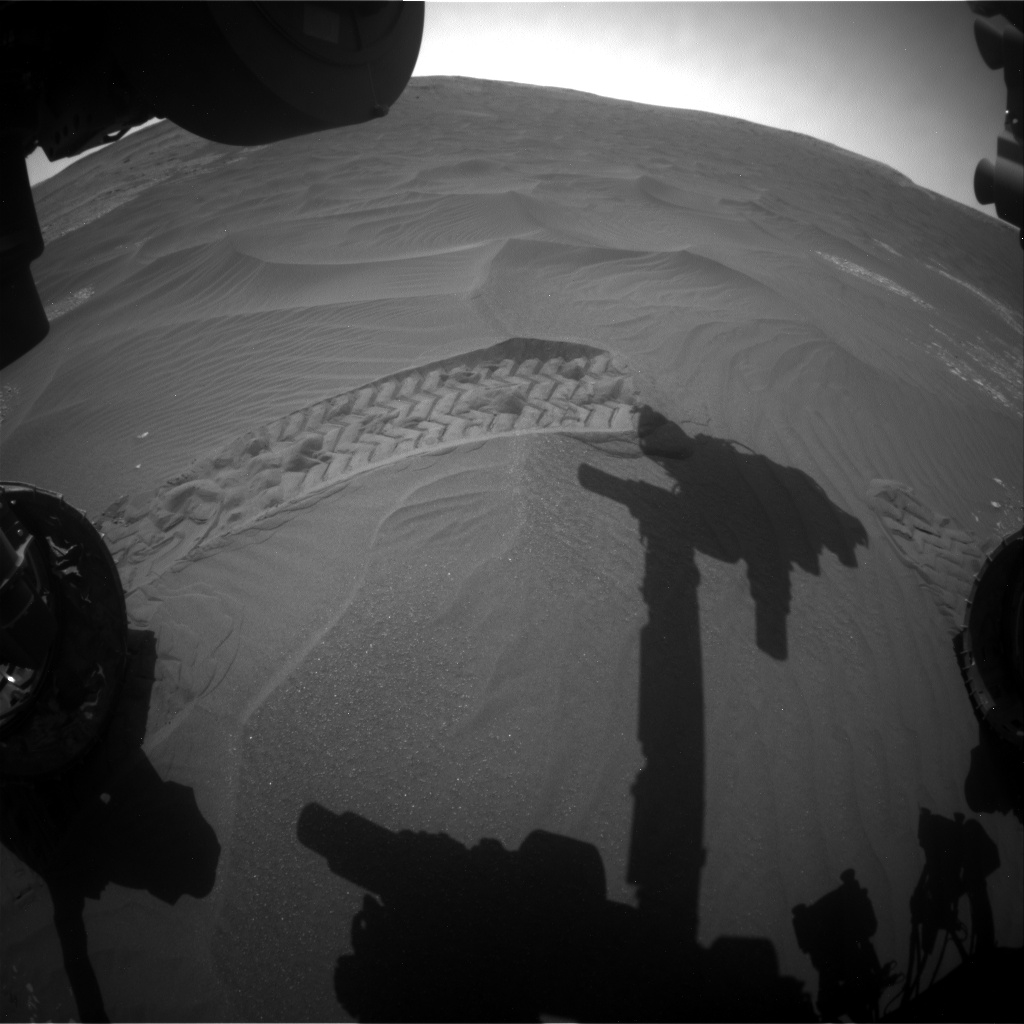
Curiosity Front Hazcam Left B photo taken on Sol 2409, May 17, 2019.
Credit: NASA/JPL-Caltech
Active sand
“There is a lot that we can learn,” Anderson adds, “from these patches of active sand that we occasionally encounter as we explore Gale crater!”
“One of the big questions is where the sand comes from: by measuring the chemical composition of the sand at Rigg we can compare with sand we have seen earlier in the mission to see if the chemistry is different enough that there must be different sources. We also can compare the grain sizes in different parts of the ripple to get a better understanding of how the wind sorts sand grains under martian gravity and atmospheric pressure,” Anderson explains.
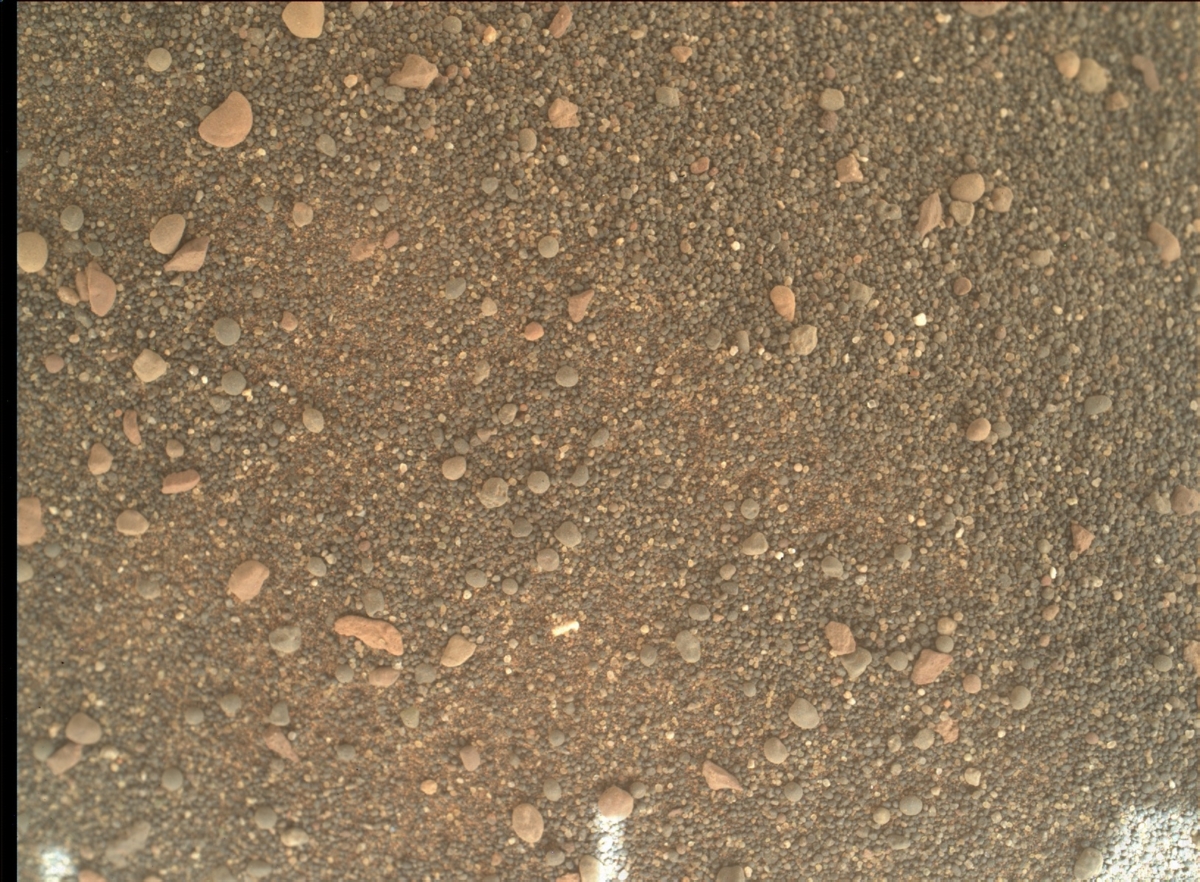
Curiosity Mars Hand Lens Imager (MAHLI) photo produced on Sol 2409, May 17, 2019. MAHLI is located on the turret at the end of the rover’s robotic arm.
Credit: NASA/JPL-Caltech/MSSS
Similarities or differences?
Studying the shape of the ripples in detail also helps scientists compare modern bedforms (the generic term for dune-like features of all sizes) to the ancient ones seen preserved in the rocks, which lets researchers infer similarities or differences in the environment.
“And of course, looking closely at these wind-blown sand features lets us get a better handle on what the winds are like in Gale crater right now,” Anderson reports.
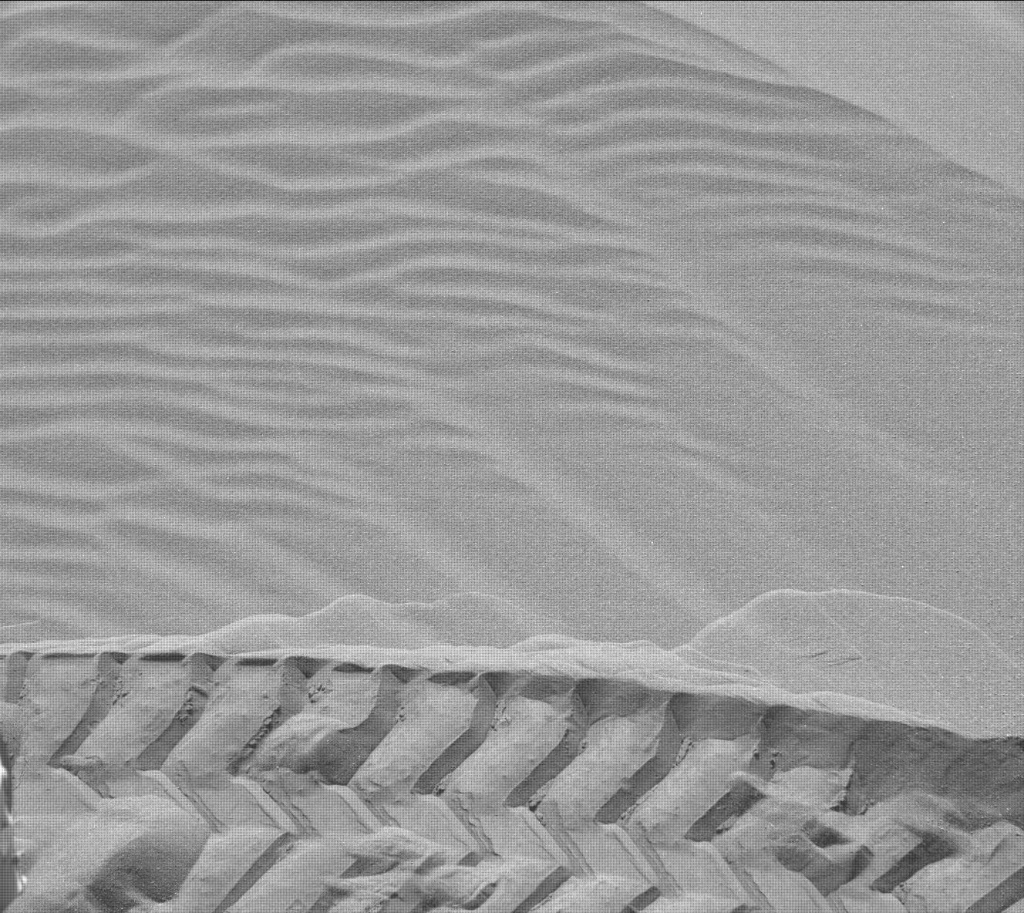
Curiosity Mastcam Left image acquired on Sol 2408, May 16, 2019.
Credit: NASA/JPL-Caltech/MSSS
Blocky outcrop
The sol 2409 plan called for the robot to make a Mastcam multispectral observation of the scuff, followed by Chemistry and Camera (ChemCam) of the floor (“Ben Cruachan”) and wall (“Ben Lomond”) of the scuff, as well as the undisturbed crest of the ripple (“Ben Suardal”).
That plan also calls for use of Navcam to look for dust devils before starting contact science.
Contact science observations start with Mars Hand Lens Imager (MAHLI) images of targets on the ripple crest (“Dunoon”), trough (“Gairsay”), and a secondary ripple (“Nairn”).

Curiosity Mastcam Left image acquired on Sol 2408, May 16, 2019.
Credit: NASA/JPL-Caltech/MSSS
Curiosity’s Alpha Particle X-Ray Spectrometer (APXS) will then quickly measure the chemistry of Dunoon before settling in for an overnight measurement of Gairsay.
“We plan to keep playing in the sand at Rigg for another couple of sols before moving on toward a blocky outcrop to the northeast,” Anderson concludes.

The Lunar Planetary Institute’s (LPI) has released the Lunar South Pole Atlas – a new online reference for mission planners.
NASA has been directed to land astronauts at the lunar south pole by 2024, an objective with a five-year timeline.
Speed, safety, and efficiency are key priorities driving this implementation of Space Policy Directive-1, which is to have humans on the Moon for “long-term exploration and utilization.”
New data products
To assist NASA and the lunar community, LPI, under the Universities Space Research Association (USRA), has compiled an online atlas that consists of a series of maps, images, and illustrations of the south polar region.
The atlas includes new data products developed with the south pole directive in mind; other content is drawn from LPI’s existing collection of Lunar Images and Maps and its Library of Classroom Illustrations.

Links to additional data products derived from recent and ongoing planetary missions are also included.
This atlas is curated to provide context and to be a reference for those interested in the exploration of the Moon’s south pole.
To review the newly released atlas, go to:
Credit: NASA/GSFC/Arizona State University
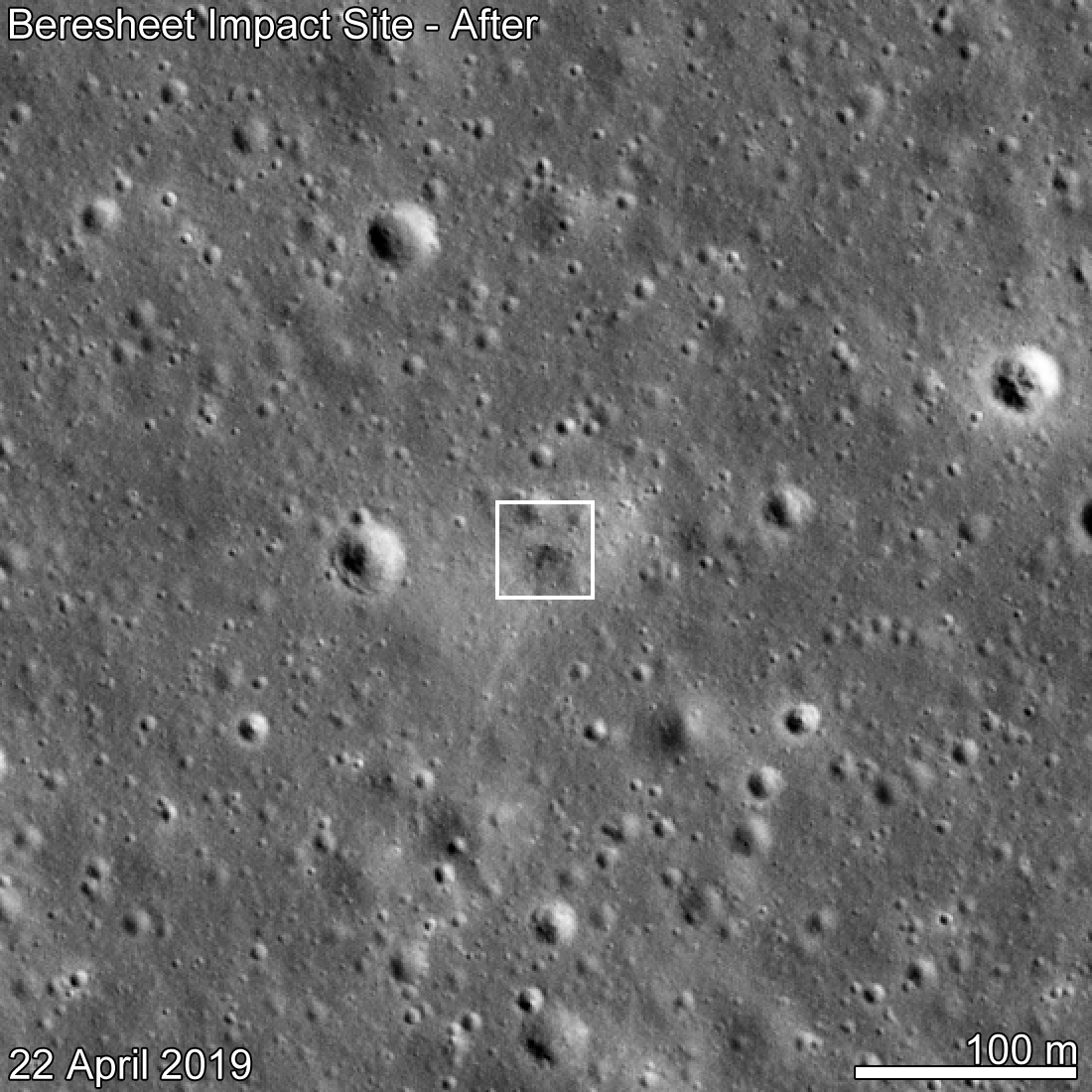
NASA’s Lunar Reconnaissance Orbiter (LRO) has used its high-powered LROC system to image Israel’s SpaceIL Beresheet crash site.
The imagery was taken eleven days after the attempted landing on April 11th.
Credit: NASA/GSFC/Arizona State University
Think gouge…rather than crater
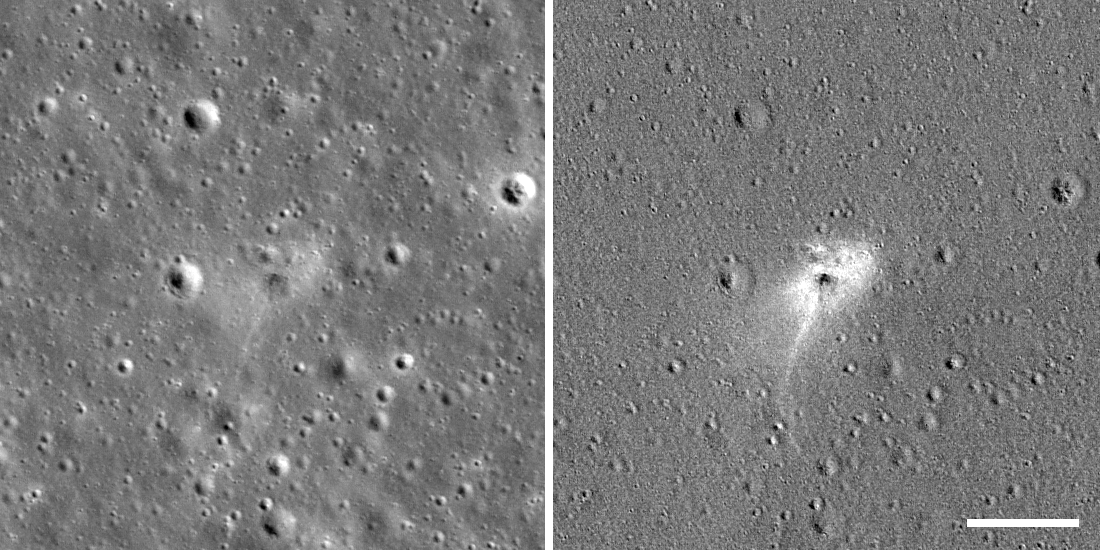
At the scale of the narrow angle camera image, photo specialists cannot detect a crater.
“Perhaps there is one but it is simply too small to be seen,” explains a posting from LRO central at Arizona State University (ASU), “or the low angle of impact (less than ten degrees relative to the surface), the fragility of the spacecraft, and the velocity precluded crater formation (think gouge rather than crater).”
Surrounding the smudge is an area of increased reflectance (up to 20% higher).
Ragged zone
This ragged zone spans 98 feet (30 meters) to 164 feet (50 meters) from the smudge and includes a ray that extends southward about 328 feet (100 meters).
“The higher reflectance was likely caused by gases or very fine high-speed particles rapidly moving away from the impact site, which smoothed the upper layer of regolith and redistributed fine soil particles, which in turn increased reflectance,” notes the ASU/LRO posting.
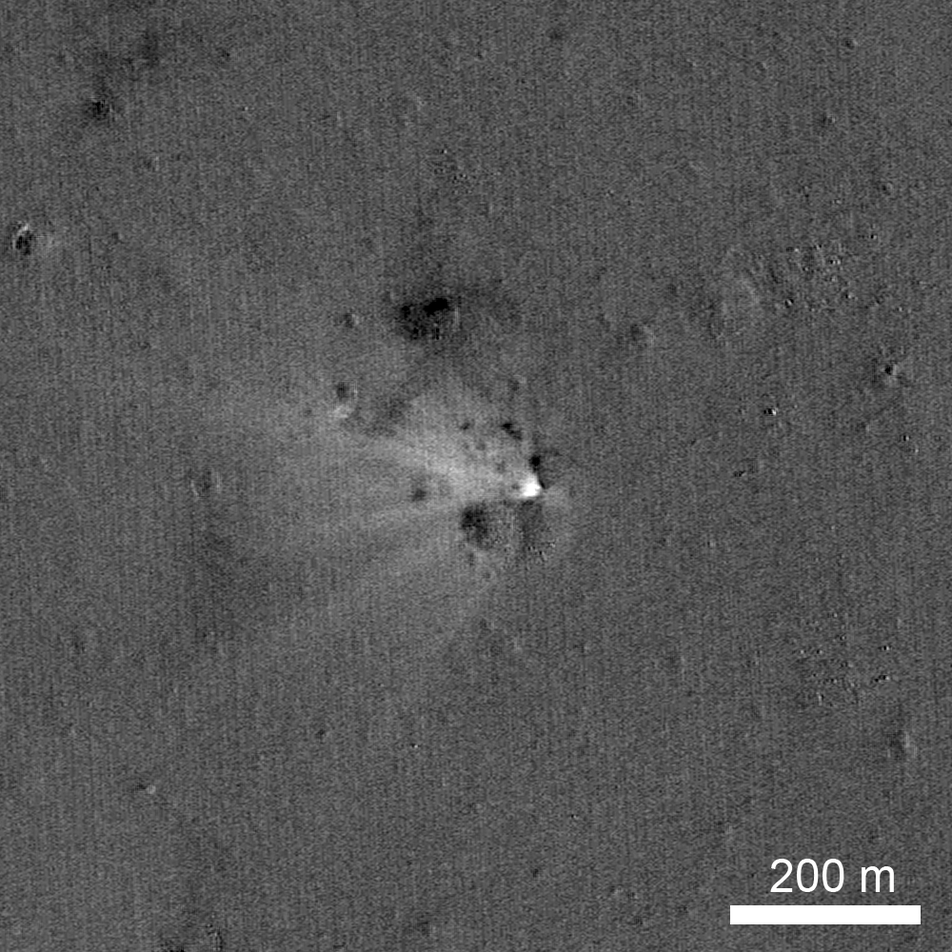
Depleted of fuel, NASA’s Lunar Atmosphere and Dust Environment Explorer spacecraft (LADEE) crashed on April 18, 2014. Its impact site on the eastern rim of Sundman V crater, the spacecraft was heading west when it impacted the surface. The ejecta form a V shaped pattern extending to the northwest from the impact point.
Credit: NASA/GSFC/Arizona State University
Small impact event
One upshot from the crash: while not a successful soft landing, the Beresheet impact provides another example of small impact events, explains the ASU/LRO website.
The crash site can be compared to NASA’s two GRAIL and the LADEE spacecraft that were purposely impacted on the Moon in 2012 and 2014, respectively. The study of these impacts is providing new insights into how the lunar regolith (soil) evolves over time.
“Despite the mishap, it is important to remember that Beresheet was the first spacecraft developed and flown by a non-profit entity to orbit the Moon,” explains the ASU/LRO posting. “And SpaceIL has announced they will be trying again, with Beresheet 2!”
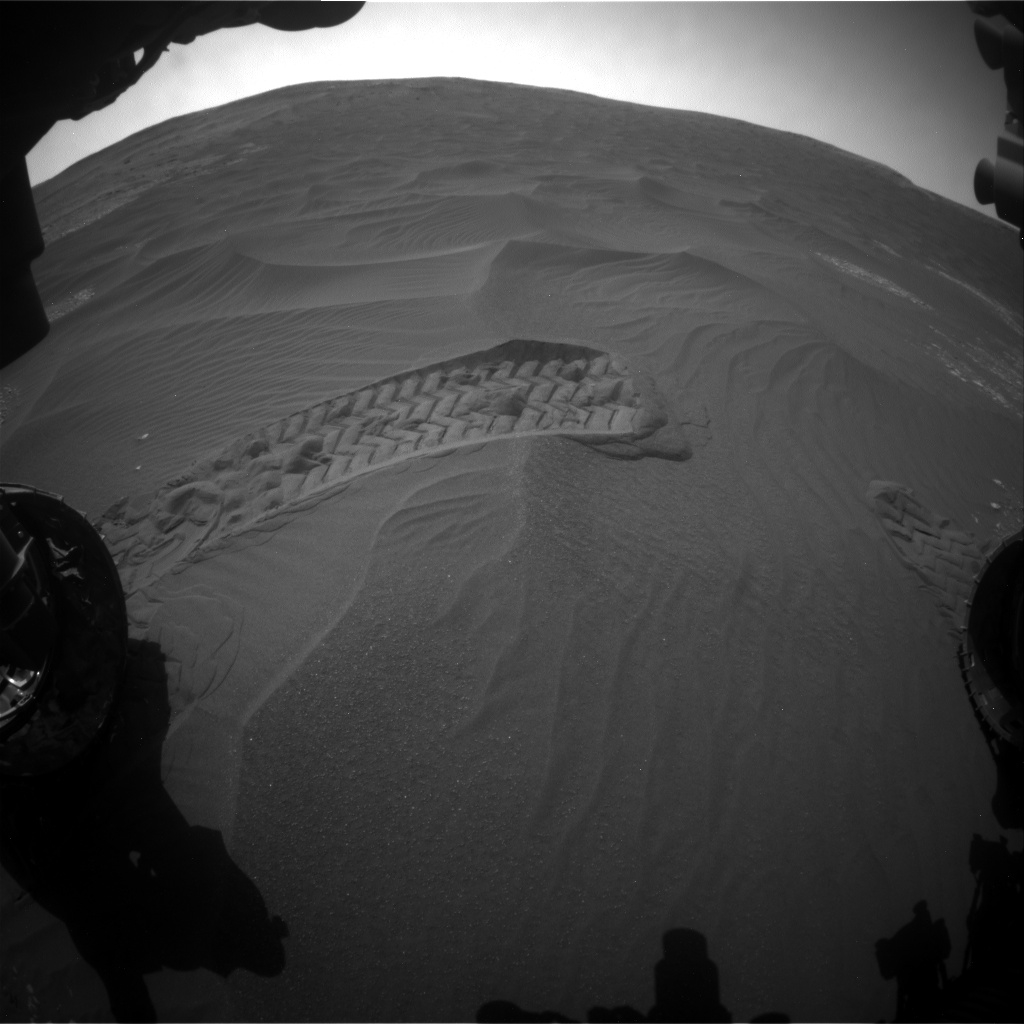
Curiosity Front Hazcam Left B image taken on Sol 2408, May 16, 2019.
Credit: NASA/JPL-Caltech
NASA’s Curiosity Mars rover is now performing Sol 2409 duties.
Now that the robot is back on the road following a drill campaign at Kilmarie, a quick “touch-and-go” activity was planned to characterize the local bedrock, explains Mark Salvatore, a planetary geologist at the University of Michigan in Dearborn.
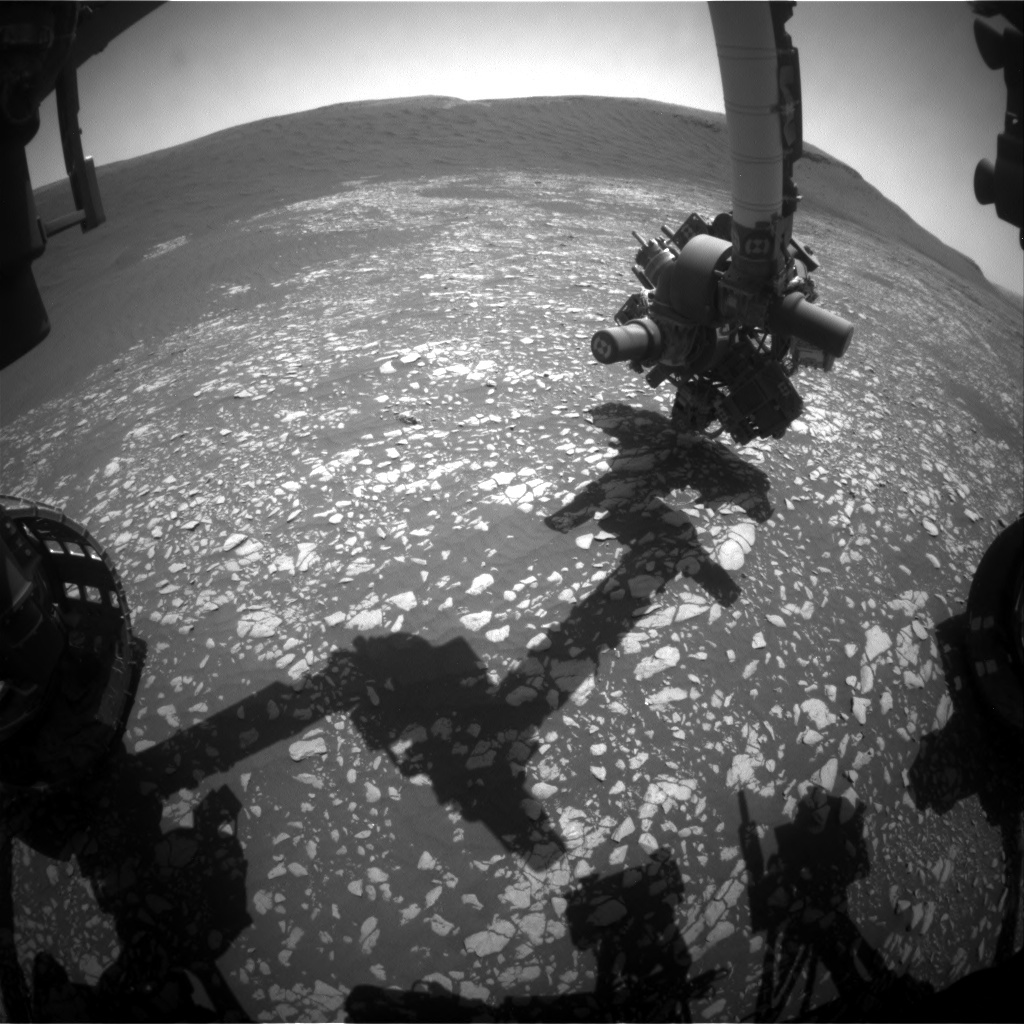
Curiosity Front Hazcam Left B image taken on Sol 2408, May 16, 2019.
Credit: NASA/JPL-Caltech
Ripple field
Curiosity recently drove a short 10 feet (3 meters) to the north towards a large ripple field named “Rigg,” which is where the “go” portion of “touch-and-go” took place.
Before then, however, Curiosity extended her arm and analyzed a patch of bedrock with the Alpha Particle X-ray Spectrometer (APXS) and then zapped bedrock off to the starboard side of the rover using the Chemistry and Camera (ChemCam) Laser Induced Breakdown Spectrometer (LIBS) instrument, Salvatore reports.
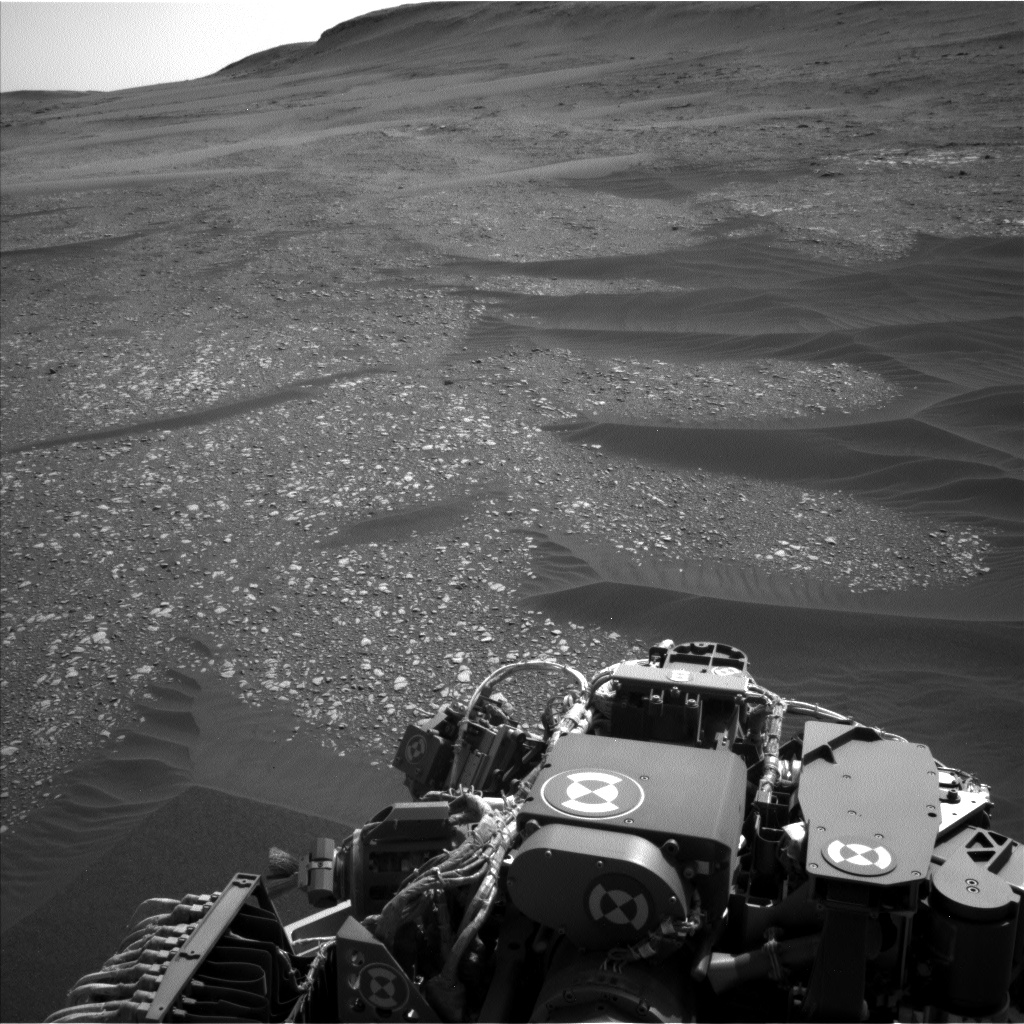
Curiosity Navcam Left B Sol 2408 May 16, 2019
Credit: NASA/JPL-Caltech
Well-planned dance
“She’ll then proceed with a well-planned dance that will dip one of Curiosity’s wheels into the nearby sand ripples, scuffing the surface and creating a small trench, and then orient herself in a position that will be better suited to study both the disturbed and undisturbed portions of the ripples,” Salvatore adds.
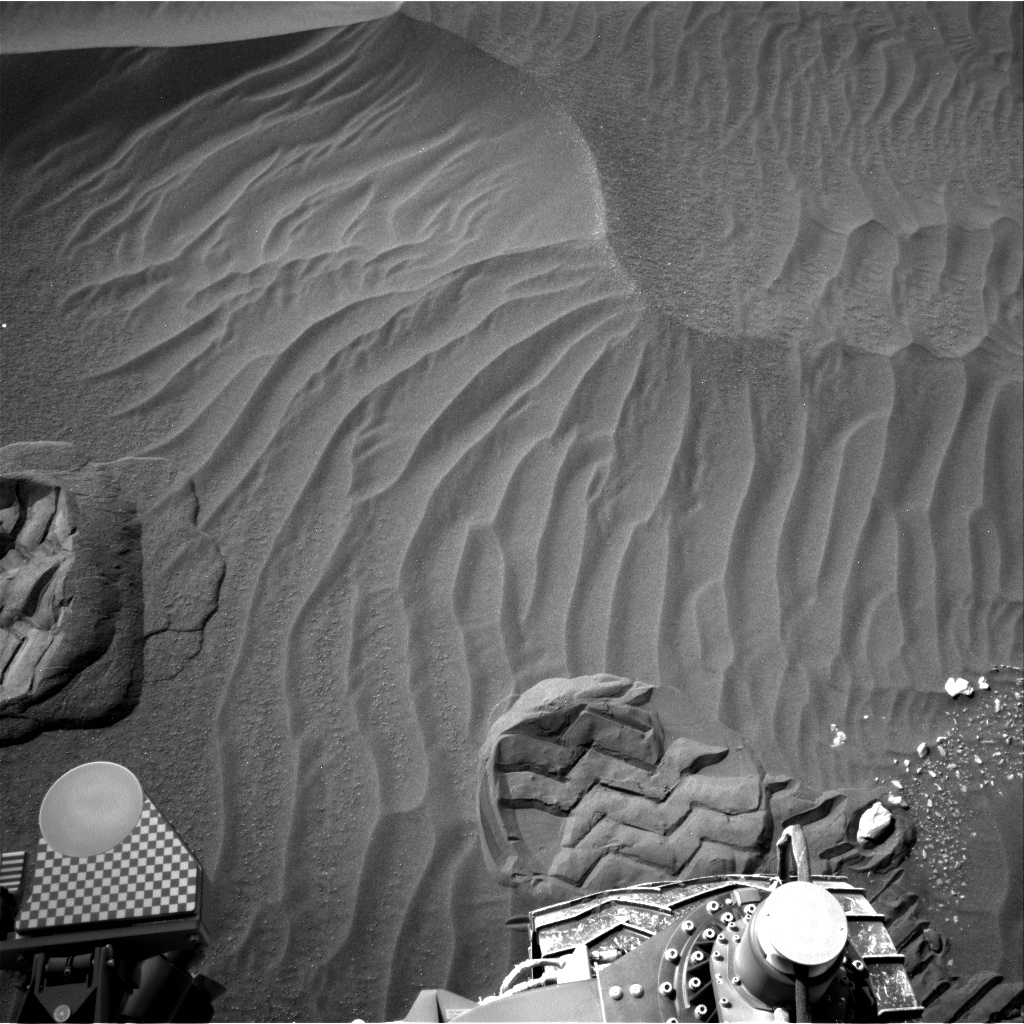
Curiosity Navcam Right B image acquired on Sol 2408, May 16, 2019.
Credit: NASA/JPL-Caltech
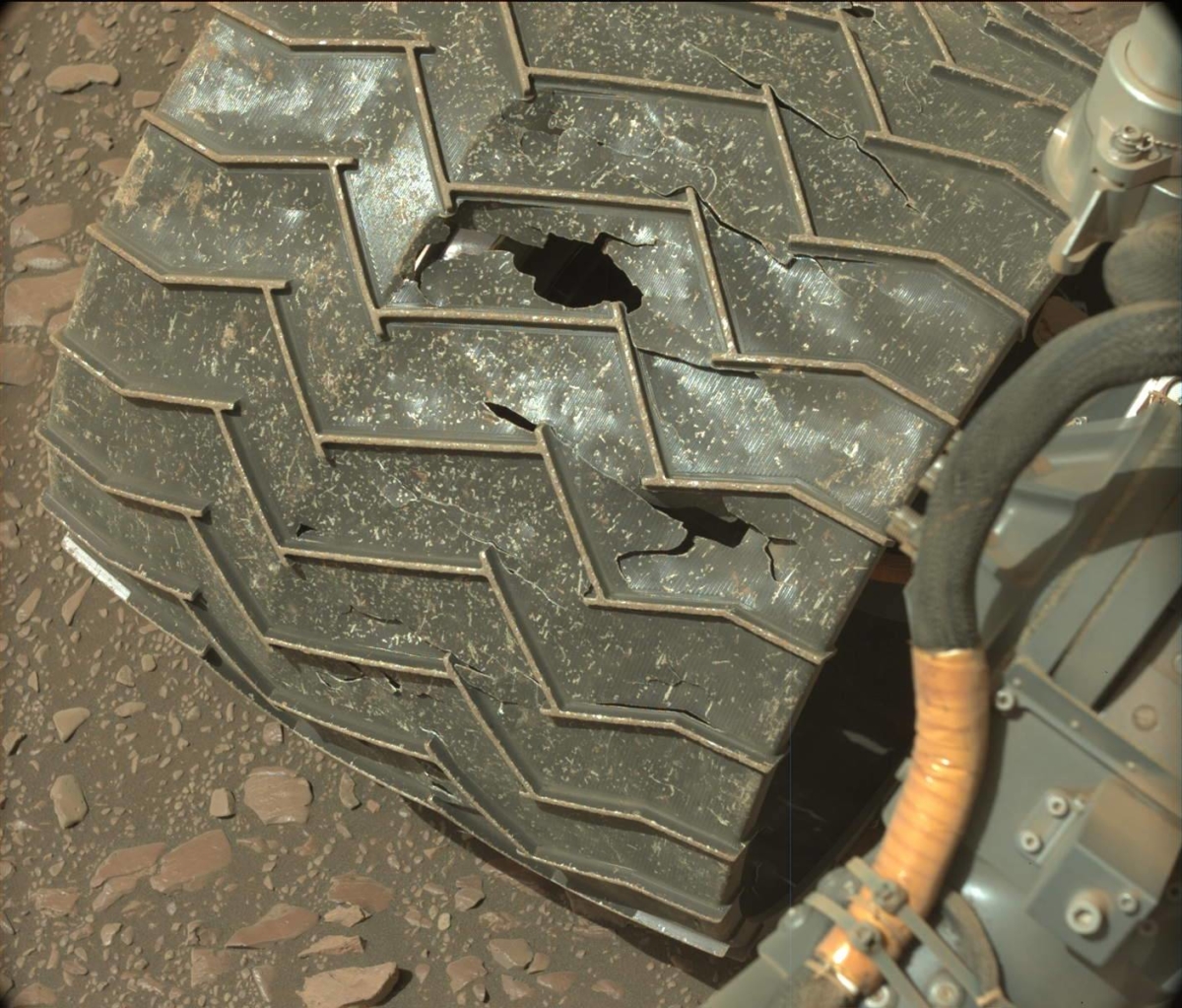
Wheel watch 2019. Curiosity Mastcam Left photo taken on Sol 2407, May 15, 2019.
Credit: NASA/JPL-Caltech/MSSS
The next few days will be dedicated to studying these ripples, Salvatore points out, before Curiosity planners have the rover investigate more of the clay-bearing materials of the Glen Torridon region to the south and east of Vera Rubin ridge.

The Red Planet as seen by Europe’s Mars Express.
Credit: ESA/D. O’Donnell – CC BY-SA IGO
Explore Mars, Inc. has released The Humans to Mars Report 2019, issued at the group’s summit meeting being held May 14-16 at the National Academy of Sciences Building in Washington D.C.
The report notes that the past year has been a particularly active year with regard to space policy. The National Space Council announced that it is now the goal of the United States to return humanity to the Moon by the year 2024.

Credit: Subcommittee on Space, Committee on Science, Space, and Technology/Screengrab
Broad-based, bi-partisan
According to NASA Administrator Jim Bridenstine, this will help enable human missions to Mars by 2033, as required by the NASA Transition Authorization Act of 2017. “This is essential as Mars exploration maintains broad-based bi-partisan support, with unwavering support coming from NASA, Congress, and industry,” explains the report.
Public interest in Mars also remains strong, as evidenced by recent public polling.

Credit: Bryan Versteeg
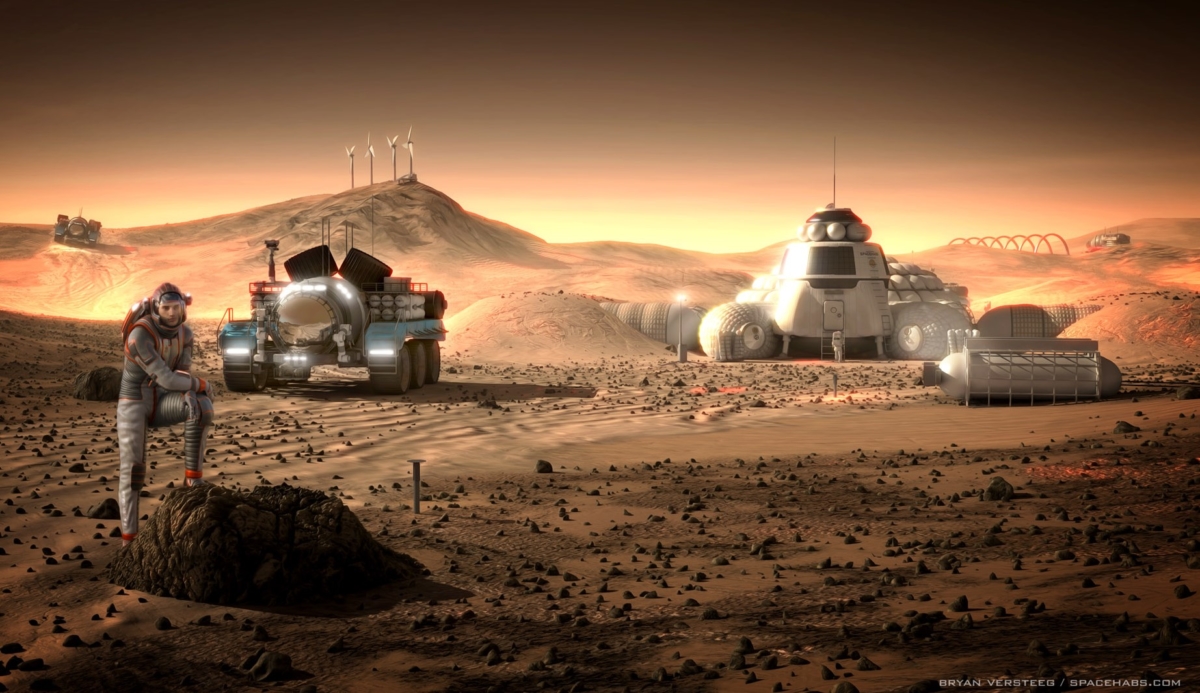
“Although a recent report argued that missions to Mars in 2033 may not be feasible under certain conditions, we maintain that if the United States adopts leaner architecture approaches than those assumed in that report and if both funding and political capital are applied to the new accelerated space policy, humans on Mars in 2033 remains an achievable goal,” says the report.
Credit: Bryan Versteeg
Moon/Mars synergies
Regarding the new thrust toward lunar exploration, the report embraces such a strategy, “as long as they do not significantly delay human missions to Mars.”
“We view Mars as a critical destination that will enable the exploration and development of space,” the new report explains, “and we firmly believe that humanity should set the goal of sending humans to Mars by 2033.”
In a press statement, according to Explore Mars, Inc. Board member and Executive Vice President, Joe Cassady: “It is interesting to note that while much is made of recent focus on returning to the Moon, many of the same architectural elements remain and are the keys to both a return to the Moon and to human missions to Mars in the 2030s. I am heartened by the spirit of cooperation and the many synergies we are finding between lunar and Mars advocates.”
To view the entire report — The Humans to Mars Report 2019 – go to:
https://www.exploremars.org/wp-content/uploads/2019/05/H2MR_2019_Web.pdf
For more information on Explore Mars, Inc., go to:

Credit: Smithsonian/NASM/Jim Preston
Neil Armstrong’s Apollo 11 spacesuit will go on display July 16, the 50th anniversary of the launch of Apollo 11.
“This is a big moment for us,” explains a Smithsonian Air and Space Museum statement, “because it will be the first time the suit is displayed in 13 years, and the suit just completed a multi-year conservation.”
The suit conservation was funded by thousands of public donations through a Kickstarter campaign in 2015.
A state-of-the-art display case and mannequin have been created to help protect the fragile suit while on display.

Credit: Smithsonian/NASM/Jim Preston
Leftover lunar dust
Does the suit look significantly different to the naked eye?
“No, but that’s the point! Our conservation of the Armstrong spacesuit didn’t aim to make it look brand new, but rather to preserve and stabilize the suit, keeping all of the history-making elements intact,” explains the museum statement.
You can even see Moon dust that remains on the suit from the lunar mission.
For a view of Neil Armstrong’s spacesuit in person, it will be on display at the museum in Washington, D.C. starting July 16.

Apollo Leadership Lessons: Powerful Business Insights for Executives by Dick Richardson; Authority Publishing 2019; paperback: 232 pages, $24.99.
As we close in on the July salute of the 50th anniversary of Apollo 11, you’ll find this book an inspiring read – one that captures hope and disappointment, villains and heroes, greed and sacrifice. At every step it’s a story of leadership.
With unique access to key leaders and NASA resources, author Dick Richardson has captured the leadership insights of America’s journey to the Moon and other space projects. These lessons are told through the lens of the people who were there–the executives, flight directors, and astronauts.
As the volume explains: “You may not go to the Moon, but this book will help you apply NASA’s leadership lessons to your company’s mission.”
Twelve chapters take the reader from Wernher von Braun and his adaptive leadership in action, John F. Kennedy’s ability to nurture a vision, the crisis of leadership due to the Apollo 1 pad fire to Apollo 13’s responsive innovation and the changing strategic intent of the Apollo-Soyuz project.
“Many of the leadership insights that came out of NASA are still there, sixty years later,” Richardson writes. “The people who grappled with tough situations, made difficult decisions, and led challenging teams left a lasting legacy from which we all continue to benefit,” he adds.
“Read the book. You may be spurred on to lead others to do things that are hard to do or even imagine. Whether in space or on earth, these are exciting and changing times, and you are a part of them,” explains David Leestma, astronaut and former director, Flight Crew Operations in the book’s foreword. “Dick Richardson is making a difference in helping leaders and his insights may make the journey easier and better.”
I concur.
This unique read is a real plus in helping the reader better appreciate the leadership principals and tactics employed by Apollo’s key decision-makers.
For more information on this book, go to:
Credit: UCSB/Lubin
One small, high-flying step toward interstellar travel!
Last month, UC Santa Barbara students sent up, via balloon, a prototype miniature spacecraft designed to further interplanetary and eventually interstellar flight.
“It’s part of a process of building for the future, and along the way you test each part of the system to refine it,” said UC Santa Barbara physics professor and experimental cosmologist Philip Lubin.
Credit: UCSB/Lubin/Screengrab Inside Outer Space
Wafer scale spacecraft
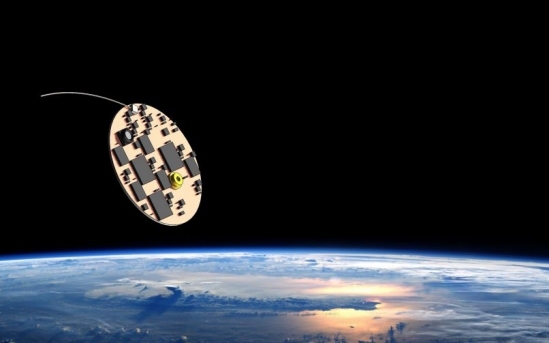
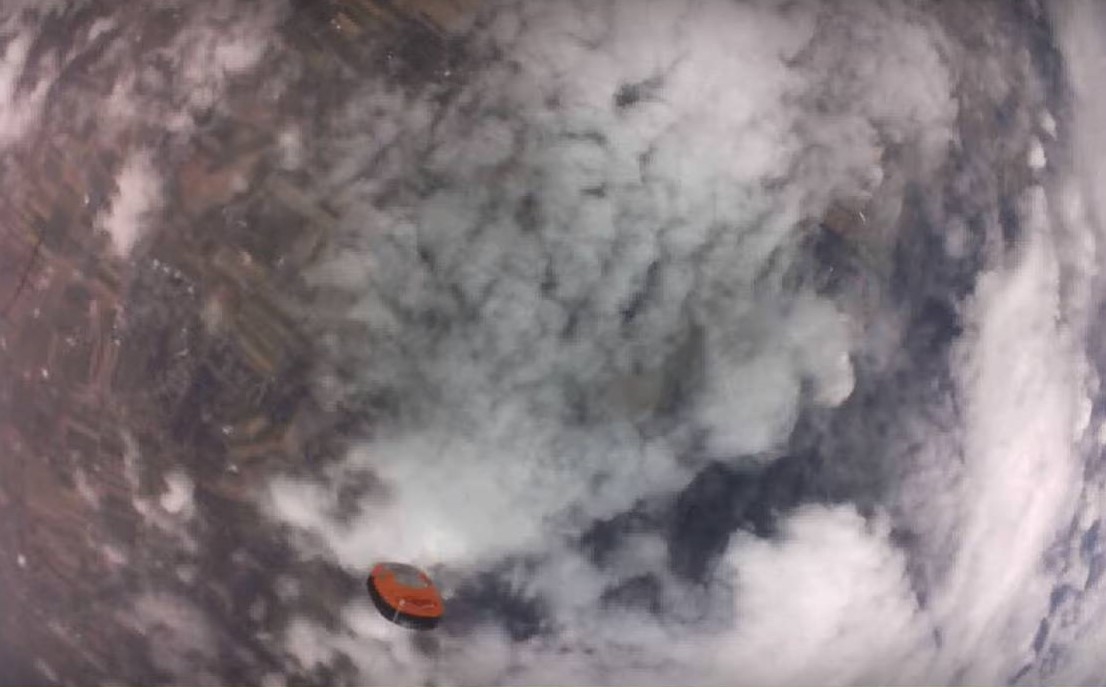
The prototype wafer scale spacecraft (WSS) is small enough to fit in the palm of one hand. It was launched into the stratosphere above Pennsylvania, to an altitude of 105,000 feet (32 km) — three times that of commercial airplanes — to gauge its functionality and performance.
The launch was conducted in collaboration with the United States Naval Academy in Annapolis on April 12, 2019 — 58 years to the day that Russian cosmonaut and pilot Yuri Gagarin became the first human to complete orbital space flight.
The spacecraft prototype worked flawlessly and collected more than 4,000 images of the Earth.
“It was designed to have many of the functions of much larger spacecraft, such as imaging, data transmission, including laser communications, attitude determination and magnetic field sensing,” said Nic Rupert, a development engineer in Lubin’s lab. “Due to the rapid advancements in microelectronics we can shrink a spacecraft into a much smaller format than has been done before for specialized applications such as ours.”

Artist rendering of the Directed Energy Interstellar Study.
Credits: P. Lubin
Ultra-lightweight
The project’s is to build an ultra-lightweight (gram scale) silicon wafer with embedded electronics, capable of being shot into space by way of directed energy propulsion while relaying data back to Earth.
Part of a NASA-funded endeavor called Starlight, the effort is supported also by the Breakthrough Foundation, where it is known as Starshot. UC Santa Barbara initiated the project in 2009 with modest funding from NASA’s Spacegrant program, receiving additional funds in 2015 via NASA’s Innovative Advanced Concepts (NIAC) program.
Go to this video at:
For more information, go to this story by Sonia Fernandez in UCSB’s The Current:

