Archive for the ‘Space News’ Category
 Author:
  October 26th, 2019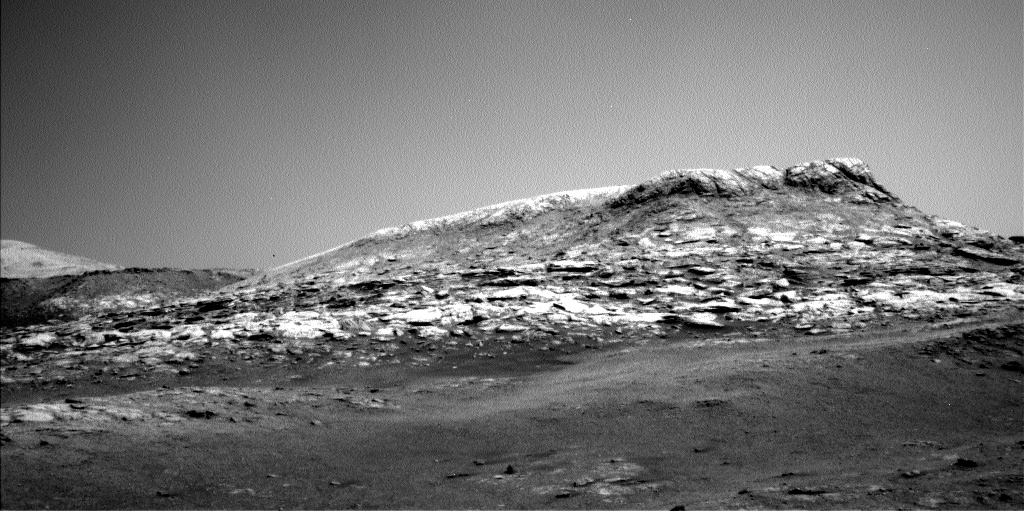
“Central Butte” is visible in this image taken by Curiosity’s Left Navigation Camera B Sol 2565 October 24, 2019
Credit: NASA/JPL-Caltech
NASA’s Curiosity Mars rover is now carrying out Sol 2567 duties.
Kristen Bennett, a planetary geologist at the USGS Astrogeology Science Center in Flagstaff, Arizona, reports that Curiosity is in an incredible area, with interesting rocks in the workspace and towering buttes ahead of the Mars machinery.
“There are some color variations within the workspace, with some gray blocks right in front of the rover,” Bennett notes. There are three contact science targets in the weekend plan, two are a combination of Alpha Particle X-Ray Spectrometer (APXS) and Mars Hand Lens Imager (MAHLI) observations, and one is a MAHLI-only observation.
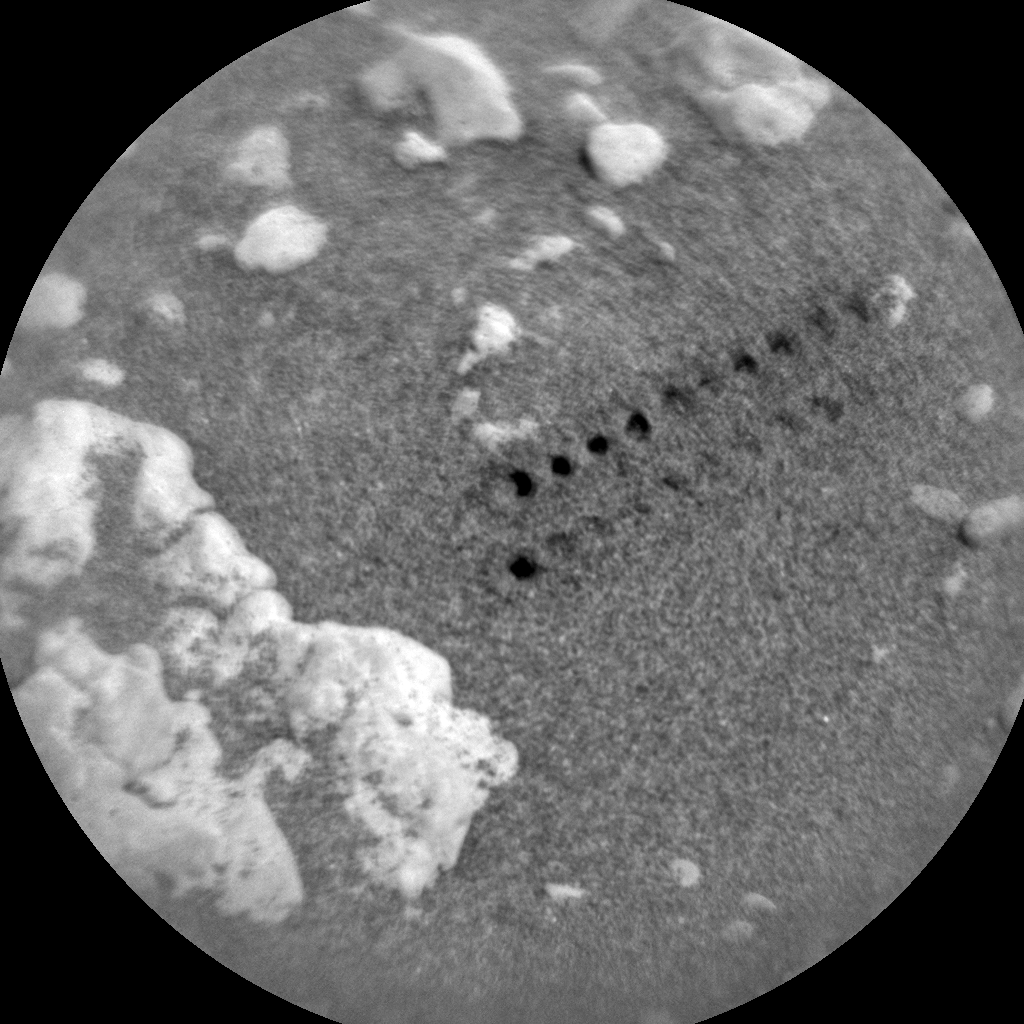
Curiosity Chemistry & Camera (ChemCam) Remote Micro Imager (RMI) photo taken on Sol 2566, October 25, 2019.
Credit: NASA/JPL-Caltech/LANL
Clear the dust
“South Ronaldsay” is on a flat bedrock target, and the Dust Removal Tool will be used to clear the dust before the MAHLI and APXS observations, Bennett explains.
“White Craig” is a MAHLI and APXS target on a different block to characterize any potential variations in this area.
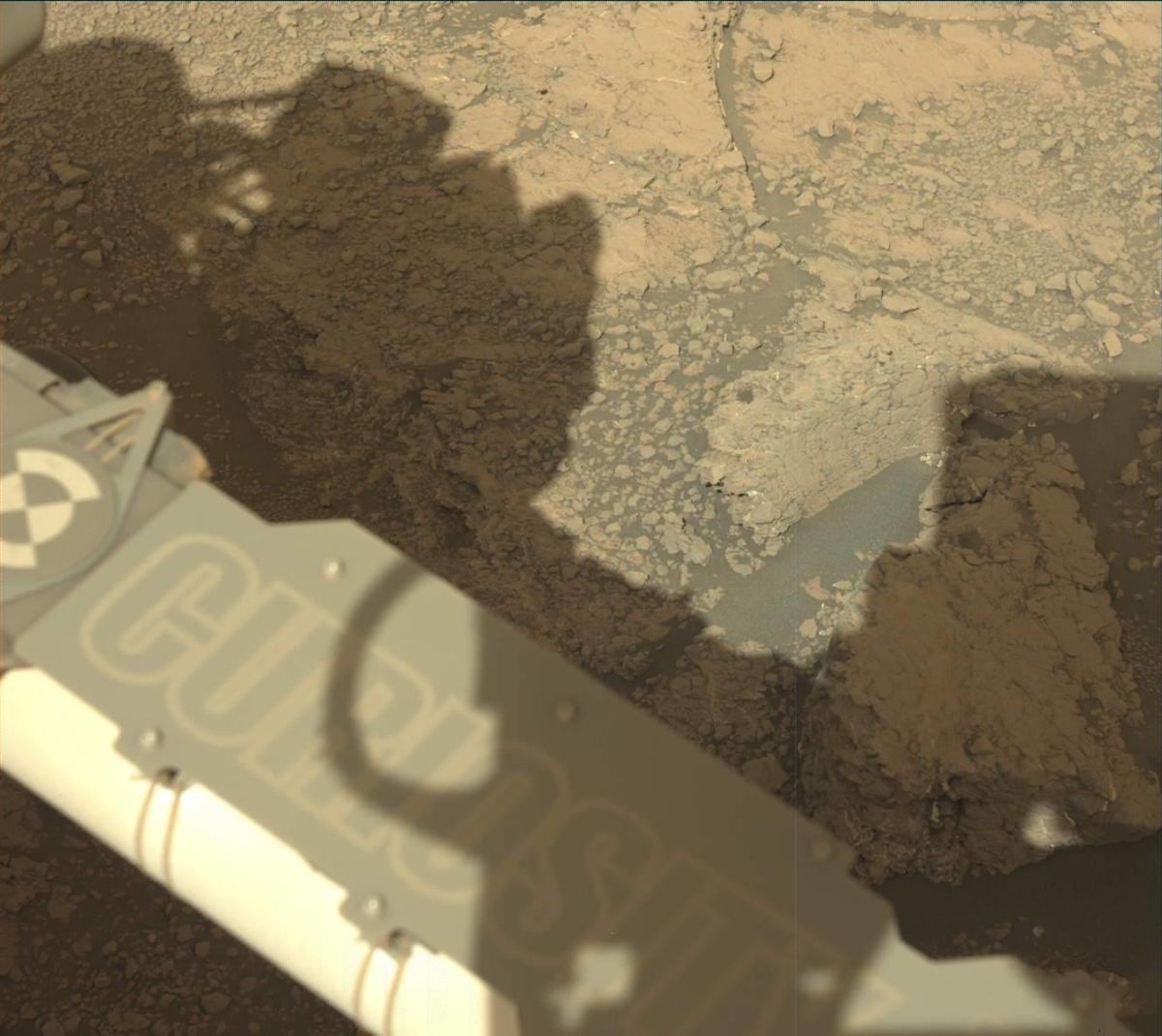
Curiosity Mast Camera (Mastcam) Left image taken on Sol 2565, October 24, 2019.
Credit: NASA/JPL-Caltech/MSSS
Finally, “The Doups” is a MAHLI-only target in which we will look obliquely at the side of a block to investigate the sedimentary structures in this area.
Remote science
The weekend plan is also chock-full of remote science.
The robot’s Chemistry and Camera (ChemCam) will target South Ronaldsay, so scientists can compare these results to the contact science observations.

Curiosity Left Navigation Camera B photo acquired on Sol 2565, October 24, 2019.
Credit: NASA/JPL-Caltech
ChemCam will also target “Ruvaal,” which is on another part of the bedrock in the workspace, to test for variations. Mastcam will take documentation images of both of these ChemCam targets.
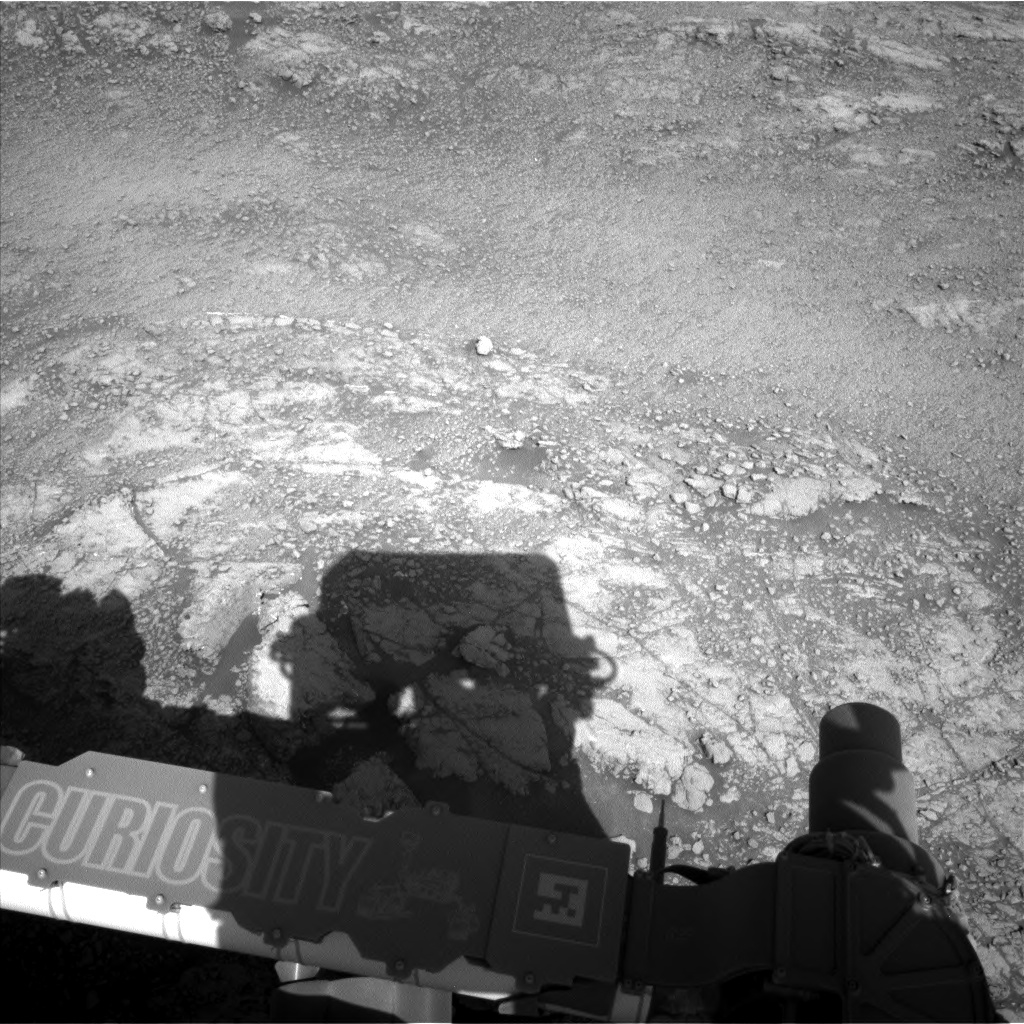
Curiosity Left Navigation Camera B image acquired on Sol 2566, October 25, 2019.
Credit: NASA/JPL-Caltech
Butte and tower country
Additionally, there are two large Mastcam mosaics in the plan.
“Curiosity is now driving through butte and tower country, so we planned mosaics to cover two of the nearby buttes,” Bennett reports. “One mosaic is of ‘Central Butte,’ which we will continue to drive around. Another is of “Rapness,” which is off to the east of the rover.”
After all these observations, Curiosity will drive towards Central Butte, Bennett adds, to start investigating the laminations that outcrop there. To add even more science observations to the plan, Curiosity will also take mid-drive imaging with Mastcam in order to get stereo information of the butte.
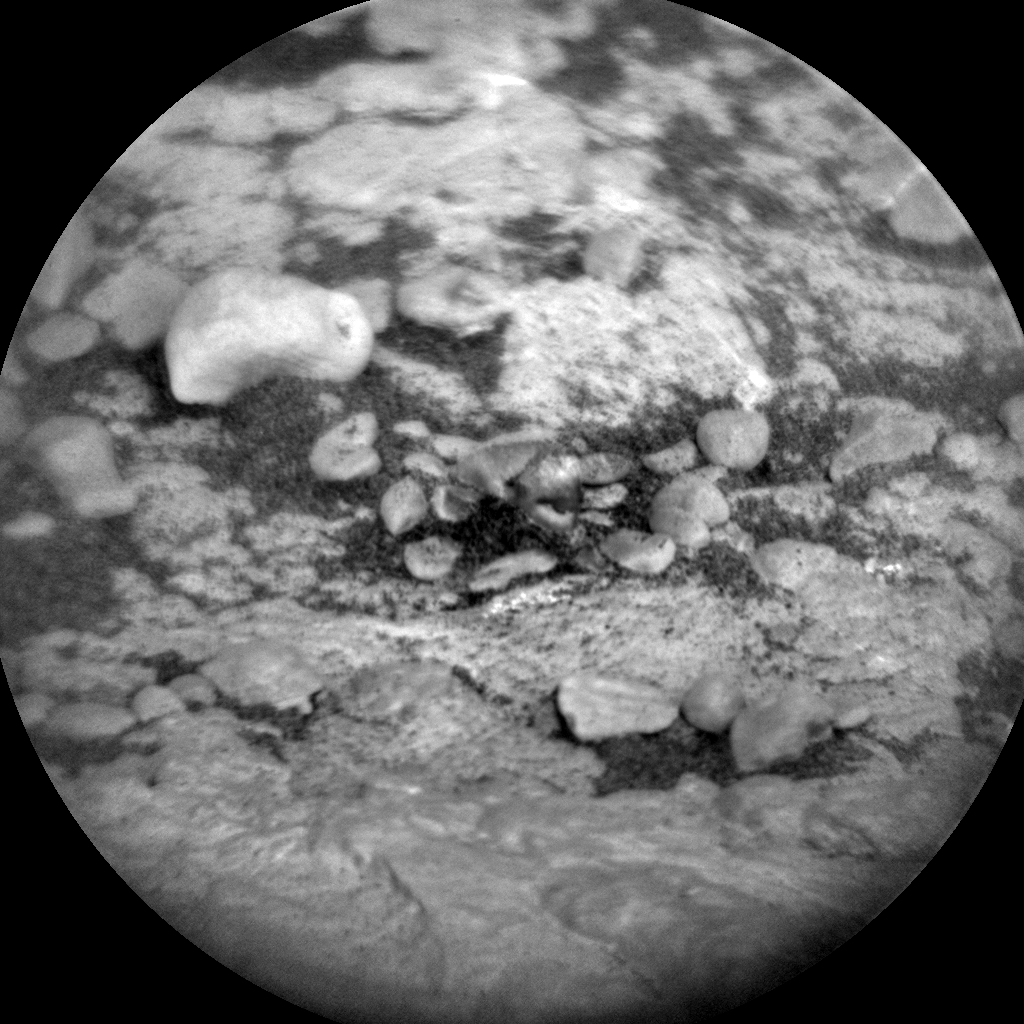
Curiosity Chemistry & Camera (ChemCam) RMI image taken on Sol 2565, October 24, 2019.
Credit: NASA/JPL-Caltech/LANL
“Usually we get stereo by taking a Mastcam image of a target with both the right and left Mastcam cameras. But we can also obtain stereo by taking a picture, physically moving the rover a little bit, and then taking another picture,” Bennett concludes. “This butte is showing off some amazing laminations, so we are doing this long baseline stereo observation to better characterize this area.”
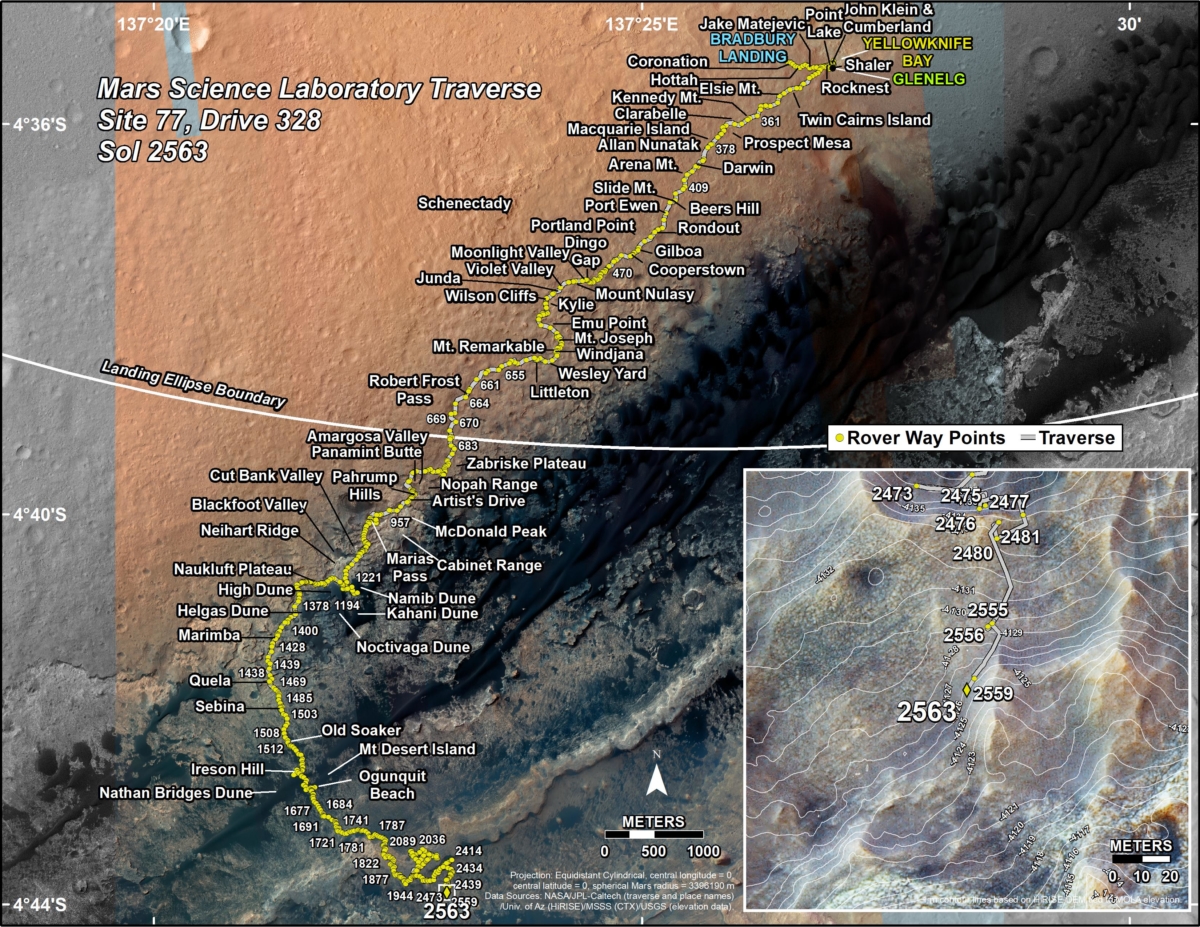
New road map
A new road map shows the route driven by NASA’s Mars rover Curiosity through the 2563 Martian day, or sol, of the rover’s mission on Mars (October 22, 2019).
Numbering of the dots along the line indicate the sol number of each drive. North is up. From Sol 2559 to Sol 2563, Curiosity had driven a straight line distance of about 15.35 feet (4.68 meters).
Since touching down in Bradbury Landing in August 2012, Curiosity has driven 13.15 miles (21.17 kilometers).
The base image from the map is from the High Resolution Imaging Science Experiment Camera (HiRISE) in NASA’s Mars Reconnaissance Orbiter.
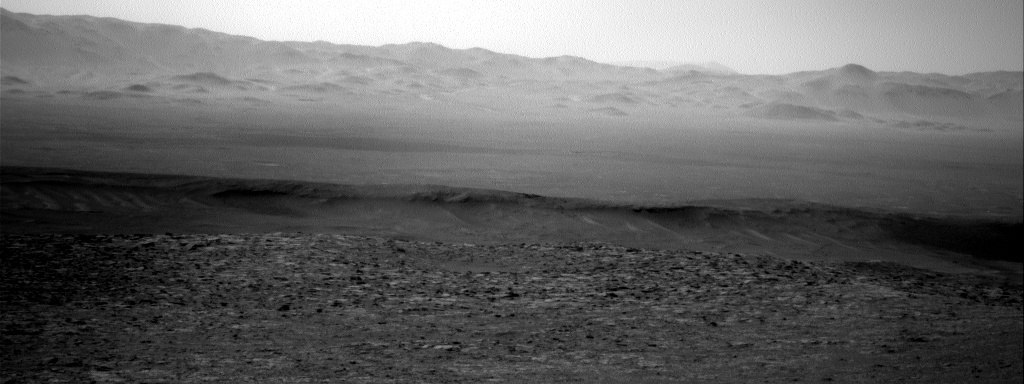
Curiosity Right Navigation Camera B image acquired on Sol 2566, October 25, 2019.
Credit: NASA/JPL-Caltech
 Posted in

The Red Planet as seen by Europe’s Mars Express.
Credit: ESA/D. O’Donnell – CC BY-SA IGO
There is growing discussion, debate, and frustration regarding future exploration of Mars and how best to hunt for past, even present life on the Red Planet.

Credit: Bryan Versteeg
A wide range of thorny issues now require attention. Some of these have been brought to the fore by just round the corner private sector missions, cleanliness demands for Mars probes, plans to robotically hurl Martian samples back to Earth, and the outlook of eventually planting human footprints on that faraway world.
One facet of the deliberation is what constitutes a “Special Region” on Mars.
For more information, please go to my new Scientific American story:
Reduce Red Tape for the Red Planet, Report Says – Regulations governing the responsible exploration of Mars and other worlds require regular, frequent updates, according to a new NASA review
https://www.scientificamerican.com/article/reduce-red-tape-for-the-red-planet-report-says/

Credit: NASA/JPL-Caltech
“We have made important progress in our attempts to get the mole digging again…in fact, we got it digging again!”
That’s the word from Tilman Spohn of the German Aerospace Center’s (DLR) Institute of Planetary Research in Berlin. He’s the experiment leader on the Heat Flow and Physical Properties Package (HP3), the self-hammering “mole” designed to dig down as much as 16 feet (5 meters) and take Mars’ temperature.
The HP3 has been trouble-plagued, deployed from the NASA InSight Mars lander.

Components of the HP3 heat flow probe. Top left: the radiometer (RAD), which is used to measure the radiation temperature (roughly equivalent to the ground temperature) of the surface. Right: the casing with the mole penetrometer, the temperature measuring cable (TEM-P) and the data cable (ET) connected to the lander. In addition, the casing contains an optical length meter for determining the length of the temperature measuring cable that has been pulled from the casing. The mole contains the TEM-A active thermal conductivity sensor and the STATIL tiltmeter. Bottom left: the electronic control unit, known as the back end electronics (BEE), which remains on the lander and is connected to the probe via the ET.
Credit: DLR
Digging slowly but steadily
“You may recall that we have pinned the mole with the [lander’s robotic] scoop which resulted in the mole digging slowly but steadily. Four carefully planned sessions have been executed on sols 308, 311, 315 and 318, with 20, 100, 100, and 150 strokes, respectively,” Spohn reports.
At the end of sol 318, mole scientists had exhausted their capability of pinning because the mole had dug so deep that it would risk the tether if the arm under tension would move uncontrolled to the left as the mole dug below it.
“We therefore moved the arm slightly to the right – about 1 centimeter – away from the mole thereby releasing the pin,” Spohn adds. The arm was commanded to press onto the surface.

InSight mole specialists and technicians at Jet Propulsion Laboratory have developed and have implemented strategies to get the mole moving again. Credit: NASA/JPL-Caltech.
Breakthrough
“With its force of 50 Newtons, we estimated that the load at the mole at shallow depth would still be more than twice the load provided by the overburden. Still, as the friction on the mole sleeve would be significantly less than from pinning, it was not obvious that the mole would continue digging,” Spohn explains.
Mole scientists and technicians commanded 50 strokes to be executed on sol 322 because they would not have proof that the scoop would indeed press on the surface as we started hammering. The mole was clearly seen to dig.

InSight Mars lander.
Credit: NASA/JPL-Caltech
“To me this is a breakthrough! It tells me that indeed insufficient friction was the root cause of the problem,” Spohn points out. “I am now confident that with the next round of hammer strokes – 500 are planned for sol 325 – we get the mole fully buried,” he notes.
The news from the site about this prospect will be available on Saturday evening Central European Time.


NASA’s Lunar Reconnaissance Orbiter (LRO).
Credit: NASA/Goddard Science Visualization Studio (SVS)
NASA’s Lunar Reconnaissance Orbiter (LRO) has once again imaged the area where India’s Chandrayaan-2 Vikram Moon lander failed to successfully touch down.
LRO imaged the targeted landing site on October 14 but did not observe any evidence of the lander.
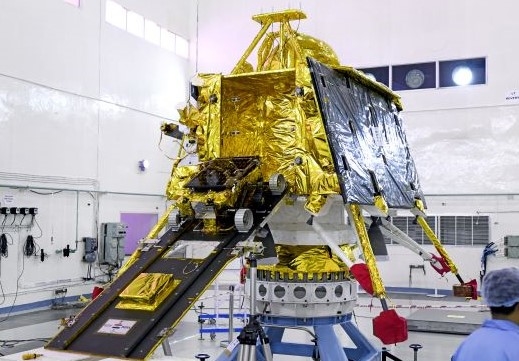
Pre-launch photo shows India’s Pragyan rover mounted on the ramp projecting from out of the sides of Vikram lunar lander.
Credit: ISRO
Change detection technique
The LRO camera team carefully examined the images and employed the change detection technique (using a ratio of an image from prior to the landing attempt to the one acquired on October 14).
That technique is used for finding new meteorite impacts on the Moon that also helped locate Israel’s Beresheet failed lunar lander earlier this year.
“It is possible that Vikram is located in a shadow or outside of the search area. Because of the low latitude, approximately 70 degrees south, the area is never completely free of shadows,” explains a NASA statement.

Dust up on the Moon. Apollo 17 commander prepares to doff lunar dust-covered space suit.
Credit: NASA
Think of it as a flash back message from the Apollo moonwalkers. The Moon is a Disneyland of dust.
Between 1969 and the end of 1972, a dozen astronauts kicked up the powdery regolith, the topside dirt of the Moon.
Apollo aroma
Apollo expedition members could not escape tracking lunar material inside their Moon lander homes. After doffing their helmets and gloves, moonwalkers could feel the abrasive nature of the dust, as well as smell and even taste the Moon. And that gave rise to the “Apollo aroma”- astronaut recollections of the odor of the Moon.
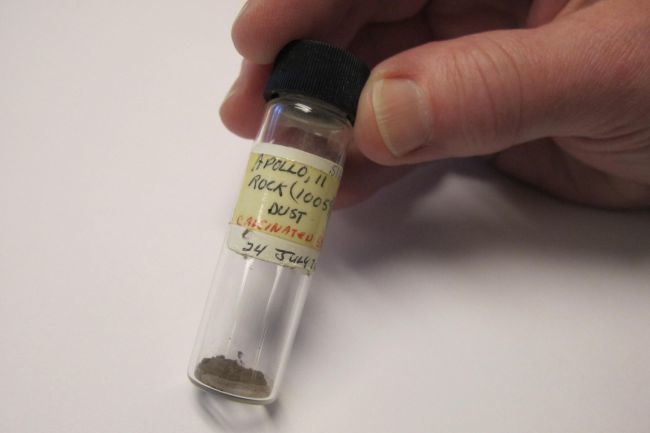
A vial of Apollo 11 Moon dust from a lunar sample collected in 1969.
Credit: Marilee Bailey/Lawrence Berkeley National Laboratory
Turns out, it has a distinctive odiferous smell.
Dangers to address
Earth’s Moon will be the “go-to” place as the century progresses. But there will also be political, economic and financial reasons to explore and colonize lunar territory, in particular, to extract water from the Moon’s surface and to mine for precious rare-earth metals as terrestrial resources dwindle.

Though there will be opportunities for those willing to make use of those resources, whether as nations, as individuals, as private companies or as a combination of these, there will be dangers to address.
One such danger to astronauts will be from exposure to lunar dust.
For more information, please read my new Space.com story:
Moon Dust Could Be a Problem for Future Lunar Explorers
Lunar dust is abrasive and gets into everything.
https://www.space.com/moon-dust-problem-lunar-exploration.html

Curiosity Left Navigation Camera B image taken on Sol 2559, October 18, 2019.
Credit: NASA/JPL-Caltech
NASA’s Curiosity Mars rover is now performing Sol 2560 duties.
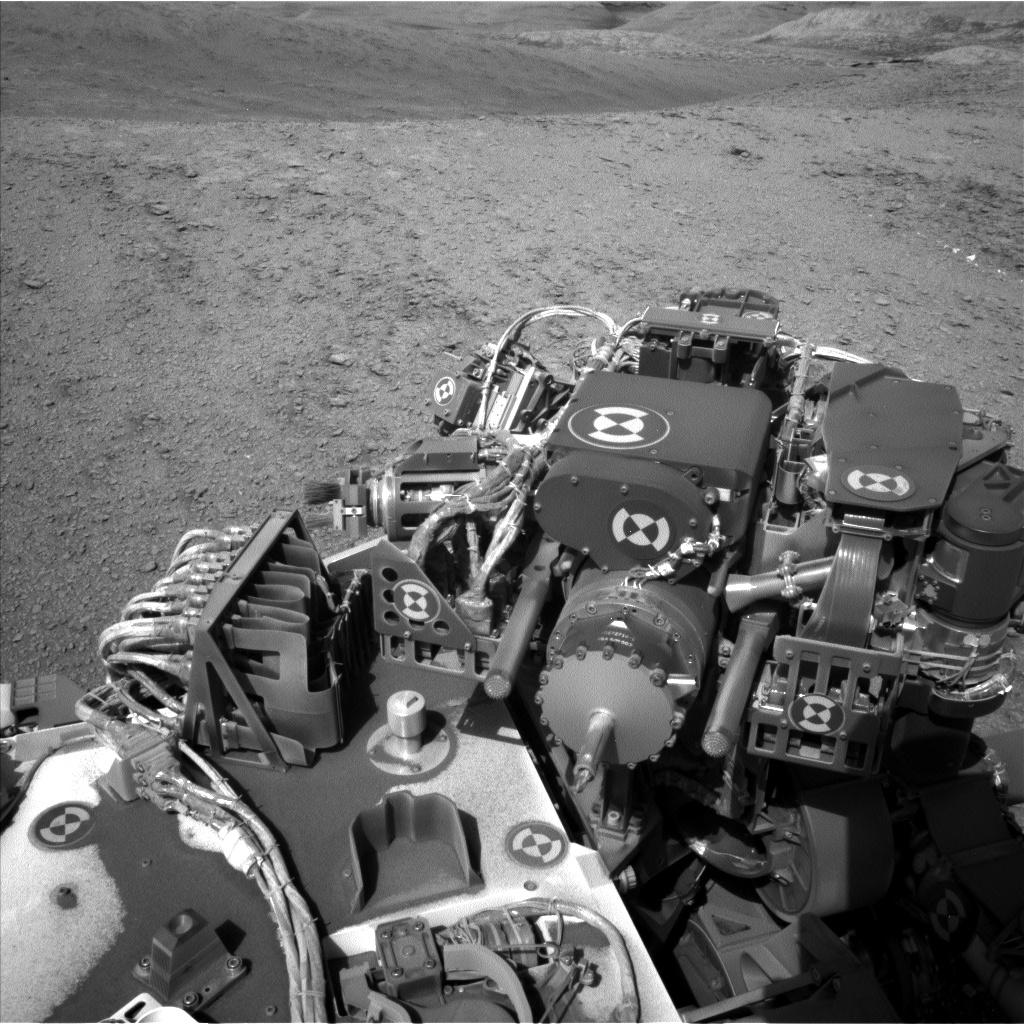
Curiosity Left Navigation Camera B image taken on Sol 2559, October 18, 2019.
Credit: NASA/JPL-Caltech
Reports Susanne Schwenzer, a planetary geologist at The Open University, Milton Keynes, U.K., due to no reception of “decisional data” from NASA’s Mars Reconnaissance Orbiter, Mars rover teams decided to make the best use of the time and energy available using the untargeted investigations available to them.

Curiosity Left Navigation Camera B image taken on Sol 2559, October 18, 2019.
Credit: NASA/JPL-Caltech
The rover’s Mastcam has been busy with a 360 panorama, “which will give context to all our past and future investigations in the area,” Schwenzer explains.
“In addition to the daytime ground-based observation, Mastcam wakes up in the dark to do an astronomical investigation of Phobos, followed – in daytime – by some calibration activities.”
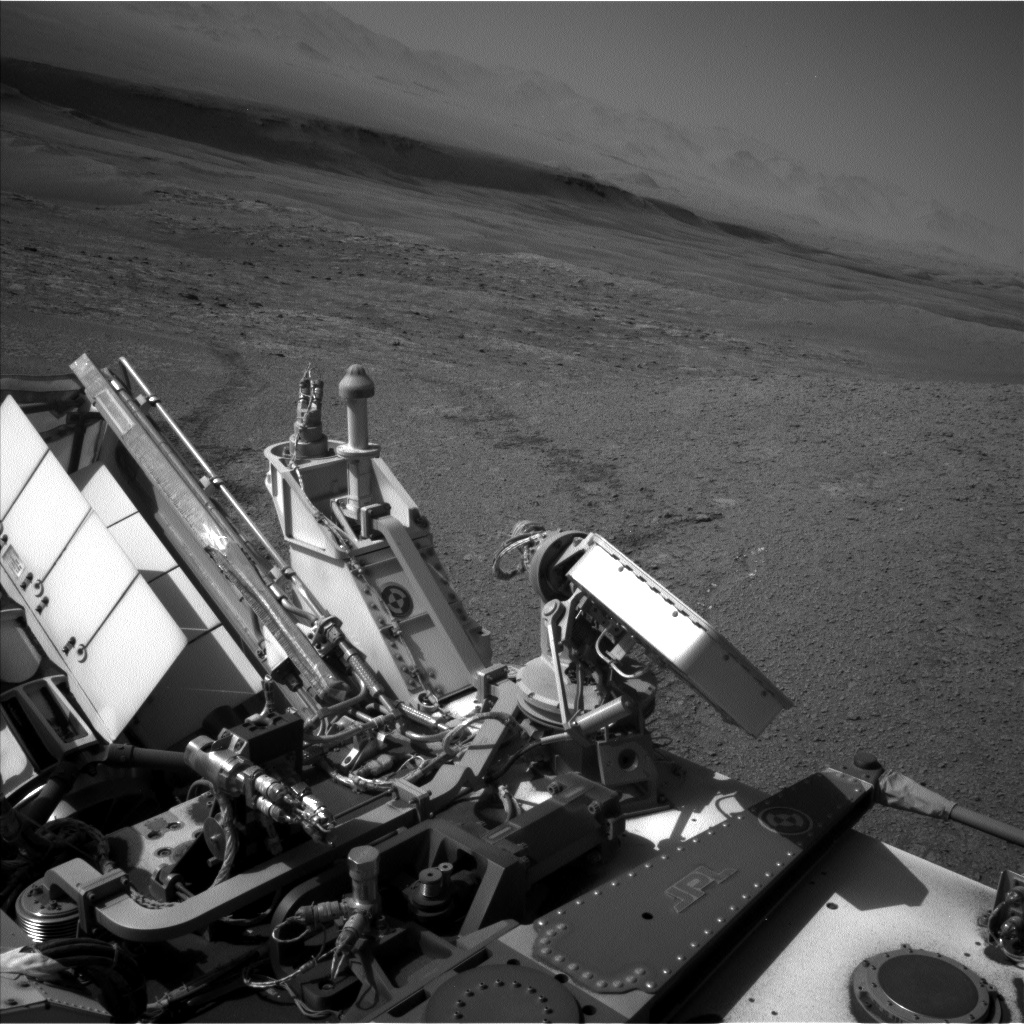
Curiosity Left Navigation Camera B image acquired on Sol 2559, October 18, 2019.
Credit: NASA/JPL-Caltech
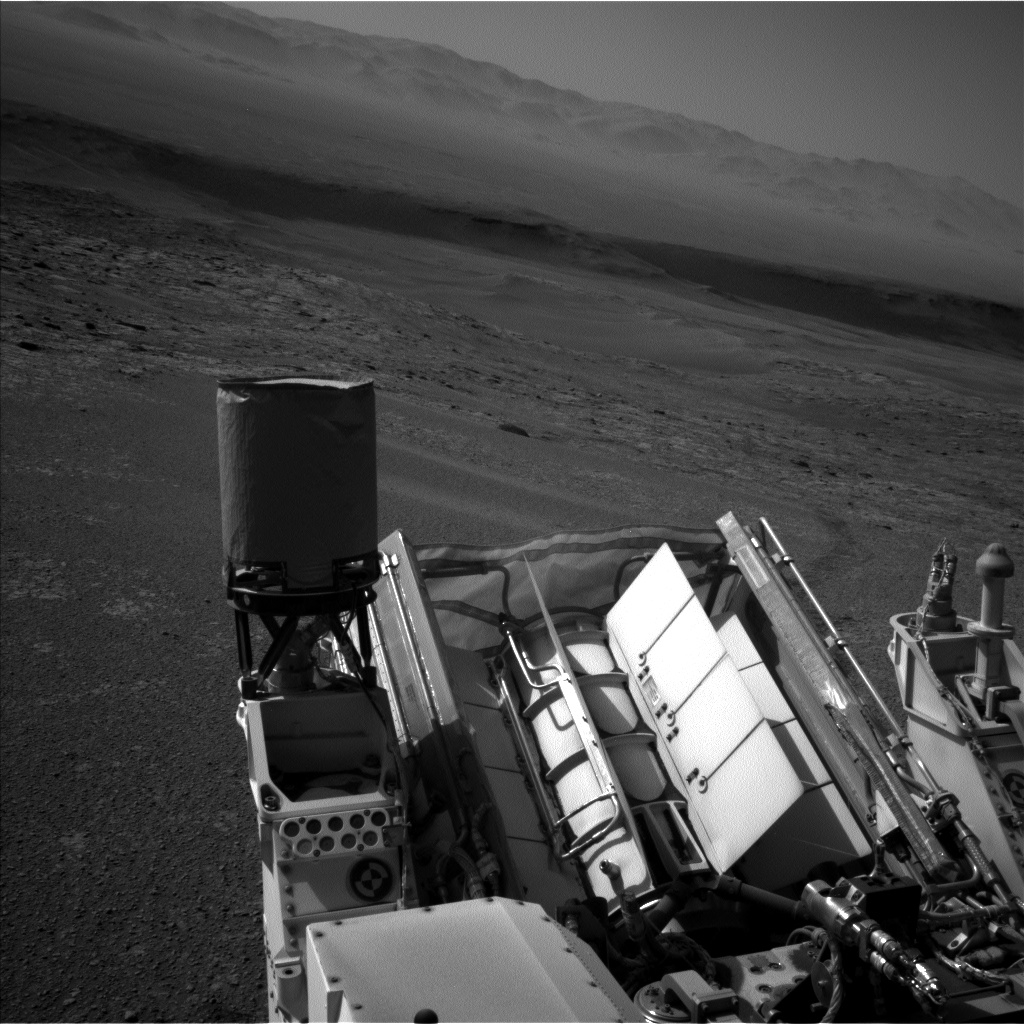
Curiosity Left Navigation Camera B image taken on Sol 2559, October 18, 2019.
Credit: NASA/JPL-Caltech
Busy weekend
Schwenzer adds that it’s not only Mastcam that will be busy over the weekend.
Curiosity’s Chemistry and Camera (ChemCam) has two observations to investigate three targets.
ChemCam can use Autonomous Exploration for Gathering Increased Science (AEGIS), an image processing routine to find its own targets.
“It will be looking for one target in the workspace, and two to the side of the rover,” Schwenzer concludes. “We are now all looking forward to data from 5 sols of Curiosity activities – stay tuned!”
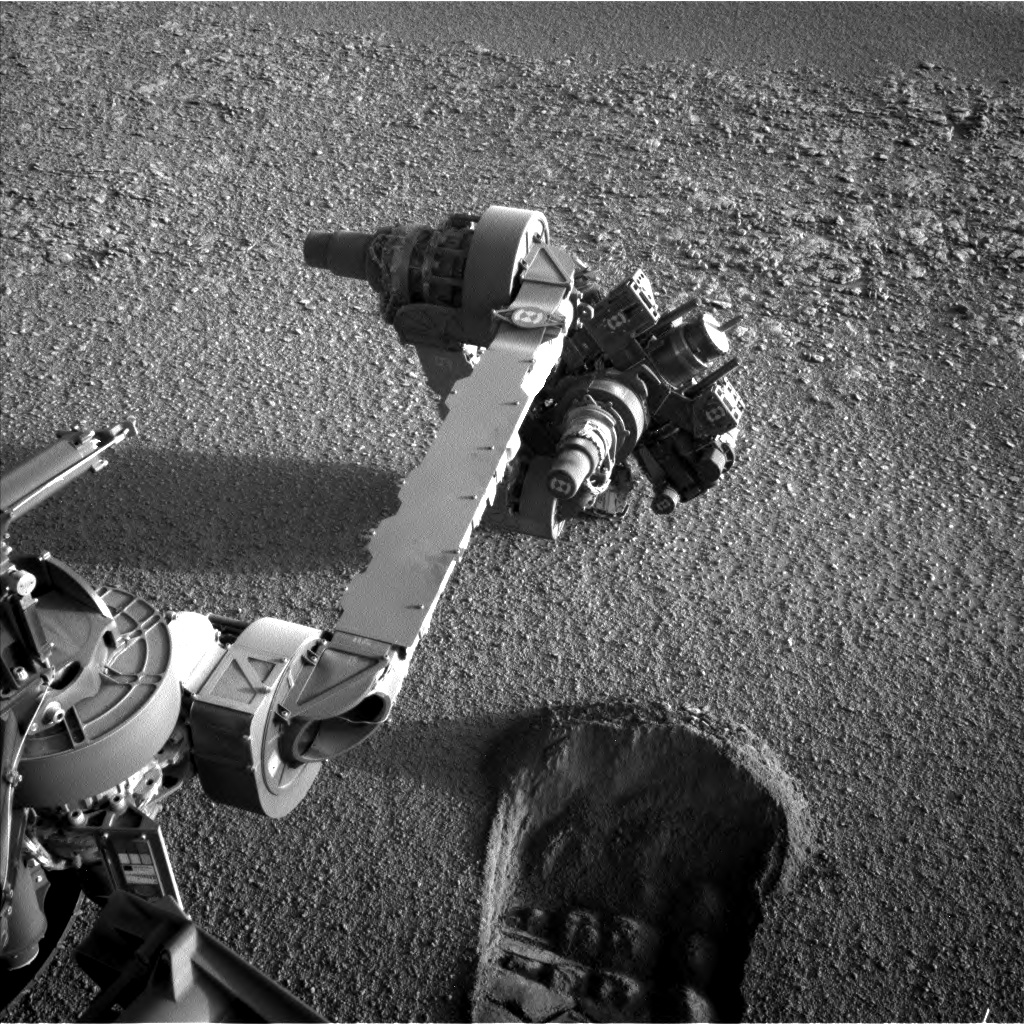
Curiosity Left Navigation Camera Left B photo acquired on Sol 2558, October 17, 2019.
Credit: NASA/JPL-Caltech
NASA’s Curiosity Mars rover is now carrying out Sol 2559 duties.
“Our drive away from our long-time home at the “Glen Etive” drilling site was successful, and set us up nicely at our next exploration site, one of the “Culbin Sands” megaripples,” reports Michelle Minitti, a planetary geologist at Framework in Silver Spring, Maryland.
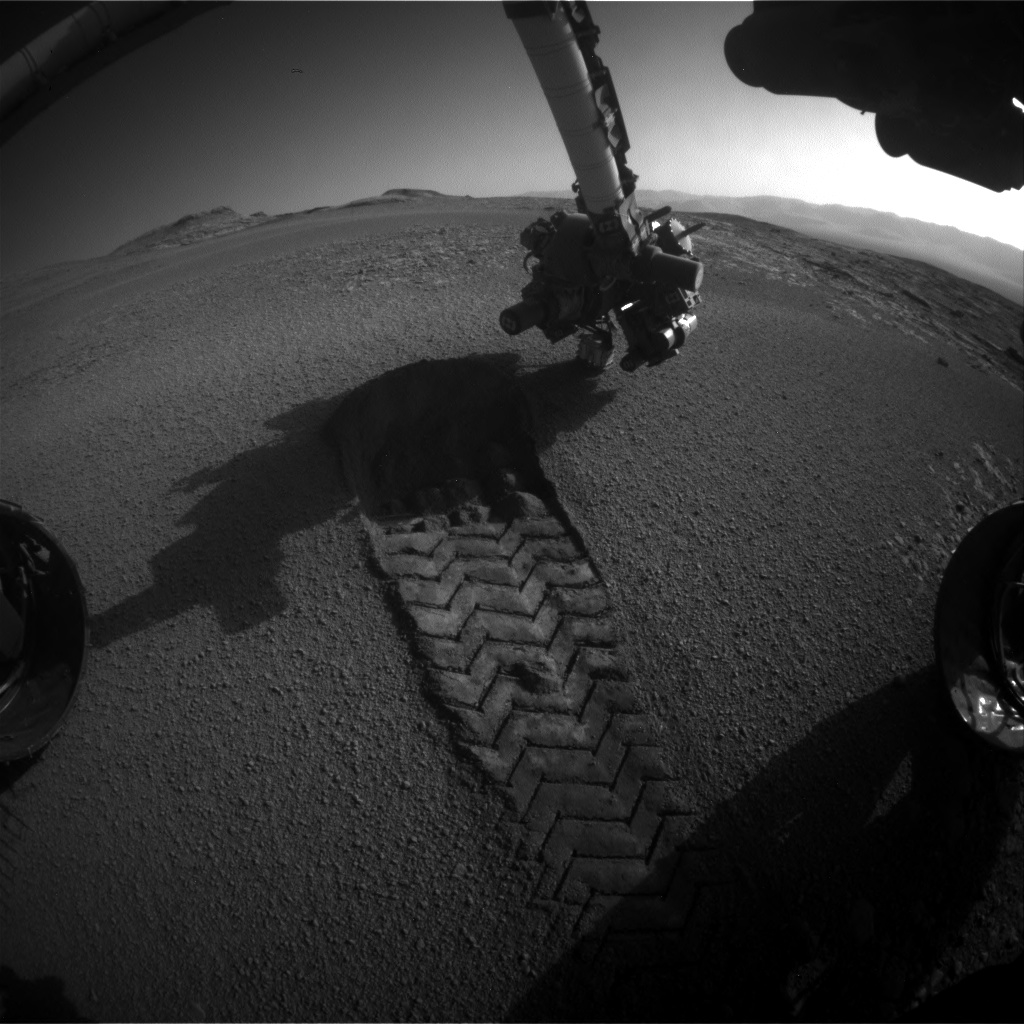
Curiosity Front Hazard Avoidance Camera Right B image taken on Sol 2558, October 17, 2019.
Scuff the ripple
A recent primary goal was for Curiosity to “scuff” the ripple, intentionally driving into the ripple with its front right wheel to churn up and expose its interior.

Curiosity Mars Hand Lens Imager (MAHLI) photo produced on Sol 2558, October 17, 2019.
Credit: NASA/JPL-Caltech/MSSS
“By studying the composition and grain size of the ripple interior and exterior, the team hopes to determine the origin and history of these megaripple features,” Minitti explains. “Before exposing the interior of the ripple with the scuff, the team acquired data from the ripple exterior, specifically the ripple crest.”
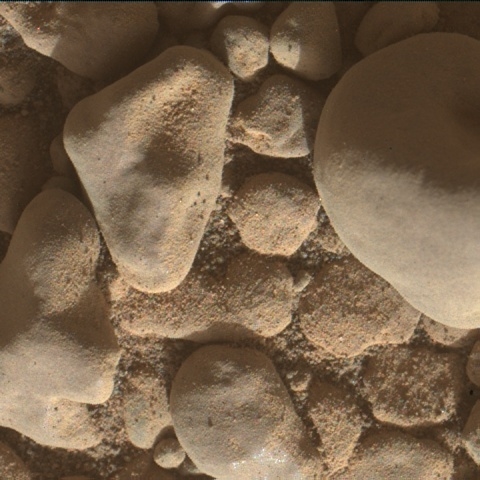
Curiosity Mars Hand Lens Imager (MAHLI) photo produced on Sol 2558, October 17, 2019.
Credit: NASA/JPL-Caltech/MSSS
Laser shots
The ten shot Chemistry and Camera (ChemCam) raster across the ripple crest, on the target “Seilebost Beach,” will provide insight into the chemistry and size distribution of the grains on top of the ripple, Minitti adds.
After shooting Seilebost Beach, the rover was set to back up just over one meter and then acquire Mastcam and Navcam mosaics encompassing the whole of the ripple.
“These will give us one last pristine look at the ripple in its entirety before the wheel digs in,” Minitti notes. “The rover will then scuff the ripple and then position itself so that the scuff is within reach of the arm and mast instruments for several subsequent days of science observations focused on the scuff.”
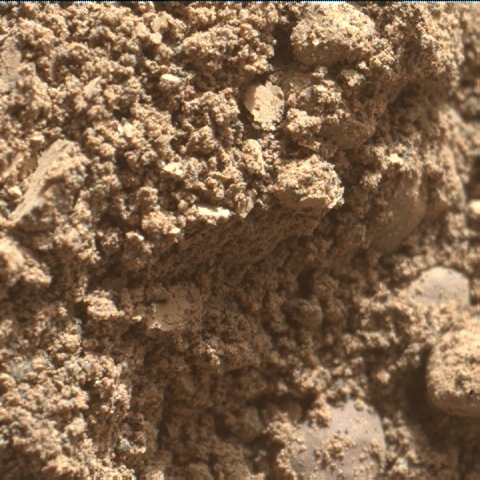
Curiosity Mars Hand Lens Imager (MAHLI) photo produced on Sol 2558, October 17, 2019.
Credit: NASA/JPL-Caltech/MSSS
Shadows on Mt. Sharp
Once the robot is parked in place, the Mars Descent Imager (MARDI) is scheduled to acquire an image of the ripple surface under the rover and the Dynamic Albedo of Neutrons (DAN) is slated to ping the new ground beneath the rover with an active measurement.
“The sky above us is always changing,” Minitti concludes, “so the rover acquired Navcam movies to look for clouds in the sky and any shadows they cast on Mt. Sharp, as well as an atmospheric chemistry analysis with its Alpha Particle X-Ray Spectrometer (APXS) along with taking regular Rover Environmental Monitoring Station (REMS) and Radiation Assessment Detector (RAD) measurements.

Artist view of China’s space station. Credit: CMSE
The China Manned Space Agency is pressing forward on its space station construction plans, “hiring” individuals to help shape the country’s next phase of human spaceflight.

Prototype of the Tianhe core module. China’s space station is expected to be operational around 2022.
Credit: CCTV/Screengrab/Inside Outer Space
China’s Xinhua news agency reports that preparations are underway for the upcoming “high-density” space missions to construct China’s space station. Additionally, the Long March-5B carrier rocket is set to launch elements of the Chinese space station and is now expected to make its maiden flight in 2020.

China’s human spaceflight program is moving forward on a multimodule space station in the 2020s.
Courtesy: CMSE
New hires
China Global Television Network (CGTN) reports new leaders of China’s Manned Space Engineering Project were announced at a press conference on Tuesday.
Zhou Jianping, a member of the Chinese Academy of Engineering, was hired as the chief designer.
This put an end to the project’s history of having leaders appointed, reports CGTN. Another position called “chief expert in space science” was also filled by hiring Gu Yidong, a member of the Chinese Academy of Sciences.
According to an announcement by the China Manned Space Engineering Office, this change is “the inevitable requirement for the project to enter a new era of application development.”
Wang Zhonggui, Yang Liwei (China’s first astronaut), Chen Shanguang, Zhou Weifei, Liu Jin, Deng Yibing, Tang Yihua and Zhang Bonan were hired as deputy chief designers of China’s manned space exploration.

The Tianhe core module for China’s Space Station undergoes ground testing.
Credit: CCTV/ScreengrabNew astronauts
New astronauts
China is striving to finish construction of their space station around 2022.
Weighing 66 tons, the Tiangong space station will be T-shaped with the Tianhe core module at the center and the Wentian and Mengtian experiment capsules on each side. The orbital outpost could be enlarged to 180 tons, accommodating three to six crewmembers.
According to Zhou, the station is designed to last at least 10 years and could be prolonged through in-orbit maintenance.

Yang Liwei, the country’s first astronaut.
Credit: CMSE
Chinese docking mechanism
Zhou explained that China is selecting new astronauts for station missions.
After the construction of the station is completed, Zhou adds, China welcomes overseas astronauts to work together with domestic astronauts aboard the country’s station. International spacecraft can also be docked with China’s facility if they use a Chinese docking mechanism, Zhou said.

Credit: China Aerospace Science and Technology Corporation (CASC).
Key technologies
In a related Xinhua story earlier this week, Chinese first astronaut, Yang Liwei, said he was looking forward to setting foot on the Moon.
“China has started to develop the key technologies related to manned lunar landing. It would be exciting to see Chinese astronauts stepping onto the extraterrestrial object,” Yang said.
“Like all the other Chinese astronauts, I’m ready for the nation’s call,” Yang said. He made the remarks at the 16th anniversary of his flying into space aboard the Shenzhou-5 spacecraft on Oct. 15, 2003, according to the China Manned Space Agency.
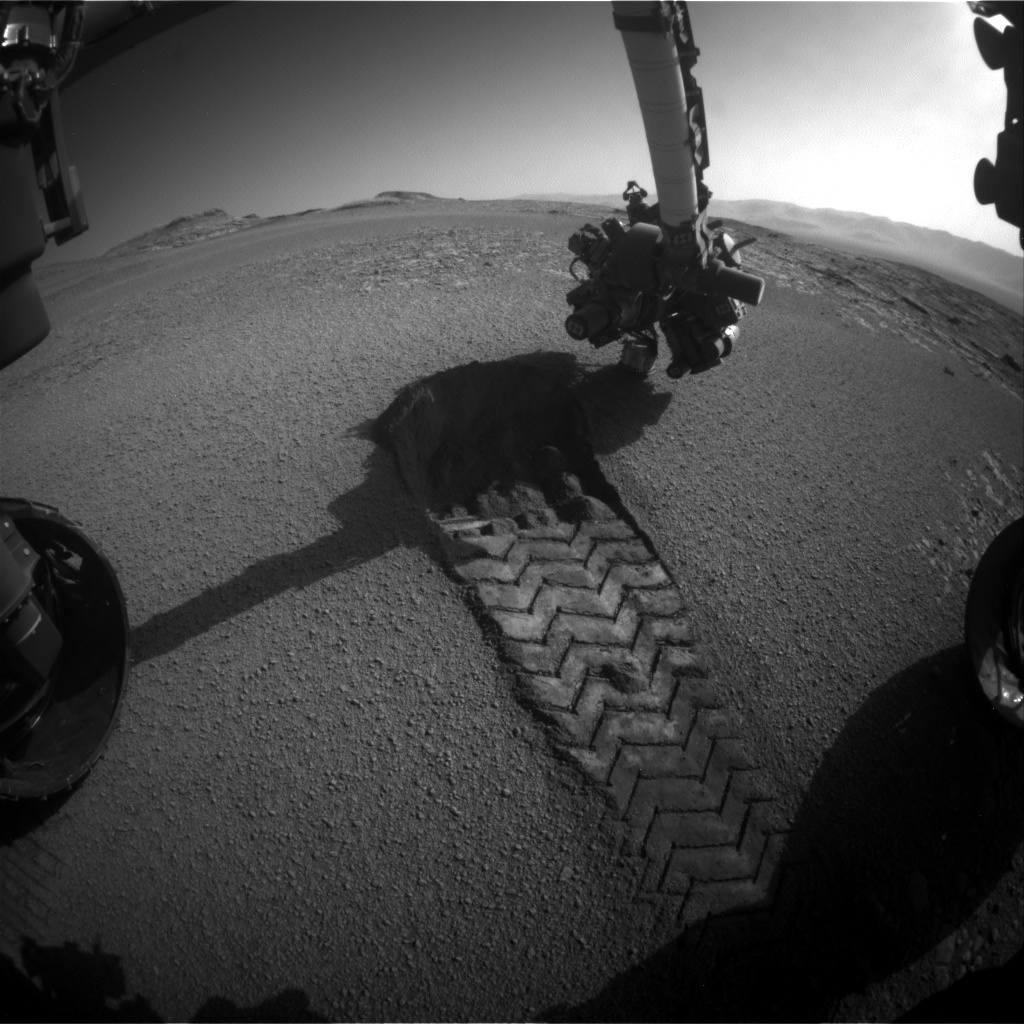
Curiosity Front Hazard Avoidance Camera Left B image acquired on Sol 2557, October 16, 2019.
Credit: NASA/JPL-Caltech
NASA’s Curiosity Mars rover is now performing Sol 2558 tasks.
The rover has made a wheel scuff at “Culbin Sands,” reports Fred Calef, a planetary geologist at NASA’s Jet Propulsion Laboratory.
Curiosity purposely ran over a megaripple (fine grained sandy ripple with a coarser pebble coating), Calef notes, to create a “scuff” which churned up and bisected the feature to observe any layering or material within.
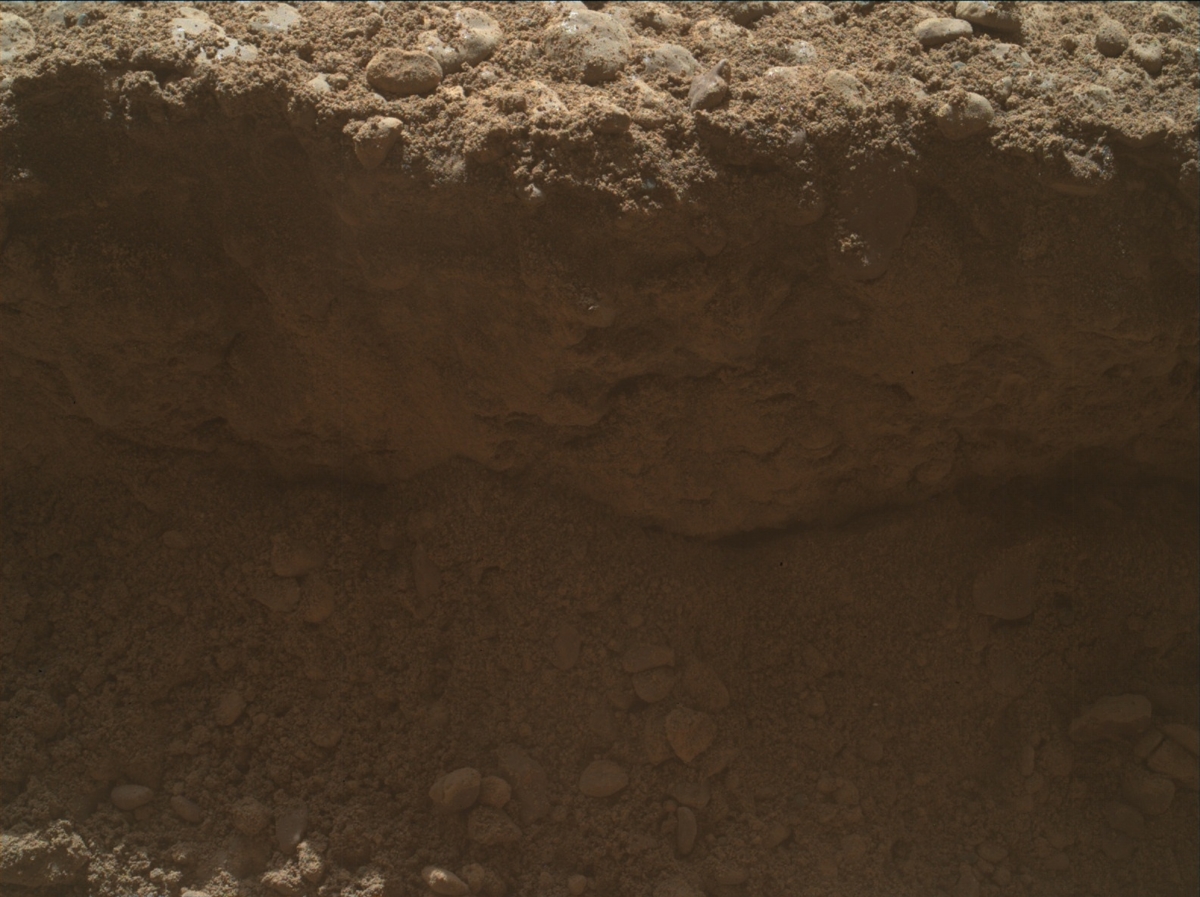
Curiosity Mars Hand Lens Imager (MAHLI) photo produced on Sol 2558, October 17, 2019.
Credit: NASA/JPL-Caltech/MSSS
Ripple inspection
The rover science team chose to inspect the interior of the wheel track scuff and the original undisturbed ripple surface.
Curiosity’s Chemistry and Camera (ChemCam) targeted “Sandwood Bay,” the fine-grained, disturbed scuff wall and “Glensanda,” the coarser grained ripple flank, along with documentation Mastcam color imaging.
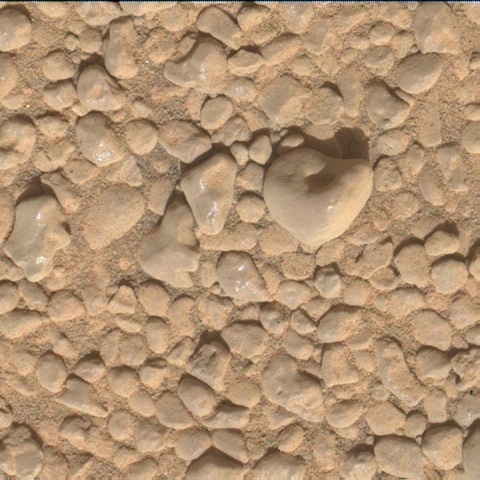
Curiosity Mars Hand Lens Imager (MAHLI) photo produced on Sol 2557, October 16, 2019.
Credit: NASA/JPL-Caltech/MSSS
Signature of the sand
Calef adds that rover plans call for it to exercise its arm and explore the chemical signature of the sand with an APXS (Alpha Particle X-Ray Spectrometer) measurement over the ripple crest called “High Plains.”
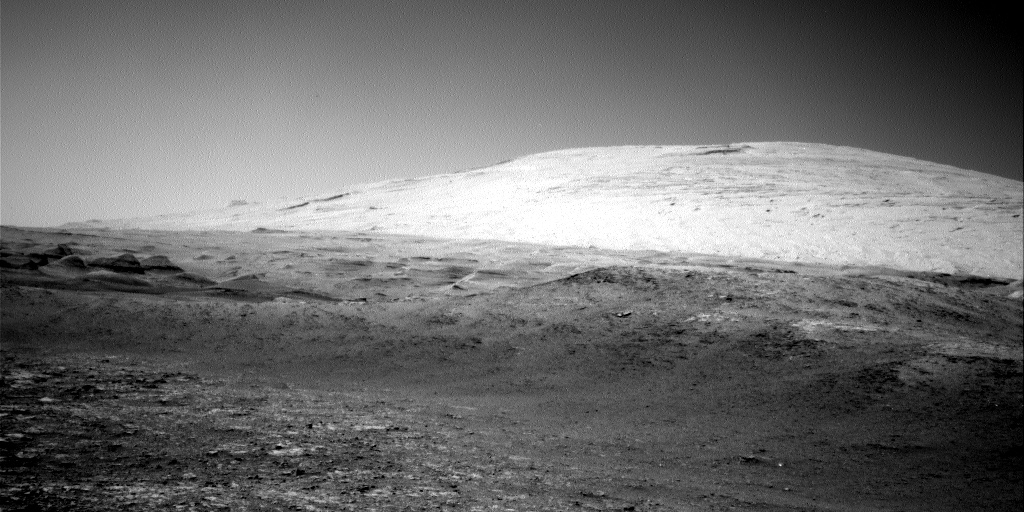
Curiosity Right Navigation Camera B image acquired on Sol 2557, October 16, 2019.
Credit: NASA/JPL-Caltech
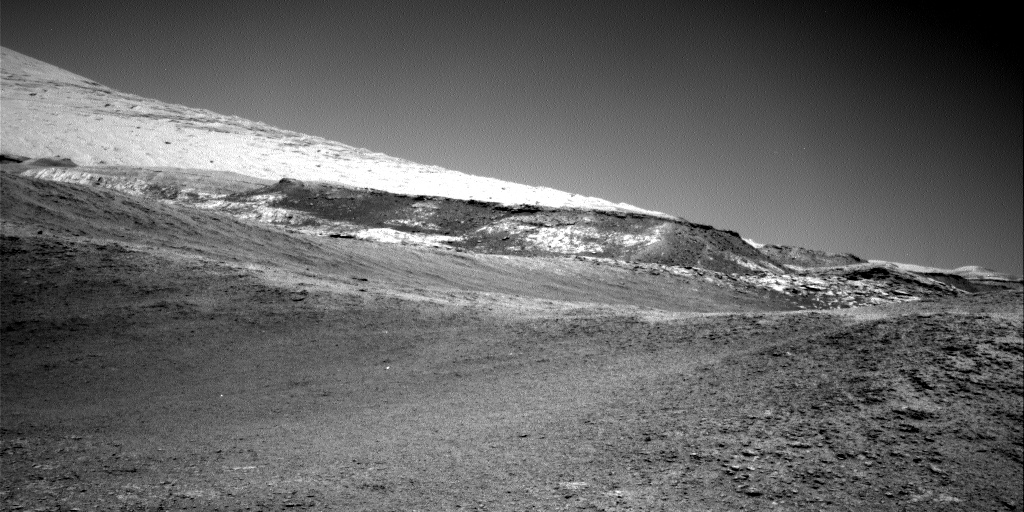
Curiosity Right Navigation Camera B image acquired on Sol 2557, October 16, 2019.
Credit: NASA/JPL-Caltech
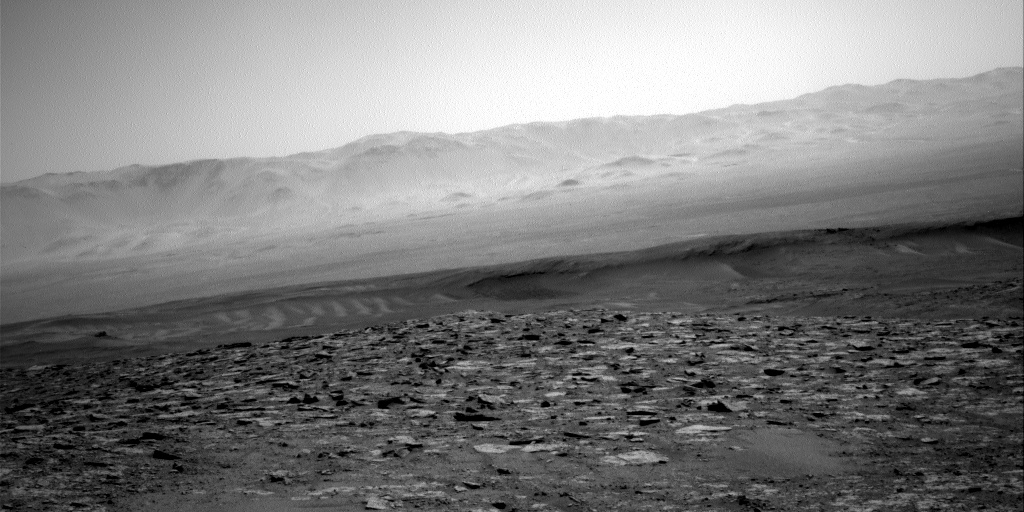
Curiosity Right Navigation Camera B image taken on Sol 2557, October 16, 2019.
Credit: NASA/JPL-Caltech
To investigate the grain size and angularity, MAHLI (Mars Hand Lens Imager) photography is planned, at various heights, to cover High Plains as well as “Burrowgate” in the scuff and “Corsewall,” along the scuff wall.
Lastly, Calef concludes, a Mastcam mosaic will cover this ripply area, dubbed “Culbin Sands,” in color imaging.

The two Glen Etive Drill holes. Image credit: NASA/JPL-Caltech/MSSS
NASA’s Curiosity Mars rover is now performing Sol 2557.
Reports Ashley Stroupe, Mission Operations Engineer at NASA’s Jet Propulsion Laboratory, the rover is taking its last views of the Glen Etive 2 drill sample. A recent plan had the robot cleaning out the remaining sample within the drill and doing contact science analysis on the dumped sample.

Image of possible meteorite.
Credit: NASA/JPL
Both the Chemistry and Camera (ChemCam) and Mastcam will be taking a look at “Penicuik,” a pebble target, and “Monach Isles,” a potential small meteorite. Also planned is a standard environmental observation suite: a Mastcam crater rim extinction and tau, and a Navcam supra-horizon movie.
Dumped sample
After the targeted observations, rover planners are to dump out the drill sample, and then take MAHLI (Mars Hand Lens Imager) photos of the dumped sample, the drill hole and tailings, and the SAM (Sample Analysis at Mars) Inlet 1.
Using proximity mode to avoid touching the surface, the robot will perform Alpha Particle X-Ray Spectrometer (APXS) integrations on two positions over the dump pile, Stroupe explains.

New road map
Newly released map shows the route driven by NASA’s Mars rover Curiosity through the 2556 Martian day, or sol, of the rover’s mission on Mars (October 15, 2019).
Numbering of the dots along the line indicate the sol number of each drive. North is up.
From Sol 2555 to Sol 2556, Curiosity had driven a straight line distance of about 6.03 feet (1.84 meters).

Curiosity Front Hazard Avoidance Camera image taken on Sol 2557, October 16, 2019.
Credit: NASA/JPL-Caltech
Since touching down in Bradbury Landing in August 2012, Curiosity has driven 13.13 miles (21.14 kilometers).
The base image from the map is from the High Resolution Imaging Science Experiment Camera (HiRISE) in NASA’s Mars Reconnaissance Orbiter.
Scuff marks
Fred Calef, Planetary Geologist at NASA’s Jet Propulsion Laboratory notes that the rover drive purposely ran over a megaripple (fine grained sandy ripple with a coarser pebble coating) to create a “scuff” which churned up and bisected the feature to observe any layering or material within. The rover science team chose to inspect the interior of the wheel track scuff and the original undisturbed ripple surface.

Curiosity Front Hazard Avoidance Camera image acquired on Sol 2557, October 16, 2019.
Credit: NASA/JPL-Caltech

