Archive for the ‘Space News’ Category
 Author:
  May 7th, 2020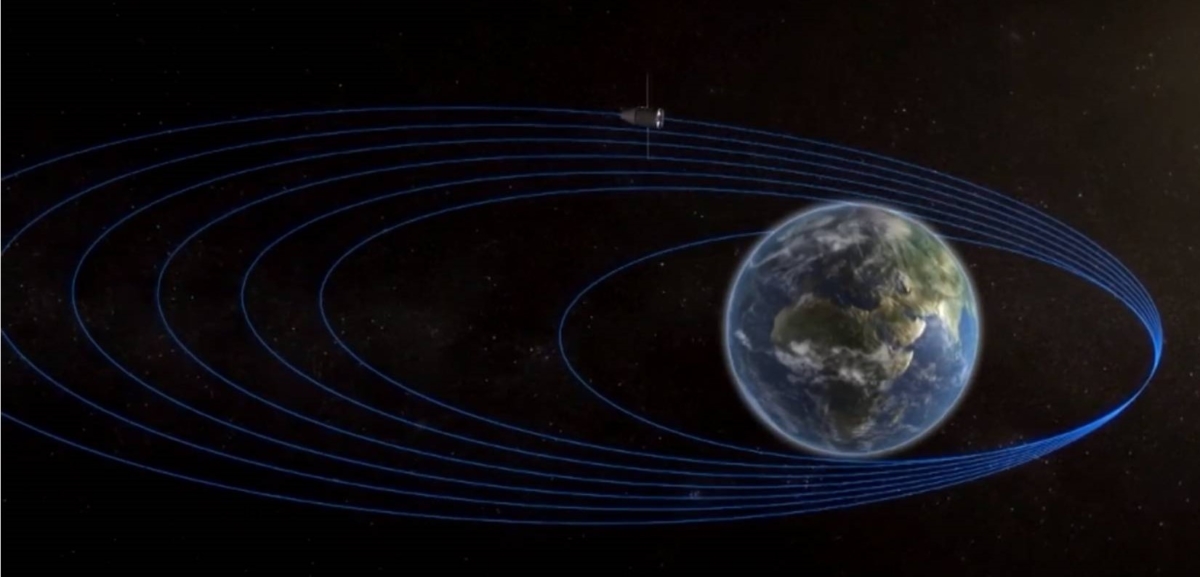
Credit: CCTV/Inside Outer Space screengrab
China’s experimental new-generation piloted spaceship is working normally in orbit according to the China Aerospace Science and Technology Corporation (CASC).
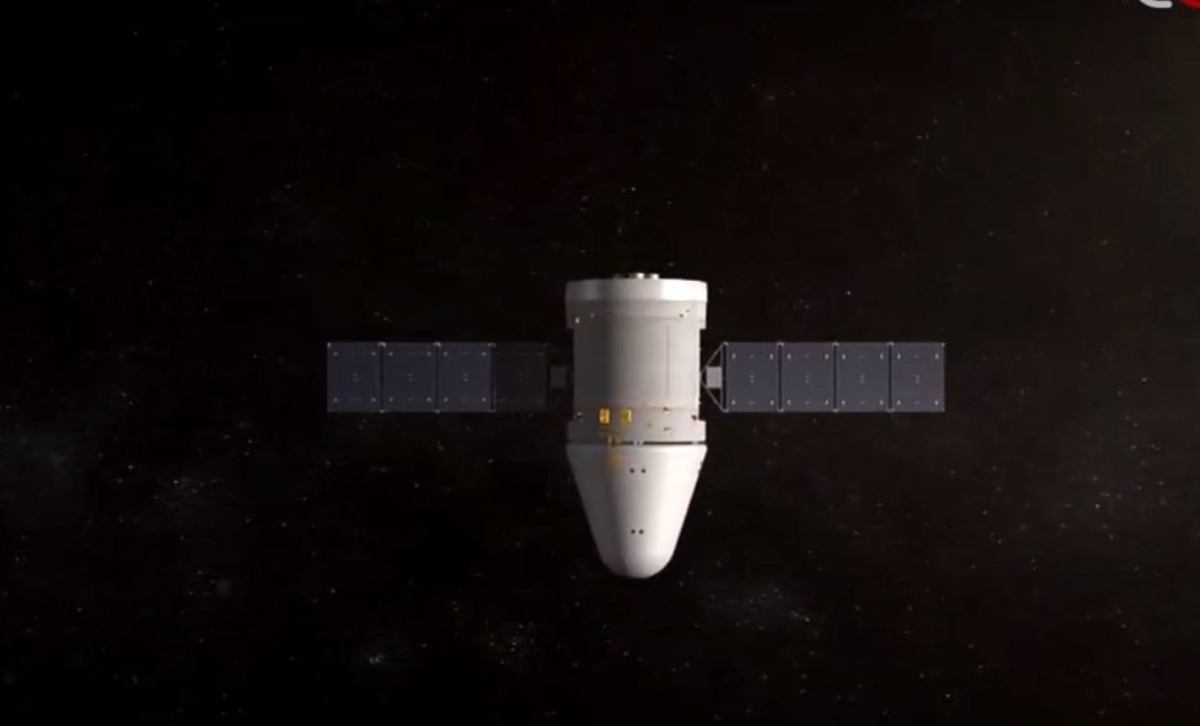
Credit: CCTV/Inside Outer Space screengrab
The experimental spaceship was launched Tuesday evening without crew by China’s new large carrier rocket Long March-5B from the Wenchang Space Launch Center on the coast of south China’s island province of Hainan.
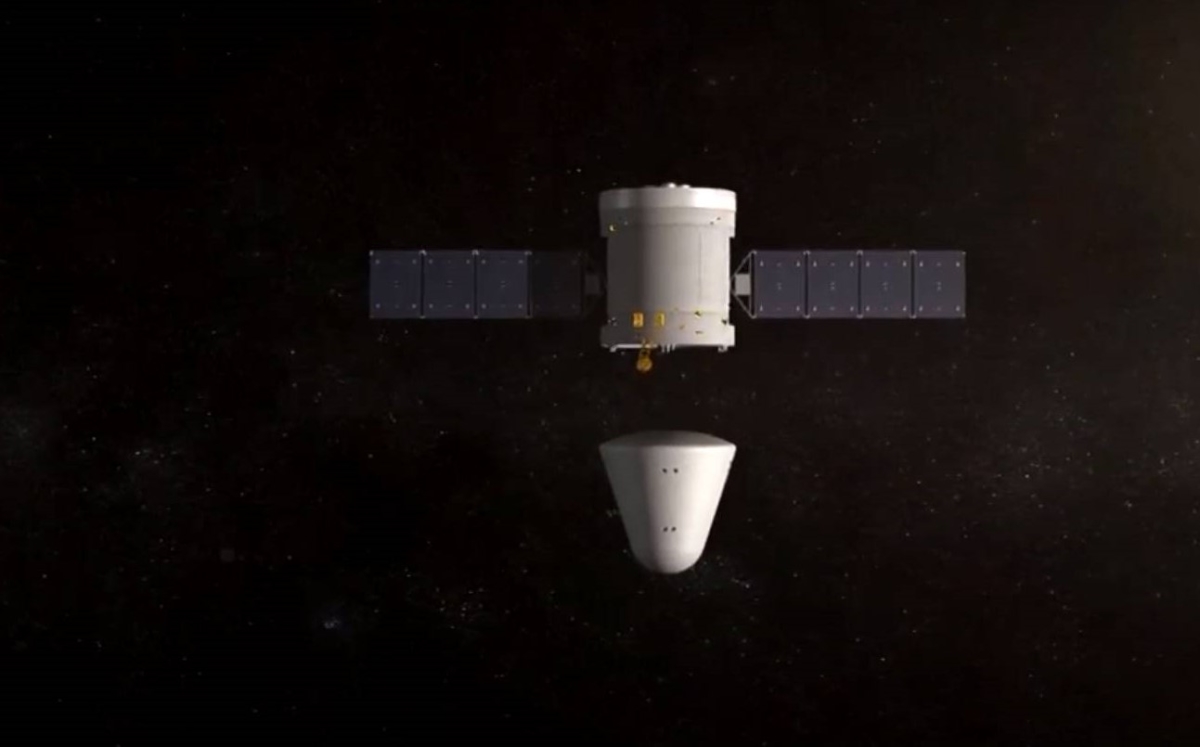
Credit: CCTV/Inside Outer Space screengrab
The craft has adjusted its orbit six times autonomously as of 9:00 Thursday.
Landing site
The new manned spacecraft is designed to adapt to multiple tasks including low-Earth orbit missions and deep-space exploration. The spacecraft comprises a service capsule and a return capsule.
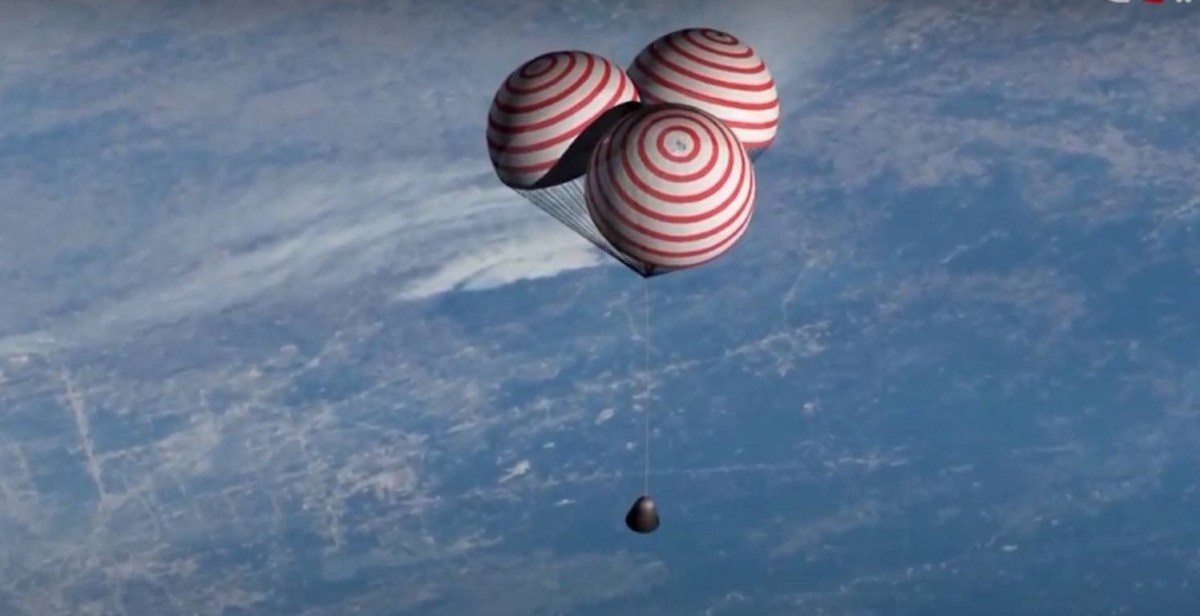
Credit: CCTV/Inside Outer Space screengrab
The mission will test the key technologies of the new spaceship such as the control of its re-entry into the atmosphere, heat shielding and recovery technology, according to the China Academy of Space Technology under the CASC.
It is scheduled to touch down at the Dongfeng landing site in north China’s Inner Mongolia Autonomous Region on Friday, according to Ji Qiming, an assistant to the director of the China Manned Space Agency.
Credit: CCTV/Inside Outer Space screengrab
Data transmission
During the flight of the spacecraft, a “time-triggered Ethernet system” completed the verification of clock synchronization, multi-source data sampling, and high-definition image transmission, thus realizing the high-speed transmission of inter-system data. This is the first time for China to carry out a space test of this technology.
“The results have met the mission’s expectations. First, we have reached the gigabit level in terms of speed. Second, compared to the previous task, the bandwidth used this time is one megabyte, which means that we have improved the performance of the traditional data bus by 1000 times,” said Lin Yue, chief designer of the information network carrier system of the 502 Institute under the Fifth Academy of the CASC.
Local area network
The time-triggered Ethernet system will be mainly used in large and complex spacecraft in the future, equivalent to the establishment of a high-speed local area network.
In the future, if the high-speed local area network is used in China’s space station, all the household appliances can be controlled with only one controller, thus forming an intelligent spacecraft information system similar to the smart home.
“The astronauts, for example, can control all the facilities on the spacecraft with a PAD (tablet personal computer), which greatly reduces the pressure on the crew and system design,” said Lin.

Credit: CCTV/Inside Outer Space screengrab
3D printing system
Also onboard the new-generation vehicle is a 3D printing system making use of composite materials inside the reentry capsule of the experimental spacecraft.
Independently developed by China, CCTV reports, the 3D printer automatically completed the task of printing two samples during space flight, confirming the scientific research purpose of 3D printing composite materials in microgravity environment.

Credit: CCTV/Inside Outer Space screengrab
As noted by the China Academy of Space Technology Corporation (CAST), continuous fiber-reinforced composite material is the main material for spacecraft structure in the world. 3D printing technologies will pave the way for further construction of China’s space station and offer prospective research and technical test data.
“The first goal is to support the in-orbit long-term manned operation and maintenance of the space station. The second goal is to support the in-orbit expansion of our space station,” said CAST’s Qi Junfeng, person in charge of the space 3D printing system.
Malfunctioning reentry vehicle
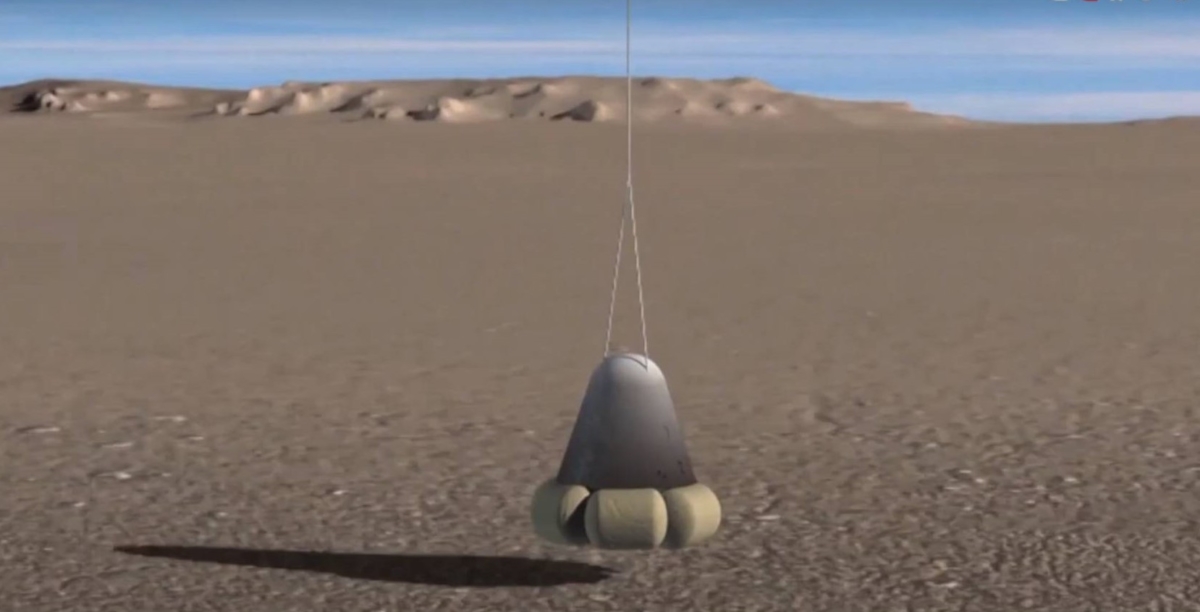
Meanwhile, an experimental spacecraft — the Flexible Inflatable Cargo Reentry Vehicle – that was launched on the maiden flight of the Long March 5B carrier rocket malfunctioned as it returned to the Earth on Wednesday afternoon, according to the China Manned Space Agency (CMSA).
The reentry vehicle was scheduled to touch down by parachute at the Dongfeng Landing Site in the Inner Mongolia autonomous region at the end of its 19-hour space trip.
China Daily reports that there were malfunctions during the re-entry process and experts are analyzing available data, the CMSA said in a brief statement, without giving details. The space vehicle, developed by the China Aerospace Science and Industry Corporation, was to perform a re-entry test to examine a new concept in bringing in-space cargo back to Earth.
Go to this informative video about this new stepping stone for China’s space program at:
 Posted in
NASA’s Curiosity Mars rover is now performing Sol 2756 tasks.
New imagery of the robot’s drilling efforts at the “Glasgow” target:

Curiosity Mast Camera Right photo taken on Sol 2754, May 5, 2020.
Credit: NASA/JPL-Caltech/MSSS

Curiosity Chemistry & Camera (ChemCam) remote micro-imager (RMI) photo taken on Sol 2755, May 6, 2020.
Credit: NASA/JPL-Caltech/LANL

Curiosity Mast Camera Left image acquired on Sol 2754, May 5, 2020.
Credit: NASA/JPL-Caltech/MSSS

Curiosity Mast Camera Right photo taken on Sol 2754, May 5, 2020.
Credit: NASA/JPL-Caltech/MSSS

Credit: Boeing
The next X-37B robotic space plane is scheduled to launch on May 16 from Cape Canaveral Air Force Station, Florida.
One experiment onboard the craft will transform solar power into radio frequency microwave energy which could then be transmitted to the ground.
In an announcement released today, the Department of the Air Force Rapid Capabilities Office, in partnership with the U.S. Space Force, will hurl the Orbital Test Vehicle (OTV-6) into Earth orbit on a sixth mission.
The X-37B remains a Department of the Air Force asset; however, the U.S. Space Force is responsible for the launch, on-orbit operations, and landing.

Credit: Boeing/Watch U.S. Fly
More experiments
Secretary of the Air Force Barbara Barrett explains in the press statement: “Demonstrating the department’s innovation, this X-37B mission will host more experiments than any prior missions. This launch also demonstrates the department’s collaboration that pushes the boundaries for reusable space systems.”
This will be the first X-37B mission to use a service module to host experiments. The service module is an attachment to the aft of the vehicle that allows additional experimental payload capability to be carried to orbit.

X-37B Air Force space plane.
Credit: Boeing/Inside Outer Space Screengrab
Big step
“This sixth mission is a big step for the X-37B program,” adds Randy Walden, Director and Program Executive Officer for the Air Force Rapid Capabilities Office.
“This will be the first X-37B mission to use a service module to host experiments. The incorporation of a service module on this mission enables us to continue to expand the capabilities of the spacecraft and host more experiments than any of the previous missions.”

Post-landing technicians tend OTV-5 at NASA’s Kennedy Space Center Shuttle Landing Facility.
Courtesy Photo 45th Space Wing Public Affairs
On-orbit experiments
This flight of the X-37B will deploy the FalconSat-8, a small satellite developed by the U.S. Air Force Academy and sponsored by the Air Force Research Laboratory to conduct several experiments on orbit.
The FalconSat-8 is an educational platform that will carry five experimental payloads for USAFA to operate.
In addition, two NASA experiments will be included to study the results of radiation and other space effects on a materials sample plate and seeds used to grow food.
In addition, a U.S. Naval Research Laboratory experiment will transform solar power into radio frequency microwave energy which could then be transmitted to the ground.
X-37B handout.
Credit: Boeing
Length of mission?
There is no word on how long the space plane will operate in Earth orbit.
The X-37B program completed its fifth mission in October 2019, landing after 780 days on orbit, extending the total number of days spent on orbit for the program to 2,865 – or seven years and 10 months.
This new space plane mission – USSF-7 — will roar skyward atop a United Launch Alliance Atlas V booster.
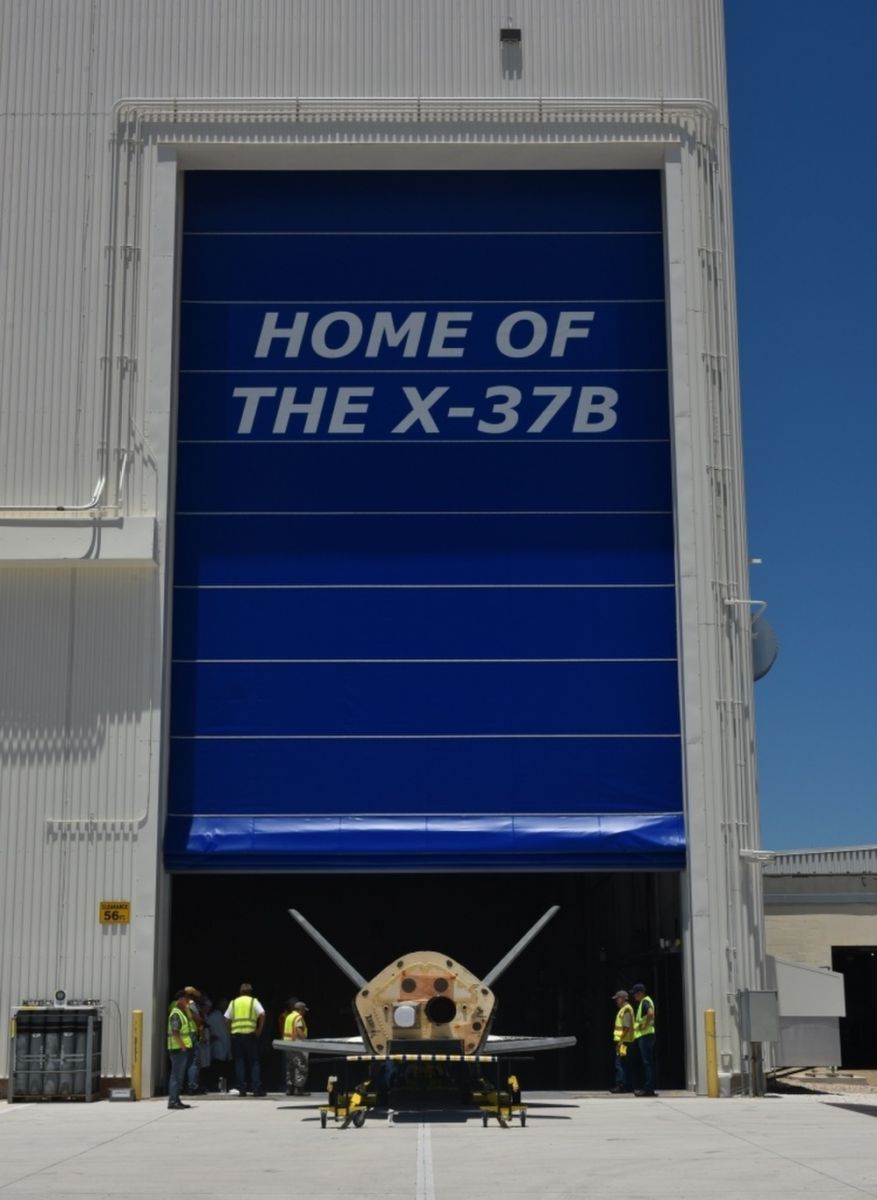
X-37B hangar at Kennedy Space Center.
Credit: Michael Martin/SAF
Milestone-setting space plane
Here’s a roster of the milestone-setting missions as told to Inside Outer Space by Major Will Russell, U.S. Space Force spokesperson.
OTV-1 launched on April 22, 2010 and landed on December 3, 2010, spending over 224 days on orbit.
OTV-2 launched on March 5, 2011 and landed on June 16, 2012, spending over 468 days on orbit.
OTV-3 launched on December 11, 2012 and landed on October 17, 2014, spending over 674 days on-orbit.
OTV-4 launched on May 20, 2015 and landed on May 7, 2015, spending nearly 718 days on-orbit.
OTV-5 launched on September 7, 2017 and landed on October 27, 2019, spending nearly 780 days on-orbit.
The first four missions launched from Cape Canaveral Air Force Station, Florida thanks to an an Atlas-V booster.
The fifth mission launched from Kennedy Space Center on a SpaceX Falcon 9 launcher.

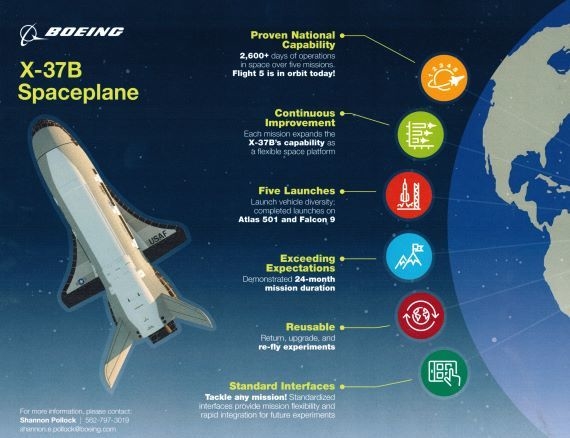
Boeing handout describes X-37B program.
Credit: Boeing
OTV-1, OTV-2, and OTV-3 missions landed at Vandenberg Air Force Base, California, while the OTV-4 and OTV-5 missions landed at Kennedy Space Center, Florida.
Total time on orbit for all five previous missions is 2,865 days – or 7 years and 10 months, Russell adds.

USAF has been studying use of power beaming spacecraft.
Credit: Kirtland Public Affairs
Power-beaming experimentation
The X-37B testing of power beaming continues a research program underway by the Naval Research Laboratory (NRL).
A power-beaming demonstration in orbit has already taken place onboard the International Space Station (ISS).
A NRL power-beaming demo took place in mid-February, facilitated by ISS astronaut Jessica Meir. A device converted electromagnetic waves into electric current on the orbiting outpost.
Meir showed how NRL’s LEctenna™, a light-emitting rectifying antenna, converted a wireless network signal, similar to home networks, into electric power. While the current that was produced and the light emitted was a small amount, the setup proved the concept in space.

Curiosity Front Hazard Avoidance Camera Left B image taken on Sol 2754, May 5, 2020.
Credit: NASA/JPL-Caltech
NASA’s Curiosity Mars rover is now performing Sol 2755 tasks.
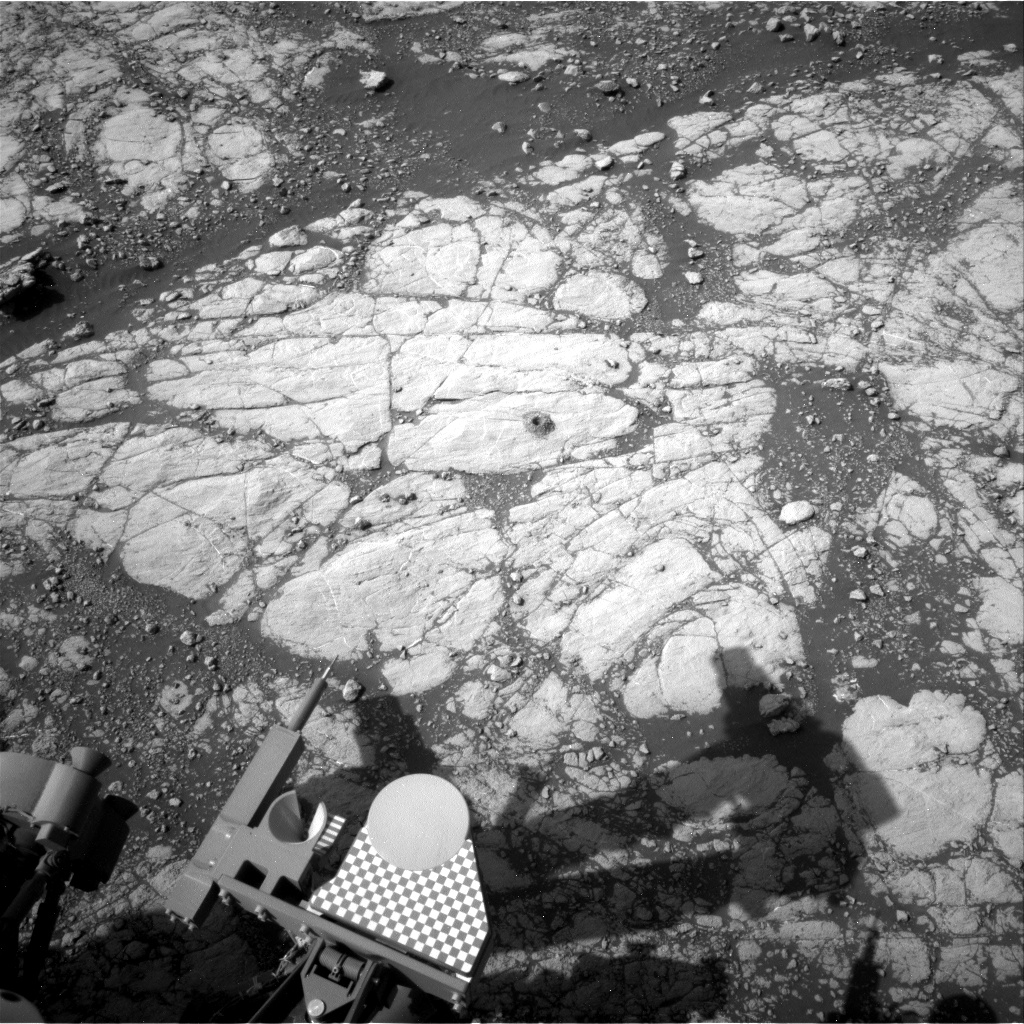
A minor issue with the Mars Hand Lens Imager (MAHLI) instrument caused rover arm activities to stop prior to drilling at the “Glasgow” target. However, new imagery shows that issue resolved and drilling appears to have taken place.
Curiosity Right B Navigation Camera image taken on Sol 2754, May 5, 2020.
Credit: NASA/JPL-Caltech
Lauren Edgar, Planetary Geologist at USGS Astrogeology Science Center, reports that a plan for Sols 2754-2755 is devoted to drilling, and the second sol is packed with remote sensing activities.
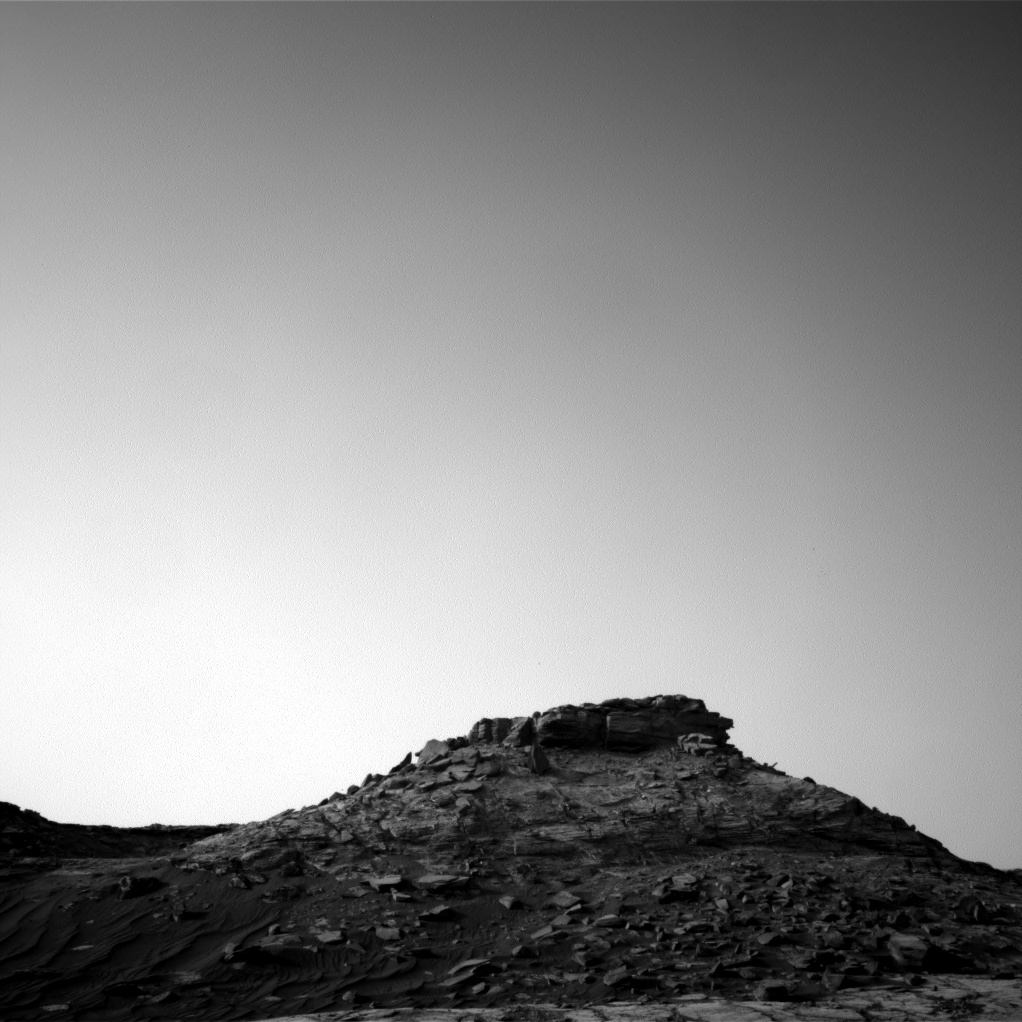
Curiosity Right B Navigation Camera image taken on Sol 2754, May 5, 2020.
Credit: NASA/JPL-Caltech
Trough feature
“On the second sol, the remote sensing activities start with a Navcam dust devil movie and dust devil survey, and Navcam line-of-sight observation to monitor dust in the atmosphere,” Edgar reports. “Then Mastcam will take a multispectral observation of the drill hole, followed by a Mastcam mosaic of a trough feature to document surface processes.”
The robot’s Chemistry and Camera (ChemCam) has a number of activities including observations of the bedrock targets “Marygold” and “Murra,” a Remote Micro-Imager (RMI) z-stack observation of the drill hole to help with future targeting, and a ChemCam pointing test, Edgar adds.

Curiosity Right B Navigation Camera image acquired on Sol 2753, May 4, 2020.
Credit: NASA/JPL-Caltech
“Mastcam will also document the ChemCam targets,” Edgar concludes. “Fingers crossed for a good day on Mars to see those new drill hole images!”
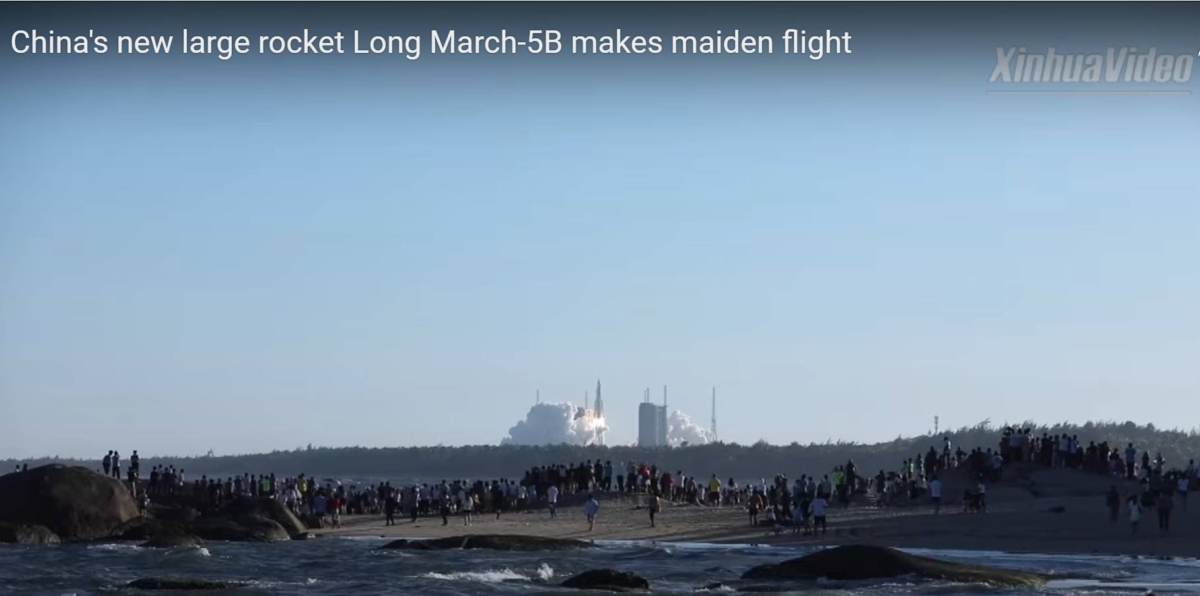
China’s Long March-5B scores success in maiden flight.
Credit: XinhuaVideo/Inside Outer Space screengrab
China’s Long March-5B rocket was launched on Tuesday at 6 p.m. (Beijing time) from the Wenchang Space Launch Site. The booster hurled into space a test model of the country’s new crewed spaceship.
The rocket is the fourth variant of the Long March-5 (LM-5) series and offers the most boost power in the Long March series. It can deliver no less than 22 tons of payload into low-Earth orbit.
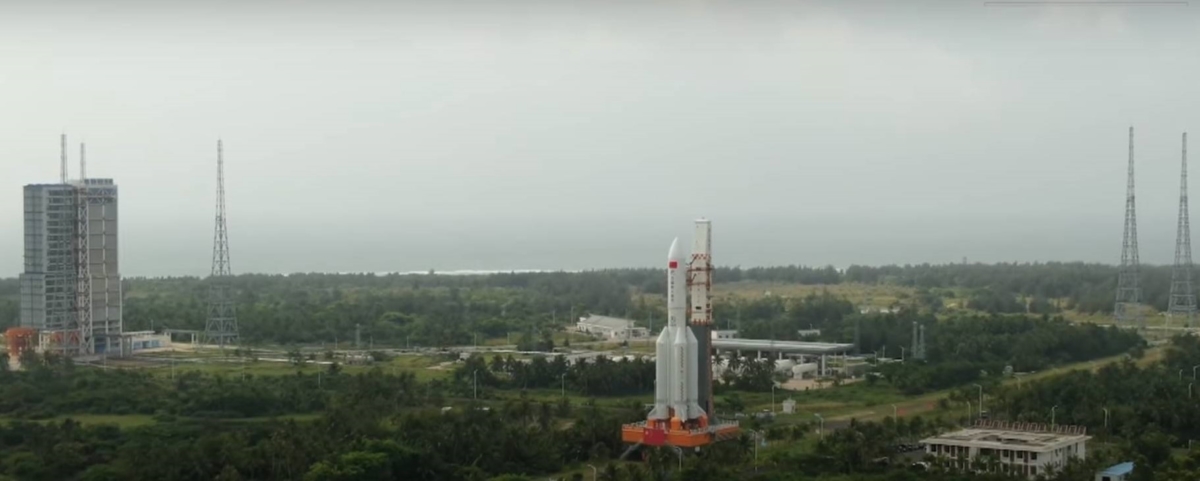
Booster en route to launch pad.
Credit: Xinhua/Inside Outer Space screengrab
Booster differences
As reported by the China Global Television Network (CGTN), the biggest difference between LM-5 and 5B is that the 5B only has one and a half stages compared to two of the LM-5.
The “half stage” consists of four 3.35-meter-diameter boosters attached to the core stage.
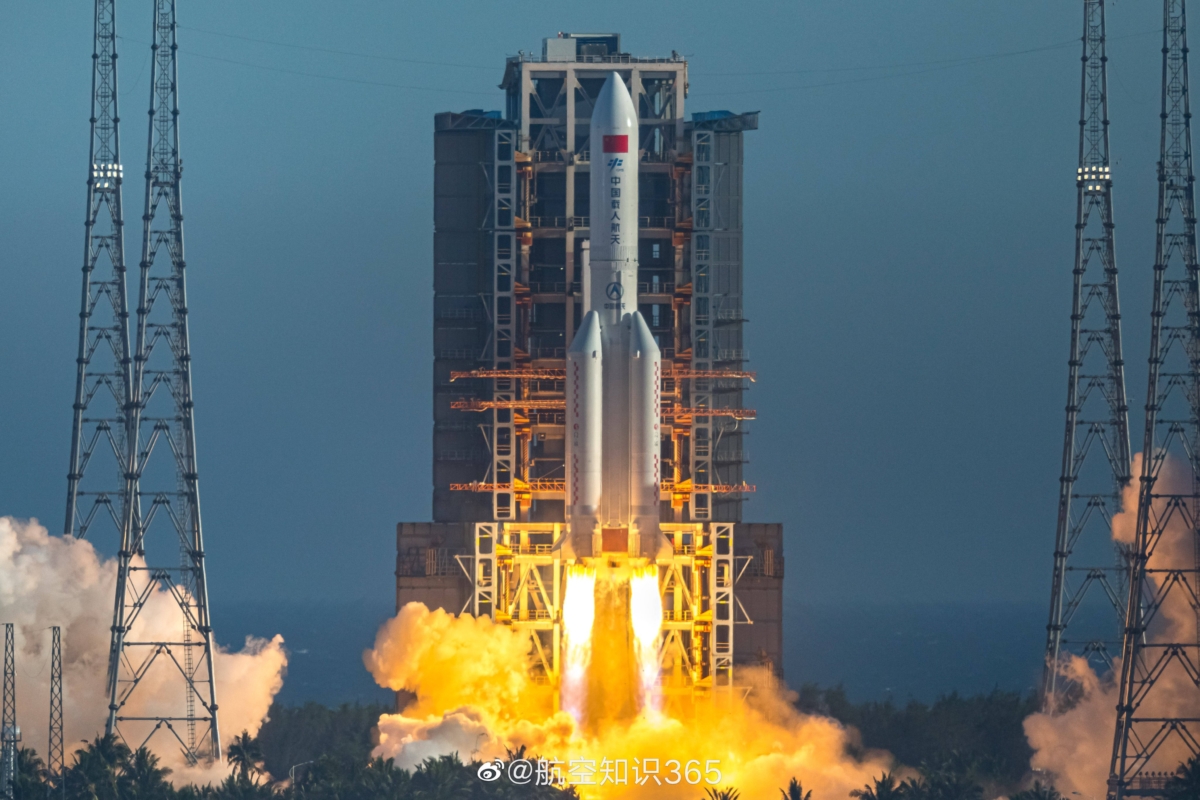
Credit: Weibo
With the modification applied, the 5B became three meters shorter and about 20 tons lighter than the LM-5. The rocket is nearly 54 meters in height, about the size of the 18-story building.
The lack of additional stages makes it harder to be launched to the correct height, CGTN adds. “Since it can only be ignited once, there’s no way to re-maneuver it after the initial launch. Everything has to be perfect.”
The engines of the rocket are also new models. Two YF-77 hydrogen oxygen engines were installed in the core stage, and two YF-100 kerosene and liquid oxygen engines were installed for each of the four boosters.

China’s new-generation spaceship.
Credit: CCTV/Inside Outer Space screen grab
New spaceship
China’s new-generation spaceship is nine meters long and can hold as many as seven astronauts. In this test mission the craft did not carry a crew.
The ship will stay in space for two days making multiple automatic orbit maneuvers, CGTN reports. The new ship is reusable thanks to its modular design. The thermal-protective coating and be reapplied after being burned-out during re-entry.

China’s space station to be operating in the 2020s. Credit: CCTV
China’s Xinhua news agency reports that the successful flight inaugurated the “third step” of China’s manned space program, which is to construct a space station, citing the China Manned Space Agency (CMSA).
After the booster’s liftoff, about 488 seconds later, the experimental manned spacecraft with no crew, together with the test version of the cargo return capsule, separated with the rocket and entered the planned orbit, according to CMSA. Also onboard, more than 10 other experimental craft, the agency said in a statement.
The successful maiden flight verified the design of the rocket. A series of technological breakthroughs have been achieved such as the separation of the large fairing and the payloads in space and the precise control of the rocket to enter orbit directly with high thrust, laying the foundation for constructing China’s space station, CMSA said.
The successful launch is also a good indication that China’s Mars 2020 Mission will fly on schedule this year.
For launch videos, go to:
https://www.youtube.com/watch?v=dFHja66hj9k
and
https://www.youtube.com/watch?v=hILzB9D8CyM
and

Credit: SAGA Space Architects
Danish space architects are building and plan to test this year a Moon home for everyone.
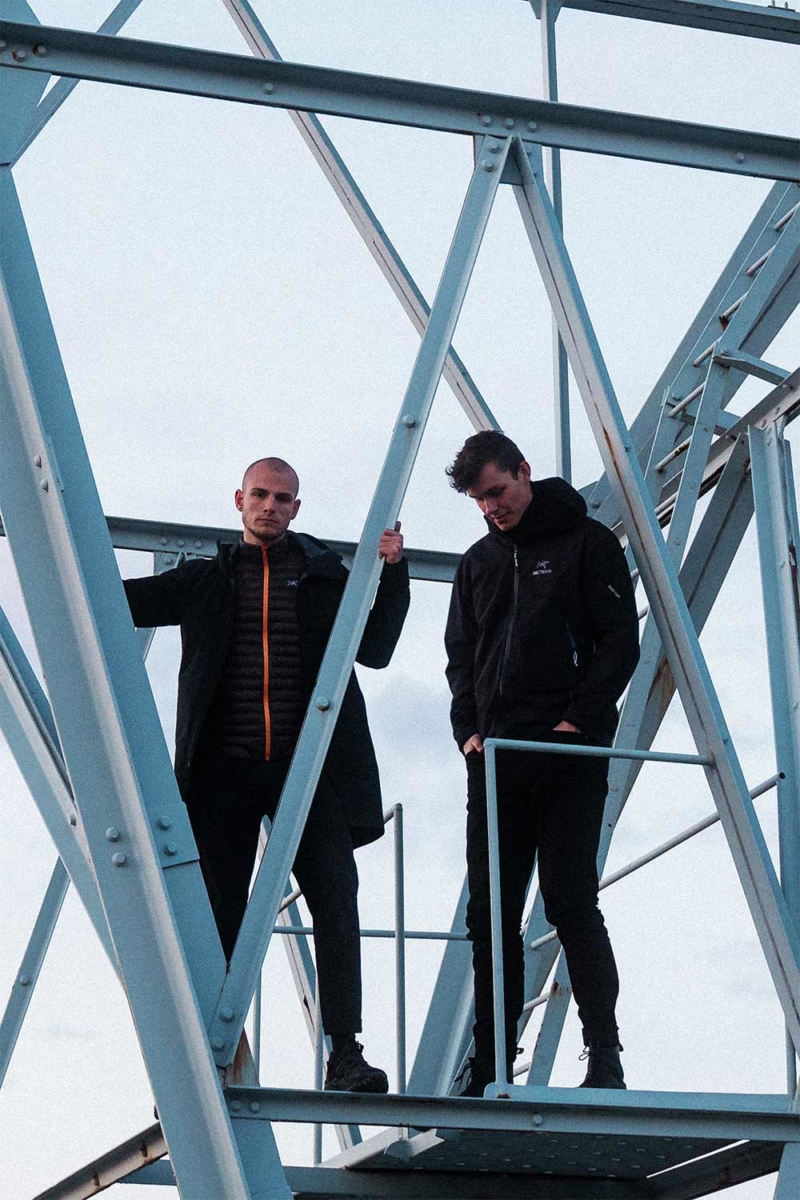
Two members of the design team will live for three months (91 days) in a Moon analogue habitat to be positioned in the Arctic, Greenland.
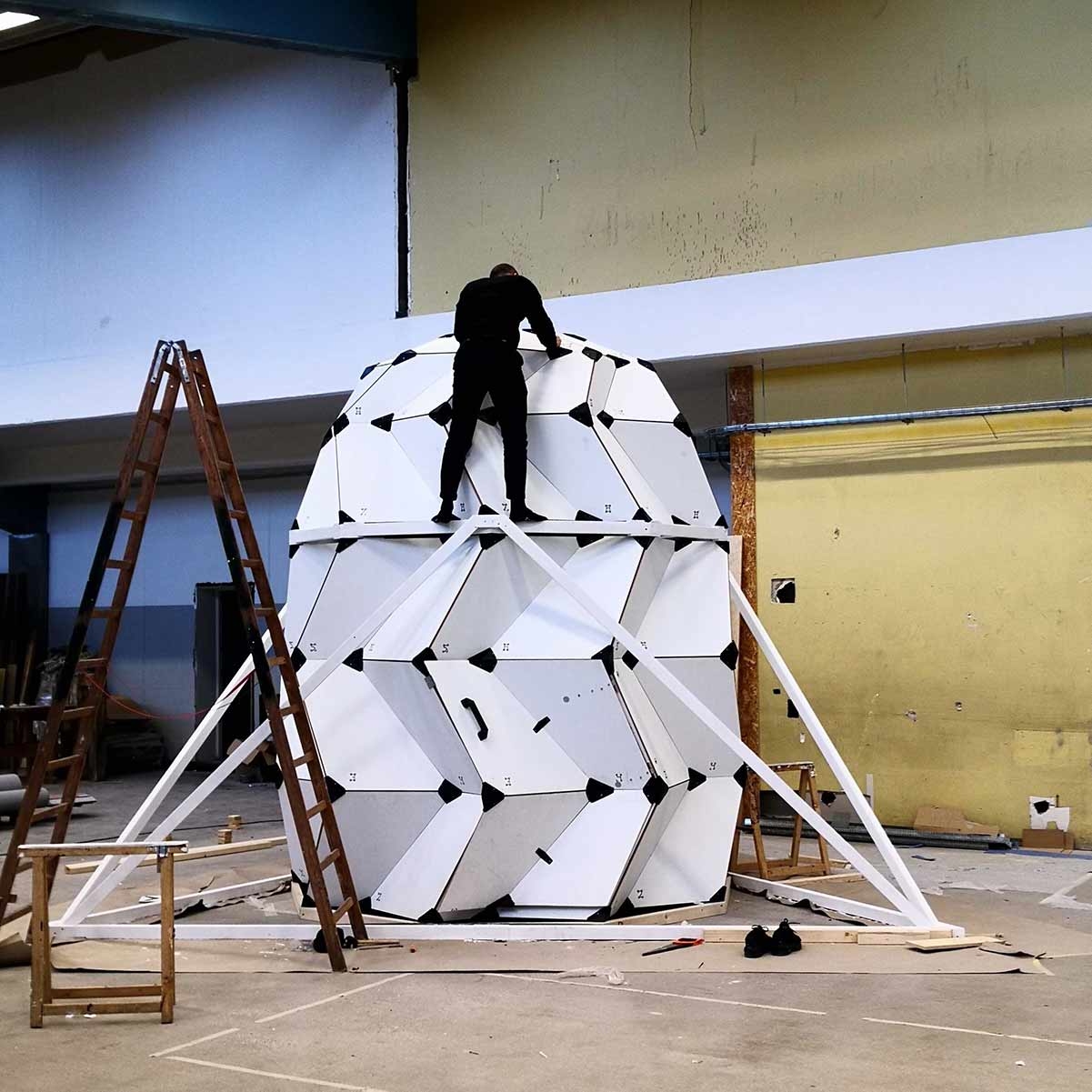
The project is dubbed LUNARK, developed by SAGA Space Architects in Copenhagen, Denmark. Their design for a lunar dwelling combines the ancient Japanese art of paper folding with the method of biomimicry. The result is a lightweight and strong foldable structure.
The challenge the architects took on is translating origami into thicker panels that can still fold. The final hinge design is a compliant mechanism is lightweight, strong, airtight, and simple to manufacture and to maintain.
Credit: SAGA Space Architects
“We want to understand with our own bodies, what is truly important when living in isolation under these extreme conditions,” explains Karl-Johan Sørensen. His expedition team member, Sebastian Aristotelis adds: “50 years ago we survived on the Moon, this time we want to live on the Moon. We use the arctic as the most realistic test site for the future Moon house.”
Moon-bound on Earth: Sebastian Aristotelis & Karl-Johan Sørensen.
Credit: SAGA Space Architects
Monotony, claustrophobia and psychological stress
Previous research shows that lack of stimuli, isolation, and confinement will become major challenges for the long-term voyages of the future.
This experiment, the architects contend, will develop and test a radically different Moon habitat where architecture helps to counteract monotony, claustrophobia and psychological stress.
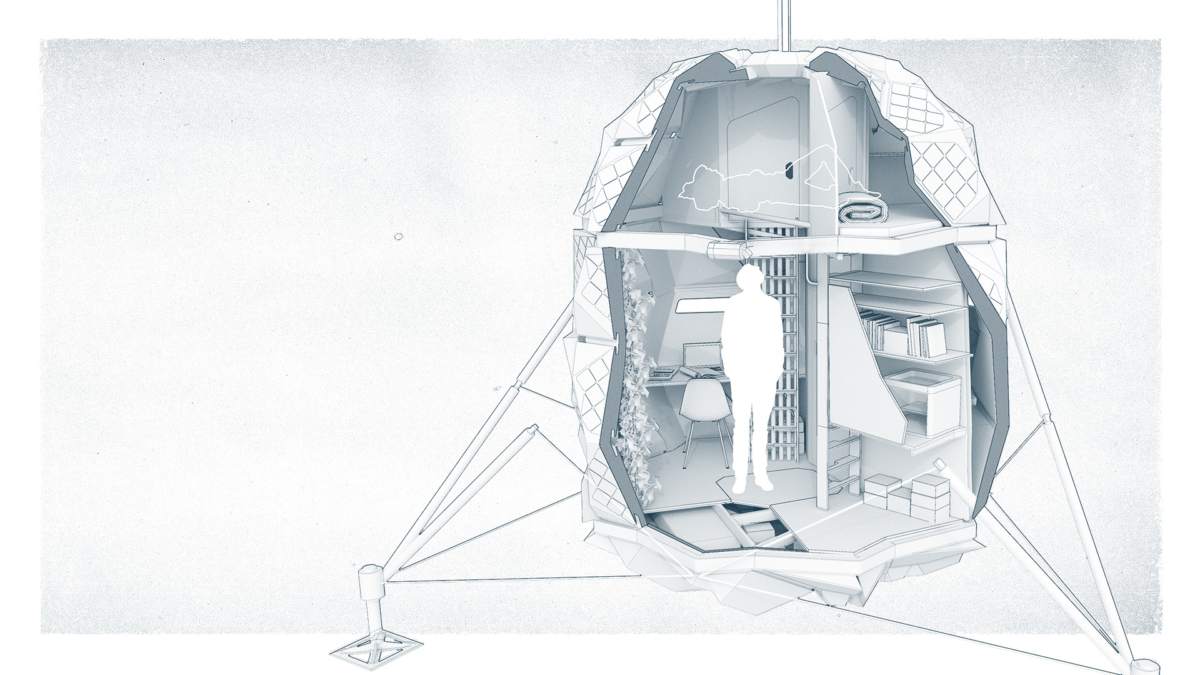
The group is developing a complete digital model which connects all the habitat’s systems (eg. life support, heat, water, electricity), along with embedded sensors. The goal is to be able to predict maintenance or risks through simple artificial intelligence so 3D print replacement parts can be produced before they break.
Credit: SAGA Space Architects
Circadian rhythms
A circadian simulator is on the agenda to develop and test. This system would counter sleep disruptions and out-of-sync circadian rhythms that make astronauts lethargic and unproductive. This simulator would bathe the habitat’s inside in slowly changing hues and luminosities over the day; bright in the morning to wake an individual up, and glowing in nuances of pink and orange as the person goes to sleep.
Also under development is a weather simulator. The habitat designers consider the lack of novelty as another key challenge for long term space habitation. So instead of living in a pod where every day is the same, you might one day wake up to a stormy day, or a rainbow of color. The architects believe this might be a key to breaking the monotony of space.
Within the core of the habitat, an algae reactor is to be placed, a unit that is resilient, highly photosynthetic, provides nutritious rations, and can absorb cosmic radiation.
Habitat structure
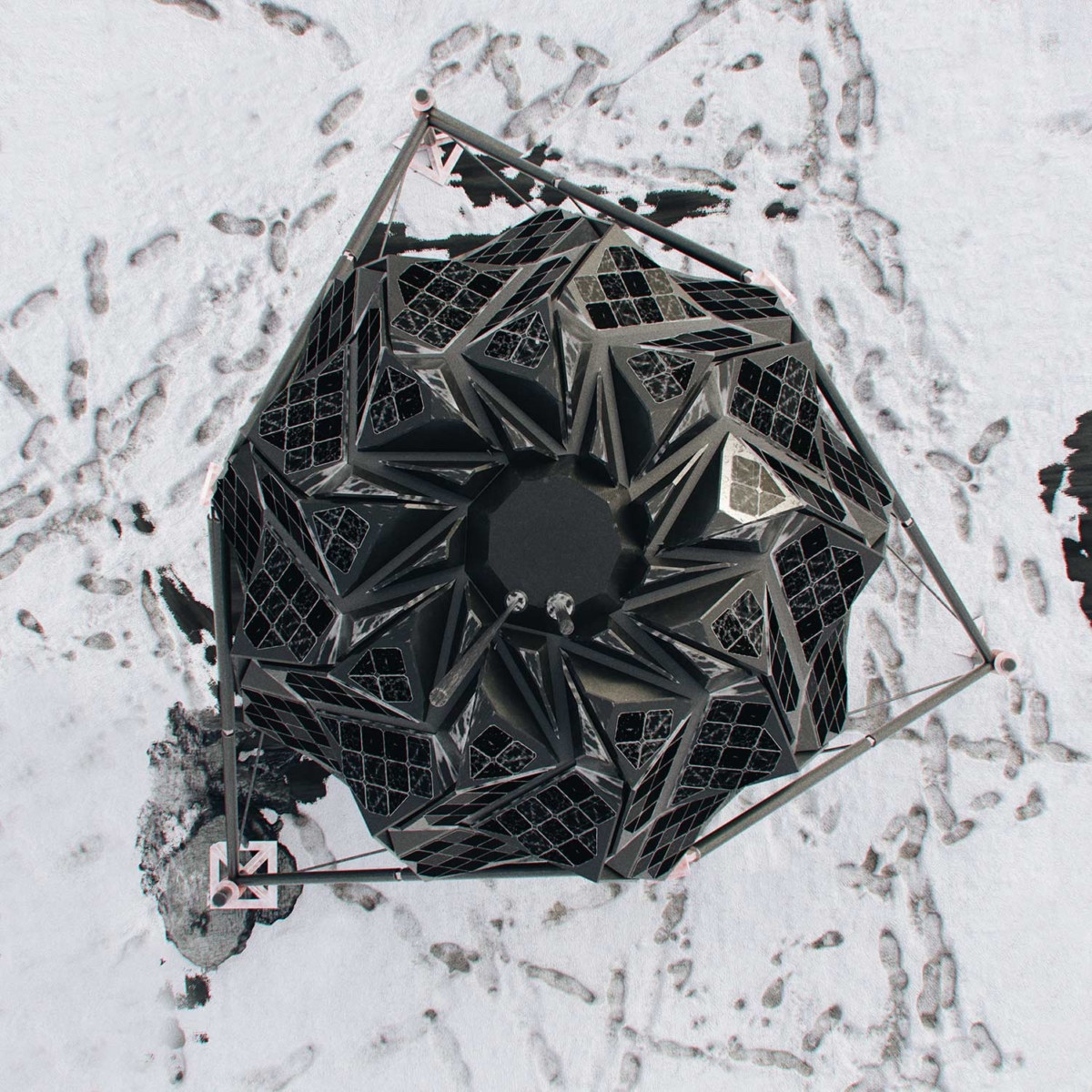
To energize the habitat’s functions, monocrystalline solar cell-laden panels are integrated within the skin of the structure yielding 2.5 kilowatts of power.
Top down look. Credit: SAGA Space Architects
The habitat is equipped with two individual sound insulated crew cabins, to strengthen the sense of privacy in the small habitat.
The habitat structure has two main segments – the steel frame and the composite Origami vessel. These two segments are attached to each other and allow the Habitat to be both flexible when deploying and rigid and stable throughout the mission.
The steel structure carries the entire habitat on three angled legs. Height-adjustable feet at the three support points ensure that the habitat is stable regardless of the site topography, and wind conditions. The legs attach to two inlaid structural rings that stiffen the origami and carry all the loads from the habitat’s interior. This means that the floor, sleeping cabins, etc. aren’t carried by the origami, but attach directly to the structural rings.
Greenland gotchas
Isolated and confined in one of the harshest climates on Earth, the habitat’s occupants will endure -30°C as well as hurricane winds.

Creature comforts. Courtesy photo/Danish Chief Petty Officer Lars Iversen
Team members make note that on the Moon, there is a risk of being hit by a meteor. In Greenland, you might get hit by a polar bear. The habitat must withstand a curious and weighty polar bear. Furthermore, the habitat must leave no trace and recycle as much waste as possible.
The habitat is to be situated around Dundas, 62 miles (100 kilometers) south of Thule in northern Greenland.
The LUNARK project has already received corporate support, but are on the lookout for more sponsors. To boost their efforts, a Kickstarter campaign is to be unveiled on May 5th at:
For more details on SAGA Space Architects and its LUNARK initiative, go to:
Also, go to this informative video at:

Map the quietest places in the world to find the best places to go for peace and quiet!
Download a free app and make a sound level measurement from wherever you are, and upload the data to a map of the world.
Do you have any favorite urban, suburban or rural places you think are really quiet?
This project presented by NASA lets you measure the sound level and enter your data on a world map for others to share!
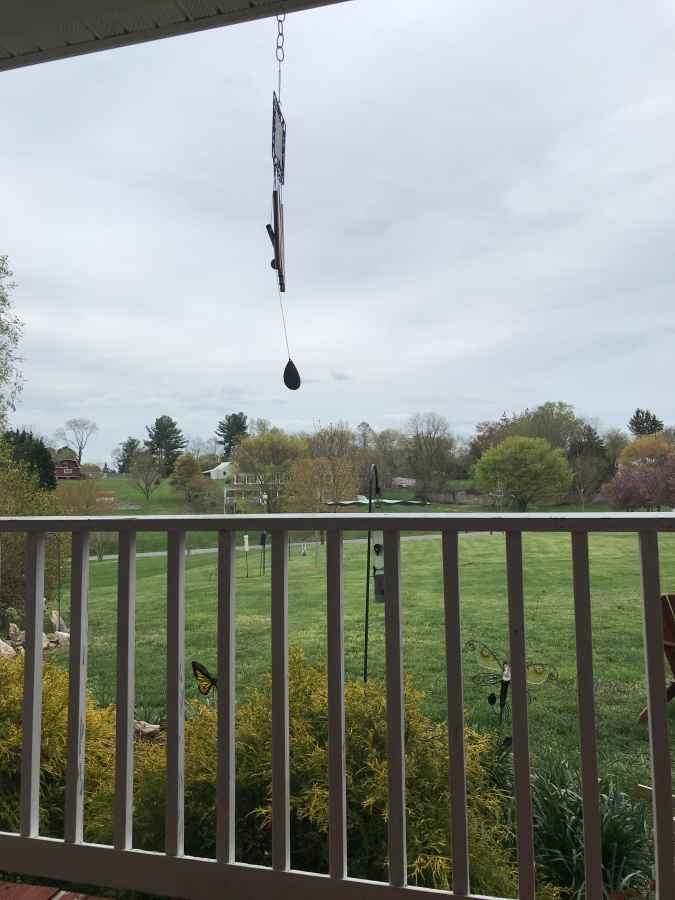
Observed by Janneydo on April 12, 2020
Credit: Janneydo
Sound level
The project uses your smartphone to make sound level measurements. The goal is to discover the quietest outdoor places in your town, rural location, or as you go about your travels and vacations.
Join the Silent Earth Project on Facebook to share your experiences, keep up on tips from the Project Director, and learn about environmental noise pollution by going to:
https://www.facebook.com/SilentEarthProject
You can also look at a blog for more details at:
http://sten.astronomycafe.net/silent-earth/
To learn more about other projects, such as “Satellite Streak Watcher” and “Night Sky Light Pollution,” go to:
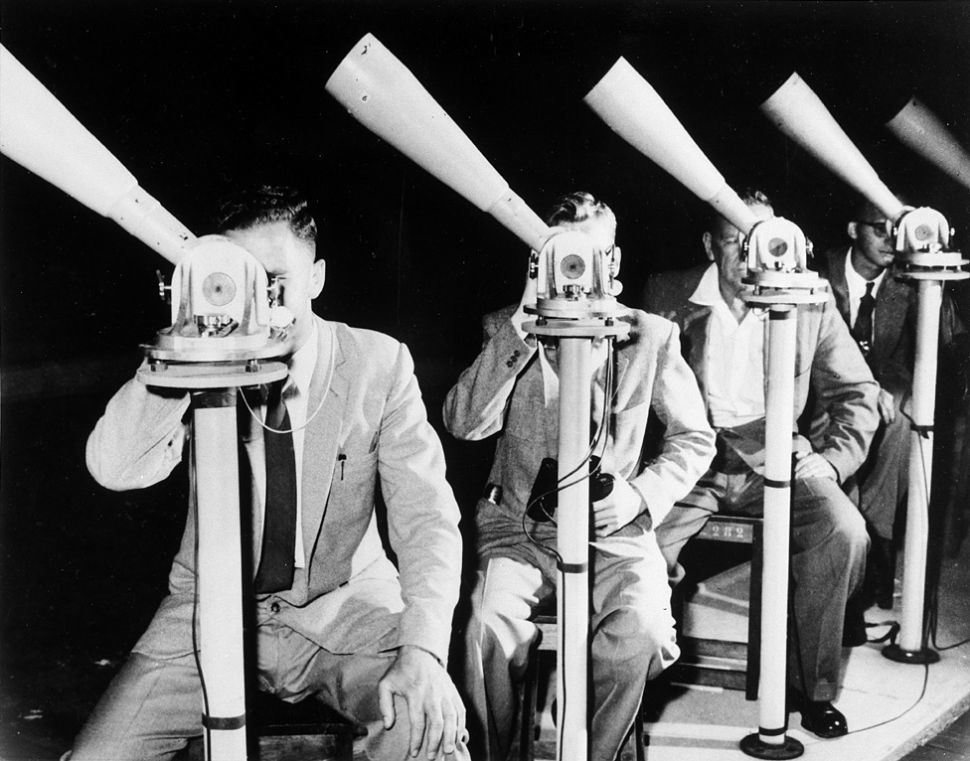
Early satellite-spotting pioneers. In this 1965 photo, volunteer satellite trackers in Pretoria, South Africa, were part of the Smithsonian Astrophysical Observatory’s Moonwatch Network, one of more than 100 teams worldwide.
Credit: Smithsonian Institution Archives
Around the planet, a loosely knit but closely woven band of amateurs monitor the whereabouts of satellites – be they secretive spacecraft, robotic space drones, rocket stages, orbital debris leftovers, or lost-in-space planetary probes.
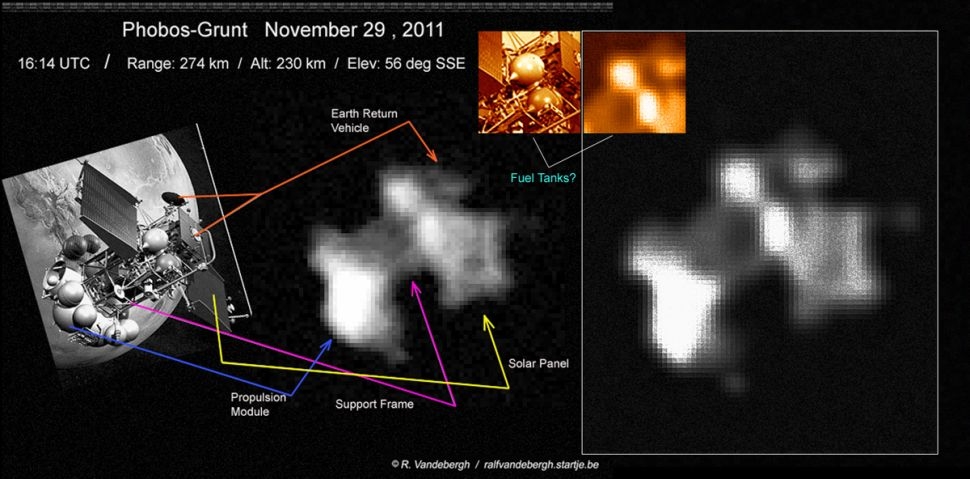
But what’s the motivation behind this group of sky prowling spirits? What kind of tools are they using now or in the future to purge secrets from space – at times revealing what some countries don’t want others to know about?
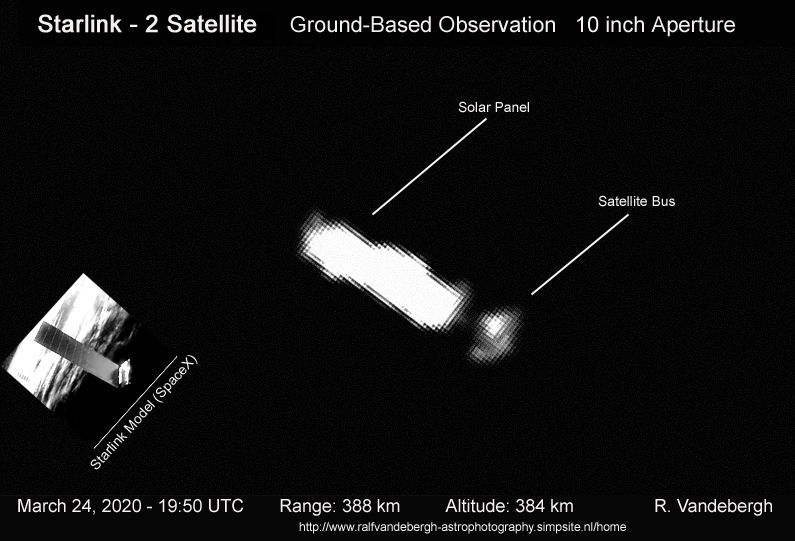
Space.com reached out to a small set of these hobbyists that contribute to SeeSat-L, a mailing list intended to facilitate rapid, reliable communications among a worldwide cadre of visual satellite observers.
For more information on this cadre of satellite observers, go to my new Space.com story:
How amateur satellite trackers are keeping an ‘eye’ on objects around the Earth
https://www.space.com/amateur-satellite-trackers-on-global-lookout.html

Curiosity Front Hazard Avoidance Camera Right B photo taken on Sol 2750, May 1, 2020.
Credit: NASA/JPL-Caltech
NASA’s Curiosity Mars rover is now performing 2751 Sol duties.

An image of a rock on Mars called Glasgow (visible in the center of the above image. NASA’s Mars rover Curiosity acquired this image using its Mars Hand Lens Imager (MAHLI), located on the turret at the end of the rover’s robotic arm, on April 30, 2020, Sol 2749.
Credit: NASA/JPL-Caltech
Mars researchers are preparing to drill in this weekend’s plan, a target named “Glasgow,” reports Abigail Fraeman, a planetary geologist at NASA’s Jet Propulsion Laboratory
“Combined with ‘Hutton,’ these three drilled samples will give us a wonderful snapshot of the range of compositions of the three major geologic units we’ve explored in this region,” Fraeman notes.
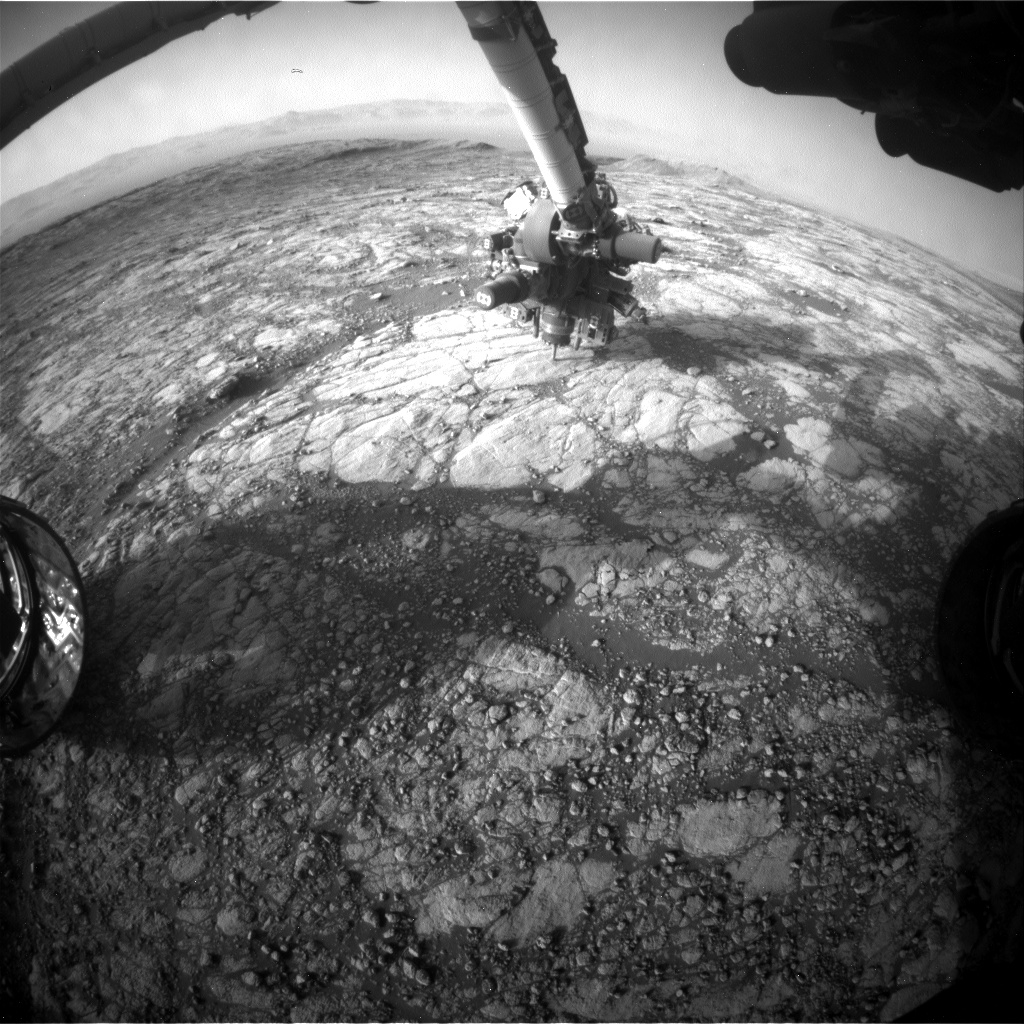
Curiosity Front Hazard Avoidance Camera Right B image acquired on Sol 2749, April 30, 2020.
Credit: NASA/JPL-Caltech
Go to continue
Last Wednesday’s pre-load test on Glasgow was successful, Fraeman points out, “and even created a small divot where the drill tip pressed down onto the rock which suggests this rock might be somewhat soft.”

Curiosity Left B Navigation Camera photo taken on Sol 2750, May 1, 2020.
Credit: NASA/JPL-Caltech
The chemical data from Chemistry and Camera (ChemCam) and Alpha Particle X-Ray Spectrometer (APXS) also were in family with other rocks in this area, so the team quickly decided they were go to continue with the full drill, which will execute in the second sol of the three-sol (Sols 2751-2753) weekend plan.
New perspective
“On the first sol of the plan, we will take Mastcam images of the rover’s deck, some sand-filled troughs in the area, and a mosaic to capture the view of nearby Tower Butte and Greenheugh pediment with a new perspective from our current location,” Fraeman says.

Curiosity Chemistry & Camera image acquired on Sol 2750, May 1, 2020.
Credit: NASA/JPL-Caltech/LANL
Also on the plan is taking some additional Mars Hand Lens Imager (MAHLI) images of areas in our workspace.

Curiosity Rear Hazard Avoidance Camera Left B photo taken on Sol 2750, May 1, 2020.
Credit: NASA/JPL-Caltech
Fingers crossed
The third sol of the plan has a lot of remote sensing, including Mastcam and Navcam environmental science observations, a Mastcam multispectral image and ChemCam passive spectral observation in the expected location of the drill tailings, a ChemCam z-stack of the expected drill hole, and ChemCam Laser Induced Breakdown Spectroscopy (LIBS) observations of an area near the drill spot, “Glasgow_2”, and “Canongate.”

Curiosity Right B Navigation Camera image acquired on Sol 2750, May 1, 2020.
Credit: NASA/JPL-Caltech
As always, dates of planned rover activities are subject to change due to a variety of factors related to the Martian environment, communication relays and rover status.
“Fingers crossed,” Fraeman concludes, “at least some socially-distant team members will be able to enjoy the traditional post-drill donut holes during planning on Monday morning!”

Curiosity Right B Navigation Camera image acquired on Sol 2750, May 1, 2020.
Credit: NASA/JPL-Caltech

Curiosity Right B Navigation Camera image acquired on Sol 2750, May 1, 2020.
Credit: NASA/JPL-Caltech

Curiosity Right B Navigation Camera image acquired on Sol 2750, May 1, 2020.
Credit: NASA/JPL-Caltech
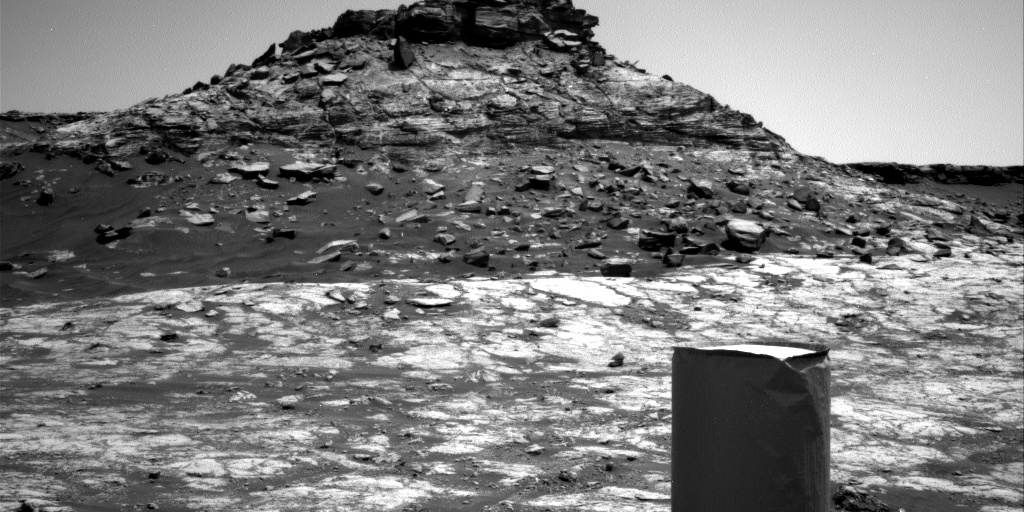
Curiosity Right B Navigation Camera image acquired on Sol 2750, May 1, 2020.
Credit: NASA/JPL-Caltech

Curiosity Right B Navigation Camera image acquired on Sol 2750, May 1, 2020.
Credit: NASA/JPL-Caltech

Credit: New China TV/XinhuaVideo/Inside Outer Space screengrab

Credit: CCTV/Screengrab Inside Outer Space
The first Search for Extraterrestrial Intelligence (SETI) observations have been carried out by China’s Five-hundred-meter Aperture Spherical radio Telescope (FAST) – the world’s largest single-dish radio observatory.
The newly commissioned FAST used a 19 beam receiver in its inaugural SETI work.
Data stream
In a paper published in The Astrophysical Journal that details the FAST SETI testing, a data stream was produced by the SERENDIP VI real-time multibeam SETI spectrometer installed at FAST, as well as its off-line data processing pipelines.
The FAST researchers identified and removed four kinds of radio frequency interference (RFI): zone, broadband, multibeam, and drifting, utilizing the Nebula SETI software pipeline combined with machine-learning algorithms.

Credit: CCTV/Screengrab Inside Outer Space
“Birdies”
“After RFI mitigation, the Nebula pipeline identifies and ranks interesting narrowband candidate ET signals, scoring candidates by the number of times candidate signals have been seen at roughly the same sky position and same frequency, signal strength, proximity to a nearby star or object of interest, along with several other scoring criteria,” explains the paper led by Zhi-Song Zhang of China’s National Astronomical Observatories. “This preliminary testing on FAST data helps to validate our SETI instrumentation techniques as well as our data processing pipeline.”
The first observational test of SETI with the 19- beam receiver of FAST was done in July, 2019. Test signals, dubbed “birdies” were injected into the data to demonstrate the pipeline’s RFI removal capability.

SETI searches have the potential to detect whether the neighboring M31 Andromeda Galaxy is a locale of advanced technology and civilizations.
Credit: Bill Schoening, Vanessa Harvey/REU program/NOAO/AURA/NSF
Longer term
For the longer term, FAST is planning a sensitive phased array feed, which could provide roughly 100 simultaneous beams, the paper adds, “excellent for a next generation SETI sky survey.”
The paper explains: “More generally, Earthlings are just beginning to learn how we might detect other civilizations if they are out there. We’ve only had radio technology for a century; that’s a blink of the eye in the history of the universe and life on this planet. We are beginning to explore tiny regions of the large parameter space of possible technosignatures from potential extraterrestrial civilizations.”
While researchers are in an infant stage, the paper adds, “SETI science and technology is growing exponentially. Radio telescope sensitivity has been doubling every 3.6 years for the last 60 years, and SETI spectrometer capabilities have been doubling every 20 months for the last forty years. This SETI sky survey commissioning work is a significant step, leading to a powerful new SETI survey on FAST.”

Frank Drake with cosmic equation to gauge the presence of intelligent life in the cosmos. The Drake Equation identifies specific factors believed to play a role in the development of civilizations in our galaxy.
Credit: SETI Institute
The FAST SETI team concludes that, hopefully, they expect that these ETI signal candidates could come from some warm Earth-size planets in the Milky Way, the number of which can be roughly predicted by the Drake equation.
For access to the paper — First SETI Observations with China’s Five-hundred-meter Aperture Spherical Radio Telescope (FAST) – go to:
https://iopscience.iop.org/article/10.3847/1538-4357/ab7376
Also, for an available draft version dated March 26, 2020, go to:

