Archive for the ‘Space News’ Category
 Author:
  May 29th, 2020
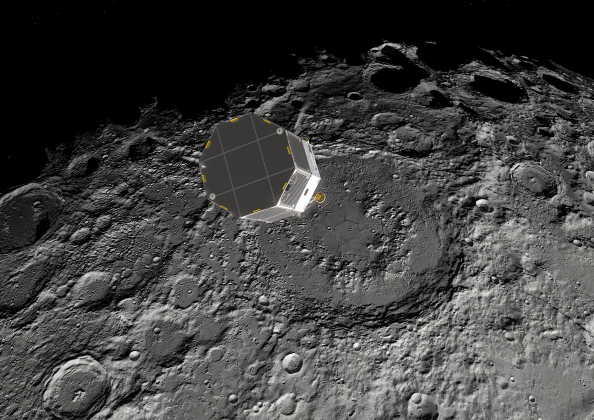
European Large Logistic Lander enables a series of proposed ESA missions to the Moon that could be configured for different operations such as cargo delivery, returning samples from the Moon or prospecting resources found on the Moon.
Credit: ESA/ATG-Medialab
Key steps are underway in Europe to develop its first ever lunar lander.
Set to launch on an Ariane 64 rocket later this decade and return to the Moon on a regular basis, the large lander idea comes hot on the heels of the European Space Agency (ESA) signing an agreement to start building the third European Service Module for NASA’s Artemis program. This module will drive the spacecraft that ferries the next astronauts to the Moon.
Autonomous access
The European-led large lunar lander program provides autonomous access to the Moon, delivering 1.5 tons of material from Europe’s Spaceport in Kourou, French Guiana.
The program, currently known as the European Large Logistics Lander or EL3 for short, is designed to incorporate different types of uncrewed missions, from supply runs for Artemis astronauts, to stand-alone robotic science and technology demonstration missions and even a lunar return mission to bring samples to laboratories on Earth.

Unloading cargo frp, European Large Logistic Lander.
Credit: ESA/ATG-Medialab
Configured for different operations
“This European lander will be able to access locations all over the Moon from the equator to the poles, from the near side to the farside, opening up tremendous opportunities to deliver science, research technology and infrastructure,” says James Carpenter, ESA’s Exploration science and research coordinator. “Developing this capability is a hugely important strategic step for Europe. It will allow us to take a lead in future robotic missions and support international activities at the Moon’s surface.”
The EL3 enables a series of proposed ESA missions to the Moon that could be configured for different operations such as cargo delivery, returning samples from the Moon or prospecting resources found on the Moon.
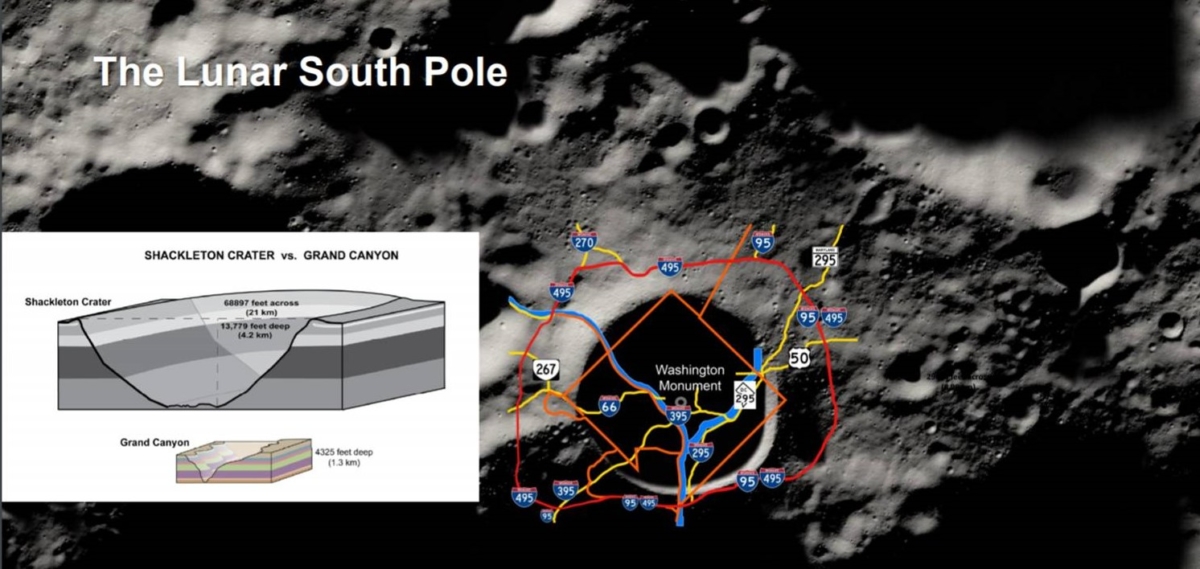
Credit: NASA/GSFC
Lunar south pole
An EL3 sample return package, for example, could be sent to a previously unexplored region near the lunar South Pole – an interesting area for researchers.
Other goals of the missions include testing new hardware, demonstrating technology and gaining experience in operations while strengthening international partnerships in exploration. Its development will provide an Ariane 64-based lunar cargo lander available for potential future commercialization by European industry, according to an ESA statement.
“The lunar lander program is not a one-shot mission,” ESA says, “but promises regular launches starting in the later part of this decade and continuing into the 2030s.”
This 8-minute film gives an overview of the past, present, and future of Moon Exploration, from the Lunar cataclysm to ESA’s vision of what Lunar exploration could be.
 Posted in
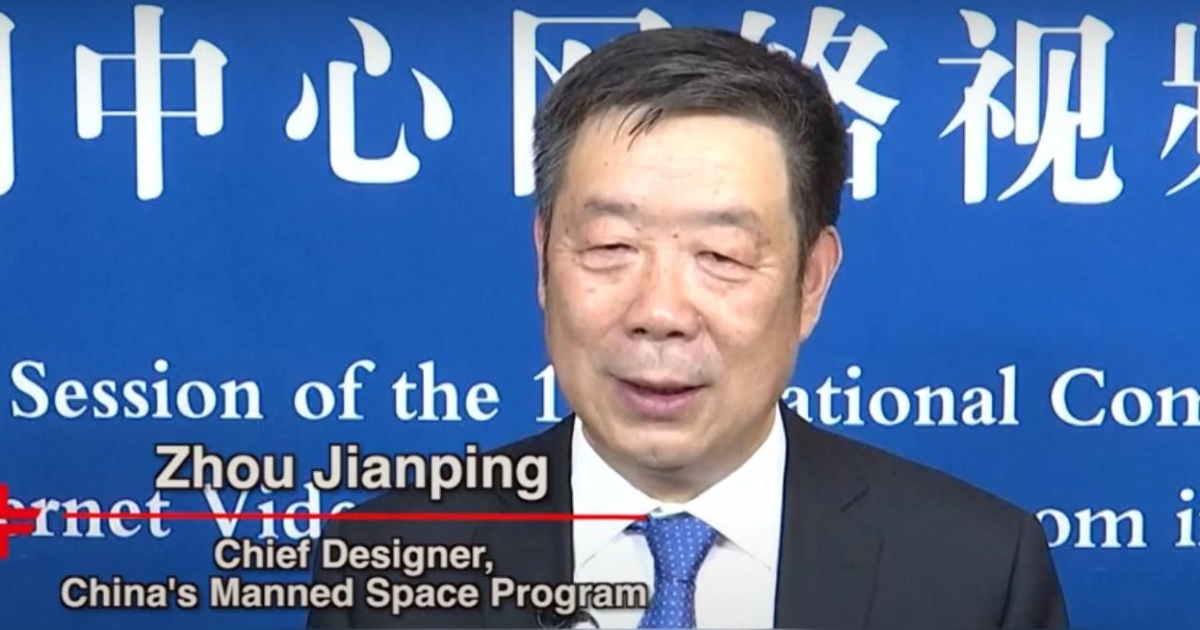
Credit: CCTV/Inside Outer Space screengrab
Scientists will be included among China’s next batch of astronauts as the country opens up its space program to a wider range of talents, said Zhou Jianping, chief designer of China’s manned space program, in Beijing on Tuesday.
The third batch of astronauts, which follows the previous selections in 1995 and 2009, will participate in the construction of China’s space station, the third step of China’s manned space program.

Credit: CCTV/Inside Outer Space screengrab
Flight engineers and scientists will be selected besides fighter pilots. The selection will be completed around July, said Zhou in an online interview posted by China Central Television (CCTV).
Scientific devices
“When we send a scientist to the space, he can adjust and improve the plans accordingly with his expertise and personal operation. Higher efficiency will be achieved in this way,” Zhou said in the CCTV interview.
A large number of scientific experimental devices will be deployed at the space station, including those for space life science, space material science, space microgravity science, combustion science, and basic physics and astronomy.
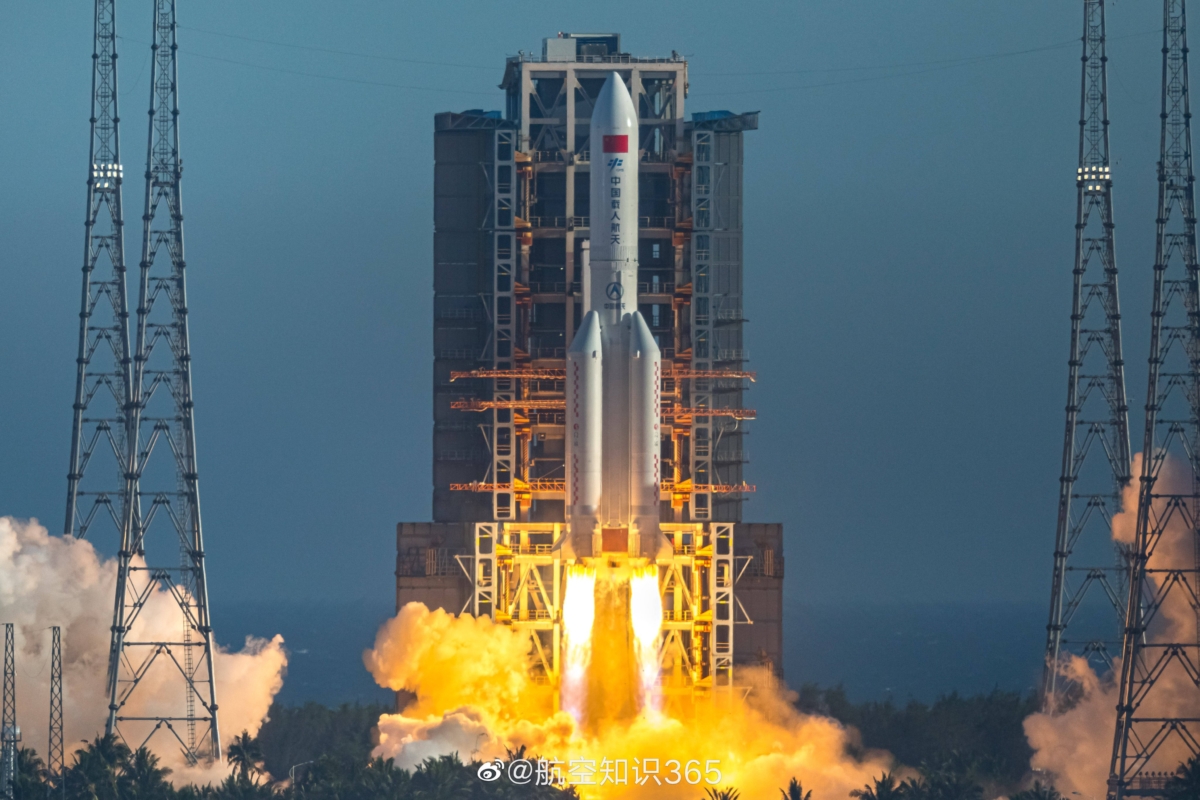
Credit: Weibo
“The successful maiden flight of the Long March-5B carrier rocket marks the start of the construction of the space station,” Zhou added. “Greater challenges are ahead.”
Space station construction
Zhou explained that China will launch space station modules starting next year.

Credit: CMS/CCTV/Inside Outer Space screengrab
“We will finish the construction of the space station and test of key technologies in over two years. During this period of time, we will launch the core module and two experimental capsules of the station, as well as four manned spacecraft and four cargo spacecraft. All the work, in 11 flight missions, will be completed in two years,” Zhou said.

Credit: CMS/CCTV/Inside Outer Space screengrab
A sky survey optical module will also be established as part of space station operations to explore origin of the space and habitable planets.
Humans to Moon
China will also extend its exploration to the Moon and prepare manned spacecraft for the Moon, Zhou said.

China’s New-generation spaceship.
Credit: CCTV/Inside Outer Space screengrab
“The test spaceship that was successfully retrieved was designed both for the requirement of Earth orbit and the future manned exploration of the Moon, or even for manned deep space exploration,” Zhou said. “It will take the mission of manned spacecraft for the Moon in the future.”
To view the CCTV interview, go to:

Curiosity Left B Navigation Camera photo taken on Sol 2775, May 27, 2020.
Credit: NASA/JPL-Caltech
NASA’s Curiosity Mars rover is now carrying out Sol 2775 tasks.
Curiosity is finishing up at “Glasgow,” having spent almost exactly one month here,” reports Roger Wiens, a geochemist at Los Alamos National Laboratory in New Mexico.
A decision will be made shortly, Wiens adds, whether to do another drill hole nearby, or possibly back at “Glen Etive,” or forego another drill operation.

Curiosity Front Hazard Avoidance Camera Right B image acquired on Sol 2775, May 27, 2020.
Credit: NASA/JPL-Caltech
The drill material would be used for a wet chemistry experiment by the Sample Analysis at Mars (SAM) Instrument Suite before Curiosity leaves the clay-bearing unit.
“Once all the drilling is finished, Curiosity is scheduled to hit the road (in this case only figuratively, since no roads exist on Mars) toward the sulfate unit,” Wiens explains.
Dust storm prospects
Meanwhile, it’s that time of the Mars year (southern spring) when Mars researchers expect more dust storm activity.

Image taken by Mast Camera onboard Curiosity on Sol 2772. This horizon view shows decreased visibility inside the crater due to increased dust levels.
Credits: NASA/JPL-Caltech/MSSS.
“The last Mars global dust storm started almost exactly two Earth years ago, and knocked out the plucky Opportunity rover. The reduction of sunlight during that dust storm, which grew to become global, was too much for that solar-powered rover. Fortunately, Curiosity had no issues, thanks to its nuclear power pack,” Wiens says.
Even so, global storms – which only occur in about one in three Mars years – are fascinating events to study, as scientists still don’t fully understand how they begin or how they grow to become global.
“So the team has been watching for signs of another global storm by making more frequent measurements of ‘tau’ (the opacity of the dust column above the rover) and other indicators of local dust activity, and also by checking the shape of the daily pressure cycle, which is very sensitive to the planet-wide dust distribution,” Wiens adds.
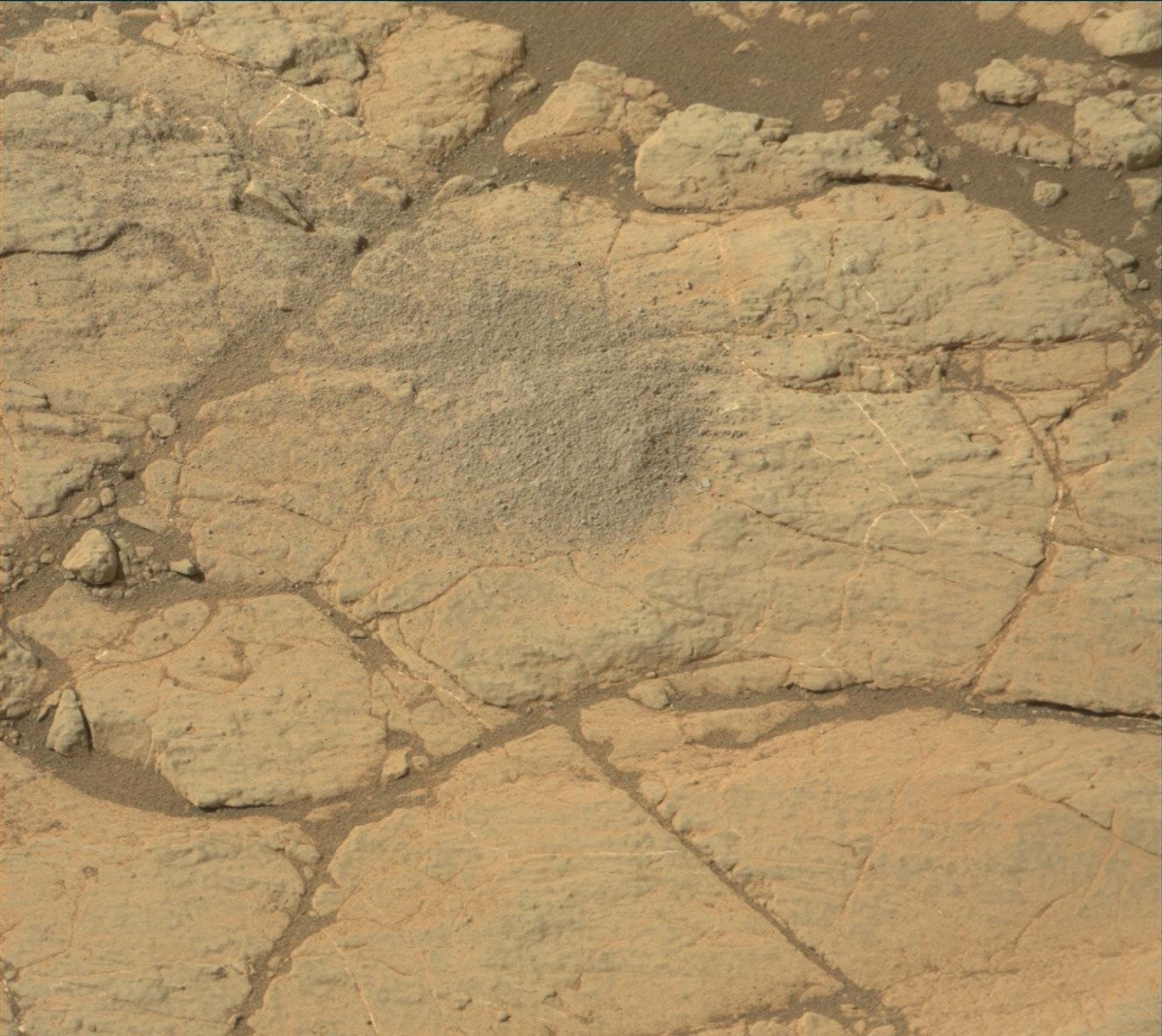
Dump pile on Mars. Curiosity Mast Camera Right image taken on Sol 2773, May 25, 2020.
Credit: NASA/JPL-Caltech/MSSS
Over last weekend, tau rose slightly, but this sort of variability is typical of the past few months. “It’s still within normal seasonal values and does not indicate a major dust storm is beginning,” Wiens notes.
Last activities at Glasgow
“Never daunted by a little dust, Curiosity is busy packing in the last activities at ‘Glasgow.’ We are planning three sols of activity, and every single instrument gets in on the act,” Wiens reports.

Curiosity Mast Camera Right photo taken on Sol 2774, May 26, 2020.
Credit: NASA/JPL-Caltech/MSSS
The robot’s Alpha Particle X-Ray Spectrometer (APXS) will do an evening analysis of the dump pile, and an overnight observation of the drill tailings, with follow-up Mars Hand Lens Imager (MAHLI) images.
Chemistry and Camera (ChemCam) and Mastcam will do observations of “Hiort” and “Fishnish.” ChemCam will take a Remote Micro-Imager (RMI) mosaic of “Ptarmigan,” which is another view of the top of “Tower Butte.”
Mastcam will take a Sun tau measurement, and will take a multispectral image of the “Glasgow” dump pile. It will also image “Salmons Burn,” a possible meteorite, Wiens reports.
Curiosity’s Mars Descent Imager (MARDI) will take an image of the ground below the rover, and Navcam will take dust-devil movies.
Chemistry & Mineralogy X-Ray Diffraction/X-Ray Fluorescence Instrument (CheMin) and SAM both have activities supporting their experiments.
The rovers Radiation Assessment Detector (RAD), Dynamic Albedo of Neutrons (DAN) and the Rover Environmental Monitoring Station (REMS) will also take data.

Credit: CGTN
China’s first Mars exploration mission, named Tianwen-1, is on schedule for a July liftoff, joining NASA’s Mars 2020 Perseverance Rover and the United Arab Emirates’ Hope Mars orbiter during the Mars launch window this July.

Credit: CCTV/Inside Outer Space screengrab
In a People’s Daily Online report, Tianwen-1 aims to orbit, land and rove in one go to conduct a global and comprehensive exploration of Mars and carry out detailed surveys of key areas of the Martian surface, said Zhao Xiaojin, Party chief of the China Academy of Space Technology.

China’s Mars Orbiter, Lander, Rover effort.
Credit: China Aerospace Technology Corporation
No country has completed such an undertaking in its exploration of the red planet, Zhao noted, adding that this means the Chinese mission faces unprecedented challenges.
Zhao added that Tianwen-1 along with the combined Mars orbiter and lander is expected to be launched by a Long March 5 Y4 carrier rocket.
China is exploring a new path for Mars exploration rather than repeating what other countries have already done, Zhao said in the new report, which demonstrates the country’s technological development and great confidence in its aerospace sector.

China’s Mars mission elements.
Credit: CCTV/Inside Outer Space screengrab
Close the gap
If the mission is successful, it will close the gap in deep space exploration technology between China and other aerospace powers such as the U.S. and Russia, said Bao Weimin, head of science and technology at China Aerospace Science and Technology Corp and academician at the Chinese Academy of Sciences.
According to Bao, the mission has laid out five scientific objectives, mainly related to the study of Mars’ space environment, its physical features and its surface structure.

China’s Mars landing regions.
Courtesy: James Head
The biggest challenge is the “seven minutes of terror”, a phrase describing the entry, descent, and landing process. During this period, the landing segment for the rover is required to reduce its speed from 20,000 kilometers per hour to zero.
China also plans to conduct a Mars sample return mission by around 2030, as well as a Jovian System probe mission, said Bao.
In a related story, Xinhua news agency reports that Wan Weixing died of illness in Beijing at the age of 62. Wan was the lead scientist of China’s Mars exploration mission.

What will the space industry look like in 2030? Read the perspectives of 30 space industry leaders.
30 Voices on 2030 – The future of space brings together the different perspectives of 30 senior leaders from the space industry around the world – from heads of agency, engineers, and lawyers to entrepreneurs and politicians – who paint a vision of what we can expect.
This report explores the potential of space to open up to new businesses and customers, create new products and services and speak to our sense of curiosity and desire to understand the world beyond our planet. Organizations across different industries – and not just traditional space industry players – that lack adaptability and imagination will be left behind.

Pivotal point
With the world at a “pivotal point for space”, the global space industry is expected to be worth U.S. $600 billion by 2030.
A central international governing body will also need to be established to manage space data, which will increase in volume and value. Much of the data collected will be analyzed by leading edge analytics in-orbit to reduce the volume of data that needs to be transmitted to Earth and stored. AI will also be used in deep space missions to overcome communications delays due to distance and help pre-empt and correct problems.

Credit: James Vaughan (Used with permission) http://www.jamesvaughanphoto.com/directory-aerospace-defense-illustrations
Partnerships: public and private sectors
By 2030, the report predicts, manufacturing in space will be real and viable and there will be assets such as mines operated remotely on the Moon. Rather than space programs being purely government-led, there will be more and more partnerships between the public and private sectors, with Government as a customer of civil space business.
While people won’t be living on the Moon quite like the Jetsons, with space travel remaining costly, there will be an increased human presence in space. This will enable more research, such as medical research in zero gravity.
The report also predicts that the human genome may be altered to further support humanity’s sustained exploration of space.

Credit: CORDS
Challenges ahead
At the same time there will be challenges in terms of sustainability: a moratorium on space debris and recognition of the importance of the ecology of space for future generations.
“Today’s ‘small space startups’ will be the sector leaders in 2030,” says Mike Kalms, Partner-in-Charge, Space & Defence Industry, KPMG Australia.
“Already many multi-national businesses are investing in the space sector and understanding how it can add value to their business on Earth,” Kalms notes in a KPMG press statement. “By 2030 we expect many businesses across all industries to have dedicated space teams and resources. The majority of space companies will be valued in the billions of dollars and operate across multiple countries. Global levels of cooperation will help enhance economic and political ties between nation states.”

Clutter in the cosmos.
Credit: Used with permission: Melrae Pictures/Space Junk 3D
Kalms explains that businesses are already putting sustainability at the forefront of what they do on Earth.
“We anticipate the same will be applied to space activities in the years ahead,” Kalms adds. “Debris in space has long been an area of concern, which will only escalate. We will need international agreements, and ways to recover and recycle decommissioned satellites. Legislation and treaties will need to evolve as space becomes its own legal jurisdiction.”

NASA astronaut Tracy Caldwell Dyson, Expedition 24 flight engineer, looks through a window in the Cupola of the International Space Station. A blue and white part of Earth and the blackness of space are visible through the windows.
Credit: NASA
Predictions
In summary form from the report, here are 30 predictions for 2030.
Humans will live, work and holiday in space
— Space travel will be a collaborative multinational venture
— Living in space will be easier but not easy
— Zero gravity – new medical conditions and new treatments will be created
— Many will experience space – but not all will go
— You will know an astronaut
— The human genome will change to support human deep space exploration

Confirmation of the existence and extent of life on Mars, whether ancient or current, will benefit human exploration. Here an exobiologist examines what appears to be a porous relic of a hot spring that has fallen from the canyon wall.
Credit: NASA/Pat Rawlings
Deep space exploration
— We’ll successfully mine the Moon for water by 2030
— We may finally discover evidence of life in space
— We’ll operate assets remotely on the Moon like mines in the Pilbara
— Growing and eating food in space will be commonplace
— Virtual companions will assist with the mental health challenges of long space travel
— We will look back in time more than 4 billion years
Space business models
— Every business will be a space business
— The leading space businesses of 2030 are start-ups today
— Long-established terrestrial industries will build a presence in space
— Government will be a customer of civil space businesses
— Multinational co-operation, while challenging, will drive the peace dividend
— Manufacturing in space will be real and viable

Credit: ISECG
Sustainability in space
— Sustainability in space will benefit sustainability on Earth
— There will be a ‘CFC moment’ in space which will trigger a moratorium on space debris
— Space ecology will be imperative for our millennial generation
— Space will get its own legal jurisdiction
— Space will be forced to accelerate quickly as an operational domain for armed forces
— A Masters of Space Ecology will be offered at universities
Space data comes back to Earth
— Space data will become completely commoditised
— An international regulatory body for space data will be established– AI will be commonplace in space
— Data will not be owned – rather shared
— Governments will conduct their census from space
— Personal privacy will be challenged
For the full report – 30 Voices on 2030: The future of space – Communal, commercial, contested – go to:
https://assets.kpmg/content/dam/kpmg/au/pdf/2020/30-voices-on-2030-future-of-space.pdf

Curiosity Left B Navigation Camera image taken on Sol 2773, May 25, 2020.
Credit: NASA/JPL-Caltech
NASA’s Curiosity Mars rover is now wrapping up Sol 2774 tasks.

Curiosity Mast Camera Right photo taken on Sol 2773, May 25, 2020.
Credit: NASA/JPL-Caltech/MSSS
Reports Catherine O’Connell-Cooper, a planetary geologist at University of New Brunswick, Fredericton, New Brunswick, Canada: “Drilling on Mars is an exciting business…those first images of a successful drill hole are always thrilling, even after 26 successful drill holes. Once the drilling is done though, each planning day becomes a battle to cram activities in, aiming to glean as much information as possible from the drill target, as efficiently as possible.”

Curiosity Front Hazard Avoidance Camera Right B image acquired on Sol 2774, May 26, 2020.
Credit: NASA/JPL-Caltech
Curiosity’s geology theme group (GEO) planned a large four-sol (Sols 2771-2774) plan (the U.S. holiday Memorial Day on Monday is not a planning day), and Mars scientists had to work hard to fit in everything they wanted.
Wishlist
The wishlist of activities included continuing analysis of cached drill sample with the rover’s Chemistry & Mineralogy X-Ray Diffraction/X-Ray Fluorescence Instrument (CheMin), and then dumping the remaining sample (“drill fines”) and investigating it with Mastcam, the Mars Hand Lens Imager (MAHLI) and the robot’s Alpha Particle X-Ray Spectrometer (APXS).

Curiosity Chemistry & Camera Remote Micro Imager (RMI) photo acquired on Sol 2772, May 24, 2020.
Credit: NASA/JPL-Caltech/LANL
“We also wanted to continue our analysis of the bedrock and surroundings with ChemCam and Mastcam,” O’Connell-Cooper, adds, which will investigate the targets “Stony Breck,” “Melodious Cave,” “Haymarket,” and redo an earlier target, “Rob Roy Way.”

Curiosity Mars Hand Lens Imager photo produced on Sol 2773, May 25, 2020.
Credit: NASA/JPL-Caltech/MSSS
On top of these GEO activities, O’Connell-Cooper says, the environment theme group (ENV) planned observations to monitor environmental conditions (dust, wind, temperature).

Curiosity Mast Camera Right photo taken on Sol 2773, May 25, 2020.
Credit: NASA/JPL-Caltech/MSSS
“Incredibly, we managed to fit everything in without having to sacrifice any of our coveted science activities,” O’Connell-Cooper concludes, “so Curiosity will be hard at work across this Memorial Day weekend!”

Apollo 17’s Harrison Schmitt
Credit: NASA
The sixth installment of Apollo 17 Astronaut Harrison H. Schmitt’s saga, Apollo 17: Diary of the 12th Man has been published on his website.
This new chapter of the diary – “Contact!” — is now online and recounts the events of the 6th day of the Apollo 17 mission, America’s last deep space manned mission of the 20th century.

At 200 feet altitude, a clear view of both the Challenger shadow with landing struts deployed.
Credit: NASA
“It includes wakeup activities; my entry into [Lunar Module (LM)] Challenger to begin the Challenger’s activation; a complete activation of Challenger’s systems; Descent Orbit Insertion-1 (DOI-1) while still docked with the CSM; preparation for undocking from America; undocking; preparation and implementation of DOI-2 by Challenger; and, of course, Powered Descent on to the lunar surface in the valley of Taurus-Littrow,” Schmitt explains in his author’s note.
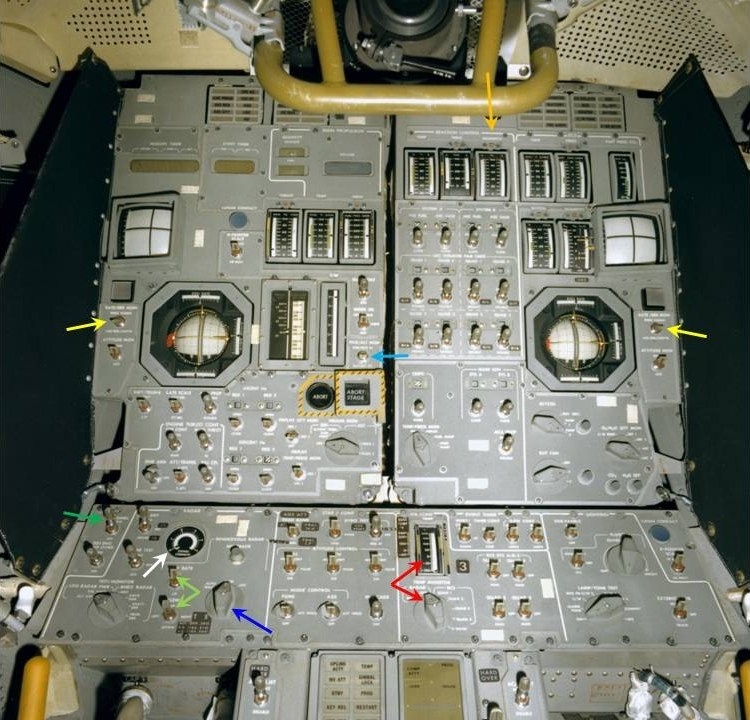
The switches for the LM rendezvous radar settings.
(Base photo NASA/ALSJ/Paul Fjeld)
Complex flying machine
“The reader is taken through the real checkout procedures activating the LM in lunar orbit, and riding with the astronauts down to the lunar surface,” explains Ronald Wells, editor-in-chief of the revealing and instructive website.

The ground track of the flight trajectory of Challenger into the valley of Taurus-Littrow coming from the right.
(Base photo NASA AS17-M-0595)
It has been illustrated with photos of the actual LM instrument panels that Jack Schmitt and Gene Cernan operated in flight, “so the reader hopefully will get a very good idea of how complex flying the LM actually was by seeing all the switches that they had to operate,” Wells told Inside Outer Space. “This very important chapter, of course,” he adds, “is a must read for the Artemis astronauts in training to return to the Moon!”
To view “Contact!” by Apollo 17’s Harrison H. Schmitt, a fascinating read with excellent endnotes, go to:
NASA’s Curiosity Mars rover is now performing Sol 2771 duties.
Here are a few recent images taken by the Red Planet robot:

Curiosity Front Hazard Avoidance Camera Right B photo taken on Sol 2770, May 22, 2020.
Credit: NASA/JPL-Caltech

Curiosity Right B Navigation Camera photo acquired on Sol 2770, May 22, 2020.
Credit: NASA/JPL-Caltech

Curiosity Right B Navigation Camera photo acquired on Sol 2770, May 22, 2020.
Credit: NASA/JPL-Caltech

Curiosity Mast Camera Left image taken on Sol 2769, May 21, 2020.
Credit: NASA/JPL-Caltech/MSSS

Curiosity Mast Camera Right image taken on Sol 2769, May 21, 2020.
Credit: NASA/JPL-Caltech/MSSS

How best to gauge the value and use of space-based capabilities and our reliance on space, sector by sector?
A new study released by The Aerospace Corporation’s Center for Space Policy and Strategy (CSPS) delves into uses of more than 2,200 active satellites that support earthly infrastructure, economies, and national security systems.
The study explains that, with the help of space-based services, utility companies synchronize energy flows across the grid, stock market exchanges record transactions, oceanographers track endangered whales, while scientists monitor the climate and farmers increase crop yields.

Use of satellite services for agricultural applications.
Communications satellites let air traffic controllers manage planes in crowded airspace, remote-sensing satellites reveal what is happening on Earth’s surface in near real-time, and weather satellites give us a better chance of having an umbrella when we need it.
Frenzy of technological change
“In this frenzy of technological change and policy debate,” the study explains, “it is important to remember the immense value that space provides.”

Use of GPS for product shipping and delivery.
“Space-based communications, navigation, weather, and remote sensing services make our daily lives better, and contribute to saving Space-based services have become fundamental to daily life, but there’s more going on in space than you may realize,” the volume explains. “How does our modern world rely on space?”
On the horizon
As for new space-based services…there is more to come.
“Just as it was difficult to foresee the myriad uses of GPS in the late 1980s, it’s hard to imagine how this fresh flood of commercial space data will affect the economy, the military, and daily life,” the study points out.
To access this informative report — The Value of Space – go to:

NASA has orchestrated the Artemis Accords that sets the stage for America returning to the Moon.
Credit: NASA
NASA is trumpeting a set of principles tagged as the “Artemis Accords” – a set of ideals for a “safe, peaceful, and prosperous future” that the agency envisions to return to and utilize the moon while inviting other nations to sign up if they want to partner with the United States.

U.S. President Donald Trump holds up the Space Policy Directive – 1 after signing it, directing NASA to return to the Moon, alongside members of the Senate, Congress, NASA, and commercial space companies in the Roosevelt room of the White House in Washington, Monday, Dec. 11, 2017.
Credit: NASA/Aubrey Gemignani
The Accords stem from NASA’s Artemis program, catapulted into being by U.S. President Donald Trump’s White House and a National Space Council edict to return astronauts to the Moon by 2024. Artemis involves activities in cislunar space — between the Earth and the Moon — in orbit around Earth’s moon, as well as smack dab on the lunar landscape.
For a detailed look at the Accords by lawyers, policy makers, a space military expert and a moonwalker, go to my new Scientific American story:
NASA Proposes New Rules for Moon-Focused Space Race
The Artemis Accords could ensure a peaceful and prosperous future for lunar exploration—if everyone agrees to them
By Leonard David on May 21, 2020
https://www.scientificamerican.com/article/nasa-proposes-new-rules-for-moon-focused-space-race/

