Archive for the ‘Space News’ Category
 Author:
  January 25th, 2021
Curiosity’s Location on Sol 3011. Distance Driven 15.00 miles (24.15 kilometers)
Credit: NASA/JPL-Caltech/Univ. of Arizona
NASA’s Curiosity Mars rover is now performing Sol 3012 tasks.
Reports Susanne Schwenzer, a planetary geologist at The Open University, Milton Keynes, U.K., the rover is now in a diverse area as it wheels itself across the Mars landscape.
“A close look…reveals all the different textures of rock surfaces, sets of ripples, some big rocks and small pieces of rock accumulated in patches,” Schwenzer says.

Curiosity Left B Navigation Camera image taken on Sol 3011, January 25, 2021.
Credit: NASA/JPL-Caltech
Toe dip
Recent discussions of Mars researchers started with some strategizing as to if to make a short excursion, nicknamed the “toe dip,” in a recent plan or in the weekend plan.
“This “toe dip” is a very short deviation from our current drive route to investigate a nearby unit,” Schwenzer adds, “in fact the contact between the unit Curiosity is standing on top of right now and a neighboring unit. These contacts between two units are always of high interest to any geologist.”

Curiosity Left B Navigation Camera image taken on Sol 3011, January 25, 2021.
Credit: NASA/JPL-Caltech
Succession of processes
At contacts, scientists can learn much about the succession of processes that shaped the geologic environment at the time the sediments were laid down, and well before they became rocks, Schwenzer notes. “Or, in fact, well before at least the upper one of them became a rock, because at a contact, a geologist can find out, if the upper unit was deposited before or after the lower unit became a hard rock.”

Curiosity Front Hazard Avoidance Camera Left B image acquired on Sol 3011, January 24, 2021.
Credit: NASA/JPL-Caltech
“And of course, we can see, if the laying-down of the upper unit had any influence on the lower unit, or if the upper unit includes pieces of the lower unit, or if the upper unit sealed off some water flow from below and caused mineral precipitation – just to name a few of the things geologist look out for at a contact between two units,” Schwenzer adds.
A decision has been made to drive to the area for the toe dip tosol.

Curiosity Mars Hand Lens Imager photo produced on Sol 3011, January 24, 2021.
Credit: NASA/JPL-Caltech/MSSS
Workspace survey
The robot’s Alpha Particle X-Ray Spectrometer (APXS) and Mars Hand Lens Imager (MAHLI) are investigating a target “Champagnac,” which is a large piece of rock in the multitude of options in the rover’s workspace, which had made itself interesting by its darker color, which could indicate a change in chemistry from the usual-colored rocks scientists have been investigating lately.
The rover’s Mastcam and the Navcams were very busy, with the usual workspace survey and post drive imaging to prepare the next sol.
Atmospheric dust load
On the science activities, Mastcam will investigate the area around a target “Marnac” by executing an investigation in multispectral mode with added stereo images, Schwenzer points out, as well as perform a mosaic at the area the rover will approach for the ‘toe dip’ to the contact with the nearby unit with a set of seven images.

Curiosity Mars Hand Lens Imager photo produced on Sol 3011, January 24, 2021.
Credit: NASA/JPL-Caltech/MSSS
“Of course, Curiosity is doing her regular atmospheric monitoring. For this, she will image across the floor of Gale crater to see how much dust there is in the air between the rover and the distant crater rim, and she’ll image toward the sun to measure the dust load in the atmospheric column. In addition, she will do image sequences to survey for clouds, dust devils, and dust lofting over the ‘Sands of Forvie,’” Schwenzer reports.
Other regular rover operations include the Mars Descent Imager (MARDI) which takes its usual image after the drive, and Dynamic Albedo of Neutrons (DAN), which surveys for water in passive mode.
“Another busy sol on Mars – and off she goes to dip a toe onto the contact nearby,” Schwenzer concludes.
 Posted in

Credit: Breakthrough Listen
Spoiler alert: Don’t be heart-broken in learning how tough “radio-waving” between civilizations truly is!
News travel’s fast, even at the lickety-split speed of light. Back in December, great attention was paid to a report that a mysterious radio signal appeared to have come from Proxima Centauri – the closest star system to us, just a scant 4.2 light-years away. It’s known to be accompanied by at least two planets.

Parkes radio telescope is an icon of Australian science, and one part of the Australia Telescope National Facility.
Credit: Parkes Radio Telescope/Australia Telescope National Facility
I recently talked with Simon Peter “Pete” Worden, Chairman of the Breakthrough Prize Foundation and Executive Director of the foundation’s Breakthrough Initiatives about signals from the great beyond, ET “technosignatures” — signs of technology developed by advanced alien civilizations — and the protocols for announcing any such discovery, as well as the latest on the prospect for life on Venus – another study effort being undertaken by Breakthrough Initiatives.
Go to my new Space.com story at:
“E.T. signal from Proxima Centauri? A conversation with Breakthrough Initiatives’ Pete Worden” at:
https://www.space.com/proxima-centauri-signal-breakthrough-listen-pete-worden-interview
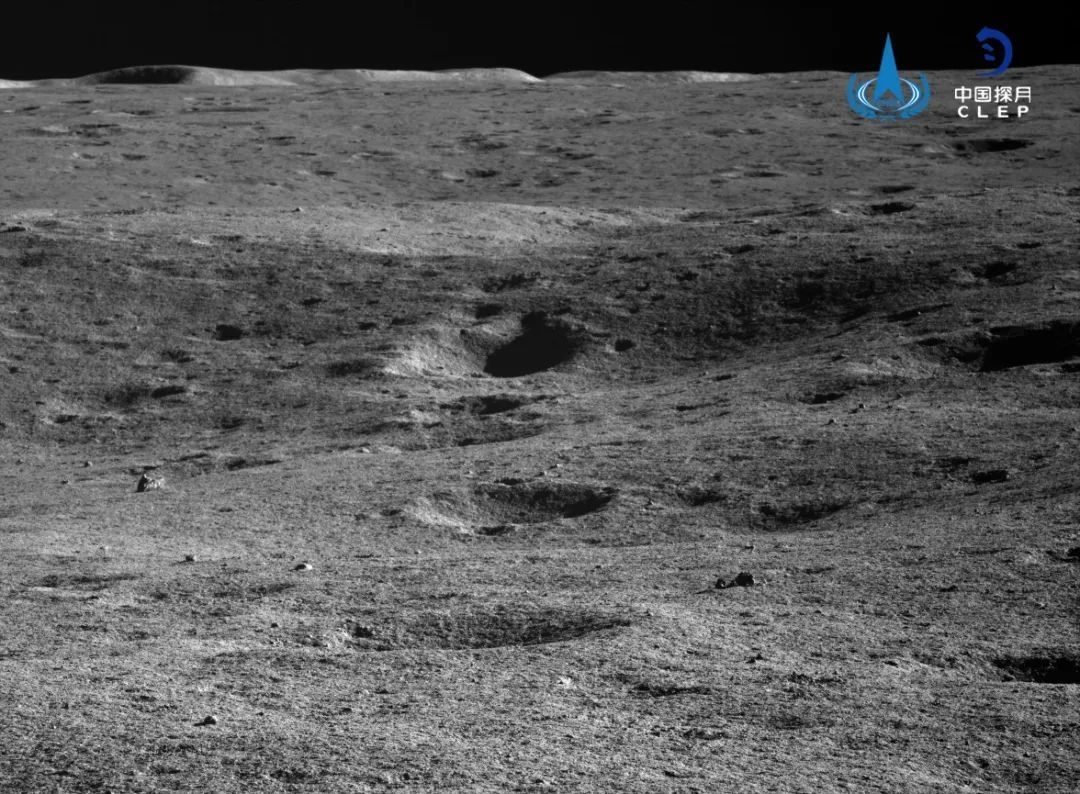
Yutu-2 view of farside surroundings.
Credit: CNSA/CLEP
China’s Chang’e-4 probe has been switched to dormant mode for the lunar night after working for a 26th lunar day. That’s the word from the Lunar Exploration and Space Program Center of the China National Space Administration (CNSA).

Chang’e-4 farside mission – lander and Yutu-2 rover
Credit: CNSA/CLEP
The Chang’e -4 lunar farside mission has been switched to dormant mode as it slipped into another 14-days of super-cold nighttime temperatures.
The lander entered the dormant mode at 9:10 p.m. Beijing time on Wednesday after Yutu-2, the rover, switched to the mode at 2:06 p.m. on the same day.
CNSA noted that the pair has survived on the farside of the Moon for 749 Earth days, with the rover traveling a total distance of roughly 2,060 feet (628.47 meters).
The Yutu-2 rover’s Visible-Near Infrared Spectrometer (VNIS) carried on the rover has revealed micro-scale surface thermo-physical properties of the Moon, according to researchers from the Purple Mountain Observatory of the Chinese Academy of Sciences – detailed in their study published in the Geophysical Research Letters.

Credit: Philip Stooke
New map
Meanwhile, Philip Stooke, Professor Emeritus and Adjunct Research Professor within the Department of Geography, and Institute for Earth and Space Exploration at the University of Western Ontario, has issued a new map showing Yutu-2’s traverse.
Stooke told Inside Outer Space that the robot’s small drive on the 25th day was caused by a photometry experiment conducted throughout the morning of that day, which involved staying in one place and viewing a single spot on the lunar surface as the Sun moved.
Chang’e-4 landed in Von Kármán crater, within the Moon’s South Pole-Aitken basin, on January 3, 2019 at 02:26 UT (10:26 a.m. Beijing time).
Go to this paper — “Chang’E‐4 rover spectra revealing micro‐scale surface thermophysical properties of the Moon” — in Geophysical Research Letters
at:
https://agupubs.onlinelibrary.wiley.com/doi/abs/10.1029/2020GL089226

X-37B now on the 6th mission of the space plane program.
Credit: Boeing
That classified mission of the X-37B robotic space plane operated by the United States Space Force has winged past 250 days in Earth orbit. Launched on May 17, 2020, this X-37B flight is also known as Orbital Test Vehicle-6 (OTV-6).
One known experiment that the space plane carries is called the Photovoltaic Radio-frequency Antenna Module Flight Experiment (PRAM-FX) – a Naval Research Laboratory (NRL) investigation into transforming solar power into radio frequency microwave energy.

Naval Research Laboratory (NRL) has pioneered “sandwich” modules that are far more efficient for space solar power.
Credit: NRL/Jamie Hartman
PRAM-FX is a 12-inch square tile that collects solar energy and converts it to RF microwave power.
NRL’s Paul Jaffe, the Innovation Power Beaming and Space Solar Portfolio Lead, told Inside Outer Space last year that the experiment is not beaming microwave energy anywhere.
“The focus of the experiment on X-37B is not establishing an actual power-beaming link,” Jaffe said. “It is more on the performance of the sunlight to microwave conversion.”
PRAM, while it does generate RF energy, that energy does not go to an antenna due to a potential for interference with other OTV-6 payloads. To be measured is how the PRAM is performing from an efficiency standpoint and also a thermal performance standpoint, Jaffe said.
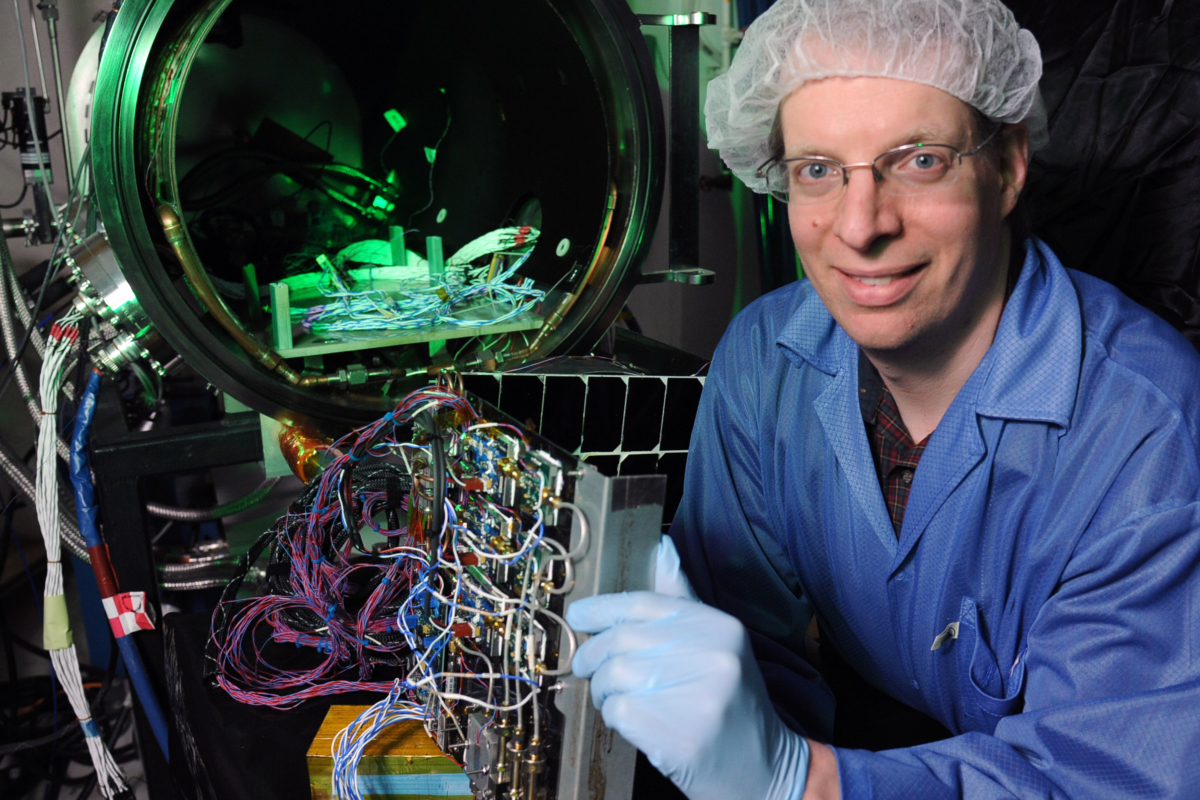
NRL’s Paul Jaffe holds a module designed for space solar power in front of a customized vacuum chamber used to test the device.
Credit: NRL/Jamie Hartman
Preliminary results
PRAM-FX is the first test in orbit of an element for sandwich module space solar architectures.
The first preliminary results from PRAM-FX aboard OTV-6 have been published as part of a review paper co-authored by Jaffe in the Institute of Electrical and Electronics Engineers (IEEE) Journal of Microwaves.
While a very small sample of data has been received at the time of the paper’s writing, “preliminary indications compare quite favorably to pre-flight testing performed at NRL’s Washington D.C. location.”
The experiment is operating in a low Earth orbit that is altered throughout the course of the X-37B’s mission. “The experiment on occasion uses heaters to simulate the thermal environment in a geosynchronous orbit (GEO), where the sun would be nearly continuously shining on the solar array and thermally heating the sandwich module,” the paper notes.
Efficiency rating
The preliminary data received at this point is solely from the GEO thermal simulation data set. The maximum RF power achieved to date is 8.4 W, at an angle of 32 degrees from zenith. This corresponds, the paper explains, to a total module efficiency of approximately 8 percent.
“Though these results are preliminary, they compare favorably with the performance documented in ground testing, which also demonstrated 8% total module efficiency. As the experiment proceeds, a full picture of the module’s performance under different illumination and temperature conditions in the space environment will be uncovered,” the IEEE paper points out.

Credit: Microwave and Millimeter Wave Power Beaming, Rodenbeck, et al.
Future in-orbit demonstrations
The IEEE review paper also underscores the construction of multiple U.S. in-orbit demonstrations — planned for 2023 launch — that will demonstrate key technologies for space-based solar power.
The Air Force Research Laboratory (AFRL) is executing a major demonstration project with the goal of beaming power collected in space to expeditionary forces on Earth, the paper points out. The AFRL project is labeled as Space Solar Power Incremental Demonstrations and Research (SSPIDR).

Rectenna demonstration targeting high efficiency at low incident power densities for early SSPIDR demonstrations of space-to-earth power beaming.
Credit: Microwave and Millimeter Wave Power Beaming, Rodenbeck, et al.
As outlined in the IEEE paper, these demonstrations include: (1) Arachne, (2) SPINDLE, and (3) SPIRRAL.
— Arachne will be the world’s first space-to-ground power beaming demonstration of a solar-to-RF modular panel with on-the-spot surface-shape measurement to optimize beam formation. The solar-to-RF panel technology is designed to scale to very large apertures and to support high volume, low-cost manufacturing. Arachne is planned to fly in 2023.
— SPINDLE will test on-orbit structural deployment of a sub-scale version of the operational system. SPINDLE is designed to test deployment kinematics and deployed structural dynamics.
— SPIRRAL will test thermal management approaches to ensure a long-lasting, high-performance system. The SPIRRAL experiment is planned to launch in 2023 via the Materials International Space Station Experiment (MISS-E) Flight Facility. MISS-E is an in-orbit platform from Alpha Space Test and Research Alliance deployed externally onboard the ISS.
Resources
To review the review paper – “Microwave and Millimeter Wave Power Beaming” — in IEEE Journal of Microwaves, January 2021, go to:
https://ieeexplore.ieee.org/stamp/stamp.jsp?tp=&arnumber=9318744
In a related development in the field of wireless power transmission, the Advanced Research Projects Agency-Energy (ARPA-E) program is looking at a potential funding opportunity this year on wireless power transmission technologies.
For more information on the Advanced Research Projects Agency-Energy (ARPA-E) program, go to:
https://arpa-e.energy.gov/open-2021
Also go to this informative video on OPEN 2021: ARPA-E’s Marina Sofos Discusses Wireless Power Transmission at:

The space industry is growing and innovating at a pace not seen since the days of the Moon landings. Fifty years ago nearly everything related to space was a government-sponsored project. In 21st-century space, rockets and satellites are most often corporate investments or public-private partnerships.
Untethered from government leashes, the global space industry looks and operates increasingly like global aviation. Reusability. Regular flight cadence. Mass production of spacecraft and launch vehicles. Analysts predict that the space industry’s contribution to global GDP could cross the 1 percent threshold by 2040. We can reasonably construct future scenarios where the space and aviation industries have comparable economic clout.

Credit: CORDS
A great deal of aviation’s remarkable airframe and propulsion developments since World War II have been guided by sustainability concerns, mainly focused on jet engine emissions. Modern jet engines emit much less soot and gas pollutants than engines emitted 50 years ago. The pressure to reduce jet emissions has been good for aviation because honing turbine combustion to near theoretical maximum efficiency has had the
The new private launch industry can learn a lot from aviation about sustainability.
Go to this article in the printed February issue of Scientific American on “Space Pollution” by Martin Ross of The Aerospace Corporation and Leonard David at:

An artistic rendering of Kraken Mare, the large liquid methane sea on Saturn’s moon Titan.
Credit: NASA/John Glenn Research Center
Kraken Mare is a sea of liquid methane on Saturn’s largest moon, Titan.
New research by Cornell astronomers estimate that sea to be at least 1,000 feet deep near its center – and that’s roomy for a future robotic submarine to investigate. Beyond deep, Kraken Mare also is immense – nearly the size of all five Great Lakes combined.

Titan’s atmosphere makes Saturn’s largest moon look like a fuzzy orange ball in this natural-color view from the Cassini spacecraft. Cassini captured this image in 2012.
Image Credit: NASA/JPL-Caltech/Space Science Institute
Their findings – “The Bathymetry of Moray Sinus at Titan’s Kraken Mare” – are published Dec. 4, 2020 in the Journal of Geophysical Research and are based on the Cassini spacecraft’s radar altimeter, collected in August 2014.
Sea floor returns
“The radar waves are absorbed to an extent such that the liquid composition is compatible with 70% methane, 16% nitrogen, and 14% ethane (assuming ideal mixing),” the research team reports.
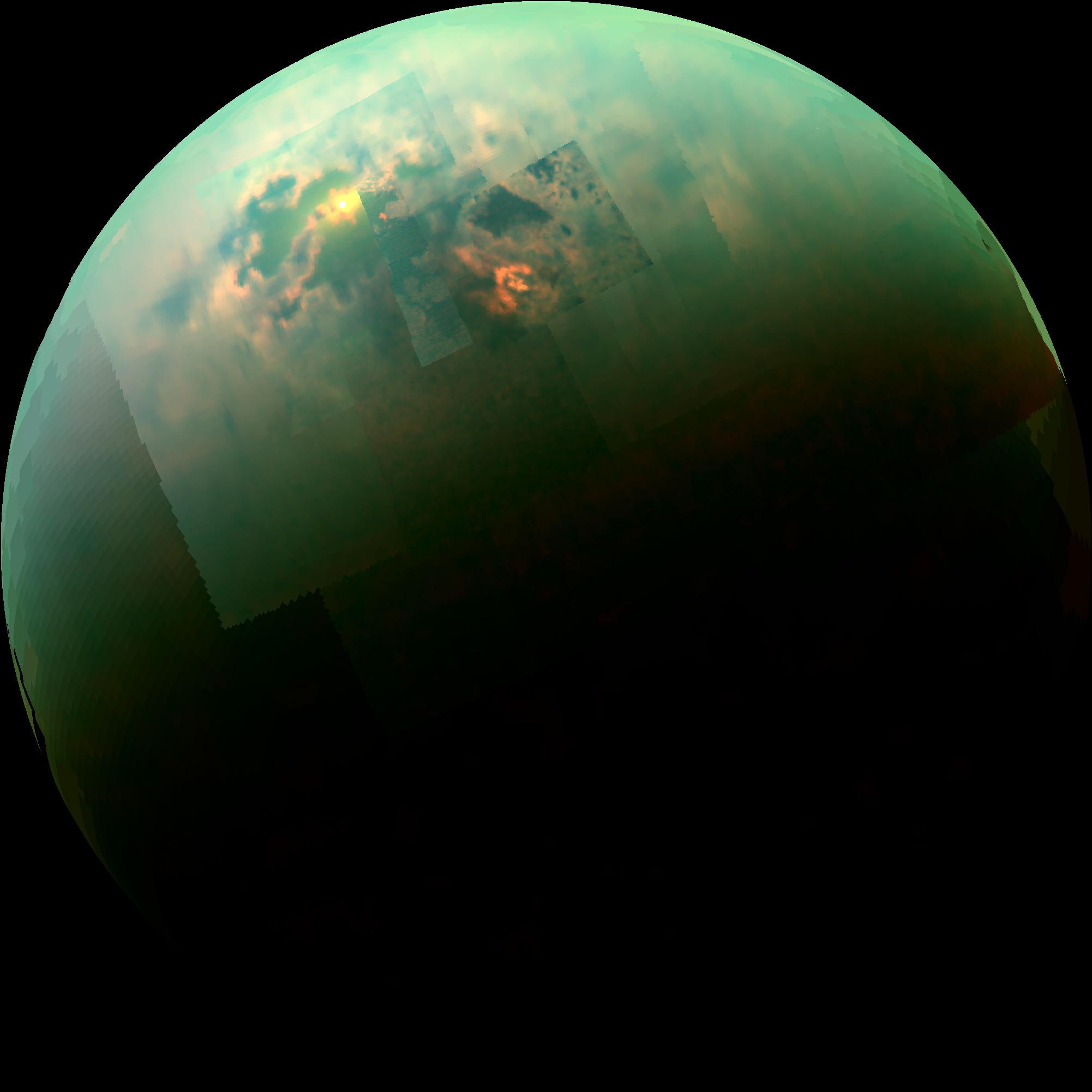
This near-infrared, color mosaic from NASA’s Cassini spacecraft shows the sun glinting off of Titan’s north polar seas. The view was acquired during Cassini’s August 21, 2014 flyby of Titan.
Credit: NASA/JPL-Caltech/University of Arizona/University of Idaho
Studying the altimetry data in the main body of Kraken Mare, the team found no evidence for echo returns from the sea floor, “suggesting the liquid is either too deep or too absorptive for Cassini’s radio waves to penetrate.”

Artistic view of Cassini exploring Saturn.
Credit: NASA/JPL-Caltech
However, they add that, if the liquid in the main body of Kraken Mare is similar in composition to Moray Sinus, as one would expect, then its depth exceeds 328 feet (100 meters).
“This is compatible with a separate estimate using the radar as a ‘radiometer,’ sensing thermal energy from the sea at radio wavelengths,” they conclude.
Co-authors on the paper are: Alex Hayes, professor of astronomy and director of CCAPS; Jonathan Lunine, the David C. Duncan Professor in the Physical Sciences, and chair, Department of Astronomy; Marco Mastrogiuseppe, former Cornell postdoctoral researcher, now research associate at Sapienza University of Rome, Italy; Alice Le Gall, The Institut Universitaire de France, Paris; and research associates Illeana Gomez-Leal and Daniel Lalich.

Speculative robotic submarine for deep sea diving on Titan. Credit: NASA Innovative Advanced Concepts (NIAC)
NASA provided funding for this research.
To access the paper — “The Bathymetry of Moray Sinus at Titan’s Kraken Mare” — go to:
https://agupubs.onlinelibrary.wiley.com/doi/10.1029/2020JE006558
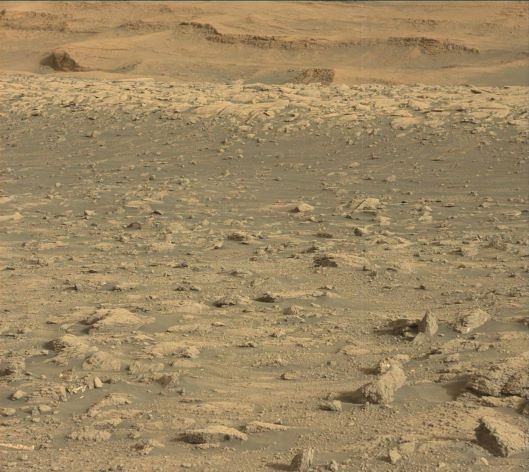
Curiosity Mast Camera Left image taken on Sol 300, January 18, 2021.
Credit: NASA/JPL-Caltech/MSSS
NASA’s Curiosity Mars rover is now performing Sol 3007 tasks.
“Long before Curiosity landed on Mars, the science team mapped the landing ellipse covering the area within Gale crater that the combined efforts of Jet Propulsion Laboratory engineers, orbital mechanics, and atmospheric dynamics would lead us to touch down within,” reports Michelle Minitti, a planetary geologist at Framework in Silver Spring, Maryland.
To divide the work of mapping among the team, the landing ellipse was divided into quadrants, squares 1.5 km on a side. Each quadrant was named after a significant geologic terrain on Earth, where geologists also divide the terrain they explore into quadrants, Minitti adds.
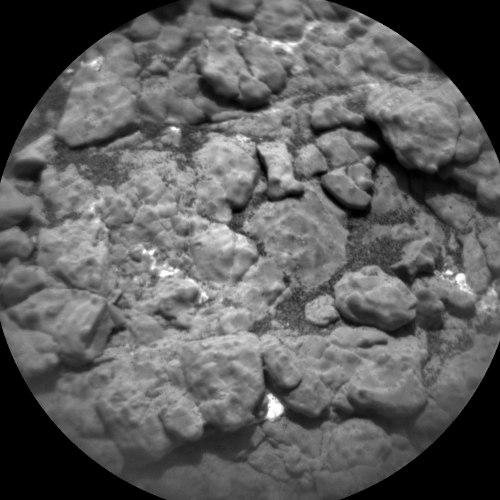
Curiosity Chemistry & Camera Remote Micro-Imager (RMI) photo acquired on Sol 3007, January 20, 2021.
Credit: NASA/JPL-Caltech/LANL
Quadrants
“The practice of dividing the terrain Curiosity explores into quadrants continued after Curiosity departed the landing ellipse,” Minitti reports, “to not only help focus mapping and path planning efforts, but to serve as a source of the names we assign to targets imaged, shot, drilled, or scooped.”
The rover has entered the “Torridon” (Scotland) quadrant on Sol 1896, and save a northward jaunt back into the “Biwabik” (Minnesota, USA) quadrant for 70 or sols, that Mars scientists have remained in the Torridon quadrant.
“Over this time,” Minitti notes, “all the targets we have named have required pages and pages of place names from Scotland (and Scotland adjacent) provided mostly by our team member Dr. John Bridges (University of Leicester). Those lists have produced great target names like “Muckle Flugga,” “Oban,” and “Bogmill Pow.””
However, in a recent rover drive, a three sol plan calls for exiting the Torridon quadrant and enter the “Nontron” (France) quadrant where the robot’s Chemistry and Comera (ChemCam) teammates are poised to help target pronunciations.
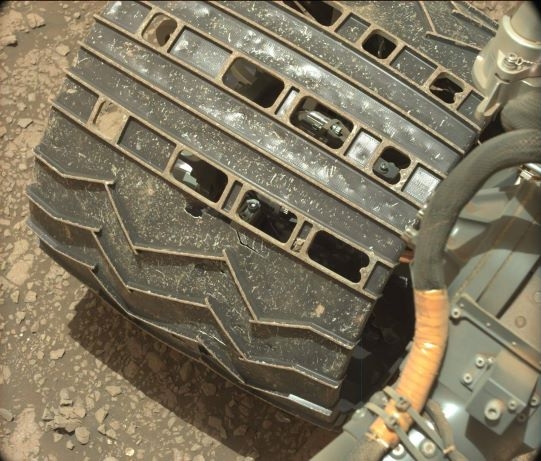
Curiosity Mast Camera Left image taken on Sol 300, January 18, 2021.
Credit: NASA/JPL-Caltech/MSSS
Nontronite
The Nontron quadrant name is particularly appropriate for the clay-bearing terrain Curiosity finds itself in, as Nontron is the type locality for a clay mineral called nontronite.
“Nontronite is part of the smectite group of clays, which are the most common types of clays on Mars,” Minitti explains. “The science team decided to send the Torridon quadrant out with a bang – literally – using the name ‘Saxa Vord Spaceport’ for a ChemCam target. Using the name of an in-the-works satellite launch site in northern Scotland also represents the speed at which we are rocketing toward the sulfate unit, having completed a nearly 100 meters drive in the last plan, and looking forward to a roughly 246 feet (75 meters) drive in this plan.”
Coolest name
While undoubtedly the coolest name in the plan, Saxa Vord Spaceport was far from the only target name used in our busy plan, Minitti points out.
The robot’s ChemCam will also shoot bedrock targets “Easthouses” and “Jarishof,” and one of the fields of pebbles (“Whaligoe”) that we commonly see distributed in discreet patches (like in the image above).
The robot’s Alpha Particle X-Ray Spectrometer (APXS) and its Mars Hand Lens Imager (MAHLI) and Mastcam will get a closer look at Easthouses after ChemCam shoots it.
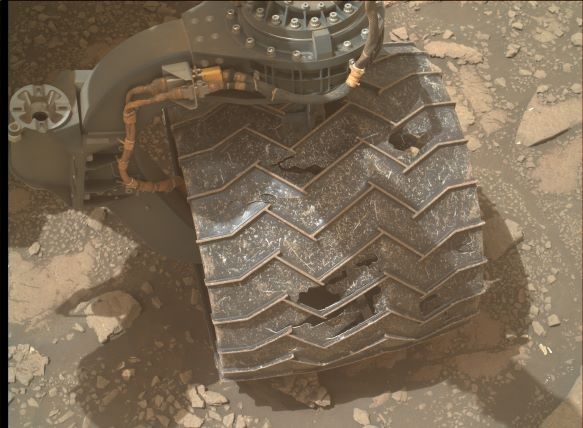
Curiosity Mars Hand Lens Imager photo produced on Sol 3005, January 18, 2021.
Credit: NASA/JPL-Caltech/MSSS
Near and far
Mastcam is also to take images of the terrain around the rover near and far.
“Mosaics of “Sandsayre” and “Rackwick” to rover left and right will record bedrock textures and structures, a mosaic of the more distant “Cromalt Hills” will capture their vertical structure, and yet another mosaic will image the contact between the fractured intermediate unit we are currently driving through and the rubbly version of this unit that we recently explored,” Minitti adds.
On each sol of the plan, Dynamic Albedo of Neutrons (DAN) will seek the signal of hydrogen in the ground below the robot using both their active and passive modes, the Rover Environmental Monitoring Station (REMS) will record the weather conditions, and the Radiation Assessment Detector (RAD) will monitor the radiation environment.
“These systematic measurements are complemented by images from Navcam and Mastcam that will hopefully capture clouds and dust devils and will measure the amount of dust in the skies above all the quadrants in Gale,” Minitti concludes.
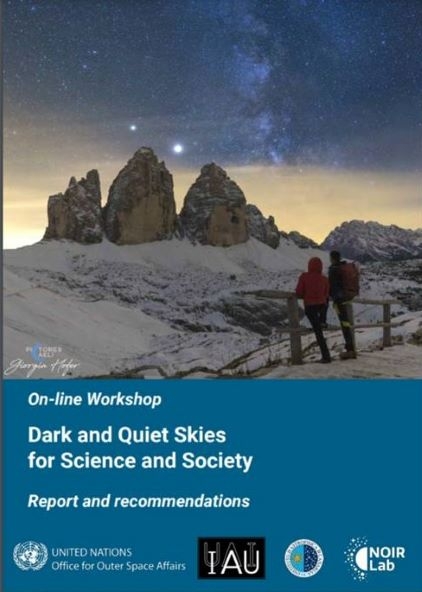
A new report issued by the United Nations Office for Outer Space Affairs dives into issues impacting affecting astronomical observation and what can be done to preserve it.
As one of those issues, the report looks at current estimates of satellites accessible to the unaided, naked eye, under dark night skies. All sunlit satellites in large constellations “are detectable by any research telescope, sometimes even inducing saturation effects that may ruin not only the image area affected by the trail, but a much larger region, potentially the whole image in some cases,” the report explains.

Starlink satellites visible in a mosaic of an astronomical image.
Courtesy of NSF’s
National Optical-Infrared Astronomy Research Laboratory/NSF/AURA/CTIO/DELVE)
Visibility of the night sky
“The deployment of large numbers (tens of thousands) of communication satellites in LEO (Low Earth Orbit) is a very recent technological feat,” the report adds. “Their main purpose is to provide earth-space-earth, low latency communication networking to any inhabited region of the globe. While this endeavor may be an advantage to society, the effect of the fully deployed constellations on the visibility of the night sky and on the professional astronomical observations has not been adequately considered.”
The report — Dark & Quiet Skies for Science & Society: Report and Recommendations – calls for raising awareness of the impacts of satellite constellations and possible mitigation strategies and their costs and requirements amongst key astronomy stakeholders.

An image of the NGC 5353/4 galaxy group made with a telescope at Lowell Observatory in Arizona, USA on the night of Saturday 25 May 2019. The diagonal lines running across the image are trails of reflected light left by more than 25 of the 60 recently launched Starlink satellites as they passed through the telescope’s field of view. Although this image serves as an illustration of the impact of reflections from satellite constellations, please note that the density of these satellites is significantly higher in the days after launch (as seen here) and also that the satellites will diminish in brightness as they reach their final orbital altitude.
Credit: Victoria Girgis/Lowell Observatory
Satellite-induced artifacts
In the report’s “Recommendations for Observatories,” there’s need to support the development of software applications to conduct long term planning and simulations of observations, scheduling, and to identify and remove satellite-induced artifacts from data. This requires a range of data from industry on satellite reflectance, antenna parameters, and predicted and real-time ephemerides.
Furthermore, the report notes, observatories will also require additional funding for development and to assess overall impacts on science programs. Also, plan for more stringent requirements on future designs of observing facilities “to account for the additional losses from satellite constellations, including additional telescopes, increased apertures, additional tools for image processing, higher robustness receivers, and enhanced detector technologies. These measures require additional funding.”

Starlink satellites.
Credit: SpaceX
Recommendations to be reviewed
Upon request from the United Nations Committee on the Peaceful Uses of Outer Space (COPUOS), the UN Office of Outer Space Affairs, the International Astronomical Union and Spain are organized an online workshop, held October 5-9, 2020. The just-issued report is the outcome from this workshop.
The recommendations it contains will be reviewed during a forthcoming conference with the aim to be presented to the COPUOS Meeting in June 2021.
To read the full report, go to:
https://iau.org/static/publications/dqskies-book-29-12-20.pdf

Chang’e-5 return capsule holding lunar specimens.
Credit: National Astronomical Observatories, CAS
China on Monday unveiled regulations on lunar sample management, encouraging international cooperation on studying the samples brought back by the country’s Chang’e-5 lunar mission.
The China National Space Administration (CNSA) released the regulations that cover general principles for preserving, managing, using, borrowing and returning the lunar samples, as well as information release and research results management of the samples.

Sample handling lab.
Credit: National Astronomical Observatories, CAS
According to the regulations, the lunar samples will be generally used for:
— permanent storage
— backup permanent storage
— research and
— public welfare
Roughly 80 percent of the lunar samples will be used for scientific research, and 20 percent will be preserved for better and more advanced scientific research methods and conditions in the future.
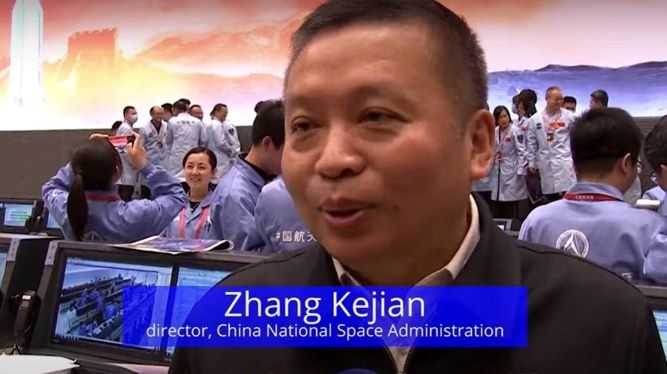
Credit: China Central Television (CCTV)/China National Space Administration (CNSA)/Inside Outer Space screengrab
Pre-processing stage
Zhang Kejian, head of the CNSA, noting that the management and usage of the samples would comply with relevant international conventions.
According to China’s Xinhua news agency, diplomats and representatives from France, Russia, the European Union, Asia Pacific Space Cooperation Organization and other countries and international organizations were invited to visit the lunar sample storage and processing facilities in the National Astronomical Observatories of China under the Chinese Academy of Sciences on Monday.
“We are still in the pre-processing stage of the lunar samples, including sample unsealing, preparation and the establishment of archives,” said Pei Zhaoyu, deputy director of Lunar Exploration and Space Engineering Center of CNSA.

Credit: China Central Television (CCTV)/China National Space Administration (CNSA)/Inside Outer Space screengrab
The Chang’e-5 probe, comprising an orbiter, a lander, an ascender, and a returner, was launched on Nov. 24, 2020. The return capsule landed in Inner Mongolia Autonomous Region on Dec. 17, retrieving about 1,731 grams of lunar samples.
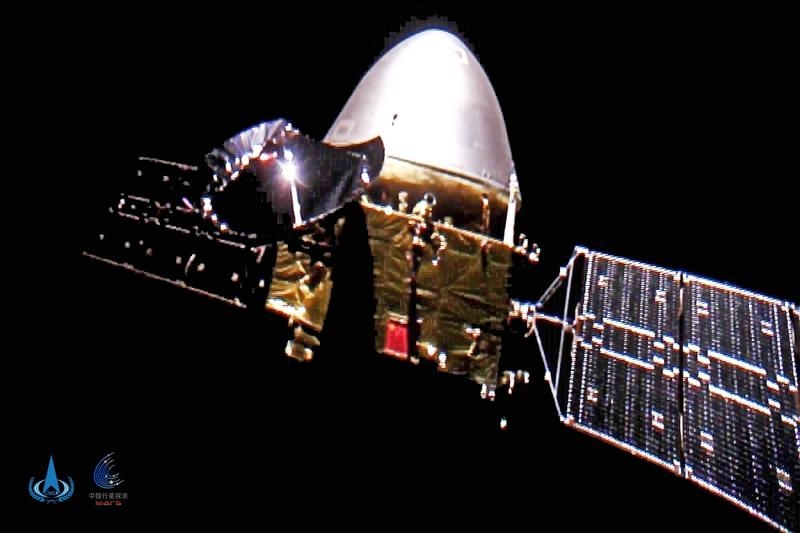
En route China Mars probe Tianwen-1 is seen in this post-launch selfie.
Credit: CNSA
Mars rover name
Meanwhile, ECNS — the English-language website of China News Service — reports that the Lunar Exploration and Space Engineering Center of the CNSA announced it has finished the initial evaluation of global name collection for its first Mars.
The 10 names: Hongyi, Kylin, Nezha, Chitu, Zhurong, Qiusuo, Hot Wheel, Zhuimeng, Tianxing and Xinghuo.
All 10 names are related to traditional Chinese culture and have come out after a global naming campaign that kicked off in late July 2020.

Credit: CCTV/Inside Outer Space screengrab
Hongyi, stemming from The Analects of Confucius, means breadth of mind and vigorous endurance. Kylin, Nezha, Chitu, Zhurong and Hot Wheel originate from ancient Chinese mythological stories. Qiusuo, selected from Lisao, a work by patriotic poet Qu Yuan from the Warring States period, means a person should keep searching the road ahead. Zhuimeng means to pursue a dream, Tianxing relates the motion of celestial bodies while Xinghuo means a single spark can start a prairie fire.
A total of 39,808 effective names were collected from July 24, 2020 to August 16, 2020, among which 38,340 were submitted via designated apps and 1,468 by letter.
The official name for the Mars rover will be released before the Tianwen-1 probe lands on Mars. As a combined orbiter, lander, and rover, the spacecraft is set to brake into Mars orbit around February 10th.

Envisioning Exoplanets: Searching for Life in the Galaxy by Michael Carroll, Foreword by Elisa Quintana; Smithsonian Institution Press; 224 pages; November 13, 2020; Hardcover; $24.60.
This multi-talented author has produced a stunning look at distant worlds beyond our solar system. This book is well-written and is a visual feast that uses more than 200 illustrations from Carroll and other members of the International Association of Astronomical Artists.
There are more than 4,000 confirmed exoplanets and this volume spotlights the string of “way out there” discoveries and the prospect that some of those faraway worlds are abodes for extraterrestrial life.
Structured using five robust sections, the reader is taken through early thoughts about exoplanets and the first findings to exotic exoplanets around stranger stars and looking for islands of life.
“Do the exoplanets teach us lessons to help us understand and care for our home world…is there life among the exoplanets, primitive or intelligent? It’s time to embark on a search for life in the galaxy,” Carroll writes in the book’s introduction.
The book’s foreword is written by Elisa Quintana, an astrophysicist at NASA’s Goddard Space Flight Center and deputy project scientist for the Transiting Exoplanet Survey Satellite (TESS). “As we learn more about stars and planets, new scientific fields evolve and grow that help us understand what these worlds might look like,” she writes.
This captivating, coffee-table-style book is absorbing and is chock-full of sidebar features that propel the book to an exceptional echelon contrasted to other books on this topic. If you don’t have a coffee-table, get one to showcase this volume to friends and family!
The text is written in a wonderful style, drawing upon Carroll’s own wit and open-ended speculative mind, such as how hard is it to make life?; the search for biosignatures; and life in the extreme.
“Perhaps the greatest lesson we can learn in our search for Earth 2.0 is that our planet is a very special place in a critical location with a balance of many factors,” Carroll concludes.
Readers will find this book adventuresome, exploratory, and fact-filled – all wrapped in full-color images that include striking renderings of scientifically accurate exoplanets.
For more information about Envisioning Exoplanets: Searching for Life in the Galaxy, go to: https://www.smithsonianbooks.com/store/recent-releases/envisioning-exoplanets-searching-life-galaxy/

