Archive for the ‘Space News’ Category
 Author:
  February 15th, 2021

Perseverance rover deposits select rock and soil samples in sealed tubes on Mars’s surface for future missions to retrieve and bring back to Earth for detailed study.
NASA/JPL-Caltech
If you are in the NASA Mars exploration business, it is nail-biting time. Launched last July and barreling toward the Red Planet is the Perseverance rover, on target for a February 18 encapsulated, heat-resisting nosedive through the planet’s atmosphere.
That fireball of an entry is followed by a sporty auto-controlled touchdown of the robot within Jezero Crater, an ancient lake-delta system that might be ideal to search for signs of fossilized microbial life.

Illustration shows NASA’s Perseverance rover exploring inside Mars’ Jezero Crater, a 28-mile-wide (45-kilometer-wide) feature believed to an ancient lake-delta system in a hunt for signs of past microscopic life.
NASA/JPL-Caltech
Perseverance is billed as the largest, heaviest, cleanest, and most complicated six-wheeled robotic geologist ever shot into space.
In short, Perseverance is a long shot of a mission; it is multi-tasking on Mars.
Among key assignments is unleashing a Mars helicopter that reconnoiters the landscape. Then there’s operating a first-generation device to convert the carbon dioxide-saturated martian air into oxygen that, if built bigger, could help sustain future human explorers on Mars by cranking out breathable air, as well as rocket propellant.
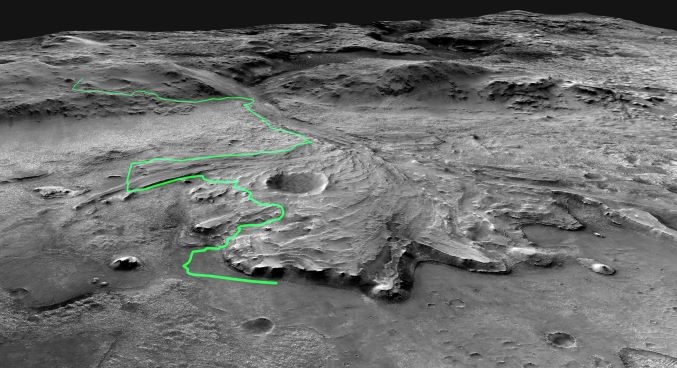
This mosaic depicts a possible route the Mars 2020 Perseverance rover could take across Jezero Crater as it investigates several ancient environments that may have once been habitable.
Credit: NASA/JPL-Caltech
But there is another major job for the rover that transforms it into a warm-up act of things to come.
Perseverance is to set the stage for a complex, multi-part, multi-year, mega-dollar Mars Sample Return (MSR) endeavor.
For more information, go to my new Scientific American story:
“As Perseverance Approaches Mars, Scientists Debate Its Sampling Strategy – The car-sized rover is the first step in an ambitious effort to bring pieces of the Red Planet back to Earth, but some crucial details remain undecided”
Go to:
 Posted in

Curiosity selfie taken in Glen Torridon region.
Credit: NASA/JPL-Caltech/MSSS
In its on-the-ground Red Planet surveillance, NASA’s Curiosity Mars rover has catalogued a new set of large iron meteorites
The distributions and compositions of iron meteorites are of interest in part because they can constrain models of physiochemical weathering experienced since the space rocks came to full-stop on Mars.
These meteorites serve as “witness plate” rocks, reports Jeffrey Johnson, a planetary geologist at the Johns Hopkins University Applied Physics Laboratory in Laurel, Maryland.

Curiosity Mastcam enhanced color images. Top image shows Island Davaar from 21 meters distance. Bottom photo captures Obar Dheathain at 31 meters distance. Note: greenish pixels represent saturation in the image.
Credit: J.R. Johnson, et al.
At a distance
In a paper to be presented at this year’s virtual Lunar and Planetary Science Conference, Johnson and colleagues report that on Sols 2958-2970, Curiosity identified a set of large iron meteorite candidates in November-December of last year.
As the robot meandered in the southern Glen Torridon region, it used a number of onboard tools to take a remote look at the meteorites. The rover acquired Mastcam multispectral images, along with the Chemistry and Camera (ChemCam) acquiring passive spectra of the objects supported by the Remote Micro-Imager (RMI).
Using those instruments, three candidate meteorites – Island Davaar, Obar Dheathain, and Eilean were remotely identified from as far as 410 feet (125 meters) distance. The tagging of them as meteorites is based on the targets’ textures, size, and relatively bluish color.

Portions of ChemCam RMI image mosaics of Eilean.
Credit: NASA/JPL-Caltech/LANL

Portions of ChemCam RMI image mosaics of Obar Dheathain.
Credit: NASA/JPL-Caltech/LANL
Size estimates
The trio of candidate meteorites are the largest seen since the discovery by Curiosity of the Littleton/Lebanon (formally Aeolis Palus 001, 002, 003) meteorites back on Sol 637.
Images from Curiosity’s Navcam stereo camera enabled size estimates of each meteorite: Island Davaar: roughly 0.75 x 1.0 meters; Obar Dheathain: approximately 1.5 x 0.3 meters; and Eilean: roughly 0.5 x 1 meters.
While no ChemCam laser-induced breakdown spectroscopy (LIBS) measurements were acquired of these rocks, Johnson and his co-authors note that the new reflectance data builds upon earlier discoveries of meteorites by Curiosity that used similar methods, as well as use of LIBS. Also used in the new work are previous observations of iron meteorites observed by NASA’s Opportunity Mars Exploration Rover.
Also, go to “Continued Use of Exogenic Materials found on Mars as Planetary Research Tools” submitted to the 2023-2032 Decadal Survey on Planetary Science and Astrobiology. The paper’s primary author is JPL’s James W. Ashley. This paper can be accessed at:
https://mepag.jpl.nasa.gov/reports/decadal2023-2032/AshleyJamesW.pdf

Credit: NASA/JPL-Caltech
The fiery plunge to Mars by NASA’s Perseverance rover next week is expected to offer spectacular visual and audio treats for Earth-bound audiences.
As the mega-rover plows through the Mars atmosphere, watching the entry, descent and sky crane-assisted touchdown is NASA’s Mars Reconnaissance Orbiter (MRO).
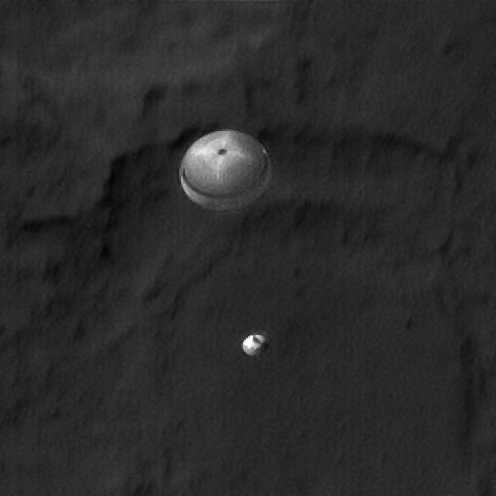
Super-powerful High-Resolution Imaging Science Experiment (HiRISE) camera onboard NASA’s Mars Reconnaissance Orbiter captured Curiosity on parachute in August 2012, heading toward its Gale Crater landing zone.
Credit: NASA/JPL-Caltech/Univ. of Arizona
The hope is to duplicate the view snagged by MRO of the NASA Curiosity rover’s descent back in August 2012. MRO’s super-powerful High-Resolution Imaging Science Experiment (HiRISE) camera captured Curiosity on parachute, heading toward its Gale Crater landing zone.
On duty for the Perseverance landing on February 18 is HiRISE said Alfred S. McEwen, principal investigator of HiRISE at the University of Arizona in Tucson.
“Yes, we will attempt to image the rover on parachute or even sky crane,” McEwen told Inside Outer Space.

NASA’s next Mars explorer, the Perseverance rover.
Credit: NASA/JPL-Caltech
Acoustic exploration
Once safely landed at Jezero Crater, Perseverance is to begin the acoustic exploration of the surface of Mars thanks to two microphones, one activated during the landing phase and the other one which is part of the robot’s SuperCam instrument suite.
In a paper for the upcoming virtual meeting of the Lunar Planetary Science Conference (LPSC), lead author, Baptiste Chide, a planetary researcher at NASA’s Jet Propulsion Laboratory, explains that the first audible sounds from Mars may well be an earful.
For one, the SuperCam-attached microphone will open a new field of investigation on Mars by complementing the Laser-Induced Breakdown Spectroscopy (LIBS) investigation of the Mars surface and contribute to atmospheric science. Full LIBS, laser-popping bursts from the first to the last shot can be recorded.
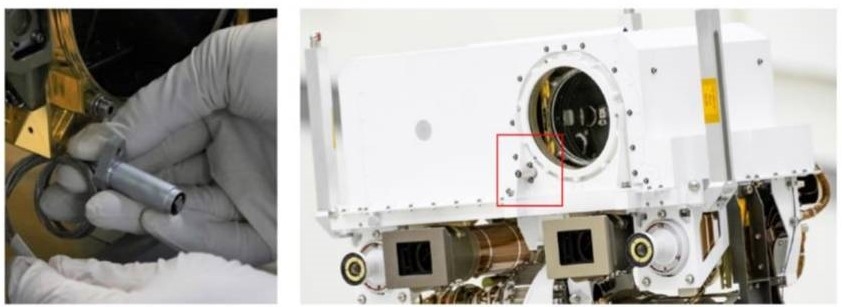
SuperCam microphone integrated on the top of the Remote Sensing Mast of Perseverance robot.
Credit: NASA/JPL
Laser sparks
During tests in Denmark’s Aarhus pressure chamber they showed that LIBS acoustic signals can be retrieved. It was demonstrated that listening to laser sparks on Mars can help determine the depth of laser-induced pits in targets, the hardness of the target, and may also be used to characterize rock coatings.
Chide and colleagues also report in the LPSC paper, the microphone can record noises generated by the operations of the Perseverance rover, be they drill and drive activities, mast rotation and other sounds of other instruments.
Heavy breathing
The SuperCam microphone capturing the first sounds on Mars will be compared to prelanding expectations.
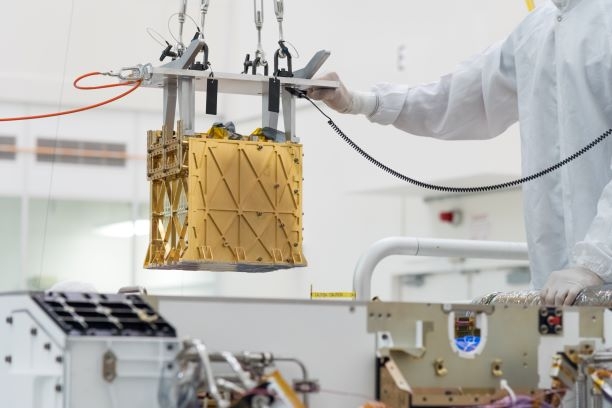
In pre-launch photo, technicians lower the Mars Oxygen In-Situ Resource Utilization Experiment (MOXIE) instrument into the belly of the Perseverance rover.
Credit: NASA/JPL-Caltech
For instance, the microphone may be used as a diagnostic tool to listen to the rover investigation, the Mars Oxygen ISRU Experiment (MOXIE). It uses pumps to suck in the carbon dioxide-laden atmosphere to breath out oxygen.
Furthermore, the listening device may also help to understand a potential failure of a rover subsystem.
Chide and the other researchers explain in the LPSC paper that all the spectacular views of the surface of Mars returned since the first on-the-spot missions are silent to a human-ear. Indeed, no microphone has ever been able to record the acoustic environment associated with these landscapes. “Operating a microphone on the surface of Mars is an unprecedented experience.”

Credit: CNSA
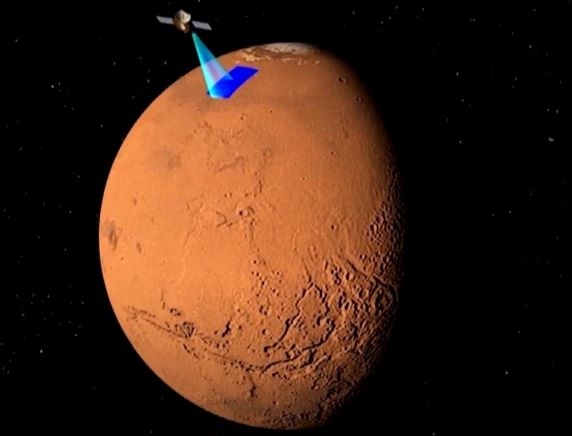
As China’s Tianwen-1 probe orbits Mars, space officials in that country face daunting challenges in deploying a lander/rover onto the surface of the Red Planet.
“The control process is smooth and successful. [The probe] was captured by Mars’ gravity exactly as expected and entered the orbit,” Cui Xiaofeng, chief engineer of the Mars exploration team of Beijing Aerospace Control Center told China Central Television (CCTV) in an interview.
On Wednesday, with a hefty weight of more than 5 tons, Tianwen-1 braked itself into an elliptical orbit around Mars. The nearly seventh month voyage followed its launch on July 23, 2020. The spacecraft’s closest distance from the Martian surface is roughly 250 miles (400 kilometers).
Credit: CCTV/Inside Outer Space screengrab
Just the beginning
“We’ve achieved a successful result this time, but this is just the beginning,” Wu Yanhua, deputy head of China National Space Administration (CNSA) and also deputy commander of the mission, told CCTV. Still to come is landing and roving Mars. “We’re looking forward to the success of the whole mission,” Wu said.
From Mars orbit, payloads aboard the orbiter, including medium and high resolution cameras and various particle analyzers, will start working and carry out surveys of the planet.

Zhang Kejian, head of the CNSA.
Credit: CCTV/Inside Outer Space screenshot
Parking orbit
Tianwen-1 will conduct multiple orbital corrections to enter a temporary Mars parking orbit, and also survey potential landing sites in preparation for the mission’s lander/rover deployment in May or June.

Early map indicating China’s Mars landing regions.
Courtesy: James Head
Zhang Kejian, head of the CNSA as well as chief commander of China’s first Mars exploration mission, said that so far the mission is successful, “but we can’t be self-contented.”
Zhang added: “We must not slack off until the final successful landing on Mars 100 days later.”
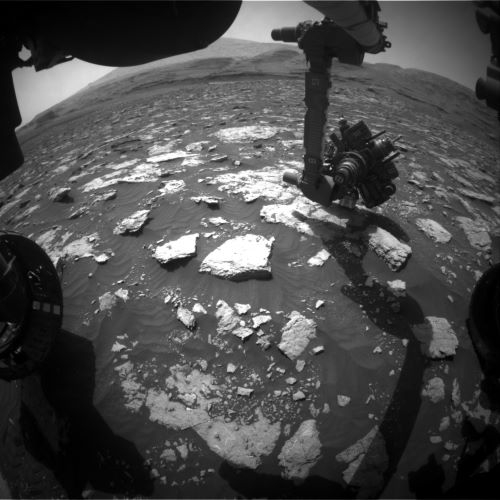
Shown here is Curiosity’s Alpha Particle X-Ray Spectrometer (APXS) on the “Brantome” bedrock target. Note the blocky terrain immediately in front of the rover and the basal sulfate-bearing unit layers in the background. Image taken by Front Hazard Avoidance Camera on February 10, 2021, Sol 3027.
Credit: NASA/JPL-Caltech
NASA’s Curiosity Mars rover is now performing Sol 3028 tasks.

Chemistry & Camera (ChemCam) Remote Micro-Imager (RMI) observations taken on Sol 3027, February 10, 2021.
Lucy Thompson, a planetary geologist at the University of New Brunswick, Fredericton, New Brunswick, Canada reports that the robot is on the final approach to the base of the sulfate-bearing unit identified from orbit as a region of interest within Gale crater long before the machinery landed.
“The base of the unit marks a change from the underlying clay-bearing strata (rock layers) that Curiosity has been investigating for the last two years,” Thompson explains.
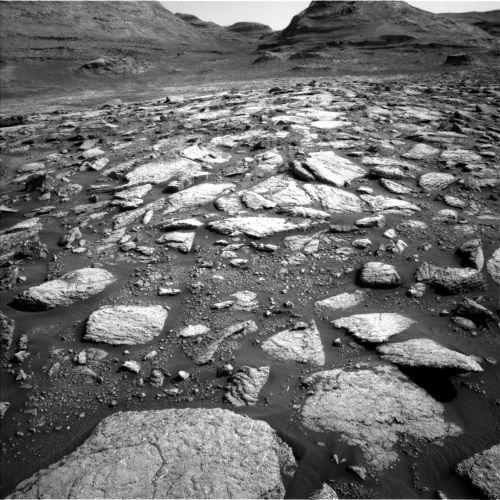
Curiosity Left B Navigation Camera image taken on Sol 3027, February 10, 2021.
Credit: NASA/JPL-Caltech
Boundary conditions
“Clay minerals are typically associated with wetter environmental conditions and sulfate minerals with drier conditions, so the contact between the two may represent a significant change in environment,” Thompson points out. “It is therefore important that we carefully document the rocks for texture, structure and composition as we transition from the clay-bearing to sulfate-bearing unit, looking for gradual or abrupt changes that may help to elucidate what happened at this boundary.”
Curiosity will first unstow her arm and place the Alpha Particle X-Ray Spectrometer (APXS) on the rock target “Firbeix” for a short analysis to determine the chemistry of the representative bedrock, before taking close-up images with its Mars Hand Lens Imager (MAHLI).
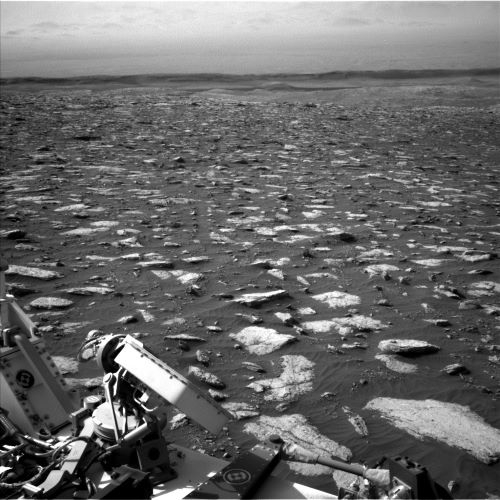
Curiosity Left B Navigation Camera image taken on Sol 3027, February 10, 2021.
Credit: NASA/JPL-Caltech
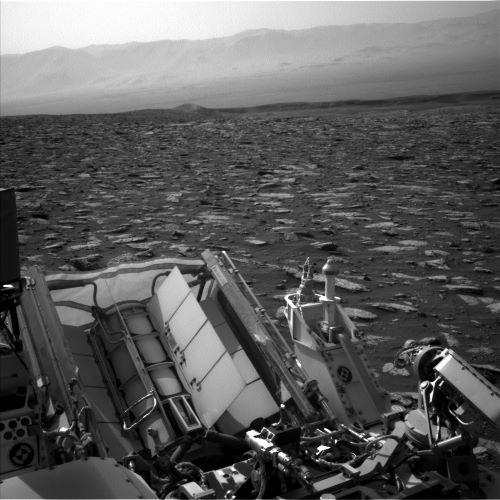
Curiosity Left B Navigation Camera image taken on Sol 3027, February 10, 2021.
Credit: NASA/JPL-Caltech
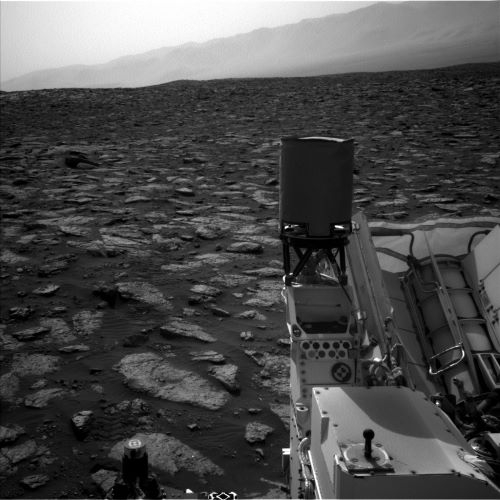
Curiosity Left B Navigation Camera image taken on Sol 3027, February 10, 2021.
Credit: NASA/JPL-Caltech
Sand cracks, fractured terrain
After stowing the arm, the Chemistry and Camera (ChemCam) instrument will take a passive spectroscopic observation of the “Feiullade” bedrock target, and take Remote Micro-Imager (RMI) observations of another bedrock target “Fraisse” and the basal layers of the sulfate-bearing unit ahead.
“We will also image the Firbeix, Feiullade and Fraisse targets with Mastcam, and look at some sand cracks and the fractured terrain ahead with Mastcam mosaics,” Thompson adds.
Next drive
Curiosity will then drive carefully over this blocky terrain for a planned distance of roughly 115 feet (35 meters). After the drive has executed, a Mars Descent Imager (MARDI) image will be taken to capture the terrain beneath the rover’s two front wheels.
The second sol of this two-sol plan is dominated by environmental observations to monitor the atmosphere including a ChemCam passive sky observation, a Mastcam basic tau pointed towards the sun, a Navcam suprahorizon movie, dust devil survey and line of sight image, Thompson reports.
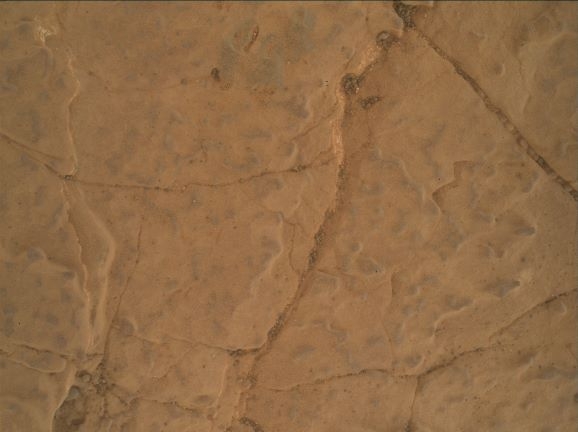
Curiosity Mars Hand Lens Imager photo produced on Sol 3027, February 10, 2021.
Credit: NASA/JPL-Caltech/MSSS
Standard Rover Environmental Monitoring Station (REMS), Radiation Assessment Detector (RAD) and Dynamic Albedo of Neutrons (DAN) passive and active measurements will also be acquired.
“Curiosity and everyone on the Mars Science Lab team would also like to welcome Tianwen-1 to Mars. Congratulations to the Chinese space agency for a successful insertion into Mars orbit. It is an exciting time for Mars missions and science,” Thompson concludes.
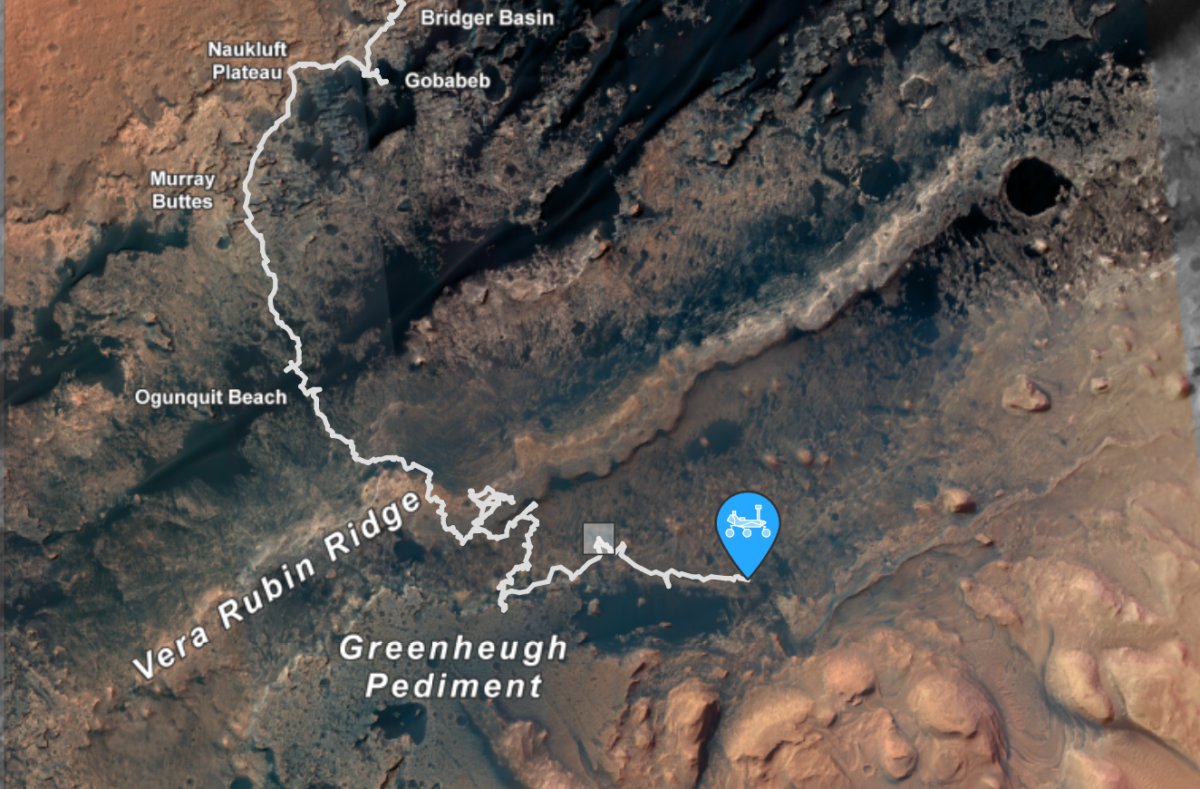
Curiosity’s Location as of Sol 3027. Distance Driven 15.22 miles (24.50 kilometers).
Credit: NASA/JPL-Caltech/Univ. of Arizona
NASA’s Curiosity Mars rover is now closing out Sol 3027 tasks.
Abigail Fraeman, a planetary geologist at NASA’s Jet Propulsion Laboratory reports that the rover is continuing along its journey through the rubbly unit that marks the transition from the clay-bearing rocks of “Glen Torridon” to the salty sulfate-bearing strata ahead.
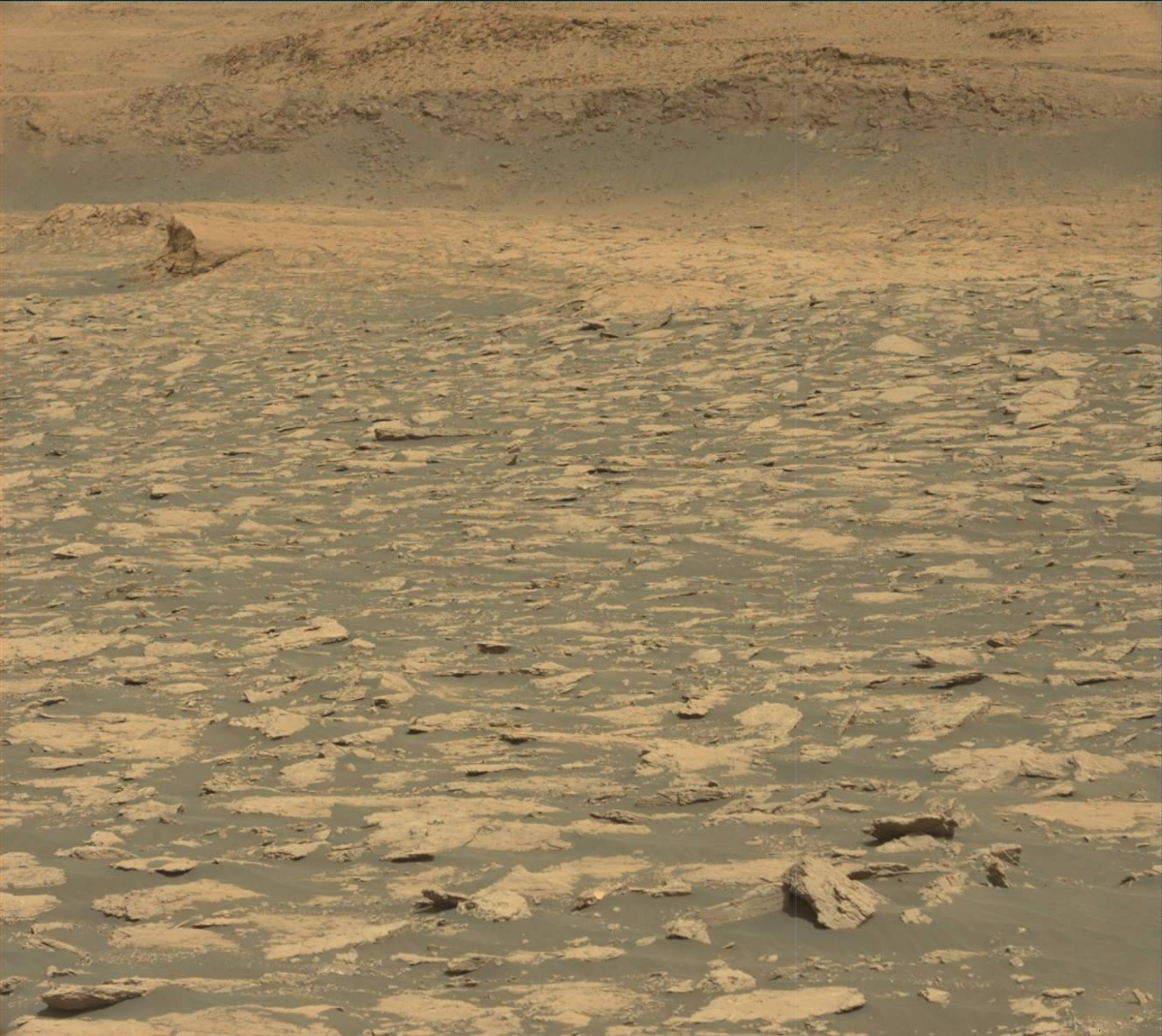
Curiosity’s view looking towards the sulfate-bearing unit. Mars researchers see dramatic and inviting cliffs in the distance. This image was taken by Mast Camera on Sol 3025, February 8, 2021.
Credit: NASA/JPL-Caltech/MSSS
A recent plan scripted a Mars Hand Lens Imager (MAHLI) and Alpha Particle X-Ray Spectrometer (APXS) observation on a piece of bedrock in the robot’s workspace named “Brantôme.”
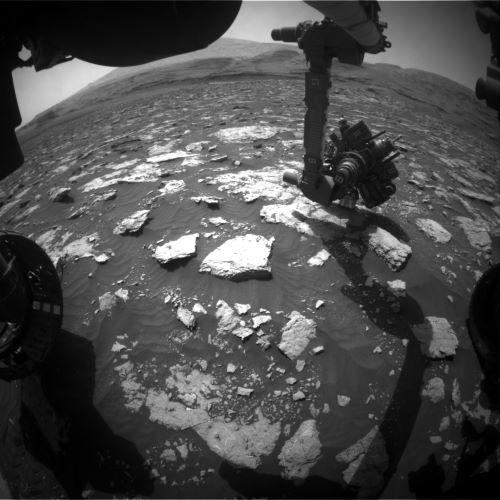
Curiosity Front Hazard Avoidance Camera Left B photo acquired on Sol 3027, February 10, 2021.
Credit: NASA/JPL-Caltech
Also planned are Mastcam multispectral observations, and some Mastcam and Chemistry and Camera (ChemCam) Remote Micro-Imager (RMI) mosaics of a small crater named “Rouchechuart” and distant strata named “Riberac.”
“After these science observations, Curiosity will drive [128 feet] roughly 39 meters towards the sulfate-bearing unit, which we can see forming dramatic and inviting cliffs in the distance,” Fraeman notes.
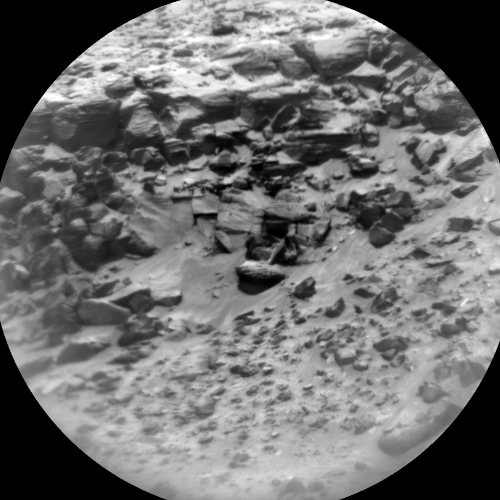
Curiosity Chemistry & Camera Remote Micro-Imager (RMI) photo taken on Sol 3027, February 10, 2021.
Credit: NASA/JPL-Caltech/LANL
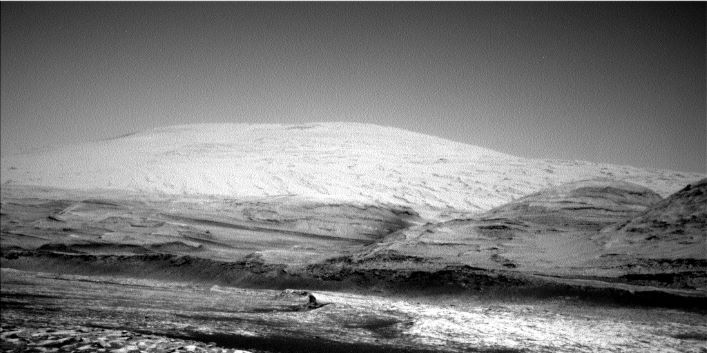
Curiosity Left B Navigation Camera image taken on Sol 3027, February 10, 2021.
Credit: NASA/JPL-Caltech
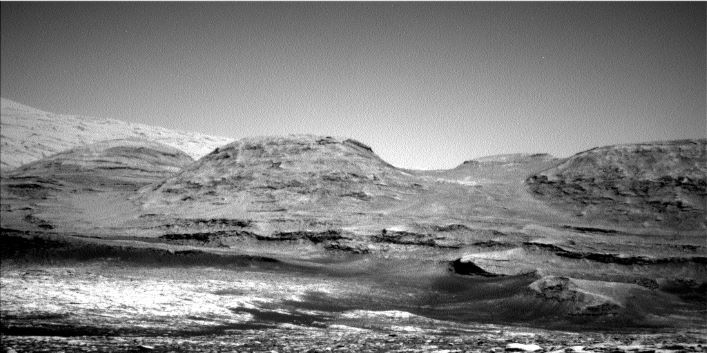
Curiosity Left B Navigation Camera image taken on Sol 3027, February 10, 2021.
Credit: NASA/JPL-Caltech
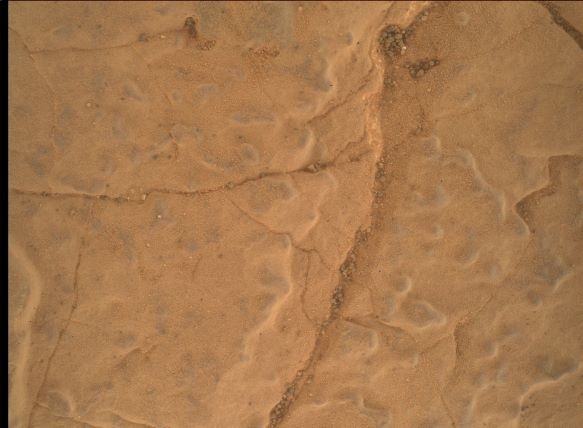
Curiosity Mars Hand Lens Imager photo produced on Sol 3027, February 10, 2021.
Credit: NASA/JPL-Caltech/MSSS
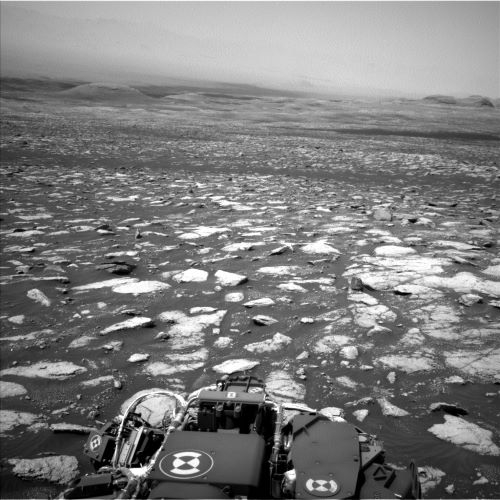
Curiosity Left B Navigation Camera image taken on Sol 3027, February 10, 2021.
Credit: NASA/JPL-Caltech
At the beginning of a recent planning day, Fraeman adds, Curiosity team members celebrated the arrival of a brand new orbital neighbor, the Emirates Mars Mission “Hope Probe.” Hope is the first mission to Mars led by the United Arab Emirates Space Agency, and its arrival into Mars orbit represents an extraordinary accomplishment.
Fraeman says “Welcome to Mars, Hope, we’re so excited to have you here!”

Courtesy: R. Adam Dipert
Hungry for that first stint of free-floating magic called microgravity? You can enhance your aptitude for motion and develop a deeper understanding of how best to handle yourself by practicing here on Earth.
Adam Dipert of the Department of Physics at Arizona State University explains that microgravity environments present unique movement and perceptual challenges. Furthermore, the expense of placing yourself into space puts utilization of the time in those environments at a premium.
Dipert draws upon a background that includes being a professional circus performer and dancer. Since his first parabolic flight in 2016, he continues to investigate the possibilities of locomotion of the human body in weightlessness.
The type of training he is proposing prepares “movement artists” to quickly adapt to the counterintuitive aspects of weightless movement. His research findings – “Choreographic Techniques for Human Bodies in Weightlessness” — appears in the journal Acta Astronautica.
Parabolic flights, pools, and aerial harnesses
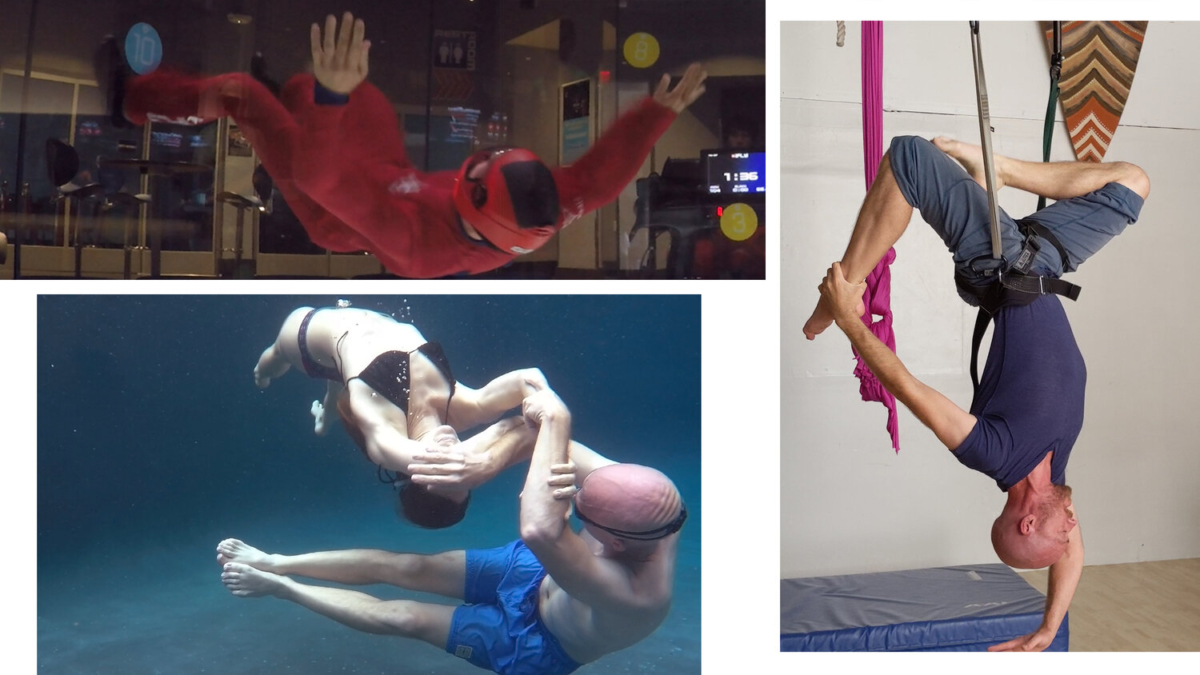
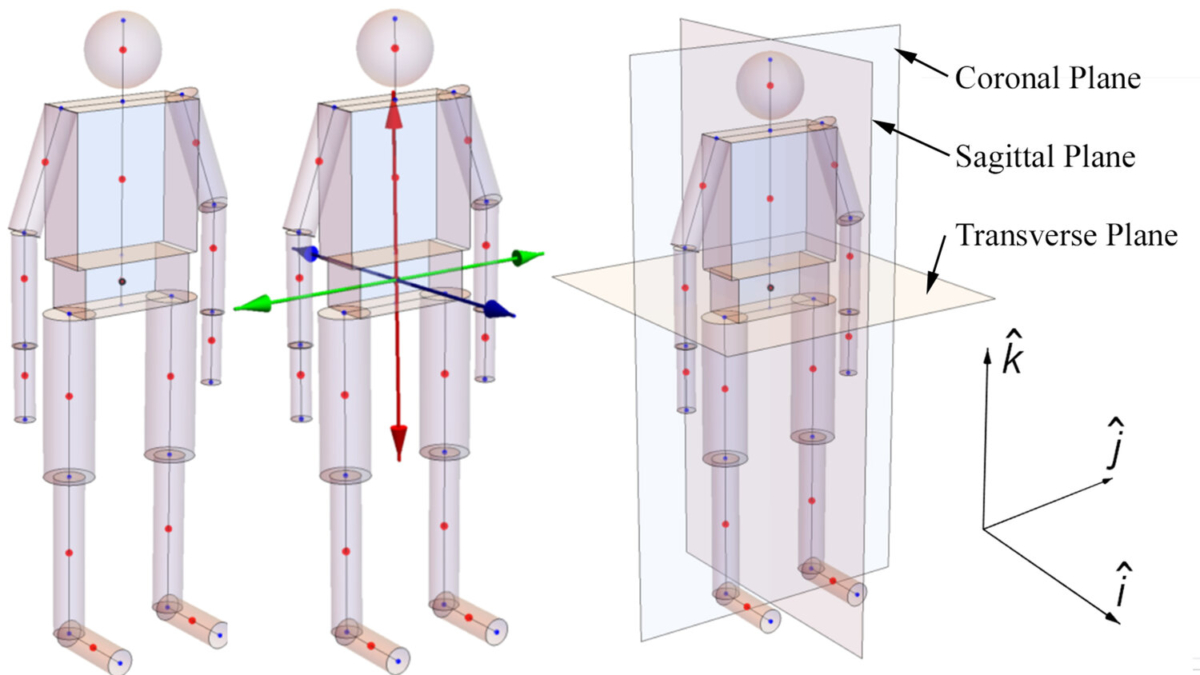
“This research has focused on understanding strategies for planning and executing specific movements, which can be explored in precise and low cost ways,” Dipert explains. A simulator was coded to look at the dynamics of the human body. That simulator allows for visual and numeric calculations of the body’s moment of inertia “eigenvectors” and center of mass in a variety of positions.
Courtesy: R. Adam Dipert
The maneuvers were explored with dance, circus, and “parkour” artists through the use of parabolic flights, pools, and aerial harnesses. Parkour is the practice of traversing obstacles in a human-made or natural environment through the use of various movements in order to travel from one point to another in the quickest and most efficient way.
Microgravity choreography
To date, very little choreography has been designed specifically for humans in microgravity besides those choreographies designed for space walk treks.
“As humans continue on our trajectory toward increased habitation in space, the use of our bodies in artistic endeavors is inevitable,” Dipert writes. “A major challenge in developing competent movement skills comes from the short intervals spent in weightlessness in comparison to the amount of time a person spends in gravity.”
Courtesy: R. Adam Dipert
Patterns of movement
Dipert and a small group of others have begun to learn and execute simple movement patterns designed with weightless environments in mind. Three types of skills have been honed:
— continuous self-rotation about the anterior-posterior axis,
— initiating rotation about the head-tail axis with a partner, and
— self-rotation about the head-tail axis.
Each motion has been explored independent of external torques or forces.
Something in the way you move
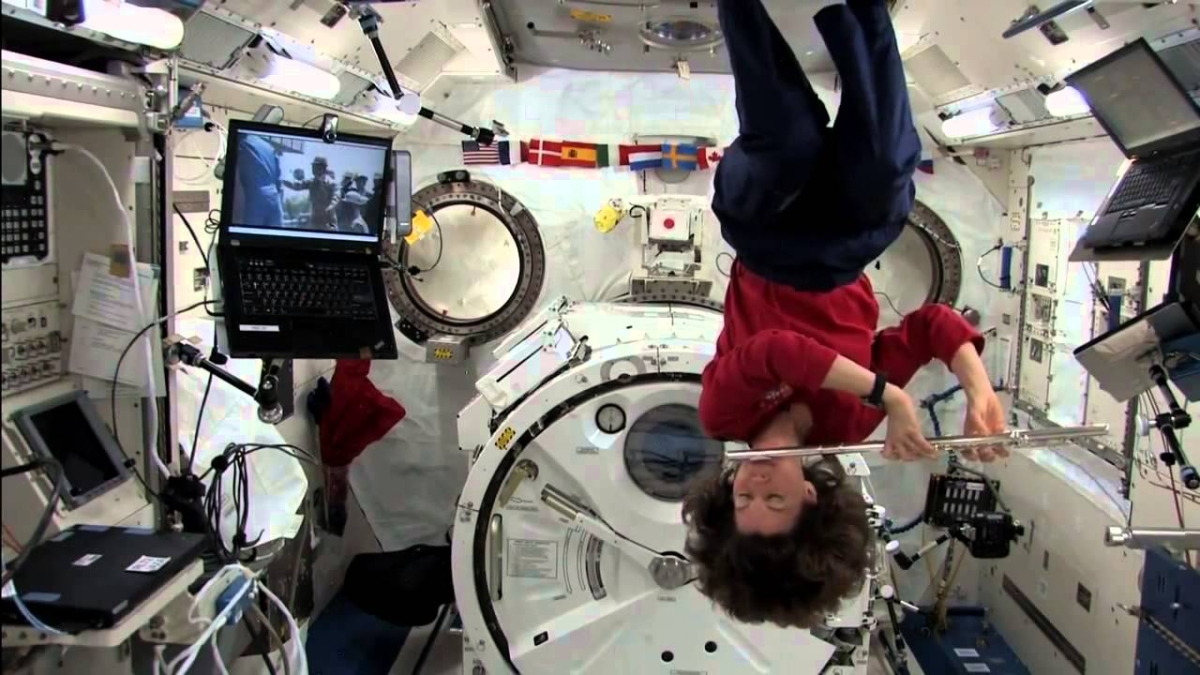
The objective of Dipert’s work is to prepare people to be capable of moving their bodies proficiently in microgravity.
Credit: NASA
“Learning physical skills can be accomplished through synchronization of our conceptual, perceptual, and motor faculties. Our conceptual constructs regarding the application of force and the properties of location and movement are hard-wired into our neural pathways. Those pathways are usually wired for surface and water-based transportation techniques, but new pathways will need to be developed for competent control of the body in weightlessness,” Dipert explains.
“I am always surprised that I’ve not found other people discussing this topic in detail,” Dipert tells Inside Outer Space.
“The art of movement in weightlessness is truly in its infancy,” Dipert concludes, “because few members of our species have spent little time in weightless environments.” At present, only a few individuals have demonstrated competent movement in weightlessness, he adds “and we will live in a more beautiful reality when more do. This work is presented with the hope of accelerating that process.”
To access the paper — “Choreographic Techniques for Human Bodies in Weightlessness” – go to:
https://www.sciencedirect.com/science/article/abs/pii/S0094576521000758?via%3Dihub
Also, go to this video on Dipert’s research at:
Credit: DARPA
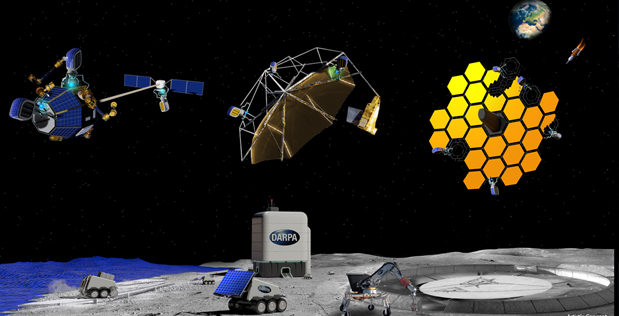
It is called the Novel Orbital and Moon Manufacturing, Materials and Mass-efficient Design program, or NOM4D in DARPA speak – and DARPA stands for the Defense Advanced Research Projects Agency.
DARPA sees the NOM4D effort as a way to pioneer technologies for adaptive, off-Earth manufacturing to produce large space items and structures on the Moon.
According to a DARPA statement, “as commercial space companies increase the cadence of successful rocket launches, access to space is becoming more routine for both government and commercial interests. But even with regular launches, modern rockets impose mass and volume limits on the payloads they deliver to orbit. This size constraint hinders developing and deploying large-scale, dynamic space systems that can adapt to changes in their environment or mission.”

Cadence kudos: Another SpaceX Falcon 9 liftoff.
Credit: SpaceX
NOM4D wants to address this problem.
Future defense missions
Bill Carter, program manager in DARPA’s Defense Sciences Office, explains the vision is to develop foundational materials, processes, and designs needed to realize in-space manufacturing of large, precise, and resilient Defense Department systems.
“We will explore the unique advantages afforded by on-orbit manufacturing using advanced materials ferried from Earth,” Carter said in a DARPA statement. “As an example, once we eliminate the need to survive launch, large structures such as antennas and solar panels can be substantially more weight efficient, and potentially much more precise. We will also explore the unique features of in-situ resources obtained from the Moon’s surface as they apply to future defense missions.”

Moon base design.
Credit: ESA/P. Carril
Next step
As for the next step, NOM4D is divided into three 18-month phases that build towards the ability to create ultra-precise, mass efficient structures from feedstock.
Phase I is considered the proof of concept for materials and designs that meet stringent structural efficiency targets using the exemplar problem of a 1-megawatt solar array.
Phase II focuses on risk reduction and technical maturation of the technology to meet structural targets, while maintaining high precision sufficient to meet the requirements of an exemplar 100m diameter RF reflector.
Phase III drives a substantial leap in precision to enable such things as infrared reflective structures suitable for use in a segmented long-wave infrared telescope.

If successful, the Axiom International Commercial Space Station is billed as a “historic shift” in human spaceflight.
Credit: Axiom Space
Space ecosphere
NOM4D assumes an established space ecosphere by 2030 comprising reliable logistics, facilities, and validation.
This look into the future includes rapid, frequent launch with regularly scheduled lunar visits; mature robotic manipulation tools for building structures in space and routine on-orbit refueling of robotic servicing spacecraft; and the availability of in-space, non-destructive evaluation methods for in-process monitoring of manufacturing and near real-time design adjustments.
DARPA will hold a “Proposers Day” webinar, scheduled for February 26, 2021.
For more information on the NOM4D webinar, go to:
https://beta.sam.gov/opp/cb6f44c0e8d04fa8ac34c588a793ec2d/view

Credit: NASA
Exploration of caves on planet Mars could potentially help shed light back on the history of past climate conditions on the Red Planet, as well as offer evidence for past microbial life.
Martian caves are protected from radiation and environmental extremes making them excellent preservers of potential biosignatures.
New research has looked into the promise of “ice caves” on Mars, rock-hosted caves containing ice. Ice-hosted caves are called “glacier caves”, and may be present on Mars as well.

Illustration of what an ice cave may look like on Mars. Hoarfrost grows on the ceiling and walls of a lava tube, with crystals growing in various directions. The cave is crumbling due to its old age. Some hoar crystals fell on the floor due to their own weight.
Credit: Norbert Schörghofer
The report – “Ice caves on Mars: Hoarfrost and microclimates” – is authored by Norbert Schörghofer of the Planetary Science Institute in Honolulu, Hawaii and Tucson, Arizona and appears in the journal Icarus.
Technologically feasible
“The exploration of caves on Mars is technologically feasible in the near-term,” Schörghofer explains.
“Drones that can operate in the tenuous Martian atmosphere are in active development. Autonomous drones that navigate in confined spaces are also being actively developed, as are all-terrain robotic vehicles and hoppers,” Schörghofer points out in his Icarus paper. “Miniaturized instruments that can be carried by small vehicles create science opportunities for the exploration of extraterrestrial caves. Further in the future, caves may serve as radiation-shielded habitats, and ice in the caves of the equatorial region would be a valuable resource.”
Planet Mars is believed to harbor many volcanic caves, observes Schörghofer. Skylight entrances and pit crater chains have been observed with cameras on several spacecraft circling Mars.
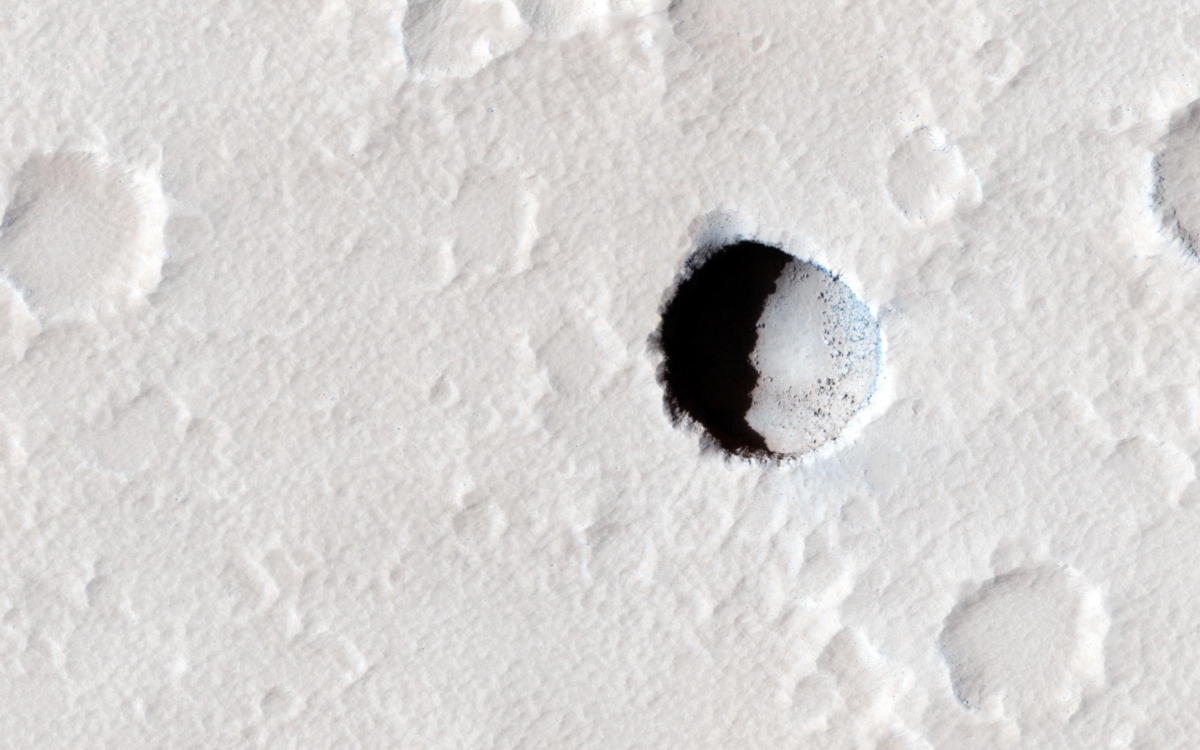
NASA Mars Reconnaissance Orbiter HiRISE image taken of an area on the lower southeastern flank of the volcano Elysium Mons. In the center is a small, dark pristine-appearing pit approximately 426 feet (130 meters) in diameter.
Credit: NASA/JPL-Caltech/Univ. of Arizona
Role of microclimates
Schörghofer points to a paucity of research on the topic, noting earlier work by another researcher that predicted, based on microclimate model calculations, that Martian lava tubes in the Tharsis and Elysium rises could have retained ice to the present day.
The new work assesses the role of microclimates and the physical structure of spelean (pertaining to a feature in a cave) ice formations expected in Martian caves. Some of the basic questions are: Where on Mars can caves be expected to contain ice? What do spelean ice formations look like on Mars?

Location of candidate caves in the Tharsis region on Mars.
Credit: USGS
“Martian caves are situated in environments where phase transitions of water are only by sublimation. The predominant type of cave ice is expected to be perennial hoarfrost that slowly grows in supersaturated cavities,” Schörghofer explains.
Caves on Mars are situated in a cold and dry environment (dry in terms of absolute humidity, not in terms of relative humidity), Schörghofer writes, “where phase transitions of water are presently only by sublimation. Cave ice formations are expected in the form of perennial hoarfrost sourced from the humid atmosphere. Where underground conduits and cavities are saturated with water vapor, hoarfrost crystals slowly grow over time.”
Work ahead
Schörghofer concludes that many aspects of ice caves on Mars remain to be explored, such as the growth of sublimation crystals around 200 K, fluid dynamics simulations of cave climates on Mars, consideration of relic cave ice, and analog studies of perennial hoarfrost in caves here on Earth.
“Finally, cave climates can be expected to play a larger role on bodies with a denser atmosphere, namely Venus and Titan,” Schörghofer concludes.
To gain access to the paper — “Ice caves on Mars: Hoarfrost and microclimates” – go to:
https://www.sciencedirect.com/science/article/abs/pii/S0019103520305911?via%3Dihub

Credit: Colorado School of Mines/Center for Space Resources/LILL-E Pad Team
GOLDEN, Colorado – Work is underway on a Lunar In-situ Landing/Launch Environment (LILL-E) Pad.
Analysis of Apollo mission video footage has shown that rockets will erode lunar regolith beneath landing vehicles by ejecting material at high speeds away from the rocket plume. In the Moon’s vacuum environment, this material will speed away on a ballistic trajectory for great distances. The resulting blast effect can sandblast surfaces of equipment, including the lander itself. Moreover, this issue is expected to be severe with 21st century lunar landing systems due to their larger sizes.

Quantities of lunar dust being displaced by Apollo 15’s Falcon’s lunar lander exhaust.
Source: Apollo 15 landing video, converted by Gary Neff
For example, the Apollo Lunar Module (LM) mass was 5 metric tons, but the Artemis Human Landing System (HLS) is planned to be considerably larger at 40 metric tons.
LILL-E Pad is one of the awardees of the 2021 NASA BIG Idea Challenge on Dust Mitigation Technologies for Lunar Applications – a concept of the Colorado School of Mines with Texas-based startup ICON, along with Masten Space Systems and Adherent Technologies Inc.
The LILL-E Pad approach addresses landing dust prevention and mitigation on the Moon by developing a binder-regolith reinforced surface (making use of lunar topside material) and a landing/launch pad that’s made out of a carbon fiber fabric barrier anchored to the lunar surface.

Credit: Colorado School of Mines/Center for Space Resources/LILL-E Pad Team
Simple solution
“Large scale landing pad concepts using 3D printing and sintering systems have been proposed for future lunar outposts, but our proposed system provides a simple solution that could be implemented by 2026,” a team write-up explains.
Due to the high temperatures of direct rocket plumes hitting the lunar landscape, the central landing pad material will need to resist temperatures ranging from 3,000-4,000 °C. This material needs to also block most gas intrusion and be high strength in order to resist the force of the HLS as it lands and rests on the pad. Several materials were considered for this application, and carbon fiber fabric was determined to be the best type for this use, the team points out.
LILL-E Pad is a two-part arrangement that includes the POlymer Nozzle Distribution (POND) area that is made of polymer-hardened regolith using a binder distribution system, plus a central carbon fiber fabric Landing/Launch Pad (LLP) – the central landing “bullseye” — that will resist the most extreme area of the rocket plume.
The system is being designed to be deployed via autonomous, robotic operations.

Rocket engine plumes impinge upon the surface as landers touch down, creating craters, kicking debris and dust far away from the landing spot, and impacting the environment and spacecraft on multiple levels.
Credit: Masten Space Systems
Blaze the trail
“Overall the team is planning on spending the next semester on finalizing our design and doing initial testing,” explains Bailey Burns, the Systems Engineering Integration and Test Lead. “Our next milestone is a deliverable for NASA in May and we hope to have our polymer base – POND — design/analysis fleshed out and thermal load and vacuum chamber testing on the carbon fiber barrier done by then,” she told Inside Outer Space.
“Later this year, our plan is to do an engine test partnered with Masten Space Systems so this semester will be our opportunity to conduct preliminary testing before that event.” Burns adds. The team will be using Masten Space Systems’ Plume Surface Interaction (PSI) test gear in Mojave, California. It includes an oxygen/methane rocket, along with data acquisition equipment for pressure and temperature, multiple video and photo cameras, a LIDAR scanner, and a thermal camera.

Credit: NASA
The team notes that, while laboratory testing has shown promise, there are still many unknowns, such as mixing/wetting mechanics, regarding the introduction of the LILL-E Pad system to a lunar environment. Additionally, temperatures at the lunar south pole will affect how materials respond to forces and how they may deteriorate over time.
The Center for Space Resources at the Colorado School of Mines has a number of available tools for the LILL-E Pad work, such as vacuum chamber test gear and a 12’x8’x2’ Lunar Testbed that is filled with JSC-1 – a lunar simulant.
“We are really proud of the realistic feasibility of this project and hope our research can help blaze the trail for sustainability in future lunar missions,” Burns concludes.

