Archive for the ‘Space News’ Category
 Author:
  March 17th, 2026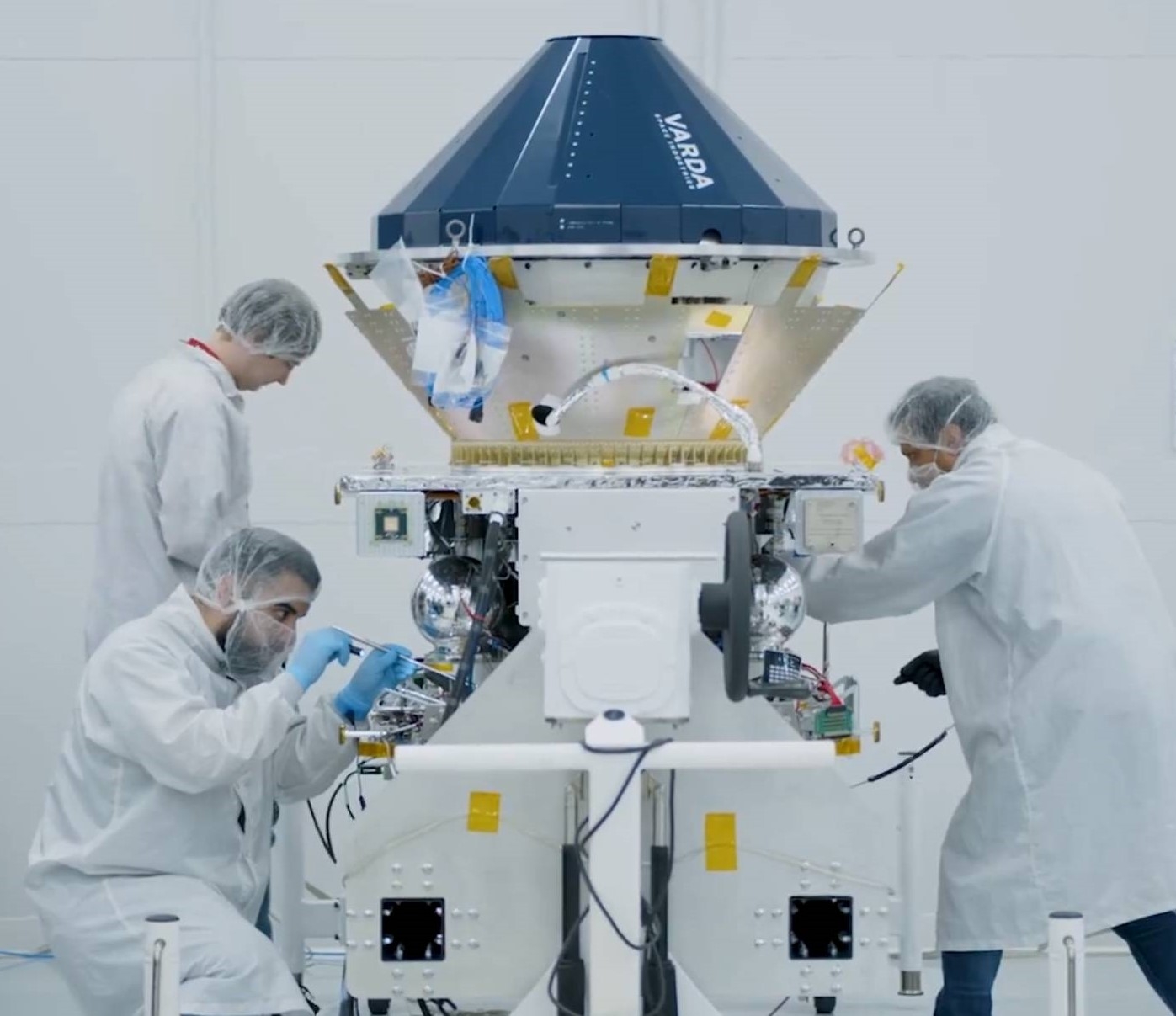
Pre-launch photo shows technicians working on the Varga capsule-mounted spacecraft.
Image credit: Rocket Lab
There has been a streamlining of all launch and reentry licensing announced by the Federal Aviation Administration (FAA).
Those commercial space license approvals will now occur under the Part 450 rule, which consolidates four old rules into one. It provides more flexibility and more methods of compliance, reducing the administrative and cost burdens on industry and the FAA.
In a March 17 FAA statement, the organization issued the Part 450 rule during the first Trump administration as commercial space operations started to rapidly grow. For five years, the old and new regulations were in effect simultaneously to provide a transition period for operators to obtain a Part 450 license.

Image credit: SpaceX
Part 450 reduces the number of times an operator needs an FAA license approval and allows one license for a portfolio of operations, different vehicle configurations and mission profiles, and even multiple launch and reentry sites.
Operators that transitioned legacy licenses by the March 9, 2026, deadline include: Blue Origin’s New Shepard, Firefly Aerospace Alpha booster, SpaceX Falcon 9 / Falcon Heavy and Dragon, Rocket Lab’s Electron, and United Launch Alliance Atlas and Vulcan boosters.
The FAA has issued 14 Part 450 licenses since the rule took effect in March 2021. To view all licenses, go to:
 Posted in
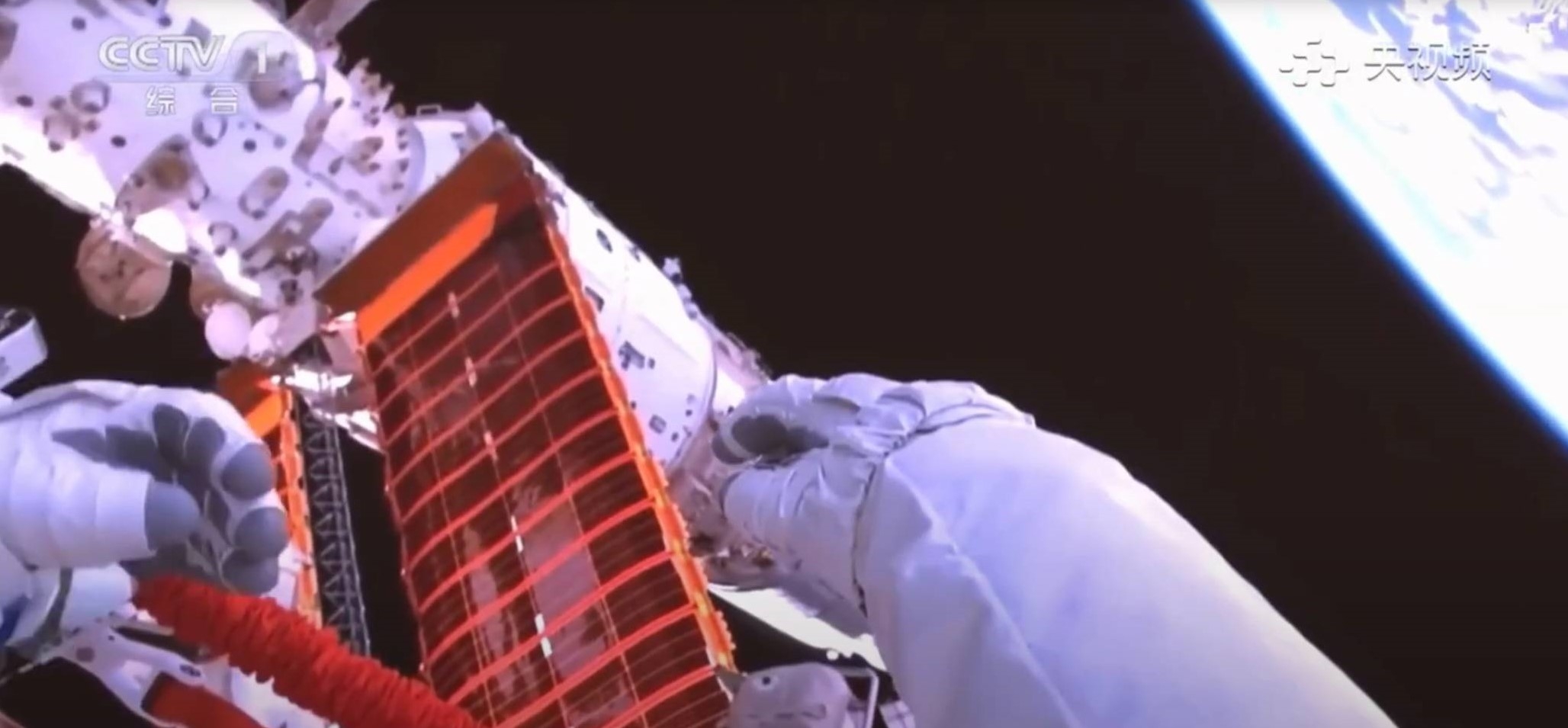
Image credit: CCTV/CMSEO/Inside Outer Space screengrab
China’s Shenzhou-21 crew aboard the country’s orbiting space station completed their mission’s second series of extravehicular activities (EVAs) today, according to the China Manned Space Agency (CMSA).
The astronaut spacewalkers — Zhang Lu, Wu Fei — worked for roughly seven hours and completed their tasks, assisted by the space station’s robotic arm, stay-inside colleague Zhang Hongzhan, and a team on Earth.
What was done?
The trio completed the installation of a space debris protection device for the space station along with other tasks. Zhang Lu and Wu Fei, who have conducted spacewalk operations, returned to the Wentian lab module safely, according to the CMSA.

China’s Tiangong space station as imaged by MAXAR satellite.
Image credit: MAXAR
Since completing the first series of EVAs on Dec. 9, 2025, the Shenzhou-21 crew have also conducted in-orbit training exercises, including rendezvous and docking, medical rescue, and emergency lifesaving.
According to the mission plan, additional EVAs will be carried out by the crew during the Shenzhou-21 mission.
Zhang Lu has so far carried out six EVAs, making him one of the Chinese astronauts with the most spacewalks to date.
Go to CCTV video detailing the recent spacewalk at:

Artwork depicts China’s Tiangong space station.
Image credit: China Manned Space Agency
China’s Shenzhou-21 astronauts continue to perform a series of tasks aboard the country’s Tiangong space station, including in-orbit experiments, equipment maintenance and health
The China Manned Space Agency (CMSA) said on March 15 that the crew — mission commander Zhang Lu and astronauts Wu Fei and Zhang Hongzhang — have spent more than four months in orbit and remain in good health.
This Shenzhou-21 trio departed the Jiuquan Satellite Launch Center in northwest China on October 31, 2025, boarding the space station for a six-month mission.
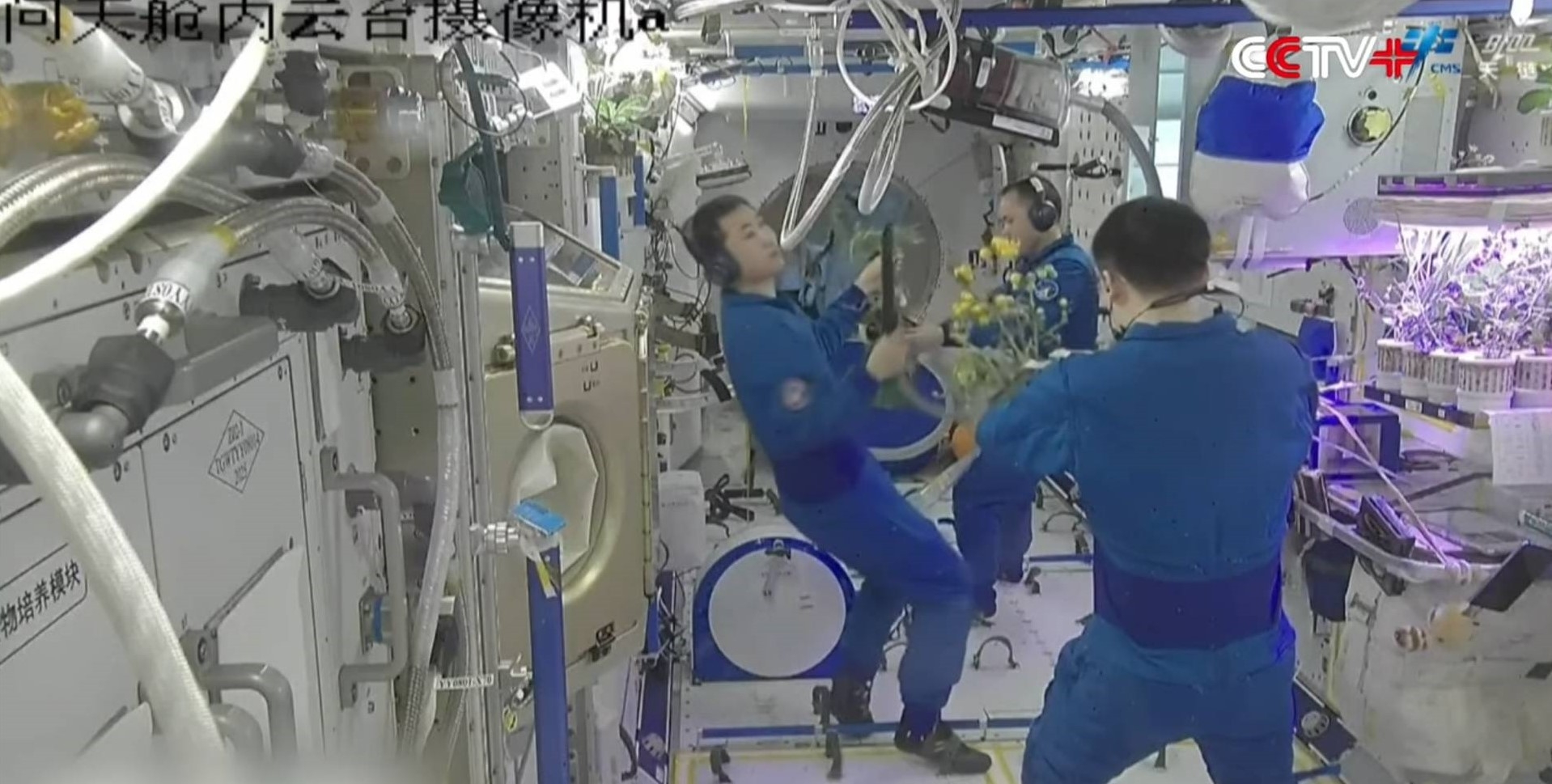
Image credit: CCTV/Inside Outer Space screengrab
Cultivating work
As reported by the China Central Television (CCTV), inside the station’s core module, cherry tomatoes cultivated using a water aeroponic device are thriving.
Crew members documented the plants with photos, harvested ripe fruit and sealed both plants and produce separately for preservation.
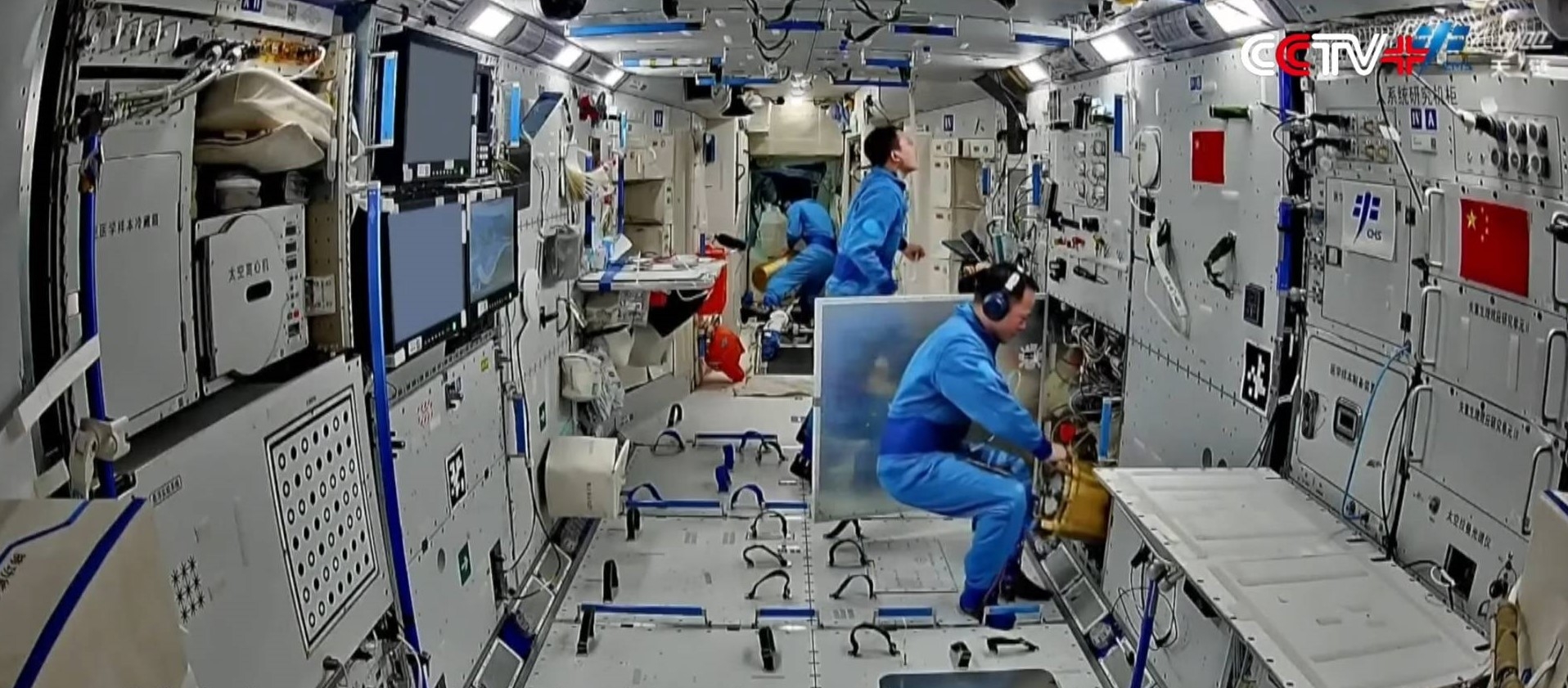
Image credit: CCTV/Inside Outer Space screengrab
“Building on the success of the cherry tomato cultivation, the team will conduct aeroponic experiments with wheat, carrots, and both medicinal and edible plants as planned,” CCTV reports. “These trials aim to validate key technologies and expand the range of crops and technical capabilities for space cultivation.”
Materials science
Space materials science tasks include cleaning the experimental chamber in the unpressurized compartment, replacing experimental samples, maintaining the electrodes of the central mechanism, and cleaning the window cover of the central mechanism.
Crew members also completed microgravity combustion science experiments, such as replacing the burner and sampling cover inside the experiment cabinet.
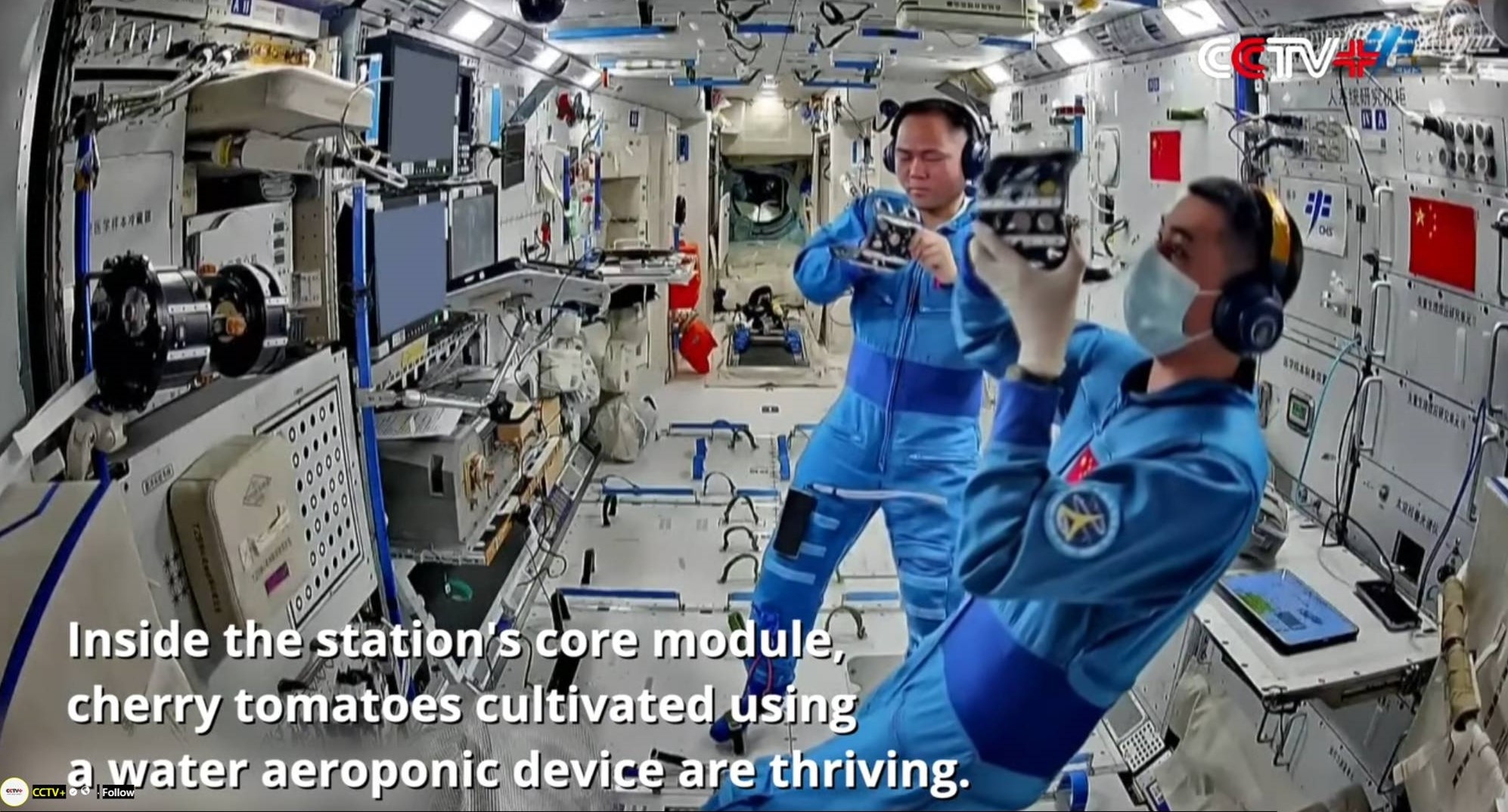
Image credit: CCTV/Inside Outer Space screengrab Crew members also completed microgravity combustion science experiments, such as replacing the burner and sampling cover inside the experiment cabinet.
Medical training
As for maintenance of the regenerative life support system equipment, the Shenzhou-21 team monitored microorganisms and carried out medical training. Doing so, reports CCTV, helps familiarize the astronauts with the rescue operation methods and force application characteristics in a microgravity environment.
For a video spotlighting life aboard China’s station, go to:
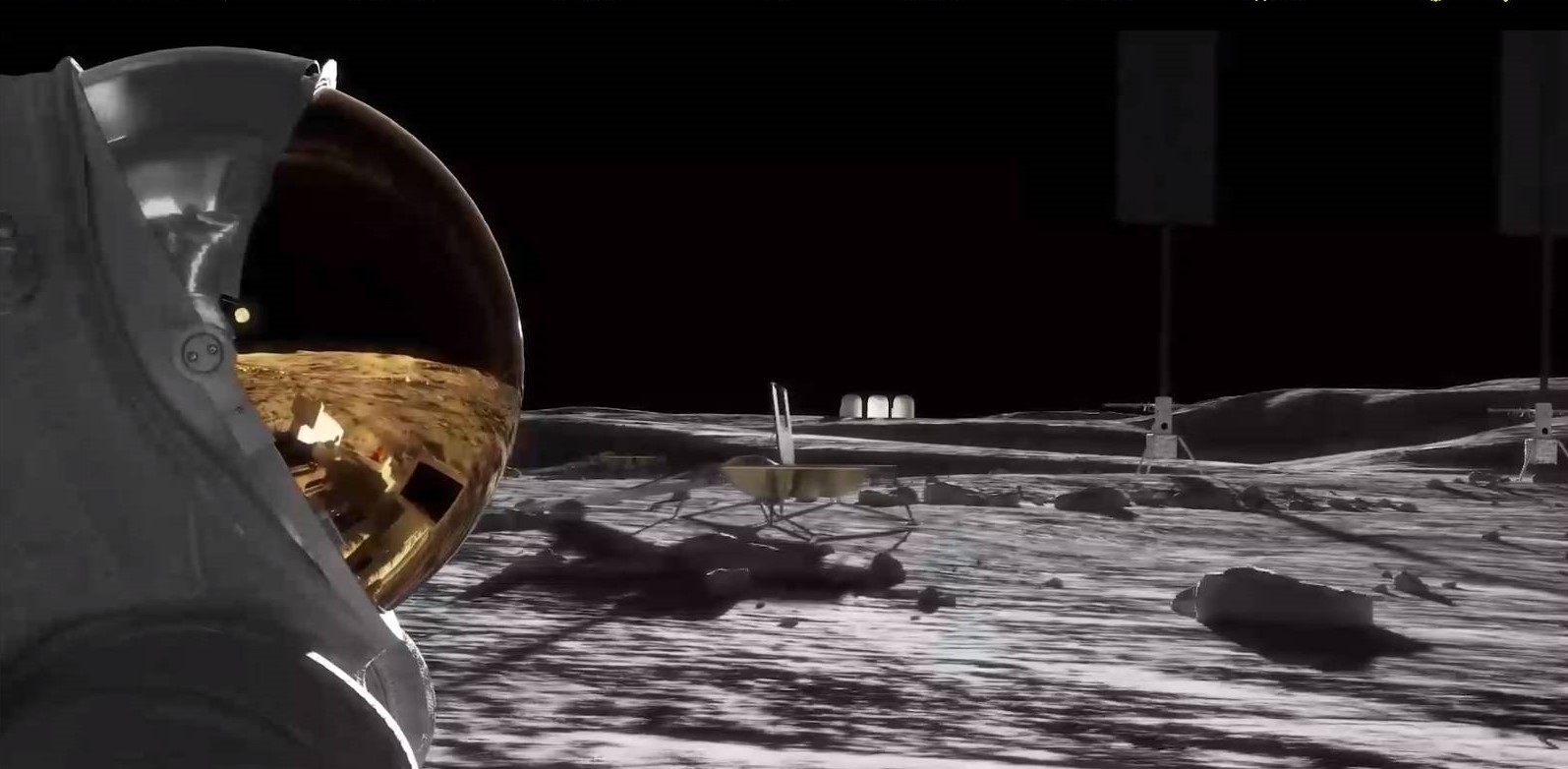
Creating a cis-lunar economy will take time, hardware, and political willingness to forge a link between the Moon and Earth.
(Image credit: Lockheed Martin)
In the U.S. and China-led race to put astronauts back on the Moon, there is, in fact, one shared goal: establishing a sustainable, permanent, crewed Moon base. But their specific plans to achieve that moonshot are far from similar, with key differences that could dictate which country gets there first—and, just maybe, which controls the moon itself.
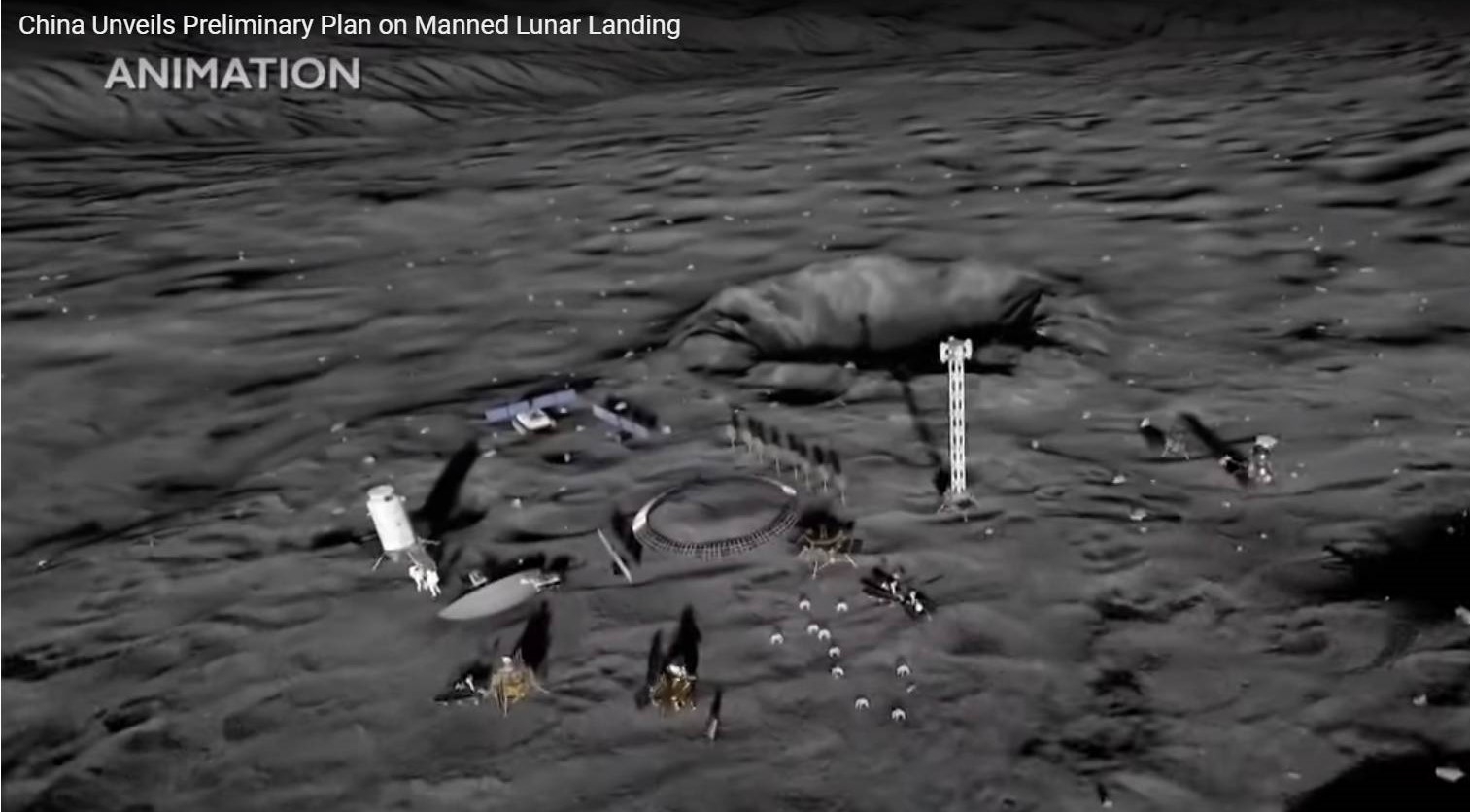
Artist’s view of China’s International Lunar Research Station . Credit: CNSA
With China and the U.S. in a high-stakes race to build permanent lunar outposts, can both nations coexist on the lunar turf?
Go to my new Scientific American story – “How to Build a Moon Base” – at:
[NOTE: Open this link in incognito window to view Scientific American story beyond pay wall]
https://www.scientificamerican.com/article/how-to-build-a-moon-base/

China’s roadmap for a Mars Sample Return mission to be launched in 2028.
(Image credit: The University of Hong Kong/Zengqian Hou, et al.)
China is making progress on the country’s mission to retrieve samples from Mars.
Xinhua news agency reports that the Tianwen-3 flight model development phase is to be completed within the year.
Liu Jizhong, chief designer of the Tianwen-3 mission, said last week that building on preliminary technical research and demonstrations, the mission has achieved breakthroughs in key technologies.
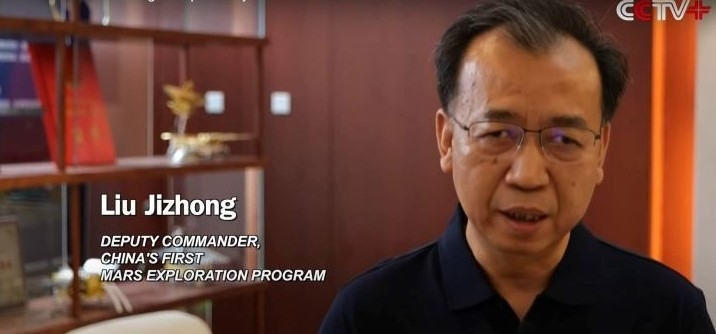
Image credit: CCTV/Inside Outer Space screengrab
Major space endeavor
The engineering team is now focused on developing prototypes, Liu told Xinhua.
“The Tianwen-3 mission represents a highly challenging, innovative and pioneering major space endeavor,” said Liu.
“It is expected to achieve humanity’s first Mars sample return mission,” Liu said, “thus significantly advancing the integrated development of space science, space technology and space applications.”

Image credit: Tian et al. (2024)
2028 launch
Tianwen-3 is scheduled for launch around 2028. The goal of the mission to the Red Planet is to return to Earth around 2031 no less than 500 grams of Martian samples.
The mission involves use of an orbiter, a returner, a lander, an ascender, and a service module, which will compose the orbiter-returner complex and the lander-ascender-service module complex, Xinhua reports.

Image credit: CCTV/CGTN/Inside Outer Space screengrab
Key capabilities
As part of the on-going development work, breakthroughs in key capabilities are on tap, such as Mars surface sampling and sealing, surface takeoff and ascent, Mars orbital rendezvous, sample capture and transfer, as well as planetary protection.
The mission is expected to search for potential signs of life on Mars, investigate Martian geological formation, and examine Martian atmosphere, with the objective of making major discoveries in the study of habitable evolution of terrestrial planets.
Meanwhile, Liu also noted that China’s Tianwen-2 probe, launched in 2025, has traveled is slated reach the near-Earth asteroid 2016HO3 this year to begin carrying out exploration duties.
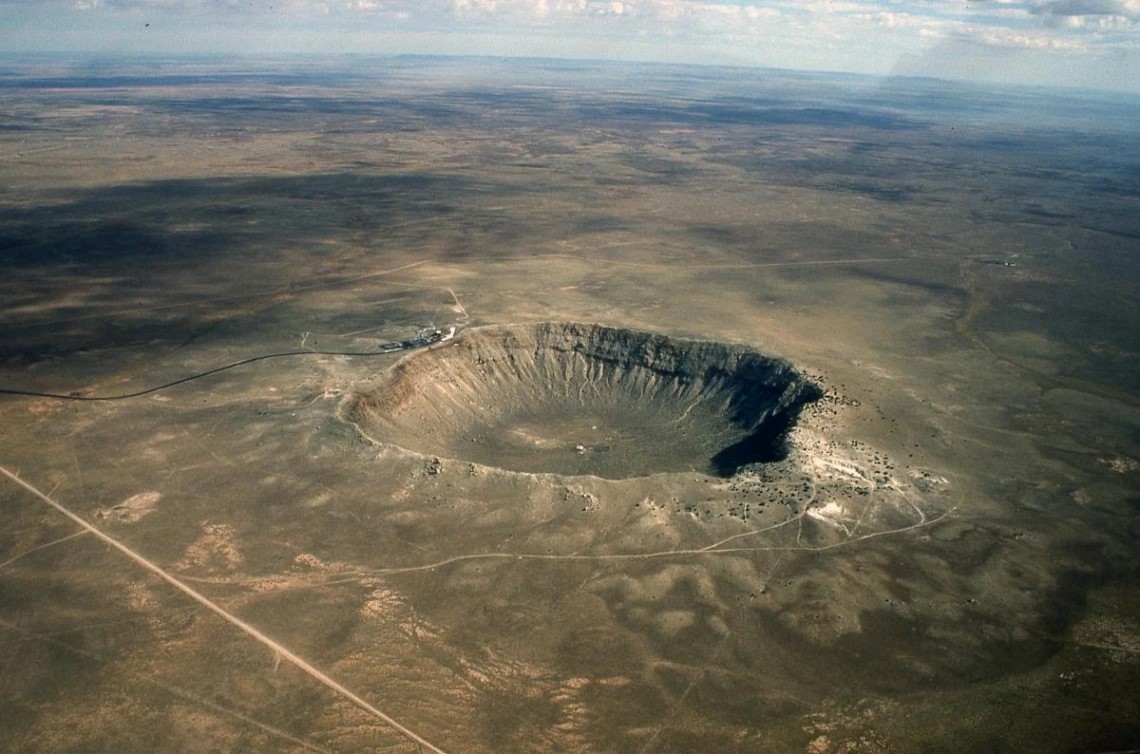
Image credit: Meteor Crater, Arizona: Arizona Geological Survey – AZGS/Dale Nations
Arizona’s meteor crater and other leftover scars from inbound space rocks continue to serve up secrets. These impact features continue to be on-going research sites, generating new data on wayward, mean and nasty creatures from the surrounding cosmos.
“The crater is still providing new insights every year, so continued studies there are really important,” explains one researcher.
Competitive grants
In fact, a number of competitive grants are being offered to support field research at known or suspected impact sites worldwide.

Astrogeologist Gene Shoemaker at Meteor Crater with Apollo astronauts during field trip in May 1967.
Image credit: NASA
That funding is backing laboratory and computer analysis of research samples and findings, creating new data from digging in on old craters around our globe.
For more information, go to my new Space.com story – “Arizona’s Meteor Crater is still revealing new secrets 50,000 years later” at:
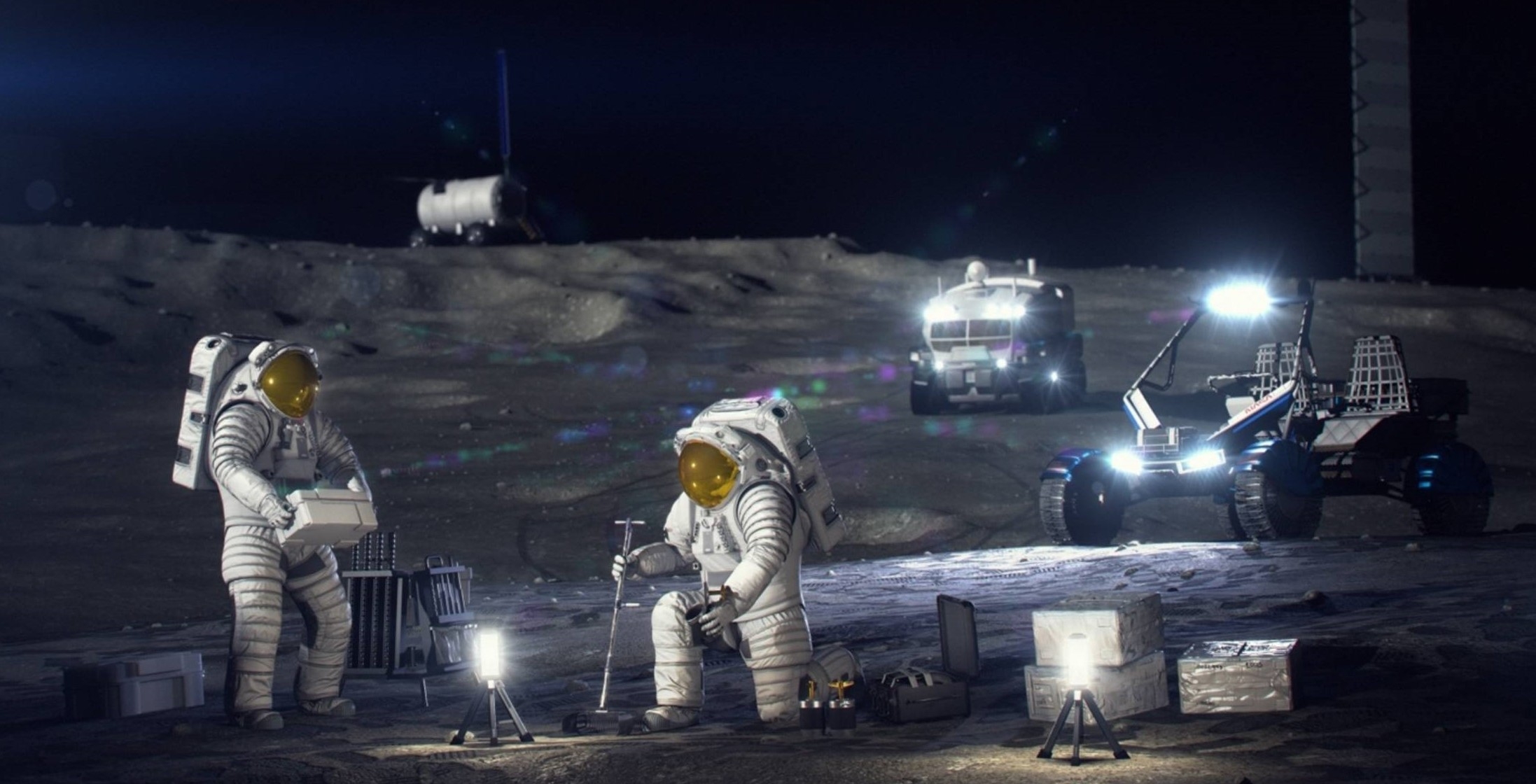
Image credit: NASA
For the first time, legislation has been unanimously passed that gives the go for NASA to establish a permanent moon base as part of sustained American presence on the lunar surface.
While not a done deal – both the U.S. Senate and House chambers must agree on the language – the impetus for establishing a “Lunar Surface Moon Base” is that America is in a space race with China.

Image credit: NASA/Bill Ingalls
As spelled out in the legislation, it calls for establishing a Lunar Surface Moon Base “to develop a permanent crewed United States presence on the moon capable of long-duration habitation, robotic and industrial operations to advance science, technology, and strategic interests.”
For more details, go to my new Space.com story – “US lawmakers call for a permanent moon base. Will it ever happen?” – at:
https://www.space.com/astronomy/moon/us-lawmakers-call-for-a-permanent-moon-base-will-it-ever-happen
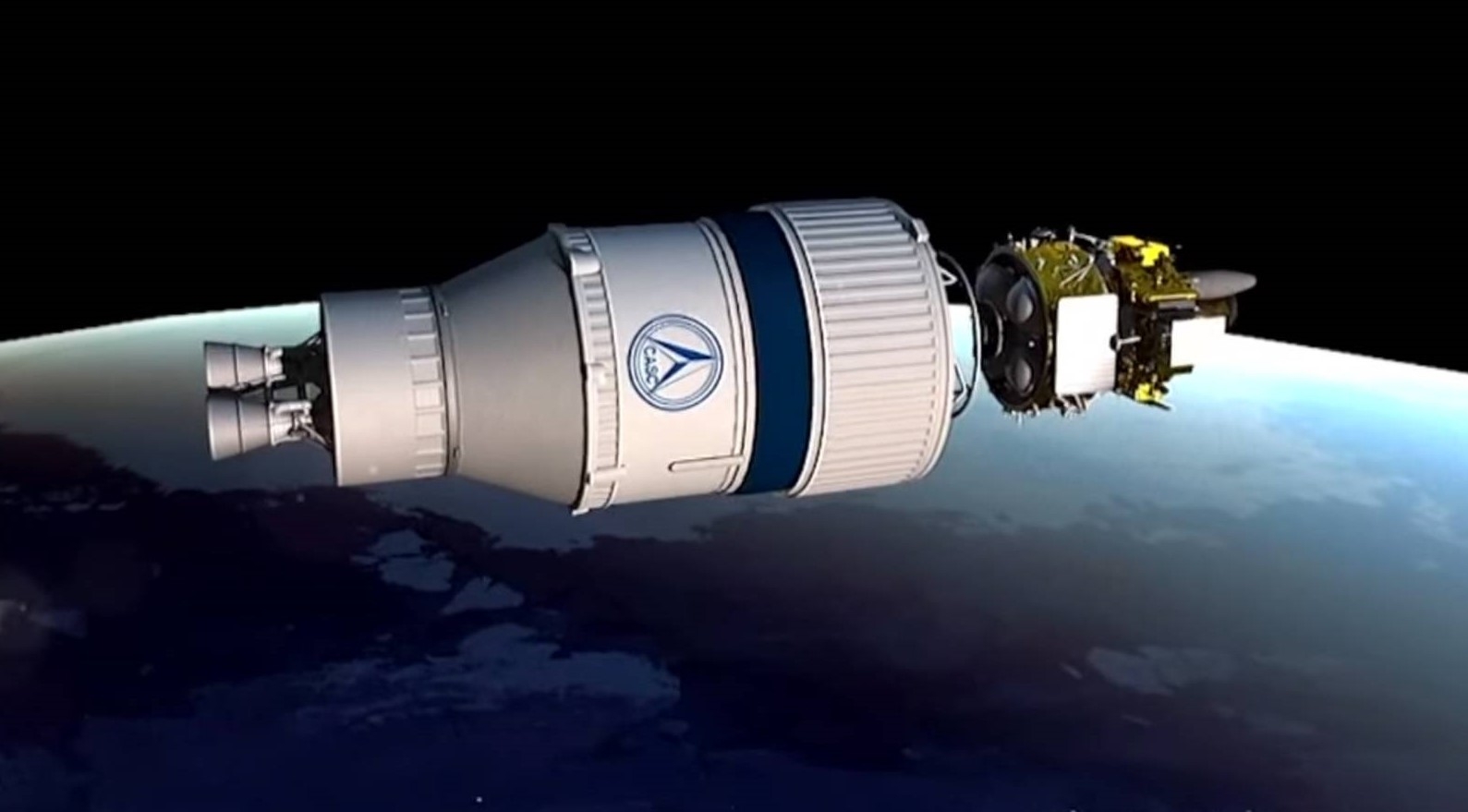
Image credit: CCTV/Inside Outer Space screengrab
China’s next robotic lunar mission, Chang’e-7, is slated for departure later this year.
Its target is the Moon’s south pole in a search for and detection of water ice.
“Scientists around the world believe there’s water on the Moon, but no one has found any yet. Now China is going to look for it,” said Ye Peijian, an academician with the Chinese Academy of Sciences (CAS).

Image credit: CCTV/Inside Outer Space screengrab
“And we’re using many methods, from searching the surface to exploring inside craters,” Ye told China Central Television (CCTV).
Specially designed hopper
The Chang’e-7 mission is composed of an orbiter, a lander, a rover, a hopper and a relay satellite. The specially designed hopper will approach and explore a Sun-deprived lunar shadow crater.
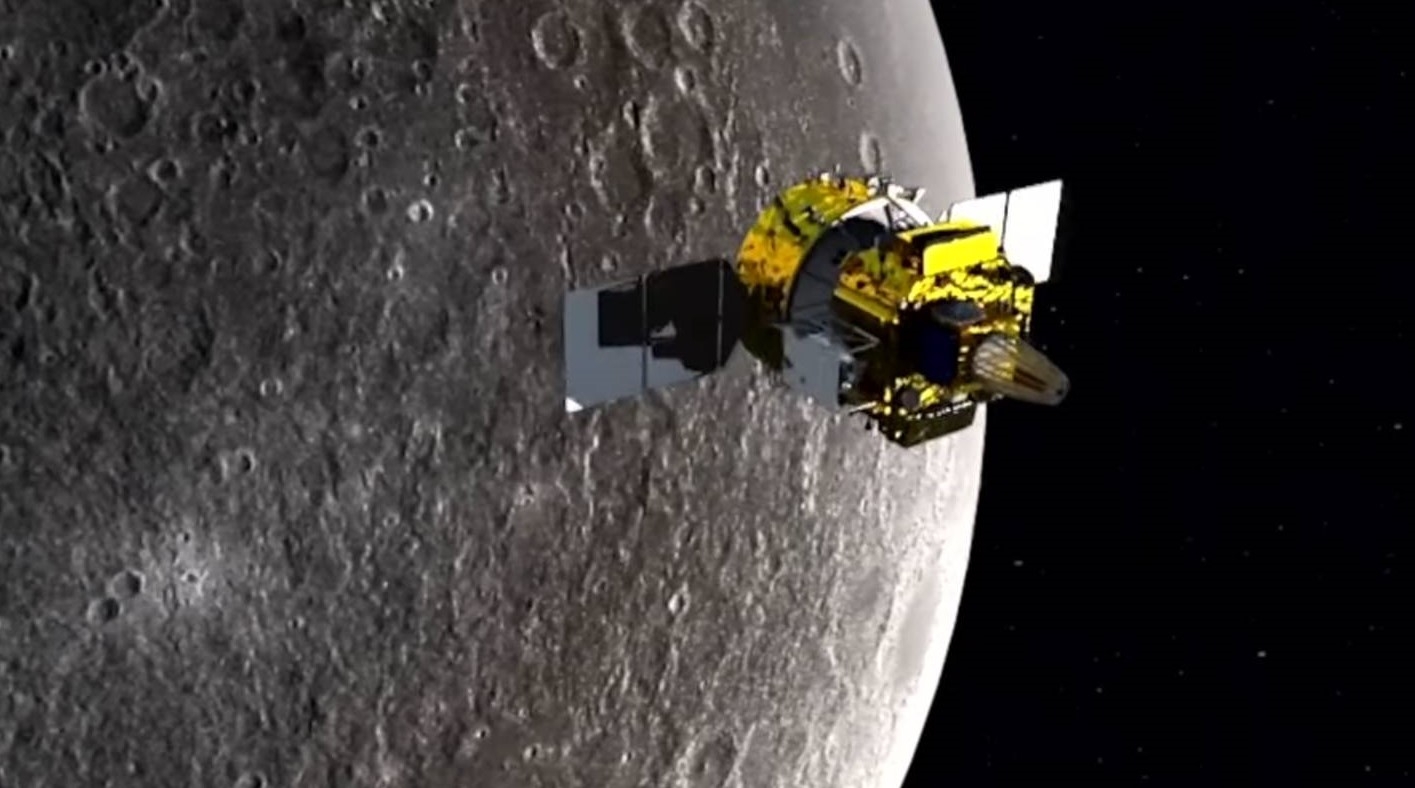
Image credit: CCTV/Inside Outer Space screengrab
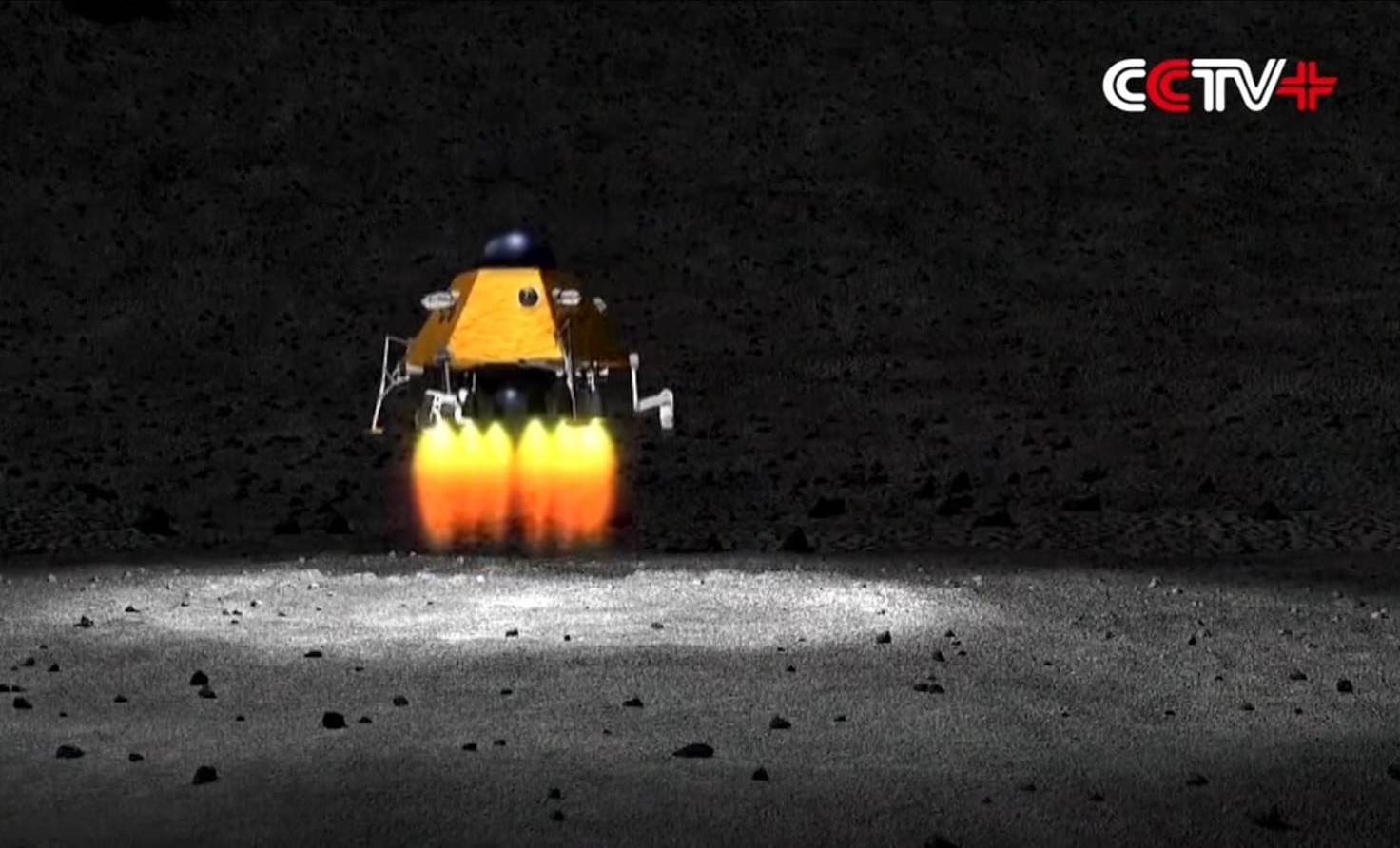
China’s Moon hopper, on the hunt for lunar ice.
Image credit: CCTV/Inside Outer Space screengrab
Meanwhile, researchers at the Harbin Institute of Technology’s space laboratory in northeast China’s Heilongjiang Province are conducting experiments to support the Chang’e-7 mission of hunting for lunar water ice.
Lunar soil simulant
“We’ve just created a lunar soil simulant for the Moon’s polar region. Next, we will use this set of equipment to convert that soil into water ice. The equipment can create a vacuum environment on the Moon, said Zhang Weiwei, associate professor at the School of Mechatronics Engineering at the Harbin Institute of Technology.
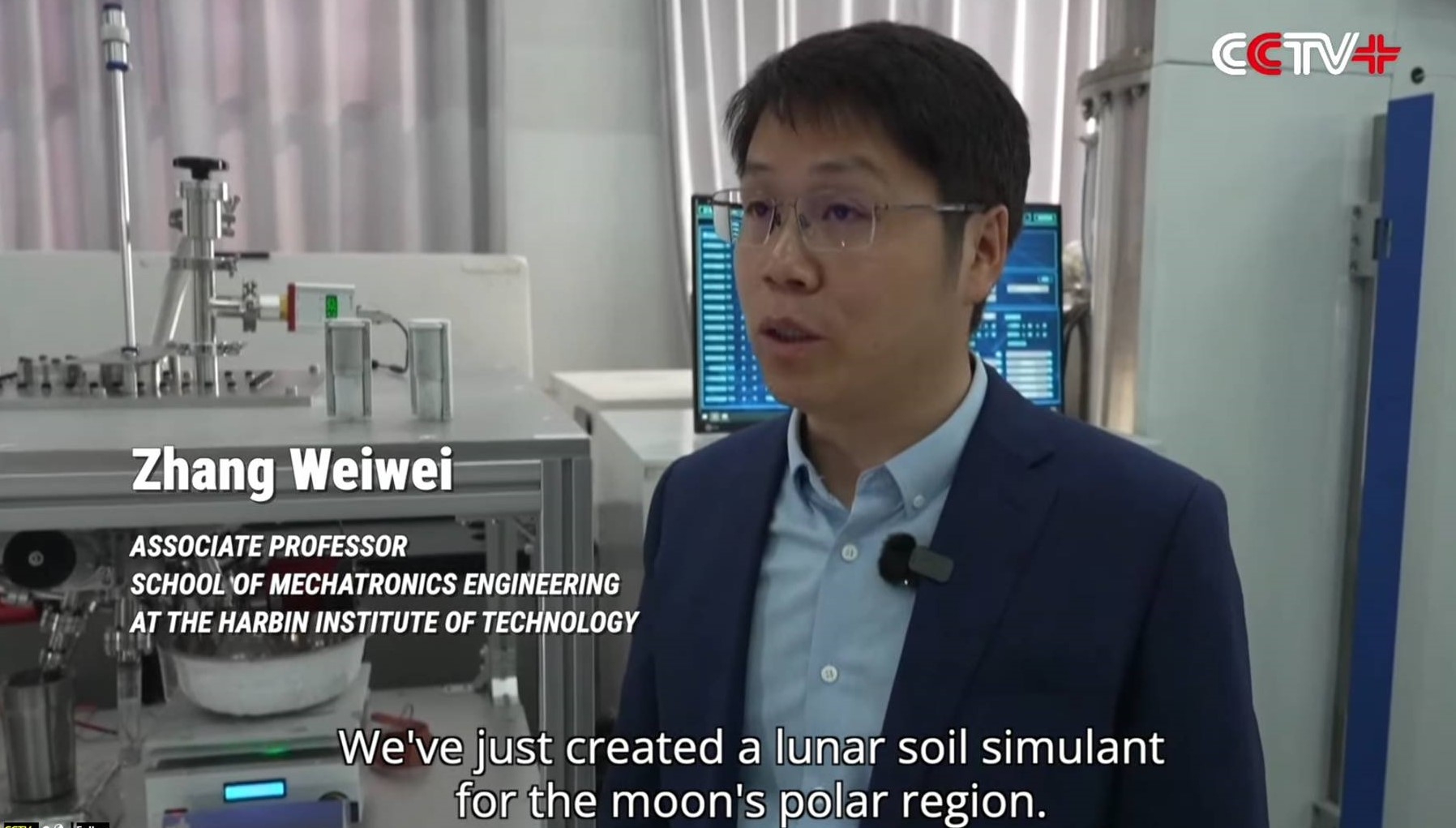
Image credit: CCTV/Inside Outer Space screengrab
Zhang told CCTV that the equipment can cool the lunar mineral material down to minus 240 degrees Celsius. Then, this water molecule excitation device will produce a steady stream of water molecules.
“When the water molecules come into contact with the cold lunar soil, they will adsorb and deposit to form ice. By using special tools and molds, we can create samples of lunar water ice,” said Zhang.
For an informative video on the upcoming Chang’e-7 Moon mission, go to:
https://www.facebook.com/reel/934534785937701
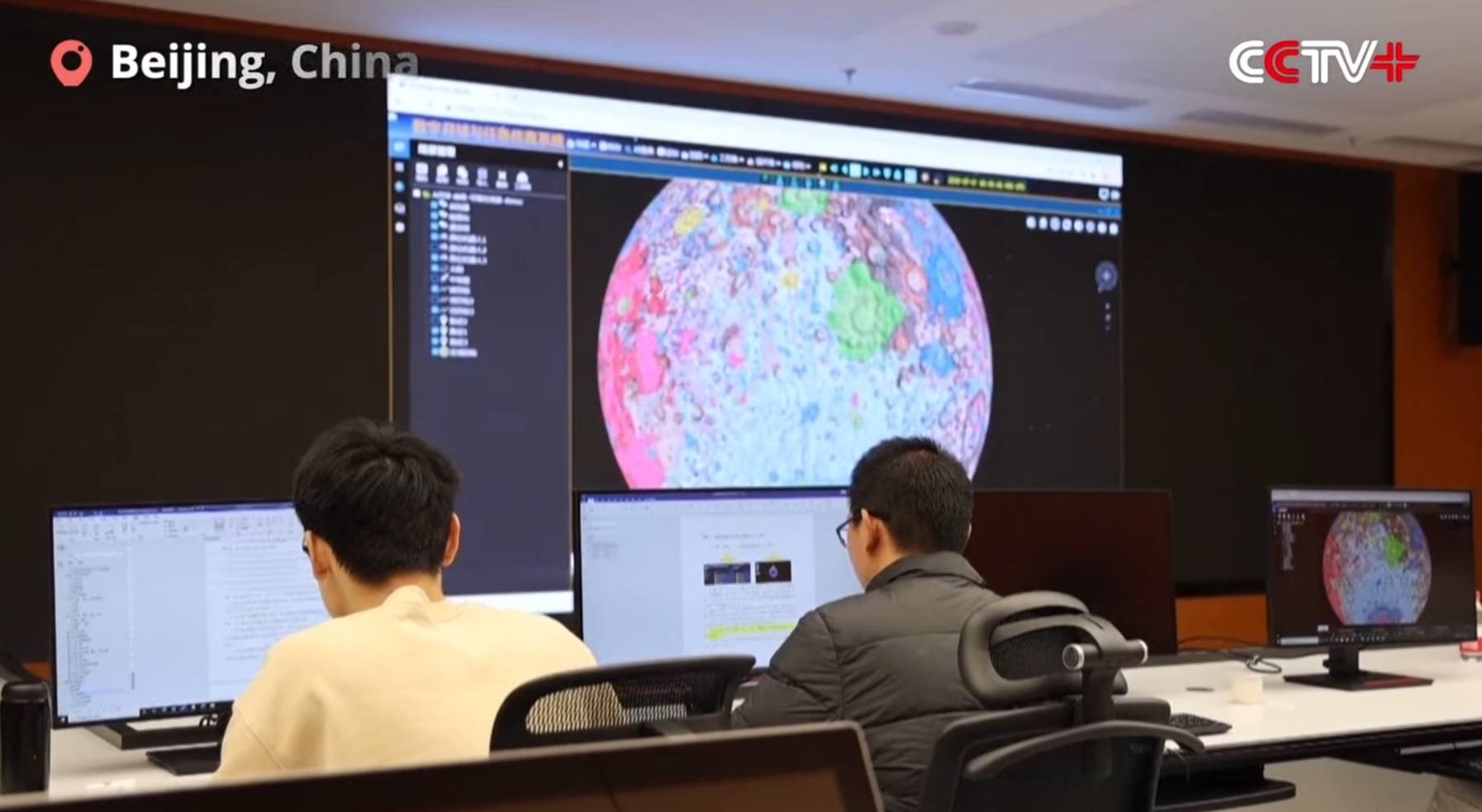
Image credit: CCTV/Inside Outer Space screengrab
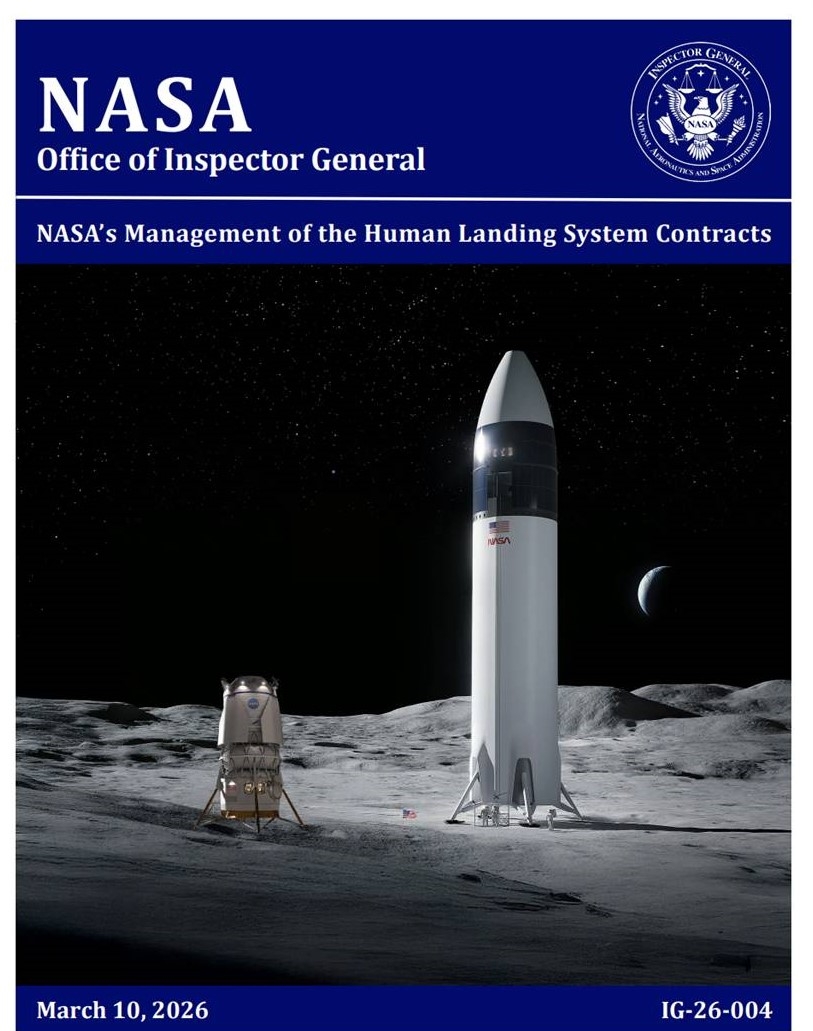
NASA’s firm-fixed-price contract approach relies on selected lunar Human Landing System (HLS ) providers to design, build, and demonstrate their own lander hardware. SpaceX is developing its Starship lander, while Blue Origin is working on its Blue Moon lander.
A NASA Office of Inspector General (OIG) report has taken a hard look at NASA’s firm-fixed-price contract approach with Moon lander providers – SpaceX and Blue Origin — to design, build, and demonstrate lander hardware.
SpaceX is developing its Starship lander, while Blue Origin is working on its Blue Moon lander.
Contract costs
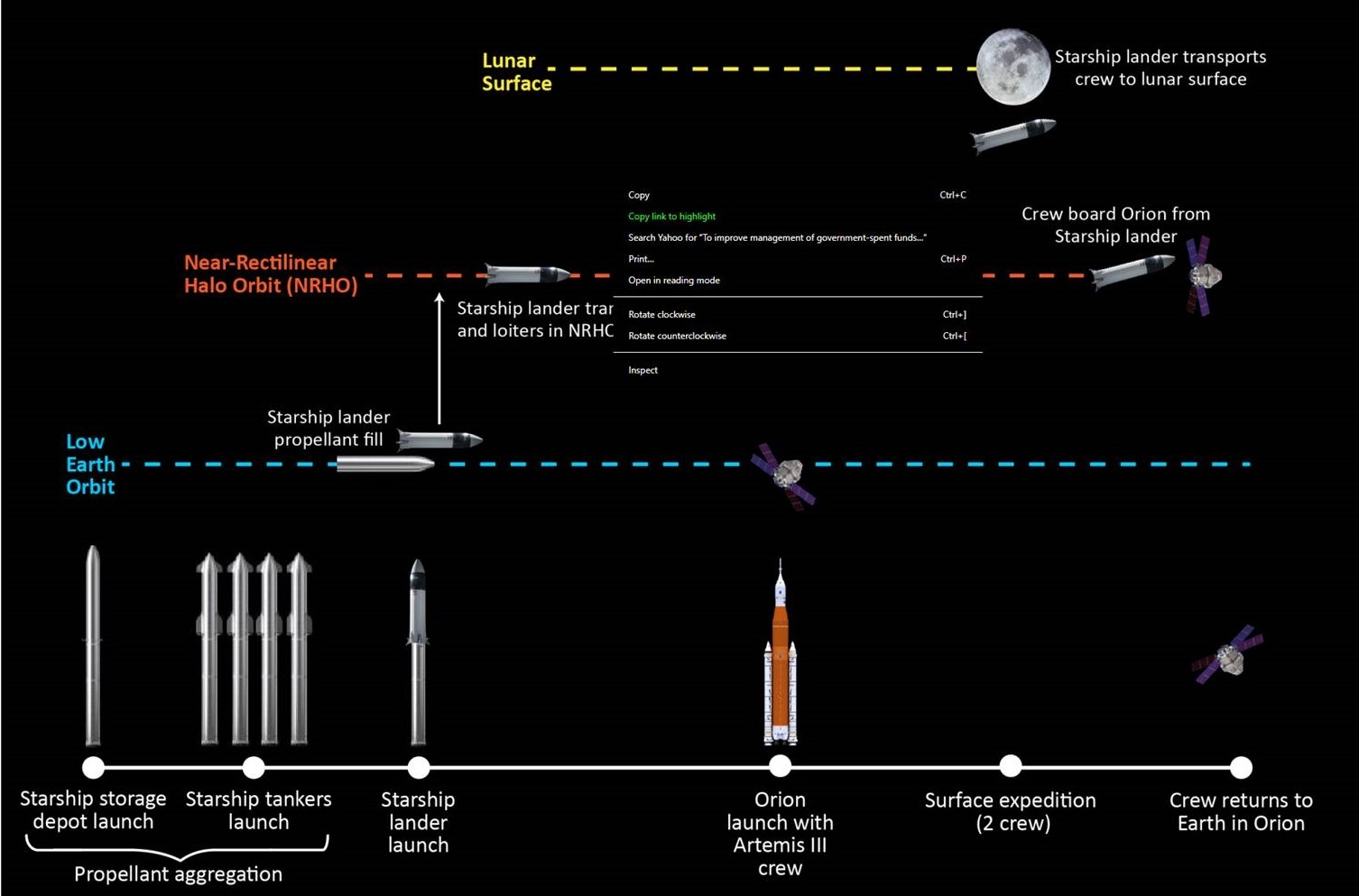
Image credit: NASA OIG representation of SpaceX information
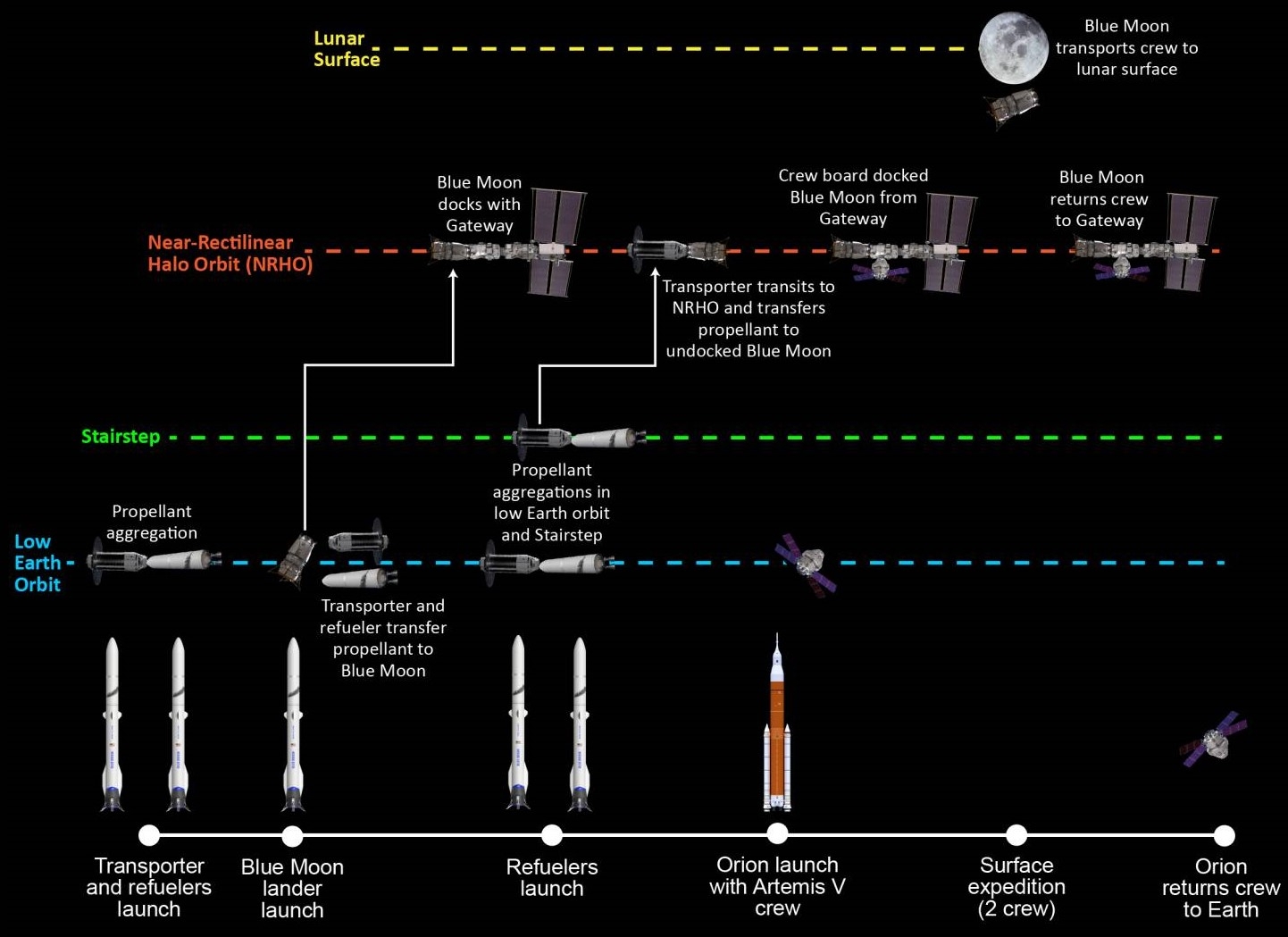
Image credit: NASA OIG representation of Blue Origin information
The OIG has determined that this acquisition approach has effectively controlled contract costs: SpaceX and Blue Origin contracts have only increased by 6 percent and less than 1 percent, respectively.
“However, both providers have faced schedule delays, technical difficulties, and integration challenges that could impact costs and delivery timelines. NASA is currently working with SpaceX and Blue Origin to accelerate lander development to meet a 2028 lunar landing date,” states the report.
Gaps remain
While SpaceX and Blue Origin must deliver the landers on time and according to requirements, NASA is ultimately responsible for ensuring crew safety.
The new report found that NASA is proactively taking measures to mitigate and prevent hazards, “but gaps remain in its testing posture and crew survival analyses. If the landers encounter a catastrophic event, NASA knows it would not have the capability to rescue stranded astronauts from space or the lunar surface.”
To address these issues, the OIG has made five recommendations to improve management of government funds and enhance crew safety and survival during the Artemis missions.
For the full report – “NASA’s Management of the Human Landing System Contracts” — go to:
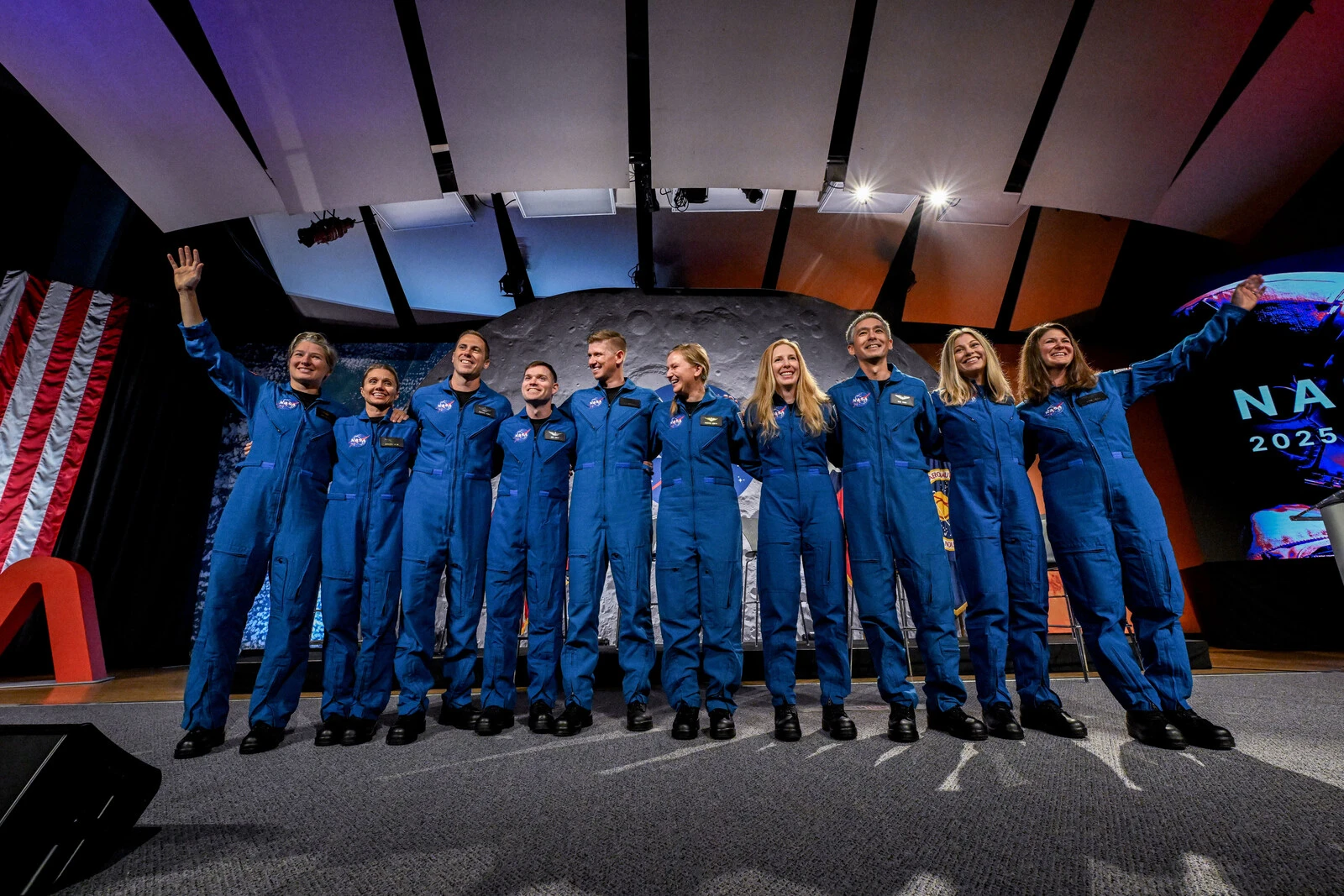
Image credit: NASA/James Blair
The World Economic Forum in Davos-Klosters, Switzerland has posted International Women’s Day: What NASA’s latest astronaut picks tell us about gender equality.
“NASA’s latest Astronaut Candidate Class is 60% female, a stellar celebration of International Women’s Day, marking a giant leap for equality in the space sector.”
For the first time, NASA’s latest Astronaut Candidate Class includes more women than men.

Four astronauts have been selected for NASA’s Artemis II mission: Commander Reid Wiseman, pilot Victor Glover, mission specialist Jeremy Hansen from the Canadian Space Agency, and mission specialist Christina Koch from NASA.
Image credit: NASA
It follows a positive trend for gender equality in space travel, the posting explains, and is something to celebrate on International Women’s Day on March 8.
The contents of the posting are: Mind the space gap; Building a better pipeline; The bigger picture; and What next?
Go to:
https://www.weforum.org/stories/2026/03/iwd-astronauts-gender-equality-nasa-esa/

