Archive for the ‘Space News’ Category
 Author:
  November 18th, 2021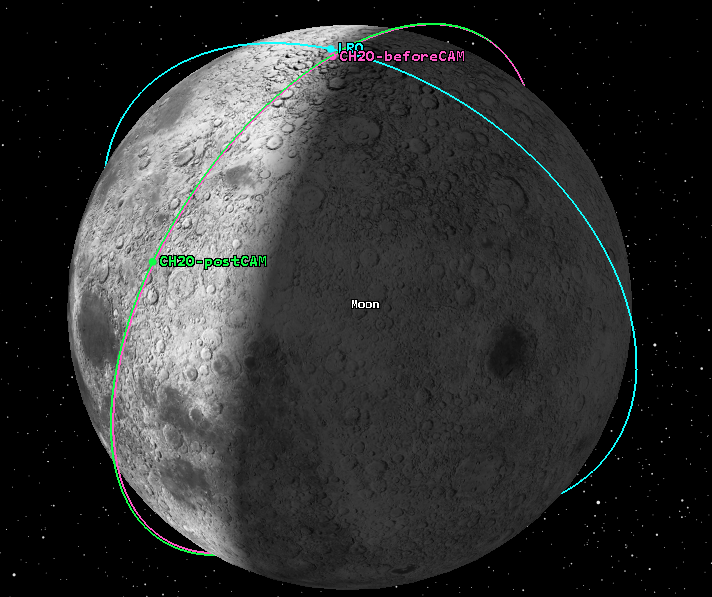
Credit: ISRO
While Earth orbit is increasingly congested with space clutter, a similar Moon-oriented crisis has recently been avoided.
The Indian Space Research Organization (ISRO) has announced that the country’s Chandrayaan-2 Orbiter (CH2O) performed an evasive maneuver to mitigate a critically close approach with NASA’s Lunar Reconnaissance Orbiter.
A “very close conjunction” between the two lunar orbiters was expected to occur on October 20, 2021, high above the lunar north pole.
Too close for comfort
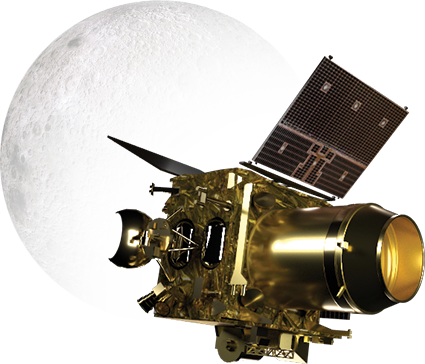
The Indian Space Research Organization’s Chandrayaan-2 Orbiter.
Credit: ISRO
Over a span of a week prior to the conjunction, analyses by both ISRO and JPL/NASA prodded both space agencies to deem the situation as too close for comfort, warranting a collision avoidance maneuver.
It was mutually agreed that India’s lunar orbiter would undergo the collision avoidance maneuver – or CAM for short – a tactic that was executed on October 18th.

Lunar Reconnaissance Orbiter (LRO).
Credit: NASA’s Goddard Space Flight Center Conceptual Image Lab
Later orbit determination of India’s Moon-circling craft reconfirmed that there would be no further close conjunctions with LRO in the near future.
The event highlights the importance of continual assessment of close approach situations for lunar and Mars missions, ISRO stated, “and the fact that effective mitigation of close approach risk involves close coordination and synergy among different space agencies.”
 Posted in

NASA’s Ingenuity Mars Helicopter acquired this black and white image using its navigation camera. This camera is mounted in the helicopter’s fuselage and pointed directly downward to track the ground during flight.
This image was acquired on November 6, 2021 (Sol 254 of the Perseverance rover mission).
Credit: NASA/JPL-Caltech
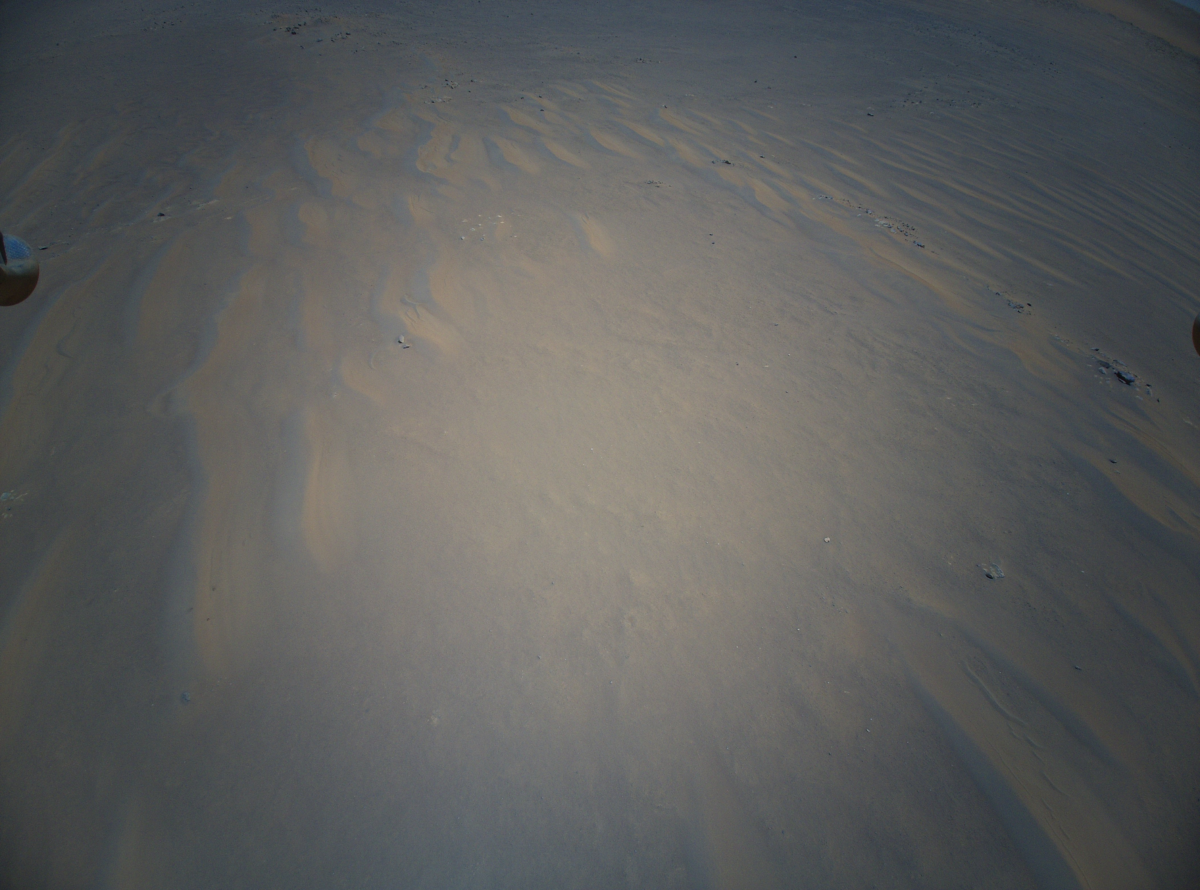
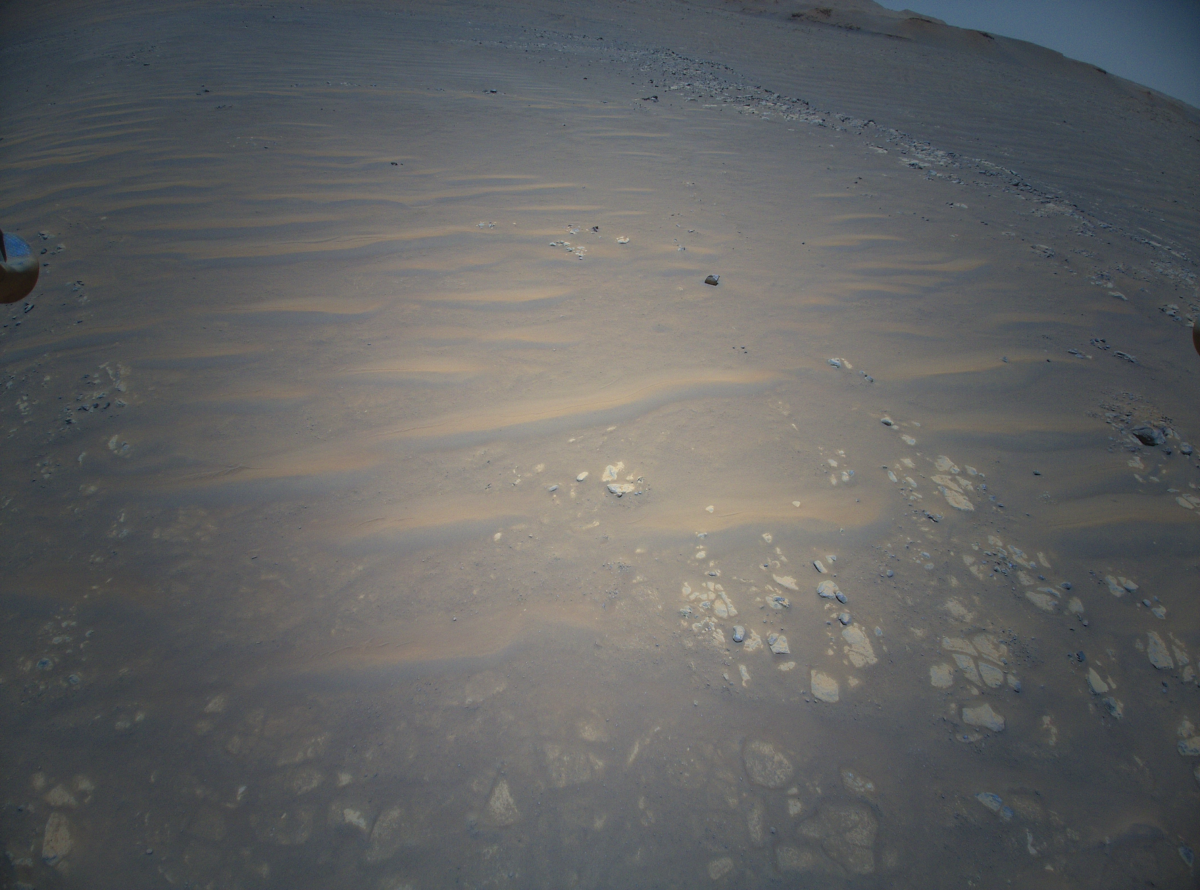
NASA’s Ingenuity Mars Helicopter acquired a set of images using its high-resolution color camera. This camera is mounted in the helicopter’s fuselage and pointed approximately 22 degrees below the horizon.
Imagery was acquired on November 6, 2021 (Sol 254 of the Perseverance rover mission).
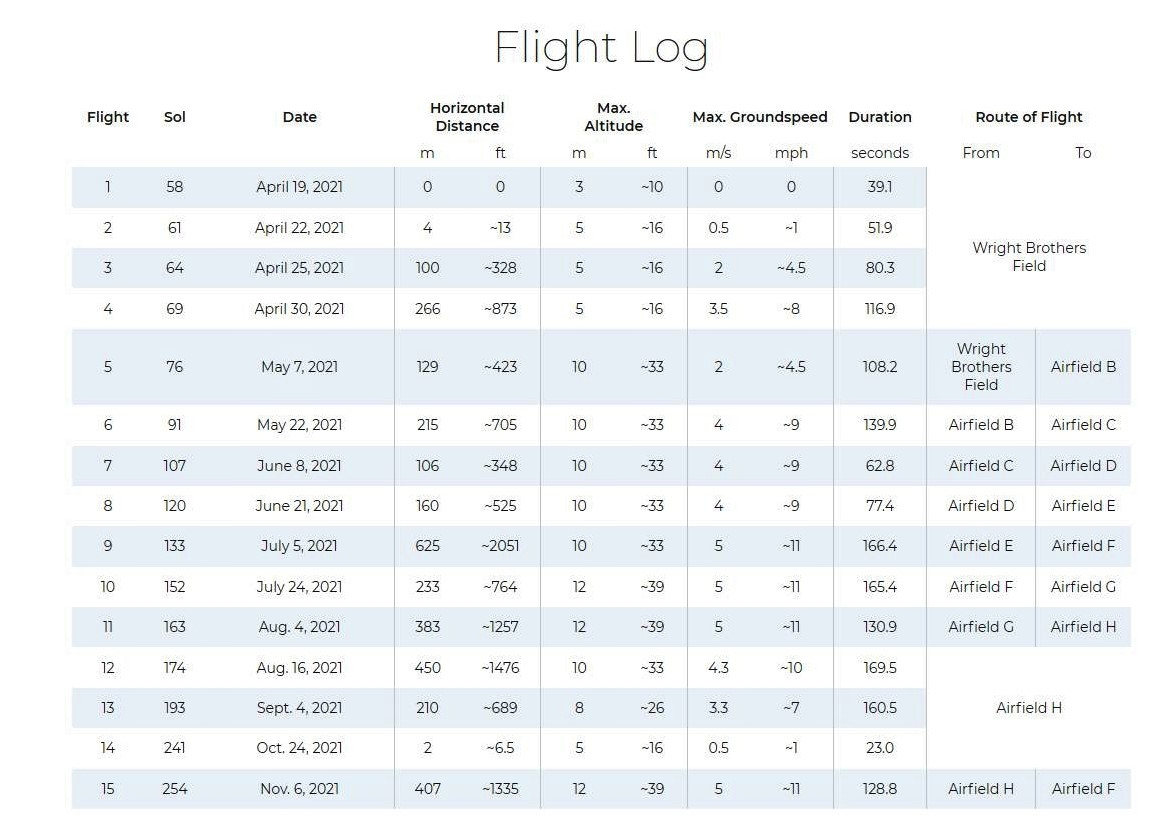
This was the date of Ingenuity’s 15th flight.



Credit: NASA
Russia now admittedly carried out a direct-ascent ASAT (anti-satellite) missile mission that took out its own spacecraft, destroying Cosmos-1408 – a Soviet Electronic and Signals Intelligence (ELINT) Tselina-D satellite launched in 1982 from the Plesetsk cosmodrome.
No longer operational, Tselina-D was designed to determine the precise location, activity, and other details of radio emitters. Data would be stored onboard and downloaded to Soviet ground stations.
The destruction of the satellite was reportedly carried out by an Earth-launched Russian PL-19 Nudol missile.
This test, as best that can now be appraised, produced over 1,500 pieces of “trackable” orbital garbage amongst hundreds of thousands of pieces of smaller bits and pieces of orbital refuge.
But detectable and trackable are not the same thing. That Russian spy satellite has been reduced to a storm cloud of orbital debris.
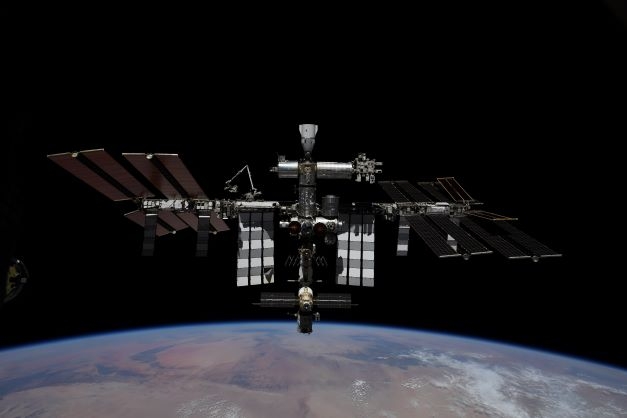
Duck and cover on the International Space Station.
Credit: Roscosmos
Shelter from the storm
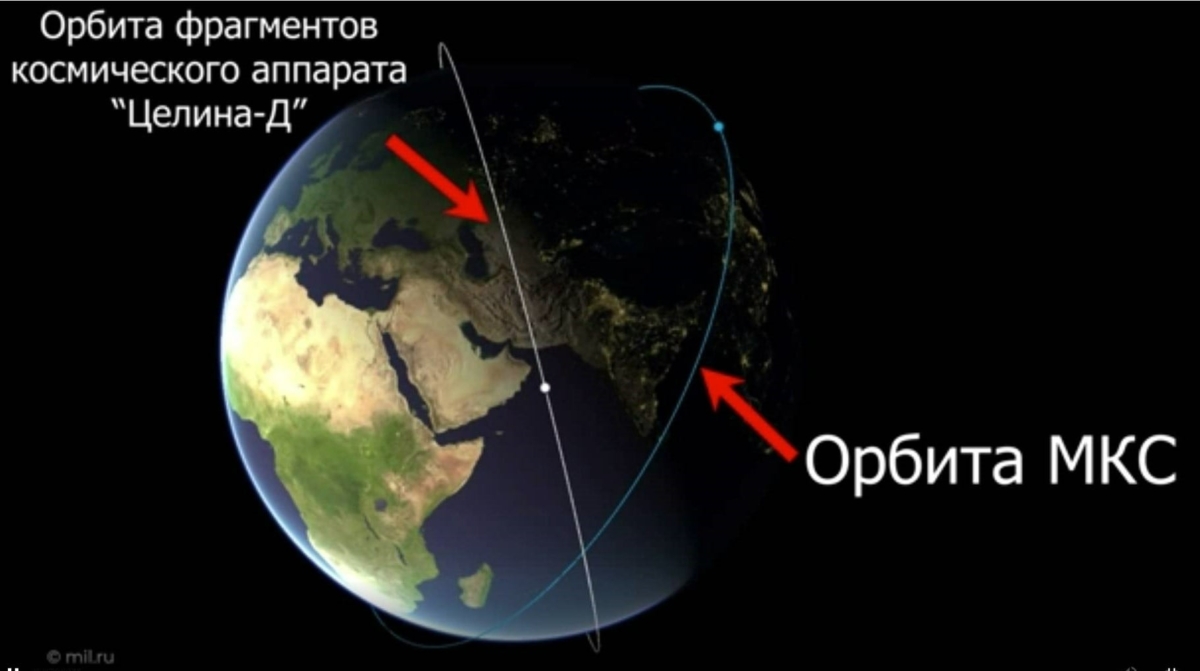
From NASA, word is that the International Space Station (ISS) is passing through or near the debris cloud every 90 minutes, and the need to shelter by the station crew was only during the second and third passes of the event, based on a risk assessment made by the debris office and ballistics specialists at NASA’s Johnson Space Center in Houston.
Meanwhile, Russia’s Ministry of Defense was quick to point out that the International Space Station was not in danger, with Defense Minister Sergei Shoigu confirming the successful completion of tests of the anti-satellite system by Russian troops.
Credit: Russia’s Ministry of Defense
“It struck the old satellite with jewelry. The fragments formed do not pose any threat to space activity,” he said during a working trip to the Voronezh region, as reported by Russia’s RIA Novosti news service.
But suggestions that all that ASAT test leftovers pass at a time when the station is not there are also unlikely to be true as the event evolves, according to experts.
Moreover, as the jumble of debris decays in Earth orbit, they will pass both the International Space Station and China’s in-construction space station, potentially putting both of those orbiting assets at risk. The number and size of those objects will decide how much peril those facilities face.
Needless to say – or is it? – that there are loads of other spacecraft that could be impacted by the detritus of the Russian ASAT test.
Tipping point?
Of course, many in the space community are justifiably upset; All nations have a responsibility to prevent the “purposeful creation” of space debris from ASATs and to foster a safe, sustainable space environment.
From Antony J. Blinken, U.S. Secretary of State: “The events of November 15, 2021, clearly demonstrate that Russia, despite its claims of opposing the weaponization of outer space, is willing to jeopardize the long-term sustainability of outer space and imperil the exploration and use of outer space by all nations through its reckless and irresponsible behavior.

Signing of the Outer Space Treaty. Soviet Ambassador Anatoly F. Dobrynin,
UK Ambassador Sir Patrick Dean, US Ambassador Arthur J. Goldberg, US President Lyndon B. Johnson and others observe as US Secretary of State Dean Rusk signs the Outer Space Treaty on January 27, 1967 in Washington, DC
Source: UNOOSA.
Several space policy wonks are dragging out Article IX of the UN Outer Space Treaty that if a State Party to the Treaty which has reason to believe that an activity or experiment planned by another State Party in outer space, “would cause potentially harmful interference with activities in the peaceful exploration and use of outer space, including the moon and other celestial bodies, may request consultation concerning the activity or experiment.”
While there are specialists that don’t see the Russian ASAT consequences as a tipping point scenario, it is clear this incident is spurring quite the dialogue. However, at the end of the day, is it too little talk or perhaps too much talking and no action? To what extent have other countries — including the United States — aided and abetted the actions of Russia in seeking ASAT know-how?
And so the world spins, surrounded by increasing amounts of orbiting riffraff.
Oh wait, my Starlink is on the blink.
What’s your view?
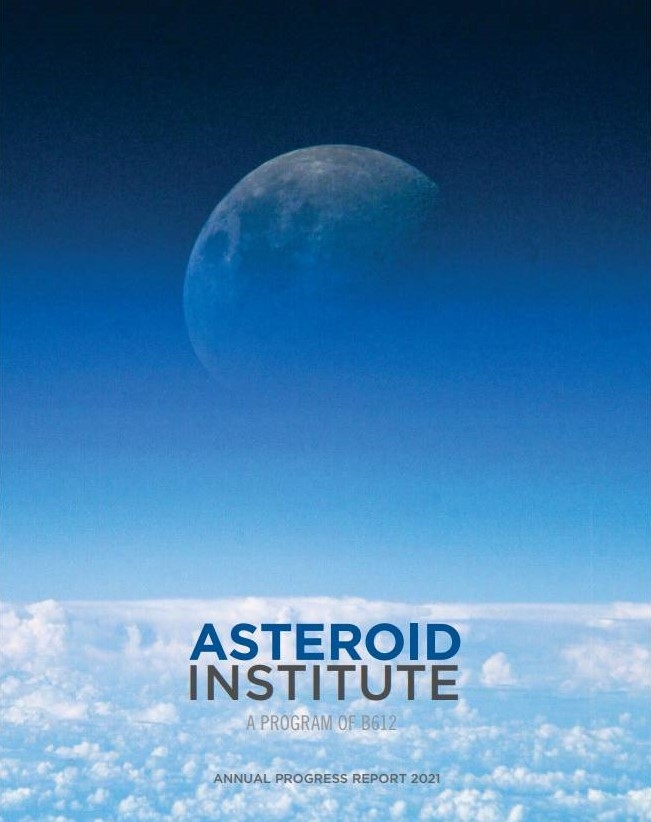
The B612 Foundation and its Asteroid Institute are making progress with their mission to increase the rate of asteroid discovery.
In a just-issued 2021 annual progress report, Danica Remy, President of the B612 Foundation, underscores groundbreaking asteroid discovery capabilities.
“The data is showing us that tools we are building,” Remy explains, “may position us as one of the foremost asteroid discovery institutions in the world.”
Priority project
Specifically, a priority project is called the Asteroid Discovery Analysis and Mapping (ADAM) platform. Researchers have discovered new asteroids that were unnoticed in a previously examined astronomical datasets, made feasible by use of cloud-based computational capability far in excess of anything previously brought to bear on this important problem.
Another effort described in the report is use of a new discovery algorithm named Tracklet-less Heliocentric Orbit Recovery, or THOR for short.

The Vera C. Rubin Observatory, previously referred to as the Large Synoptic Survey Telescope (LSST).
Credit: The LSST Corporation (LSSTC)
Principal goals
“ADAM is essentially an astrodynamics computational engine, with a backend system designed for ease of use and development,” points out former astronaut, Ed Lu, Executive Director of the Asteroid Institute.
One of our principal goals for ADAM is to be ready to analyze and interpret the flood of new asteroid discoveries when the Vera Rubin Observatory commences operations in two years,” Lu explains. “We expect that the Vera Rubin Observatory will find several asteroids
each week that have the potential to hit Earth in the coming decades. ADAM will provide an open and transparent means to analyze these asteroid threat cases, which will be critical to the political decision-making process,” he explains in the newly-issued progress report.

Risk shifting and sharing
“Deflecting an asteroid impact (likely sooner than we thought given the capabilities we’re developing through THOR and ADAM) will be a planetary decision,” explains Rusty Schweickart, Apollo 9 astronaut and a retired member of the B612 Board of Directors.
“Because of risk shifting and sharing, it will be a very contentious deliberation. With international politicians discussing and debating the issues, an understanding from the general public will be critical if rational decisions are to be made. This is something we’ve seen fail during the COVID pandemic,” Schweickart says. “When science and data are perceived as political, rational decisions are impossible. This is not something the UN alone can handle.”
Launched in 2017, the Asteroid Institute is a program of B612 and is designed to be the international center of excellence for scientific collaboration on the discovery and deflection of asteroids as well as an incubator for new technologies.
The B612 provides a non-governmental voice on the risks, options, and implications of asteroid data while advancing the technical means by which that data is acquired.
To read the informative 2021 annual progress report, go to:
https://b612foundation.org/asteroid-institute-2021-annual-progress-report/
The B612 Foundation through its Asteroid Institute is making progress with their mission to increase the rate of asteroid discovery.
In a just issued 2021 annual progress report, Danica Remy, President, B612 Foundation, underscores groundbreaking asteroid discovery capabilities.
“The data is showing us that tools we are building,” Remy explains, “may position us as one of the foremost asteroid discovery institutions in the world.”
Priority project
Specifically, a priority project is called the Asteroid Discovery Analysis and Mapping (ADAM) platform. Researchers have discovered new asteroids that were unnoticed in a previously examined astronomical
datasets, made feasible by use of cloud-based computational capability far in excess of anything previously brought to bear on this important problem.
Another effort described in the report is use of a new discovery algorithm named Tracklet-less Heliocentric Orbit Recovery, or THOR for short.
Principal goals
“ADAM is essentially an astrodynamics computational engine, with a backend system designed for ease of use and development,” points out former astronaut, Ed Lu, Executive Director of the Asteroid Institute.
One of our principal goals for ADAM is to be ready to analyze and interpret the flood of new asteroid discoveries when the Vera Rubin Observatory commences operations in two years,” Lu explains. “We expect that the Vera Rubin Observatory will find several asteroids
each week that have the potential to hit Earth in the coming decades. ADAM will provide an open and transparent means to analyze these asteroid threat cases, which will be critical to the political decision-making process,” he points out in the newly-issued progress report.
Risk shifting and sharing
“Deflecting an asteroid impact (likely sooner than we thought given the capabilities we’re developing through THOR and ADAM) will be a planetary decision,” explains Rusty Schweickart, Apollo 9 astronaut and a retired member of the B612 Board of Directors.
“Because of risk shifting and sharing, it will be a very contentious deliberation. With international politicians discussing and debating the issues, an understanding from the general public will be critical if rational decisions are to be made. This is something we’ve seen fail during the COVID pandemic,” Schweickart says. “When science and data are perceived as political, rational decisions are impossible. This is not something the UN alone can handle.”
Launched in 2017, the Asteroid Institute is a program of B612 and is designed to be the international center of excellence for scientific collaboration on the discovery and deflection of asteroids as well as an incubator for new technologies.
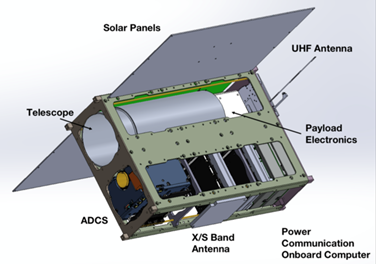
Courtesy: Breakthrough Initiatives
A proposed telescope project to potentially spot a life-sustaining planet around Earth’s nearest neighbor, Alpha Centauri, was announced today.
The project is called TOLIMAN, the Arabic-derived name for Alpha Centauri from antiquity. Work on the project began in April of this year.
TOLIMAN stands for Telescope for Orbit Locus Interferometric Monitoring of our Astronomical Neighborhood – eye-catching wordsmithing and a mouthful.
Spearheading the effort are scientists from the University of Sydney, in partnership with the Breakthrough Initiatives in California, Saber Astronautics in Australia and NASA’s Jet Propulsion Laboratory.
The project has received support from the Breakthrough Initiatives, a set of programs looking for extraterrestrial life. The Initiatives were founded by Israeli science and technology investor and philanthropist Yuri Milner.
Also picking up the tab is Saber Astronautics. It received funding from the Australian Government’s International Space Investment: Expand Capability grant, which will support the TOLIMAN mission.

Artist’s conception of Proxima Centauri b as a rocky-like exoplanet, with Proxima Centauri and the Alpha Centauri binary system in the background. The actual appearance of the planet is unknown.
Credit: ESO
Extraordinarily interesting
“Our nearest stellar neighbors – the Alpha Centauri and Proxima Centauri systems – are turning out to be extraordinarily interesting,” said Pete Worden, executive director of Breakthrough Initiatives.
Alpha Centauri is a triple star that has two stars very like our Sun. Either or both may host temperate planets, while the third star – the red dwarf Proxima Centauri, is already believed to have one planet in a ‘Goldilocks orbit’ discovered 2016. That’s a place where temperatures could allow for liquid surface water on rocky worlds.

Courtesy: Breakthrough Initiatives
Custom-designed
TOLIMAN is a custom-designed space telescope able to make extremely fine measurements of the position of the star in the sky. Indeed, if there is a planet orbiting the star, it will tug on the star revealing a tiny, but measurable, wobble.
The plan is for this agile low-cost mission churning out results by about the middle of the decade, said project leader Peter Tuthill from the Sydney Institute for Astronomy at the University of Sydney.
Central to the mission is the deployment of a new type of telescope that uses a diffractive pupil lens. This mirror spreads starlight captured from nearby stars into a complex flower-like pattern that, paradoxically, makes it easier to detect perturbed star movements that are the tell-tale signs of orbiting planets.

Credit: Northrop Grumman/Inside Outer Space screengrab
A next-generation Lunar Terrain Vehicle design team includes the Michelin tire company to offer its expertise in high-tech materials to fabricate a high-tech “airless tire” for future Moon explorers.
Northrop Grumman Corporation is teaming up with AVL, Intuitive Machines, Lunar Outpost, and Michelin to create a Lunar Terrain Vehicle (LTV) to transport NASA’s Artemis crew members around the Moon’s surface.
Team members
AVL is engaged in development, simulation, and testing of vehicle systems, bringing to the team its know-how in the advancement of battery electric vehicles, autonomous driving, and propulsion solutions for lunar surface mobility.

Credit: Northrop Grumman/Inside Outer Space screengrab
Intuitive Machines will build upon the NASA Commercial Lunar Payload Services (CLPS) initiative to meet NASA and commercial demand for larger lunar surface payload delivery. Their Nova-D spacecraft utilizes four liquid methane/oxygen engines from the mature Nova-C program for precision landing on the Moon.
Lunar Outpost will leverage its expertise in rapid innovation, dust mitigation and thermal technologies from the development of its Mobile Autonomous Prospecting Platform (MAPP) work.

Credit: Northrop Grumman
Apollo knowledge
As prime, Northrop Grumman will lead systems integration, tapping its spacecraft design prowess to include cargo storage, energy management, avionics, navigation, sensors, controls, mission planning, operations and training.
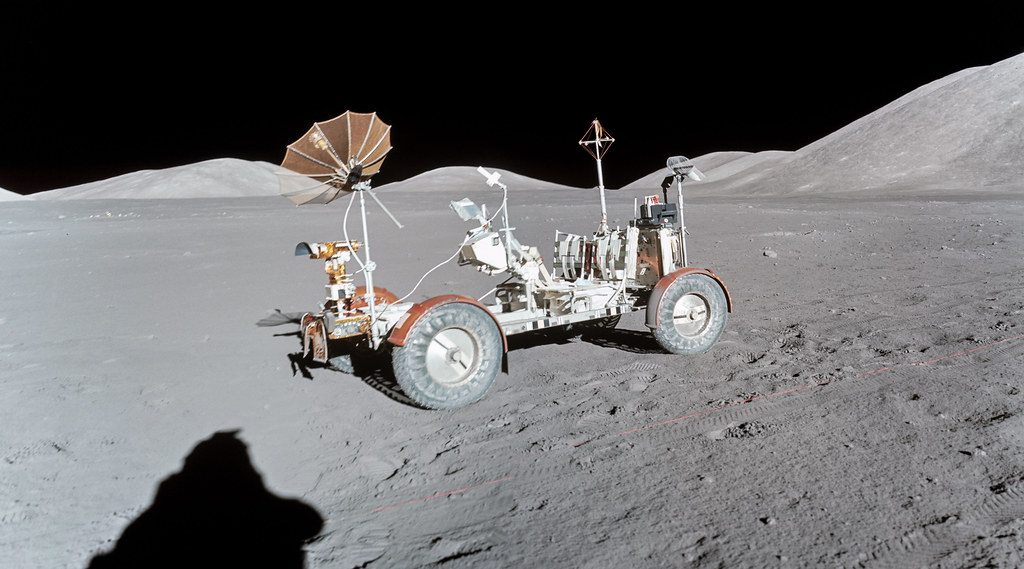
Apollo 17 Lunar Rover.
Credit: NASA
For its LTV work, Northrop Grumman has engaged Apollo 17 astronaut Harrison (Jack) Schmitt and Apollo 16’s Charles Duke, to incorporate their hands-on experiences of wheeling about on the Moon in the 1970s.
Go to this informative video:
https://www.youtube.com/watch?v=5Jak6yv2Hug
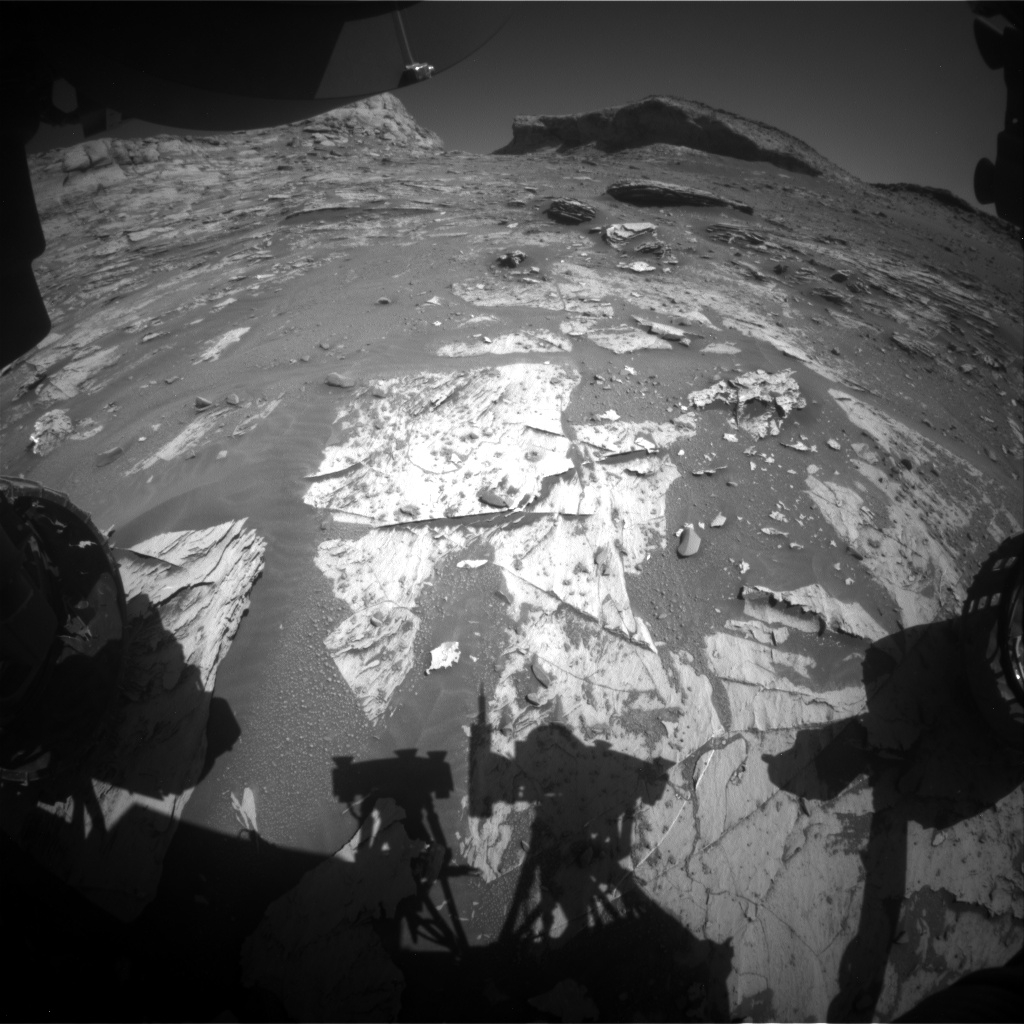
Curiosity Front Hazard Avoidance Camera Left B photo taken on Sol 3298, November 15, 2021.
Credit: NASA/JPL-Caltech
NASA’s Curiosity Mars rover at Gale Crater is now performing Sol 3299 duties.
The robot is in the midst of the Zechstein drilling campaign, reports Catherine O’Connell-Cooper, a planetary geologist at the University of New Brunswick; Fredericton, New Brunswick, Canada.
The Sample Analysis at Mars (SAM) team is eagerly waiting for the results of their weekend evolved gas analysis (EGA) analysis on the newly drilled sample.
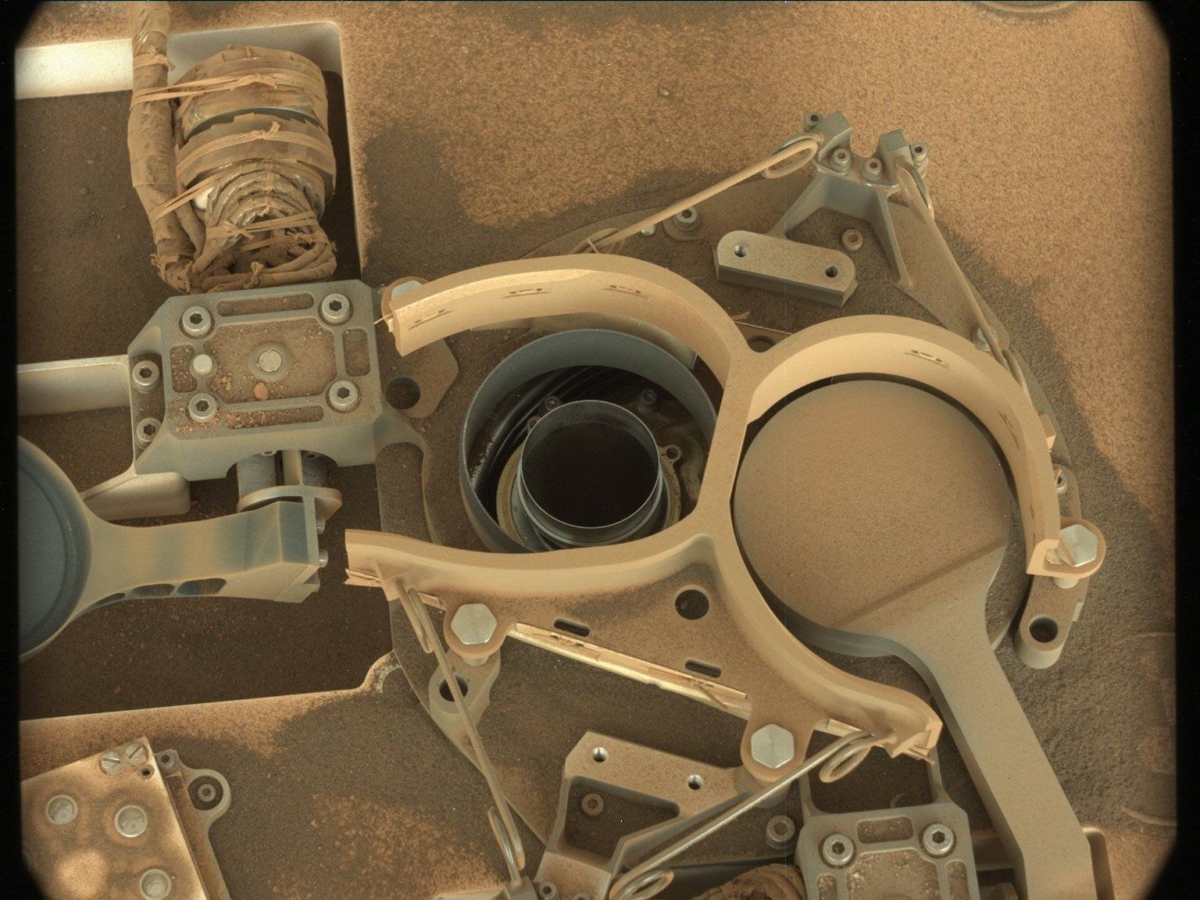
Curiosity Mast Camera Left image taken on Sol 3297, November 14, 2021.
Credit: NASA/JPL-Caltech/MSSS
Depending on the results, O’Connell-Cooper adds that scientists might move onto characterizing the dumped sample with the rover’s contact science instruments and Chemistry and Camera (ChemCam) in the next plan.
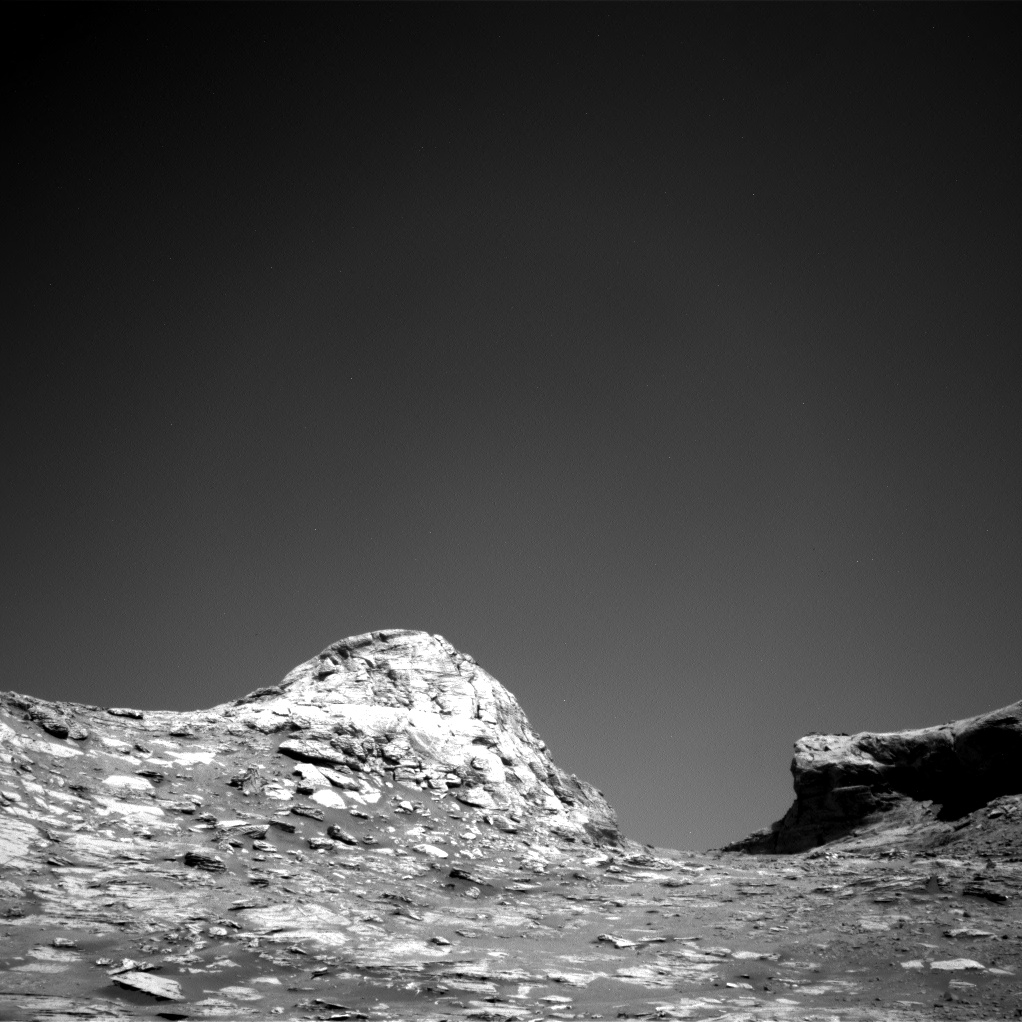
Curiosity Right B Navigation Camera image acquired on Sol 3298, November 15, 2021.
Credit: NASA/JPL-Caltech
Telling of the tailings
“Anticipating the return to contact science within the next few days, Mastcam will take an image of the tailings around the Zechstein drill hole,” O’Connell-Cooper notes.
This change detection image will be used to determine the shape of the tailings, to see if they have been moved around by wind or by the ChemCam Laser Induced Breakdown Spectroscopy (LIBS) measurement of the drill hole wall on sol 3292.
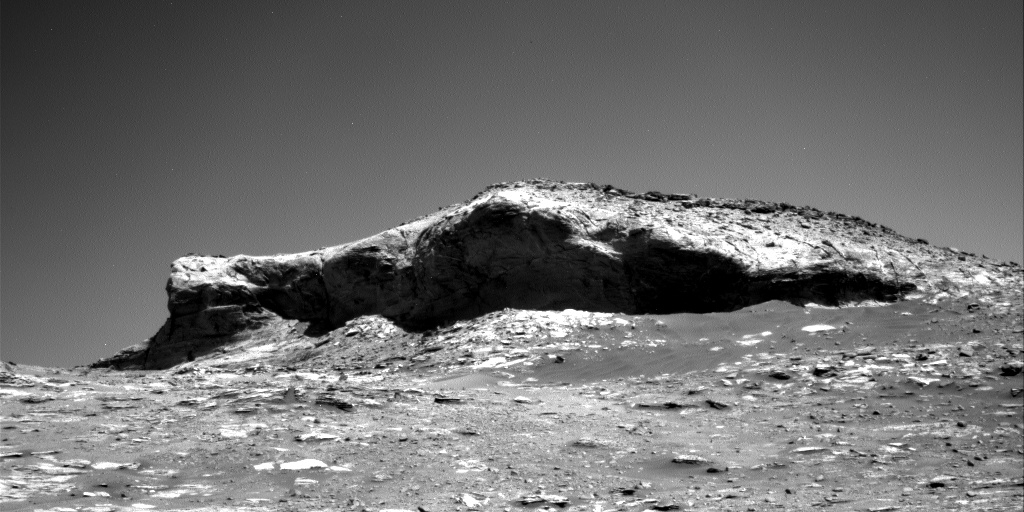
Curiosity Right B Navigation Camera image acquired on Sol 3298, November 15, 2021.
Credit: NASA/JPL-Caltech
The Alpha Particle X-Ray Spectrometer (APXS) and the other contact science teams “are looking forward to getting to work on these samples,” O’Connell-Cooper reports.
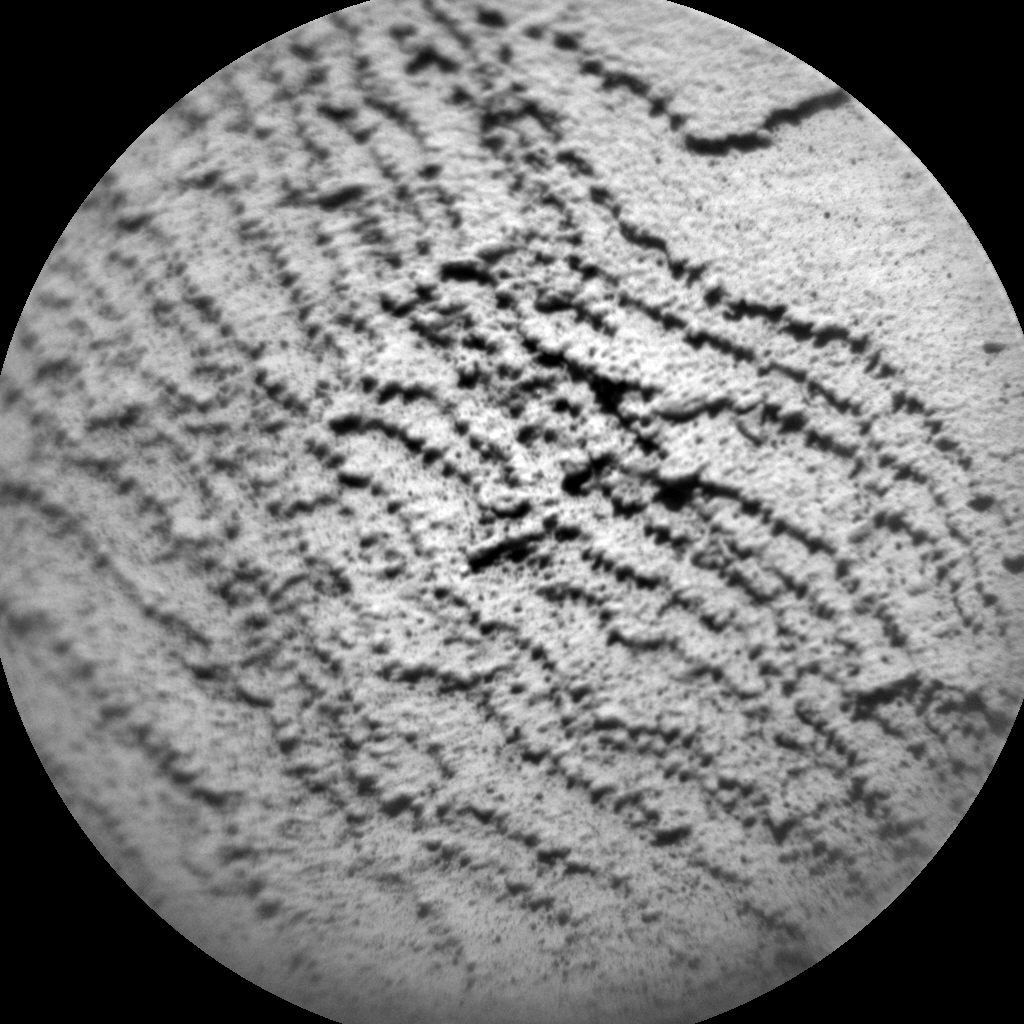
Curiosity Chemistry & Camera Remote Micro-Imager (RMI) photo taken on Sol 3298, November 15, 2021.
Credit: NASA/JPL-Caltech/LANL
Local bedrock
In the meantime, Mars researchers continue to characterize the local bedrock with ChemCam and Mastcam.
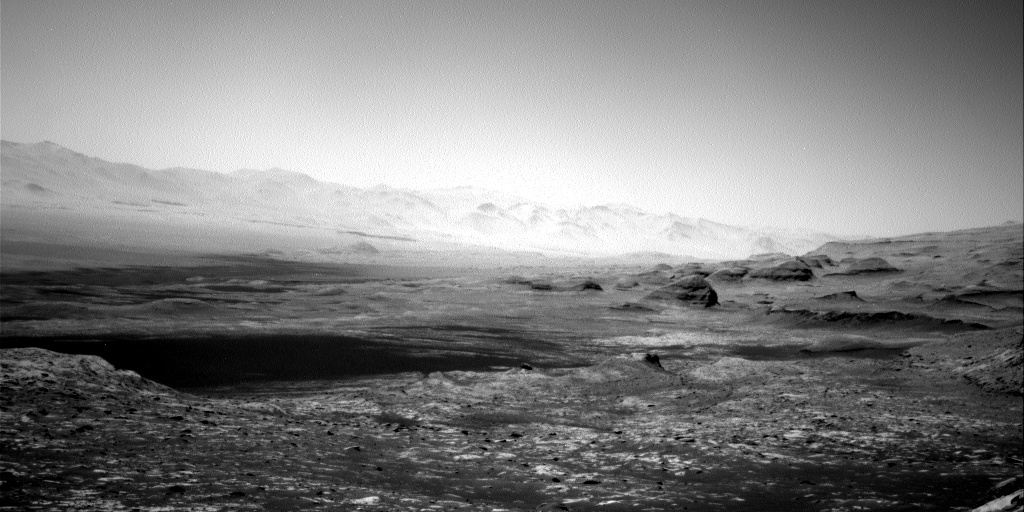
Curiosity Right B Navigation Camera image acquired on Sol 3298, November 15, 2021.
Credit: NASA/JPL-Caltech
“ChemCam is using the LIBS instrument to analyze two targets. One (“Aberlemmo”) is on some obviously layered bedrock, the second (”Caledonite”) is on a nearby fragment of bedrock but layering is less prominent. ChemCam will conduct a paired experiment, so that we can potentially determine if the layering has an associated compositional factor,” O’Connell-Cooper explains.
Curiosity’s Mastcam will image these targets and a third layered target (“Balmashanna”) in the same part of the workspace.
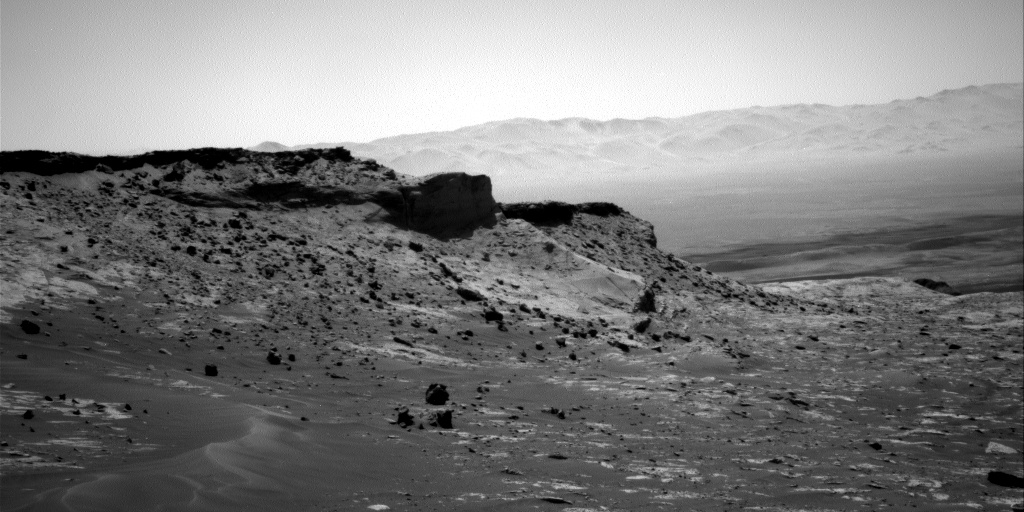
Curiosity Right B Navigation Camera image acquired on Sol 3298, November 15, 2021.
Credit: NASA/JPL-Caltech
Underlying rocks
“Finally, the hardworking ChemCam and Mastcam instruments will do some long distance imaging of the overlying Greenheugh pediment,” O’Connell-Cooper says, “looking at the contact between the pediment and underlying rocks.”
O’Connell-Cooper concludes her report noting that the environmental theme group continues their campaign to document environmental conditions in Gale crater, with tau observations (measuring dust in the atmosphere), cloud surveys and dust devil movies, “hoping to catch one in action!”
Lunar Reconnaissance Orbiter (LRO).
Credit: NASA’s Goddard Space Flight Center Conceptual Image Lab
The existence of carbon dioxide (CO2) cold traps on the Moon has been confirmed. That finding offers a potential resource for future exploration of the lunar surface.
However, large CO2 cold traps are rare and the geographic concentration of the resource will have policy implications.
As pointed out in new research, carbon-bearing species would be essential for sustained robotic or human presence on the Moon, for use in rocket fuel and biological materials.
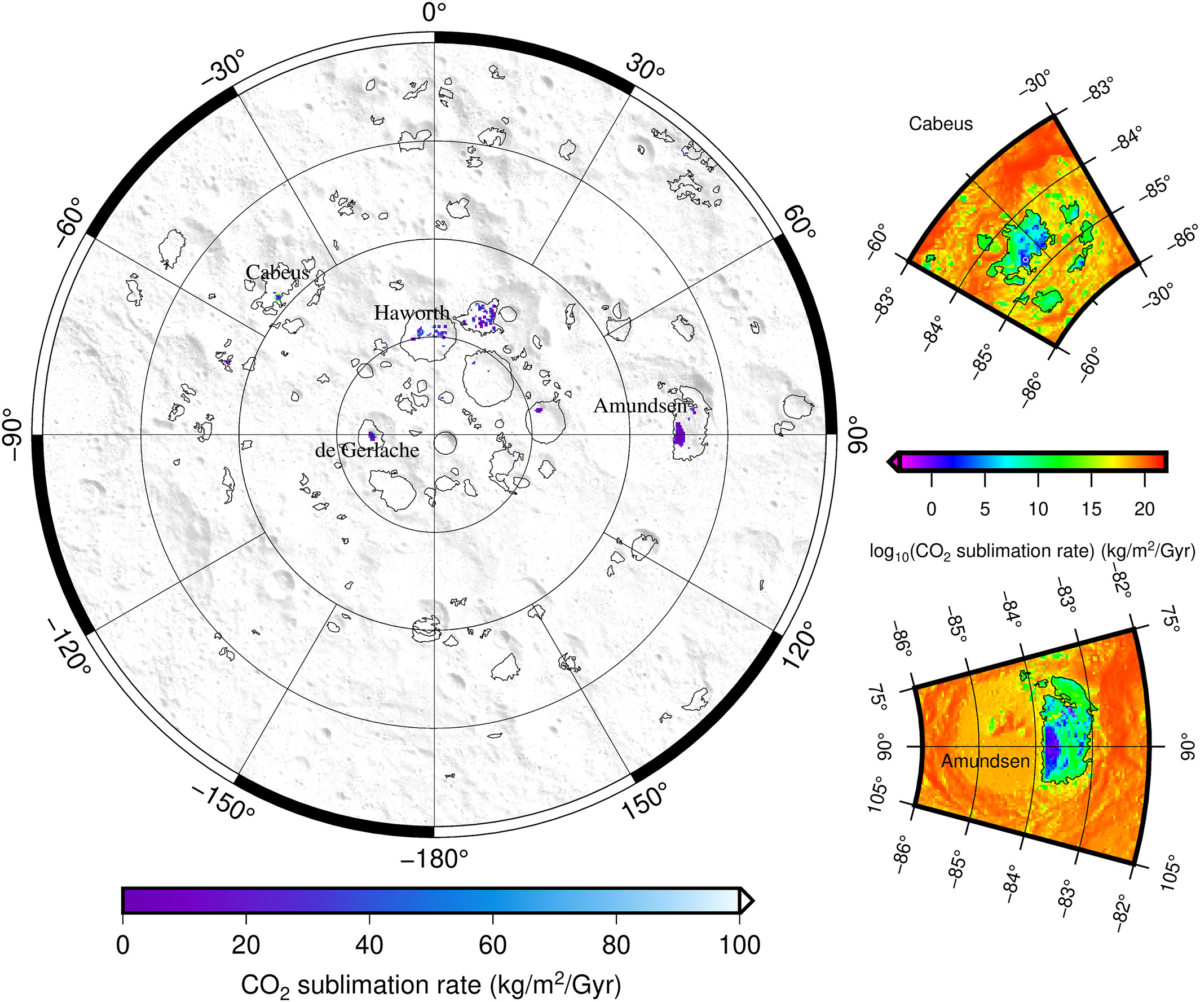
South polar region of the Moon. Areas that act as CO2 cold traps are colored. Black contours show the boundaries of H2O cold traps. The background map is shaded relief.
Credit: Norbert Schorghofer
Improved analysis
Various volatiles can be cold-trapped in permanently shadowed craters near the lunar poles. The existence of carbon dioxide cold traps has previously been surmised, but the required temperatures are near the lowest surface temperatures that have been reliably measured.
The new research makes use of extensive and improved analysis of 11 years of orbital surface temperature measurements that establishes the existence of carbon dioxide cold traps on the Moon, which potentially host high concentrations of solid carbon dioxide.
“Carbon Dioxide Cold Traps on the Moon” is a new paper appearing in Geophysical Research Letters, led by Tucson, Arizona-based Planetary Science Institute (PSI) senior scientist Norbert Schorghofer.
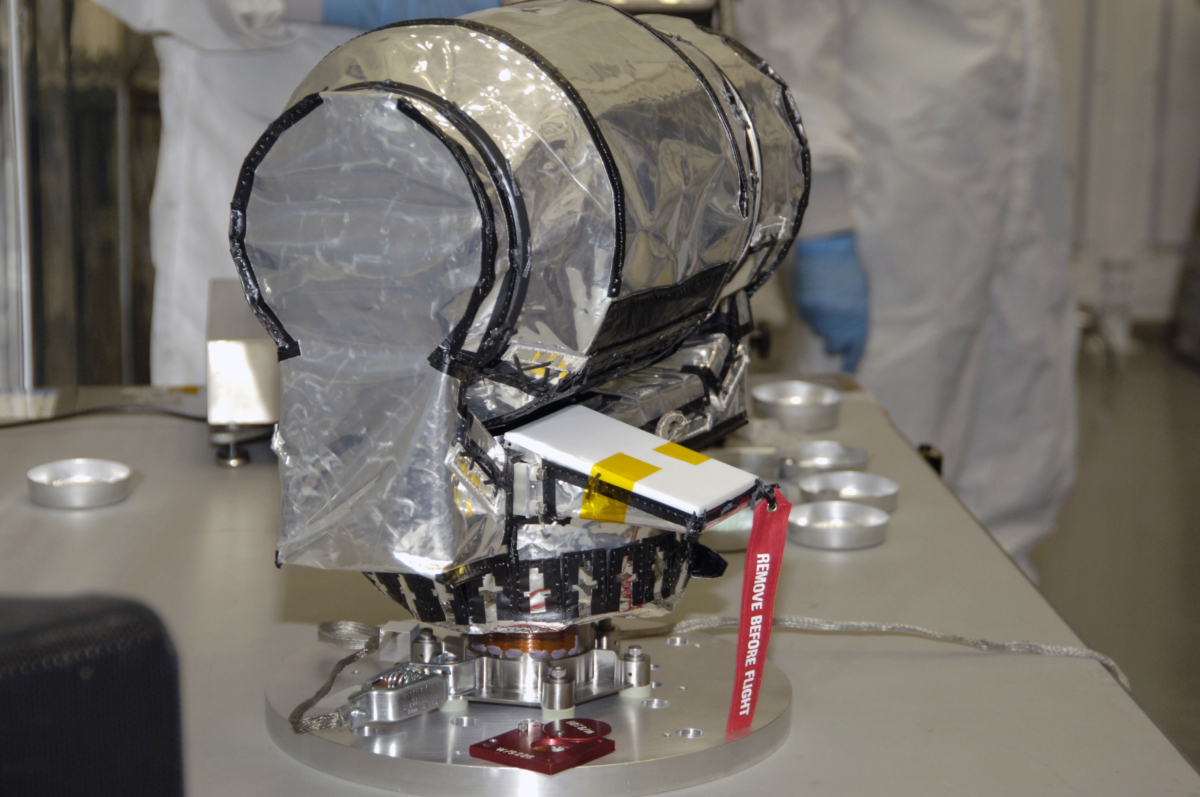
Diviner Lunar Radiometer Experiment.
Credits: NASA’s Goddard Space Flight Center/Debbie McCallum
Important resource
“After water, carbon is probably the most important resource on the Moon. It can be used for the production of rocket fuel, but also for biomaterials and steel. If we have to bring carbon or fuel from Earth, it drives up the cost of sustained presence,” Schorghofer explains in a PSI statement.
It’s part of “living off the land,” or in-situ resource utilization, Schorghofer said.
“Extensive and improved analysis of 11 years of orbital surface temperature measurements by the Diviner Lunar Radiometer Experiment on board NASA’s Lunar Reconnaissance Orbiter (LRO) establishes the existence of carbon dioxide cold traps on the Moon, which potentially host high concentrations of solid carbon dioxide, Schorghofer said.
“Our work has established the existence of CO2 cold traps, where theory predicts solid CO2 should have accumulated,” Schorghofer added. “Our work does not show that there actually is CO2 in these areas, but it is a reasonable expectation, especially since CO2 was detected in the LCROSS (NASA’s Lunar Crater Observation and Sensing Satellite) impact plume in 2009.”
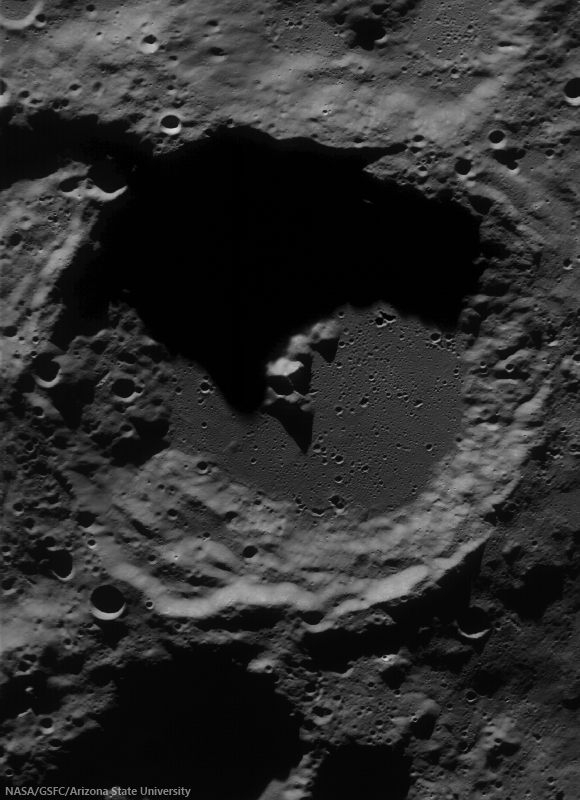
LRO image of Amundsen crater. Credit: NASA/GSFC/ASU
Many terabytes of data
In the new study, many terabytes of Diviner data were processed to capture the full time dependence of surface temperatures.
The Diviner Lunar Radiometer Experiment (DLRE) onboard LRO is built to identify cold traps — areas cold enough to preserve ice for billions of years — and potential ice deposits as well as rough terrain, rock abundance, and other landing hazards.
Diviner was built and developed by the University of California, Los Angeles, and NASA’s Jet Propulsion Laboratory in Pasadena, Calif
Exploration target
According to the paper, the total area of CO2 cold traps in the south polar region of the Moon is about 200 square kilometers.
For comparison, water ice cold traps cover nearly 14,000 square kilometers.
Concentrated CO2 is an extremely scarce resource, only found at a few places, and a large portion of its cold trap area resides on the floor of Amundsen crater on the Moon.
That feature, which is relatively accessible, may be a promising exploration target. In this area, temperatures never exceed negative 350 degree Fahrenheit, so it will definitely be a technological challenge to explore these extremely cold and permanently dark places.
“The fact that this resource is highly concentrated geographically has implications for the governance of the lunar surface. Moreover, the interaction of carbon with galactic cosmic rays can produce organic compounds,” the paper points out.
To view the paper – “Carbon Dioxide Cold Traps on the Moon” – go to:
https://agupubs.onlinelibrary.wiley.com/doi/epdf/10.1029/2021GL095533
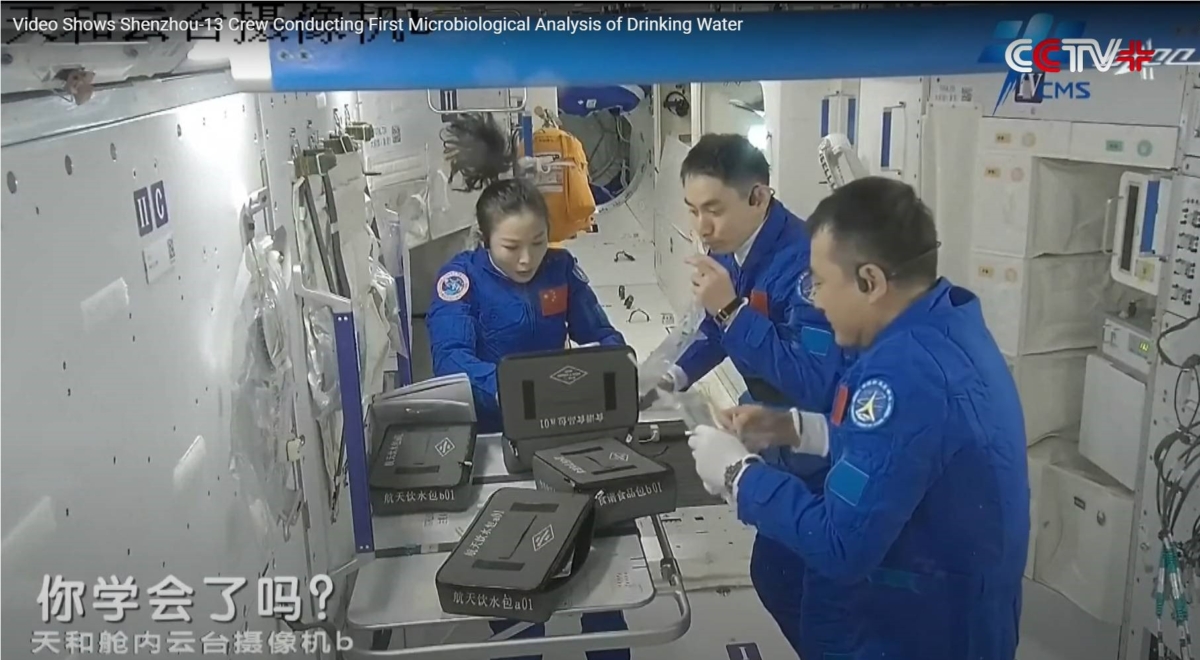
Shenzhou-13 crew.
Credit: CCTV/Inside Outer Space screengrab
Life onboard China’s burgeoning space station is captured in newly released videos. The three-person Shenzhou-13 crew was launched October 16: Zhai Zhigang, Ye Guangful, and female taikonaut, Wang Yaping.
Residence for the space trio is the China space station’s core module, Tianhe – the country’s longest human space trek, a six-month stay in Earth orbit.
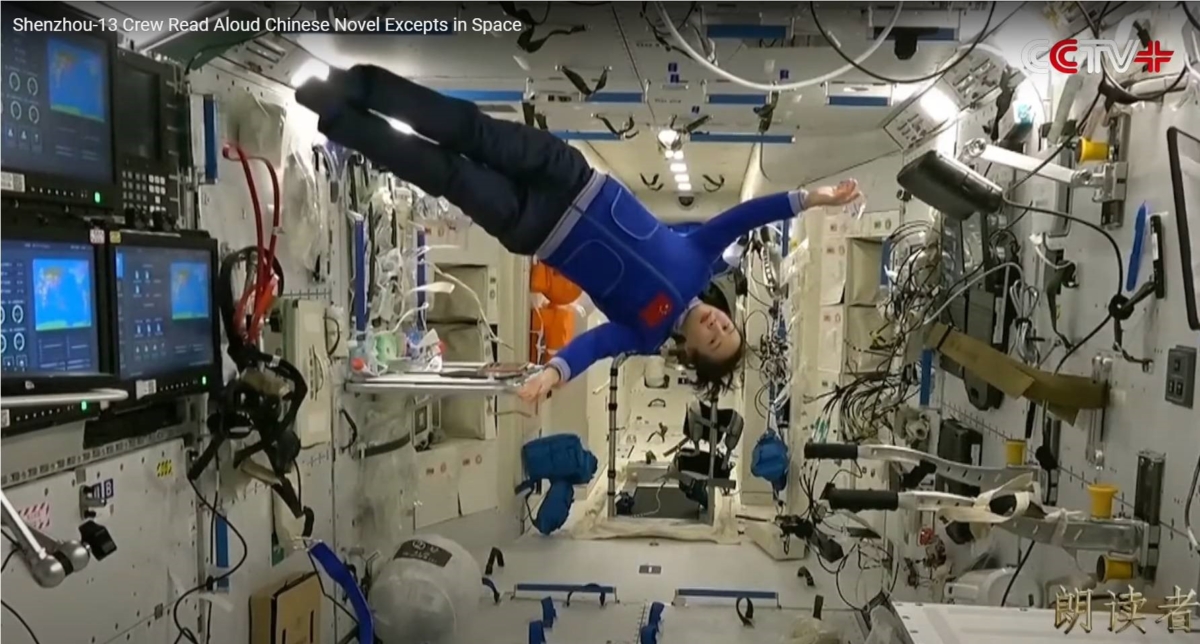
Female taikonaut, Wang Yaping.
Credit: CCTV/Inside Outer Space screengrab
Wang, together with Zhai Zhigang, conducted their mission’s first series of extravehicular activities (EVAs) on November 7 lasting 6.5 hours. The EVAs tested the functions of the China-developed new-generation extravehicular spacesuits, the coordination between the astronauts and the mechanical arm, and the reliability and safety of supporting equipment related to the EVAs, according to the China Manned Space Agency (CMSA).

The robotic arm of China’s Tiangong space station seen from Tianhe core module. Credit: Weibo via Twitter
Robotic arm
One key piece of equipment is the nearly 34-foot long (10.2-meters) robotic arm installed on the Tianhe module. It can carry up to 25 tons of weight, consisting of seven joints, two limbs, two sets of extension gears, two sets of end cameras and end effectors (also known as end-of-arm tooling), one set of central controllers, and an elbow camera.
The robotic arm is designed help the taikonauts in their extravehicular activities in the assembly, construction, maintenance, and repair of the space station, and support space applications, according to the space agency.

Credit: CMSE/China Media Group/CCTV/Inside Outer Space screengrab
Big arm, small arm
The robotic arm consists of two parts, the “big arm” and the “small arm.” When combined, the relationship between the two parts is similar to a human’s upper and lower arm.
- big arm is a versatile 10-meter-long robotic arm, and is the key equipment for heavy-lifting jobs, from moving components for installation to carrying astronauts for space walks.
- small arm is over 16 feet (5 meters) in length. It is scheduled to be installed in a 2022 mission that adds a lab capsule to China’s space station.
During the recent spacewalk, Zhai installed a key component that will be used to connect the two arms on the exterior of the core module.

Credit: CMSE/CCTV
The two arms consist of several joints that enable the machines to reach different modules of the space station. The development of the arms tapped various industries, from machinery to electronics and optical technologies.
According to Gao Sheng, an engineer in charge of the mechanical arm operation at the China Academy of Space Technology (CAST), after connection, the big arm and the small arm will form a combined mechanical arm, attaining an extended range of 48-feet (14.5 meters).
The combined mechanical arm can cover three modules of the space station, inspecting their surface at any time, Gao said.
Go to these videos showcasing life onboard the in-construction space station:
A number of videos have been issued documenting the recent spacewalk activities. Go to:

Don’t Blow Yourself Up: The Further True Adventures and Travails of the Rocket Boy of October Sky by Homer Hickam; Published by Post Hill Press/Distributed by Simon & Schuster; 416 pages; October 2021; Hard Cover; $27.00.
This celebrated writer’s memoir Rocket Boys was adapted into the film October Sky. Hickam’s new book is a delightful read and, as he introduces the volume, he writes: “I decided to sit down and write about some of the things that happened in those years after I was a Rocket Boy in West Virginia. This memoir is the result.”
“Don’t blow yourself up” is a direct quote from Elsie Hickam, the author’s mother. The book is divided into 5 parts, all equally enjoyable. Among a range of experiences, the author recounts his life in college, his Vietnam experiences, trained the first Japanese astronauts, taught David Letterman to scuba dive…even helped to fix the Hubble Space Telescope.
For his space adventures, one part is called “NASA Man,” admitting that his learning curve at NASA was steep. The author offers some captivating looks at Marshall Space Flight Center and his automation work on the Space Shuttle/Spacelab program. Hickam poignantly writes about his reaction to the loss of Challenger, a consequence of “launch fever” that created an American disaster.
In the closing pages of the book, Hickam recounts the writing of Rocket Boys and the making of the October Sky movie. A retired NASA engineer, the author serves on the boards of the United States Space & Rocket Center (Space Camp) and the Museum of the Rockies, and was appointed in 2019 as an advisor to the National Space Council.
Again, thanks to his wit and writing talents, you’ll encounter humor, but also personal pain and hardships. As former NASA astronaut Mike Massimino explains in the first pages of the book, “Homer takes us from rocket boy to rocket man to bestselling author. He writes about his experiences with an engineer’s precision and a poet’s emotions, not only sharing the details of the times in which he has lived, but also the deep inner feelings of his life’s successes and disappointments in a most personal and incredibly honest way.”
Massimino adds: “Read this book and be inspired to reach for the stars.”
For more information on this book, go to:
https://www.simonandschuster.com/books/Dont-Blow-Yourself-Up/Homer-Hickam/9781642938241
Also, go to:
https://homerhickam.com/product/dont-blow-yourself-up/
Homer Hickam hardback books can be purchased and personalized, autographed and mailed to the reader.

