Archive for the ‘Space News’ Category
 Author:
  November 24th, 2021
Curiosity Front Hazard Avoidance Camera Right B image acquired on Sol 3306, November 24, 2021.
Credit: NASA/JPL-Caltech
NASA’s Curiosity Mars rover at Gale Crater is now performing Sol 3307 duties.
“As we head into a long weekend for the Thanksgiving holiday in the U.S., Curiosity will take advantage of some extra time at the Zechstein drill location to conduct even more science,” reports Lauren Edgar, a planetary geologist at the USGS Astrogeology Science Center in Flagstaff, Arizona.

Curiosity Chemistry & Camera Remote Micro-Imager (RMI) photo taken on Sol 3306, November 23, 2021.
Credit: NASA/JPL-Caltech/LANL
The rover team has been busy the past two days planning 6 sols (plus a soliday) on Mars, which will give the robot plenty of work to do while the team takes a break from planning later this week.
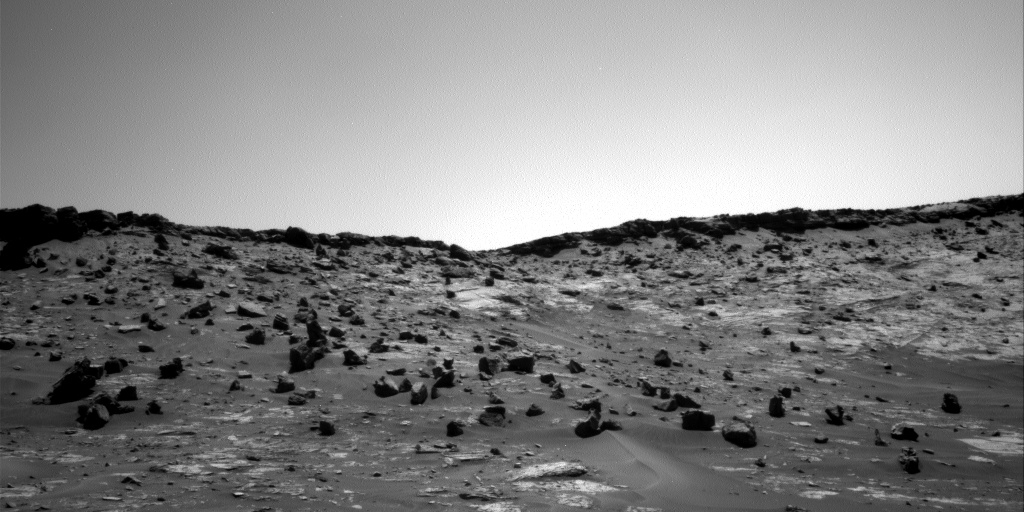
Curiosity Right B Navigation Camera image taken on Sol 3306, November 23, 2021.
Credit: NASA/JPL-Caltech
Edgar adds that, while most of the research team would shy away from leftovers from three years ago, Curiosity is diving into a sample from the “Rock Hall” drill target which the Mars machinery been carrying since its time on Vera Rubin ridge (Sol 2261).
Power hungry
It turns out that the multisol plans this week are a great opportunity to do some power hungry Sample Analysis at Mars (SAM) Instrument Suite and Chemistry & Mineralogy X-Ray Diffraction/X-Ray Fluorescence Instrument (CheMin) analyses.

Curiosity Right B Navigation Camera image taken on Sol 3306, November 23, 2021.
Credit: NASA/JPL-Caltech

Curiosity Right B Navigation Camera image taken on Sol 3306, November 23, 2021.
Credit: NASA/JPL-Caltech
“SAM will conduct an experiment with the “Rock Hall” sample to test how organics are preserved in the presence of mixed iron oxides and clays on Mars,” Edgar notes.
Speaking of leftovers, CheMin will take advantage of the “Zechstein” sample (only from three weeks ago…) which hasn’t been dumped yet.

Curiosity Right B Navigation Camera image taken on Sol 3306, November 23, 2021.
Credit: NASA/JPL-Caltech
“We will analyze it again to measure if it changed while it sat in the warmer temperatures within CheMin,” Edgar says.
Generous helpings
The rest of the plan includes generous helpings of Mastcam and Chemistry and Camera (ChemCam) to document the nearby stratigraphy and analyze the composition of bedrock, diagenetic features, and float blocks that have tumbled down from higher up on these slopes.
“In addition to all of the geology observations, Curiosity will also be busy with a lot of environmental monitoring to assess the dust content in the atmosphere and search for dust devils and clouds,” Edgar points out.

Curiosity Right B Navigation Camera image taken on Sol 3306, November 23, 2021.
Credit: NASA/JPL-Caltech
Bonus science
In an earlier report, Kristen Bennett, a planetary geologist also at the USGS Astrogeology Science Center, notes that a recent plan did not fully execute over last weekend, so Curiosity remains at the Zechstein drill location.
“There are always more observations to take, so this extra time at Zechstein means bonus science. Our current location has great views of the pediment and several rocks that look like they tumbled down from either the pediment capping unit (known as the Stimson formation) or the layer that is directly beneath the Stimson,” Bennett says.

Curiosity Right B Navigation Camera image taken on Sol 3306, November 23, 2021.
Credit: NASA/JPL-Caltech
Rock targets
“We already obtained observations of a few of these rocks, but with the extra time the team decided to target more of these blocks to see if they are similar or different than the previous targets,” Bennett adds.
“Cairngorm Stone” is a dark rock thought to be from the Stimson formation that was documented with a ChemCam Laser Induced Breakdown Spectroscopy (LIBS) observation and a Mastcam stereo mosaic in a recent plan.
The “Carmyllie” target is a block that may be from the base of the pediment and it was documented with a Mastcam mosaic, Bennett reports. Other observations include ChemCam LIBS targets at “Hessilhead” on bedrock that appears to have been diagenetically altered, and at “Cullaloe” on more standard bedrock. Diagenesis is the process that describes physical and chemical changes in sediments.

Curiosity Right B Navigation Camera image taken on Sol 3306, November 23, 2021.
Credit: NASA/JPL-Caltech
The primary activity in a Sols 3306-3308 plan was the first part of the SAM derivatization experiment of the Rock Hall sample.
“This sample has been in a doggy bag for 3 years, so it will be exciting to learn what it can tell us about the Vera Rubin ridge where it was taken,” Bennett explains. “Data from this experiment will be used to better understand organic preservation in the presence of mixed iron oxides and clays.”
 Posted in

In-orbit explosions can be related to the mixing of residual fuel that remain in tanks or fuel lines once a rocket stage or satellite is discarded in Earth orbit. The resulting explosion can destroy the object and spread its mass across numerous fragments with a wide spectrum of masses and imparted speeds.
Credit: ESA
What to do about orbital debris is now a day-to-day topic of conversation and concern. Lots of “debris cleaning” ideas are being literally floated. However, at the end of the day, is it all too little too late?
Then there’s the Kessler syndrome of debris making debris by on-orbit slamming between space leftovers that is already taking place.

Break-ups in Earth orbit of spacecraft have been recorded since 1961. Most were explosions of satellites and upper stages rather that accidental and intentional collisions.
Credit: ESA/ID&Sense/ONiRiXEL, CC BY-SA 3.0 IGO
Was the result from the recent Russian anti-satellite (ASAT) test the scenario, the alarming wake-up call that serves as a tipping point to get everyone onboard to deal with space waste? Space.com contacted leading experts to weigh in on the worrisome situation of orbital debris.
Go my new Space.com story:
“Space debris: More storm clouds ahead in orbit, experts say – The problem isn’t going away anytime soon” at:

Upper left to right: Lane Bess, Cameron Bess, Evan Dick
Lower left to right: Dylan Taylor, Laura Shepard Churchley, Michael Strahan
The next space tourism flight of Blue Origin’s New Shepard suborbital rocket ship has been detailed.
This 19th mission, set for liftoff on December 9, will be the first to carry a full manifest of six astronauts to space – two honorary guests and four paying customers.
Guests include Good Morning America co-anchor Michael Strahan and Laura Shepard Churchley, the eldest daughter of Alan Shepard, who was the first American to fly to space.
The four customers include space industry executive and philanthropist Dylan Taylor, investor Evan Dick, Bess Ventures founder Lane Bess, and Cameron Bess.
Lane and Cameron Bess will become the first parent-child pair to fly in space.

Credit: Blue Origin
Karman line
“I am super excited to share with you that I will be going to space on NS-19 and becoming the 600th human to cross the Karman line,” said space traveler Dylan Taylor in an email.
Taylor has posted Part 1 of his adventure, explaining his “Journey to the Dream,” writing: “On December 9th, 2021, myself and a crew of five other commercial astronauts, will launch to low Earth orbit aboard Blue Origin’s New Shepard rocket. It’s an experience that will mark another historic day as Blue Origin launches its third human-crewed rocket into space. Of course, it will also become a deeply personal milestone for me, and truly a dream come true.”

Credit: Dylan Taylor
To keep posted on Taylor’s march into space, go to:
https://dylantaylor.org/journey-to-the-dream-part-i/
Live launch coverage begins on BlueOrigin.com at T-90 minutes. Liftoff is currently targeted for 9:00 am CST / 15:00 UTC from Launch Site One in West Texas. To watch the launch, go to:

Kepler spacecraft.
Credit: NASA Ames/JPL-Caltech/T Pyle
Researchers using a new technique have added several hundred new exoplanets to create an uptick in the total exoplanet tally.
A team of scientists from Universities Space Research Association (USRA), NASA, and other institutions used a new deep neural network dubbed ExoMiner.
The result: discovery of 301 new exoplanets, joining the 4,569 already validated planets orbiting a multitude of distant stars.
Kepler archive
Leveraging NASA’s Supercomputer, Pleiades, ExoMiner validated the 301 planets using data from the remaining set of possible planets – or candidates – in the Kepler Archive.

Pleiades, one of the world’s most powerful supercomputers, named after the astronomical open star cluster of the same name.
Credit: NASA
NASA’s Kepler spacecraft was lofted in March 2009. Using special detectors similar to those used in digital cameras, Kepler looked for a slight dimming in the stars as planets pass between the stars and Kepler. That mission left a legacy of more than 2,600 planet discoveries from outside our solar system, many of which could be promising places for life.
Highly accurate
“When ExoMiner says something is a planet, you can be sure it’s a planet,” said Hamed Valizadegan, ExoMiner project lead and machine learning manager with the Universities Space Research Association at NASA’s Ames Research Center in Silicon Valley.
“ExoMiner is highly accurate and in some ways more reliable than both existing machine classifiers and the human experts it’s meant to emulate because of the biases that come with human labeling,” Valizadegan said.
Valizadegan is also the lead author of the paper – “ExoMiner: A Highly Accurate and Explainable Deep Learning Classifier that Validates 301 New Exoplanets” — published in the Astrophysical Journal.

Illustration of NASA’s Transiting Exoplanet Survey Satellite (TESS).
Credit: NASA
Room to grow
“Now that we’ve trained ExoMiner using Kepler data, with a little fine-tuning, we can transfer that learning to other missions,” said Valizadegan. That includes NASA’s Transiting Exoplanet Survey Satellite, or TESS. “There’s room to grow,” he added.
The Kepler and TESS missions have generated over 100,000 potential transit signals that must be processed in order to create a catalog of planet candidates.
USRA’s Miguel Saragoca Martinho, the main engineer behind implementing ExoMiner, pointed out in a USRA statement: “The modular design of ExoMiner allows us to explain why it says something is planet or false positive. That is a peace of mind for domain experts when using a black-box machine classifier such as ExoMiner.”
By utilizing ExoMiner, researchers can distinguish real exoplanets from different types of imposters, or “false positives.” Its design is inspired by various tests and properties human experts use to confirm new exoplanets. And it learns by using past confirmed exoplanets and false positive cases.
For more information on ExoMiner, go to:
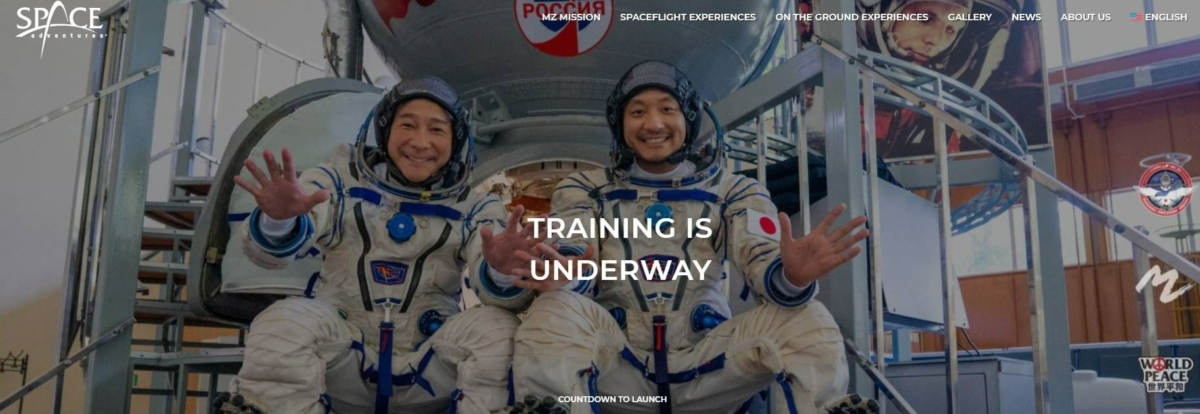
Credit: Space Adventures
Space traveler Yusaku Maezawa (MZ) will fly to the International Space Station (ISS) on December 8, 2021. He will be flying with Russian mission commander Alexander Misurkin and MZ’s assistant Yozo Hirano, producer and manager for MZ’s private projects, including filming for MZ’s youtube channel.

Credit: Pavel Kassin/Roscosmos
On the ISS, Yozo will be responsible for filming MZ during their 12-day stay onboard the ISS.
The ISS mission is arranged by Space Adventures. MZ and Yozo will become the 8th and 9th private citizens to fly to space on missions arranged by Space Adventures.
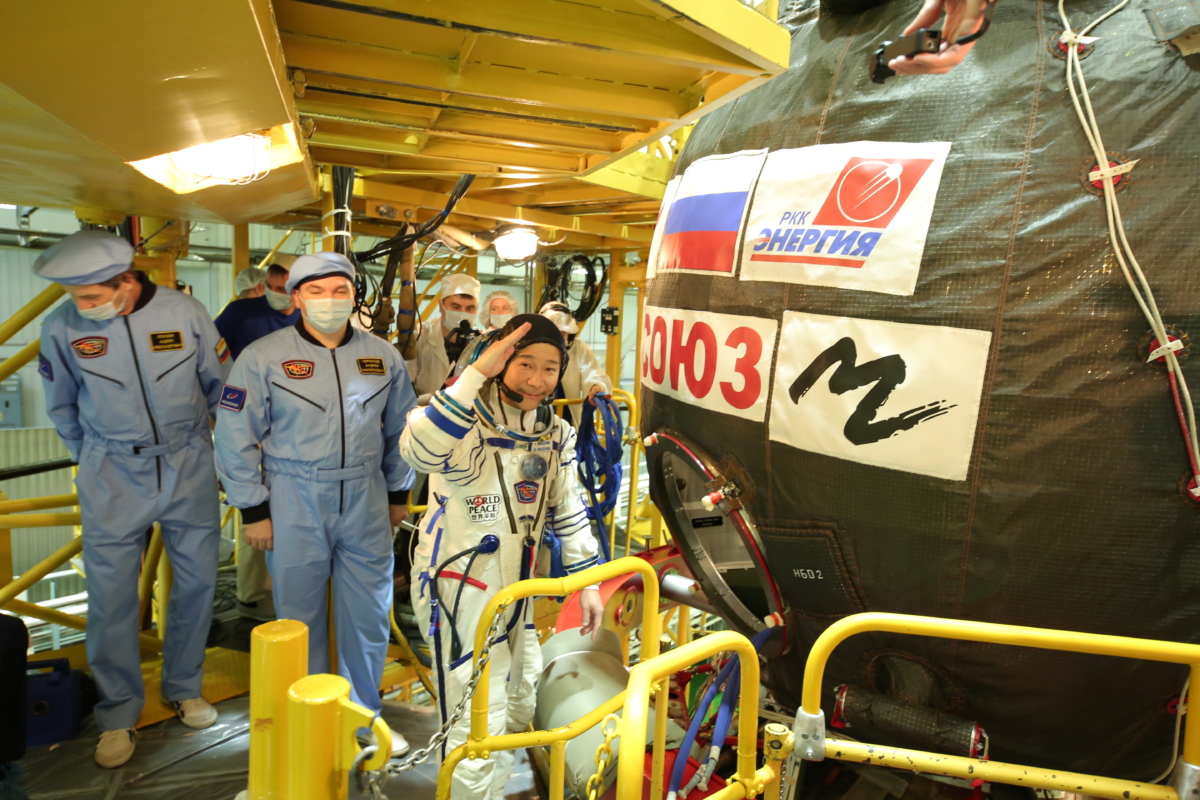
Credit: Pavel Kassin/Roscosmos
Videos available
Go to these informative videos showcasing MZ and Yozo, a spacesuit pressurization test, ISS emergency preparedness training and a spinning chair evaluation.
Also, go to this special website to follow the space tourists, at:
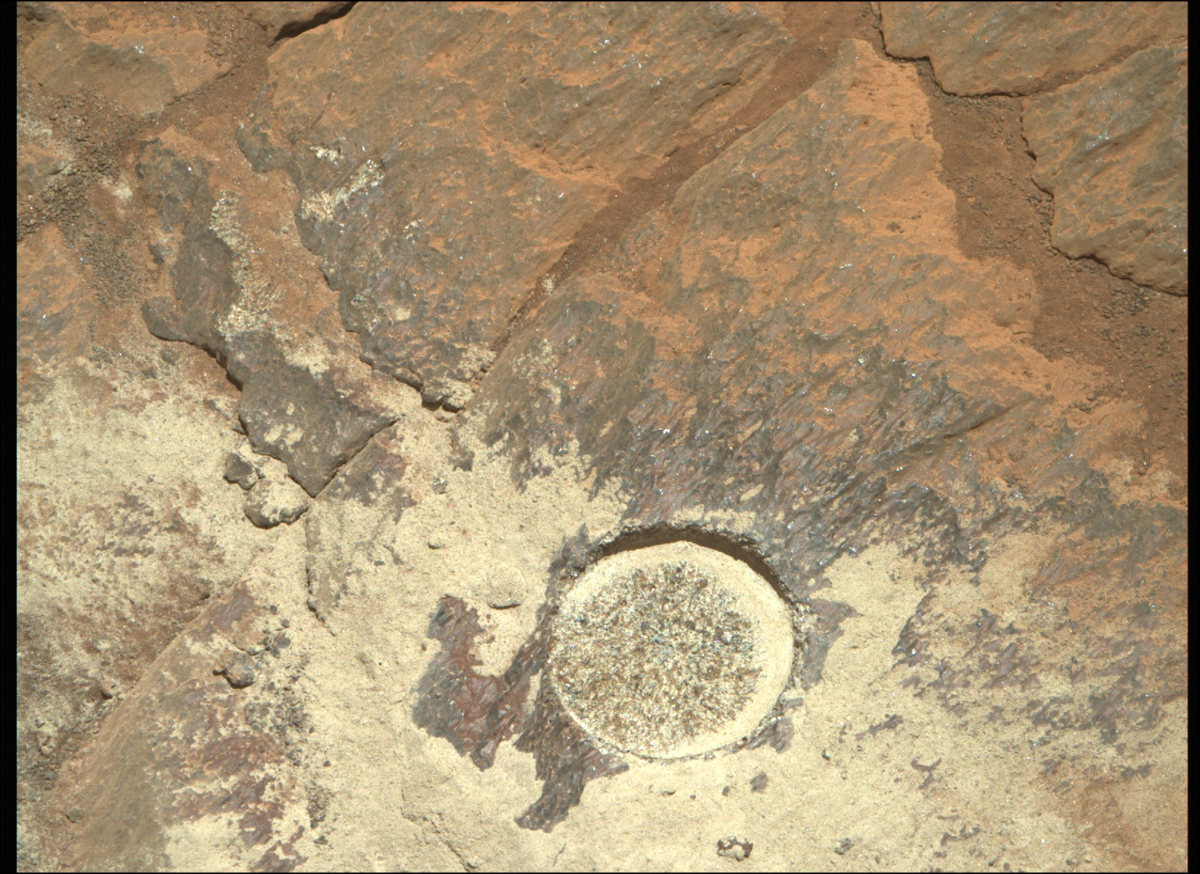
Credit: NASA/JPL-Caltech/ASU
“My latest sample is from a rock loaded with the greenish mineral olivine, and there are several ideas among my science team about how it got there. Hypotheses are flying! Science rules.”
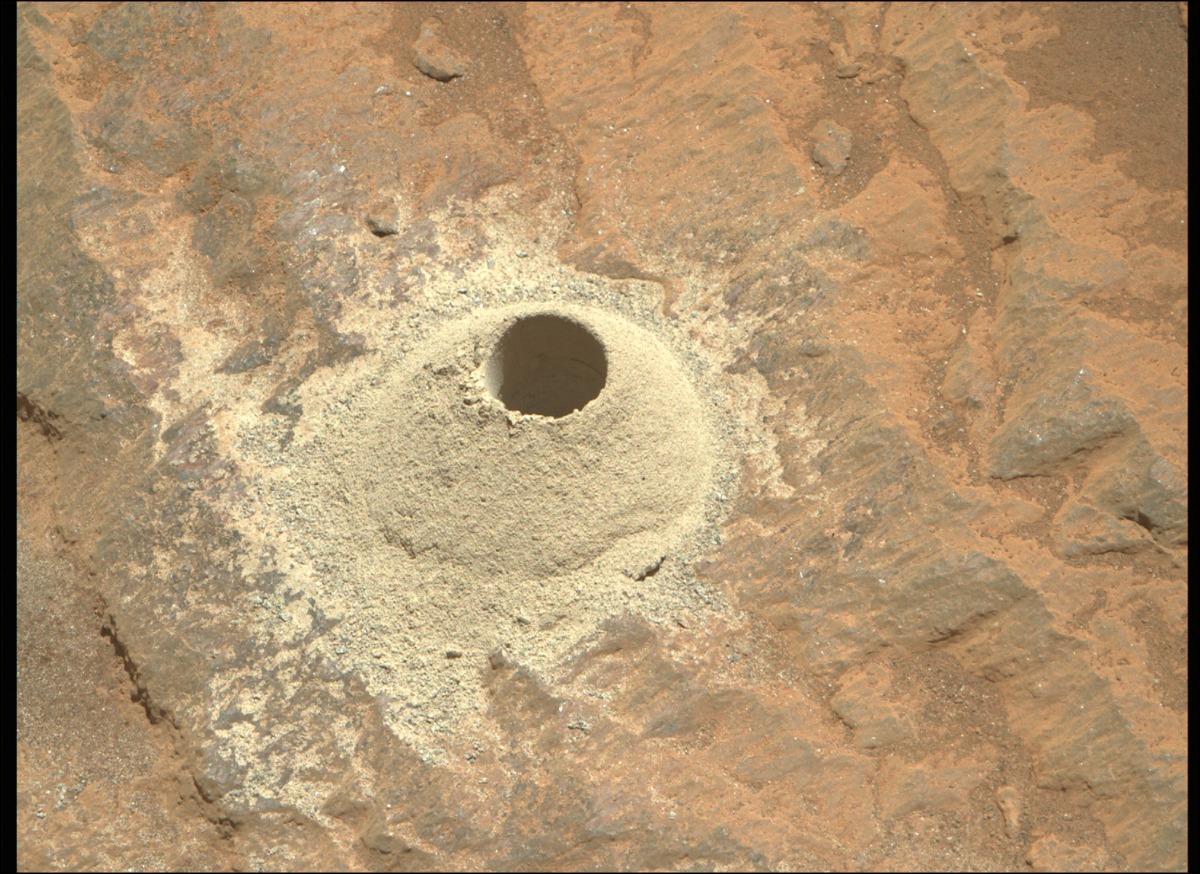
Credit: NASA/JPL-Caltech/ASU
Perseverance imagery of sampling site:
Right Mastcam-Z Camera, a pair of cameras located high on the rover’s mast.
These images were acquired on November 21, 2021 (Sol 268).

Credit: NASA/JPL-Caltech
Front Left Hazard Avoidance Camera A acquired this image of the area in front of it. Image acquired on November 20, 2021 (Sol 267).

Air Force X-37B space plane.
Credit: Boeing
That secretive U.S. military X-37B robotic space drone is now edging up on 600 days circling the Earth.
The Orbital Test Vehicle (OTV-6) is also called USSF-7 for the U.S. Space Force, and was launched on May 17, 2020 by an Atlas-V 501 booster.
OTV-6 is the first to use a service module to host experiments. The service module is an attachment to the aft of the vehicle that allows additional experimental payload capability to be carried to orbit.

Credit: Boeing/Inside Outer Space Screengrab
Onboard payloads
While the Boeing-built resuable robotic space plane’s on-orbit primary agenda is classified, some of its onboard experiments were identified pre-launch.
One experiment onboard the space plane that continues to gather data is from the U.S. Naval Research Laboratory (NRL). It’s an investigation into transforming solar power into radio frequency microwave energy. The experiment itself is called the Photovoltaic Radio-frequency Antenna Module, PRAM for short – and a step forward in investigating the promise of satellite power beaming to Earth.
In addition, two NASA experiments are also onboard the space plane to study the effects of the space environment on a materials sample plate and seeds used to grow food.
Along with toting NRL’s PRAM into Earth orbit, the X-37B also deployed the FalconSat-8, a small satellite developed by the U.S. Air Force Academy and sponsored by the Air Force Research Laboratory to conduct several experiments on orbit.
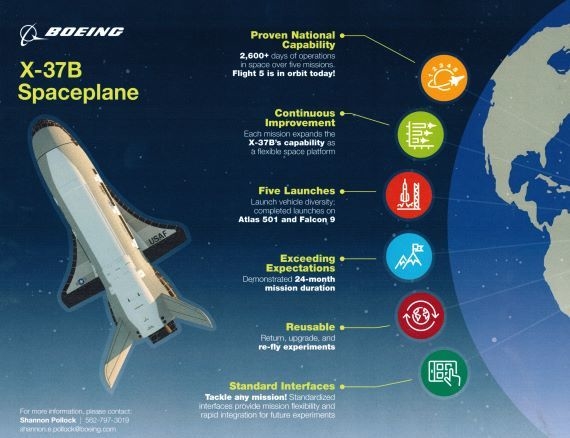
X-37B handout.
Credit: Boeing
Delta 9
The X-37B program is flown under the wing of a U.S. Space Force unit called Delta 9, established and activated July 24, 2020.
“The mission of Delta 9 is to prepare, present, and project assigned and attached forces for the purpose of conducting protect and defend operations and providing national decision authorities with response options to deter and, when necessary, defeat orbital threats,” a fact sheet explains. “Additionally, Delta 9 supports Space Domain Awareness by conducting space-based battlespace characterization operations and also conducts on-orbit experimentation and technology demonstrations for the U.S. Space Force.”
“Delta 9 Detachment 1 oversees operations of the X-37B Orbital Test Vehicle, an experimental program designed to demonstrate technologies for a reliable, reusable, unmanned space test platform for the U.S. Space Force,” according to the fact sheet issued by Schriever Air Force Base in Colorado.
Fact sheet aside, it recently was spotlighted by Russia’s Ministry of Defense, prompted by all the recent Russian anti-satellite news – tagging the X-37 spacecraft as showing that the U.S. “is actively developing” space weapons.
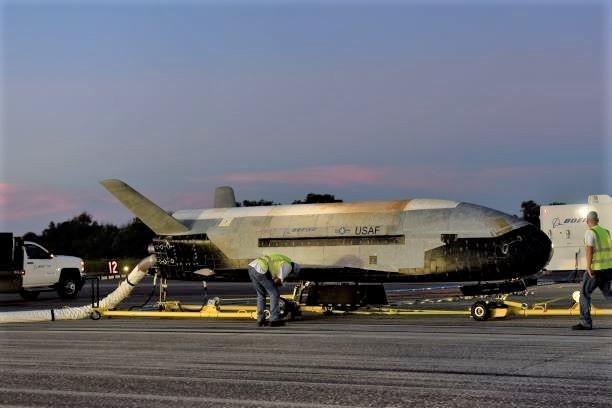
Post-landing of OTV-5 at NASA’s Kennedy Space Center Shuttle Landing Facility.
Courtesy Photo 45th Space Wing Public Affairs
Previous flights
OTV-1: launched on April 22, 2010 and landed on December 3, 2010, spending over 224 days on orbit.
OTV-2: launched on March 5, 2011 and landed on June 16, 2012, spending over 468 days on orbit.
OTV-3: launched on December 11, 2012 and landed on October 17, 2014, spending over 674 days on-orbit.
OTV-4: launched on May 20, 2015 and landed on May 7, 2015, spending nearly 718 days on-orbit.
OTV-5: launched on September 7, 2017 and landed on October 27, 2019, spending nearly 780 days on-orbit.
OTV-1, OTV-2, and OTV-3 missions landed at Vandenberg Air Force Base, California, while the OTV-4 and OTV-5 missions landed at Kennedy Space Center, Florida.
There is no word on when and where OTV-6 will return to Earth.
Check out this video from satellite watcher, Kevin Fetter, as the U.S. military space plane passes overhead on November 20, 2021 at:
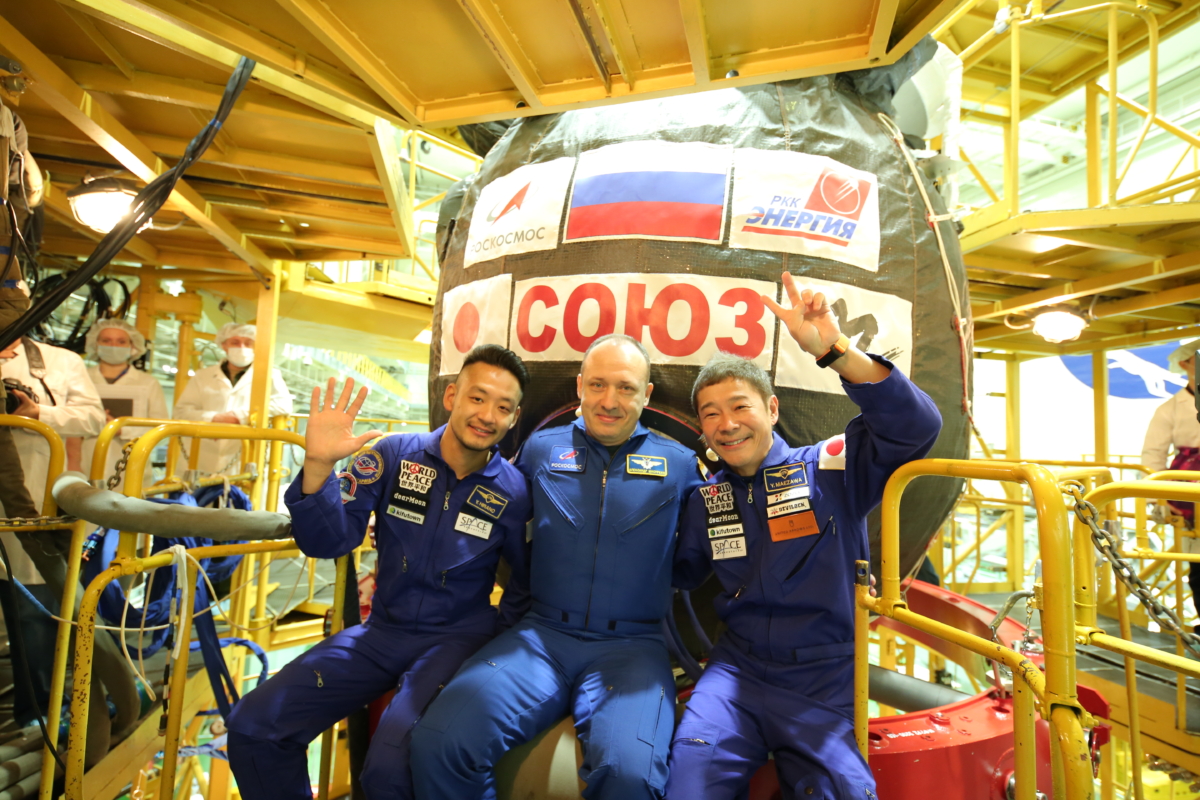
The beginning of the final stage of preparation for a flight into space is prelaunch training of crews at the Baikonur cosmodrome. Today is the first day of training sessions for cosmonauts and space flight participants of the 20th visiting crew to the ISS.
Credit: Roscosmos
Russia’s launch of the Soyuz MS-20 crewed spacecraft is slated for December 8, 2021. For the first time, two space flight participants will fly on the same spacecraft at once, becoming the eighth and ninth tourists to visit the International Space Station.
The crew: Roscosmos cosmonaut Alexander Misurkin and space flight participants from Japan: billionaire entrepreneur and art collector Yusaku Maezawa and Yozo Hirano, a production assistant of Maezawa assigned to document the flight.
Maezawa recently announced, under his dearMoon project, he will choose eight members of the public to join him on a trip around the Moon, scheduled to fly on SpaceX’s Starship in 2023.
Crew training
Over the next 2.5 weeks, the Japanese spaceflight participants will carry out a program of training, exercises and briefings, as well as medical examinations. On November 20, they will conduct the first “fitting” in the Soyuz MS-20 spacecraft, familiarizing themselves with onboard systems.

Credit: Space Center “Yuzhny”/Roscosmos
Crew training at Baikonur involves getting to know the ship, classes and trainings, “as well as symbolic events that distract the cosmonauts from the prelaunch excitement,” according to Russia’s Roscosmos.
The back-up crew consists of Roscosmos cosmonaut Alexander Skvortsov and Japanese participant Shun Ogiso.
The 12-day mission of Maezawa and Hirano is under a contract with Space Adventures.
Space Adventures organized the flights for the world’s first private astronauts (Dennis Tito, Mark Shuttleworth, Greg Olsen, Anousheh Ansari, Charles Simonyi, Richard Garriott and Guy Laliberté).
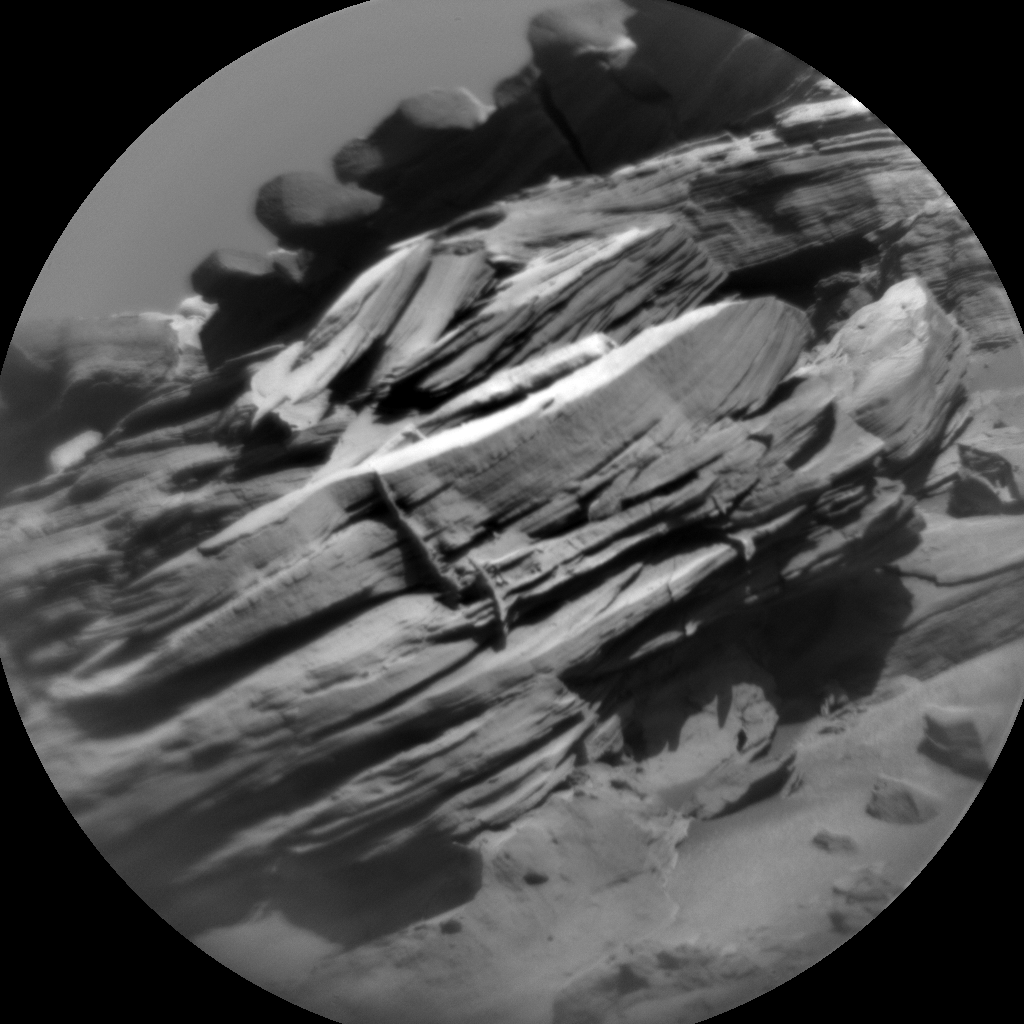
An example of one frame of the long distance, ChemCam RMI of the pediment caprock scientists have been acquiring while parked at the Zechstein drill site (taken on Sol 3299).
Credit: NASA/JPL-Caltech/LANL
NASA’s Curiosity Mars rover at Gale Crater is now performing Sol 3302 tasks.
The robot remains at the Zechstein drill sample site, reports Lucy Thompson, a planetary geologist at the University of New Brunswick; Fredericton, New Brunswick, Canada.
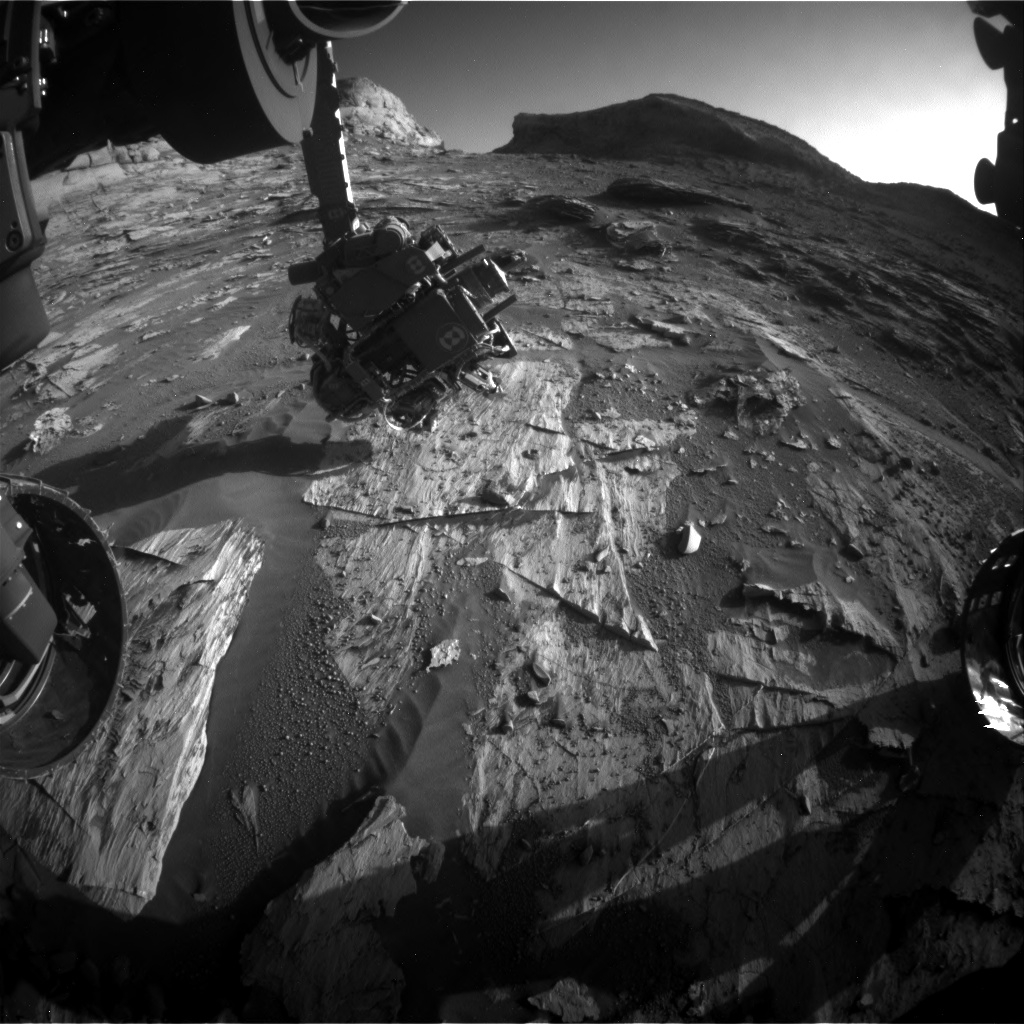
Curiosity Front Hazard Avoidance Camera Left B image acquired on Sol 3301, November 19, 2021.
Credit: NASA/JPL-Caltech
The Sample Analysis at Mars (SAM) Instrument Suit and Fluorescence Instrument (CheMin) instrument teams decided that they did not require further analyses of the Zechstein drill sample.
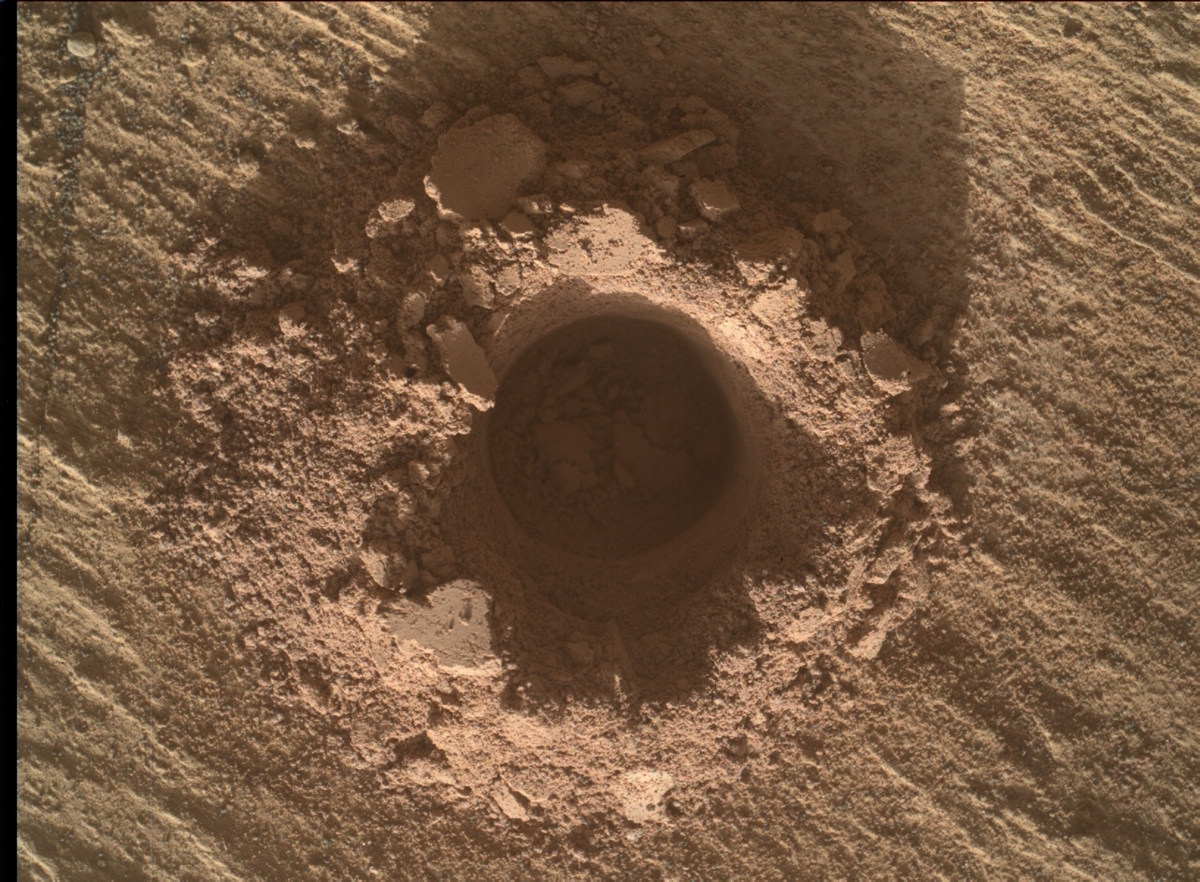
Curiosity Mars Hand Lens Imager (MAHLI) photo produced on Sol 3301, November 19, 2021.
Credit: NASA/JPL-Caltech/MSSS
It is the turn of the arm-mounted Mars Hand Lens Imager (MAHLI) and Alpha Particle X-Ray Spectrometer (APXS) instruments to have their taste of the drilled fines, Thompson adds.
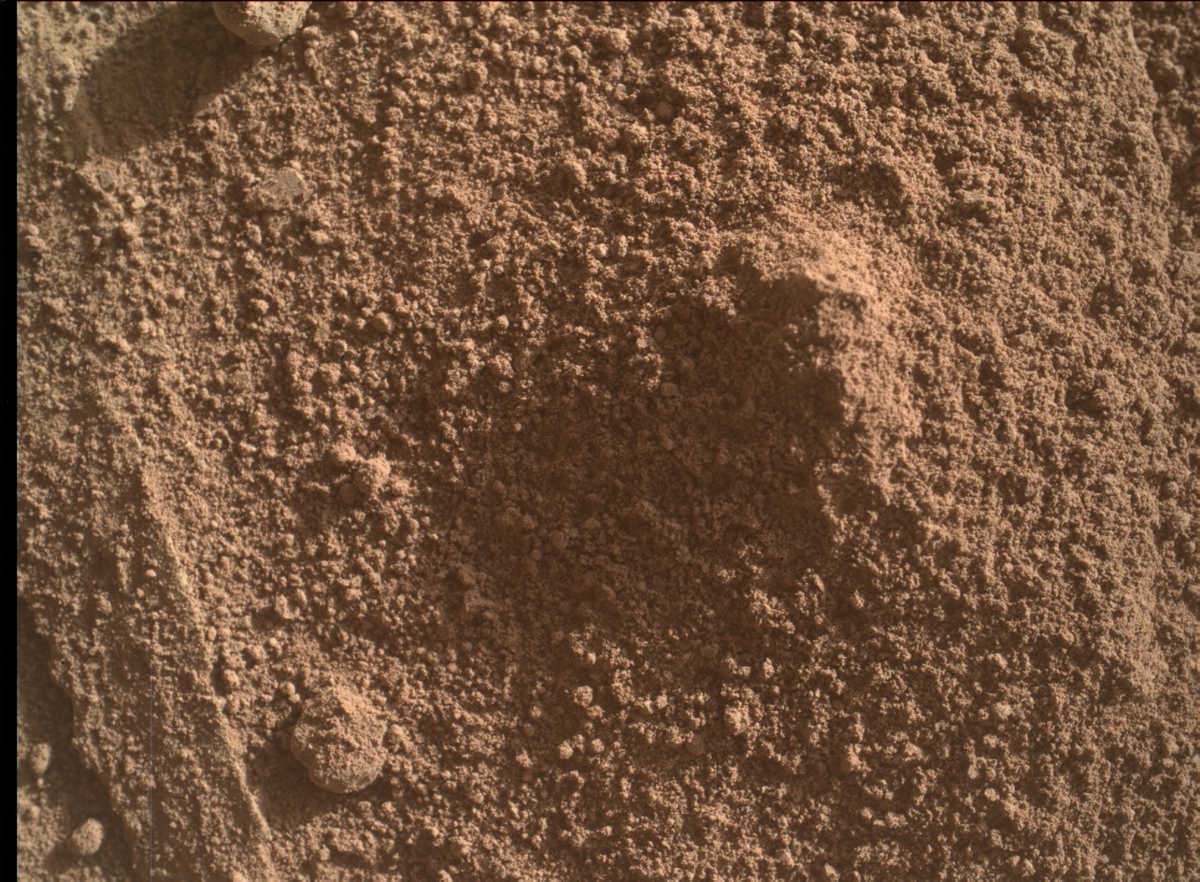
Curiosity Mars Hand Lens Imager (MAHLI) photo produced on Sol 3301, November 19, 2021.
Credit: NASA/JPL-Caltech/MSSS
Dumped material
“The Zechstein sample held within the drill bit assembly will be dumped out onto the ground, imaged by MAHLI and then analyzed by APXS to determine the composition,” Thompson points out. “The composition of the dumped material can be compared to the chemistry of the brushed bedrock surface (prior to drilling) and the fines surrounding the drill hole (yet to be acquired) to look for variations with depth. The compositional data can also assist in interpretation of the CheMin and SAM data.”
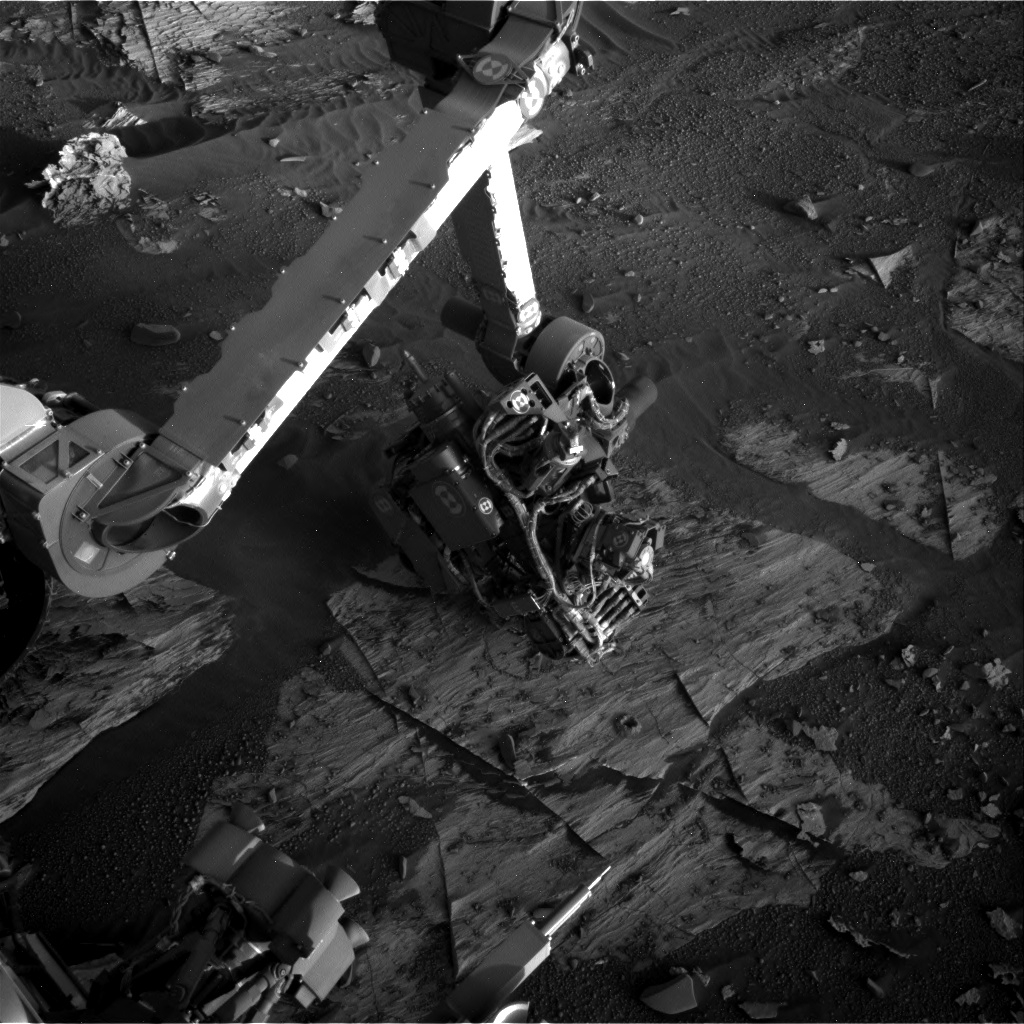
Curiosity Right B Navigation Camera image acquired on Sol 3301, November 19, 2021.
Credit: NASA/JPL-Caltech
Balancing the power requirements of all the desired observations, as well as of future activities, is always part of the planning process, Thompson says.
Drive away
The Mars research team must carefully prioritize what other science observations to include in a newly scripted plan, to ensure that they have enough power to drive away from the Zechstein location in the next plan.
“Curiosity is parked in an area where we expect to transition from clay- to sulfate-bearing rocks,” Thompson notes, “and close to the unconformable contact with the overlying, resistant, pediment-capping Siccar Point group sandstones, so there is no shortage of observations on our wish list!”
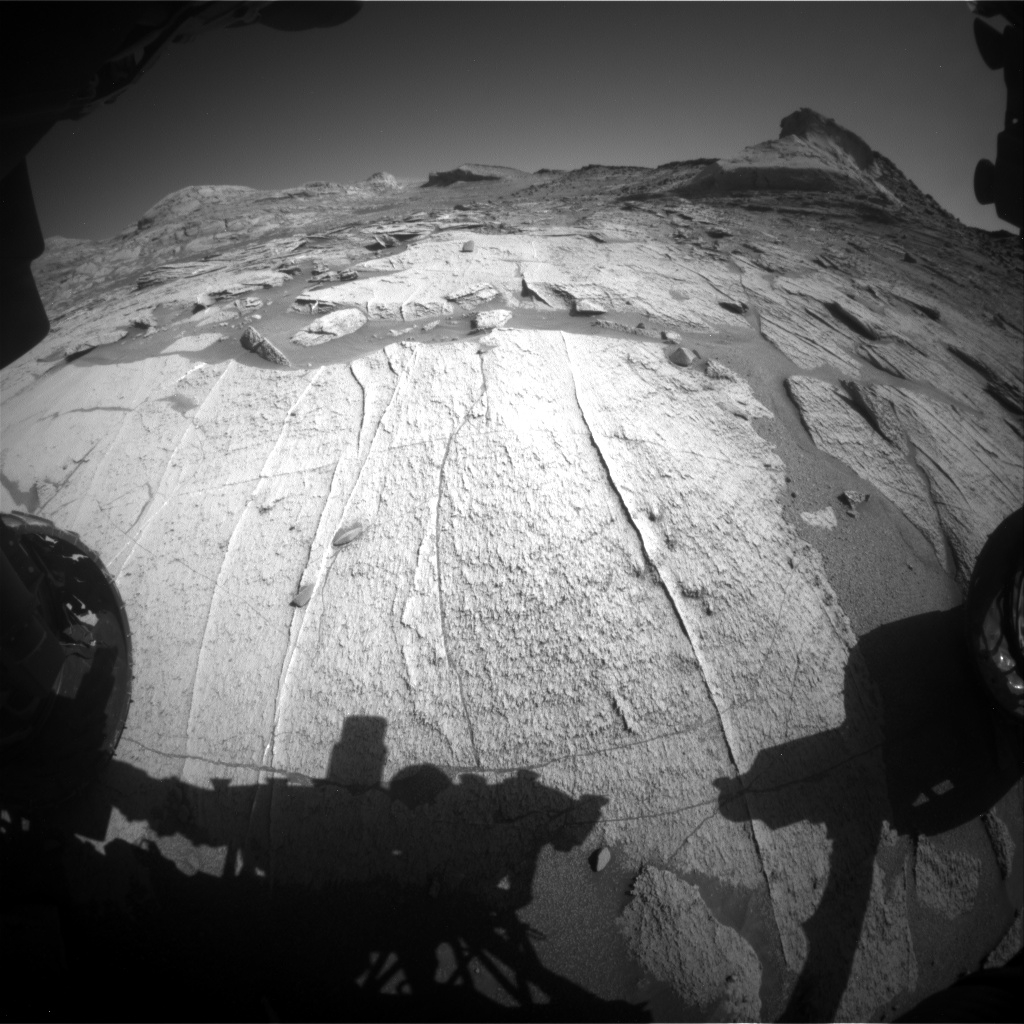
This image was taken through the fisheye lens of Curiosity’s front Hazcam, which is mounted close to the ground. It shows the workspace in front of the rover and towering Siccar Point, visible in the upper right. This image was taken by Front Hazard Avoidance Camera (Front Hazcam) on Sol 3274.
Credit: NASA/JPL-Caltech
The science team chose to continue Mastcam imaging of Siccar Point, Maria Gordon notch and the base of the pediment, which will also be imaged with long distance Chemistry and Camera (ChemCam) and its Remote Micro-Imager (RMI).
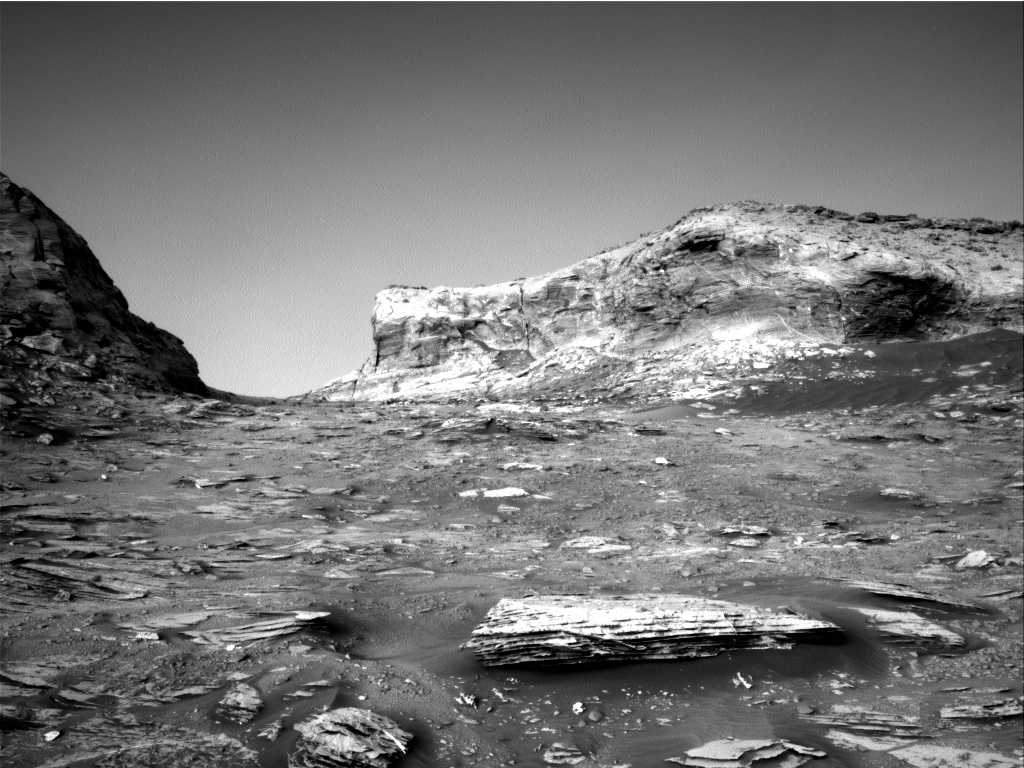
Curiosity Right B Navigation Camera image taken on Sol 3301, November 18, 2021.
Credit: NASA/JPL-Caltech
Interrogate bedrock target
“In the vicinity of the Zechstein drill hole, ChemCam will interrogate the chemistry of the nearby bedrock target, ‘Burrell’ with its laser, and perform passive spectroscopy on the dumped Zechstein drill fines. Both will also be imaged with Mastcam,” Thompson reports.
Lastly, environmental monitoring activities will include a Navcam dust devil survey, line of site observation and cloud movie. Standard Dynamic Albedo of Neutrons (DAN), Radiation Assessment Detector (RAD) and Rover Environmental Monitoring Station (REMS) activities round out the plan.

The State of the Space Industrial Base 2021- Infrastructure & Services for Economic Growth & National Security has been released.
The report was written by officials from the U.S. Space Force, the Air Force Research Laboratory and the Defense Innovation Unit.
This 92-page document summarizes discussions held with more than 250 government, industry and academic experts.

Credit: State of the Space Industrial Base 2021
Central message
As its central message, the report paints a picture of a U.S. space industrial base that is “tactically strong but strategically fragile.” While the pace of innovation and investment in the U.S. is at an all-time high, the report cautions that this will not be sustained “without strategic direction, robust adoption of commercial space capabilities expressed in meaningful contract opportunities,” among other elements.

Credit: State of the Space Industrial Base 2021
One key aspect of the report is “Build Back Beyond: Incorporate the Moon into the Earth’s Economic Sphere by Catalyzing the Space Superhighway.”
To read the full document, go to:
Also, go to this Atlantic Council-hosted video discussion of the report at:
https://www.atlanticcouncil.org/event/state-of-the-space-industrial-base-2021/

