Archive for the ‘Space News’ Category
 Author:
  December 8th, 2021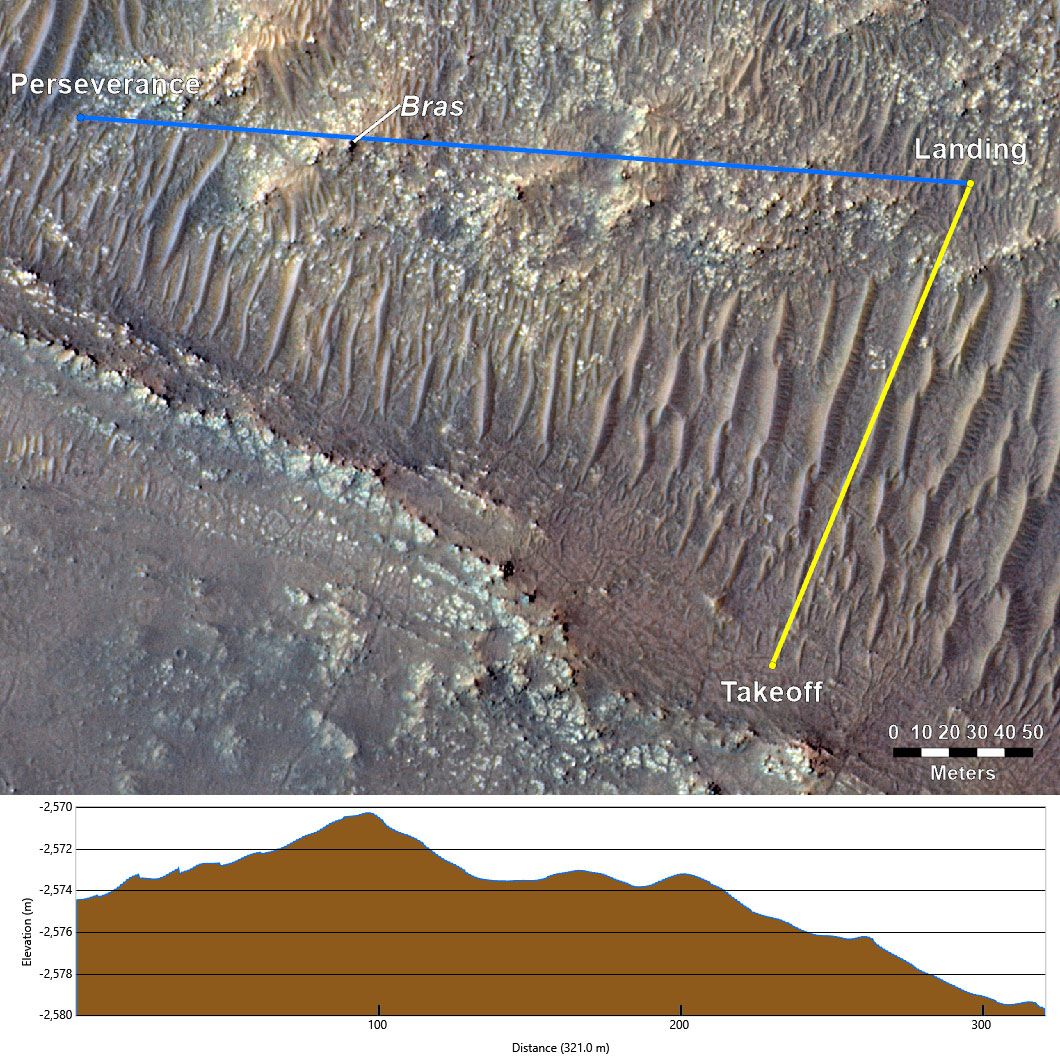
Annotated image from NASA’s Mars Reconnaissance Orbiter (MRO), and the topographic map below it, provide a look at the altitude of surface features standing between the agency’s Perseverance Mars rover and Ingenuity helicopter at the conclusion of the rotorcraft’s 17th flight at Mars on Dec. 5, 2021.
Credit: NASA/JPL-Caltech
NASA’s Mars helicopter experienced a glitch during Flight 17 that took place on Sunday, December 5th.
Teddy Tzanetos, Ingenuity Team Lead at NASA’s Jet Propulsion Laboratory, reports that a radio communications link between Ingenuity and the Perseverance Mars rover was disrupted during the final descent phase of the flight, following a planned 614-foot (187-meter) traverse.
“All available telemetry during and after the flight suggests that the activity was a success and that the loss of link was due to a challenging radio configuration between Perseverance and Ingenuity during landing,” Tzanetos adds.
Based on the telemetry, the aerial craft performed nominally during its 117-second flight 33 feet (10 meters) above the surface of Mars. The telemetry cut out during the final third of the craft’s descent, roughly 10 feet (3 meters) off the surface.
Line of sight
The problem cropped up as Ingenuity began to descend and the line of sight between the rover and helicopter antennas began to become obstructed/shadowed by a 13-foot (4-meter) hill called “Bras.”
The first opportunity to downlink the missing data from Flight 17 will be no earlier than (today) Wednesday, “after which the team will finalize its health assessment,” Tzanetos reports.

Credit: NASA/JPL-Caltech
This 17th flight was designed to continue the helicopter’s journey back to the “Octavia E. Butler” landing site by flying halfway across “South Séíitah.”
“We are planning on Flight 18 to occur in the next two weeks, which would bring Ingenuity another ~200 meters northeast, just shy of the northern edge of S. Séítah,” Tzanetos says.
For more details, go to:
https://mars.nasa.gov/technology/helicopter/status/350/flight-17-discovering-limits/
 Posted in
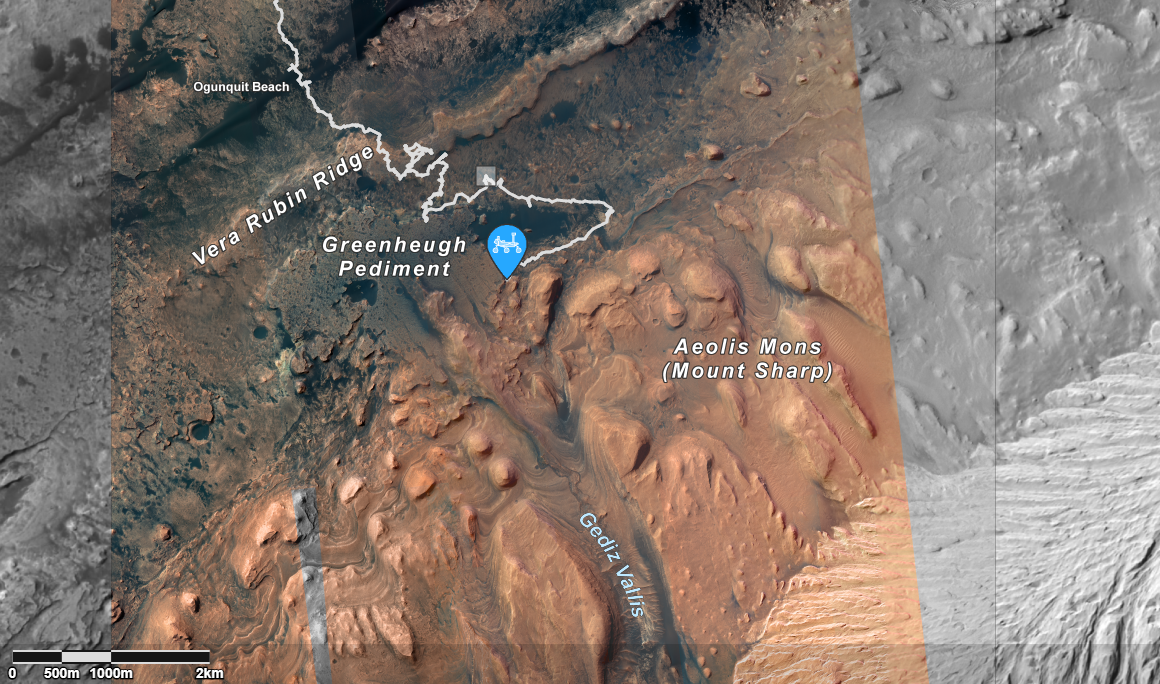
Curiosity’s location as of Sol 3318. Distance driven 16.57 miles/26.67 kilometers.
Credit: NASA/JPL-Caltech/Univ. of Arizona
NASA’s Curiosity Mars rover at Gale Crater is now performing Sol 3319 duties.
Scott Guzewich, an atmospheric scientist at NASA’s Goddard Space Flight Center in Greenbelt, Maryland, reports that Curiosity is preparing to “shoot the gap” and dash through the Maria Gordon notch in the sols ahead. “Already we have a spectacular view of the 12 m (39 feet) tall cliff on the right/west side of the Notch.”
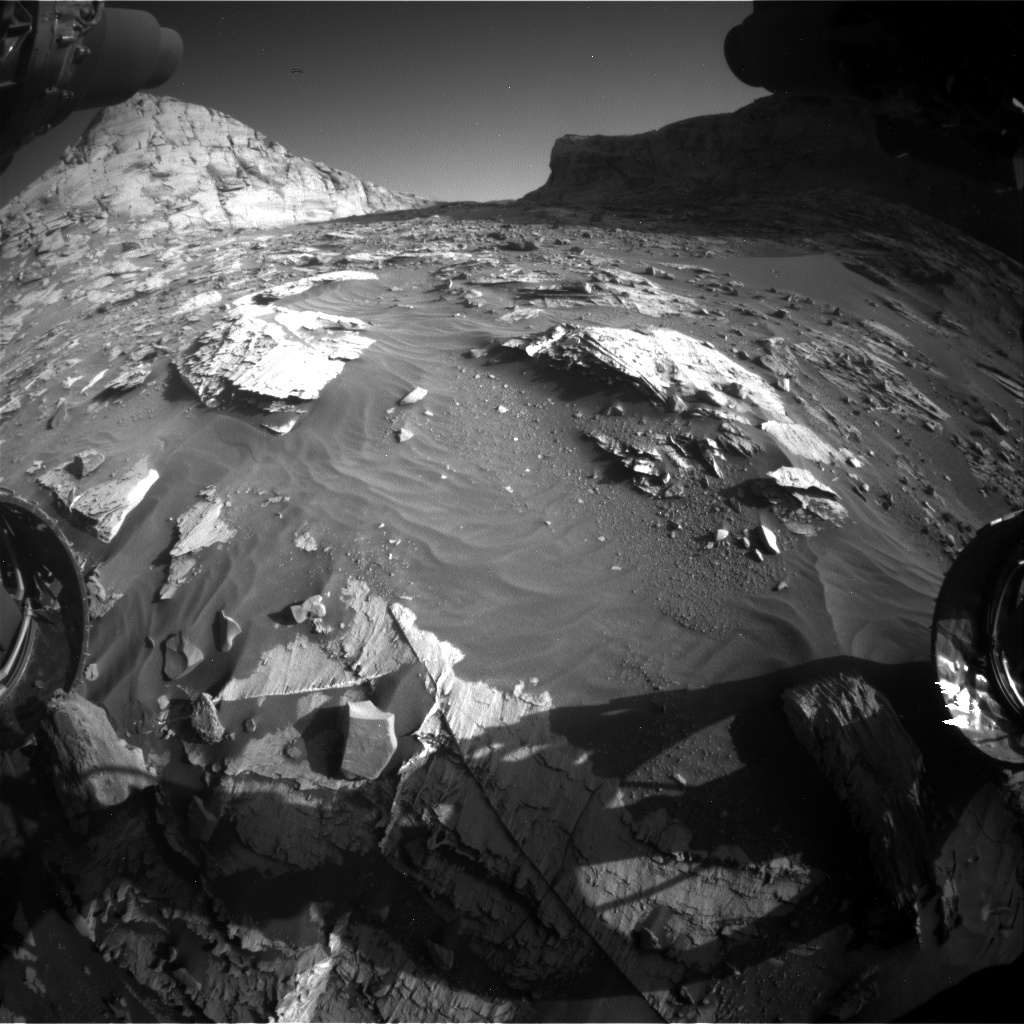
“Shoot the Gap” – Curiosity Front Hazard Avoidance Camera Right B image taken on Sol 3318, December 6, 2021.
Credit: NASA/JPL-Caltech
A recent plan included additional imaging of the cliff face.
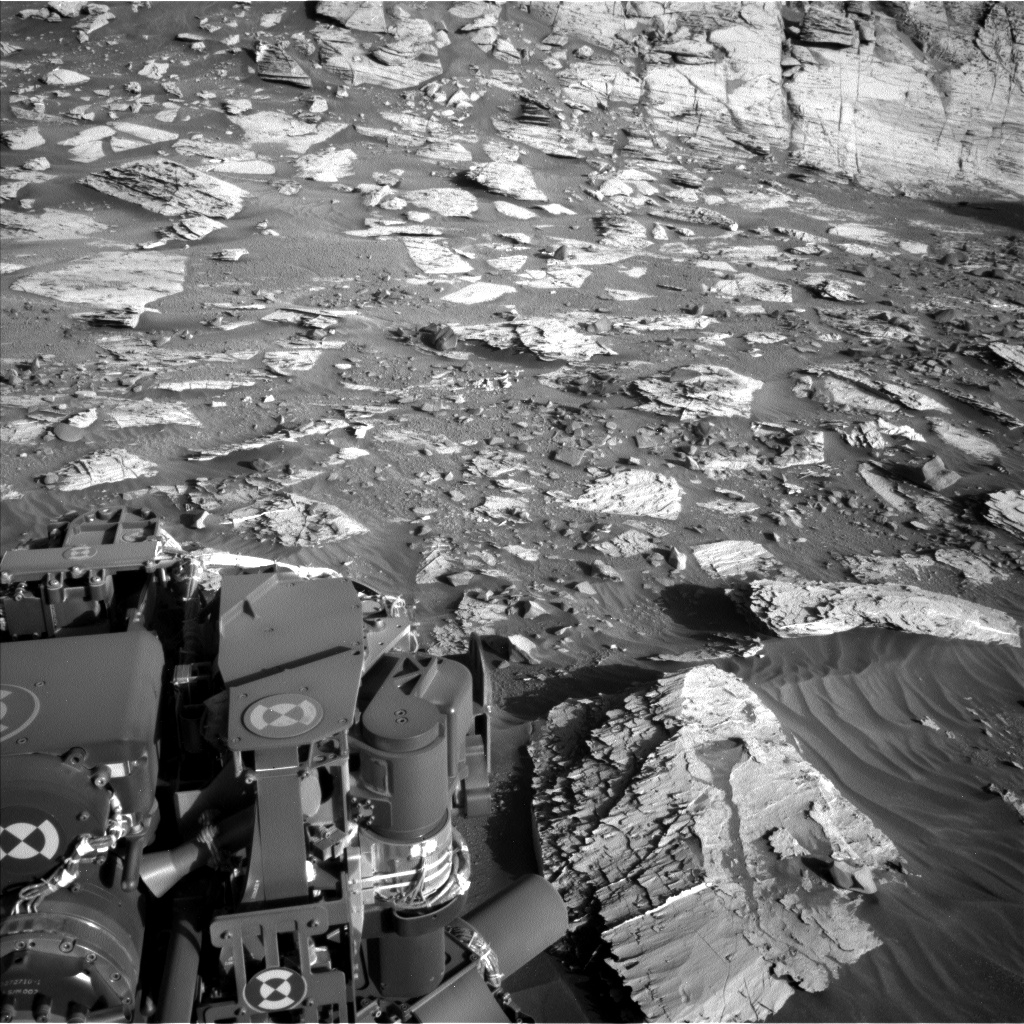
Curiosity Left B Navigation Camera image acquired on Sol 3318, December 6, 2021.
Credit: NASA/JPL-Caltech
Neutron bombardment
A mini-campaign is on tap for the robot’s Dynamic Albedo of Neutrons (DAN) to study the composition of the cliff face. DAN “active” sequences — when DAN generates neutrons to bombard the ground below the rover and help determine its hydration and composition– and a long DAN “passive” sequence — when Mars researchers let the Universe provide the neutrons.

Curiosity Left B Navigation Camera image acquired on Sol 3318, December 6, 2021.
Credit: NASA/JPL-Caltech
Also scheduled, Guzewich adds, were brief contact science periods with the Alpha Particle X-Ray Spectrometer (APXS) and Mars Hand Lens Imager (MAHLI) on a large block in the workspace, a drive, and a late afternoon Mastcam sky survey to study airborne dust particles.
A rover drive will bring the Mars machinery into the edge of the valley where scientists can identify an ideal location for DAN’s planned campaign later this week.
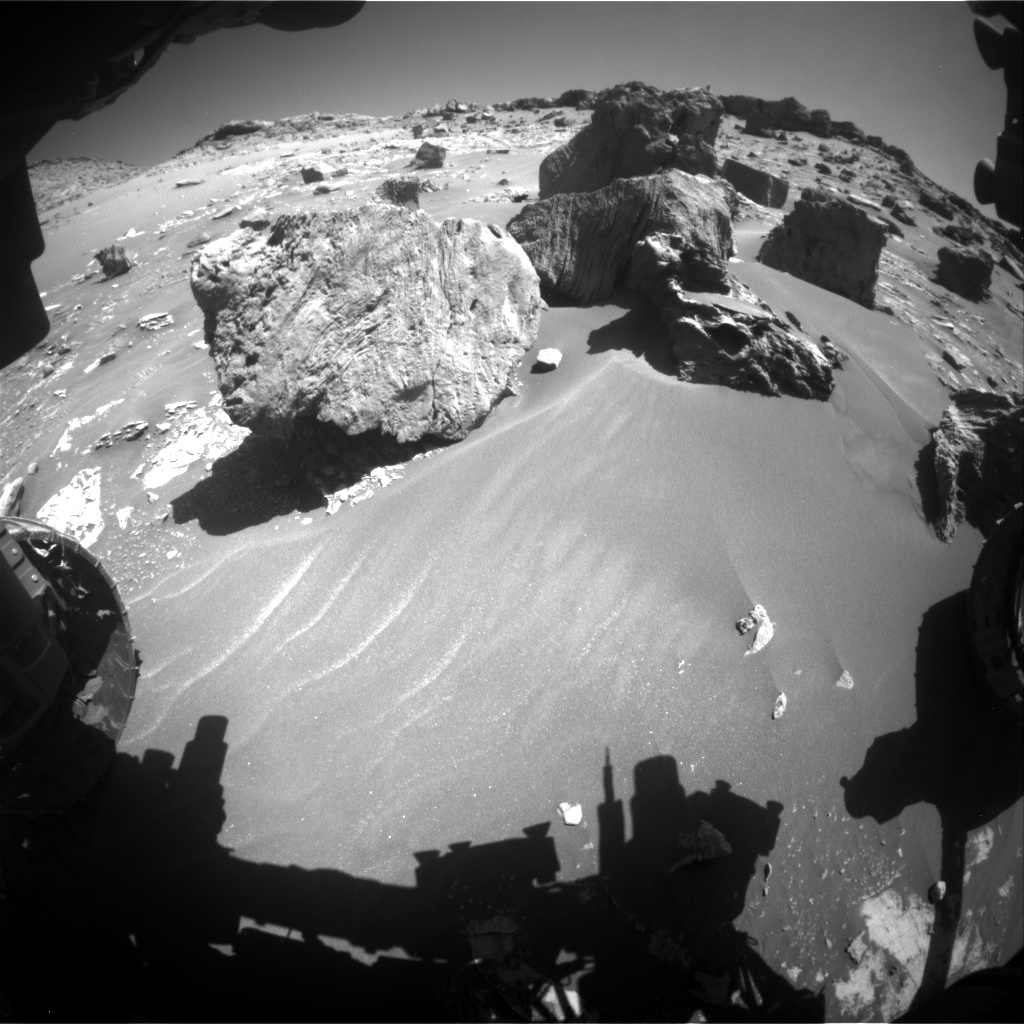
Gifts from above! Image taken by Curiosity’s Front Hazard Avoidance Camera Sol 3314, December 2, 2021.
Credit: NASA/JPL-Caltech
Juicy workspace
In an earlier report, authored by Lauren Edgar, a planetary geologist at the USGS Astrogeology Science Center in Flagstaff, Arizona, Curiosity is continuing to investigate “a juicy workspace full of a variety of boulders.”

Curiosity Left B Navigation Camera image acquired on Sol 3318, December 6, 2021.
Credit: NASA/JPL-Caltech
One rover team member described these as “gifts from above,” Edgar notes, “which sounds like the perfect description for these beautiful rocks!”
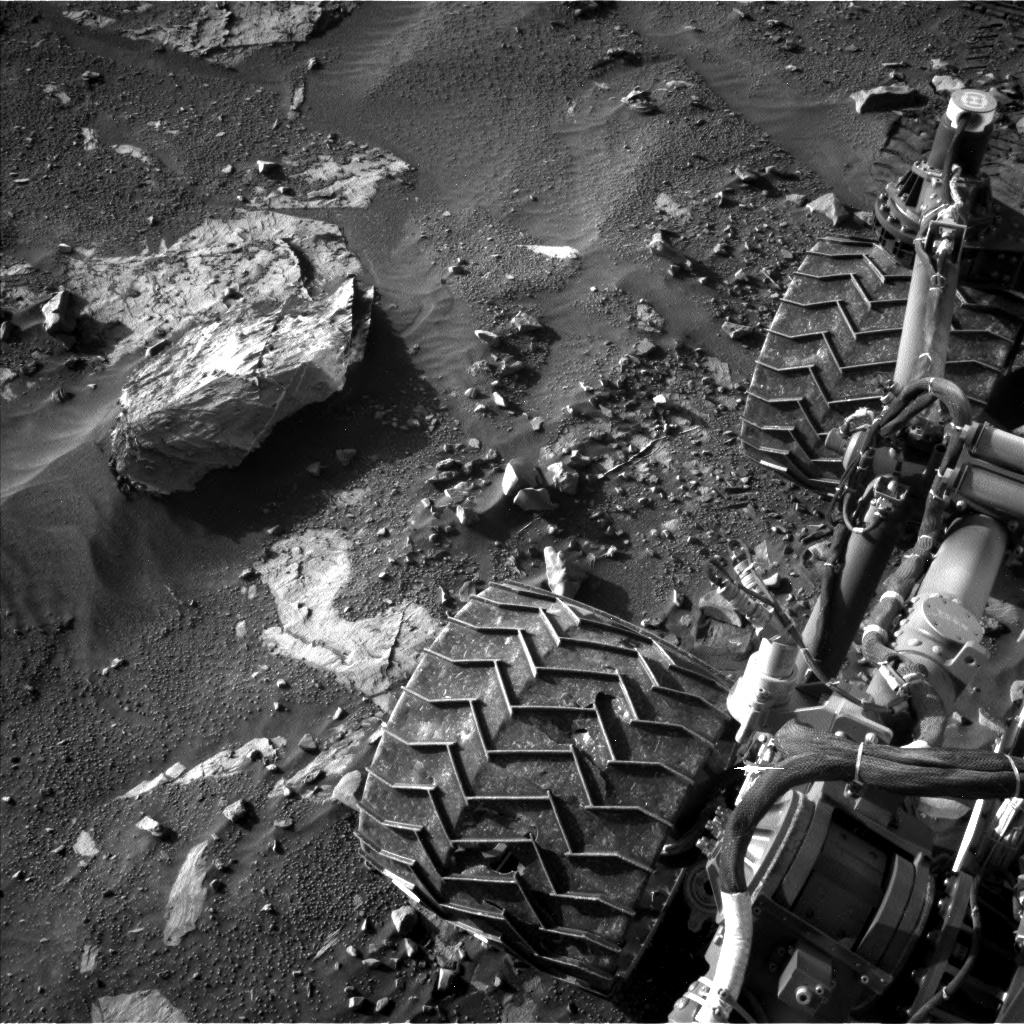
Curiosity Left B Navigation Camera image acquired on Sol 3318, December 6, 2021.
Credit: NASA/JPL-Caltech
These boulders have tumbled downslope from the pediment capping unit above the robot, providing a great opportunity to investigate the chemistry of the different textures seen.
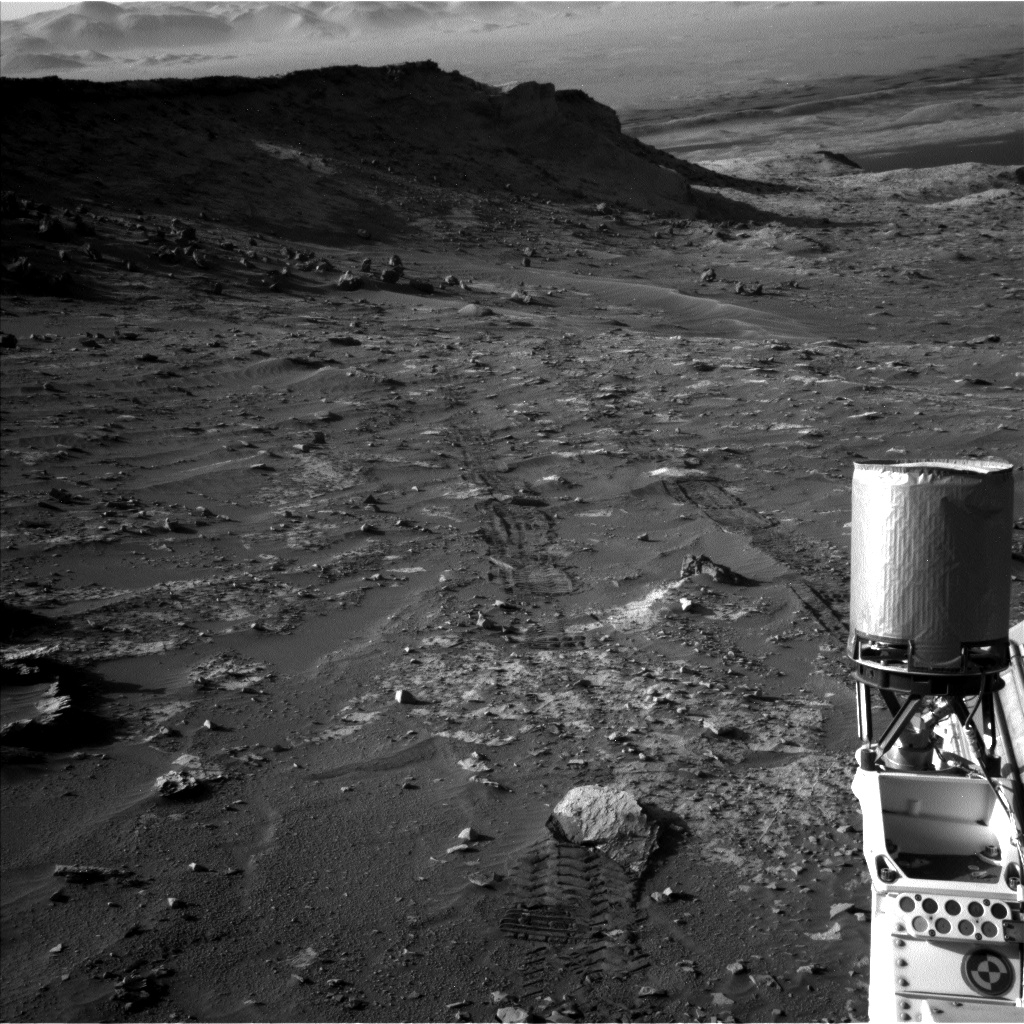
Curiosity Left B Navigation Camera image acquired on Sol 3318, December 6, 2021.
Credit: NASA/JPL-Caltech
Back on the road
A recent 3-sol plan (sols 3316-3318) focused on wrapping up contact science at these boulders and then getting back on the road to the south.
“Normally we would only plan one contact science target in a weekend,” Edgar explains, “but we managed to get two targets for MAHLI and APXS observations (named “Whaligoe Steps” and “Laurentia”) and an additional MAHLI mosaic across the boulder which includes “Whaligoe Steps” to assess different textures.”
Beautiful views ahead
“We also planned [Chemistry and Camera] ChemCam observations on ‘Small Seal Islands, ‘Dura Den,’ and ‘Sarclet’ to investigate variability in the chemistry of these boulders, and Mastcam mosaics to document their sedimentary textures and spectral characteristics,” Edgar says.
In addition to all of the geology observations, Curiosity was to have a busy weekend monitoring the sky and searching for dust devils and clouds at different times of day.
“On the third sol we planned a drive to the south,” Edgar concludes, “heading towards ‘Maria Gordon notch.’ Stay tuned for some beautiful views ahead!”

Credit: CNSA/CLEP
There’s lots of Internet buzz about a purported “hut” imaged by China’s farside rover – Yutu-2.
Before you request a reservation at the so-called “Mystery House” as tagged in a Chinese Yutu-2 drive diary, take note.
It is a rock on a crater rim north of the rover’s last night parking location, advises Philip Stooke, Professor Emeritus and Adjunct Research Professor in the Department of Geography and Institute for Earth and Space Exploration at the University of Western Ontario.

Credit: CNSA/CLEP
“Yutu 2 will be a bit further on by now, moving towards that crater,” Stooke told Inside Outer Space. The rock is just visible in imagery snapped by NASA’s Lunar Reconnaissance Orbiter (LRO).

Map showing the latest position of China’s Yutu-2 rover and also the “Mystery House.” Credit: NASA/GSFC/Arizona State University/Philip Stooke
Clickbait
“Chinese media are very eager to find all sorts of strange things on the Moon. We tend to think they are all tightly controlled and just repeat the party line, but there is a ton of stuff spinning every news item into a sensational headline…alien bases, millions of tons of priceless metals or unspecified substances, conspiracies about western interests in space and everything else,” Stooke adds.
China did recently issue a serious story about carbonaceous chondrite material discovered in a small crater, the same crater reported as having a ‘gel-like substance’ 2 years ago), Stooke says.

China’s Yutu-2 rover.
Credit: CNSA/CLEP
Apart from serious stories, there have been lots of headlines about alien substances (or even aliens) found on the Moon, the lunar expert says, all adding up to nothing more than clickbait.
“So I am not surprised that a rock which, in low resolution images, looks roughly square and is played up as a hut or other type of building,” Stooke says. “Scientifically, the rock could be interesting and I expect it or nearby rocks on the crater rim to be studied in detail when they reach it early in 2022. But it won’t look like a hut,” he concludes.

Credit: CCTV/Inside Outer Space screengrab
A leading designer of China’s Moon exploration program, and an academician of the Chinese Academy of Sciences, advises that the country could perform a crewed lunar landing before 2030.
“I personally think that as long as the technological research for manned moon landing continues, and as long as the country is determined (to achieve the goal), it is entirely possible for China to land people on the moon before 2030, ” said Ye Peijian in a recent China Central Television (CCTV) interview.
As reported by China’s Xinhua news agency, Ye added: “Countries that can lead in space technology have advanced technologies in various fields. In turn, space technology is something that can feed back to technologies in other aspects.”

Chinese President Xi Jinping inspects Chang’e-5 lunar sample return capsule.
Credit: CCTV/Inside Outer Space screengrab
Return sample success
In December 2020, China’s Chang’e-5 robotic lunar lander retrieved lunar samples weighing about 1,731 grams. Chang’e-5 was the first lunar sample-return mission since the Soviet Union’s Luna 24 in 1976. The successful mission made China the third country to return specimens from the Moon after the former Soviet Union and via the U.S. Apollo program.
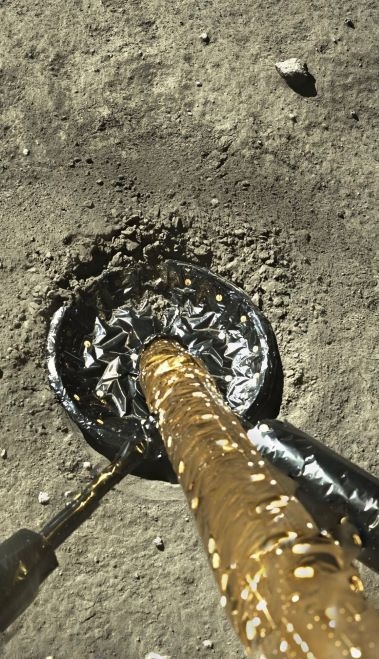
Landing leg of Chang’e-5 lander.
Credit: CNSA/CLEP
Ye served as the chief director of Chang’e-5 program.
After studying the Chang’e-5 lunar samples, Chinese researchers in October announced that they have dated the youngest Moon rock at around 2 billion years in age. The finding extended the “life” of lunar volcanism 800-900 million years longer than previously known, the Xinhua story notes.
Ye said the discovery about the history of the Moon bolstered China’s space research status in the international community. After the Moon and Mars, China’s next target in deep-space exploration could be an asteroid mission, Ye said, adding that his team is already working on the effort.

The U.S. Defense Advanced Research Projects Agency (DARPA) is moving forward on the Novel Orbital and Moon Manufacturing, Materials and Mass-efficient Design (NOM4D) program. (Image credit: DARPA)
There is growing interest in protecting strategic assets in cis-lunar space. Not only is the U.S. Space Force engaged in reflecting on the topic of how best to extend military presence far from Earth – so too is China and others.
Parallel to air, land, sea, or polar skirmishes between nations here on Earth, is cis-lunar, and perhaps the moon itself, an emerging “high-ground” and new territory for conflict? There’s a variance of views according to Space.com outreach.

Carving up near-moon locales: How strategic could this be for military interests? (Image credit: Aerospace Corporation)
To read my new Space.com story, go to:
“Military interest in the moon is ramping up – ‘Cislunar space has recently become prominent in the space community and warrants attention,’ a recent Air Force Research Laboratory document states,” at:
NASA’s Curiosity Mars rover is now carrying out Sol 3316 tasks at Gale Crater.
New imagery from the robot shows the Mars machinery at work and views of the surrounding scenery:
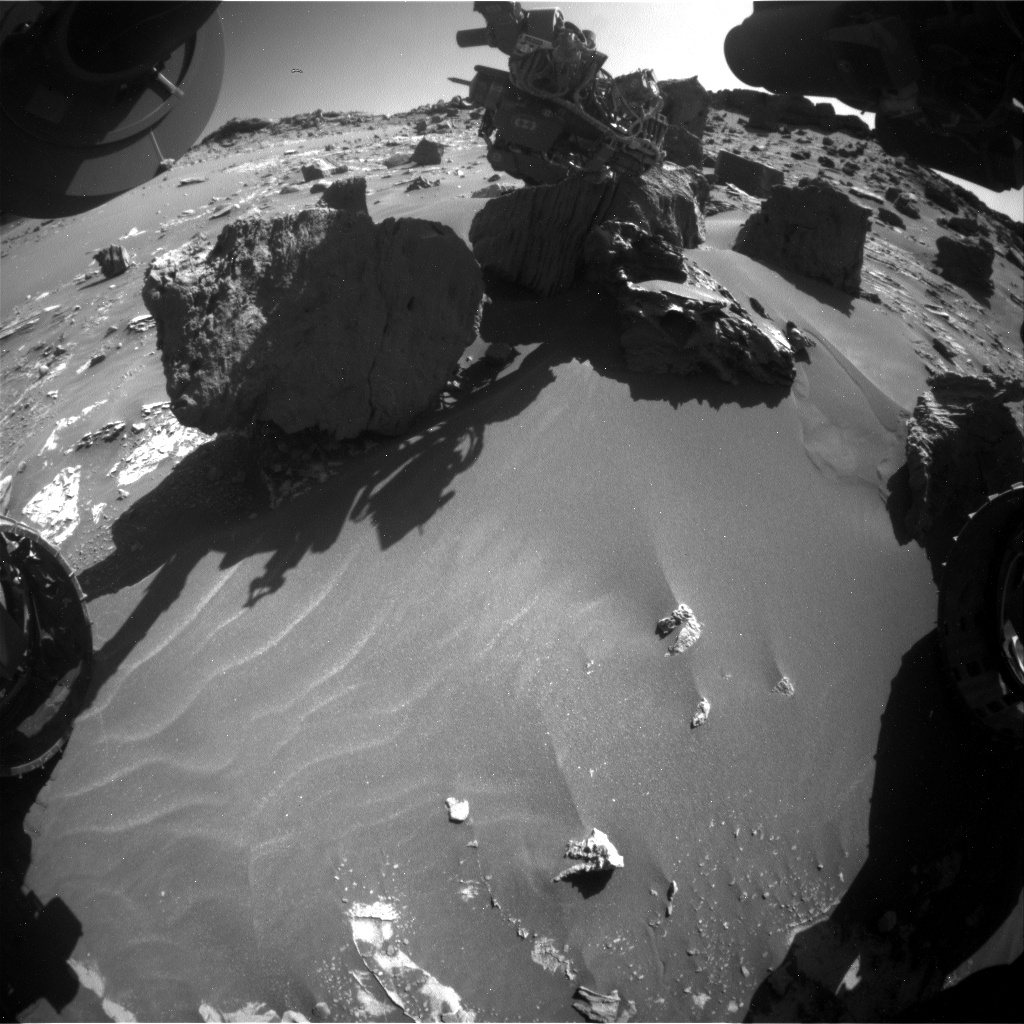
Curiosity Front Hazard Avoidance Camera Right B image taken on Sol 3316, December 4, 2021.
Credit: NASA/JPL-Caltech
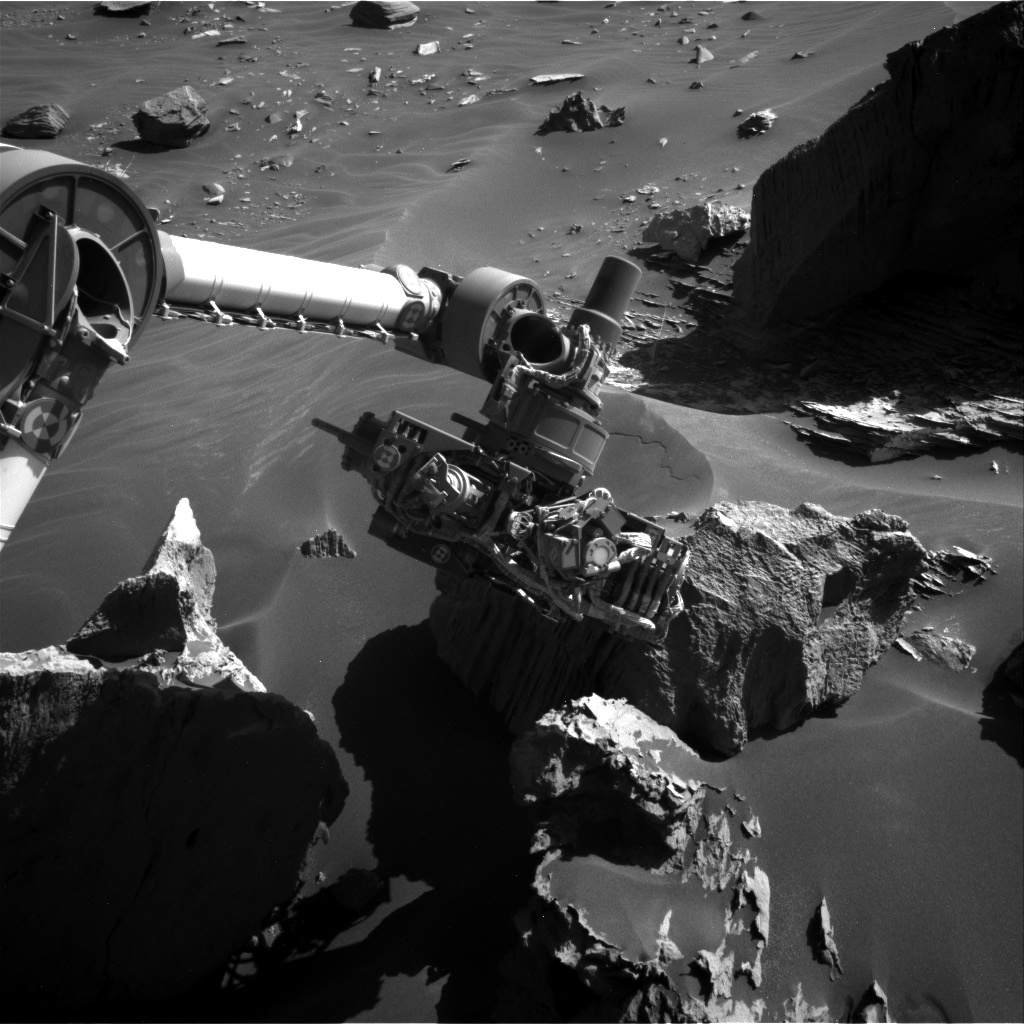
Curiosity Right B Navigation Camera image acquired on Sol 3316, December 4, 2021.
Credit: NASA/JPL-Caltech
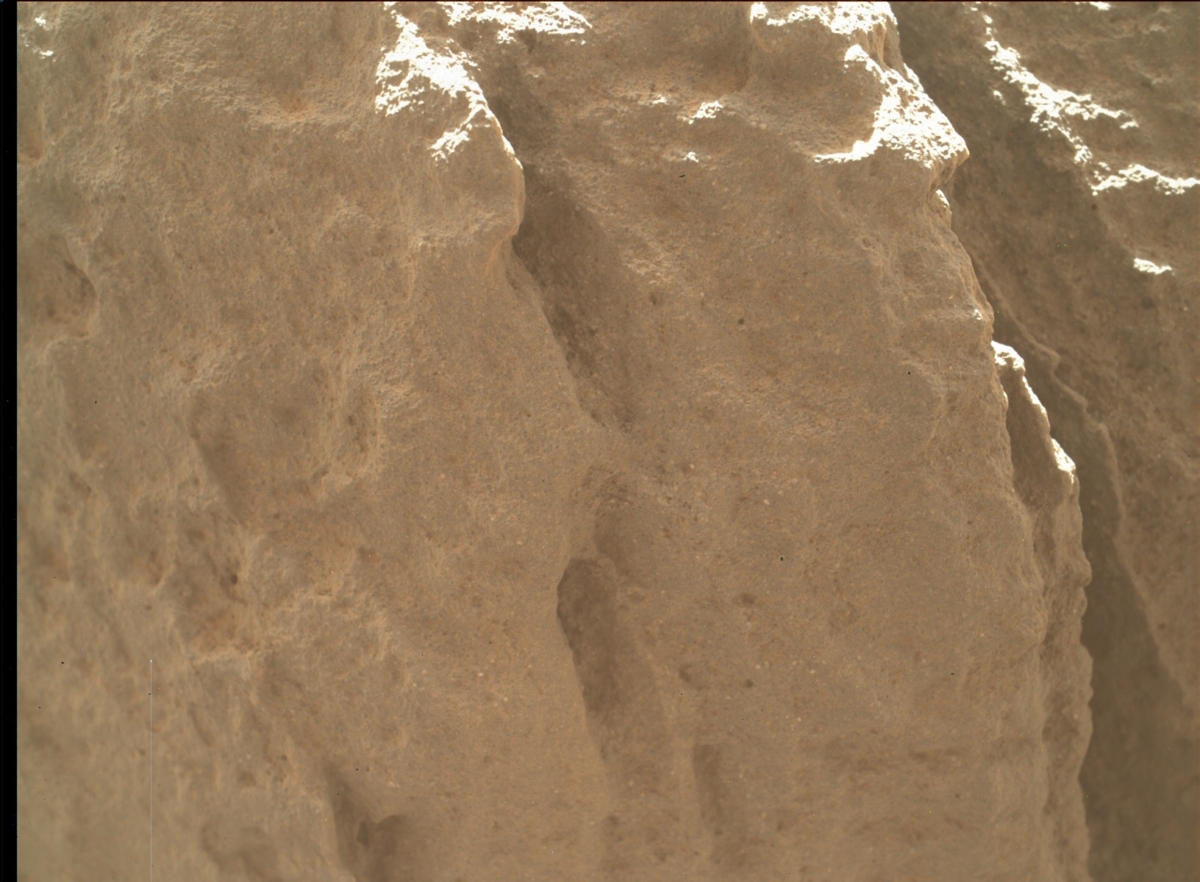
Curiosity Mars Hand Lens Imager photo produced on Sol 3316, December 4, 2021.
Credit: NASA/JPL-Caltech/MSSS
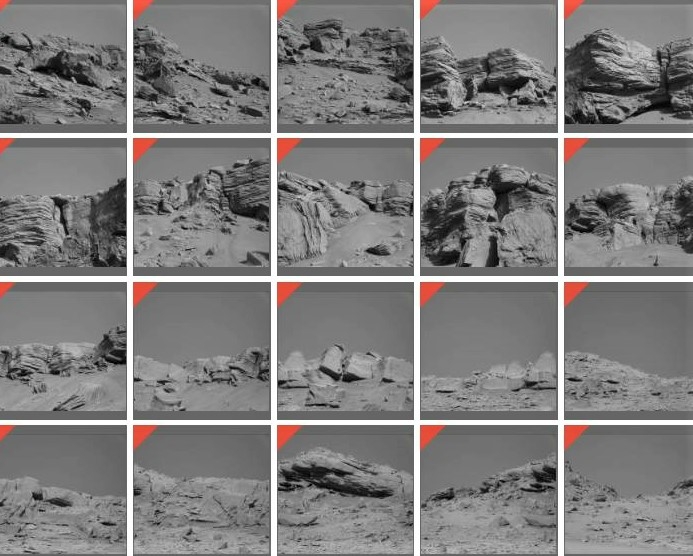
Mosaic of imagery via Curiosity Mast Camera Right, taken on Sol 3315, December 3, 2021.
Credit: NASA/JPL-Caltech/MSSS
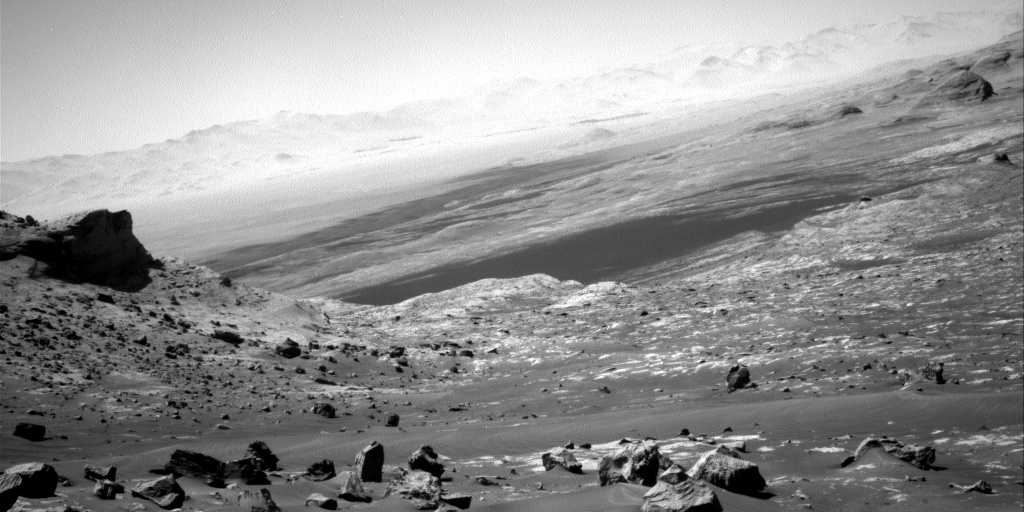
Curiosity Right B Navigation Camera photo taken on Sol 3315, December 3, 2021.
Credit: NASA/JPL-Caltech

This figure highlights how debris from the Russian military’s test cross the orbit of the International Space Station, China’s new Tiangong space station, and the orbits of several large satellite constellations made up, collectively, of 1000s of satellites.
Credit: OSI
A new assessment of the recent Russian anti-satellite test has been released by the Outer Space Institute (OSI), based at the University of British Columbia in Vancouver, Canada.
The Russian military used a ground-based missile to strike their defunct Cosmos-1408 satellite on November 15, 2021.
The defunct Soviet-era satellite had a mass of about 1.7 metric tons (1,750 kilograms) and was orbiting at an altitude of about 298 miles (480 kilometers).
“Due to the high impact energies involved, debris from a kinetic anti-satellite (ASAT) test such as this end up on highly eccentric orbits that cross the orbits of 1000s of other satellites twice per revolution,” the OSI paper explains.

Clutter in the cosmos.
Credit: Used with permission: Melrae Pictures/Space Junk 3D
Non-trackable debris
While some of the debris from the Russian ASAT test will deorbit quickly, a significant fraction will remain in orbit for years or longer, the preliminary OSI discussion paper points out.
“Of particular concern is the non-trackable debris, which will be more abundant than the trackable debris by at least an order of magnitude. Since small debris cannot be detected, collision avoidance maneuvers cannot be used to protect against them. And at typical relative speeds of about 10 km/s (36,000 km/hr), even a tiny piece can disable a satellite or kill an astronaut,” the OSI paper adds.
The Outer Space Institute (OSI) is network of world-leading space experts. For more information on their work, go to:
http://outerspaceinstitute.ca/
To read the full paper – Russian ASAT test: A preliminary discussion — by Aaron Boley and Michael Byers, OSI co-directors, go to:
http://outerspaceinstitute.ca/docs/RussianASAT_PrelimDiscussion.pdf
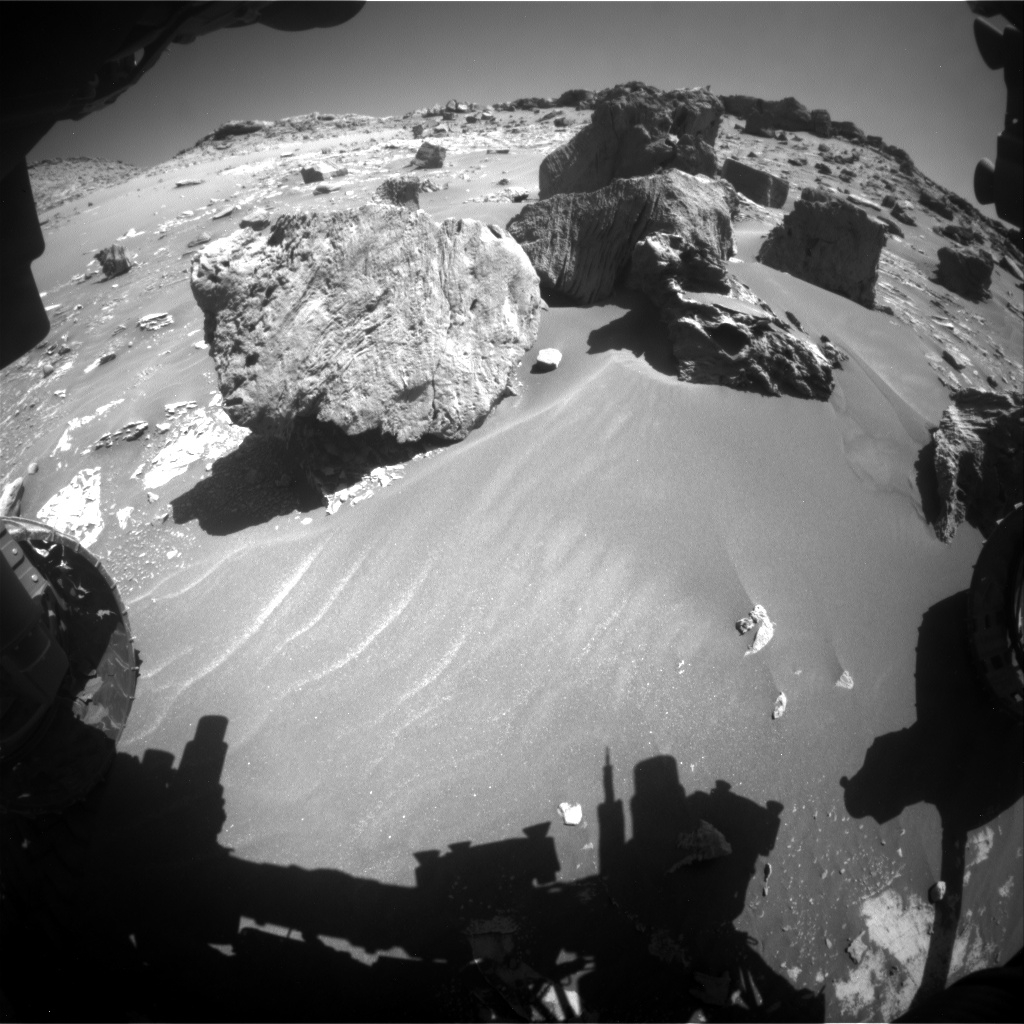
Curiosity Front Hazard Avoidance Camera Left B photo taken on Sol 3314, December 2, 2021.
Credit: NASA/JPL-Caltech
NASA’s Curiosity Mars rover at Gale Crater is now performing Sol 3315 tasks.
Curiosity scored a perfect drive to some boulders that the science team have been interested in investigating, reports Lucy Thompson, a planetary geologist at University of New Brunswick; Fredericton, New Brunswick, Canada
“The large boulders are thought to represent the darker, resistant rocks exposed just above us that cap the underlying less resistant, lighter colored rocks we have been driving over,” Thompson adds.

Curiosity Left B Navigation Camera image acquired on Sol 3314, December 2, 2021.
Credit: NASA/JPL-Caltech
Different textures
The caprocks and boulders both show two different textures; 1) layered and 2) more massive and irregular with cavities.
The team wants to examine these different textures in more detail and determine whether there are differences in composition between the two.
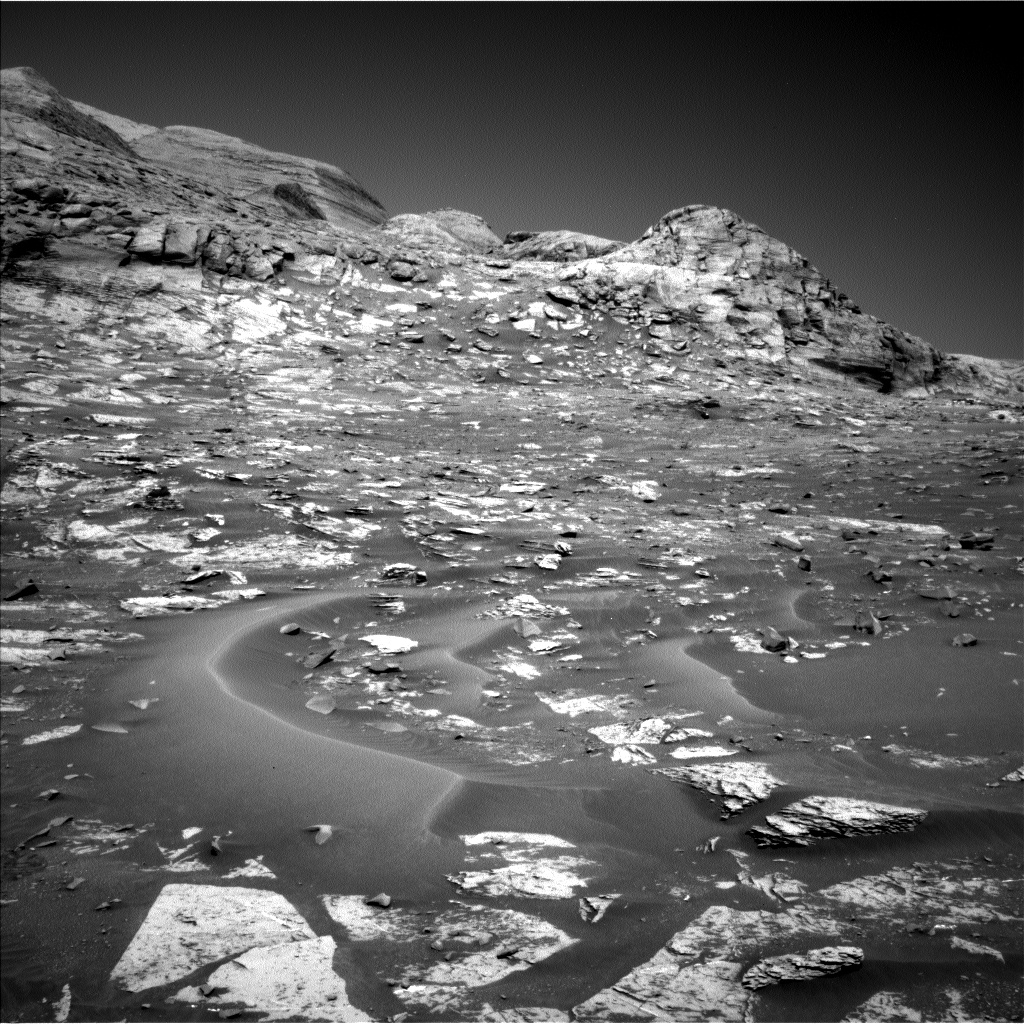
Curiosity Left B Navigation Camera image acquired on Sol 3314, December 2, 2021.
Credit: NASA/JPL-Caltech
“We will also be able to compare the chemistry of these boulders with the pediment capping sandstones we analyzed when we first ascended the pediment. Does the more massive texture represent alteration of the layered caprock? This contact is an important one within Gale crater and represents an unconformity (a gap in time) between the underlying Mount Sharp group (laid down in lakes and rivers) and the overlying Siccar Point group (primarily wind-blown sedimentary rocks),” Thompson points out.
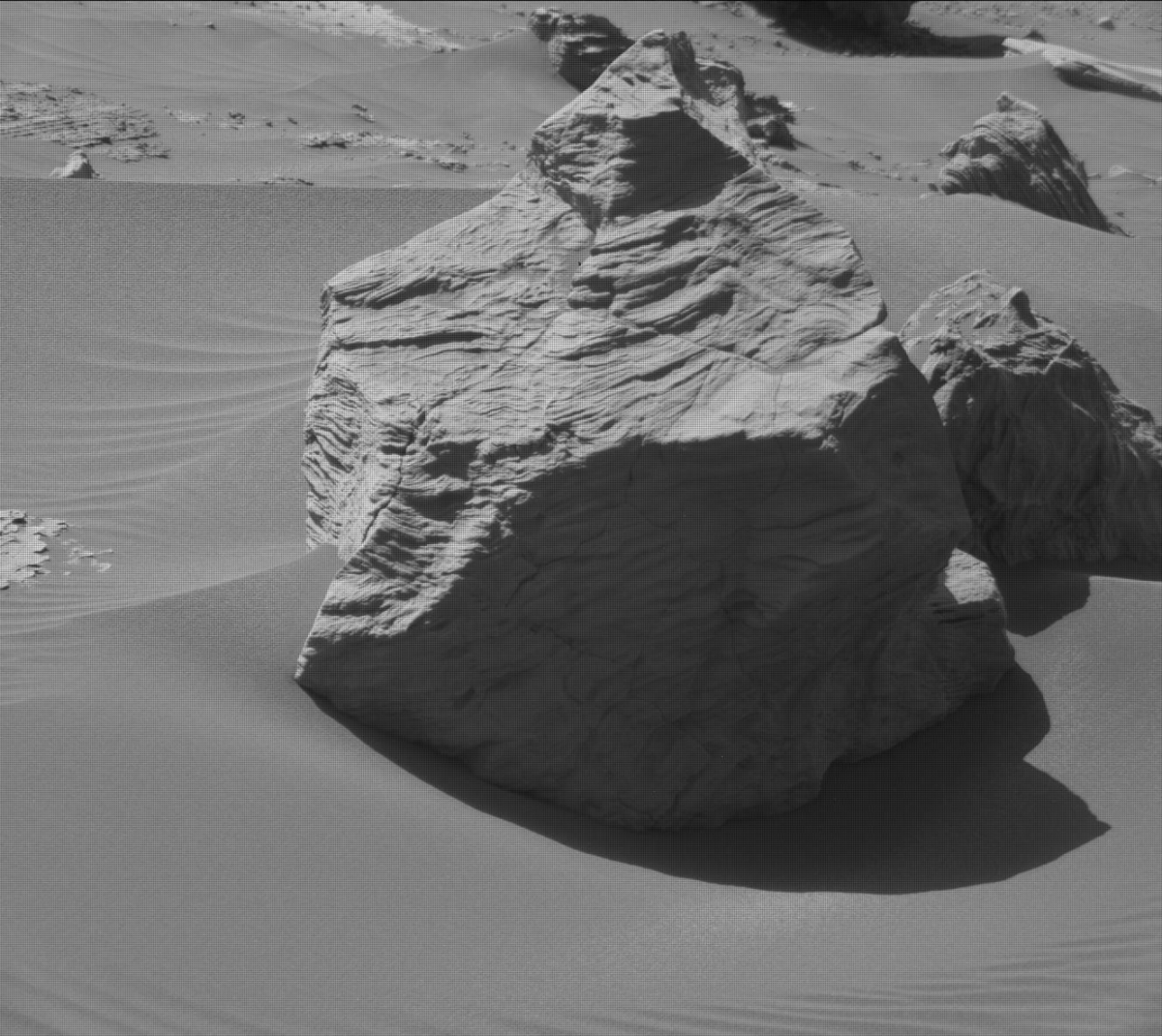
Curiosity Mast Camera Right photo taken on Sol 3313, December 1, 2021.
Credit: NASA/JPL-Caltech/MSSS
More massive rock
Recently, the robot placed the Alpha Particle X-Ray Spectrometer (APXS) and Mars Hand Lens Imager (MAHLI) instruments in contact with the “Yarrow Stone” target, which will allow Mars researchers to examine the chemistry and close-up texture of the more massive rock.
“We can compare the composition with the small, layered float, APXS target, ‘Camusnagaul,’” acquired in a recent plan, Thompson notes.
Curiosity’s Chemistry and Camera (ChemCam) will use passive spectroscopy to examine the same “Yarrow Stone” target, and the Laser Induced Breakdown Spectroscopy (LIBS) is slated to look at another spot on the same boulder (“Avochie”), also with the massive texture.

Curiosity Right B Navigation Camera image taken on Sol 3314, December 2, 2021.
Credit: NASA/JPL-Caltech
Source of boulders
Scientists want to examine the layered, “Borve” target on the same block with ChemCam LIBS. Mastcam will acquire complementary imaging of these targets and the surrounding area. MAHLI will also image two of the layered targets (“Whaligoe Steps” and “Arainn”), which we may try to place APXS on over the weekend. To investigate the probable source area for these boulders, we plan to take Mastcam and ChemCam [Remote Micro-Imager](RMI) imaging of the pediment.
Environmental monitoring activities will include a Navcam dust devil movie and line of site observation, a Mastcam tau.Standard Dynamic Albedo of Neutrons (DAN), Radiation Assessment Detector (RAD) and Rover Environmental Monitoring Station (REMS) activities round out the plan, Thompson concludes.
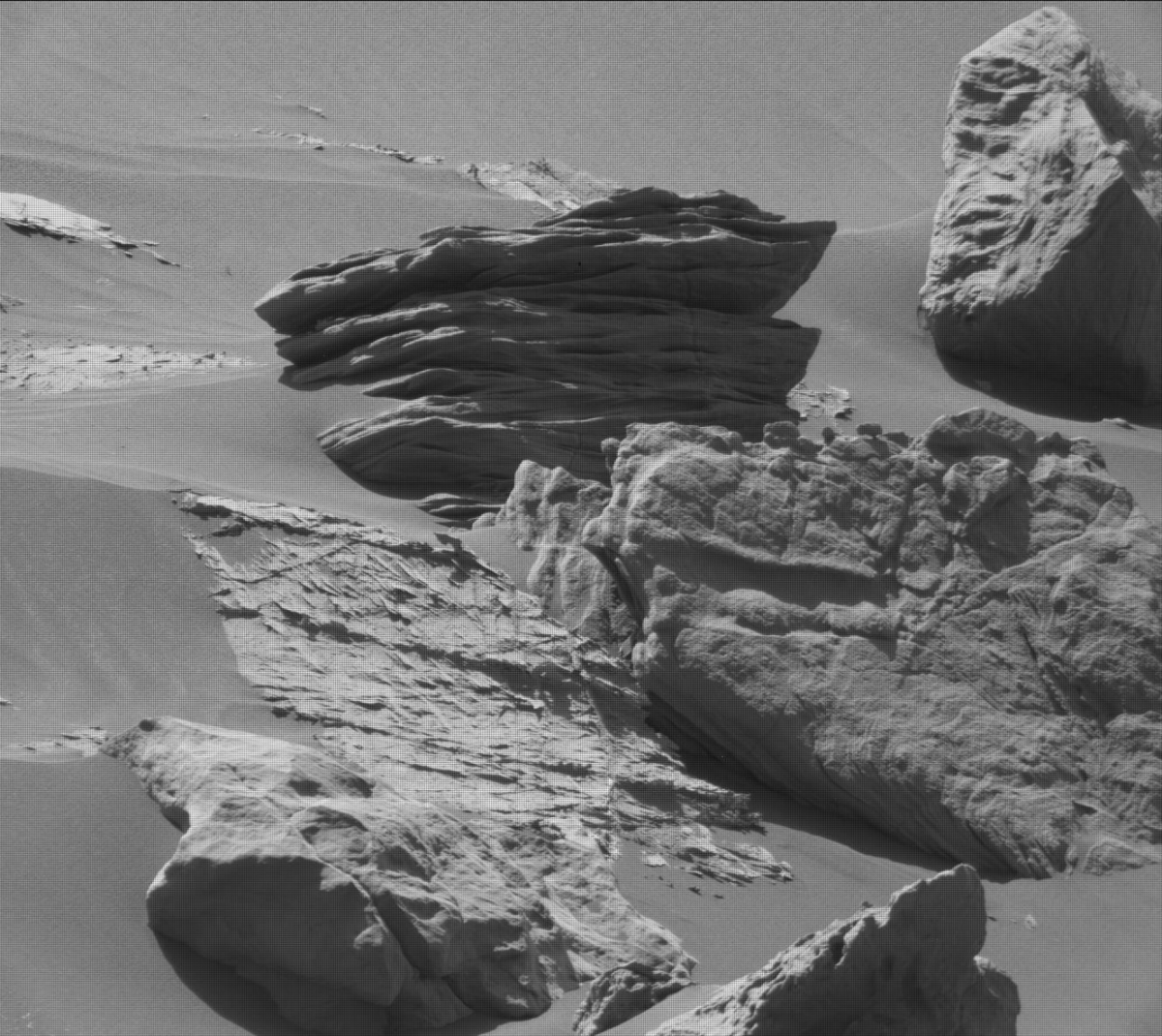
Curiosity Mast Camera Right photo taken on Sol 3313, December 1, 2021.
Credit: NASA/JPL-Caltech/MSSS
Road less traveled
Fred Calef, a planetary geologist at NASA’s Jet Propulsion Laboratory, also reports, the rover’s recent drive took the “road less traveled” to investigate a bunch of boulders shed down from a cliff face off to the side of our expected traverse to the south.
“Why? Beneath the Greenheugh Pediment, the flat-lying, high-standing escarpment to the west, the scientists could see a unique layer with a convoluted texture,” Calef says. The robot’s drive means the Mars machinery is headed to blocks from this layer that have rolled down close to the cliff base.
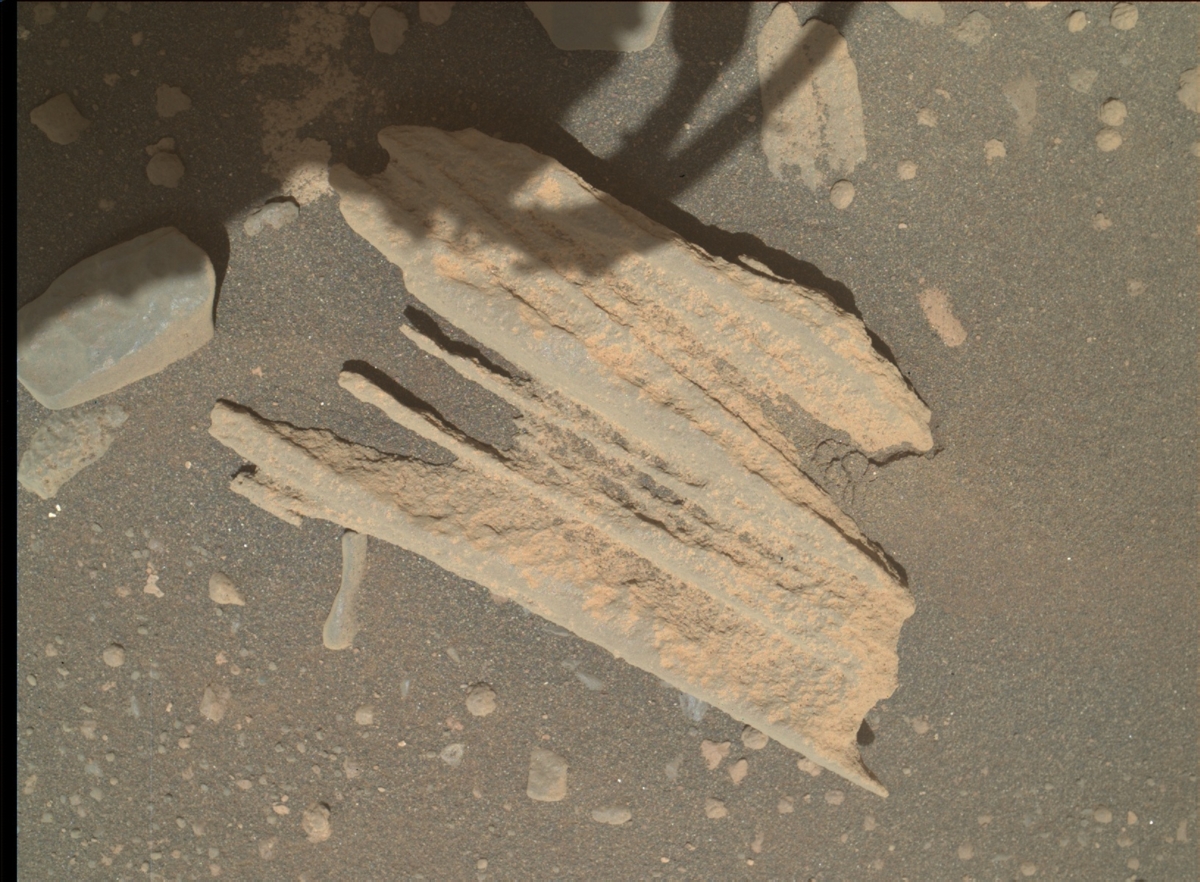
Curiosity Mars Hand Lens Imager photo produced on Sol 3313, December 1, 2021.
Credit: NASA/JPL-Caltech/MSSS
First, the rover will do some contact science with MAHLI on target “Camusnagaul,” which is likely a fragment from the top of the pediment.
Calef explains that ChemCam and Mastcam observations will be targeted on “Dutch Village” to create a higher resolution mosaic of the pediment.
Another Mastcam mosaic will be created on “Old Scatness” to document some partially exposed bedrock near the rover as well as one on the nearby boulder field, Calef concludes.

Credit: NASA/Joel Kowsky
On December 1, 2021, the Biden administration hosted its first meeting of the National Space Council. Chaired by U.S. Vice President Kamala Harris, the event was held at the United States Institute of Peace in Washington, DC.

Credit: NASA/Joel Kowsky

Credit: NASA/Joel Kowsky
U.S. President Biden issued an executive order expanding and modifying the National Space Council. The executive order can be viewed at:
A Space Council overview can be read here:
https://www.whitehouse.gov/spacecouncil/
To view the Biden Administration’s United States Space Priorities Framework, go to:
To view a video of the December 1st meeting of the National Space Council, go to:
From the U.S. Department of State, a statement on the meeting, go to:
https://www.state.gov/vice-president-harris-first-national-space-council-meeting/
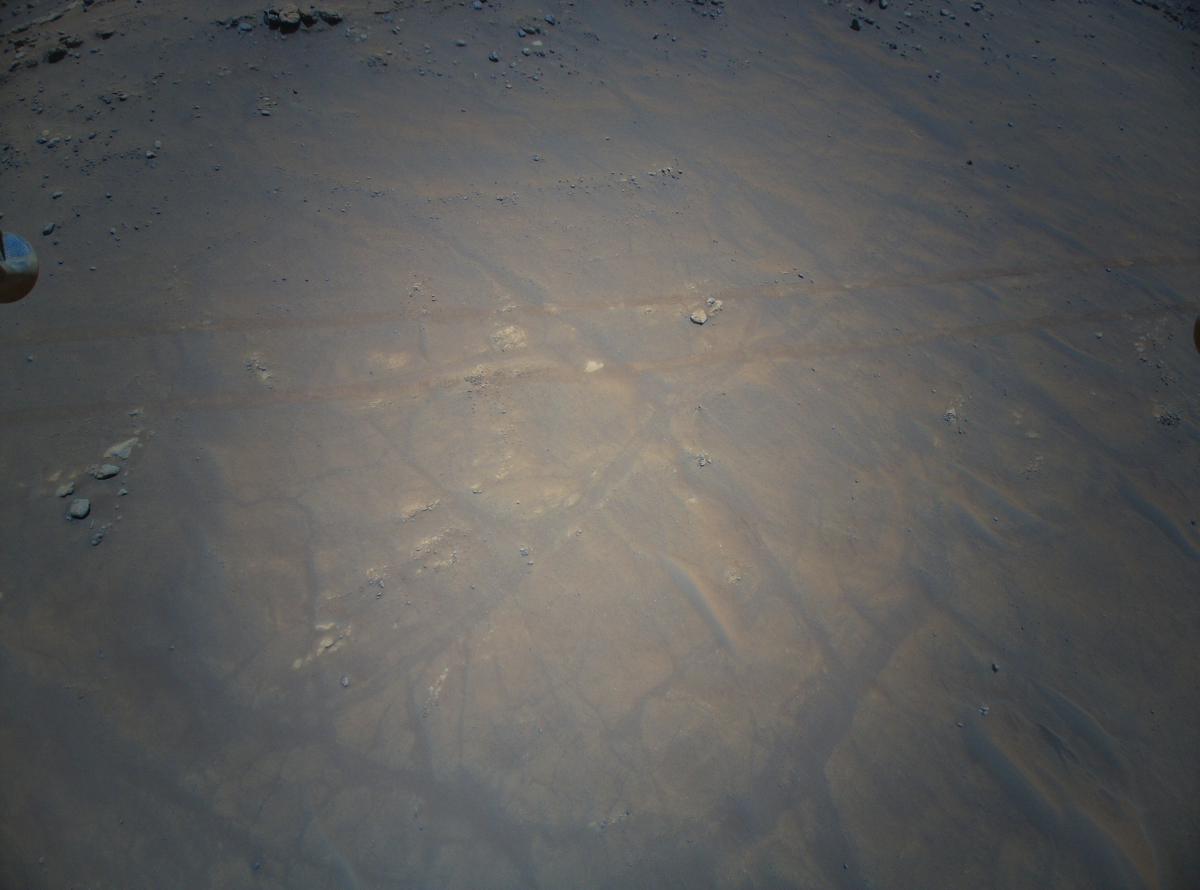
Just released imagery shows NASA Ingenuity’s 16th flight on Mars. The helicopter acquired these images using its high-resolution color camera. This camera is mounted in the helicopter’s fuselage and pointed approximately 22 degrees below the horizon.
Images were acquired on November 21, 2021, the date of Ingenuity’s 16th flight.
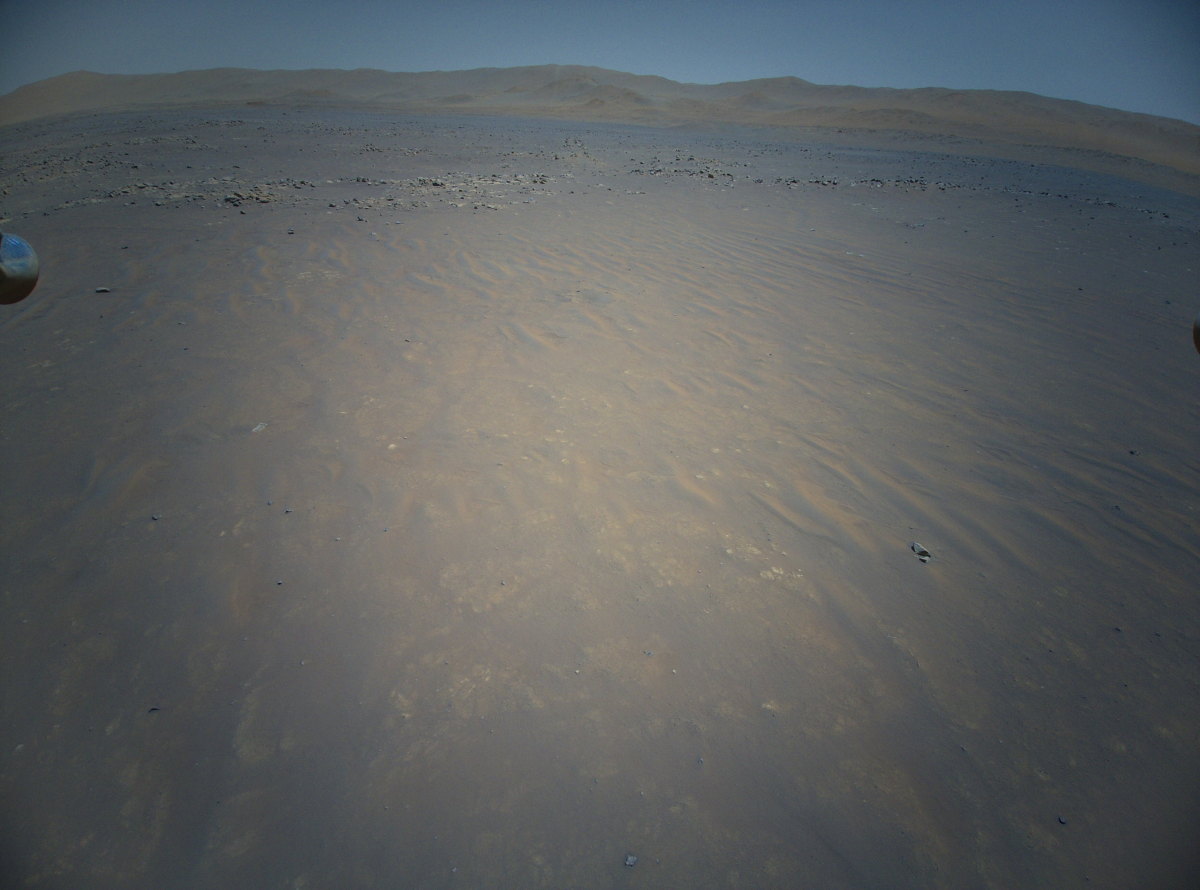
Credits: NASA/JPL-Caltech

Credits: NASA/JPL-Caltech
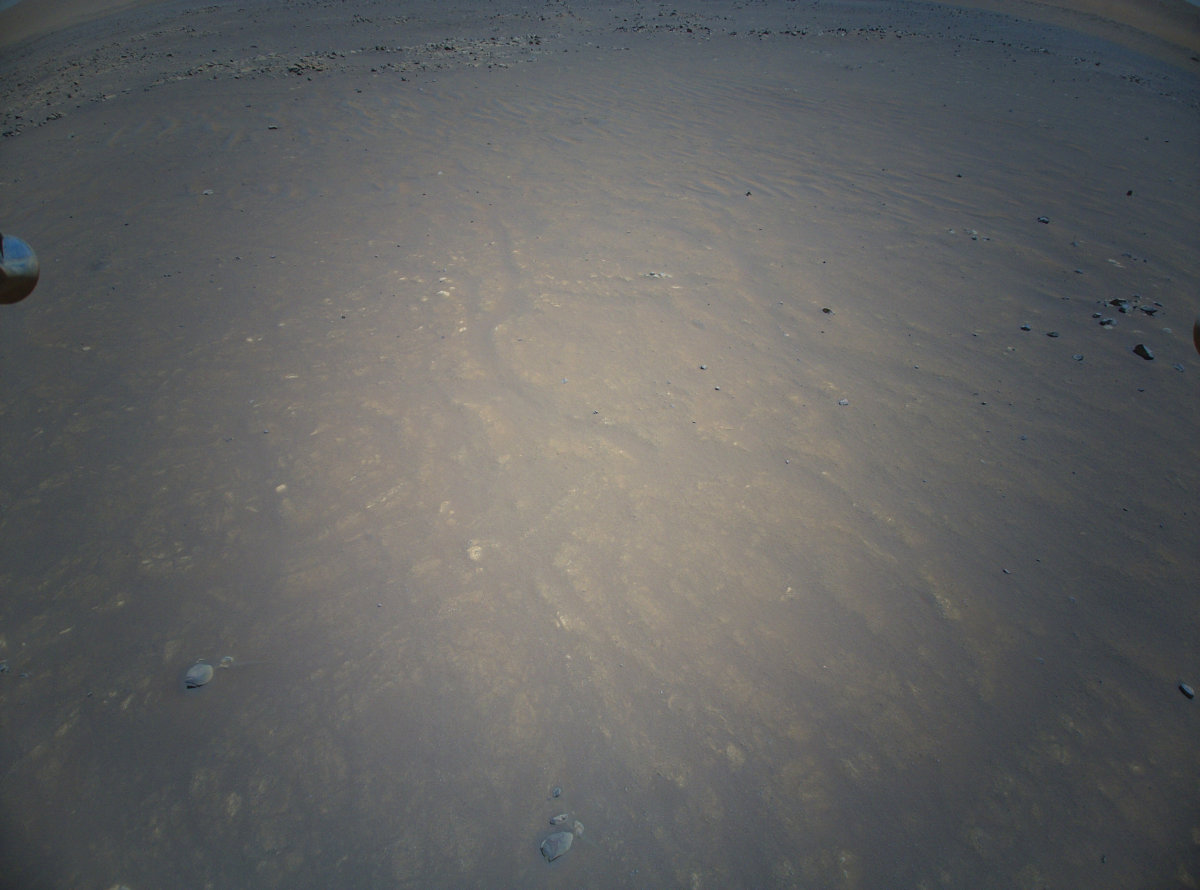
Credits: NASA/JPL-Caltech

Credits: NASA/JPL-Caltech

Credits: NASA/JPL-Caltech

Credits: NASA/JPL-Caltech

Credits: NASA/JPL-Caltech

Credits: NASA/JPL-Caltech
Credits: NASA/JPL-Caltech

