Archive for the ‘Space News’ Category
 Author:
  December 14th, 2021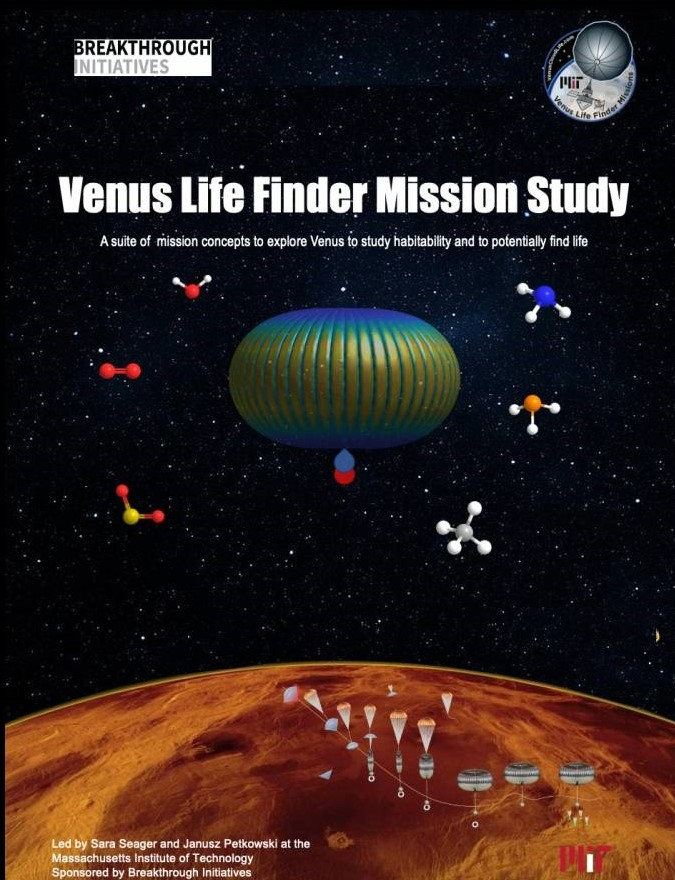
“Newer, nimbler, faster.” That’s the call stemming from a newly issued report led by MIT scientists that details a suite of privately-funded missions to hunt for life on Venus.
The Venus Life Finder (VLF) Missions are a series of three direct Venus atmosphere probes designed to assess the habitability of the Venusian clouds and to search for signs of life and life itself.
According to the report, the VLF missions would be a focused, optimal set of missions that can be launched quickly and with relatively low cost. The mission concepts come out of an 18-month study by an MIT-led worldwide consortium.
The study was partially funded by the Breakthrough Initiatives.

A composite image of the planet Venus as seen by the Japanese probe Akatsuki. The clouds of Venus could have environmental conditions conducive to microbial life.
Credit: JAXA
Sample return
Ultimately, the study concludes, a Venus atmosphere sample return is needed to robustly answer the compelling question, “Is there life on Venus?”
Envisioned is bringing back about one liter of Venus atmosphere and up to tens of grams of Venus cloud particles for detailed studies here on Earth – of the kind that cannot be done remotely.
“We hope this is the start of a new paradigm where you go cheaply, more often, and in a more focused way,” says Sara Seager in MIT’s Department of Earth, Atmospheric and Planetary Sciences (EAPS) and principal investigator for the planned Venus Life Finder Missions.
Lingering mysteries
“There are these lingering mysteries on Venus that we can’t really solve unless we go back there directly,” Seager adds in a MIT statement, saying that lingering chemical anomalies that leave room for the chance of life on that cloud-veiled world.
Seager was part of a team that reported last year a detection of phosphine gas in Venus’ atmosphere. On Earth, that gas is produced only by biological and industrial processes.
Since that claim, the phosphine finding has been challenged. Still, Seager says the controversial finding has sparked positive momentum to the Venus missions. “The whole phosphine controversy made people more interested in Venus. It allowed people to take Venus more seriously,” she says.

Venus in ultraviolet taken by NASA’s Pioneer-Venus Orbiter in 1979 indicating that an unknown absorber is operating in the planet’s top cloud layer.
Credit: NASA
Scientific payload
Based on their research, the Venus Life Finder team focused in on a scientific payload for the mission, which was restricted to just 1 kilogram.
MIT’s Seager says they settled on an instrument called an autofluorescing nephelometer because it could get the job done and was small, cheap, and could be built quickly enough for the compressed mission timeline.
The instrument is currently being built by a New Mexico-based company called Cloud Measurement Solutions, and a Colorado-based company called Droplet Measurement Technologies. The instrument is partially funded by MIT alumni.
Mission suite
Once the probe is in Venus’ atmosphere, the instrument will shine a laser out of a window onto cloud particles, causing any complex molecules within them to light up, or fluoresce. Many organic molecules, such as the amino acid tryptophan, have fluorescent properties.
“If we see fluorescence, we know something interesting is in the cloud particles,” Seager points out. “We can’t guarantee what organic molecule it is, or even be certain it’s an organic molecule. But it’s going to tell you there’s something incredibly interesting going on.”
Whatever the 2023 mission finds, the next mission in the suite is already being planned for 2026.
That probe would involve a larger payload, with a balloon that could spend more time in Venus’ clouds and conduct more extensive experiments. Results from that mission might then set the stage for the culmination of the Venus Life Finder Missions concept: return a sample of Venus’ atmosphere to Earth.

Credit: Rocket Lab
Rocket Lab partnership
A partnership has been put in place with the private entrepreneurial group, Rocket Lab, to provide the science payload and science team to go with their 2023 Venus Mission’s rocket, cruise spacecraft, and direct probe entry vehicle. The Venus direct entry vehicle aboard Rocket Lab’s Photon spacecraft has room for up to one kilogram of science instrumentation for the short-duration (three minute) descent through the cloud layers, the report explains.
As for the overall Venus Life Finder Missions, “we think it’s disruptive,” says Seager. “And that’s the MIT style. We operate right on that line between mainstream and crazy.”
For a detailed look at the report — Venus Life Finder Mission Study – go to:
https://venuscloudlife.com/wp-content/uploads/2021/12/VLFReport_12092021.pdf
 Posted in
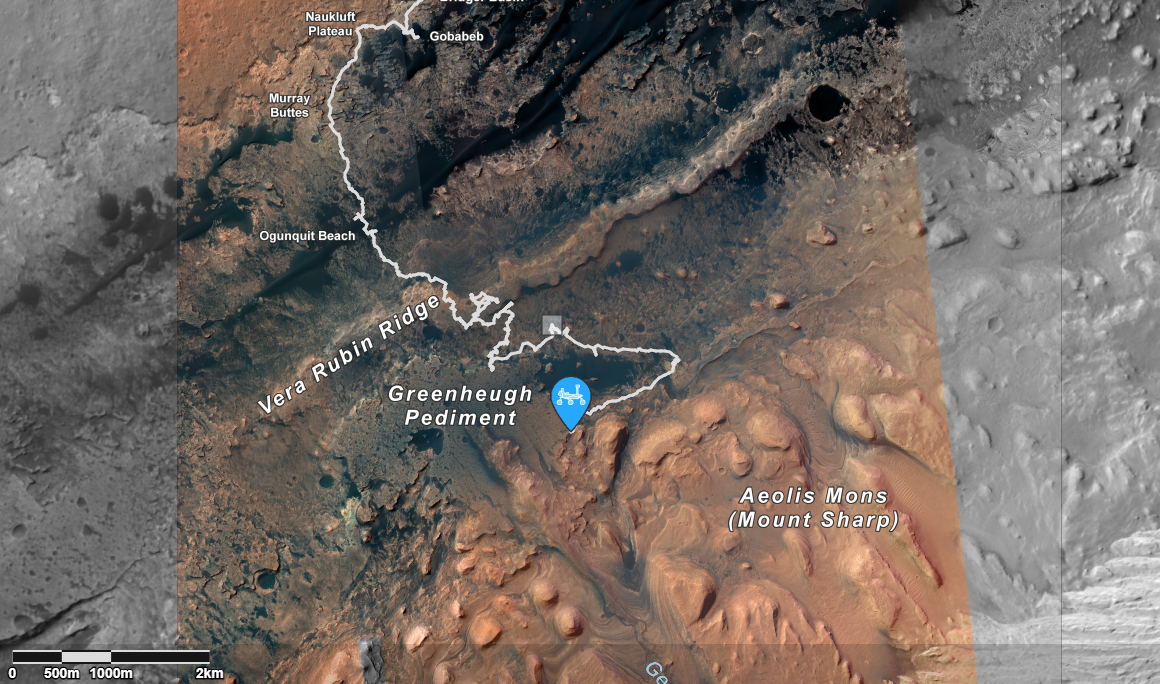
Curiosity’s location as of Sol 3324. Distance driven is now 16.60 mile/26.72 kilometers since landing in August 2012.
Credit: NASA/JPL-Caltech/Univ. of Arizona
NASA’s Curiosity Mars rover at Gale Crater is now performing Sol 3326 duties.
“As we continue exploring Maria Gordon notch, we are planning a touch and go with lots of remote sensing activities between the ‘touch’ and the ‘go,’” reports Kenneth Herkenhoff, a planetary geologist at the USGS Astrogeology Science Center in Flagstaff, Arizona.
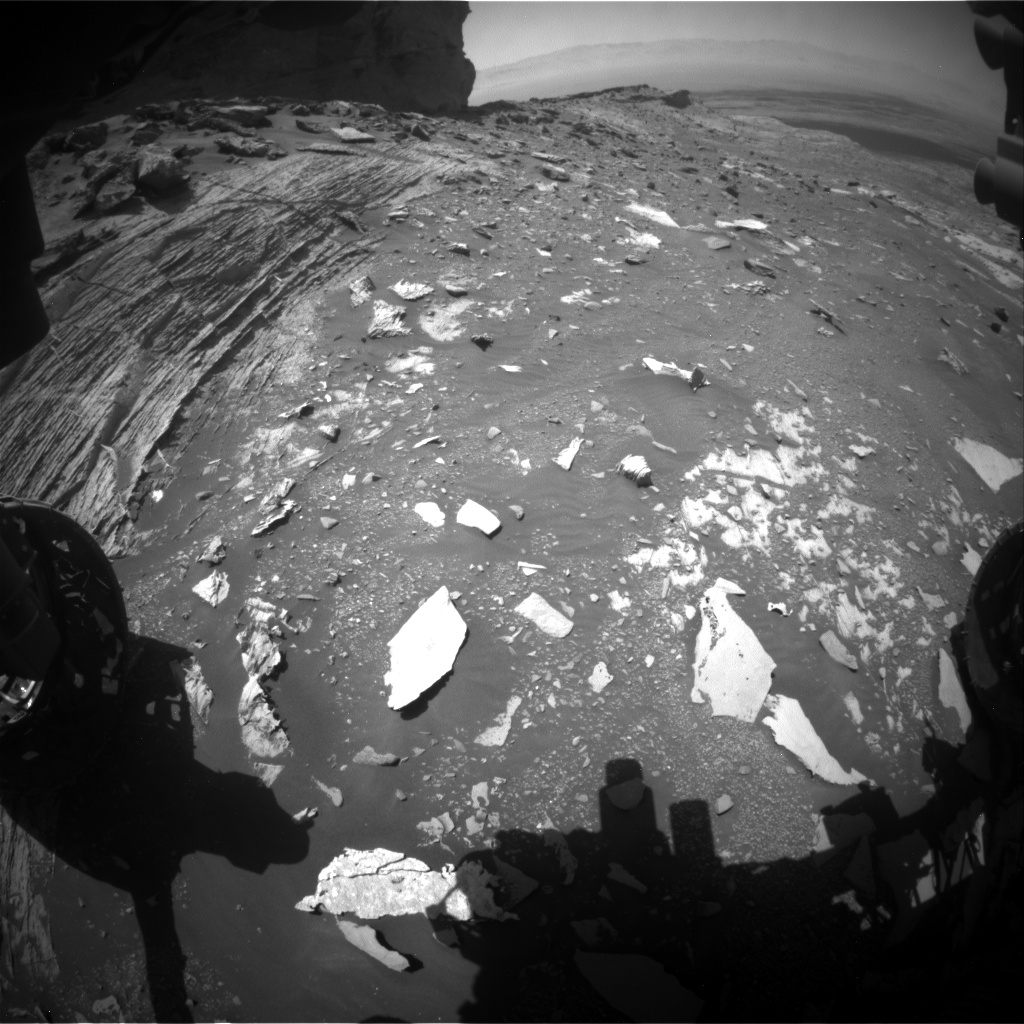
Curiosity Front Hazard Avoidance Camera Left B photo taken on Sol 3325, December 13, 2021.
Credit: NASA/JPL-Caltech
Bedrock targets
The robot is parked near the base of the cliff to the west, and the science team is interested in investigating the bedrock in this area.
Unfortunately, none of the bedrock targets are suitable for close Alpha Particle X-Ray Spectrometer (APXS) placement, Herkenhoff adds, so researchers will not be able to measure the bedrock chemistry here using APXS.
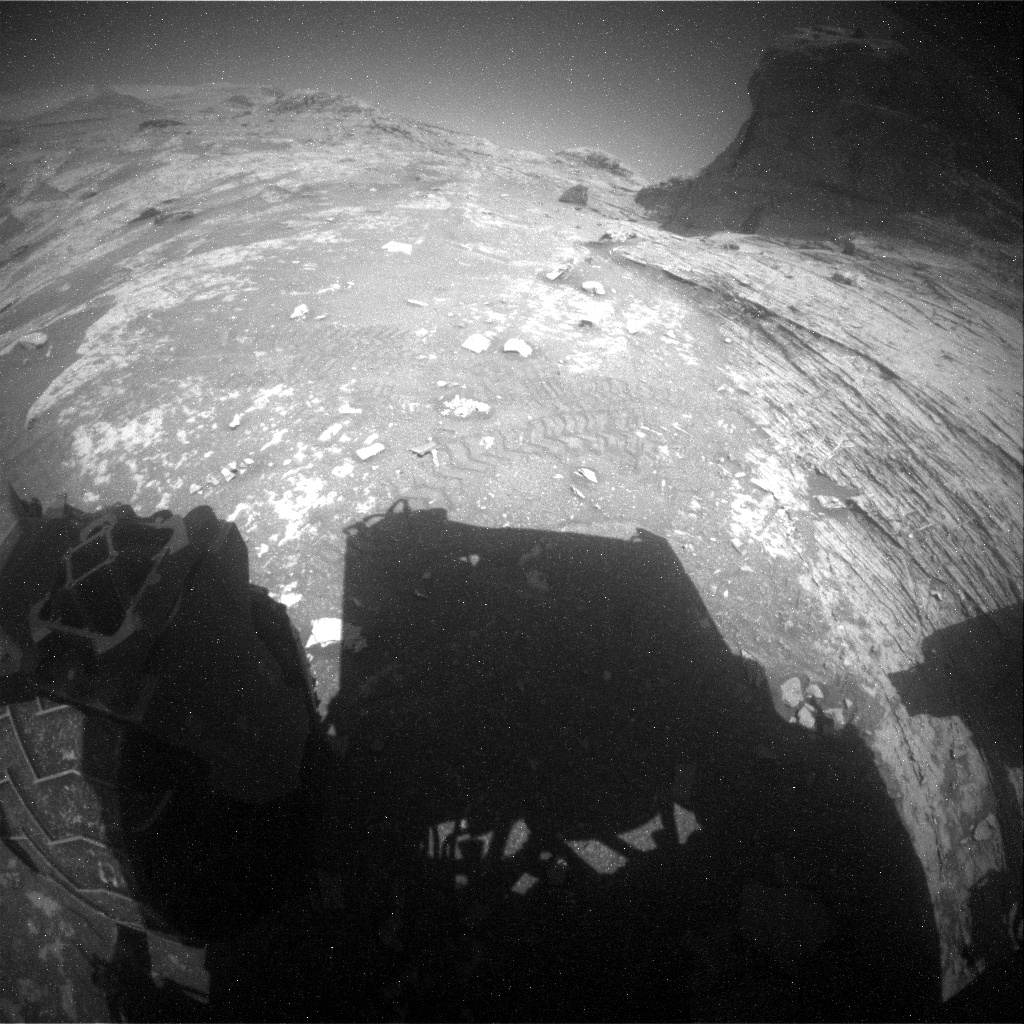
Curiosity Rear Hazard Avoidance Camera Left B photo acquired on Sol 3325, December 13, 2021.
Credit: NASA/JPL-Caltech
Rather, the rover’s Mars Hand Lens Imager (MAHLI) will take images of a bedrock target
named “Portgower” and the Chemistry and Camera (ChemCam) will sample the chemistry of another bedrock target “Thornhill” higher up the cliff face.
“Mastcam and Navcam will be used to monitor the dust content of the atmosphere and search for dust devils, then Mastcam will acquire 3 stereo mosaics of the cliffs and boulders near the rover,” Herkenhoff adds.
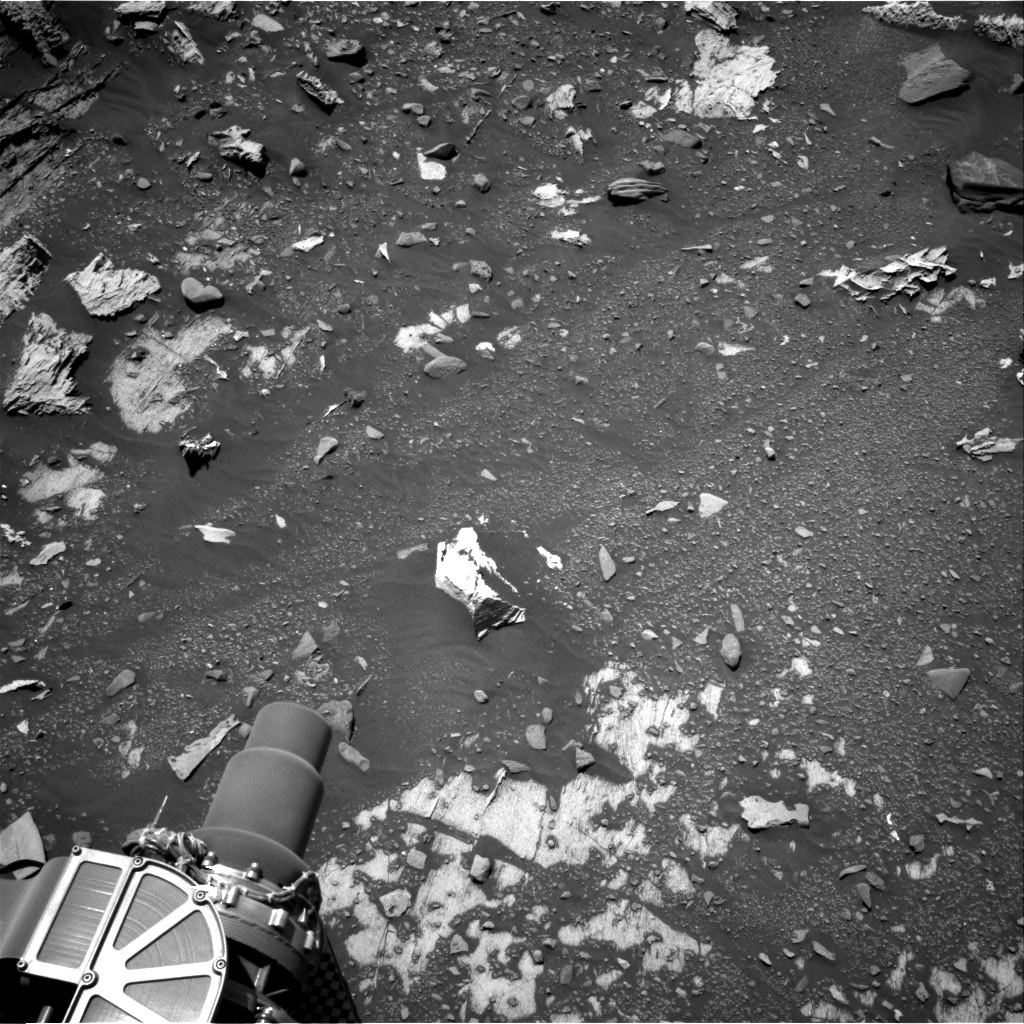
Curiosity Right B Navigation Camera image taken on Sol 3325, December 13, 2021.
Credit: NASA/JPL-Caltech
More power to you
After the drive of roughly 66 feet (20-meters and post-drive imaging, another Mars Descent Imager (MARDI) twilight image is planned.
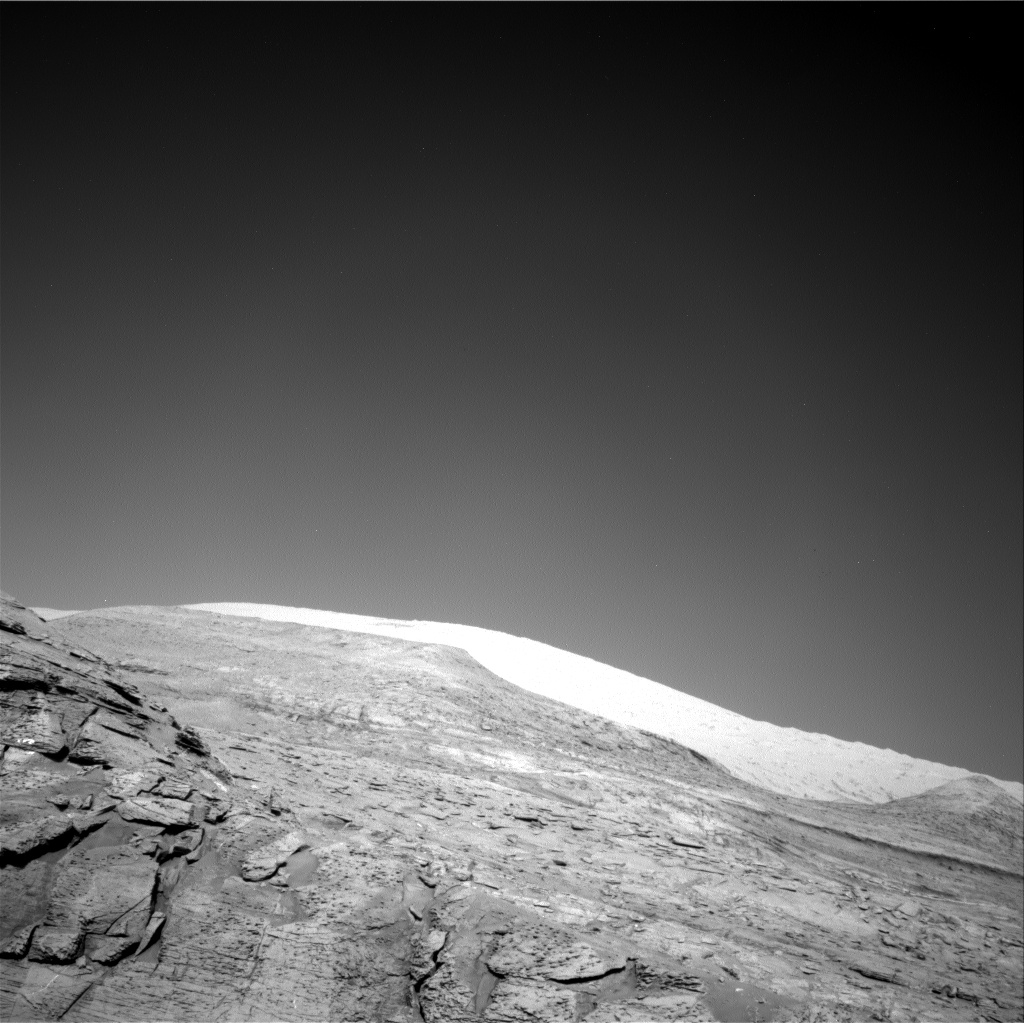
Curiosity Right B Navigation Camera image taken on Sol 3325, December 13, 2021.
Credit: NASA/JPL-Caltech
Because more power is available than initially expected, scientists were able to add an overnight Chemistry & Mineralogy X-Ray Diffraction/X-Ray Fluorescence Instrument (CheMin) wheel move and empty cell analysis to the plan.
“The second sol is much simpler,” Herkenhoff concludes, “with a ChemCam observation of an autonomously-selected bedrock target and more Navcam and Mastcam observations of the atmospheric dust.”
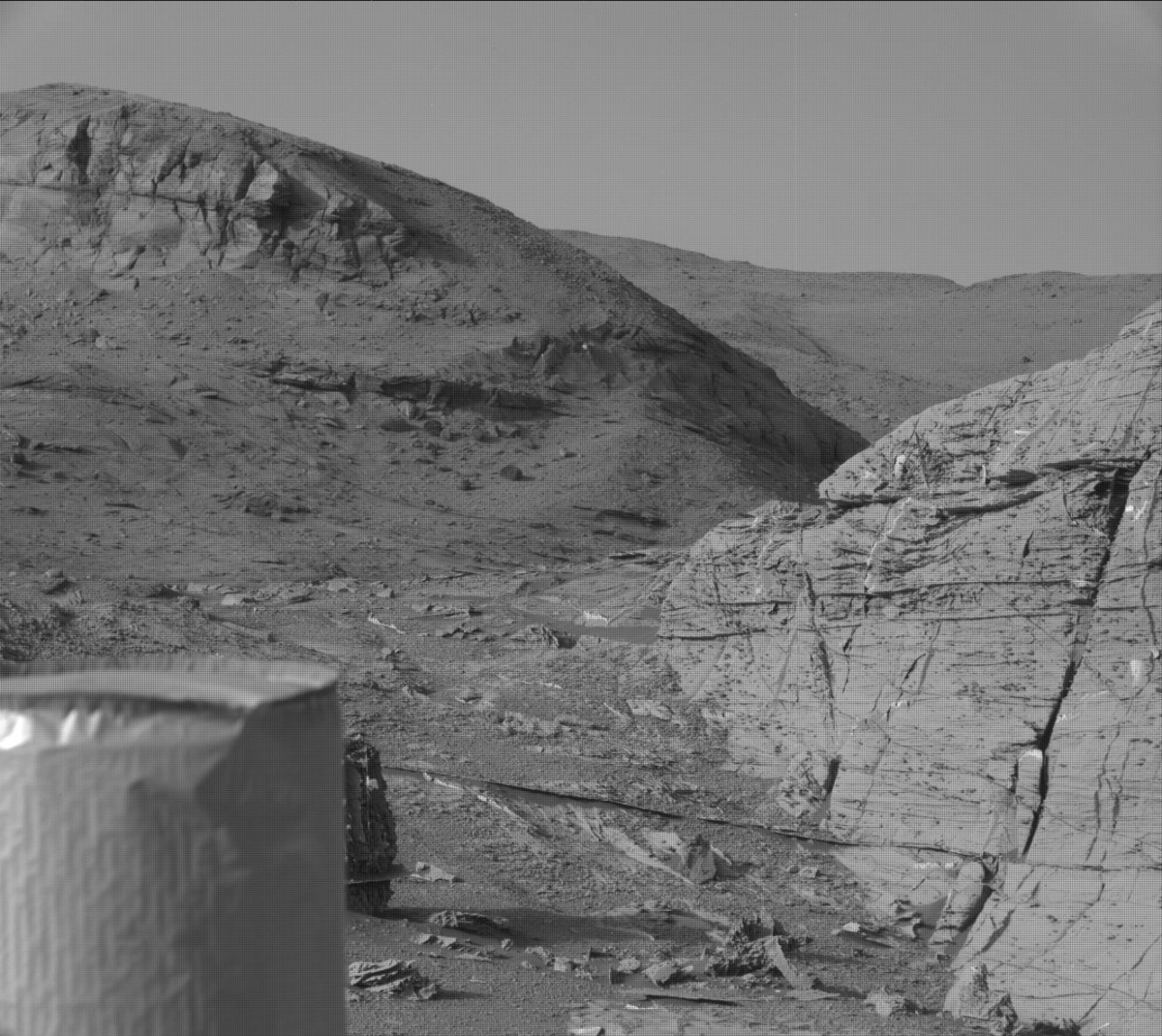
Curiosity Mast Camera Left image taken on Sol 3324, December 12, 2021.
Credit: NASA/JPL-Caltech/MSSS
Curiosity Mast Camera Left imagery taken on Sol 3324, December 12, 2021.
Credit: NASA/JPL-Caltech/MSSS
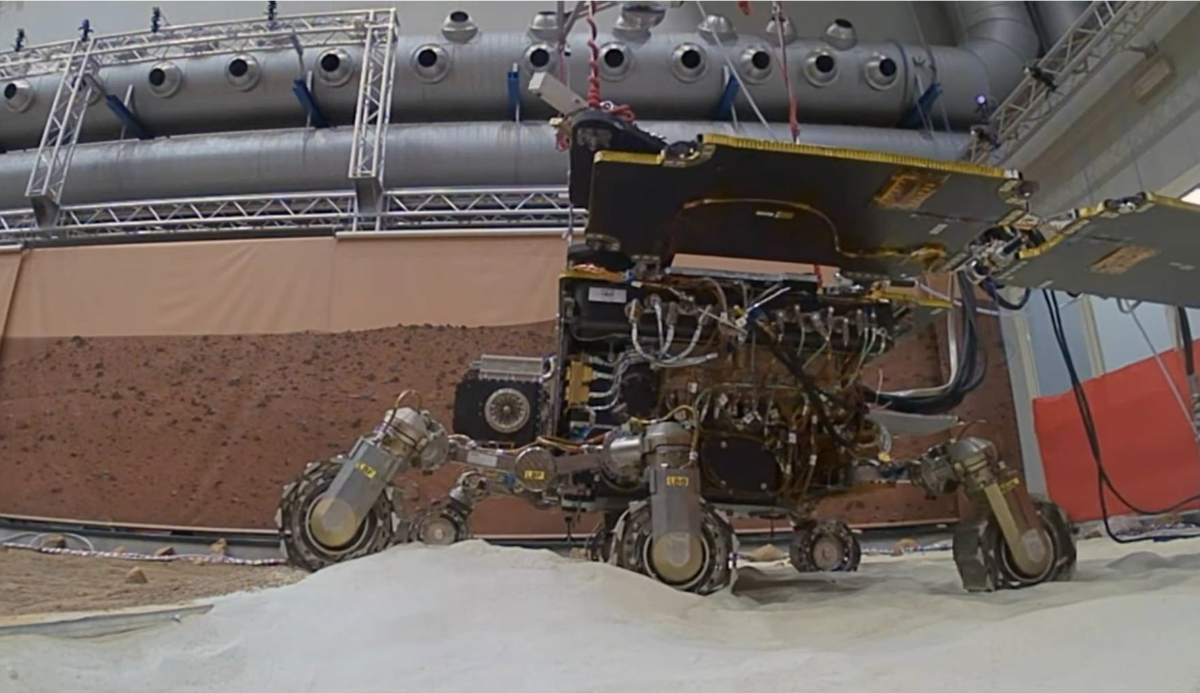
Credit: ESA/Inside Outer Space screengrab
Once Europe’s ExoMars rover, Rosalind Franklin, lands on Mars in June 2023 the machine will utilize a unique wheel walking locomotion mode.
Similar to leg movements, the robot’s wheel-walking combines motions of the deployment actuators (the legs) with the rotation of the wheels to progress without slippage.
This motion is designed to provide the rover good traction in soft soils and high slopes, such as dunes.

ExoMars Credit: ESA/ATG medialab
Functionality
Last month, in the Mars Terrain Simulator at the Rover Operations Control Center at Thales Alenia Space facilities in Turin, Italy, Rosalind Franklin showed off its skills. The facility is being used for training rover operators and simulating science operations that will be expected in the main mission.
Rovers on Mars have previously been caught in sand, and turning the wheels dug them in deeper, just like a car stuck in mud or snow.
“We hope to never need to use wheel walking on Mars to escape dangerous sand traps, but we are glad to have such functionality to potentially safeguard the mission,” said Luc Joudrier, ESA ExoMars Rover Operations Manager. “From a rover operational point of view, this is really our insurance against difficult terrains.”
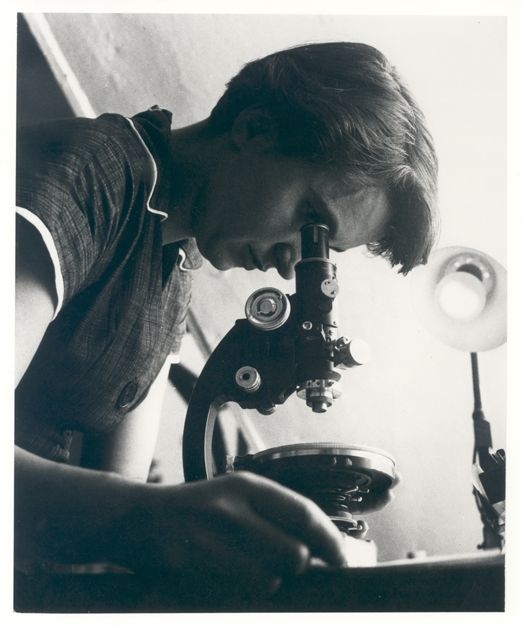
Rosalind Elsie Franklin was a British chemist and X-ray crystallographer who contributed to unravelling the double helix structure of our DNA. She also made enduring contributions to the study of coal, carbon and graphite.
Credit: ESA/MRC Laboratory of Molecular Biology
Loose soils
In a test run, the back wheels drag once the front four wheels have gained good traction on firmer terrain. The sequence was optimized for climbing steep slopes with loose soils; a short rotation of the wheel follows each movement of the legs. This is to anchor the wheels, digging them a little bit into the soil, before moving the rest – like when you climb a slope with snow and firm up each step before making a new one.

Russian lander cocoons Rosalind Franklin rover.
Credit: Roscosmos
ExoMars 2022 is targeted for liftoff from Baikonur, Kazakhstan on September 20, 2022 (12 day launch window); landing on June 10, 2023.
ExoMars is led collaboratively by the European Space Agency and the Roscosmos State Corporation, designed to understand if life ever existed on Mars. Rosalind Franklin will be delivered to Mars via a Russian lander, “Kazachok,” which will also serve as a surface platform for conducting science experiments.
Take a look at this video that showcases the ExoMars rover’s ability at:
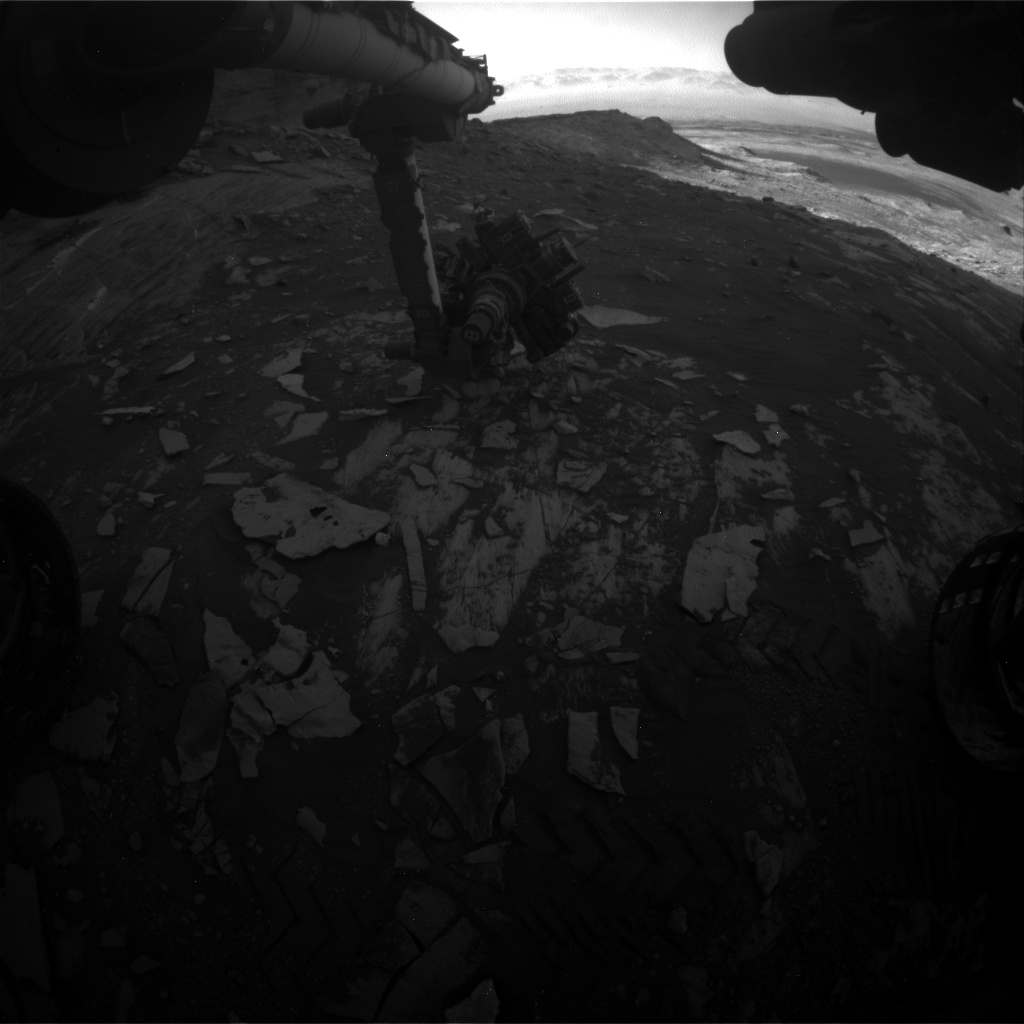
Curiosity Front Hazard Avoidance Camera Right B image taken on Sol 3323, December 11, 2021.
Credit: NASA/JPL-Caltech
NASA’s Curiosity Mars rover at Gale Crater is now performing Sol 3324 duties.
Abigail Fraeman, a planetary geologist at NASA’s Jet Propulsion Laboratory reports that the robot recently parked just a few meters away from the towering western wall of Maria Gordon notch.
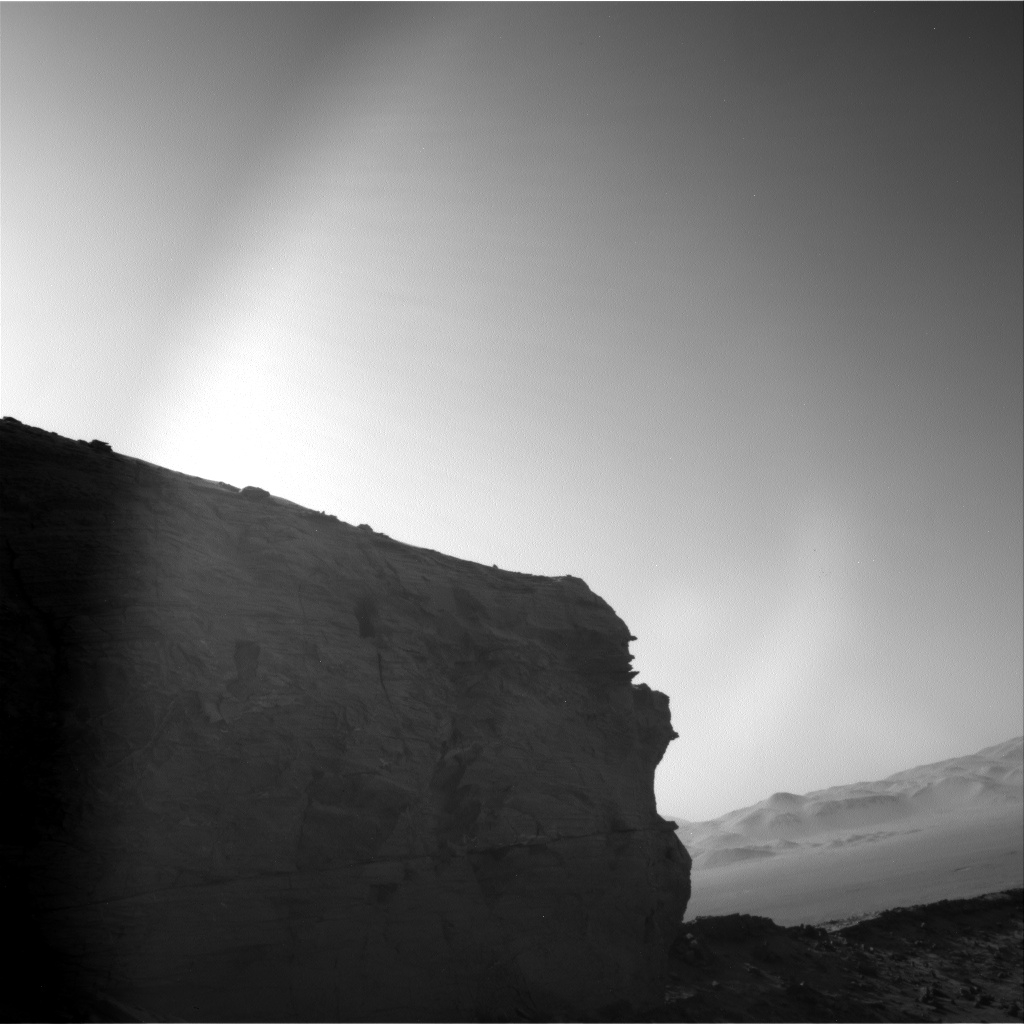
In the shadow of Maria Gordon Notch. Image taken by Curiosity’s Right Navigation Camera on Sol 3322 December 10, 2021
Credit: NASA/JPL-Caltech
“While this location gives us spectacular views of the layering, veins, and nodules exposed on the side of the outcrop, it was actually chosen to support an experiment with Curiosity’s neutron spectrometer, DAN (Dynamic Albedo of Neutrons),” Fraeman adds.
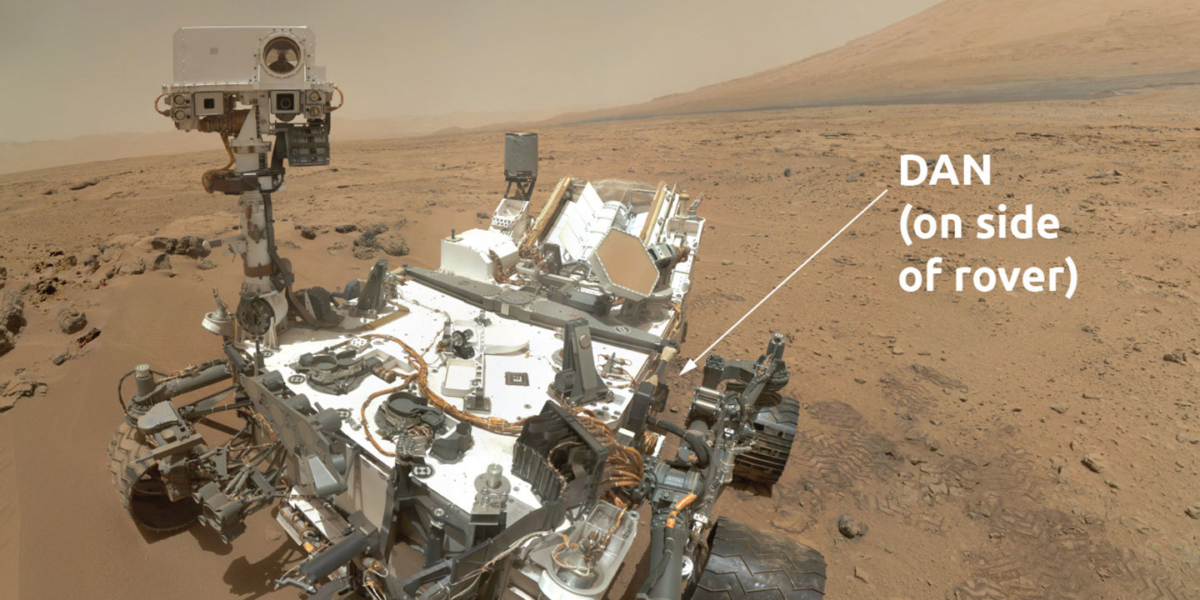
Credit: NASA/JPL-Caltech
DAN has the ability to measure the amount of hydrogen, Fraeman points out, a proxy for water, around the rover.
“The instrument is sensitive to surroundings all around Curiosity, although usually the only interesting signature comes from the ground beneath the rover where the instrument can detect water bound within hydrated minerals,” Fraeman explains.

The Dynamic Albedo of Neutrons tool, called DAN for short, looks for telltale changes in the energies of neutrons released from Martian subsurface that indicate how much water is chemically bound in the soil or rocks.
Credit: NASA/JPL-Caltech/Russian Federal Space Agency
Three-point turn
By parking close to the side of Maria Gordon notch, Mars researchers have an opportunity to see information with DAN from both the ground and the wall next to the rover, which will help refine understanding of DAN data throughout the mission.
DAN measurements will be done in three different positions: a current parking position and two more planned during a planned drive.
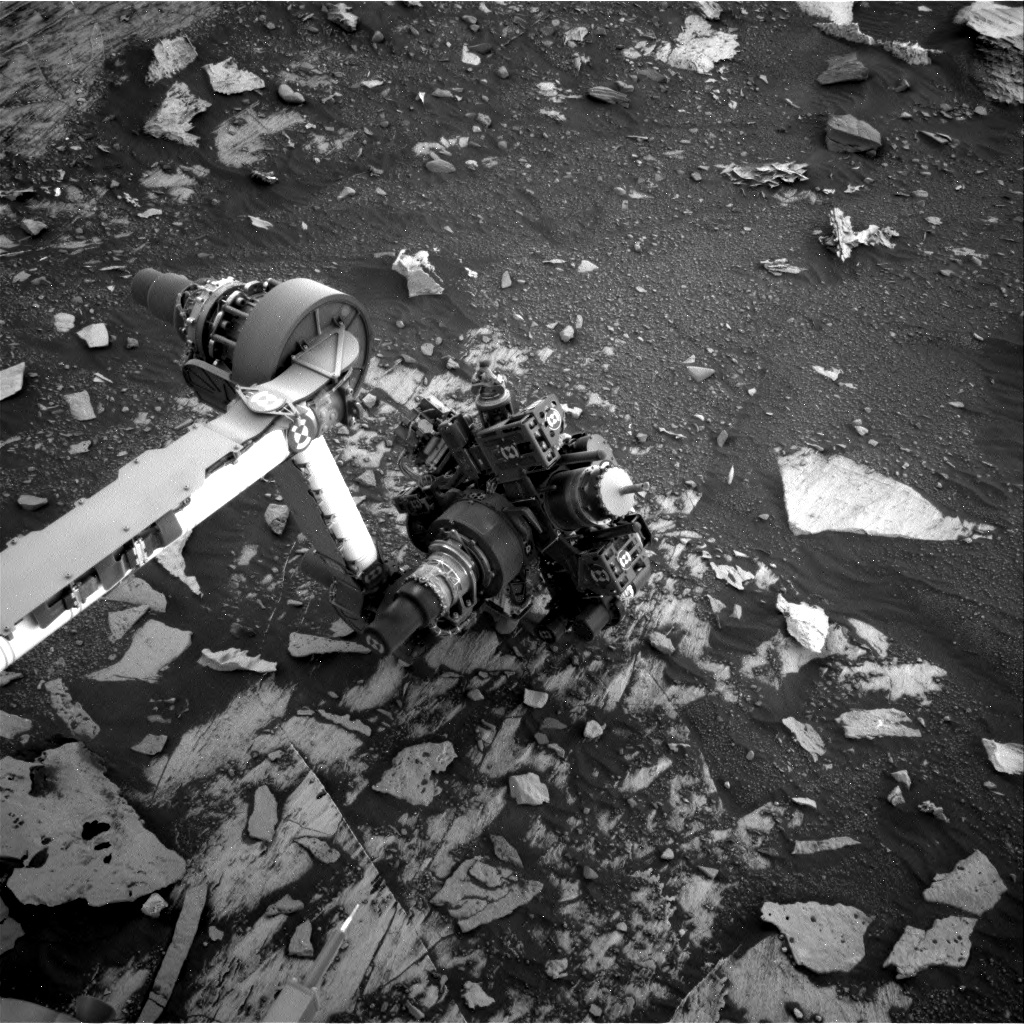
Curiosity Right B Navigation Camera image taken on Sol 3323, December 11, 2021.
Credit: NASA/JPL-Caltech
“The drive will place Curiosity perpendicular to the cliff and then parallel again, but a little bit closer than we are now,” says Fraeman. “It’s a little like a rover version of an almost three-point turn!”
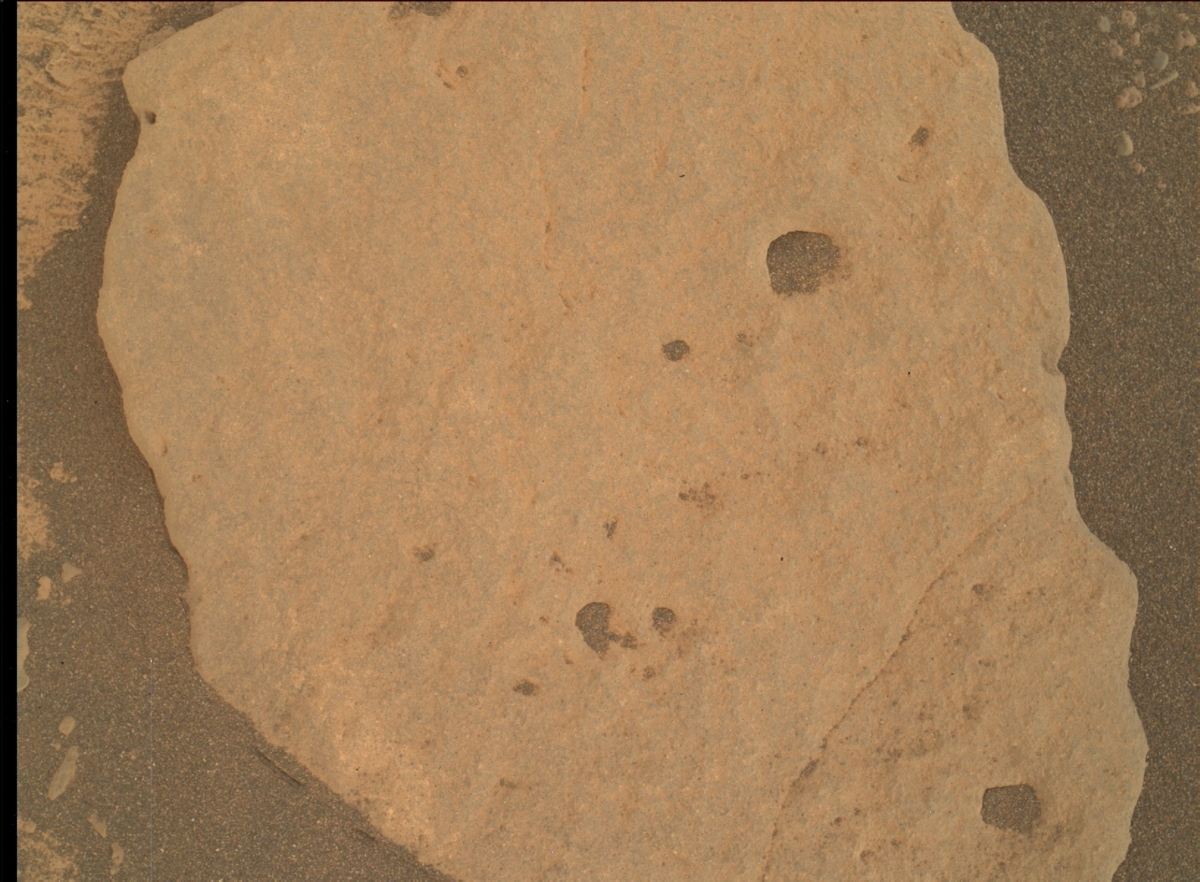
Curiosity Mars Hand Lens Imager (MAHLI) photo produced on Sol 3323, December 11, 2021.
Credit: NASA/JPL-Caltech/MSSS
Scenic location
In addition to the DAN experiments, also on tap is collecting Alpha Particle X-Ray Spectrometer (APXS) and Mars Hand Lens Imager (MAHLI) observations on two pebbles in front of Curiosity, one with pits (“Helens Bay”) and one without pits (“Lakeheads”), as well as Chemistry and Camera (ChemCam) observations of “Orlock Ridge” and “Hailes Quarry.”
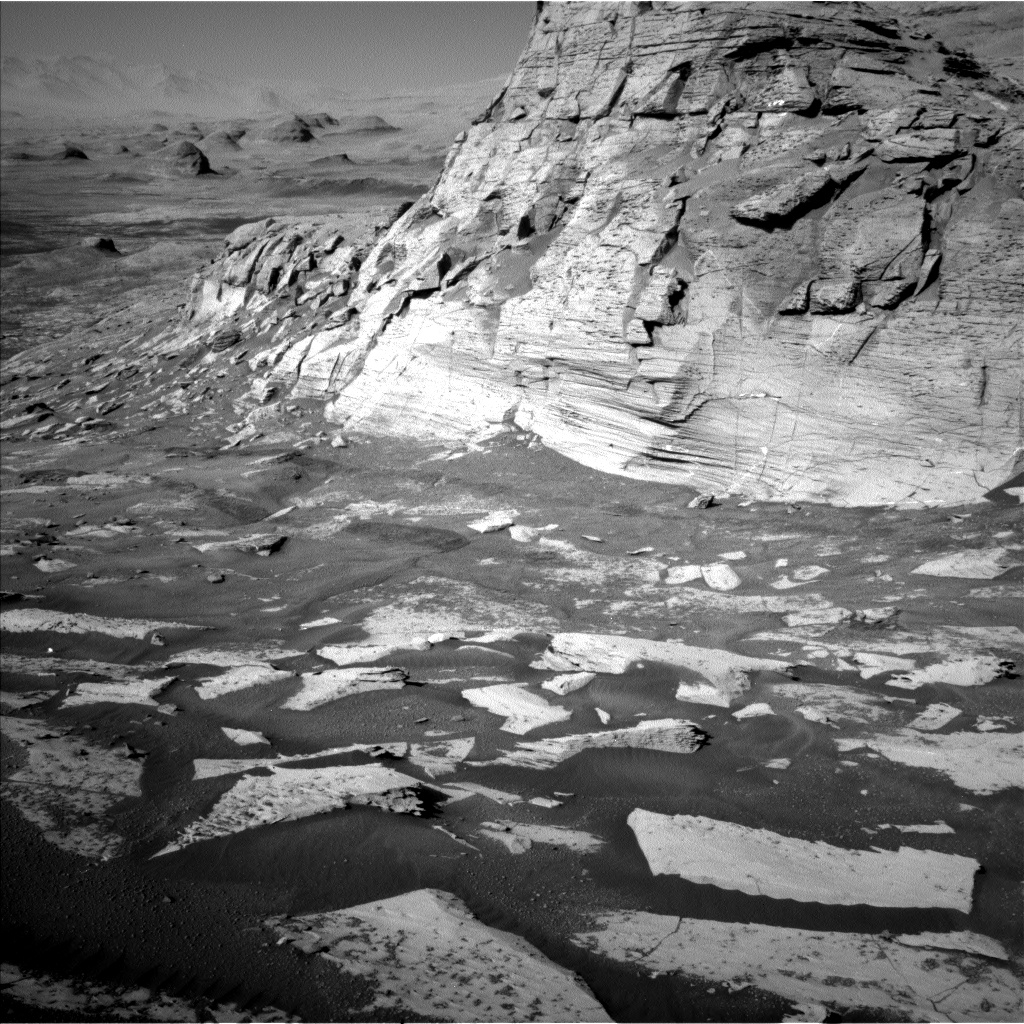
Curiosity Left B Navigation Camera image acquired on Sol 3322, December 10, 2021.
Credit: NASA/JPL-Caltech
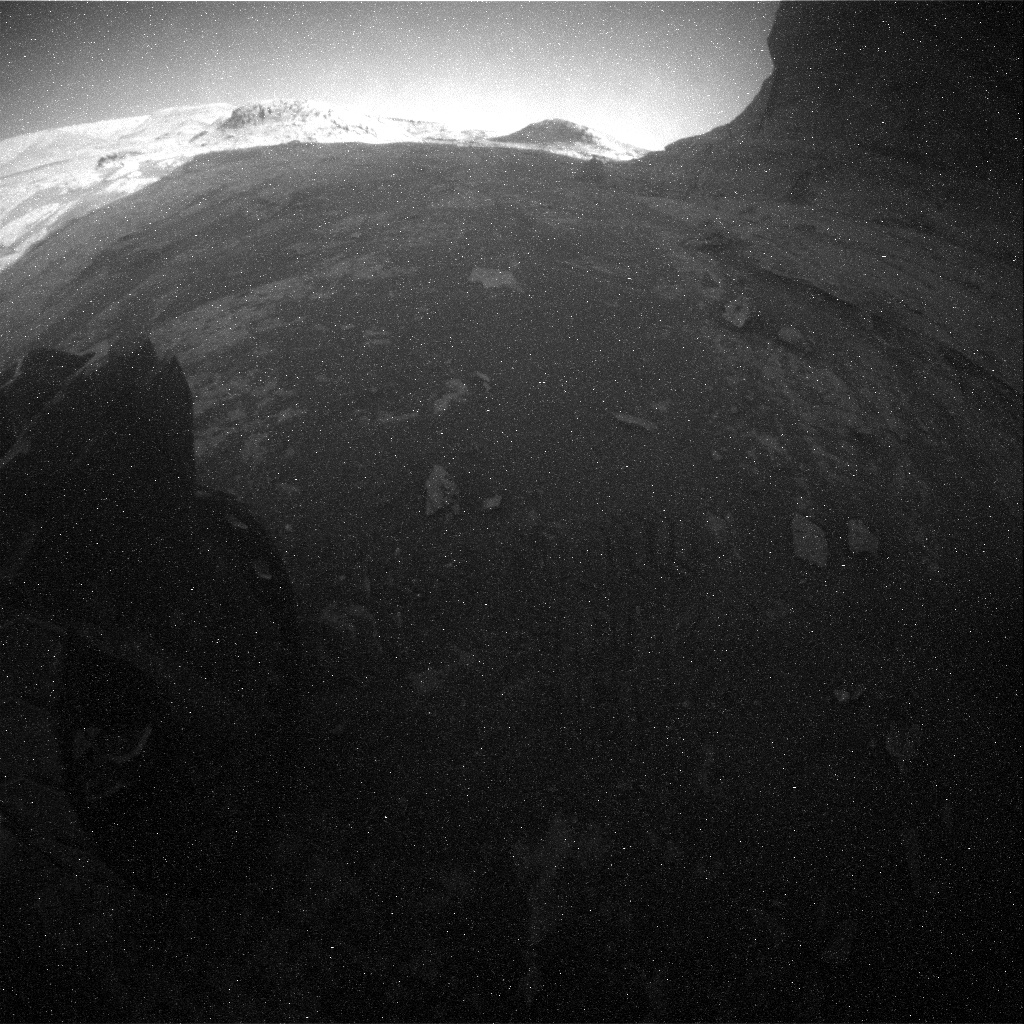
Curiosity Rear Hazard Avoidance Camera Left B image taken on Sol 3323, December 11, 2021.
Credit: NASA/JPL-Caltech
“And of course since we’re at such an amazingly scenic location, we’ll make sure to take lots and lots of Mastcam mosaics throughout the day,” Fraeman concludes.

Credit: Breakthrough Listen
How can we determine the meaning of a message from a distant civilization if we don’t have a common language?
That’s the topic tackled in a new research paper – “How to decode interstellar messages” – appearing in the journal, Acta Astronautica.
Credit: Michael Matessa, et al.
Highlights of the paper include:
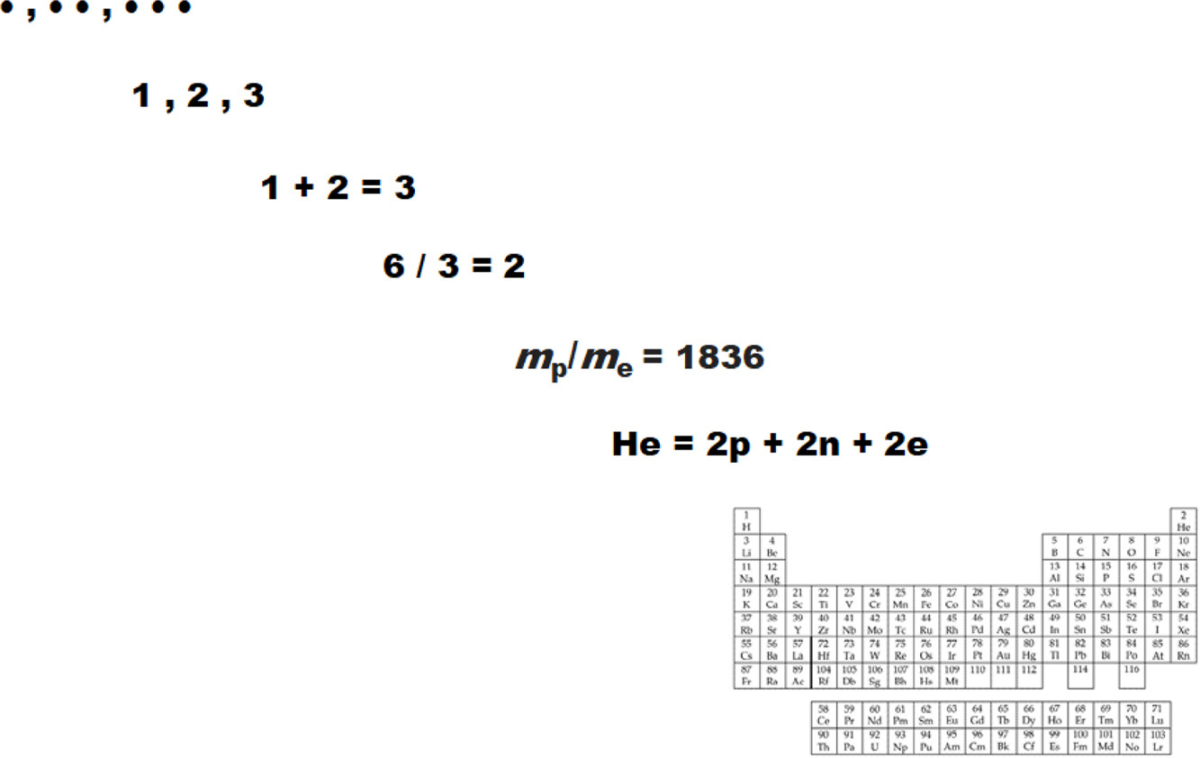
- Five electromagnetic properties can be used in interstellar message transmission: frequency, amplitude, polarization, phase, and duration of transmission.
- Decoding messages can be done in three steps: find the dimension of the message, find the symbols, and find the symbol meanings.
- Finding the message dimension can be helped by using prime number proportions.
- Finding the symbols can be assisted by considering symbol types: delimiters, values, relationships, and functions.
- Finding symbol meanings can be helped by sub-symbolic types, redundant symbols, expression consistency, physics ratios, and physics expression patterns.
Technique and principles
This new paper presents a general technique and principles for decoding interstellar messages. First, find the dimension of the message. Prime numbers may be useful in determining the proportions of messages.
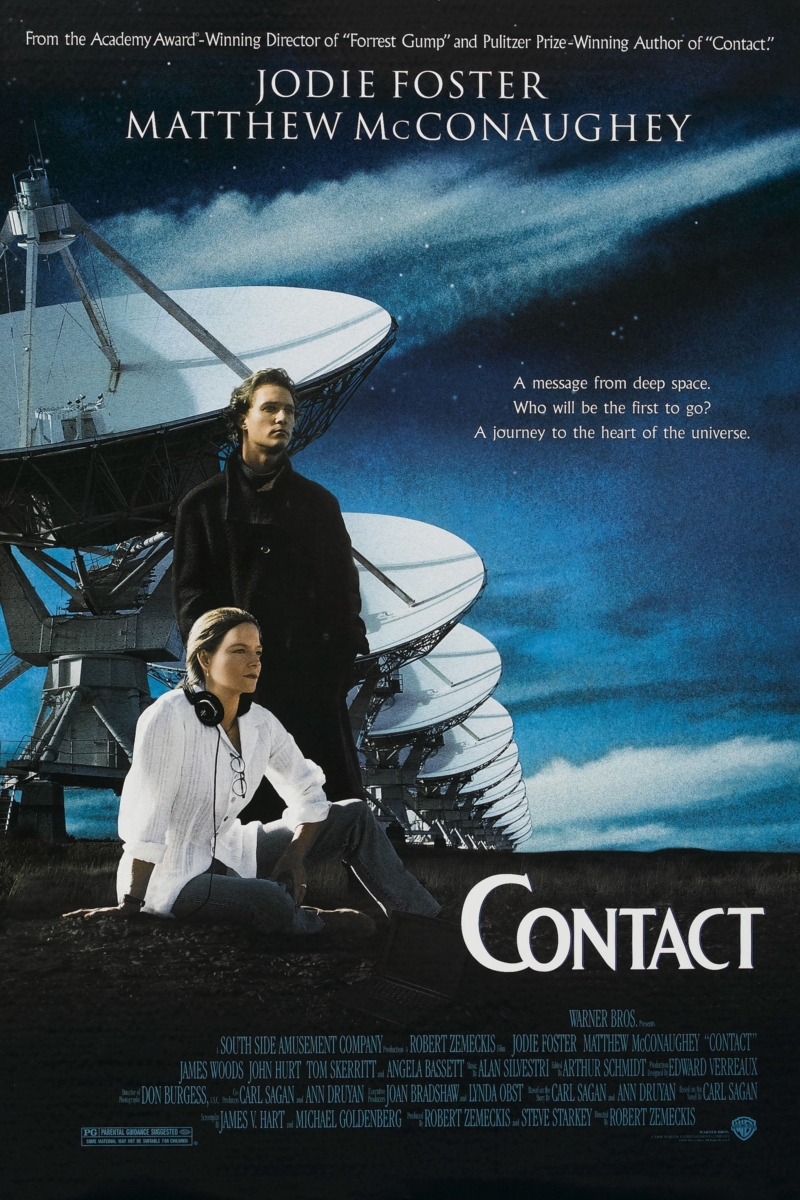
If it’s just us, it seems like an awful waste of space. In the movie Contact, a radio astronomer receives the first extraterrestrial radio signal ever picked up on Earth. How best to decipher the message and decide upon a course of action?
Credit: Warner Brothers
Next, find the symbols. This can be done considering symbol types: delimiters, values, relationships, and functions.
Then, find the symbol meanings. Features that can help in determining meaning include sub-symbolic type, redundant symbols, expression consistency, physics ratios, and physics expression patterns.
Concepts detailed in the paper can be used when a message from another civilization is received, or they can be used to create messages, which can teach communication theory concepts.
To access the paper – “How to decode interstellar messages” – by lead author, Michael Matessa of METI International in San Francisco, California, go to:
https://www.sciencedirect.com/science/article/abs/pii/S0094576521006263
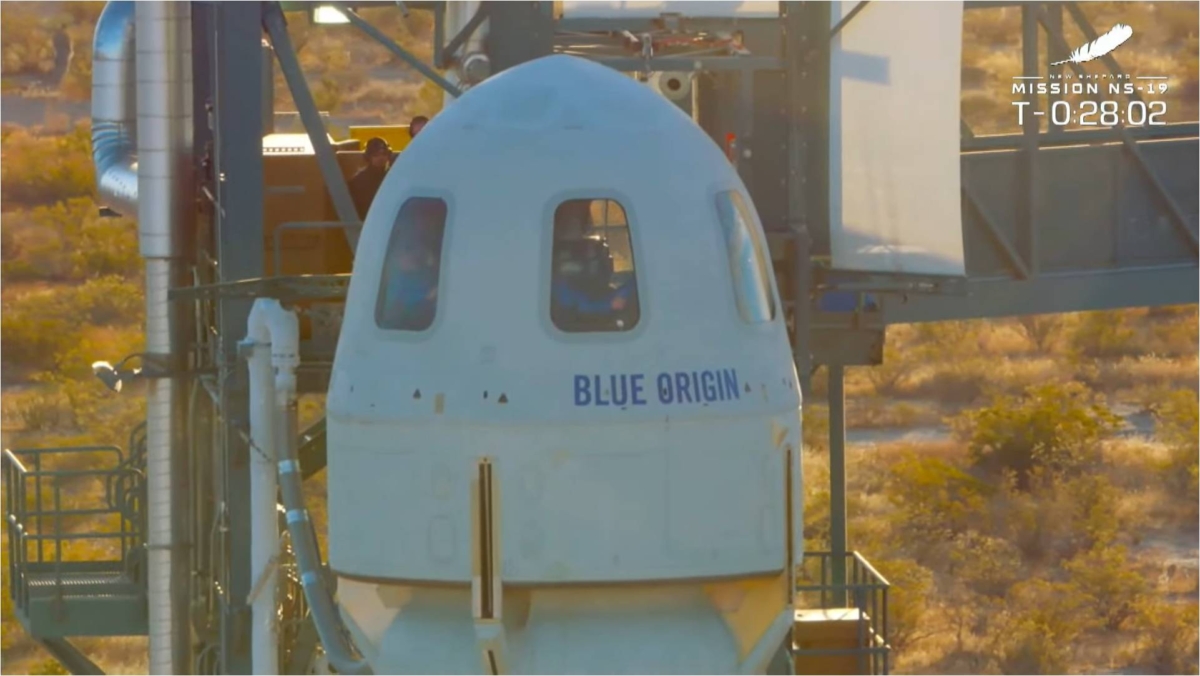
Blue Origin conducted its third human spaceflight on Saturday, December 11, the first with six astronauts on board. The astronaut manifest included, Laura Shepard Churchley, Michael Strahan, Evan Dick, Dylan Taylor, Cameron Bess, and Lane Bess. For replay of flight, go to: https://www.blueorigin.com/
“We had a great flight today. This was our sixth flight in what has been a great year for the New Shepard program. We flew 14 astronauts to space, flew a NASA payload flight that tested lunar landing sensors and completed our certification test flights,” said Bob Smith, CEO Blue Origin. “I want to thank our payload customers, our astronauts and, of course, Team Blue for these many important accomplishments. I am so proud to be part of this dedicated and hard-working team that ensures that each and every flight of New Shepard is safe and reliable. And it’s fun to say that this is just the beginning.”
Blue Origin is planning several crewed and payload flights in 2022.

Upper L to R: Lane Bess, Cameron Bess, Evan Dick; Lower L to R: Dylan Taylor, Laura Shepard Churchley, Michael Strahan
Credit: Blue Origin
Credit: Blue Origin/Inside Outer Space screengrab
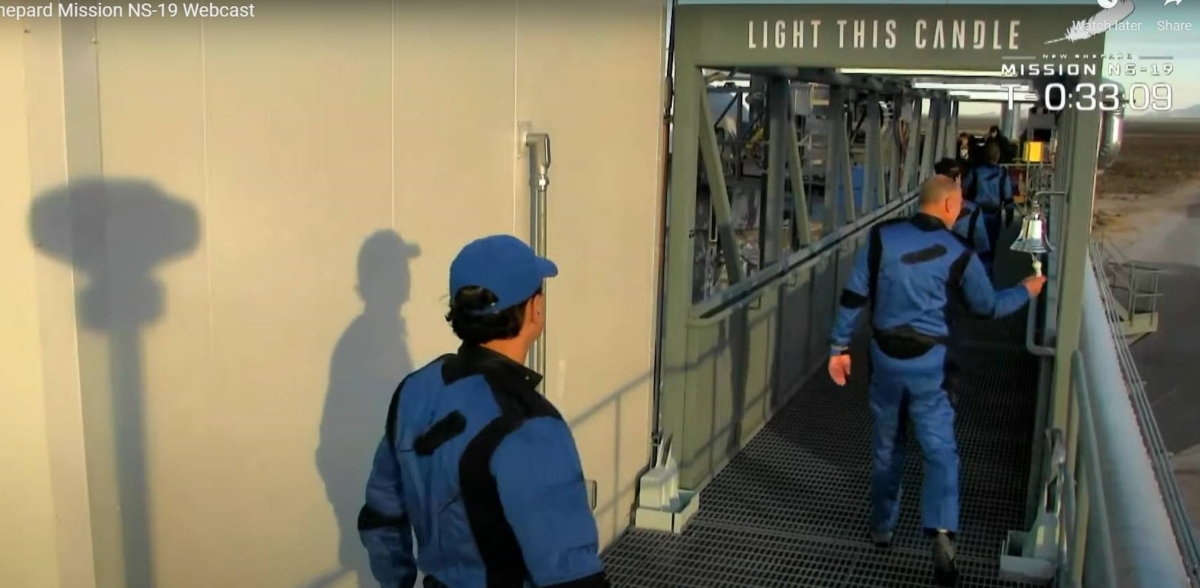
Credit: Blue Origin/Inside Outer Space screengrab
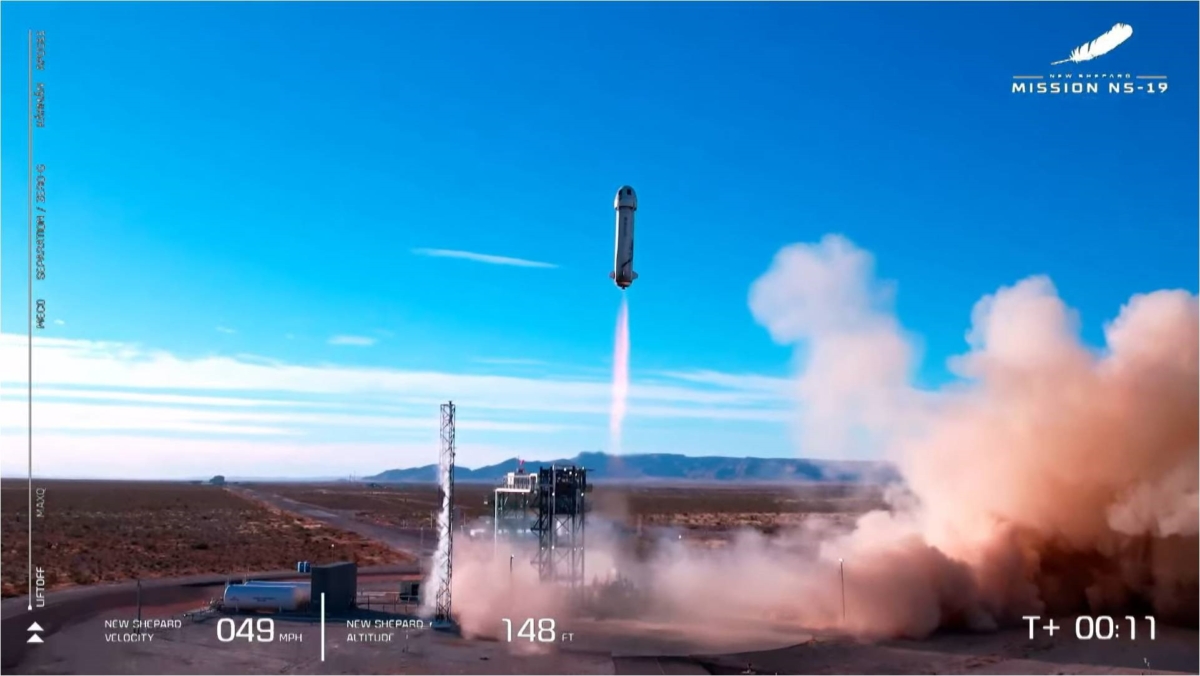
Credit: Blue Origin/Inside Outer Space screengrab
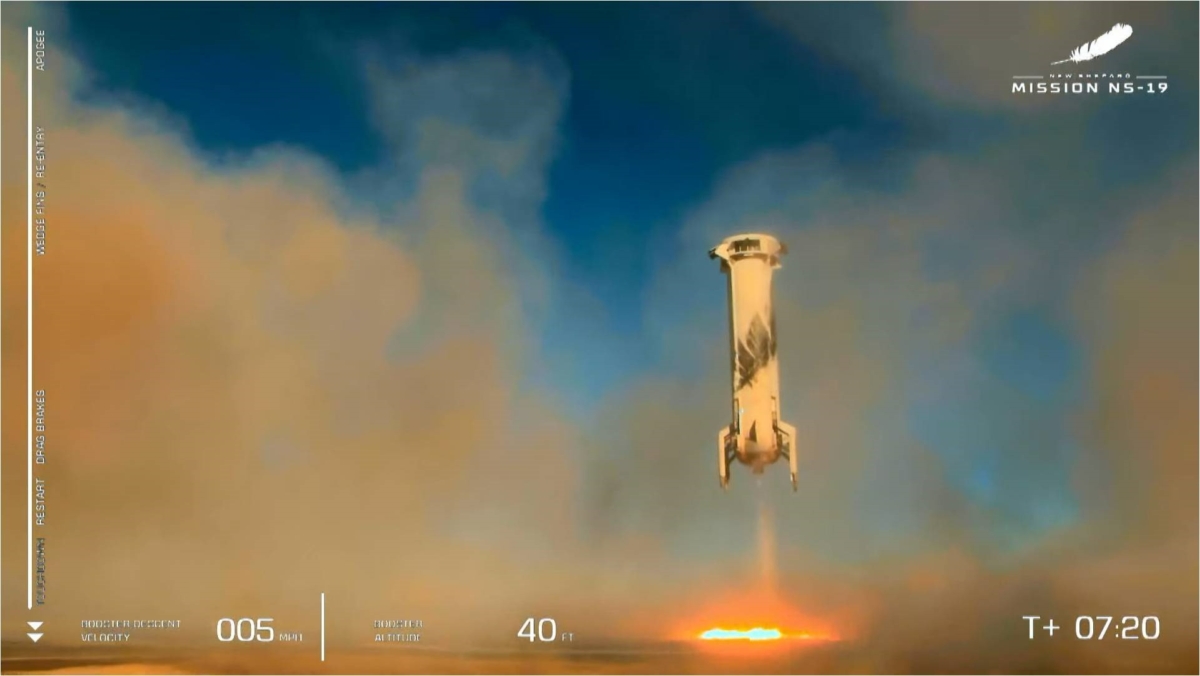
Credit: Blue Origin/Inside Outer Space screengrab
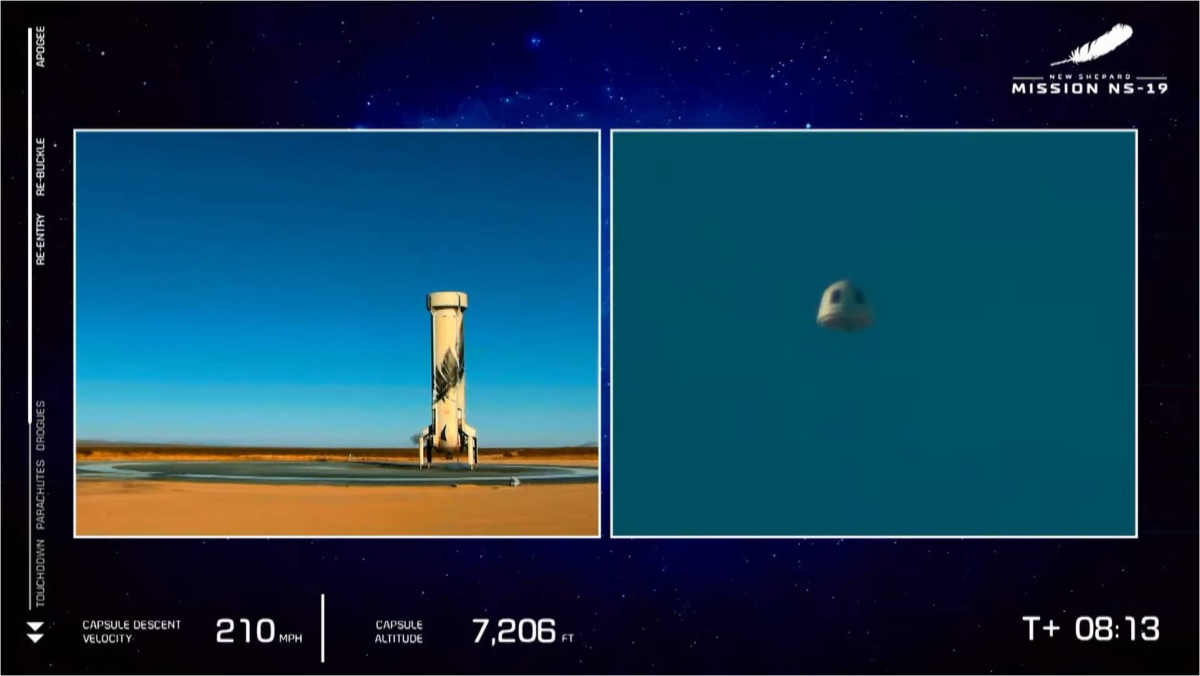
Credit: Blue Origin/Inside Outer Space screengrab
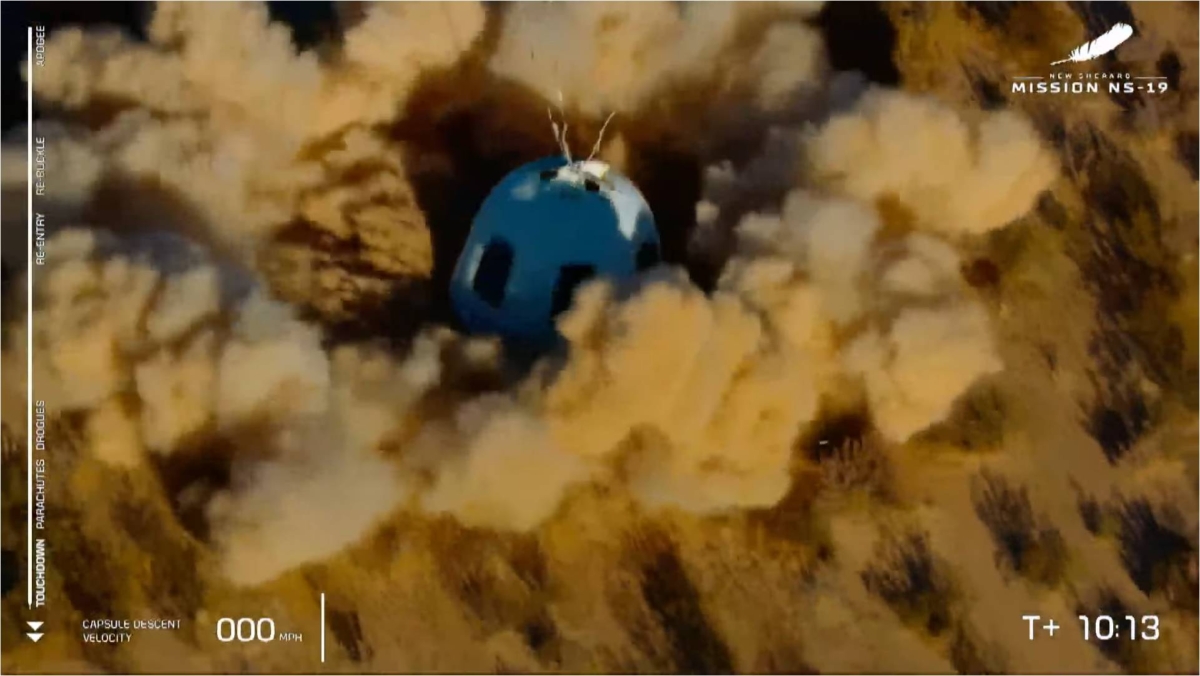
Credit: Blue Origin/Inside Outer Space screengrab
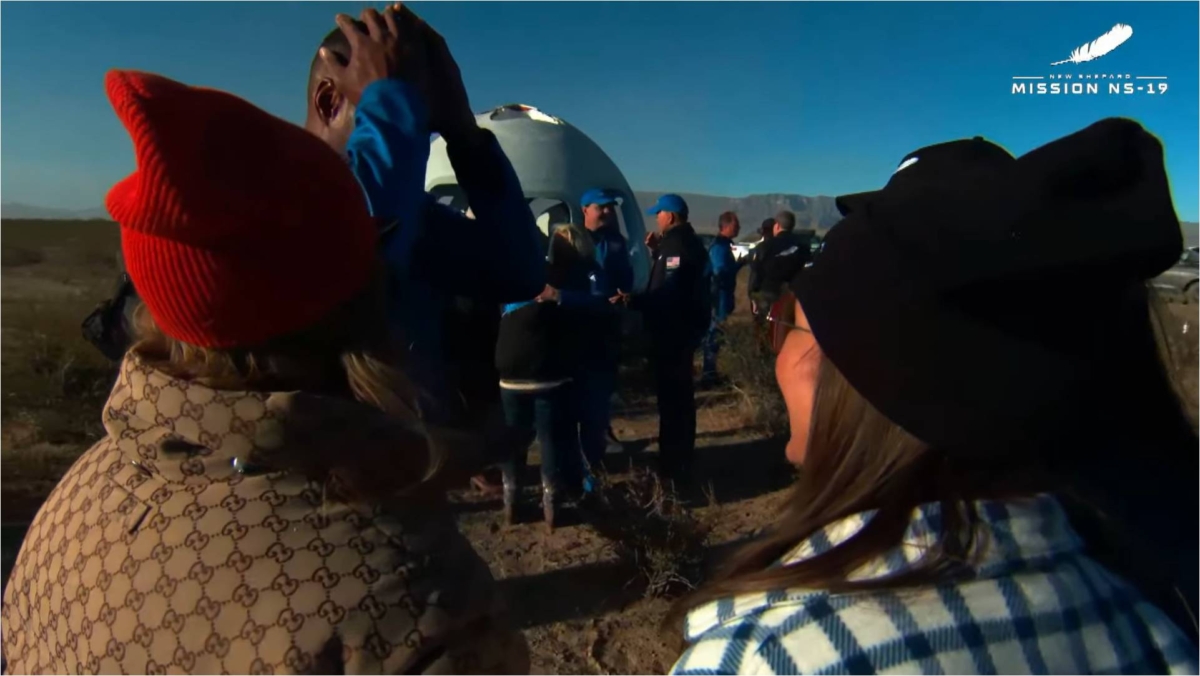
Credit: Blue Origin/Inside Outer Space screengrab
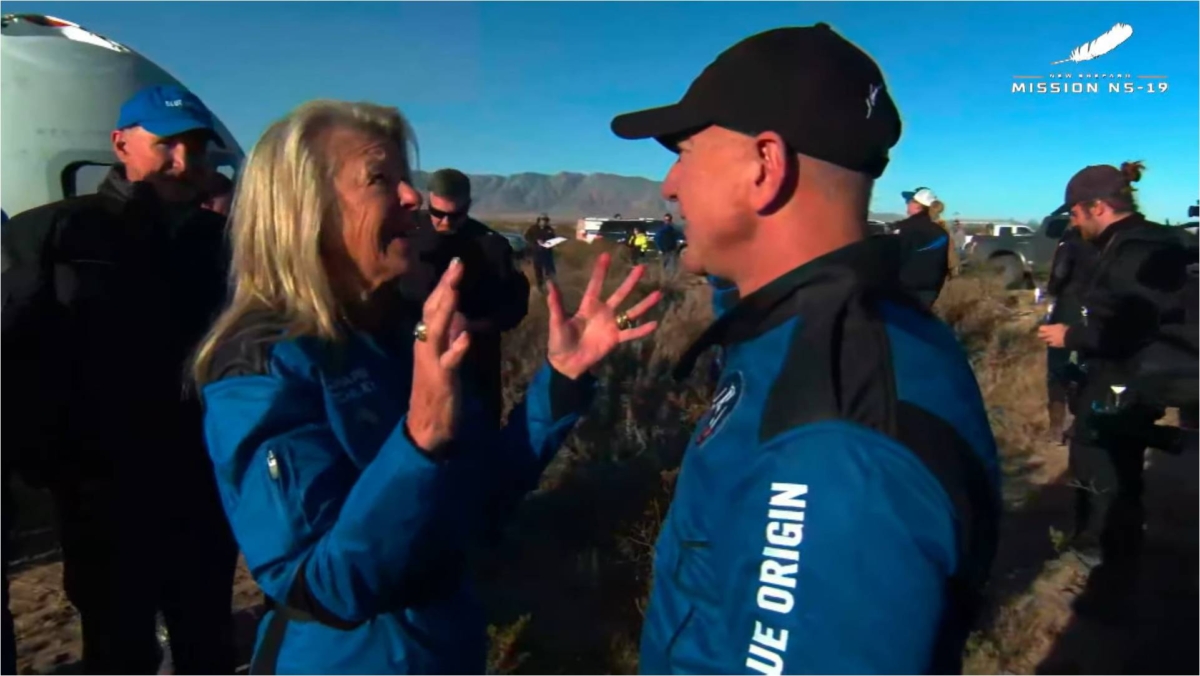
Credit: Blue Origin/Inside Outer Space screengrab
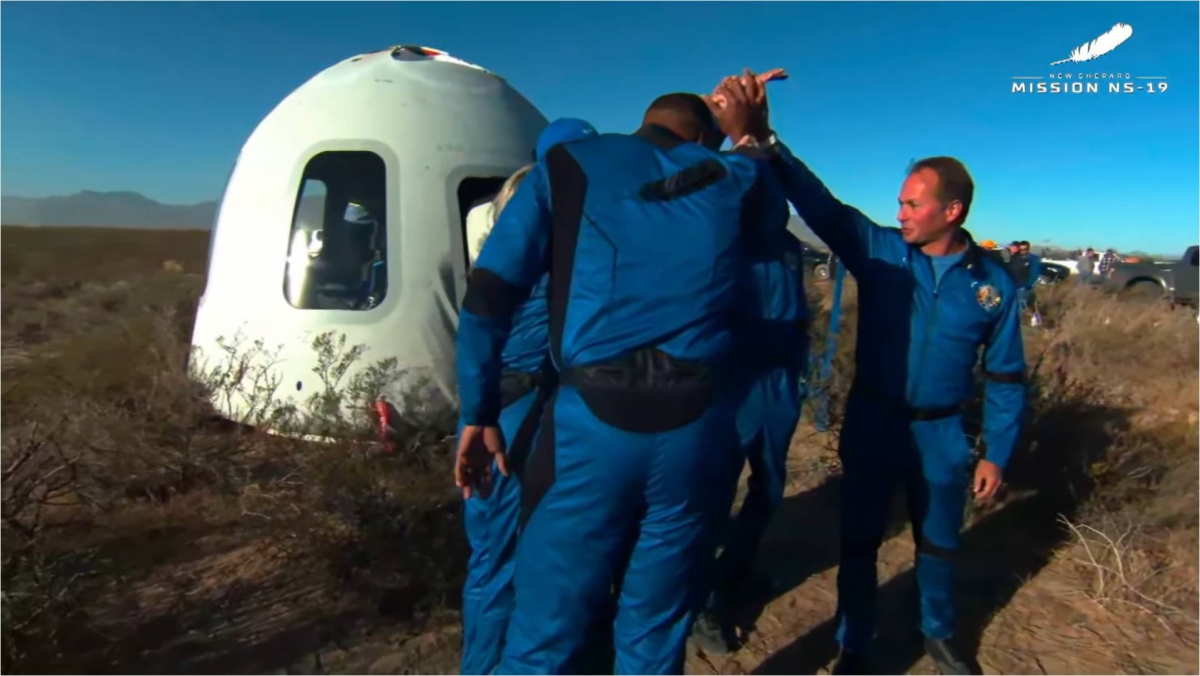
Credit: Blue Origin/Inside Outer Space screengrab
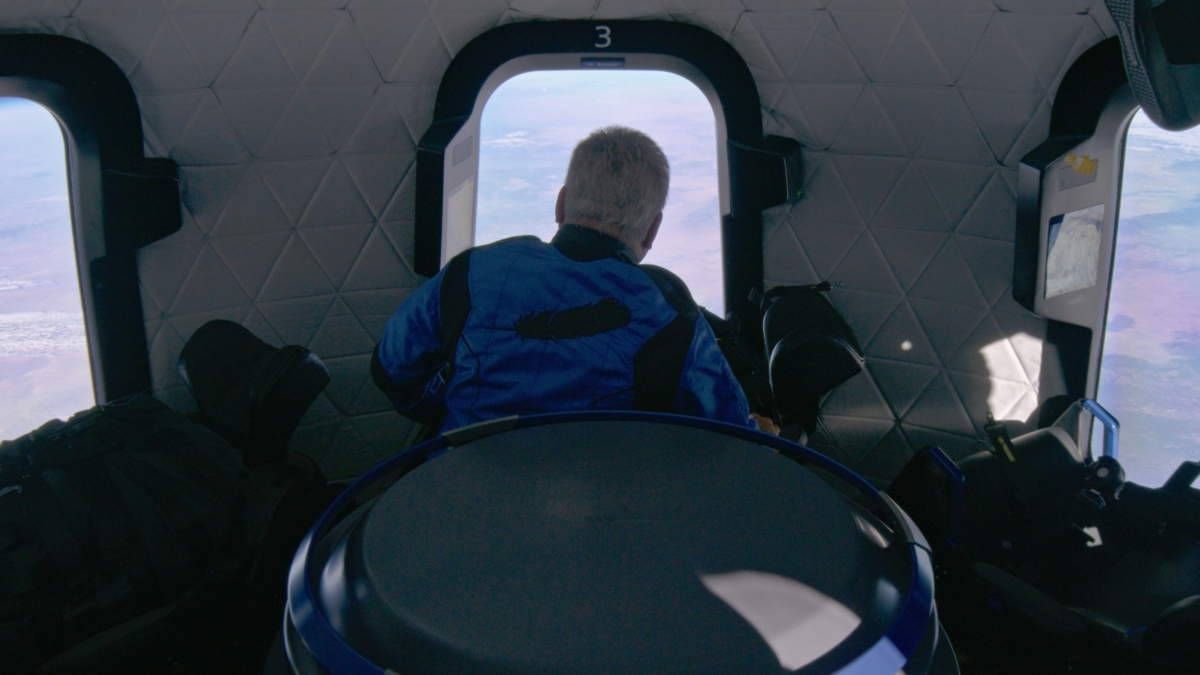
William Shatner looks out of the New Shepard windows on NS-18.
Credit: Blue Origin
The Federal Aviation Administration (FAA) is ending its Commercial Space Astronaut Wings Program and will recognize individuals reaching space on its website.
The FAA issued the following news today:

Credit: Virgin Galactic
- With the advent of the commercial space tourism era, starting in 2022, the Federal Aviation Administration (FAA) will now recognize individuals who reach space on its website instead of issuing Commercial Space Astronaut Wings.
- Before the Wings program ends, the FAA will award Commercial Space Astronaut Wings to those who had qualifying space travel in 2021, including 15 individuals who have already travelled beyond 50 statute miles above the surface of the Earth on a FAA-licensed launch.
- In addition, the FAA is making an honorary award of Commercial Space Astronaut Wings to two individuals who flew on a FAA-permitted experimental test flight in a space launch vehicle that broke up during flight in 2014.

Virgin Galactic pilot Todd Ericson and NTSB investigators at SpaceShipTwo accident site. Craft broke apart during a test flight on October, 31, 2014.
Credit: NTSB
“The U.S. commercial human spaceflight industry has come a long way from conducting test flights to launching paying customers into space,” said FAA Associate Administrator Wayne Monteith.
For a complete list of FAA Commercial Space Astronaut Wings recipients, go to:
https://www.faa.gov/space/licenses/human_spaceflight/recognition/

Credit: Blue Origin
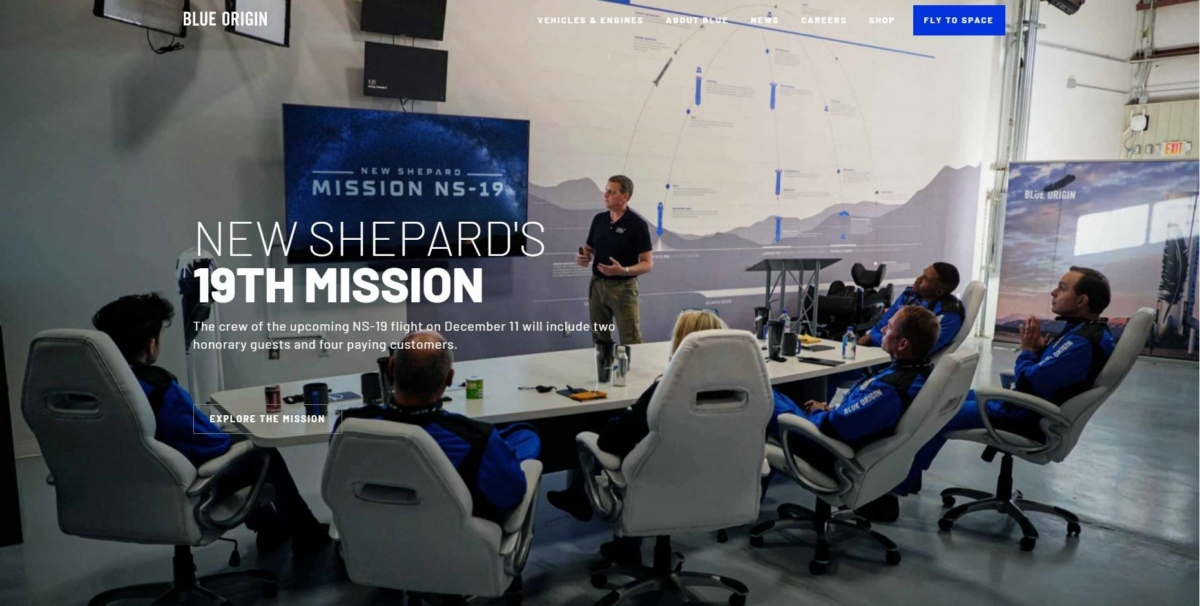
Due to a forecast of strong winds, the Blue Origin New Shepard suborbital launch team has made the call to delay the launch of NS-19 to Saturday, December 11.
Liftoff from Launch Site One near Van Horn in West Texas is targeted for 8:45am CST/14:45 UTC.
“The team has completed Flight Readiness Review and confirmed the vehicle has met all mission requirements for launch,” reports Blue Origin. The space travelers have completed training and weather remains as the only gating factor for a liftoff.
Upper L to R: Lane Bess, Cameron Bess, Evan Dick; Lower L to R: Dylan Taylor, Laura Shepard Churchley, Michael Strahan
Credit: Blue Origin
All aboard!
The crew of the upcoming NS-19 flight includes two honorary guests and four paying customers.
Guests include Good Morning America co-anchor Michael Strahan and Laura Shepard Churchley, the eldest daughter of Alan Shepard, who was the first American to fly to space.
The four customers include space industry executive and philanthropist Dylan Taylor, investor Evan Dick, Bess Ventures founder Lane Bess, and Cameron Bess.
Lane and Cameron Bess will become the first parent-child pair to fly in space.
Meet the crew
Laura Shepard Churchley
Laura has dedicated her life to promoting what her father, Alan Shepard, started when he became the first American in space and the fifth person to walk on the Moon. Alan Shepard is the namesake of New Shepard. She currently serves as Chair of the Astronaut Scholarship Foundation Board of Trustees, a foundation that raises funds for college students and provides mentoring to scholars pursuing careers and research in STEM.
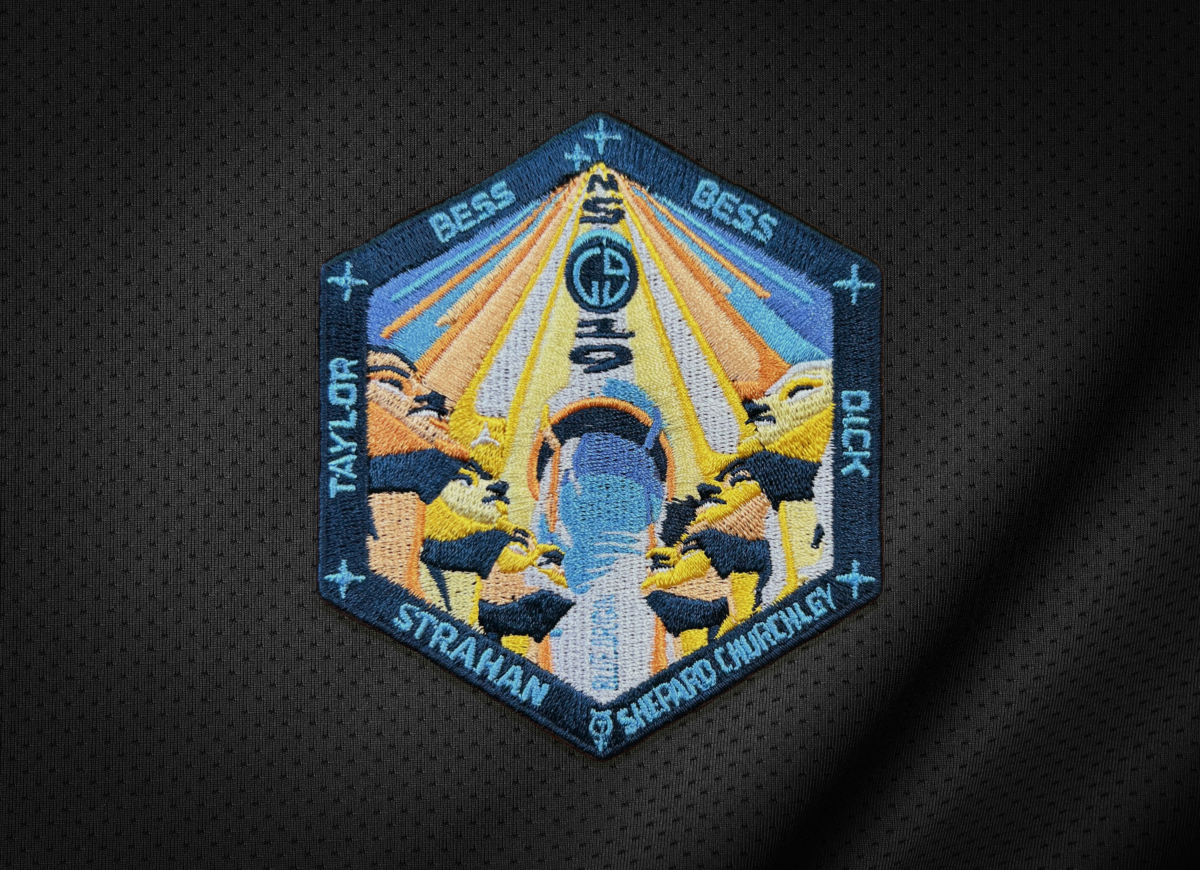
NS-19 patch
Credit: Blue Origin
Michael Strahan
Michael is a two-time Emmy award winner, Peabody award-winning journalist, and Super Bowl Champion, who currently serves as a co-anchor on ABC’s “Good Morning America” and host of the top-rated primetime game show “$100,000 Pyramid.” Strahan additionally serves as an analyst for “Fox NFL Sunday” and headlines the Thursday Night Football Pregame Show live from New York City. Partnering with his longtime friend Constance Schwartz, Strahan formed SMAC Entertainment, a multidimensional talent management, music, branding, and production company which has become known for strong, diversified content, and its production of the “Nickelodeon Kids’ Choice Sports Awards.” Strahan is also intensely dedicated to charitable work, supporting the USO, HELP USA, Merging Vets and Players organizations.
Blue Origin invited Michael to join the crew of this flight. As a crew member, he will receive a stipend, which is being donated to The Boys & Girls Club.
Dylan Taylor
Dylan is an active pioneer in the space exploration industry as a CEO, investor, thought leader, and philanthropist. He is the Chairman & CEO of Voyager Space, a global space exploration firm headquartered in Denver, and the founder of the global nonprofit Space for Humanity, which seeks to democratize access to space. He is also co-Founding Patron of the Commercial Spaceflight Federation. Known for his commitment to creating positive impact in the world and leading Environmental, Social, and Governance (ESG) initiatives in the space community, Dylan was named a Henry Crown Fellow of the Aspen Institute in 2014 and a Fellow of the Unreasonable Group in 2021.
Go to Taylor’s blog — Journey to the Dream – that details his New Shepard experience at:

Blue Origin’s crew capsule – a suborbital six-seater craft.
Credit: Blue Origin
Evan Dick
Evan is an engineer, investor, and Managing Member of Dick Holdings, LLC. Evan formerly served as Senior Vice President for D.E. Shaw and Managing Director of Highbridge Capital Management, and is a charitable supporter of the Darwin Foundation and Population Relief International Corp. Evan is an ATP-rated pilot and volunteer for Starfighters Aerospace, as well as an avid sailor and motorcyclist.
Lane Bess
Lane is the Principal and Founder of Bess Ventures and Advisory, a family fund supporting technology firms that innovate and disrupt across multiple market sectors. Lane is best known for having helped start and build two of the most important cybersecurity companies in the public markets today, Zscaler (NASDQ) and Palo Alto Networks (NYSE). Lane also serves as a Trustee at Carnegie Mellon University and, along with his family, supports philanthropic interests across health and social issues.

Blue Origin’s New Shepard booster takes flight.
Credit: Blue Origin
Cameron Bess
Cameron is a content creator with a passion for creating and expressing themselves in ways that can brighten a person’s day. After studying Computer Science and Game Design at DigiPen Institute for Technology in Washington, they’ve developed an engaged community across multiple platforms, producing original content and developing proprietary software to support their audience. Cameron identifies as pansexual and is proud to represent marginalized communities and hopes their journey can inspire others.
Live launch coverage of NS-19, go to: https://www.blueorigin.com/
Coverage starts at T-90 minutes. Follow Blue Origin on Twitter, to stay up to date on all mission details.

Jeff Bezos, founder of Blue Origin.
Credit: Blue Origin

Curiosity Front Hazard Avoidance Camera Left B image taken on Sol 3320, December 8, 2021.
Credit: NASA/JPL-Caltech
NASA’s Curiosity Mars rover at Gale Crater is now performing Sol 3321 duties.
The rover is taking in the visually stunning Maria Gordon notch, reports Scott Guzewich, an atmospheric scientist at NASA’s Goddard Space Flight Center in Greenbelt, Maryland.
A plan for Sols 3321-3322 involves Chemistry and Camera (ChemCam) activities with a Laser Induced Breakdown Spectroscopy (LIBS) target on a nearby bedrock slab and then a passive observation to study atmospheric dust, ice, and gases.

Curiosity Left B Navigation Camera photo acquired on Sol 3320, December 8, 2021.
Credit: NASA/JPL-Caltech
Also, Curiosity’s arm was to be placed on “Cladh Hallan” for contact science with the Alpha Particle X-Ray Spectrometer (APXS) and Mars Hand Lens Imager (MAHLI).
Early wake-up call
On the second sol, Curiosity is slated to wake up early to catch the morning sunlight on the west face of the cliff wall lining the notch and image it with Mastcam and Navcam, Guzewich adds.
After additional science with Navcam, Mastcam, and ChemCam, the rover will drive just to the right of the corner of the cliff.

Curiosity Left B Navigation Camera photo acquired on Sol 3320, December 8, 2021.
Credit: NASA/JPL-Caltech
“From our current location, it can’t help but remind me of the Old Man in the Mountain that used to be in New Hampshire. At this parking location, we’ll conduct a focused science campaign with the [Dynamic Albedo of Neutrons] (DAN) over the weekend to study the makeup of the cliff wall itself,” Guzewich notes.

“Old Martian in the Mountain” – image taken by Right Navigation Camera on Sol 3319 December 7, 2021
Credit: NASA/JPL-Caltech
Tight canyon
In an earlier report, Mark Salvatore, a planetary geologist at the University of Michigan, explains that Curiosity is currently located within Maria Gordon notch, which is a rather tight canyon surrounded by high rock walls located at the transition onto the Greenheugh Pediment.
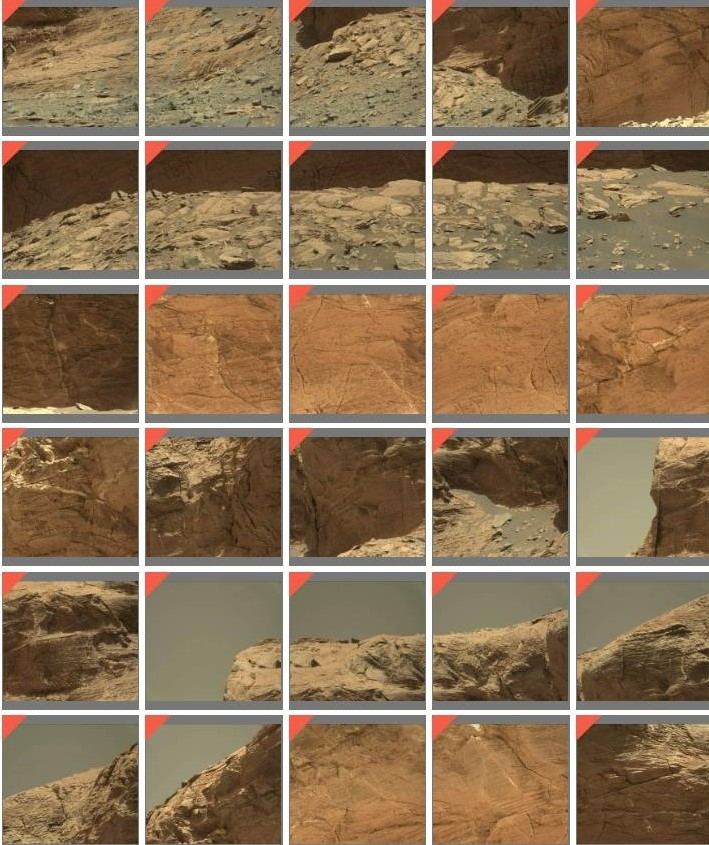
Curiosity Mast Camera Right imagery acquired on Sol 3319, December 7, 2021.
Credit: NASA/JPL-Caltech/MSSS
The rover views are currently magnificent, Salvatore adds, with steep walls surrounding Curiosity that cast some rather dramatic shadows onto the workspace.

Curiosity Mast Camera Right photo taken on Sol 3319, December 7, 2021.
Credit: NASA/JPL-Caltech/MSSS
“However, despite the beautiful views, today was a sobering lesson in the complexities of planning and executing martian surface science investigations,” Salvatore says. “On some days, planning the scientific activities for the Curiosity rover to perform on Mars seems easy – observe cool features, plan cool observations, and let Curiosity execute the plan as proposed.”

Curiosity Mars Hand Lens Imager photo produced on Sol 3320, December 8, 2021.
Credit: NASA/JPL-Caltech/MSSS
Series of events
Today, unfortunately, was not one of those days.
“A series of events (including a drive that was cut short on the previous day and a delay in getting all of our data processed, mosaicked, and ready for scientists to use) prevented our original plan from being submitted and executed,” Salvatore explains.
First, because Curiosity’s drive ended early yesterday, researchers did not have the full imaging data available for them to ensure use of the rover arm and APXS instrument safely.
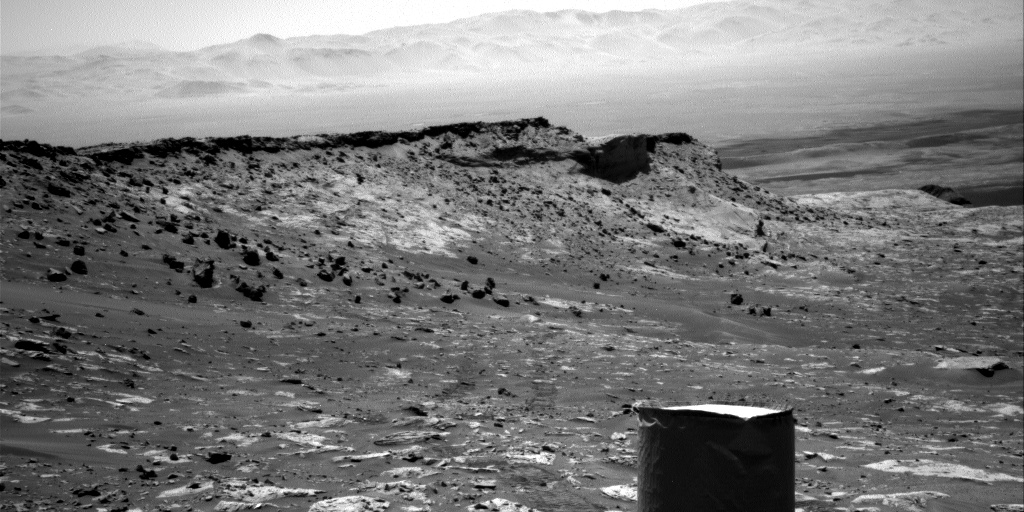
Curiosity Right B Navigation Camera image acquired on Sol 3320, December 8, 2021.
Credit: NASA/JPL-Caltech
“Therefore, we scrubbed our original plan to perform an APXS observation of ‘typical’ bedrock in front of the rover in exchange for using the MAHLI instrument to image the rover wheels and to determine whether Curiosity is in a stable position to use the arm in the next planning cycle, Salvatore notes.
Auto-targeting
Next, scientists modified their original plan to target local bedrock with a ChemCam LIBS observation in exchange for a ChemCam AEGIS activity, which is designed to automatically identify targets of interest in the landscape and autonomously target them with ChemCam’s laser instrument. Lastly, the team planned a handful of Mastcam imaging mosaics with the limited pointing and localization information available to the team.
AEGIS stands for Autonomous Exploration for Gathering Increased Science) – a software suite that permits the rover to autonomously detect and prioritize targets.
Planning cycle
“Even though today came with a lot of complexity and a lot of ‘back-and-forth’ between the science team and the rover planners, the uplink team managed to develop and uplink a really strong plan to characterize our current workspace with Mastcam and ChemCam observations,” Salvatore adds.
While great science is being done, Salvatore concludes, “here’s to hoping that the next few planning cycles are smoother and more straightforward than today’s planning cycle!”

Credit: CNSA/CLEP
More news on that “mystery” object spotted on the Moon by China’s Yutu-2 lunar rover.
The object, shaped like a hut, was spotted in November, two years after the rover was dispatched onto the Moon’s landscape. Photos of the feature have spurred a variety of comments. It was seen over 260-feet (80-meters) away from the rover’s location.

Credit: CNSA/CLEP
Yutu-2 controllers say it may take up to three months for the slow-going rover to reach the site.
Cyberspace spotlight
According to China’s Xinhua news agency, the blurry cube image has become a “cyberspace meme.” Some even used computer graphics to enhance the picture, jokingly, into a Minecraft portal or a Nissan minicar. Then, according to an Inside Outer Space reader: “It looks like a McDonald’s to me,”

Credit: CNSA/CLEP
The Chang’e-4/Yutu-2 lunar machinery was launched on December 8, 2018, making the first-ever soft landing within the Von Kármán crater – a large farside lunar impact feature — on January 3, 2019.
For a short video, go to:
Also, go to my “Mystery Hut” spotted on the moon by Chinese rover is just a rock, scientist says at:
https://www.space.com/mystery-hut-moon-rock-china-yutu-2-rover

