Archive for the ‘Space News’ Category
 Author:
  March 23rd, 2022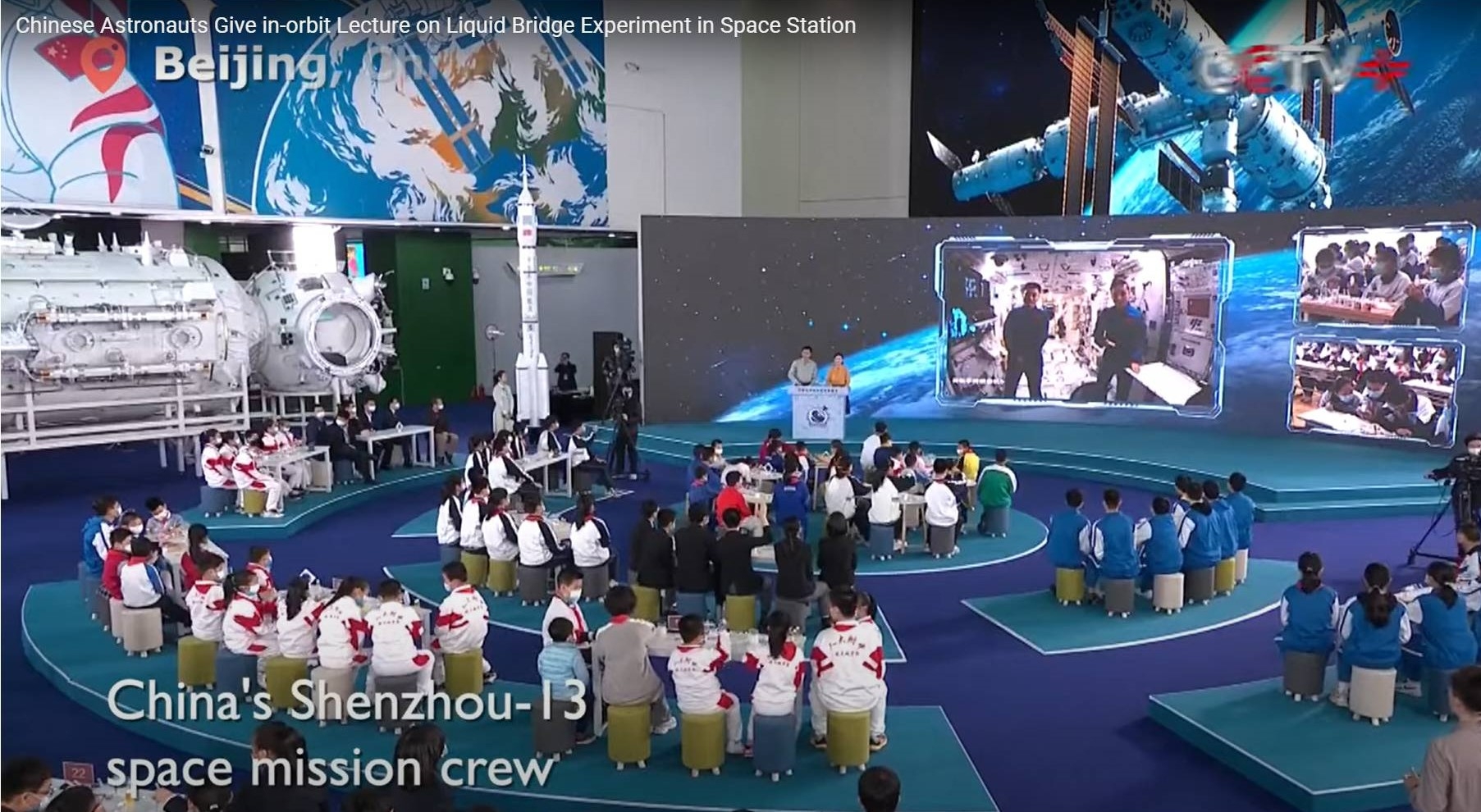
Credit: CCTV Video News Agency/Inside Outer Space screengrab
China’s Shenzhou-13 crew turned the in-construction Tiangong space station into an off-Earth school house, giving assembled students a lecture on the impact of microgravity on processes.
The lecture given by Zhai Zhigang, Wang Yaping and Ye Guangfu, was broadcast live worldwide by China Media Group (CMG). The experiment demonstrated how oil is separated from water by a centrifugal force in a gravity-free condition.
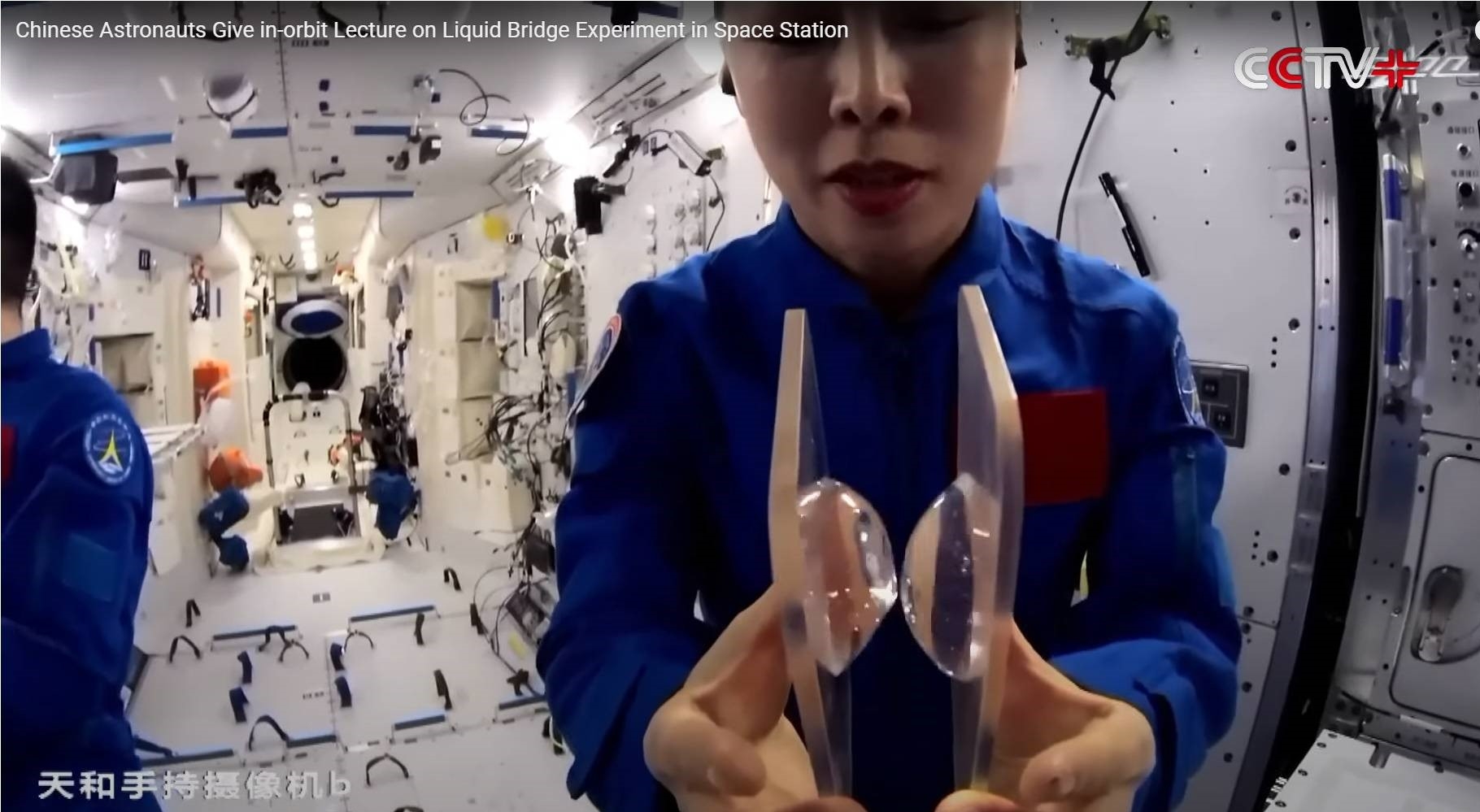
Credit: CCTV Video News Agency/Inside Outer Space screengrab
The Tiangong space station is equipped with a centrifuge, which is used for the separation of medical samples like blood and urine.
Liquid bridge
China’s Shenzhou-13 astronauts have completed more than 20 scientific experiments in orbit, carrying out research in the Tianhe space station core module.
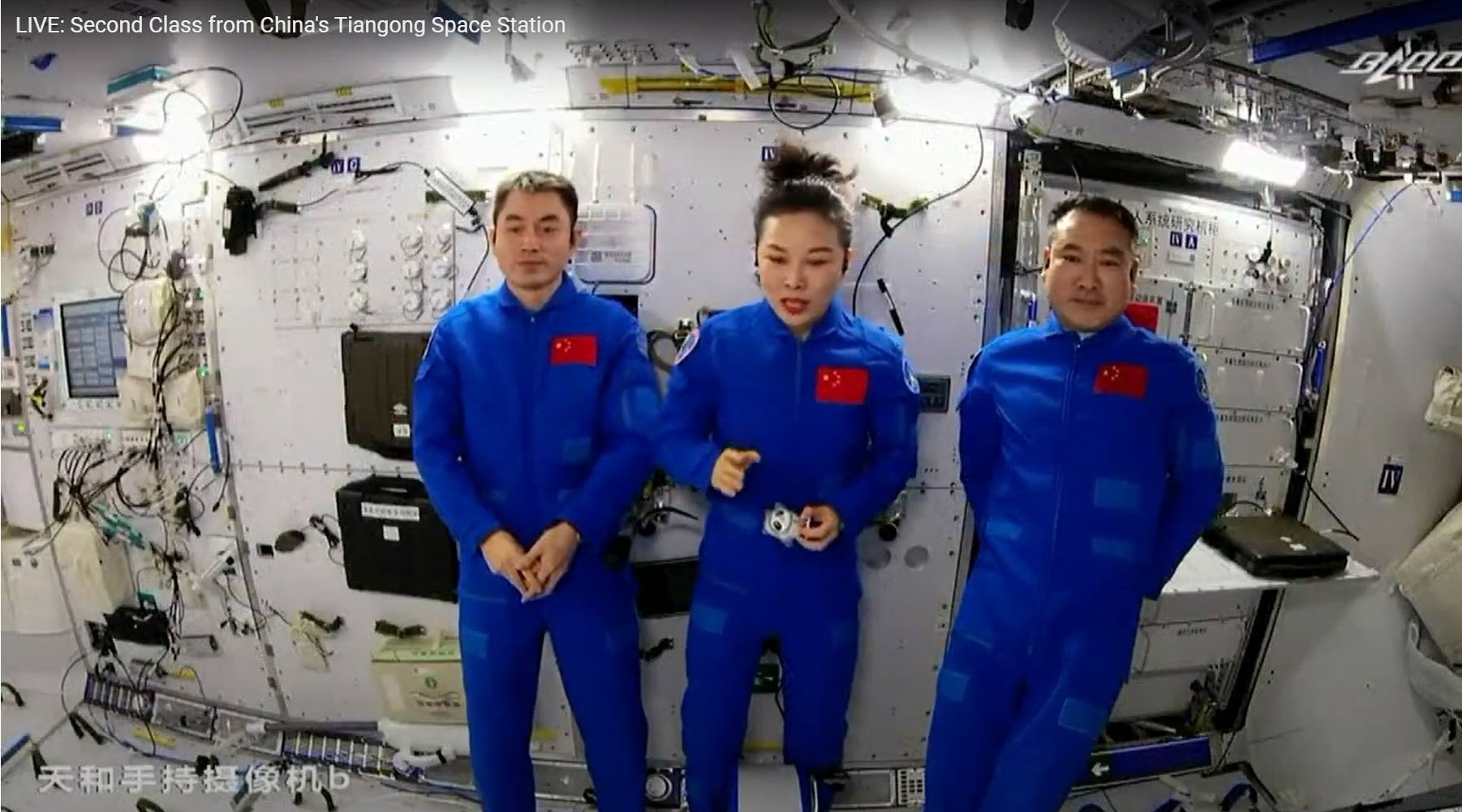
Credit: CCTV Video News Agency/Inside Outer Space screengrab
The Shenzhou-13 crew gave a special in-orbit lecture on knowledge about surface tension of liquid, and conducted a liquid bridge experiment to students on the Earth Wednesday afternoon.
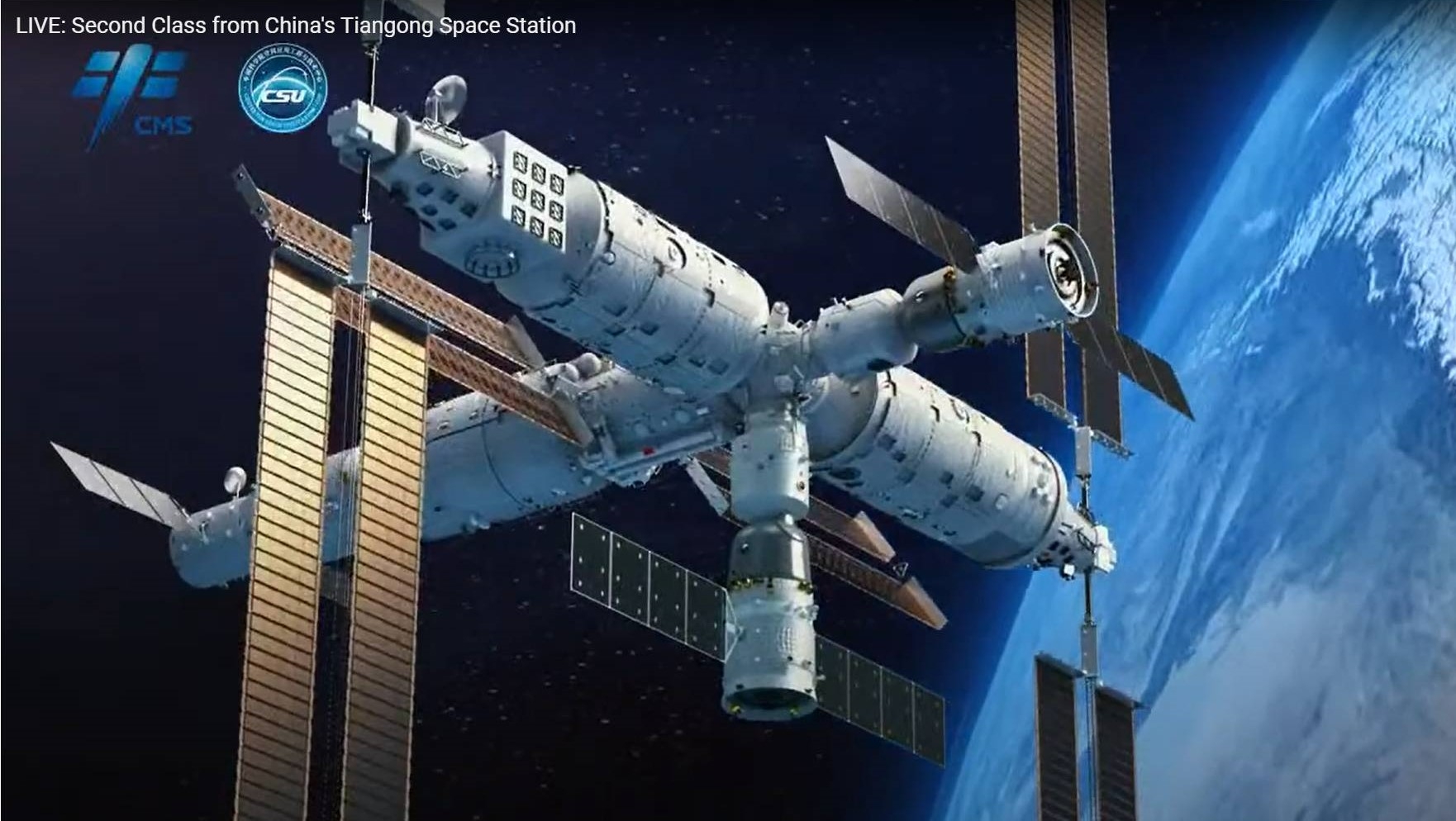
CCTV Video News Agency/Inside Outer Space screengrab
During the lecture, details were given regarding experiment racks that will be installed on the orbiting complex this year.
To view newly issued videos on this second class from China’s Tiangong space station go to:
 Posted in
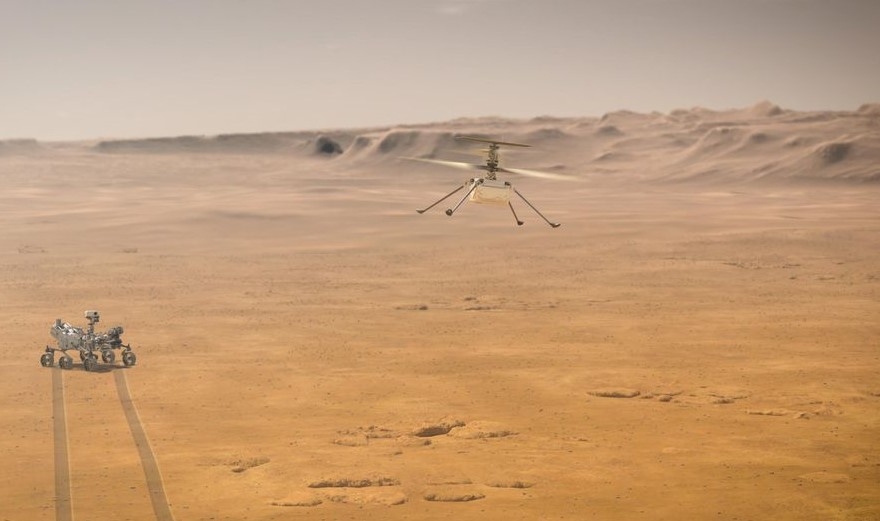
Photo credit: NASA/JPL-Caltech
NASA’s Mars helicopter has performed its 22nd flight over last weekend.
The trip lasted 101.4 seconds and Ingenuity got up to 33 feet (10 meters) in the air.
Word from the JPL team is that another flight could take place perhaps as early as later this week.
The rotorcraft is on its way to setting more records during its second year of operations. NASA has extended Ingenuity’s flight operations through September as it continues with scouting efforts for the NASA Perseverance rover.
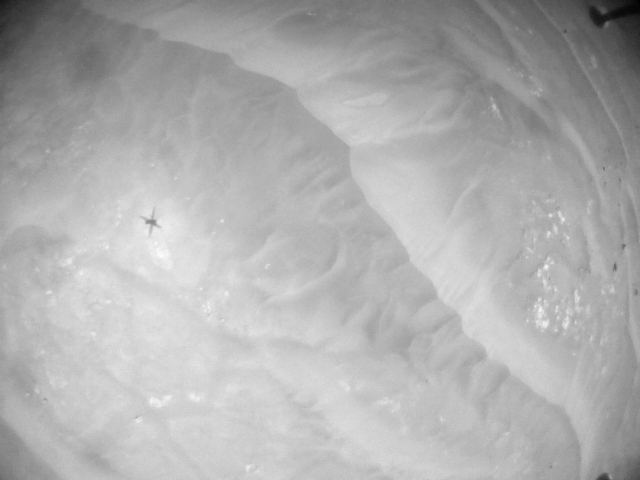
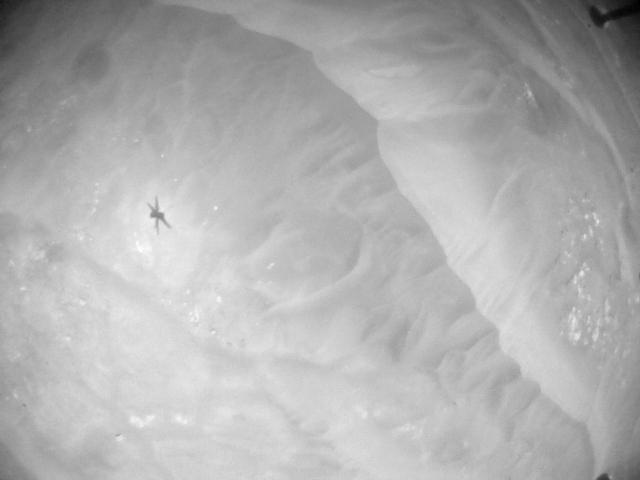
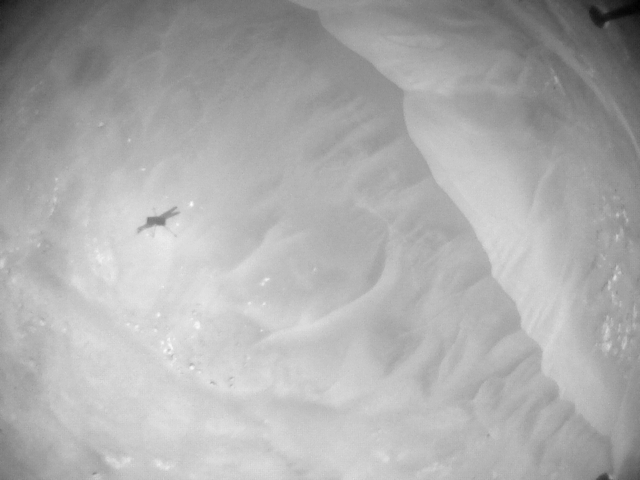
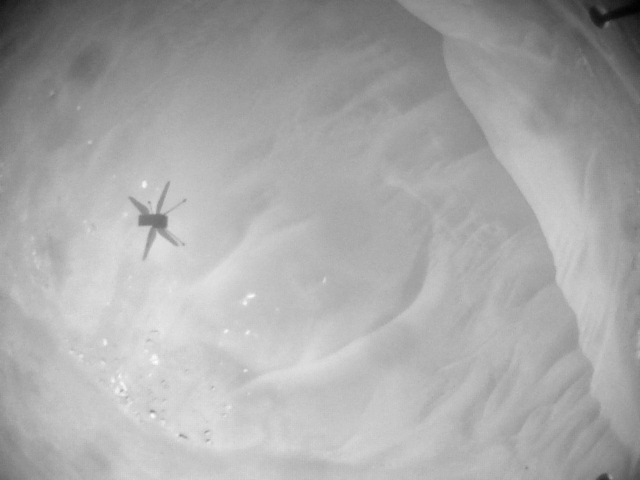
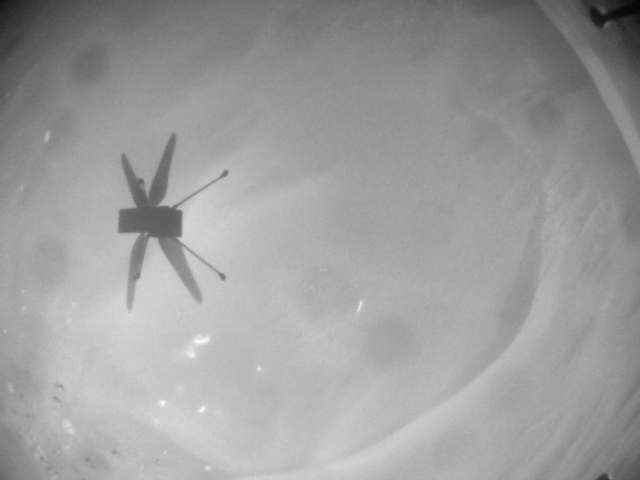
Meanwhile, the first flight 22 photos have been posted, taken by the craft’s Navigation Camera mounted in the helicopter’s fuselage and pointed directly downward to track the ground during flight.
These images were acquired on March 20, 2022 (Sol 384 of the Perseverance rover mission):
Credit: NASA/JPL-Caltech
Credit: NASA/JPL-Caltech
Credit: NASA/JPL-Caltech
Credit: NASA/JPL-Caltech
Credit: NASA/JPL-Caltech
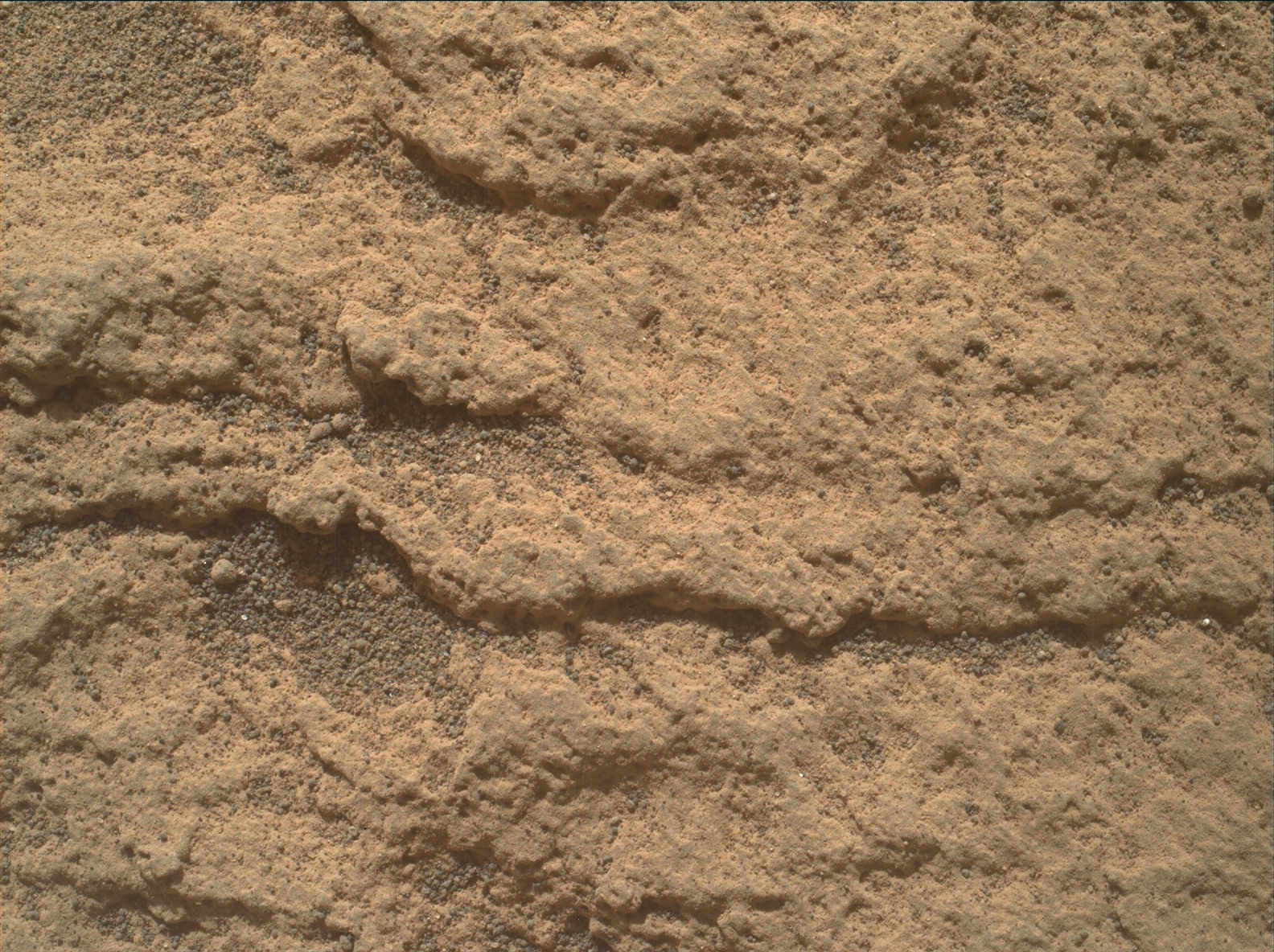
Curiosity Mars Hand Lens Imager Sol 3420 photo produced on March 21, 2022.
Credit: NASA/JPL-Caltech/MSSS
NASA’s Curiosity Mars rover at Gale Crater is now performing Sol 3421 duties.
Reports Mark Salvatore, a planetary geologist at the University of Michigan, after the robot made a drive of roughly 50 feet (15 meters) drive to the west along the top of the Greenheugh Pediment, Curiosity is now positioned at an interesting textural transition within the pediment’s surface units.
“Quite a large amount of the pediment is dominated by a washboard-like pattern at the surface that can be easily observed from orbit, while the region Curiosity ascended onto the pediment surface is rugged yet lacks those clear washboard-like features,” Salvatore said. “With this latest drive, Curiosity is now positioned at the transition between these two surface units, and the team is continuing to assess the traversability of this units.”
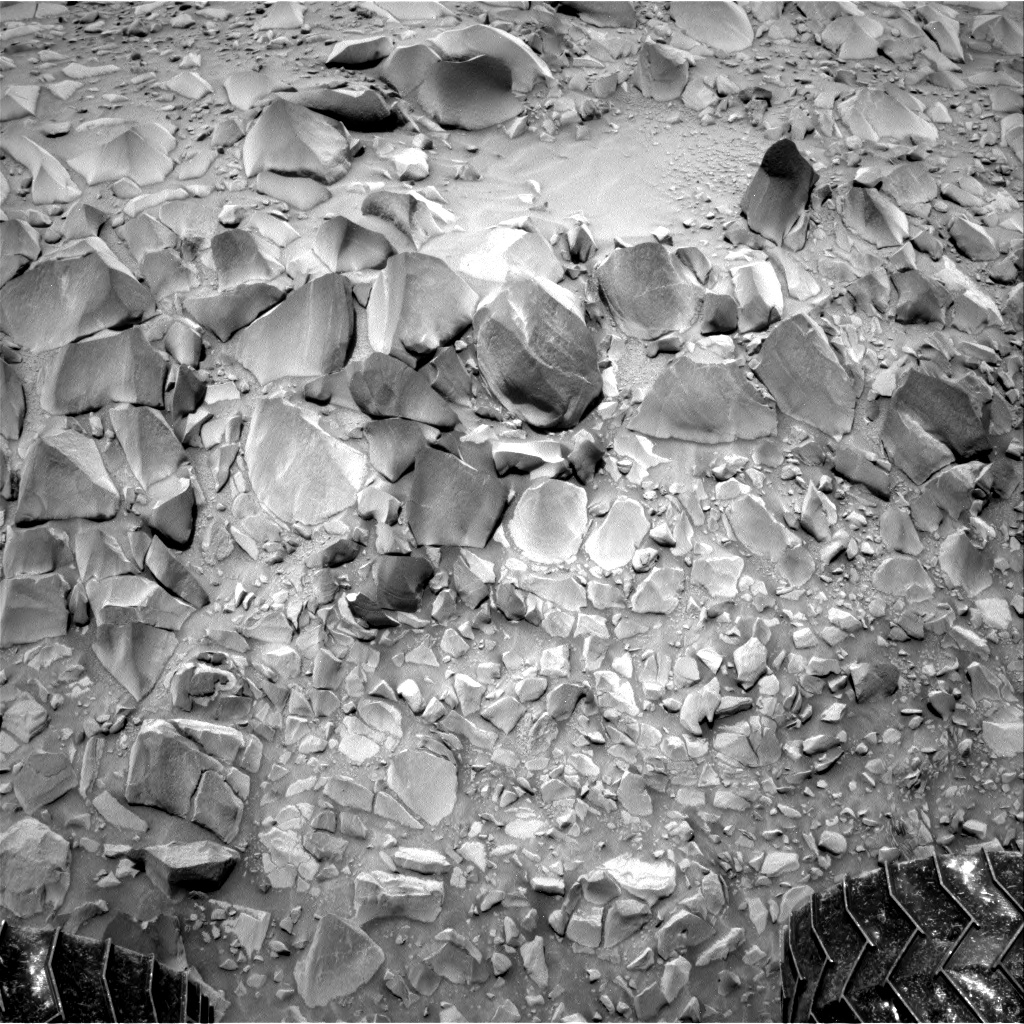
Curiosity Right B Navigation Camera photo acquired on Sol 3420, March 21, 2022.
Credit: NASA/JPL-Caltech
Washboarding
Given the robot’s new vantage point, the plan is for Curiosity to spend time characterizing the different morphological features observed on top of the pediment.
The last weekend plan was scripted to start with several Mastcam imaging sequences designed to characterize the washboarding that is observed in the landscape ahead of the rover.
The terrain’s small-scale roughness and oriented ventifacted rocks led the science team to informally refer to these textures as “gator-back terrain.”
Curiosity was also slated to perform two Chemistry and Camera (ChemCam) Laser Induced Breakdown Spectroscopy (LIBS) analyses on two different targets – a smooth outcrop target named “Macmerry” and a rougher knobby target named “Ochiltree.”
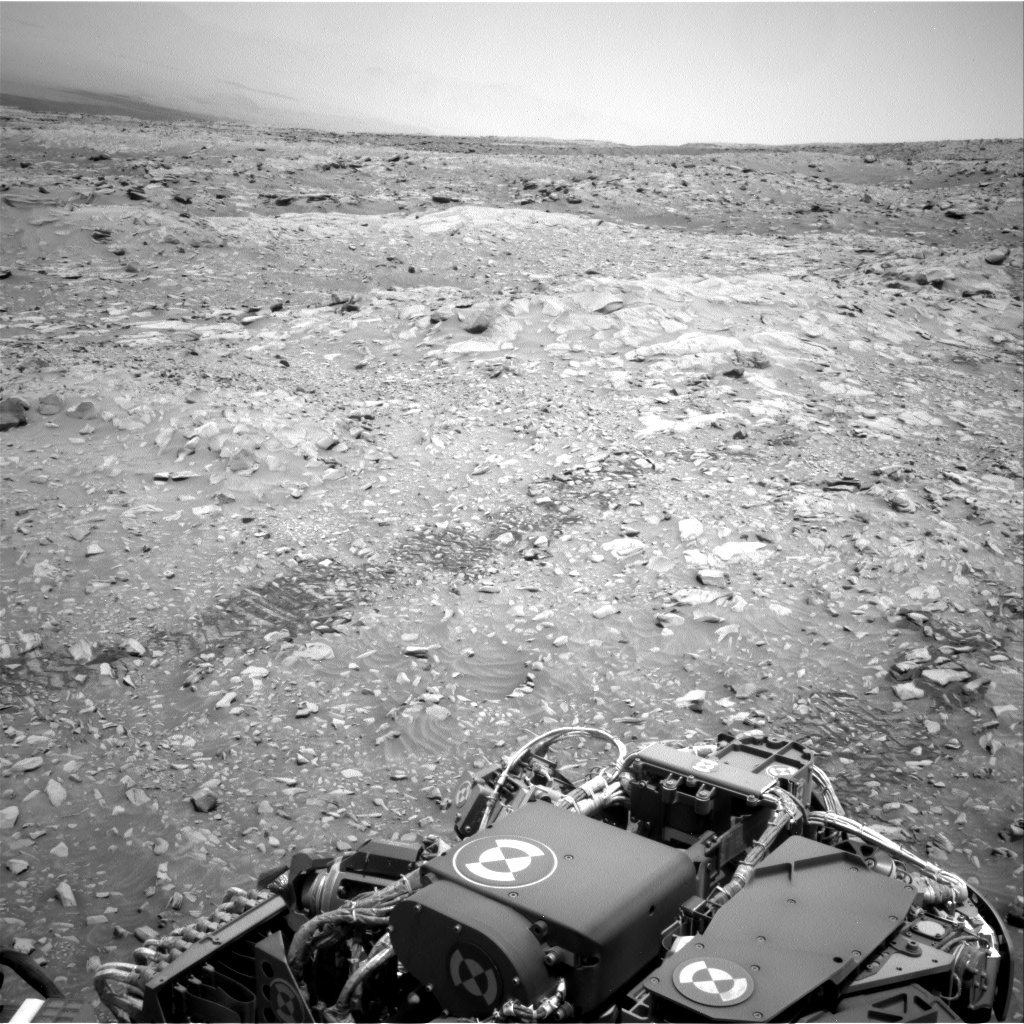
Curiosity Right B Navigation Camera photo acquired on Sol 3420, March 21, 2022.
Credit: NASA/JPL-Caltech
Planned drive
After a ChemCam passive sky observation around midday on sol 3419, Curiosity was set to unstow its robotic arm to conduct a Alpha Particle X-Ray Spectrometer (APXS) integration on the outcrop target named “Blackadder” and an overnight APXS measurement to characterize the martian atmosphere.

Curiosity Left B Navigation Camera image taken on Sol 3420, March 21, 2022.
Credit: NASA/JPL-Caltech
Salvatore lastly reports, on Sol 3420, Curiosity was scheduled to complete Mastcam and ChemCam observations (including a long-distance remote imaging mosaic) before embarking on a planned drive of approximately 115 feet (35 meters) drive to the west to continue the investigation of the pediment and the interesting surface.
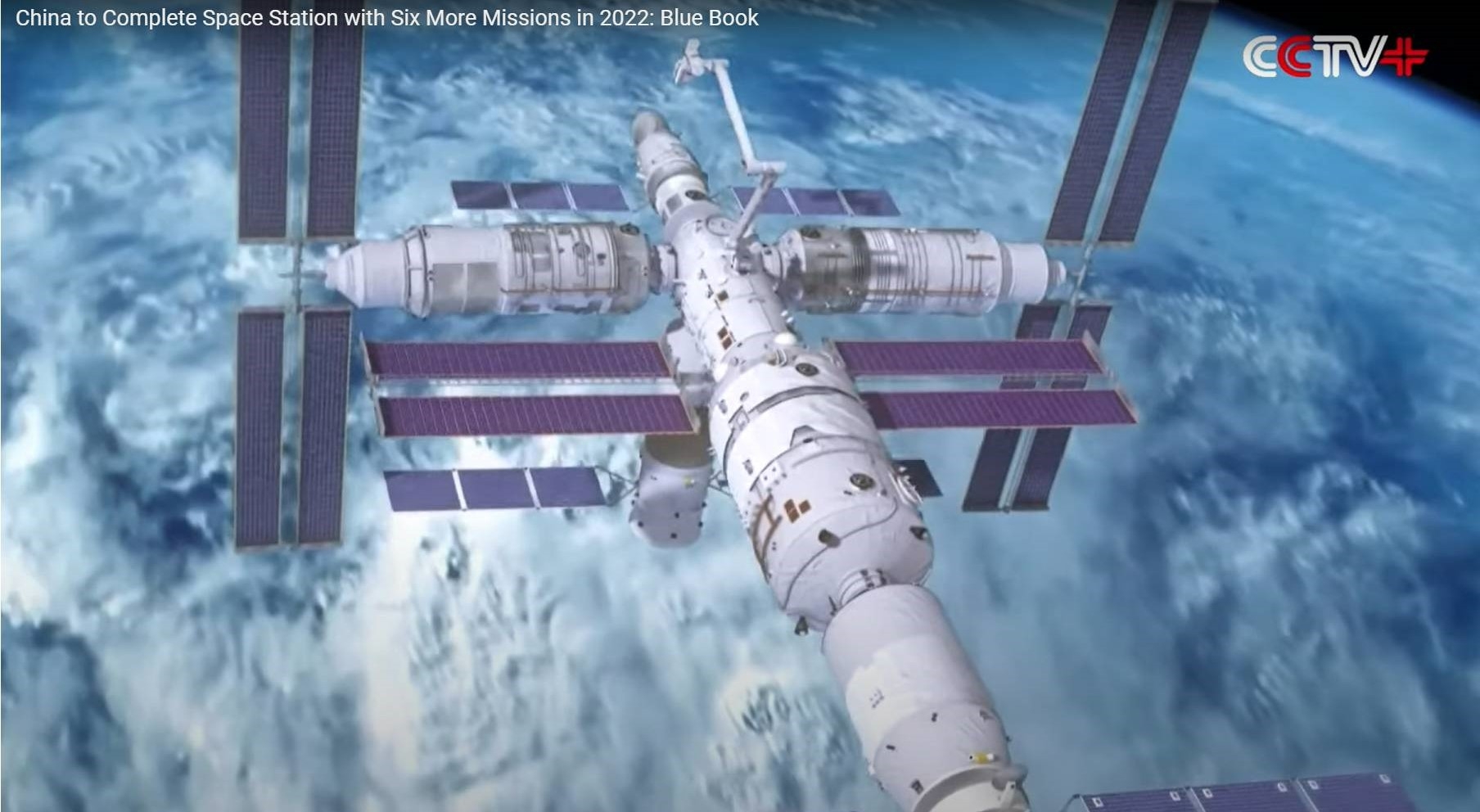
China’s space station to be completed by end of 2022.
Credit: CCTV/Inside Outer Space screengrab
China’s space station is a work-in-progress, with two new modules — Wentian and Mengtian — being readied for launch this year to the low Earth orbit construction site.
According to the Technology and Engineering Center for Space Utilization (CSU) under the Chinese Academy of Sciences, a set of multidisciplinary “frontier scientific experiments” are to be performed on the Tiangong space station.
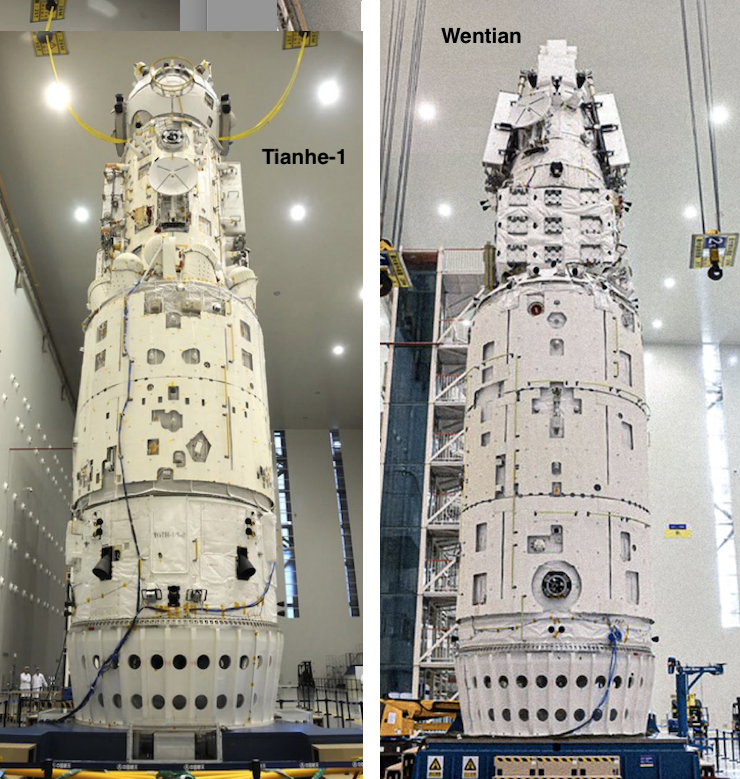
Next up station modules.
Credit: CNSA
The Xinhua news agency reports that the experiments include raising fish, growing vegetables, setting up the most precise clocks in space, developing new materials, studying physical laws and exploring how humans can survive in space for long periods.
Experiment racks
Testing work on the experiment racks has begun, already installed in the Tianhe core module, which was launched last year. These will be used for container-free material science and high microgravity experiments, said Zhang Wei, director of the Utilization Development Center of CSU.

Credit: CCTV/Inside Outer Space screengrab
Additional experiment racks will be included in the two lab modules, focused on fluids, space materials, fundamental physics and combustion, together with the extravehicular experiment platform, Zhang said.
Zhang reports that more than 10 life-science experiments on plants, animals and microbial cells will be carried out in the Wentian lab module, including a small closed ecosystem composed of small fish, microorganisms and algae, adds the Xinhua story.
Atomic clock
The Mengtian lab module is to house the world’s first space-based cold atomic clock consisting of a hydrogen clock, a rubidium clock and an optical clock.
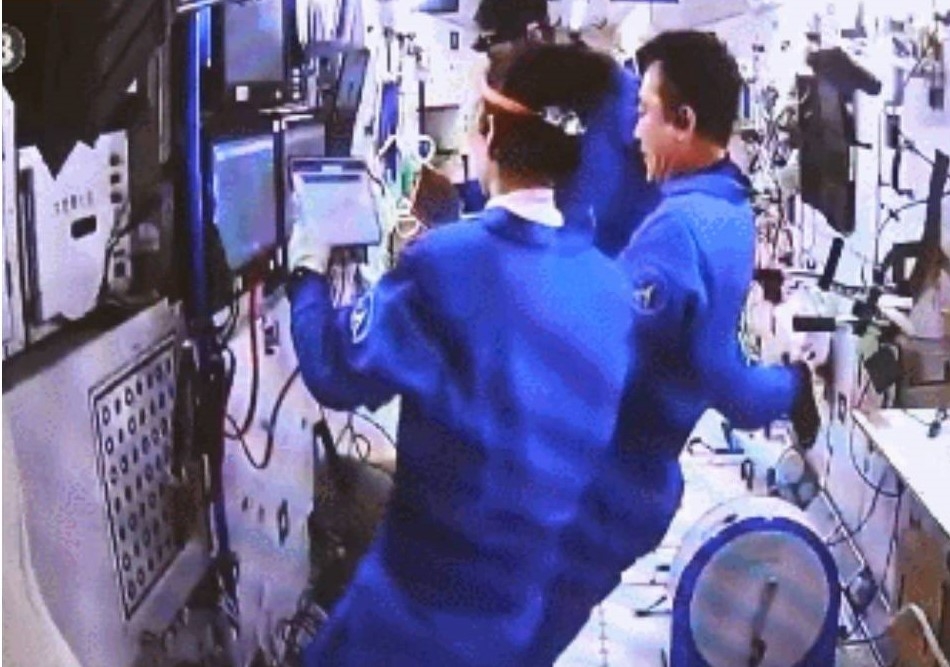
Shenzhou-13 crew now wrapping up 6 month flight.
Credit: CCCTV/China Media Group
Space cold atomic clock technology is expected to contribute to higher-precision satellite positioning and navigation, and support fundamental physics research such as dark matter probes and gravitational wave detection.
Gao Ming, director of the CSU and general director of the space application system of China’s human spaceflight program, added that a number of scientific research facilities have been developed to support more than 1,000 in-orbit research projects.
A ground experiment base in Huairou Science City in the northeastern suburbs of Beijing is being built. It will provide experimental conditions similar to those of the space station enabling ground verification for the space station program, and to support space-earth comparison experiments, Zhang said.

Shenzhou-13 crew members.
Credit: CNS/Inside Outer Space screengrab
Public lecture
Meanwhile, the currently orbiting crew members aboard China’s core station — the Shenzhou-13 astronauts Zhai Zhigang, Wang Yaping and Ye Guangfu – are set to livestream their second public lecture this week.
The first lecture in the “Tiangong Class” series was delivered on Dec. 9, 2021.
The Shenzhou-13 crew entered the Tianhe core module of China’s space station on October 16, 2021 and are now wrapping up a six-month stay in space – China’s longest-ever crewed mission. They are expected to return to Earth in mid-April.
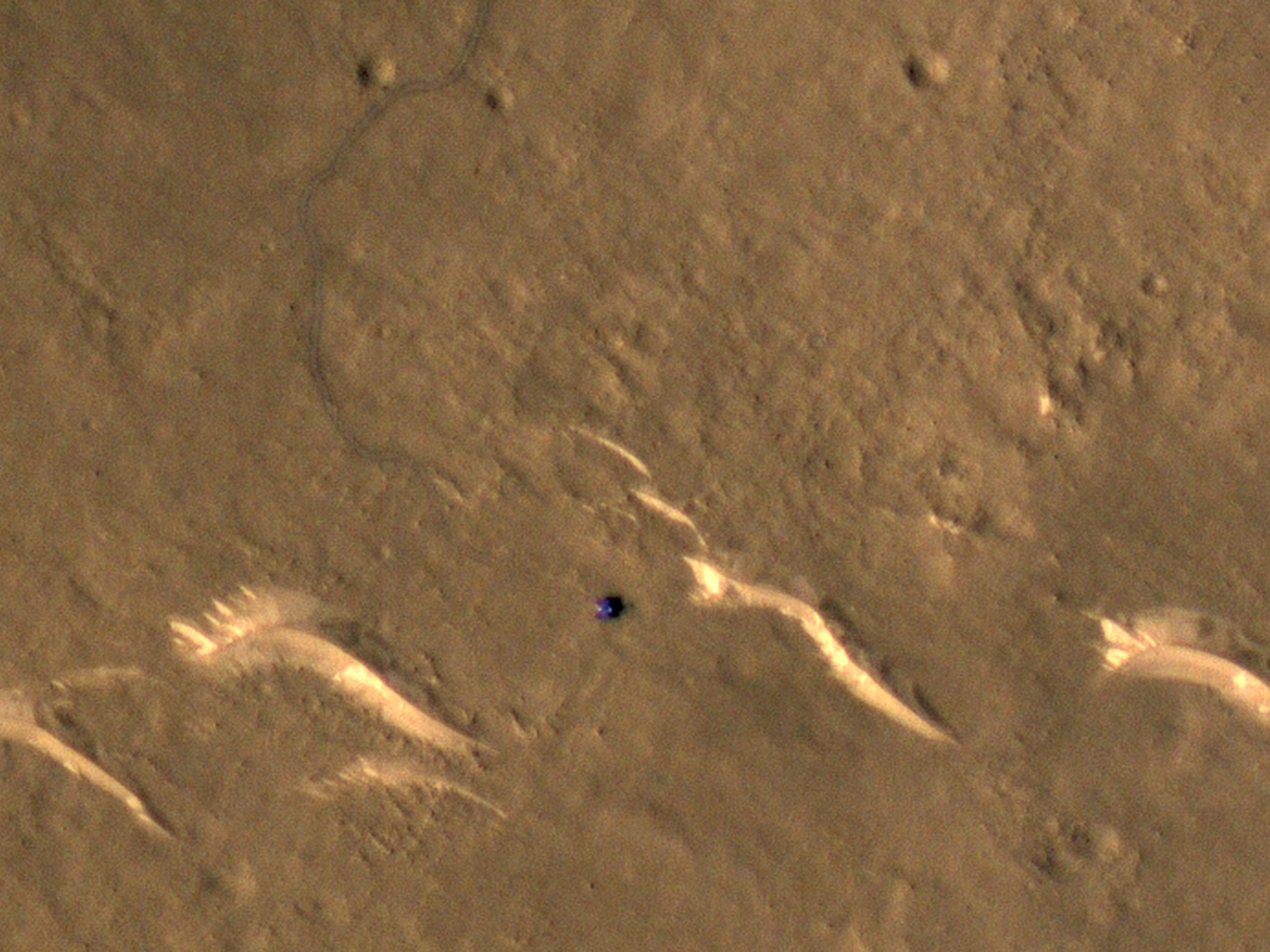
Credit: NASA/JPL/UArizona
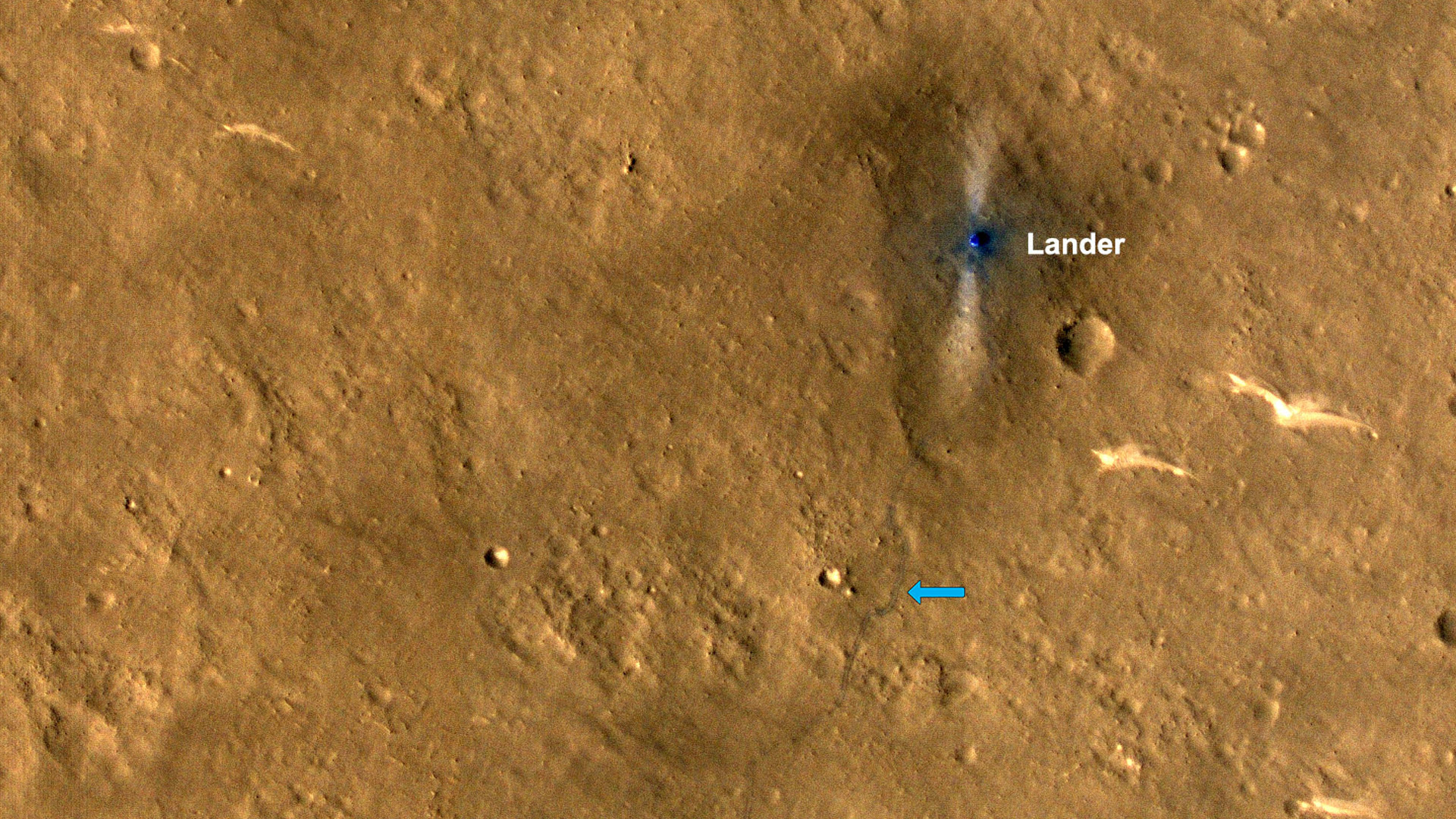
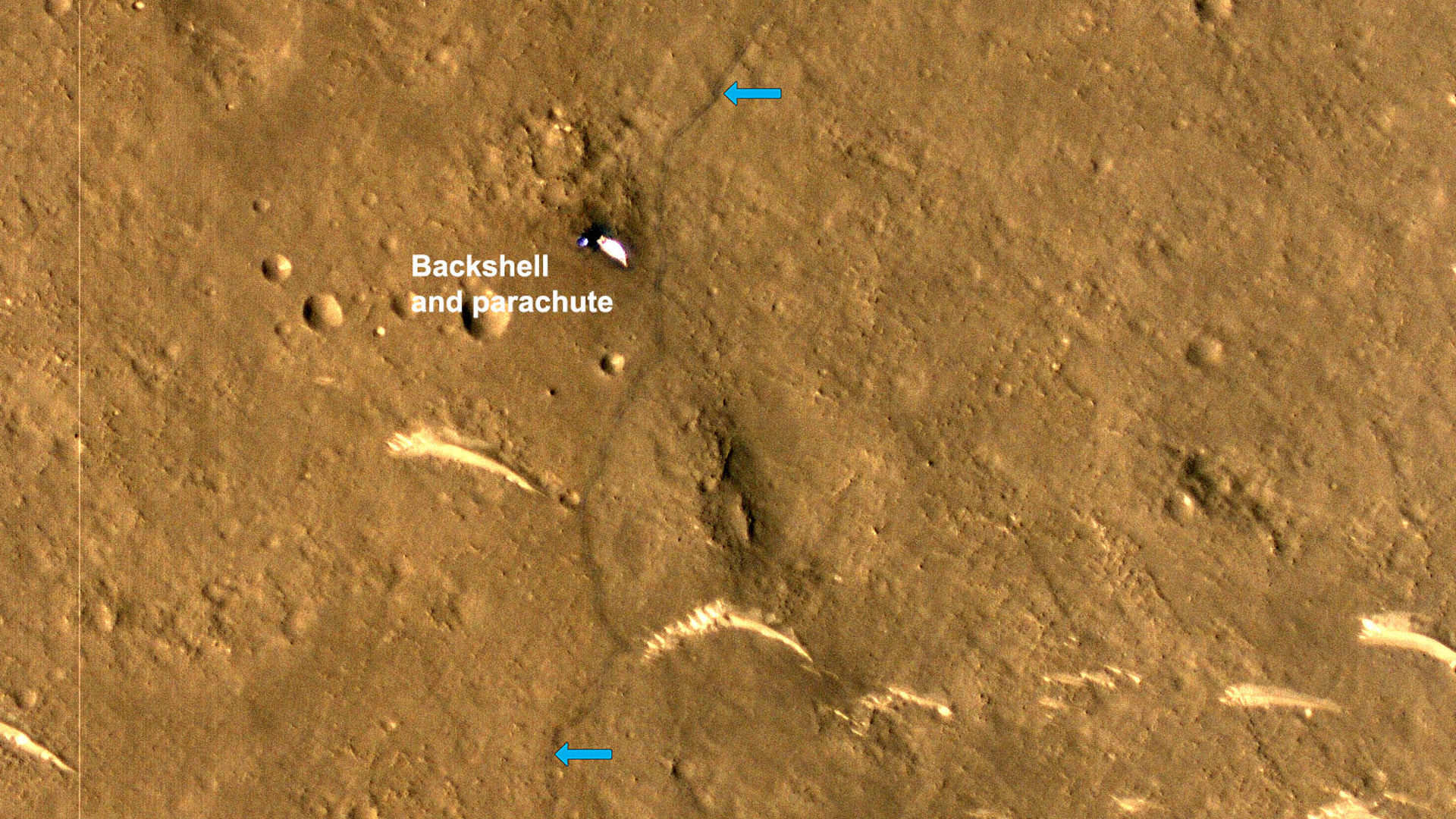
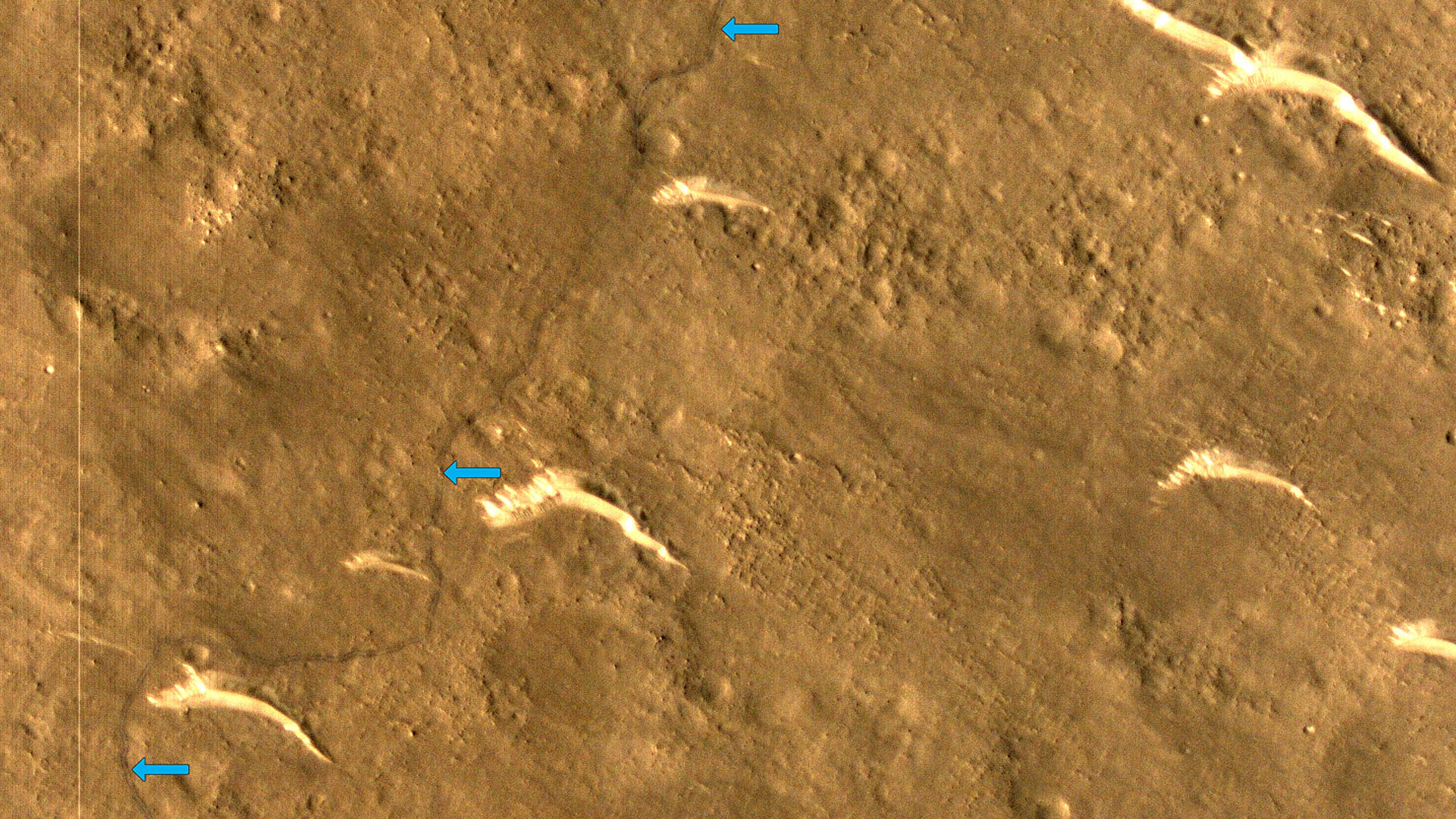
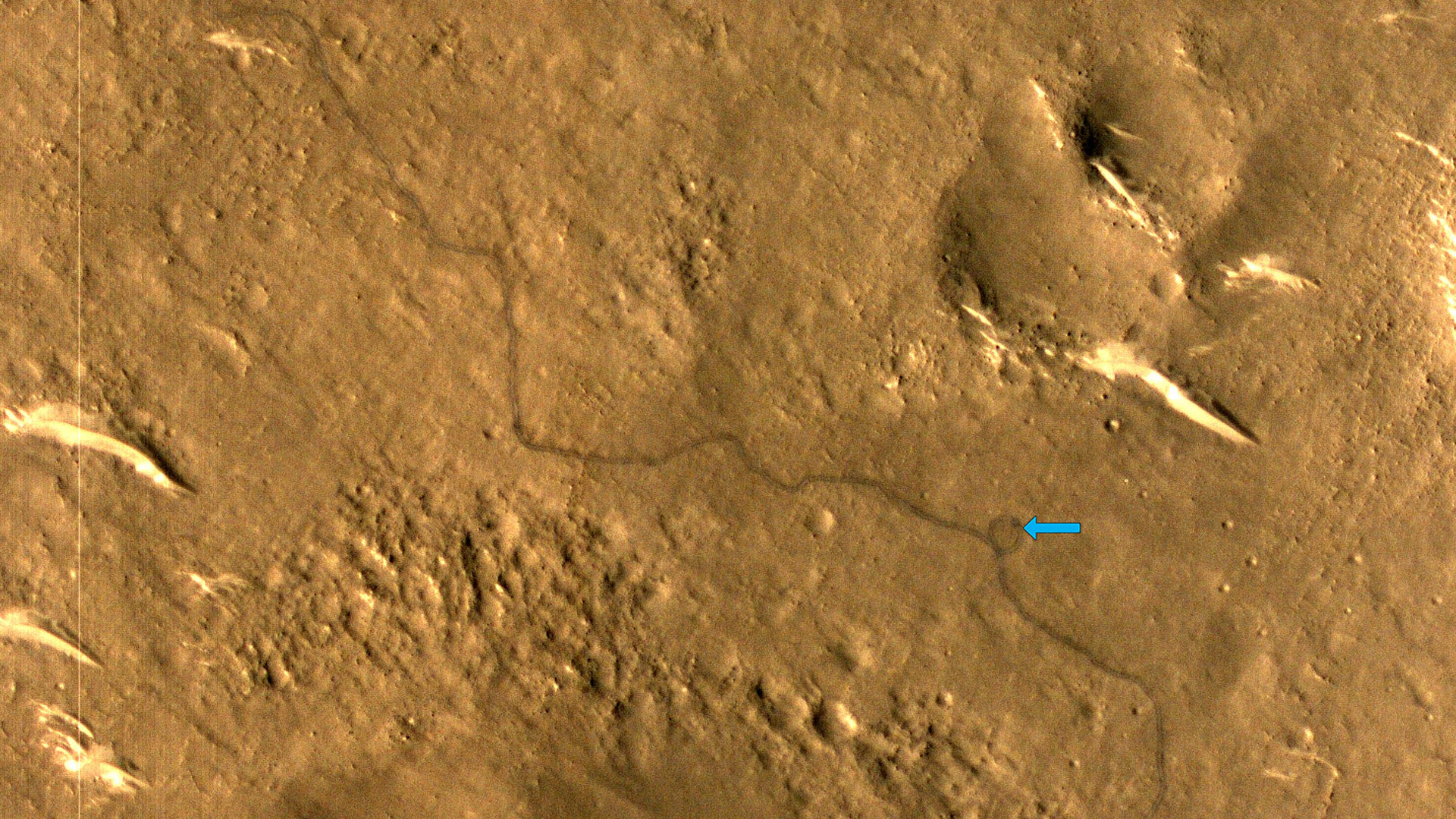
That super-powerful camera — HiRISE (High Resolution Imaging Science Experiment) – aboard NASA’s Mars Reconnaissance Orbiter (MRO) has snagged new imagery of the Chinese Zhurong rover.
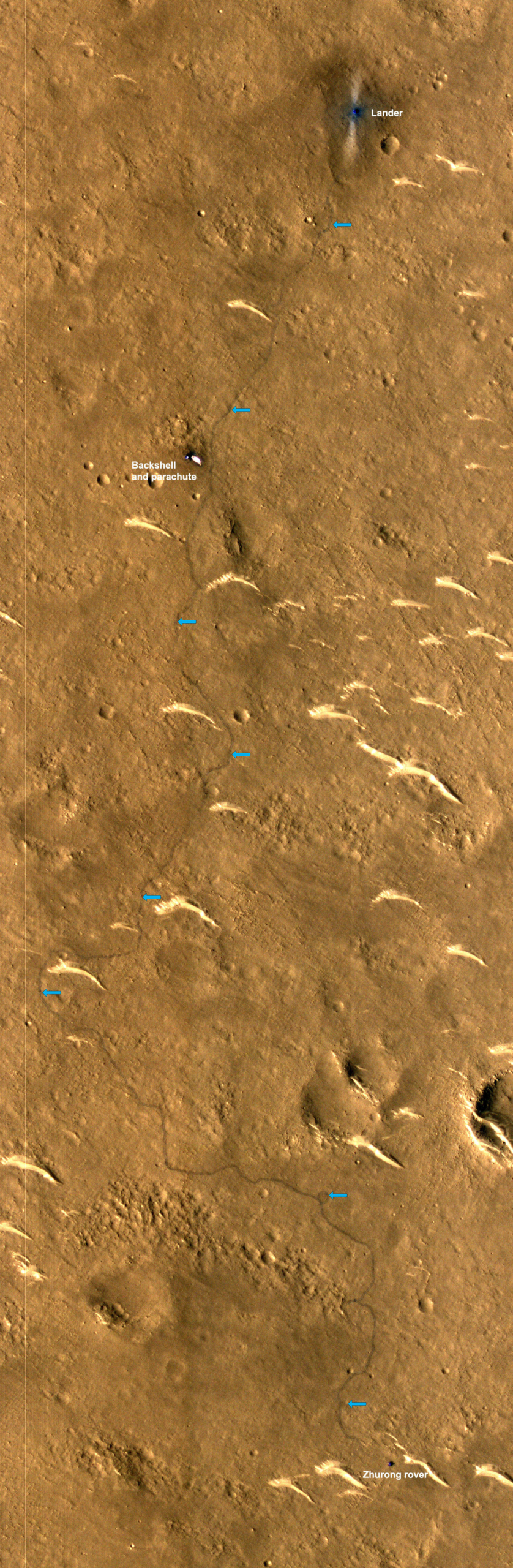
This cutout highlights the rover and the rover’s path (with contrast enhanced to better reveal the tracks). Credit: NASA/JPL/UArizona
This HiRISE image, acquired March 11, 2022, shows how far the rover has traveled in the 10 months since it landed in May 2021.
MRO’s altitude above Mars when the imagery was taken: 179.3 miles (288.5 kilometers).
“In fact, its exact path can be traced from the wheel tracks left on the surface. It has traveled south for roughly 1.5 kilometers (about 1 mile),” notes HiRISE principal investigator, Alfred McEwen at the University of Arizona in Tucson.

China’s Zhurong Rover.
Credit: CNSA/Inside Outer Space screengrab
Credit: NASA/JPL/UArizona
Credit: NASA/JPL/UArizona
Credit: NASA/JPL/UArizona
Credit: NASA/JPL/UArizona

On patrol – NASA’s Mars Reconnaissance Orbiter (MRO).
Credit: NASA/JPL

Clutter in the cosmos.
Credit: Used with permission: Melrae Pictures/Space Junk 3D
There has been astounding growth in the number of active satellites, increased by 1,702 in 2021, up to a total of 4,852.
New data from the Union of Concerned Scientists (UCS) Global Security Program shows that the number of satellites increased 30% annually the last two years, with the number of satellites launched in 2021 totaling more than the number of all operating satellites in 2016.
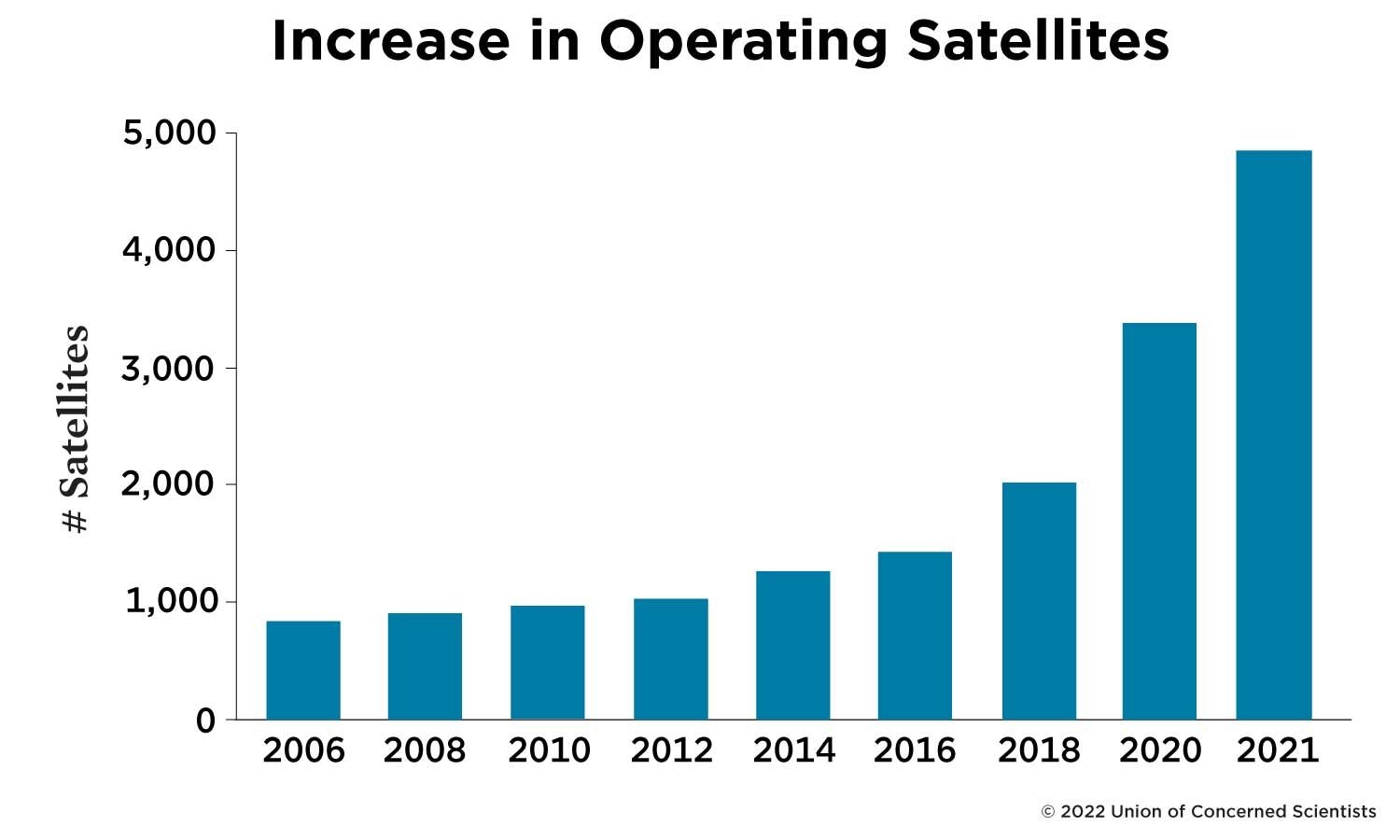
The number of satellites could continue to grow dramatically; if all the planned satellite networks move forward the total number of satellites would near 100,000, according to Stephen Young, senior Washington representative for the Global Security Program.

Starlink satellites.
Credit: SpaceX
Key findings
Key takeaway messages from the assessment include: Between April 31 and December 31, 2021, 866 satellites were put into orbit. While not as dramatic as the 836 launched in the first four months of the year, it completes a meteoric rise of 1,702 satellites for the year. Also, the number launched this year is more than the total number of operating satellites in 2016, just six years ago. Over the last six years, the number increased 20% annually on average, jumping to more than 30% the last two years.
- While the rate of increase almost certainly won’t endure much longer, the number of operating satellites will continue to grow dramatically.
- As widely reported, the SpaceX Starlink network already has permission to launch up to 12,000 satellites and Elon Musk would like a second generation of 30,000 more satellites. Those numbers have NASA worried. In a submission to the Federal Communications Commission, the agency wrote: “NASA has concerns with the potential for a significant increase in the frequency of conjunction events and possible impacts to NASA’s science and human spaceflight missions.”
- If all the planned networks move forward, the total number of satellites would near 100,000. At that point the likelihood of adverse outcomes rises significantly, including increased risk of collisions, impacts on the International Space Station, and complications for Earth-based astronomy.
For more details from Young’s research, as well as colleague, Teri Grimwood, UCS Satellite Database researcher, go to:
https://allthingsnuclear.org/syoung/the-meteoric-rise-in-satellite-numbers/
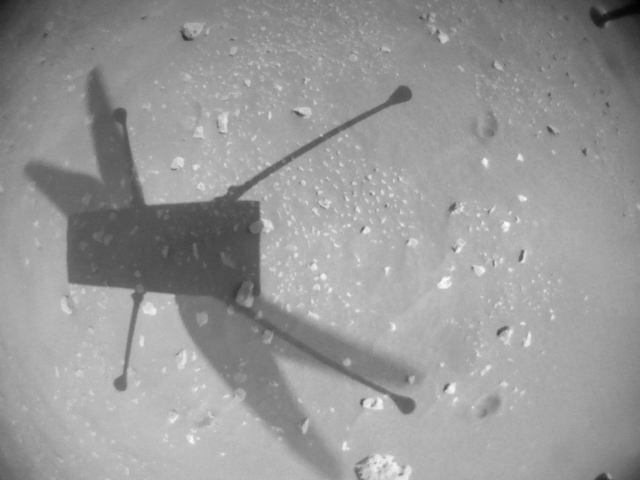
Image Credit: NASA/JPL-Caltech
Numbers of new images from NASA’s Ingenuity Mars Helicopter have been posted, acquired on March 10, 2022 using its navigation camera. This camera is mounted in the helicopter’s fuselage and pointed directly downward to track the ground during flight.
Stats on the 21st flight of the rotorcraft: traveled 1,214 feet (370 meters) and clocked a speed of 3.85 meters per second. The tiny vehicle stayed aloft for 129.2 seconds.
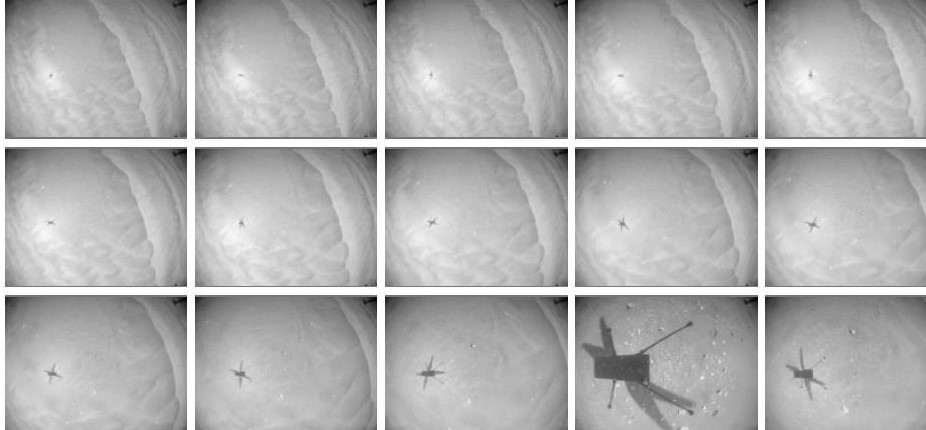
Image Credit: NASA/JPL-Caltech
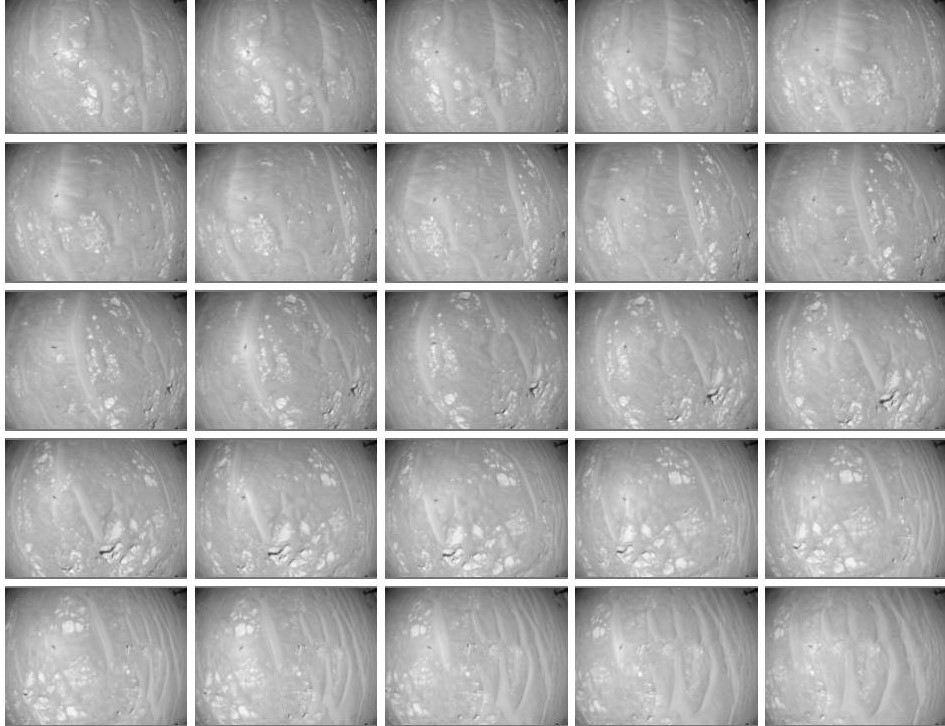
Image Credit: NASA/JPL-Caltech
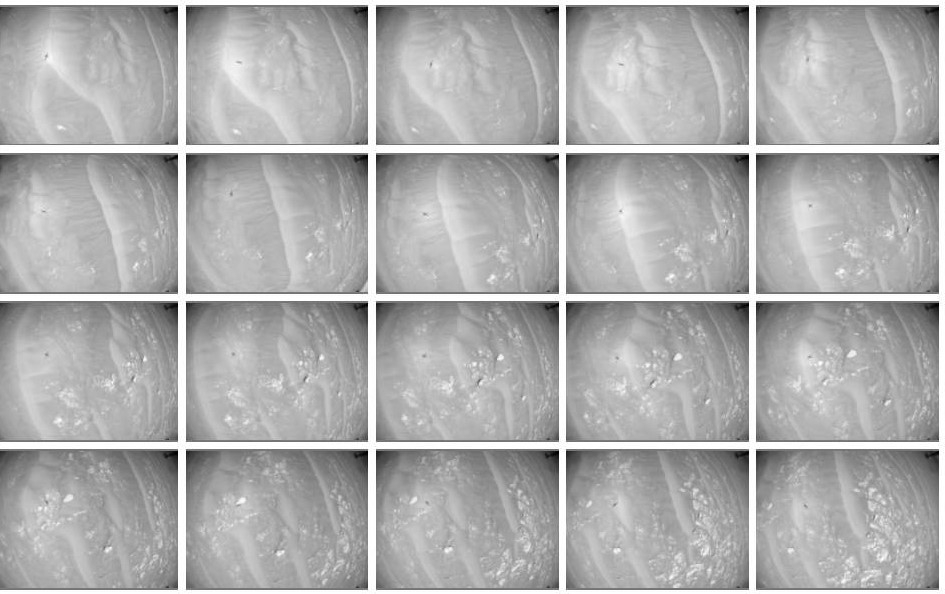
Image Credit: NASA/JPL-Caltech
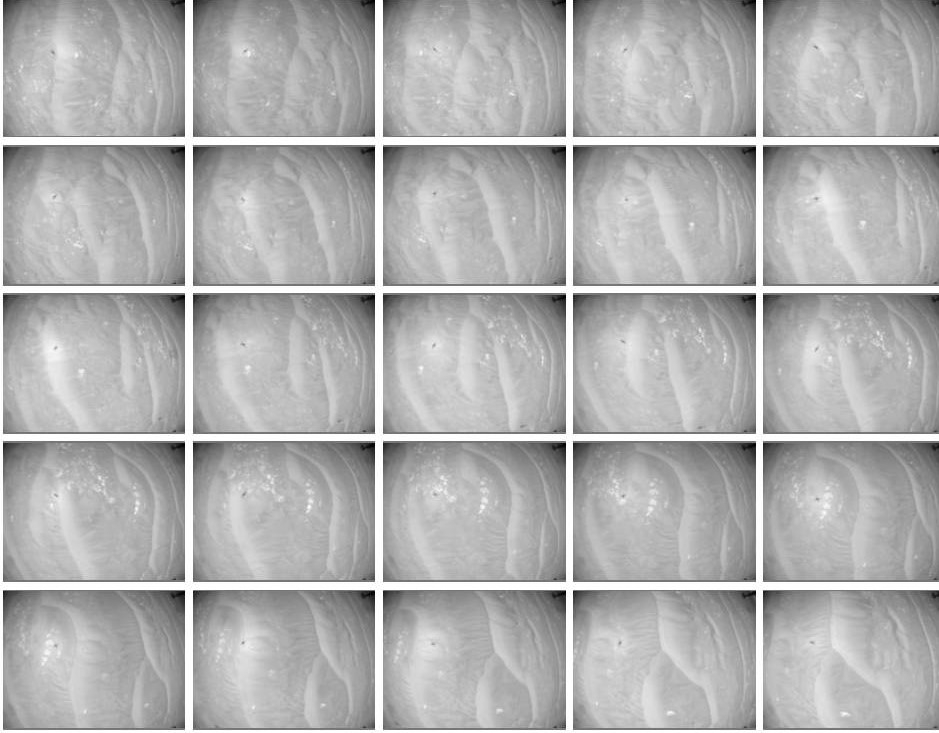
Image Credit: NASA/JPL-Caltech
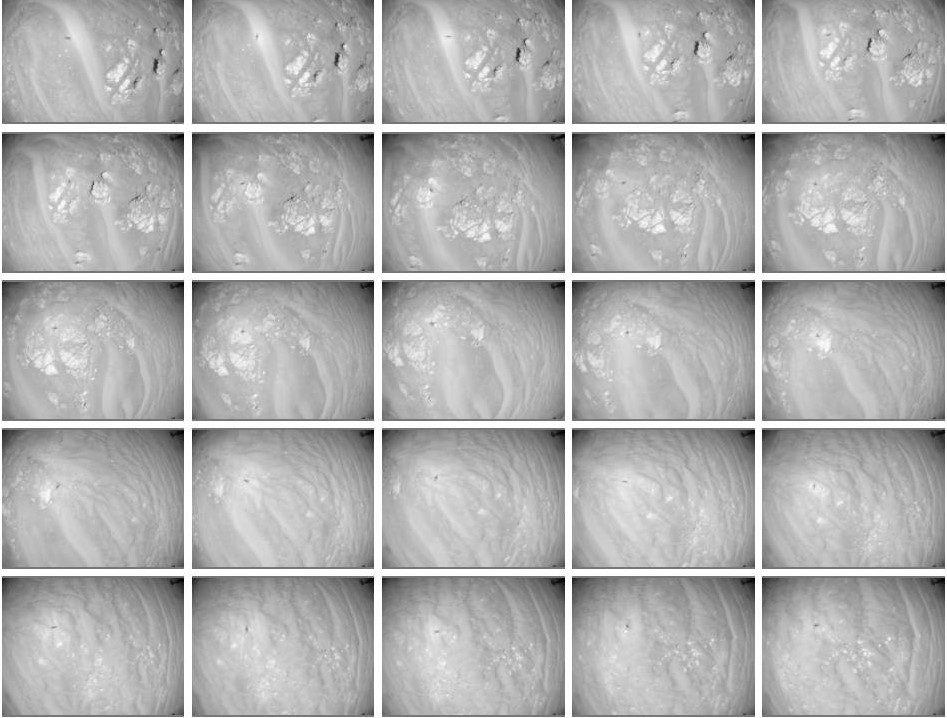
Image Credit: NASA/JPL-Caltech
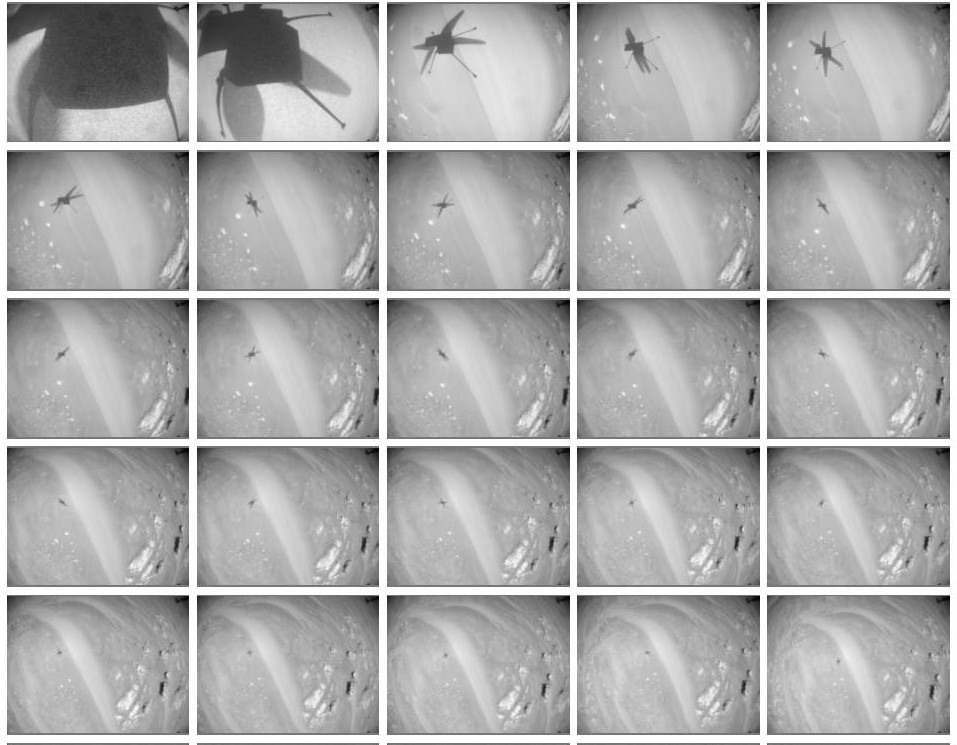
Image Credit: NASA/JPL-Caltech
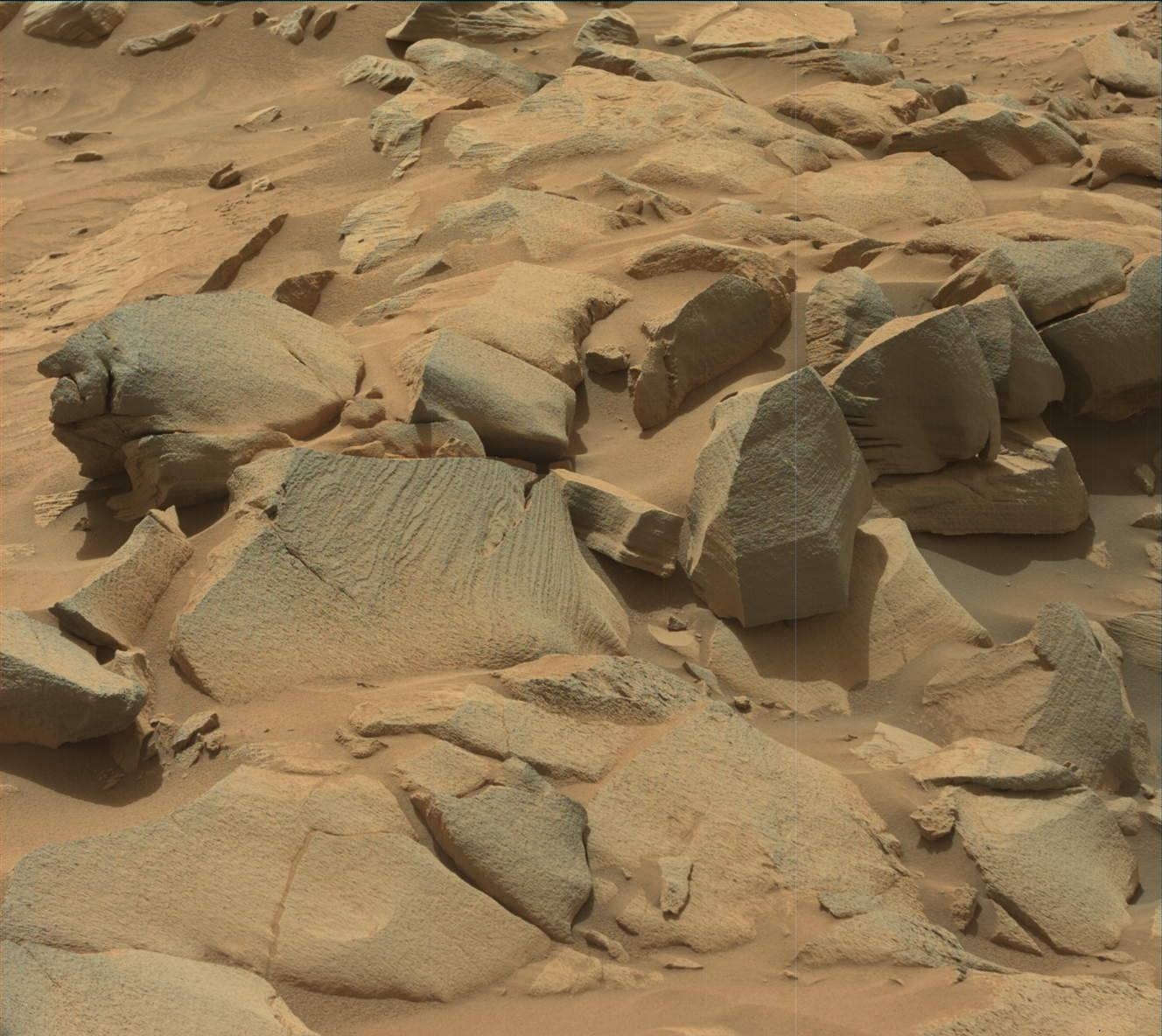
Curiosity Mast Camera Left image acquired on Sol 3415, March 16, 2022.
Credit: NASA/JPL-Caltech/MSSS
NASA’s Curiosity Mars rover at Gale Crater is now performing Sol 3417 tasks.
Abigail Fraeman, a planetary geologist at NASA’s Jet Propulsion Laboratory, reports that a Monday drive by the robot was successful, and the rover is fully surrounded by the rocks that cap the Greenheugh pediment.
“From here we can see hundreds of ventifacts – a term that describes rocks which have been abraded by wind-blown sand into distinctive, flattened facets with crisp edges,” Fraeman explains. “This terrain is very different from what we’ve become used to seeing during our climb up Mt. Sharp!”

Curiosity Mast Camera Left image acquired on Sol 3415, March 16, 2022.
Credit: NASA/JPL-Caltech/MSSS
Less dusty ventifact
A recently scripted plan is all about exploring the local area.
That plans calls for collecting Alpha Particle X-Ray Spectrometer (APXS) and Mars Hand Lens Imager (MAHLI) observations of a relatively large, less dusty ventifact near the rover’s wheel at a target named “Knott.”
Elsewhere on that same rock, Fraeman adds, researchers will also collect a Chemistry and Camera Laser Induced Breakdown Spectroscopy (LIBS) observation of a target with neat sedimentary structures named “Old Nab,” as well as a ChemCam Remote Micro-Imager (RMI) observation of another area of the rock named “Little Mell.”
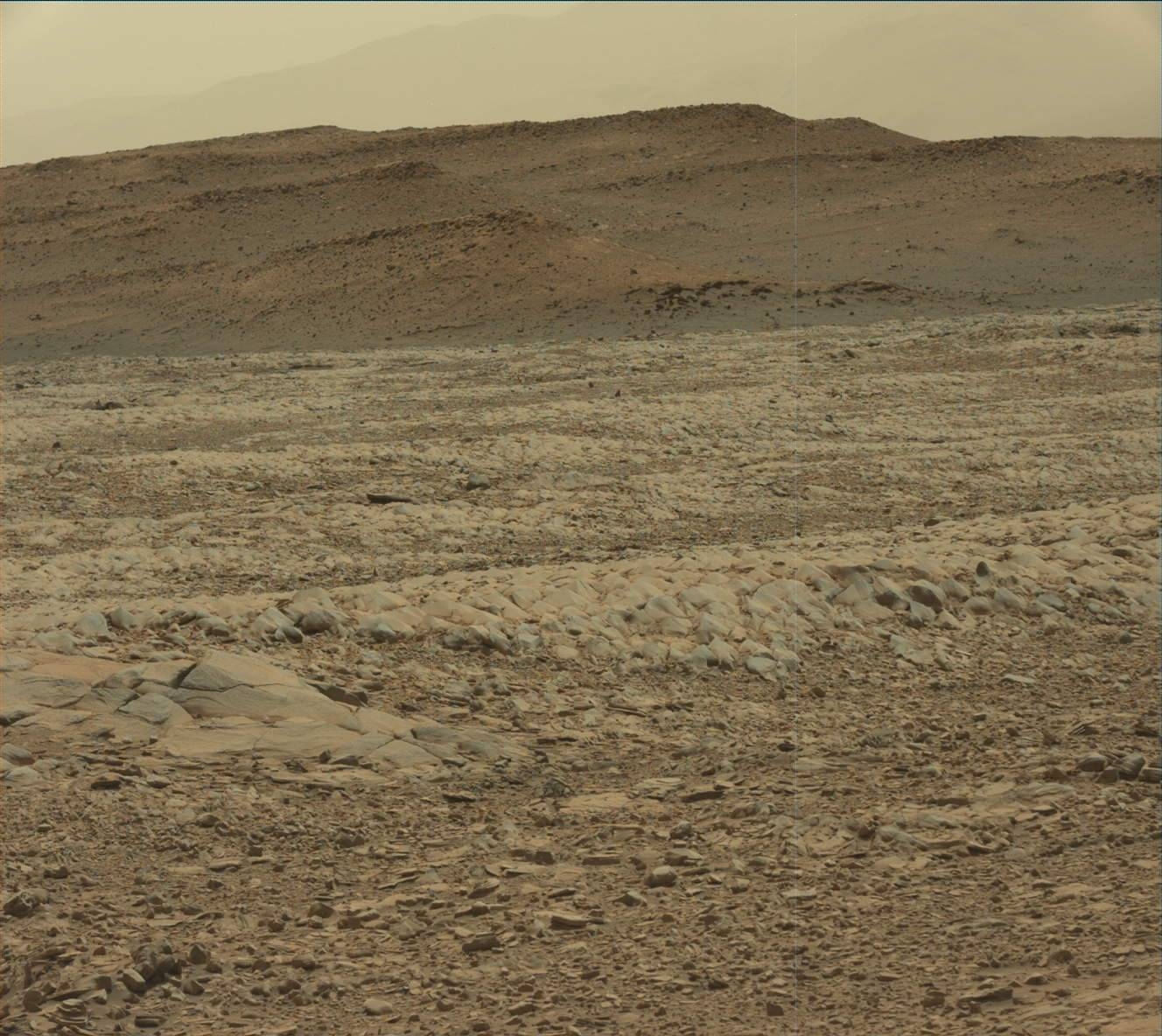
Curiosity Mast Camera Left image acquired on Sol 3415, March 16, 2022.
Credit: NASA/JPL-Caltech/MSSS
“We’ll also collect several Mastcam mosaics of targets near and far, as well as a standard set of observations to monitor our environment. The first day of the plan concludes with a drive to the southwest, towards a very small crater that might give us an interesting glimpse into the sedimentary structures in the area,” Fraeman reports.
Young geomorphic feature
Slightly closer, the rover can also see the distinctly layered nature of Gediz Vallis Ridge, which sits on top of the pediment and is one of the youngest geomorphic features on Mt. Sharp.
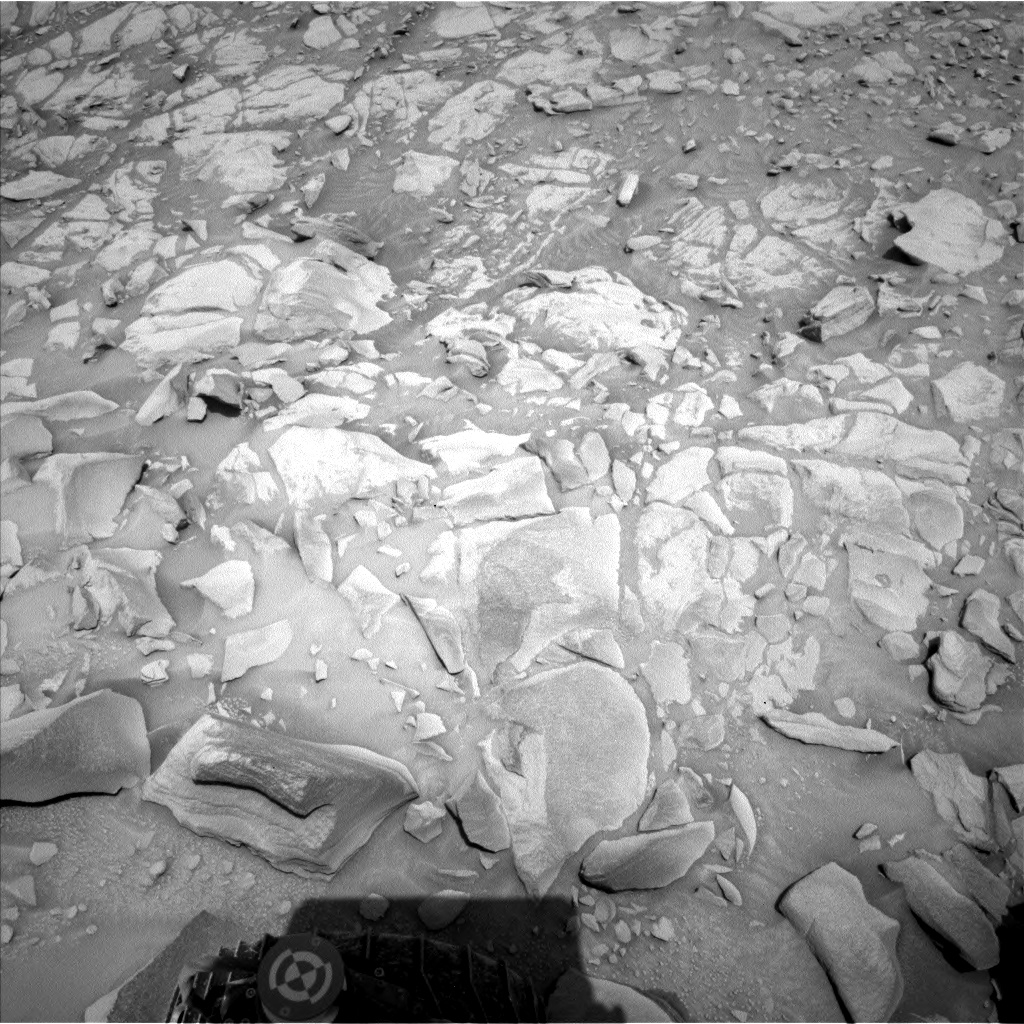
Curiosity Left B Navigation Camera image taken on Sol 3416, March 16, 2022.
Credit: NASA/JPL-Caltech
“At our perch on the top of the pediment, we have a spectacular view of the terrain below. We can see across the plains of Gale crater where we landed all the way to the crater’s rim tens of miles in the distance,” Fraeman adds.
“Slightly closer, we can also see the distinctly layered nature of Gediz Vallis Ridge, which sits on top of the pediment and is one of the youngest geomorphic features on Mt Sharp. Between the ventifacts and the viewshed, it’s quite an imposing place to rest before our next drive,” Fraeman concludes.

The European Space Agency announced today that the upcoming launch of the ExoMars 2022 mission has been suspended.
ESA’s ruling Council, meeting in Paris on March 16-17 assessed the situation arising from the war in Ukraine regarding ExoMars, and unanimously acknowledged “the present impossibility” of carrying out the ongoing cooperation with Roscosmos on the ExoMars rover mission with a launch in 2022.

ExoMars 2022 mission was a joint ESA/Roscosmos project. Shown is rover ready to depart Russia-provided landing module and science landing platform.
Credit: Thales Alenia Space/Master Image Programmes
The Council has mandated that the ESA Director General (DG) take appropriate steps to suspend the cooperation activities accordingly, authorizing the DG “to carry out a fast-track industrial study to better define the available options for a way forward to implement the ExoMars rover mission.”
Launch of the ExoMars 2022 mission had been slated for September 20 (the opening of a 12-day launch window); lifting off from Baikonur, Kazakhstan atop a Proton booster.
That mission involved the ESA-led rover and a Roscosmos-led surface landing/science platform named “Kazachok.”

The Russian Kazachok platform was destined to land on the Red Planet as part of the ExoMars 2022 mission, shown here being shipped to Europe for final assembly and testing.
Credit: Roscosmos
Put on hold
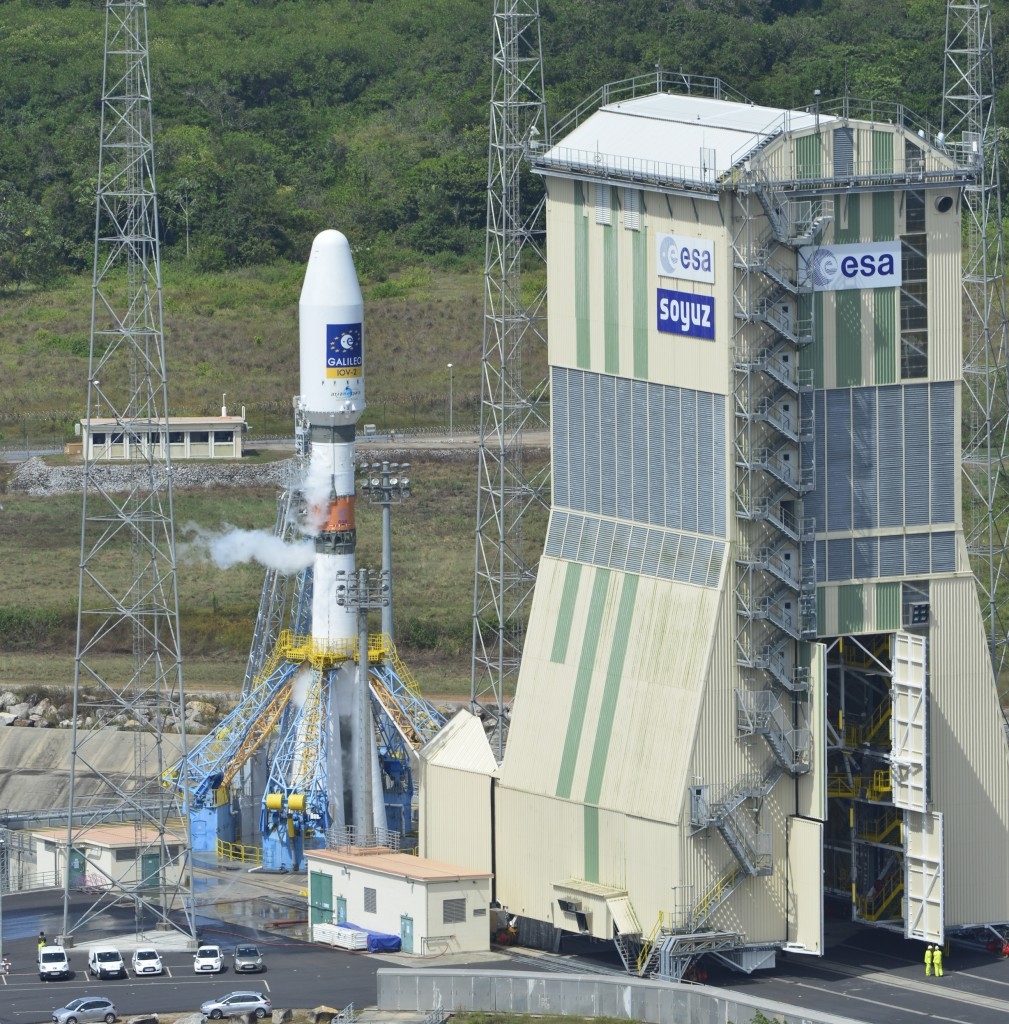
Additionally, following the decision by Roscosmos to withdraw their personnel from Europe’s Spaceport in French Guiana, all missions scheduled for launch by Soyuz have been put on hold.
Credit: ESA
These concern essentially four institutional missions for which ESA is the launch service procurement entity (Galileo M10, Galileo M11, Euclid and EarthCare) and one additional institutional launch, the ESA statement explains.
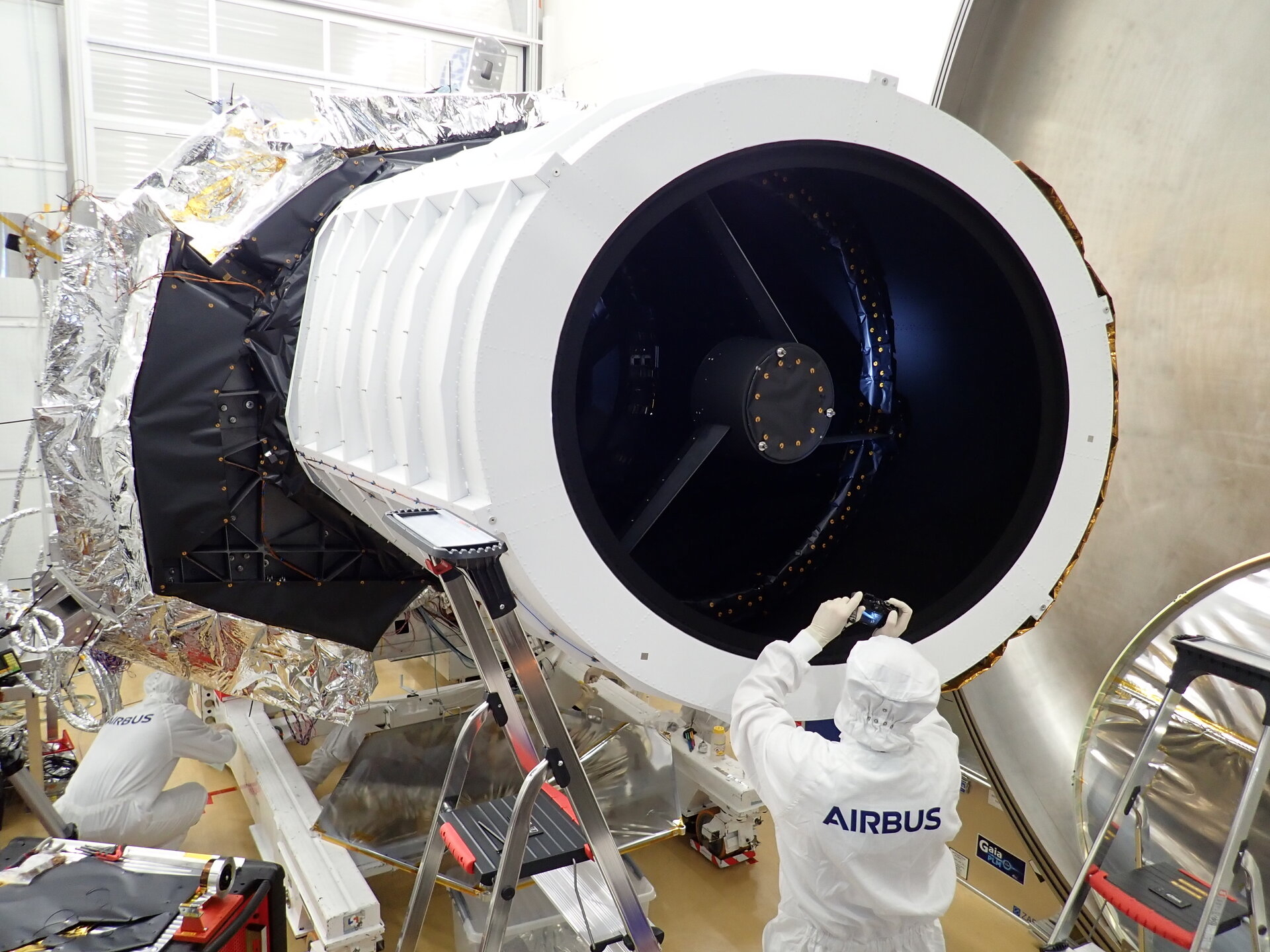
ESA’s Euclid mission to aims to investigate dark matter, dark energy and the expanding Universe.
Credit: ESA
Consequently, the ESA DG has initiated an assessment on potential alternative launch services for these missions, which will include a review of the Ariane 6 first exploitation flights.
“A robust launch manifest for ESA missions’ launch needs, including for spacecraft originally planned for launch by Soyuz from Kourou, will be submitted to Member States,” the statement adds.
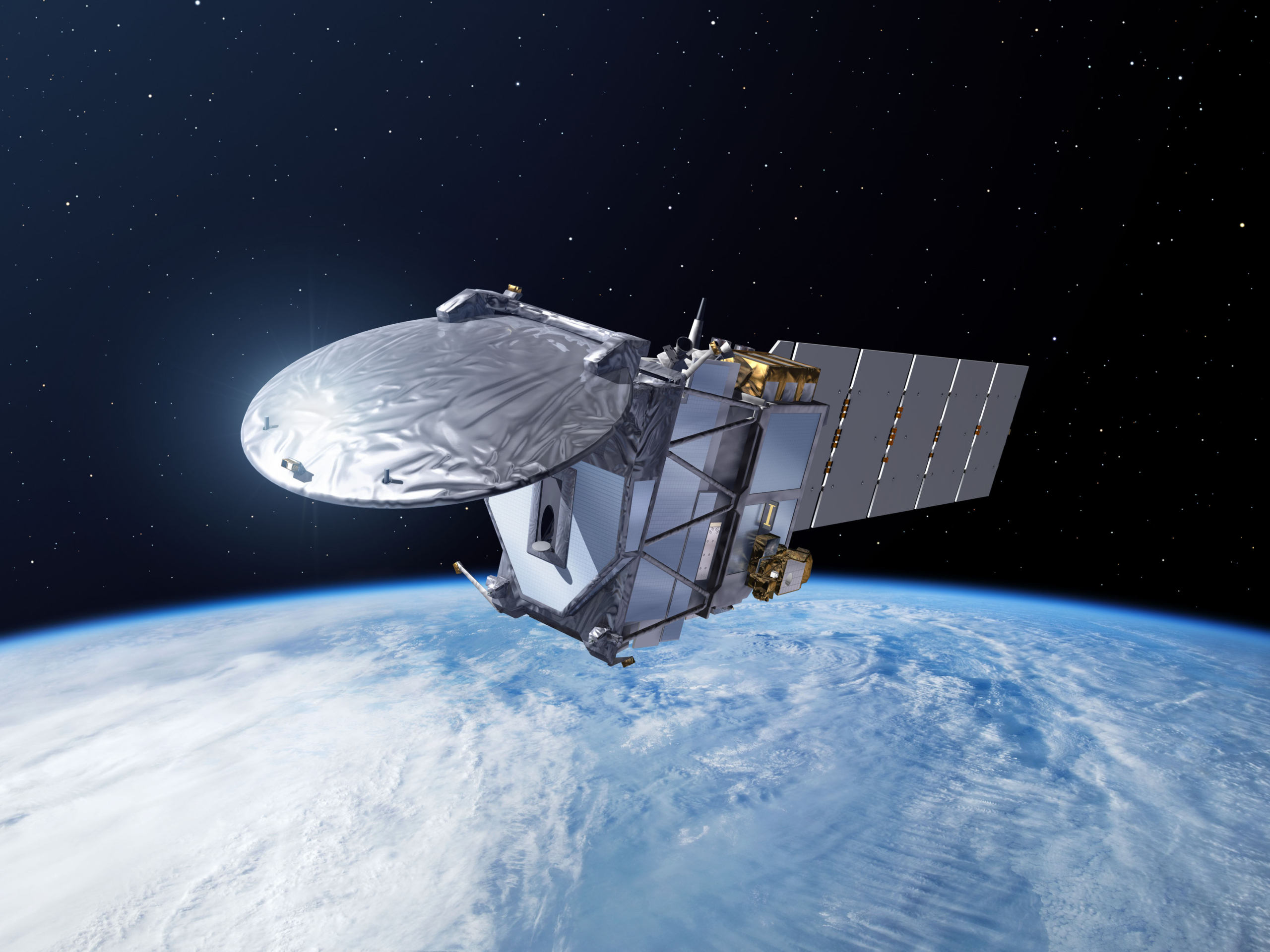
The Earth Cloud Aerosol and Radiation Explorer (EarthCARE) mission was slated for launch in 2023 from Kourou, French Guiana atop a Russian Soyuz booster. It is a joint venture between ESA and the Japan Aerospace Exploration Agency, JAXA.
Credit: ESA–P. Carril, 2013
European values
Regarding the International Space Station, it continues to operate nominally. “The main goal is to continue safe operations of the ISS, including maintaining the safety of the crew,” the ESA statement explains.
“As an intergovernmental organization mandated to develop and implement space programs in full respect with European values, we deeply deplore the human casualties and tragic consequences of the aggression towards Ukraine,” the statement notes. “While recognizing the impact on scientific exploration of space, ESA is fully aligned with the sanctions imposed on Russia by its Member States.”

Dr. Josef Aschbacher took up duty as ESA Director General on March 1, 2021 at ESA Headquarters in Paris, France.
Way forward
Lastly, the ESA statement considers the way forward. “Based on a first analysis of technical and programmatic impacts on all other activities affected by the war in Ukraine, the Director General intends to convene an extraordinary session of Council in the coming weeks to submit specific proposals for decision by Member States.”
ESA has 22 Member States: Austria, Belgium, the Czech Republic, Denmark, Estonia, Finland, France, Germany, Greece, Hungary, Ireland, Italy, Luxembourg, the Netherlands, Norway, Poland, Portugal, Romania, Spain, Sweden, Switzerland and the United Kingdom. Slovenia, Latvia and Lithuania are Associate Members.
ESA has established formal cooperation with six Member States of the EU. Canada takes part in some ESA programs under a Cooperation Agreement.

Credit: NASA
After decades of robotic scouring of Mars, that remote world has transmitted a rock-solid message back to Earth. The communiqué from orbiters, stay-put landers and on-the-move rovers is this: The faraway globe is an active, dynamic and largely enigmatic place. Furthermore, a still elusive question that taunts scientists to this day is whether or not the Red Planet was, or is now, an extraterrestrial address for life?
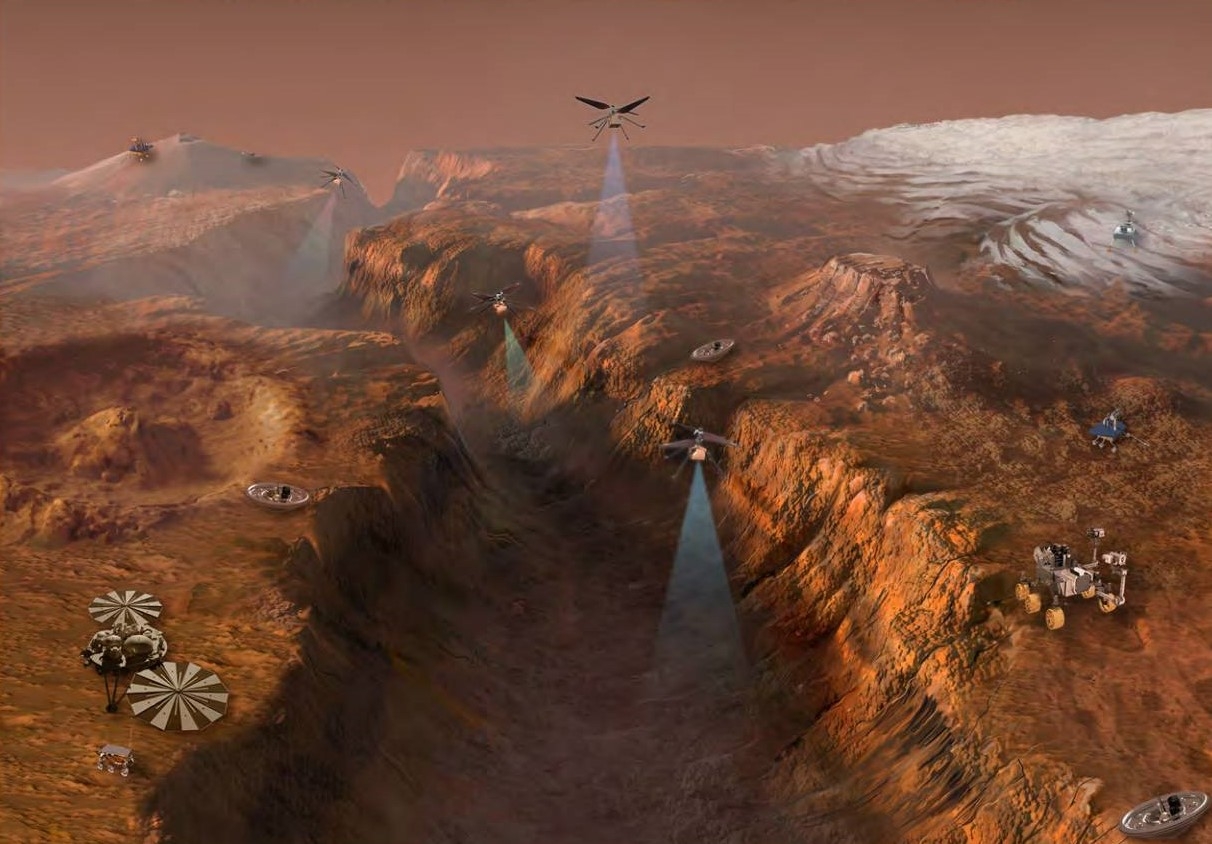
A range of less-expensive landers, rovers and aerial vehicles are foreseen to help advance a sustainable human presence on Mars.
Credit: Keck Institute for Space Studies (KISS)/Chuck Carter (Used with permission)
An increasing number of Mars technologists are blueprinting inexpensive and novel concepts to further investigate the multifaceted planet. Be it via economical landers and orbiters to souped-up autonomous aerial devices, they say it’s time to script new ways to gather more data from a variety of places on that far-flung world.
More data from a variety of places
As for a next round of research, there’s plenty of exploration to do; Mars-circuiting micro-satellites capable of making direct and global measurements of wind velocity, probes that plumb the depths of the planet’s huge Valles Marineris canyon system, craft able to dive into caves or provide close-up inspection of the Martian polar caps.

NASA’s robotic Holy Grail mega-buck mission, a Mars sample return effort to bring back to Earth Martian collectibles.
Credit: NASA/JPL-Caltech
But to accomplish such objectives, there’s need for less costly and complex Mars exploration missions, contrasted to the billions of dollars, on-the-books effort to whisk back Red Planet collectibles to Earth. To that end, Mars technologists are blueprinting low-cost and novel ways to further survey the multifaceted planet. Be it via souped-up helicopters to inexpensive landers and orbiters, they say it’s time to script new ways to gather more data from a variety of places on that distant planet.
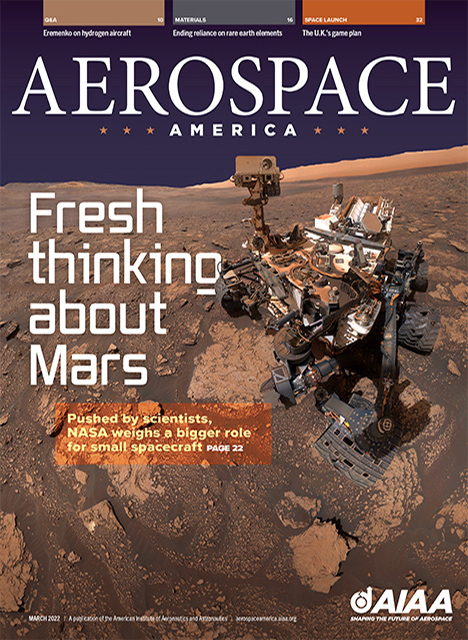
To preview what’s ahead, go to my new story for the AIAA’s Aerospace America – “NASA rethinks its Mars strategy” – at:
https://aerospaceamerica.aiaa.org/features/nasa-rethinks-its-mars-strategy/

