Archive for the ‘Space News’ Category
 Author:
  May 20th, 2026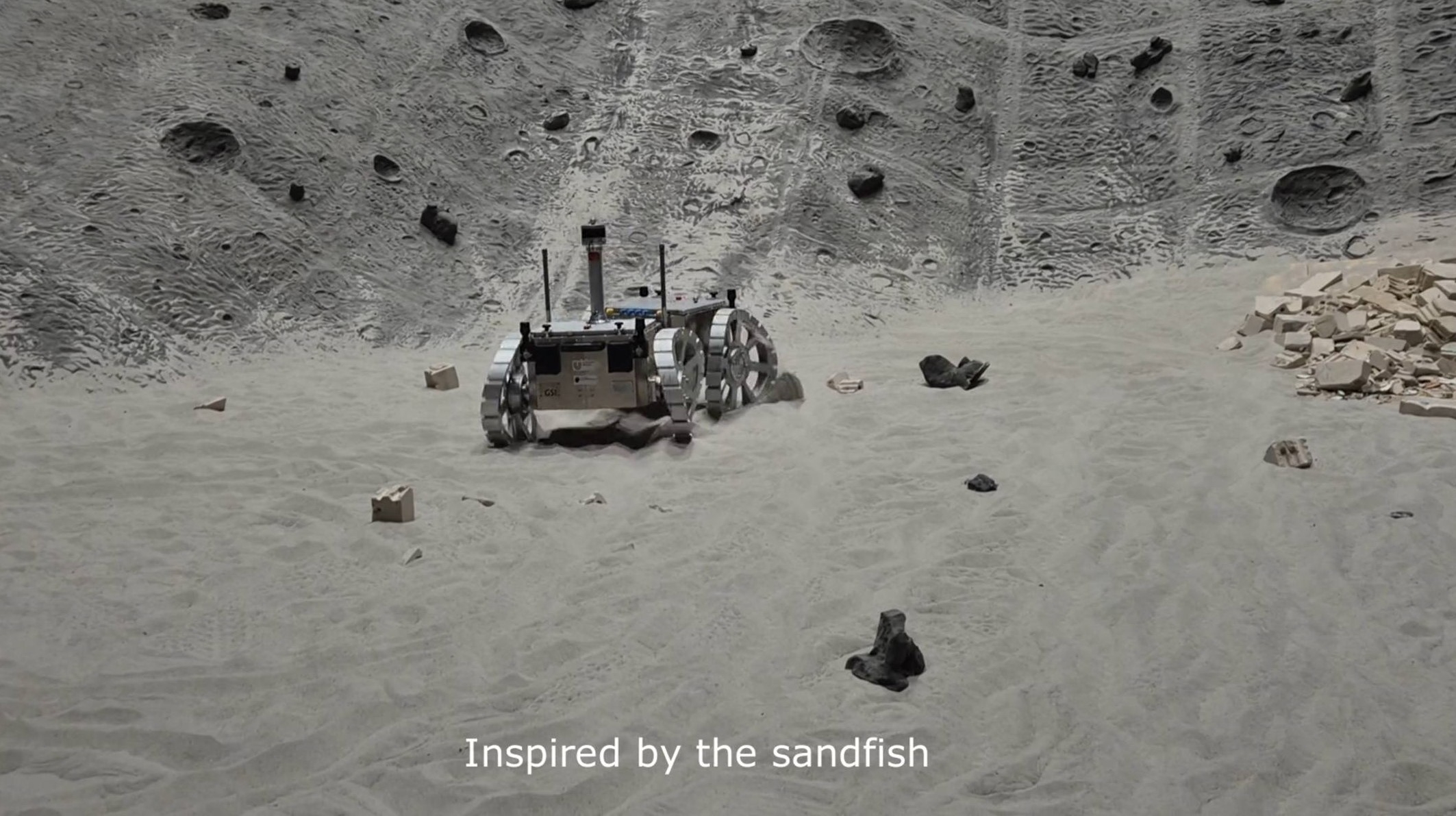
Image credit: Marco Schmidt/University of Würzburg
On Mars, could a robot get ticketed for swerving across Martian sands?
Not if you’re VaMEx – short for the Valles Marineris Explorer – a wheeled automaton that makes swimming motions to explore the vast valley on the Red Planet.
VaMEx is an initiative of the German Space Agency at the German Aerospace Centre (DLR). This Mars machinery uses innovative wheels, which, like those of a desert lizard, can “swim” through sand.
Do the locomotion
A research group at the University of Würzburg has now translated the sandfish’s locomotion mechanism into a Mars rover that reportedly outperforms other models in moving across sand.
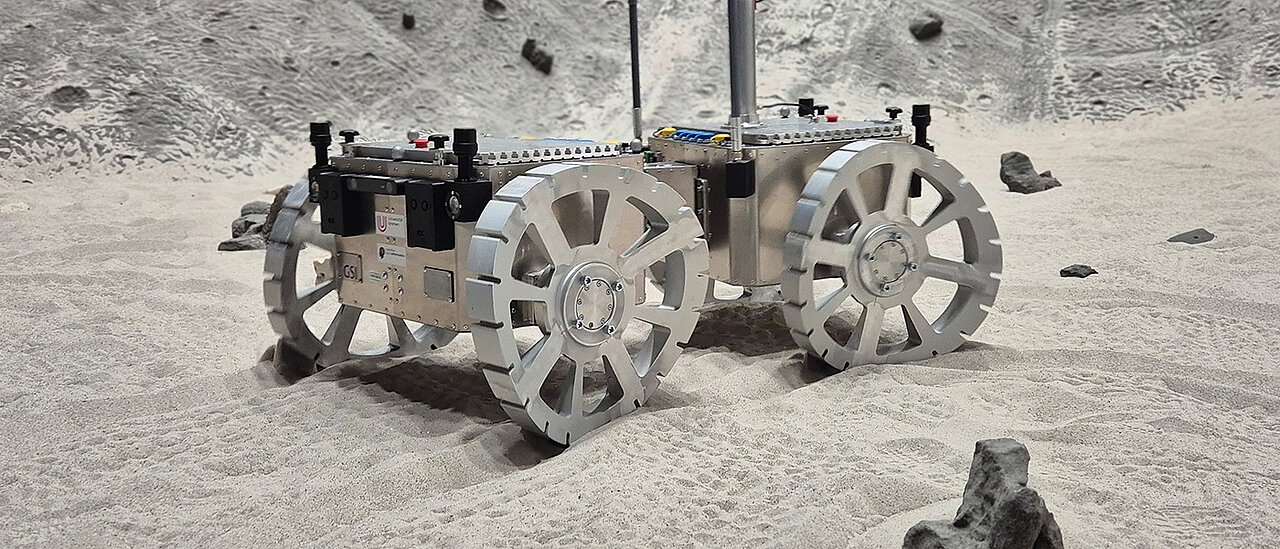
Image credit: Marco Schmidt/University of Würzburg
The team is led by Marco Schmidt, a university computer scientist and head of the Chair of Embedded Systems and Sensors for Earth Observation (ESSEO).
Collaborating with researchers from Bremen, the wheels imitate the animal’s characteristic interaction with the ground, generating both longitudinal and lateral forces. That movement leaves sinusoidal tracks in the sand.
Uneven terrain
Mars rovers must cope with sand, gravel, slopes, and generally uneven terrain while maintaining their mobility, stability, and efficiency.
“Conventional wheel designs are often optimized for low-speed travel and tend to slip, sink, or get stuck on soft ground,” says Amenosis Lopez, a researcher in Schmidt’s group.
The sandfish locomotion is adopted from Scincus scincus, a lizard living in the Sahara and able to burrow and then literally “swim” through the desert sand to hunt or escape predators.
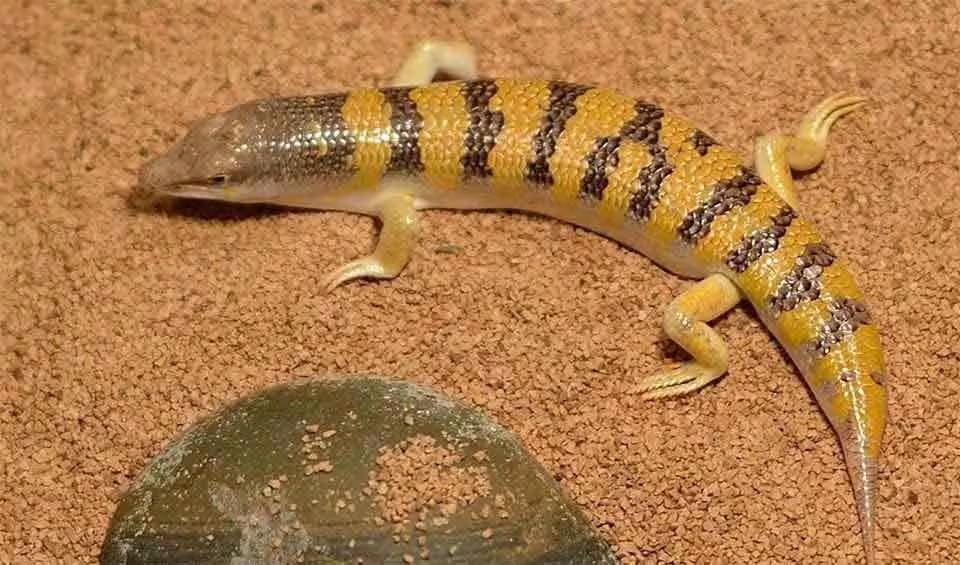
Image credit: BioDB
Control strategies
The work is ongoing, with further refinements predicted to improve performance on mixed terrain.
In addition to hardware development, the ESSEO team aims to expand its contribution to VaMEx towards software-driven mobility.
Plans are afoot to develop control strategies that explicitly take into account slippage, sinking and the interaction between terrain and wheel, thus enabling more stable and adaptable behavior of the rover in granular environments.
Scroll down to access a video clip of this robot. Go to:
https://www.uni-wuerzburg.de/aktuelles/einblick/single/news/sandfisch-marsrover/
Also, go to “Rovers, crawlers & drones on #Mars – the Valles Marineris Explorer project” at:
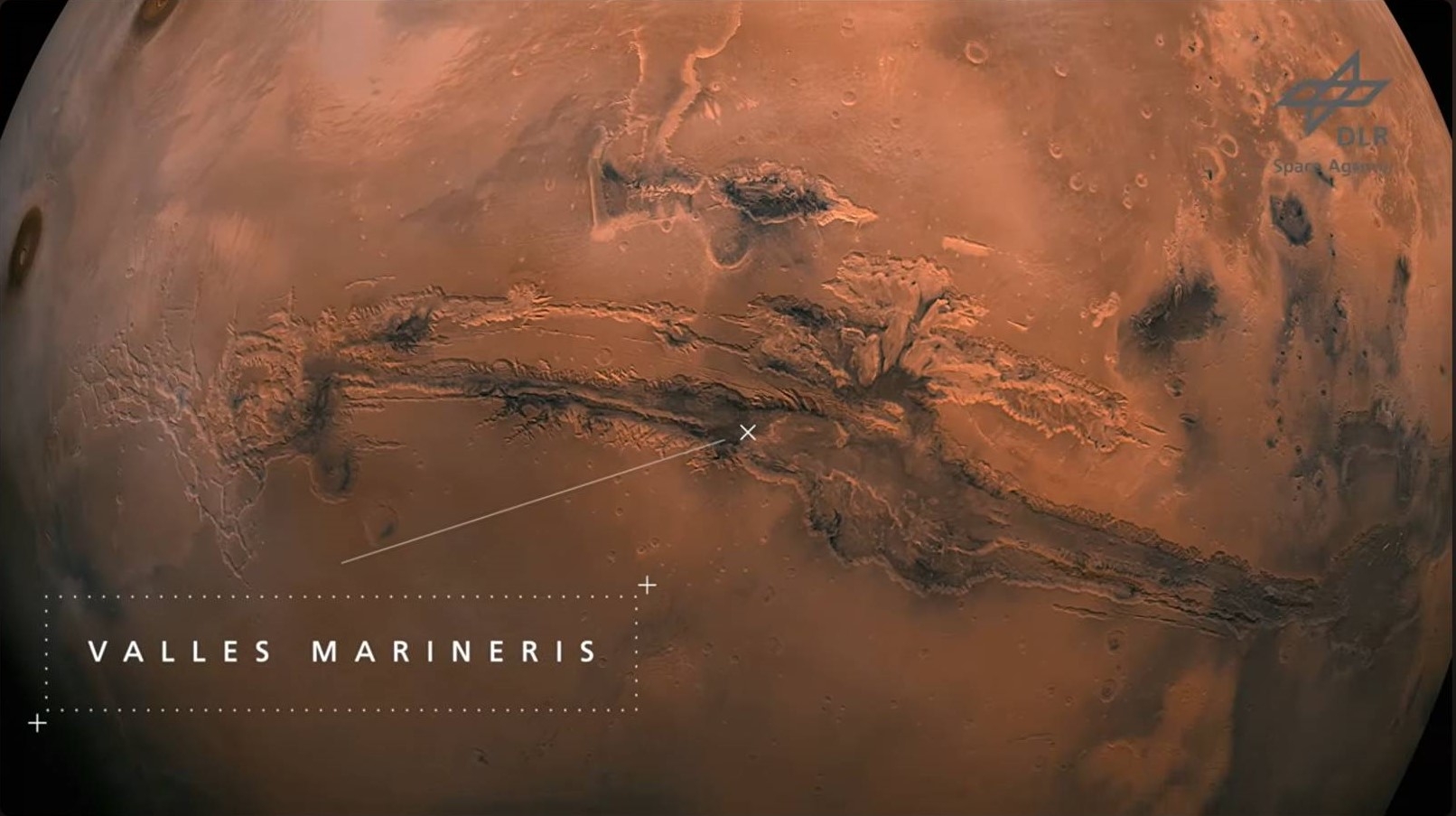
Image credit: DLR
 Posted in

Lunar dust haunted Apollo moonwalkers. Can that dust offer a way to mitigate climate change on Earth?
Image credit: NASA/Azita Valinia
There is no doubt that the Moon is a Disneyland of dust. Past moonwalkers have attested to that fact.
The lunar surface cycles between hot and super-chilly temperature swings. It receives unfiltered solar radiation, solar wind flux, and continuous micrometeoroid bombardment.
In the absence of atmospheric protection, the Moon’s landscape is exposed to radiation and electrostatic dust levitation and accumulating electrostatic charge.
In short the lunar surface is a dynamic environment. Multiple nations are keen on “rebooting” the Moon, however, lunar dust poses persistent operational and health hazards for future missions.
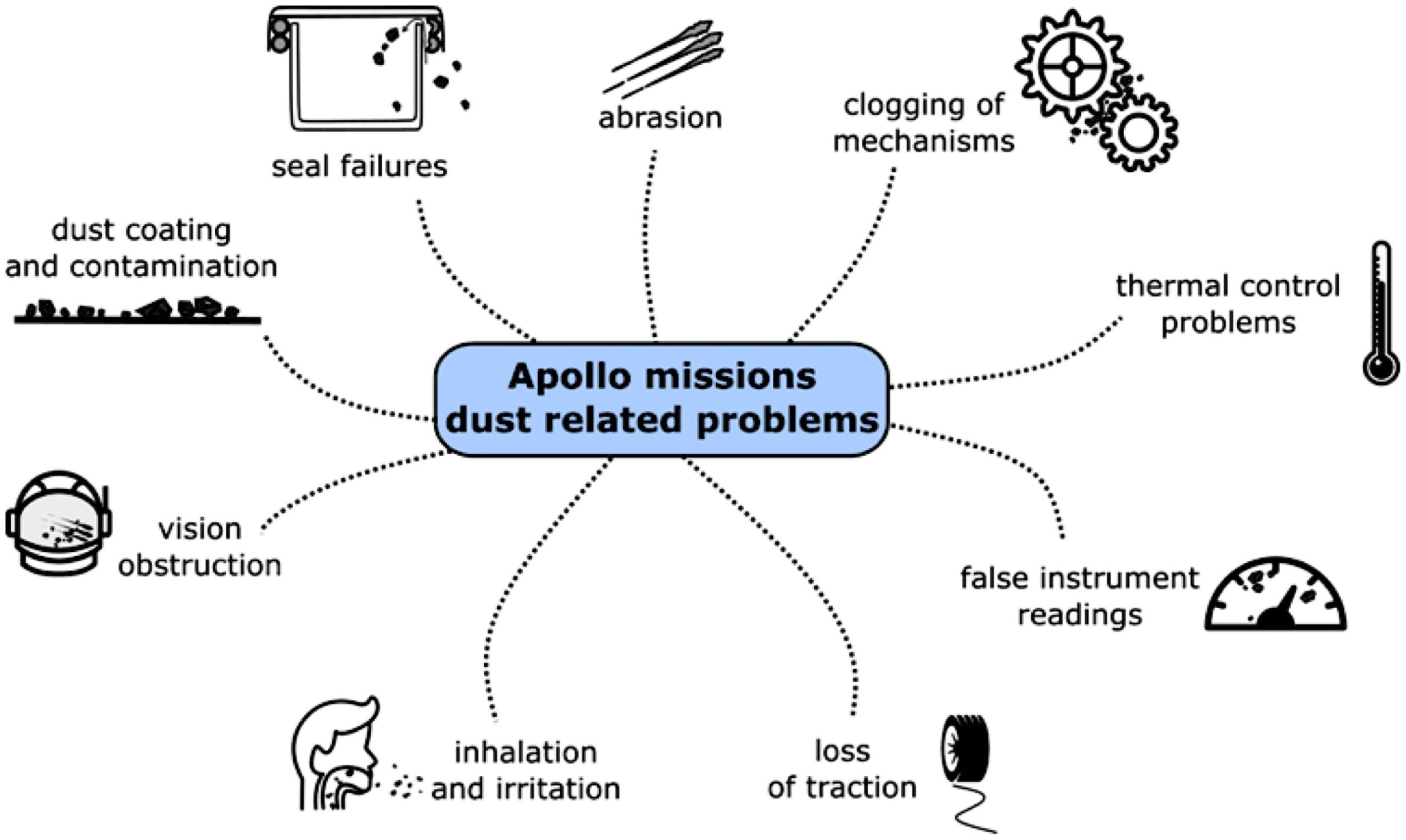
Illustration of dust-related issues, based on data from J.R. Gaier, R.A. Creel “The effects of Lunar dust on advanced EVA systems: Lessons from Apollo”
How best to deal with the dust?
Scoring rubric
An Australian research group has evaluated over 30 passive lunar dust mitigation and tolerance surfaces. They created a weighted scoring rubric using five criteria: added build-up (thickness), manufacturability, complexity, environmental durability and dust interaction performance.

Apollo 17 helmets and dusty spacesuits stuffed inside lunar lander following the last human treks on the Moon in December 1972.
Credit: NASA
The team was led by Ankush Sookram in the School of Engineering at the Royal Melbourne Institute of Technology, done in concert with the Commonwealth Scientific and Industrial Research Organization (CSIRO). They charted “validation maturity” through technology readiness level, known as TRL. However, the researchers add that there are critical gaps in standardizing high vacuum dust tests and combined stressor protocols.
Highest scoring technologies
The two highest scoring technologies are graphene-enhanced perfluorosilane coating and graphene/polyamide-imide coatings.
“The most promising development path is to pair high-efficacy mitigation surfaces with lightweight, durable tolerance coatings and then evaluate those pairings under combined vacuum, UV, thermal-cycling, and abrasion stressors,” the Australian researchers report.
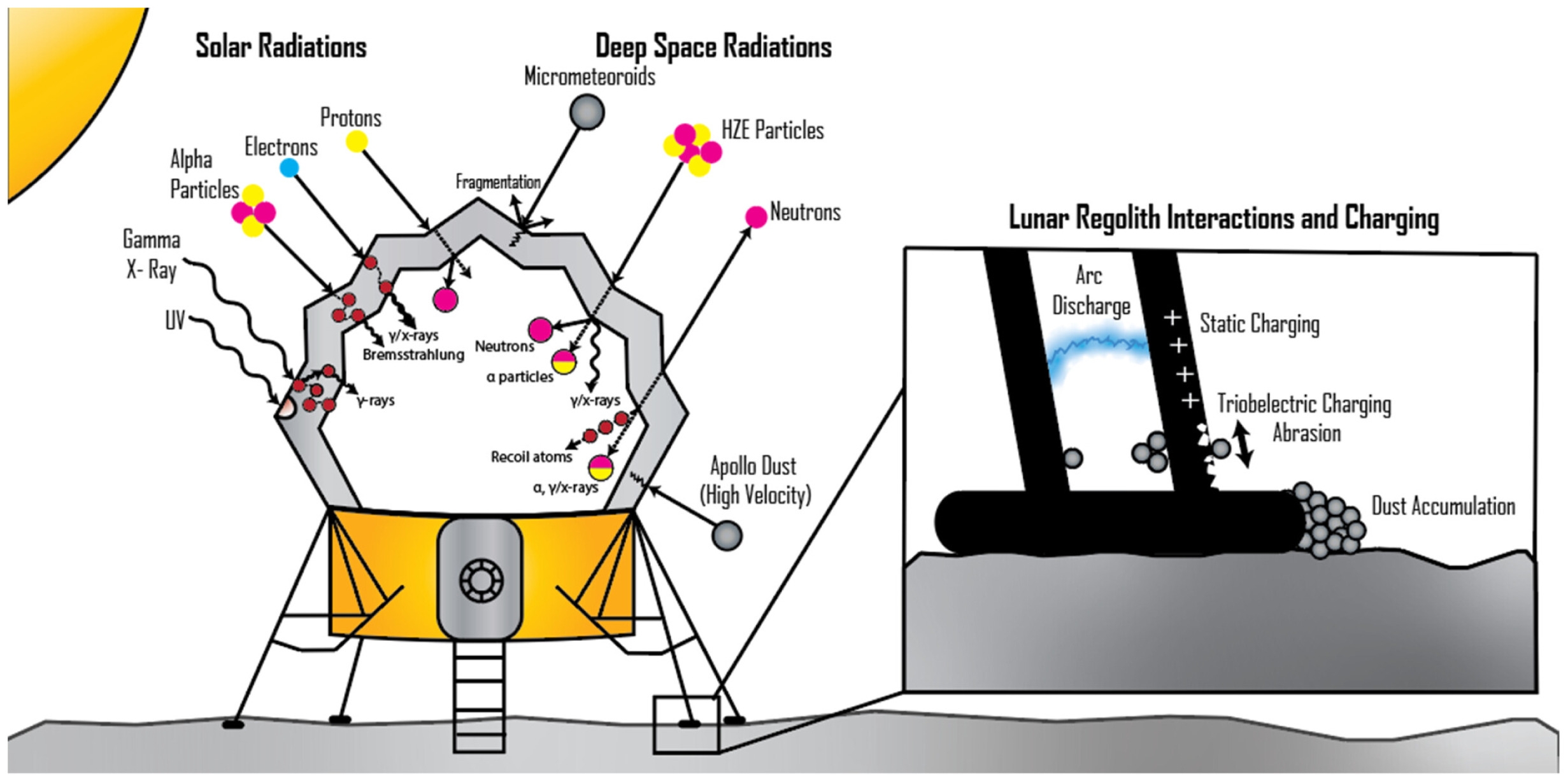
Schematic of anticipated environmental hazards on the Moon. These include unfiltered solar and deep space radiation, micrometeoroid impacts, and complex interactions with lunar regolith. The inset highlights dust-specific hazards such as electrostatic charging, triboelectric effects, abrasion, and persistent surface accumulation. Credit: E.A. Ryan, Z.D. Seibers, J.R. Reynolds, M.L. Shofner
“Electrically conducting polymers and composites for applications in space exploration” and reproduced with permission from John Wiley and Sons, Inc.
They conclude that “the principal contribution of this review is not simply to catalogue passive lunar dust surfaces, but to identify which concepts are genuinely promising, which remain under-validated, and which evidence gaps most directly prevent progression beyond laboratory promise.”
To access the work published in the journal Acta Astronautica – “Evaluating passive surface technologies for lunar dust mitigation and tolerance” – go to:
https://www.sciencedirect.com/science/article/pii/S0094576526003292

Scene from 1956 movie classic, Earth vs. the Flying Saucers.
Image credit: Columbia Pictures
Earlier this month, the U.S. Department of War released what it termed “new, never-before-seen files” on Unidentified Anomalous Phenomena, tagging it as a historic effort in transparency.
The Unidentified Anomalous Phenomena (UAP) collection came courtesy of the Trump administration’s Presidential Unsealing and Reporting System for UAP Encounters, also known as PURSUE, in catch and release short form.
Those files released on May 8 are housed on https://www.war.gov/ufo/pursue-initiative/
“On a rolling basis”
The posting involves documents, photos and videos from the files of NASA, the FBI, Defense Department, and State Department.
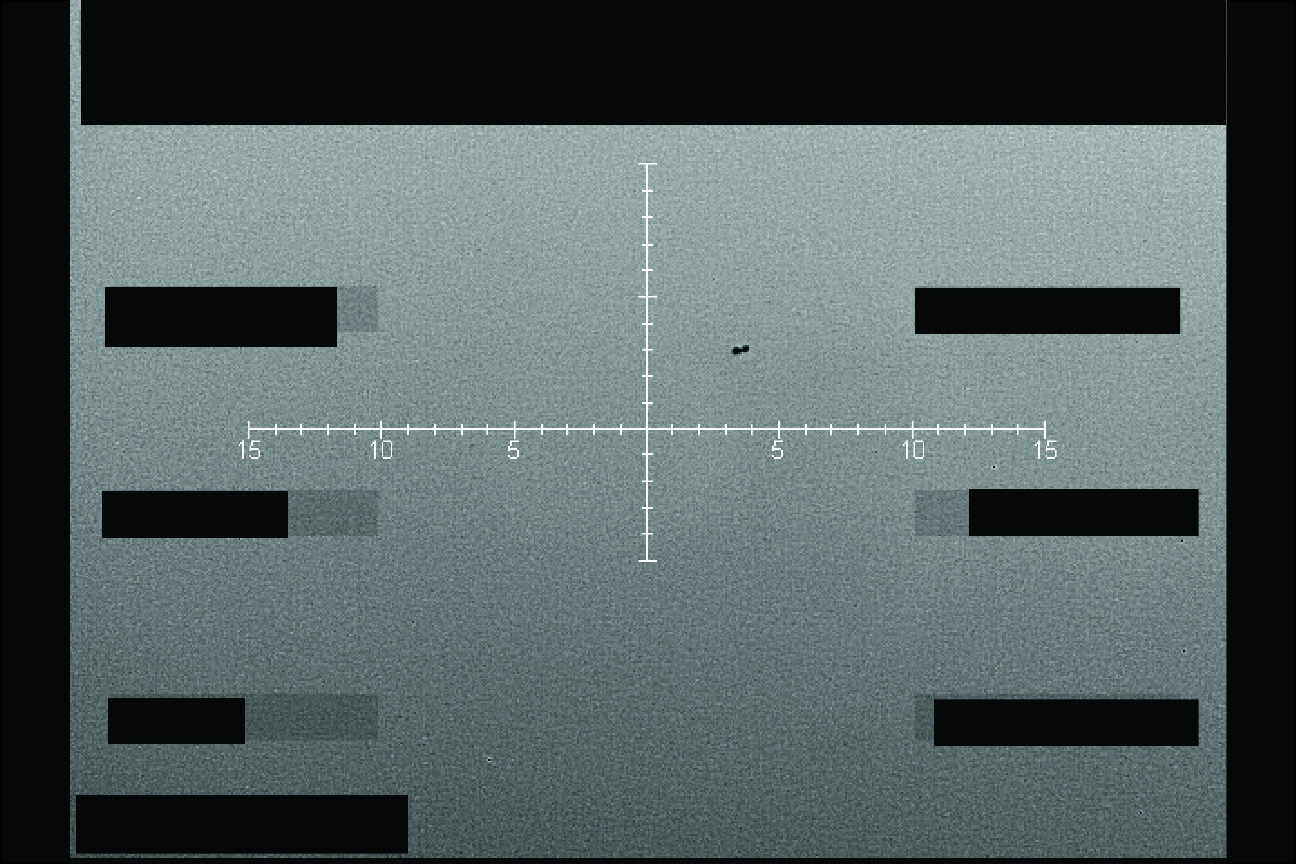
Infrared still image (black hot) captured of unidentified object(s) over western United States in September of 2025.
Image credit: FBI Photo B20
Additional files are forthcoming, to be issued by the Department of War “on a rolling basis.”
But the question, asks one UAPoligist is what comes next, “because this release raises more questions than it answers.”
For more details, go to my new Space.com story – “The UFO files: What did we learn from the Pentagon’s 1st big release?” – at:
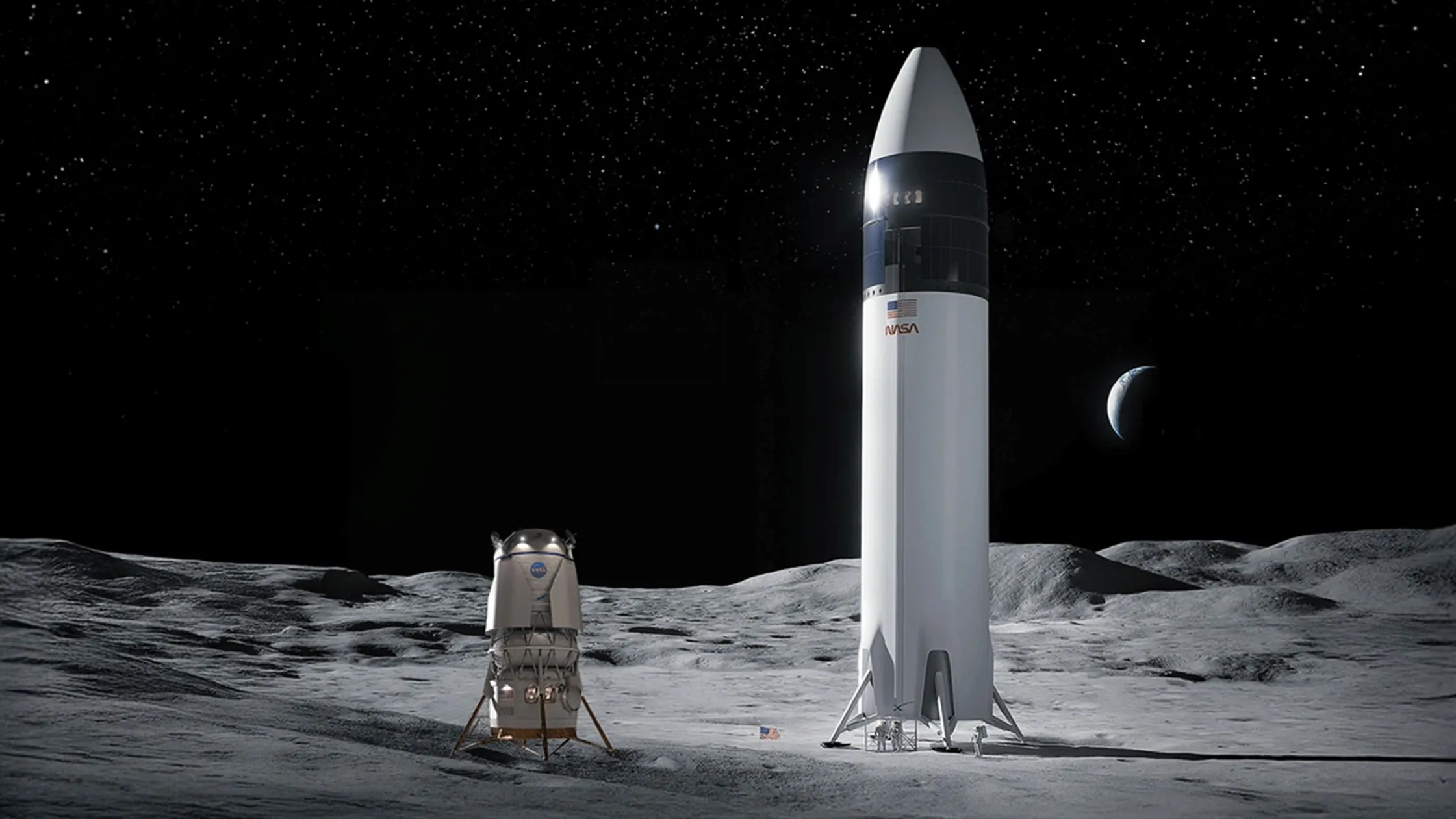
A composite image of Blue Origin’s Blue Moon lander (left) and SpaceX’s Starship lander (right) on the lunar surface.
Image credit: NASA OIG/Blue Origin/SpaceX
Since the inception of the Human Landing System (HLS) program in 2019, NASA has obligated nearly $7 billion to lander development.
It is projected that NASA will spend over $18 billion through fiscal year 2030.
SpaceX and Blue Origin will design, build, and own their landers, while NASA will purchase the landing services.
However, both providers utilize NASA expertise and resources, and the Agency maintains various degrees of insight into and oversight of lander development.
Gaps remain

Artwork depicts two Artemis astronauts planting an American flag at the lunar south pole.
Image credit: NASA/Daniel O’Neal
Auditors determined that the Agency’s acquisition approach had effectively controlled contract costs: SpaceX and Blue Origin contracts had increased by 6 percent and less than 1 percent, respectively.
But both companies have faced technical and integration hurdles that could affect costs and delivery timelines.
“Although the providers are tasked with meeting mission milestones and technical requirements, NASA is ultimately responsible for ensuring crew safety,” the NASA OIG reports.
“The Agency is taking proactive steps to mitigate and prevent hazards, but gaps remain in its testing posture and crew survival analyses. For one, NASA and SpaceX disagree on whether the company is meeting the manual control requirement that allows the crew to override automated systems during descent.
Go to a May 18 news item from the NASA OIG – “Examining the Commercial Lander Services Powering NASA’s Return to the Moon” – at:
Also, go to this video — To the Moon and Back: NASA’s Management of the Artemis Human Landing System Contracts — at:
https://www.youtube.com/watch?v=DpLsS_P4Tq4

Eye of the illustrator captures asteroid Apophis near Earth.
Credit: Dan Durda – FIAAA
New research highlights growing risks to public understanding of “planetary defense” – an area of science that deals with the threat to Earth from asteroid and comet impacts, with potentially global consequences.
Research professor Mark Boslough at The University of New Mexico has led the effort to appraise how misinformation emerges, spreads and persists in planetary science, particularly in discussions surrounding asteroids and comets, and the impact risk they pose.
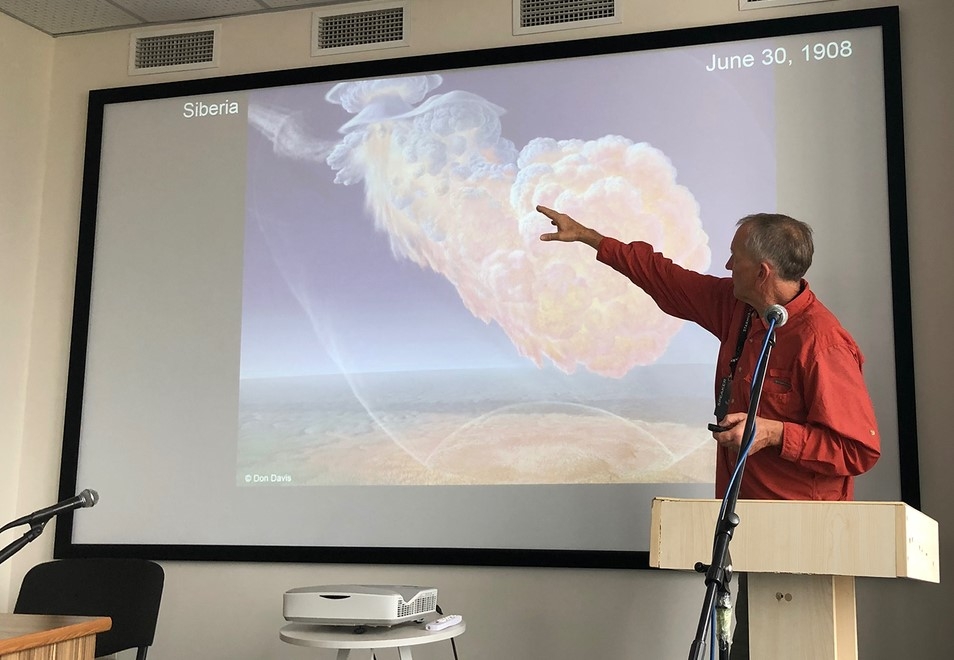
Image credit: Mark Boslough/The University of New Mexico
Such worries often capture widespread public attention, Boslough explains, but make them especially vulnerable to misinterpretation and sensationalized coverage.
Boslough and colleagues have issued a paper titled, “Preventing and Correcting Spread of Misinformation about Near Earth Objects, Impacts, Airbursts, and Planetary Defense: Case Studies.”
The work is published in the journal, Meteoritics and Planetary Science.
Public trust
“Planetary defense is about protecting lives, livelihoods, and property,” Boslough explains in a university press statement. “Misinformation undermines public trust and endangers people by reducing confidence in scientific assessments and emergency response plans.”
The new research looks at a series of case studies, with the experts demonstrating how misinformation can originate from multiple sources.
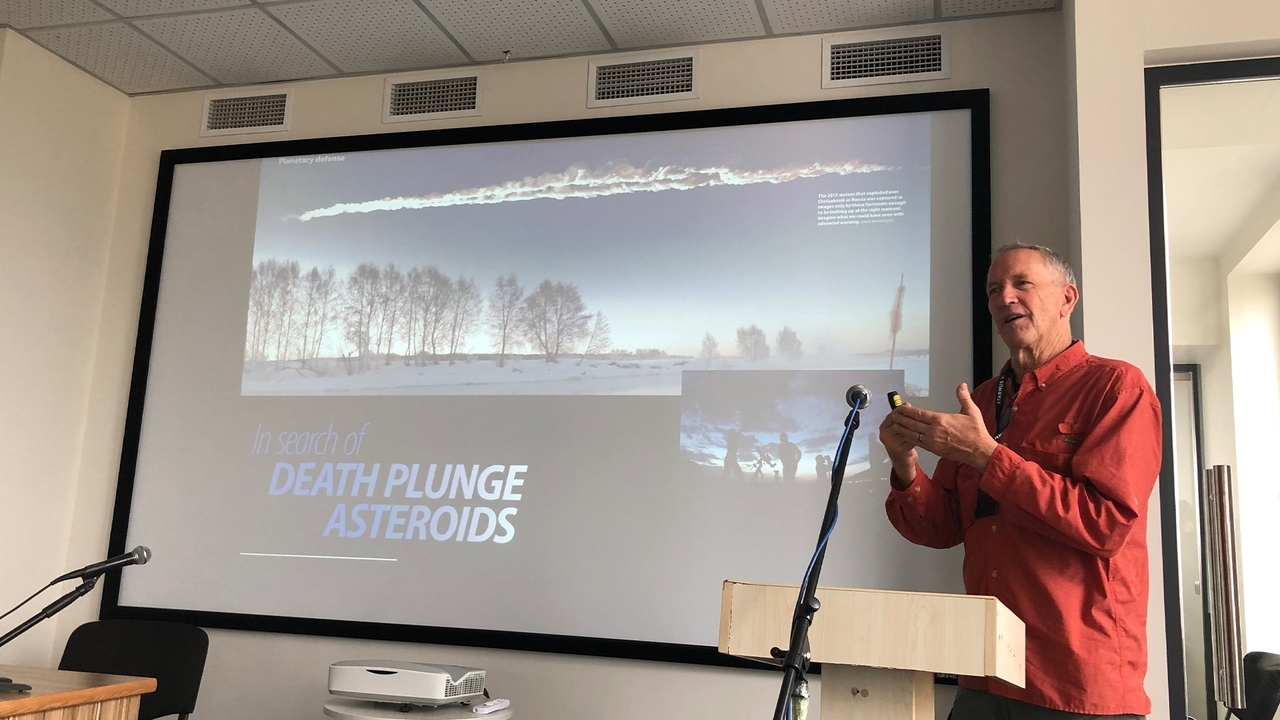
Image credit: Mark Boslough/The University of New Mexico
Those sources include weak peer-review processes, overstated press releases, limited scientific literacy and the amplification of false narratives through emerging technologies like artificial intelligence.
Practical strategies
“Interstellar comets are not alien spaceships. Sodom and Gomorrah were not destroyed by a cosmic airburst. Ancient advanced civilizations were not wiped out by a comet swarm 12,900 years ago,” observes Boslough. “These might be fun science fiction plots, but they have no scientific support.”
A key attribute of the paper is that it offers practical strategies for addressing misinformation, emphasizing the need for proactive communication, improved scientific literacy and stronger collaboration between scientists and media professionals.
In the paper, the Boslough-led work considers: (1) rapidly evolving news events requiring timely expert response; (2) intermediate-term cases involving inadequately reviewed publications, overpromotion, and uncritical reporting; and (3) long-term, persistent, and self-perpetuating myths that can grow organically and insidiously, even within the scientific community.
Growing plague
“Scientists must remain engaged in the public square and not retreat to our offices and labs or ignore the growing plague of TV pseudodocumentaries, fake academic journals, internet clickbait, and AI slop, said Boslough.
“We have a professional obligation to call out misinformation for what it is, in a compelling way that everyone can understand,” Boslough concludes.
To access the paper – “Preventing and correcting spread of misinformation about near-Earth objects, impacts, airbursts, and planetary defense: Case studies” – go to:
https://onlinelibrary.wiley.com/doi/10.1111/maps.70140

Chelyabinsk sky rendering is a reconstruction of the asteroid that exploded over Chelyabinsk, Russia on Feb. 15, 2013. Scientific study of the airburst has provided information about the origin, trajectory and power of the explosion. This simulation of the Chelyabinsk meteor explosion by Mark Boslough was rendered by Brad Carvey using the CTH code on Sandia National Laboratories’ Red Sky supercomputer. Andrea Carvey composited the wireframe tail. Photo by Olga Kruglova.
Credit: Sandia National Laboratories
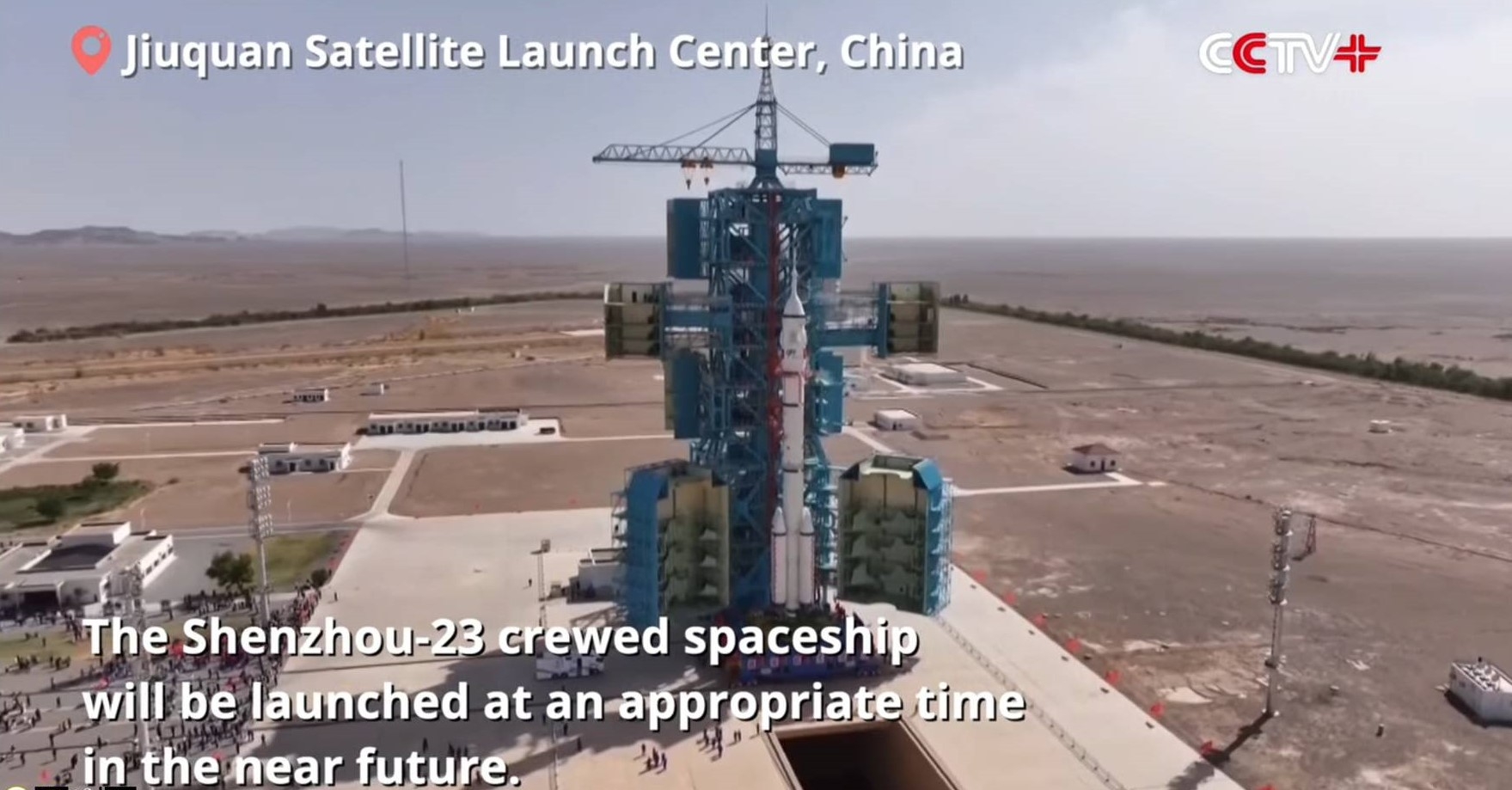
Image credit: CCTV/Inside Outer Space screengrab
The combination of the Shenzhou-23 piloted spacecraft atop the Long March-2F Y23 carrier rocket started its transfer over the weekend to a launch area at the Jiuquan Satellite Launch Center, northwest China.
China’s crewed rocket launch adopts a method where, after the rocket and spacecraft arrive at the site, a series of pre-launch preparations are completed through vertical assembly, vertical testing, and vertical transport.
Status check
Once testing is complete, the spacecraft-rocket assembly possesses a fully integrated and stable structure. After leaving the final assembly and testing facility, the combination will be transferred vertically along a 1.5-kilometer-long seamless steel rail to the launch pad.
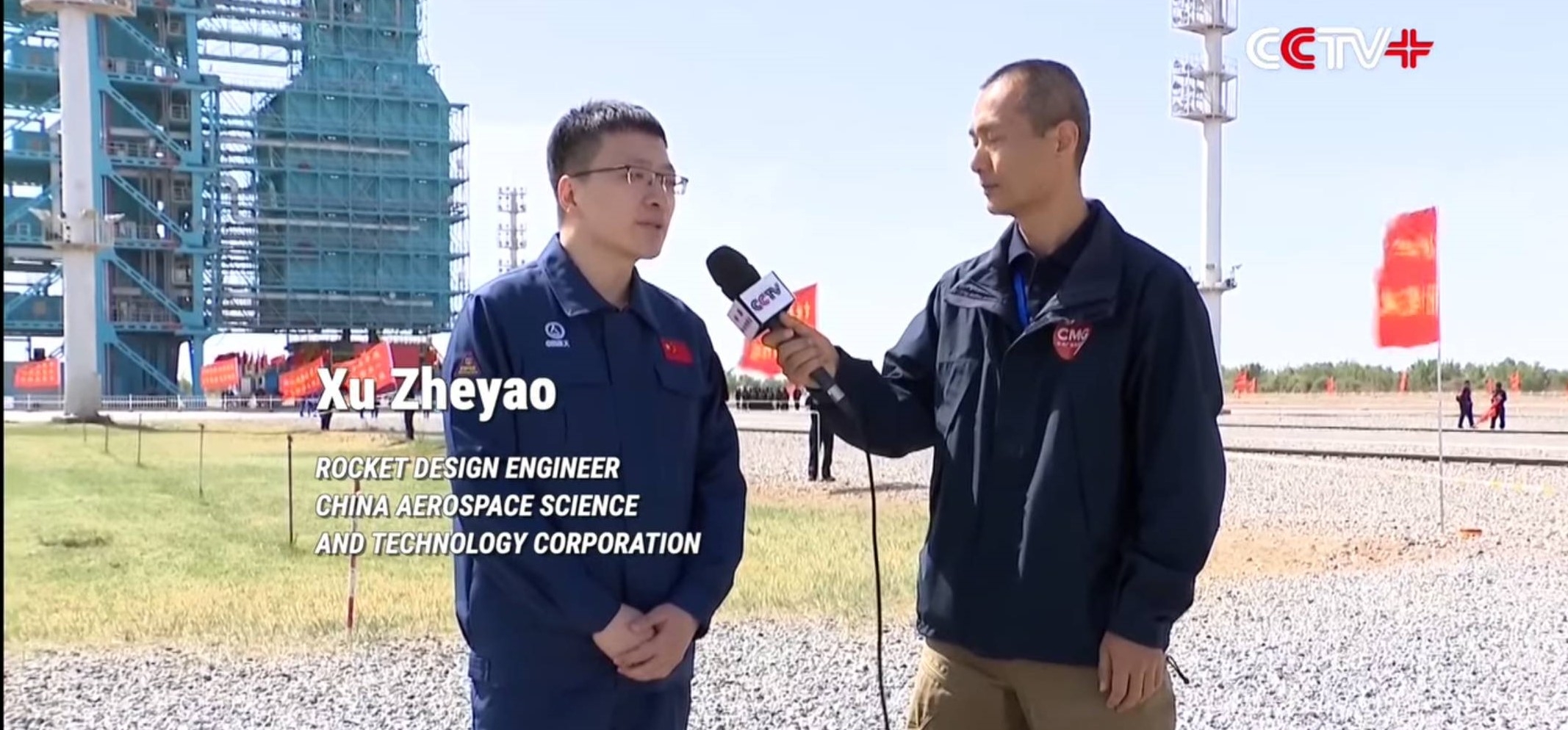
Image credit: CCTV/Inside Outer Space screengrab
Xu Zheyao, rocket design engineer, China Aerospace Science and Technology Corporation, told China Central Television (CCTV):
“After we entered the site on April 19, each system first conducted a status check on the rocket, followed by the simultaneous execution of multiple tasks across all systems,” Xu said.
What about Shenzhou-22?
The Shenzhou-23 crewed spaceship will be launched at an appropriate time in the near future.
The Shenzhou-22 mission, originally scheduled to fly this year, was lofted on November 25 of last year.
It was launched without crew and autonomously docked with the Tiangong space to provide the Shenzhou-20 crew — Chen Dong, Chen Zhongrui, and Wang Jie — a safe spacecraft to ride home following discovery of on-orbit damage to the Shenzhou 20 spacecraft.

Shenzhou-20 crew is seen in this pre-launch image.
(Image credit: China Manned Space Agency)
Supply ship
Meanwhile, now nearly 200 days into their mission aboard China’s space station Tiangong, the Shenzhou-21 astronauts — Zhang Lu, Wu Fei and Zhang Hongzhang — remain in good physical and mental condition.
The trio of space travelers recently received fresh supplies from the Tianzhou-10 cargo spacecraft and they have pressed ahead with a new round of in-orbit experiments, facility maintenance and health checks.
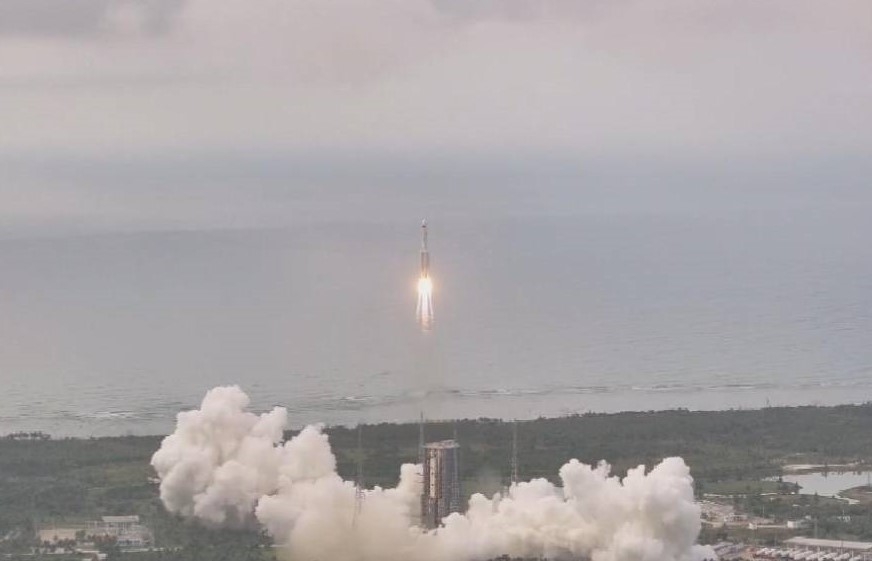
Tianzhou-10 was launched on May 11 from the Wenchang Spacecraft Launch Site. Image credit: CCTV/Inside Outer Space screengrab
Tianzhou-10 was launched on May 11 from the Wenchang Spacecraft Launch Site. The crew watched the launch and docking live on the cabin screens, and that evening they opened the hatches to begin unpacking the nearly 6.2 tons of new supplies.
One-month extension
The currently orbiting three astronauts entered the space station on Nov 1, 2025.
Having completed a full six-month stay in excellent condition as of early May, the crew has begun their one-month extended mission aboard the Tiangong space station.

Shenzhou-21 astronauts: Zhang Lu, Wu Fei and Zhang Hongzhang.
Image credit: CCTV/Inside Outer Space screengrab
With the extension, the Shenzhou-21 mission is poised to surpass the previous orbital record of 204 days set by the Shenzhou-20 crew, CCTV reports.
Go to these informative videos detailing the Shenzhou-21 crew operations and ground teams readying the crewed Shenzhou-23 launch at:
https://www.facebook.com/reel/1723600165332768
https://www.facebook.com/reel/1717571982591490
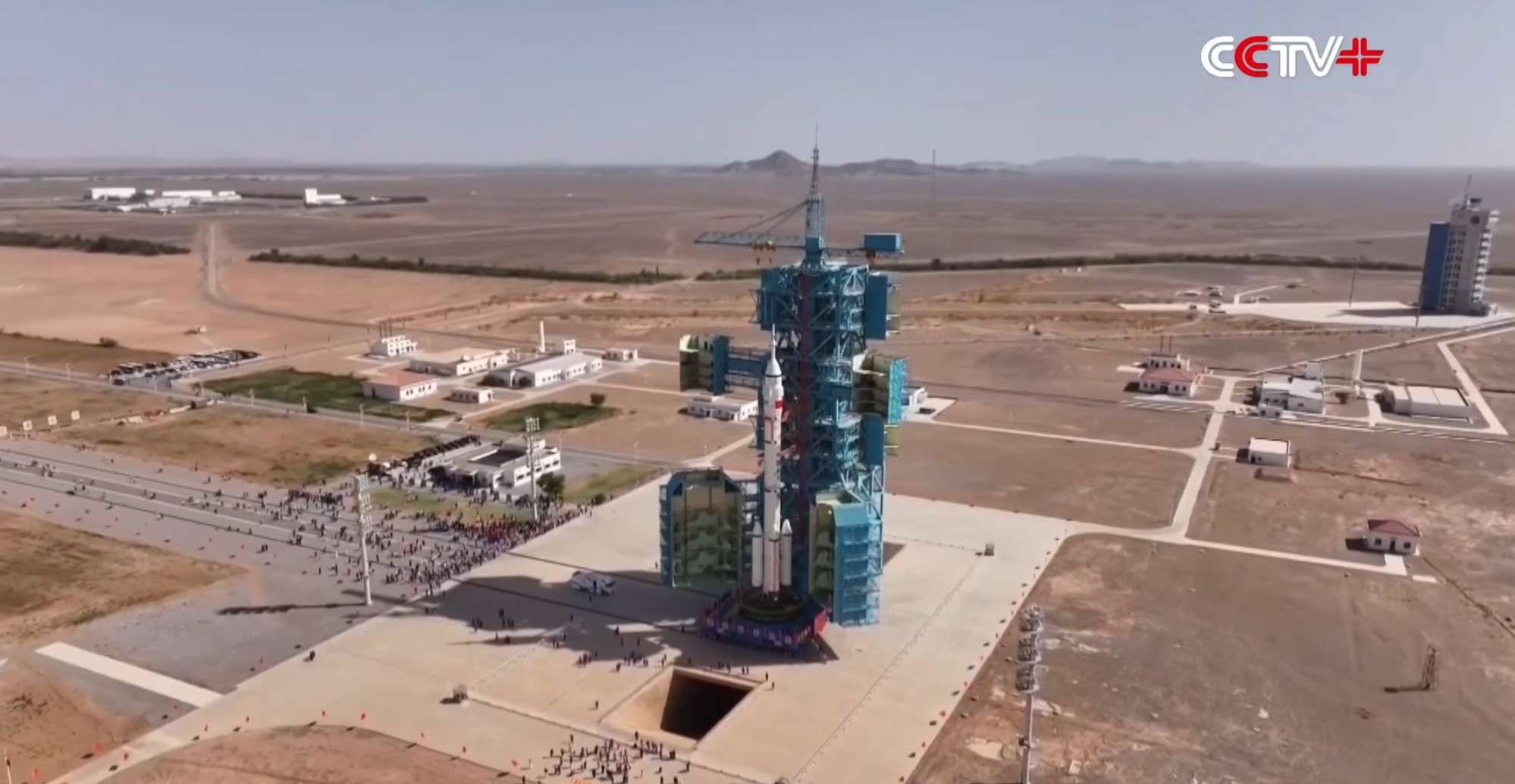
Shenzhou-23 mission spacecraft and booster being readied for upcoming liftoff.
Image credit: CCTV/Inside Outer Space screengrab
Newly released images show NASA’s Curiosity Mars rover completing a new drilling into a large block target.
This action comes after the robot’s drill became lodged into the “Atacama” drill hole.
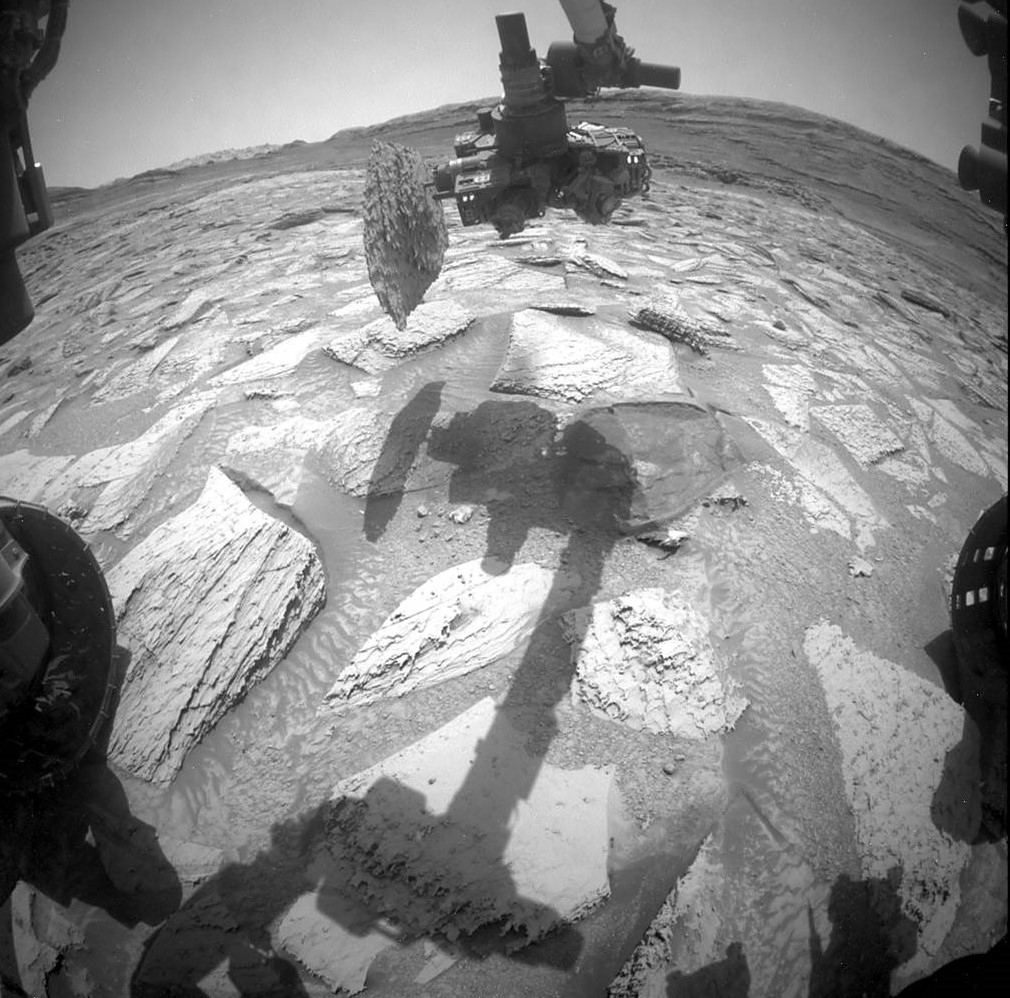
A careful dance of robot arm motions were employed — each one diligently planned by the team — to free Curiosity’s drill from the “Atacama” target, reports Michelle Minitti, Deputy Principal Investigator of Curiosity’s Mars Hand Lens Imager (MAHLI), a close-up camera located on the turret at the end of the rover’s robotic arm.
Once the health of the drill and arm were confirmed by the engineers, Curiosity was wheeled toward the new workspace.
“Our Martian exploration continues undaunted,” Minitti explains.
Go to “NASA’s Curiosity Rover Frees Its Drill From a Rock” video at:
https://assets.science.nasa.gov/content/dam/science/psd/photojournal/pia/pia26/pia26723/PIA26723.gif
Also, go to this May 17, 2026 “To drill or not to drill?” video release by Mars Guy.
“After the first ever stuck drill bit on Mars and days of effort to remove it, Curiosity shook off the rock and moved on. The team still wanted to sample one of these bizarre rocks and found another one nearby that looks notably similar. But would they risk it?”
Go to:
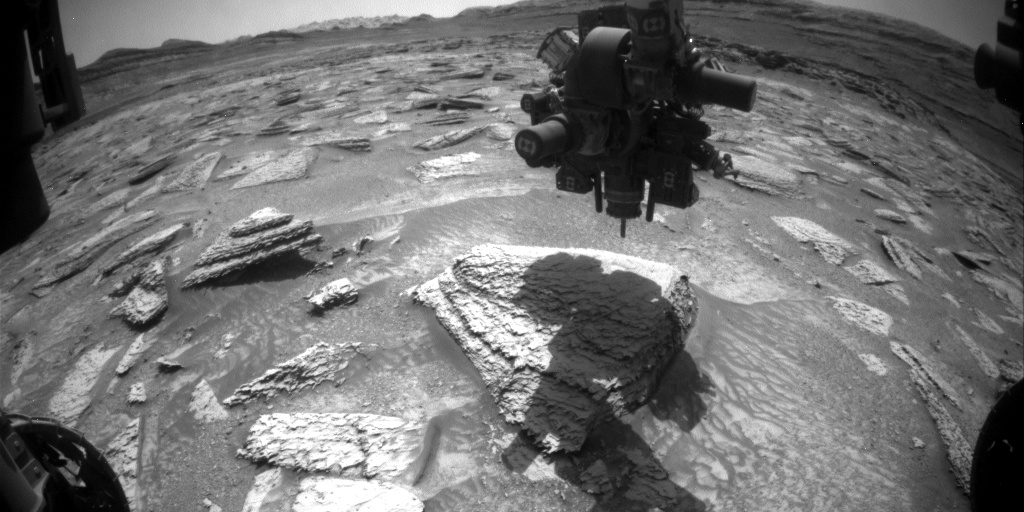
This image was taken by Curiosity’s Front Hazard Avoidance Camera (Front Hazcam) on Sol 4897, May 16, 2026.
Image credits: NASA/JPL-Caltech
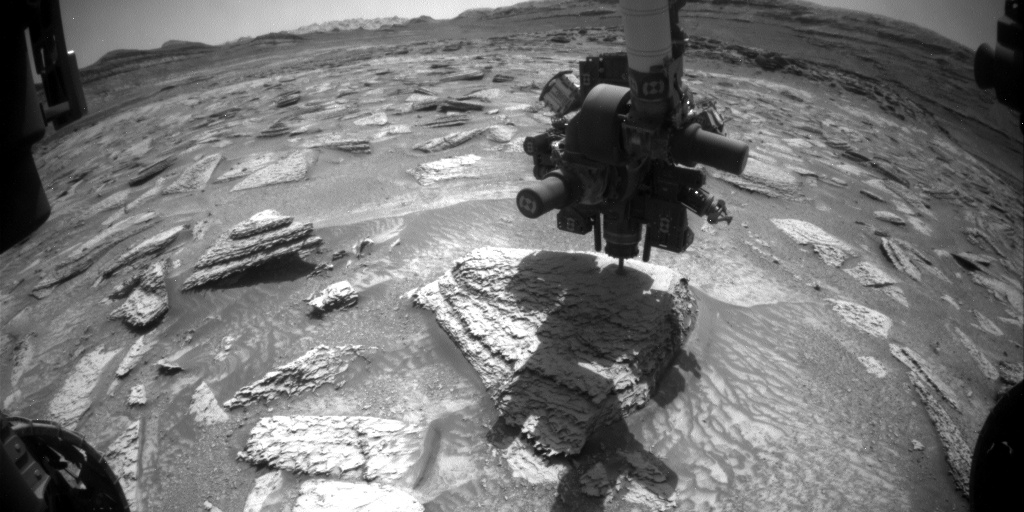
This image was taken by Curiosity’s Front Hazard Avoidance Camera (Front Hazcam) on Sol 4897, May 16, 2026.
Image credits: NASA/JPL-Caltech
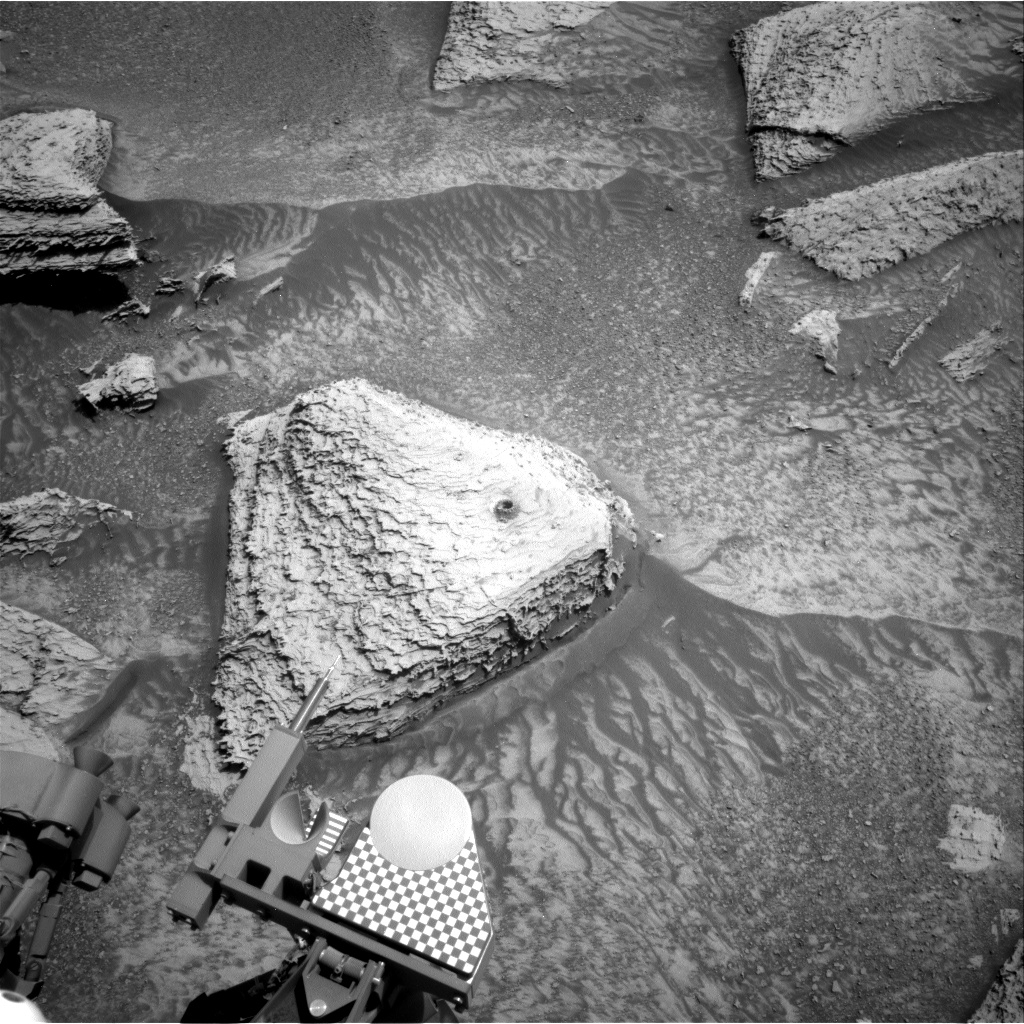
This image was taken by Curiosity’s Right Navigation Camera on Sol 4897, May 16, 2026.
Image credits: NASA/JPL-Caltech
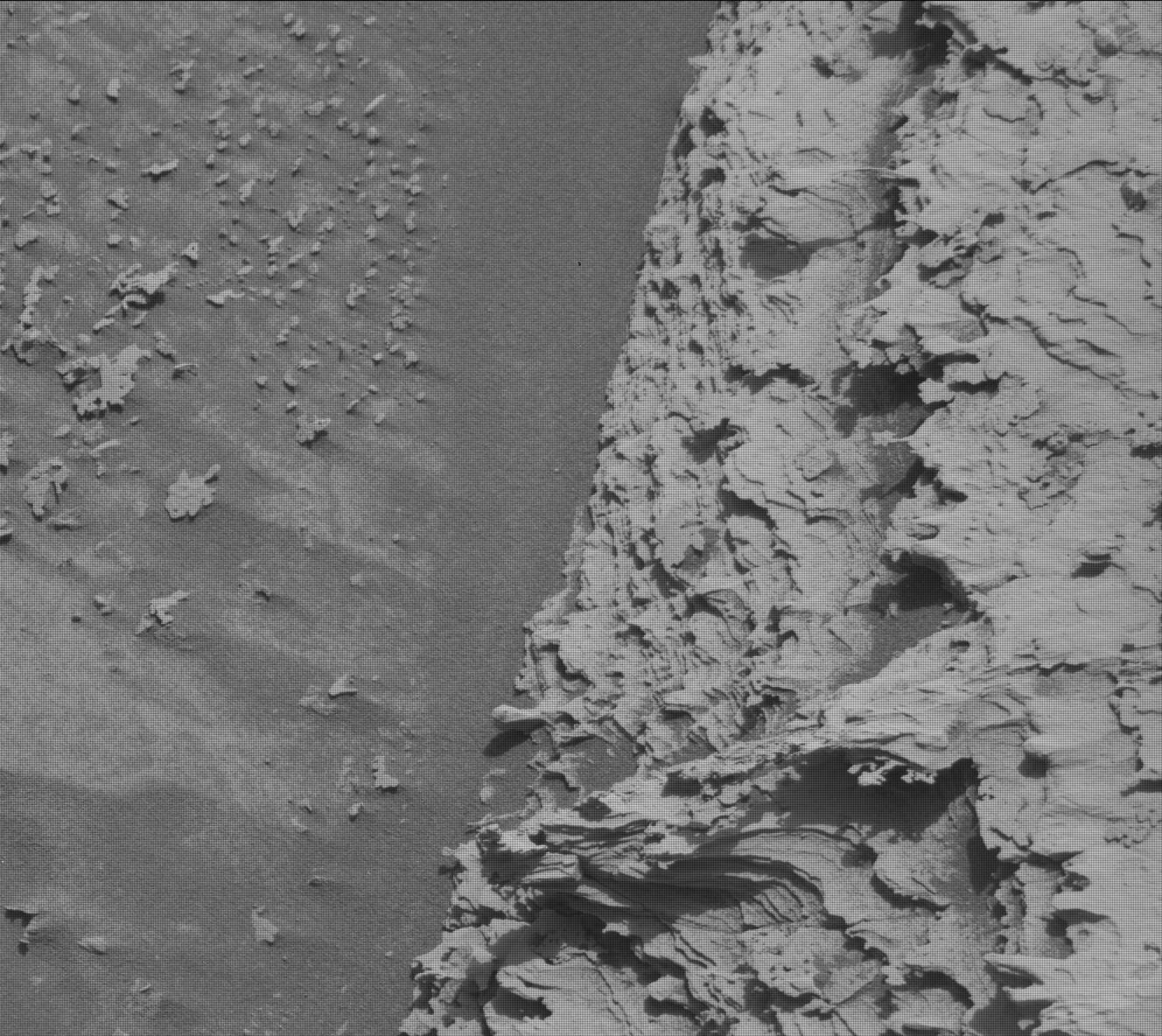
This image was taken by Curiosity’s MAST_RIGHT (Mastcam) camera on Sol 4896, May 15, 2026.
Image credits: NASA/JPL-Caltech/MSSS
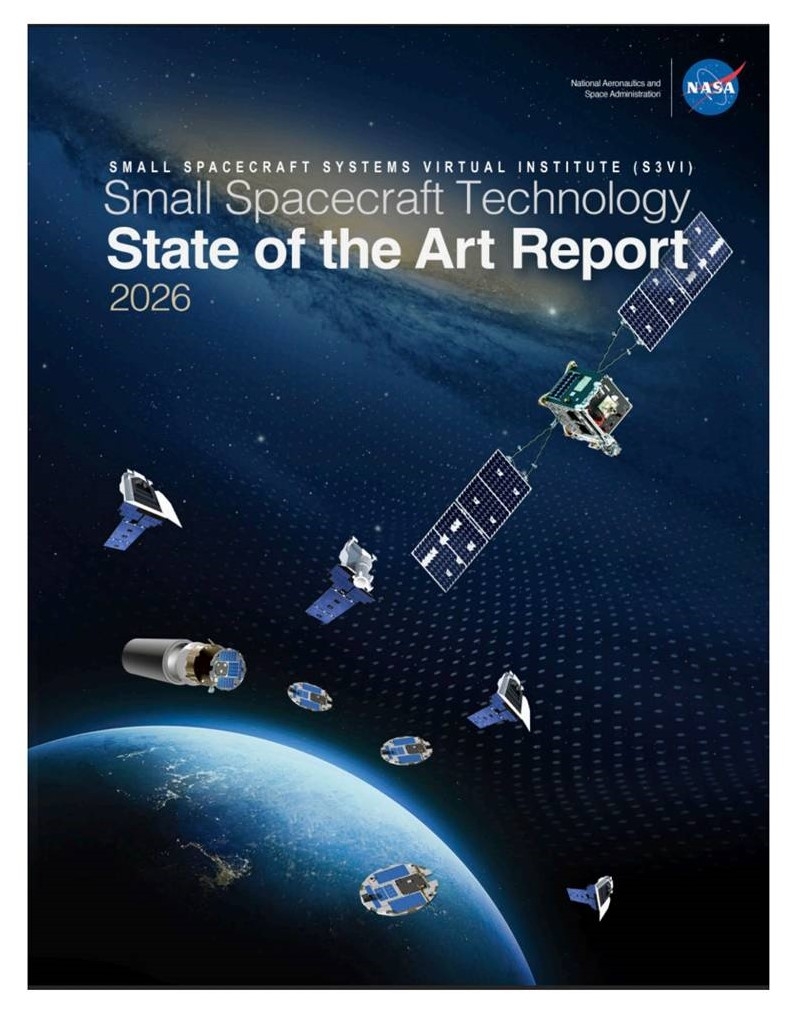
NASA’s Small Spacecraft Systems Virtual Institute (S3VI) has released the 2026 Small Spacecraft Technology State-of-the-Art report.
This report provides an extensive overview and assessment of the state-of-the-art (SoA) for smallspacecraft technologies publicly available as of April 2026.
The report flags the fact that the pace of SmallSat technology advancement overall is rapidly accelerating.
“Recent developments in small satellite technologies reflect a broader shift from experimental, low-cost platforms toward highly capable, mission-flexible systems that can operate across increasingly demanding environments,” the report notes. “Advances in materials science, power systems, avionics, and communications are collectively enabling this transition.”
Major trend
One of the most critical enabling areas is energy storage and power management. A major trend in spacecraft technology is the push toward high-performance avionics capable of supporting autonomy, edge processing, and machine learning.
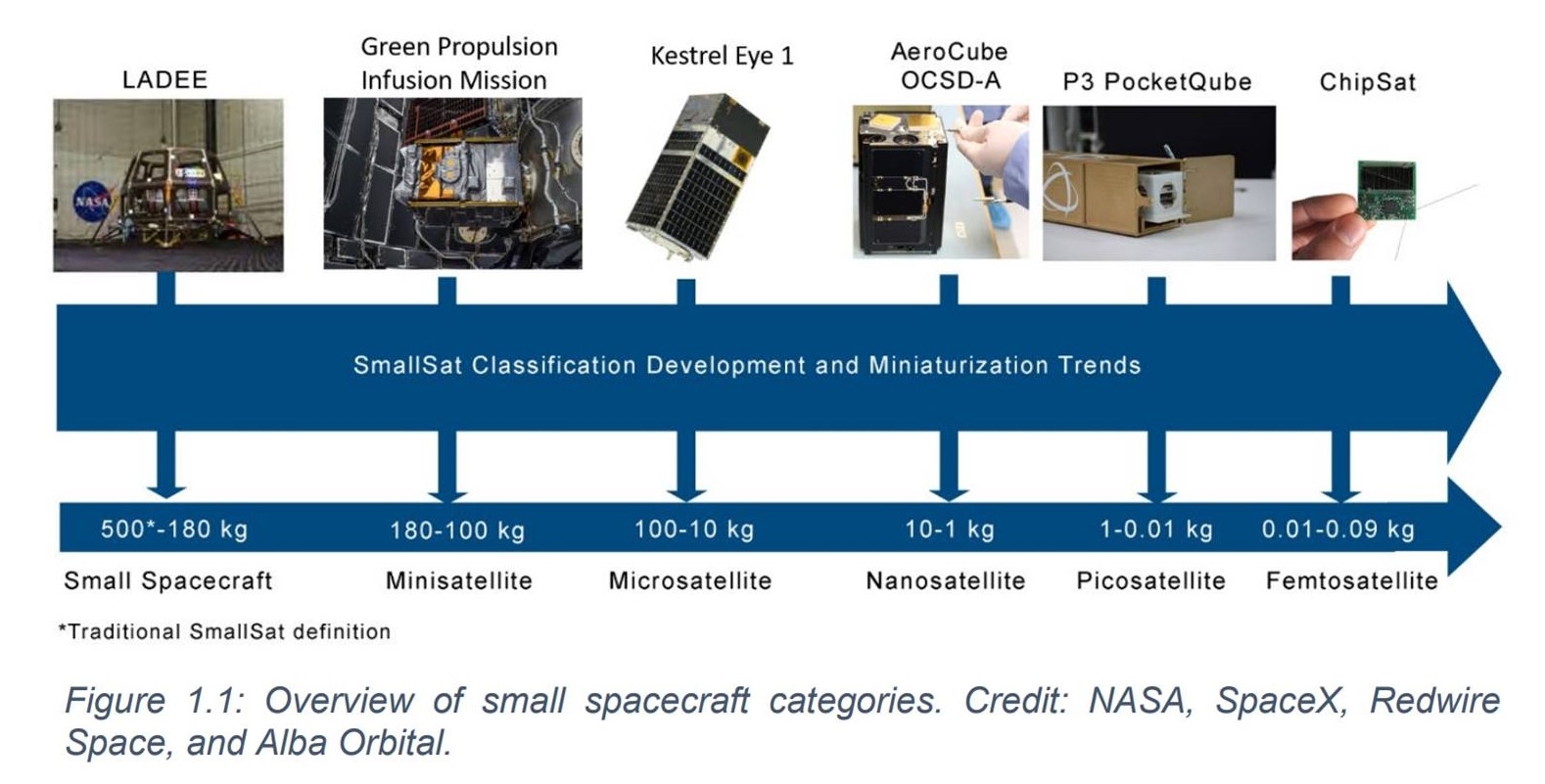
“In summary, small satellite technologies are undergoing a significant transformation driven by advances in materials, power systems, avionics, and communications, alongside evolving market demands,” the report explains. “These developments are enabling a new class of spacecraft that bridge the gap between traditional CubeSats and larger satellites, opening the door to more ambitious missions in Earth orbit and beyond.”
To access this highly readable, informative and reference-rich State-of-the-Art Small Spacecraft Technology report, go to:
https://www.nasa.gov/wp-content/uploads/2026/05/soa-2026.pdf?emrc=d75388

Image credit: NASA
NASA has begun to outline preliminary Artemis III mission plans.
- During the Artemis III mission, the SLS (Space Launch System) rocket will launch the Orion spacecraft from NASA’s Kennedy Space Center in Florida with four crew members.
- Instead of using the interim cryogenic propulsion stage as the upper stage of the rocket, NASA will use a “spacer,” a representation of the mass and overall dimensions of an upper stage but without propulsive capabilities. The spacer will maintain the same overall dimensions and interface connection points as the upper stage between the Orion stage adapter and launch vehicle stage adapter.
- Design and fabrication activities for the spacer are progressing rapidly at NASA’s Marshall Space Flight Center in Huntsville, Alabama. Material for the barrel section and the upper and lower rings is currently being machined at Marshall in preparation for upcoming welding operations.
Moon lander “pathfinders”

Image credit: NASA
- After the SLS delivers Orion to orbit, the spacecraft’s European-built service module will provide propulsion to circularize Orion’s orbit around the planet in low Earth orbit.
- The SLS will hurl Orion and its four-person crew to perform operations with a SpaceX Starship human lunar landing system pathfinder, and Blue Origin’s Blue Moon Mark 2 human landing system pathfinder. While some decisions are yet to be determined, astronauts could potentially enter at least one lander test article.
- The crew will spend more time aboard Orion than during Artemis II of roughly 10 days, further advancing the evaluation of life support systems, and for the first time will demonstrate the docking system performance.
- NASA also plans to test an upgraded heat shield during Orion’s return to Earth.
- There are options to evaluate Axiom’s AxEMU spacesuit lander interfaces ahead of lunar surface missions.
Artwork depicts two Artemis astronauts planting an American flag at the lunar south pole.
Image credit: NASA/Daniel O’Neal
Overall status of upcoming Artemis missions
Meanwhile, in an X/Twitter posting, NASA chief, Jared Isaacman, reinforced the timing of the Artemis III mission and overall status of rebooting the Moon.
“We never officially moved the timing of Artemis III to ‘late’ 2027. A reporter wrote that after misinterpreting my quick response to a question during a budget hearing. In the same hearing, I also said we were gaining increased confidence in interoperability tests with both landers in 2027. I am quite sure at least one will incorporate an ECLSS [Environmental Control and Life Support Systems] demonstration.
As for 2028, Isaacman said NASA would carry out up to two landing attempts, if required. “That story has not changed, and the South Pole was always the landing target.”

Nine candidate landing regions for NASA’s Artemis IV mission The background image of the lunar South Pole terrain within the nine regions is a mosaic of LRO (Lunar Reconnaissance Orbiter) WAC (Wide Angle Camera) images.
Image credit: NASA
Moving goalposts
Isaacman said that the only goalposts that have moved “have been in the direction of achievability–standardizing the architecture, adding missions, focusing resources, and rebuilding in-house competencies. We have tried to communicate to the greatest extent possible in this regard, while respecting the proprietary information of our commercial partners.”
The NASA leader also stated he is proud of the NASA team “and the new pace we are moving at.”
Furthermore, the public will learn in the weeks ahead which astronauts will undertake Artemis III, “and I would not be surprised if you see some early wet dress testing at [launch pad] 39B before the end of this year.”
Regarding what some have characterized as a schedule that’s ambitious, Isaacman said that he agrees.
“And NASA’s recent track record on schedule has not been great, but when it comes to landing astronauts on the Moon, historically, our batting average was pretty good. I suspect it will be again,” Isaacman said.

Image credit: White House
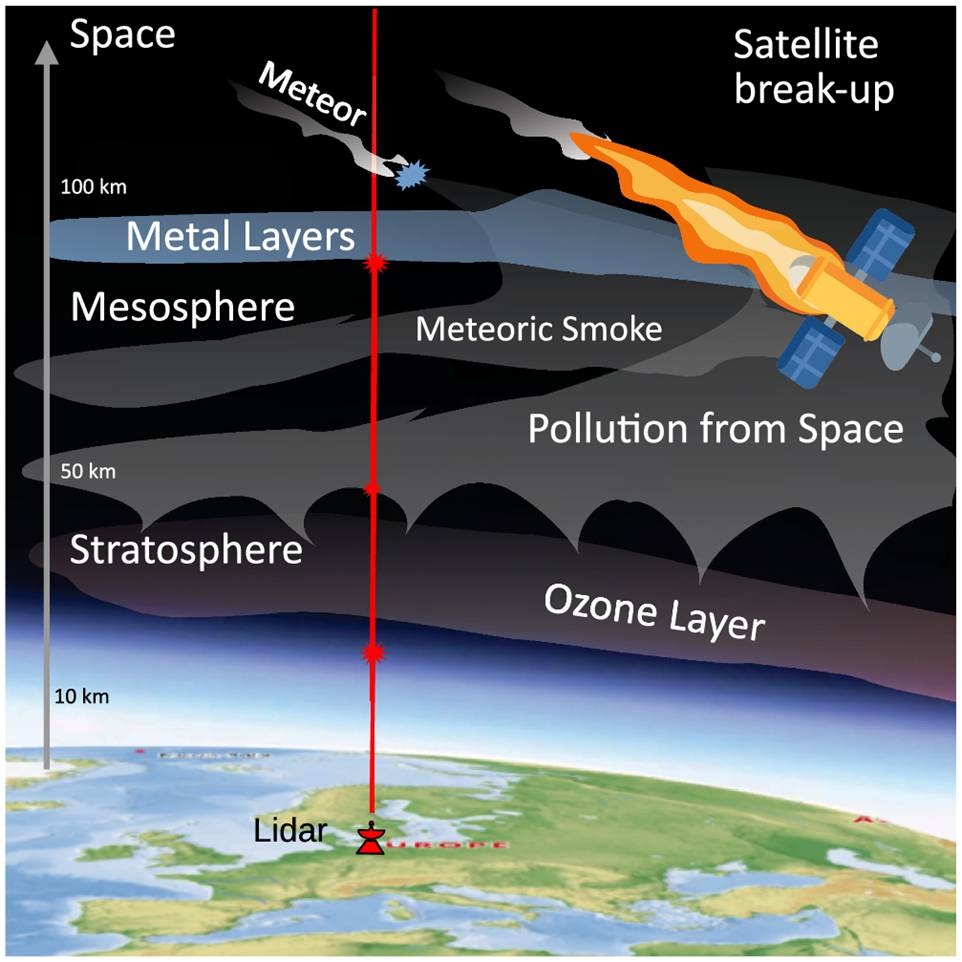
While natural metal layers form in the upper mesosphere due to meteor ablation, new light detection and ranging (LiDAR) measurements have found additional mass and elements are being introduced via the re-entry of space hardware. This type of pollution has unknown consequences for the upper atmosphere and ozone layer.
Image credit: Robin Wing, et al.
A new technique and technology is in use to study incoming space debris and its impactful implications for Earth’s atmosphere.
Observational evidence is being gathered that the ablation of space debris can be detected by ground-based light detection and ranging (LiDAR) equipment.
LiDAR is an acronym for “light detection and ranging,” is a remote-sensing technology that uses laser beams to measure precise distances and movement in an environment, in real time. Last year, for the first time, a lithium cloud in the upper atmosphere was linked to the reentry of a rocket stage.
This notable event took place on February 19-20, 2025 with the detection of a lithium (Li) cloud ten times higher than typical. Back-trajectory analysis indicated the lidar-probed air mass originated from a location west of Ireland that coinciding with the atmospheric re-entry of a SpaceX Falcon 9 upper stage.
For more details, got to my new Space.com story – “Lasers shine a new light on the space junk air pollution problem – They can detect clouds of metal generated by falling satellites and rocket bodies” – at: