Archive for the ‘Space News’ Category
 Author:
  July 6th, 2022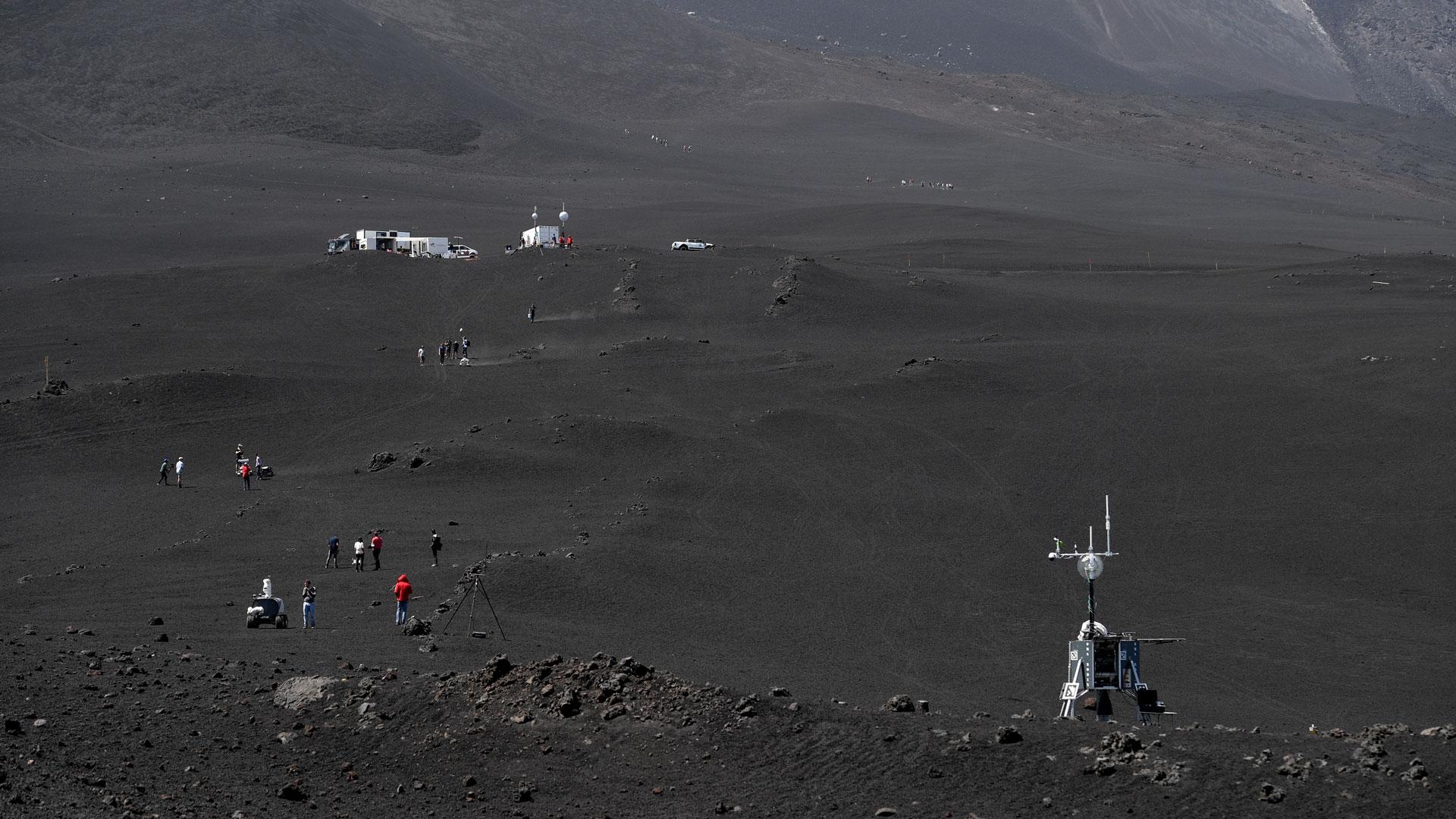
Simulated lunar exploration on Mount Etna, a volcano in Italy.
Credit: DLR (CC BY-NC-ND 3.0)
The Helmholtz Future Project Autonomous Robotic Networks to Help Modern Societies (ARCHES) has wrapped up simulated lunar exploration on Mount Etna, a volcano in Italy.
The German Aerospace Center (Deutsches Zentrum fuer Luft- und Raumfahrt; DLR) organized the venture that also involved the European Space Agency’s “Analog-1” project.
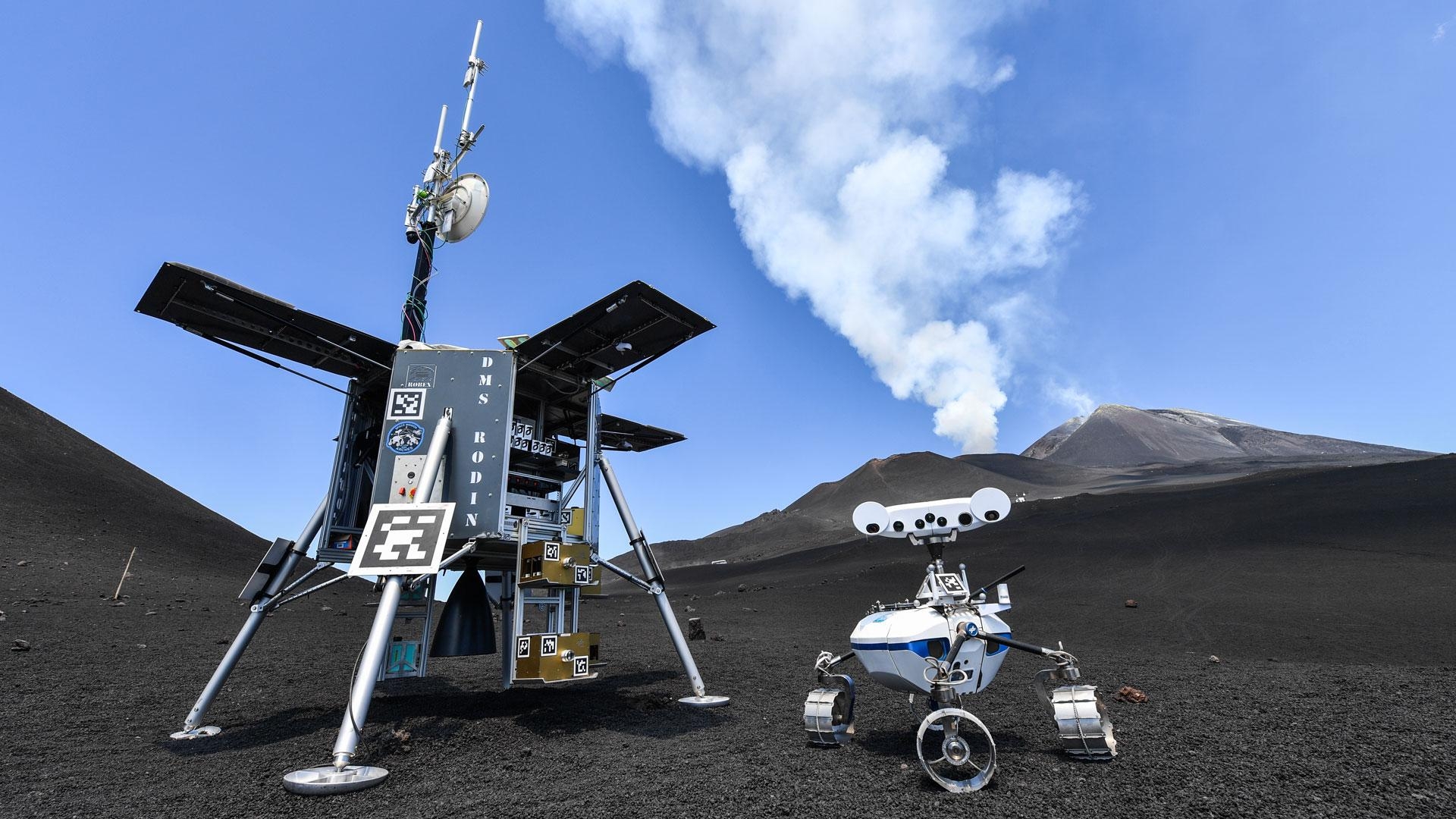
DLR lander and rover working together.
Credit: DLR (CC BY-NC-ND 3.0)
The Mount Etna site resembles the lava landscape on the Moon. In addition to the loose, coarse-grained surface composition, the solidified lava layers also present realistic challenges for exploration missions.
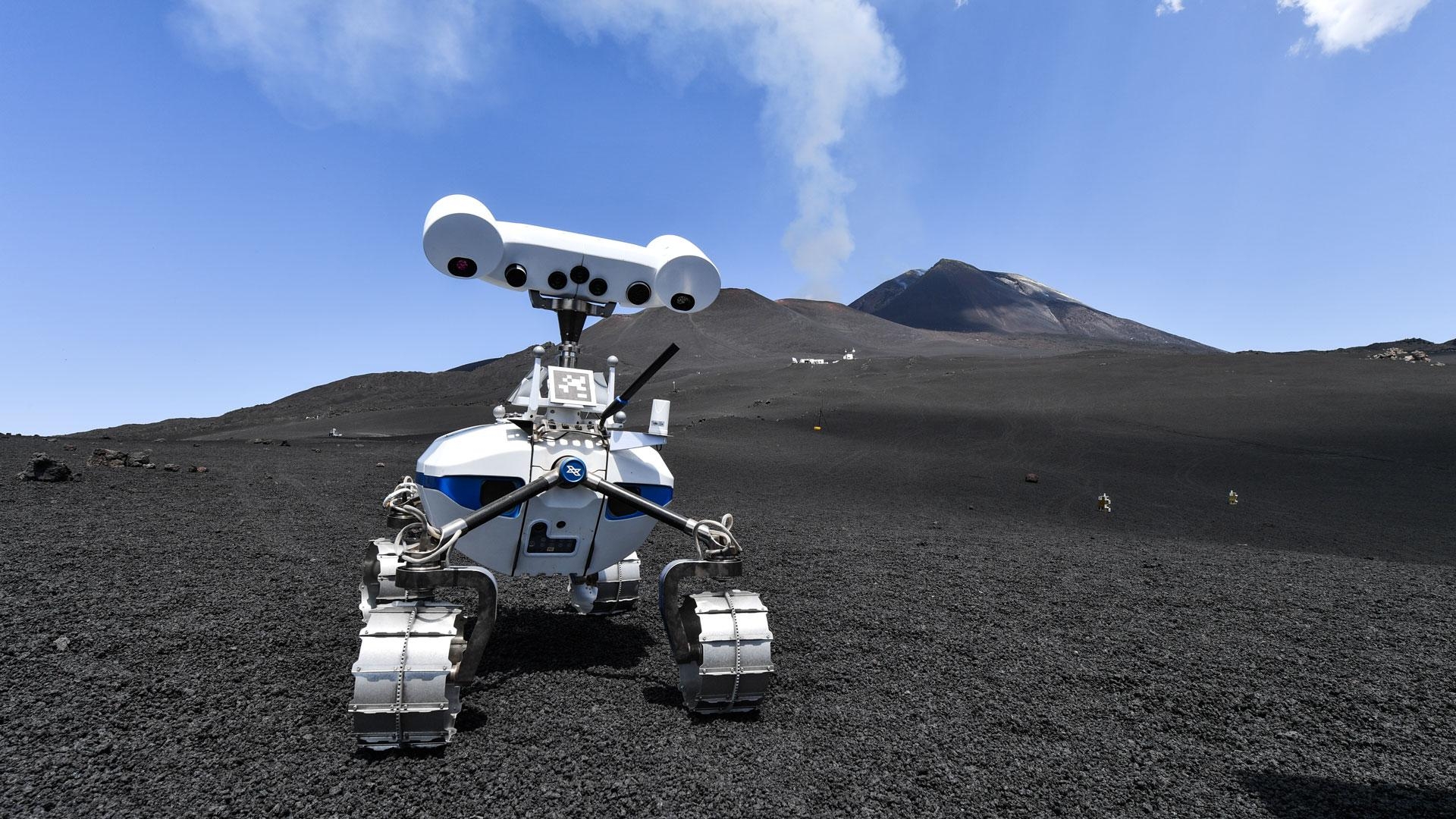
DLR Lightweight Rover Unit 1 (LRU1).
Credit: DLR (CC BY-NC-ND 3.0)
Robot menagerie
According to the DLR, two robots moved around together autonomously. They were joined by a drone. Also practiced was control of the robots from a simulated station in orbit. For maximum realism a second of signal delay was added to the rover control system, equivalent to the time it would take commands to travel between the Gateway station and the lunar surface. The force feedback control method has been designed to operate with such delays.
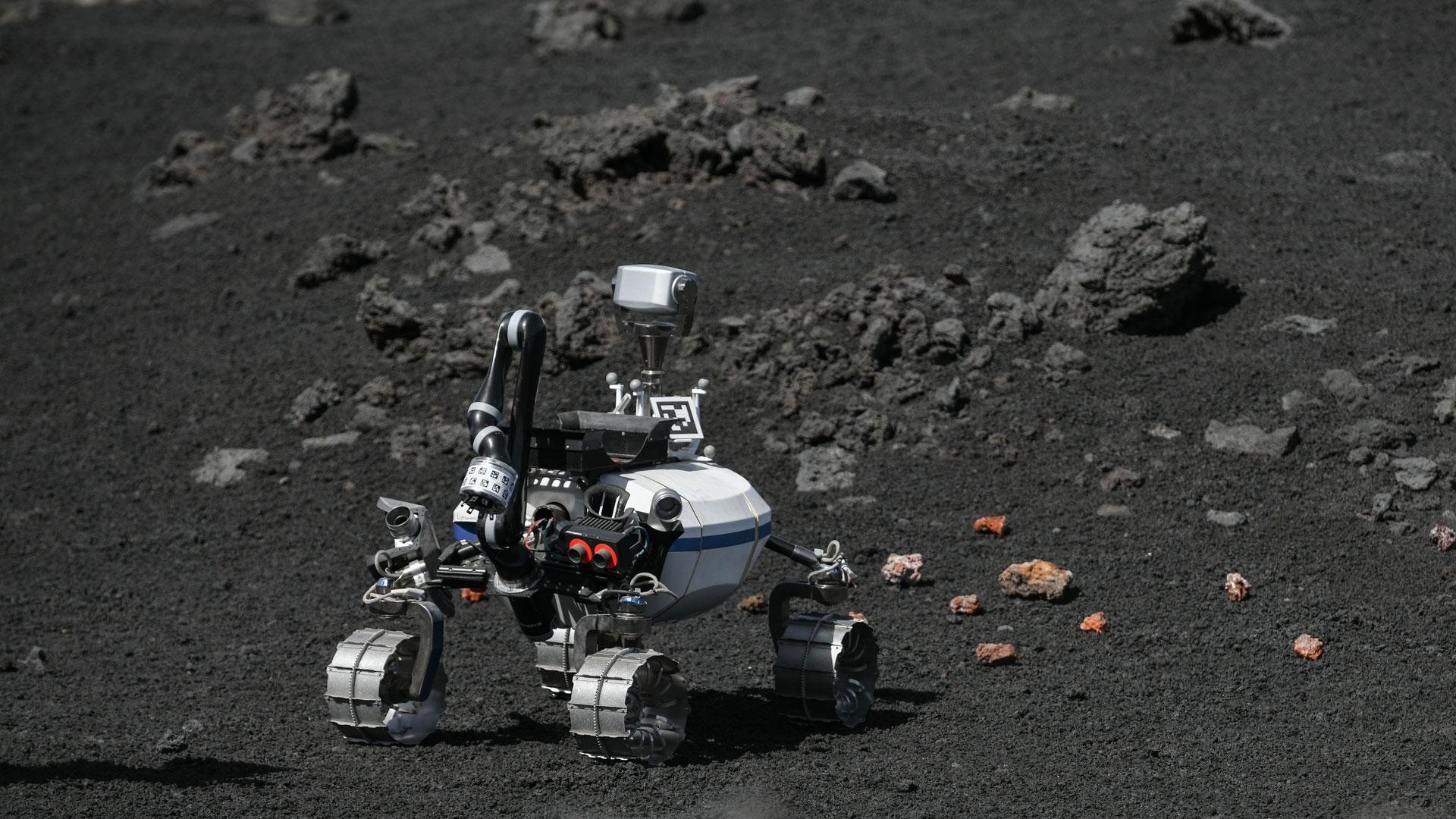
LRU2 robot took on the role of “assistant.”
Credit: DLR (CC BY-NC-ND 3.0)
During this demonstration activity, German astronaut Thomas Reiter carried out this task from a special control room, in fact a hotel room, in Catania, Sicily about 14 miles (23 kilometers) away.
- The Lightweight Rover Unit 1 (LRU1) robot evaluated soil samples using its cameras and is considered the “scientist” of the team.
- LRU2 took on the role of “assistant,” collecting surface samples, then analyzed them using Laser-Induced Breakdown Spectroscopy (LIBS).
- ESA’s four-wheeled Interact rover collected rock samples and brought them to a lander. The Interact Rover has a camera arm and a gripper arm that also provide haptic feedback. This means that the remote scientists can obtain a tactile “feel” for the rock samples. ESA’s Interact rover was built by the Agency’s Human Robot Interaction Lab and modified for the rugged slopes of the volcano. Interact Rover operations were coordinated from the European Space Operations Centre (ESOC) in Germany.
- The ARDEA drone is considered the “scout” for the team and mapped the area.

Scout rover in the lava landscape.
Credit: DLR (CC BY-NC-ND 3.0)
Far side simulation
Various scenarios were played out, including the “LOFAR Experiment.” It involved simulating the installation and maintenance of a low-frequency radio antenna array. The LRU rover and the ARDEA drone demonstrated the installation of an antenna system on the far side of the Moon. A similar antenna could be directed from the lunar surface into deep space.
Heterogeneous, autonomous, networked robotic systems have been in development since 2018 as part of the ARCHES initiative. This involves a number of different robots and fields of application.

ESA’s Interact Rover chose rock samples and brought them to DLR’s RODIN lunar lander.
Credit: ESA
Extension of human arms and eyes
Thomas Reiter commented: “We’ve learned a lot about collaboration between ground control on Earth and the crew aboard a space station orbiting the Moon, both operating a rover on the surface – this ‘shared’ operation can be extremely efficient –much more efficient than if either side does it alone.”
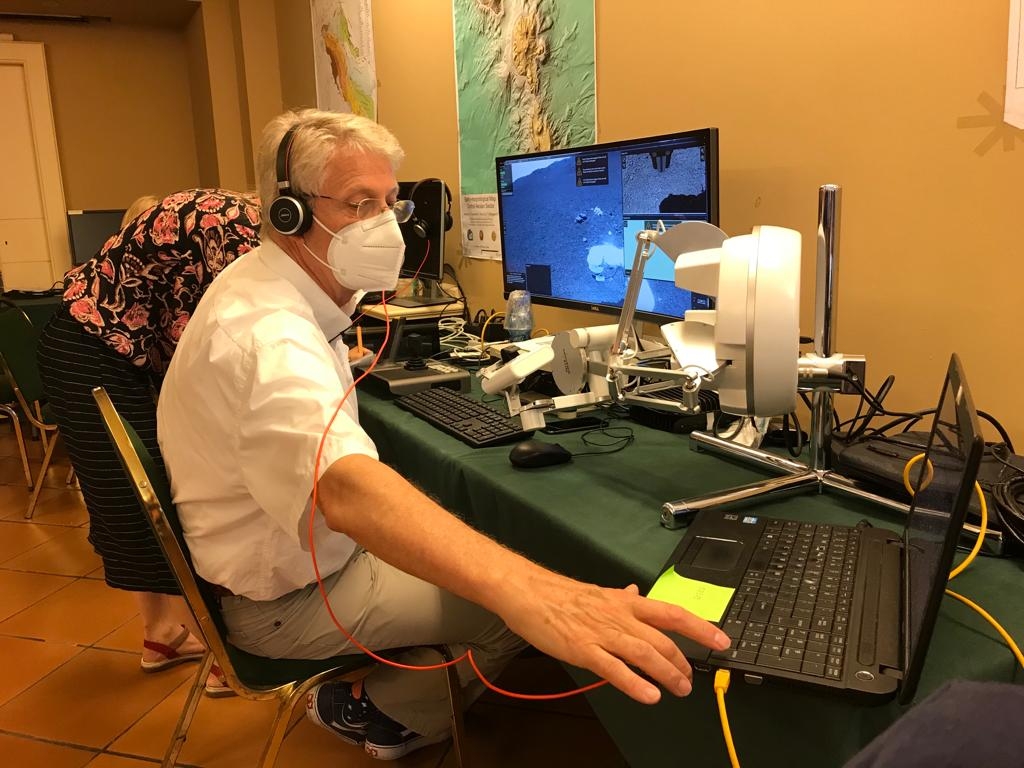
ESA astronaut Thomas Reiter at the controls.
Credit: ESA
“Teams of mobile robots have an important role to play in future space missions. Operating in heterogeneous teams, the robots complement and support each other with their different capabilities. They serve as an extension of human arms and eyes,” explains Armin Wedler, Project Manager at the DLR Institute of Robotics and Mechatronics in a DLR statement.
In addition to opening up the exploration of the Solar System, ARCHES also opens the way for environmental monitoring of the oceans and can provide assistance during crises on Earth.
 Posted in

CAPSTONE over the Moon’s North Pole. After arrival at its cis-lunar destination, CAPSTONE will begin its 6-month-long primary mission. The mission will validate a near rectilinear halo orbit’s characteristics by demonstrating how to enter into and operate in the orbit.
Illustration credit: NASA/Daniel Rutter
Just in from Advanced Space – the owner and operator of this mission headed for its target – the Near Rectilinear Halo Orbit (NRHO) around the Moon.
During commissioning activities an anomaly was experienced related to the communication subsystem; the operations team is actively working this issue with the Deep Space Network and has identified a path forward.
- As a result of this anomaly the first trajectory correction maneuver (originally scheduled for the morning of July 5) has been rescheduled. This maneuver is designed to more accurately target the transfer orbit to the Moon – the spacecraft remains on its intended ballistic lunar transfer (BLT) while this targeting maneuver is delayed.
- One of the benefits of the BLT, the designed trajectory, is its robustness to delays such as this.
- The mission transfer approach and system margins provide time to resolve and understand this anomaly before proceeding with the first trajectory correction maneuver
- At the time of publication, the CAPSTONE spacecraft is currently approximately 285,000 km from Earth (~8 times GEO) on its planned ballistic transfer orbit to the Moon
Status check
Spacecraft was commissioning nominally for the first 11 hours.
- Spacecraft was deployed successfully from the launch vehicle
- Spacecraft successfully deployed solar arrays, achieved three-axis stabilization, and entered a battery charging mode
- Spacecraft successfully executed Earth-pointing mode, communicated with DSN stations in Madrid Spain and the operations team began check-out and commissioning of the spacecraft
- The operations team was able to determine spacecraft state (position and velocity) and design initial trajectory correction maneuver.
- Propulsion system was commissioned and prepared for the first trajectory correction maneuver

Jeffrey Parker, chief technology officer of Advanced Space (left) explains the CAPSTONE mission to U.S. Senator John Hickenlooper over a full-size model of the spacecraft.
Credit: Advanced Space/Jason Johnson
What now?
The CAPSTONE mission team has been working around the clock and through the holiday weekend to support this important mission. With CAPSTONE utilizing the BLT, it will take four months to reach the planned Near Rectilinear Halo Orbit (NRHO) around the Moon. As further details emerge, Advanced Space and NASA will make them available.
More details about the CAPSTONE mission can be found at:
Keep updated on CAPSTONE at: https://advancedspace.com/
NASA’s Curiosity Mars rover at Gale Crater is now performing Sol 3524 duties.
Here are some new images of the robot’s surroundings:
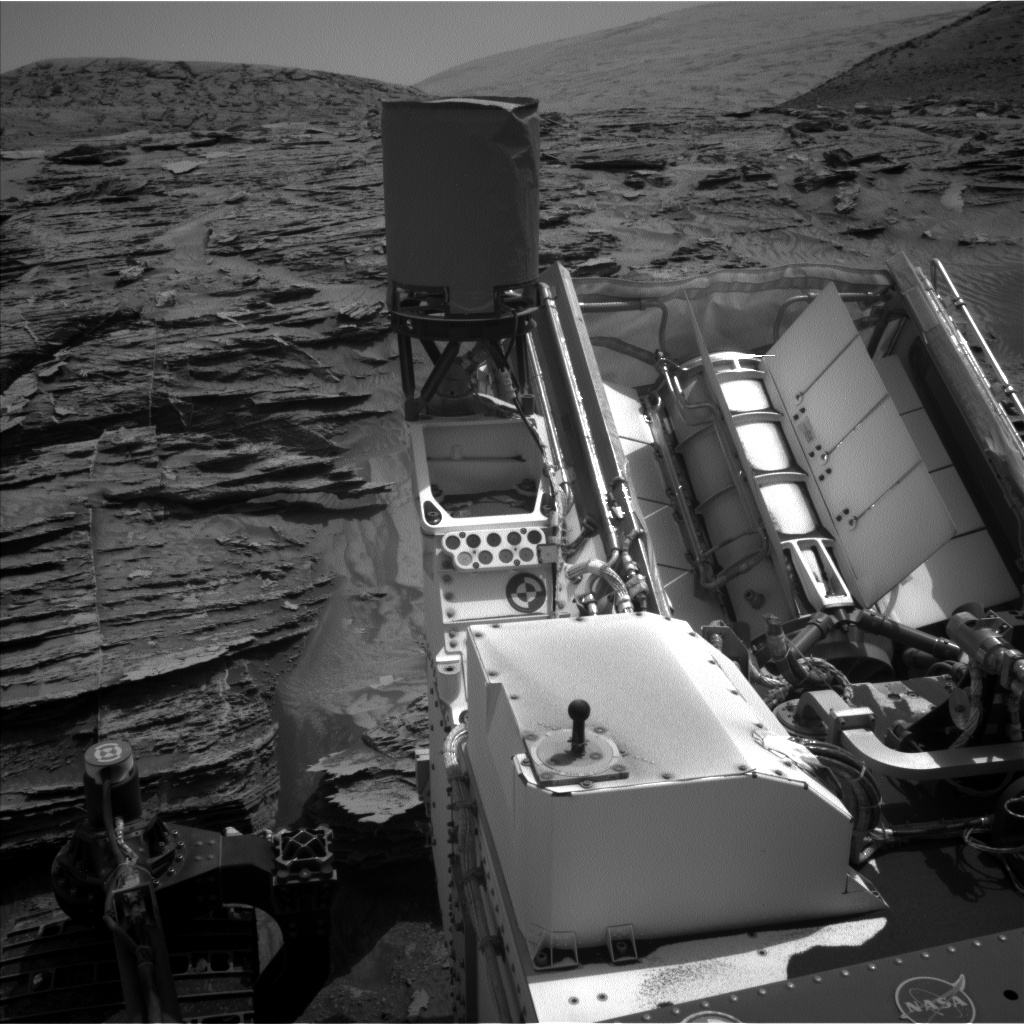
Curiosity Left B Navigation Camera image taken on Sol 3522, July 3, 2022.
Credit: NASA/JPL-Caltech
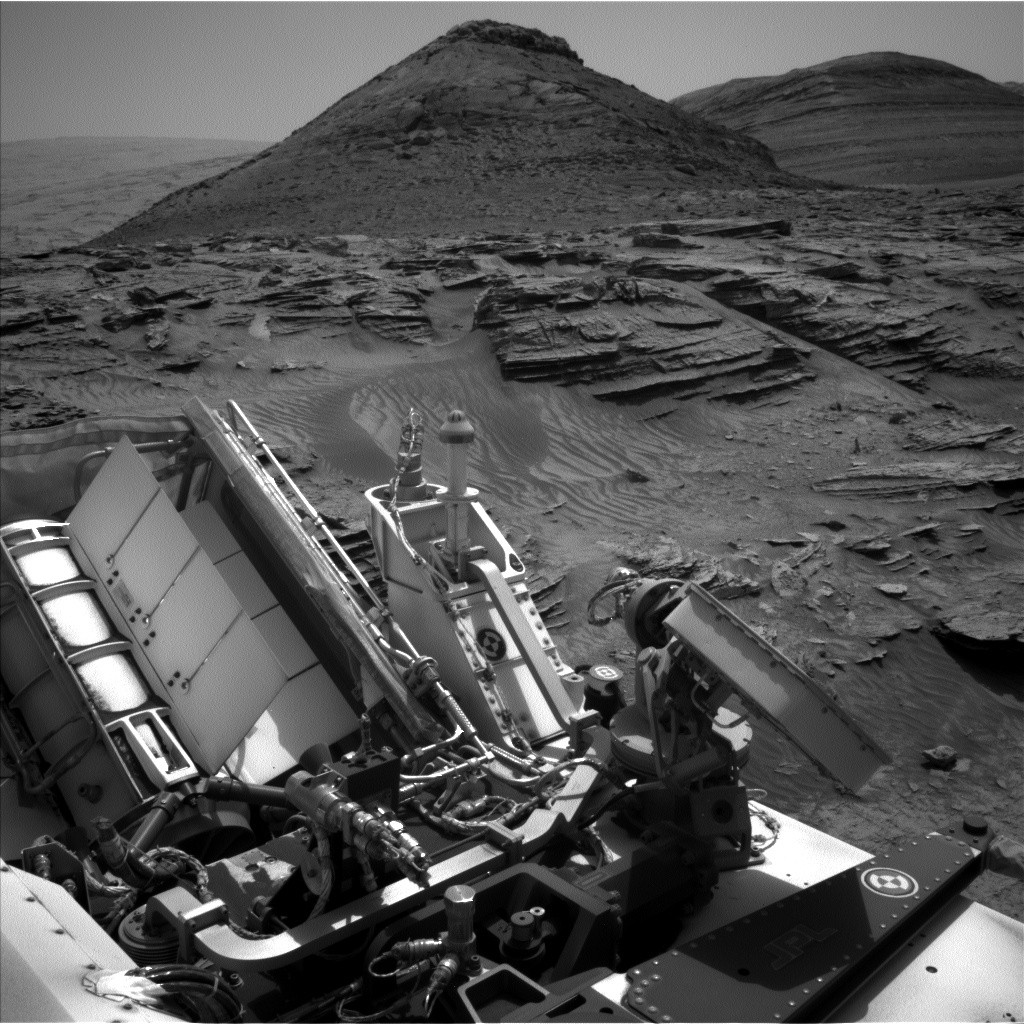
Curiosity Left B Navigation Camera image taken on Sol 3522, July 3, 2022.
Credit: NASA/JPL-Caltech
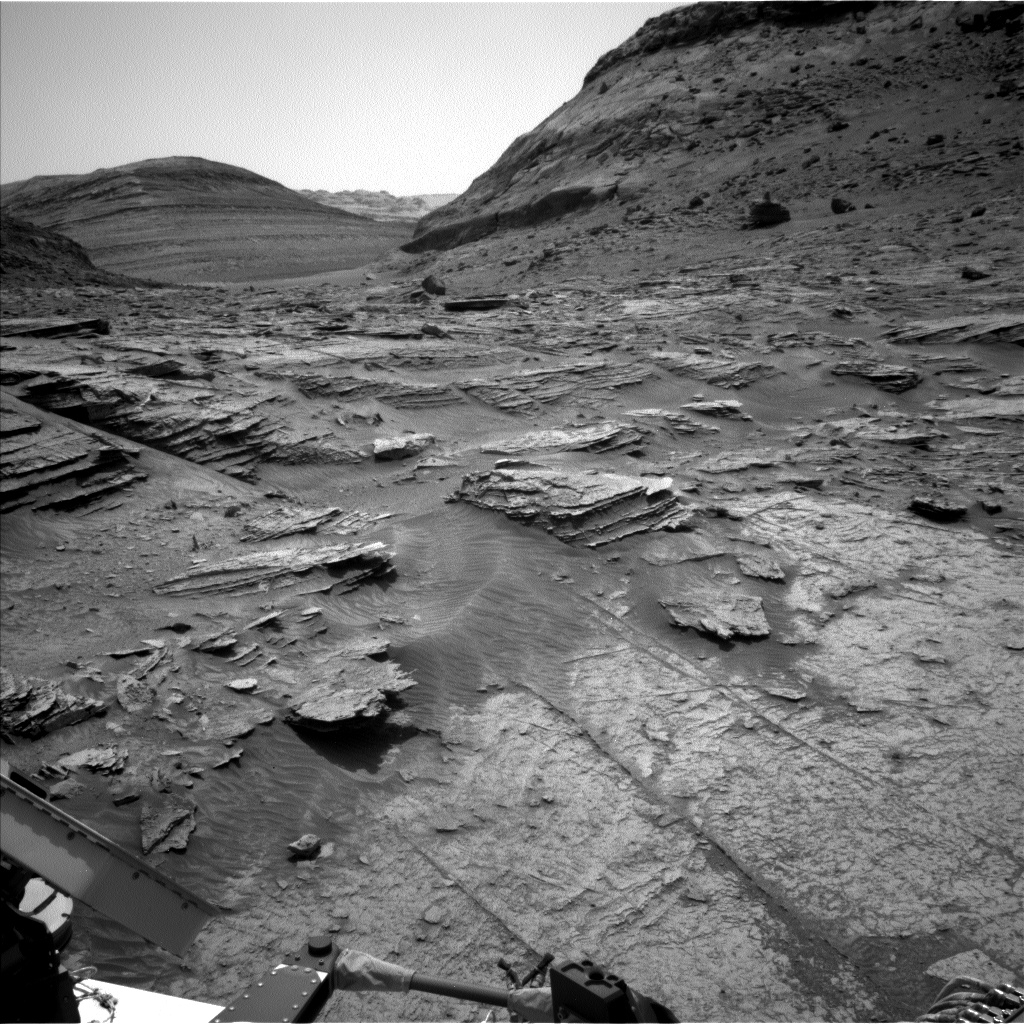
Curiosity Left B Navigation Camera image taken on Sol 3522, July 3, 2022.
Credit: NASA/JPL-Caltech
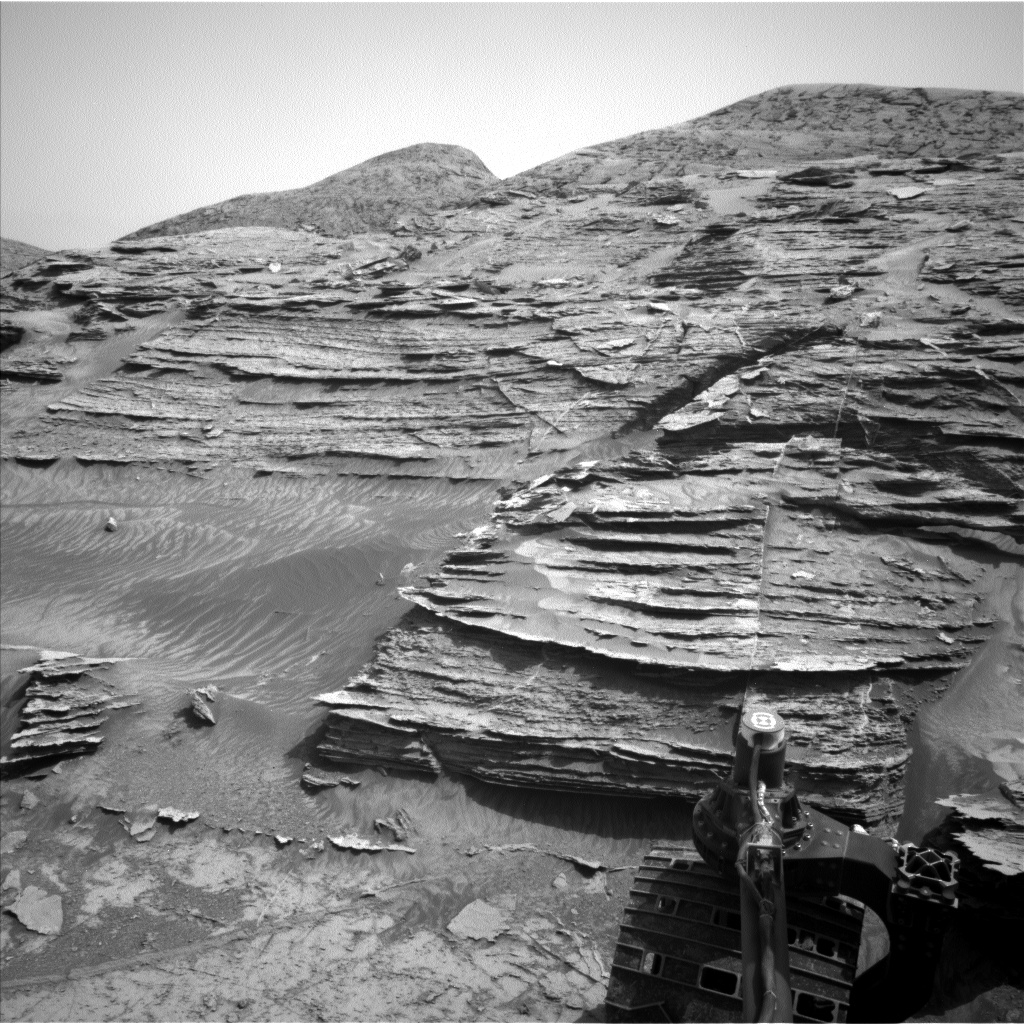
Curiosity Left B Navigation Camera image taken on Sol 3522, July 3, 2022.
Credit: NASA/JPL-Caltech
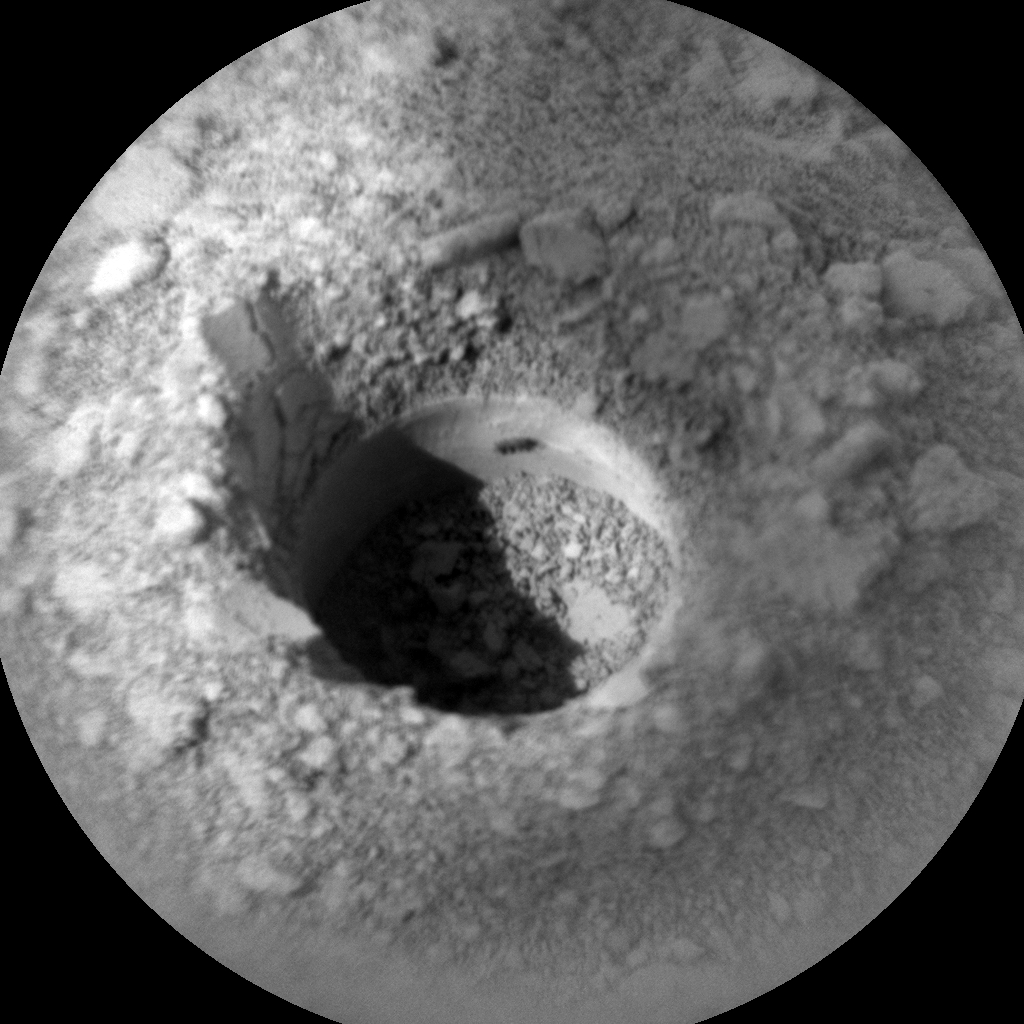
Curiosity Chemistry & Camera (ChemCam) Remote Micro-Imager (RMI) photo acquired on Sol 3523, July 4, 2022.
Credit: NASA/JPL-Caltech/LANL

Credit: Roscosmos/Keldysh Research Center
Russia’s go-it-alone space station plans include cosmonauts visiting a nuclear tug to turn on the system.
As reported by TASS, Dmitry Rogozin, Director General of Roscosmos, has stated that crews of the Russian Orbital Service Station (ROSS) would trek to the nuclear tug “Zeus” before turning on its reactor in order to control the deployment of systems.
“The new station will operate in an orbit from which the crew with their manned spacecraft will be able to visit our nuclear space tug Zeus to control the deployment of all its key elements and structures,” Rogozin wrote in his Telegram channel.
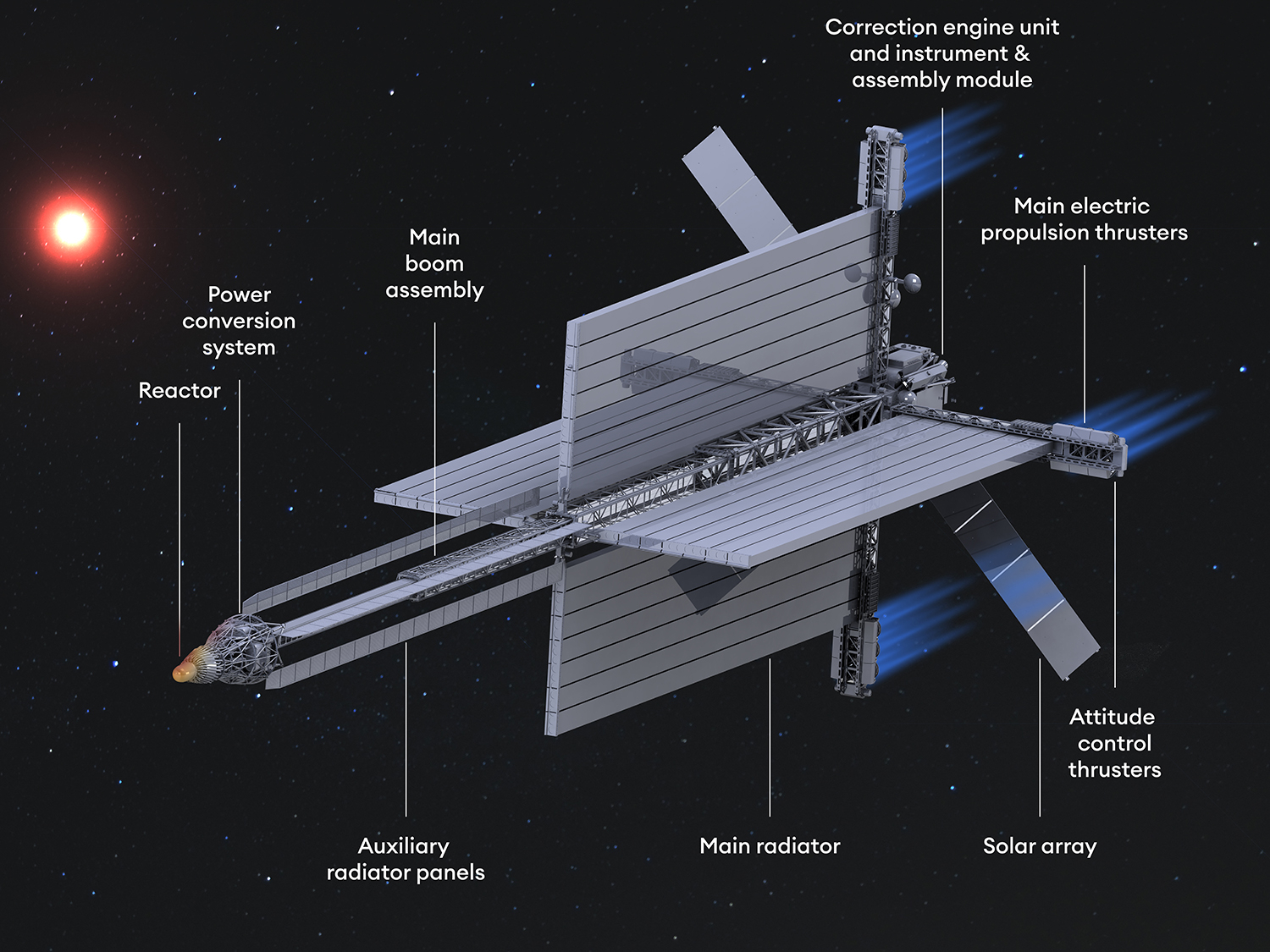
Credit: Roscosmos/Keldysh Research Center
Rogozin said a visit to the nuclear tug will be possible in a safe orbit of roughly 500 miles (800 kilometers) above the Earth prior to the reactor being turned on. Astronauts will primarily control the deployment of radiators to dump excess heat.
Transport and energy module
Zeus details are being fleshed out at the Keldysh Research Center. Work is ongoing at the center that carries out experimental, calculation and theoretical studies on improvement of power supply characteristics in rocket and space technologies.

Credit: Roscosmos/Keldysh Research Center
For example, a Transport and Energy Module (TEM) concept is based on a megawatt-class nuclear power propulsion system.
TEM is envisioned as hardware to implement expeditions into deep space; increase the efficiency of transport operations in space by 20 times; augment more than 10 times the use of electric power in space, according to the Keldysh Research Center website.

Credit: NASA/Institute of Biomedical Problems
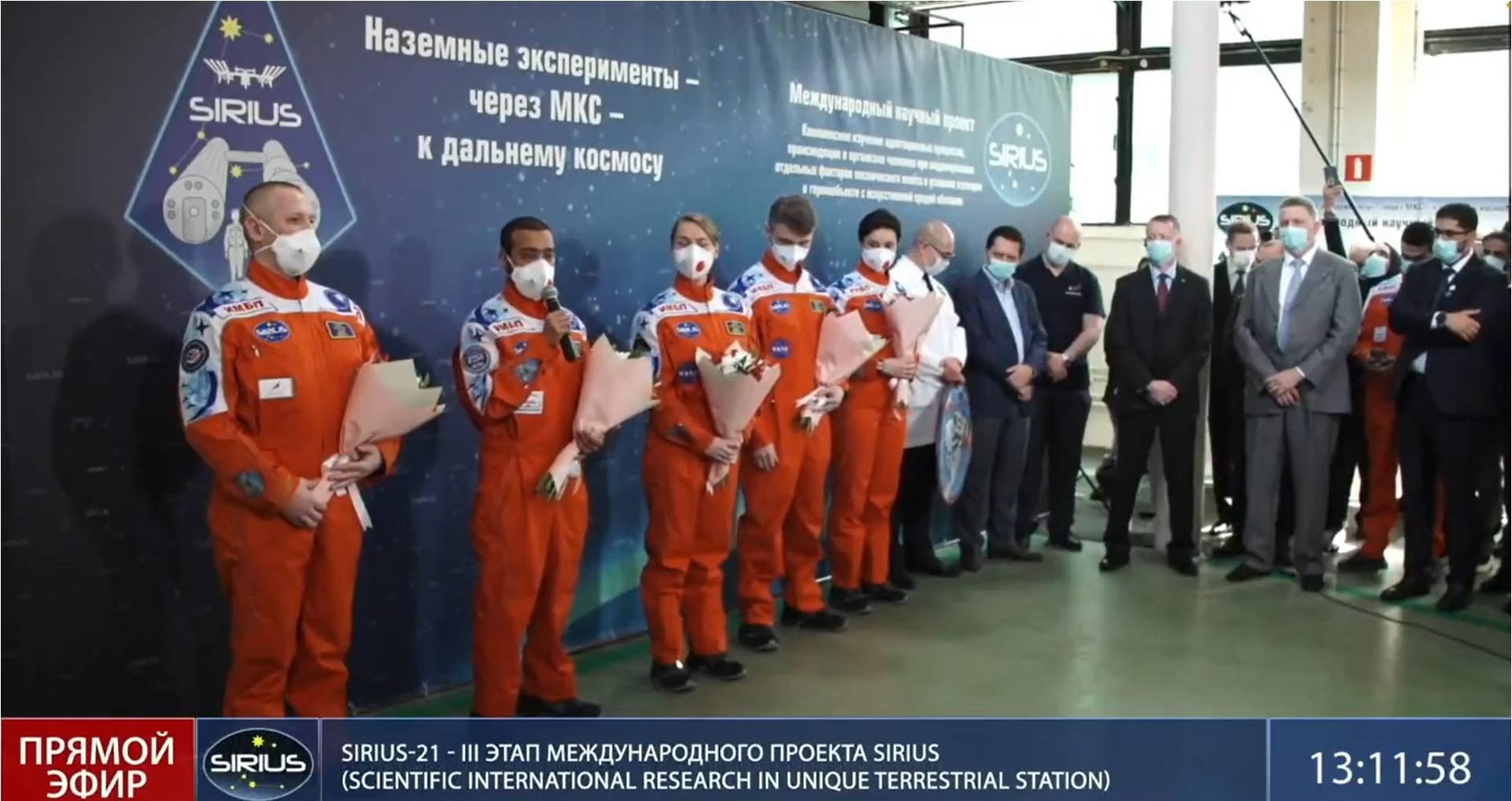
The SIRIUS-21 space isolation experiment has been completed. Five members of the international crew (three men and two women) spent 240 days in conditions that simulate the work of a real space expedition on a lunar orbital station and the surface of the Moon.
The crew included Russian, American and Arab participants.
SIRIUS-21 has been underway at the Moscow-based Institute of Biomedical Problems (IBMP) of the Russian Academy of Sciences. SIRIUS is supported by the NASA Human Research Program.
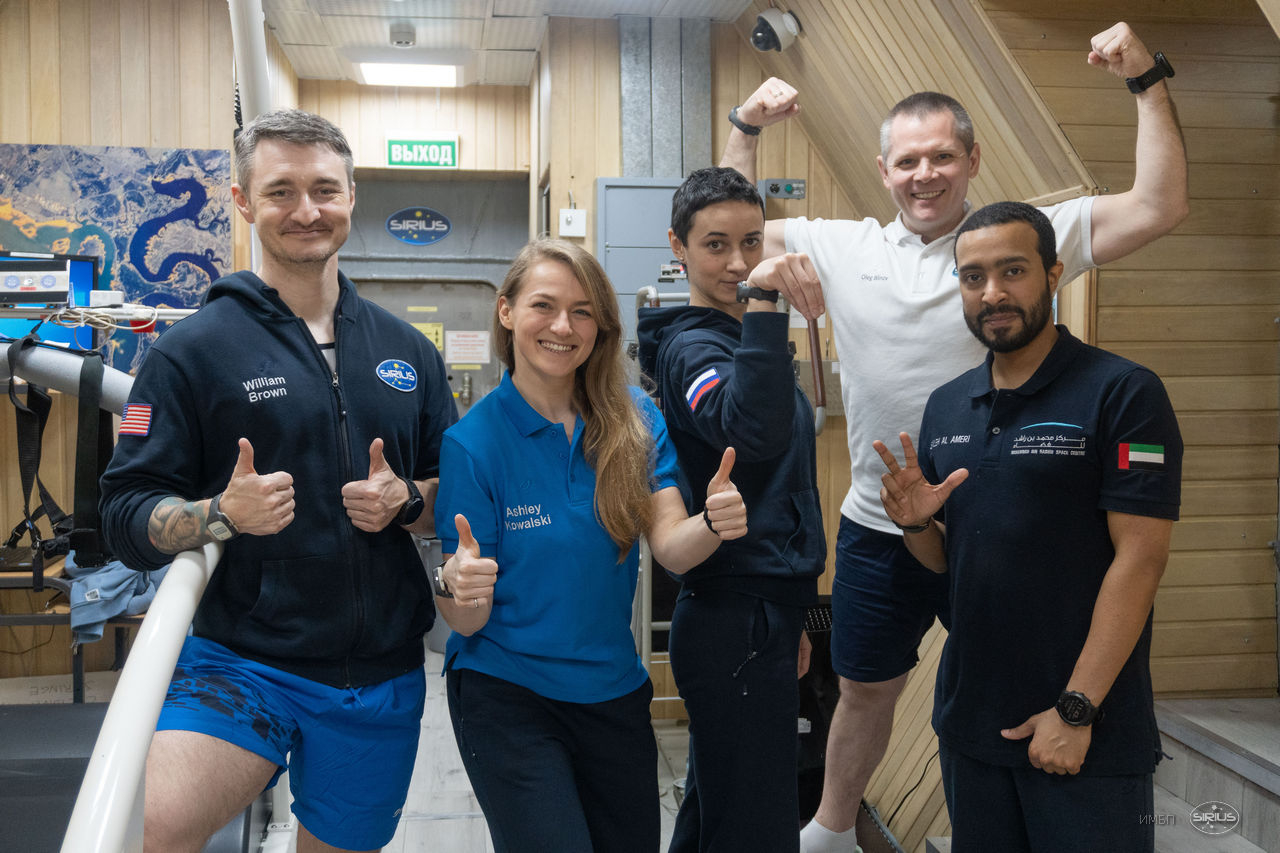
SIRIUS-21 crew members.
Credit: Institute of Biomedical Problems
The SIRIUS-21 lunar flight began on November 4, 2021. For eight months, the participants “entered near-Earth orbit” on the simulated interplanetary complex “flew to the orbit of the Moon” and several times “landed” on the Earth’s natural satellite and carried out moonwalks on the “lunar surface.” Various experiments were also carried out.
Crew members
Oleg BLINOV (Russia)
Ashley KOWALSKI (USA)
Victoria KIRICHENKO (Russia)
William BROWN (USA)
Saleh Omar AL AMERI (United Arab Emirates)
Problems faced
During the just completed experiment that mimicked a flight to the Moon, there were a number of problems expeditionary space crews faced, such as:
- sensory deprivation, monotony, limited social contacts, limited living space
- factors of autonomous interplanetary flight, including limiting the resources of the expedition and extravehicular activities on the planet’s surface
- professional activities of the crew (docking of transport ships, landing of the lunar module, control of robotic equipment)
- communication delay up to 5 minutes one way
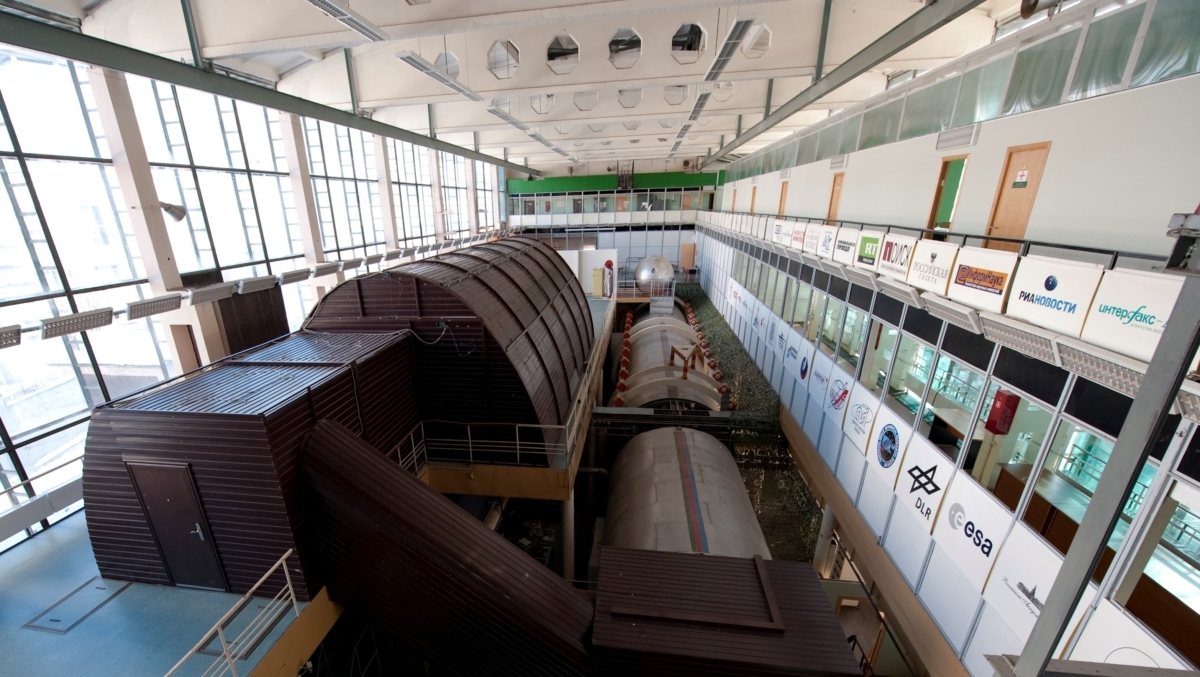
MARS 500 Session training in the IMBP module.
SIRIUS-2023
The international project SIRIUS (Scientific International Research In Unique Terrestrial Station) includes a series of isolation experiments. Experiments have already been carried out for 17 days in November 2017 and four months in 2018-2019. It is also planned to hold three annual programs, the first of which should start in the second half of 2023.
The selection of the crew for the annual isolation experiment SIRIUS-2023 will begin this fall, according to Oleg Orlov, Director of the Institute of Biomedical Problems.
“We will announce the recruitment of a new crew, I think, already in the fall. And, in fact, the selection of the crew did not stop. We have candidates who have confirmed their desire to participate in the annual experiment,” Orlov said.
Credit: MBR Space Centre/Inside Outer Space screengrab

Aerospace engineering doctoral student Adrien Bouskela (left) and aerospace and mechanical engineering professor Sergey Shkarayev hold an experimental sailplane. They hope to one day send a custom version of a similar plane to Mars.
Credit: Emily Dieckman/College of Engineering/University of Arizona
Winging over Mars via motorless sailplane, even taking deep dives at Valles Marineris – the spectacular, huge canyon system of the Red Planet.
That’s the vision of a team of University of Arizona engineers, imagineering an 11-pound craft that can soar over the Martian surface for days at a time, using only wind energy for propulsion.

Credit: Adrien Bouskela, et al.
A Mars sailplane would contain a custom-designed array of navigation sensors, a camera, as well as temperature and gas sensors to harvest data about the Martian atmosphere and landscape.
The sailplane would exploit atmospheric wind gradients for dynamic soaring, and slope/thermal updrafts for static soaring.

Credit: Adrien Bouskela, et al.
Low-cost secondary payload
Packaged in CubeSats and on release, sailplanes would either unfold, like origami, or inflate, like high-tech pool floaties, then rigidize at their full size. The sailplane concept, unlike previous proposals for Mars, would be a low-cost secondary payload, price-tagged at $100 million or less.
After making its flight for days at a time, a sailplane would make a soft belly landing on the Martian surface and transform into a meteorological station, continuing to relay information about the atmosphere.
Equations of motion for the sailplanes were combined with wind profiles from the Mars Regional Atmospheric Modeling System (MRAMS) for two representative sites: Jezero crater, Perseverance’s landing site, and over a section of the Valles Marineris canyon.

The team conducted a tethered launch of an early version of the sailplane, in which it descended slowly to Earth attached to a balloon.
Credit: University of Arizona
Close-to-wall flying
Numerical results demonstrated that Mars sailplanes can do close-to-wall flying passes over locations inaccessible by conventional landers and rovers, thus providing a unique, close-up oblique viewing of the canyons and their stratigraphy.
This summer, the university team will test experimental planes at about 15,000 feet above sea level, where Earth’s atmosphere is thinner and flight conditions are more akin to those on Mars.
The research – “Mars Exploration Using Sailplanes” — has been published in the monthly journal, Aerospace.
To read the full paper, go to:
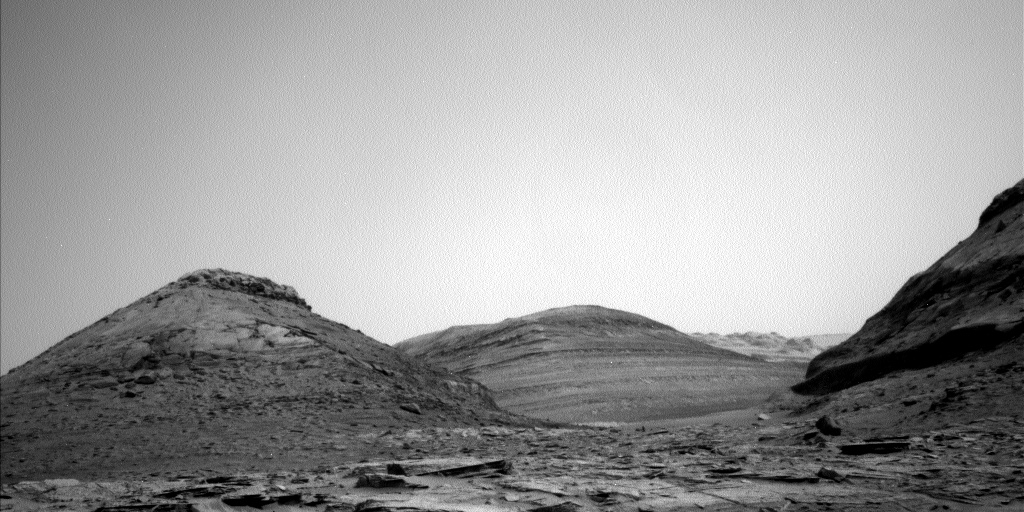
“Deepdale” on the left and the edge of “Bolivar” on the right. Curiosity Left Navigation Camera image taken on June 26, Sol 3515, at drive 3152, site number 95. While it looks like it’s about the same size as the hills that bound it, this effect is just due to forced perspective. In reality, Kukenán is nearly five times farther away and over three times as tall as Deepdale!
Credit: NASA/JPL-Caltech
NASA’s Curiosity Mars rover at Gale Crater is now performing Sol 3521 duties.
Abigail Fraeman, a planetary geologist at NASA’s Jet Propulsion Laboratory, reports that Curiosity is proceeding through a pre-planned checklist of activities for drill campaigns, after a successful drilling of Avanavero.
The rover team is waiting for the downlink that contains data from the robot’s Chemistry & Mineralogy X-Ray Diffraction/X-Ray Fluorescence Instrument (CheMin) – the first analysis of the Avanavero drilled sample.
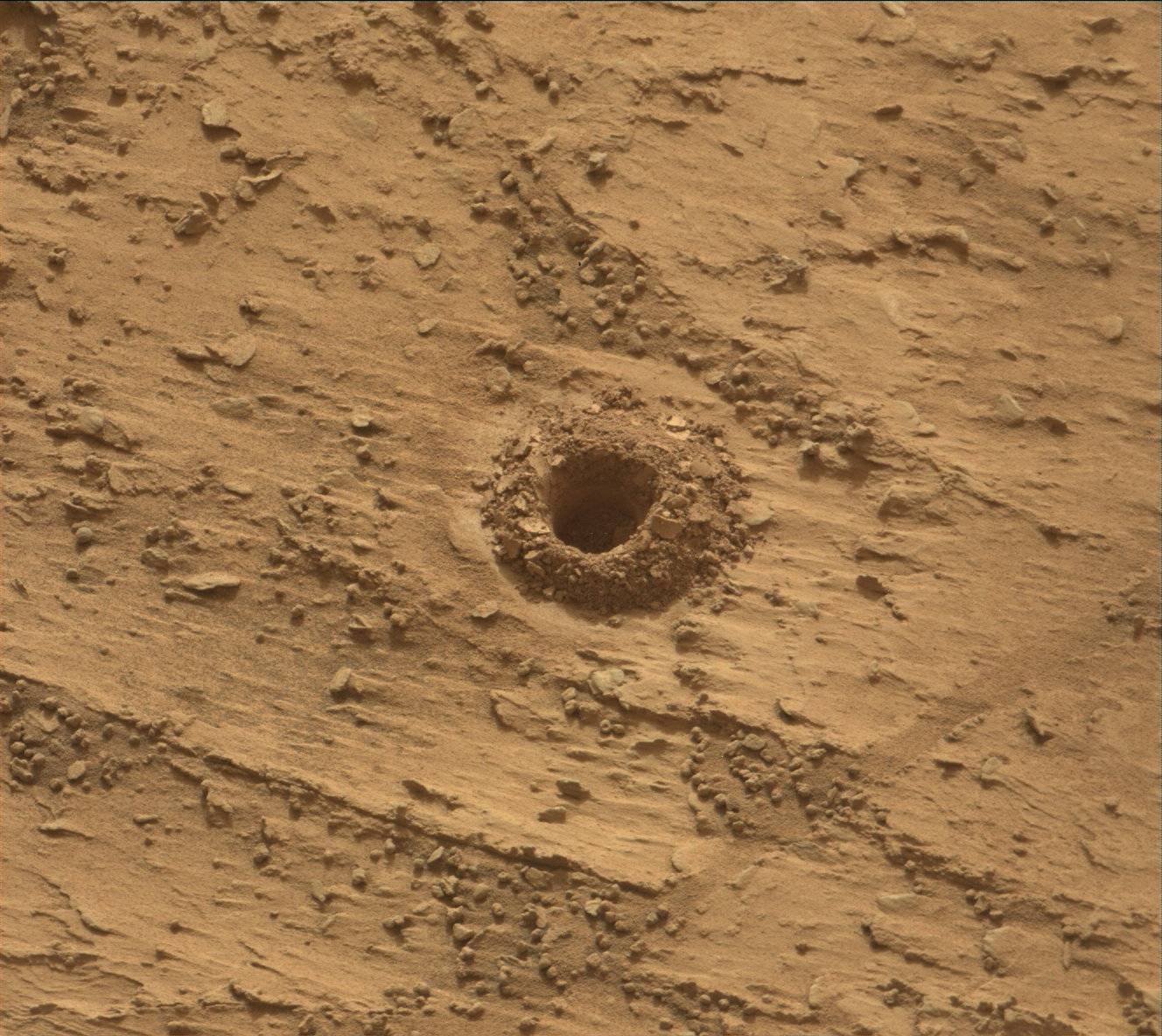
Curiosity Mast Camera image of drill hole taken on Sol 3512, June 23, 2022.
Credit: NASA/JPL-Caltech/MSSS
That data helps Mars researchers to decide whether to analyze the sample with the Sample Analysis at Mars (SAM) Instrument Suite as well.
Onboard lab work
“While we wait today, we planned a whopping six sols worth of activity that will cover the upcoming July 4th US holiday,” Fraeman adds. “The main activities in the plan included a second evening of analysis of Avanavero with CheMin, and an activity to prepare the SAM instrument to accept a sample so that we can be ready to say ‘Go for sample analysis!’ on Tuesday after we see the CheMin results.
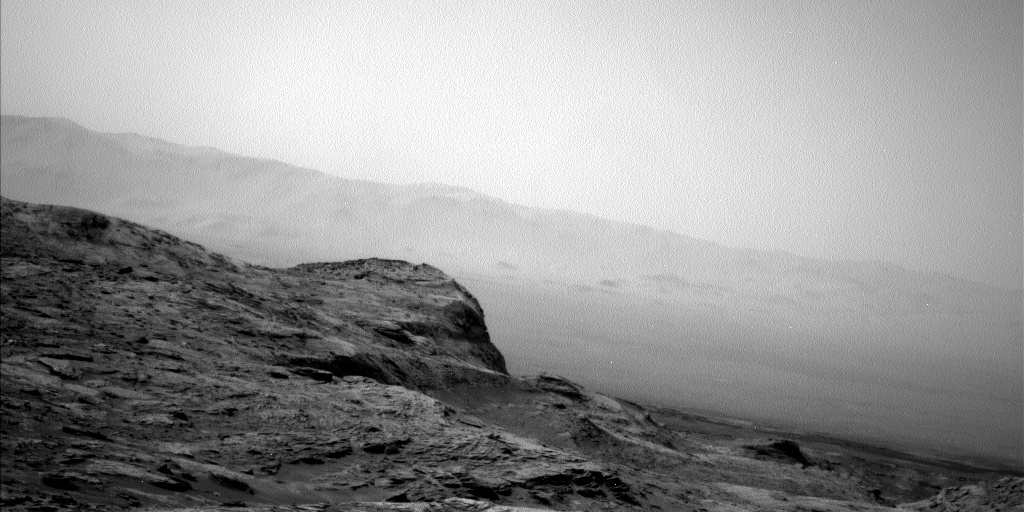
Curiosity Left B Navigation Camera image taken on Sol 3519, June 30, 2022.
Credit: NASA/JPL-Caltech
“We planned lots of remote sensing activities around the tasks of our SAM and CheMin onboard laboratories. We will be collecting several high resolution Mastcam mosaics of the area and environmental sensing data,” Fraeman explains.
Impressive expression
Also slated is collecting Chemistry and Camera (ChemCam) Laser Induced Breakdown Spectroscopy (LIBS) observations of rock targets named “Tocobirem” and “Uaiparu,” a soil target named “Simibi,” and the drill hole itself.
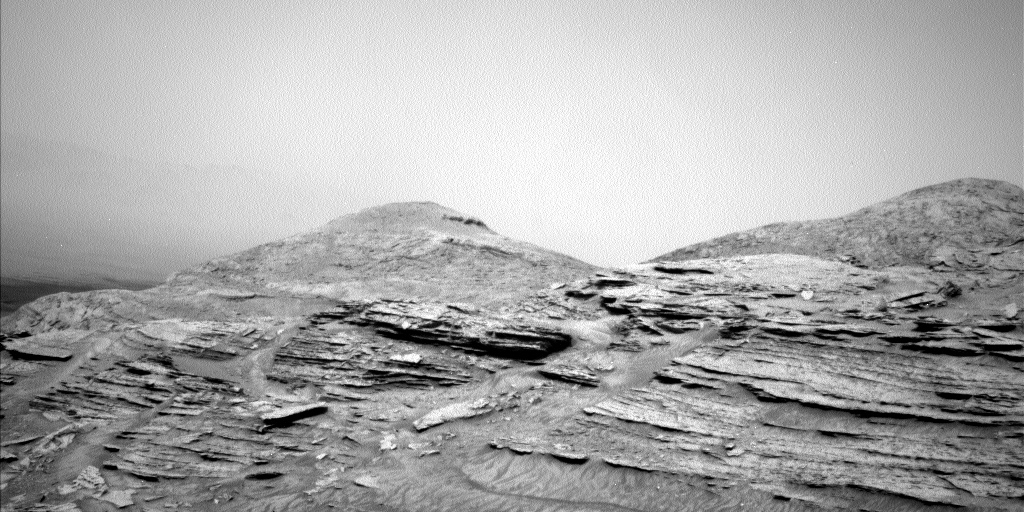
Curiosity Left B Navigation Camera image taken on Sol 3519, June 30, 2022.
Credit: NASA/JPL-Caltech
On top of that, ChemCam will also acquire two long distance Remote Micro-Imager (RMI) mosaics, one over Gediz Vallis ridge, and one over a far distant hill named “Kukenán.”
“Kukenán’s Earth namesake is a tepui, or distinctive isolated table-top mountain, found in South America. The Martian Kukenán is also somewhat flat topped and an impressive expression in Mt. Sharp’s topography,” Fraeman adds.
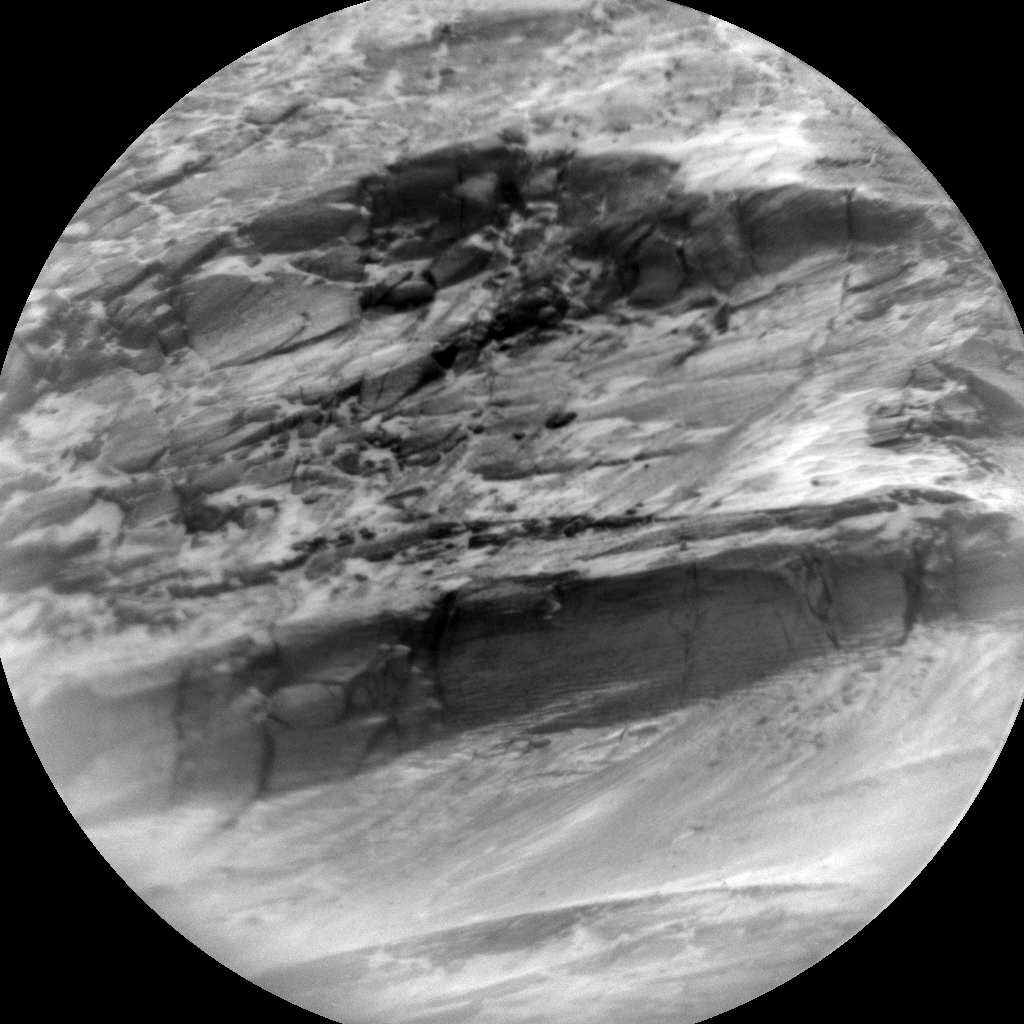
Curiosity Chemistry & Camera (ChemCam) Remote Micro-Imager (RMI) photo taken on Sol 3520, July 1, 2022.
Credit: NASA/JPL-Caltech/LANL
“Curiosity’s strategic traverse path takes the rover right past Kukenán in about a kilometer or so,” Fraeman notes, “so this feature will become a familiar landmark rising in our windshield for months to come.”
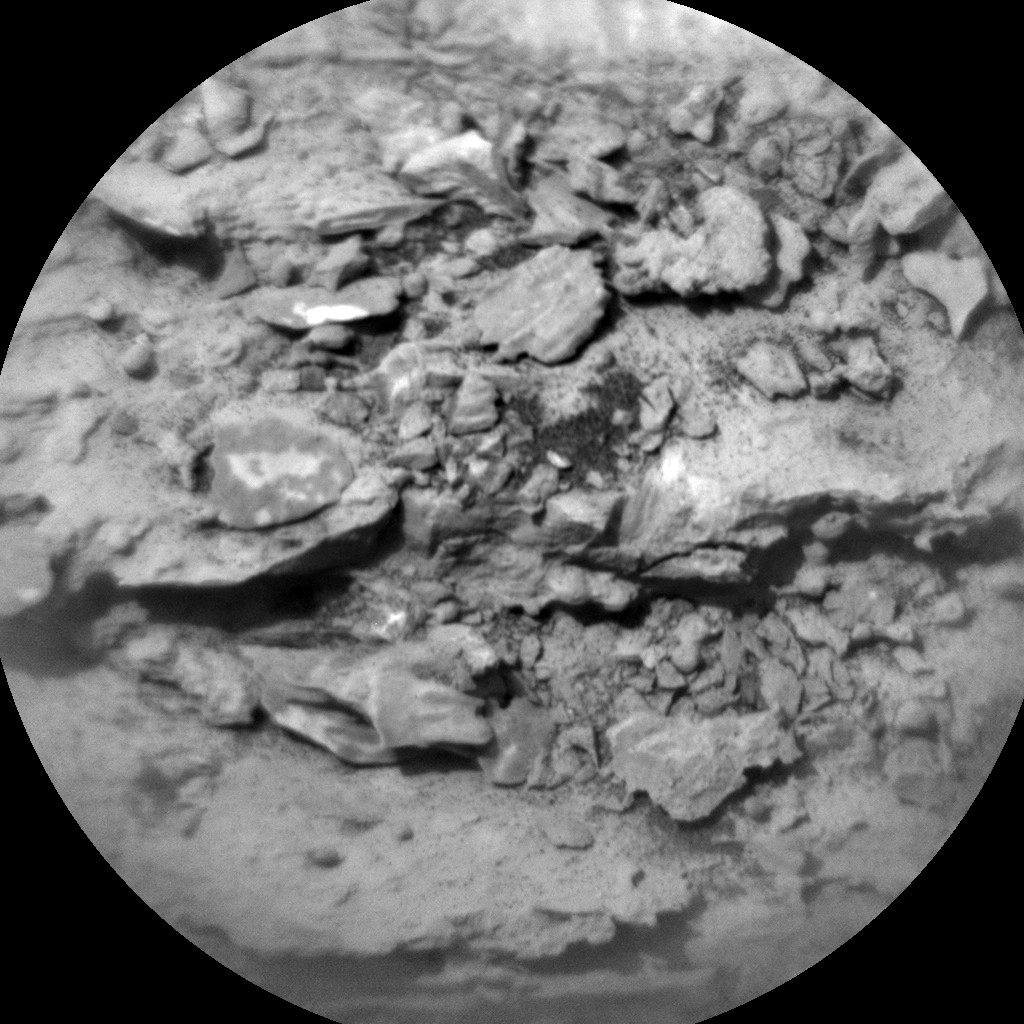
Curiosity Chemistry & Camera (ChemCam) Remote Micro-Imager (RMI) photo taken on Sol 3520, July 1, 2022.
Credit: NASA/JPL-Caltech/LANL

Credit: JAXA/NHK/Paul Spudis
Similar to house hunting on Earth, being on the lookout for desirable property on the Moon gives rise to a common, but extraterrestrial maxim: “location, location, location.”
NASA is eying an Artemis Base Camp, calling it “our first foothold on the lunar frontier.” The ingredients for that encampment are a Lunar Terrain Vehicle – an unpressurized rover – to transport suited astronauts around the site; a habitable mobility platform – a pressurized rover – to enable long-duration treks away from Artemis Base Camp. Lastly there would be the surface habitat itself, capable of housing four humans at a lunar south pole locale.

Credit: NASA
This home-away-from-home demands a lot of infrastructure such as communications, power, and radiation shielding, waste disposal and storage space too. All of these domicile niceties, NASA planners say, are requirements for a sustained capability on the Moon that can be revisited and built upon over the coming decades.
Go to my new Space.com story – “Where will NASA set up its moon base? – Scientists and mission planners are searching for the best site” – at:
Credit: NASA/Institute of Biomedical Problems
A 5-member international crew is wrapping up 240 days in conditions that simulate the work of a real space expedition on a lunar orbital station and the surface of the Moon.
Called the Scientific International Research In Unique terrestrial Station (SIRIUS), dozens of experiments were carried out related to preparation for further space exploration by humans.

Credit: Institute of Biomedical Problems
SIRIUS-21 has been underway at the Moscow-based Institute of Biomedical Problems (IBMP) of the Russian Academy of Sciences. SIRIUS is supported by the NASA Human Research Program.
The crew (three men and two women) includes Russian, American and Arab participants.

Sirius-21 crew members.
Credit: Institute of Biomedical Problems
Isolation study
On July 3, 2022, the SIRIUS-21 space experiment is to be completed. The mission began November 4, 2021.
This 240-day isolation study included simulating a voyage to the Moon.
During the experiment that mimicked a flight to the Moon, there were a number of problems expeditionary space crews faced, such as:
- sensory deprivation, monotony, limited social contacts, limited living space and managed habitat
- factors of autonomous interplanetary flight, including limiting the resources of the expedition and extravehicular activities on the planet’s surface
- professional activities of the crew (docking of transport ships, landing of the lunar module, control of robotic equipment)
- communication delay up to 5 minutes one way
An unexpected emergency
The mission began with a crew of six but one person had to exit the study early in the mission for medical reasons, with the remaining five completing the mission this Sunday.
At the time IBMP released a statement as it was a Russian crew member.
“On the Mission Day 33, a real emergency situation took place – one of the crew members, Ekaterina Karyakina, received a minor arm injury during exercise on the working model of a multifunctional weight training machine. Being in close cooperation with the ground support services, the crew provided E. Karyakina with the necessary medical assistance and helped with providing diagnostic measures.”
Given expert medical advice, the management of the SIRIUS Project decided to withdraw Karyakina from the experimental facility. Implementation of the scientific program for the SIRIUS-21 240-day Isolation Experiment continued in full.
Exploration stresses

Credit: Institute of Biomedical Problems
SIRIUS analog missions assist NASA in gaining knowledge about the physiological and psychological “exploration stresses” of remoteness and confinement in humans – all in preparation for sustained Artemis expeditions to the Moon and on-the-horizon flight of crews to Mars.

Credit: Institute of Biomedical Problems
Composition of the crew includes a crew commander, flight engineer, a doctor and researchers.
The activities of the crew during the experiment are based on the basic provisions of the Code of Professional Ethics of Cosmonauts of the Russian Federation and the Code of Conduct for the International Space Station crew.
Credit: Inmarsat
A worrisome new report finds that people are unaware about the benefits of using space, and a majority view space as a threat, with space junk and climate change main concerns.
The newly-released society snapshot took in 20,000 respondents across 11 countries.
Unveiled by Inmarsat, a global, mobile satellite communications provider, the report signals that people have a low understanding of the size and richness of the work being done in space today.

Credit: Inmarsat
Underappreciated and misunderstood
Rajeev Suri, CEO of Inmarsat, said in a statement: “This report should be a wake-up call for our industry. Space appears to be underappreciated and misunderstood in the real-world. In many respects, the knowledge we possess as a society is inaccurate and incomplete.”
The Inmarsat report — “What on Earth is the value of space?” — found that those aged 65 and above, who were teenagers when humans first walked on the Moon, are more optimistic and hopeful than Gen-Z. They are more likely to associate space with research and exploration, rockets, and satellites – with their understanding of space more rooted in science than science-fiction.
Report findings
Other findings of the report include:
- People’s ambitions for space center around tackling major challenges on Earth – finding new energy sources, essential resources, and helping solve climate change. However, this does not yet counteract our fears – as 97 per cent of the global population feel space is a threat.
- One in 9 people are “terrified” of what could happen in space – with space junk and collisions in orbit (47 per cent), pollution (39 per cent), and damaging the Earth’s atmosphere (35 per cent) seen as the top threats. Older people are more worried about space junk, while younger generations fear the environmental impact most.
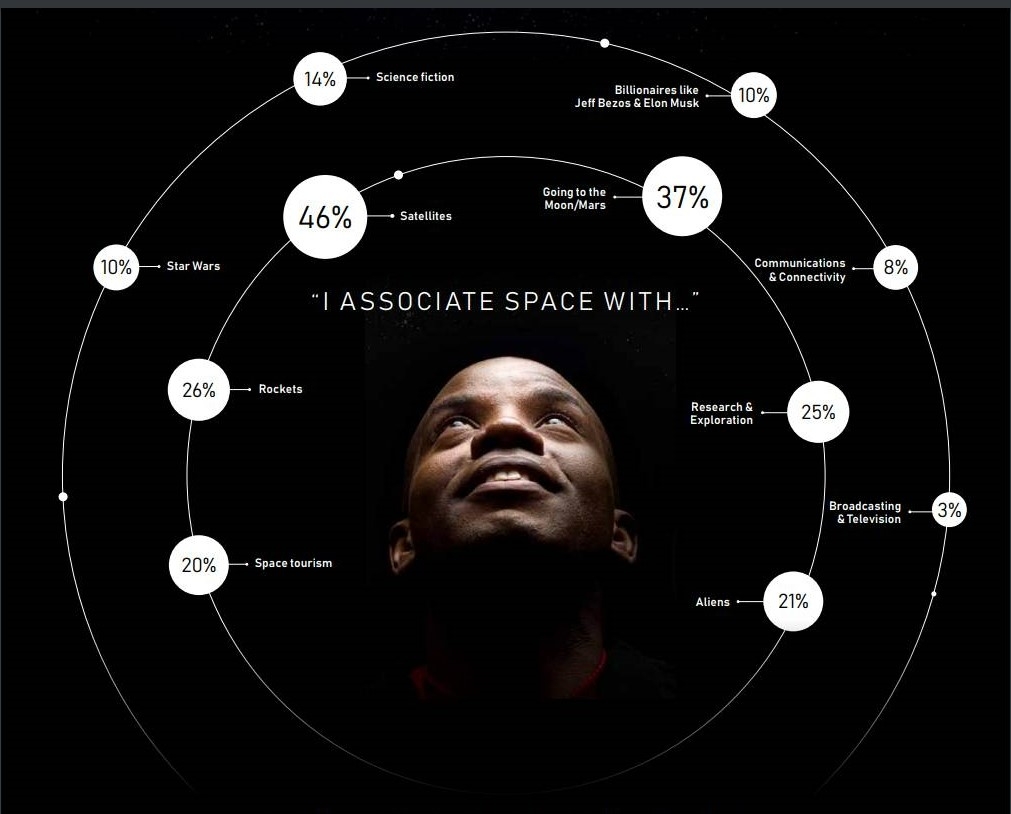
- Only a quarter of the public (23 per cent) said they feel space exploration is “important.” Almost half (46 per cent) consider satellites when thinking of space, while 37 per cent think of expeditions to the Moon and Mars, 21 per cent think of aliens, and almost 1 in 10 think of Star Wars (9 per cent). Fewer than 1 in 10 people globally think of communications and connectivity.
- The research highlights a small core of people globally who are aware of the potential for space to answer many of the world’s challenges. For example, 7% of respondents said that space can alleviate poverty. While another 7% thought space can support the goal of producing enough food to feed our growing population. 11% imagined space will have a role in researching and finding cures for diseases like cancer.

Credit: Inmarsat
Global respondents
Touted as the largest independent global representative consumer survey of attitudes towards space included 20,000 respondents (18-65+ years of age) across the UK (3,000), US (2,000), Brazil (2,000), Canada (2,000), Germany (2,000), Australia (2,000), China (2,000), India (2,000), South Korea (1,000), Japan (1,000) and UAE (1,000).

Credit: Inmarsat
The study was conducted by Yonder Consulting in April 2022 on behalf of Inmarsat.
To view the full report — “What on Earth is the value of space?” — go to:
https://www.inmarsat.com/en/insights/corporate/2022/value-of-space.html

