Archive for the ‘Space News’ Category
 Author:
  September 21st, 2022
European Space Agency astronaut Samantha Cristoforetti gives the Vulcan salute aboard the International Space Station.
(Image credit: NASA/ESA)
Space life scientists are pushing for the development of an international database on long-term health effects of spaceflight. They feel it is essential for protecting the health and performance of current and future crew members of all nationalities, as well as defining the long-term health consequences for retired crew members across the globe.
That said there are thorny legal and privacy challenges ahead.

NASA astronaut Christina Koch pauses as she helps replace equipment on the International Space Station. She and her fellow astronauts faced a suite of health effects while in space. (Image credit: NASA)
(opens in new tab)
Given that there are now roughly 120 international retired space crew members still alive, collecting medical/health data on these crew members has the potential to expand the total “n” for health outcomes in space explorers by 40 percent.
Understanding the long-term human health impact of space exploration missions is exceptionally challenging.
Why so?
For more information, go to my new Space.com story – “Can we live long and prosper in space? The astronaut health dilemma – Relatively few humans have ever been exposed to the space environment” – at:
https://www.space.com/live-long-prosper-long-term-spaceflight-health-risks
 Posted in

Credit: CMSA/CCTV/Inside Outer Space screengrab
On September 17, during the second extravehicular activity of the Shenzhou-14 mission, astronauts verified an extravehicular rescue capability, the first spacewalk rescue exercise during the construction period of China’s space station.
With the aid of the small mechanical arm, two astronauts conducted a series of extravehicular tasks, including the installation of extravehicular assistance handles.
The astronauts also installed additional pumps, the core equipment of the space station’s thermal control system, and carry out the challenging task of extravehicular rescue for the first time, according to China Central Television (CCTV).

Credit: CCTV/Inside Outer Space screengrab
Assist handle
Chen Dong and Cai Xuzhe performed the tasks, with Liu Yang providing support inside the cabin. The Shenzhou-14 twosome completed their tasks during a roughly five hour period.
The taikonauts opened the airlock cabin of the Wentian lab module making their exit into space. The extravehicular activities included installing foot-stop b, which will facilitate work on the bulkhead, and an assist handle that can help astronauts open the hatch door from outside in emergency.
For videos detailing the rescue exercise, go to:

Credit: Astrobotic
LunaGrid is the first-ever commercial power service for the lunar surface. It will enable space agencies, companies, and nonprofit systems to survive the lunar night and operate indefinitely on the Moon.
Pittsburgh, Pennsylvania-based Astrobotic is offering LunaGrid, a power generation and distribution service that will deliver power by the watt to landers, rovers, habitats, science suites, and other lunar surface systems.
The company plans to begin deploying and demonstrating LunaGrid elements as early as 2026 with the goal of the first operational LunaGrid by 2028 at the lunar south pole.

Illustration of NASA astronauts on the lunar south pole carrying out early work to establish an Artemis Base Camp. Credit: NASA
According to a company statement, the service will enable space agencies’, companies’, and nonprofits’ systems to survive the lunar night and operate indefinitely on the Moon starting at the lunar south pole.
No policy hurdles
LunaGrid makes use of the company’s landers, rovers, and wireless chargers as well its Vertical Solar Array Technology (VSAT), which is in development at Astrobotic in concert with NASA’s Space Technology Mission Directorate. Astrobotic was awarded in August a follow-on $6.2 million contract by to further advance its VSAT systems.

LunaGrid makes use of Astrobotic’s existing landers, rovers, and wireless chargers as well its Vertical Solar Array Technology (VSAT).
Credit: Astrobotic
LunaGrid systems can be delivered on a single Griffin lander and placed at multiple locations at the poles of the Moon. LunaGrid can also be scaled over time, the company states, increasing the service coverage with additional VSATs, and incorporating other power source types in the future.
“Solar power is affordable, commercially friendly, technically mature, and deployable now. LunaGrid’s solar-based system offers the world the fastest, most economical means of establishing sustained lunar presence with no policy hurdles,” said Astrobotic CEO, John Thornton.

InSight’s first full selfie on Mars.
Credit: NASA/JPL-Caltech
In a Jet Propulsion Laboratory release, NASA’s InSight lander on Mars detected seismic waves from a meteoroid and was able to capture the sound of the space rock striking the surface of Mars for the first time.
The meteoroid – the term used for incoming space rocks before they hit the ground – entered Mars’ atmosphere on Sept. 5, 2021, exploding into at least three shards that each left craters behind.
Mars’ atmosphere is just 1% as dense as Earth’s, allowing far more meteoroids to pass through and impact the Red Planet’s surface.
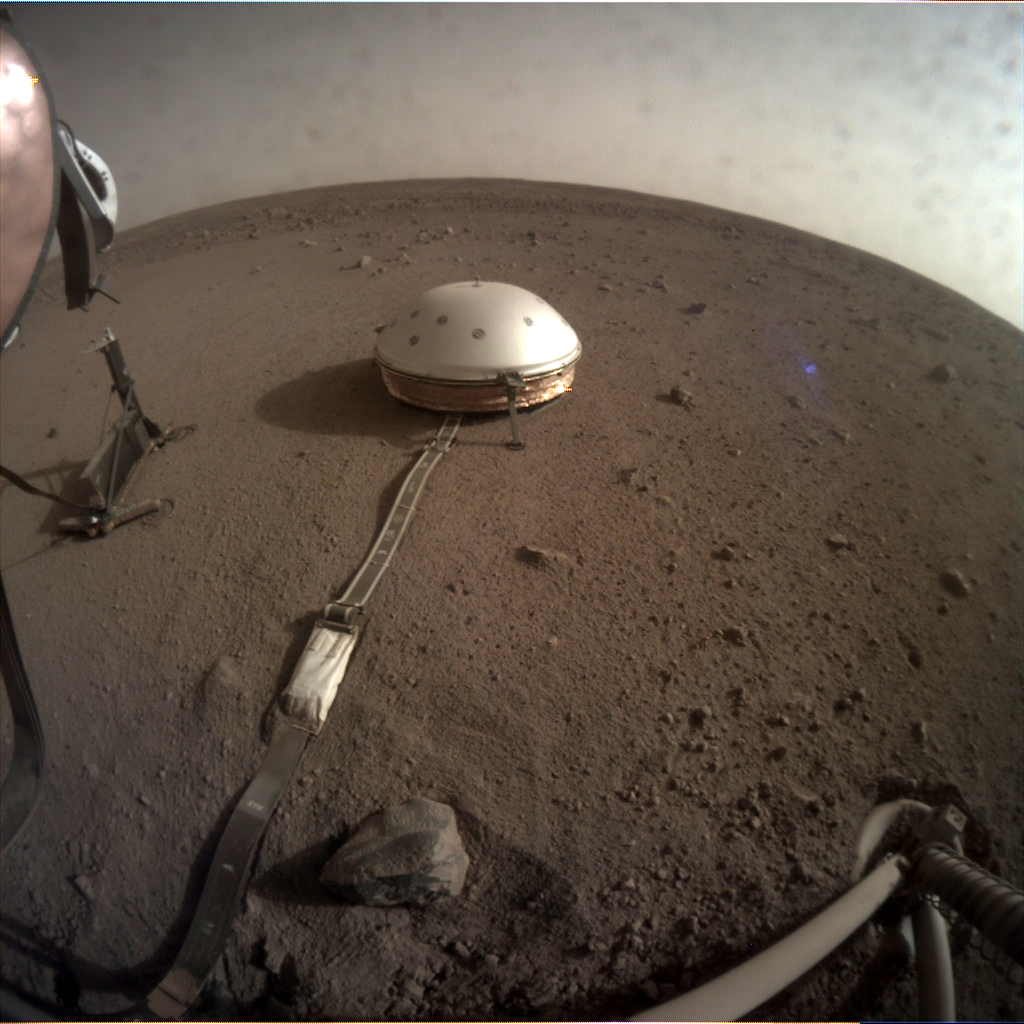
InSight’s Instrument Deployment Camera (IDC) acquired this image showing the HP3 experiment and SEIS seismometer (Seismic Experiment for Interior Structures) on Sol 99, March 8, 2019.
Credit: NASA/JPL-Caltech
Bloop!
This event marks the first time seismic and acoustic waves from an impact were detected on the Red Planet. Why does this meteoroid impact sound like a “bloop” in the video? It has to do with a peculiar atmospheric effect that’s also observed in deserts on Earth.
After sunset, the atmosphere retains some heat accumulated during the day. Sound waves travel through this heated atmosphere at different speeds, depending on their frequency. As a result, lower-pitched sounds arrive before high-pitched sounds. An observer close to the impact would hear a “bang,” while someone many miles away would hear the bass sounds first, creating a “bloop.”

Location confirmation
NASA’s Mars Reconnaissance Orbiter flew over the estimated impact site to confirm the location. The orbiter used its black-and-white Context Camera to reveal three darkened spots on the surface.
After locating these spots, the orbiter’s team used the High-Resolution Imaging Science Experiment camera, or HiRISE, to get a color close-up of the craters.

InSight Detects an Impact for the First Time: These craters were formed by a Sept. 5, 2021, meteoroid impact on Mars, the first to be detected by NASA’s InSight. Taken by NASA’s Mars Reconnaissance Orbiter, this enhanced-color image highlights the dust and soil disturbed by the impact in blue in order to make details more visible to the human eye. Credits: NASA/JPL-Caltech/University of Arizona.
Because HiRISE sees wavelengths the human eye can’t detect, scientists change the camera’s filters to enhance the color of the image. The areas that appear blue around the craters are where dust has been removed or disturbed by the blast of the impact. Martian dust is bright and red, so removing it makes the surface appear relatively dark and blue.
Credit for the research goes to NASA/JPL-Caltech/University of Maryland/University of Arizona/CNES/IPGP/Manchu/Bureau 21/ETH Zurich/Kirschner/van Driel.
Give an ear and eye to this video at:

The atmospheric layers from the ground up to the boundary with space, showing natural phenomena, human inputs and resultant impacts. These human inputs impact the troposphere (by enhancing climate change), the stratosphere (through ozone loss from multiple causes), the mesosphere (by influencing metal chemistry and accumulation and increasing noctilucent clouds), and the thermosphere (by likely causing contraction which will impact orbiting satellites).
Credit: Jamie D. Shutler, et al.
Rocket emissions and rubbish from spacecraft falling out of orbit are having increasingly detrimental effects on global atmospheric chemistry.
The growing scale and pace of space activities may lead to new unforeseen impacts on the environment and climate.
What is now needed is improved monitoring of the situation, as well as regulation to create an environmentally sustainable space industry.
These are findings from new research just published in the journal, Nature Geoscience.
Lead author of the paper, “Atmospheric impacts of the space industry require oversight” is Jamie Shutler, associate professor of Earth observation in the Center for Geography and Environmental Science, College of Life and Environmental Sciences at the University of Exeter, Cornwall.
Wanted: policy and legal frameworks
Shutler and colleagues note that focused research is required now to build the policy and legal frameworks necessary to support a successful and more environmentally sustainable space industry.
“The collective influences on the global atmosphere from space activities remain unquantified, making it impossible to currently understand and evaluate their environmental impact,” the research paper explains. “There is now an urgent need to direct research and policy decisions towards quantifying and minimizing the space industry’s impact on the global atmosphere.”
Global space industry
The paper underscores the fact that the global space industry is estimated to be annually worth $350 billion and expected to reach more than $1 trillion by 2040.
Given that the industry has a heavy reliance on rockets, the launch rate is likely to quadruple within the next four years, with agencies and companies including SpaceX, Blue Origin and Virgin Galactic look to serve exploration, tourism and satellite markets.

Credit: SpaceX/StarLink
“These activities are now actively influencing all layers of the global atmosphere; and while these impacts are likely to increase with time, the consequences for global climate and weather are largely unknown,” Shutler and colleagues point out.
Furthermore, the reduction in satellite costs has led to the development of large satellite constellations.
Once complete, these constellations of spacecraft will result in a constant flow of de-orbiting debris as craft die and are replaced. “This debris could double the annual injection of aerosol particle mass into the mesosphere,” the paper explains, thereby increasing the amount of aluminium particles that can reach the stratosphere where they encourage ozone loss.
To access the paper – “Atmospheric impacts of the space industry require oversight” – go to:

SpaceShipOne, with Brian Binnie at the controls, flew the second suborbital flight in one week’s time in 2004 to capture the $10 million Ansari X Prize flight purse.
Courtesy Brian Binnie/Mike Mills
I am saddened to learn of the passing of a true space pioneer and friend, Brian Binnie – suborbital space travel pilot for the SpaceShipOne program.
On October 4, 2004, with Brian Binnie at the controls of SpaceShipOne, he flew the second suborbital flight in one week’s time to capture the $10 million Ansari X Prize flight purse.
Binnie’s passing was noted by the XPrize group.
That pioneering passage of space and time marked a new era of commercial space flight.

For detailed information, go to my story, “Test pilot Brian Binnie recounts his historic flight on SpaceShipOne and the future of private space travel” via Space.com at:
https://www.space.com/spaceshipone-test-pilot-brian-binnie-book-interview
Also, this book review is available at:
Book Review: The Magic and Menace of SpaceShipOne
https://www.leonarddavid.com/book-review-the-magic-and-menace-of-spaceshipone-2/
Lastly, go to my full interview with Binnie that appeared in a recent issue of Quest at: https://spacehistory101.com/


Credit: CNSA
Using data gathered by the mission’s Zhurong rover, Chinese scientists revealed the relationship between the formation of geological features and water activities on Mars by conducting a comprehensive study of these geological features in the landing area: Utopian Planitia.
Chinese scientists have found hydrated minerals in platy-like rocks, a layer of “duricrust,” proving that there has been substantial liquid water activity at the landing area since the Amazonian epoch, which was about 1 billion years ago.

Lander and Zhurong Mars rover.
Credit: CNSA/Inside Outer Space screengrab
Ocean hypothesis
These results revealed the impact of wind and water activities on Mars’ geological evolution and environmental changes, and provided support for the hypothesis that there was once an ocean in the Utopian Planitia, according to the China National Space Agency (CNSA).
Also obtained were a number of scientific results on the relationship between the density of rocks on the Martian surface and the degree of surface erosion, the distribution of ions and neutral particles in the near-Mars space environment, and the gravity field of Mars.

Credit: CCTV/Inside Outer Space screengrab
“As liquid water activity has been found, we believe that there may have been some suitable climate conditions for the origin of life or the existence of such conditions in the past billion years on Mars,” Liu Yang, a researcher at the National Space Science Center of the Chinese Academy of Sciences (CAS), told China Central Television (CCTV). “These climate conditions are likely to be in a more moderate space underground.”
Raw data
The Tianwen-1 mission consisting of an orbiter, a lander and a rover was launched on July 23, 2020.
On May 15, 2021, the lander/rover combo touched down at the pre-selected landing area in Utopia Planitia, a vast Martian plain, marking the first time that China has landed a probe on the planet.
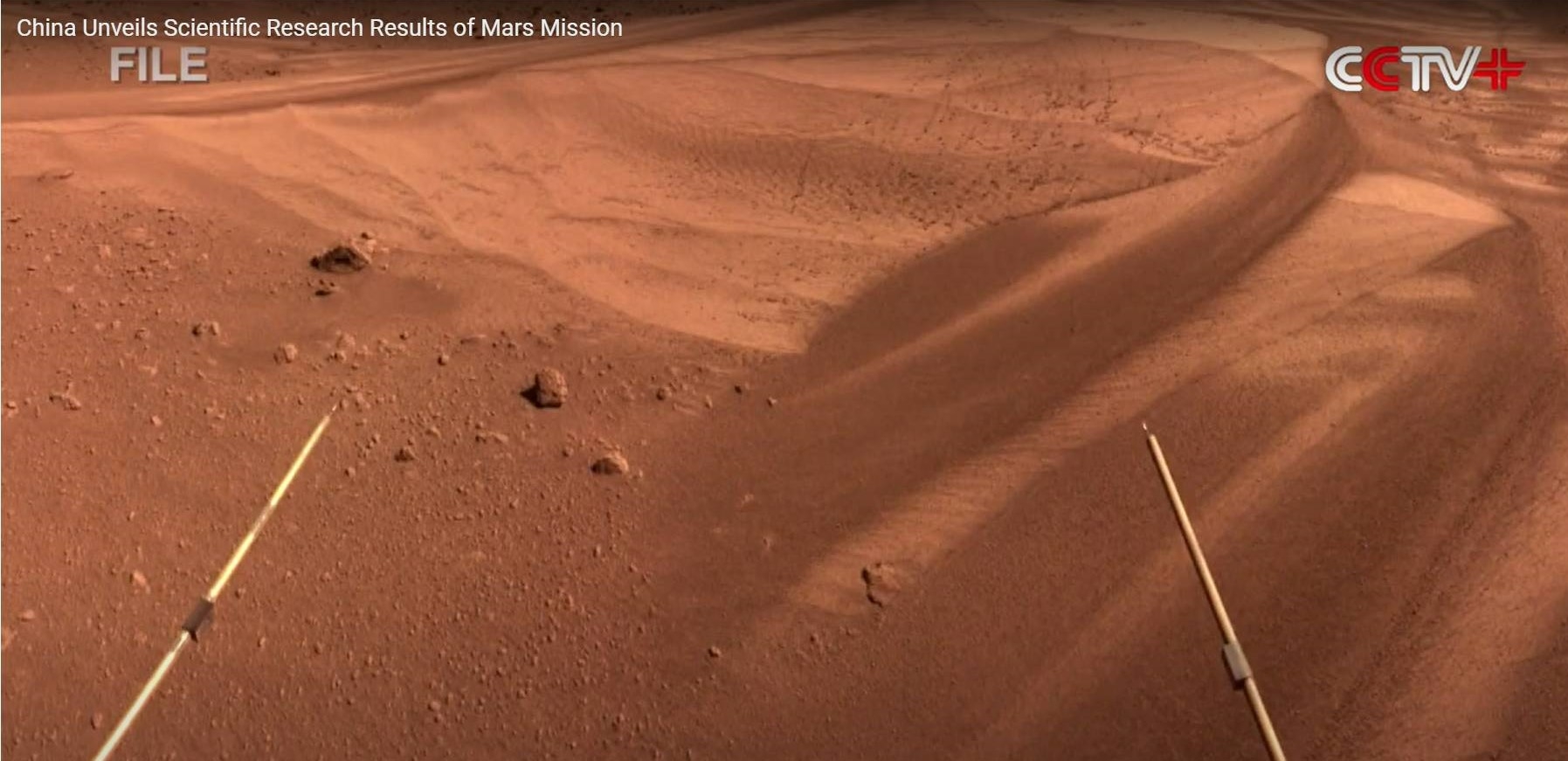
Credit: CNSA/CCTV/Inside Outer Space screengrab
CNSA’s Lunar Exploration and Space Program Center stated that both the orbiter and rover have completed targeted scientific exploration missions, and acquired 1,480 gigabytes of raw scientific data, the center said.
The Zhurong rover is now in hibernation mode. It is expected to be woken up at year’s end when Mars environmental conditions improve. Given a normal working condition, Zhurong will continue to travel southward to obtain more roving probe data.
A newly released video details the Tianwen-1 Mars mission findings. Go to:
Credit: CCTV/Inside Outer Space screengrab
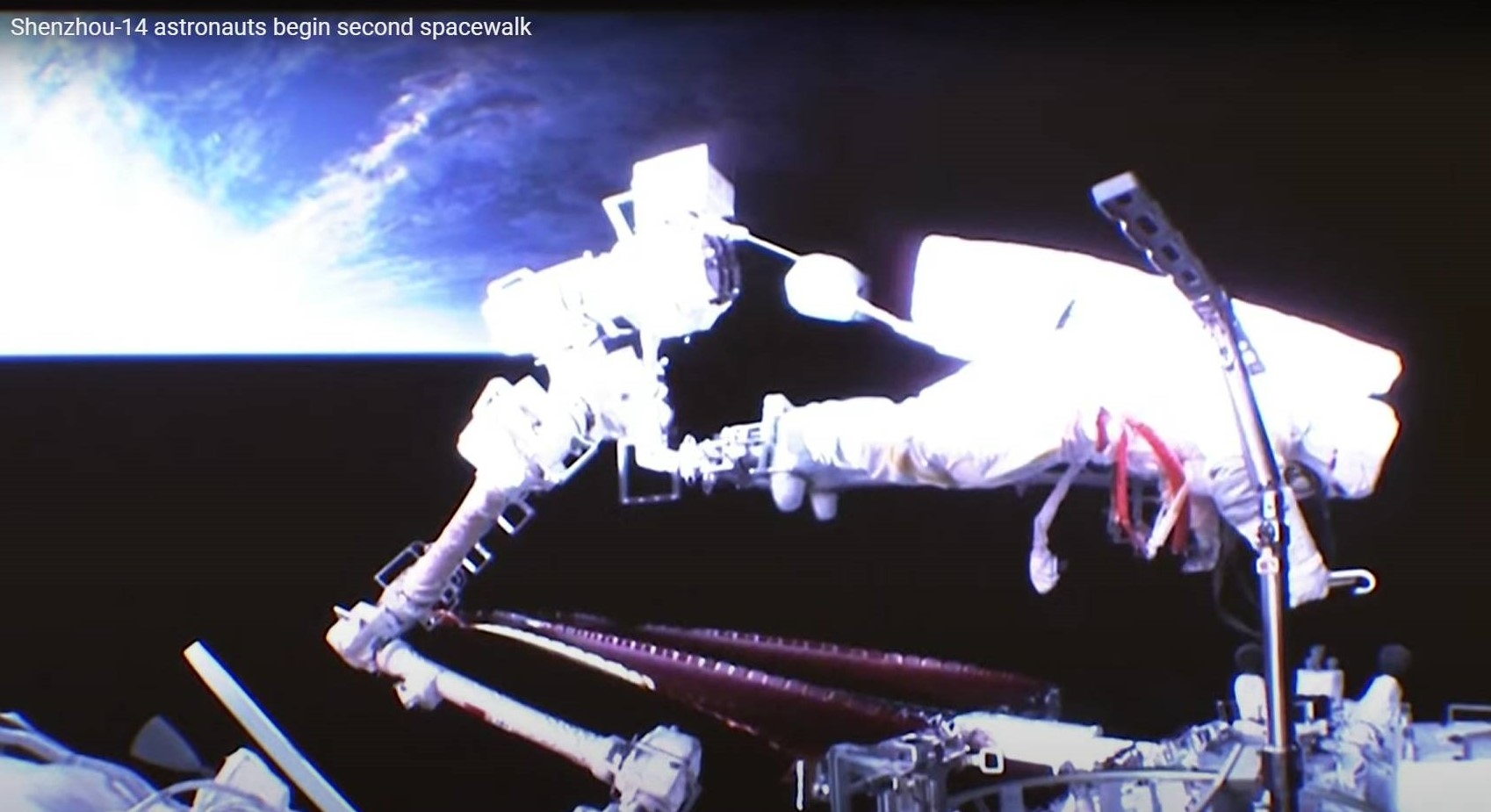
China’s Shenzhou-14 taikonauts completed their second set of spacewalks on Saturday.
Chen Dong and Cai Xuzhe performed the tasks, with Liu Yang providing support inside the cabin. The Shenzhou-14 spacewalkers completed the second EVAs, which lasted about five hours, the China Manned Space Agency (CMS) announced.
The taikonaut twosome opened the airlock cabin of the Wentian lab module making their exit into space. The extravehicular (EVA) activities included installing foot-stop b, which will facilitate the astronauts to carry out operation on the bulkhead, and an assist handle, which can help astronauts open the hatch door from outside in emergency.
Credit: CCTV/Inside Outer Space screengrab
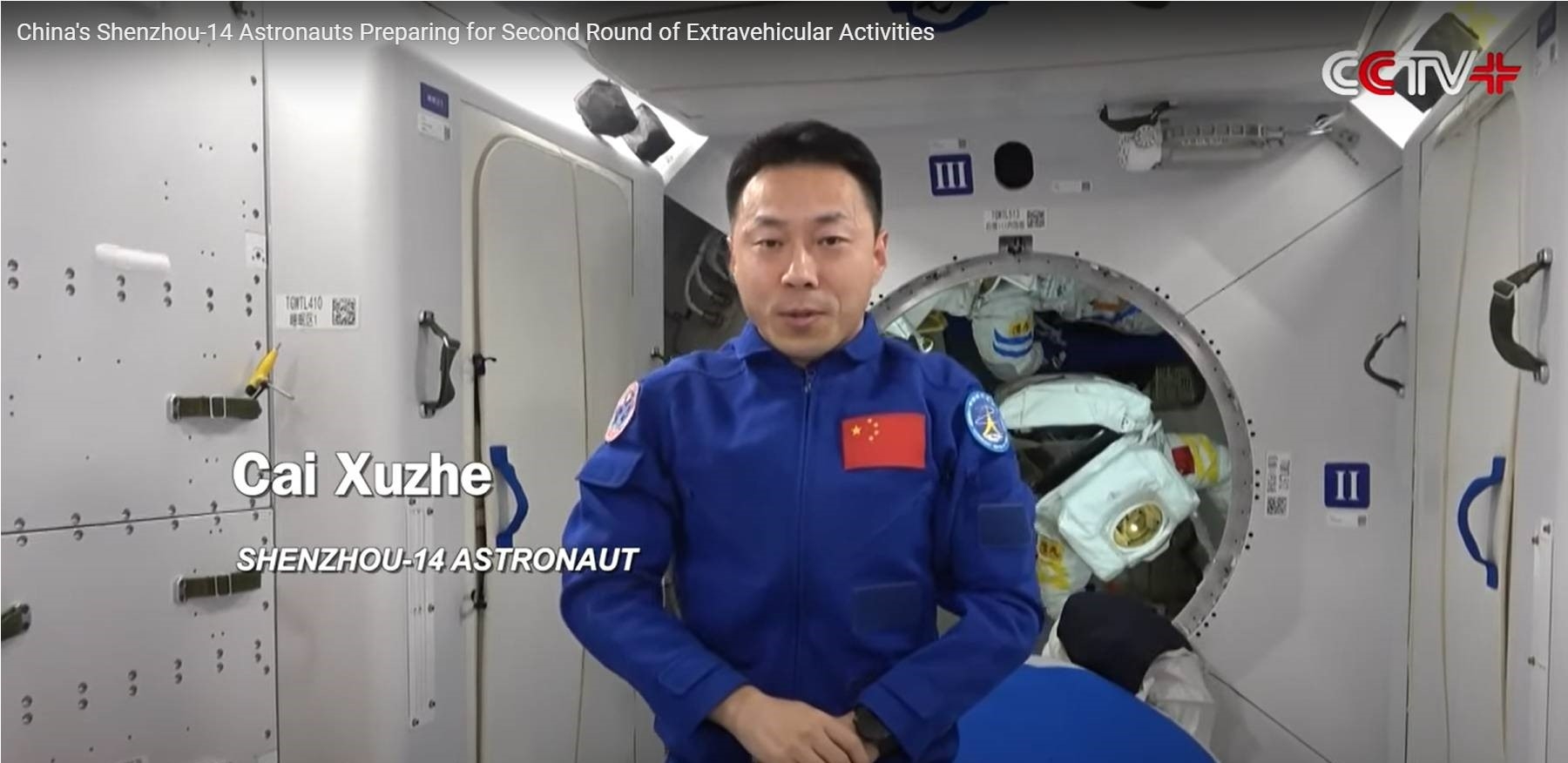
The astronauts were also to install additional pumps, the core equipment of the space station’s thermal control system, and carry out the challenging task of extravehicular rescue for the first time, according to China Central Television (CCTV).
Duties ahead
The three crew members were sent to the space station on June 5 for a six-month mission.
During the second half of their six-month stay in orbit, they will oversee the arrival of the other lab module Mengtian and be involved in the first Chinese space station crew handover when the Shenzhou-15 crew arrives.
Credit: CCTV/Inside Outer Space screengrab
The trio successfully completed their first EVAs from the airlock cabin of the Wentian lab module on September 2, which lasted about seven hours.
Frequent EVAs
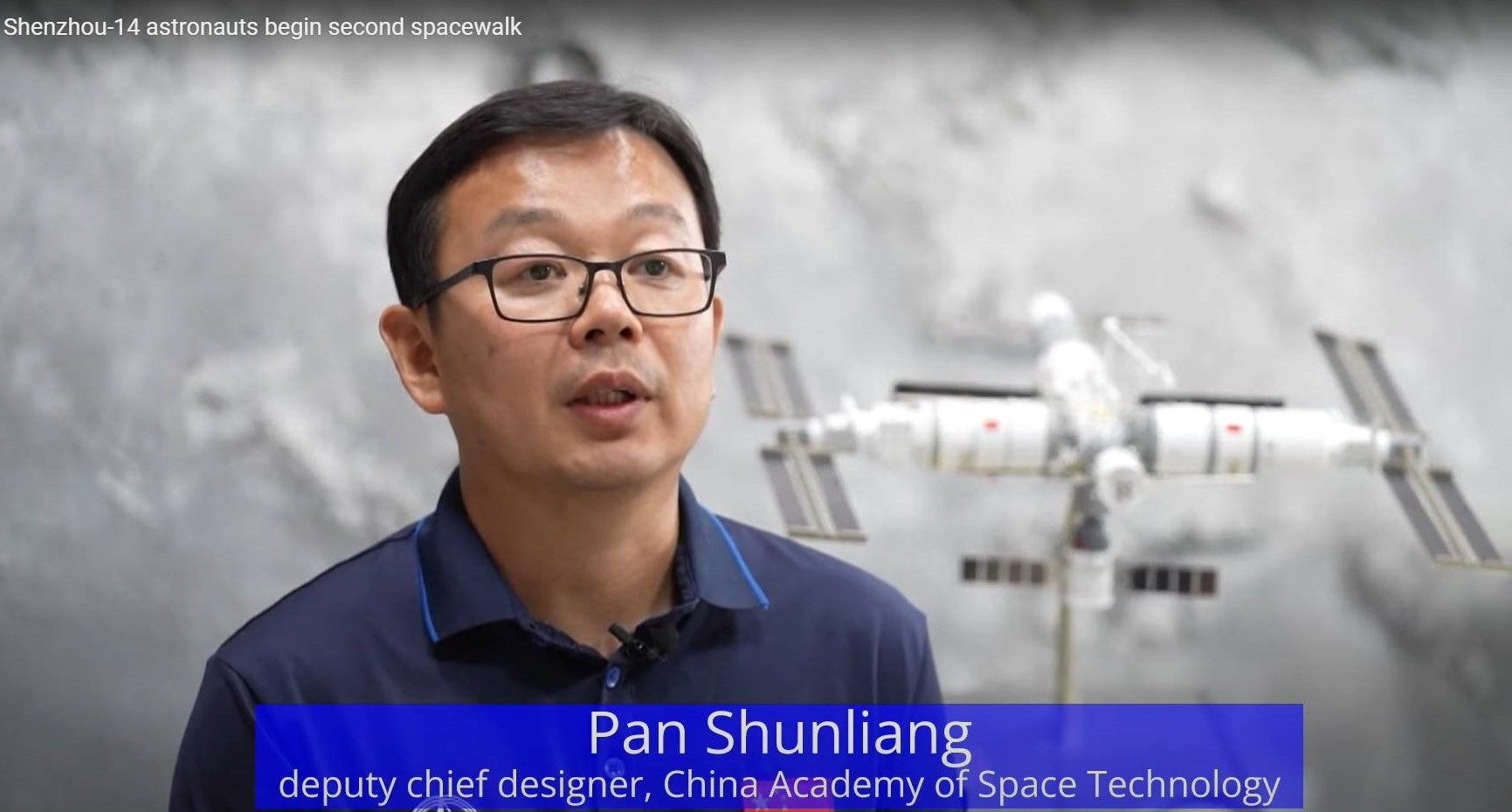
“The Shenzhou-14 is fully tasked, and the Mengtian lab module will be launched soon. Before this second lab module is launched, the space station combination is yet to undergo a transposition to form an L-shaped configuration,” said Pan Shunliang, deputy chief designer of the Overall Design Department under the China Academy of Space Technology. Relatively frequent EVAs can help make spacewalk a regular activity, Pan told CCTV.
“The two astronauts outside the capsule and the astronaut inside should coordinate with each other. Other departments on the ground, including our space station system, astronaut system, Beijing Aerospace Flight Control Center, and measurement and communication system, also need to be greatly coordinated,” Pan said.
Credit: CCTV/Inside Outer Space screengrab
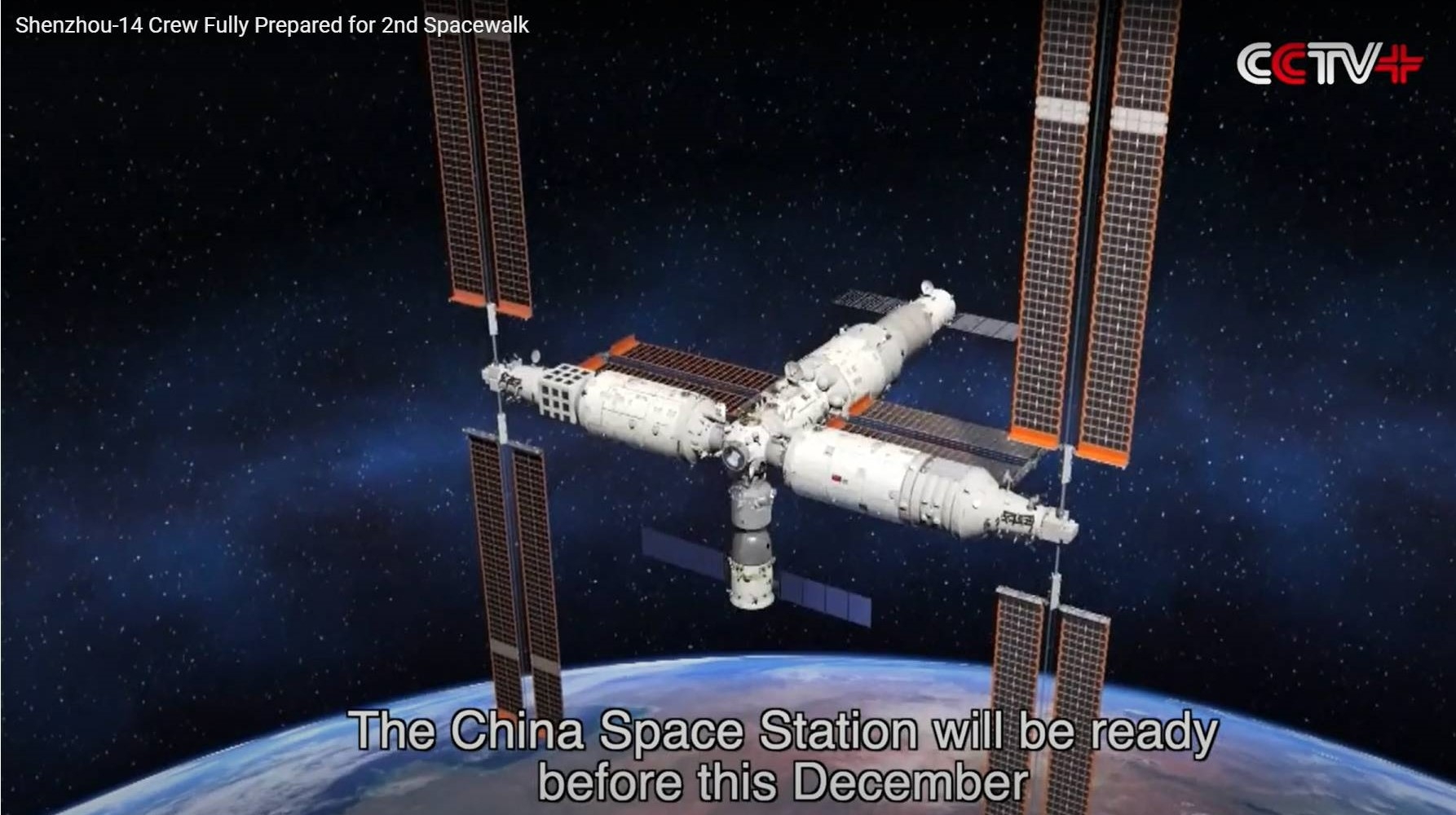
“Especially in the operation stage, it may be necessary to transfer the solar wings of the core module to both sides of the lab modules,” Pan added. “This requires regular multiple spacewalks, and so the EVAs are conducted to prepare and test our capacity for spacewalks.”
Completed this year
The construction of China’s space station is expected to be completed this year. It will then evolve into a national space laboratory with three modules: the core module Tianhe, and two lab modules, Wentian and Mengtian.

Credit: CCTV/CGTN/Inside Outer Space screengrab
According to China Global Television Network (CGTN), Yin Rui, deputy chief commander of the astronaut system at the CMS, said there is more to expect from the second half of the Shenzhou-14 crew’s stay in orbit.
“China’s space station will be ready before this December and the perfect ‘T-shaped’ structure will be in full display 400km above Earth. That image will show the best of the Chinese wisdom and the Chinese people,” Yin said.
China launched Tianhe in April last year, and the first lab module Wentian on July 24 of this year. The second lab module Mengtian is set to be launched in October.
Go to these newly released videos focused on the 2nd spacewalk at:
Credit: CNBC
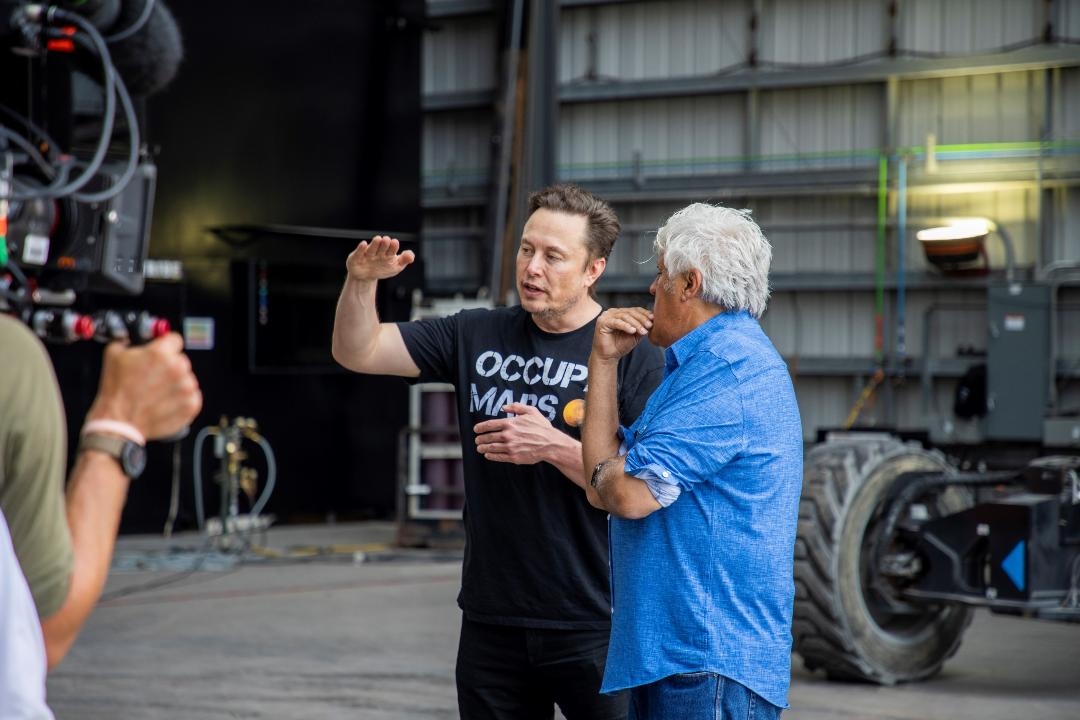
Next week’s episode of CNBC’s “Jay Leno’s Garage” features SpaceX Elon Musk.
It airs Wednesday, September 21 at 10PM ET/PT on CNBC.
Here are some great – and revealing — clips from the episode that features Elon Musk and Jay Leno.
- Elon Musk Gives Jay a Tour of SpaceX: In this exclusive interview, Leno travels to SpaceX for a tour of Musk’s latest innovation.
Go to:
https://www.cnbc.com/video/2022/09/15/new-elon-musk-gives-jay-a-tour-of-spacex.html
- Elon Musk Shows Jay His SpaceX Rocket Engines: Musk explains how his rocket engines are manufactured during Jay Leno’s tour of SpaceX.
Go to:
https://www.cnbc.com/video/2022/09/15/new-elon-musk-shows-jay-his-spacex-rocket-engines.html
- Elon Musk Tells Jay About Sending Humans to Mars: Leno asks Musk about engineering efficiency and the practicality of sending people to Mars.
Go to:
https://www.cnbc.com/video/2022/09/15/new-elon-musk-tells-jay-about-sending-humans-to-mars.html
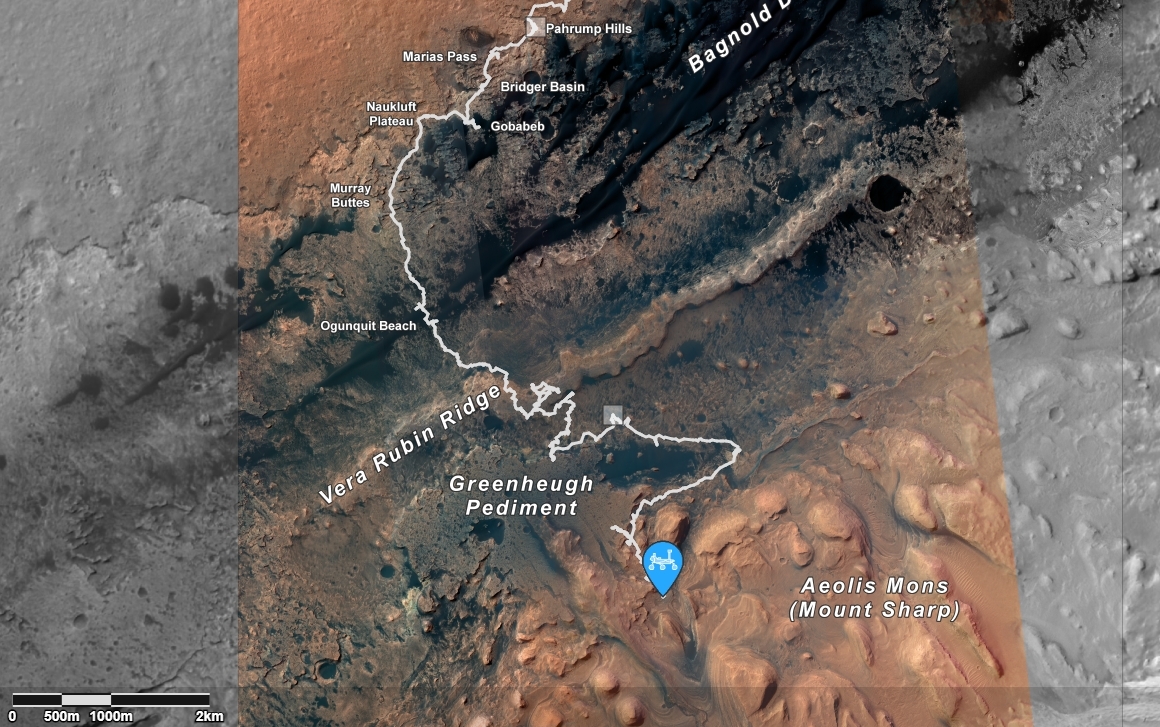
Curiosity’s location as of Sol 3592. Distance driven at that Sol: 17.81 miles/28.66 kilometers
Credit: NASA/JPL-Caltech/Univ. of Arizona
NASA’s Curiosity Mars rover at Gale Crater is now performing Sol 3595 tasks.
New select imagery from the robot shows landscape features:
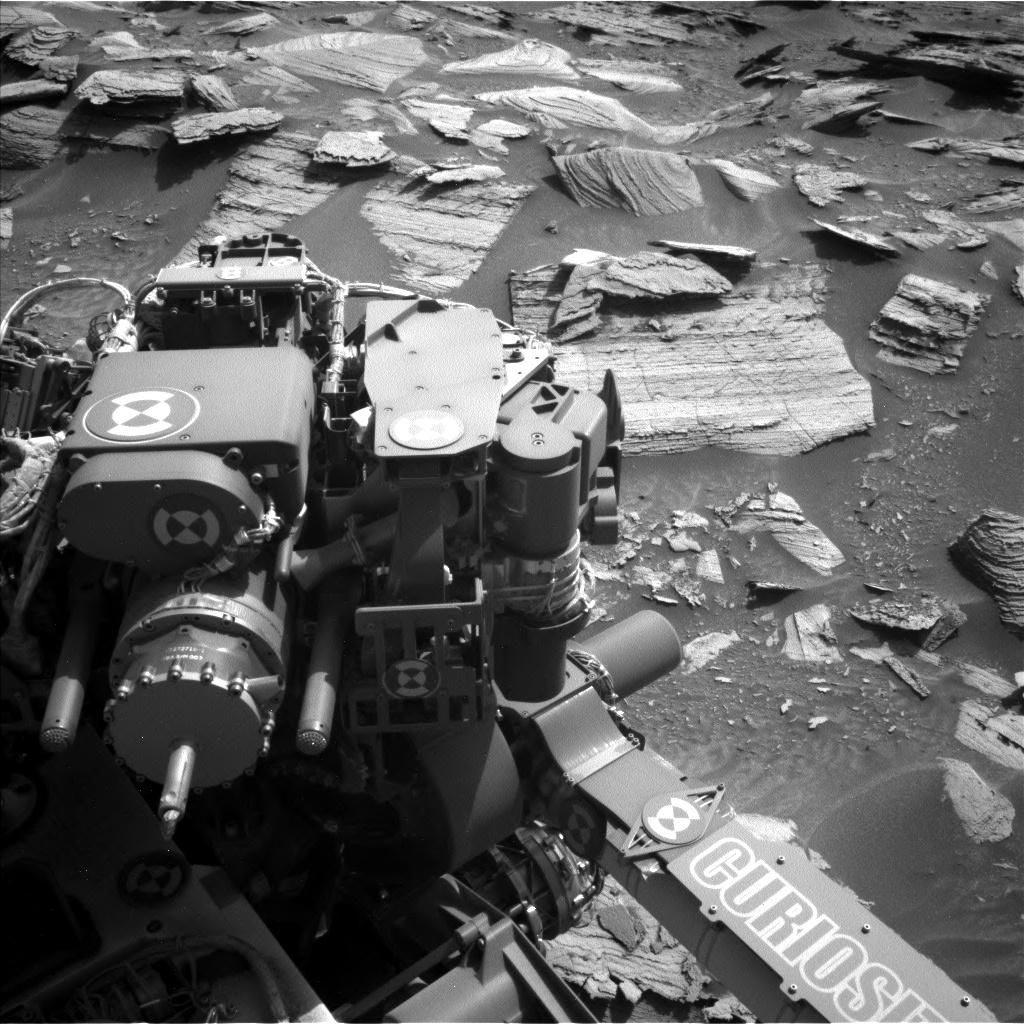
Curiosity Left B Navigation Camera image taken on Sol 3594, September 16, 2022.
Credit: NASA/JPL-Caltech
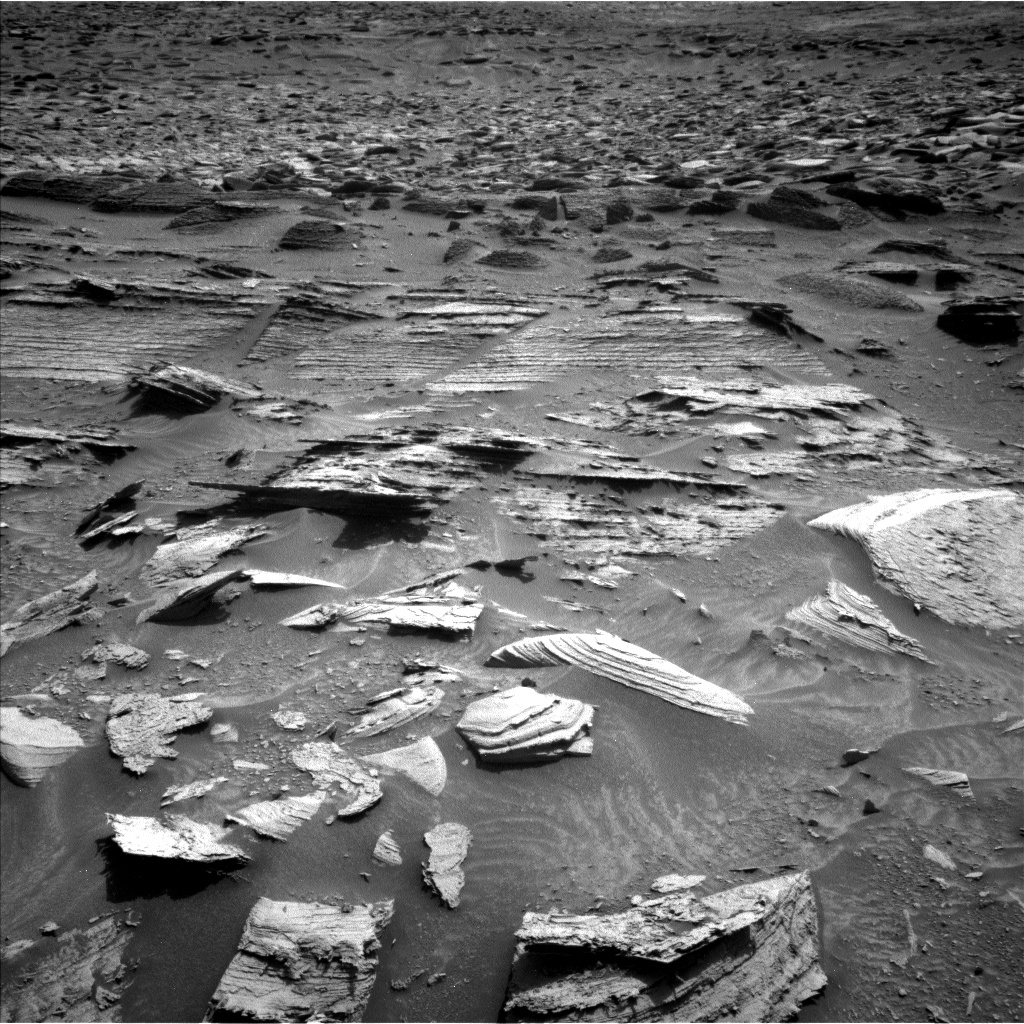
Curiosity Left B Navigation Camera image taken on Sol 3594, September 16, 2022.
Credit: NASA/JPL-Caltech
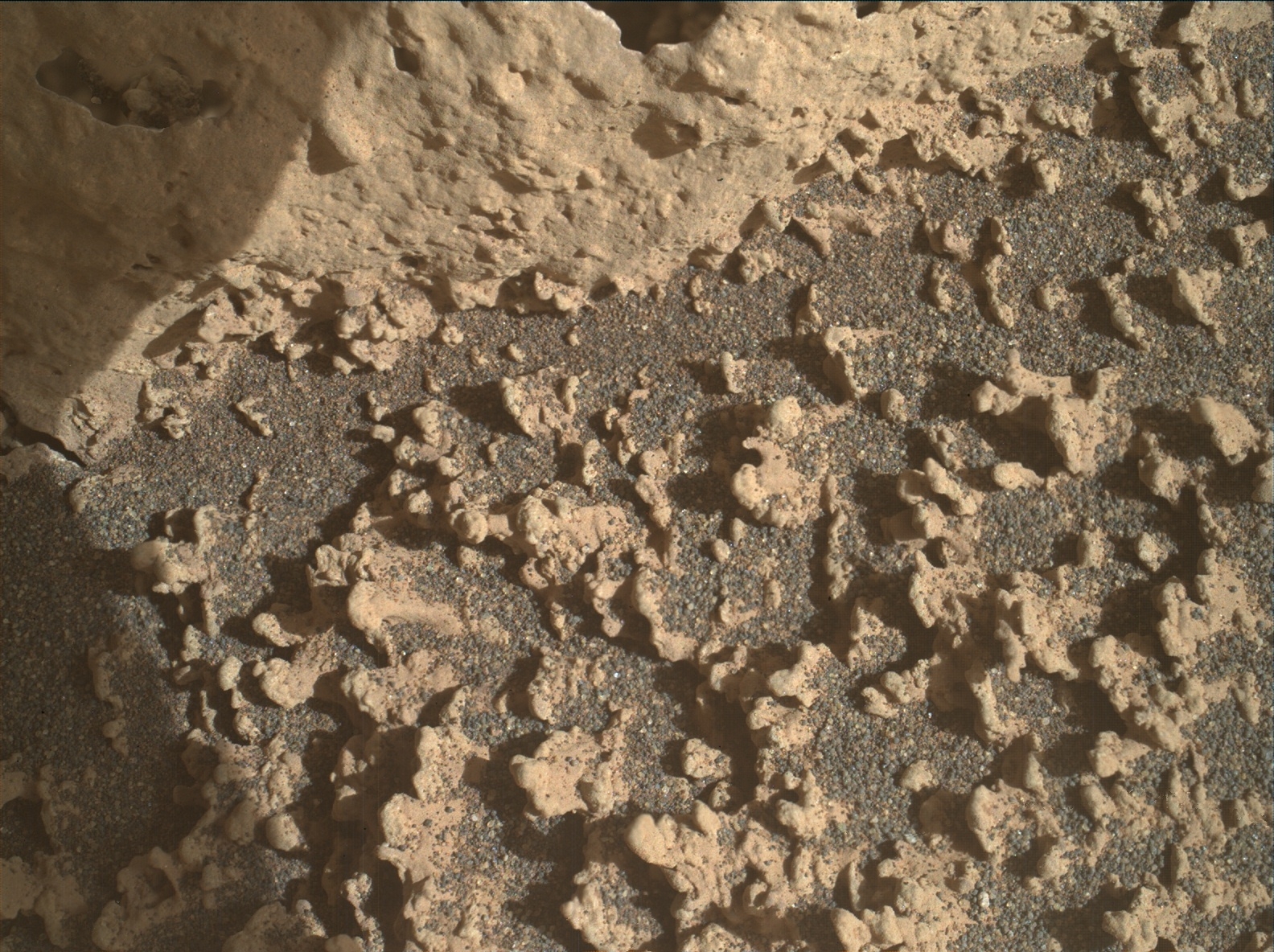
Curiosity Mars Hand Lens Imager photo produced on Sol 3594, September 16, 2022.
Credit: NASA/JPL-Caltech/MSSS
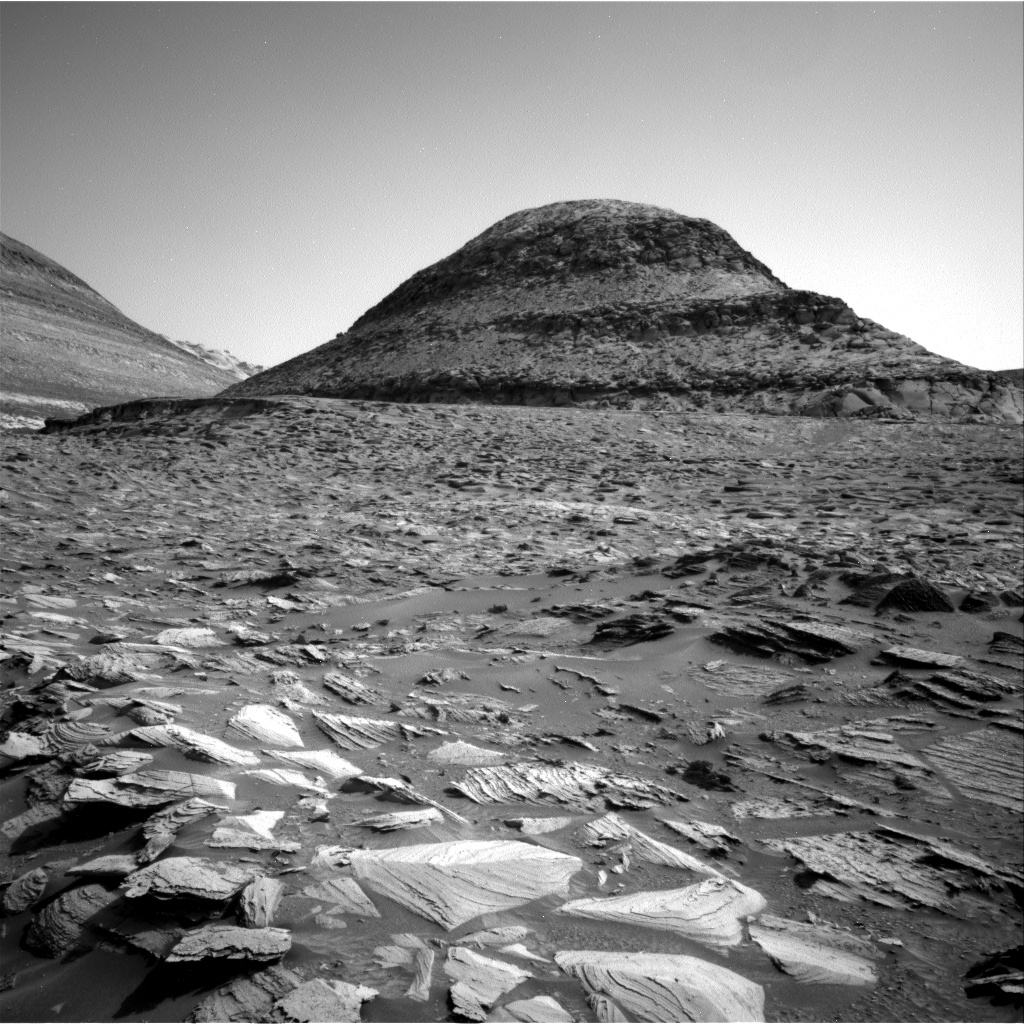
Curiosity Right B Navigation Camera image acquired on Sol 3594, September 16, 2022.
Credit: NASA/JPL-Caltech
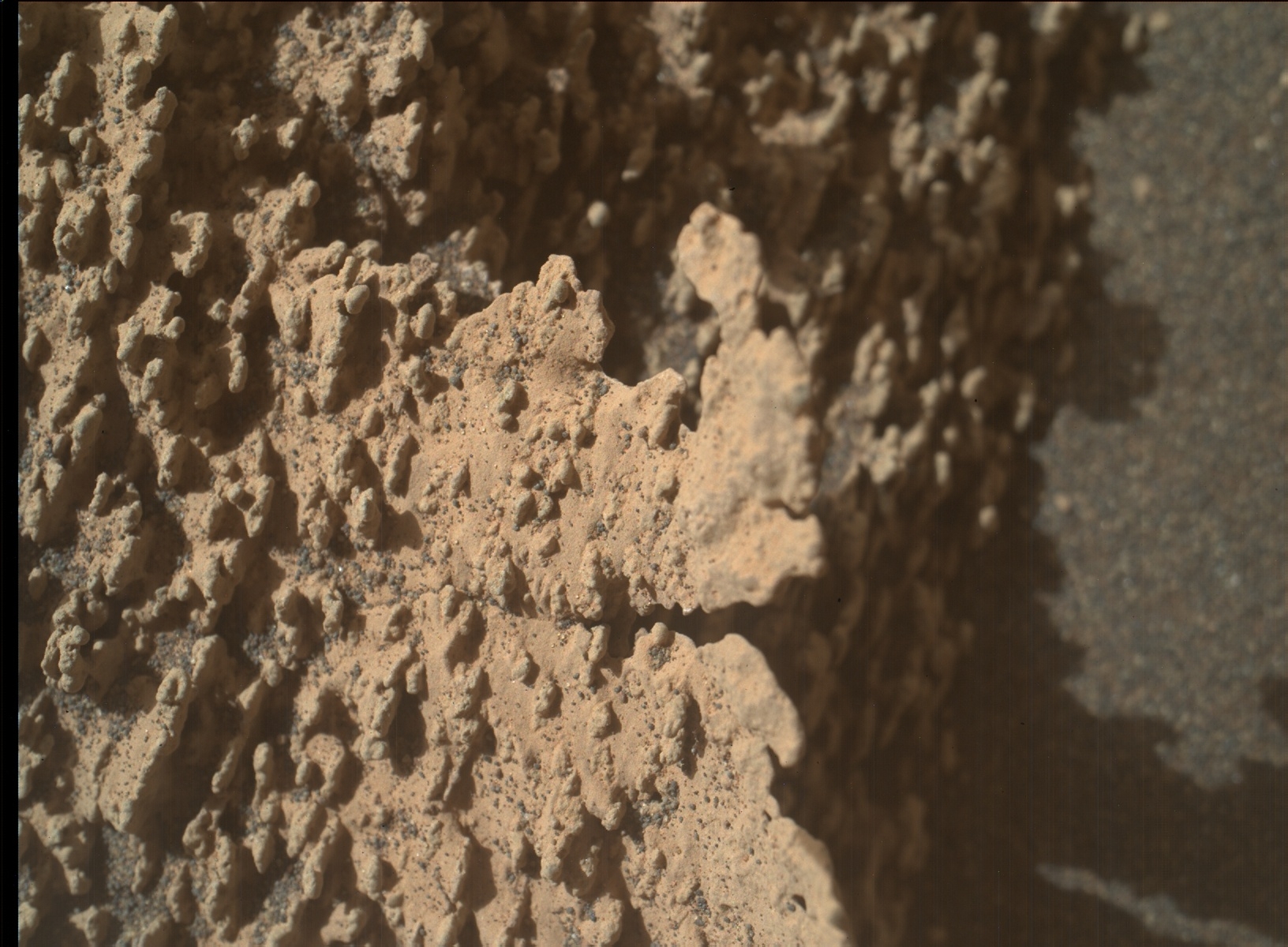
Curiosity Mars Hand Lens Imager photo produced on Sol 3594, September 15, 2022.
Credit: NASA/JPL-Caltech/MSSS
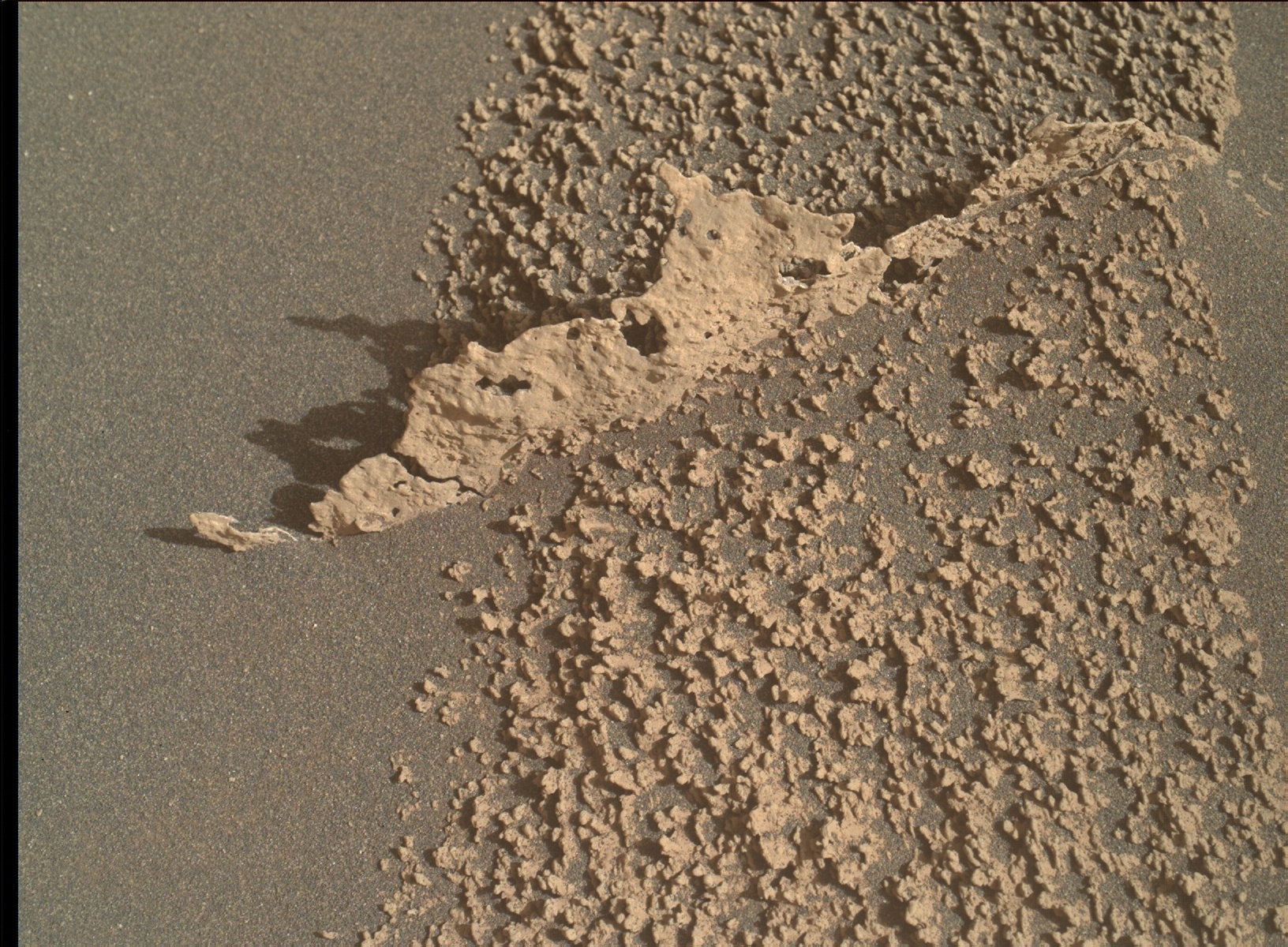
Curiosity Mars Hand Lens Imager photo produced on Sol 3594, September 15, 2022.
Credit: NASA/JPL-Caltech/MSSS

