Archive for the ‘Space News’ Category
 Author:
  November 17th, 2022
Artwork depicts T-shape configuration of China space station.
Credit: CNSA/CCTV/Inside Outer Space screengrab
Two China spacewalkers carried out a third extravehicular activity on Thursday, a five-hour long stint as the country’s space station continues to evolve.
This new spacewalk by Chen Dong and Cai Xuzhe was the first to be completed since the orbiting complex took on its T-shape look.
Shenzhou-14 crewmate, Liu Yang, supported the spacewalkers from inside the module.

Two Shenzhou-14 crewmen carry out spacewalk tasks.
Credit: CNSA/CCTV/Inside Outer Space screengrab
It was the first round of EVAs for the crew since the assembly of the station’s basic T-shape configuration earlier this month, and the third overall spacewalk since the current crew began their mission in June.
In the big picture, this new spacewalk was the seventh round of EVAs to be conducted as part of the China’s space station construction process, with two previous crewed missions also fulfilling spacewalk tasks.

Current occupants of China’s station – the Shenzhou-14 crew. Credit: China National Space Administration (CNSA)/China Central Television (CCTV)
Bridge building
Chen and Cai worked together to install a connection “bridge” between the three station modules that could assist astronauts when crawling outside the module and better stabilize the station’s T-shaped structure. Cai attempted the first cross-module walk using this newly-built bridge, according to China Central Television (CCTV).
Cai, who made his first spacewalk in September, attempted the first cross-module walk using this newly-built bridge.
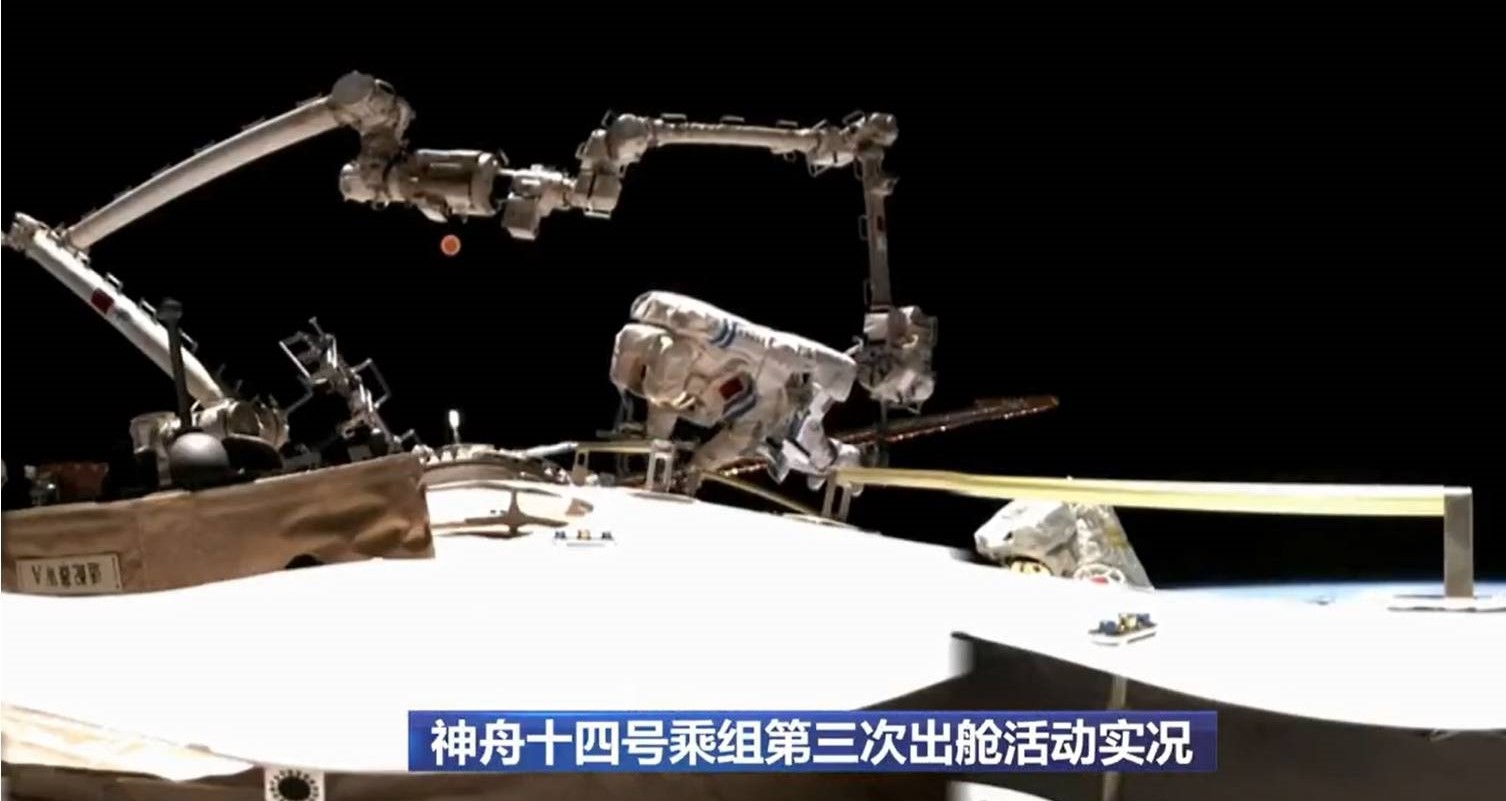
The astronauts also lifted and fixed a panoramic camera outside the Wentian lab module and added a special mounted assistance handle on the station’s small robotic arm.
Credit: CCTV/Inside Outer Space screengrab
Robotic arms
“This time, Shenzhou-14 set a record of carrying out extravehicular activities in one mission,” said Chen Shanguang, deputy chief designer of the China Manned Space Program.
Credit: CNSA/CCTV/Inside Outer Space screengrab
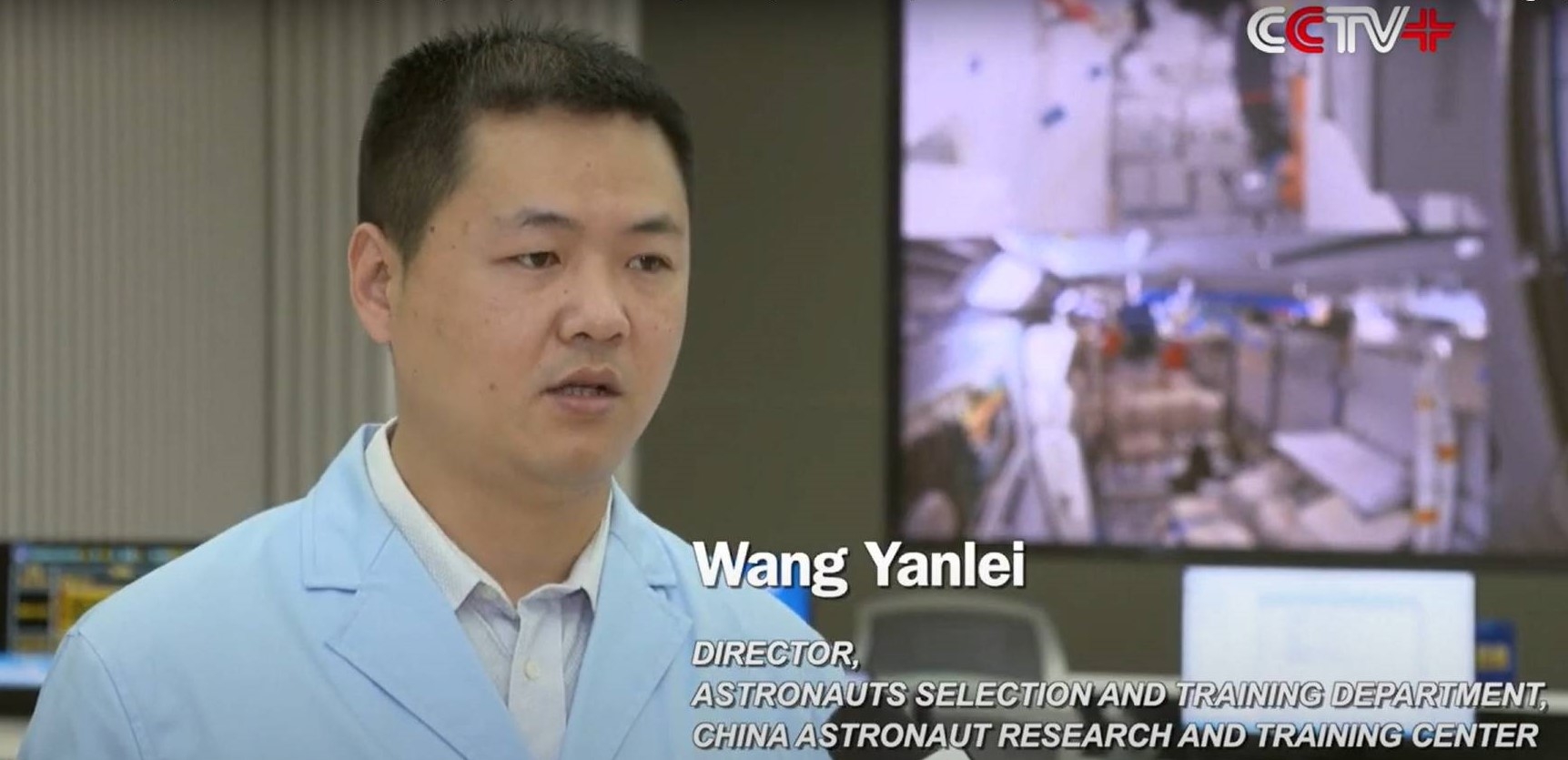
“For the first time, we used two robotic arms, namely the big arm and the small arm to form a combined arm to support the task of extravehicular activities. As the single arm is already very long, so the combined arm will be longer, and its flexibility and rigidity is also different from that of a single robotic arm. And it is our first verification of completing extravehicular activities in such a case,” said Wang Yanlei, director of the astronauts selection and training department of the China Astronaut Research and Training Center told CCTV.
Next crew, handover
The three-person Shenzhou-14 crew members were lofted into Earth orbit last June to start their six-month trek in space, the longest duration for any Chinese manned mission.

Credit: CMG/CCTV/CASC/Inside Outer Space screengrab
During the second half of their six-month stay in orbit, the Shenzhou-14 taikonauts oversaw the arrival of the Mengtian lab that formed the three-module T-shape structure: the core module Tianhe, along with lab modules, Wentian and Mengtian.
The Shenzhou-14 crew will welcome the arrival of the Shenzhou-15 crewed spacecraft at the space station later this month. Once arrived at the station site, the Shenzhou-15 crew members will join the Shenzhou-14 colleagues to complete the facility’s first-ever crew handover, according to CCTV.
The Tiangong space station is on track to be fully up and operating by the end of this year.
To view a new video detailing the third spacewalk of the Shenzhou-14 mission, go to:
 Posted in
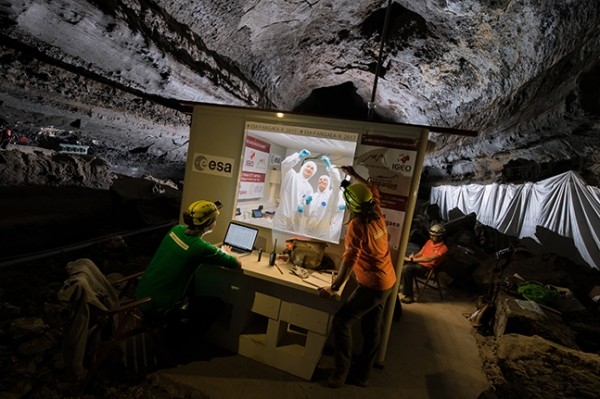
Real-time DNA sequencing in a lab installed in the Corona Lava Tube (Lanzarote, Canary Islands, Spain) in the framework of the ESA PANGAEA-X 2017 Astronaut training program. ESA astronaut Matthias Maurer is inside the lab module with co-author Ana Miller.
Credit: ESA
Until the last two decades, the potential for caves beyond Earth was principally theoretical.
Today, databases of subsurface access points (SAPs) exist for the Moon and Mars.
Across the solar system, 3,545 SAPs have been identified on 11 planetary bodies with “speleogenic processes” identified on another four bodies. Speleogenesis is the origin and development of caves.
Cave-forming processes
A new research paper – “Planetary Caves: A Solar System View of Processes and Products” – showcases six cave-forming processes beyond Earth that have been identified.
These processes include volcanic (cryo and magmatic), fracturing (tectonic and impact melt), dissolution, sublimation, suffusion, and landslides.
“As more orbiter and fly-by platforms with high-resolution instrumentation probe the solar system, our knowledge regarding caves beyond Earth will become more robust—culminating with the robotic and perhaps human exploration of caves on the Moon and Mars,” the paper notes.

Location of candidate caves in the Tharsis region on Mars.
Credit: USGS
Mars underground
According to Jut Wynne, assistant research professor of cave ecology at Northern Arizona University and lead author of the paper:
“Caves on many planetary surfaces represent one of the best environments to search for evidence of extinct or perhaps extant lifeforms,” Wynne said in a university statement.
“For example, as Martian caves are sheltered from deadly surface radiation and violent windstorms, they are more likely to exhibit a more constant temperature regime compared to the surface, and some may even contain water ice. This makes caves on Mars one of the most important exploration targets in the search for life,” Wynne said.
To view the paper – “Planetary Caves: A Solar System View of Processes and Products” – go to:
https://agupubs.onlinelibrary.wiley.com/doi/10.1029/2022JE007303

Credit: Airbus
The thought of solar power-beaming satellites churning out gobs of gigawatts of clean energy from space to an energy-hungry Earth has been in cogitation phase for many decades. In fact, Nikola Tesla experimented with the scheme of wireless power near the end of the nineteenth century.
In 1968, the notion of a solar power satellite (SPS) was detailed by U.S. aerospace engineer, Peter Glaser. It would harvest energy from sunlight using solar cells and beam it down to Earth as microwaves to receiving antennas (rectennas), which would convert those microwaves to electrical energy for input into electrical power grids.
However, over the ensuing years, SPS remained a bright light proposal whose time never came.
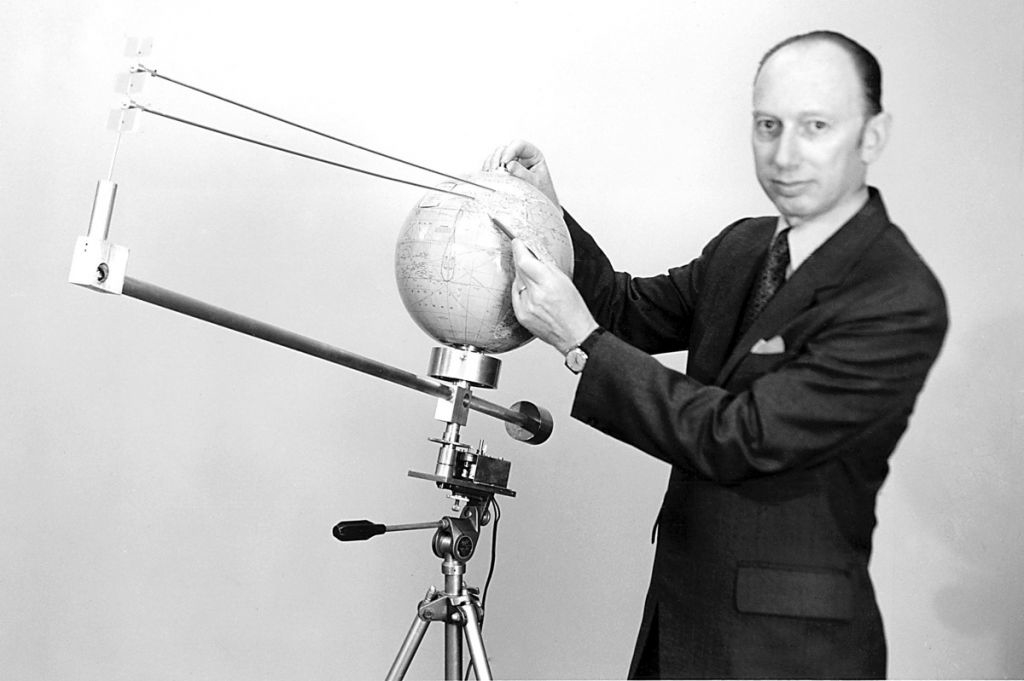
Peter Glaser, the father of the solar power satellite concept.
Credit: Arthur D. Little Inc.
Economically viable?
But now the notion of space-based solar power is garnering new looks – both in the U.S. and abroad, including Chinese technologists, experts in Japan, and researchers within the European Space Agency and the United Kingdom’s space agency. In addition, NASA has reactivated a look into SPS.
Why so? For one, advancements in technology needed for SPS do appear to make the idea more realistic today. That said, there remains a lingering, burning question: Is SPS anywhere close to becoming economically viable?
For detailed information, go to my new Scientific American story – “Is Space-Based Solar Power Ready for Its Moment in the Sun? Around the world, researchers are betting that beamed power from space could be the next big thing for clean energy on Earth” – at:

Curiosity Front Hazard Avoidance Camera Left B image acquired on Sol 3650, November 12, 2022.
Credit: NASA/JPL-Caltech
NASA’s Curiosity Mars rover at Gale Crater is now performing Sol 3651 duties.
“Curiosity is continuing to climb towards a Gediz Vallis ridge viewing spot, and we can already get a glimpse of it rising in the distance,” reports Abigail Fraeman, a planetary geologist at NASA’s Jet Propulsion Laboratory.

Curiosity Chemistry & Camera Remote Micro-Imager (RMI) photo taken on November 12, 2022.
Credit: NASA/JPL-Caltech/LANL
A recent plan listed collection of a large stereo Mastcam mosaic of the parts of Gediz Vallis ridge. This image combined with the ones Mars researchers hope to collect from an end-of-drive location on Monday, Fraeman adds, “will help the team decide if we want to get even closer.”
Fraeman adds that the Curiosity science team is trying to understand how Gediz Vallis ridge formed, in particular what kind of watery settings may or may not have been involved.

Curiosity Chemistry & Camera Remote Micro-Imager (RMI) photo taken on November 12, 2022.
Credit: NASA/JPL-Caltech/LANL
Relationships
“We also want to understand how it relates to the rest of the rocks that make up Mount Sharp and Gediz Vallis channel in order to better constrain when the events that built it happened,” Fraeman notes.
A plan has the team investigating the area much closer to Curiosity over the weekend.
Being collected are Mastcam images of some rocks that have interesting textures that are unofficially named “Uruca,” “Tikwah Mine,” and “Prata.”

Curiosity Right B Navigation Camera image taken on Sol 3650, November 12, 2022.
Credit: NASA/JPL-Caltech
Large sand ridge
“We’re also snapping a photo of a large sand ridge that is right behind the rover,” Fraeman reports, and the Chemistry and Camera (ChemCam) instrument will zap two rock targets, “Cotingo,” and “Boca da Mata,” as well as an automatically selected target using the AEGIS (Autonomous Exploration for Gathering Increased Science) – a software suite that permits the rover to autonomously detect and prioritize targets.

Curiosity Mast Camera Right image taken on Sol 3650, November 12, 2022.
Credit: NASA/JPL-Caltech/MSSS

Curiosity Mars Hand Lens Imager photo of brushing. Image produced on Sol 3650, November 12, 2022.
Credit: NASA/JPL-Caltech/MSSS
The robot’s Alpha Particle X-Ray Spectrometer (APXS) and Mars Hand Lens Imager (MAHLI) will get in on the science action as well, with observations of targets named “Jutai” and “Raposa.”
A Dust Removal Tool (DRT) is to brush dust away from the Raposa target before the APXS and MAHLI observations, “so we’ll also take a Mastcam multispectral image of this less dusty area,” Fraeman adds.
Observations to model the environment around Curiosity and a drive of 164 feet (50 meters) was slated to round out the plan.

Credit: ESA/Hubble & NASA
Where is everybody?
If you’re an ET contact faithful take into account a new paper led by Jonathan Jiang of NASA’s Jet Propulsion Laboratory.
“The silence of the universe beyond Earth reveals a pattern of both human limitation and steadfast curiosity,” Jiang and colleagues write.
What they postulate is that an existential disaster may lay in wait as our society here on Earth advances exponentially towards space exploration.
That disaster doubles as a “Great Filter” – a phenomenon that wipes out civilizations before they can encounter each other.
Perhaps a reason for the cosmic cold shoulder?

Allen Telescope Array dedicated to astronomical observations and a simultaneous search for extraterrestrial intelligence (SETI).
Image credit: Seth Shostak/SETI Institute
Possible scenarios
In the research paper, Jiang and co-authors propose several possible scenarios, including anthropogenic and natural hazards, both of which can be prevented with reforms in individual, institutional and intrinsic behaviors.
They also take into account multiple calamity candidates: nuclear warfare, pathogens and pandemics, artificial intelligence, meteorite impacts, and climate change.
“If extraterrestrial intelligence does exist,” they write, “humanity must self-improve on nearly all accounts to meet and even surpass such others.”
On the other hand, if intelligent life does not appear and perhaps never was “out there” in the first place, “we have some other more philosophical difficulties to juggle – but no less daunting. Our lives are not expendable. We have been treating casualties as casual, nukes as necessary, and large-scale death as inevitable events.”
To read the full paper – “Avoiding the “Great Filter”: Extraterrestrial Life and Humanity’s Future in the Universe” – go to:
https://arxiv.org/ftp/arxiv/papers/2210/2210.10582.pdf

Artistic depiction of NASA astronauts at the lunar south pole carrying out early work to establish an Artemis Base Camp.
Image credit: NASA
As multiple nations plot out their Moon exploration strategies, how best to survive the lunar night gives space engineers the cold sweats.
The Moon’s lunar day/night cycle at most locations on the surface includes fourteen Earth days of continuous sunlight followed by fourteen days of constant darkness and intense cold.
Due to the lack of a moderating atmosphere, temperatures on the lunar surface can range from +120 ℃ during the day to -180 ℃ during the night. Permanently shadowed regions on the Moon can be even colder, plunging down to -240 ℃.

Shown here is a rendering of 13 candidate landing regions for NASA’s Artemis III mission. Each region is approximately 9.3 by 9.3 miles (15 by 15 kilometers). A landing site is a location within those regions with an approximate 328-foot (100-meter) radius.
Image credit: NASA
Pluses and minuses
All those pluses and minuses add up to one of the most demanding environmental challenges that future Moon expeditions will face. Attaining and gaining longer and longer human stays – perhaps gaining permanent status — will mean coming to grips with the moon’s vicious environment.
For more information on this topic, please go to my new Space.com story – “Surviving the lunar night can be a challenge for astronauts on the Moon – The Moon’s lunar day/night cycle means fourteen days of continuous sunlight followed by fourteen days of constant darkness” – go to:
https://www.space.com/moon-missions-artemis-challenges-overnight

OTV-6 outfitted with service module.
Image credit: Staff Sgt. Adam Shanks
That fresh from Earth orbit X-37B space plane was outfitted for the first time with a service module, released from the craft prior to its landing after 908 days of flight.
The Boeing-built space plane set a new long-duration record –- with this latest flight, dubbed Orbital Test Vehicle (OTV-6) — surpassing the program’s previous record of 780 days.
“Since the X-37B’s first launch in 2010, it has shattered records and provided our nation with an unrivaled capability to rapidly test and integrate new space technologies,” said Jim Chilton, senior vice president, Boeing Space and Launch.
“With the service module added, this was the most we’ve ever carried to orbit on the X-37B and we’re proud to have been able to prove out this new and flexible capability for the government and its industry partners,” Chilton added.
Boundaries of experimentation
Adding his voice to the utility of the space plane’s add-on module, Lt. Col. Joseph Fritschen, Department of Air Force Rapid Capabilities Office’s X-37B Program Director:

OTV-6 – On the ground at Kennedy Space Center in Florida.
Image credit: Staff Sgt. Adam Shanks
“The X-37B continues to push the boundaries of experimentation, enabled by an elite government and industry team behind the scenes,” said Fritschen. “The ability to conduct on-orbit experiments and bring them home safely for in-depth analysis on the ground has proven valuable for the Department of the Air Force and scientific community. The addition of the service module on OTV-6 allowed us to host more experiments than ever before.”
Ring toss
The service module is a ring attached to the rear of the vehicle expanding the number of experiments that can be hosted during a mission. That hardware was left in space prior to the space plane’s dive back to Earth on November 12th.

The first X-37B Orbital Test Vehicle waits in the encapsulation cell of the Evolved Expendable Launch vehicle on April 5, 2010 at the Astrotech facility in Titusville, Fla.
Credit: U.S. Air Force
Whether or not experiments within that service module remain active is an unknown.
In the coming weeks, the service module will be disposed of in accordance with “best practices” – seemingly indicating a propulsive push to purposely de-orbit the module in a controlled way.
On this point, Secretary of the Air Force Frank Kendall said: “The deliberate manner in which we conduct onorbit operations-to include the service module disposal-speaks to the United States’ commitment to safe and responsible space practices, particularly as the issue of growing orbital debris threatens to impact global space operations.”
Meanwhile, the U.S. Space Force has issued a first-time-seen image of the hefty-looking service module, pre-liftoff back in May 2020.
OTV-6: On the ground at Kennedy Space Center in Florida.
Image credit: Staff Sgt. Adam Shanks
After spending 908 days in Earth orbit, the sixth mission of the U.S. military’s X-37B Orbital Test Vehicle-6 (OTV-6) has come to wheels-stopped at NASA’s Kennedy Space Center Shuttle Landing Facility.
This Boeing-built vehicle was launched on May 17, 2020 from Cape Canaveral Air Force Station, Florida.
Coasting in for a landing on November 12 at 5:22 AM local Florida Time, the robotic OTV-6 was the first mission to introduce a service module – a ring attached to the rear of the vehicle. That module expanded the number of experiments that can be hosted during a space plane mission.

Artwork depicts X-37B in Earth orbit.
Credit: Boeing
The service module successfully separated from the OTV prior to landing. In the coming weeks, the service module will be disposed of in accordance with best practices, according to a U.S. Space Force statement.
Secretary of the Air Force Frank Kendall said: “The deliberate manner in which we conduct onorbit operations-to include the service module disposal-speaks to the United States’ commitment to safe and responsible space practices, particularly as the issue of growing orbital debris threatens to impact global space operations.”
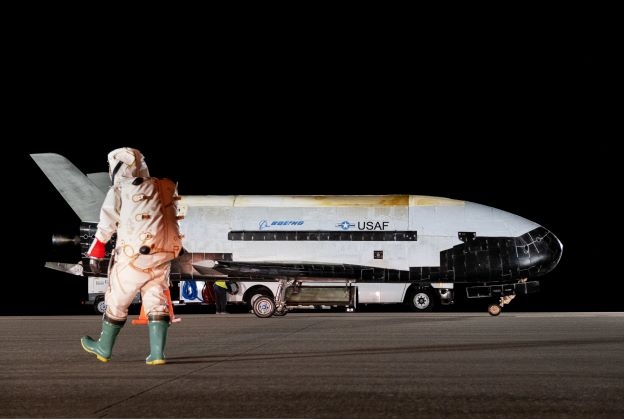
OTV-6 image credit: Staff Sgt. Adam Shanks
Some payloads identified
The OTV-6 mission hosted the Naval Research Laboratory’s Photovoltaic Radiofrequency Antenna Module. This experiment successfully harnessed solar rays outside of Earth’s atmosphere, transforming that energy into radio frequency microwave energy.
Additionally, the U.S. Air Force Academy’s FalconSat-8, developed in partnership with Air Force Research Laboratory, was successfully deployed in October 2021. FalconSat-8 remains in orbit, providing Academy cadets unique hands-on experience as space operators prior to entering active duty.
Multiple NASA experiments were toted on OTV-6.
The Materials Exposure and Technology Innovation in Space (METIS-2) included thermal control coatings, printed electronic materials, and candidate radiation shielding materials. METIS-1-which flew on OTV-5-consisted of similar sample plates mounted on the flight vehicle. NASA scientists will leverage data collected after the materials have spent 900+ days in orbit and compare observed effects to ground simulations, validating and improving the precision of space environment models, according to the U.S. Space Force statement.
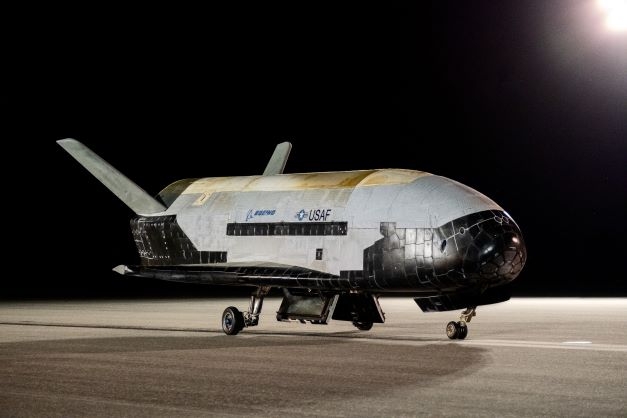
OTV-6 image credit: Staff Sgt. Adam Shanks
Another NASA experiment investigated the effect of long-duration space exposure on seeds. Scientists are interested in the seeds’ resistance and susceptibility to space environment-unique stresses, notably radiation. The seeds experiment will inform space crop production for future interplanetary missions and the establishment of permanently inhabited bases in space.
Boundaries of experimentation
“The X-37B continues to push the boundaries of experimentation, enabled by an elite government and industry team behind the scenes,” said Lt. Col. Joseph Fritschen, Department of Air Force Rapid Capabilities Office’s X-37B Program Director.
“The ability to conduct on-orbit experiments and bring them home safely for in-depth analysis on the ground has proven valuable for the Department of the Air Force and scientific community. The addition of the service module on OTV-6 allowed us to host more experiments than ever before,” Fritschen said in the U.S. Space Force statement.
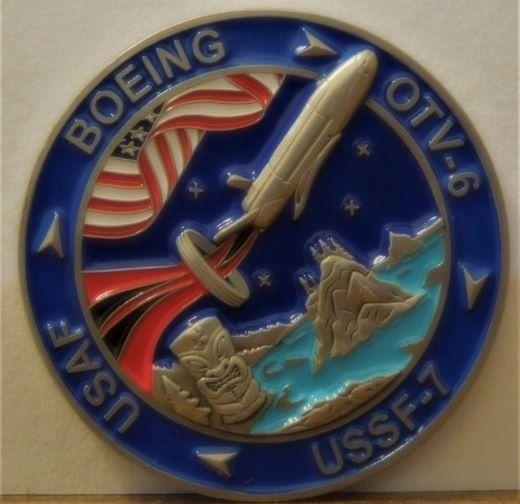
Commemorative mission coin might be showing the X-37B “service module.”
Courtesy: Mike Rose
Flight roster
OTV-1: launched on April 22, 2010 and landed on December 3, 2010, spending over 224 days on orbit.
OTV-2: launched on March 5, 2011 and landed on June 16, 2012, spending over 468 days on orbit.
OTV-3: launched on December 11, 2012 and landed on October 17, 2014, spending over 674 days on-orbit.
OTV-4: launched on May 20, 2015 and landed on May 7, 2015, spending nearly 718 days on-orbit.
OTV-5: launched on September 7, 2017 and landed on October 27, 2019, spending nearly 780 days on-orbit.
Shattered records
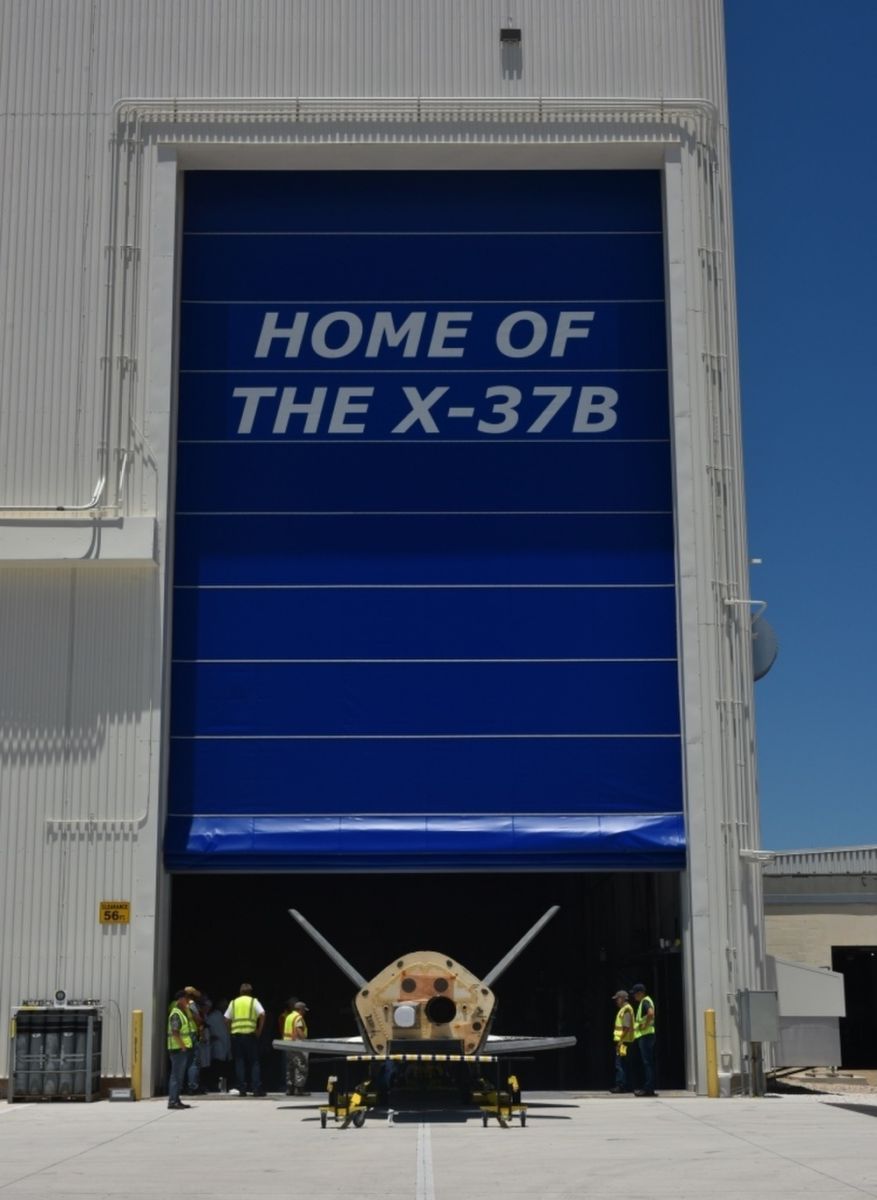
X-37B hangar at Kennedy Space Center.
Credit: Michael Martin/SAF
With the successful completion of its sixth mission the reusable space plane has now flown over 1.3 billion miles and spent a total of 3,774 days in space where it conducts experiments for government and industry partners with the ability to return them to Earth for evaluation, added a Boeing statement on the landing.
“Since the X-37B’s first launch in 2010, it has shattered records and provided our nation with an unrivaled capability to rapidly test and integrate new space technologies,” said Jim Chilton, senior vice president, Boeing Space and Launch.
“With the service module added, this was the most we’ve ever carried to orbit on the X-37B and we’re proud to have been able to prove out this new and flexible capability for the government and its industry partners,” Chilton said.
The X-37B program is a partnership between the U.S Department of the Air Force Rapid Capabilities Office and the U.S. Space Force. Boeing designed and manufactured the space plane and continues to provide program management, engineering, test and mission support from sites in Southern California, Florida and Virginia.
Credit: CCTV/Inside Outer Space screengrab
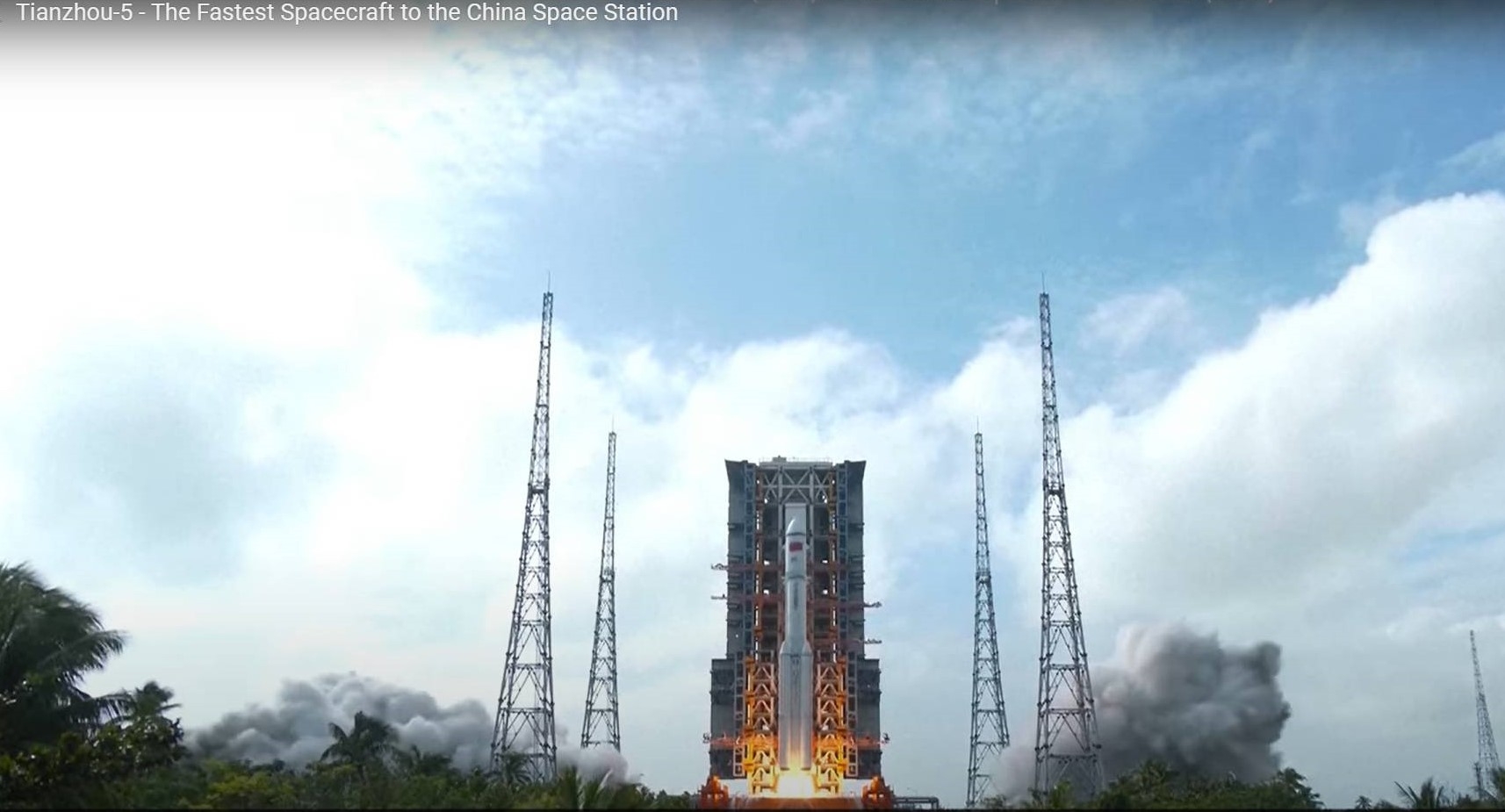
Another milestone in China’s construction of the country’s space station was reached on Saturday – the launch, rendezvous and docking of the uncrewed Tianzhou-5 cargo craft.
The Tianzhou-5 was launched via a Long March-7 Y6 rocket from the Wenchang Spacecraft Launch Site in the southern island province of Hainan, and carried out an auto-pilot latch up with the rear docking port of the Tianhe space station core module.
Fast track
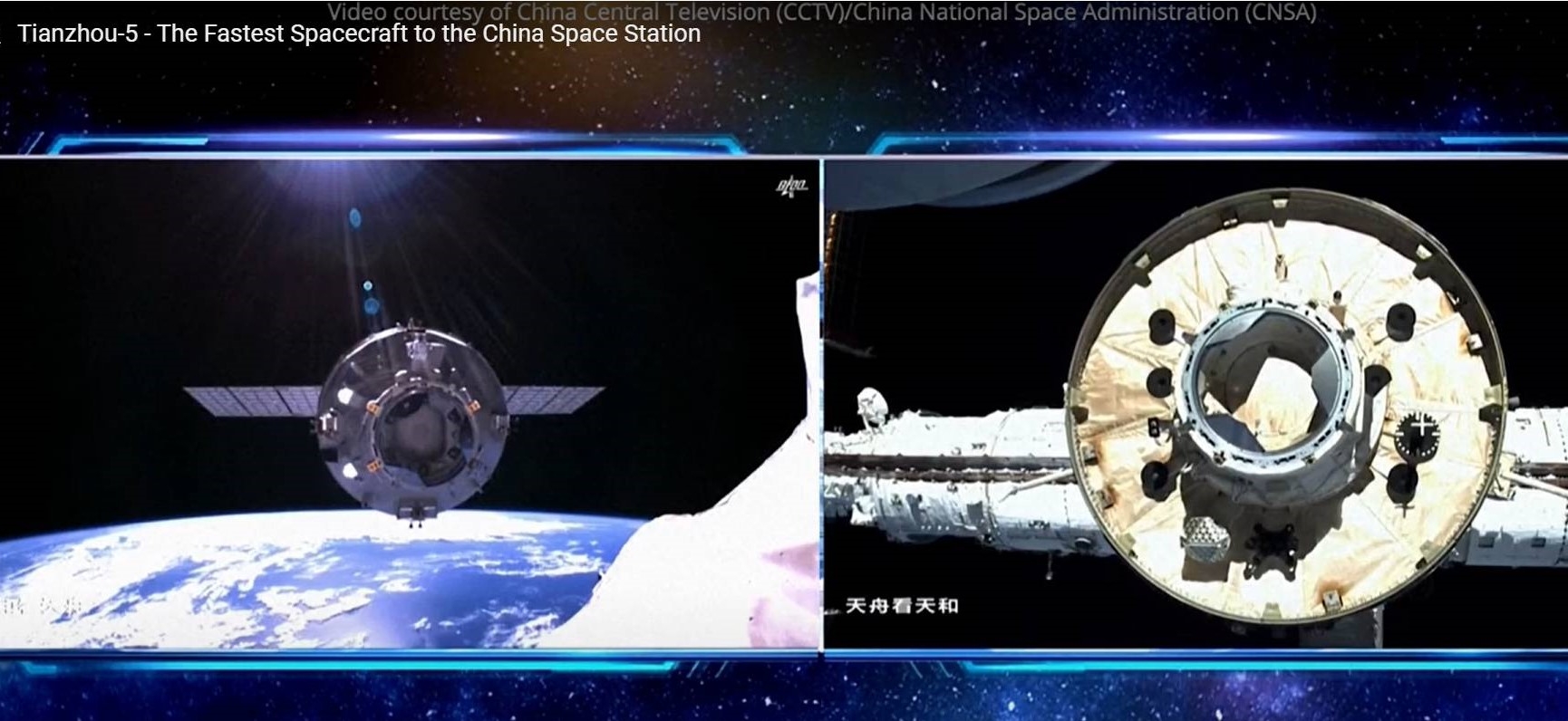
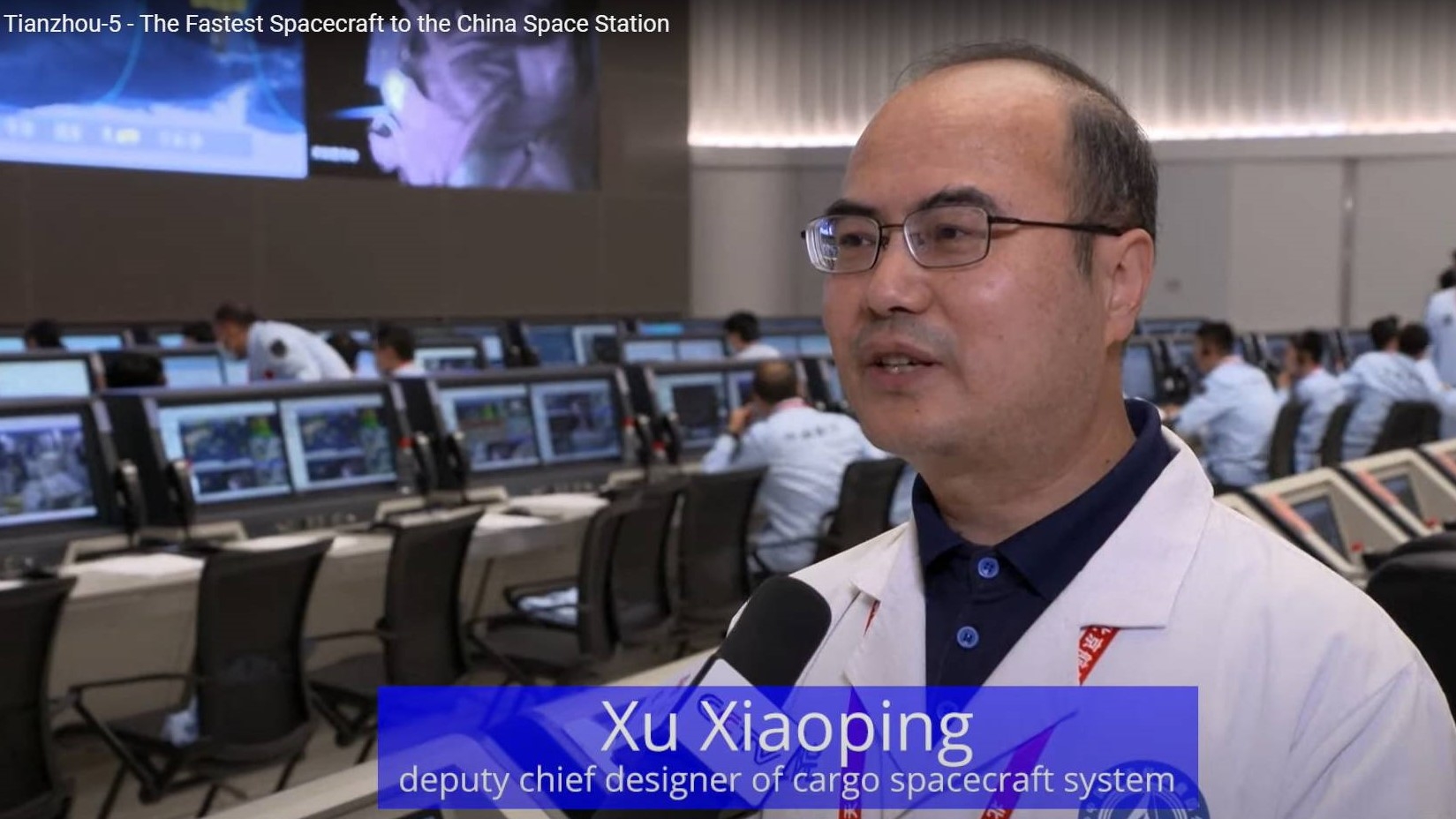
“This is the first time we completed fast automated rendezvous and docking in two hours,” said Xu Xiaoping, deputy chief designer of the cargo spacecraft system, the Fifth Academy of China Aerospace Science and Technology Corporation.
Credit: CNSA/CCTV/Inside Outer Space screengrab
“The whole rendezvous and docking process took about two hours, which is the fastest rendezvous and docking technology in the world,” Xu told China Central Television (CCTV).
Credit: CCTV/Inside Outer Space screengrab
The cargo spacecraft is loaded with around 5 tons of supplies, mainly equipment for scientific experiments. Onboard the supply vessel, around 5 tons of goods and materials, a manifest that includes 1.4 tons of propellant for the space station complex.
Also onboard are test projects including a science popularization satellite, a space hydrogen and oxygen fuel-cell system, and broad-energy-spectrum high-energy particle detection equipment.
These new supplies will help support three yet-to-be-launched astronauts on the upcoming Shenzhou-15 mission for their six-month orbital stay.

Credit: CCTV/Inside Outer Space screengrab
Speeding up the procedure
“In the beginning, the rendezvous and docking would take two or three days. And then the time was reduced to 6.5 hours when we launched the Tianzhou-3 and the Tianzhou-4. This time, the Tianzhou-5 completed the fastest rendezvous and docking. Our technologies have been improved step by step through each launch,” said Zhang Zhenhua, deputy chief designer of the cargo spacecraft system at the China Academy of Space Technology.
Two measures were utilized to shorten the time of Tianzhou-5’s docking, greatly speeding up the procedure compared to a past 6.5-hour process.
First, the multi-turn flight in the process of long-range guidance was cut to half a turn, according to CCTV. Multiple orbit changes were reduced to two integrated maneuvers, thereby reducing this process from about four hours to about one hour.

Credit: CCTV/Inside Outer Space screengrab
Second, the number of mooring points in the close-range autonomous control segment was reduced, which cut the duration of this process from over two hours to about 40 minutes.
World record
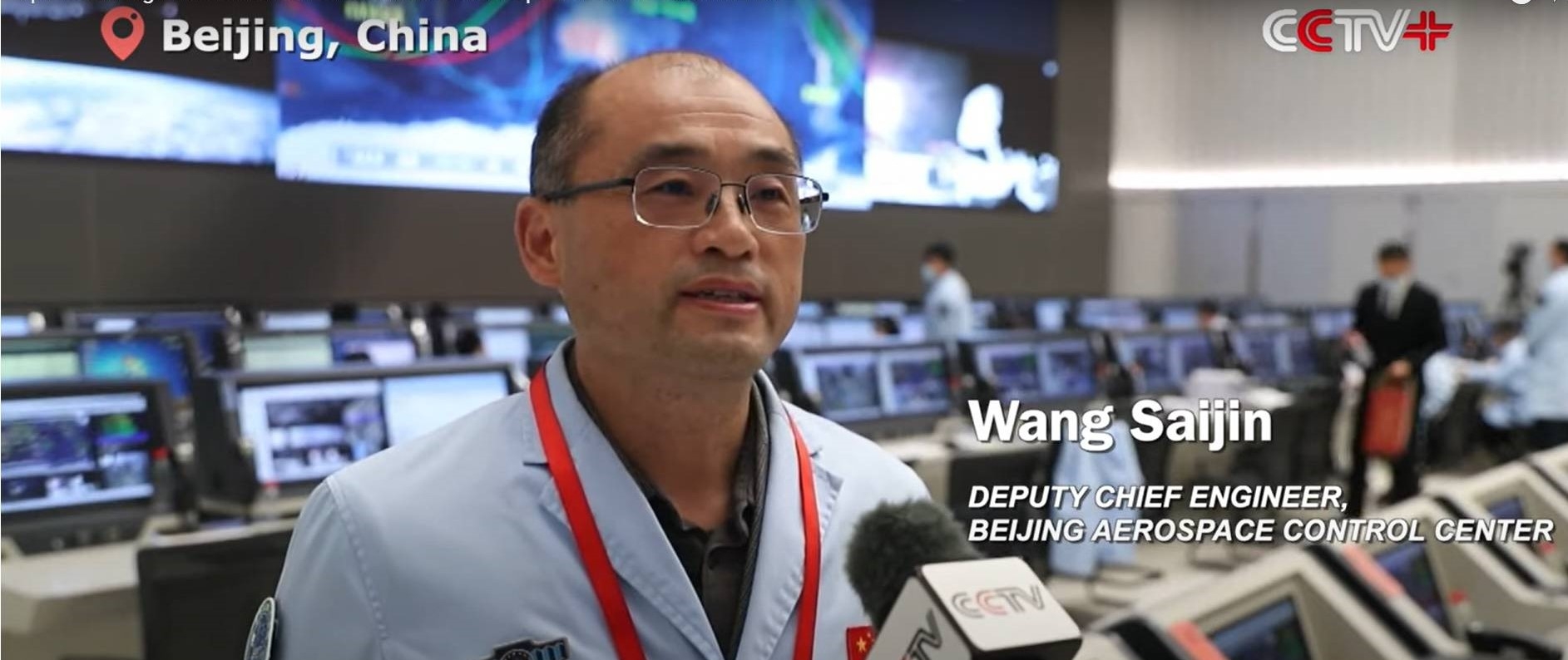
“On the one hand, the accuracy of launching rocket into orbit was required to be higher,” said Wang Saijin, deputy chief engineer of the Beijing Aerospace Control Center. “On the other hand, there was higher requirement for the thrust calibration of the cargo spacecraft engine. It is also very important that we implemented the phase modulation control of the Tiangong space station complex to ensure higher-precision phase modulation control and meet the requirement the orbit injection accuracy,” Wang told CCTV.
Credit: CCTV/Inside Outer Space screengrab
Xu Xiaoping, deputy chief designer of the cargo spacecraft system at the Fifth Academy of China Aerospace Science and Technology Corporation, added:
“This is also the first time that China’s cargo craft has completed a fast automated rendezvous and docking in about two hours, setting a world record. It is of great significance to promoting China’s space rendezvous and docking to a higher level, and to enhancing the emergency supply capacity for the space station,” Xu said.

China’s space station expected to be completed around 2022.
CMS/Inside Outer Space screengrab
Up next: first in-orbit crew rotation
China launched the space lab module Mengtian on Oct. 31, taking the construction of the country’s space station into the final stage, on track for complex completion by year’s end.
With the core module Tianhe and lab modules Wentian and Mengtian, the space station has formed a three-module T-shape structure. Such a structure is the planned layout at the space station’s completion. There has been indication of adding more structure to the complex in the future.
The country plans to launch the Shenzhou-15 crewed spaceship later this year. The Shenzhou-14 and Shenzhou-15 crew members will conduct the first in-orbit crew rotation in China’s space history.
To view an array of videos of the launch and docking of the Tianzhou-5 cargo spacecraft, go to:

NASA’s Space Launch System (SLS) topped by the Orion spacecraft at Launch Pad 39B, Friday, Nov. 11th at NASA’s Kennedy Space Center in Florida. Post-hurricane teams have begun walkdowns and inspections at the pad to assess the status of the rocket and spacecraft after the passage of Nicole. Launch of the uncrewed flight test is targeted for no earlier than Nov. 16 at 1:04 a.m. EST.
Image credit: NASA/Joel Kowsky
Hurricane Nicole’s impact to the Artemis mission may be quite long-lasting. The recent delay of the mega-booster’s liftoff from Florida to no earlier than November 16 raises questions about NASA’s actions for weather risk mitigation and preparation.
That’s the view from AccuWeather Chief Meteorologist Jonathan Porter at the Global Weather Center.
“This entire situation raises serious questions about NASA’s procedures for weather risk mitigation and preparation based upon available forecasts, especially over the weekend given that several days notice is required in order to safely move the rocket back to the Vehicle Assembly Building,” said Porter as attributed to AccuWeather sent out by Edelman, a communications firm based in Washington, D.C.
Inside Outer Space contacted AccuWeather, verifying Porter’s comments.
Gusty prognosis
For days in advance, AccuWeather meteorologists accurately highlighted the risk of hurricane-force winds, Porter said, especially in gusts, to occur near the Kennedy Space Center as Nicole made landfall early Thursday morning.

Courtesy: Valder Beebe Show
“Many wind sensors at Kennedy Space Center, on and near the launch pad, reported several wind gusts above 85 mph with a peak wind gust of 100 mph,” Porter points out in the statement.
“As accurately forecast by AccuWeather, the extremely close proximity of the ocean to the launch pad and the elevated location of the rocket and launch equipment hundreds of feet above the ground also increase the risk for hurricane force wind gusts versus a location even a mile or two inland and not as high off the ground,” Porter said.

Image credit: NASA/Joel Kowsky
Weather risk
The force of the wind increases exponentially, not linearly, “so small increases in wind can result in substantial increases in damage potential,” said Porter.
“This entire situation raises serious questions about NASA’s procedures for weather risk mitigation and preparation based upon available forecasts, especially over the weekend given that several days notice is required in order to safely move the rocket back to the VAB [Vertical Assembly Building].
AccuWeather meteorologists had defined Nicole as a rainstorm, which posed a risk to the East Coast of Florida early Saturday afternoon, at least a day and half before the government began issuing advisories on the storm.
Wind threshold
NASA itself has indicated that wind gusts of 85 mph or greater at 60 feet above the ground can spark concerns about potential damage to the launch apparatus or the rocket itself.
Porter said in the statement that AccuWeather meteorologists had widely reported that the risk of a wind gust of 85 mph or greater to occur near the Kennedy Space Center to be 60 percent, or a 6 in 10 chance, for the wind threshold NASA defined to be exceeded.
Deemed by Porter as a “bold AccuWeather forecast” that prediction ended up “being the most accurate wind forecast and a superior description of the risk when compared to forecasts from the government and any other source, which predicated substantially less risk for hurricane force winds,” he said via the statement.
NASA’s call
In a November 10th twitter posting, Jim Free, associate administrator for Exploration Systems Development Mission Directorate at NASA Headquarters in Washington, D.C. said: “We took the decision to keep Orion and SLS at the launch pad very seriously…”
With the unexpected change to the forecast, returning to the VAB, Free said, was “deemed to be too risky in high winds, and the team decided the launch pad was the safest place for the rocket to weather the storm.”

