Archive for the ‘Space News’ Category
 Author:
  June 2nd, 2026
Image credit: SpaceX
SpaceX filed on May 20 with the United States Securities and Exchange Commission key documentation for an initial public offering (IPO) of stock.
An IPO signals that a private company sells shares of its stock to the public on a stock exchange. This long-anticipated public offering could become the largest IPO in history, roughly a two trillion dollar valuation, and will be soon listed under the ticker SPCX.
Number of challenges
As noted by SpaceX, “this prospectus contains forward-looking statements that are subject to a number of risks and uncertainties, many of which are beyond our control,” explains SpaceX. “You should read this entire prospectus carefully before making an investment decision.”

SpaceX mission statement is to “make life multiplanetary, understand the true nature of the universe, and extend the light of consciousness to the stars.”
Image credit: SEC filing/SpaceX
The prospectus adds: “We face a number of challenges relating to our business and growth strategy and, ultimately, the achievement of our mission to make life multiplanetary, understand the true nature of the universe, and extend the light of consciousness to the stars.”
I reached out to a number of experts about what the SpaceX IPO means for markets and individual investors – and the implications for a new wave of high-tech listings seeking fame and fortune.
Go to my new Space.com story — Will SpaceX still be a launch company after its historic IPO? — at:
 Posted in
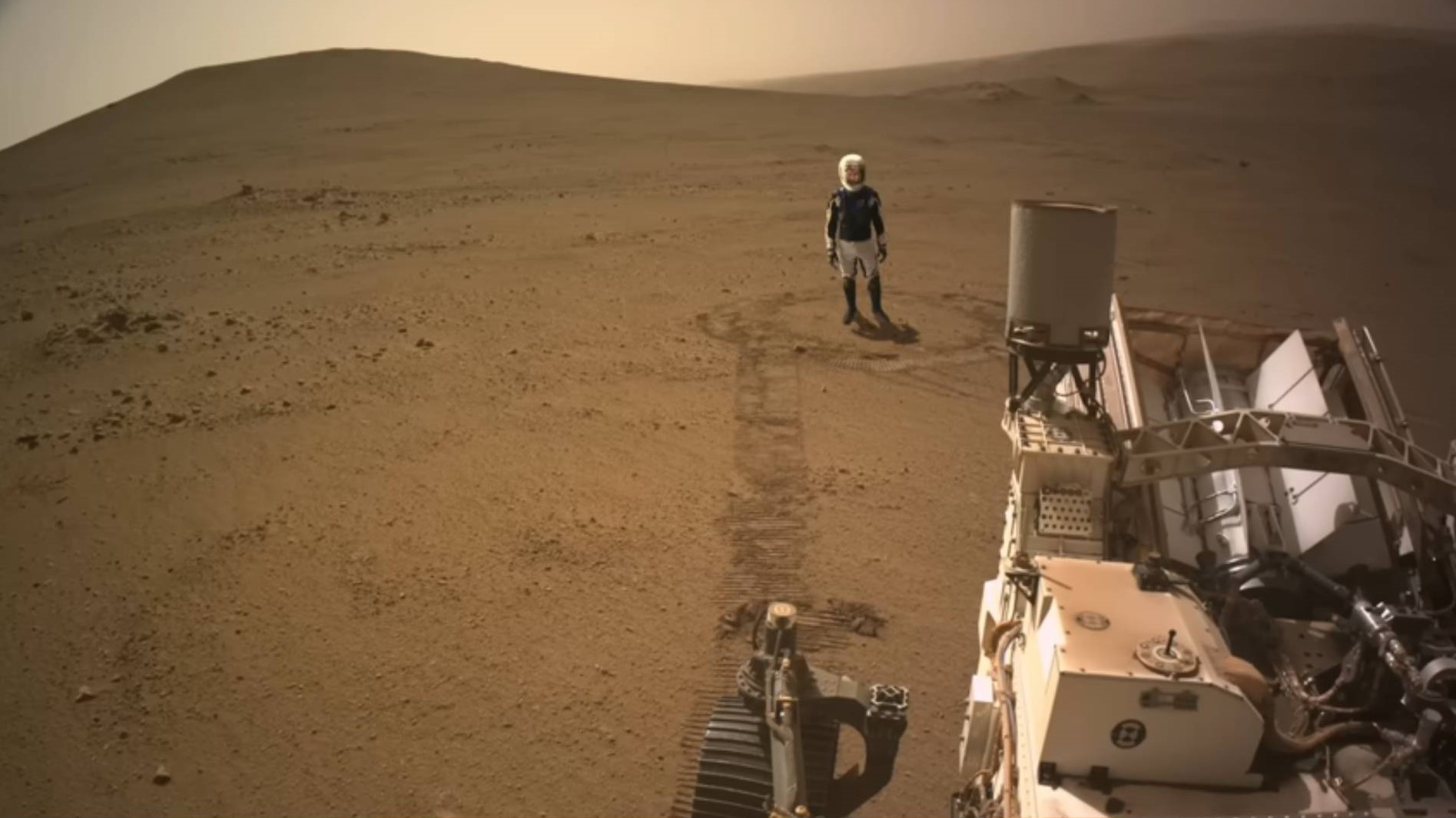
Image credit: NASA/JPL-Caltech/Mars Guy/Inside Outer Space screengrab
A new episode of Mars Guy looks at the accumulation of dust donuts on the color calibration targets used by cameras on NASA’s Perseverance rover.
“Martian dust is behaving as expected. It also reveals a fundamental difference between dust on Mars and Earth. Our dust doesn’t behave this way.”
This video is available at:

Image credit: NASA/JPL-Caltech/Mars Guy/Inside Outer Space screengrab

Image credit: NSF
The recent loss of Blue Origin’s New Glenn booster that blew up during an on-the-pad engine test drew NASA Administrator Jared Isaacman to visit the blast zone in Florida.
“We go where we need to be, and today that was NASA Kennedy,” Isaacman posted on X. He and several senior engineers spent time at Blue Origin, speaking with the workforce, including Jeff Bezos and Dave Limp, and viewed the damage at LC-36 firsthand.
“I appreciated the opportunity to hear directly from those working through the aftermath and better understand the challenges ahead,” Isaacman said.
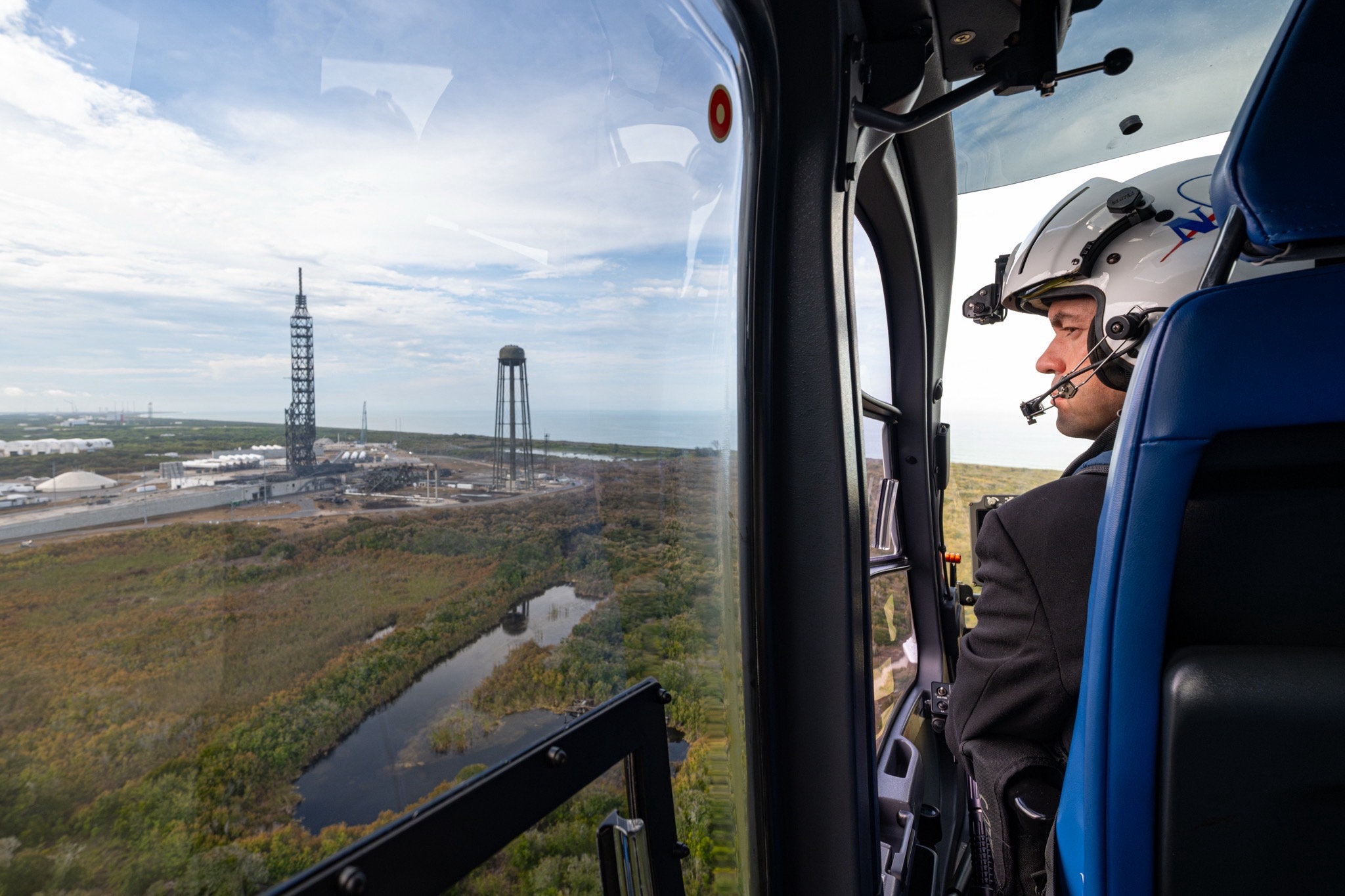
Image credit: NASA/Jared Isaacman
Overcome setbacks
“There is a lot of work to do, but this is exactly why people choose careers in aerospace, whether at NASA, Blue Origin, or across the industry. The talent in this field thrives under pressure and performs at its best when solving the toughest problems,” the NASA chief added.
“We have been saying for months at NASA that we are not going to sit on our hands and wait for the capabilities necessary to achieve the nation’s most pressing objectives,” said Isaacman. “We are going to take an active role alongside our partners, just as we did in the 1960s, to overcome setbacks, remove obstacles, and deliver the intended outcomes.”

NASA Administrator Isaacman (right), Jeff Bezos (center), and Dave Limp (left) of Blue Origin. Image credit: NASA/Jared Isaacman
Investigating the hotfire anomaly
NASA is committed to helping the Blue team recover, continue to advance their lunar lander and get New Glenn back to flying “as soon as safely possible,” Isaacman posted. “America’s greatest achievements in space were never the result of avoiding setbacks. They came from overcoming them. We have done it before, and we will do it again.”
Meanwhile, Dave Limp CEO of Blue Origin posted on X: “We have regained some access to Launch Complex 36 and are actively investigating the hotfire anomaly. We will start clearing the pad soon and have a good rebuild plan in place.”
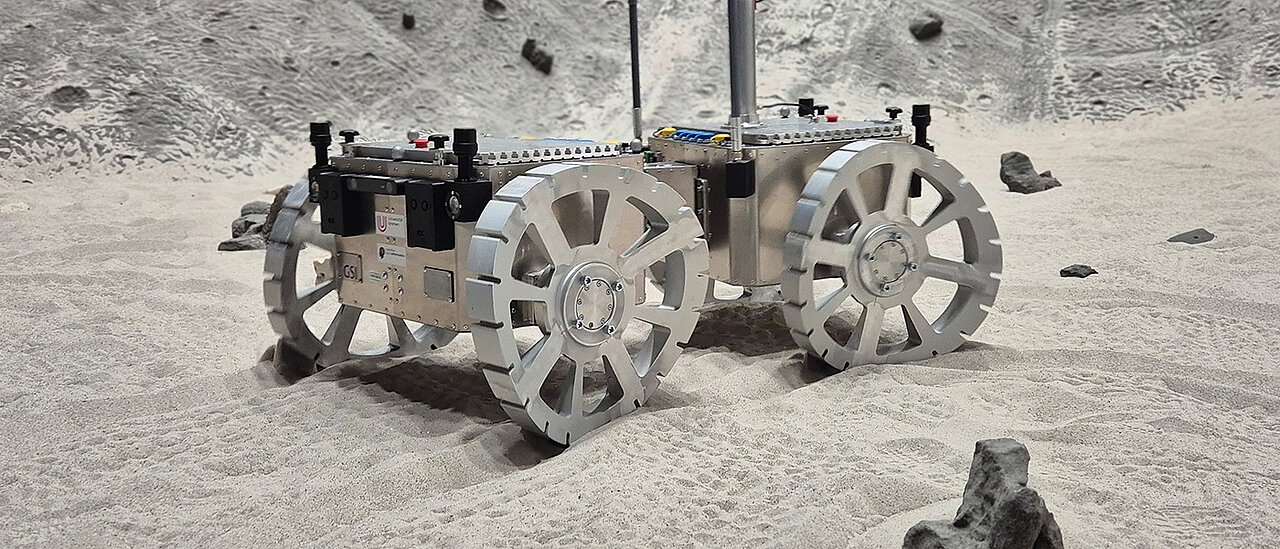
Image credit: Marco Schmidt/University of Würzburg
A novel approach to scouting about over the sand dunes of Mars is the Valles Marineris Explorer – or VaMEx in probing Red Planet terms.
VaMEx is a project of the German Space Agency at the German Aerospace Center (DLR). The goal of the VaMEx initiative is to blueprint an autonomous, heterogeneous robot swarm for exploring Valles Marineris on Mars – heralded as the “Grand Canyon” on the Red Planet.
Driving, walking, and flying systems as foreseen by VaMEx teams is leveraging what each concept brings to the table in terms of jointly investigating a large area with varied environmental characteristics.
What’s unique about one approach to a Mars rover?
Go to my new Space.com story to find out – “Watch this bio-inspired Mars rover concept ‘swim’ through sand on curved wheels (video)” – at:

Image credit: FAA/SpaceX
FAA Completes Environmental Review for SpaceX Starfall
The Federal Aviation Administration (FAA) has issued the Final Environmental Assessment for the SpaceX Starfall reentry vehicle. The review evaluated the environmental impacts of reentry, splashdown, and recovery activities.
Under the proposal, SpaceX would launch two Starfall missions to Low Earth Orbit or to a sub-orbital trajectory as a payload on the Falcon 9 or the Starship-Super Heavy launch vehicles. The capsules would splashdown in the Pacific Ocean off the U.S. west coast in international waters.
The completion of the environmental review process does not guarantee the FAA will issue a Starfall reentry license. The SpaceX application must also meet safety, risk and financial responsibility requirements before a license can be issued.
Reentries per year

Image credit: FAA/SpaceX
Under the Proposed Action addressed in the Environmental Assessment (EA), FAA would modify SpaceX’s existing license to conduct up to 10 reentries per year with the Pacific Ocean as its primary landing location.
The SpaceX Starfall concept has largely been a hush-hush initiative by the company, exploring how the microgravity environment can be used for manufacturing pharmaceutical drugs, semiconductors, and other products.
To access the FAA review, go to:

Image credit: CCTV/Inside Outer Space screengrab
Following a space station handover ceremony, China’s Shenzhou-21 astronaut crew returned to Earth on Friday (Beijing Time, parachuting into the Dongfeng landing site in north China’s Inner Mongolia Autonomous Region.
The Shenzhou-21 crew spent seven months in space, setting a new record for the longest in-orbit stay by a Chinese astronaut crew.
Shenzhou-21 astronauts Zhang Lu, Wu Fei and Zhang Hongzhang are safely back to Earth, riding within the Shenzhou-22 spacecraft.

Image credit: CCTV/Inside Outer Space screengrab
Return vessel
The Shenzhou-21 crew’s original spaceship, which sent them into space on Oct 31, 2025, was previously returned to Earth carrying the astronauts of the preceding Shenzhou-20 mission after tiny cracks were found in the viewport window of the Shenzhou-20 manned spacecraft’s return capsule. That spacecraft was later safely brought back to Earth.
Back on Nov 25, 2025, China launched the Shenzhou-22 spaceship to provide a return vessel for the Shenzhou-21 crew.
Over 100 vehicles, including command vehicles, search vehicles, medical monitoring and rescue vehicles, and emergency response vehicles, had gathered at the Dongfeng landing site for the return of the Shenzhou-21 crew.

Image credit: CCTV/Inside Outer Space screengrab

Image credit: CMSA/CCTV/Inside Outer Space screengrab
Longer station stays
China is set to test its capabilities in supporting its astronauts for longer stays in space by piloting a one-year in-orbit stay by a member of the Shenzhou-23 crew
The Shenzhou-21 crew spent seven months in space, setting a new record for the longest in-orbit stay by a Chinese astronaut crew.
Meanwhile, one member of the currently orbiting Shenzhou-23 crew will attempt to extend a stay in space of one year.
Go to departure and landing videos at:
Image credit: NSF
The incident took place at roughly 9 p.m. Eastern Times. The explosion happened as the New Glenn’s seven BE-4 first-stage engines ignited for an on-the-pad test. The lost launcher was slated to support an Amazon Leo mission next week.
From NASA Administrator Jared Isaacman:
“NASA is aware of the anomaly that occurred tonight at Launch Complex 36 involving Blue Origin’s New Glenn rocket at Cape Canaveral Space Force Station. Spaceflight is unforgiving, and developing new heavy-lift launch capability is extraordinarily difficult. We will work with our partners to support a thorough investigation of this anomaly, assess near-term mission impacts, and get back to launching rockets,” Isaacman posted. “We will provide information on any impacts to the Artemis and Moon Base programs as it becomes available.”
Go to: NSF – NASASpaceflight.com
Overview of the New Glenn explosion at:
https://x.com/i/status/2060180159831908651
From: Scott Manley “Blue Origin’s Rocket Explosion – How Bad Is It?”
Go to:
Also, go to: “Here’s why the failure of Blue Origin’s New Glenn rocket is so catastrophic” by Eric Berger. senior space editor at Ars Technica, at:
From Blue Origin: “Debris from our recent hotfire anomaly may wash ashore in the coming days/weeks. If you encounter any debris, do not touch or approach it for your safety.”
Please report the location immediately:
Call: 1-321-222-4355
Email: MissionRecovery@blueorigin.com
From: Jeff Bezos: “All personnel are accounted for and safe. It’s too early to know the root cause but we’re already working to find it. Very rough day, but we’ll rebuild whatever needs rebuilding and get back to flying. It’s worth it.”

Cover art: Matthew Cook
A new report has reviewed the strategic and security implications of placing mass driver technology on the moon.
Mass drivers are inherently dual use, the report states, not only for helping create American economic prowess in space, but being large electrically-driven cannons, it’s infrastructure that can flex U.S. military muscle on the moon.
The special report — Strategic Implications of Lunar Mass Drivers as a Dual-use Technology – has been issued by the American Foreign Policy Council.
Strategic environment
Written by Andre Sonntag, an independent space power and policy analyst focused on cislunar security, strategy, and near-term space conflict, the report points out that the U.S. faces a narrowing window “to shape the strategic environment of the Lunar frontier.”
For more details, go to my new Space.com story – “Companies like SpaceX want electromagnetic catapults on the moon. Could they be used as weapons?” – at:
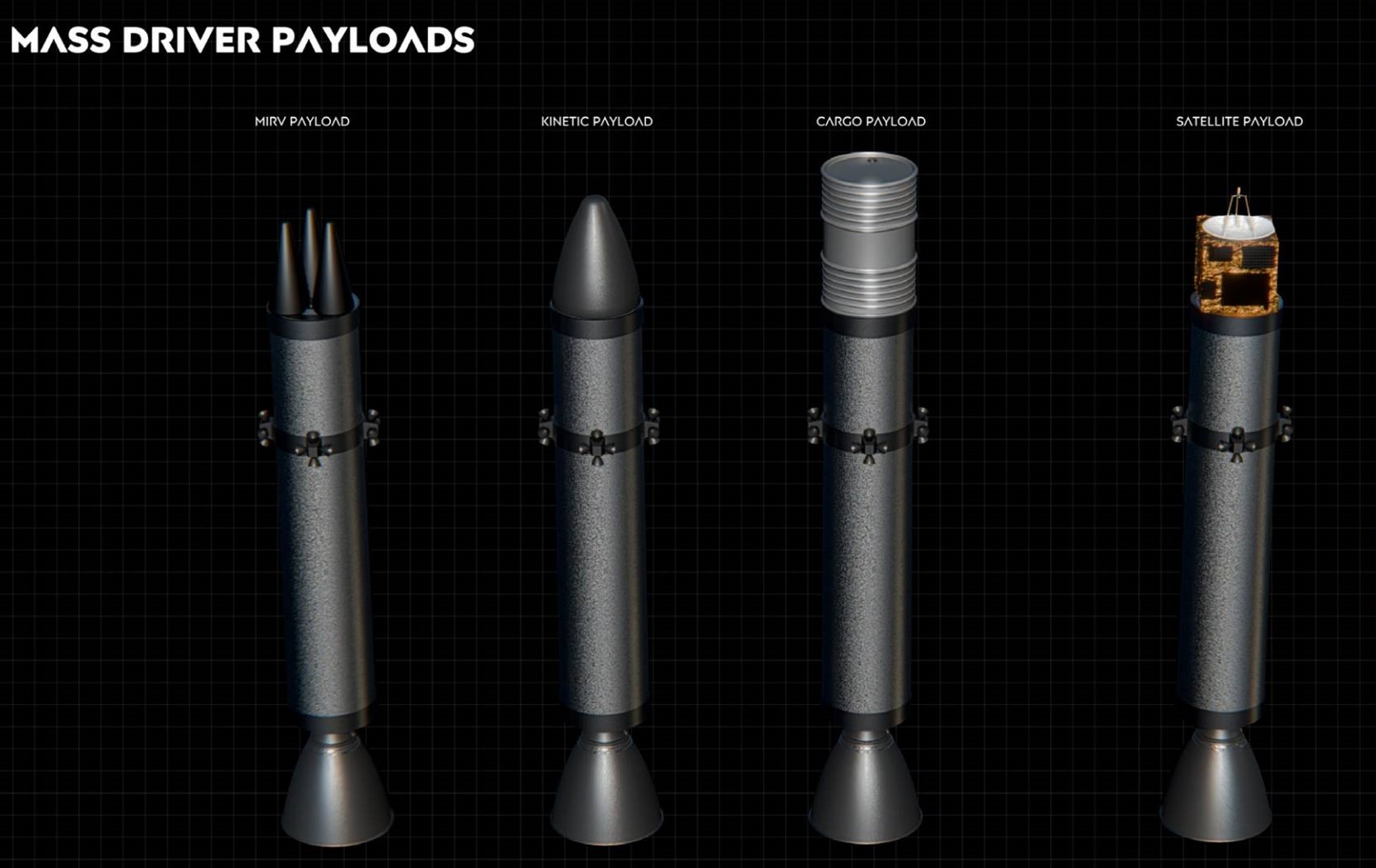
Image credit: Matthew Cook

Image credit: Virgin Galactic/Operation Period
Two young South Asian women are set to carry out dedicated research on menstruation in space.
Manju Bangalore and Priya Abiram are to fly aboard a 2027 suborbital flight via a Virgin Galactic space plane, the research tagged as Operation Period-01 (OP-01). The duo will delve into pioneering research that will help expand reproductive health research on and off Earth.
The twosome is taking their research to new heights.
Long-overlooked
According to a Virgin Galactic statement released today, the OP-01 mission is part of a broader research initiative through Operation Period’s Redshift Lab.
“OP-01 represents the first dedicated effort to directly study menstrual health in space, addressing a long-overlooked gap in human spaceflight and reproductive health research,” the company states.

Fundamental design gap
“This mission is about more than a scientific first, it’s about correcting a fundamental design gap,” says Manju Bangalore. “Human spaceflight has historically been built around a narrow definition of the human body. We are working to expand that definition and ensure that future space exploration reflects the full diversity of human experience.”
Priya Abiram adds that “by studying menstruation in microgravity, we have the opportunity to potentially unlock insights for astronauts, as well as help inform future biomedical research on Earth, from reproductive science to chronic conditions that remain under-researched and under-funded.”
Menstrual freedom
Operation Period was founded by Manju Bangalore in 2015, a project of Future Incubator – a Gen-Z led organization advancing menstrual freedom by investing in young organizers, leading research, and transforming culture through media and community action.
More information is available at: http://bit.ly/49rCllI

Image credit: Virgin Galactic

Image credit: CMSA/CCTV/Inside Outer Space screengrab
A few days prior to NASA’s update on its Moon Base plans, China is shifting gears in its own humans on the lunar surface outing.
China is establishing an integrated program called the Lunar Exploration Program, melding both its robotic Chang’e lunar probe activities with the country’s human spaceflight program.
Zhang Jingbo, spokesman for the China Manned Space Agency (CMSA) agency, made the announcement at a May 23 pre-launch event for the Shenzhou-23 crewed launch.
Speaking at the Jiuquan Satellite Launch Center in northwest China, Zhang said that “to fully leverage the technological expertise and practical experience accumulated over decades” via its human spaceflight and Chang’e programs, “the existing manned lunar landing and unmanned lunar exploration efforts will be integrated across three areas of missions, resources, and teams.”
“We will spare no effort to strive for the goal of achieving the first Chinese landing on the Moon by 2030,” Zhang added.
For more details, go to my new Space.com story – “China shakes up its space programs to land astronauts on the moon by 2030: ‘We will spare no effort’” – at:
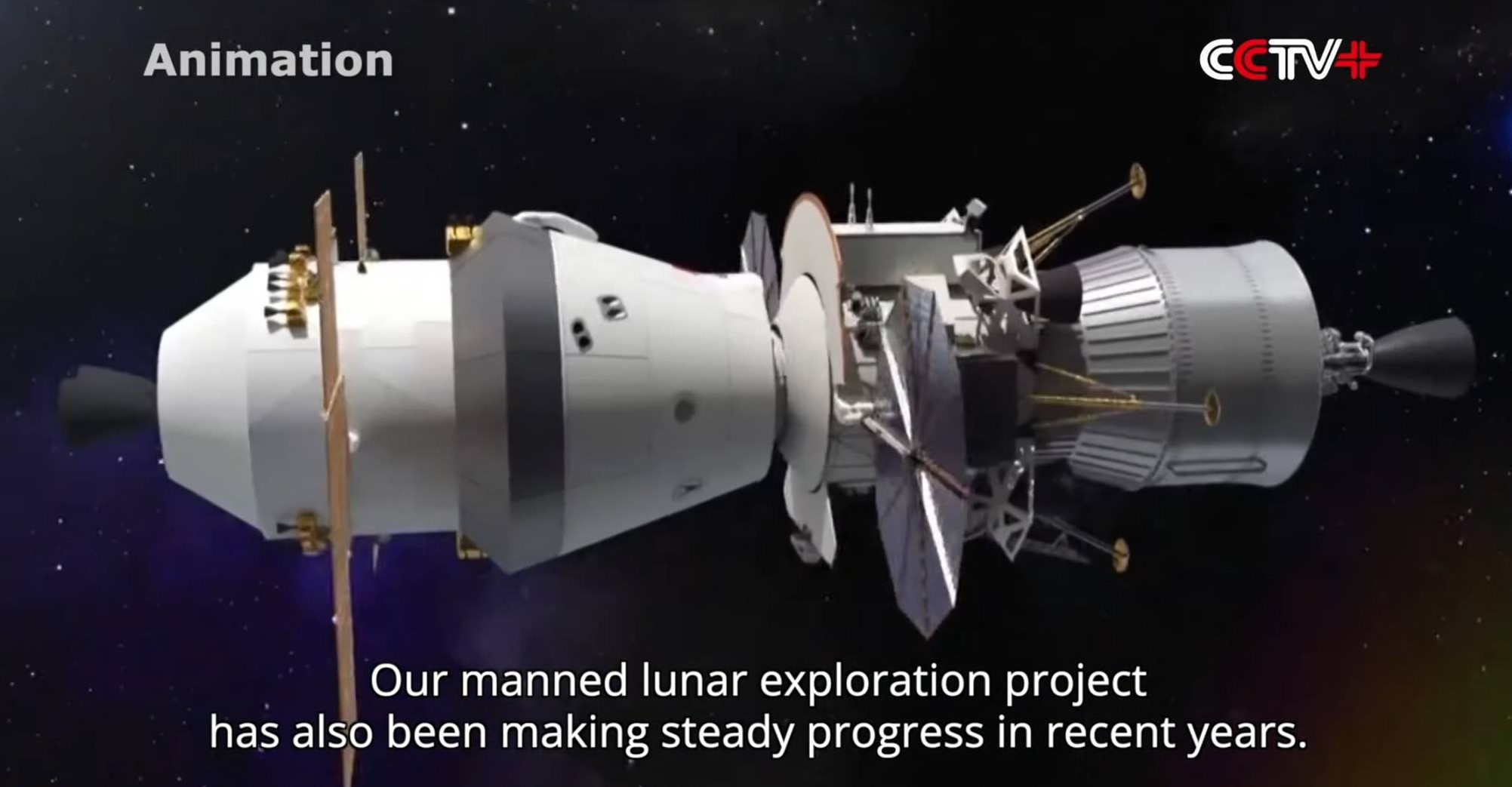
Image credit: CCTV/Inside Outer Space screengrab

