Archive for the ‘Space News’ Category
 Author:
  January 1st, 2023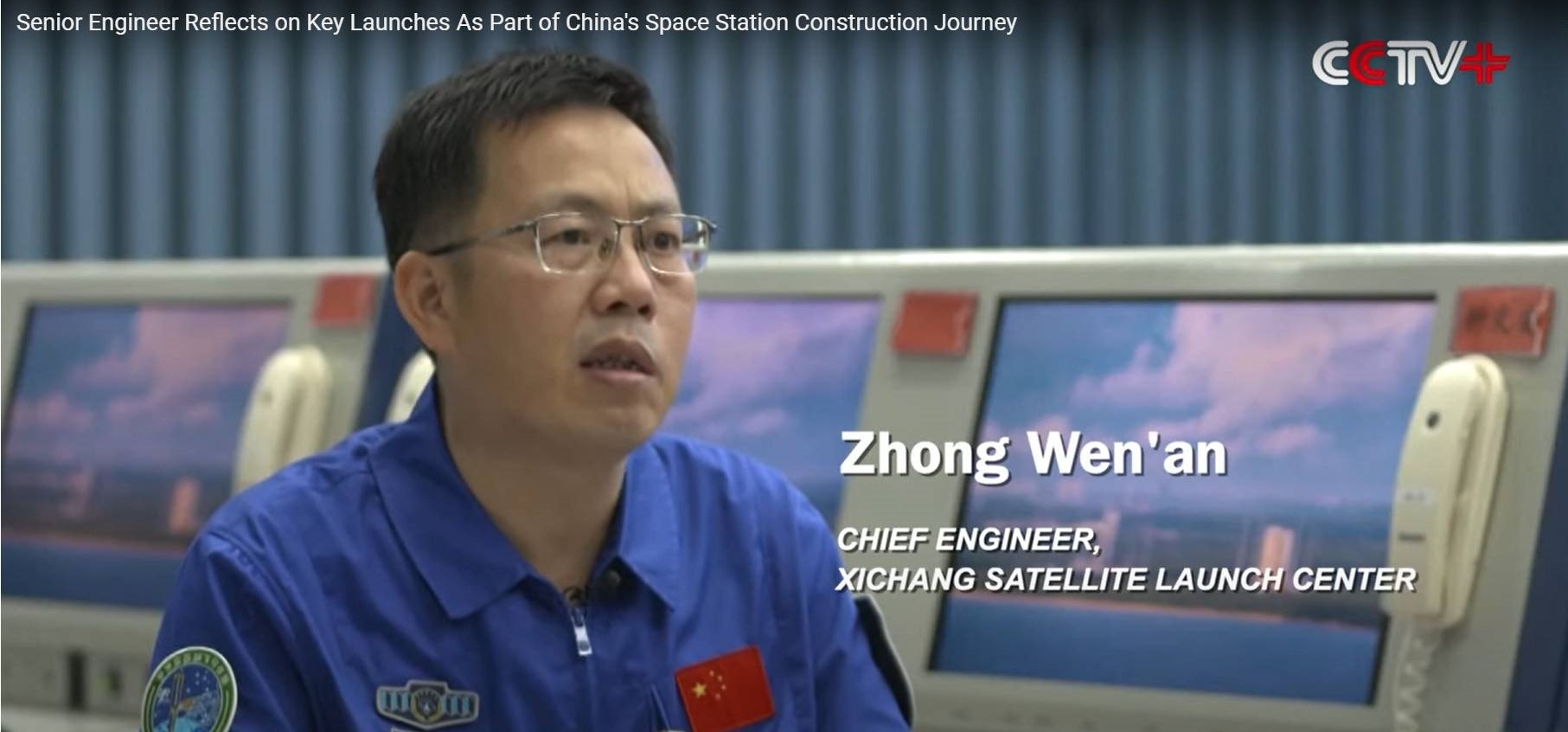
Image credit: CCTV/Inside Outer Space screengrab
China’s Wenchang Satellite Launch Center in the southern Hainan Province is set for an increase in launch rate.
Zhong Wen’an, chief engineer of the Xichang Satellite Launch Center that oversees operations at Wenchang, told China Central Television (CCTV):
“In the near future, Wenchang will see its launch frequency go from between six to eight times a year, to 20 or 30 times a year,” Zhong said. “This is not only a change in quantity but also one in quality. We are also going to add more sites for [the launch of] manned moon-landing missions, heavy rockets and commercial ones. The future of Wenchang is worth looking forward to,” he added.

A Long March-5 booster departs Wenchang launch site.
Credit: CASC
China launched 12 missions related to the building of the space station, with eight of these carried out at Wenchang.
Zhong said that in the future, the launch center is expected to play host to more critical missions on a more frequent scale.
Three-step program
The successful building of the space station is the final goal of China’s “three-step” human space program initiated 30 years ago.
CCTV notes that China’s space station project has completed two phases of the mission objectives: key technology verification and in-orbit construction.

Image credit: Shujianyang Wikimedia Commons, CC BY-SA
During that period of time, the country achieved breakthroughs in regenerative environmental control and life support technology, harnessed flexible solar cell wing driving technology, as well as carry out robotic arm auxiliary module rotation, large assembly control and other technologies.
“I think one of the most important things is that I was determined to make the Chinese space station the most economical space station with advanced technology,” Zhou Jianping, the chief designer of China’s human spaceflight program, told CCTV.

Credit: CCTV/Inside Outer Space screengrab
Station economics
“With respect to the economics of our space station, undoubtedly, it’s the most advanced of all the space stations,” Zhou said. “Thanks to technological advancement, we can dramatically reduce the cost of future supplies to the space station, which is a model of high-quality development.”
The space station is viewed as a new starting point for further space development.
“Our space station will enter the full application stage. It’s safe to say that it is a very important space science research and experiment platform for us to build an innovative country. Our next goal is to conduct manned moon landing in the near future,” Zhou concluded.
 Posted in
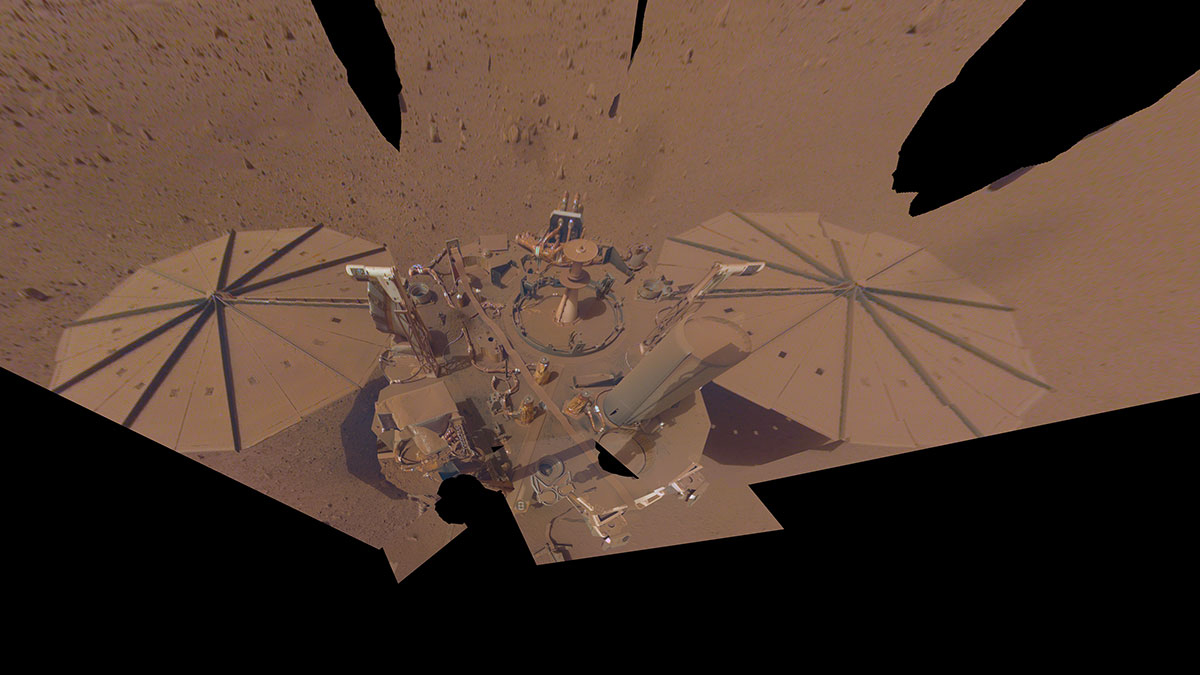
Image credit: NASA/JPL-Caltech
Mars Guy explains that after four years of operation, the NASA InSight lander succumbed to dust accumulation on its solar panels in December.

Image credit: NASA
Here’s why this matters for humans going to Mars and doesn’t matter for samples awaiting return to Earth.
Video at: https://youtu.be/U4ASrml5BjU
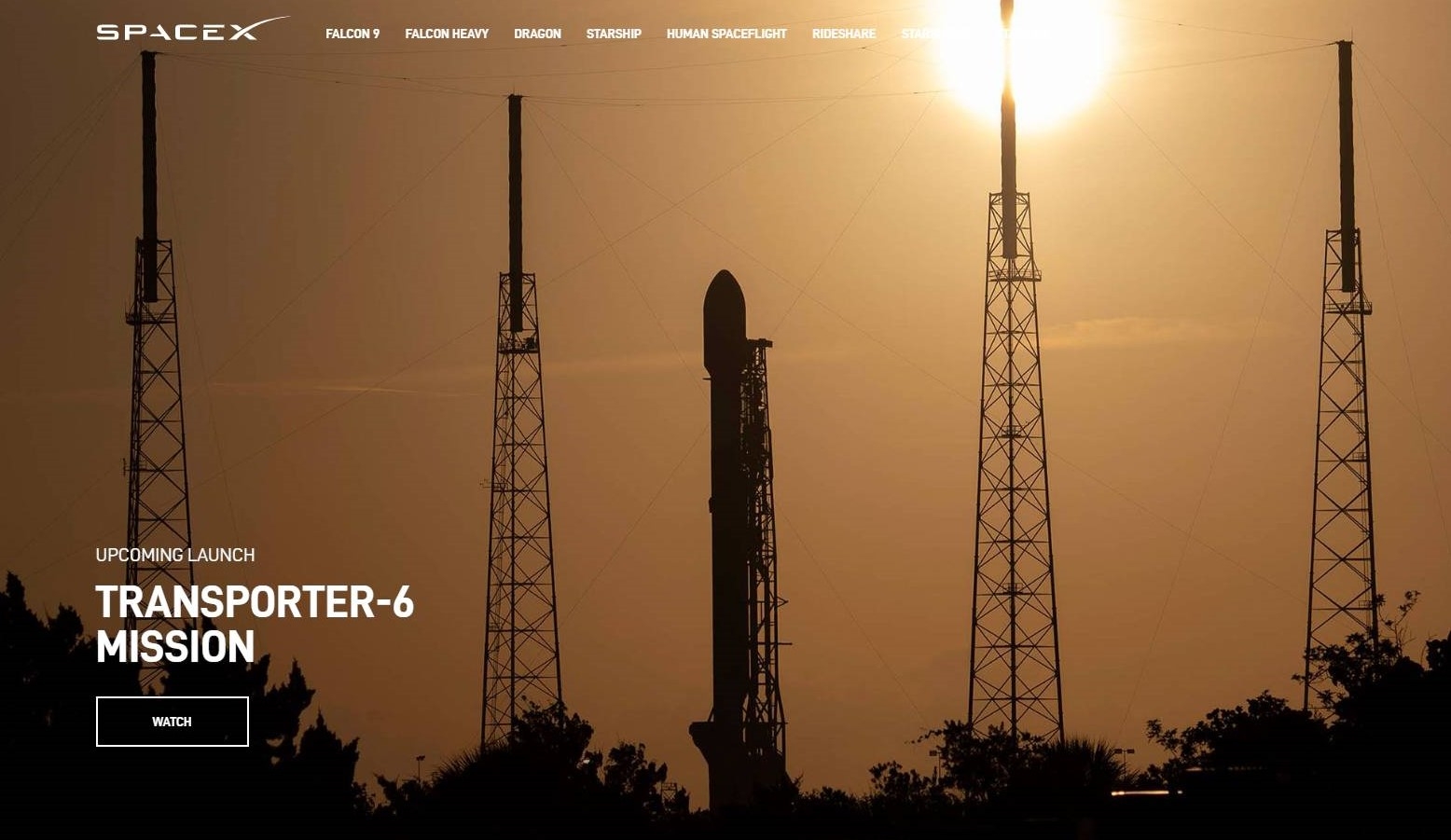
SpaceX is targeting 9:56 a.m. ET (14:56 UTC) on Tuesday, January 3 for Falcon 9’s launch of the Transporter-6 mission.
Image credit: SpaceX
Early next week, a SpaceX Falcon 9 rocket will depart Florida – nothing too unusual.
However, this flight – the SpaceX’s Transporter-6 mission – is the company’s sixth dedicated smallsat rideshare mission.
There will be 114 payloads on this flight, including CubeSats, microsats, picosats, and orbital transfer vehicles carrying spacecraft to be deployed at a later time.

A Planet SuperDove with the Boldly Go Campaign artwork laser etched onto its side panels.
Image credit: Planet Labs PBC
Among the payloads are Planet SuperDove satellites – 36 of them. Each satellite is equipped with eight spectral-bands and improved on-orbit capacity to reconnoiter the Earth for both civil and intelligence needs.
Artwork
A select number of the SuperDoves will be adorned with artwork and quotes that celebrate the legacy of Star Trek creator Gene Roddenberry.

Image credit: Roddenberry Estate
According to Planet, thanks to collaboration with The Roddenberry Foundation’s Boldly Go Campaign, five of the SuperDoves on this mission will have artwork laser-etched onto their side panels. The artwork was inspired by over 1,500 submissions to the Boldly Go campaign, which asked the world to share what gives them hope for humanity’s future.
To learn more, go to this video — Boldly Going: Planet and The Roddenberry Foundation Collaboration – at:

Image credit: CCTV Video News Agency/CMSA/Inside Outer Space screengrab
China’s space station has undergone rigorous in-orbit testing as the country prepares its off-world outpost for a long-term operational stage.
Now onboard the facility and busy at work on a six-month voyage, Shenzhou-15 crew members: Fei Junlong, Deng Qingming and Zhang Lu. This trio of taikonauts entered the space station on November 30.
If all goes according to schedule, the Shenzhou-15 mission will wrap up the last period of space station construction and kick off the first stage of its application and development, according to China Central Television (CCTV).
Now entering that key application and development milestone, the station is expected to see more than 10 years of operation.

Credit: GLOBALink/Inside Outer Space screengrab
Basic configuration
The station’s two lab modules, Mengtian and Wentian, are in position on each side of the Tianhe core module, forming the Tiangong space station’s basic T-shape configuration.
China’s space station now moves to a new phase said Li Dafei, a Beijing Aerospace Control Center’s designer of the Tianhe core module.
“We’ve set the state of the three modules in terms of information systems, energy, heating control, environmental control and life support to establish the basic configuration of three-module operation,” Li told CCTV.

Shenzhou-14, Shenzhou-15 crew members in handover ceremony.
Credit: CMS/CCTV/Inside Outer Space screengrab
“We have many overlapping designs for the three modules,” Li added. “In order to ensure normal operations after we shift to any spare piece of equipment, we need to conduct regular inspections of the key equipment. Some inspections require cooperation from the in-orbit astronauts and can only be completed through ground-space coordination. Others can be done remotely from Earth and monitored and checked by the ground crew independently.”
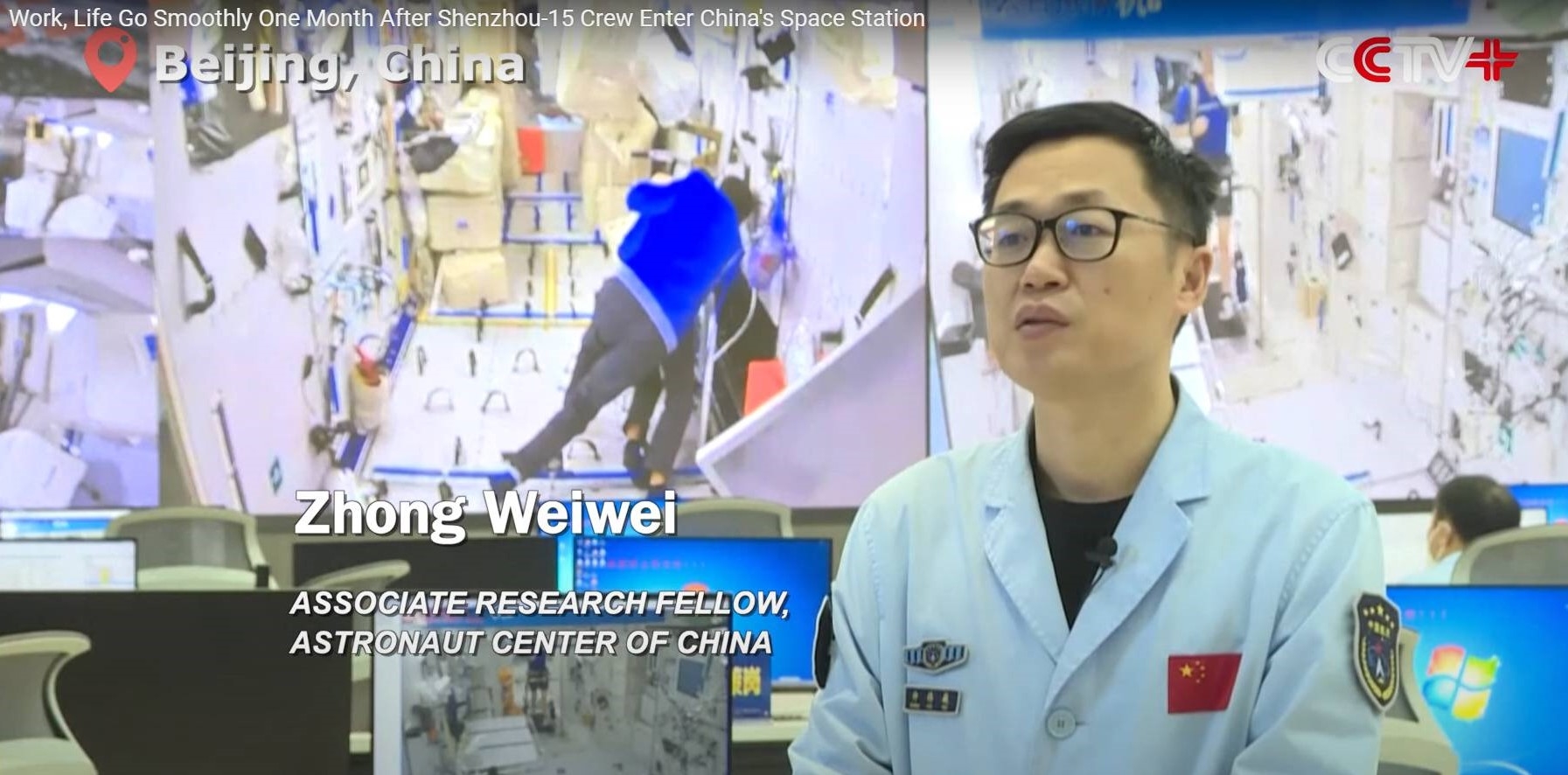
Image credit: CCTVCCTV Video News Agency/Inside Outer Space screengrab
Unpacking and installing
Over the past month, the Shenzhou-15 crew members have been unpacking and installing experiment payloads in the Mengtian lab module and carrying out tests as scheduled.
The current crew is also carrying out daily physical fitness training as planned.
“The exercises are tailored. The astronauts have specific exercise plans designed in accordance with their physical conditions and characteristics,” Zhong Weiwei, an associate research fellow at the Astronaut Center of China, told CCTV.
“So far, the nine exercise facilities have all been installed, and the three astronauts are making good use of them. The most frequently used ones include the bike, the treadmill, the facility for resistance training, the chest expander and the penguin suits,” Zhong said.
Image credit: Shujianyang Wikimedia Commons, CC BY-SA
Sleep zones
Zhong said that two of the space travelers live in the sleep zone in Wentian, and the third crew member rests in the sleep zone of the core module.
“This adjustment is made according to their subjective requirements. All of them have meal in Wentian currently, and personal hygiene issues are handled in the core module,” Zhong noted.
During the past month, the crew has adapted to the in-orbit living and working environment and have undergone medical examinations.
“So far, all the work and life in orbit are going normally, and the astronauts’ physical signs are also normal,” Zhong said.
For a newly-issued video of the Shenzhou-15 crew onboard the station, go to:
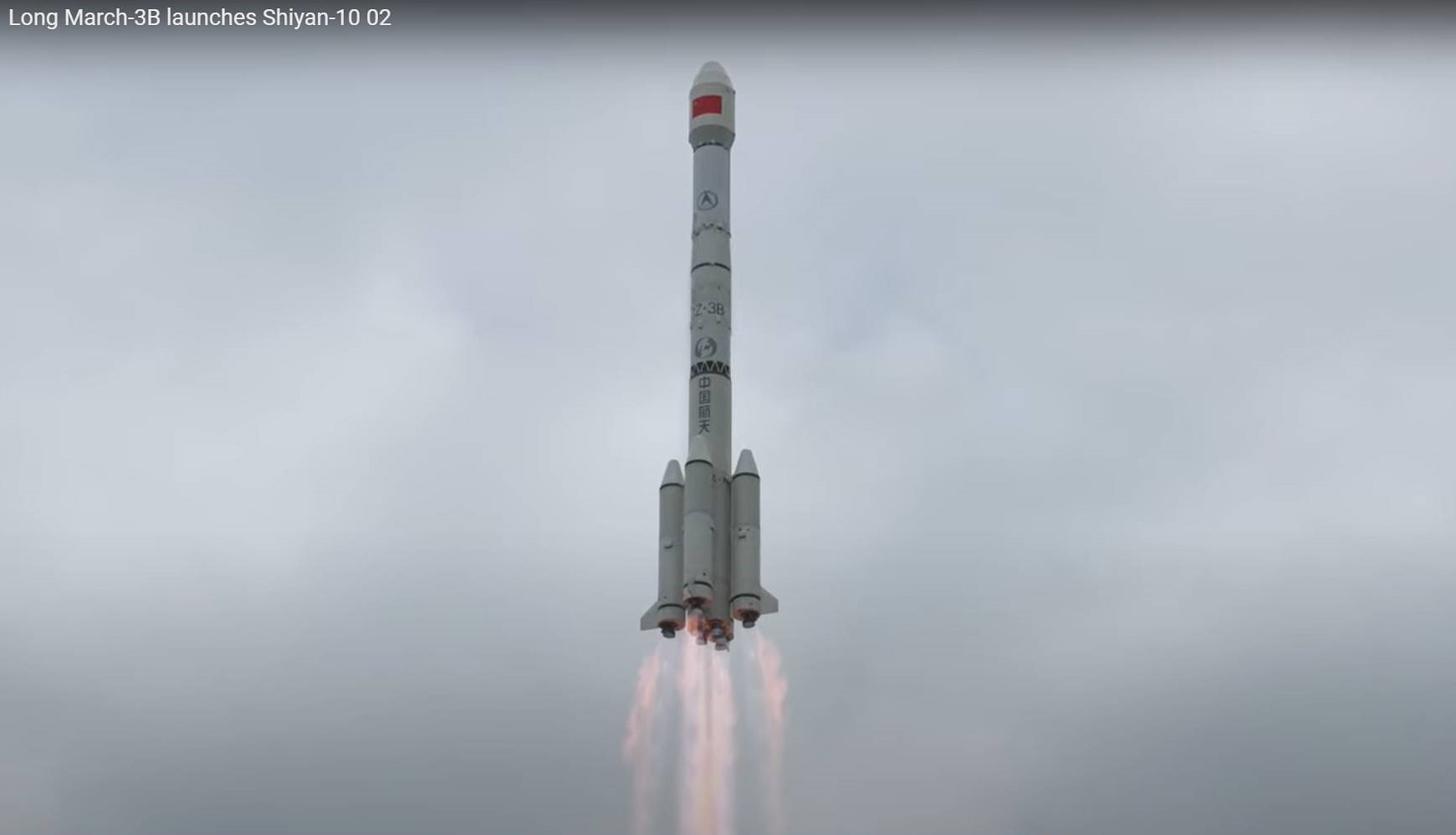
Look Out Below! China’s Long March-3B rocket heads skyward after December 29 liftoff.
Image credit: CCTV/CASC/Inside Outer Space screengrab
The Philippine Space Agency (PhilSA) posted a heads up public advisory for incoming debris from China’s Long March 3B rocket launched today from the Xichang Satellite Launch Center.
China’s Long March-3B carrier rocket propelled into orbit on December 29th the Shiyan-10 02 satellite to be used for in-orbit verification of new space technologies, such as space environment monitoring.
Unburned debris
Meanwhile, PhilSA recommended “precautionary measures related to expected unburned debris from the Long March 3B rocket.” PhilSA issued an advisory to all relevant government agencies on the estimated drop zone area and proposed the issuance of appropriate warnings on air and marine access.

Image credit: PhilSA
The launch vehicle leftovers, such as the rocket boosters and payload fairing, were projected to fall within a drop zone area located within the vicinity of Recto bank.
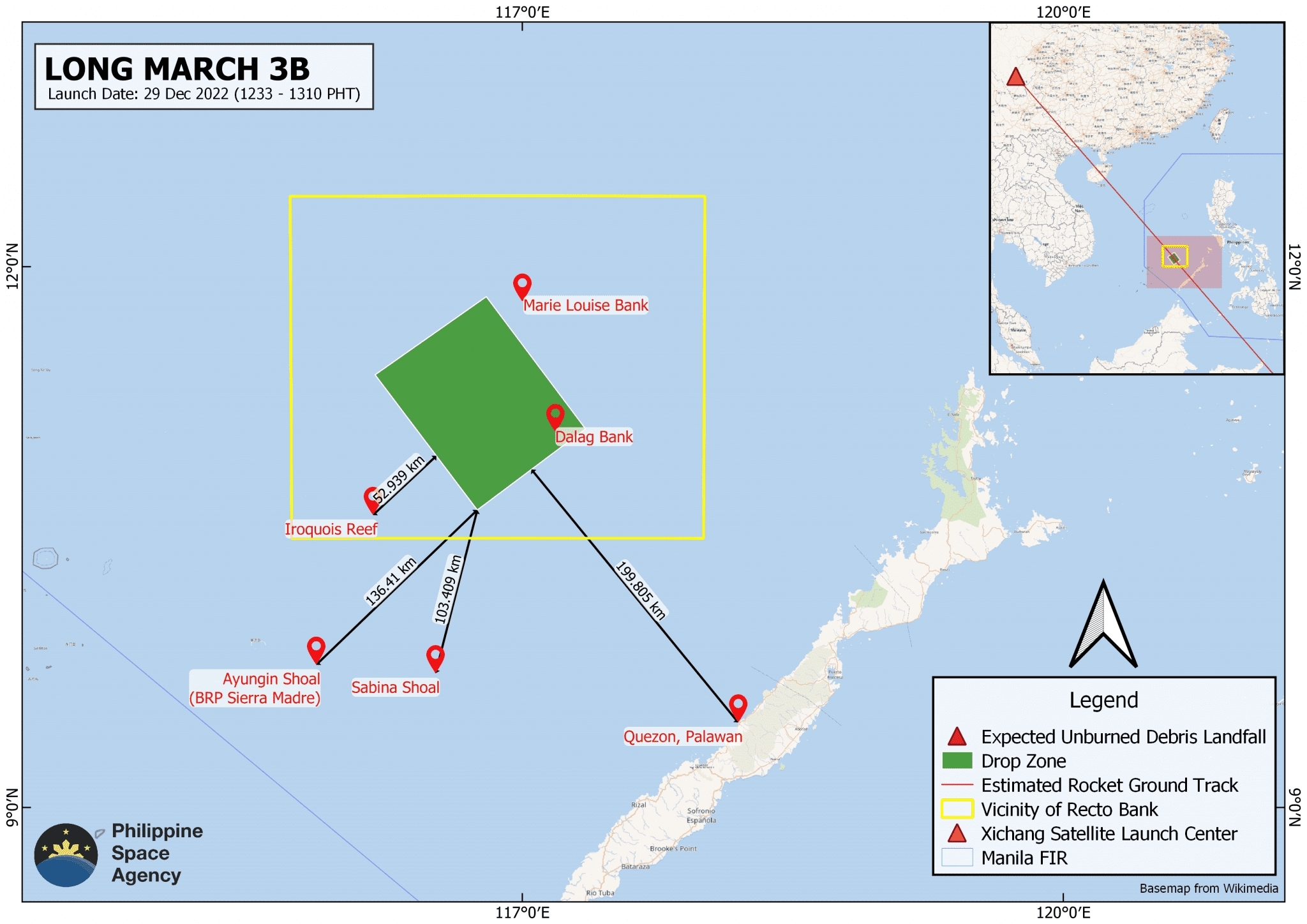
Projected drop zone area for debris from Long March 3B booster.
Image credit: PhilSA
“While not projected to fall on land features or inhabited areas within the Philippine territory, falling debris poses danger and potential risk to ships, aircraft, fishing boats, and other vessels that will pass through the drop zone,” according to a PhilSA statement.
Public caution
The actual drop zone area, PhilSA added, may change because of various factors such as the Earth’s rotation, weather, and climate conditions.
“There is also a possibility for the debris to float around the area and wash toward nearby coasts. Furthermore, the possibility of an uncontrolled re-entry to the atmosphere of the rocket’s upper stages returning from outer space cannot be ruled out at this time,” PhilSA stated.

China Long March-5B Y3 rocket remains from July 24, 2022 launch.
Image credit: Philippine Coast Guard/Mamburao
PhilSA reiterated its earlier public advisory to immediately inform local authorities if suspected debris is sighted. PhilSA also cautioned the public against retrieving or coming in close contact with these materials that may contain remnants of toxic substances such as rocket fuel.

Credit: via Roscosmos
Russia’s Roscosmos and China’s National Space Administration signed a cooperation program of space activities for 2023-2027.
According to Roscomos, as reported by the TASS news agency, the cooperative agreement was signed at the end of last month.
This year, Roscomos emphasized, the Russian Federation and China continued to intensify cooperation in the space sector.

Artist’s view of International Lunar Research Station to be completed by 2035. Credit: CNSA/Roscosmos
Lunar station
One element of cooperative work between the two nations is establishment of the International Scientific Lunar Station (ISLS).
Previously, Roscosmos and the China National Space Agency (CNSA), as part of the Global Conference on Space Exploration (GLEX-2021), presented a roadmap for the lunar outpost.
According to TASS, construction of the ISLS should be fully completed by 2035.

Chinese scientists have unveiled design of a crew Moon rover.
Credit: New China TV/GLOBALink/Inside Outer Space screengrab
Step-by-step
In earlier, step-by-step stages from 2026 to 2030, two robotic Moon missions are planned to develop technologies for landing and delivering cargo, as well as returning samples of lunar rock to Earth.
From 2031 to 2035, infrastructure in lunar orbit and on the surface of the Moon, including communications systems, as well as electrical power, research and other equipment are to be put in place.
Per the project’s roadmap, the station’s transport infrastructure will include research and technical lunar rovers, as well as a jumping robot.
The parties plan to equip the station with several smart mini-rovers designed to explore the surface of the Earth’s natural satellite.

Moon as observed from the International Space Station.
Image credit: NASA
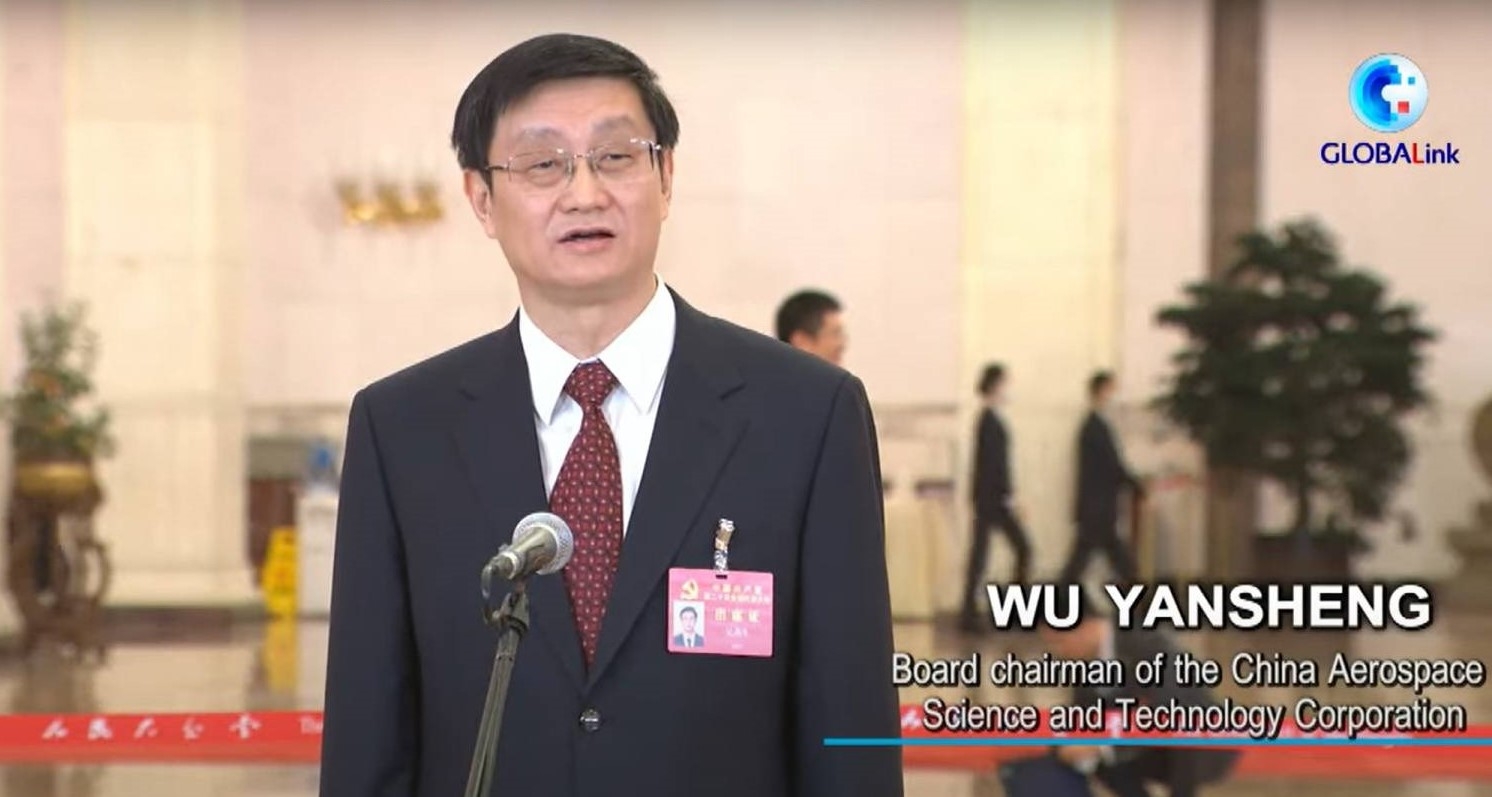
Image credit: GLOBALink/Inside Outer Space screengrab
China is purportedly moving forward on a new booster tied to the country’s human spaceflight plans for a piloted Moon landing.

Image credit: CCTV/Inside Outer Space screengrab
Recently speaking at a youth forum gathering, Wu Yansheng, chairman of the Aerospace Science and Technology Corp (CASC) — China’s largest space contractor — said that the new rocket is codenamed “Rocket 921” and is to carry an orbiter vehicle with three persons on board and a two-member Moon lander.
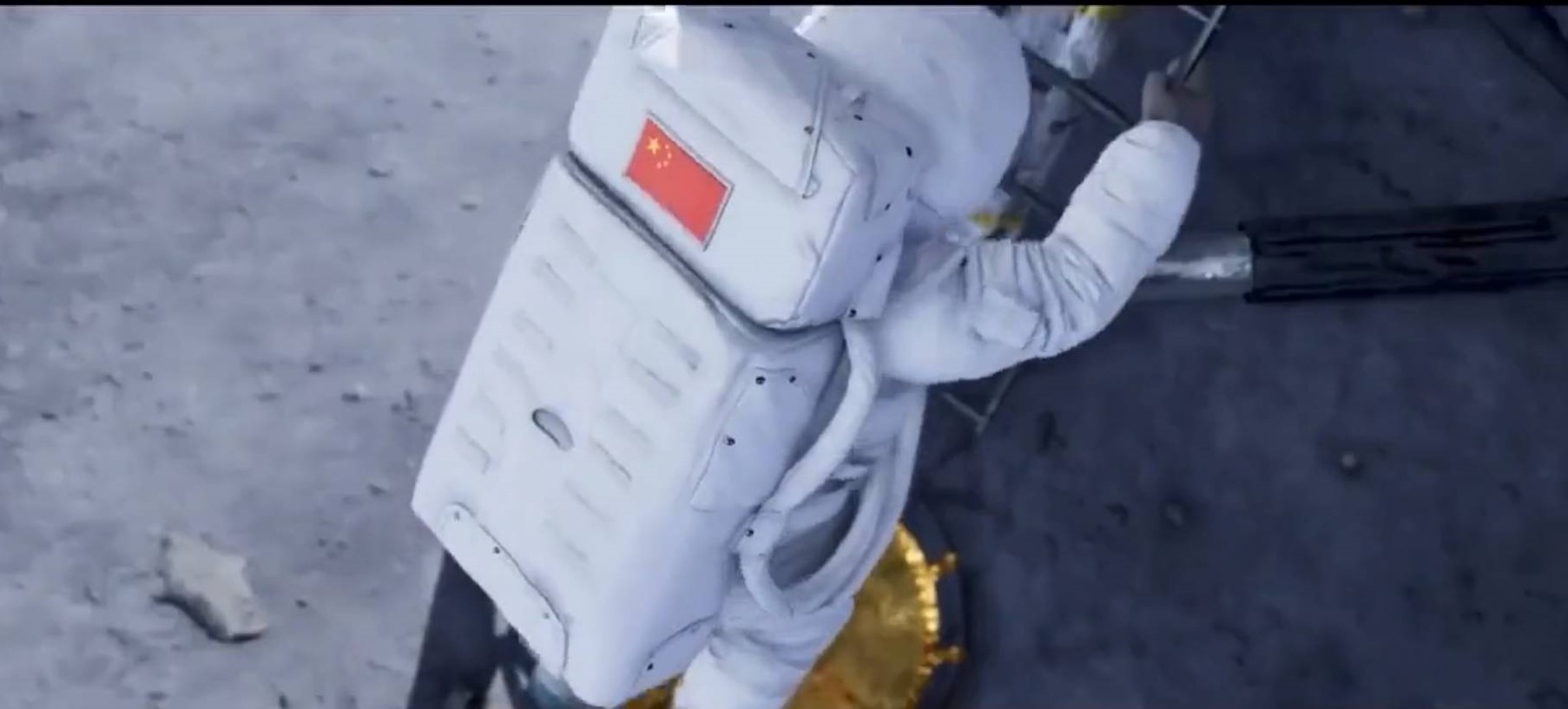
Image credit: CCTV/Inside Outer Space screengrab

Image credit: CCTV/Inside Outer Space screengrab
Wu said that the Moon program launcher is likely to be ready for flight by 2027, as reported by the South China Morning Post.

Image credit: CCTV/Inside Outer Space screengrab

Curiosity’s location as of Sol 3690. Distance driven to this sol: 18.15 miles/29.21 kilometers.
Image credit: NASA/JPL-Caltech/Univ. of Arizona
The NASA Curiosity Mars rover at the Gale Crater exploration site is now performing Sol 3695 tasks.
Here are a few images recently sent back by the robot that showcase its scenic and geologically attractive surroundings.

Curiosity Right B Navigation Camera image acquired on Sol 3694, December 27, 2022.
Image credit: NASA/JPL-Caltech
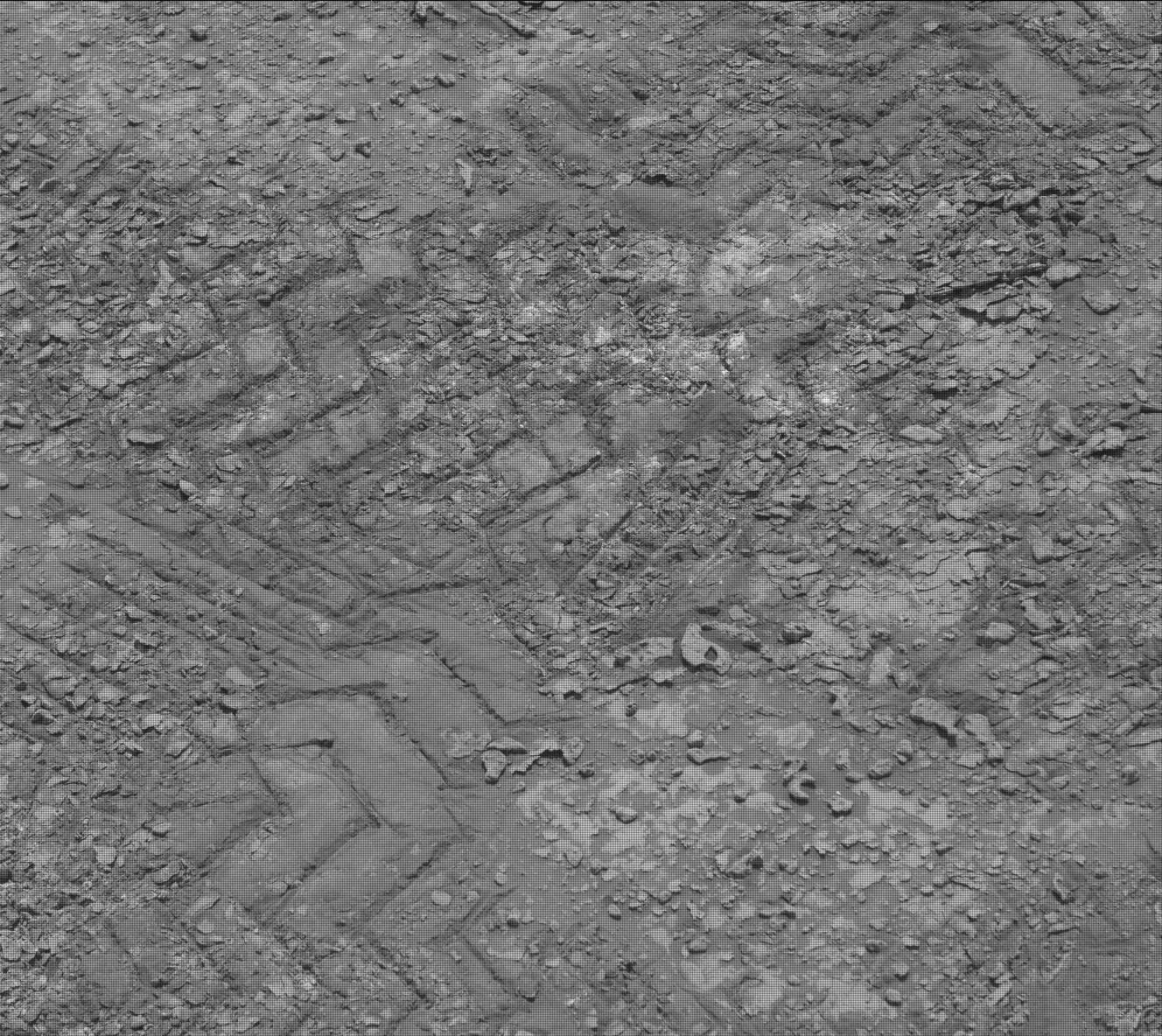
Curiosity Mast Camera Left Sol 3690 December 23, 2022.
Image credit: NASA/JPL-Caltech/MSSS

Curiosity Right B Navigation Camera image taken on Sol 3690, December 23, 2022.
Image credit: NASA/JPL-Caltech

Curiosity Right B Navigation Camera Sol 3690 December 23, 2022.
Image credit: NASA/JPL-Caltech

Curiosity Mars Hand Lens Imager photo produced on Sol 3690, December 23, 2022.
Image credit: NASA/JPL-Caltech/MSSS

Curiosity Mars Hand Lens Imager photo produced on Sol 3690, December 23, 2022.
Image credit: NASA/JPL-Caltech/MSSS

Curiosity Left B Navigation Camera image taken on Sol 3690, December 23, 2022.
Image credit: NASA/JPL-Caltech

Curiosity Left B Navigation Camera image taken on Sol 3690, December 23, 2022.
Image credit: NASA/JPL-Caltech

Curiosity Left B Navigation Camera image taken on Sol 3690, December 23, 2022.
Image credit: NASA/JPL-Caltech

Image credit: Roscosmos
The troubled Russian Soyuz MS-22 that suffered a coolant leak at the International Space Station continues to garner top-level attention as to the craft’s status.
A recent meeting held at Russia’s TsNIIMash, the country’s rocket and spacecraft scientific center, brought experts together to confer about the situation, focused on the damaged crew-carrying craft.

Coolant spraying instrument-assembly compartment of the Soyuz spacecraft.
Image credit: NASA
Earlier, Russia’s Roscosmos stated that two working groups have been established to determine the causes of the emergency situation and analyze the technical condition of the spacecraft.
These groups were also charged with developing recommendations for further actions by ground specialists and the crew of the Russian segment of the station.

Image credit: Roscosmos
The working group experts must decide on the possibility or impossibility of further use of the Soyuz MS-22 spacecraft to return astronauts to Earth, which is planned for March 2023, Roscosmos explained.
Should I stay, should I go?
In a recent posting on the official Roscosmos Telegram channel, it has been reported the groups did establish that the breakdown of the ship’s thermal control system radiator occurred due to external mechanical damage.
That external problem could have been caused by a micrometeoroid or space debris striking the spacecraft’s external cooler-radiator.

Image credit: Roscosmos
Making use of a camera-mounted robotic arm inspection, close-up imagery of the problem area was taken to help assess the issue.
On one hand, a decision could be made to quickly prepare for launch of an uncrewed Soyuz MS-23 to replace the compromised Soyuz MS-22. Alternatively, a decision could be made to carry out a regular crew change of the ISS Russian segment.
The new Roscosmos Telegram channel posting indicates that in January 2023, based on the conclusions of the working groups, a special commission will make organizational decisions on the further actions of ground specialists and the crew of the ISS Russian Segment, as well as on a possible change in the ISS flight program.

Sergei Krikalev, Roscosmos Executive Director for Manned Space Programs
Image credit: NASA/Bill Ingalls
Russia’s Roscosmos has proposed extending the country’s use of the International Space Station until 2028, for now.
In an interview with the Interfax News Agency, Sergei Krikalev, Roscosmos Executive Director for Manned Space Programs, said that documents for Russia’s further ISS operation have been submitted to the government for consideration and coordination.

Image credit: Roscosmos/NASA
“For now, we are talking about 2028,” veteran cosmonaut Krikalev told Interfax. “Historically, extensions have been made for four years: we had an agreement until 2020, and now it is valid until 2024. We can extend it until 2028 and then make a decision depending on the situation and analysis of technical and program feasibility,” he said.
As noted by Interfax, the current agreement on ISS operation expires in 2024.
Roscosmos head, Yury Borisov, previously said that Russia’s exit from the ISS project should be synchronized with the start of construction of a new Russian space station.

