Archive for the ‘Space News’ Category
 Author:
  January 14th, 2023
Curiosity Right B Navigation Camera photo taken on Sol 3711, January 14, 2023.
Image credit: NASA/JPL-Caltech
NASA’s Curiosity Mars rover at Gale Crater is now performing Sol 3712 duties.
The robot is safe and sound, but a recent downlink glitch slowed down research plans, reports Kristen Bennett, a planetary geologist at the USGS Astrogeology Science Center in Flagstaff, Arizona.

Curiosity Right B Navigation Camera photo taken on Sol 3711, January 14, 2023.
Image credit: NASA/JPL-Caltech
“All we need to do is wait for the missing data and keep going! We have enough images to look at the terrain that is in the distance, but not enough to see what is in front of the rover right now,” Bennett notes. “This means we cannot do contact science or drive, but we can take in the view with plenty of long distance images in today’s plan.”

Curiosity Right B Navigation Camera photo taken on Sol 3711, January 14, 2023.
Image credit: NASA/JPL-Caltech
Distant terrain
Several Mastcam mosaics are included in a recent two sol plan, drafted for Sols 3710-3711.

Curiosity Right B Navigation Camera photo taken on Sol 3711, January 14, 2023.
Image credit: NASA/JPL-Caltech
“First, Mastcam is characterizing some distant terrain at the base of Chenapau that we expect to drive to soon. There is also a Mastcam mosaic that covers Amapa from a different angle. The plan also includes the “Tupaquim” and “Uaiu” mosaics, which both target features that are exposed below the marker band. Tupaquim targets dark-toned bands, and Uaiu targets potentially wavy layers,” Bennett adds.

Curiosity Chemistry & Camera Remote Micro-Imager (RMI) photo acquired on Sol 3711, January 14, 2023.
Image credit: NASA/JPL-Caltech/LANL

Curiosity Chemistry & Camera Remote Micro-Imager (RMI) photo acquired on Sol 3711, January 14, 2023.
Image credit: NASA/JPL-Caltech/LANL
Two planned Chemistry and Camera (ChemCam) Laser Induced Breakdown Spectroscopy (LIBS) observations were to occur a little closer to the rover on targets “Iracoume” and “Moreiru.”
These targets are to characterize the closest bedrock that is visible in the images that were downlinked, Bennett notes. The plan also includes two long distance Remote Micro-Imager (RMI) observations: one on the flank of Chenapau and another on the marker band.
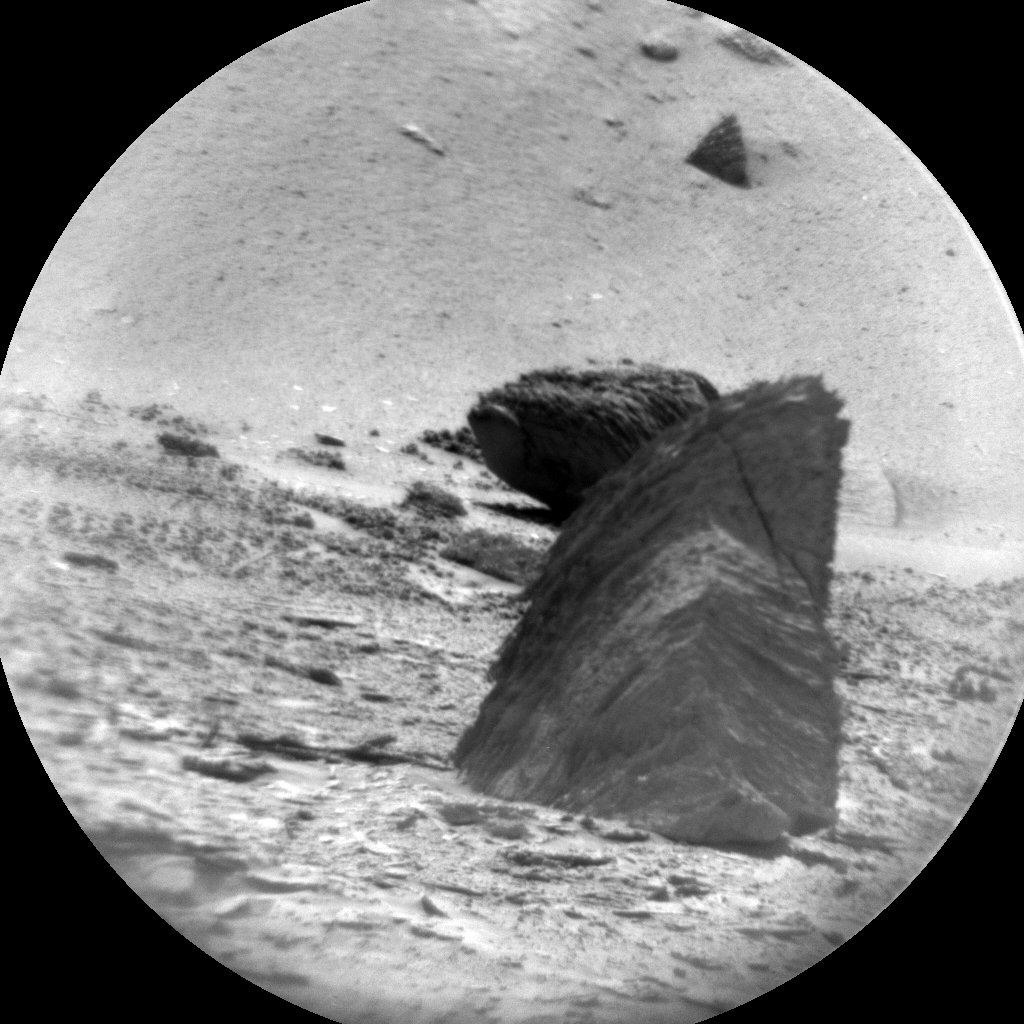
Curiosity Chemistry & Camera (ChemCam) RMI taken on Sol 3710, January 13, 2023.
Image credit: NASA/JPL-Caltech/LANL
 Posted in

Image credit: Roscosmos
Russia’s Roscosmos and NASA continue to work on ensuring the safety of the International Space Station crew due to the now-docked — but compromised — Soyuz MS-22 spacecraft.
That craft suffered a coolant leak in mid-December of last year. Due to a possible meteoroid strike, the vehicle’s radiator pipeline spewed its coolant out into space, putting to question the overall integrity of the craft to return crew members safely to Earth.

Coolant spraying instrument-assembly compartment of the Soyuz spacecraft.
Image credit: NASA
Earlier, Roscosmos and a special team of experts did decide that the crippled Soyuz should be brought back to Earth without a crew. Furthermore, the launch of an uncrewed Soyuz MS-23 to the ISS is being expedited, now slated for liftoff on February 20th.
Due to the situation with the Soyuz MS-22 spacecraft, Sergey Prokopiev, Dmitry Petelin and NASA’s Francisco Rubio will return to Earth on the fresh Soyuz MS-23. That craft is due to dock to the ISS in unpiloted mode on February 22.

Image credit: Roscosmos/NASA
Emergency evacuation
The ISS partner countries have taken measures to ensure the safe return of the station crew to Earth in the event of an accident before the arrival of a newly launched Soyuz MS-23 spacecraft.
While the systems of the ISS and the Soyuz MS-22 spacecraft are operating normally, according to Roscosmos, in the event of an accident, the crew will need an emergency evacuation to Earth before the Soyuz MS-23 arrives.
It has been decided to temporarily move the seat of Francisco Rubio from the Soyuz MS-22 to a SpaceX Crew Dragon spacecraft.

NASA astronaut and Expedition 68 Flight Engineer Frank Rubio is pictured inside the cupola of the ISS.
Image credit: NASA/Frank Rubio
That work will take place on January 17-18.
Return two cosmonauts
However, in the event of a crisis on the ISS, the compromised three-seater Soyuz MS-22 may be used to bring home two cosmonauts – sure to be a palm sweating event.
“If an emergency evacuation is necessary, Francisco Rubio will return to Earth on it, and Roscosmos cosmonauts on the Soyuz MS-22,” according to the official Telegram channel of the State Corporation Roscosmos. “The descent of two astronauts instead of three will be safer, as it will help reduce the temperature and humidity in the Soyuz MS-22.”
“After Soyuz MS-23 arrives on the ISS, the seats of all three cosmonauts, including Francisco Rubio, will be transferred to it,” the Telegram posting from Roscosmos explains.

Up and going: Tim Dodd, the “Everyday Astronaut”
Image credit: Everyday Astronaut
The “Everyday Astronaut” turns out to be a not so every day kind of person.
Talented Tim Dodd is the central spark plug behind the Internet-streamed show, dedicated to “bring space down to Earth for everyday people.”
I recently caught up with Dodd. Indeed, his future looks bright – particularly thanks to the glow of a SpaceX Starship lighting up and launching. He was selected to participate in a lunar spaceflight as part of the dearMoon project crew, one of the eight selected to take the journey in the near-future aboard a Starship.
Go to my exclusive interview with Dodd for Space.com – “Tim Dodd, the ‘Everyday Astronaut,’ gets down to Earth about SpaceX moon trip – ‘I like things that go fast … and nothing goes faster than a rocket'” – at:

Image credit: NASA/JPL-Caltech
NASA’s Ingenuity Mars helicopter continues to chalk up new stats at Jezero Crater, flying above the Red Planet on its 39th flight hop.
On this trek the micro-device flew on January 11, 2023, reaching 33 feet (10 meters) in altitude and flying roughly 456 ft (139 meters) northeast. Overall, the flight lasted around 79 seconds, returning to its takeoff spot.
The goal of the flight was to test new software.
The aerial device acquired images using its navigation camera mounted in the helicopter’s fuselage and pointed directly downward to track the ground during flight. Images were acquired on Jan. 11, 2023, the date of Ingenuity’s 39th flight.
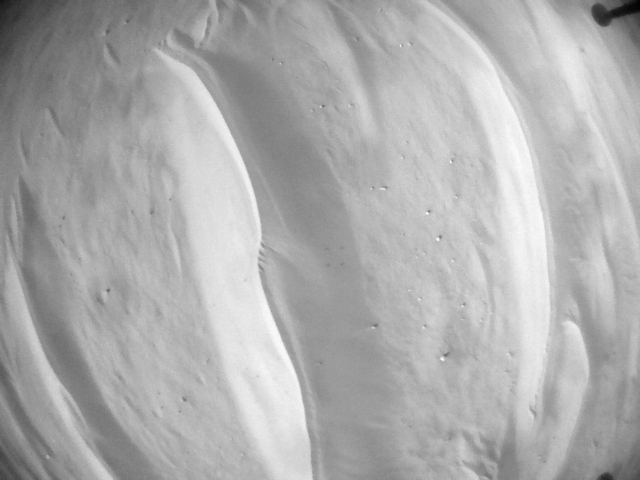
Image credit: NASA/JPL-Caltech
Meanwhile, the Perseverance rover’s Mastcam-Z camera imaged Ingenuity at the Flight 38 landing zone, sitting silently on the side of a sand ripple.

Image credit: NASA/JPL-Caltech /ASU

A new, just-released report on Unidentified Aerial Phenomena (UAP) highlights the greater awareness of airspace and increased opportunity to resolve UAP events.
The National Defense Authorization Act for Fiscal Year 2022 required the Director of National Intelligence (ODNI), in consultation with the Secretary of Defense, to submit an annual report to Congress on unidentified aerial phenomena. ODNI has submitted the classified annual report to Congress and published an unclassified annual report.
New reports
In summary, the report explains that, in addition to the 144 UAP reports covered during the 17 years of UAP reporting included in the Office of the Director of National Intelligence (ODNI) preliminary assessment, there have been 247 new reports and another 119 that were either since discovered or reported after the preliminary assessment’s time period.

Credit: Scientific Coalition for UAP Studies (SCU)
This totals 510 UAP reports as of 30 August 2022.
Additional information is provided in the classified version of this report.
Possible threats
An All-Domain Anomaly Resolution Office (AARO) was established on July 20, 2022.
AARO and ODNI assess that the observed increase in the UAP reporting rate “is partially due to a better understanding of the possible threats that UAP may represent, either as safety of flight hazards or as potential adversary collection platforms, and partially due to reduced stigma surrounding UAP reporting.”

Shown at Congressional hearing, Video 1 2021 flyby movie showing a purported UAP.
Credit: Counterterrorism, Counterintelligence, and Counterproliferation Subcommittee/Inside Outer Space screengrab
Given this increased reporting, it allows more opportunities to apply rigorous analysis and resolve events, the new report adds.
The document adds that UAP events continue to occur in restricted or sensitive airspace, “highlighting possible concerns for safety of flight or adversary collection activity.”
Collection bias?
“We continue to assess that this may result from a collection bias due to the number of active aircraft and sensors, combined with focused attention and guidance to report anomalies,” the report notes.
An executive summary explains that there will be continuing investigation to gather any evidence of possible foreign government involvement in UAP events.
“We are confident that continued multi-agency cooperative UAP prosecution activities will likely result in greater awareness of objects in and across the air, space, and maritime domains, as well as the nature and origin of UAP in the
future,” the document states.
Urgent and critical need
In response, Ryan Graves, a former Navy F/A-18 pilot and Chair of the American Institute of Aeronautics and Astronautics (AIAA) Unidentified Aerospace Phenomena Integration & Outreach Committee, said:
“With 247 new incidents of UAP since the 2021 report, including events in sensitive airspace, it is clear that there is an urgent and critical need to improve aerospace safety by dedicating scientific research into UAP.”
“I am glad to see the government is taking the accounts of pilots and other witnesses seriously,” Graves said in a statement, “and I am heartened by ODNI’s acknowledgement of the profound, harmful effect stigma has in preventing the necessary data collection we need to understand UAP.”
Graves said that there’s need to “stop unscrupulous speculation, break stigma, and invest in science to address this national safety threat.”
To access the full, unclassified report — 2022 Annual Report on Unidentified Aerial Phenomena – go to:
https://www.dni.gov/files/ODNI/documents/assessments/Unclassified-2022-Annual-Report-UAP.pdf
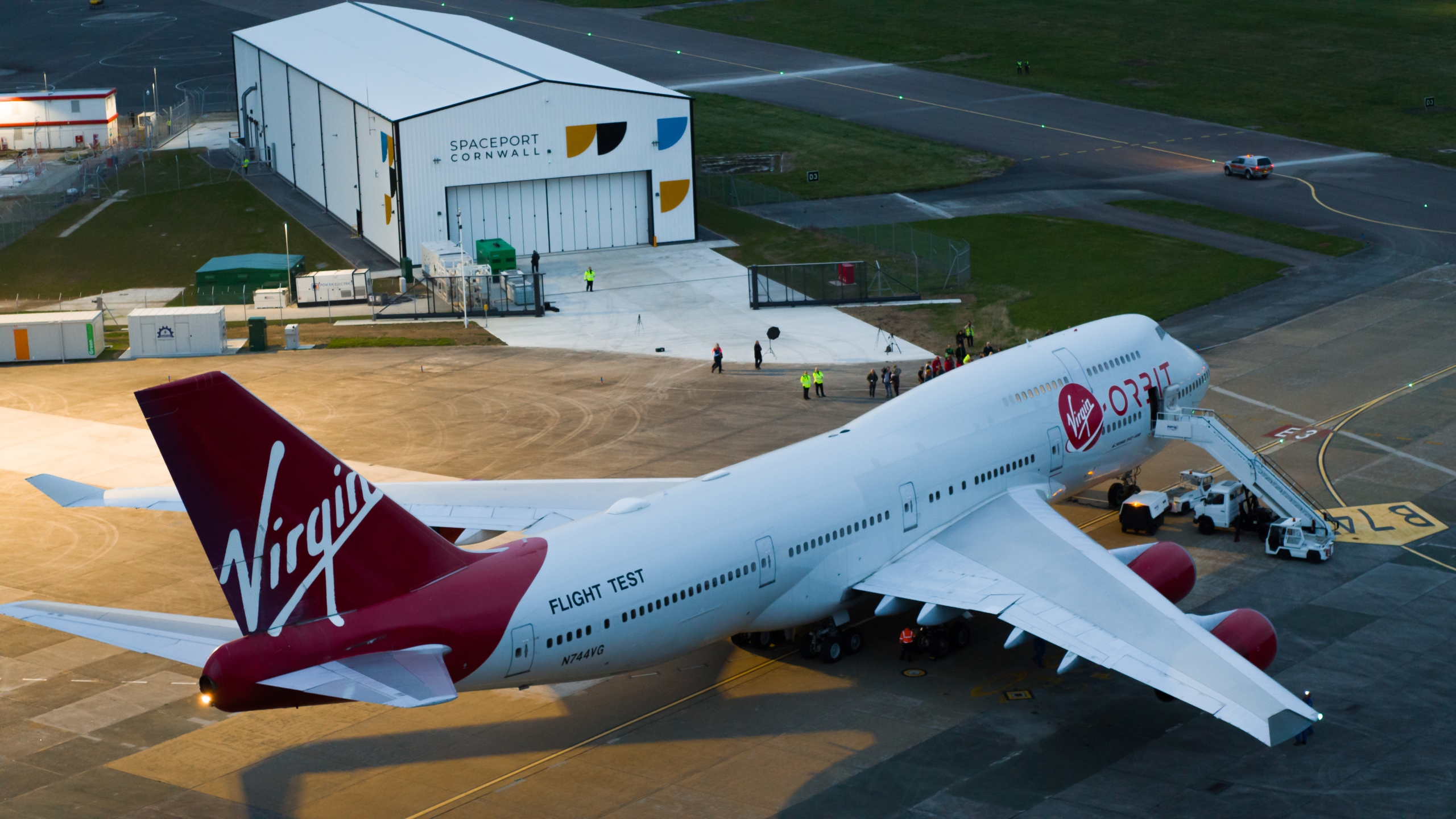
Image credit: Virgin Orbit
The recent Virgin Orbit launch mishap is being analyzed with preliminary data under review that already sheds some light on the premature shutdown of the “Start Me Up” air-launched rocket mission.
Virgin Orbit has begun an internal investigation into root causes of the failure after the mission departed on January 9th from the newly commissioned Spaceport Cornwall in the UK.
After release from the aircraft, Cosmic Girl, the rocket ignited its first stage engine, quickly going hypersonic and successfully completed the stage one burn.

Image credit: Virgin Orbit
Initial data assessments indicate that the first stage of the rocket performed as expected. Following that stage separation, ignition of the upper stage, and fairing separation similarly occurred per the planned mission timeline, according to a Virgin Orbit statement issued today.
Safety corridor
However, later in the mission, at an altitude of approximately 112 miles (180 kilometers), the rocket’s upper stage experienced an anomaly.
“This anomaly prematurely ended the first burn of the upper stage,” the statement adds. “This event ended the mission, with the rocket components and payload falling back to Earth within the approved safety corridor without ever achieving orbit.”
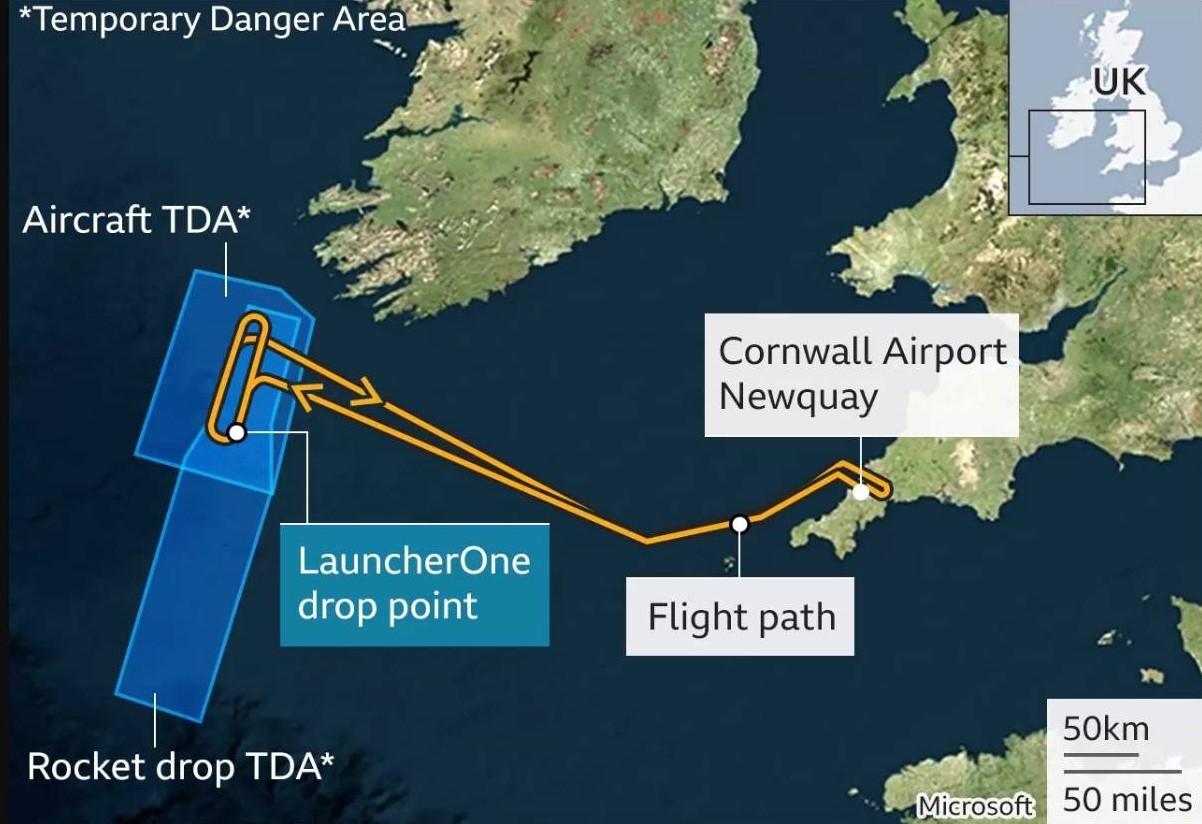
Image credit: Virgin Orbit
Virgin Orbit has initiated a formal investigation into the source of the second stage failure that led to the loss of 9 satellites. All required corrective actions identified during the investigation of the anomaly will be completed prior to the next flight.
Next flight
That next flight by Virgin Orbit is planned to occur from the Mojave Air and Space Port in California.
“Virgin Orbit also anticipates returning to Spaceport Cornwall for additional launches, and is in active discussions with key government and commercial stakeholders in the UK to start planning mission opportunities for as soon as later this year,” the statement explains.
Virgin Orbit was founded in 2017 by business tycoon, Sir Richard Branson.
Coolant spraying instrument-assembly compartment of the Soyuz spacecraft.
Image credit: NASA
Russian space experts via a State Commission have detailed a plan to deal with the compromised Soyuz MS-22 spacecraft now docked with the International Space Station.
In mid-December of last year, a radiator pipeline spewed its coolant out into space, putting to question the overall integrity of the craft to return crew members safely to Earth.
A specially convened team of experts have reported that Soyuz MS-22 should be brought back to Earth without a crew.
Image credit: Roscosmos
State of the ship
“Taking into account the analysis of the state of the ship, thermal calculations and technical documentation, it was concluded that the Soyuz MS-22 spacecraft should descend in an unmanned version,” said Russia’s Roskosmos chief, Yuri Borisov, following a meeting of the State Commission, according to a TASS news agency report.
“In the event of particularly critical situations at the station, the possibility of using the spacecraft to rescue the crew will be determined by a separate decision of the State Commission,” Borisov added in the TASS story.

Image credit: Roscosmos
“Sporadic” meteoroid impact
As for the cause of the coolant issue, studies aided by cameras mounted on a robotic arm have shown that the Soyuz MS-22 radiator was damaged by a “sporadic” meteoroid impact.
The tiny hole in the radiator is less than 1 millimeter in size, created by an impactor zooming through space at a speed of 7,000 meters per second.
Technical damage to the radiator during manufacture is not confirmed.
Speed-up mode
Meanwhile, in speed-up mode, the launch of an uncrewed Soyuz MS-23 to the ISS is moving forward, now slated for February 20th.
It was previously planned that Roscosmos cosmonauts Oleg Kononenko and Nikolai Chub, along with NASA astronaut Loral O’Hara, would go to the station on March 16 on this ship.
Meanwhile, ISS members of the up and running expedition — Sergei Prokopiev, Dmitry Petelin and Francisco Rubio — is being extended. They will return to Earth on the freshly launched Soyuz MS-23.

Aerogel for Aerogel Core Fission Fragment Rocket Engine.
Image credit: NASA, Ryan Weed
Where do you go for a high-tech look into the future of what’s possibly possible?
Enter the far-out world of NASA’s Innovative Advanced Concepts (NIAC) program.

Image credit: NIAC
Be it a Fluidic Telescope (FLUTE) to enable the next generation of large space observatories or pellet-beam propulsion, or a lunar south pole oxygen pipeline, even an aerogel core fission fragment
rocket engine – new NIAC projects are underway.
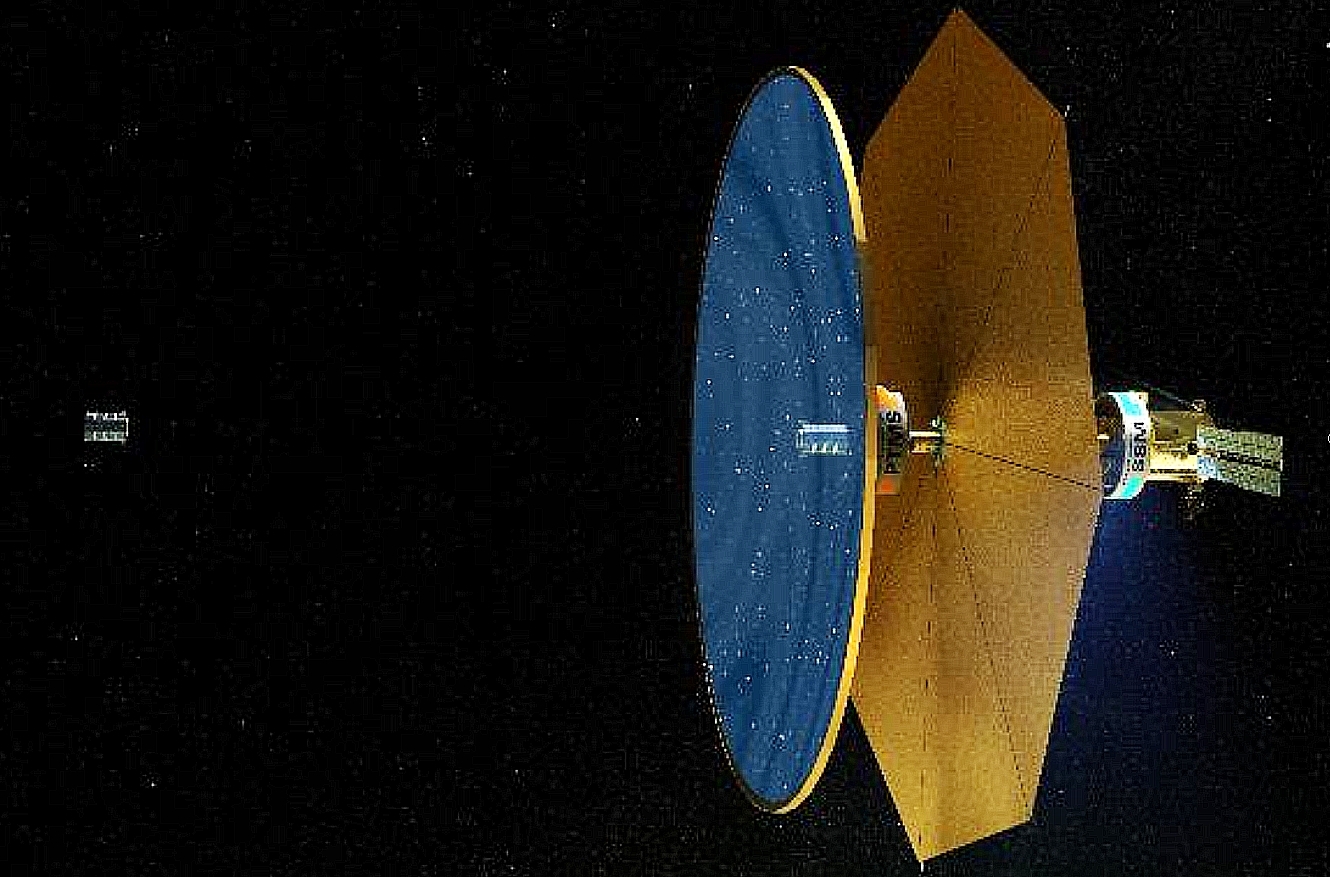
Graphic depiction of Fluidic Telescope (FLUTE).
Image credit: Edward Balaban
The latest round of NIAC Phase 1 awards will provide $175,000 grants to 14 visionaries.
For more details, go to:

Once again, the Philippine Space Agency (PhilSA) advised the country’s public to take precautions related to launch of China’s Long March 7A from the Wenchang Space Launch Center in Hainan Island.
That booster hurled three satellites, Shijian-23, Shiyan-22A and Shiyan-22B, into orbit from Wenchang on January 8, 2023, at 22:00 UTC (9 January, at 06:00 local time).
PhilSA noted that unburned debris from the rocket were projected to fall in two drop zones.
- Drop zone area 1 is 79.877 kilometers from Burgos, Ilocos Norte, and 121.306 kilometers from Dalupiri Island in the Babuyan Islands.
- Drop zone area 2 is 41.686 kilometers from Sta. Ana, Cagayan, 41.37 kilometers from Camiguin Island in the Babuyan Islands, and 47.844 kilometers from Babuyan Island.
Danger and potential risk
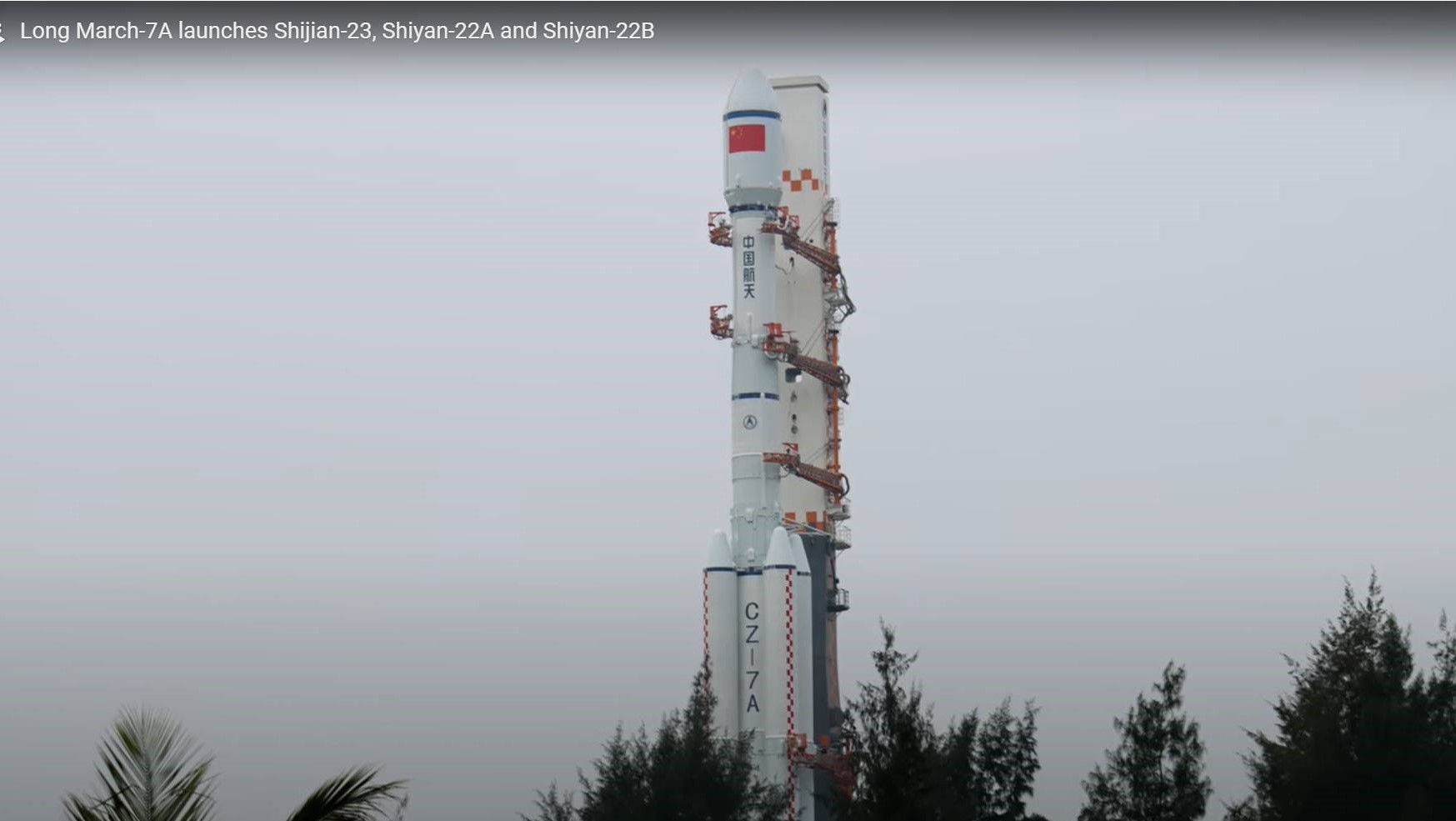
Image credit: China Central Television (CCTV)/China Aerospace Science and Technology Corporation (CASC)
“While not projected to fall on land features or inhabited areas,” the PhilSA advisory explains, “falling debris poses danger and potential risk to ships, aircraft, fishing boats, and other vessels that will pass through the drop zone. There is also a possibility for the debris to float around the area and wash toward nearby coasts. Additionally, the possibility of an uncontrolled re-entry to the atmosphere of the rocket’s upper stages returning from outer space cannot be ruled out at this time.”
PhilSA repeated earlier advice for the public to inform local authorities if suspected debris is sighted.
“PhilSA also cautions against retrieving or coming in close contact with these materials that may contain remnants of toxic substances such as rocket fuel,” the advisory adds.
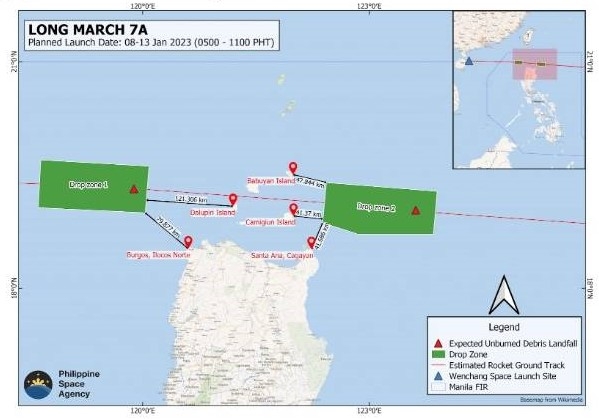
Image credit: PhilSA
Advance notice
Prior to the launch, the Civil Aviation Administration of China issued Notice to Airmen (NOTAM) warnings “due to an aerospace flight activity.”
Upon coordination with the Civil Aviation Authority of the Philippines, the coordinates of the areas where expected unburned debris from the rocket fallout were identified.
“PhilSA immediately issued advance notice to relevant government agencies and authorities as soon as the launch dates have been confirmed, and has recommended the issuance of appropriate air and marine warnings,” the advisory explains.

China Long March-5B Y3 rocket remains from July 24, 2022.
Image credit: Philippine Coast Guard/Mamburao
Beijing and Manila spat
In a recent agreement signed between Beijing and Manila, the countries made a joint statement that a notification system for rocket launches is to be established. That cooperation reportedly flowed from a recent diplomatic spat about turning over Chinese debris found in Philippine waters.
Both sides have noted their willingness to establish an information notification system on rocket launches, as well as hammer out procedures for the retrieval and return of space debris.

Wait a Minute!
An old, two-ton + spacecraft made its uncontrolled and fiery nose dive into the Earth’s atmosphere over the Bering Sea – off the coast of Alaska, near the Aleutian Islands.
NASA and the US Department of Defense report that the Earth Radiation Budget Satellite, ERBS for short, reentered Earth’s atmosphere at 11:04 p.m. EST on Sunday, Jan. 8th.

ERBS deployment from space shuttle.
Image credit: NASA
Most of the 5,400-pound satellite was expected to “burn up” in its high-speed plunge through the atmosphere. Prior to its fall, NASA noted that some components of the satellite were considered likely to survive the reentry.
Deployed from the space shuttle Challenger on Oct. 5, 1984, the ERBS spacecraft was flown to measure the Earth’s radiative energy budget and measure stratospheric constituents, including ozone.

Image credit: The Aerospace Corporation/CORDS
Willy-nilly
The willy-nilly nature of the demise of the nearly 2.5-ton ERBS did trigger worries.
Due to the uncontrolled nature of the spacecraft’s demise, exactly where the craft was to auger in created a stir in Korea. ERBS predicted trajectory and possible reentry time took it across the Korean Peninsula.

“High Alert” – Seoul Incheon Airport
Image credit: CC BY-SA 2.0/Wikimedia
That being the case, the Korean Ministry of Science and Ministry of Knowledge Economy (ICT, Postal and Future Planning) had issued messages asking residents to stay inside and for Korean people to remain vigilant about satellite leftovers that might reach the ground.
According to local media reports, several airports, including Incheon International Airport, did for a short period of time suspend flights due to the prospect of incoming debris passing through Korean Peninsula airspace. Overall all, according to The Korea Times, 29 flights were delayed in the region, including 18 departures and 11 arrivals.

