Archive for the ‘Space News’ Category
 Author:
  January 24th, 2023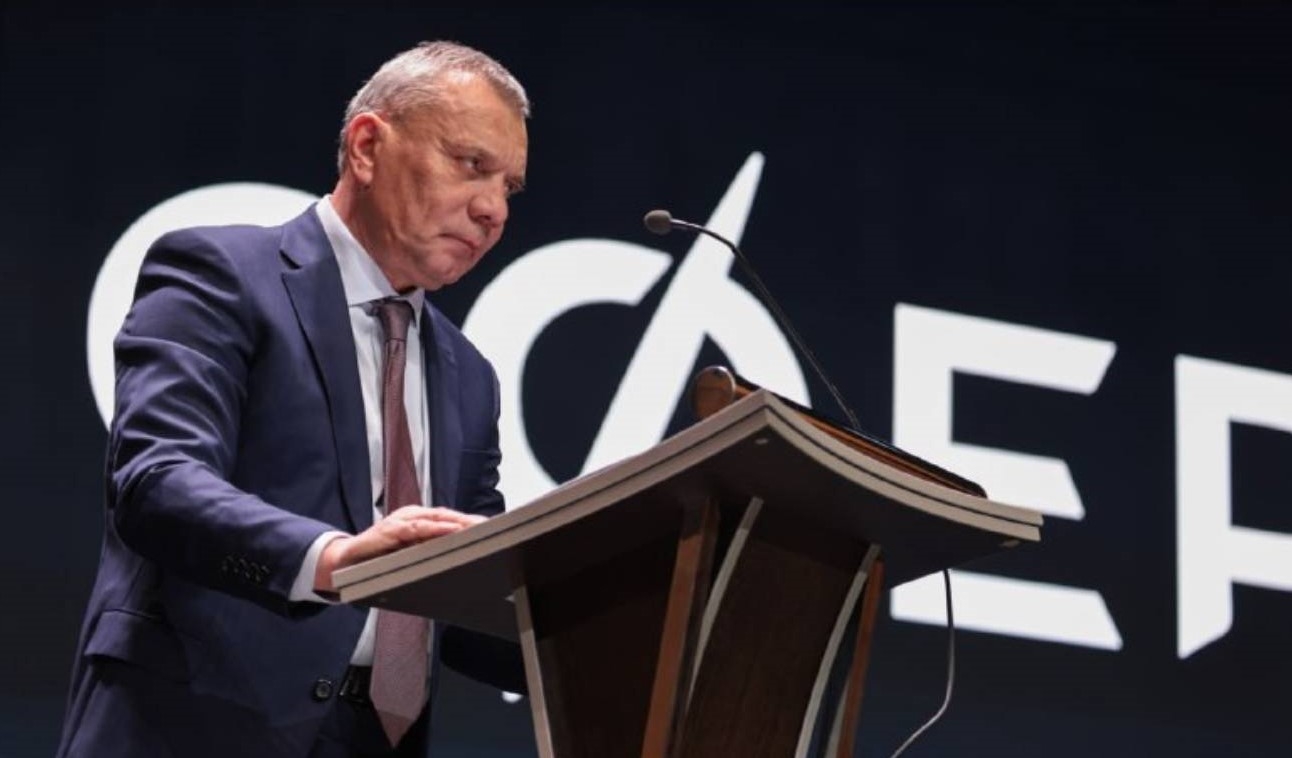
Image credit: Roscosmos
Russia’s space station plans were detailed by Roscosmos head, Yuri Borisov, noting they are open to international cooperation on the Russian Orbital Station (ROS).
The start of deployment of the ROS is in 2027.
Borisov spoke at the plenary session of the Royal Readings – 2023, adding that Russia will support the work of the International Space Station “exactly as long as it is necessary, based on the technical condition. At the same time, it is impossible to interrupt the Russian manned program and lose competencies,” according to a Roscosmos Telegram posting.
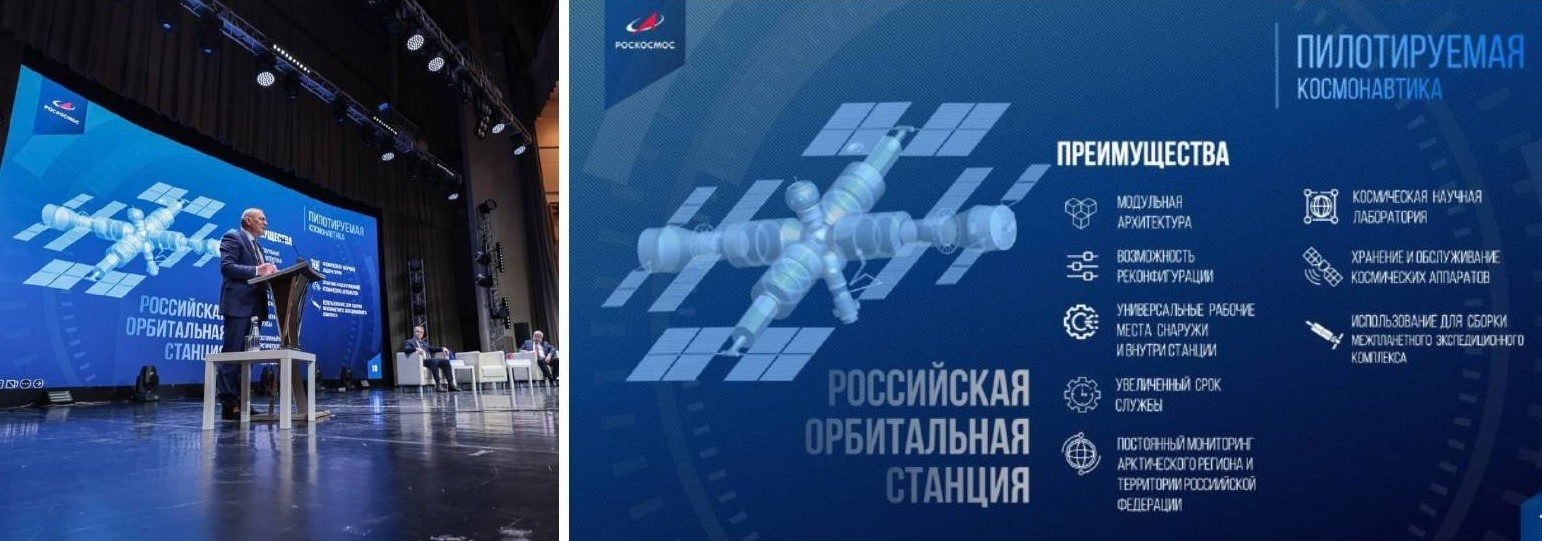
Image credit: Roscosmos
“Although the new station is called Russian, we are open for cooperation and invite colleagues from friendly countries to participate in this ambitious project,” Borisov said.
The competitive advantage of ROS is a modular architecture with a reconfiguration option, extended service life, advanced capabilities for scientific research and orbital production. The station must become efficient and rational, notes the Roscosmos posting.
 Posted in

Artist’s view of two Artemis astronauts at work on the lunar surface.
Image credit: NASA
The “rebooting of the Moon” by human explorers is pegged for NASA’s Artemis III mission with the crew footing their way around the lunar south pole. The lunar south pole is located on the rim of Shackleton crater, a 13 mile (21 kilometer) diameter feature.
Moreover, the Moon’s south pole is surrounded by summits with high illumination that can provide access to solar power in a region that also contains permanently shadowed regions (PSRs). These sun-shy areas may harbor volatile elements that can be processed for crew consumables, radiation shielding, and propellant.

Image credit: NASA GSFC Arizona State University
A new study has identified areas of particular interest within the Artemis III candidate landing sites, where multiple samples of boulders and rock exposures can be collected by astronauts during a future mission.
Connecting ridge
An international team has analyzed imagery snapped by NASA’s powerful Lunar Reconnaissance Orbiter camera system. These images allow identification of features such as boulders and rocky craters and terrain around the south polar region including the “Connecting Ridge,” one of the Artemis III candidate landing sites.
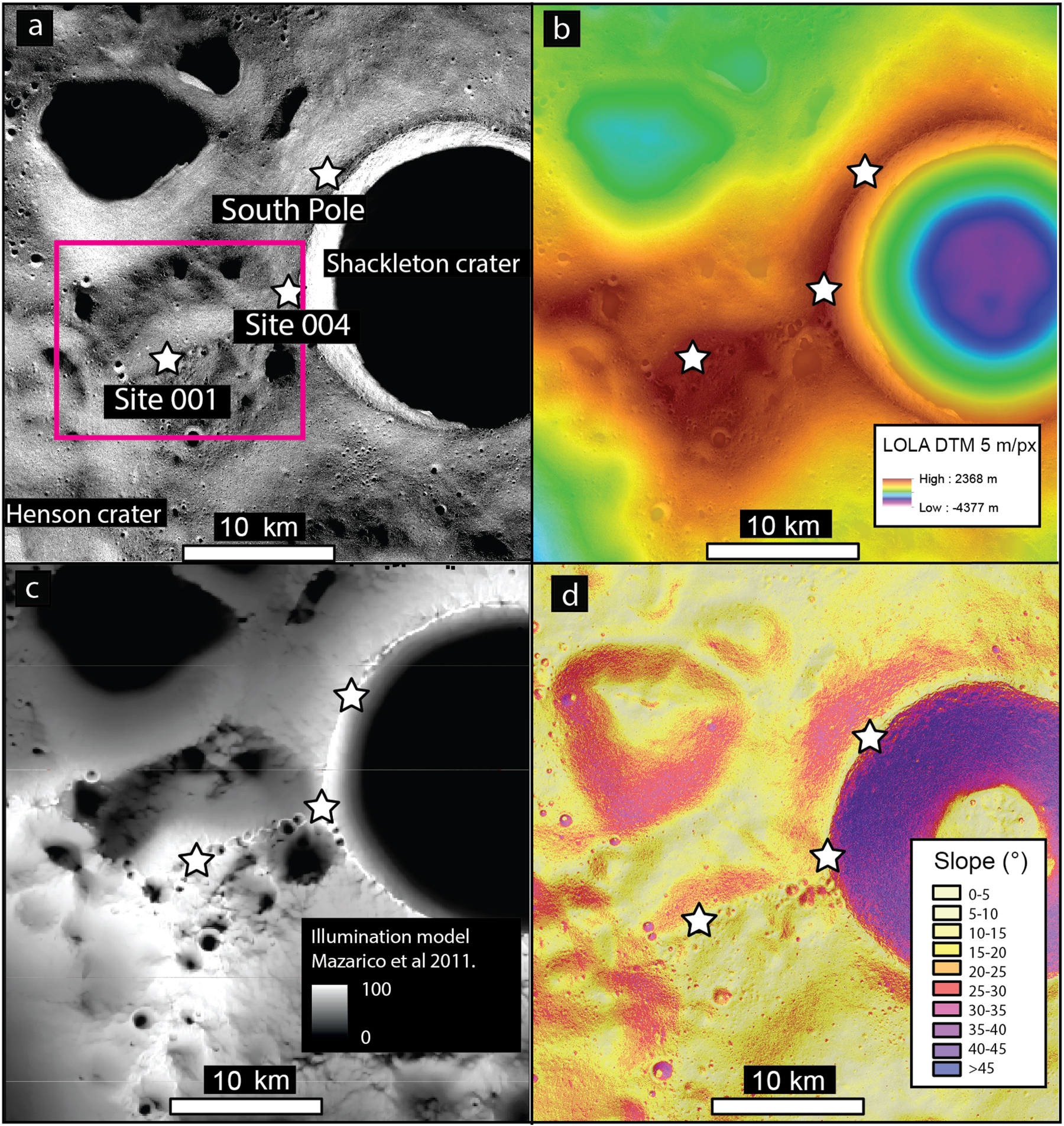
Location of the south pole and Shackleton crater. White stars show the location of the south pole, site 001 (222.69°E, 89.45°S) and site 004 (204.27°E, 89.78°S). Pink square shows the location of the Artemis III candidate landing site, “Connecting Ridge”. Also shown as (a)–(c) is the lunar south pole and the points of interest of sites 001 and 004 in relation to Shackleton crater.
Image credit: ESA/Boazman, et al.
In geological terms, recently-formed craters that have boulders surrounding the crater are being eyed for sampling to better understand the geology of the area. The Artemis III candidate landing sites have a goodly number of boulders and rock exposures that can be investigated by astronauts during the future mission.
The new research paper – “The Distribution and Accessibility of Geologic Targets near the Lunar South Pole and Candidate Artemis Landing Sites” – has been published in the The Planetary Science Journal. Sarah Boazman, based at the European Space Agency’s ESTEC in The Netherlands, is lead author of the work.
Boulders, craters, rock exposures
According to the paper, boulders can be identified as bright, high contrast features with a shadow observed behind these features. Craters were identified as bowl-shaped depressions often seen as a dark circle as light cannot always reach the crater floor and rock exposures were identified as bright high contrast features often larger than boulders but casting little to no shadow.
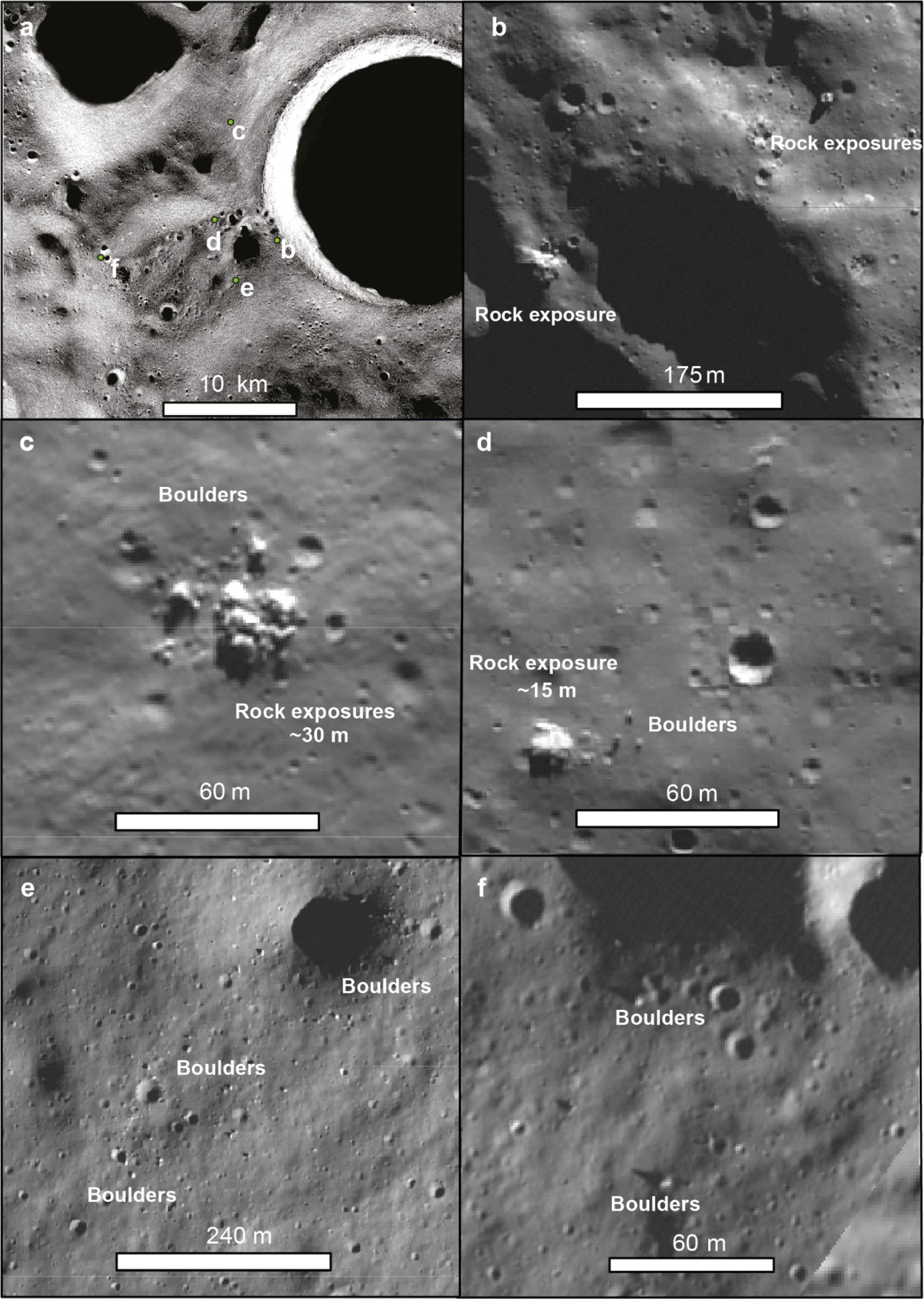
Image credit: ESA/Boazman, et al.
“Transformative lunar science will be driven by the accessibility, recovery, and return to Earth of geological specimens,” the research paper explains. “Isolated boulders, rock exposures, and rocky craters at the lunar south pole all provide opportunities for geologic characterization and sampling of the lunar crust.”
What has been found is that boulder abundance decreases with increasing distance from the rim of Shackleton crater. “From that correlation, we infer that most of the boulders and rock exposures near Shackleton were deposited as ejecta by the Shackleton impact, and by later the reworking of that material during smaller impact events,” Boazman and colleagues explain in the paper.
Boulders were observed across the mapping area, the paper notes, with the highest densities concentrated along the rim of Shackleton crater and the Connecting Ridge between Shackleton and Henson craters.

Shown here is a rendering of 13 candidate landing regions for NASA’s Artemis III mission. Each region is approximately 9.3 by 9.3 miles (15 by 15 kilometers). A landing site is a location within those regions with an approximate 328-foot (100-meter) radius.
Image credit: NASA
Reachable areas
“Overall, there is a greater number of boulders, rock exposures, and rocky craters near the rim of Shackleton crater and the frequency of each of these features decreases with distance from Shackleton crater rim,” the paper points out. “As a result, there is greater opportunity to collect crystalline material along the Shackleton rim or the “Connecting Ridge” during a future mission to this region, as compared with more distant locations in the Shackleton ejecta deposit.”
Additionally, the researchers highlight areas that are accessible and show the distribution of features within these reachable areas.

Artistic depiction of Artemis astronauts at the lunar south pole carrying out early work to establish an Artemis Base Camp.
Image credit: NASA
“Investigations of the lunar south polar region should continue to assess the accessibility of features of interest, including isolated boulders, rock exposures, rocky craters, and PSRs, in preparation for upcoming missions to the area. Such investigations will provide crucial context for any future endeavors set to explore the south pole of the Moon,” the research paper concludes.
To access “The Distribution and Accessibility of Geologic Targets near the Lunar South Pole and Candidate Artemis Landing Sites” go to:

Chang’e-4 far side mission – lander and Yutu-2 rover.
Credit: CNSA/CLEP
China’s robotic Moon explorer, Yutu-2, or the Jade Rabbit-2, continues to send back images from the lunar far side.
The Chang’e-4 Moon mission lander and rover touched down on the Moon on January 3, 2019.
Four years on, the lunar rover Yutu-2, named after the pet rabbit of the Chinese moon goddess Chang’e, has collected valuable data on solar wind and cloddy soil research, gel-like rocks and craters on the Moon, according to a China Central Television (CCTV) report.

Credit: CNSA/CLEP (early mission photo)
Safety consideration
“In order to map out the route for Yutu-2, we need to use its navigation camera to learn about the position of the rover before recovering and analyzing the terrain. The rover can climb 20-to-30-degree slopes,” said Li Chunlai, deputy chief designer of the third phase of China’s lunar exploration project.

Credit: CCTV/Inside Outer Space screengrab
“Since the soil on the Moon is relatively loose, we don’t want to risk it to walk through steep slopes for safety consideration so as to minimize the damage to Yutu-2,” said Li told CCTV.
In fact, the designated service life of the rover was said to be only three months, but it has now worked for a record four years on the Moon.
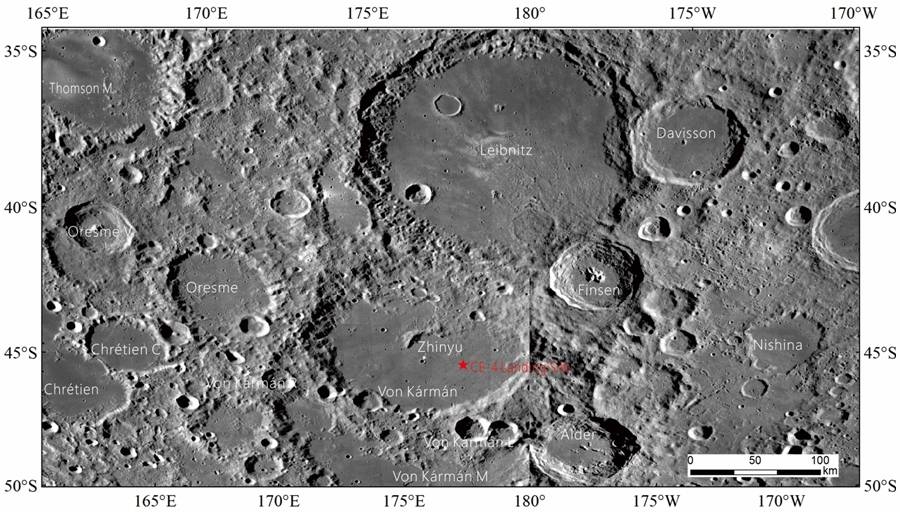
Chang’e-4 landing site.
Credit: CNSA/CLEP
Good condition
Currently, the wheeled robot is located around 2,625 feet (800 meters) away from its landing site, in the west-north direction and is in good condition together with its scientific payloads.
“We expect the jade rabbit can achieve further progress in its palace of the Moon as we will continue to contribute in lunar exploration,” said Ouyang Ziyuan, first chief scientist of China’s lunar exploration project and academician of the Chinese Academy of Sciences.

China’s powerful Long March 5 booster – but planting taikonaut boots on the Moon requires a bigger, more powerful booster.
Image credit: CASC
New details regarding China’s Long March 9 booster have been discussed by a leading rocket designer from the China Academy of Launch Vehicle Technology.
According to China Daily, the overall, baseline structural design for the nation’s super-heavy carrier rocket is a large, three-stage rocket about 360 feet (110 meters) tall.
Long March 9’s liftoff weight will be about 4,000 metric tons and generate a thrust power of nearly 6,000 tons. The diameter of its core stage will be about 33 feet (10 meters), according to Gu Mingkun, deputy chief of the Overall Design Department with China Academy of Launch Vehicle Technology.

Image credit: China Global Television Network (CGTN)
The launcher’s carrying capacity will be more than five times that of Long March 5, at present China’s most powerful booster.
Gu made his remarks at a recent news conference in Beijing held by China Aerospace Science and Technology Corporation. The event took place to unveil the Blue Book of China Aerospace Science and Technology Activities in 2022 and explain the company’s research and development plans for the future.

Image credit: China Global Television Network (CGTN)

Image credit: CGTN/Inside Outer Space screengrab
Moon, Mars duties
According to Gu, the rocket will be tasked to transport spaceships weighing up to 50 tons to an Earth-Moon transfer trajectory for lunar missions, such as the construction of a large-scale science outpost or mining operation on the Moon. It will also be able to hurl spacecraft on deep-space missions, including placing Chinese astronauts on Mars.

Image credit: CCTV/Inside Outer Space screengrab
In addition to the baseline model, a second version is to have two stages, capable of deploying spacecraft with a combined weight of 150 tons to a low-Earth orbit, Gu added, according to China Daily.
The rockets’ first stage will be reusable on both models and extensively reduce operational costs, Gu said.
Designing and manufacturing the Long March 9 “will inject momentum into a number of engineering fields including advanced high-performance materials and key electronic components,” Gu noted.
Go to this informative CGTN video at:
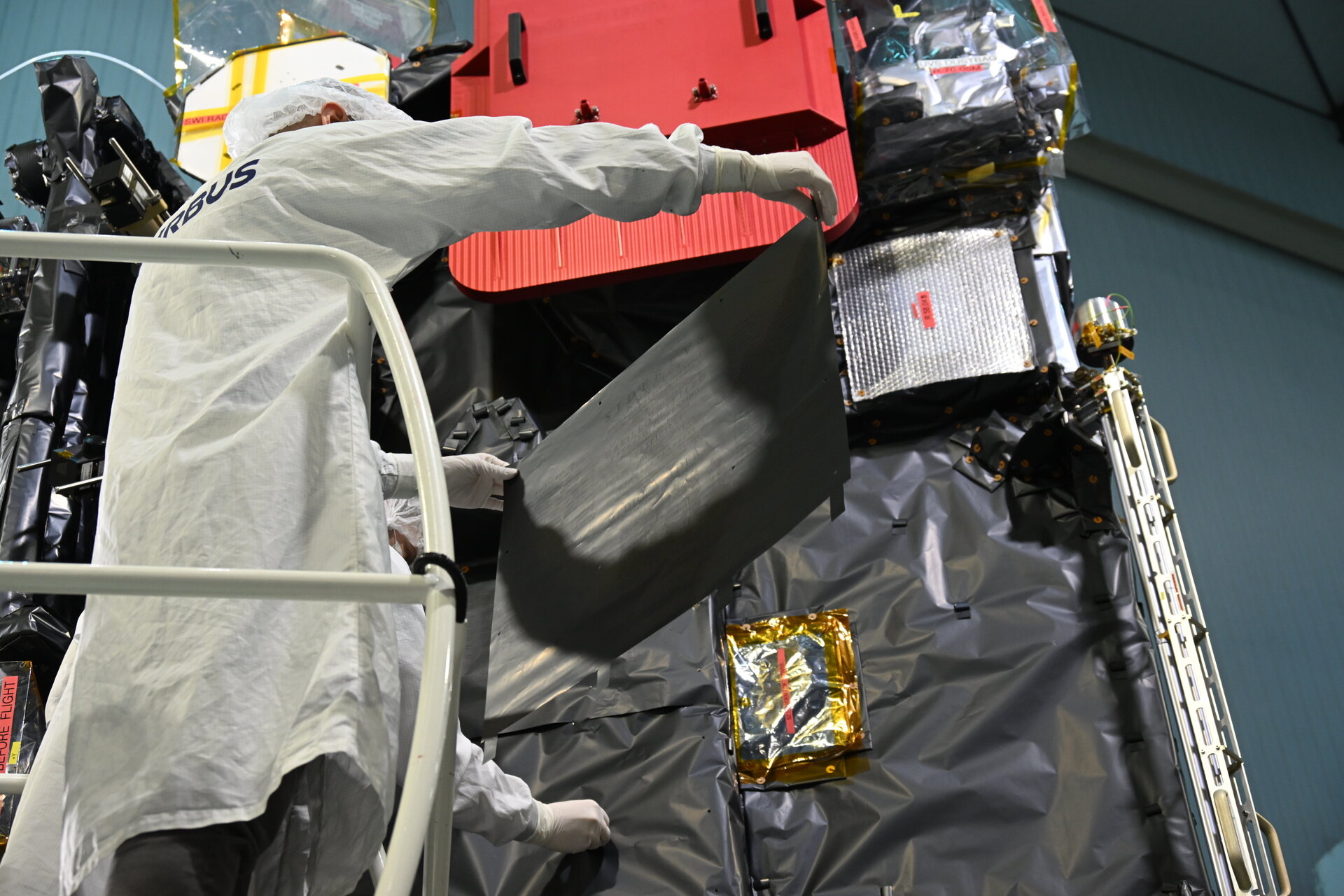
Image credit: ESA/M.Pedoussaut
A commemorative plaque has been mounted on the European Space Agency’s Jupiter Icy Moons Explorer, or JUICE for short.
The plaque is a tribute to Italian astronomer Galileo Galilei who was the first to view Jupiter and its four largest moons through a telescope in January 1610.

Image credit: ESA/M.Pedoussaut
The plaque replicates several pages of Galileo’s Sidereus Nuncius in which he detailed his observations of the moons. They are printed on a piece of multi-layered insulation that makes up the thermal “blanket” wrapped around the spacecraft to keep its internal temperatures stable.
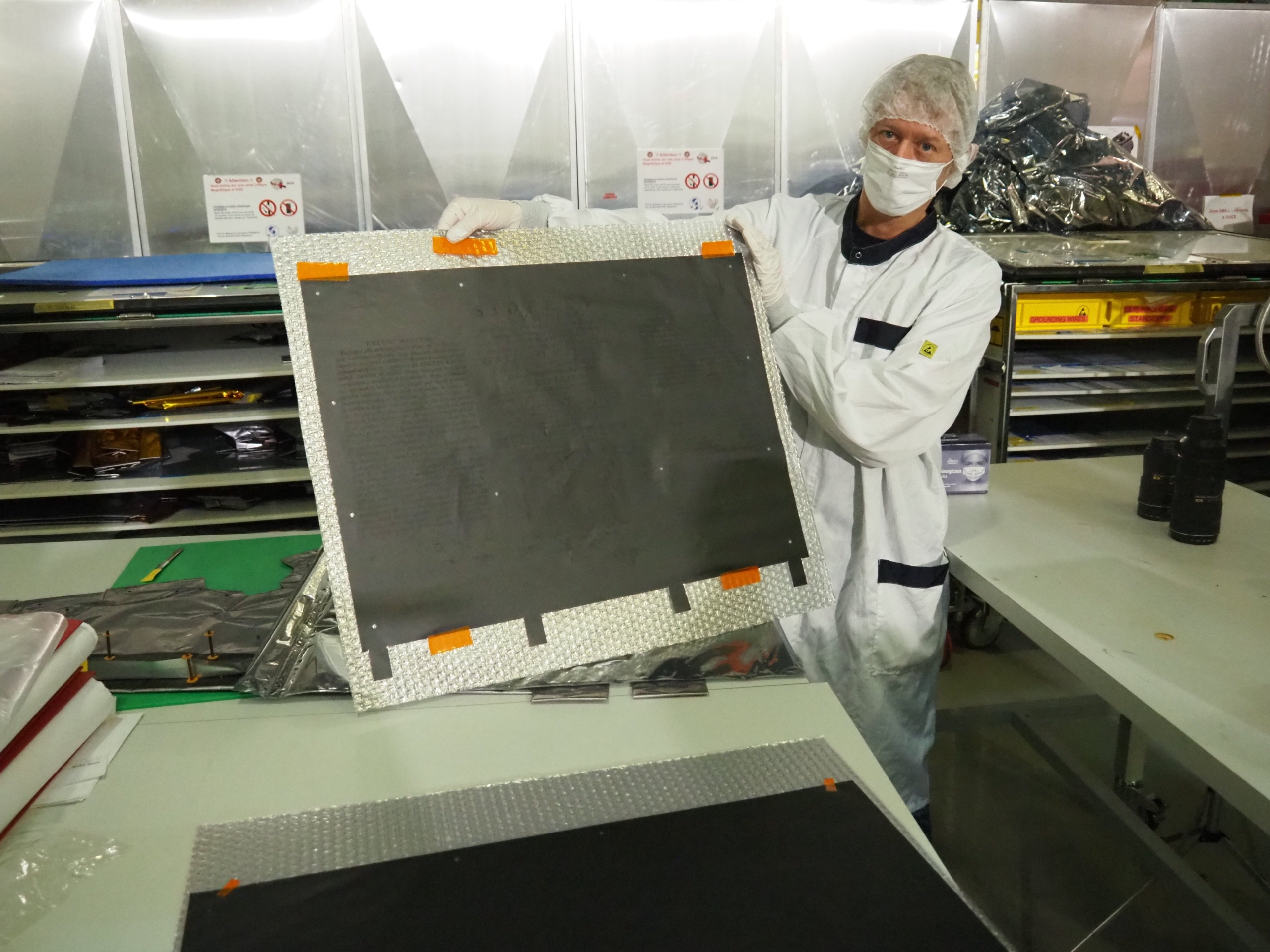
Image credit: Airbus

Image credit: ESA/ATG medialab (spacecraft); NASA/JPL/DLR (Jupiter, moons)
The spacecraft has just completed its final tests before departing Toulouse, France, headed for Europe’s Kourou spaceport and an April launch.
JUICE will reach Jupiter in July 2031 and complete a total of 35 flybys of the moons by November 2035.
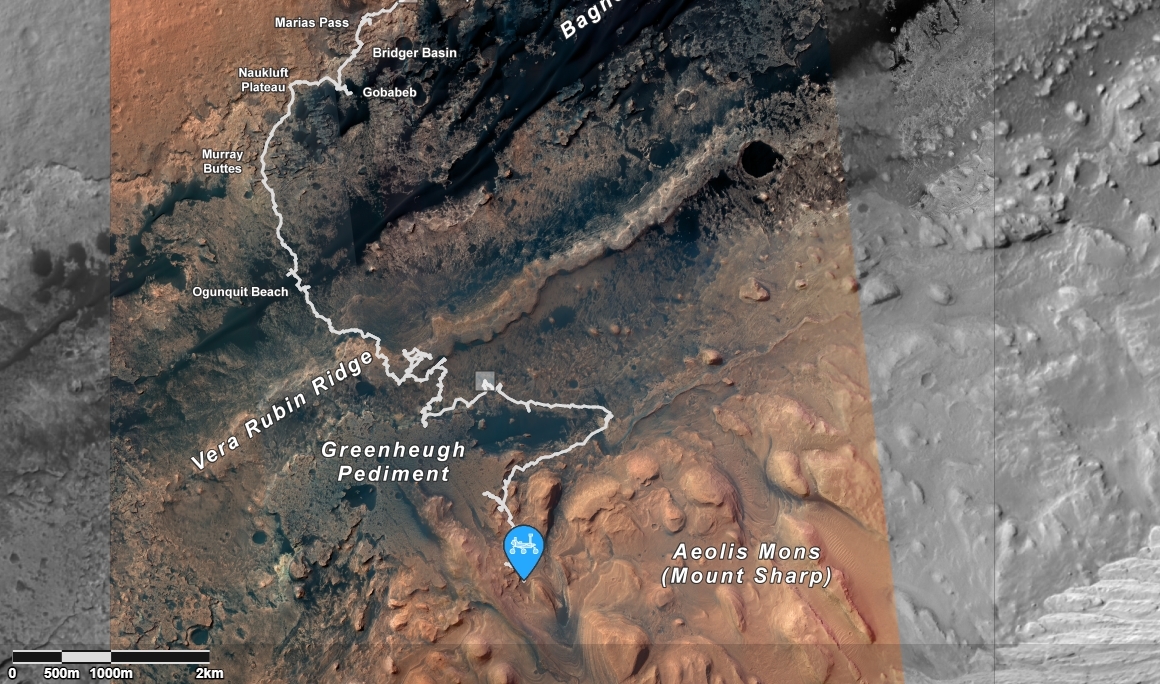
Curiosity’s location on Sol 3715. Distance driven to that Sol: 18.26 miles/29.39 kilometers.
Image credit: NASA/JPL-Caltech/Univ. of Arizona

NASA’s Mars rover Curiosity took 28 images in Gale Crater using its mast-mounted Right Navigation Camera (Navcam) to create this mosaic. The seam-corrected mosaic provides a 360-degree cylindrical projection panorama of the Martian surface centered at 195 degrees azimuth (measured clockwise from north). Curiosity took the images on January 18, 2023, Sol 3715 at drive 1676, site number 99.
Image credit: NASA/JPL-Caltech
NASA’s Curiosity Mars rover at Gale Crater is now performing Sol 3716 duties.
The robot recently executed a “short bump” (a drive) that placed the Mars machinery in front of a possible, next-up drill target, reports Elena Amador-French, A Science Operations Coordinator at NASA/JPL in Pasadena, California.
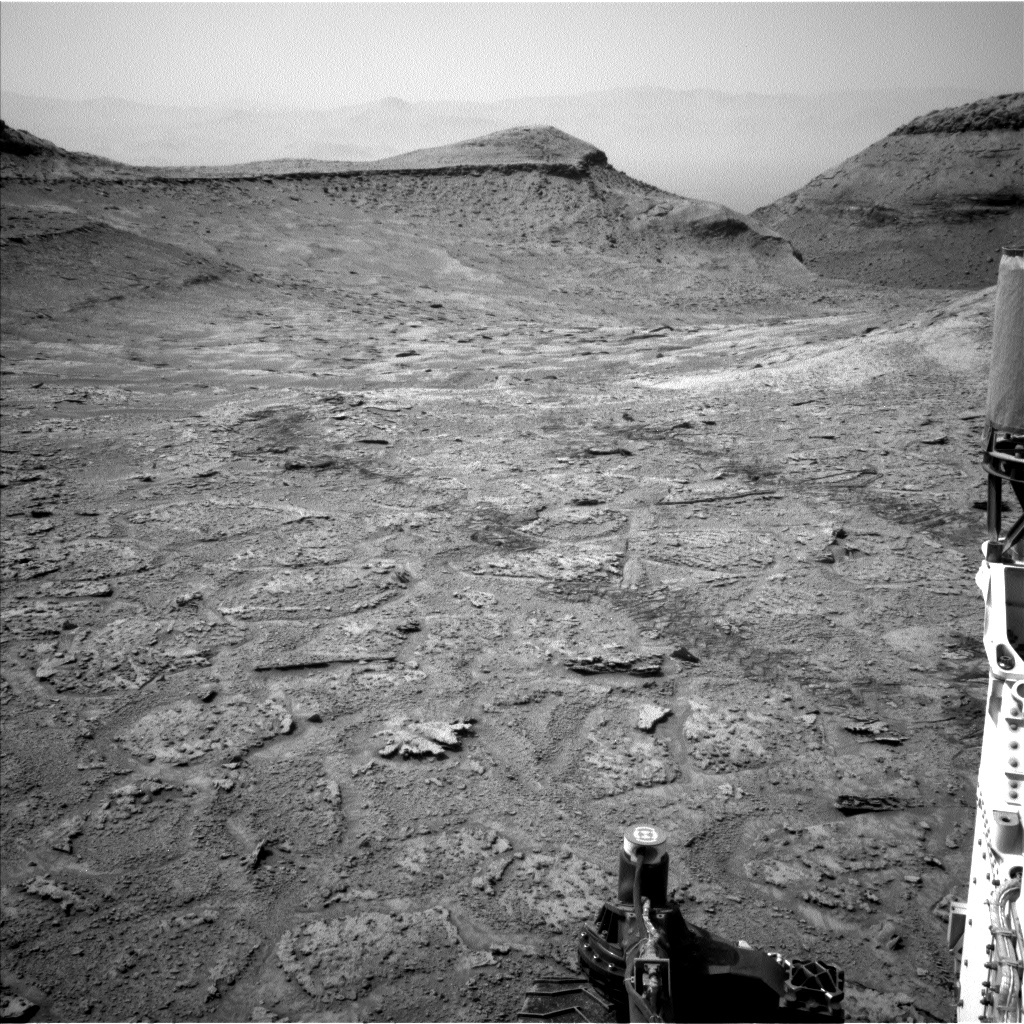
Curiosity Left B Navigation Camera image taken on Sol 3715, January 18, 2023.
Image credit: NASA/JPL-Caltech
Before the science team commits to drilling the target “Encanto,” Amador-French adds, researchers will first investigate the chemistry and composition of the target using the Alpha Particle X-Ray Spectrometer (APXS), the Chemistry and Camera (ChemCam) instruments, and Mastcam (using their multispectral capability), to ensure that it is scientifically in-line with the rest of the “Marker Band.”

Curiosity Left B Navigation Camera image taken on Sol 3715, January 18, 2023.
Image credit: NASA/JPL-Caltech
Additionally, a preload test which will provide a sense of the stability of the block is to be performed.

Curiosity Front Hazard Avoidance Camera Left B photo acquired on Sol 3715, January 18, 2023.
Image credit: NASA/JPL-Caltech
Charmed drill target
“El Encanto is a town and municipality in the Amazonas region of Colombia. Additionally one translation of the Spanish word ‘encanto’ is ‘charm’ – we indeed hope this drill target is charmed after we faced challenges with our last two drill attempts on the Marker Band,” Amador-French explains.

Curiosity Left B Navigation Camera image taken on Sol 3715, January 18, 2023.
Image credit: NASA/JPL-Caltech
In addition to Curiosity doing initial drill campaign activities, a 360 degree Mastcam mosaic is to be performed, along with the regular cadence of environmental monitoring activities.
Amador-French concludes: “Looking forward to seeing what this “Encanto” holds for us on Friday!”

Curiosity Left B Navigation Camera image taken on Sol 3715, January 18, 2023.
Image credit: NASA/JPL-Caltech
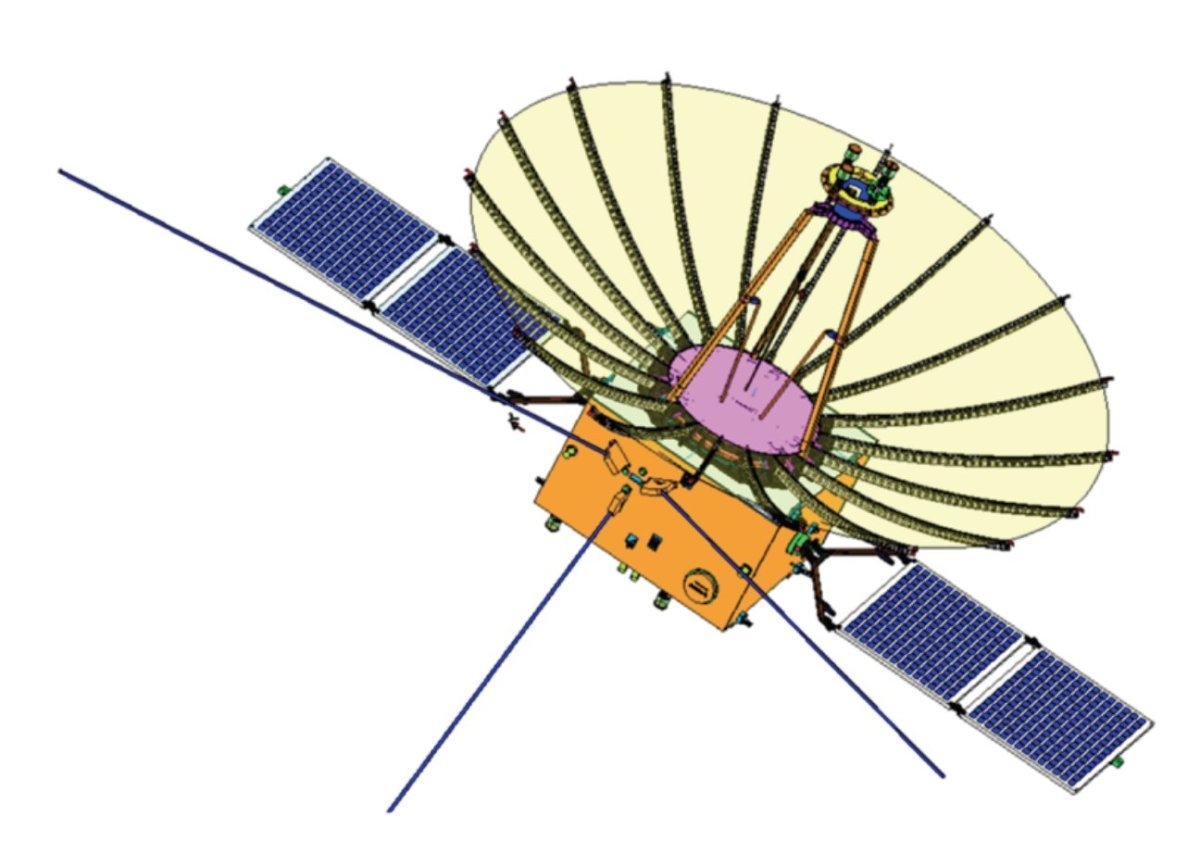
China’s Queqiao-1 relay satellite in need of replacement. Image credit: Radboud Radio Lab of the Radboud University, the Netherlands Institute for Radio Astronomy (ASTRON) and Innovative Solutions in Space (ISIS).
China’s Moon exploration program calls for launch next year of a new Queqiao-2 relay satellite.
That relay spacecraft is slated to provide key relay communication services for its future Chang’e lunar missions over the next decade, according to the China National Space Administration (CNSA).
According to China Central Television (CCTV), the design life of China’s current Queqiao relay satellite is set to expire. Its replacement is to serve phase-4 lunar probe missions: Chang’e-6, Chang’e-7, and Chang’e-8 missions. These Moon missions are to be carried out successively in the next 10 years.

Queqiao relay spacecraft is in a halo orbit around the second Lagrangian (L2) point of the Earth-Moon system, utilized to set up a communication link between the Earth and the Moon’s farside.
Credit: CNSA
Relay improvements
“We need to launch a relay satellite to support the work of Chang’e-6 as it will land on the far side of the Moon. So we will send Queqiao-2 at the beginning of 2024 to support the Chang’e-6 mission,” said Hu Hao, chief designer of the third phase of the China Lunar Exploration Project.
Queqiao-2 is to have a greater improvement in overall performance and capability compared to its predecessor, Hu added.
Chang’e-6 is expected to be hurled Moonward sometime within the next two years, tasked with returning to Earth select specimens from the lunar far side.
Phase-4 missions
“Chang’e-6 will land on the far side of the Moon, discovering and collecting lunar samples of different ages in different regions,” Wang Qiong, deputy chief designer of the upcoming Chang’e-6 mission told CCTV.
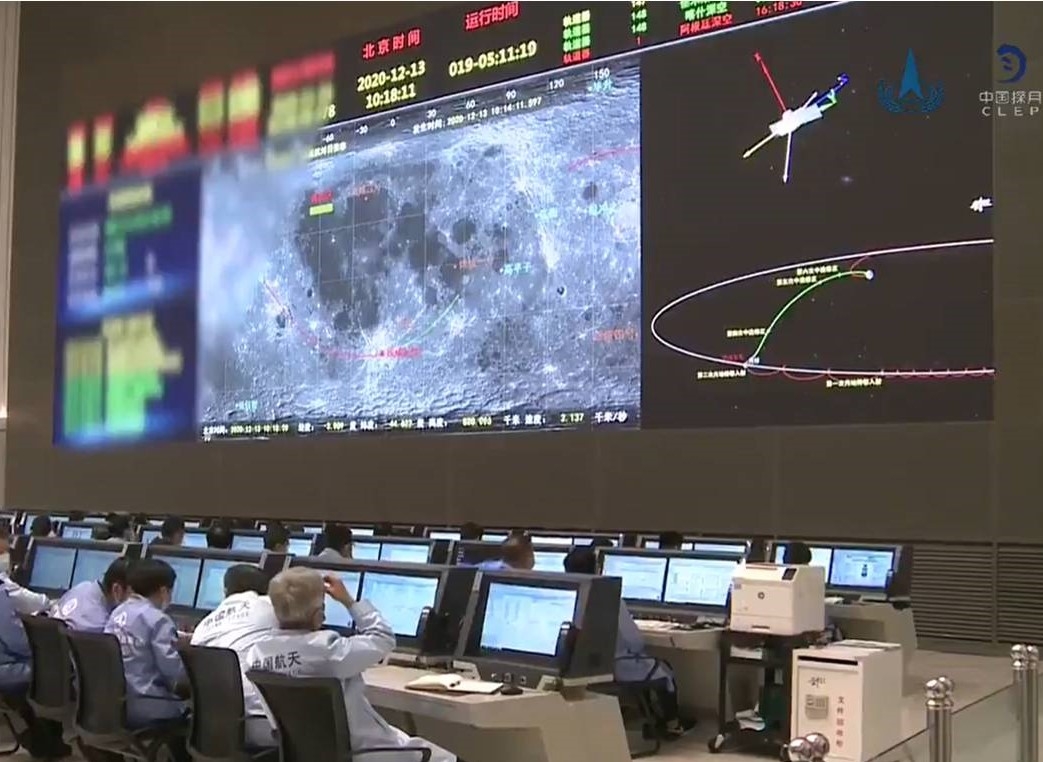
Credit: CNSA/CLEP
“The engineering goal of Chang’e-6 is to make breakthroughs in orbital design and control technology of the Moon’s retrograde orbit and intelligent sampling, take-off and ascent technologies on the dark side of the Moon, automatic sampling and return from the Moon’s far side, and carrying out effective international cooperation,” Wang said.
In November of last year, the CNSA released plans for the phase-4 lunar probe missions: the retrieval of lunar samples from the far side of the Moon by Chang’e-6, a detailed survey of the Moon’s south pole resources by the Chang’e-7, and the testing of key technologies in preparation for the construction of a proposed lunar research station during the Chang’e-8 mission.
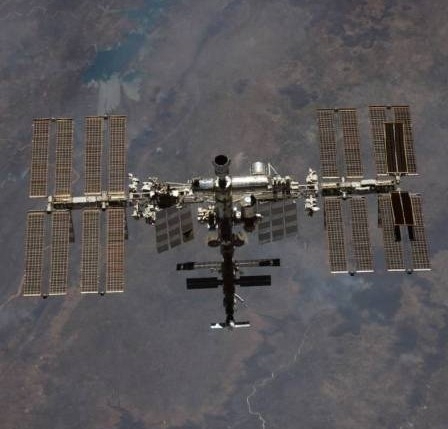
Image credit: Roscosmos/NASA
Due to the compromised nature of Russia’s Soyuz MS-22, a seat liner from that craft has been transferred to the SpaceX Dragon Endurance spacecraft. Doing so provides lifeboat capabilities in the event NASA astronaut Francisco Rubio would need to return to Earth because of an emergency evacuation from the International Space Station.
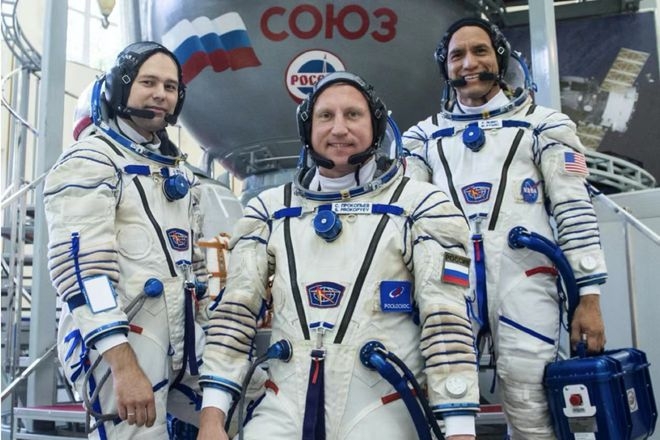
Russian cosmonauts Dmitry Petelin, Sergei Prokopyev and NASA astronaut Francisco Rubio.
Image credit: Roscosmos
The change allows for increased crew protection by reducing the heat load inside the MS-22 spacecraft for cosmonauts Sergei Prokopiev and Dmitry Petelin in the event of an emergency return to Earth.
According to Russia’s Roscosmos, to maintain the alignment of the Soyuz MS-22 descent vehicle, a stack with loads was placed in Rubio’s chair.

Be seated…on a Soyuz.
Image credit: Roscosmos
Once the replacement vehicle – an uncrewed Soyuz MS-23 — arrives at the space station on Feb. 22, Rubio’s seat liner will be transferred to the new Soyuz and the seat liners for Prokopyev and Petelin will be moved from MS-22 to MS-23 ahead of their return in the Soyuz.
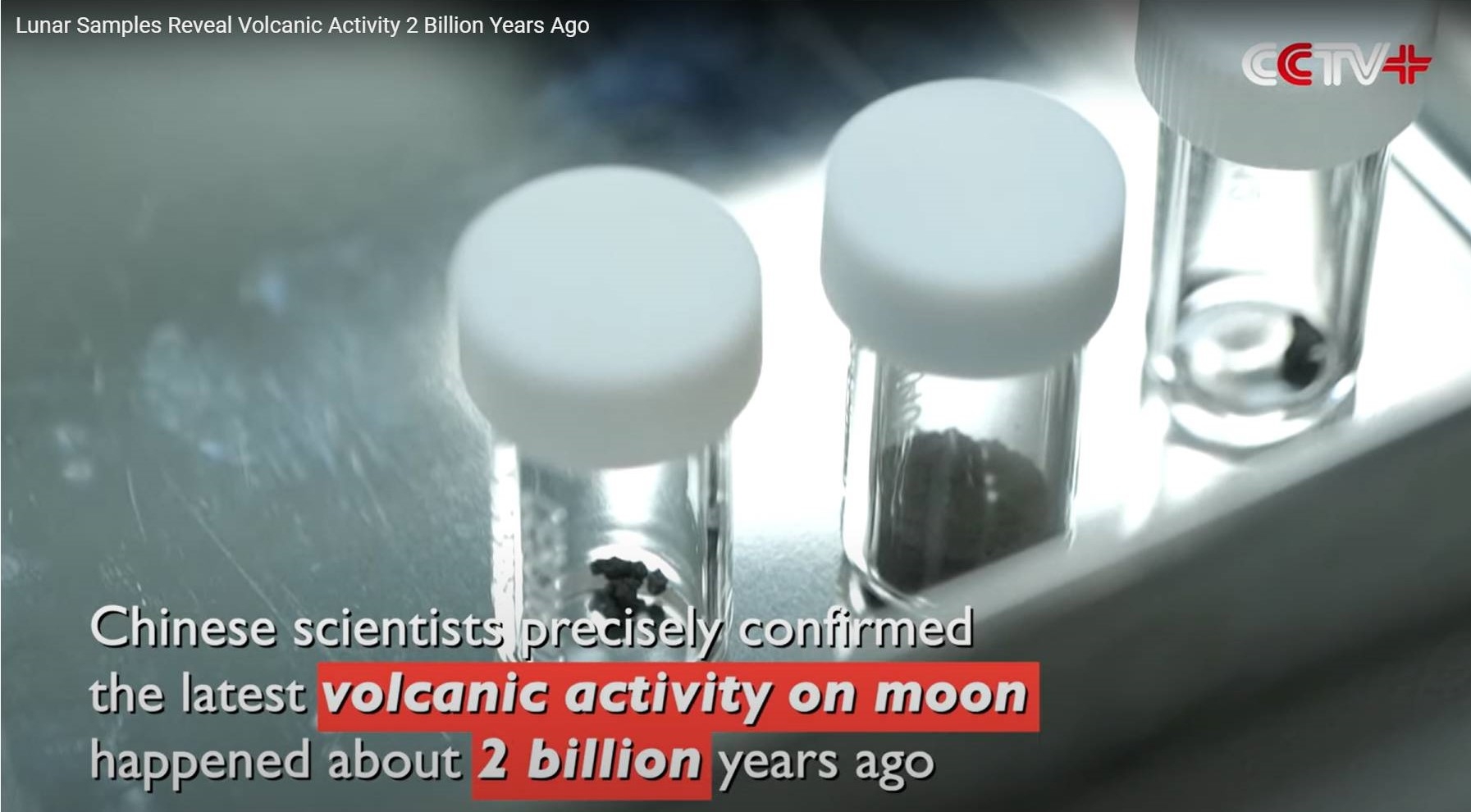
Image credit: CCTV/Inside Outer Space screengrab
Chinese scientists precisely confirmed the latest volcanic activity on the Moon took place about 2 billion years ago.
This confirmation is based on returned-to-Earth lunar samples, collected by China’s Chang’e-5 lunar probe in 2020.
For a China Central Television video, go to:

Image credit: CCTV/Inside Outer Space screengrab

Earth’s Moon as seen from the International Space Station.
Image credit: NASA
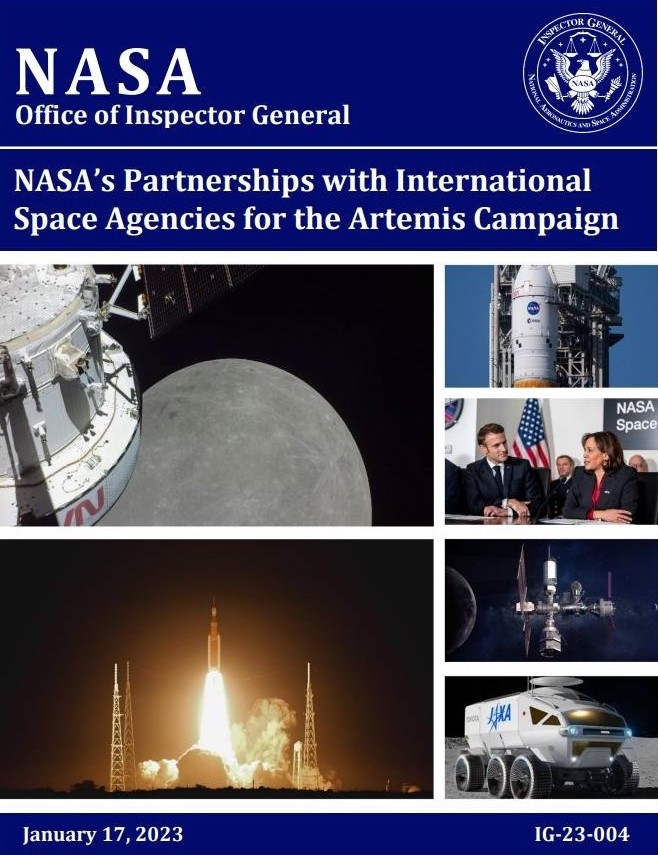
NASA’s Office of Inspector General has issued a report — NASA’s Partnerships with International Space Agencies for the Artemis Campaign – making several observations and recommendations.
The Office of Inspector General (OIG) report notes the interest in NASA’s back-to-the-Moon Artemis campaign by international space community. That is evidenced by NASA’s 54 Artemis-related international instruments and the 23 signatories to the Artemis Accords.

Image credit: NASA
“However, the Agency lacks an overarching strategy to coordinate Artemis contributions from international space agencies and entities. Except for the Gateway Program, the Artemis campaign does not have comprehensive forums – boards, panels, and working groups — for its international partners to routinely discuss topics such as flight and mission planning, safety, and research integration.”

Effectiveness and affordability
That said, the NASA OIG has recommended increasing the effectiveness and affordability of Artemis integration efforts with international partners, by these steps:
- NASA senior leadership establish a coordination strategy with NASA’s international partners that includes recurring forums specifically for Artemis Accords signatories interested in participating in the Artemis campaign;
- establish NASA-led Artemis campaign boards and working groups for partners with agreed-upon commitments and provide opportunities for liaison representation from international partner agencies;
- issue a detailed strategy and architecture for missions beyond Artemis IV that considers potential international partner roles and responsibilities;
- perform a detailed gap analysis and cost estimate for Artemis missions beyond Artemis IV that will help inform a cost-sharing strategy with international partners;
- establish a full-time export control team dedicated to Artemis programs in support of space flight developments;
- review export control requirements and consider additional roles for partner astronauts to increase their utilization in NASA space flight operations;
- establish a fulltime export control team dedicated to the Artemis programs in support of space flight operations;
- coordinate with other federal agencies to develop a unique Export Administration Regulations (EAR) classification for the Gateway program;
- execute Artemis agreements with key international space agency partners to ensure partner roles and responsibilities are clearly understood and allow for efficient and timely partnerships in support of Artemis; and
- develop an automated routing method for processing international agreements within NASA to increase timeliness.
To read the full report — NASA’s Partnerships with International Space Agencies for the Artemis Campaign – go to:
https://oig.nasa.gov/docs/IG-23-004.pdf