Archive for the ‘Space News’ Category
 Author:
  February 13th, 2023
Image credit: USNI NewsFor the past week or so, the public has been witness to an aerial assault of sorts, flying objects that are, for the most part, labeled as unidentified, take on different shapes and sizes, are shot down with recovered pieces being analyzed, even “back engineered” to cough up the goods as to where they come from and what they are doing drifting about in our atmospheric firmament.

Image credit: Scientific Coalition for UAP Studies
For the past week or so, the public has been witness to an aerial assault of sorts, flying objects that are, for the most part, tagged as unidentified, take on different shapes and sizes, are shot down with recovered pieces being studied, even “back engineered” to cough up the goods as to where they come from and what they are doing drifting about in our atmospheric firmament.
The language and grammar whirlpool about these lofty incursions should give rise to more reflection about Unidentified Flying Objects as well as the new nomenclature, Unidentified Aerial Phenomenon, or UAP for short.
The on-going reveal regarding these sky-high visitations means what to the UAP/UFO community?
Are there any lessons learned from these incidents and takeaways from pilot descriptions of the objects?

UAP have been reported by Navy pilots unlike anything they have ever witnessed.
Image credit: Enigma Labs/Lt. Cmdr. Alex Dietrich
There are those that will surely portray these new close-encounters as part of an ultra-classified government plan to prepare the citizenry for “full-disclosure.” That is, yep, Earth is on the receiving end of stopover vessels from the vastness beyond sight, sound, and dimension of mind.
But just how much shadow, how much substance, are we dealing with here?
Eyewitness accounts
A leading doubting Thomas and nemesis of all the uptick in UFO and UAP uproar is Mick West, a writer, skeptical investigator and a former video game programmer.
“The varied pilot reports we’ve seen in the media illustrate how difficult it is to get information about encounters with slow-moving objects from eyewitness accounts,” West told Inside Outer Space.
“The difficulty of judging the speed of an object without knowing its distance is greatly compounded in an encounter with unfamiliar balloons where the pilots do not know how big they are,” West says.
West points to both congressional testimony and the recent output and on-going work of the Office of the Director of National Intelligence (ODNI) and the newly established All-domain Anomaly Resolution Office (AARO).

Released in January, the ODNI’s 2022 Annual Report on Unidentified Aerial Phenomena is available at:
https://www.odni.gov/files/ODNI/documents/assessments/Unclassified-2022-Annual-Report-UAP.pdf
Low information zone
Balloons are a common source of pilot reports of UFOs/UAPs, says West.
A wayward balloon is a likely explanation for the “GoFast” UFO video, released in 2018, which seems to show an object moving at high speed over the ocean, but actually shows a much slower object, West adds.

GOFAST
Credit: DOD/U.S. Navy/Inside Outer Space screengrab
UFO reports emerge because of a lack of information, West continues, existing in the so-called “Low Information Zone” or LIZ – the set of conditions where an object is just too far away, small, fast, blurred, or out of focus to determine exactly what it is.
“NORAD’s radar has always had a significant LIZ, where radar returns of low quality, or that resembled birds, balloons, or other airborne clutter, have been filtered out as distractions to the primary mission of detecting incoming conventional aircraft and missiles,” West says.
Expensive, dangerous shoot downs
“The furor over the large Chinese balloon has prompted NORAD to modify or eliminate the filters to attempt to better capture similar incursions,” West says. “This has resulted in low-information objects being selected from the LIZ for investigation. Many of these will be innocuous items, like stray balloons, potentially even of U.S. origin.”
Some items may be previously undetected adversary incursions, West concludes. “Disambiguating these will represent a significant challenge. Unfortunately, the perceived need to take rapid action will result in expensive and dangerous shoot-downs of a variety of objects based on limited information.”

Shown at Congressional hearing, Video 1 2021 flyby movie showing a purported UAP.
Credit: Counterterrorism, Counterintelligence, and Counterproliferation Subcommittee/Inside Outer Space screengrab
Aerial excitement
All the chatter related to balloon shoot downs and UAP talk has also caught the attention of noted UFO disbeliever Robert Sheaffer. He’s an author, freelance writer, and skeptical investigator of all manner of bogus claims.
The ongoing aerial excitement involving balloons means, either that the Chinese have just now dramatically increased their balloon-launching activities, or else that such balloons are no longer being ignored,” Sheaffer explains, “and it’s more likely the latter.”
Sheaffer points out that the pilots, and other official personnel, seem quite clueless about what is being seen.
As noted in one CNN report, there have been some pilots claiming to have seen no identifiable propulsion on the object. Those pilots could not explain how the object was staying in the air, despite its cruising at an altitude of 40,000 feet.
“An object that is lighter than air does not need ‘propulsion’ to remain aloft,” Sheaffer responds.

FLIR
Credit: DOD/U.S. Navy/Inside Outer Space screengrab

GIMBAL/“Tic Tac”
Credit: DOD/U.S. Navy
“In recent years the Chinese have developed small inflatable drones that could possibly account for some sightings,” Sheaffer adds.
Effects of perspective
Similar in view to West, the question of “balloons” is relevant to the UAP video release of the so-called “go fast” object, Sheaffer points out, which may well be a balloon that drifted out over the ocean.
“That object is indeed ‘going fast’ with respect to the camera — perhaps 400 miles per hour — but relative to the ground, it is almost stationary,” Sheaffer says. “The aircraft is passing the object at a high rate of speed, which makes the object appear to be moving rapidly in the opposite direction.”
The fact that Navy pilots did not realize this, says Sheaffer suggests that those pilots don’t understand simple effects of perspective. “And the fact that the Pentagon’s ‘UAP experts’ failed to realize what was happening demonstrates their complete incompetence in such matters,” he feels.
As for the other two publicly released videos — called the Tic Tac and the Gimbal – “they are probably the infrared signatures of distant jet aircraft, and have nothing to do with balloons,” Sheaffer concludes.

Credit: Piplsay
 Posted in
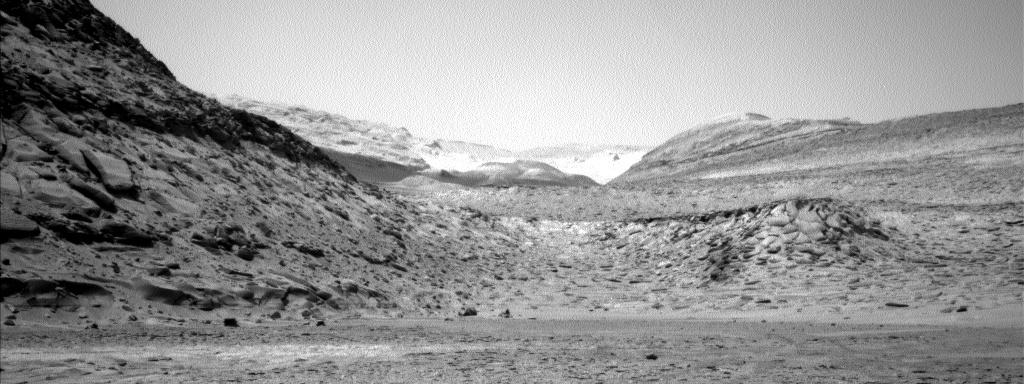
Curiosity Left B Navigation Camera photo taken on Sol 3738, February 10, 2023.
Image credit: NASA/JPL-Caltech
NASA’s Curiosity Mars rover at Gale Crater is now performing Sol 3740 duties.
Rover investigators are working through the best strategy for new drilling – that’s the report from Abigail Fraeman, a planetary geologist at NASA’s Jet Propulsion Laboratory.
Researchers are collecting additional contact science and remote sensing data from around the future Dinira drill target.
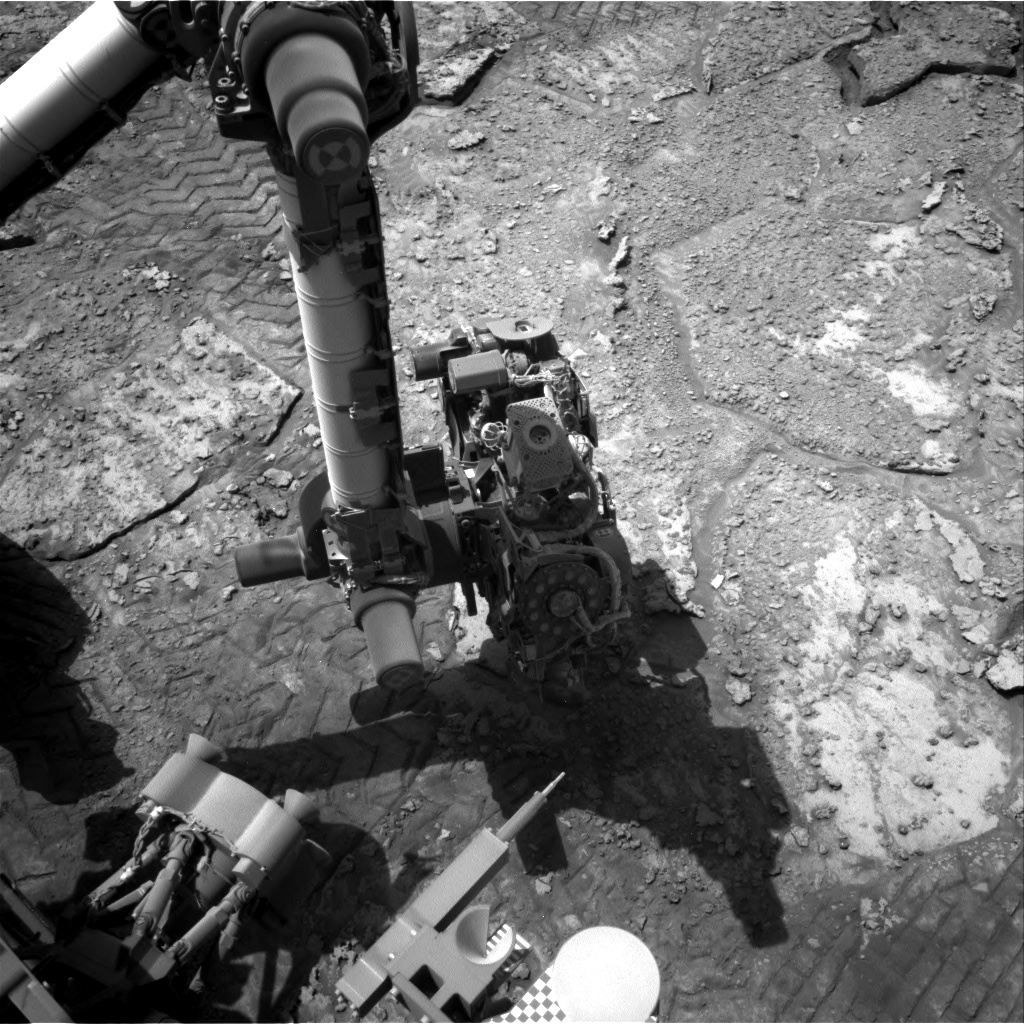
Curiosity Right B Navigation Camera image acquired on Sol 3739, February 11, 2023.
Image credit: NASA/JPL-Caltech
Flat area
“Fortunately, there’s no shortage of interesting things to look at from our current position, so the science team had lots of fun deciding on what rocks to observe,” Fraeman notes.
The plan calls for gathering composition and fine scale texture data on a flat area near Dinira by using the Dust Removal Tool, the Alpha Particle X-Ray Spectrometer (APXS) and the robot’s Mars Hand Lens Imager (MAHLI) on a target named “Yakarinta.”

Curiosity Mars Hand Lens Imager (MAHLI) photo produced on Sol 3739, February 12, 2023
Image credit: NASA/JPL-Caltech/MSSS
“We’ll also take the opportunity to learn more about the resistant features on the top of this rock, using APXS and MAHLI on a target named ‘Itu’ as well as a ChemCam [Chemistry and Camera] observation of a target called ‘Los Caracoles.’”

Curiosity Mars Hand Lens Imager (MAHLI) photo produced on Sol 3739, February 12, 2023
Image credit: NASA/JPL-Caltech/MSSS
Rare opportunity
“A nearby block that was churned up by the rover’s wheels gives us a rare opportunity to see a freshly exposed face of the Marker Band rocks, so we’ll take advantage by collecting a ChemCam and MAHLI observation of this rock on targets named ‘Macuanatapurucuara’ and ‘Uraricaá’ respectively,” Fraeman reports. Also on tap is use of ChemCam to observe a nearby block named “El Pato,” and Mastcam will acquire lots of mosaics of the surrounding area.
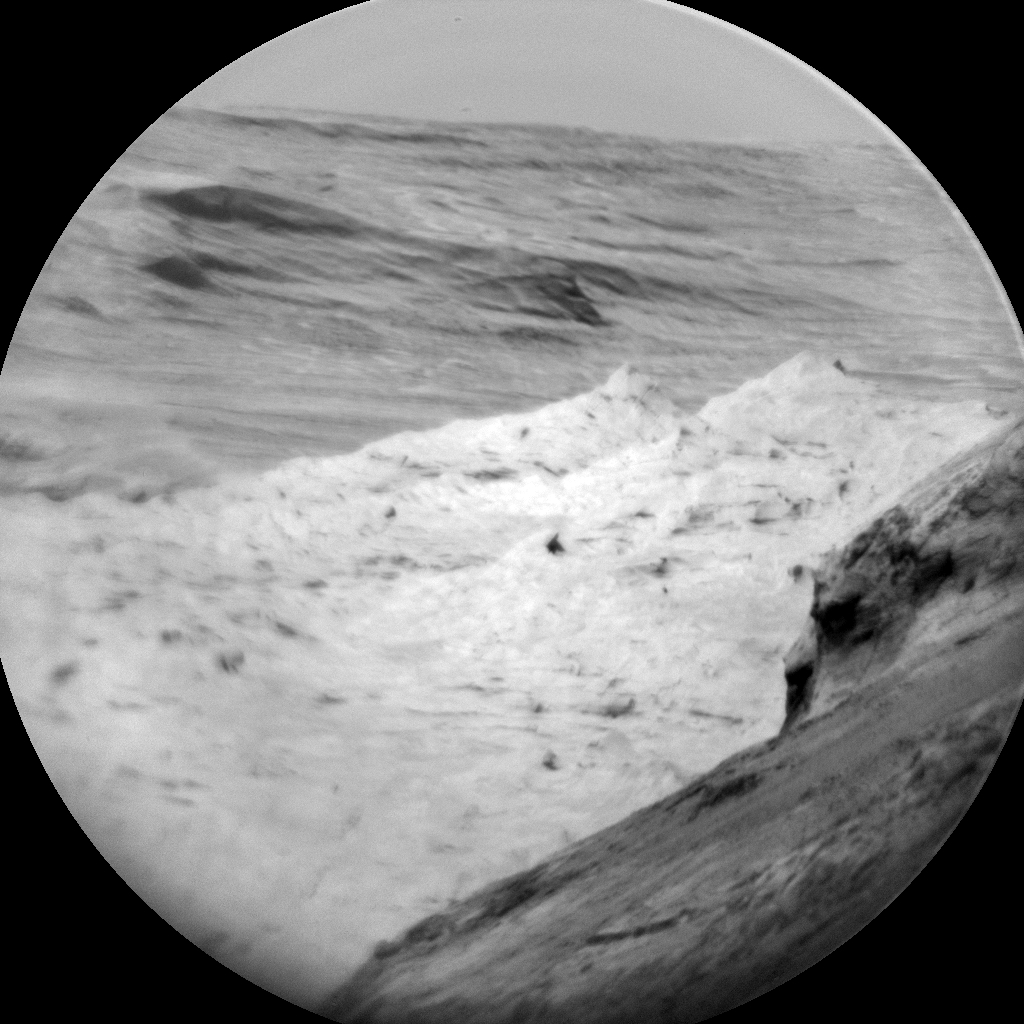
Curiosity Chemistry & Camera (ChemCam) Remote Micro-Imager (RMI) photo taken on Sol 3739, Febuary 11, 2023.
Image credit: NASA/JPL-Caltech/LANL
Looking up
“Curiosity will additionally be looking up several times this weekend as ‘noctilucent cloud season’ has returned to Gale crater! Noctilucent (Latin for “night shining”) clouds light up right around sunset, and we first found them several years ago forming very high in the sky during the early winter months at Gale crater,” Fraeman notes.
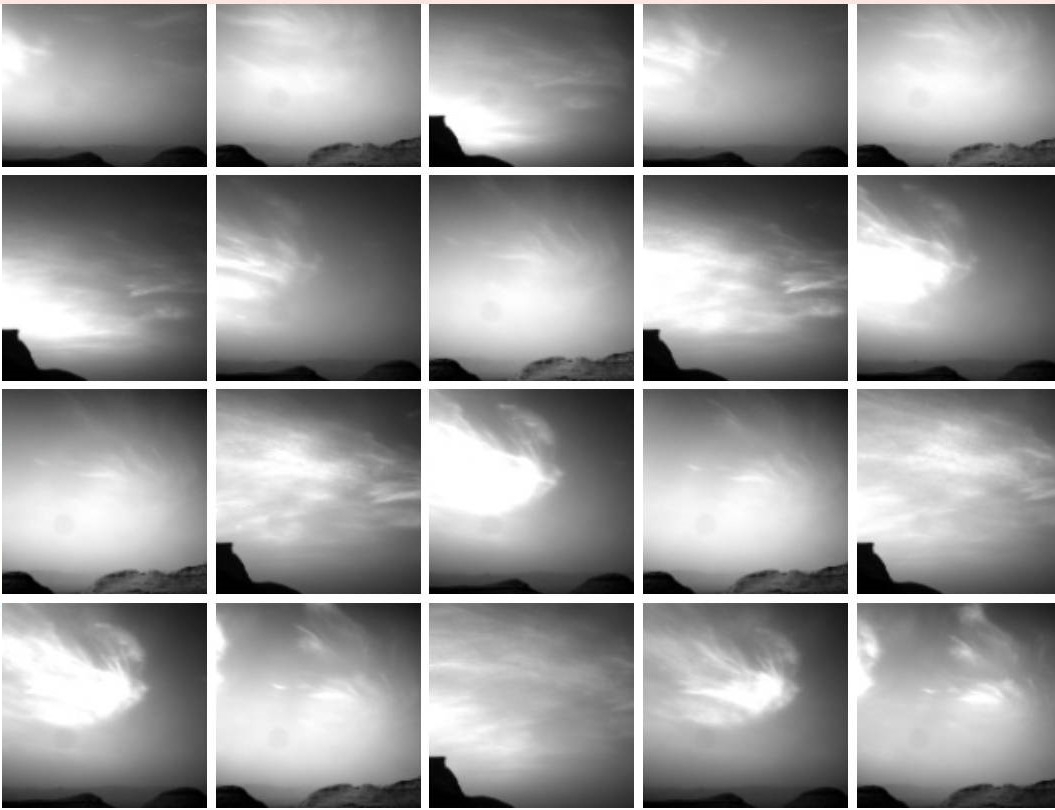
Curiosity Right B Navigation Camera images taken on Sol 3737 February 10, 2023
Image credit: NASA/JPL-Caltech
“These clouds are likely made of carbon dioxide ice,” Fraeman concludes, “and we’ll be monitoring them for the next few weeks. We have already caught some great images this season!”
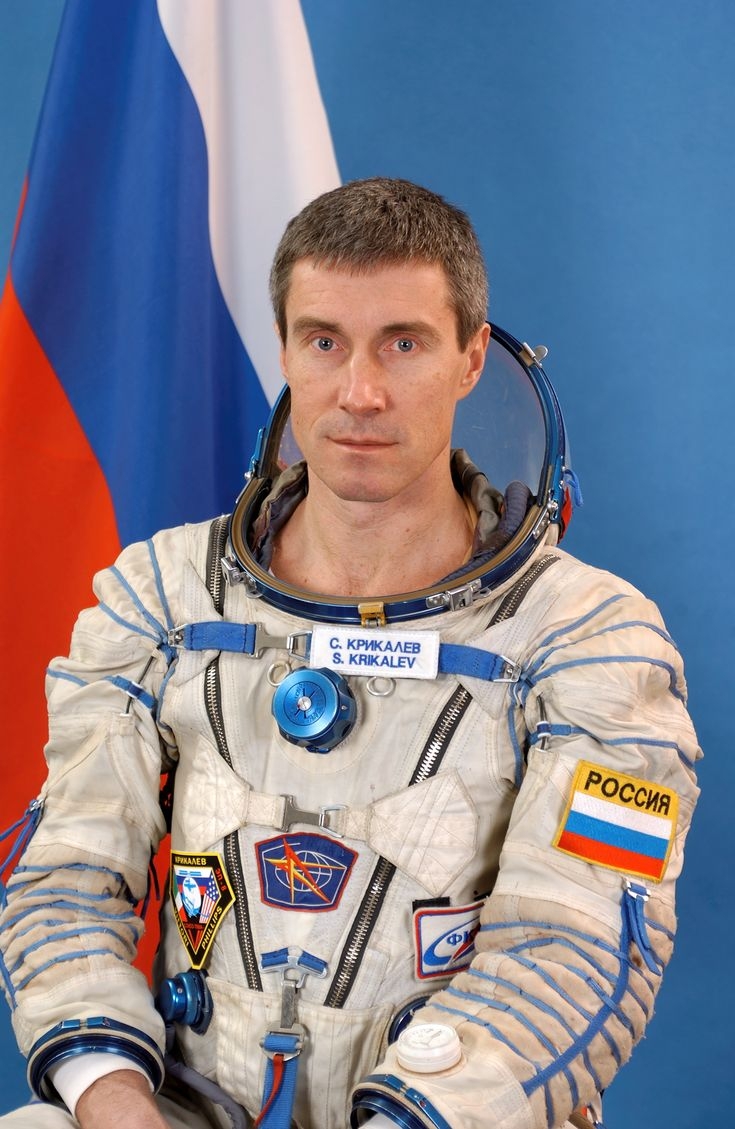
Former cosmonaut, Sergey Krikalev.
Image credit: NASA
Former cosmonaut Sergey Krikalev has addressed the situation with the compromised Progress MS-21 on the International Space Station – described as a coolant leak from the thermal control on the cargo ship.
Progress MS-21 has been docked to the station for several months, launched from Baikonur on October 26 atop a Soyuz-2.1a carrier rocket.
According to Krikalev, experts are currently thinking about how to inspect in detail the leak on the Progress MS-21 radiator in order to find out the cause of its occurrence. There is need to make sure that this is not a systematic error, because it may affect the following ships, he noted in a Roscosmos Telegram communiqué.
So far, the situation with Progress MS-21 has not led to a change in the ISS flight program. The situation on board the ISS after the depressurization of the Progress MS-21 spacecraft is calm, Roscosmos adds.
The compromised Progress MS-21 is to be ditched in the ocean on February 18, and the plans to do so have not changed.

China balloon launch site?: A StratoCat twitter says that after 12 hours of painstakingly searching, mile after mile, all Inner Mongolia using Apple maps, the location of the a Chinese balloon launch facility has been found – tied to that alleged surveillance “spy” aerial mission over the United States that was later shot down over U.S. east coast waters. It is located in the Siziwang Banner, 85 miles (138 kilometers) north of Hohhot. Image credit: StratoCat

Mars collectibles: NASA’s Perseverance rover at Jezero Crater has placed a “depot” of 10 samples on the surface of Mars. The sealed tubes contain a diverse sampling of geology at the rover’s exploration zone, and may be picked up and returned to Earth in the 2030’s. Image credit: NASA/JPL-Caltech

High and mighty: NASA’s Mars helicopter continues to show off its scouting skills at Jezero Crater. Mars Guy notes that recent software upgrades allow Ingenuity to fly over rugged terrain while autonomously adjusting its altitude. Image credit: Mars Guy
Go to video at: https://youtu.be/lo-m7zmZczk

Hissy fit: Russian space specialists have recorded a depressurization in the Progress MS-21 cargo ship, which is scheduled to undock from the International Space Station on February 18. The passage hatch from the ISS to the ship is closed, thus the Progress MS-21 is isolated from the total volume of the station. All equipment scheduled for removal is already in the ship. The reasons for its depressurization are being investigated. “The temperature regime and pressure on board the ISS are normal, nothing threatens the life and health of the crew,” explains a Roscosmos posting via Telegram. “This incident had no effect on today’s docking with the ISS of the Progress MS-22 cargo spacecraft and will not affect the station’s future flight program.” Image of Progress MS-22 docking to ISS via Roscosmos.
The NASA Aerospace Safety Advisory Panel has submitted its annual report for 2022 to the U.S. Congress and the NASA Administrator.
In its report, the ASAP has flagged a number of issues and concerns, as well as making recommendations to NASA.
One worrisome topic noted by the ASAP is that the orbital debris hazard persists and continues to grow exponentially as space becomes ever more congested.
“For example, CubeSats and other small satellites are being launched with increasing frequency, and several companies are now deploying mega-constellations with hundreds, or even thousands, of satellites,” the report explains. “Some of these satellites incorporate the use of electric propulsion and autonomous onboard maneuvers with very short turnaround times, increasing the difficulty of tracking and planning for collision avoidance.”

Clutter in the cosmos.
Credit: Used with permission: Melrae Pictures/Space Junk 3D
Close calls are not rare
The report underscores the importance to recognize the prevalence of the issue.
“Orbital debris events and close calls are not rare, but they are in fact becoming more and more frequent as space becomes more congested and as national and international space players—who rightfully seek to leverage the high ground of space for commerce, science, and national prestige—continue to populate the space domain with new satellites.”
The risks are growing, the ASAP feels, and a more strategic approach to the problem is now necessary to arrest the risks and to assure that the domain of space remains sustainable.
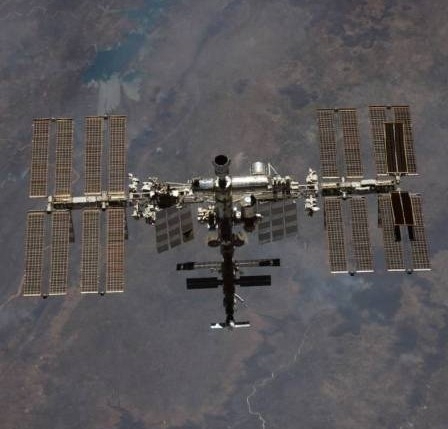
Image credit: Roscosmos/NASA
ISS: controlled deorbit
Another area flagged by the ASAP is the controlled deorbit of the International Space Station (ISS).
“Although discussions are ongoing between NASA and the Russian Space Agency to make the controlled deorbit plan more robust, the ASAP reiterates its concern first stated in 2012, about the lack of a well-defined, fully funded controlled re-entry and deorbit plan for the ISS that is available on a timeline that supports the planned ISS retirement,” the report notes.
Furthermore, the ASAP recognizes that the ISS partners are operating at risk, today, without the capability to deal with a contingency situation that would lead to a deorbit.
“The risk to public safety and space sustainability is increasing every year as the orbital altitudes in and around the ISS continue to become more densely populated by satellites, increasing the likelihood that an unplanned emergency ISS deorbit would also impact other resident space objects,” the report says.

Credit: NASA
Board of directors
The NASA Aerospace Safety Advisory Panel has recommended the space agency should create a “board of directors.”
“As a part of an overall risk management approach and in order to develop and execute its strategic vision for the future of space exploration, the ASAP says that NASA should establish and provide leadership through a ‘board of directors’ that includes the Center Directors and other key officials, “with the emphasis on providing benefit to the Agency’s mission as a cohesive whole, and not to the individual components of the Agency.”
In a January 23 transmittal letter of the report to NASA chief, Bill Nelson, a noteworthy risk area for Agency attention is namely the future of missions in Low-Earth Orbit (LEO).
“While lunar and deep space exploration grow in prominence, the key role played by operations in LEO toward understanding and managing exploration risk cannot be discounted,” says Patricia Sanders, Chair of the Aerospace Safety Advisory Panel.
To access the full 2022 ASAP report, go to:
https://oiir.hq.nasa.gov/asap/documents/ASAP_2022_Annual_Report.pdf

Image credit: CNSA/CMSA/CCTV/Inside Outer Space screengrab
China’s Shenzhou-15 space station crew has completed a set of what the country’s space officials tagged as “unprecedented” space walks outside their Tiangong orbiting complex.
Astronauts Fei Junlong and Zhang Lu performed extravehicular activities for about seven hours, exited the station’s Wentian module via an airlock cabin. Fei changed his position with the help of robotic arms while Zhang moved independently by holding railings outside the space station.
During their stint outside of Tiangong they installed “extension pumps” on the Mengtian lab module, and added restraint hardware onto the Tianhe core module.
The twosome also started the cargo out-of-cabin installation task, which will feature a coordinated operation of the devices such as load transfer equipment, cargo airlock module, inner and outer hatch doors, and robotic arms.

Image credit: CNSA/CMSA/CCTV/Inside Outer Space screengrab
Operated by on-orbit astronauts or ground crew, the devices can be either moved outside or inside the cabin according to the requirements of the mission. This technology could improve the efficiency of cargo exchange inside and outside the cabin and reduce astronauts’ EVAs and workload.
Space colleague, Deng Qingming, worked inside the space station to support his crewmates, Fei and Zhang.
Fluid circulation
“Extension pumps have been installed on all the three modules of our space station. They are the pumps in the thermal control circuits, driving the fluid circulation, similar to what the human heart does. They dissipate the heat generated by equipment, just like how our cell phones get hot after being used too much. Then the fluid circulation would help cool the temperature down and dissipate the heat outside,” said Su Nan, the general mechanical designer of the space station extravehicular activity mission.
The pumps need to operate at high speed for a long time, and have to be installed both inside and outside the modules to ensure stable operation of the space station, Su told China Central Television (CCTV).

Credit: CCTV/Inside Outer Space screengrab
There is a set of pumps which were [installed inside the module and] launched into space with the module. They had been working before the astronauts installed the extension pumps. If the ones inside stop working in the future, we still have the extension pumps to work. Also, the extension pumps can start operation immediately after installation, and they can also be replaced with new ones,” Su said.
Stable platform
The foot restraints will offer a stable platform for taikonauts to stand on during their follow-up work.
“Foot restraints, with their position fixed on the cabin, are needed when the astronauts work on the outer wall of the cabin. The transfer of the foot restraints is aimed at facilitating work in the future. Two of the foot restraints will be anchored on the outer wall of the cabin, thus they need to be set up in advance,” Su said.

Image credit: Shujianyang Wikimedia Commons, CC BY-SA
The entire space station is equipped with four foot restraints, Su added, which are usually stored at the exit hatches of the airlock cabin and the node cabin. The astronauts will determine where to install the foot restraints when exiting the capsule based on the needs of the mission.
“There are two foot restraints at the exit hatch of the airlock cabin, which will be installed onto a robotic arm when the astronauts exit the capsule, so they need to be stored there permanently. The other foot restraints are stored at the node cabin. During the space station construction phase, astronauts need to get out the capsule from the node cabin, and the node cabin nears the central position of the space station with three modules, so we made there another permanent storage site,” said Su.

Armrests
“One of the significant features of this extravehicular task is that the astronauts had to move an unprecedented long way, especially for astronaut No. 3, Zhang. He used about 140 armrests during his EVAs, which is pretty challenging,” said Liu Liang, chief designer of the ergonomic subsystem at the China Astronaut Research and Training Center, during a CCTV interview.
During the mission, the other spacewalker, Fei, used robotic arms to move between the modules.

Image credit: CNSA/CMSA/CCTV/Inside Outer Space screengrab
“We reminded him to warm the liquid cooling suit up before the robotic arms transfer, so that he could stay in a relatively comfortable condition. If he only started to adjust the temperature when he felt cold, it would be too late,” said Li Pengwei, chief designer of the extravehicular spacesuit information management and power supply subsystem at the China Astronaut Research and Training Center.
Tracking system
The wide movement range of the mission’s first space walk also required a tracking system that can cover a larger volume of space for longer hours to ensure smooth communications between the astronauts in space and the ground control team.
The second generation of China-made spacesuits is called Feitian, and three sets of extravehicular spacesuits are used in rotation for their EVAs, and can be adjusted in accordance with human parameters like heights and weights.

Image credit: CNSA/CMSA/CCTV/Inside Outer Space screengrab
“Taikonauts are mainly to adjust the size of the upper and lower limbs of the extravehicular spacesuit, particularly adjusting with regarding to their personal height to ensure that the extravehicular suits fit them well,” said Li.
“We chose the extravehicular spacesuits A and B for this round of EVA. Judged from the previous use, Suit B is used the most. We will maximize Suit B’s service life by using it repeatedly,” Li told CCTV. “All our extravehicular spacesuits are in good working condition. According to the overall plan, Suit B will be used to reach its service life to accumulate how many times it is used and how long its service life is, so as to accumulate data for the follow-up development of our products.”

Image credit: CNSA/CMSA/CCTV/Inside Outer Space screengrab
Relay satellites
“We deployed three relay satellites to monitor the three cabins our astronauts used for EVAs. We did that to ensure the largest range and longest period of control and tracking, so that the ground control team could keep communications with the astronauts as much as possible to support their operation at any time,” said Xie Yuan, an engineer at the Beijing Aerospace Control Center.

Image credit: CNSA/CMSA/CCTV/CGTN/Inside Outer Space screengrab
“Our astronauts completed all the procedures correctly and their operation is perfect. They’ve demonstrated strong operating and coordination capacity. Overall, the three astronauts worked closely and fulfilled these EVAs successfully,” Huang Weifen, astronaut system chief designer of China’s manned space program, told CCTV/China Global Television Network (CGTN).
These were the first EVAs conducted after the completion of the Chinese space station, and also the first spacewalks for Fei and Zhang.
First large-scale space walks
“This is the first large scale EVA mission involving all the three modules after the completion of the space station complex,” said Zhu Guangchen, deputy chief designer of space station system at China Academy of Space Technology.

Image credit: CNSA/CMSA/CCTV/Inside Outer Space screengrab
“The astronauts need to pass through the interspace between solar panels and the module while carrying large objects. To ensure the whole mission is completed safely and smoothly, we conducted repeated simulation demos and analysis. Up to now everything is normal and all tasks have been completed as planned,” Zhu told CCTV.
The Shenzhou-15 crew, as planned, will carry out several more spacewalks in the future, said the China Manned Space Agency (CMSA).
Unlocked, installed and tested

Image credit: CNSA/CMSA/CCTV/Inside Outer Space screengrab
Reported Lin Xiqiang, deputy director of the CMSA:
“With the completion of China’s space station, we have now entered the stage of application and development. In the past two months, the Shenzhou-15 crew has unlocked, installed and tested all experiment cabinets on Mengtian lab module. They have started scientific experiments one after the other. Also, the Shenzhou-15 crew has completed first exit of cargo from airlock cabin, which laid foundation for our follow-up tasks.”

Credit: GLOBALink/Inside Outer Space screengrab
The three-person crew has been living in orbit for 70 days since they entered the space station combination on Nov. 30, 2022. Their six-month mission is aimed at wrapping up the last stage of the space station construction and starting the first stage of its application and development.
For videos of this first space walk carried out by the Shenzhou-15 crew, go to:

Credit: ISS/NASA
And here we thought that the dust on the Moon was a nuisance for future lunar expeditions.
It still is, but Moon dust launched from the lunar surface — or from a space station positioned between Earth and the Sun — could reduce enough solar radiation to mitigate the impacts of climate change.
That’s the proposal from scientists at the Center for Astrophysics | Harvard & Smithsonian and the University of Utah exploring the potential of using dust to shield sunlight.

Simulated stream of dust launched between Earth and the Sun. This dust cloud is shown as it crosses the disk of the Sun, viewed from Earth. Streams like this one, including those launched from the Moon’s surface, can act as a temporary sunshade.
Artwork credit: Ben Bromley/University of Utah
Endless supply
The research paper, published today in the journal PLOS Climate, describes different properties of dust particles, quantities of dust and the orbits that would be best suited for shading Earth.
There’s need for an endless supply of new dust batches to blast into orbit every few days after the initial spray dissipates.
Researchers found that launching dust from Earth to a way station at a Lagrange point between Earth and the Sun would be most effective – but would involve an astronomical price tag and substantial effort.

Lunar dust haunted Apollo moonwalkers. Can that dust offer a way to mitigate climate change on Earth?
Image credit: NASA/Azita Valinia/Inside Outer Space screengrab
Casting a shadow
According to the team, a sunshield’s overall effectiveness would depend on its ability to sustain an orbit that casts a shadow on Earth.
Two scenarios were found to be promising: Use of a space station platform at the L1 Lagrange point and shooting lunar dust from a platform on the surface of the Moon towards the sun.
The team found that the inherent properties of lunar dust were just right to effectively work as a sunshield.
For detailed information on the proposal – “Dust as a solar shield” – go to:
https://journals.plos.org/climate/article?id=10.1371/journal.pclm.0000133

Soyuz craft undergoing preparation for Feb. 20 launch in uncrewed mode.
Image credit: RSC Energia
Russia’s pilotless Soyuz MS-23 spacecraft is being prepared for its upcoming launch at Baikonur.
Refueling of the ship with fuel and compressed gases is being wrapped up, with liftoff of the “rescue” craft atop a Soyuz-2.1a carrier rocket set for February 20 at 04:57:53 Moscow time.
According to a Roscosmos Telegram posting, the Soyuz has been returned to the assembly and testing building of the 254th site of the cosmodrome and installed at the workplace for stowage of delivered cargo, checking the tightness of hatches, installing screen-vacuum thermal insulation on the surface of the compartments, control weighing and docking with the transitional compartment of the launch vehicle.

Image credit: RSC Energia
Uncrewed mode
The Soyuz MS-23 is flying in an uncrewed-mode as a replacement craft for a compromised Soyuz MS-22 craft now docked at the International Space Station. That vehicle suffered a coolant leak last December that prompted a fast-paced checkout and launch of the Soyuz MS-23.

Soyuz MS-22 coolant leak image from last December.
Image credit: NASA
Due to a possible meteoroid strike, the vehicle’s radiator pipeline discharged crucial coolant into free space, putting to question the overall integrity and safety of the craft to return crew members back to Earth.
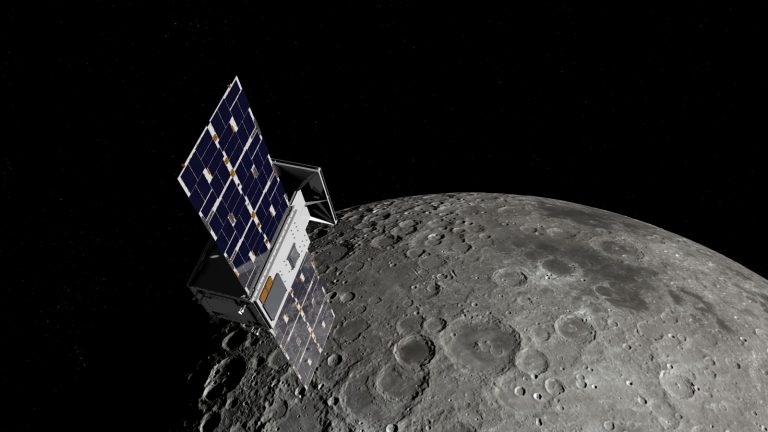
CAPSTONE
Image credit: NASA
NASA’s Moon mission mouthful, the Cislunar Autonomous Positioning System Technology Operations and Navigation Experiment, is doing just fine.
Mercifully called CAPSTONE for short, the CubeSat has been operating in a Near Rectilinear Halo Orbit (NRHO) for 85 days – completing approximately 12.5 orbits since arrival November 13th of last year.
The microwave oven–sized spacecraft, tipping the scales at a modest 55 pounds, is serving as the first spacecraft to test the unique, NRHO lunar orbit. Advanced Space of Westminster, Colorado owns and operates the spacecraft for the entirety of its mission.
The spacecraft has operated successfully through two lunar eclipses, Advanced Space explains, which present a challenge for the spacecraft thermal and power systems. Other notable events include the successful execution of 2 maintenance maneuvers to keep CAPSTONE in its desired orbit.
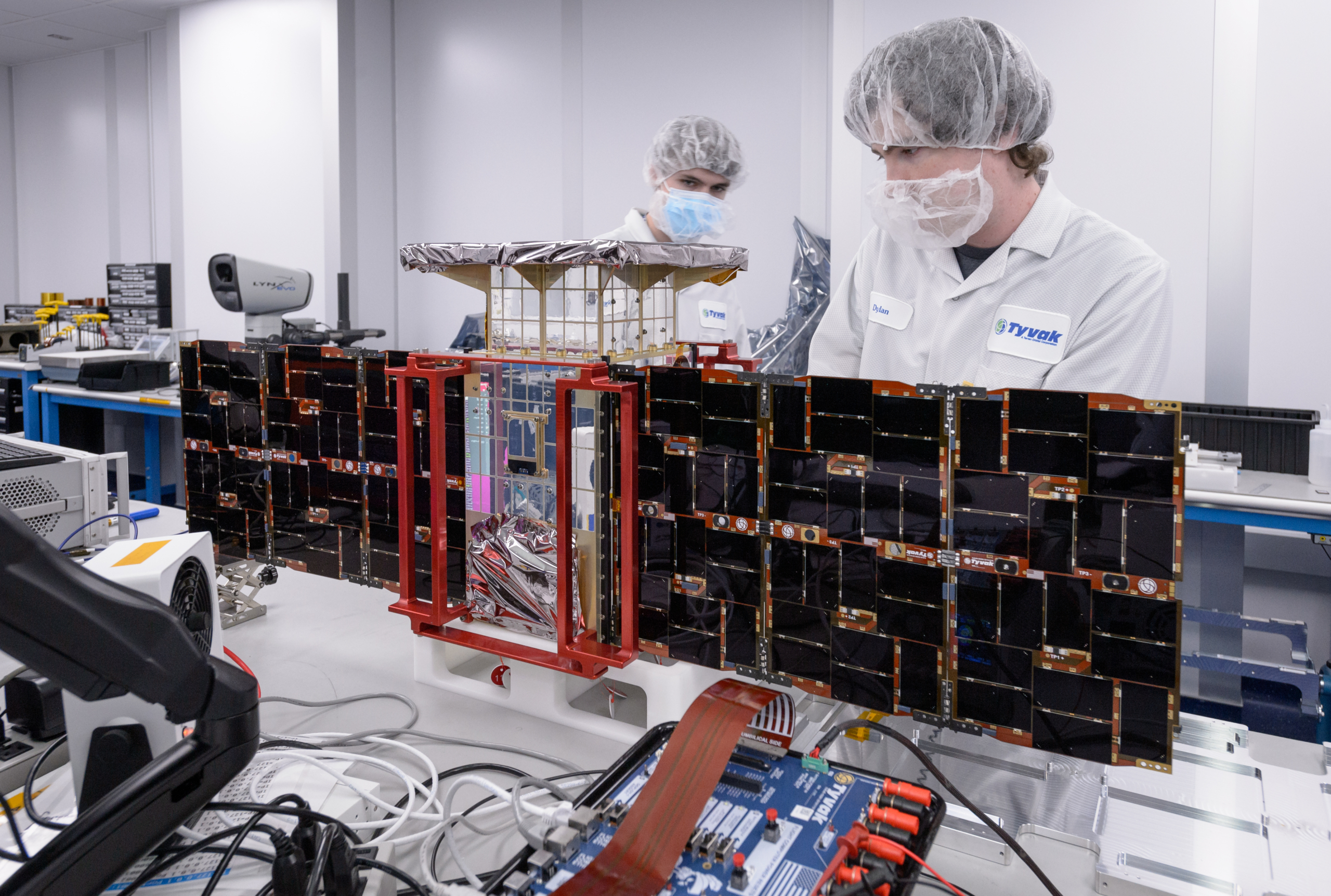
Dylan Schmidt, CAPSTONE assembly integration and test lead, right, and Lachlan Moore, systems integration engineer, left, install solar panels onto the CAPSTONE spacecraft at Tyvak Nano-Satellite Systems, Inc., in Irvine, California.
New cadence
According to Advanced Space, mission operators had originally planned to execute an orbital maintenance maneuver each revolution of the orbit. A new cadence has been selected to help reduce operational risk and complexity.
“This updated operational approach maintains the required orbit phasing for the mission and demonstrates the robustness of the design strategy for these maneuvers,” Advanced Space adds. This design strategy has been developed by the NASA team supporting the space agency’s cislunar Gateway mini-space station project at the Johnson Space Center.
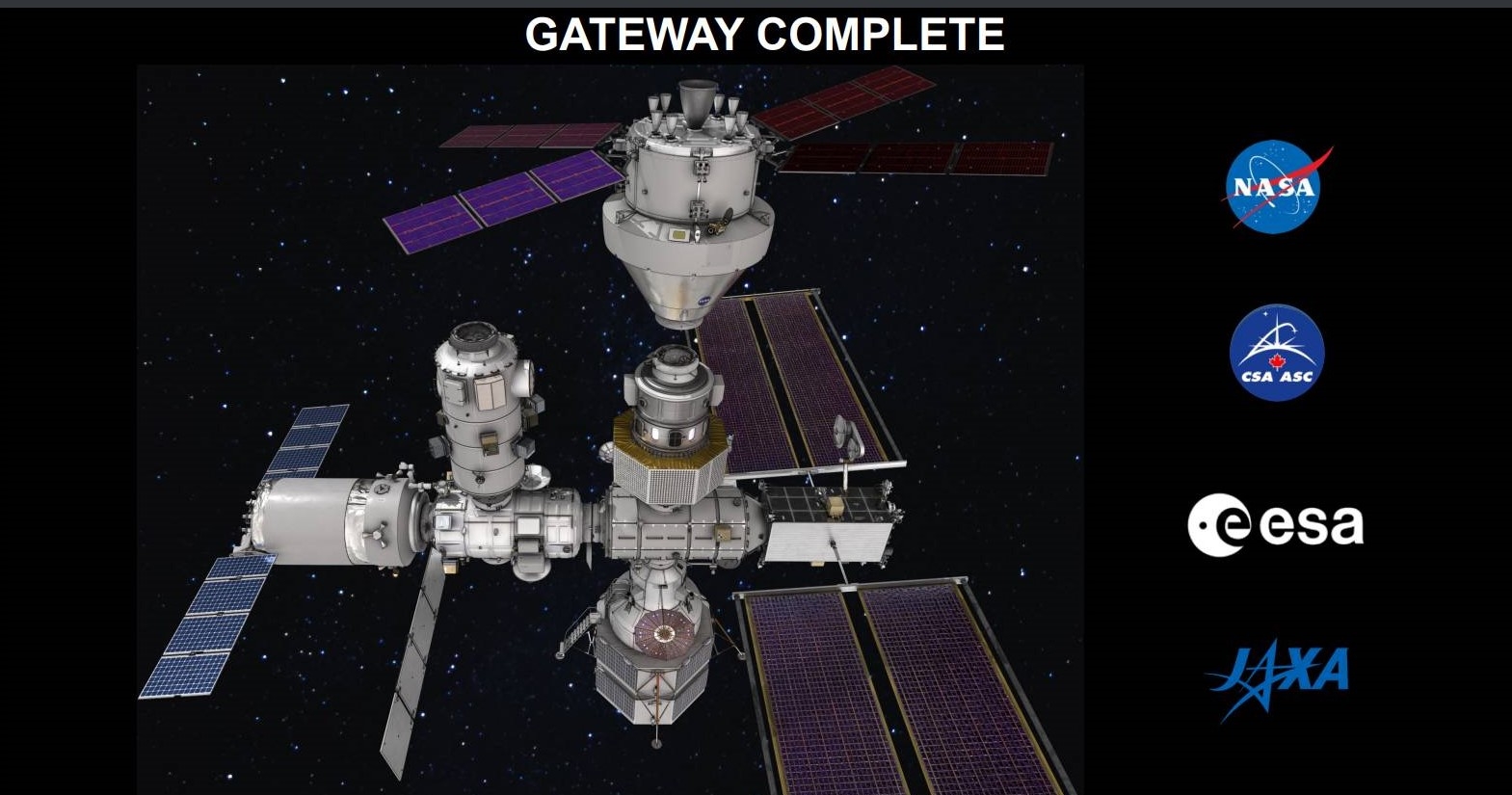
NASA’s cis-lunar Gateway facility.
Image credit: NASA
Cross-link attempt
In other CAPSTONE updates, the mission team successfully completed interface testing with the NASA Lunar Reconnaissance Orbiter (LRO) ground systems.
During the first attempt to obtain cross-link measurements on January 18th, LRO received a signal from CAPSTONE. However, the CAPSTONE radio system did not collect crosslink ranging measurements from the returned signal.
This initial try using the Cislunar Autonomous Positioning System (CAPS) software is informing subsequent work that will be further evaluated on upcoming attempts.

Jeffrey Parker, chief technology officer of Advanced Space (left) explains the CAPSTONE mission to U.S. Senator John Hickenlooper over a full-size model of the spacecraft.
Image credit: Advanced Space/Jason Johnson
CAPSTONE recovered from an anomaly on January 26th that resulted in the spacecraft being unable to receive commands from ground operators. This issue was cleared by the on-board fault protection system as designed on February 6th and the system has returned to normal operations.
“Lessons learned from this anomaly will result in operational procedure changes to speed recovery from any future similar anomalies,” Advanced Space reports.
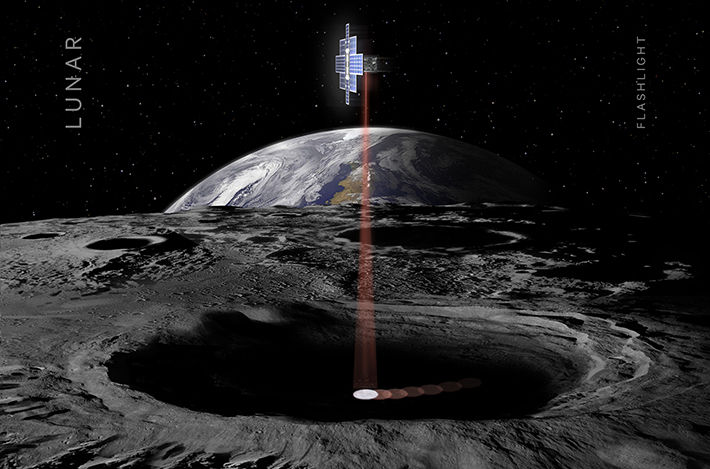
Moon orbiting Lunar Flashlight.
Credit: NASA/JPL
That troubled NASA Lunar Flashlight mission is facing an uphill battle in achieving its primary goals.
The Lunar Flashlight team decided to attempt lunar flybys using any remaining thrust that the probe’s out of kilter propulsion system can deliver.
This new attempt is designed to get the CubeSat into high Earth orbit, which includes periodic flybys of the lunar south pole once a month to collect data. The team plans to begin maneuvers on Thursday, and, if successful, the expected first science pass will now be in June.

Image credit: NASA GSFC Arizona State University
Stretch science goal
The CubeSat launched on Dec. 11, 2022, to demonstrate several new technologies with what NASA is now characterizing as “a stretch science goal” of detecting surface ice at the Moon’s south pole.
Shortly into Lunar Flashlight’s journey, the mission operations team discovered three of its four thrusters were underperforming.
“The rest of the CubeSat’s onboard systems are fully functional, and the mission recently successfully tested its four-laser reflectometer,” a NASA posting explains. “This mini-instrument is the first of its kind and is designed and calibrated to seek out surface ice inside the permanently shadowed craters at the Moon’s south pole.”

