Archive for the ‘Space News’ Category
 Author:
  February 24th, 2023
Image credit: CCTV/Inside Outer Space screengrab
A Beijing exhibition is serving as backdrop for spotlighting China’s human space program – one that will focus on two major missions in the near future: the application and development of the space station, as well as human lunar exploration.
The China Manned Space Engineering Office (CMSEO) is taking part in the exhibition, kicked off Friday at the National Museum.
Ji Qiming, assistant to director of the CMSEO, told China Central Television (CCTV) that their plan for the human space program requires a series of maintenance and upgrading of space station equipment. There are two crew rotations and cargo spacecraft resupply missions that will be carried out once or twice a year.

Ji Qiming, assistant to director of the China Manned Space Engineering Office (CMSEO).
Image credit: CCTV/Inside Outer Space screengrab
Resuable rockets, spacecraft
“We will also develop a new generation of Earth-space transportation system, that is, to develop a new generation of manned carrier rockets and spacecraft, which can upgrade our Earth-space transportation system and reduce the operating costs,” Ji said. “Both rockets and spacecraft can be reused.”
Ji noted that their plan for the missions also includes expanding the scale of China’s space station.
“At the same time, we will launch the expansion module of the space station at an appropriate time to further expand the size of the space station and enhance its capacity, which is the main task planning at the space station application and development stage,” Ji said.

Image credit: CCTV/Inside Outer Space screengrab
Moon plans outlined
China’s human Moon exploration project has entered a new phase, Ji said.
“We have made breakthroughs in key technologies for the new-generation manned carrier rocket, the new-generation manned spacecraft, the lunar lander and the spacesuit for landing on moon,” said Ji.
“An implementation plan for the lunar landing stage with Chinese characteristics has taken shape. This year, we will fully implement our research and construction tasks for the lunar landing phase as scheduled. At the same time, we will also carry out a series of preliminary studies on the long-term stay of astronauts on the lunar surface, and the development and utilization of lunar resources, so as to lay a technical foundation for future lunar exploration missions of the Chinese people,” Ji said.
 Posted in
New scenery shots from NASA’s Curiosity Mars rover at Gale crater.

Image credit: NASA/JPL-Caltech/MSSS

Image credit: NASA/JPL-Caltech/MSSS

Image credit: NASA/JPL-Caltech/MSSS

Image credit: NASA/JPL-Caltech/MSSS
Curiosity Mast Camera (Mastcam) Left imagery taken on Sol 3749, February 22, 2023.
There’s sky-soaring fear and drama in ballooning as evidenced by recent jet fighter shoot downs of airborne objects over Alaska, Canada, and Lake Huron.
Then there’s that earlier Chinese mega-balloon puncturing event, described by top U.S. policy wonks and lawmakers as a spy surveillance system, one that violated American sovereignty and sullied international law. More than 40 countries, those officials say, have also been on the receiving end of similar trespassing technology lofted by China over the years.

From China with Love: Chinese “spy balloon” is observed from above in this full resolution image reportedly taken by a U-2 aircraft. Image credit/Twitter via StratoCat; Chris Pocock/Dragon Lady Today
Pico balloon?
It is possible that one object blasted out of the sky over the Yukon might have been what’s called a “pico balloon.”

Popular pico balloon is launched.
Image credit: Jim Langsted/EOSS

Pico balloon is launched toting mini-payload..
Image credit: Jim Langsted/EOSS
In the do-it-yourself pico-ballooning world, Mylar balloons are typically used to tote to altitude a small amateur radio beacon payload for multi-day flights, even on global circumnavigations. Customized for hobbyist atmospheric exploration, pico balloons can reach heights of 30,000 to 50,000 feet.
Go to my new Scientific American story – “Did the Pentagon Shoot Down a Harmless Ham-Radio Balloon? – Surging numbers of small research balloons increase the odds of airborne mistaken identity—and harsher regulations” – at:
https://www.scientificamerican.com/article/did-the-pentagon-shoot-down-a-harmless-ham-radio-balloon/

Soyuz craft undergoing preparation for Feb. 23 launch in uncrewed mode.
Image credit: RSC Energia
Russia’s Soyuz MS-23 is ready for launch from the Baikonur Cosmodrome in Kazakhstan.
Typically the craft is flown piloted, but is only housing supplies and is headed spaceward in uncrewed mode to replace Soyuz MS-22.
That older Soyuz is now docked to the International Space Station. Back on December 15, 2022, it experienced a thermal control system depressurization/leak, putting into question its use to carry a return-to-Earth three-person crew.
External influences
“We have done everything so that the Soyuz MS-22 does not pose a danger,” explains Vladimir Solovyov, General Designer for Manned Space Systems and Complexes of RSC Energia in a new Roscosmos Telegram posting.
The external contour of the radiator of the thermal control system of the Soyuz MS-22 spacecraft was depressurized. Specialists later determined that the damage was caused by a purported micrometeoroid impact.

Image credit: Roscosmos/Inside Outer Space screengrab
Similarly, a now-ditched unpiloted cargo ship — Progress MS-21 — suffered the same de-pressurization scenario, created by “external influences,” another Telegram posting explained. The automated supply craft had delivered over 2.5 tons of cargo to the ISS.
Systematic error?
RSC Energia’s Solovyov made note of the measures taken, the work of specialists on Earth and the crew in orbit, further actions, protecting new ships from possible threats, as well as preparing the new Soyuz MS-23 for launch.
That Soyuz replacement ship is to replace Soyuz MS-22 and return to Earth Roscosmos cosmonauts Sergei Prokopiev, Dmitry Petelin and NASA astronaut Francisco Rubio.

Image credit: Roscosmos/Inside Outer Space screengrab
In an earlier Roscosmos posting, former cosmonaut Sergey Krikalev, now Roscosmos executive director for crewed space programs, addressed the situation with the compromised Progress MS-21 that had been docked to the station for several months, launched from Baikonur on October 26 of last year atop a Soyuz-2.1a carrier rocket.
According to Krikalev, by on-orbit inspection of the leak area on the Progress MS-21 radiator, the intent was to find out the cause of its occurrence. There was need to make sure that Russia’s Soyuz and Progress series is not experiencing a systematic error, because it may affect the following ships, he noted in the Telegram communiqué.
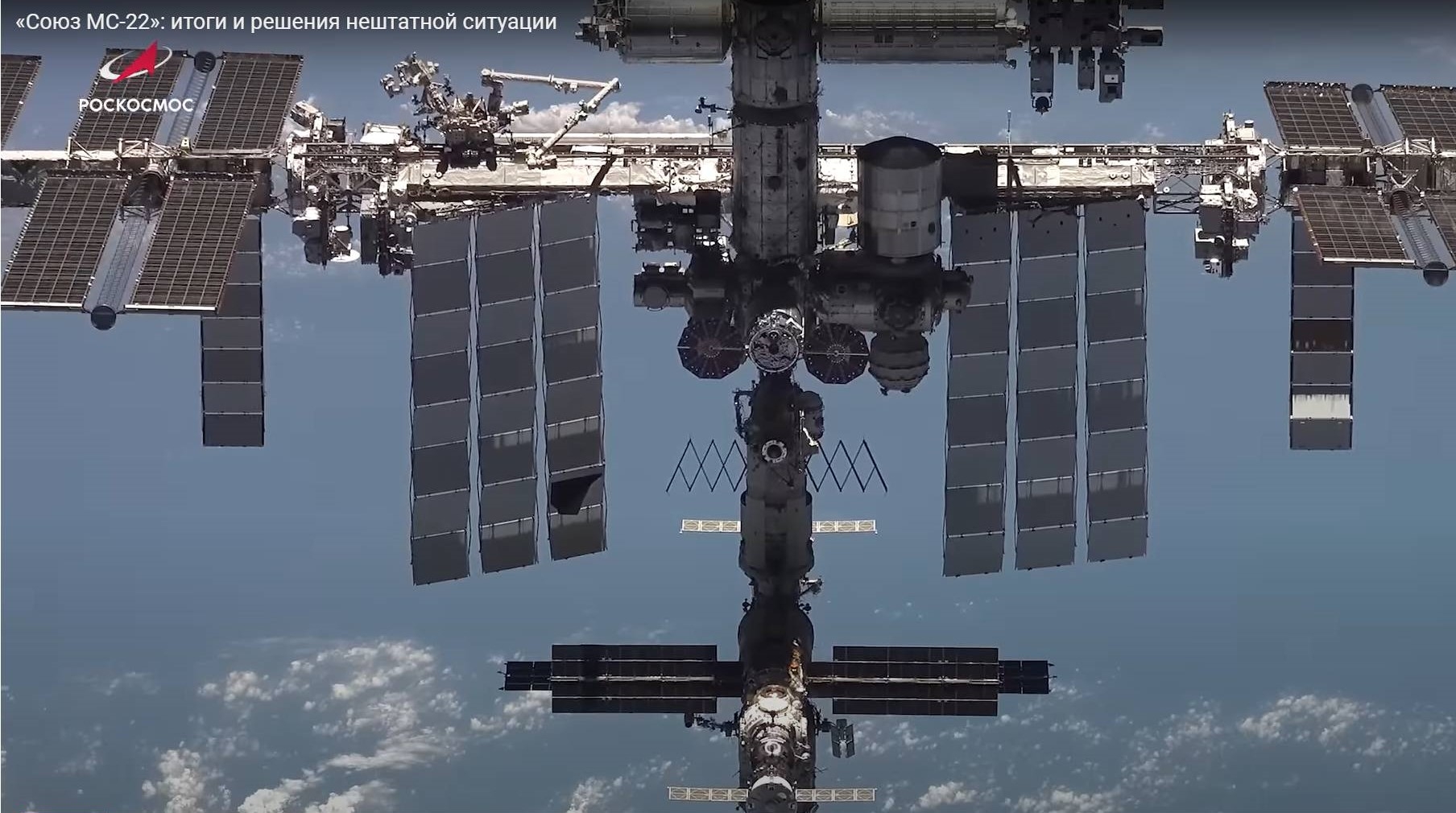
Image credit: Roscosmos/Inside Outer Space screengrab
The Soyuz MS-23 mission is targeted for liftoff today, on Thursday, February 23rd at 7:24 pm Eastern time. Liftoff can be viewed on NASA TV at:

Image credit: Roscosmos
Russia’s Scientific and Technical Council has approved the decision to extend the operation of the Russian segment of the International Space Station (ISS) until 2028.
The meeting was held at Roscosmos.
“The management of the State Corporation, its enterprises and organizations of the Russian Academy of Sciences, co-executors of work on the ISS project, discussed the technical condition of the Russian segment, measures to extend its service life, issues of medical support and expansion of the program of scientific and applied research,” explains a Roscosmos Telegram posting.
Based on the results of the council, “Roscosmos will prepare documents for applying to the Government of the Russian Federation on the issue of extending the service life until 2028,” the posting adds.

Image credit: RSC Energia
Russia’s Soyuz-2.1a rocket with the Soyuz MS-23 non-crewed spacecraft has been transported to the launch complex at the 31st site of Baikonur.
What now follows is three days of preparation and launch of the unpiloted Soyuz on February 24 at 03:24:29 Moscow Time.
The ship is designed to replace the “emergency” Soyuz MS-22 (compromised due to coolant leak) and return Roscosmos cosmonauts Sergei Prokopiev, Dmitry Petelin and NASA astronaut Francisco Rubio to Earth.

Image credit: RSC Energia
External influences
Meanwhile, before its tossing into the ocean, an inspection of the also compromised Progress MS-21 cargo craft was carried out.

Image credit: Roscosmos/RSC Energia

Image credit: Roscosmos/RSC Energia
“According to preliminary data from RSC Energia, the Progress MS-21, like the Soyuz MS-22 before, was exposed to external influences,” states a Roscosmos Telegram posting.
“Such conclusions are made on the basis of photographs that show changes on the outer surface of the ship, including on the radiator of the instrument-aggregate compartment and solar panels.”
Manufacturing defects?
In addition, in order to exclude the prospect that the two vehicles suffered manufacturing defects on the ground, RSC Energia analyzed the history of comments on the thermal control system over the past 15 years.
“The analysis of the received information continues,” a Roscosmos posting notes, with a number of ground experiments planned to simulate the damage.

SSPIDR photovoltaic wing deployment.
Image credit: MMA Design
- Space Solar Power: Progress Reported in Air Force Demo Program
https://www.leonarddavid.com/space-solar-power-progress-reported-in-air-force-demo-program/

Image credit: NASA/JPL-Caltech
Mars Helicopter: Flight 43 – High Flying Views
https://www.leonarddavid.com/mars-helicopter-flight-43-high-flying-views/
Image credit: RSC Energia
- Russia Readies Unpiloted Soyuz for February 24 liftoff
https://www.leonarddavid.com/russia-readies-unpiloted-soyuz-for-february-24-liftoff/

Curiosity Mars Hand Lens Imager (MAHLI) photo produced on Sol 3744, February 17, 2023,
Image credit: NASA/JPL-Caltech/MSSS
- Curiosity Mars Rover: New Drill Hole – Insufficient Depth
https://www.leonarddavid.com/curiosity-mars-rover-new-drill-hole-insufficient-depth/

Artwork of Ingenuity Mars helicopter.
Image credit: NASA/JPL-Caltech
NASA’s intrepid Ingenuity helicopter on Mars made its 43rd flight on February 16th.

Image credit: NASA/JPL-Caltech

Image credit: NASA/JPL-Caltech

Image credit: NASA/JPL-Caltech
Image credit: NASA/JPL-Caltech
A selection of images from that flight shows the sky-high perspectives of the Jezero Crater, taken by the mini-chopper’s Navigation Camera mounted in the helicopter’s fuselage and pointed directly downward to track the ground during flight.
The aerial devices also acquired this image using its high-resolution color camera mounted in the helicopter’s fuselage and pointed approximately 22 degrees below the horizon.
Image credits: NASA/JPL-Caltech
Image credit: RSC Energia
Preparations are quickening to launch Russia’s Soyuz MS-23 in uncrewed mode.
At the Baikonur cosmodrome the Soyuz MS-23 was transported to that 31st site of the launch complex. Roscosmos specialists are readying the ship for general assembly with the Soyuz-2.1a rocket.
Russia’s RSC Energia hosted a Council of Chief Designers dedicated to the launch of the unpiloted craft to the International Space Station (ISS).
Outer surface survey
“After the depressurization of the thermal control system of the Progress MS-21 cargo ship, which occurred on February 11 at the ISS, specialists from Roscosmos enterprises carefully analyzed the received telemetry information and images of the outer surface of the ship. They also examined in detail the radiator on the Soyuz MS-23 spacecraft, which was located in the assembly and test building of the 254th site of Baikonur, and did not reveal any damage on it,” stated a Roscosmos Telegram.
As a result, the launch of the Soyuz MS-23 spacecraft from Baikonur is now slated for February 24 at 03:34 Moscow time.
Meanwhile, a decision has been made, post-survey of the automated Progress MS-21 supply craft, to carry out its reentry into Earth’s atmosphere on February 19 at 06:15 Moscow time, according to a Roscosmos Telegram posting.

Curiosity’s location as of Sol 3744. Distance driven to this sol, 18.44 miles/29.68 kilometers.
Image credit: NASA/JPL-Caltech/Univ. of Arizona
NASA’s Curiosity Mars rover at Gale Crater is now performing Sol 3746 duties.
Reports Lauren Edgar, a planetary geologist at the USGS Astrogeology Science Center in Flagstaff, Arizona: “The team was eagerly awaiting our downlink this morning to hear how the drill attempt from Sol 3742 went. The images came down and indeed there was a drill hole…a mini drill hole…and sadly not deep enough to get to a sufficient depth for the drill assembly to start collecting sample.”
Curiosity Mars Hand Lens Imager (MAHLI) photo produced on Sol 3744, February 17, 2023,
Image credit: NASA/JPL-Caltech/MSSS
This was the robot’s fourth attempt to drill the marker band, Edgar adds, “and we gave it our best shot from both a geology and engineering perspective. Unfortunately these rocks do not want to cooperate – they’re hard and they weather into resistant and recessive beds which make them very challenging to drill.”

Mosaic view of “Marker Band Valley” taken by Curiosity on December 16, 2022.
Image credit: NASA/JPL-Caltech/MSSS
Difficult decision
Edgar notes that the Curiosity team made the difficult decision to get back on the road, without a drill sample from this location.
“I can imagine future rover scientists telling tall tales of these marker band rocks and the one that got away,” Edgar relates, with scientists saying: “that was the hardest rock I’ve ever seen! It looked me right in the eye and then jumped out of the net (drill bit assembly)…”
“All kidding aside, we’ve learned a lot about these rocks from remote sensing, contact science, and drill attempts, and the team is excited to analyze the data and think about what else lies ahead,” Edgar reports.
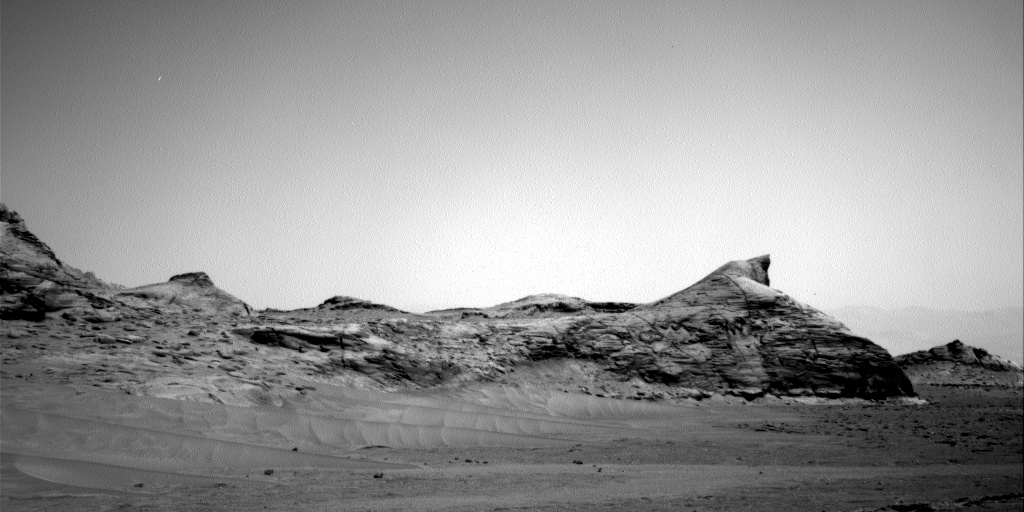
Curiosity Right B Navigation Camera image acquired on Sol 3745, February 17, 2023.
Image credit: NASA/JPL-Caltech
Attempted drill hole
The recent two-sol plan (Sols 3744-3745) is focused on wrapping up science at the “Dinira” drill site.
The rover’s Mars Hand Lens Imager (MAHLI) and the Alpha Particle X-Ray Spectrometer (APXS) will analyze the mini drill hole and drill tailings, and the Chemistry and Camera (ChemCam) and Mastcam will also investigate the chemistry and texture at the attempted “Dinira” drill hole.
The team also planned a long distance ChemCam Remote Micro-Imager (RMI) mosaic to study some distant stratigraphy, Edgar adds, “which is a good reminder that there’s still a lot to explore ahead!”

Curiosity Right B Navigation Camera image acquired on Sol 3745, February 17, 2023.
Image credit: NASA/JPL-Caltech
Drive to the south
The plan calls for a rover drive of roughly 318 feet (97 meters) to the south, “to get us back on track to traverse across the marker band,” Edgar explains.

Curiosity Right B Navigation Camera image acquired on Sol 3745, February 17, 2023.
Image credit: NASA/JPL-Caltech
The second sol includes some untargeted observations, including an autonomously selected ChemCam AEGIS activity. AEGIS stands for Autonomous Exploration for Gathering Increased Science – a software suite that permits the rover to autonomously detect and prioritize targets.

Curiosity Right B Navigation Camera image acquired on Sol 3745, February 17, 2023.
Image credit: NASA/JPL-Caltech
Curiosity will also acquire a number of environmental observations to monitor dust in the atmosphere and search for noctilucent clouds at twilight.

Curiosity Left B Navigation Camera photo taken on Sol 3744, February 17, 2023.
Image credit: NASA/JPL-Caltech

Curiosity Left B Navigation Camera photo taken on Sol 3744, February 17, 2023.
Image credit: NASA/JPL-Caltech
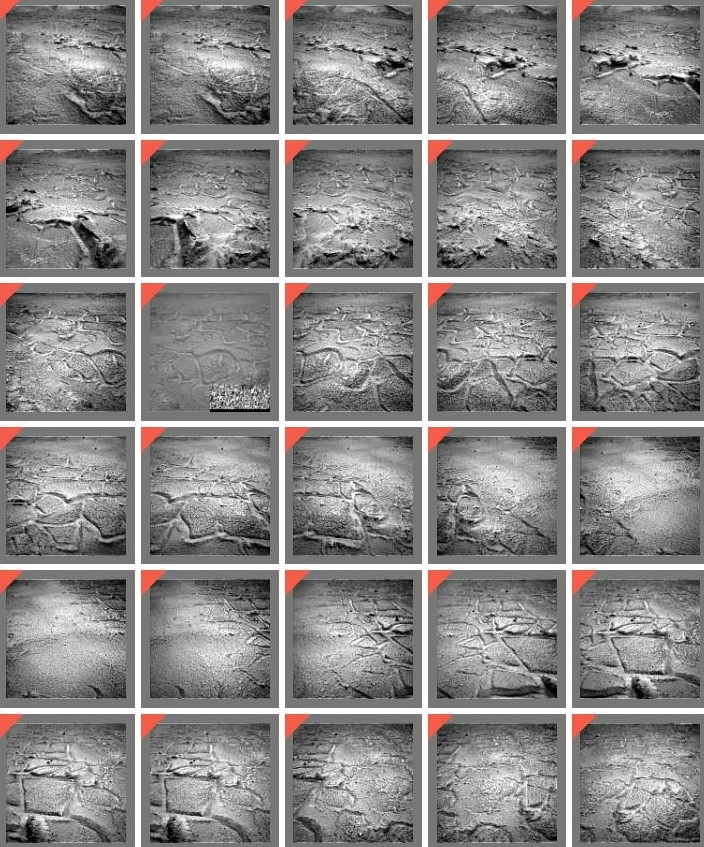
Curiosity Left B Navigation Camera photos taken on Sol 3744, February 17, 2023.
Image credit: NASA/JPL-Caltech
“So we’ll say goodbye to the “Encanto” and “Dinira” drill target vicinity,” Edgar concludes, saying “these targets were not charming and did not deliver wealth as their names may have suggested, but we’ll always remember their elusive and intriguing qualities!”

Curiosity Front Hazard Avoidance Camera Right B image taken on Sol 3744, February 17, 2023.
Image credit: NASA/JPL-Caltech

