Archive for the ‘Space News’ Category
 Author:
  March 12th, 2023
That new NASA budget has been assessed, spotlighting which companies and institutions receive the most funds from the space agency. For fiscal year 2024, the White House is proposing a $27.2 billion budget for NASA.
The Budget requests $27.2 billion in discretionary budget authority for 2024, a $1.8 billion or 7-percent increase from the 2023 enacted level.
Statista, a leading provider of market and consumer data, notes that in the fiscal year 2022, the U.S. space agency awarded Musk’s company about $2 billion in contract volume out of its total approved budget of $24 billion.

Image credit: Statista
Florian Zandt, a “data journalist” for Statista, has taken a close look at the NASA budgeting, reporting:
“SpaceX received 25 percent more funds than in 2021 and overtook Boeing as the agency’s second-most-awarded contractor. In November, one month after the end of the previous fiscal year, NASA also announced $1.2 billion in funding for another Artemis lunar surface landing mission.”
Cash flow: JPL
“Apart from SpaceX, the California Institute of Technology benefitted the most from NASA’s budget. This can be explained by the fact that the university operates NASA’s Jet Propulsion Lab research facility,” Zandt explains. “Between October 2021 and the end of September 2022, about $2.7 billion flowed to the university, roughly 12 percent more than the previous year.”
By contrast, the other top contractors, including Boeing, Lockheed Martin and SAIC — not to be confused with the e-mobility joint venture between General Motors and Wuling — were in some cases awarded significantly less budget than in the previous year, Zandt observes.

Starship
Credit: Elon Musk/SpaceX
Starship
In another Statista data look, Zandt notes that SpaceX, owned by Tesla CEO Elon Musk, is currently preparing the first orbital test flight of its Starship system, scheduled for March 2023. “The latest rocket model is expected to transport people and cargo between Earth and the Moon in the future and, according to Musk, represents an essential building block in his plan to colonize Mars.”
“Currently, the Federal Aviation Administration (FAA) has yet to issue a license for the flight. The U.S. authority regulates rocket launches in the U.S., and numerous past planned launch dates have already been postponed due to the lack of a license. In principle, the FAA is likely to be well-disposed toward SpaceX. The company is one of NASA’s most important contractors.”

Image credit: Statista
Expensive business
Zandt underscores the point that launching rockets to deliver payloads into orbit is an expensive business.
“So costly that, thus far, only government space agencies or government-related companies have transported astronauts or satellites into space. Still, the private space industry has been booming in the last couple of years, with companies like Richard Branson’s Virgin Galactic, Jeff Bezos’ Blue Origin and Elon Musk’s SpaceX providing varying degrees of suborbital and orbital space travel and transportation.”
In 2022, according to Bryce Tech, an analytics and engineering firm, eleven private providers launched 94 rockets – of which SpaceX alone sent 61 rockets into orbit, Zandt adds.
“This compares with 71 launches by space agencies or government-related companies. The leader in this category is the prime contractor for the Chinese space program, the China Aerospace Science and Technology Corporation (35 launches). It is followed by Roscosmos (21 launches), the space agency of the Russian Federation. However, the private and public sectors are often intertwined rather than strictly separated. For example, SpaceX has been awarded NASA contracts worth $2 billion in the agency’s fiscal year 2022 alone.”
For more information on Statista, go to:
 Posted in

Credit: ESA/Hubble & NASA
A new research group is being created to advance our understanding of the emergence and early evolution of life, and its place in the cosmos.
Called the Origins Federation, four leading institutions are engaged in establishing the group:
— The Origins of Life Initiative (Harvard University)
— Centre for Origin and Prevalence of Life (ETH Zurich)
— Center for the Origins of Life (University of Chicago)
— Leverhulme Centre for Life in the Universe (University of Cambridge)
The Origins Federation inaugural science conference will take place at Harvard University on September 12 – 15, 2023.
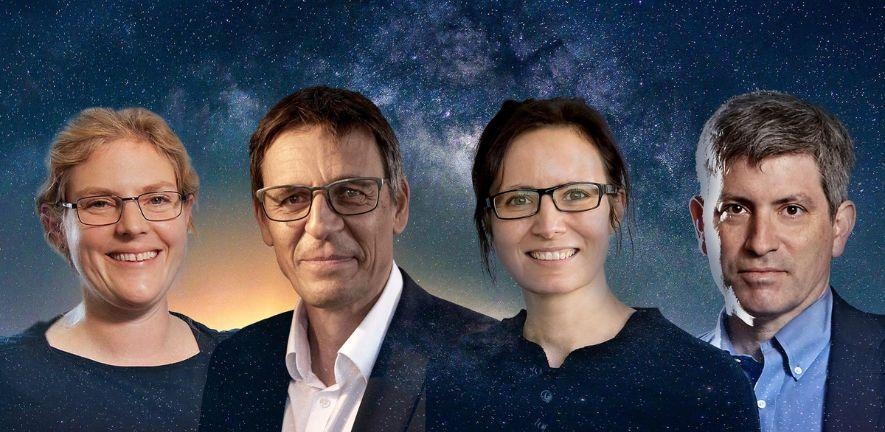
Origins Federation leaders: L-R: Emily Mitchell, Didier Queloz, Kate Adamal, Carl Zimmer
Image credit: ETH Zurich/NASA
Long way to go
According to a University of Cambridge statement:
“For thousands of years, humanity and science have contemplated the origins of life in the Universe. While today’s scientists are well-equipped with innovative technologies, humanity has a long way to go before we fully understand the fundamental aspects of what life is and how it forms.”
Furthermore, scientists have discovered more than 5,000 exoplanets. Trillions more are predicted to exist within our Milky Way galaxy alone.
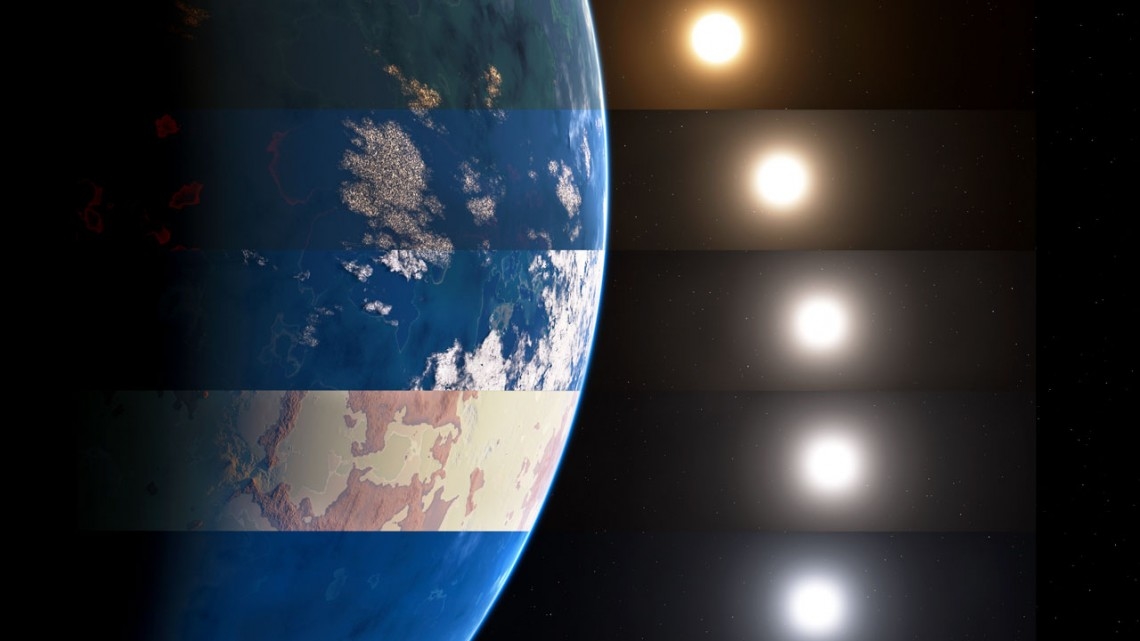
In this artistic rendering, different kinds of suns are shown as they interact with various Earth-like surfaces in distant solar systems. The combinations create an array of climates. In the search for exoplanets, astronomers can be guided by color for possible habitable planets.
Credit: Jack Madden/Cornell
“Each exoplanet discovery raises more questions about how and why life emerged on Earth and whether it exists elsewhere in the universe,” the University of Cambridge statement adds. “Together, Federation scientists will explore the chemical and physical processes of living organisms and environmental conditions hospitable to supporting life on other planets.”
Happy accident, fundamental nature?
The formation of the Origins Federation was announced during the American Association for the Advancement of Science (AAAS) meeting held this month in Washington, DC.
Speaking at the AAAS event, Emily Mitchell from Cambridge’s Department of Zoology and co-director of Cambridge’s Leverhulme Centre for Life in the Universe.

Depiction shows Jezero Crater — the landing locale of the Mars 2020 Perseverance rover — as it might have appeared billions of years ago when it was perhaps a life-sustaining lake. An inlet and outlet are also visible on either side of the lake.
Image Credit: NASA/JPL-Caltech
“As we begin to investigate other planets through the Mars missions, biosignatures could reveal whether or not the origin of life itself and its evolution on Earth is just a happy accident or part of the fundamental nature of the universe, with all its biological and ecological complexities,” Mitchell said.

On location! James Webb Space Telescope.
Credit: Northrop Grumman
New observations
Adding to the tool kit regarding the origin of life, such technological advancements, such as the James Webb Space Telescope, to provide researchers access to huge volumes of new observations and data.
“Sifting through all this information to understand the emergence of life in the universe will take a big, multidisciplinary network,” points out the University of Cambridge statement.
For more information on the Origins Federation, go to:
https://www.cam.ac.uk/research/news/humanitys-quest-to-discover-the-origins-of-life-in-the-universe

NASA has issued its plan, based on the White Budget request for NASA of $27.2 billion.
Issued today:
NASA 2022 Strategic Plan
FY 2022 Agency Financial Report
NASA Human Landing System Program Report
FY 2023 Volume of Integrated Performance
Required Reporting under the Good Accounting Obligation in Government Act of 2019 (April 2022)
Go to:
https://www.nasa.gov/news/budget/index.html
To view the 2023 “State of NASA” Address from NASA Administrator Bill Nelson
Go to:

Photo illustration by Thomas Gaulkin for the Bulletin of the Atomic Scientists’ January 2022 issue (used with permission)
Scientists have called for a legally binding treaty to ensure Earth’s orbit isn’t irreparably harmed by the future expansion of the global space industry.
The experts also believe that unless action is taken immediately, large parts of our planet’s immediate surroundings risk the same fate as the High Seas where insubstantial governance has led to overfishing, habitat destruction, deep-sea mining exploration, and plastic pollution.
Go to: https://www.plymouth.ac.uk/news/scientists-call-for-global-push-to-eliminate-space-debris
Also, go to “Protect Earth’s orbit: Avoid high seas mistakes” in Science at:
https://www.science.org/doi/10.1126/science.adg8989

FLIR
Credit: DOD/U.S. Navy/Inside Outer Space screengrab
What are the physical constraints on reported Unidentified Aerial Phenomena (UAP), also known in flying saucer circles as UFOs, or Unidentified Flying Objects?
That’s at the underbelly of a new paper authored by Harvard University’s Avi Loeb, conducted in partnership with Loeb’s Galileo Project and the newly established Department of Defense, All-domain, Anomaly Resolution Office.
“We derive physical constraints on interpretations of ‘highly maneuverable’ Unidentified Aerial Phenomena (UAP) based on standard physics and known forms of matter and radiation,” notes the paper, published in “Draft Under Review” status on a Harvard website.

Group photo of Avi Loeb and members of the Galileo Project during their first-year conference at the Harvard College Observatory on August 1–3, 2022.
Image credit: Andy Mead, courtesy Avi Loeb
The new draft research paper, dated March 7, 2023, implies a “useful limit on observations of UAP which bound the hypothetical explanations and can support limitations on interpretations of data,” the paper explains.
What is distinctive is that the paper is authored by astrophysicist Loeb and Sean Kirkpatrick, Director of All-domain Anomaly Resolution Office.
Human bias and error
For example, one of the most common sets of data within the military holdings comes from FLIR (forward looking infrared) pods. These sensors provide an accurate resolved image of relative thermal measurements across the scene.

Avi Loeb details the Galileo Project effort.
Image credit: Matt Checkowski/Galileo Project archive
“Typical UAP sightings are too far away to get a highly resolved image of the object and determination of the object’s motion is limited by the lack of range data. The range is usually estimated using the flight dynamics of the platform and some fixed points in the scene – if either are available. The error in estimating the range gives rise to a significant variation in the calculated velocity and is subject to human bias and error,” the paper observes.

Credit: Scientific Coalition for UAP Studies
Furthermore, claims of objects exceeding the transonic to supersonic range should be evaluated against the known physics of ionization, radar reflectivity, temperature, sonic booms, and fireballs, according to Loeb. “All of which can more effectively and accurately bound the velocity, and hence drive the range calculation. This will, in turn, when matched with the specifics of the sensor, allow for better estimates of the size, shape, and mass of the object in question,” the paper concludes.
To view the draft paper – “Physical Constraints on Unidentified Aerial Phenomena” – go to:

Earth’s Moon as seen from the International Space Station.
Image credit: NASA
The Lunar Surface Electromagnetics Explorer “LuSEE Night” is a low frequency radio astronomy experiment to be emplaced on the farside of the Moon by the NASA Commercial Lunar Payload Services (CLPS) program in late 2025 or early 2026.
LuSEE-Night is a radio telescope developed in collaboration between NASA and the Department of Energy (DOE), with Brookhaven Lab leading DOE’s role in the project. DOE’s Lawrence Berkeley National Lab is providing key technical support.

The LuSEE-Night landing site is to be located on the lunar farside on a local topographical high point. The southern location gives scientists improved coverage by relay communication satellite. Image credit: Brookhaven National Laboratory
Signals into spectra
“LuSEE-Night is not a standard radio telescope,” says Anže Slosar, a Brookhaven physicist.
“It’s more of a radio receiver. It will work like an FM radio, picking up radio signals in a similar frequency band. The spectrometer is at the heart of it. Like a radio tuner, it can separate out radiofrequencies, and it turns signals into spectra,” Slosar states in a Brookhaven Lab statement.
The Dark Ages are an early era of cosmological history starting about 380,000 years after the Big Bang. Though radio waves from the Dark Ages still linger in space, the abundance of radio interference on Earth has masked these signals from scientists seeking to study them.
Radio noise
If cosmologists could detect radio waves from the Dark Ages they could help uncover answers to several significant questions, such as the nature of dark energy or the formation of the universe itself.
Shielded from the buzz and static of Earth broadcasting, the Moon’s farside is a place where there’s enough radio silence for the Dark Ages signal to be detected.
“By physically being on the lunar surface and taking measurements at the right time, several external sources of radio interference will be removed, including radio noise from the Sun, Earth, Jupiter, and Saturn,” according to a NASA website statement on the project.
A communications relay satellite will launch with LuSEE.

The lunar far side as imaged by NASA’s Lunar Reconnaissance Orbiter using its LROC Wide Angle Camera.
Credit: NASA/Goddard/Arizona State University
Suited for spaceflight
Brookhaven is leading the DOE effort to construct the whole telescope.
“We will build out LuSEE-Night’s electronics, procure the batteries, solar panels, and communications equipment, and ensure all components of the instrument are cohesive and suited for spaceflight,” explains Brookhaven scientist Sven Herrmann, the LuSEE-Night Construction Project Manager for DOE’s part of the mission and a researcher at the Kavli Institute for Particle Astrophysics and Cosmology.
“We will handle the inner equipment assembly, [and] then ship the pieces to UC Berkeley’s Space Sciences Laboratory for end integration,” Herrmann adds. “NASA will coordinate the launch through its Commercial Lunar Payload Services program, which leverages private companies to provide the transport to the Moon.”
While LuSEE-Night is primarily considered a pathfinder, it is designed to collect data for two years. LuSEE-Night could exceed its main goal and detect the Dark Ages signal on its own, or even uncover new and unexpected mysteries hidden deep in the cosmos along the way, according to the Brookhaven statement.

Rendering of Firefly’s Blue Ghost lunar lander delivering NASA’s LuSEE-Night radio telescope to the far side of the Moon.
Image credit: Firefly
Game changer
Jack Burns is a LuSEE-Night co-investigator and institutional principal investigator at the University of Colorado, Boulder. The work there is mainly focused on development of a software pipeline for modeling the instrument, its environs, and data analysis.
“LuSEE-night is very much a multi-institutional, multi-agency collaboration,” Burns told Inside Outer Space. “DOE’s participation and funding is important to allow us to observe during the night on the far side of the Moon for the first time by carrying about 88 pounds (40 kilograms) of batteries. This is a game-changer permitting us to observe during the quietest time on the Moon (no Sun and no Earth radio frequency interference (RFI) and to potentially investigate the unexplored Dark Ages and Cosmic Dawn of the early Universe.”

Radio wave Observations at the Lunar Surface of the Electron Sheath (ROLSES) science instrument is headed for Moon landing via Intuitive lander.
Image credit: Intuitive Machines
Burns also noted his work on the Radio wave Observations at the Lunar Surface of the Electron Sheath (ROLSES) science instrument. ROLSES is now scheduled to land on the Moon in late June on a CLPS Intuitive Machines IM-1 lander, hurled to its lunar destination via a SpaceX Falcon booster.
This mission will likely be the first to land at the South Pole of the Moon, Burns adds, on the CLPS lander. The ROLSES IM-1 mission data gathering does not depend on a relay spacecraft. The IM-1 landing locale is within view of Earth.
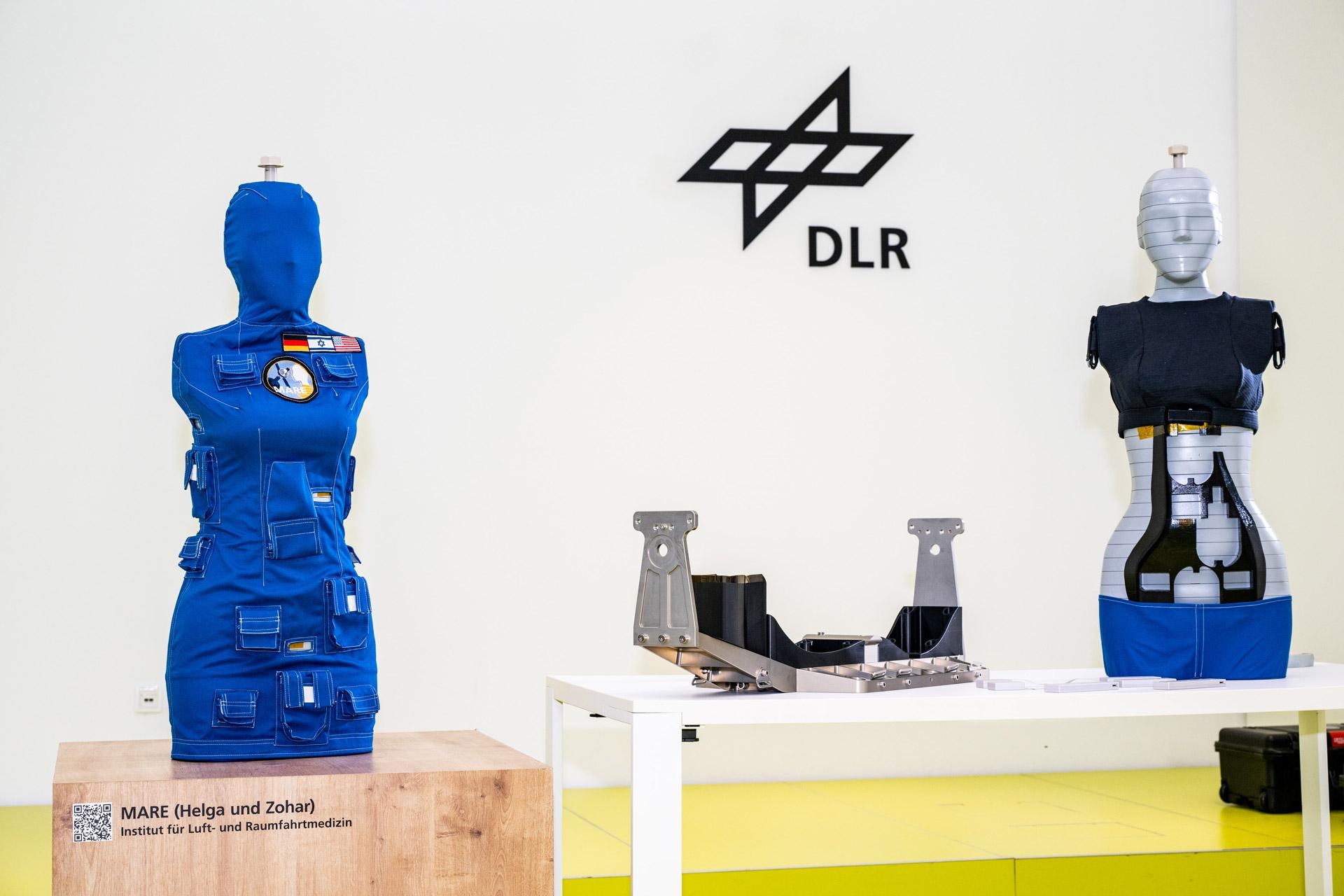
The “first female lunar astronauts” Helga and Zohar are back in Cologne, Germany. Image credit: DLR (CC BY-NC-ND 3.0)
Those radiation-measuring female mannequins, Helga and Zohar, are back in Cologne, Germany – fresh from their journey around the Moon.
Positioned within the NASA Artemis 1’s Orion spacecraft, the astronaut “phantoms” are built to provide a three-dimensional image of the radiation exposure of the female body during a flight to the Moon and back.
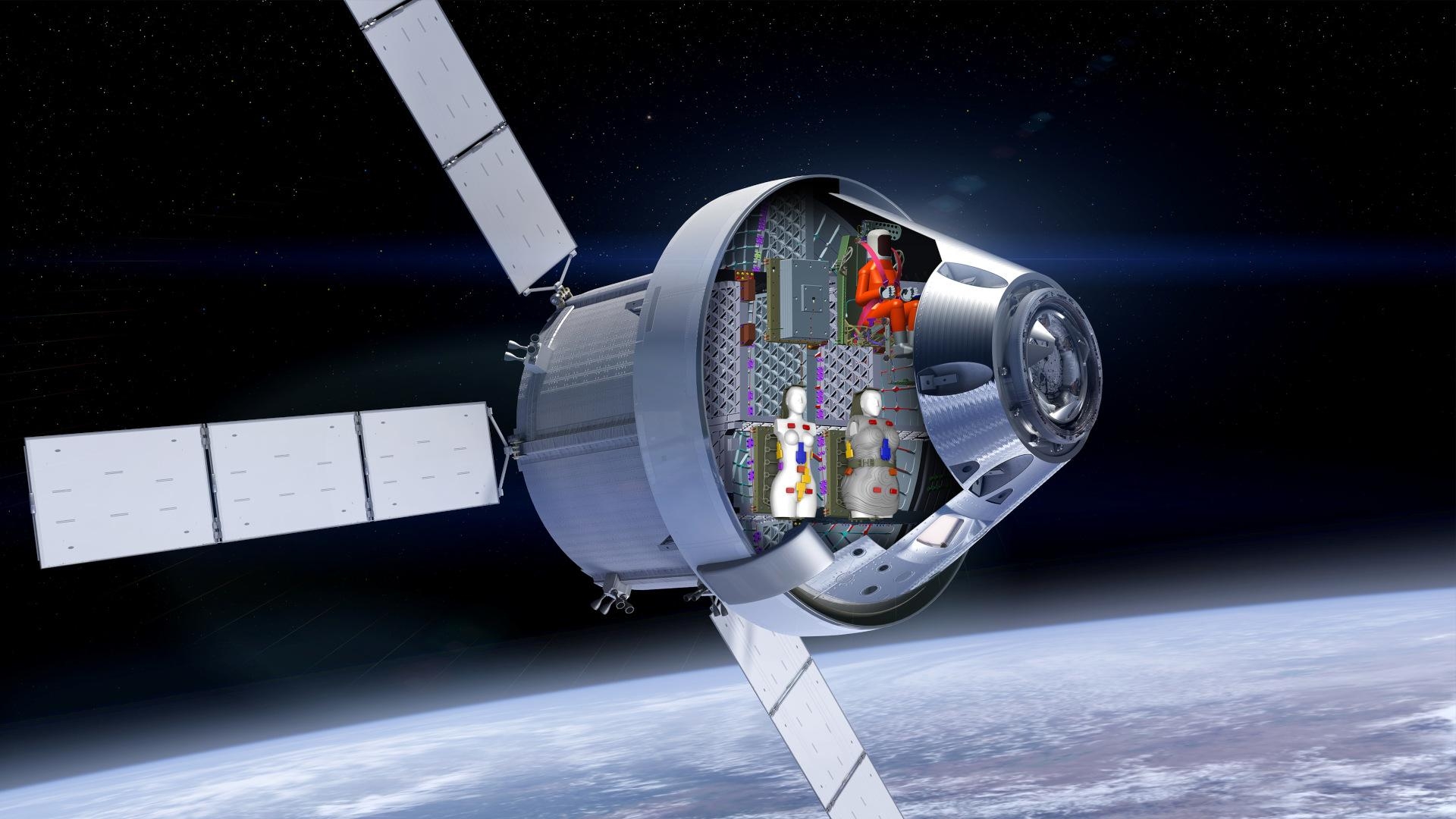
“Crew” of the Artemis I mission to the Moon.
Image credit: NASA
The Matroshka AstroRad Radiation Experiment (MARE) project was led by the German Aerospace Center (Deutsches Zentrum für Luft- und Raumfahrt; DLR) at its Institute of Aerospace Medicine.
DLR is the national aeronautics and space research centre of the Federal Republic of Germany.
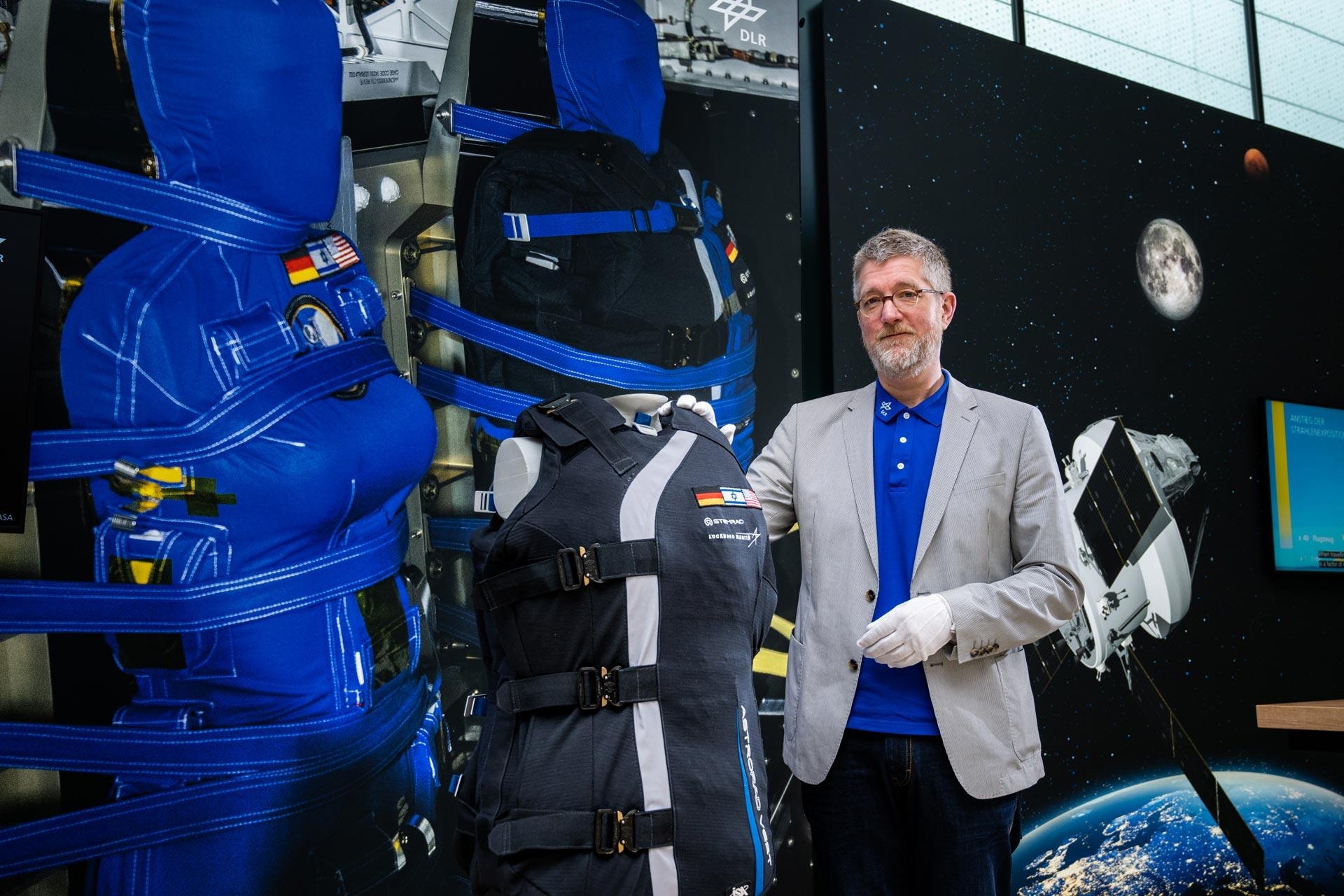
Thomas Berger with returned phantoms, Helga and Zohar.
Image credit: DLR
Next step
Reports Thomas Berger, head of the MARE experiment at the DLR Institute of Aerospace Medicine, a next step is to start the evaluation of the more than 12,000 passive radiation detectors made of small crystals located throughout the two measuring bodies.
“We will now dismantle the mannequins and remove the passive radiation sensors in each ‘slice’,” Berger explains in a DLR press statement.
The procedure involves examining and evaluating the information stored within the individual crystals using DLR laboratory equipment.
Reading out the information stored by the crystals creates a three-dimensional image of the human body that reveals the overall radiation exposure experienced by bones and organs during a flight to the Moon and back.
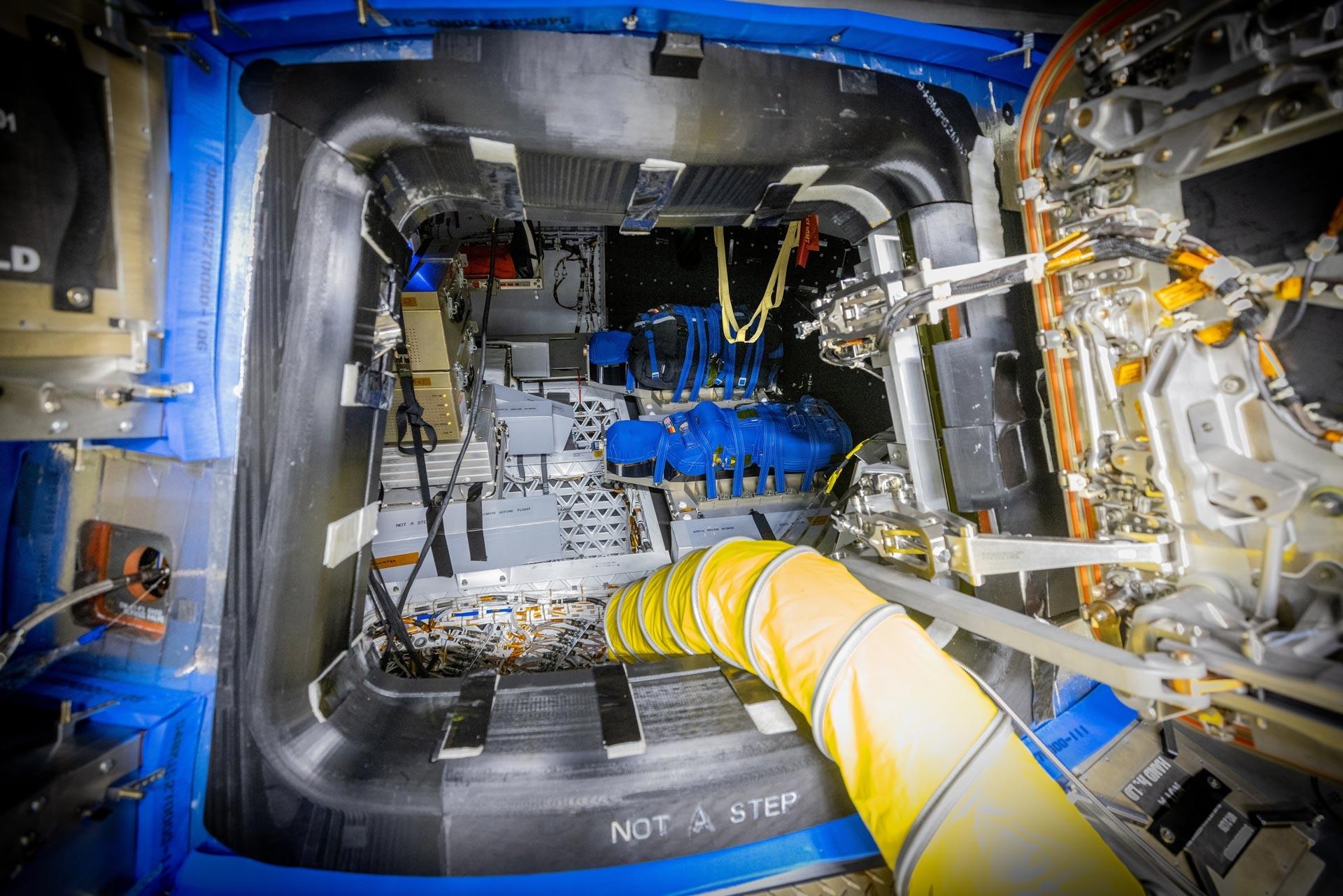
Helga and Zohar in the Orion capsule.
Image credit: NASA/Frank Michaux
Vested interest
The study is also investigating the effectiveness of the shielding provided by the radiation vest worn by Zohar, provided by the Israel Space Agency (ISA), made by the Israeli company StemRad.
“We will see how effective the shielding effect was by comparing the radiation exposure of Helga, who wore no vest, and Zohar, who was equipped with the protective vest,” Berger explains.
The two mannequins each consist of 38 slices and contain organs and bones of different densities made of plastic. Zohar was provided by the ISA.
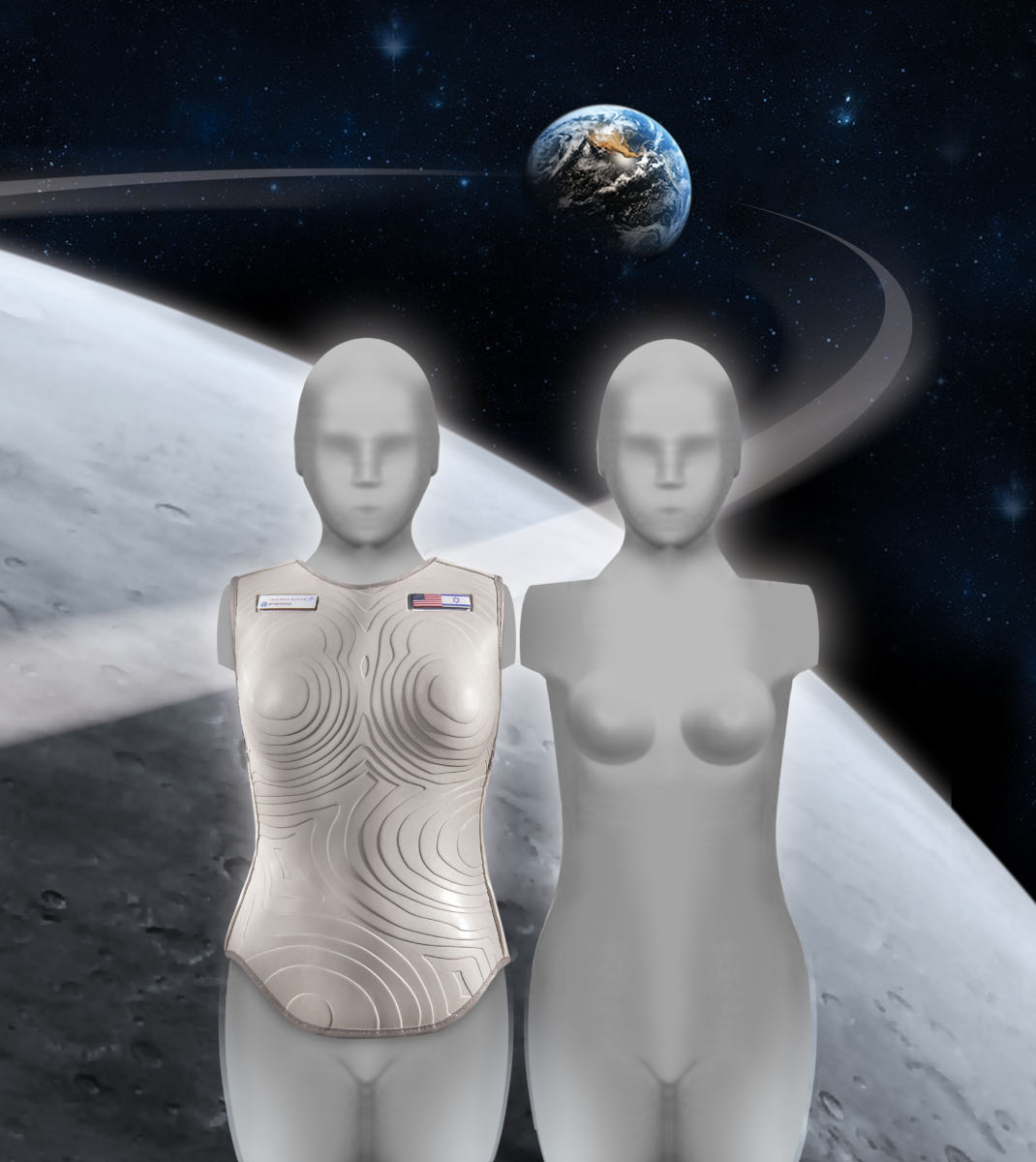
An artist rendering of the Matroshka Radiation Phantoms – one protected with the AstroRad vest and one unprotected. Credit: StemRad
Measurement data
Berger added that the extensive evaluation of the data will now take several months. Detailed results are expected by the beginning of next year.
“We can already see that some of our assumptions about radiation exposure during lunar travel are confirmed,” Berger adds. “Now that we have access to all of the available measurement data, we can begin to draw more detailed conclusions.”
According to Anke Kaysser-Pyzalla, Chair of the DLR Executive Board: “Radiation exposure is one of the main unsolved medical challenges of human spaceflight. We need to understand it more precisely to develop effective measures to protect humans in space.”

Concept art depicts a Mars menagerie of machines that would team to transport to Earth samples of rocks, soil, and atmosphere being collected from the Martian surface by NASA’s Mars Perseverance rover.
Image credit: NASA/JPL-Caltech
NASA’s Perseverance rover is busily wheeling and dealing with Mars at Jezero Crater, picking up samples of that way off world.
Some of these extraterrestrial goodies are to be express-rocketed to Earth in the 2030’s. Getting that precious freight back to Earth and evaluated in labs is an international and elaborate affair guided by collaboration between NASA and the European Space Agency.

Astronomer Carl Sagan poses with a model of a NASA Viking lander in Death Valley, California. Two Viking landers touched down on Mars in 1976, on a quest to search for life on the Red Planet.
Image credit: NASA/“Cosmos, A Personal Voyage”/Druyan-Sagan Associates, Inc.
Moolah for Mars
Of course, the Mars Sample Return interplanetary relay enterprise is a high-roller undertaking. It will demand lots of moolah, in the multi-billions of dollars.
But the prospective scientific payoff is palpable. Investigators are eager to scope out the bits, pieces, and atmosphere of the Red Planet that will be hurled to Earth.
What are the possible “take away messages” from Mars by heaving samples our way?
Go to my new Space.com article – “The Big Reveal: What’s Ahead in Returning Samples from Mars?” – at:

Curiosity Right B Navigation Camera photo acquired on Sol 3762, March 7, 2023.
Image credit: NASA/JPL-Caltech
NASA’s Curiosity Mars rover at Gale Crater is now performing Sol 3763 duties.
A recent report from Natalie Moore, a mission operations specialist at Malin Space Science Systems in San Diego, California, notes the work of the Sample Analysis at Mars (SAM) Instrument Suite team. They were deciding whether to proceed with further analysis of the newly acquired Tapo Caparo drill sample.

Curiosity Mast Camera Right photo taken on Sol 3761, March 6, 2023.
Image credit: NASA/JPL-Caltech/MSSS
“Just in case they decided against it, last Friday’s team put together two options for our plan today,” Moore adds, the second option requiring rover planner, the Mars Hand Lens Imager (MAHLI), and Alpha Particle X-Ray Spectrometer (APXS) activities to help wrap up this drill campaign.
That planning involves the timing of orbital spacecraft passes above Gale crater, which can sometimes mean a pretty long day for the tactical planning team.
However, the SAM team decided quickly that they were “go” for further sample analysis, which meant no robotic arm activities could be planned (since the rover is still carrying sample from drilling), Moore explains.

Curiosity Mast Camera Left image acquired on Sol 3759, March 4, 2023.
Image credit: NASA/JPL-Caltech/MSSS
Nap time
“We are now at the stage of our drill sol path where we have to be careful about how much battery power we’re using,” Moore notes, so a recent plan includes a lot of nap time for the Mars robot.
“We have just a single, roughly one hour remote science block with two Mastcam stereo multispectral targets, a Mastcam stereo mosaic to extend coverage near the drill hole,” and a Chemistry and Camera (ChemCam) Laser Induced Breakdown Spectroscopy (LIBS) target with corresponding Mastcam documentation image of the laser shots.

Curiosity Right B Navigation Camera photo acquired on Sol 3760, March 5, 2023.
Image credit: NASA/JPL-Caltech
“It’s rare that there are no Navcam activities, but they too were released from planning after priorities were discussed for the limited remote science time we can afford today,” Moore adds.
Hungry for power
After remote science concludes, Curiosity was slated to be mostly asleep until the plan’s main — and hungriest for power — activity from SAM kicks off.

Curiosity Rear Hazard Avoidance Camera Right B image taken on Sol 3759, March 4, 2023.
Image credit: NASA/JPL-Caltech
“SAM’s gas chromatograph ‘column clean’ activity will increase the intended column’s internal temperature until contaminants are removed to prepare for further sample drop off and full GCMS [Gas Chromatography-Mass Spectrometry] later this week,” Moore reports. “I like to think of this as ‘washing our hands before eating,’ but for about 4.5 hours. After SAM finishes cleaning their column, our rover will sleep some more until the next plan starts at 09:49 after sunrise.”

Curiosity Left B Navigation Camera image taken on Sol 3761 on March 6, 2023.
Image credit: NASA/JPL-Caltech
Staring at images
What does a “Mission Operations Specialist” like Moore do on slower days of Curiosity work?

Curiosity Mast Camera Left and Right imagery acquired on Sol 3758, March 3, 2023.
Image credit: NASA/JPL-Caltech/MSSS
“Besides writing these few [report] words, I’m spending the rest of my day staring at images we’ve taken here” from Mastcam, MAHLI and the Mars Descent Imager (MARDI) “in that order, usually,” Moore notes, “organizing my shift notes for next time, and chipping away at a python-based interface that will hopefully help the Mastcam team visualize our data more easily.”

Here’s a view of Curiosity’s collected 36 powderized rock samples with the drill on the end of its robotic arm as of October of last year. This grid shows all 36 holes captured by the Mars Hand Lens Imager (MAHLI).
Image credit: NASA/JPL-Caltech/MSSS

Wait a Minute!
Image credit: Barbara David
Movie director Steven Spielberg shares a provocative theory about UFOs, and gives careful consideration to TV’s Stephen Colbert’s pitch for a sequel to his landmark 1982 film, “E.T. the Extra-Terrestrial.”

Image credit: CBS/The Late Show with Stephen Colbert/Inside Outer Space screengrab
For more information on Spielberg’s speculation about UFOs, go to this segment of The Late Show with Stephen Colbert at:
“There’s Something Out There” – Steven Spielberg on Alien Visitors, and an “E.T.” Sequel
https://www.youtube.com/watch?v=ZgUed2YirEk

Image credit: Michael Masters
For a follow-on update on Spielberg’s conjecture, go to my Space.com story from January 20, 2020 at:
“Are the aliens us? UFOs may be piloted by time-traveling humans, book argues”
https://www.space.com/aliens-time-traveling-humans-ufo-hypothesis.html

