Archive for the ‘Space News’ Category
 Author:
  July 15th, 2023
Image credit: Dongfang Hour/Inside Outer Space screengrab
China’s Landspace booster is one signal of the rise of Chinese liquid-fueled commercial rockets.
From the Dongfang Hour: “Landspace achieved a groundbreaking success on July 12, 2023 with the first orbital launch of a methalox rocket worldwide: the Zhuque-2.”

Image credit: Dongfang Hour
“This new rocket also triples the payload capacity of the largest Chinese commercial rocket to date, and showcases the growing importance that commercial companies are playing in Chinese launch.”
For informative video, go to: https://youtu.be/lOAjpmdaiYw
 Posted in

Image credit: Astrostrom
Switzerland startup, the Astrostrom company, has designed a Greater Earth Lunar Power Station, or GE⊕-LPS for short.
The Greater Earth Lunar Power Station (GE⊕-LPS) is a habitable space station in lunar orbit that is designed to provide solar energy for lunar operations.
According to the European Space Agency (ESA), the study envisages a solar power satellite constructed mainly from lunar resources (including Moon-manufactured solar cells) that could deliver megawatts of microwave power down to receivers on the lunar surface, serving the needs of surface activities, including future crewed bases.
The study found that solar power satellite-enabled development via the Moon would not only be cheaper than any comparable Earth-developed solar power satellite, but that the electricity generated for Earth would also be cost-competitive with any terrestrial power alternative.
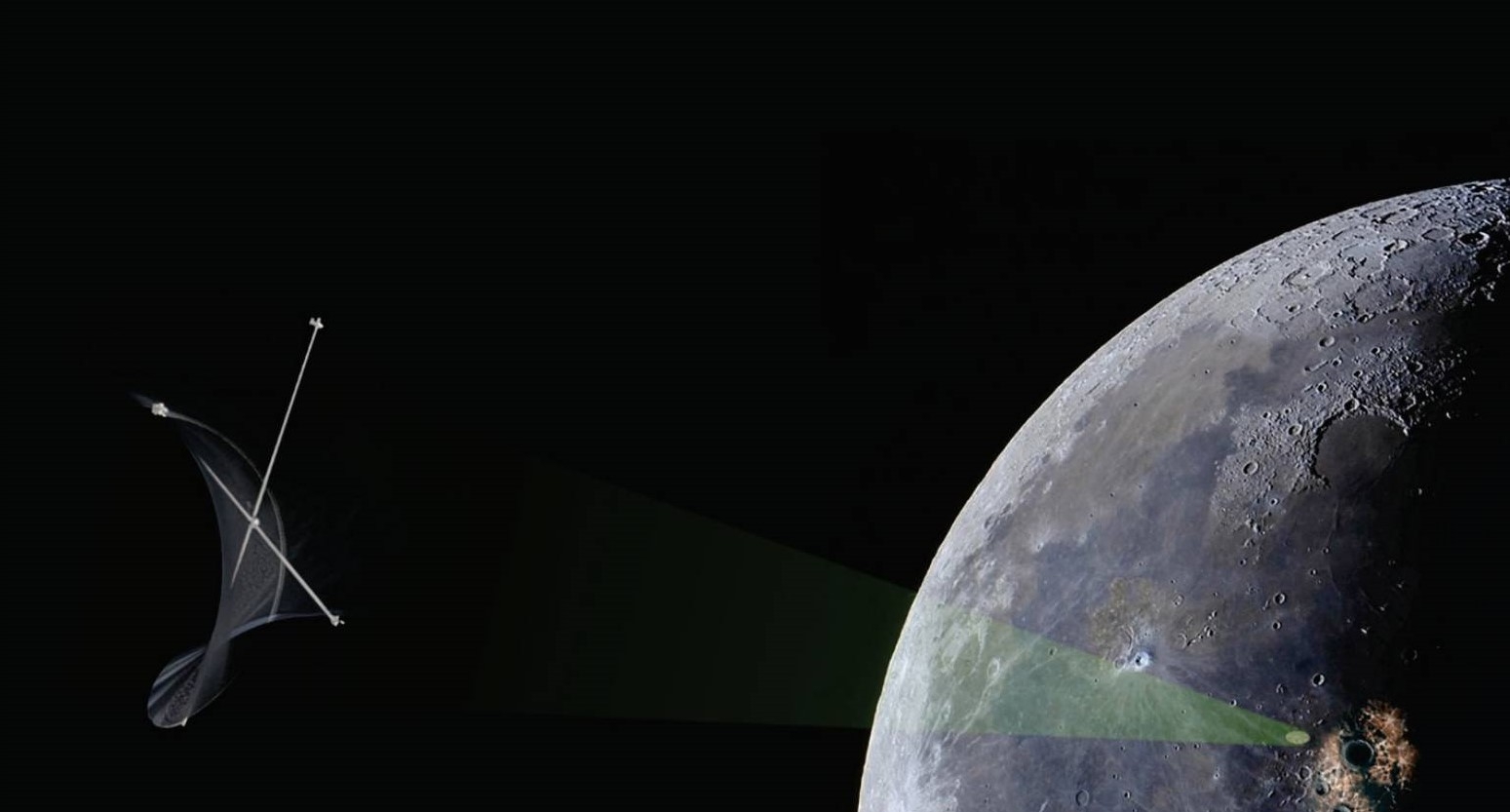
Image credit: Astrostrom
Component manufacturing
(GE⊕-LPS) is a part of ESA’s Open Space Innovation Platform Campaign on “Clean Energy – New Ideas for Solar Power from Space.”
ESA’s SOLARIS R&D initiative is focused on the feasibility of Space-based Solar Power for serving terrestrial clean energy needs.

Image credit: ESA
“Launching large numbers of gigawatt-scale solar power satellites into orbit from the surface of the Earth would run into the problem of a lack of launch capacity as well as potentially significant atmospheric pollution,” explains Sanjay Vijendran, the lead for ESA’s Solaris initiative on Space-based Solar Power.
“But once a concept like GE⊕-LPS has proven the component manufacturing processes and assembly concept of a solar power satellite in lunar orbit,” Vijendran adds “it can then be scaled up to produce further solar power satellites from lunar resources to serve Earth.”
For more information, go to this Executive Summary, Greater Earth Lunar Power Station (GE⊕-LPS) at:
https://nebula.esa.int/sites/default/files/neb_study/2753/C4000136309ESR.pdf

Image credit: CCTV/Inside Outer Space screengrab
China’s LandSpace group launched its liquid oxygen and liquid methane-powered booster from the Jiuquan Satellite Launch Center, Gansu Province, China, on July 12.
Commenting on the launch that placed it successfully into orbit, Dai Zheng, deputy chief designer and deputy commander of the Zhuque-2 carrier rocket mission, told GLOBALink/China Central Television (CCTV):
“Liquid oxygen methane has great advantages in future application scenarios where low-cost commercial carrier rocket can be reused. This is a very useful supplement to China’s space industry, and also fills in a blank in China’s liquid oxygen-methane rocket spectrum.”

Image credit: CCTV/Inside Outer Space screengrab
Reusable rocketry
Dai said the rocket engine has been tested seven times for a total of 2,800 seconds, with only minor carbon buildup, making it a viable option for reusable rockets.
“The engine has worked seven times on the test bed in Huzhou for a total of 2,800 seconds with only minor carbon buildup in the end. So, from this point of view, it may take a long working time before the rocket needs to be overhauled, which is very friendly for reusable rockets,” said Dai.
ZhuQue-2 is powered by four 80-tons thrust TQ-12 liquid oxygen and liquid methane (LOX+LCH4) rocket engines.

Image credit: CCTV/Inside Outer Space screengrab
Growing pains
The booster has gone through growing pains.
In October 2018, ZhuQue-1 was launched, but the rocket’s payload failed to reach orbit due to an issue with the third stage. LandSpace also developed the ZhuQue-2, based on its methalox TQ-11 and TQ-12 engines, whose maiden launch failed to orbit in December 2022.
Zhuque-2 became the first methalox rocket in the world to reach orbit after its second flight on July 12, 2023.
For a view of the launch, go to:

Image credit: CCTV/Inside Outer Space screengrab
The China Manned Space Agency released Wednesday a preliminary plan for landing a Chinese crew on the Moon before 2030.
The China Manned Space Agency (CMSA) noted use of two carrier rockets to transfer a Moon lander and a crewed spacecraft into lunar orbit. The two would then rendezvous and dock with each other. Crew transfer into the Moon lander would be done in lunar orbit.
After crew touchdown on the Moon and lunar tasks are finished, the explorers would then rocket back into lunar orbit to dock with their orbiting spacecraft for return to Earth.

International Lunar Research Station. Image credit: CNSA
In development
According to China Central Television (CCTV), Chinese researchers are working on the development of the Long March-10 carrier rocket, a new generation of piloted spacecraft, a lunar lander, a lunar landing spacesuit, a wheeled lunar rover for Moon explorers, and other equipment, said Zhang Hailian, deputy chief designer with the CMSA at a space industry forum in Wuhan, capital of central China’s Hubei Province.

Image credit: CCTV/Inside Outer Space screengrab
The lunar rover would weigh 440 pounds (200 kilograms) and can accommodate two taikonauts.

Image credit: China Manned Space Engineering Office
As noted by CCTV, the spacesuit being developed for China’s human Moon effort will have a single working time of no less than eight hours. It will also feature enhanced mobility to help taikonauts walk, climb, squat, drive, and operate machinery on the Moon.
CCTV added that Zhang said China would also explore the construction of a lunar scientific research station, to further systematic and long-term exploration of the Moon.

Image credit: China Manned Space Engineering Office
Trial run
China has completed the sixth trial run for the main rocket engine of its future crewed lunar missions, according to the China Aerospace Science and Technology Corporation in June.
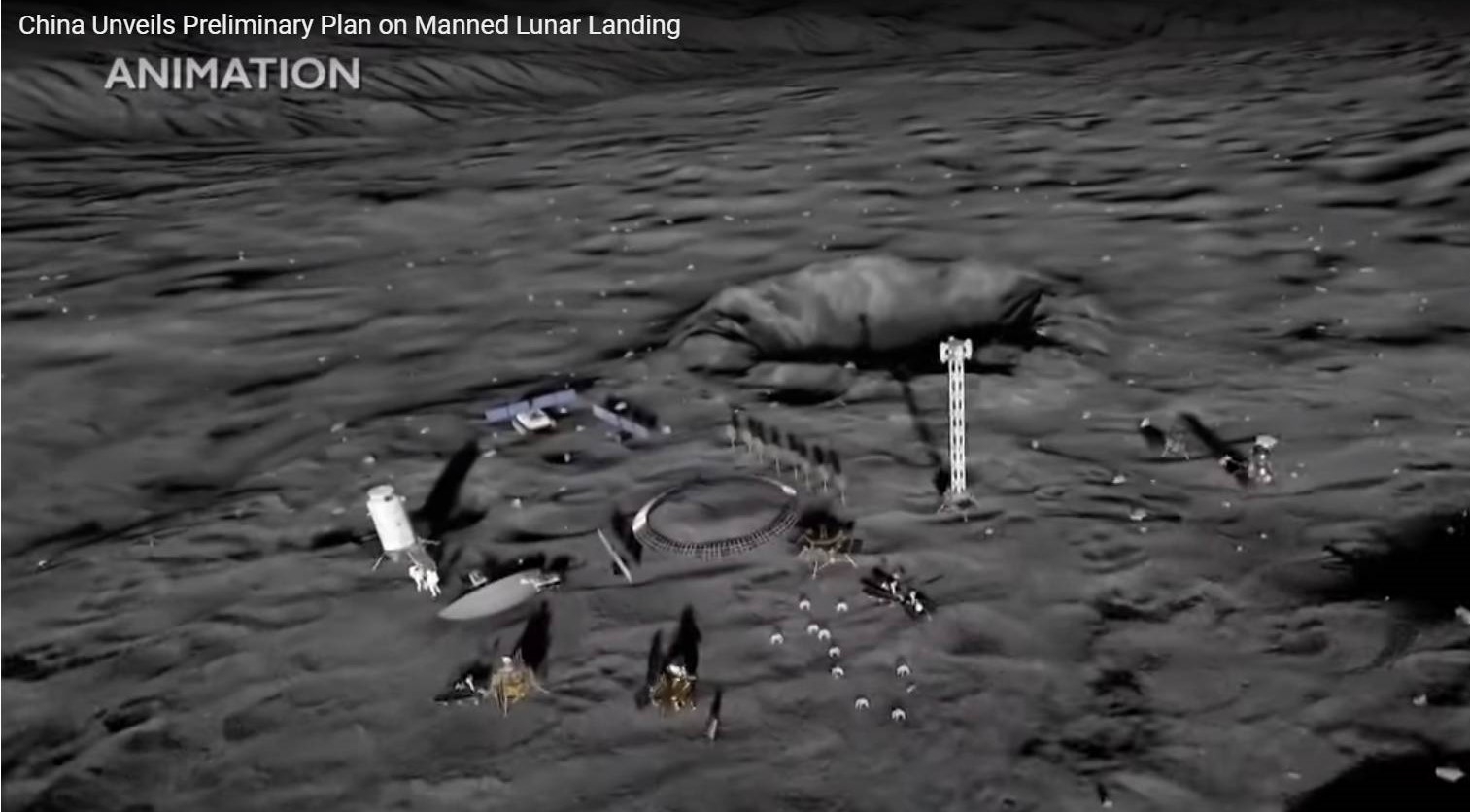
Image credit: CCTV/Inside Outer Space screengrab
The 130-ton class liquid oxygen kerosene rocket engine brought its cumulative test run time to 3,300 seconds after this recent trial, setting a new record for the longest trial of a single 100-tonne class engine in China, said the corporation.
According to CCTV, as the main engine for the country’s future crewed lunar missions, it needs higher comprehensive performance and reliability.
The trial broke the previous record for the longest test run which was achieved less than six months before this latest trial. Meanwhile, the trial working time of the engine exceeded its required mission working time by more than 10 times, which verified its reliability, the corporation said.

Image credit: CCTV/Inside Outer Space screengrab
French researchers are ready to begin studies of lunar samples retrieved by China’s Chang’e-5 mission, rocketed back from the Moon to Earth in December 2020.
The lunar samples are from the 1,700 grams returned to Earth from the Statio Tianchuan in the northeastern Oceanus Procellarum on the near side of the Moon.
Two containers of lunar specimens were transported to Paris in June and have since been secured in storage at the Natural History Museum of Paris. They weigh around one gram and 0.5 grams of lunar drill material, with both being stored inside sealed containers in dry chambers.

Box indicates Chang’e-5 lander on the basaltic plains of Oceanus Procellarum (“Ocean of Storms”) in December 2020.
“We are starting to develop a program to be able to open the containers, which is not easy because they have to be opened in a strictly-controlled atmosphere. You must not contaminate them. This is what we are going to do in the months to come: we will open the containers with our colleagues from the IPGP and then afterwards, we will extract the grains,” said Jean Duprat, an expert at the museum, told China Central Television (CCTV).

Photo taking during Chang’e-5 surface sampling.
Credit: CCTV/Inside Outer Space screengrab
Gifted samples
At the L’Institut de Physique du Globe de Paris (IPGP), or the Paris Institute of Earth Physics, researchers there are setting up a clean room to carry out a comprehensive study of the lunar collectibles.
“What we will do is to measure the very precise chemical compositions of these samples in our laboratory. These lunar samples brought back by Chang’e-5 come from an area of the Moon that had never been sampled before. The new information that these samples will bring us will be extremely important,” said IPGP’s Frederic Moynier in the CCTV interview.

Chang’e-5 return capsule holding lunar specimens.
Credit: National Astronomical Observatories, CAS
The gifted samples will be studied in a joint effort by the IPGP, the French National Center for Space Studies (CNES), the French National Center for Scientific Research (CNRS), and the University of Paris-Sorbonne for the next five to seven years.
Go to this CCTV video detailing the study of lunar samples in France at:

Image credit: Roscosmos Television Video/Inside Outer Space screengrab
Russia’s Luna-25 robotic Moon lander is at the Vostochny cosmodrome in Amur Oblast, Russia. The craft will be headed for the south pole of the Moon, reportedly targeted for launch on August 11, 2023.

Image credit: Roscosmos Television Video/Inside Outer Space screengrab
At the cosmodrome, Luna-25 will undergo pre-flight checkout and undergo ground tests, and then fitted to a Fregat upper stage and placed atop a Soyuz-2.1b booster.

Image credit: Roscosmos Television Video/Inside Outer Space screengrab
Russia’s Roscosmos reports that the main task of the mission is to develop the basic technologies for a soft landing in the circumpolar region and conduct contact studies of the south pole of the Moon.
Go to this Roscosmos Television Video at: http://www.tvroscosmos.ru/print/7408/

Image credit: BIG Idea Challenge/NASA/Advanced Concepts Lab
As NASA revs up its plan to “re-boot” the Moon through the Artemis program, a long-term aim calls for explorers to hunker down thanks to “sustainable” infrastructure on the lunar landscape.
The key to doing so is use of on-the-spot lunar resources, known in NASAese as in-situ resources utilization, or ISRU for short.
Cutting the umbilical to Earth for transporting materials is a cost-saver – and also serves as good practice, enabling humankind to take ever-deeper dives into space, such as destination Mars.
For the moment, a top priority for ISRU system development has been the extraction of oxygen, and other volatiles, since they are the easiest to extract from the topside surface called regolith.

Image credit: NASA
The next priority is the extraction of metals from the Moon, making it possible to fabricate pressure vessels, pipes, power cables, as well as roads, landing pads, and other need-to-haves.
Practical, affordable ways
To this end, NASA’s Lunar Surface Innovation Initiative is working to develop and demonstrate technologies to use the Moon’s resources to produce water, fuel, and other supplies as well as capabilities to excavate and construct structures on the Moon.
“We need practical and affordable ways to use resources along the way, rather than carrying everything we think will be needed. Future astronauts will require the ability to collect space-based resources and transform them into the products needed for a sustained presence,” according to the 2023 BIG Idea Challenge.

NASA’s 2023 annual Breakthrough, Innovative and Game-Changing (BIG) Idea Challenge asked college students to design technologies that will support a metal production pipeline on the Moon – from extracting metal from lunar minerals to creating structures and tools.
Image credits: BIG Idea Challenge/NASA/Advanced Concepts Lab
The Breakthrough, Innovative, and Game-Changing (BIG) Idea Challenge is managed by the National Institute of Aerospace on behalf of NASA.
Lunar forge
The 2023 BIG Idea Challenge is “Lunar Forge: Producing Metal Products on the Moon.” It provides undergraduate and graduate students the opportunity to design, develop, and demonstrate technologies that will enable the production of lunar infrastructure from ISRU-derived metals found on the Moon.
In early March, NASA announced the selection of seven university teams to develop concepts supporting metal production on the Moon.

NASA’s Artemis program wants to establish a sustainable presence on the Moon.
Image credit: NASAThe awards total about $1.1 million, with values between $120,000 and $180,000 based on each team’s proposed concept.
The challenge is a unique collaboration between NASA’s Space Technology Mission Directorate’s (STMD) Game Changing Development (GCD) program and NASA’s Office of STEM Engagement Space Grant Project.
Variety of themes
Teams were asked to submit proposals on a variety of themes, such as:
- Prospecting for metal-bearing ores
- Ore extraction from bulk regolith
- Beneficiation/Refining processes
- Smelting and other metal reduction methods
- Feedstock forming and alloying from ISRU-derived metals
- Handling of materials used in metal production
- Additive manufacturing and joining with ISRU-derived feedstock
- Production of metal matrix composites
- Extrusion and drawing methods tailored for use in the lunar environment where a complex infrastructure is not available
- Test and qualification of ISRU-derived metal products such as storage vessels for liquids and gases, extrusions, pipes, power cables, and supporting structures
Once funded, teams are continuing their work on designing, building, and testing their concepts in advance of a November 2023 forum, where their concepts will be showcased to the public and judged by a panel of NASA and industry experts.

What equipment can work well while withstanding the tough lunar environment?
Image credit: Contour Crafting and University of Southern California
Abundant minerals
Wrap your mind around what the Moon has to offer.
There are several abundant minerals containing potential metals on the lunar surface that make them prime targets of opportunity, including, but not limited to:
Ilmenite (FeTiO3) ore, a key lunar resource is the fourth most abundant mineral on the Moon’s surface. Ilmenite is a titanium-iron oxide mineral and is a likely candidate for oxygen production with the byproducts being iron and titanium dioxide. Ilmenite is “paramagnetic, thus it can be sorted with magnetic fields.
Also, iron can be extracted through a smelting process and converted into feedstock. Titanium Dioxide can be reduced to titanium and oxygen. Titanium can be formed into wire feedstock for electron beam free form fabrication production of large objects such as pressure vessels. The lunar near vacuum environment is ideal for free form fabrication production.

Image credit: NASA
On the Moon, look for Anorthite (CaAl2Si2O8), most commonly proposed as a lunar substitute for Bauxite. Anorthite could be separated from the lunar highland material with mechanical methods. It could then be reduced through various chemical and electrochemical methods to produce aluminum.
For detailed information on the 2023 BIG Idea Challenge – “Lunar Forge: Producing Metal Products on the Moon” – go to this informative website at:
https://bigidea.nianet.org/2023-challenge/
Check out the finalists here at:
https://bigidea.nianet.org/wp-content/uploads/2023-BIG-Idea-Finalist-Team-Synopses.pdf

India’s Chandrayaan-3 Moon lander/rover.
Image credit: ISRO
India’s Chandrayaan-3 Moon lander/rover has completed launch rehearsal by the Indian Space Research Organization (ISRO).
Target for liftoff is July 14. The lunar lander is headed for the southern region of the Moon’s near side, soft landing about 13 miles (20 kilometers) west of Manzinus U crater rim, at coordinates 69.367621 S, 32.348126 E, as stated by the ISRO.
Projected touchdown: around August 23.

Image credit: Quickmap.lroc.asu.edu/projections
Neighborhood watch
India’s landing site is not too far from where Russia’s Luna-25 is targeted to land, following its launch in August.
Luna-25’s main landing site is at 69.545 S, 43.544 E, north of Boguslavsky crater. The reserve landing site is at 68.773 S and 21.21 E, southwest of Manzini (Manzinus) crater.

Ship and shoot! Russia’s Luna-25 ready for launch next month.
Image credit: JSC “NPO Lavochkina”
The center of Boguslawsky crater is roughly 93 miles (150 kilometers) south of the coordinates issued by ISRO for the prospective Chandrayaan-3 landing locale.

Topographic map of the southern sub-polar region of the Moon showing the location of Boguslawsky crater.
Credit: Ivanov et al., 2015 via Arizona State University/LROC
Everybody’s going to the Moon!
Note: Special thanks to Mark Robinson, Arizona State University’s Moon reckoning man.
Ship and shoot! Russia’s Luna-25 ready for launch next month.
Image credit: JSC “NPO Lavochkina”
Russia’s long-awaited and delayed robotic re-introduction to Moon exploration, Luna-25, is at its launch site!
On July 10, the Luna-25 spacecraft was sent to the cosmodrome, delivered to its takeoff location for a scheduled sendoff this August.
In a statement from JSC “NPO Lavochkina,” builder of the Moon lander, and part of the Roscosmos State Corporation, “work has been completed on the creation of the Luna-25 spacecraft.”

Luna-25
Credit: Roscosmos
“It is planned that the device will be the first in the world to carry out a soft landing on the surface of the Moon in the south pole region and conduct contact studies of the lunar soil for the presence of ice at the landing site,” the statement adds.

Image credit: Roscosmos
Difficult terrain
Luna-25 makes use of “a completely Russian element base and the latest achievements in the field of space instrumentation.”
Lavochkin adds that the main task of the mission “is to develop the basic technologies for a soft landing in the circumpolar region and conduct contact studies of the south pole of the Moon.”
Topographic map of the southern sub-polar region of the Moon showing the location of Boguslawsky crater.
Credit: Ivanov et al., 2015 via Arizona State University/LROC
Contrasted to earlier Soviet Union lunar explorers, the Luna-25 spacecraft — in terms of landing — is fundamentally different from its predecessors. “Soviet lunar stations carried out lunar landings in the equatorial zone, the new station will for the first time provide a soft landing in the circumpolar region with difficult terrain.”
Landing location
Luna-25 is intended to become the first domestic apparatus in modern Russia to head for the Moon. The probe is targeted for a region of the south pole of the Moon, touching down near the Boguslavsky crater.

Russia’s Luna-25 will test lunar sampling skills.
Credit: NPO Lavochkin/IKI/Roscosmos
A “reserve area” is southwest of the Manzini crater.
Luna-25 is to study the upper surface layer in the region of the south pole of the Moon, the lunar exosphere and develop landing and soil sampling technologies.
The declared active life of the probe on the surface of the Moon is at least one Earth year.

Credit: NPO Lavochkin
This Russian Moon mission continues the series of the former Soviet Union’s lunar exploration activities that ended back in 1976. Luna-24 successfully delivered about 170 grams of lunar soil to Earth.
Earlier, prior to Russia’s intrusion into the Ukraine, the European Space Agency (ESA) was to provide the European Pilot-D camera built specifically for precisely landing Luna-25 on the Moon. Due to the conflict, ESA cancelled the camera cooperation, among a number of other collaborative space projects.

Curiosity Right B Navigation Camera on Sol 3881, July 7, 2023.
Image credit: NASA/JPL-Caltech
NASA’s Curiosity Mars rover at Gale crater is now performing Sol 3885 duties.
“Few things are better than planning an action-packed weekend on Mars. It’s even better when the last plan executed like a charm,” reports Natalie Moore, a mission operations specialist at Malin Space Science Systems in San Diego, California.

Curiosity Left B Navigation Camera image acquired on Sol 3881, July 7, 2023.
Image credit: NASA/JPL-Caltech
Last week, on Wednesday, the wheeled robot made it over 144 feet (44 meters), placing it in “veiny, layered bedrock heaven,” Moore added. “We’re still headed towards a local cluster of craters, roughly 490 feet (150 meters) to the east, and my Mastcam brain is excited for a far-field imaging campaign when we get there.”

Curiosity Right B Navigation Camera on Sol 3881, July 7, 2023.
Image credit: NASA/JPL-Caltech
Weekend routine
In the meantime, the rover is using the Mars Hand Lens Imager (MAHLI) to plan some close (and some extremely close) images of the terrain in front of it. “And since the downlink arrived as expected, Curiosity is in great shape for her classic weekend routine,” Moore reported July 7.

Curiosity Chemistry & Camera Remote Micro-Imager (RMI) photo taken on Sol 3881, July 7, 2023.
Image credit: NASA/JPL-Caltech/LANL
On the first sol (3882) in that weekend plan, the rover was to wake up and spend time organizing her data from the previous plan, Moore added. “After a leisurely mid-morning nap she’ll start her first science activities.
Those were to include: Mastcam stereo mosaic of Kukenan butte in the far distance, a Chemistry and Camera (ChemCam) Laser Induced Breakdown Spectroscopy (LIBS) 5-spot raster of a nicely-layered block in the workspace named “Akrata,” a Mastcam-Right documenting image of the LIBS laser spots, and a Dynamic Albedo of Neutrons (DAN) measurement in parallel with those instruments to measure any water-related atoms present in the ground.

Curiosity Right B Navigation Camera on Sol 3881, July 7, 2023.
Image credit: NASA/JPL-Caltech
The robot was scheduled to take another nap to prepare for arm activities later that day.
Swish the dust away
“What does a Martian rover do on a Saturday evening? Stick her cupcake-sized [Alpha Particle X-Ray Spectrometer] (APXS) on some dust-free rocks and ‘sniff’ the surface chemistry of course! But first, she has to pre-game with some dust-clearing and MAHLI images while the sun is still up,” Moore explains.

Curiosity Right B Navigation Camera on Sol 3881, July 7, 2023.
Image credit: NASA/JPL-Caltech
Last weekend, the plan called for picking a layered bedrock target for use of the Dust Removal Tool (DRT) to swish the dust away and named it “Desino.”
“After brushing Desino, it’s time to take our usual Mastcam-Right images of the DRT for documentation and head into some major MAHLI imaging,” Moore notes. Starting with a dark, plate-like target named ‘Planitero,’ MAHLI was to take images at 25 centimeters and 5 centimeters from the surface.

Curiosity Right B Navigation Camera on Sol 3881, July 7, 2023.
Image credit: NASA/JPL-Caltech
Bedrock layers
“Then we have an exciting 2×3 mosaic planned of some bedrock layers at ChemCam’s Akrata LIBS target,” Moore reports, “for a total of 6 images at best focus (actually, we take 8 images at difference focus values for each mosaic position to make sure we’re getting the best focus possible in addition to an extra full frame – so that’s really 54 images, plus 6 subframes. It’s a MAHLI party!”
In a past plan, Curiosity did a similar type of mosaic along a vertical fin, and the surrounding bedrock showing the type of layers Mars researchers are hoping to get in last weekend’s mosaic.
For the MAHLI’s finale, the rover was slated to take images of dust-cleared Desino at 25 centimeters, 5 centimeters, and 2 centimeters from the target’s surface.

Curiosity Mast Camera Right image taken on Sol 3880, July 6, 2023.
Image credit: NASA/JPL-Caltech/MSSS
Western-like heading
“On a side note – this is our first western-like heading in quite some time and for MAHLI that means much better chance at full-sun image lighting, which is almost always preferred,” Moore explains.

Curiosity Mast Camera Right image taken on Sol 3880, July 6, 2023.
Image credit: NASA/JPL-Caltech/MSSS
After the MAHLI party, APXS will settle into some surface sniffing – starting with Planitero and ending with Desino. “It’s an early night for Curiosity, but she’ll be awake in intermittently to send the sol’s data to Earth via orbiters when they pass overhead,” Moore points out.
Local craters
For the second sol (3883), Curiosity will have another late morning and start her science activities around noon.

Curiosity Mast Camera Left image taken on Sol 3880, July 6, 2023.
Image credit: NASA/JPL-Caltech/MSSS

Curiosity Mast Camera Left image taken on Sol 3880, July 6, 2023.
Image credit: NASA/JPL-Caltech/MSSS
Mastcam was scheduled to take a multispectral stereo frame (in 7 wavelength filters for each camera) of Desino and a couple, smaller stereo mosaics of the vertical rock fins and sand cracks around the rover.
ChemCam will shoot another bedrock target named “Skotani” with LIBS and Mastcam follows up with the usual documentation image of the laser-induced spots.
“Then it’s time to pack it up and drive away!” A stroll of roughly 55 feet (17 meters) last Sunday was to hopefully get Curiosity closer to the local craters in the distance, Moore concludes, “and put some more interesting bedrock in the workspace for Monday’s planning.”

