Archive for the ‘Space News’ Category
 Author:
  May 6th, 2024
Image credit: CGTN/CNSA/Inside Outer Space screengrab
An international cadre of payload specialists aboard China’s outbound Chang’e-6 robotic Moon mission gathered last week in China’s Haikou City, the capital of Hainan Province.
The Chang’e-6 lunar probe departed last week from the Wenchang Space Launch Site and is set to collect lunar samples from the far side of the Moon.

Image credit: CCTV/Inside Outer Space screengrab
Multiple international scientific payloads on China’s outgoing Moon mission include a radon measuring instrument from France’s national space agency, a passive laser retroreflector from Italy’s National Institute for Nuclear Physics, an analytical instrument for negative ions on the lunar surface from the European Space Agency, and the ICUBE-Q cube-satellite from Pakistan.
Global collaboration
“Our reflector is on the lander,” said Simone Dell’Agnello, a technologist at the National Institute for Nuclear Physics and the Frascati National Labs in Italy. “Remarkable atmosphere of sincere and friendly international collaboration here at the launch site/venue,” Dell’Agnello told Inside Outer Space.

Image credit: CCTV/Inside Outer Space screengrab
Pierre-Yves Meslin, Detection of Outgassing RadoN (DORN) principal investigator for the French National Center for Scientific Research told China Central Television (CCTV): “It’s a series of first times for us. It’s the first time that China and France are collaborating in the field of deep space exploration. It’s also the first time that France will deploy a scientific instrument at the surface of the Moon,” Meslin said.
In addition, DORN represents the first time that radon will be measured at the surface of the Moon, Meslin added.

Image credit: CCTV/Inside Outer Space screengrab
Cube-satellite, suspected mini-rover
Neil Melville-Kenney is a technical officer for the Negative Ions on the Lunar Surface (NILS) at the European Space Agency (ESA).
“The groundwork that we are laying here with this mission, I hope, will serve a firm basis, indeed, for them to decide to collaborate more in the future,” Melville-Kenney told CCTV.

Image credit: CCTV/Inside Outer Space screengrab
Qamar ul Islam, a professor at the Department of Space Science, Institute of Space Technology in Pakistan, told CCTV that the ICUBE-Q cube-satellite involved students at universities and educational institutes. “It’s a big motivation and we had very good cooperation from the Chinese side during all this project right from the beginning.”
Believed to be hitching a ride to the Moon’s surface is a purported mini-rover, although not verified as yet by Chinese space officials. The rover-looking device was first-detected by China space watchers in a pre-launch photo of the Chang’e-6 stack of hardware.
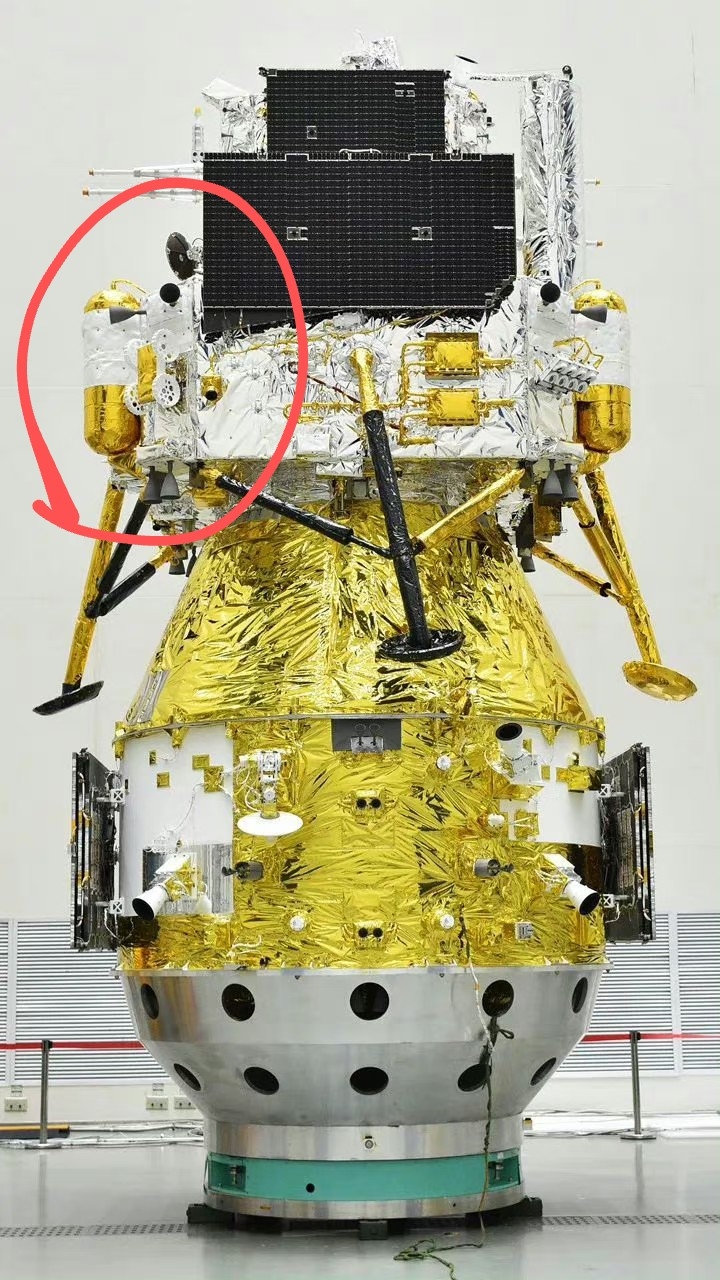
Image credit: CNSA/China ‘N Asia Spaceflight
Reliability index
Compared to the Chang’e-5 mission, the weight of Chang’e-6 is heavier by about 220 pounds (100 kilograms), said Li Pingqi from China Aerospace Science and Technology Corporation, pointing to the lunar missions booster, the Long March-5 rocket.
“Going to a lunar transfer orbit with an increase of 100 kilograms is a considerable upgrade for our rocket,” said Li added.
CCTV reported that, compared to the Chang’e-5 lunar lander mission, the Long March 5 rocket catering to the Chang’e-6 mission also has its reliability index up from 0.86 to 0.93.
Target zone
Chang’e-6 is slated to enter lunar orbit early this week, then nudge itself into a lower altitude above the Moon for lander release. Chang’e-6 will spend about 20 days adjusting its position in preparation for the attempted lunar landing. The target zone is within the South Pole-Aitken basin.

Image credit: CGTN/CNSA/Inside Outer Space screengrab
Meanwhile, at the ready are relay satellites to provide communication services to facilitate data transmission between Chang’e-6 and the Earth. China launched the Queqiao-2, or Magpie Bridge-2, relay craft on March 20.
The Chang’e-6 spacecraft, like its predecessor, the Chang’e-5 lunar sample return mission to the Moon’s nearside, is composed of an orbiter, a lander, an ascender and a returner.

Image credit: CCTV/Inside Outer Space screengrab
53 days
Within 48 hours after Chang’e-6 landing, the plan calls for its robotic arm to be extended, then scoop up rocks and soil from the lunar surface, as well as perform drilling duties to probe below the lunar topside.
If everything goes according to plan, up to 4.4 pounds (2 kilograms) of lunar bits will be collected, stashed and packed in a vacuum-sealed metal container inside the ascender.
The ascender then rockets off the Moon and auto-docks with the Chang’e-6 orbiter circling the Moon.
Following a roughly five-day journey from the Moon, a returner capsule, stuffed with lunar samples, is to parachute into a pre-determined site in Inner Mongolia.
The entire flight — from Earth launch to return sample capsule landing back on Earth — is expected to last about 53 days.
 Posted in

From the Garage to Mars: Memoir of a Space Entrepreneur by Scott Tibbitts; HenschelHAUS Publishing (March 2024); 254 pages; softcover; $24.95.
If you’ve got entrepreneurial dollars aligned with the needed spunk and spine to create a new space company, this book provides an insider, industrial strength look at what kind of roller coaster ride you may encounter.
The author founded Starsys Research Corporation of Boulder, Colorado, an innovative business that, quite literally, had wax flowing through its veins. Starsys pioneered thermal “actuator” technology and mechanical systems for spacecraft – critical items that open, close, deploy, and move components on spacecraft, like opening lens caps.
Such devices can make or break a mission, be it in Earth orbit or crossing the intervening void to reach Mars, Saturn, and elsewhere.
Tibbitts candid and sleep-stealing worries included confronting this self-imagined and calamitous news headline:
“Space Motor Made by Small Space Company in Boulder, Colorado Fails. Billion Dollar NASA Mission Lost. CEO/Entrepreneur Scott Tibbitts says: “I’m stumped…it seemed to be working just fine before we put it on the rocket.”
When NASA’s Spirit rover plopped down on the Red Planet back in 2004, the first pictures transmitted back to Earth included the Starsys logo; the small company had built 27 motors powering the mini-rover and its instruments. “The best product placement ever,” recalls Tibbitts, “one of the coolest things our team ever did.”
While getting to Mars was a company high point, the Starsys track record over a span of 20 years built more than 4,000 devices that flew on 350 spacecraft. As Tibbitts explains, the firm’s success was anchored in a corporate culture that emphasized technical competence bolstered by emphasis on fun and family, team building, and having an easily accessible “Gripe Box” for employees.
In tell-it-like-it-was fashion, the volume is peppered with “Tibbitts Tips,” from the power of play, protecting the price, and the value of 3-day weekends to stop doing what you suck at and let go or be dragged.
In the building of a space company from scratch, the author details both the highs and lows endured, with one chapter bluntly titled: “Entrepreneurial Hell.”
Starsys was acquired by SpaceDev in 2006 with Tibbitts poignantly writing about the angst incurred in “giving up the company I had invested 20 years of my life to create.” SpaceDev was renamed Sierra Nevada Space Systems after a subsequent acquisition in 2008.
This book is well-written, giving the reader a full monty memoir of living on the edge of success to personal upheavals, dealing with tragic and soul-searching events, and what lessons learned were uncovered along the long, winding road.
“I had no idea that seven dollars in hardware-store parts, some wax, and a certainty that, ‘this is so cool. There has to be some use for it…’ would lead to my three-decade journey,” Tibbitts concludes, “which is far from over.”
In short, wax aside, the author himself became an “actuator” and this volume underscores that fact.
For more information on this book, go to:
https://henschelhausbooks.com/product/from-the-garage-to-mars-memoir-of-a-space-entrepreneur/
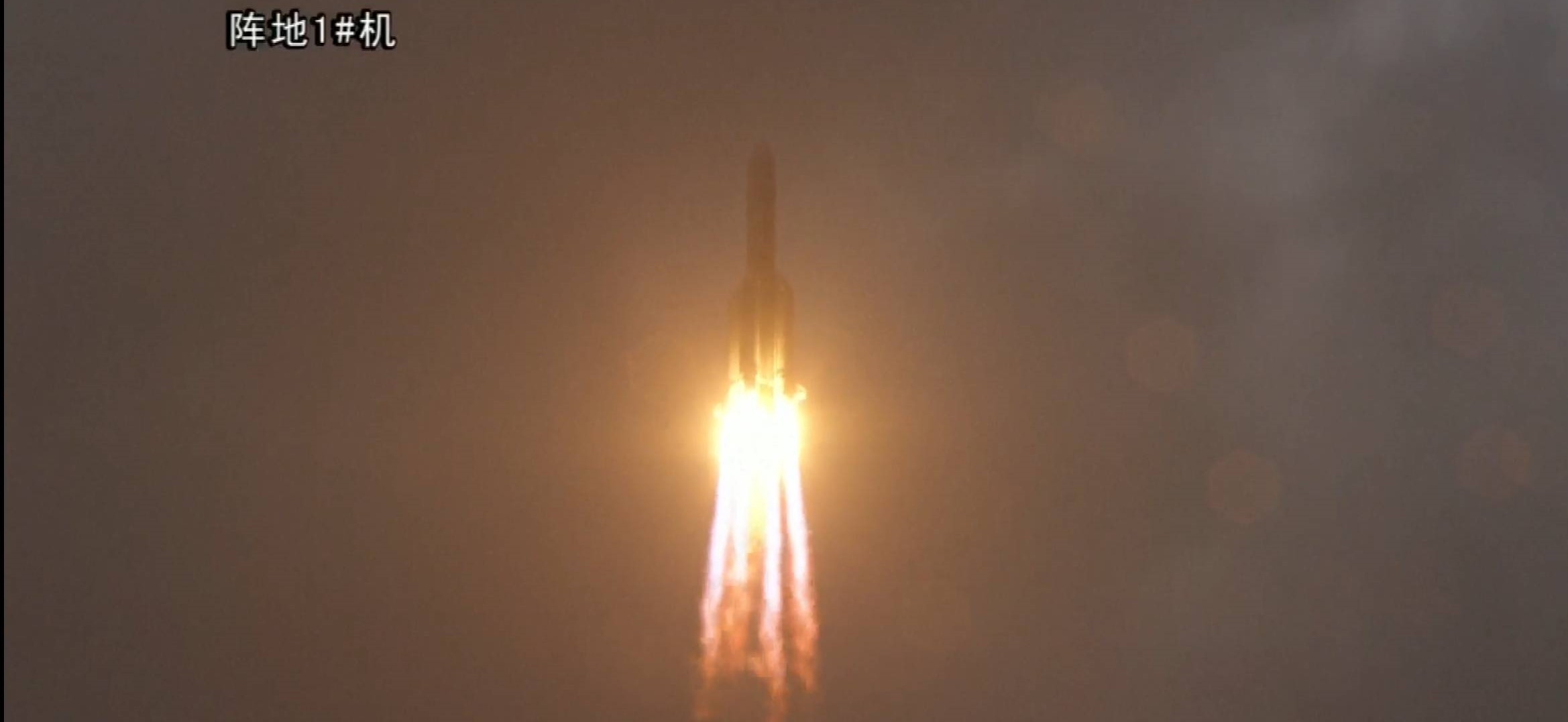
Image credit: CCTV/Inside Outer Space screengrab
China’s second robotic mission to the Moon’s far side – Chang’e-6 – is en route to an impact crater known as the Apollo basin, located within the South Pole-Aitken (SPA) Basin, selected as the primary target landing and sampling site for the lunar lander mission.
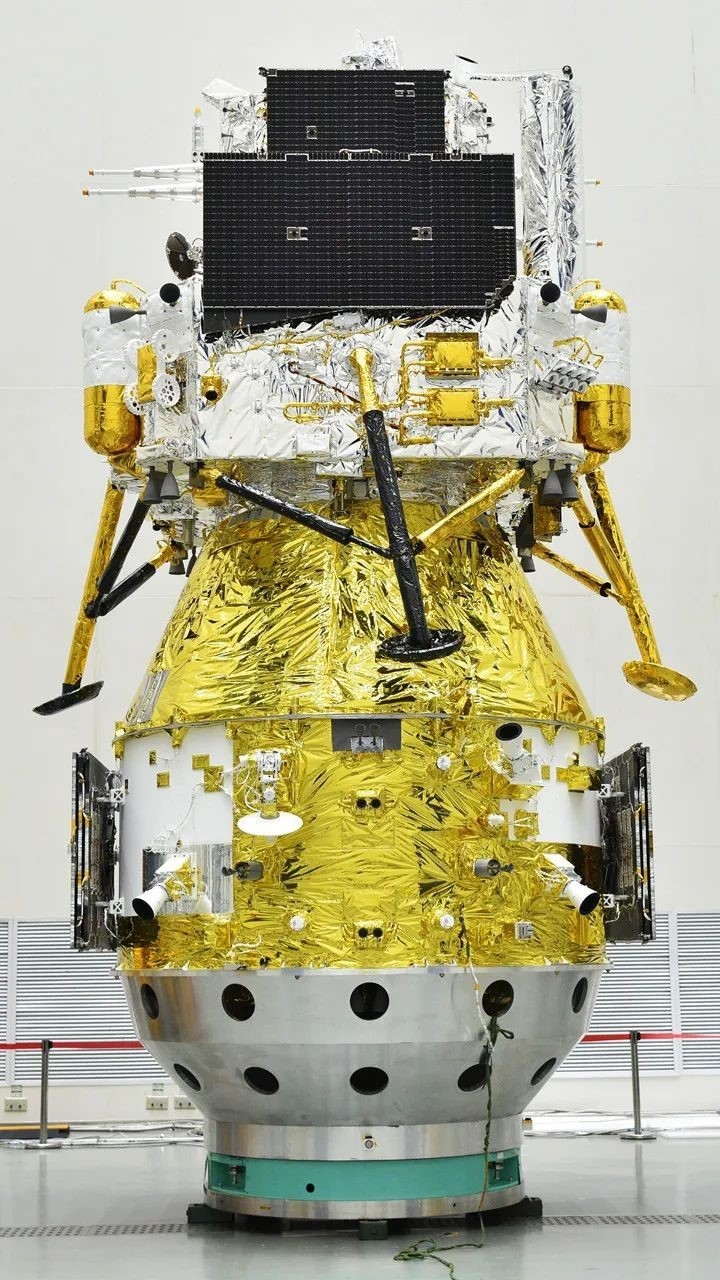
Now en route to the Moon, China’s Chang”e-6.
Image credit: CNSA
After launch last Friday, Chang’e-6 is on track for a flight expected to last about 53 days, according to the China National Space Agency (CNSA).
Meanwhile, at the ready are relay satellites to provide communication services to facilitate data transmission between Chang’e-6 and the Earth.
China launched the Queqiao-2, or Magpie Bridge-2, relay craft on March 20. Subsequently, it has completed check list testing with the Moon’s far side-based and still active Chang’e-4 lander/rover, as well as performing a pre-launch link-up with Chang’e-6, reports China Central Television (CCTV).
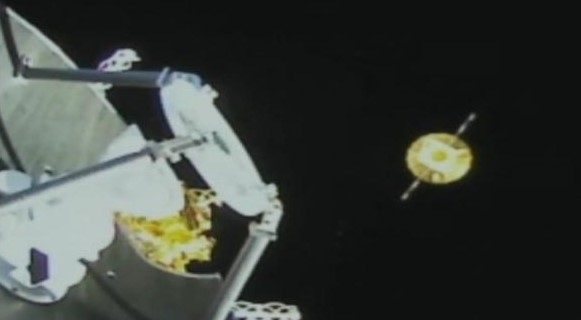
China’s Queqiao-2, or Magpie Bridge-2, is released from a Long March 8 carrier rocket last March.
Image credit: CNSA
China’s Chang’e-4 lander/rover was the first to visit the Moon’s far side in 2019.
Relay support
Queqiao-2 is circling the Moon in a large elliptical orbit to ensure data transmission efficiency and long-term effective communication with the lander’s far side touchdown spot of the Moon. Chang’e-6 is outfitted with special antenna gear.

Lu Yuntong, CAST. Image credit: CGTN/Inside Outer Space screengrab
“The main difficulty in landing on the Moon’s far side is that the terrain on the far side is actually more rugged. So we need to do terrain identification to choose a better area for it to land on the Moon,” explained Lu Yuntong, an engineer of China Aerospace Science and Technology Corporation.
“With the support of relay satellite Queqiao-2,” Lu told CCTV, “we will then implement our sampling and packing mission on the far side of the Moon.”

Image credit: CNSA
Tianlian system
“The position of Queqiao-2 relative to our lander is actually changing all the time, unlike the lander on the near side where it was facing the Earth,” Lu continued.
“So in order to adapt to such a wide range of pointing requirements for relay satellites, we added a directional antenna on Chang’e-6. At the same time, our two directional antennas are designed with autonomous tracking functions, which can be well aligned with our relay satellites at all times and better adapt to the communication conditions on the far side of the Moon,” Lu said.
Two relay satellites, carried along with Queqiao-2, are part of the “Tianlian system” that offer communication services for the Chang’e-6 mission. However, the Queqiao-2 will handle the spacecraft entering an elliptical orbit around the Moon, the probe’s landing, and the ascent module’s departure from the lunar far side.

Image credit: CNSA
Orbiter, lander, ascender returner
The Chang’e-6 spacecraft, like its predecessor Chang’e-5, consists of an orbiter, a lander, an ascender and a returner.
Within 48 hours after Chang’e-6 landing, the plan calls for its robotic arm to be extended, then scoop up rocks and soil from the lunar surface, as well as perform drilling duties to probe below the lunar topside.
Following sample placement in a sealed container, the ascender will take off from the Moon then dock with the Chang’e-6 orbiter circling the Moon. The returner is to haul the lunar samples to Earth, landing in north China’s Inner Mongolia Autonomous Region.
The entire flight is expected to last about 53 days, the CNSA said.

China’s Chang’e-6 lunar sample return mission elements.
Credit: CNSA
International payloads
The Chang’e-6 mission is carrying four payloads developed through international cooperation. Scientific instruments from France, Italy and the European Space Agency/Sweden are aboard the Chang’e-6 lander.
Also, a small satellite from Pakistan is attached to the orbiter, the ICUBE-Q CubeSat satellite. It was designed and developed by Pakistan’s Institute of Space Technology in collaboration with China’s Shanghai Jiao Tong University and Pakistan’s national space agency, SUPARCO.

Image credit: Xingguo Zeng, et al.
Moon’s origin and evolution
Chang’e-6’s landing within the Aitken Basin in the south pole of the Moon is expected to provide invaluable science data.
“The Aitken Basin is one of the three major terrains on the Moon and has significant scientific value,” Ge Ping, deputy director of the Center of Lunar Exploration and Space Engineering with CNSA told China Global Television Network (CGTN).
Finding and collecting samples from different regions and ages of the Moon is crucial for our understanding of Earth’s natural satellite, Ge said. When the sample is returned, there will be systematic, long-term laboratory research on the lunar stash, including analysis of its structure, physical properties and composition.
“These would further study of the Moon’s origin and its evolutionary history,” Ge said in an interview before the launch.

Vacuum-sealed collectibles
Like its predecessor, the Chang’e-6 spacecraft is designed and built by the Beijing-based China Academy of Space Technology. The Moon mission now underway will basically mimic that of the Chang’e-5 return sample mission carried out in December 2020.
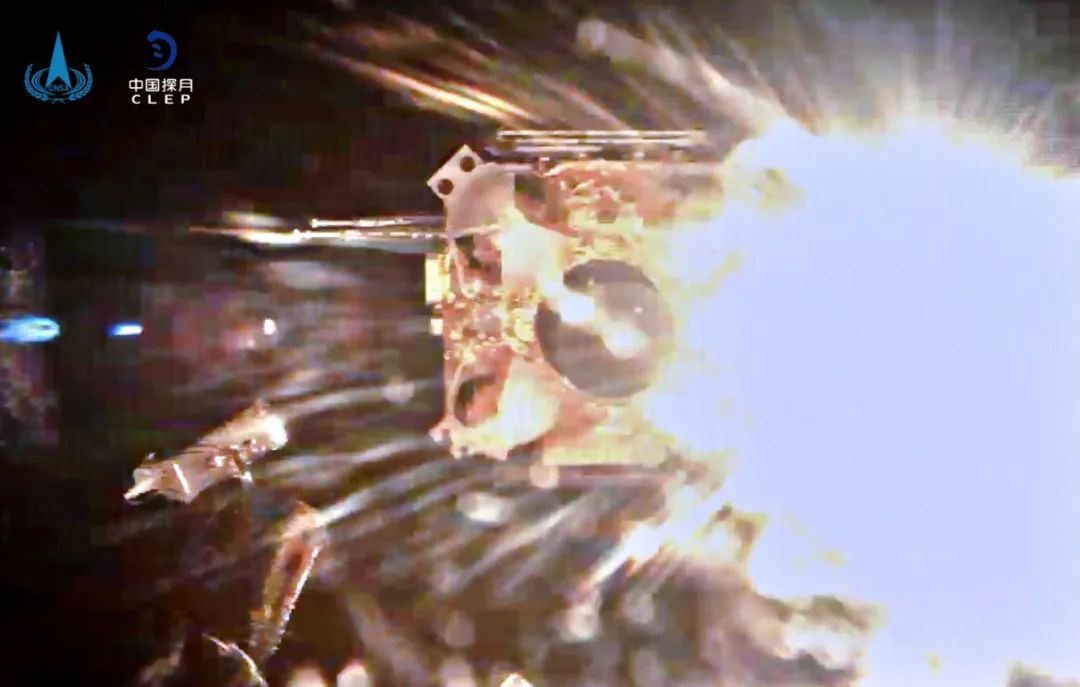
After Chang’e-6 reaches lunar orbit, its components will separate into two parts, with the orbiter and reentry capsule remaining in orbit, while the lander and ascender depart for lunar surface tasks.
If everything goes according to plan, up to 4.4 pounds (2 kilograms) of lunar bits will be collected, stashed and packed in a vacuum-sealed metal container inside the ascender.
Departing ascender imaged by the Chang’e-5 lander.
Credit: CCTV/CNSA/CLEP
Parachute landing
After lunar collection duties are done, the engines of the ascender will rocket that Chang’e-6 mission element into lunar orbit for docking with the reentry capsule. The vacuum-sealed container carrying the samples will then be transferred to the Earth-returning segment before the ascender undocks.
The combination of orbiter and reentry capsule then departs lunar orbit and returns to the vicinity of Earth where the pair separate.
Blazing through Earth’s atmosphere the reentry capsule toting lunar specimens will perform a set of maneuvers, ending in a parachute landing at the Siziwang Banner Landing Site in the Inner Mongolia autonomous region.

Wang Qiong, deputy chief designer of the Chang’e-6 mission.
Image credit: CCTV/Inside Outer Space screengrab
Challenges and uncertainties
Wang Qiong, a deputy chief designer of the Chang’e-6 mission, said there will be a host of challenges and uncertainties while the 53-day robotic expedition of the Moon is underway.
“During the Chang’e-5 mission, the probe worked on the near side, so we could monitor its work processes and send control signals to it anytime. But in the case of Chang’e-6, we will have to depend solely on the Queqiao-2 relay satellite to transmit data and signals. The satellite has a limited coverage over the landing site, which will consequently restrict our communication with the Chang’e-6 probe,” he said.

Photo taking during Chang’e-5 surface sampling.
Credit: CCTV/Inside Outer Space screengrab
Wang said that engineers have applied some new advanced technologies in the now en route to the Moon mission, such as a rapid sampling system and a smart data-analysis mechanism. Those abilities will ensure that the sample-collection tasks are effectively and efficiently completed on the lunar surface within shorter operating time.
In the case of a communications blackout, Wang added that the Chang’e-6 probe is capable of conducting some key maneuvers in accordance with preset programs.
Go to this informative video at:

Wait a minute.
Image credit: Barbara David
In a post-flight analysis of the Artemis 1 uncrewed mission, NASA has identified more than 100 locations where ablative thermal protective material from the Artemis 1 Orion heat shield chipped away unexpectedly during reentry into Earth’s atmosphere.
In classic “wait a minute” style, a NASA Office of Inspector General (OIG) report has been issued – “NASA’s Readiness for the Artemis II Crewed Mission to Lunar Orbit” – calling attention to this issue and others before sending off a human crew to circle the Moon.

Image credit: NASA OIG
Root cause
To ensure the safety of the crewed Artemis II mission, the newly-issued OIG report recommends the Associate Administrator for Exploration Systems Development Mission Directorate:
- “Ensure the root cause of Orion heat shield char liberation is well understood prior to launch of the Artemis II mission.
- Conduct analysis of Orion separation bolts using updated models that account for char loss, design modifications, and operational changes to Orion prior to launch of the Artemis II mission.”
The report by the NASA OIG also notes that “human space flight by its very nature is inherently risky, and the Artemis campaign is no exception. We urge NASA leadership to continue balancing the achievement of its mission objectives and schedule with prioritizing the safety of its astronauts and to take the time needed to avoid any undue risk.”

Image credit: NASA OIG
Taking the heat
In earlier reporting, here’s my take on the situation, as posted on Space.com:
“NASA still investigating Orion heat shield issues from Artemis 1 moon mission” at:
https://www.space.com/nasa-investigate-orion-heat-shield-artemis-1-mission
For more information on the new IG report, take a look at Brett Tingley’s new story at Space.com – “NASA inspector general finds Orion heat shield issues ‘pose significant risks’ to Artemis 2 crew safety” at:
https://www.space.com/nasa-artemis-1-orion-heat-shield-office-inspector-general
Also read this story by Eric Berger, senior space editor at Ars Technica titled “NASA says Artemis II report by its inspector general is unhelpful and redundant” at:
For a full read of this just-issued NASA OIG report, go to:
https://oig.nasa.gov/wp-content/uploads/2024/05/ig-24-011.pdf

Orion heat shield features ablative material, called Avcoat.
Image credit: Lockheed Martin

High-speed return from lunar distance, the thermal protection system of Orion’s crew module must endure blistering temperatures to keep crew members safe. Measuring 16.5 feet in diameter, Orion’s heat shield is the largest of its kind developed for missions carrying astronauts.
Image credit: NASA
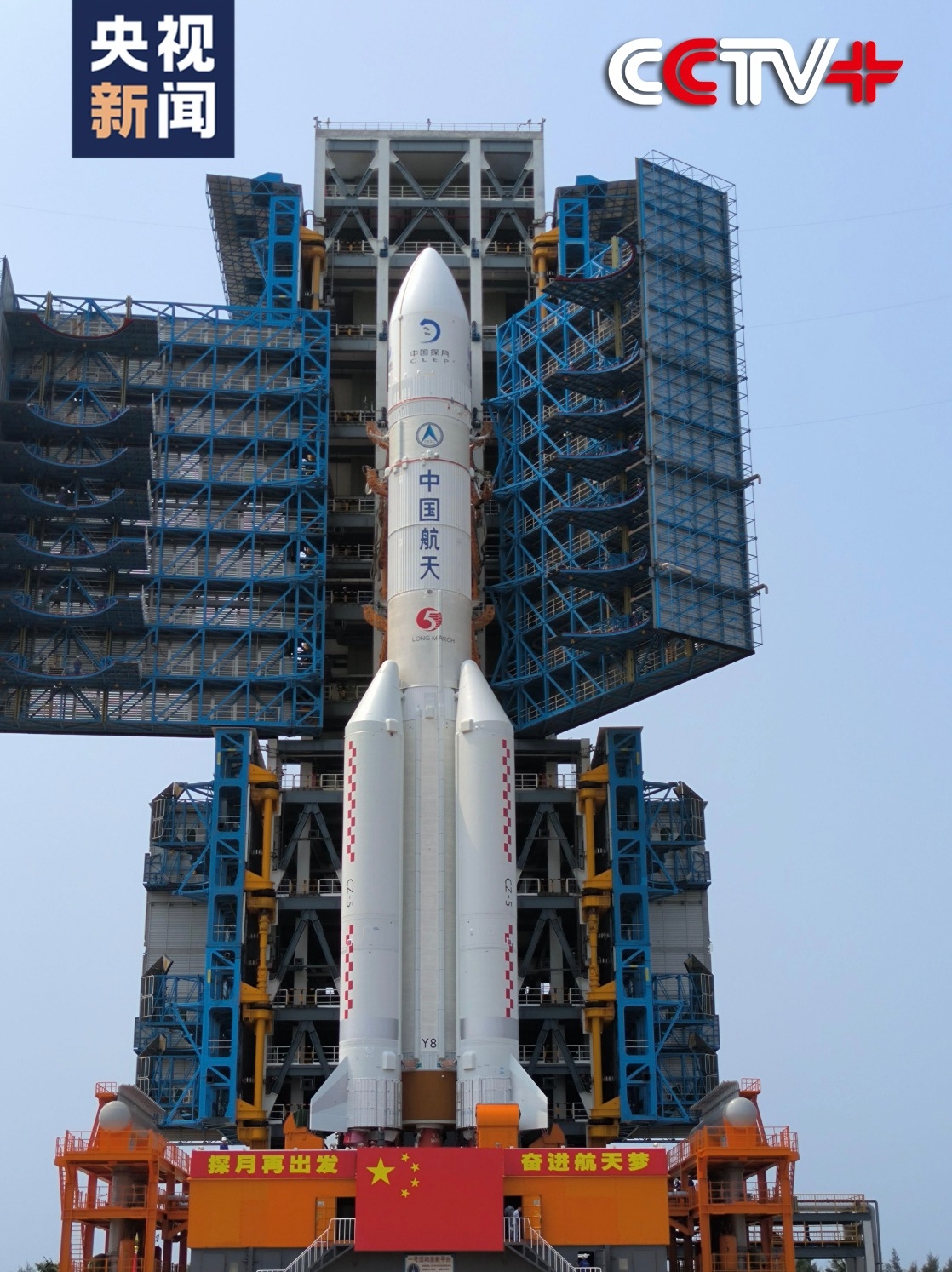
Image credit: CCTV
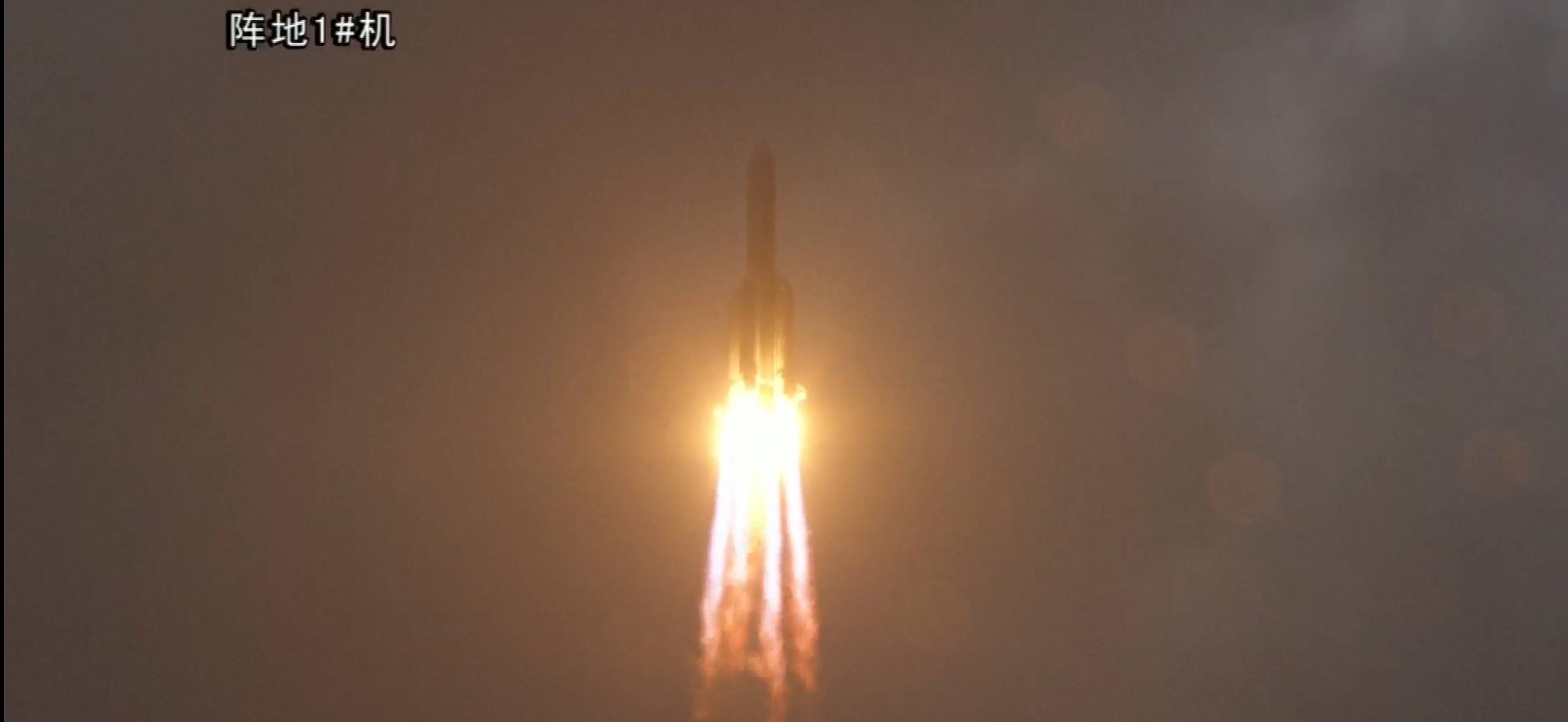
Today’s liftoff of China’s Chang’e-6 mission to the Moon is a signature statement for a much larger undertaking.
If successful, China’s Change’-6 robotic exploration of the Moon serves as a direct link to the country’s intent to bring back to Earth samples from Mars.
Liftoff of China’s Chang’e-6 lunar lander.
Image credit: CCTV/Inside Outer Space screengrab
Moon unknowns
According to James Head, noted Moon expert at Brown University that served in shaping the Apollo program’s return of lunar science data, China’s outgoing robotic craft can help unravel a number of Moon unknowns.
“We see many fundamental differences between the lunar nearside and far side, but don’t really understand how they came about, or their ages. Chang’e-6 will return the first samples from the lunar far side, the ‘Luna Incognita’ of our nearest planetary neighbor, and the samples are sure to be a ‘gold-mine’ for bringing us to a new understanding of the global Moon,” Head told Inside Outer Space.
Image credit: CNSA/China ‘N Asia Spaceflight
According to China space watchers, the Chang’e-6 lunar lander appears to be outfitted with a mini-rover. While not officially confirmed as yet by the China National Space Agency (CNSA), one X posting from China ‘N Asia Spaceflight notes: “There’s surprisingly a rover carried on Chang’e-6. The only clue I found is that the Italian instrument is called “INstrument for landing-Roving laser Retroreflector Investigations.”

Image credit: CCTV Inside Outer Space screengrab
Image credit: Xingguo Zeng, et al.
Obvious implications
But while China’s Chang’e-6 is designed to unravel mysteries at the Moon, a bigger agenda is being blueprinted.
“One of the obvious implications of the Chang’e-6 mission scenario — as with China’s Chang’-5 lunar sample return mission — is that every step of the mission, the launch, lunar orbit, detaching and landing, sampling, ascent and rendezvous, transfer of sample, leaving lunar orbit, reentry to Earth atmosphere, and parachute landing, are the same critical operational steps that Chinese Taikonauts will make in the human exploration of the Moon,” Head said. “And you can be sure that Chinese engineers and mission planners are studying these steps carefully.”
Head also noted that, in addition, “these steps duplicate a large number of key operational steps in China’s Mars Sample Return Mission, Tianwen-3, scheduled to launch around 2030.”

Image credit: CCTV/Inside Outer Space screengrab
Fellow lunatics
Following the liftoff, Head remarked: “Congratulations to CNSA and our Chinese colleagues on the successful launch this morning of the Chang’e-6 lunar far side sample return mission to the Apollo basin in the South Pole-Aitken Basin. The Chang’e-6 spacecraft is on its way to the Moon with solar panels fully deployed.”
Joining Head in spotlighting the just-underway mission is Clive Neal, a lunar expert at the University of Notre Dame. “Congratulations our fellow lunatics in China for a successful launch of Chang’e 6 and all the best for a nominal sample return mission,” he said. “To the Moon!”
Go to this informative video at:
https://www.facebook.com/NewsContent.CCTVPLUS/videos/1012828537074424
Image credit: CCTV
China’s thirst and thrust to explore the Moon is ready for liftoff May 3.
The Chang’e-6 lunar probe is to depart the Wenchang Spacecraft Launch Site in Hainan Province. A recent trial run of the takeoff was carried out that also involved the Beijing Aerospace Control Center, the Xi’an Satellite Control Center, and the Yuanwang space-tracking ship, according to China Global Television Network (CGTN).
Image credit: CCTV/Inside Outer Space screengrab
Engineers have designed 10 trajectories for the two 50-minute windows, each on Friday and Saturday, to ensure the probe’s arrival in the Moon.
Once launched, reportedly around 5:30 a.m. Eastern Time on Friday, May 3, Chang’e-6 is to be sent to an Earth-Moon transfer orbit by a Long March-5 Y8 carrier rocket.
Image credit: Xingguo Zeng, et al.
Far side science
This will be the second time for a Long March-5 series booster to carry out the launch mission of China’s lunar exploration program, CGTN notes.
The multi-faceted 8.2 metric ton Chang’e-6 spacecraft is designed to collect samples from the Moon’s far side, then deliver those collectibles to Earth.
For more information on this mission, go to my Space.com story – “China to launch sample-return mission to the moon’s far side on May 3” – at:
https://www.space.com/china-preparing-launch-change-6-moon-sample-return-mission
Image credit: CNSA

Mars beckons. Human explorers can appraise the complex nature of the Red Planet – but taking great care in doing so is advised.
Image credit: NASA/Pat Rawlings
In the on-going quest to unravel whether or not Mars is an extraterrestrial address for evidence of life, a handle-me-with-care credo needs to be applied to the Red Planet.
Indeed, human exploration of that distant world poses risks to gathering possible evidence of life on Mars. Here on Earth, comparable sites of scientific interest have suffered significant damage.
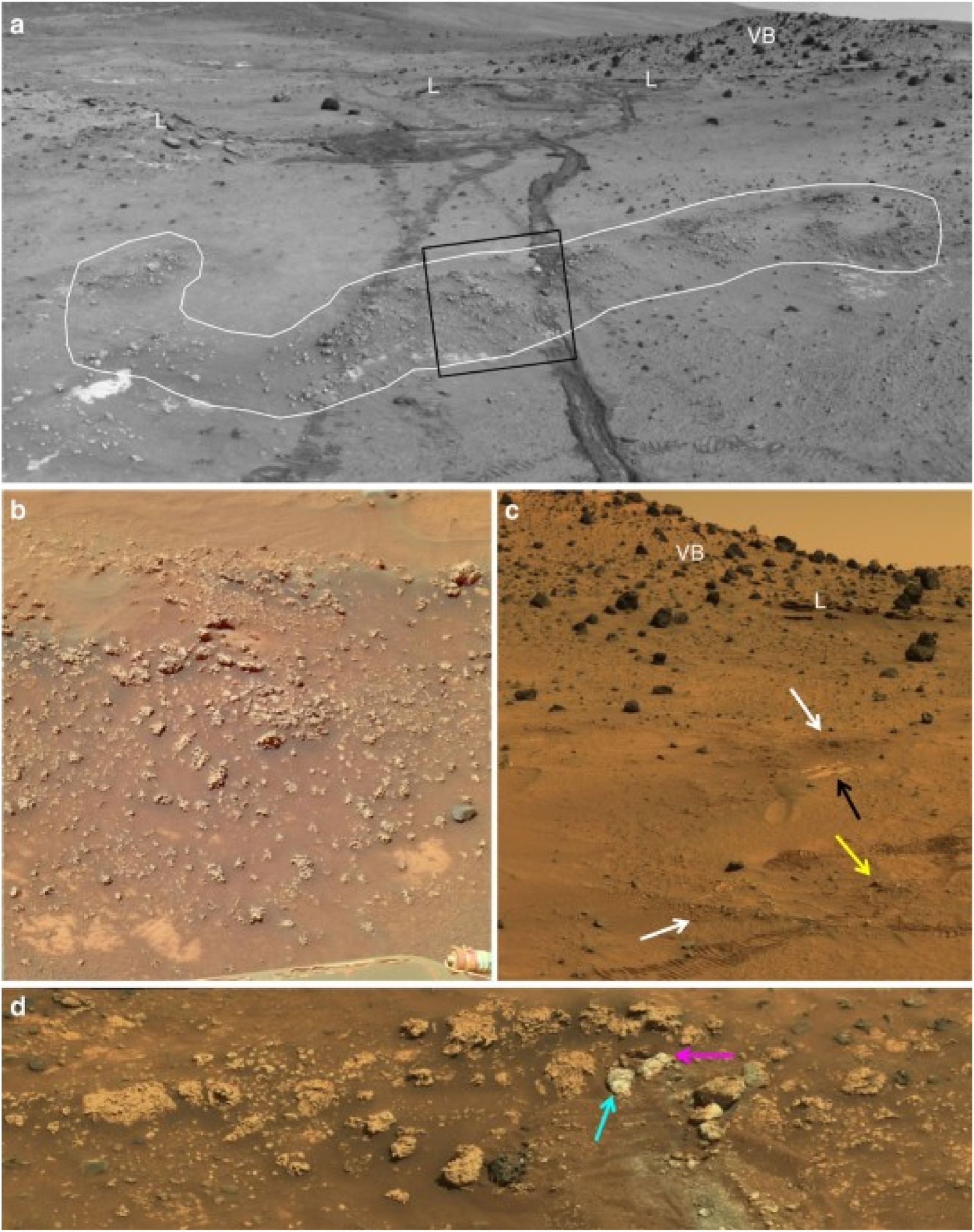
“We risk the same for Mars without legal or normative frameworks to protect such sites,” suggests a new research paper that calls for “geoconservation” principles applied to space – a term dubbed as “exogeoconservation.”
Opaline silica found at Home Plate by NASA’s Spirit Rover.
Image credit: Ruff/Farmer, 2016. Reproduced under Creative Commons.
Nascent field
At present, exogeoconservation is a nascent field, one that is unorganized and practically ineffective. Furthermore, there is urgency to develop international agreements and accepted norms on exogeoconservation in the study of Mars given the growth of government missions to Mars, including robotic sample gathering, and as private missions to that enigmatic planet begin.
Toss in future human excursions to Mars, projected colonization of the planet, and chatter regarding terraforming that globe, transforming it to Earth-like conditions.
This budding new phase in Mars exploration brings with it potentially devastating impacts to palaeoenvironments and geology on Mars. Current policies and laws guiding human activity in space, including Mars, are extremely limited in terms of conservation.

Human explorers on Mars will enlist a variety of tools to reveal the secrets of the Red Planet.
Image credit: NASA
Geoheritage value
The research paper “Exogeoconservation of Mars” and a set of what next to do recommendations are authored by Clare Fletcher of the Australian Center for Astrobiology in Sydney, along with center colleagues Carol Oliver and Martin Van Kranendonk who is also with the School of Earth and Planetary Science at Curtin University in Perth, Australia.
The thrust of the paper, they comment, is to ensure that locales of geological significance on Mars do not suffer the same damage as many sites on Earth have faced. Sites on the Red Planet can be practically conserved while still allowing science and exploration to continue.
“Geoconservation allows humanity to protect Earth’s story and geological history,” the researchers observe, “so that present and future generations can experience Earth’s aesthetic beauty, conduct scientific research, connect with various cultures, adequately protect, and ensure the functioning of Earth’s biology and ecosystems, and learn about the history of our planet.”

Damage at the Pilbara Early Life Sites. Left hand side shows before images, right hand side shows after images in A-C. D shows two examples of damage noted at the oldest (3.48Gya) site.
Image credit: Martin Van Kranendonk, Clare Fletcher.
Geoconservation, the research team points out, “does not preclude continued human activities in an area, but seeks to ensure a balance between human activities and maintaining the geoheritage value of a site.”
Impactful activities
In terms of Mars, understanding the planet’s geological, climatic, and potential astrobiological history, the research group argues, “raises questions regarding the protection of key geoheritage sites that provide insight into understanding Mars’ history and the possibility of life elsewhere in the solar system.”
Existing, and yet-to-be-defined key sites on Mars that are of universal geoheritage value, the researchers advise, will require “urgent protection” given that the nature of Mars exploration is evolving to become more sample-oriented – such as those now being collected by NASA’s Perseverance rover — leading to “increasingly impactful activities” due to human sojourns to the Red Planet.

Artist’s illustration of NASA’s Perseverance rover on Mars.
Image credit: NASA/JPL-Caltech
Geovandalism
Spotlighted in the paper are two case studies here on Earth involving the Komati River Gorge and the Pilbara Early Life Sites. They exemplify significant damage to geological sites of outstanding universal geoheritage value. “Both sites provide insight into Earth’s geological evolution and are of astrobiological significance, meaning that they are analogous to sites of astrobiological and palaeoenvironmental importance on Mars,” Fletcher and colleagues explain.
That said, the Komati River Gorge suffered from “geovandalism” while the Pilbara Early Life Sites underwent extensive sampling soon after its discovery. It no longer contains any evidence of ancient life, and the site was deemed not worth conserving.

Concept art depicts a Mars menagerie of machines that would team to transport to Earth samples of rocks, soil, and atmosphere being collected from the Martian surface by NASA’s Mars Perseverance rover.
Image credit: NASA/JPL-Caltech
Special regions
Already identified on Mars by expert teams are “special regions,” places where terrestrial organisms on the Red Planet might replicate.
“Conserving sites of scientific value is incredibly important, keeping in mind that conservation does not mean ‘ringfencing’ sites, but rather applying enough protection to allow continued study and ensure current and future researchers can understand a site and learn of the scientific value(s) contained at a site,” Fletcher told Inside Outer Space.
“There is no difference in exogeoconservation priority between scientific sites and special regions,” Fletcher continued, “but they require different protections, and therefore different studies to be conducted.”

Signing of Outer Space Treaty.
Image credit: United Nations
On the same page?
Having the entire global space community on the same page when it comes to exogeoconservation is vital, Fletcher says, “as any one actor has the ability to forever change a site.”
This applies not only to different nation-states, but also to private organizations, consortiums, etc.
“This is where traditional legal frameworks become tricky, too, particularly as United Nations treaty ratification has decreased for every subsequent space-related treaty, and we now see the introduction of entirely new legal frameworks such as the Artemis Accords,” Fletcher points out.
NASA, in coordination with the U.S. Department of State, established the Artemis Accords in 2020. They were spurred by countries and private companies performing missions and operations around the Moon, so a common set of principles to govern the civil exploration and use of outer space was deemed necessary.

Ceremony with NASA Administrator Bill Nelson and Indian Ambassador Taranjit Sandhu, as India signs the Artemis Accords. U.S. Department of State, Deputy Assistant Secretary for India, Nancy Jackson, left, looks on.
Image credit: NASA/Bill Ingalls
Precautionary approach
As for Mars, “understanding what norms can be created and co-opted by the global space community provides an avenue to affect change without issues associated with changing legal frameworks and attaining signatures and/or ratification of such frameworks,” Fletcher adds.
Fletcher noted that follow-on work is centered on more practical measures for exogeoconservation, such as what studies need to be undertaken to determine what scientific sites get conserved – and in what way.

The huge canyon that is Valles Marineris is arguably Mars’ most dramatic landscape and offers a scientific bonanza for future expeditionary crews.
Image credit: ESA/DLR/FU Berlin (G. Neukum), CC BY-SA 3.0 IGO
“A precautionary approach, international cooperation, in both legal regimes and norms, interdisciplinary work, and understanding the mistakes and successes that have occurred on Earth,” the research paper concludes, “will ensure that exogeoconservation on Mars protects important sites without compromising continued exploration and scientific studies.”
To gain access to the research paper – “Exogeoconservation of Mars” appearing in Space Policy – go to:
https://www.sciencedirect.com/science/article/pii/S0265964624000183

Image credit: CCTV/Inside Outer Space screengrab
China’s Shenzhou-17 threesome returned to Earth today, parachuting safely into the Dongfeng landing site in north China’s Inner Mongolia Autonomous Region.
Shenzhou-17 crew members, Tang Hongbo, Tang Shengjie and Jiang Xinlin, rocketed into Earth orbit last October, living and working aboard China’s space station for nearly a half-year.

Shenzhou 17 crew.
Image credit: CCTV/Inside Outer Space screengrab
A well-rehearsed armada of search and rescue teams made use of aircraft, and related hardware to quickly handle the Shenzhou-17 landing.
In-orbit handover

Image credit: CCTV/Inside Outer Space screengrab
Last week, China launched the Shenzhou-18 piloted spacecraft, sending three more astronauts — Ye Guangfu, Li Cong and Li Guangsu — to the country’s space station for another six-month mission. That trio entered the station and met with the Shenzhou-17 crew on Friday for an in-orbit crew handover within the station’s Tianhe core module.

China Shenzhou-17 crew member engaged in EEG testing.
Image credit: CCTV/Inside Outer Space screengrab
According to China’s CGTN, the just-landed Shenzhou-17 crew carried out 84 in-orbit experiments and tests for space application, producing more than 200 samples in multiple fields such as space life science and biotechnology, space medicine, and space material science.
For videos featuring the Shenzhou-17 crew landing, go to:
https://youtu.be/Jss009M_5xA?si=JSXsLIcGAbcqj5hs
https://youtu.be/jlwKTYYLbm4?si=XF0Smjih5SiXO1D9


China’s Chang’e-6 lunar mission atop a Long March 5 carrier rocket at its departure site in Wenchang, Hainan province.
Image credit: CCTV/Inside Outer Space screengrab
Launch preparations are quickening for China’s next spacecraft sendoff to the Moon – the Chang’e-6 mission.
The spacecraft now sits atop a Long March 5 carrier rocket at its departure site in Wenchang, Hainan province.
Chang’e-6 is reportedly to launch at 3:50 PM, May 3rd Beijing Time (3:50 AM, May 3rd, Eastern Time).
The 8.2 metric ton Chang’e-6 is targeted for a touchdown in the South Pole-Aitken Basin on the lunar far side. The overall mission spacecraft consists of four components: an orbiter, a lander, an ascender and a reentry module.
Image credit: CNSA
First-time try
If all goes as planned for this first-time attempt at gathering dust and rocks from the Moon’s far side, then placed on the ascender for transport from the surface into lunar orbit, followed by transfer into a reentry module that hauls the collectibles to Earth.
In the past, both the former Soviet Union and the United States have brought lunar samples to Earth, but none has ever obtained specimens from the far side of the Moon.
China scored the first soft landing on the far side of the Moon with its Chang’e-4 lander/rover mission back in early January 2019.
Between Chang’e-6 and the earlier Chang’e-5 lunar sample mission, the most significant difference is that the soon-to-launch mooncraft is conducting sample-return from the far side of the Moon.

Photo taking during Chang’e-5 moon surface sampling session in December 2020.
Credit: CNSA/China Central Television (CCTV)
In mid-December 2020, the Chang’e-5 mission made use of similar spacecraft components to return near-side specimens from Mons Rümker, in the region of Oceanus Procellarum.

Image credit: CCTV/Inside Outer Space screengrab
Design and control
“The Chang’e-6 aims to achieve breakthroughs in the design and control technology of the Moon’s retrograde orbit, intelligent sampling, take-off and ascent technologies, and automatic sample-return on the far side of the Moon,” Ge Ping, deputy director of the Center of Lunar Exploration and Space Engineering for the China National Space Administration told China Central Television (CCTV).
“At present, the Long March-5 carrier rocket and the Chang’e-6 probe are in good condition,” Ge added. “All preparations for the launch are progressing in an orderly manner, following normal working procedures.”
Liao Guorui, an engineer at the Wenchang Spacecraft Launch Site, told CCTV:
“At present, the launch site has ensured the normal testing of Chang’e-6 and the Long March-5 Y8 carrier rocket. Our Hainan launch site features high temperatures, high humidity, and high salt mist. We have made corresponding preparations for the environmental conditions, and we have also prepared some typhoon prevention plans to adapt to the weather in Hainan.”

Image credit: CCTV/Inside Outer Space screengrab
Narrow launch window
Details of the launch window were spotlighted by Zhu Haiyang, a staff member with the China Academy of Launch Vehicle Technology.
“The signature feature of the Chang’e-6 mission is that it has extra high requirements for the launch window, mainly due to the lunar orbit. In order to achieve an optimal energy, it has a high requirement for the launch time of the rocket and the time of delivery to the Lunar Transfer Orbit [LTO], so the launch window is relatively narrow,” Zhu told CCTV. “We have carried out some verifications for the ‘narrow window and multi-orbit’ technology.”

Chang’e-5 return capsule holding lunar specimens.
Image credit: National Astronomical Observatories, CAS
Transfer point
For this Chang’e-6 launch, 10 lunar orbits for the rocket have been designed. Chang’e-6 probe needs to enter the LTO with a perigee of 200 kilometers and an apogee of 410,000 kilometers, and the requirement for orbit entry accuracy is also extremely high.
“As for the rocket, we mainly need to send it to the LTO transfer point,” Zhu added. “In terms of process coordination before launching at the launch site, coordination and drills were also carried out around the narrow window multi-orbit technology. With higher accuracy in orbit insertion, less propellant will be consumed by Chang’e-6 for its attitude adjustment, including orientation, orbit elevation, and orbit change.”
Scoop and drill
According to James Head, noted lunar scientist at Brown University, the Chang’e-6 mission is very similar to the Chang’e-5 spacecraft and its operational strategy, acquiring scoop and drill samples, perhaps up to 4.4 pounds (2 kilograms.)
Image credit: CCTV/Inside Outer Space screengrab
The recently launched Queqiao-2 far side communications satellite is in lunar orbit, tested, and is fully functional to support, not only the Chang’e-6 mission, but also follow-on Chang’e-7 and Chang’e-8 robotic expeditions, in support of placing an International Lunar Research Station (ILRS) on the Moon, Head said.
Near side–far side dichotomies
According to Xingguo Zeng, a key member at the Laboratory of Lunar and Deep Space Exploration at the National Astronomical Observatories, Chang’e-6 is designed to address questions about the multiple lunar near side–far side dichotomies and to provide new insights into both the early impact history of the Solar System and the geological evolution of the Moon.
Image credit: Xingguo Zeng, et al.
To that end, the Chang’e-6 landing zone has been selected to lie within the lunar far side South Pole–Aitken (SPA) basin in the southern part of the Apollo basin, Xingguo observed, a site that provides access to a diversity of SPA material.
Go to this informative video regarding the upcoming liftoff of Chang’e-6 at:

Image credit: Barbara David

Image credit: Barbara David

Image credit: Barbara David
Trying to shape an ambitious and steady agenda for space in Europe requires not only diplomatic aplomb but also the need for firm engineering and scientific footing. Indeed, those attributes are must haves in working with the 22 member states of the European Space Agency (ESA).

An ESA Council Ministerial Meeting is designed to shape Europe’s overall space action-plan between member states.
(Image credit: ESA – S. Corvaja)
Josef Aschbacher is ESA’s Director General, taking on that role in March 2021. He is responsible for evolving Europe’s space infrastructure, from launchers and spacecraft performing Earth observation, navigation, and telecommunication duties to robotic exploration, as well as ESA astronauts dispatched to the International Space Station.
In an exclusive interview, I discussed with Aschbacher what’s ahead for ESA during the recent Space Foundation’s 39th Space Symposium.
Go to my new Space.com story – “Mars exploration, new rockets and more: Interview with ESA chief Josef Aschbacher” – at: https://www.space.com/esa-josef-aschbacher-interview-exomars-ariane-6

