Archive for the ‘Space Book Reviews’ Category
 Author:
  November 7th, 2018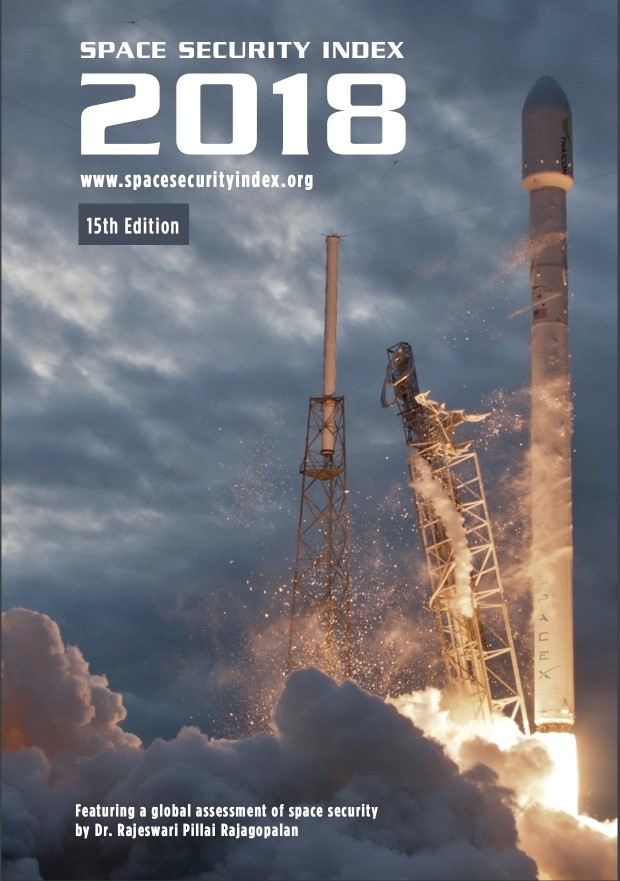
Credit: Project Ploughshares
The Space Security Index 2018 has been published by the Canadian peace-and-security think tank, Project Ploughshares.
Among key findings is noting the deteriorating security conditions in outer space in the absence of renewed governance efforts.
The just-issued report underscores:
Plans for mega-constellations of satellites that outpace sustainability rules;
A drive toward next-generation space exploration and resource extraction by private actors;
The emergence of dual-use technologies such as debris removal, satellite servicing, and maneuvering capabilities;
Continuing development and demonstration of anti-satellite capabilities;
U.S. plans for space-based ballistic missile interceptors that could mark the first deployment of space-based weapons.
Voluntary guidelines
Space Security Index 2018 also underscores the work of the UN Committee on the Peaceful Uses of Outer Space (COPUOS) that reached consensus on 21 voluntary guidelines to enhance the long-term sustainability of space activities.
In a press statement, Project Ploughshares project manager Jessica West explains that the growing geostrategic tension and mistrust discourage the development of constraints on the use of force in outer space. This lack of regulation has serious repercussions.
Space access
West asserts that space security is global security. Every facet of well-being – military security, humanitarian security, socioeconomic security, and environmental security – depends on the ability to access and use services from outer space. Dangerous activities could pollute the outer-space environment beyond repair through the production of space debris, limiting or ending such services.
Space Security Index 2018 was produced by civil society and academic organizations under the leadership of Canadian nonprofit organization Project Ploughshares. Partners include The Simons Foundation Canada; the Institute of Air and Space Law at McGill University in Montreal, Quebec; the Space Policy Institute at The George Washington University in Washington, DC; the Research Unit on Military Law and Ethics at the University of Adelaide Law School in Australia; and the School of Law at Xi’an Jiaotong University in China.
For a copy of the report, go to:
http://spacesecurityindex.org/wp-content/uploads/2018/06/C014894_space.security.2018-hires.pdf
 Posted in
Credit: CSPS
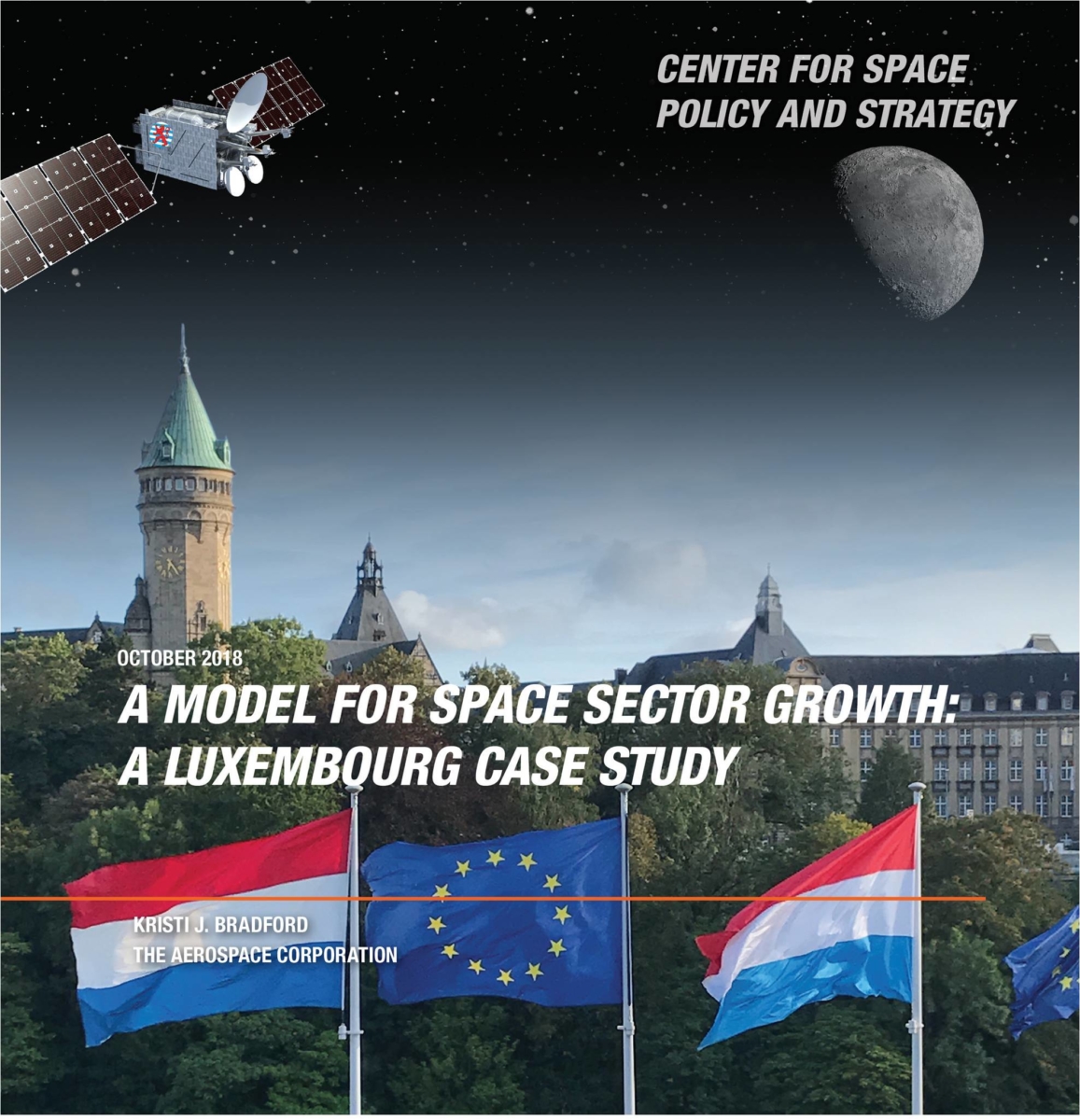
Luxembourg has demonstrated a successful five-point approach toward a unique space policy and strategy for space sector growth. How can the U.S. leverage the Luxembourg model to support other countries around the globe?
A new report from The Aerospace Corporation’s Center for Space Policy and Strategy (CSPS) has concluded that Luxembourg has taken a unique approach to space sector development, opting for a commercial-centric strategy rather than the traditional government-centric strategy.
Five points
Examination of Luxembourg’s approach to space reveals five keys points that can be extracted from it: commercial focus, risk tolerant, cross-cutting, international, and visible. These five points can be used as a model that others can use as guidance in starting or growing their space sectors.
The just-issued paper is authored by Kristi J. Bradford, a senior member of the technical staff in The Aerospace Corporation’s Space Architecture Department.
“With the rise of nations that have ambitions to diversify their national economies or grow their space capabilities, the U.S. public and private sectors have ample opportunity to provide support to these countries, which could open doors to many opportunities for the U.S. The Luxembourg five point model offers a potential framework for supporting foreign nations in their space capability development,” Bradford concludes.
The October 2018 paper — A Model for Space Sector Growth: A Luxembourg Case Study — is available at: https://aerospace.org/sites/default/files/2018-10/Bradford_Luxembourg_10242018.pdf

National Geographic’s Space Atlas combines updated maps, lavish photographs, and elegant illustrations to chart the solar system, the universe, and beyond. For space enthusiasts, science lovers, and star gazers, here is the newly revised edition of National Geographic’s enduring guide to space, with a new introduction by American hero Buzz Aldrin.
In this guided tour of our planetary neighborhood, the Milky Way and other galaxies, and beyond, detailed maps and fascinating imagery from recent space missions partner with clear, authoritative scientific information.
Starting with the Sun and moving outward into space, acclaimed science writer and physicist James Trefil illuminates each planet, the most important moons, significant asteroids, and other objects in our solar system. Looking beyond, he explains what we know about the Milky Way and other galaxies–and how we know it, with clear explanations of the basics of astrophysics, including dark matter and gravitational waves.
For this new edition, and to celebrate the 50th anniversary of his moonwalk, astronaut and American hero Buzz Aldrin offers a new special section on Earth’s Moon and its essential role in space exploration past and future.
Note: Truth in advertising – I helped on this informative book, working with Buzz Aldrin on his detailing of the Apollo 11 mission and its aftermath – LD
For more information, go to:
https://shop.nationalgeographic.com/collections/books-space/products/space-atlas-second-edition
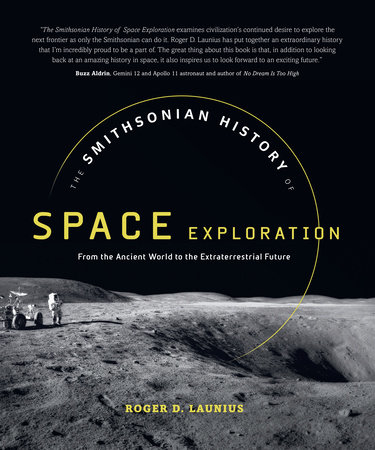
The Smithsonian History of Space Exploration – From the Ancient World to the Extraterrestrial Future by Roger Launius, Smithsonian Books, Washington, D.C., October 2018; $40.00, 400 pages.
Space historian Roger D. Launius has written a marvelous volume, an inclusive illustrated guide to the history of U.S. and international space exploration, both crewed missions and robotic encounters.
The book is divided into 10 sections: Laying the Foundations for Space Exploration; World War II Paves the Way for Space Exploration; Making Space Exploration Real; The Space Age Dawns; The Race to the Moon; New Nations, New Missions; Space Planes and Orbital Stations; The Lure of the Red Planet; Beyond Mars; and Transterrestrial Expectations.
You can tell by the titles of those sections how rich and valuable this book is, both in subject matter and quality of research and writing. As Launius notes in the introduction: “The story is far from complete; indeed, it has only just begun.”
The book spotlights how much progress has made given the foundation of work by the ancients of Greece, Rome, and China, along with the great astronomical revelations of Renaissance thinkers such as Copernicus, Galileo, and Kepler. Mix in the onslaught of technological and mechanical breakthroughs and you move from gazing upwards and wondering…to men, women and machines traveling from Earth to encounter the unknown, first hand or by robotic sensor.
Stunning photographs and artwork are used throughout the book from the past, present-day, and artistic glimpses into the future that are yet to unfold. In fact, I enjoyed very much the build-up to the book’s closing section on the future. The reader will find solid accounts of space activities now in play, from next generation space access, the future of orbital space planes, to lunar research stations and pursuing interstellar space exploration.
While setting the stage for 21st century and beyond space exploration excitement, Launius raises in the last pages five challenges that need addressing before you’ll be sending postcards from the edge of space. I won’t tell you what they are, but they add vibrancy to this must-read book.
For more information on this book, go to:

How to Live in Space – Everything You Need to Know for the Not-So-Distant Future, by Colin Stuart, Smithsonian Books, September 2018; $17.95, 192 pages.
Stuart has written a witty and insightful book that spotlights life on the outside – of our own planet. This is a fun read, particularly if you’re in line, ticket in hand, for space tourism companies to make your dream vacation come true.
This book is a breezy encounter with the many sides of space, providing some needed information on training for space travel, living in space when you get there, and what the future holds. Dozens of well-illustrated short chapters make this book a pleasurable read, no matter what section you land on.
Stuart is a fellow of the Royal Astronomical Society and takes the reader on a voyage of possibilities, from checking in to space hotels, building a base on the Moon, to escalating yourself on a space elevator or breakthroughs necessary to attain interstellar flight. There’s even a slice of time travel ticking away for you to read. I skipped over the exercise section.
In this book, you’ll be encountering what the future of human space exploration offers. Count me in!
Still, Stuart does caution: “There’s no way it is going to be perfect. Progress is always a meandering path rather than a straight line.” That said, space is up and those that have the passion to break boundaries will find this volume a solid, delightful, fact-filled and astute guide to the possible.
Preparing for personal space travel doesn’t come easy. But Stuart has culled it all down to astronaut selection criteria, underwater training, as well as dealing with bouts of space sickness. Again, all nicely written tutorials for the taking.
How to Live in Space is an instructive, illustrated guide to life beyond our own planet that covers everything from training for and living in space to the future of space travel and tourism. For those on the go, securely helmeted and ready for liftoff, this book is a pre-launch requirement.
For more information on this book, go to:

Credit: CSPS
The Department of Commerce has been charged with the complex mission of establishing a new U.S. space traffic management (STM) approach for commercial space activities. What existing practices and standards could help fulfill that mission and maintain U.S. leadership in space?
On June 18, 2018, the White House released Space Policy Directive-3, National Space Traffic Management Policy. It states that to maintain leadership in space the United States must develop a new approach to space traffic management (STM).

U.S. President Trump signs Space Policy Directive-3.
Credit: NASA/Bill Ingalls
Lead civil agency
This new approach includes designating the Department of Commerce as the lead civil agency responsible for creating a new approach to STM, including the development of STM standards and best practices.
This paper by The Aerospace Corporation’s Center for Space Policy and Strategy provides a baseline by describing current standards, best practices, guidelines, and international agreements and treaties.
Scope of the task
The authors conclude that, hopefully, this brief paper reveals significant features of the landscape into which Commerce is involved, and helps the Department of Commerce, and the Office of Space Commerce understand the scope of its task, prioritize its efforts, and contribute to the overall success of its STM mission.
For a copy of this report, go to:

The Penguin Book of Outer Space Exploration, edited and introduction by John Logsdon, foreword by Bill Nye, Penguin Classics, September 2018; Paperback $18.00: 400 pages.
John Logsdon is a noted space historian and this book reflects his preeminent status as a first-rate scholar. This volume is a treasure-trove of material, just in time for the 60th anniversary of NASA in October. But more importantly its collective pages are an avenue to reflection regarding the true trajectory today of pioneering the space frontier.
The book reminds the reader about the birthing of the Space Age, the Apollo reach for the Moon and a wealth of related issues that permeated those halcyon years of space progress.
In four chapters, the reader can dive into details of getting ready for space exploration; first steps that led to Neil Armstrong’s giant leap; as well as steps toward an uncertain future.
As Logsdon explains, there are many rationales for going into space, “ranging from scientific discovery, international competition, national security, national power, and national pride, to commercial profit and societal benefits.” All of these rationales the reader will find within the documents presented in the book. While the U.S. taking a visionary lead role in the exploration of space is front and center, “whether that vision persists in the twenty-first century is yet to be seen; I hope it does,” he states.
From Sputnik to SpaceX and the space directive espoused by President Donald Trump – it’s all here in this highly valuable compilation of documents.
Science Guy, Bill Nye, adds to this book through a nicely written foreword. In part, he underscores the purpose of the book – to show the future through study and understanding of space history…”a history that has to date unfolded in a few small steps,” he concludes.
For more information on this volume, go to:

Space Exploration: Past, Present, Future by Carolyn Collins Petersen, Amberley Publishing/UK, December 2017; Hardcover: 360 pages, List price is $26.95.
Carolyn Collins Petersen has written a superb book, taking the reader on a step by step journey into deep space, reminding us of the historical roots of early visionary pioneers.
As the author notes in the book’s introduction: “My aim here is to give a taste of this grand, glorious enterprise we call space exploration. This book is just the start. Think of it as an executive summary, a taster to whet your appetite.”
In the following 10 chapters, the author covers in well-researched detail — from kites and balloon flights in ancient China, early thrusts of moving into the “space age,” then human steps into space and the global uprising of multiple nations engaging in outer space activities. She doesn’t skimp on the evolving commercial use of space as well as space mining, space law, robotic exploration, and the high-octane competition between old space versus new space.
I particularly enjoyed the chapter “Next Steps: Where Do we Go from Here?” That’s a complex and perplexing question, one that the author concludes it’s up to the interested countries of the world to answer. Still, given the heritage of space exploration carried out by multiple nations, this book offers some tantalizing glimpses of what could be.
Carolyn Collins Petersen is an accomplished writer. Take for example her well-received book Astronomy 101: From the Sun and Moon to Wormholes and Warp Drive, Key Theories, Discoveries, and Facts about the Universe. She also co-authored Hubble Vision and Visions of the Cosmos and also served as co-editor on The New Solar System, published jointly by Sky Publishing Corporation and Cambridge University Press.
This latest work, Space Exploration: Past, Present, Future is also a grand read and, indeed underscores the history-making and magnificent venture we call space exploration.
For more information on this volume, go to:
https://www.lochnessproductions.com/books/books.html
It has links to all the U.S. sellers for both retail and wholesale to buy at a discount for resale.
Also, go to:
https://www.lochnessproductions.com/books/books_partners.html
This is a resale partners link that lists all the online and other sources for books.

Credit: NASA
Over a span of 20 years, the vision of an international orbiting outpost—one with continuous human presence, measuring the size of a football field, and orbiting the Earth every 90 minutes—became a reality.
The International Space Station (ISS) has been labeled an engineering miracle – a facility that also expresses vision, leadership, perseverance, political support, and funding.
The ISS enables world-class scientific research, forges pathfinders for future exploration travel, and unites 15 international partners working together with common goals to keep the ISS viable.
The ISS is part of NASA’s ongoing, deliberate, step-by-step approach for expanding the boundaries associated with human spaceflight exploration that will return humans to the Moon and eventually to inhabiting Mars.
A new NASA book – available for free as an e-book – is titled: The International Space Station: Operating an Outpost in the New Frontier. Robert Dempsey is the Executive Editor of this informative book.

International Space Station.
Credit: NASA
Real time, continuous
In the book’s preface, Dempsey explains: “This is an unusual book. Half the chapters are devoted to operations, meaning what we do in real time during a mission. For the International Space Station, real time is continuous 365 days a year, 24 hours a day. These chapters will describe different operational aspects of “flight control.” However to get the full context, the remaining chapters will provide technical descriptions of the primary space station systems. Although not strictly required to understand the operations, they are intended to provide more information for proper context.
Chapters include: Living and Working in Space and on the Ground; Debris Avoidance—Navigating the Occasionally Unfriendly Skies of Low-Earth Orbit; When Major Anomalies Occur; as well as Vital Visiting Vehicles—Keeping the Remote Outpost Crewed and Operating.
The 400-page book brings together the collective knowledge of the 10 space station flight directors who authored it, drawing on their combined 45,000 hours of experience at the helm of mission control. In addition to Dempsey, they are Dina Contella, David Korth, Michael Lammers, Courtenay McMillan, Emily Nelson, Royce Renfrew, Brian Smith, Scott Stover and Ed Van Cise.
This new NASA e-book is available at:
https://www.nasa.gov/sites/default/files/atoms/files/iss-operating_an_outpost-tagged.pdf
Credit: Bryan Versteeg
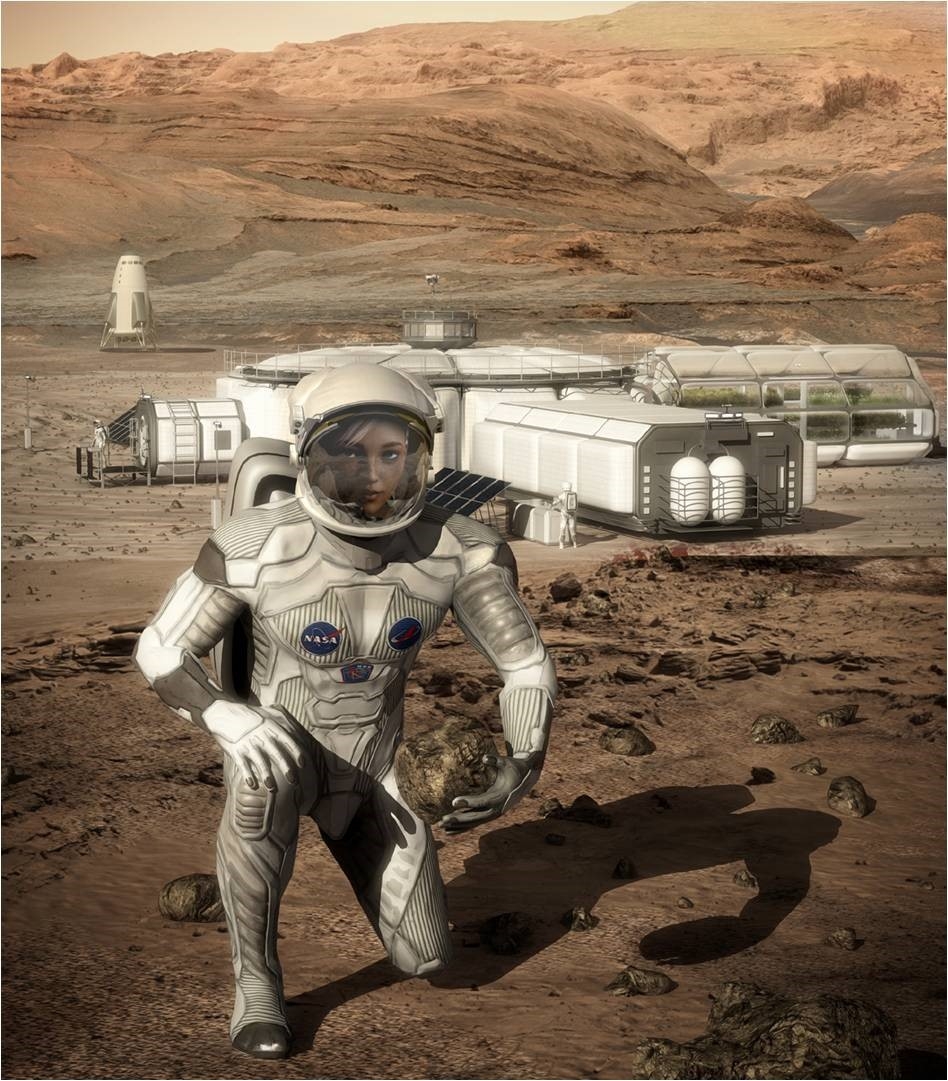
A new and excellent report has been issued by Explore Mars, Inc.
The Humans to Mars Report (H2MR) is an annual publication that presents a snapshot of current progress in mission architectures, science, domestic and international policy, human factors, and public perception regarding human missions to Mars – and highlights progress and challenges from year to year.

Credit: James Vaughan
Current facts
As explained by Chris Carberry, the group’s Chief Executive Officer and Artemis Westenberg, President, “H2MR provides stakeholders and policy makers with an invaluable resource to assist them in making decisions that are based on current facts rather than on the dated information and speculation that sometimes tends to persist in the public arena where Mars is concerned.”
While recently there has been some shift in emphasis in United States near-term space policy, by charting a return to the Moon, “the goal of human missions to Mars in the 2030s still maintains broad-based bi-partisan support, with unwavering support coming from NASA, Congress, and industry,” the report states.

Credit: Bryan Versteeg
Mars by 2033
“As always, through the publication of the Humans to Mars Report, Explore Mars is not discounting the prospect of human exploration of other destinations in the solar system. In fact, we embrace them, as long as they do not significantly delay human missions to Mars. We view Mars as a critical destination that will enable the exploration and development of space – and we firmly believe that humanity should set the goal of landing humans on the surface of Mars by 2033.”
To access this report, go to:
https://www.exploremars.org/wp-content/uploads/2016/12/H2MR_18_Web.pdf
Also, don’t forget to tune into the currently in progress Humans to Mars meeting in Washington, D.C. Go to the agenda at:

