Archive for the ‘Space Book Reviews’ Category
 Author:
  May 22nd, 2020
How best to gauge the value and use of space-based capabilities and our reliance on space, sector by sector?
A new study released by The Aerospace Corporation’s Center for Space Policy and Strategy (CSPS) delves into uses of more than 2,200 active satellites that support earthly infrastructure, economies, and national security systems.
The study explains that, with the help of space-based services, utility companies synchronize energy flows across the grid, stock market exchanges record transactions, oceanographers track endangered whales, while scientists monitor the climate and farmers increase crop yields.

Use of satellite services for agricultural applications.
Communications satellites let air traffic controllers manage planes in crowded airspace, remote-sensing satellites reveal what is happening on Earth’s surface in near real-time, and weather satellites give us a better chance of having an umbrella when we need it.
Frenzy of technological change
“In this frenzy of technological change and policy debate,” the study explains, “it is important to remember the immense value that space provides.”

Use of GPS for product shipping and delivery.
“Space-based communications, navigation, weather, and remote sensing services make our daily lives better, and contribute to saving Space-based services have become fundamental to daily life, but there’s more going on in space than you may realize,” the volume explains. “How does our modern world rely on space?”
On the horizon
As for new space-based services…there is more to come.
“Just as it was difficult to foresee the myriad uses of GPS in the late 1980s, it’s hard to imagine how this fresh flood of commercial space data will affect the economy, the military, and daily life,” the study points out.
To access this informative report — The Value of Space – go to:
 Posted in

A new freely-available anthology released by the European Astrobiology Institute (EAI) delves into probing questions about microbial life on Mars and elsewhere to all the way to the Fermi Paradox: Where are they?
The anthology, titled Strangest of All (a nod to H. G. Wells’s War of The Worlds), was edited by the author, editor and scientist Julie Novakova – an award-winning Czech author of science fiction and detective stories.
The book contains reprint science fiction stories by G. David Nordley, Geoffrey Landis, Gregory Benford, Tobias S. Buckell, Peter Watts and D. A. Xiaolin Spires, plus a bonus story by the editor.
Strangest of All is the first of major outreach projects coming from the EAI.
The anthology can be downloaded for free in several formats.
Go to:
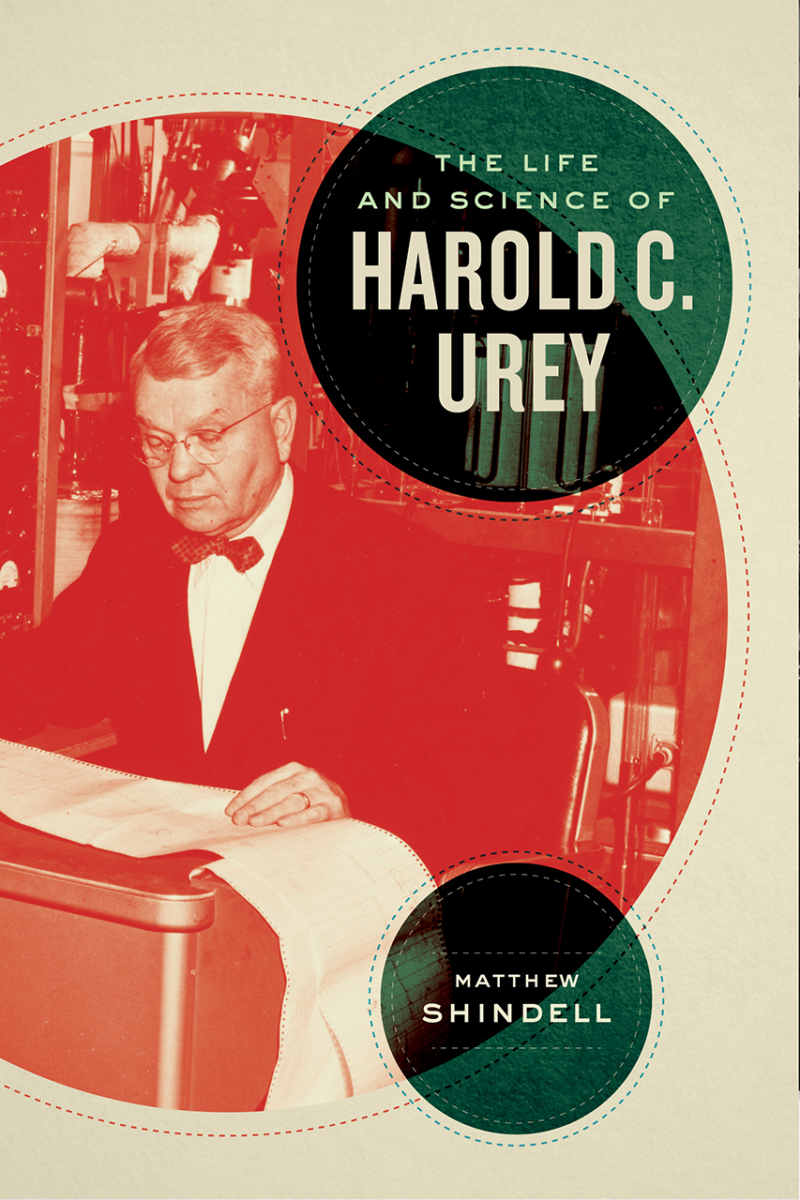
The Life and Science of Harold C. Urey by Matthew Shindell, The University of Chicago Press; December 2019; Hardback; 248 pages, $27.50.
This impressive biography is a well-researched and enjoyable read – a wonderful account of Harold Urey’s pioneering work, including his contributions in cosmochemistry and lunar science.
The author offers an intriguing look at Urey’s scientific contributions, but also insight into the scientist’s struggles with faith and tangles with political forces in America.
Within the book’s seven chapters, the author explores Urey’s maturation from farm boy to wartime chemist, followed by his Nobel Laureate status to a “Manhattan Project burnout.”
For all you space-based readers, you’ll find a marvelous account of Urey’s cosmic encounter coming to grips with the formation and evolution of the solar system. The chapter — “To Hell with the Moon!” – is a thoroughly absorbing story of the scientist’s move into planetary science and his early modeling of the Moon and solar system development.
The scientist was not a fan of NASA when it was established in 1958. Nor was he interested in planting human footprints on the Moon. “Urey’s lack of enthusiasm may have stemmed at least partially from the fact that the majority of the scientists and administrators who made up the new NASA were either atmospheric scientists, military personnel, or engineers,” Shindell writes. Still, Urey later became an important and early voice in putting forward a scientific agenda for lunar exploration.

Harold C. Urey
Credit: Energy.gov
Why the relationship with NASA turned sour, I’m not going to elaborate here, but the author offers impeccable detail and quotes a telling passage from Urey, written in 1976 that the Moon was quite a disappointment and explaining that the Moon seems to be an “incidental object of some kind with no theory for its origin that is generally accepted.”
The Life and Science of Harold C. Urey is a thumbs-up tome. The epilogue wraps up the Nobel Prize winner’s life in science, followed by a great set of notes, list of archives, oral history interviews, and bibliography.
Urey died in early January 1981.
On a personal note, decades ago, I bumped into Harold Urey while digging into a substantial cache of Ranger and Surveyor lunar documents held in the library stacks at the University of California, San Diego (UCSD) in La Jolla, California. He was a professor at large at UCSD and I treasure that moment of conversation with that grand man.
For more information on The Life and Science of Harold C. Urey, go to:
https://www.press.uchicago.edu/ucp/books/book/chicago/L/bo43987910.html

Soviet Space Graphics: Cosmic Visions from the USSR by Alexandra Sankova (in collaboration with the Moscow Design Museum), Phaidon; April 2020; Hardback; 240 pages, $39.95.
This book is a well-timed retro-fire into space history – and an absolute wonderful read.
The volume offers insight into the Soviet sociopolitical landscape, a behind-the-scenes view of how space played in the minds of space visionaries behind the Iron Curtain over the decades.

“Yuri Gagarin: Let’s Go!” illustration by S. Alimov.
Credit: The Moscow Design Museum
This is a book that offers a view of more than 250 covers and interior illustrations that depict first-time discoveries and scientific prowess, but laden with futuristic visions of where space exploration can take us.
Up front disclosure: I’m a relic from the impact of Cold War-era Russian space imagery. The space propaganda machine by the USSR was in full-throttle when I was much younger, as U.S. rockets and spacecraft seemed lost in space, missed their mark or crapped out on arrival.

Illustration by V. Viktorov depicting space dogs Belka and Strelka.
Credit: The Moscow Design Museum
Yes, America had its successes, but it was all high-drama and this book reflects the Space Race running full-steam. As this volume exemplifies, making use of the period’s hugely successful popular-science magazines, the imagery rocketed out of the Soviet Union were an essential tool for the endorsement of state ideology.
As explained in the book: “As the competition heated up, so did the response in the media. In the USSR, popular science magazines were a vital tool in the motivation and engagement of the general public, documenting in great detail and vivid color both the realities and fantasies of the state’s advancements on the West.”

Illustration by R. Avotin.
Credit: The Moscow Design Museum
This wonderful book features images from the surreal to the sublime, colored in communist sentiment. The magazine images portray the boldest of space exploration ideas – many of them alive and well even in the 21st century.
The volume is divided up into unique chapters, from Educate, Encourage, Dream to Cosmic Pioneers, Alternative Worlds and Future Visions. Lastly, there’s a very informative section on the magazines from which the book has drawn its captivating material.
Again, this is a unique and enjoyable read that deserves attention…not only for the reader to romp around in the past, but serves as a historic bookmark in pioneering the space frontier of today.
For more information on this book, go to:
https://www.phaidon.com/store/design/soviet-space-graphics-9781838660536/

Dear Neil Armstrong – Letters to the First Man from All Mankind by James R. Hansen, Purdue University Press; October 2019; Hardback; 400 pages, $34.99.
This is a wonderful book, documenting the over-whelming amount of cards and letters received by Neil Armstrong, the first human to set foot on the Moon in July 1969.
Within 7 chapters, Hansen has selectively sampled and edited the world’s outpouring of praise, but also the type of requests Armstrong received, be it for photographs or his autograph, to invites to talk to school classes with the proviso he bring some equipment. One letter asked for a pair of his old glasses, regardless of their condition, to be placed in the Famous People’s Eye Glasses Museum.
“In choosing which messages to include, I have done my best to put myself in the frame of mind of Neil Armstrong and the kind of goodwill messages that would likely have impressed him the most in July 1969 as well as today,” the author writes in the book’s preface.
There’s a thoughtful foreword by astronaut Al Worden (who died just a few days ago), noting that “without a doubt the ability to keep a cool head is a preeminent characteristic of great test pilots…Neil Armstrong certainly demonstrated that as witnessed by the way he both saved Gemini 8 and landed the lunar module on July 20, 1969.”
Hansen points out that there isn’t an exact count of the number of letters, telegrams and cards Armstrong received from all over the globe. In one chapter, the author underscores the communiqués from people living in the Soviet Union and Eastern Bloc – though most Soviets were unaware of their own Moon mission failures to plant footprints of cosmonauts on the lunar landscape, yet unabashedly praised Armstrong for the heroic accomplishment.
I personally found the chapter “Reluctantly Famous” quite revealing. “Neil hated the iconography that came to surround and define him,” Hansen writes. “He did his best to correct and deflect the epic and monumental elements that society and culture built into his legacy, which he knew greatly distorted who he actually was…”
The volume includes an appendix “Secretaries, Assistants, and Administrative Aides for Neil Armstrong, 1969-2012” and a notes section that adds clarity to that puzzling “one small step for “a” man” historic declaration from humankind’s first moonwalker.
An expert in aerospace history and the history of science and technology, Hansen has published numerous books, including the seminal First Man: The Life of Neil A. Armstrong the only authorized biography of Neil Armstrong and a book that spent three weeks as a New York Times Best Seller in 2005 and 2018 and garnered a number of major book awards.
Once again, the reader of this book will find a very satisfying, unique appreciation of not only Armstrong, but also the impact that the momentous first Moon landing had on the world community of onlookers.
For more information on this book, go to:
http://www.thepress.purdue.edu/titles/format/9781557538741
Also, take a look at this informative author interview from CBS News This Morning at:

Eight Years to the Moon – The History of the Apollo Missions by Nancy Atkinson, Page Street Publishing Company; July 2019; Hardback; 240 pages, $35.00
There was a literary landslide of books tied to the 50th anniversary of the Apollo 11 mission in 1969.
But author Nancy Atkinson has written a truly impressive, behind-the-scenes look at the epic adventure that was Project Apollo. As a space journalist, she burned up significant shoe leather talking with the men and women who made the triumph of landing the first humans on the Moon a reality. The volume includes 30 new interviews and contains over 100 full-color photographs and scads of black and white images, many of them I’ve never seen before.
As the title suggests, the chapters of this large format book run from 1961 to 1969, with the final chapter dedicated to Apollo 11, followed by an epilogue detailing Apollo 12-17.
Atkinson writes that each of the missions leading up to Apollo 11 had their own unique characteristics: “the successes and accomplishments, the problems in preparations, all the step-by-step processes that needed to be learned and mastered in simulations, the personalities of the crew and everyone involved. And the quick sequence of missions – five within nine months – meant there wasn’t time to bask in any successes. Instead, there was urgency and intensity.”
The author’s impeccable research exposed an Apollo 11 anomaly. The details and documentation about this glitch were lost for nearly fifty years. You’ll have to read the book for details!
As noted in Apollo 9’s Russell “Rusty” Schweickart’s foreword in the book – “Apollo 50th Anniversary and the Cosmic Perspective” – it took over 400,000 people to make it possible to get to the Moon.
“While the stories in Eight Years to the Moon are just a sampling of the 400,000 stories that are out there, this sampling comes at a deeper level that has not generally been heard, and provides an intuitive view of those who worked on the myriad bits and pieces of Apollo,” Schweickart writes.
There are insights from dozens of Apollo experts in the book that offer fresh accounts of doing things that had never been done before that led to the conquering Apollo 11 mission.
This is an outstanding and well-written book that is a must-have for any person trying to fully appreciate the incredible project Apollo endeavor.

The Contact Paradox – Challenging our Assumptions in the Search for Extraterrestrial Intelligence by Keith Cooper, Bloomsbury Publishing; 2020; Hardback; 336 pages, $28.00.
Space journalist Keith Cooper takes on a set of assumptions regarding the on-going and perplexing search for other starfolk.
This is a well-written, well-researched, and a must read that spotlights the saga of SETI, how it has evolved over the decades and what outcomes may be looming in the future. More importantly, the reader will find this book challenging suppositions…and grappling with the ramifications if SETI succeeds.
In eight chapters, Cooper takes on such heady topics as the altruism assumption, messages from Earth, technosignatures, 21st century SETI, and possible societal consequences of contact.
The author writes: “SETI is not just a search for aliens. It’s also a search for ourselves. We project out hopes and fears, our history and our expectations about the future of humanity onto what we think extraterrestrial civilizations might be like.”
Cooper offers the reader a balance of thought-provoking views and opinions, not only his own, but tapping into the thoughts of leading figures in SETI and related fields.
Taking into account the escalating number of exoplanets being discovered – yet we remain faced with silence from the stars — you’ll find an absorbing, first-rate read in The Contact Paradox.
This book also includes a glossary and a healthy resource of further reading suggestions tied to each chapter.
For more information on this book, go to:
https://www.bloomsbury.com/us/the-contact-paradox-9781472960429/

Alcohol in Space – Past, Present and Future by Chris Carberry, McFarland & Company, Inc., Publishers, Jefferson, North Carolina; 2019; softcover, 217 pages, $29.95.
Just in time for cheering on the holidays!
This book is a genuine treasure, focused on the making and consumption of alcohol throughout history…with a new upshot – the growing role of alcohol production in low Earth orbit (LEO) — or should it be libation Earth orbit? — and beyond!
Featuring 7 chapters, this volume includes a brief history of alcohol and society, booze in science fiction, retro-flections of drinking in space, space beer, wine, whiskey and innovation, as well as human settlement and farming in space.
Chris Carberry is the CEO of the non-profit organization Explore Mars, Inc. and has done a superb amount of research in writing this book, one that is chock-full of non-teetotale tales. “Yes, to drink where no one has drunk before,” he writes, pointing to the space-born Romulan ale, a special, high-speed sauce of Star Trek.
“As commercial space activities accelerate, this subject (both positive and negative aspects) will become more and more relevant as private individuals bring human customs, vices, and ceremonies into space,” the author writes in the book’s preface.
A foreword written by Andy Weir, author of The Martian and other science fiction works, offers his own cocktail considerations of the topic at hand. “One of the more common questions I get asked by fans of The Martian is, ‘Could Mark Watney have made vodka from some of those potatoes?’ Who knows what the future holds? Well, maybe Chris Carberry does. Kick back, grab your drink of choice, and enjoy this book about two of my favorite subjects.”
The author’s writing style is witty and informative. “It may not be the Restaurant at the End of the Universe,” Carberry explains, but Club 90 South in Antarctica might double for what an early Mars saloon may look and feel like.
Alcohol is present naturally in space, Carberry points out, and even an “intoxicating cloud” of alcohol tagged W3(OH). “Clearly, humanity will not be tapping these massive supplies of alcohol that are scattered around the universe anytime soon. If we want to acquire sustainable supplies of alcohol for our own use in space, we will either need to manufacture it in space or ship it from Earth at great cost.”
Lastly, there’s an exceptional set of chapter notes that demonstrates the rigor the author has taken to document the data contained in this volume.
Alcohol in Space – Past, Present and Future is an intoxicating book, so imbibe and behold…but read responsibly.
For more information on this book, go to:

The Consequential Frontier: Challenging the Privatization of Space by Peter Ward, Melville House Publishing, New York & UK; October 2019; hardcover, 224 pages, $26.99.
As 2020 promises to loom large for the commercial space sector, this book is a timely read regarding the privatization of outer space.
The book’s title speaks volumes with Peter Ward taking an investigative look at a key question: If humankind and their private wealth have made such a mess of Earth, who can say we won’t do the same in space?
Your favorite rocketeers are included – Musk, Branson, Bezos – but Ward also introduces activists attempting to keep private space groups from rushing irresponsibly into the cosmos.
The book is divided up into three parts, covering such topics as the Cold War and the Outer Space Treaty, space tourism, orbital debris, and the perils and profits of mining the Moon, along with a look at NASA, from contractor to client.
Authoring articles in The Economist, Newsweek and Bloomberg Businessweek, the author writes that “space, despite being a cold, harsh environment full of danger, still represents something of a blank slate for humanity,” but warns “we’re not off to the best start.”
The Consequential Frontier offers cautionary flags about rocket billionaires, smaller entrepreneurial groups, and the overall privatization and “democratization” of low Earth orbit and beyond.
Will space be a “shining beacon” of cooperation…or a “mash-up of corporate interest and a repetition of generations of mistakes,” questions Ward.
Readers will find this book thought-provoking and also disquieting, but a helpful reminder that a productive and trouble-free space future comes at a price.
For more information on this book, go to:

See You In Orbit? – Our Dream Of Spaceflight by Alan Ladwig, To Orbit Productions, LLC, October 2019; paperback, 500 pages, $18.00.
Public space travel is soon getting a boost from Richard Branson’s Virgin Galactic and the efforts of the Jeff Bezos-backed Blue Origin. Plunking down cash to skyrocket into near-space heights and escape velocity vacationing in Earth orbit is in the offing. Or is it?
Strap in, place your table trays into locked position and enjoy a highly revealing read from author Alan Ladwig, a former manager of both the Shuttle Student Involvement Program and the Spaceflight Participant Program, which included the Teacher in Space and Journalist in Space competitions.
See You in Orbit? is a superb, fact-filled account of the on-going promise of commercial space tourism, and pulls no punches about why it has been such a long, drawn-out countdown to reality.
Ladwig at the outset of the volume admits the book has been “a crime of passion for over three decades.” The reader will be consumed by that zeal contained within 13 chapters that begins with the dreams of yesterday and concludes with wagons ho and way beyond Earth’s boundaries. Within that sweep of reading, I myself was drawn to the author’s behind-the-scenes account of the loss of Challenger and its crew that included teacher-in-space, Christa McAuliffe – subtitled “The Dream Turns into Heartbreak.”

Footloose and fancy-free, author Alan Ladwig.
Credit: To Orbit Productions
Ladwig has an engaging, witty, and often poignant writing manner that adds to the reader’s page-turning experience. The author is no stranger to zero-gravity, having experienced hundreds of parabolas on ZERO-G’s G-Force 1 and NASA’s KC-135. That said, he confesses that the thought of being confined in a small capsule gives him the willies. “Trust me, you wouldn’t want me sitting in the middle seat next to you,” he writes.
The book includes an extensive chapter-by-chapter notes section, clearly demonstrating the author’s exhaustive research in writing this enlightening and instructive volume.
Be it “The Scent of Musk” or “Space Cycler Built for Two” or “How Many Billionaires Does It Take to Get Us to Space?”…these and other quips guide the reader to a wisdom-filled smooth touchdown.
For more information on this book, go to:
https://www.amazon.com/See-You-Orbit-Dream-Spaceflight/dp/1733265708

