Author Archive
 Author:
  January 17th, 2024
Xenolinguistics is engaged in scoping out the science of extraterrestrial language.
Image credit: Routledge/Getty Images/WhataWin
It’s called Xenolinguistics, looking at the science of extraterrestrial language. Biologists, anthropologists, linguists, and other experts specializing in language and communication have begun to explore what non-human, non-Earthbound language might look like.
Arguably, such thinking sparks thought about the fabricated Klingon language, the cosmic “Klingonese” chatter spoken by Star Trek’s fictional alien race called the Klingons. There’s even a thriving Klingon Language Institute that was founded in 1992.
But for now put sci-fi aside. In reality, locating life and intelligence beyond Earth comes with our response mixed in with a dosage of responsibility.
For more information, go to my new Space.com story – “Will we ever be able to communicate with aliens?” – at: https://www.space.com/meti-could-we-communicate-with-intelligent-aliens
 Posted in

Image credit: CCTV/Inside Outer Space screengrab
China is ready to loft the uncrewed Tianzhou-7 supply ship to the country’s space station – but adopting a first-time rapid rendezvous and docking plan.
According to China Global Television Network (CGTN), the cargo ship will make a three-hour trek to the orbiting complex. Two-hour and six-and-a-half-hour rapid rendezvous and docking plans have been practiced on previous missions to the station.
Liftoff of the supply ship is reportedly expected to occur on January 17, with rocket control engineers working to ensure a successful launch of the Tianzhou-7 cargo craft.

Image credit: CCTV/Inside Outer Space screengrab
The combination of the Tianzhou-7 cargo spacecraft and a Long March-7 Y8 carrier rocket was vertically transferred to the launching area on Monday.
Manual ignition
“For this mission, we’ll use manual ignition for the first time to launch the Long March-7 rocket,” said Yu Peng, an engineer at the Wenchang Spacecraft Launch Site in south China’s Hainan Province.
“This optimizes the control system’s pre-launch emergency handling procedures, but at the same time places higher demand on the operators, Yu told China Central Television (CCTV). “All the operations prior to ignition must be performed punctually and precisely, and meanwhile, the ignition error must be controlled within one second.”
Although manual ignition helps to improve the flexibility of procedures on the launching day, to minimize errors, the rocket control engineers have developed over 300 plans to address potential faults, according to CCTV.

Image credit: CMSA
Minimize risks, potential hazards
“In case of potential malfunctions during manual ignition, we have conducted simulations for over 130 possible fault scenarios, and accordingly developed more than 300 response measures with an aim to ensure the rocket’s punctual ignition,” said Da Yongbo, an engineer.
“To guarantee flawless operations, the engineers responsible for various systems have carried out simulations and reviews every day, aiming to minimize risks and potential hazards to the greatest extent. Throughout the testing process, we uphold stringent quality control measures to ensure that both the launching process and results are satisfactory,” said Liao Guorui, another engineer.
China’s Tianzhou-7 cargo craft is assigned three major missions when in orbit.
- it will form an assemblage with the space station after its successful rendezvous and docking with the space station.
- the cargo ship will carry seven tons of supplies to the space station. It will also support many on-orbit scientific experiments.
- it will assist with waste disposal and handle the complex’s attitude and orbit control.
Improve cargo cabin
According to CCTV, in contrast to the two-hour and 6.5-hour programs that were previously implemented, the three-hour program will provide a more efficient way to transport supplies to the space station and reduce pressure on various systems during the mission.

Yin Rui, deputy commander-in-chief of the astronaut system of the Astronaut Center of China.
Image credit: CCTV/Inside Outer Space screengrab
Tianzhou-7 carry with it the spare parts and maintenance kits for space station equipment, samples for experiments, and station propellant.
The spacecraft adopts an improved cargo cabin, reports CCTV, and the original unsealed rear cone has been transformed into a sealed section, so as to expand the loading space and improve cargo capacity.
“The one-meter-long rear cone gives us more space to load supplies. The parcels are in special shapes. And several sets of special shaped parcels could perfectly fit with each other in this section to save space and improve loading capacity,” said Yin Rui, deputy chief commander of the Astronaut System with the CMSA.
Parcel delivery
All those parcels are placed in an orderly way allowing astronauts to easily get the items they need. Different colored labels are used to differentiate between goods.

High-definition images of China’s space station were taken by the departing Shenzhou-16 crew last October 30.
Image credit: CMS
“We use labels of different color to mark different goods. For example, the green label suggests the goods inside the parcel are food, dark blue for environmental control supplies for space station, light blue for crew outfit, and purple for space application system and experimental supplies. Each parcel has a QR code, and astronauts will know what is inside of the parcel after scanning the QR code,” said Yin.
So far, all parcels have been loaded into the spacecraft except the two refrigerated consumable packages which contain temperature-sensitive experimental consumables and samples. Those two parcels will be loaded into the Tianzhou-7 on launch day.
Precision resupply
The Tianzhou-7 cargo spacecraft is the inaugural mission of China’s human space program this year.
With an increase in the payload capacity of the cargo spacecraft and based on the principle of “precision resupply,” the launch frequency of the cargo spacecraft will be optimized from twice a year to three times every two years, further saving costs in space transportation, reports CCTV.
Tianzhou-7 will deliver about nearly 200 pounds (90 kilograms) of fruits, daily essentials for the now orbiting Shenzhou-17 crew and the future Shenzhou-18 astronauts as well as supplies for environmental control and life support system to China’s Tiangong space station.

Image credit: Robert Markowitz/NASA/Inside Outer Space screengrab
Months in the making. Go and touch…touch and go!
Curation team members at NASA’s Johnson Space Center in Houston have successfully removed the two remaining fasteners from the sampler head that had prevented the remainder of OSIRIS-REx’s asteroid Bennu sample material from being accessed.

Image credit: Robert Markowitz/NASA/Inside Outer Space screengrab

Image credit: Robert Markowitz/NASA/Inside Outer Space screengrab
Turn of the screw(s)
Two new multi-part tools were designed and fabricated to support further disassembly of the Touch and Go sample Acquisition Mechanism (TAGSAM) head.
These tools include newly custom-fabricated bits made from a specific grade of surgical, non-magnetic stainless steel. That’s the hardest metal approved for use in the pristine curation gloveboxes.
Go to this video of the surgical procedures involved at:
https://youtu.be/HBHSHJ1h2vY?si=EhYAlET-Xc75MXo8

Image credit: Robert Markowitz/NASA/Inside Outer Space screengrab

Dante Lauretta, OSIRIS-REx’s principal investigator from the University of Arizona holds a mock up of the asteroid collection device.
Image credit: Barbara David
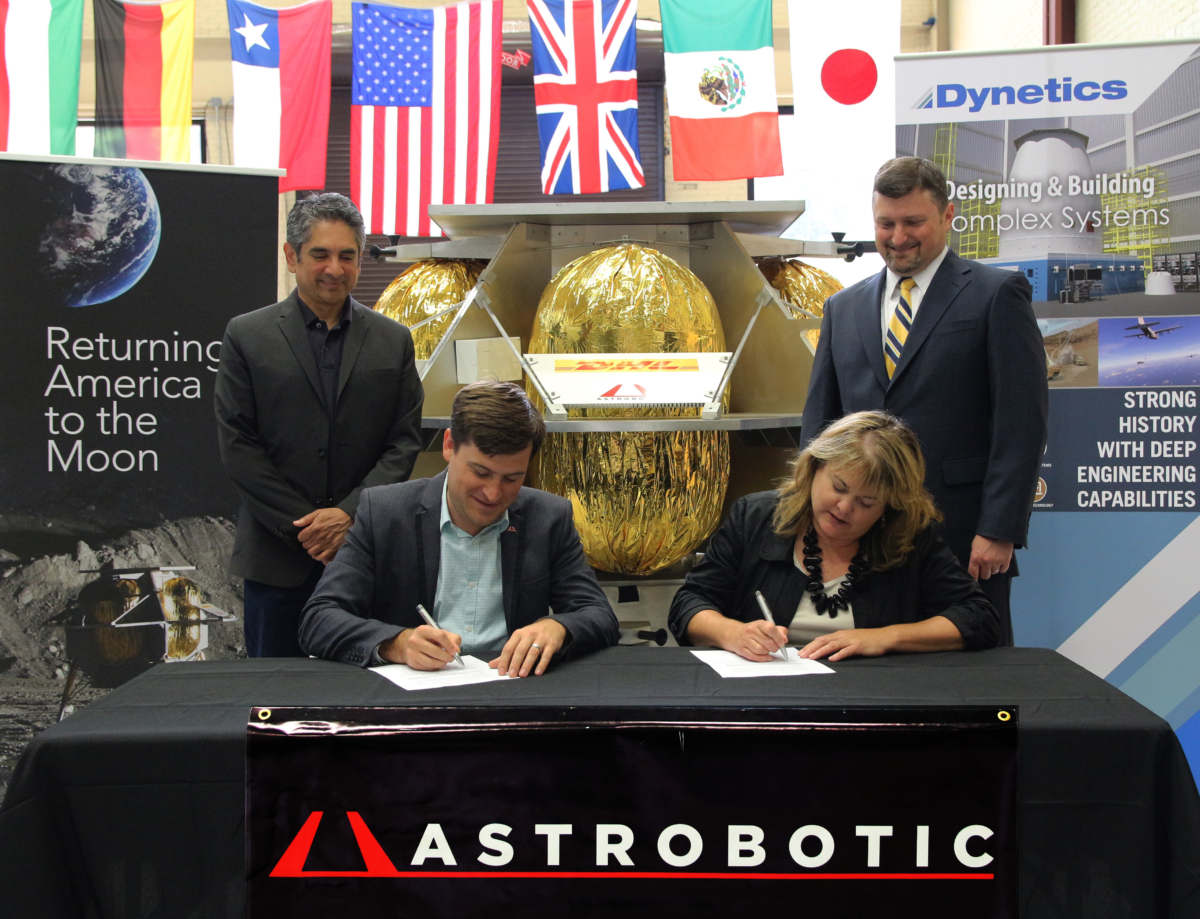
Astrobotic CEO John Thornton and then Dynetics Space Division Manager Kim Doering sign the Peregrine Propulsion Teaming Agreement in July 2018 at Astrobotic’s Spacecraft High Bay in Pittsburgh, Pennsylvania.
Credit: Astrobotic
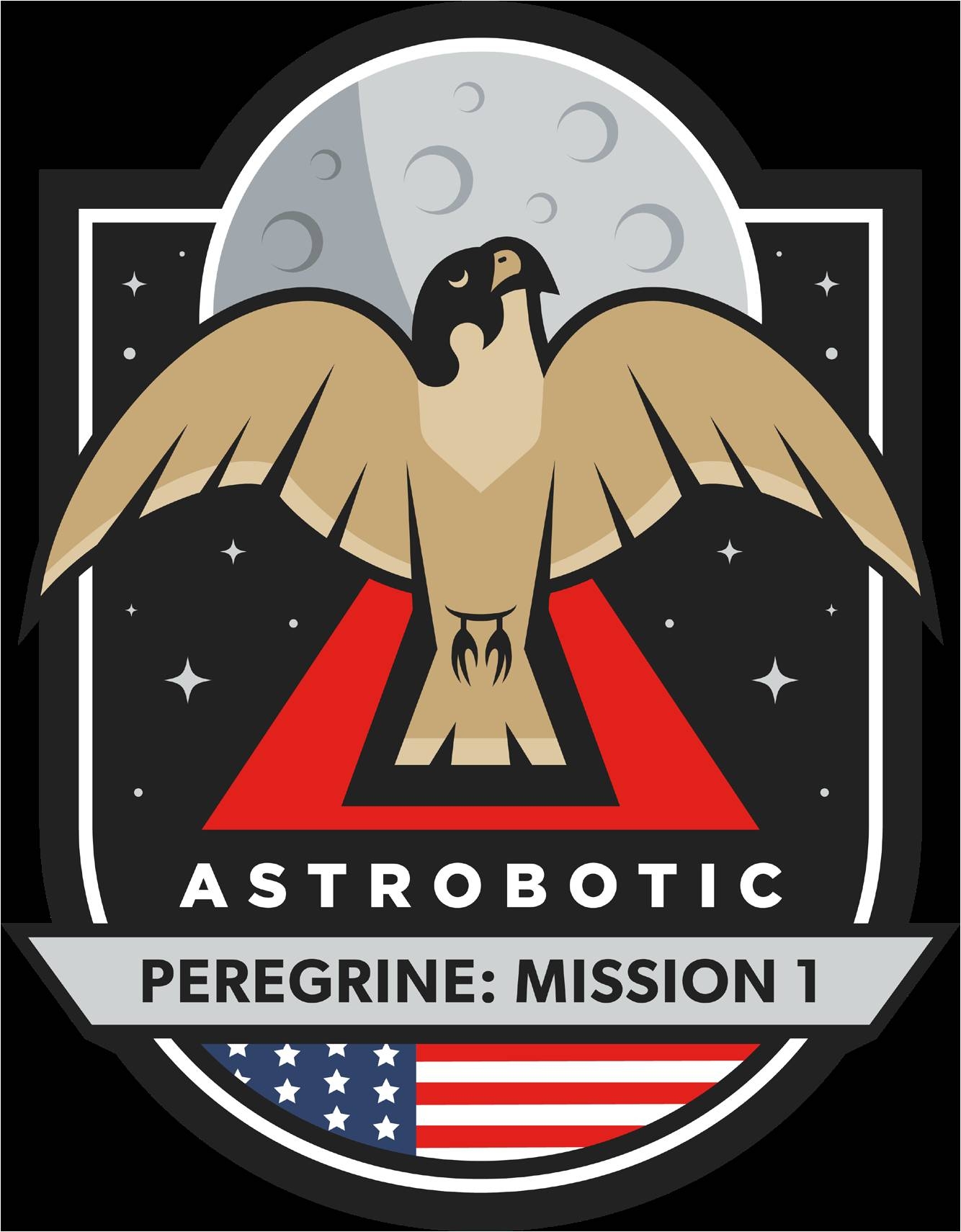
“Peregrine will soon return to Earth’s atmosphere and the vehicle is now about 234,000 miles away. We are working with NASA to continue updating and evaluating the controlled re-entry path of Peregrine,” notes a communiqué from the Pittsburgh, Pa.-situated Astrobotic – the private firm that designed and built the lunar lander.
“Working with NASA, we received inputs from the space community and the U.S. Government on the most safe and responsible course of action to end Peregrine’s mission,” the Astrobotic control team explained. “The recommendation we have received is to let the spacecraft burn up during re-entry in Earth’s atmosphere. Since this is a commercial mission, the final decision of Peregrine’s final flight path is in our hands.”
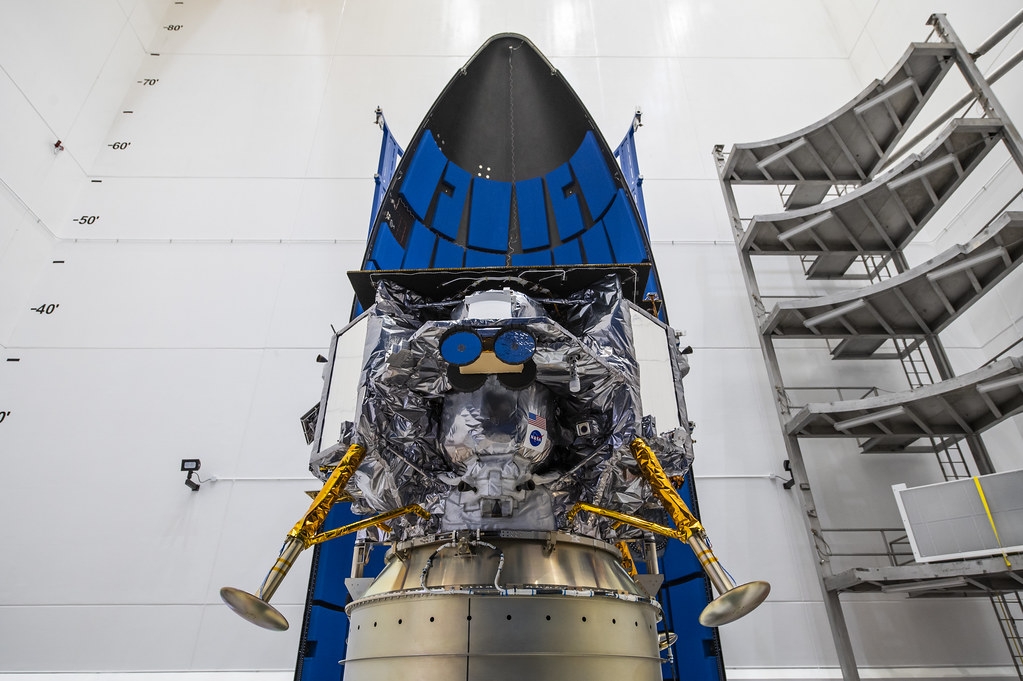
Moon lander successfully launched atop maiden flight of Vulcan booster.
Image credit: ULA/Astrobotic
Cislunar preservation
While the Astrobotic crew has expertly extended the spacecraft’s life and operated payloads, the risk is that the damaged spacecraft could cause a problem in cislunar space, the communiqué explains.
“As such, we have made the difficult decision to maintain the current spacecraft’s trajectory to re-enter the Earth’s atmosphere. By responsibly ending Peregrine’s mission, we are doing our part to preserve the future of cislunar space for all,” the Astrobotic Update #17 adds.
The Astrobotic ground controllers did achieve a 200 millisecond burn, acquiring data that indicated Peregrine could have main engine propulsive capability.

Image credit: Astrobotic
However, the fuel to oxidizer ratio is well outside of the normal operating range of the main engines making long controlled burns impossible. The team projects that the spacecraft has enough remaining propellant to maintain sun pointing and perform small maneuvers, Astrobotic’s communiqué adds.
Misbehaving hardware
As for focusing on what took place that trashed the mission – apparently misbehaving valve hardware – Astrobotic said it designed and built hardware, avionics, software, and system architectures “that have all performed as expected in space.”
Back in July of 2018, Astrobotic selected Dynetics of Huntsville, Alabama as the propulsion provider for its Peregrine Lunar Lander. In December 2019, defense contractor Leidos acquired Dynetics.
While Astrobotic explains that the firm believes it possible for the spacecraft to operate for several more weeks and could potentially have raised the orbit to miss the Earth, “we must take into consideration the anomalous state of the propulsion system and utilize the vehicle’s onboard capability to end the mission responsibly and safely.”
The mission concludes on January 18, said Astrobotic CEO, John Thornton.

LRA (Laser Retroreflector Array) is a collection of eight retroreflectors that enable precise measurements of the distance between the orbiting or landing spacecraft and the lander.
Image credit: NASA/GSFC
In the future, rocketing in and precisely alighting on the moon’s craggy, rocky and crater-pocked face won’t be as hard.
NASA’s Lunar Retroreflector Array (LRA) program is engaged with U.S. and foreign lunar lander initiatives. An LRA is a dome-shaped device, topped by small glass corner cube prism retroreflectors. That contrivance is then mounted to a moon lander.

An LRA consists of eight tiny retroreflectors mounted on a small, high hemispherical platform.
Image credit: NASA TV/Space.com screengrab
Dotting the lunar landscape
The LRA can bounce laser light from other orbiting and incoming spacecraft, functioning as a permanent location marker on the moon for decades to come.
But dotting the lunar landscape with these devices has been a tough row to hoe.
For more information, go to my new Space.com story – “NASA’s Lunar Retroreflector Network could make landing on the moon much easier” at:
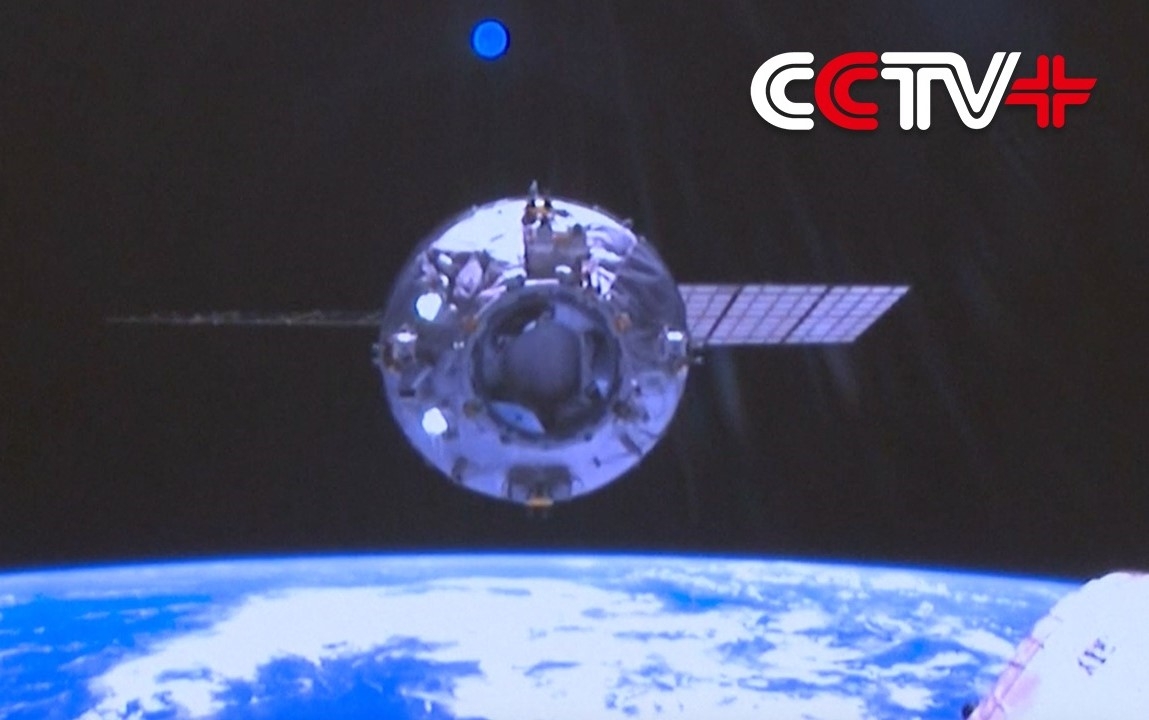
Image credit: CCTV
Preparations are underway for the upcoming launch of China’s Tianzhou-7 cargo craft to that country’s space station.
As part of the process, the Tianzhou-6 separated from the orbiting station on Friday and switched to independent flight, according to the China Manned Space Agency (CMS).
Under ground control, Tianzhou-6 is headed for an ocean dumping within a designated zone in the southern Pacific Ocean.
The supply ship, launched in May of last year, was packed with supplies, spacesuits as well as maintenance components, application facilities and propellant to support the operations of the space station.

Image credit: CGTN/ infographic by Yu Peng
Making way
The Tianzhou-6 undocked from the aft port of China’s orbiting facility to make way for the arrival of the Tianzhou-7 cargo craft.
Tianzhou-6 will continue orbiting Earth until the Tianzhou-7 completes its docking with the space station.
As noted by China Central Television (CCTV), Tianzhou-6 marks the first mission of China’s improved cargo spacecraft. After the upgrade, the effective loading room was expanded by 20 percent compared with previous cargo-carrying ships, increased from 6.9 tons to 7.4 tons.
Meanwhile, the Tianzhou-7 is being readied for liftoff at Wenchang Spacecraft Launch Site in the southern island province of Hainan. The supply craft has been assembled with its booster, the Long March-7 Y8 launcher. The combination will be moved to the launch pad in the near future, reports CCTV.

Image credit: NASA
NASA’s Office of Technology, Policy, and Strategy has released a long-awaited study from the space agency, one that sheds light on the future prospects of Space-Based Solar Power (SBSP).
Beaming power from space has been studied for decades. Over the last several years, other nations have also been studying the idea – including Europe and China.
“Our work identified several policy and technology challenges that would need to be addressed to advance SBSP. While these challenges are not unique to SBSP systems, the scale required to fully implement an SBSP system requires forethought,” the NASA review of SBSP states.
NASA technologies
“Our research indicates NASA is developing technologies with broad applicability to a wide suite of future mission needs and enable SBSP as well,” the report explains.

Image credit: NASA
“However, we view SBSP as a use case for these technologies, not a driver for NASA’s development programs. We recommend that NASA stay abreast of outside SBSP developments and requirements as it matures the technologies needed for its missions. NASA could maintain its awareness in part by repeating this study at different scales of effort every three to five years,” adds the report.
The NASA SBSP report also concludes that NASA should continue to “monitor and maintain awareness” of ongoing developments in Space-Based Solar Power. “This option does not require any changes to NASA’s budget allocations.”
To access the new report, go to:

NASA’s robotic Holy Grail mission, a Mars sample return effort to bring back to Earth Martian collectibles.
Credit: NASA/JPL-Caltech
NASA is seemingly caught between a Mars rock and a hard place. Deemed the Holy Grail of Mars science for decades, the thought of robotically rounding up prized samples of the Red Planet and hurling them to Earth is in a holding pattern.
Last September, an independent review board (IRB) released its findings after taking a diligent and detailed look at the flagship Mars sample return (MSR) project. The IRB was established by NASA to judge the technical requirements, cost and calendar plans of the task.
It was a thorough sanity check on how things are going.
And things are not going well.
For more information, go to my new Scientific American story – “NASA’s Troubled Mars Sample Mission Has Scientists Seeing Red – NASA’s Mars Sample Return program is the agency’s highest priority in planetary science, but projected multibillion-dollar overruns have some calling the plan a “dumpster fire”” – at:

China’s Chang’e-6 lunar sample return mission elements.
Credit: CNSA
China’s next outbound Moon explorer is the Chang’e-6 spacecraft.
Components for that mission have arrived at the Wenchang Space Launch Site launch site, according to a statement today from the China National Space Administration (CNSA).
Scheduled for launch in the first half of this year, the Chang’e-6 mission is to showcase technologies in lunar retrograde orbit design and control, intelligent sampling on the Moon’s farside, and ascent from the lunar surface.
Far side science
Chang’e-6 is set to land in the South Pole-Aitken Basin on the Moon’s farside to explore and collect lunar samples for rocketing back to Earth.

Credit: CNSA
The probe will also carry payloads from France, Italy, Pakistan and the European Space Agency, which include a negative ion detector and a radon gas detector, according to the CNSA.
Those components of the Chang’e-6 probe were transported by the An-124 and Y-20 transport aircraft, arriving at the Meilan International Airport in Haikou City on Monday and Tuesday, respectively, before they were transported by road to the Wenchang Spacecraft Launch Site some 80 kilometers away, as noted by China Central Television (CCTV).
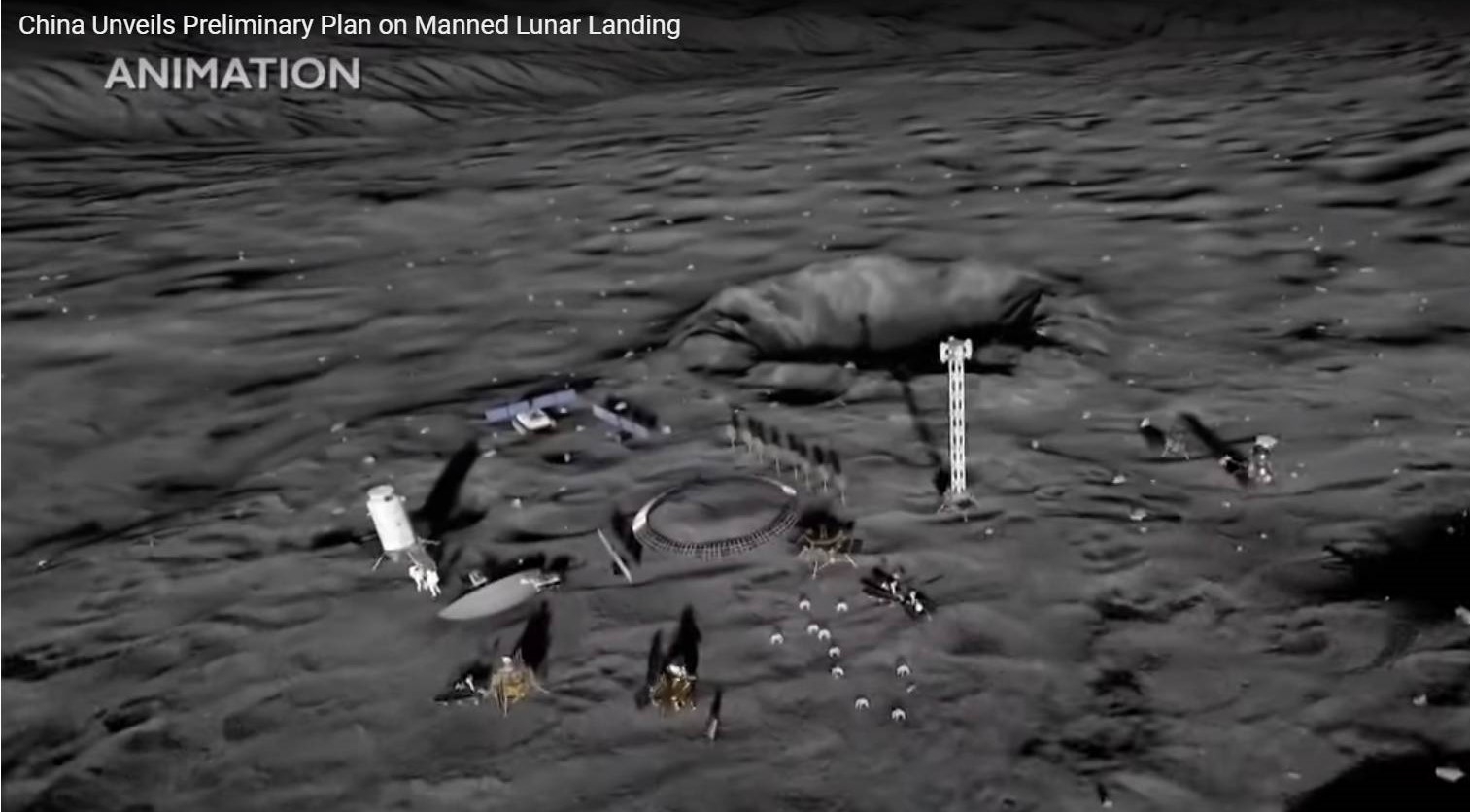
Artist’s view of International Lunar Research Station to be completed by 2035. Credit: CNSA
As reported by China Global Television Network (CGTN), China will send the Chang’e-7 probe around 2026 to implement resource exploration of the lunar south pole and the Chang’e-8 around 2028 to conduct experiments on lunar resource utilization and to build the basic model of the International Lunar Research Station, citing China’s lunar exploration blueprint.
China has finished its three-step lunar exploration program of orbiting, landing and returning, with the Chang’e-5 lunar probe bringing back 1,731 grams of samples from the moon on December 17, 2020, adds CGTN.

Curiosity’s location as of Sol 4062, Distance driven to date: 19.35 miles/31.15 kilometers
Image credit: NASA/JPL-Caltech/Univ. of Arizona
NASA’s Curiosity Mars rover at Gale Crater is now performing Sol 4063 duties.
According to Abigail Knight, a graduate student at Washington University in St. Louis, Missouri, last weekend Curiosity performed a successful “bump backwards.”
The robot is now positioned “to execute contact science on a flat block of dark-toned bedrock in its workspace and continue investigating the composition and texture of the dark bands we’ve been observing from orbit,” Knight reports.

Curiosity Left B Navigation Camera image acquired on Sol 4062, Janaury 9, 2024.
Image credit: NASA/JPL-Caltech
Science target
A recently scripted two-sol plan (Sols 4062-4063) was slated to start with a passive measurement by the Dynamic Albedo of Neutrons (DAN) experiment, followed by brushing of the contact science target “Chagoopa” and a brief Alpha Particle X-Ray Spectrometer (APXS) integration on the target.

Curiosity Chemistry & Camera Remote Micro-Imager (RMI) photo taken on January 9, 2024 on Sol 4062.
Image Credit: NASA/JPL-Caltech/LANL
Up next, rover scientists were to have a morning science block with Chemistry & Camera (ChemCam) observations of “Chagoopa,” target “Painted Lady” (an outcrop of fractured bedrock with an interesting polygonal texture), and a long-distance RMI of Milestone Peak (a deposit with large boulders).

Curiosity Front Hazard Avoidance Camera Left B image taken on Sol 4062, January 9, 2024.
Image credit: NASA/JPL-Caltech
Rock observations
Mastcam has planned observations of “Chagoopa,” “Saddlerock Lake,” an exposed truncation surface with a possible ventifact [a rock that has been abraded, pitted, etched, grooved, or polished by wind-driven sand], and “Rock Creek” (fractured rock), as well as an AEGIS activity. AEGIS stands for Autonomous Exploration for Gathering Increased Science – a software suite that permits the rover to autonomously detect and prioritize targets.
Mastcam will then image the Dust Removal Tool, and the Mars Hand Lens Imager (MAHLI) was to acquire imagery of “Chagoopa” from 25 cm, 5 cm, and 2 cm away.
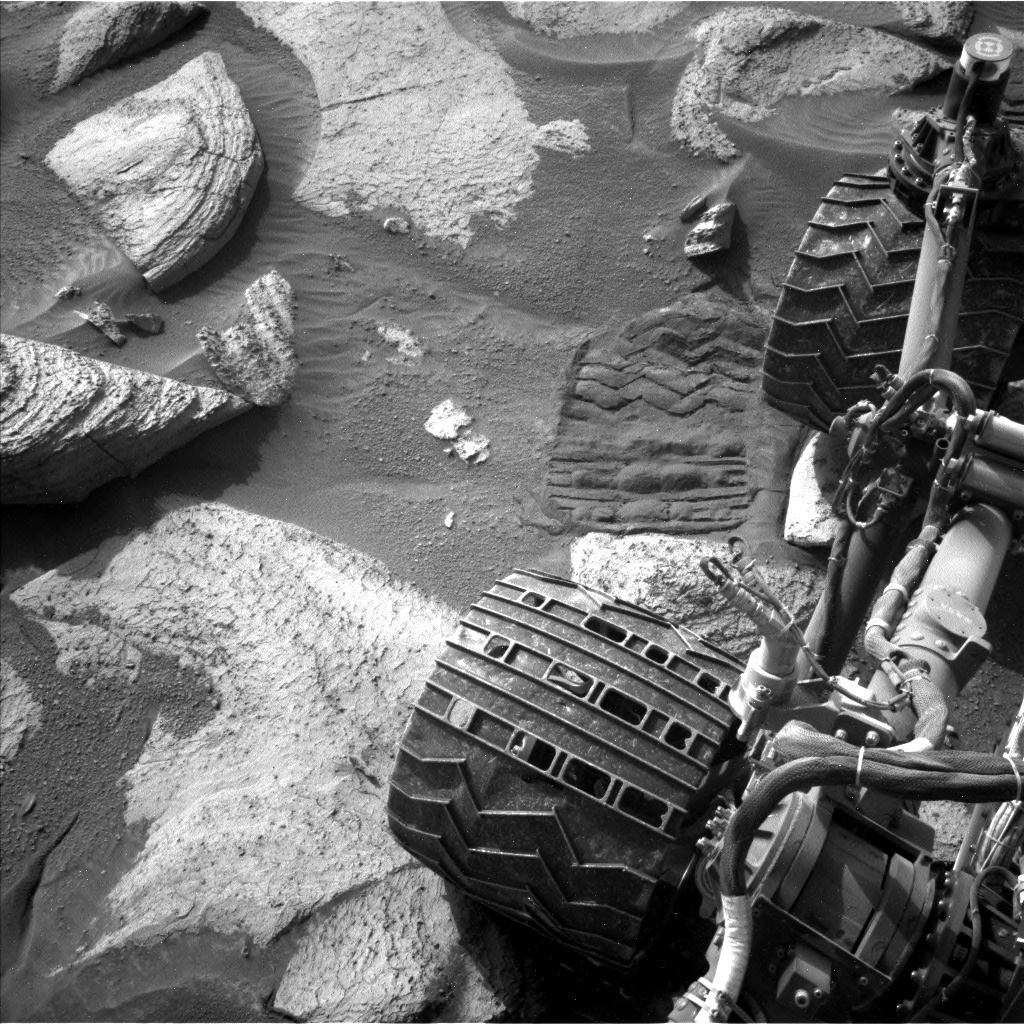
Curiosity Left B Navigation Camera image acquired on Sol 4062, Janaury 9, 2024.
Image credit: NASA/JPL-Caltech
After the morning science block, Curiosity was slated to drive about 52 feet (16 meters) to some polygonal fractured material, and the rover’s Mars Descent Imager (MARDI) was scheduled to perform a video activity to document the fractures.
Clasts and soils
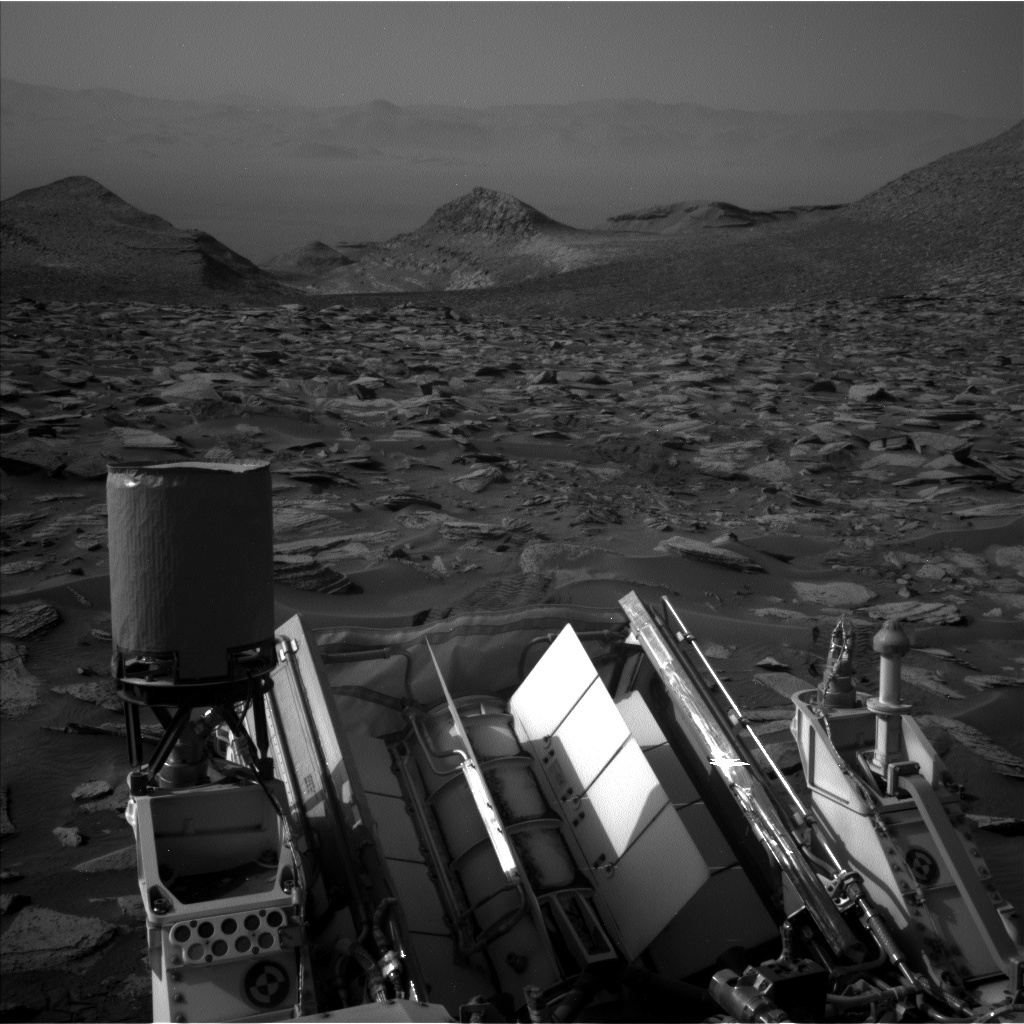
Curiosity Left B Navigation Camera image acquired on Sol 4062, Janaury 9, 2024.
Image credit: NASA/JPL-Caltech
“Following this, we have post-drive imaging to assist the rover planners, identify targets for the next plan, and systematically document clasts and soils along the traverse,” Knight notes.
MARDI was scheduled to acquire a single image at twilight to close out the first sol of this plan.
The second sol begins with another DAN passive and an untargeted science block in the morning.
“This science block includes ChemCam AEGIS of bedrock, a Navcam line-of-sight observation, and a Navcam dust devil movie,” Knight concludes. “The planned contact science observations of the dark-toned bedrock target in our workspace will inform a decision on potentially drilling the rocks in this region again or not.”

Curiosity Left B Navigation Camera image acquired on Sol 4062, Janaury 9, 2024.
Image credit: NASA/JPL-Caltech

