Author Archive
 Author:
  January 24th, 2024
Artemis explorers at the Moon.
Image credit: NASA
NASA is busy putting its best foot forward in rebooting the Moon via the Artemis program.
Artemis missions, NASA has explained, will build a community on the Moon, drive a new lunar economy, while inspiring a new generation.
NASA released on January 23 the outcomes of its 2023 Moon to Mars Architecture Concept.

Shown here is a rendering of 13 candidate landing regions for Artemis III. Each region is approximately 9.3 by 9.3 miles (15 by 15 kilometers). A landing site is a location within those regions with an approximate 328-foot (100-meter) radius.
Credit: NASA
As for Earth’s partner in gravitational lock, what’s foreseen is lunar infrastructure emplaced over time through “Foundational Exploration” and “Sustained Lunar Evolution” segments.
Starting with the lunar South Pole, future crews can perform multiple missions there, as well as carry out forays to different regions within range of each other.
Putting up the framework
Creating a long-term, self-sustaining habitation on the Moon, NASA says, constitutes a framework for government, industry, academia, and international partners to participate in a robust lunar economy and facilitate science.
Definitely, the Moon is going to become a work in progress.
But how best can we Earthlings keep track of that evolving growth on that celestial site?

Image credit: Christopher Richards, University Communications
For future’s sake…record the past
Jonathon Keats is an experimental philosopher, writer, and artist. He is a research associate at the University of Arizona’s College of Fine Arts and an artist-in-residence at the SETI Institute, among his affiliations.
Keats is creator of the “Millennium Camera.” Its purpose is to record the past for future humankind, as well as spur discussion about what current humans can do to influence the future.
In fact, one Millennium Camera is a silent sentinel gazing out across the desert landscape toward the Star Pass neighborhood, West of Tumamoc Hill in Tucson, Arizona – on duty for 1,000 years.
Environmentally-sensitive locations
The Millennium Camera is designed to take a single photograph over a period of one thousand years, Keats explains, revealing changes in the landscape to future generations and motivating people in the present to take responsibility for what future generations will eventually see.
Over the past decade, Millennium Cameras have been installed in several environmentally-sensitive locations in the United States in collaboration with academic institutions including Arizona State University and the University of Arizona.

Image credit: Christopher Richards, University Communications
Additional cameras will be installed on other continents including Europe and Asia in the next several years.
Galactic optimism
“I propose also to install a Millennium Camera on the South Pole of the Moon, overlooking the site where the Artemis Base Camp will be built,” Keats told Inside Outer Space.
Keats said that NASA’s Artemis program emblematizes “galactic optimism” in a time of deep uncertainty on Earth. “It represents a fresh start, and can provide a model for new social dynamics on our home planet, or a launching point for our future elsewhere in the solar system.”
The program also carries significant risk, said Keats, not only of technical failure but also of polluting a near-pristine environment and undermining future opportunities for scientific discovery.

Credit: NASA
Focal point
“Given the range of possible futures, and given that the Artemis Base Camp will be a focus of human attention for centuries to come,” Keats added, “the Millennium Camera has the potential to serve as a focal point for important conversations here on Earth and beyond.”
Keats pointed out that the history of astronomy is a history of observation, made possible with instruments such as the telescope.
“The Millennium Camera falls into this tradition not only as an optical instrument but also as a philosophical instrument,” Keats said. “The image will not be seen for one thousand years. For the next millennium, the camera on the Moon promises to enlarge the human imagination.”
To visit the Millennium Camera website, go to Deep Time Photography at:
 Posted in

Artemis 2 crewmembers will cruise by the moon during their mission, an eye-encounter of the lunar kind. What might they observe on their voyage?
Image credit: NASA/Kennedy Space Center
Specialists are now pulling together potential photography assignments for the crewed NASA Artemis 2 Moon flyby, now projected to occur in September 2025.
Surprisingly, one conceivable duty is keeping an eye out for flashes. It turns out that during the Apollo lunar landing program (1969-1972), there were three impact-induced flashes by meteors observed by astronauts.

Artwork depicts a small but powerful meteor strike on the Moon.
Image credit: Steve Roy, NASA/Marshall Space Flight Center
Kodak moments
Data gathered during the Apollo era flagged those flashes, and lunar scientists have started plotting out photographic nice-to-have “Kodak Moments” for the four-person Artemis 2 crew to consider during out-the-windows viewing.
Tucked inside their Orion spacecraft, they will be hurled moonward by the NASA Space Launch System (SLS) rocket and travel roughly 4,600 miles beyond the far side of the moon during the nearly 10 day voyage.
For more information on this lunar lightshow, go to my new Space.com story – “Apollo 17 astronauts saw strange flashes on the moon. Will Artemis crews see them too?”
https://www.space.com/artemis-astronauts-see-flashes-on-the-moon-apollo-17

A top-down view of the OSIRIS-REx Touch-and-Go-Sample-Acquisition-Mechanism (TAGSAM) head with the lid removed, revealing the remainder of the asteroid sample inside.
Image credit: NASA/Erika Blumenfeld & Joseph Aebersold
Those Utah-delivered samples of asteroid Bennu last year by NASA’s OSIRIS-REx spacecraft are now fully under scrutiny by researchers.
But it took a bit of time.
Two balky fasteners that prevented fully opening the probe’s Touch-and-Go-Sample-Acquisition-Mechanism (TAGSAM) head have been removed revealing the remainder of space rock samples.
The final mass of the sample will be determined in the coming weeks, according to a NASA statement.

Dante Lauretta, OSIRIS-REx’s principal investigator from the University of Arizona holds a mock up of the asteroid collection device – TAGSAM.
Image credit: Barbara David
Catalog release
The curation team members at NASA’s Johnson Space Center in Houston had previously collected 2.48 ounces (70.3 grams) of asteroid material from the sample hardware before the TAGSAM lid was removed.
The curation team is on tap now to release a catalog of all the asteroid samples snagged later this year, which will allow scientists and institutions around the world to submit requests for bits of the Bennu collection.
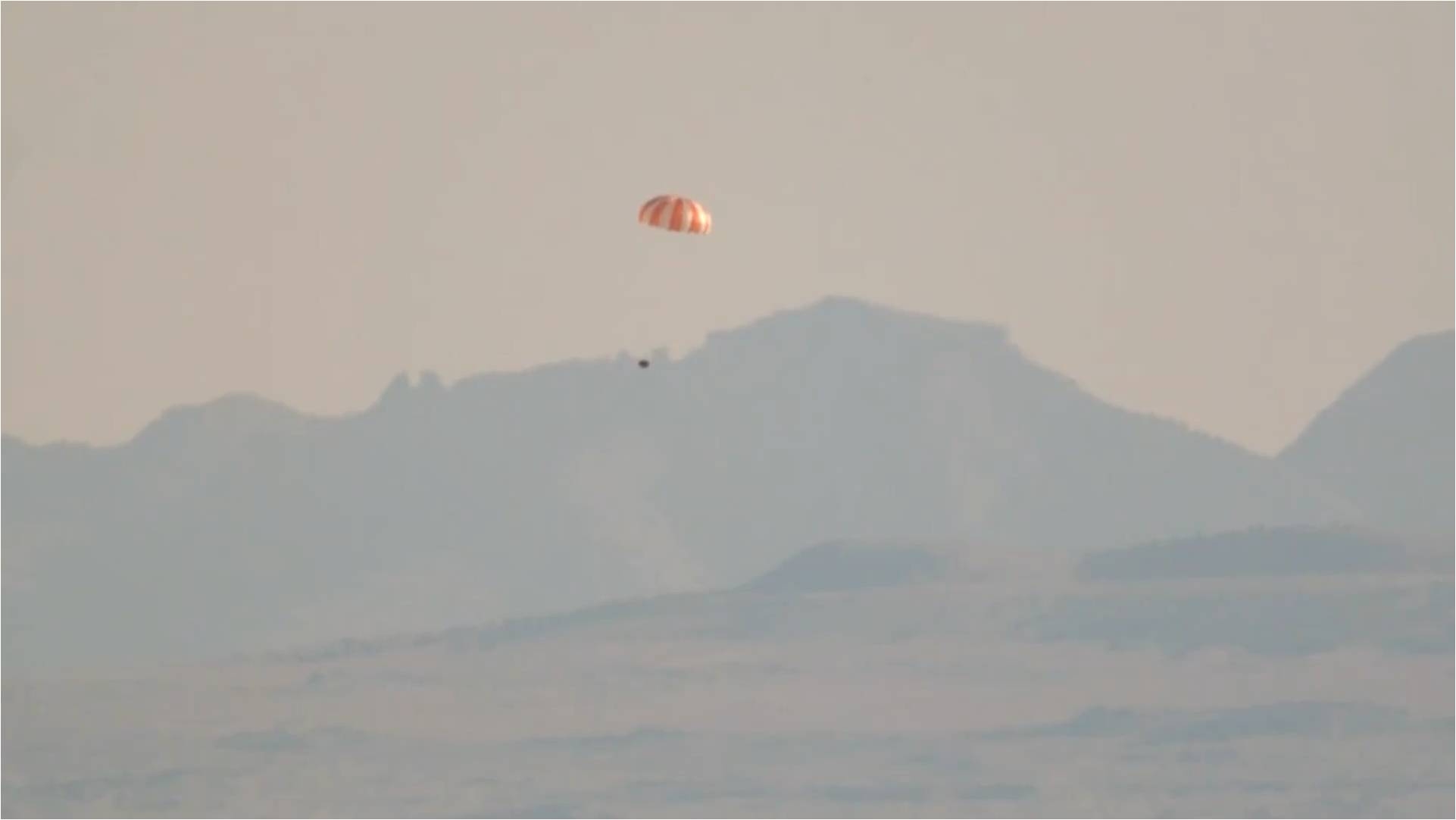
Image courtesy: Dante Lauretta
New mission
In the early morning hours of September 24, 2023 NASA’s first sample return mission of bits and pieces of the asteroid successfully parachuted into the Department of Defense Dugway Proving Ground in the Utah Test and Training Range, roughly 80 miles west of Salt Lake City, Utah.
That extraterrestrial freight from afar came capsule-contained courtesy of the Origins Spectral Interpretation Resource Identification Security Regolith Explorer (OSIRIS-REx) mission.
The OSIRIS-REx spacecraft itself is far from completing its exploration agenda.
It has been renamed as the OSIRIS-APEX and will study the physical changes to asteroid Apophis after the asteroid’s rare close encounter with Earth in 2029.
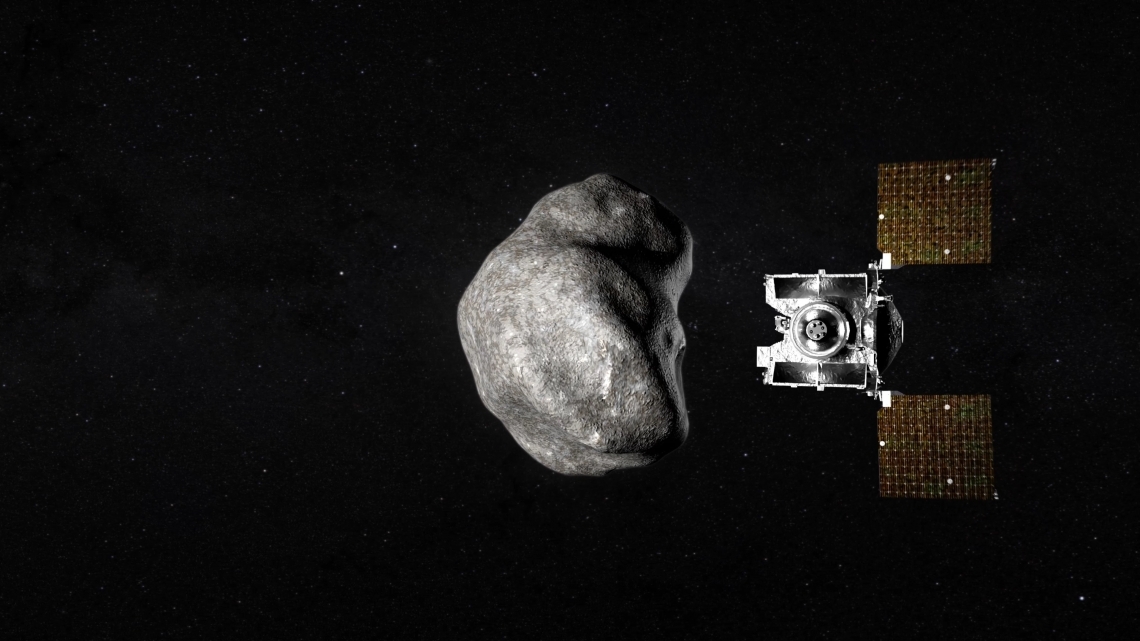
OSIRIS-APEX will approach asteroid Apophis during an exceptionally close flyby of Earth on April 13, 2029.
Image credit: NASA’s Goddard Space Flight Center Conceptual Image Lab
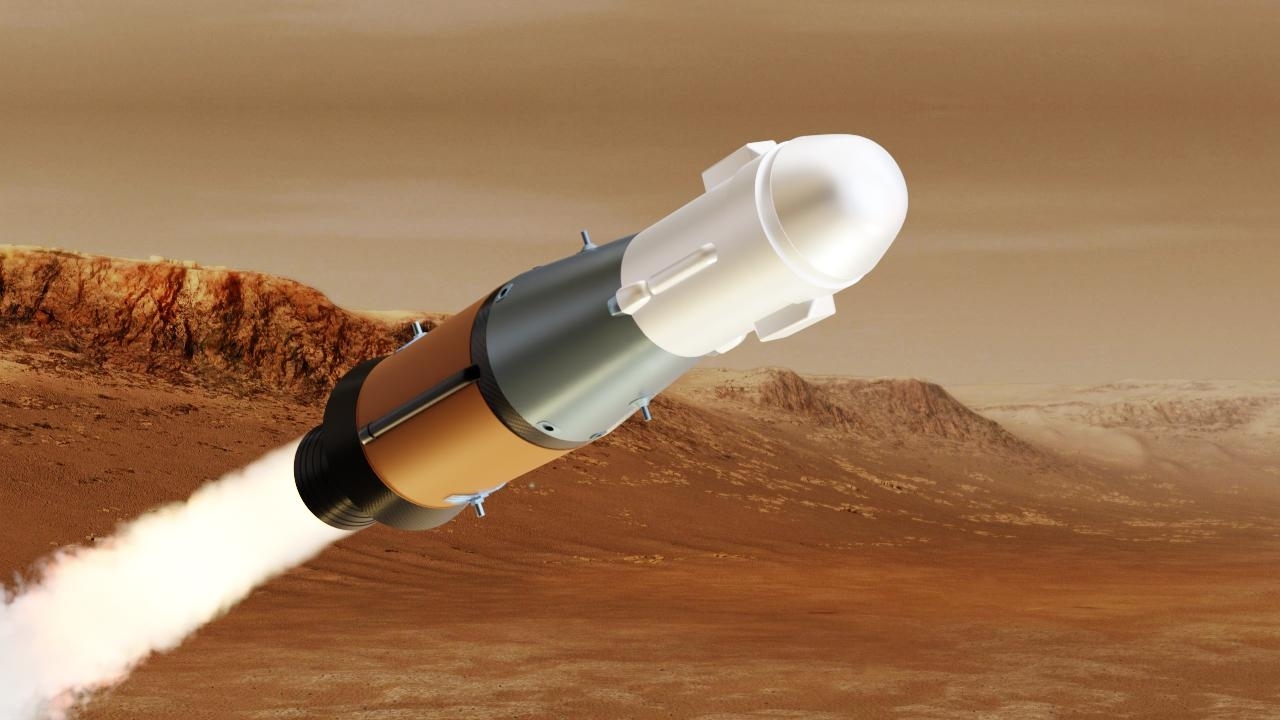
Mars holds tight its secrets, including the prospect of being a present-day abode for life. Will hauling back samples from Mars seal the deal regarding life on the Red Planet?
Image credit: NASA
While the clamoring to bring bits and pieces of Mars back to Earth for an intensive look-see continues, scientists are also devising instruments and techniques that can be sent to the Red Planet to perform on-the-spot probes for life.
But could these low-cost approaches usurp the early need for samples shot directly from Mars?
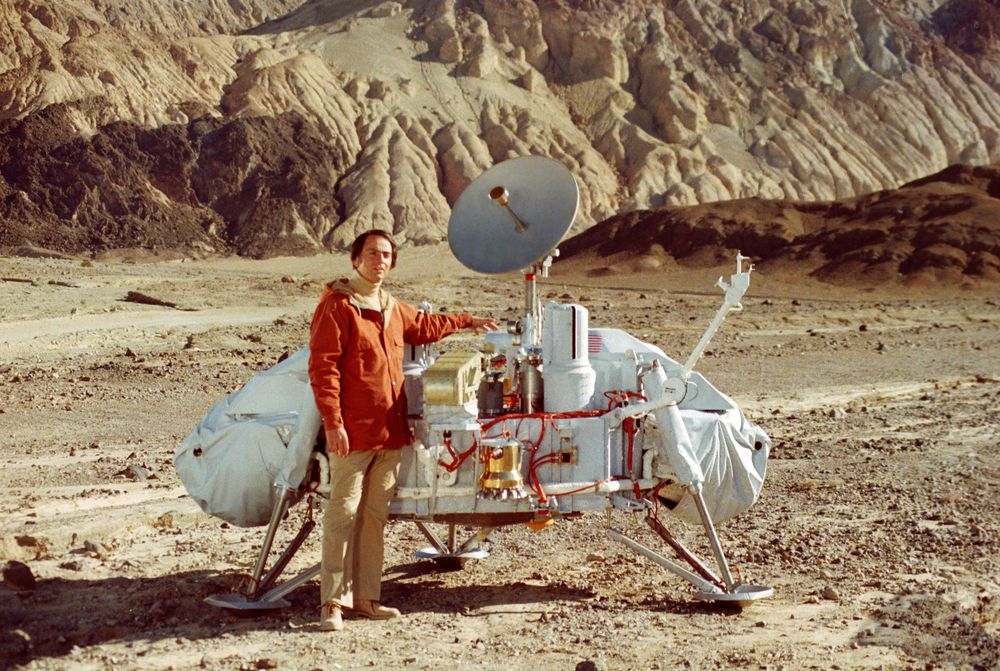
Carl Sagan stands by Viking Mars lander model in desert location. His call continues to ring true that “extraordinary claims need extraordinary evidence.”
Image credit: NASA
That option brings to mind the comment from Marcel Proust – a French novelist, literary critic, and essayist who wrote the novel In Search of Lost Time: “The real voyage of discovery consists not in seeking new landscapes, but in having new eyes.”
For a detailed look at the issues involved, go to my new Space.com story – “If life exists on Mars, don’t count on sample-return missions to find it, scientists say” – at:
https://www.space.com/mars-search-for-life-sample-return-tension

The Intuitive Machines Nova-C lunar lander.. IM-1 mission is targeting Malapert-A crater near the Moon’s south pole.
Image credit: Intuitive Machines
Next up…for trying to get down on the Moon!
Built by the private group, Intuitive Machines of Houston, Texas, their IM-1 Nova-C lunar lander is ready for takeoff next month, no earlier than mid-February.
Under the Commercial Lunar Payload Services (CLPS) initiative, IM-1 will haul to the Moon six NASA payloads that will focus on spacecraft engine plume interactions with the lunar landscape, a space weather on the Moon experiment, a radio astronomy payload, hardware to provide ultra-precise velocity and range sensing during the descent and landing of the Nova-C lander, and a Laser Retro-reflector Array (LRA) – a device that showcases the ability to assist future spacecraft to precisely spot-land during lunar day or night.
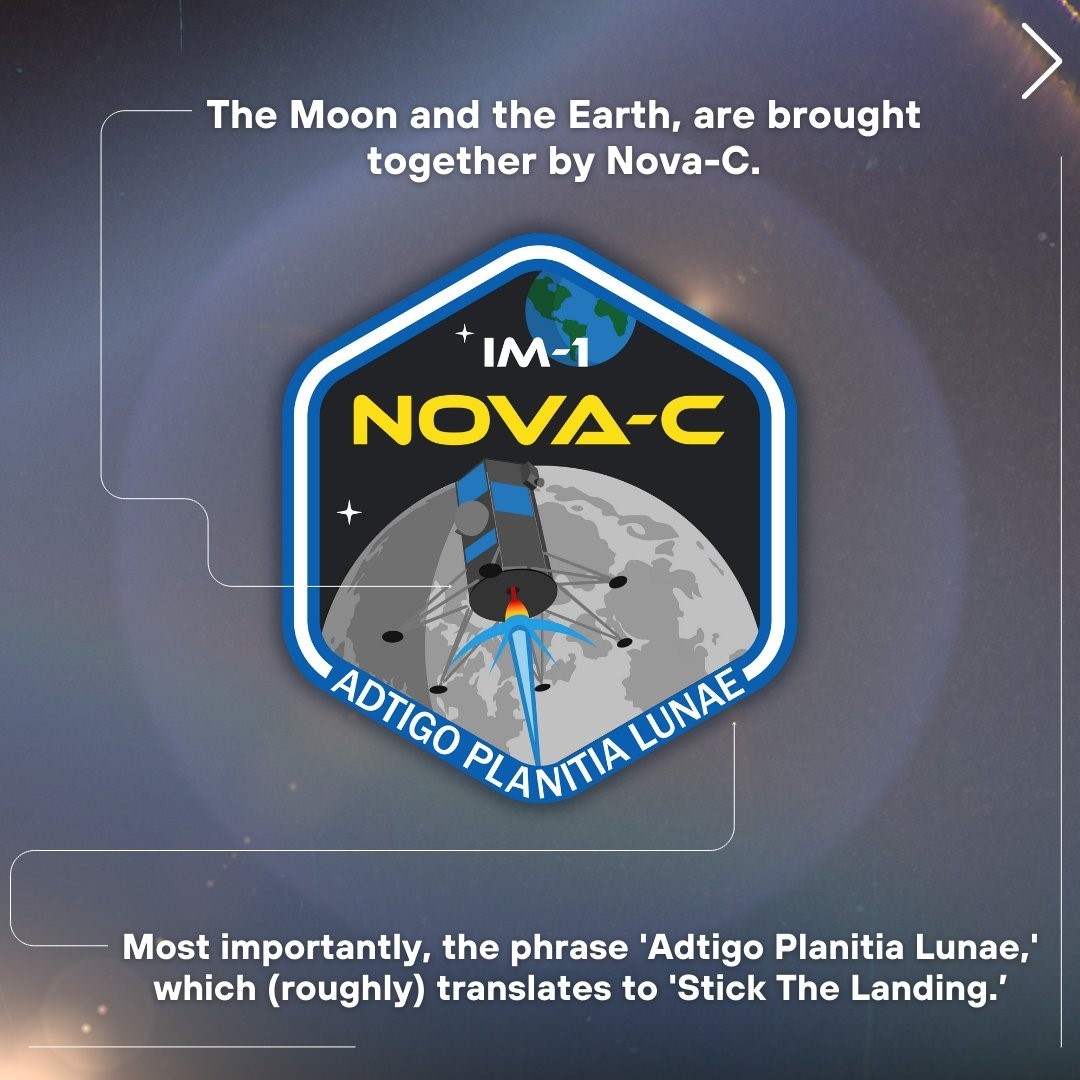
Image Credit: Intuitive Machines
Touchdown territory
Under the lunar exploration eye of Mark Robinson at Arizona State University, he and his research associates offer insight into the landing region of IM-1.
Making use of the super-powerful NASA Lunar Reconnaissance Orbiter’s LROC system, the landing area has been imaged, a touchdown locale within roughly 185 miles (300 kilometers) of the south pole, between the craters Malapert C and Malapert B and east of Malapert A, in relatively ancient terrain within the south pole Aitken basin.
Meanwhile, Malapert massif, an informal name, is thought to be a remnant of the south pole – Aitken basin rim, which formed more than 4 billion years ago, Robinson explains. More recently, this magnificent peak was selected as an Artemis 3 candidate landing region for a crew, he adds.
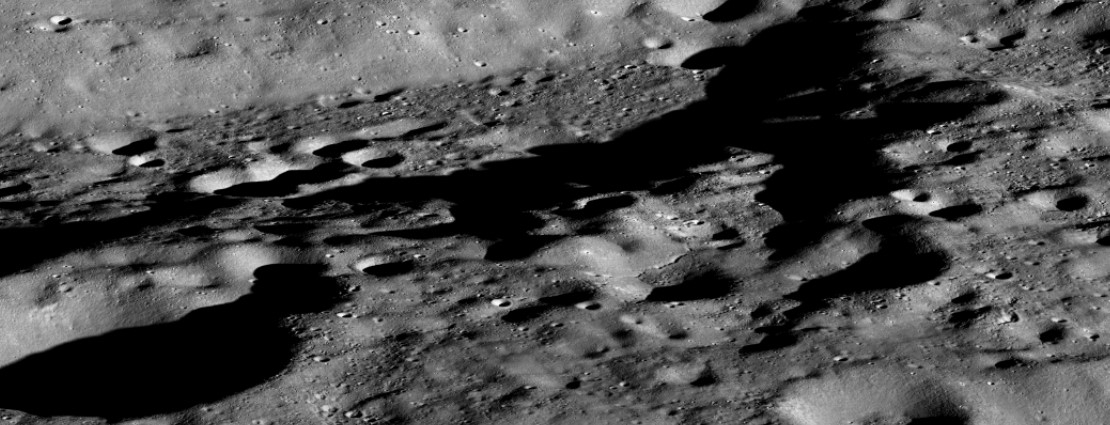
IM-1 landing area between the craters Malapert C and Malapert B and east of Malapert A, in relatively ancient terrain within the South Pole Aitken basin.
Image credit: NASA/GSFC/Arizona State University
Lighting conditions
The delivery of the Nova-C lunar lander to Cape Canaveral, Florida took place in December of last year.
A SpaceX Falcon 9 rocket is to send the lander moonward, a liftoff timed for just a handful of days each month due to the required lighting conditions at the chosen spacecraft landing place on the Moon.
Once successfully down on the Moon, Nova-C is expected to operate in the lunar south pole region for nearly two weeks.
Commercial payloads
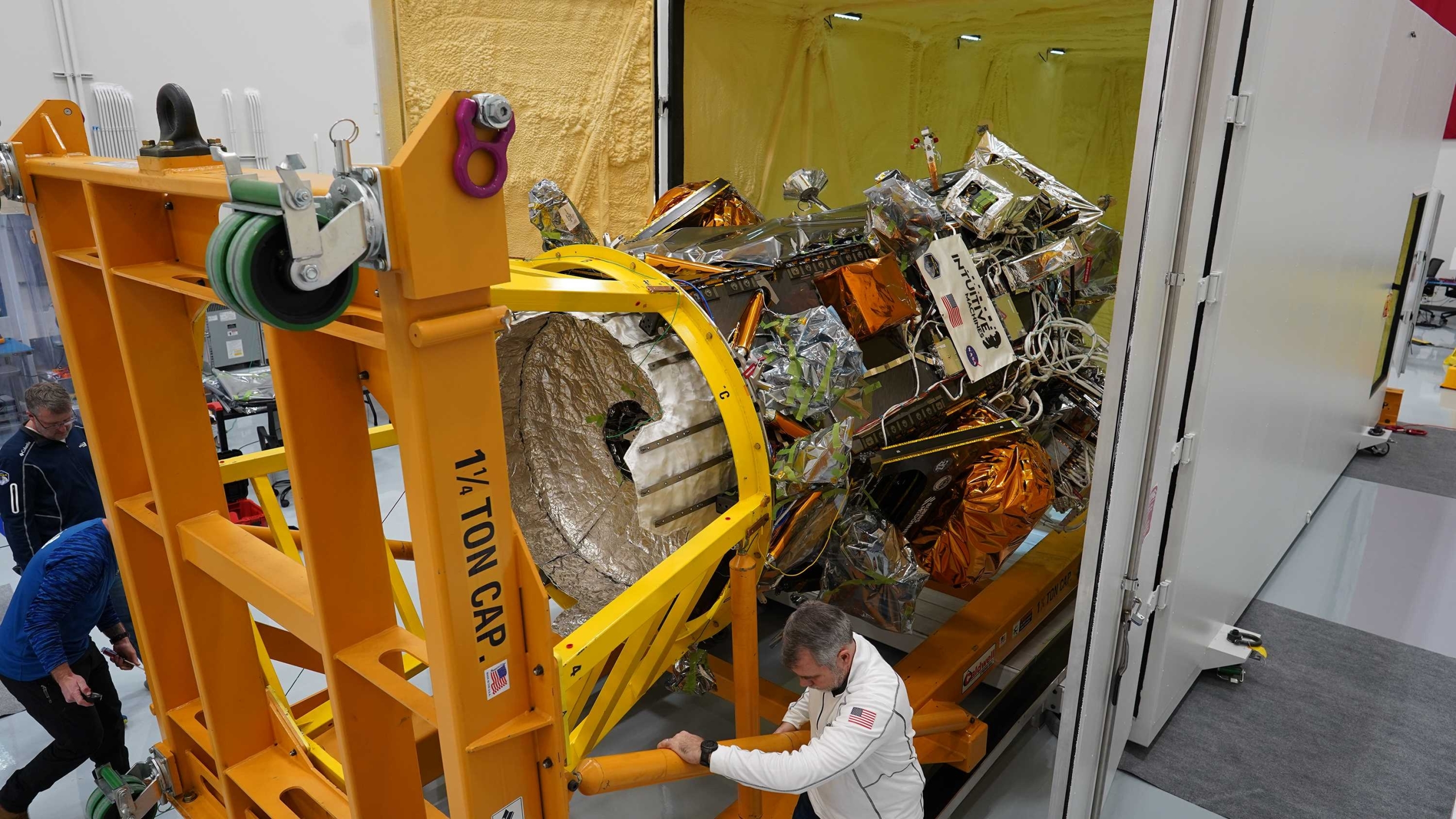
Delivery of the Nova-C lunar lander to Cape Canaveral, Florida took place in December of last year.
Image credit: Intuitive Machines
On the commercial payload side, IM-1’s Nova-C also totes Columbia Sportswear’s reflective technology, a firm that creates novel apparel, footwear, accessories and equipment for outdoor enthusiasts.
Also onboard is EagleCam, a camera system from Embry‑Riddle’s Space Technologies Lab that is ejected from the lander on approach to the Moon and intended to capture the first-ever third-person picture of a spacecraft making an extraterrestrial landing.

Image credit: Intuitive Machines
Then there’s Moon Phase artworks comprising 125 unique artworks.
Another payload on the lander is billed as the first data center to the Moon.
In addition, the ILO-X payload is a miniaturized dual-camera lunar imaging suite that is a precursor to the International Lunar Observatory Association’s (ILOA) Hawai’i flagship Moon south pole observatory, ILO-1. This ILO-X gear is capable of taking imagery from the lunar surface of the Milky Way, among other tasks.
Toss is for good measure, a set of microfiche disks that carry messages called “lunagrams,” words and photos intended to show future civilizations how we lived and loved.
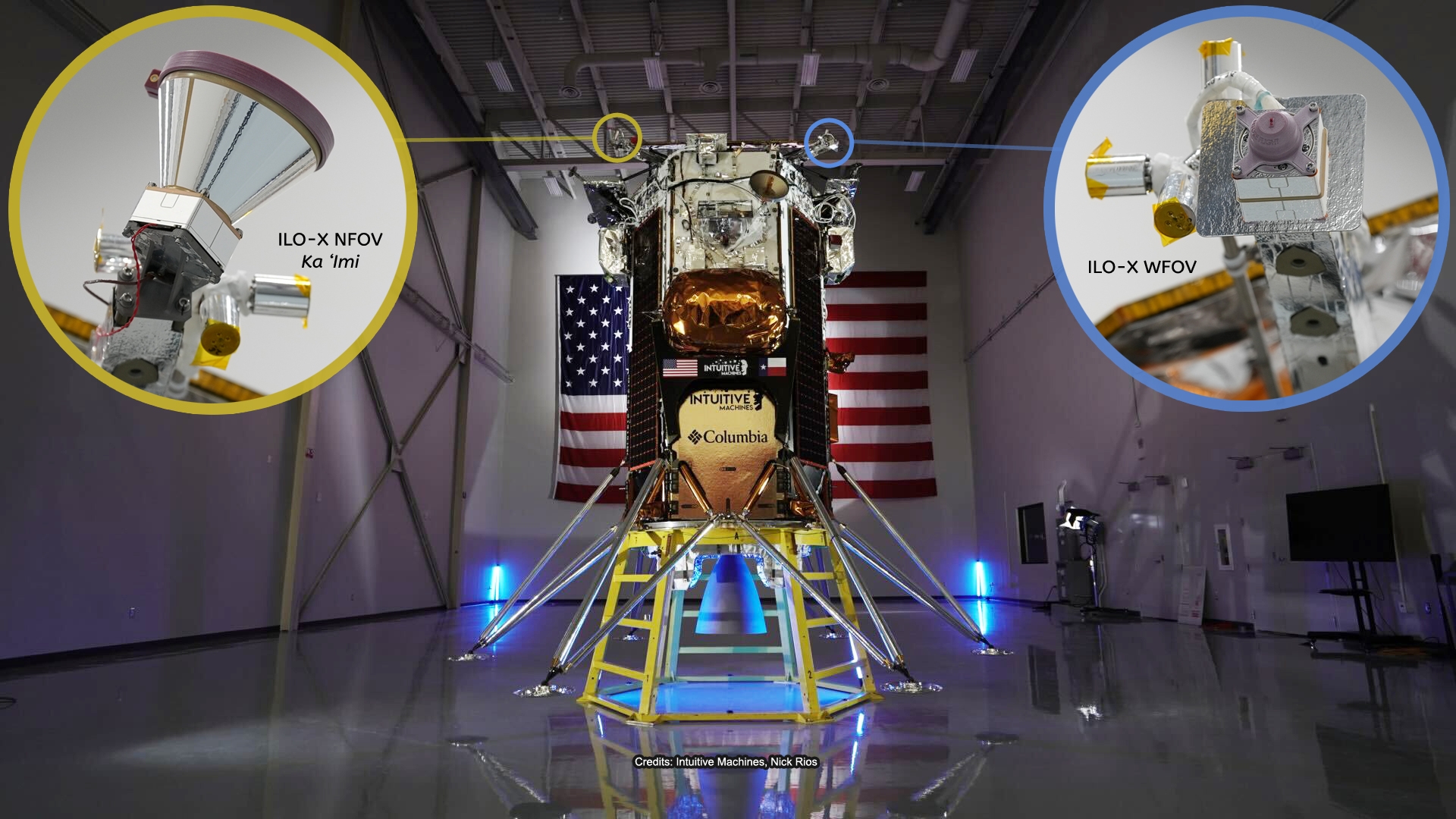
ILO-X payload is a miniaturized dual-camera lunar imaging suite .
Image credit: ILOA/Steve Durst/Intuitive Machines

Image credit: Intuitive Machines
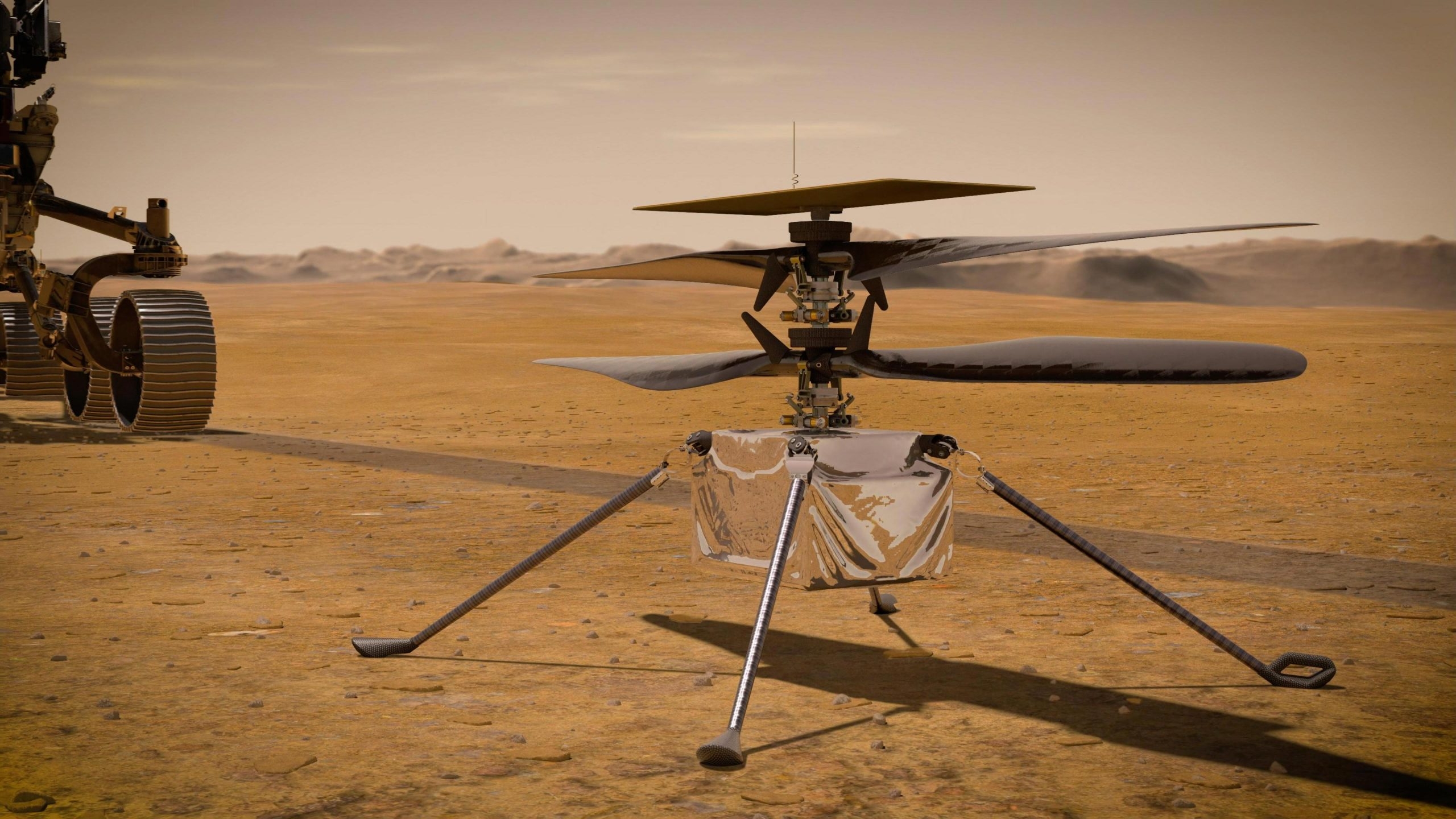
Illustration of Artwork of Ingenuity helicopter.
Credit: NASA/JPL-Caltech
That high-flying Ingenuity Mars helicopter may be in trouble.
In a “Flight 72 Status Update,” NASA’s Jet Propulsion Laboratory notes that the aerial device ran into some sort of trouble on descent from a successful flight to 40 feet (12 meters).
“On Jan. 18, NASA’s Ingenuity Mars Helicopter executed its 72nd flight at the Red Planet. The flight was designed as a quick pop-up vertical flight to check out the helicopter’s systems, following an unplanned early landing during its previous flight,” the JPL communiqué explains.

Dynamic duo: Ingenuity Mars helicopter iand Perseverance rover.
Image credit: NASA/JPL-Caltech
Prior to touchdown
The Mars helicopter did send data to the NASA Perseverance rover busily at work in Jezero Crater. That rover serves as a relay between the helicopter and Earth controllers.
That data indicated the mini-chopper successfully climbed to its assigned maximum altitude.
“During its planned descent, communications between the helicopter and rover terminated early, prior to touchdown,” adds the communiqué.
“The Ingenuity team is analyzing available data and considering next steps to reestablish communications with the helicopter.”

Image credit: JAXA/ISAS
A Japanese spacecraft has survived its landing on the Moon.
But Japan’s Smart Lander for Investigating Moon (SLIM) is on limited battery power, just for a few hours. However, the draining of the battery does not mean the end of the SLIM mission.
The solar cells on the craft at this time are not functioning, perhaps not aligned with the Sun. Even if battery power is no longer available, the solar cells may still gather sunlight given a spacecraft/Sun alignment in the near-term. If such is the case, SLIM could come back to life.
According to a Japan Aerospace Exploration Agency (JAXA) statement, ), once the spacecraft was situated on the lunar surface, priority was quickly given to acquiring as much data as possible from SLIM on the Moon.
The solar cells were operating correctly before touchdown and suffered the problem after SLIM’s landing.
SLIM cannot keep itself warm through the lunar night. However, the lander can resume its operation given that the battery is re-energized upon radio relay by controllers on Earth.

Image credit: Takara Tomy
Payloads ejected
The Japan Aerospace Exploration Agency (JAXA) confirmed that SLIM successfully landed on the Moon surface on January 20 at 0:20 am (JST). Communication with the spacecraft was established after the landing. However, the solar cells were not generating power, and top priority was given to data acquisition from the SLIM on the Moon.
SLIM is on the Moon and was responding to Earth commands after its touchdown, according to officials at a January 19 (U.S. time) post-landing press meeting.
Two sub-payloads were ejected successfully by SLIM en route to its touchdown and they are relaying data.
More time will be required to fully-understand the overall health and situational position of SLIM on the Moon.

Image credit: JAXA/ISAS
Touchdown
The SLIM project focused on the ability of a lander to pinpoint its touchdown using technology that transforms descending onto the lunar landscape where it is “easy to land” to touching down “where you want to land.”
Japan has become the 5th country to successfully soft land a spacecraft on the surface of the Moon.
SLIM was launched last year on September 7, departing Earth atop an H-IIA launch vehicle from the Yoshinobu Launch Complex at the Japan Aerospace Exploration Agency’s (JAXA) Tanegashima Space Center.
SLIM – also called “Moon Sniper” – made its touchdown near Shioli crater. This pinpoint landing approach appears to have been successful, but more data is being assembled to satisfy this checklist goal.

Technology-driven target
SLIM is a technology-driven mission and included a baseball-sized, spherical rover developed in Japan by space program experts and a toy manufacturer. This ball-shaped rover was to crawl across the harsh lunar surface, swinging from side to side to propel itself forward.
The SLIM project is led by members of the JAXA Institute of Space and Astronautical Science (ISAS), and researchers from universities and other institutions across the country.
The Moon landing target was to plop down within roughly 330 feet of the ejecta blanket of Shioli crater.
SLIM carries a NASA-provided Laser Retroreflector Array (LRA) that can work in tandem with the NASA Lunar Reconnaissance Orbiter’s (LRO) Lunar Orbiter Laser Altimeter (LOLA). An overflight by LRO of the SLIM touchdown area could yield imagery, a flyover that is to occur mid next week.

Image credit: JAXA/SLIM Project
Special software
In dropping down over the site, the SLIM descended almost vertically while detecting the altitude with landing radar. During this vertical descent phase, obstacle detection was performed at low altitude, just above the target zone.
SLIM is outfitted with high-tech gear and special software to process images captured by its onboard camera gear. It spots and identifies those craters, and then compares those features with a pre-loaded map embedded in the spacecraft’s memory to precisely compute the probe’s own position.
SLIM engineers and software specialists developed a dedicated image processing algorithm with high computational efficiency to achieve both accuracy and processing time.
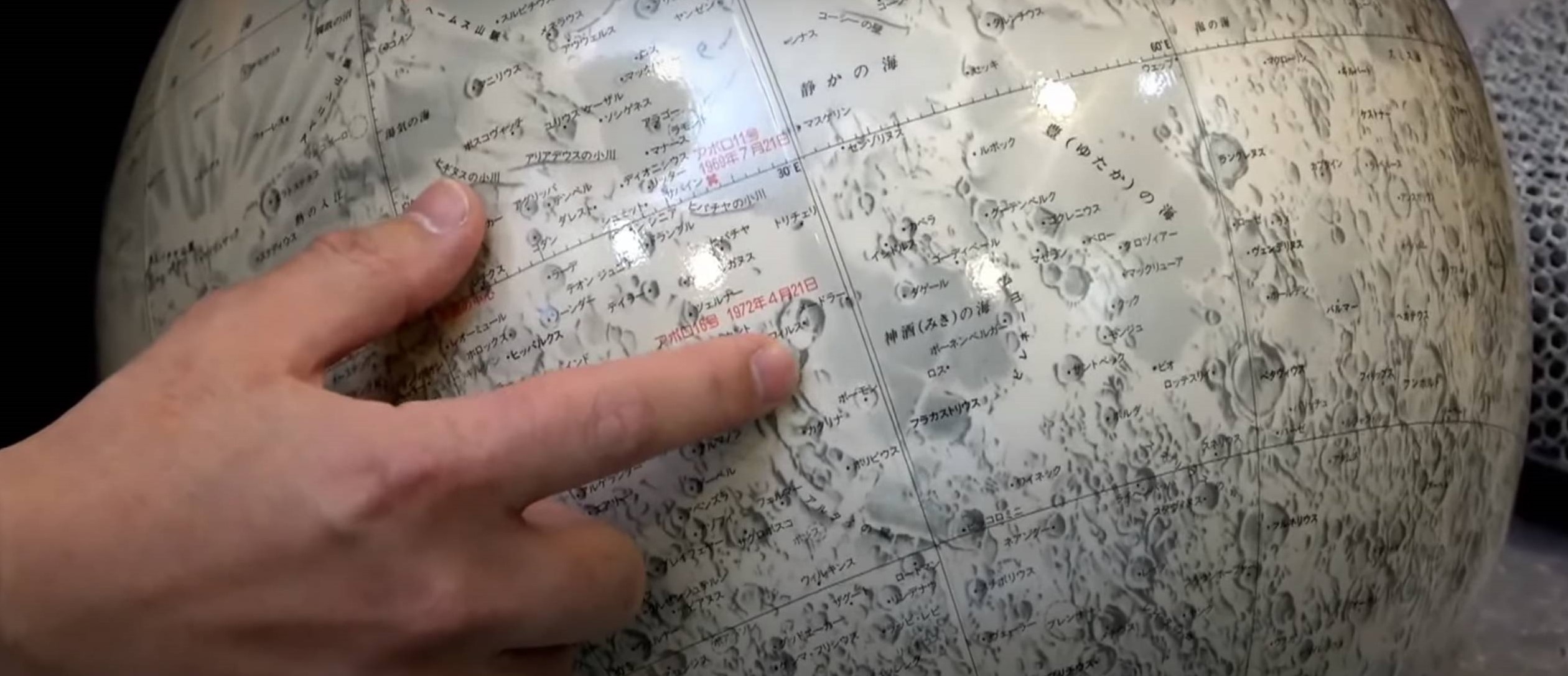
Image credit: JAXA/ISAS/Inside Outer Space screengrab
Coast to coast
SLIM’s landing was a sporty proposition.
Firing its main engine in the opposite direction of its travel direction around the Moon, SLIM went into a powered descent phase. During that time there was a total of four “coasting” periods of about 50 seconds.
During that coast period, SLIM used camera imagery for quick processing to estimate its position and speed with high accuracy. At the same time, the onboard computer was to redesign the trajectory toward the landing point.
At a little above 10 feet and with main engine shutdown, SLIM was to auto-pilot itself to landing. SLIM is equipped with a mechanism to absorb the impact during landing at its five touchdown legs.
What all this adds up to is putting the smarts into a smart lander weighing a little over 460 pounds when it sat down on the Moon.

palm-sized Lunar Excursion Vehicle 2.
Image credit: JAXA/ISAS
Running modes
The SLIM lander achieved ejection of a small scale, lightweight probe system and apparently did use its pinpoint landing technology – but that’s not all.
SLIM deployed a palm-sized Lunar Excursion Vehicle 2 (LEV-2) jointly developed with toy manufacturer, Takara Tomy, along with the Sony Group Corporation and Doshisha University.
The ball-shaped vehicle — SORA-Q — is equipped with two cameras and can transform its shape to traverse the lunar surface.
SORA-Q’s wheels that move freely left and right can run in two types of running modes, “butterfly running” and “crawling running” because the rotating shaft is eccentric, according to the Takara Tomy company.
The popular toy manufacturer is scheduled to make available SORA-Q for public purchase.
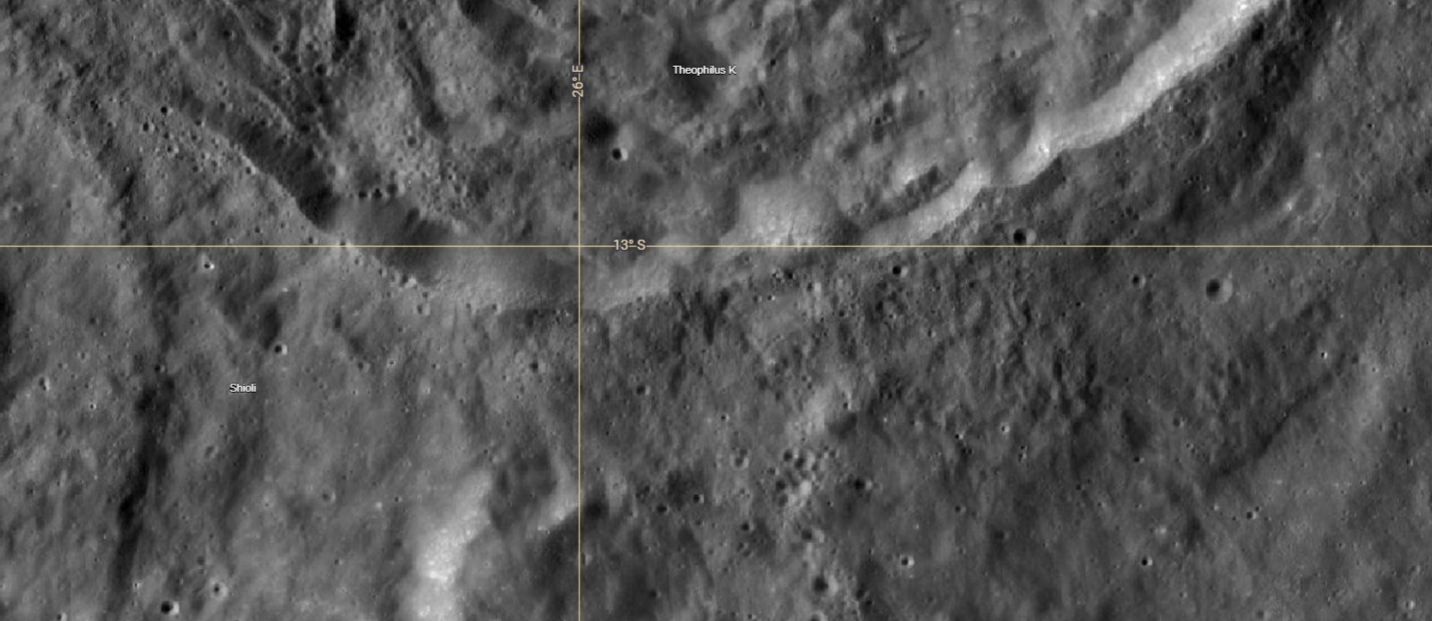
SLIM landing site taken earlier by NASA’s Lunar Reconnaissance Orbiter (LRO). In the middle of next week, LRO will fly over the SLIM landing spot.
Image credit: NASA/GSFC/ASU
Shioli: shining science
NASA’s Lunar Reconnaissance Orbiter spacecraft will use its super-powerful LROC system to image the landing site next week.
Moon explorer Mark Robinson at Arizona State University’s School of Earth and Space Exploration notes that Shioli crater formed a little over 7 miles away from the rim of the 62 mile diameter Theophilus crater on ejecta emplaced during the Theophilus-forming impact.
In the case of Shioli crater, Robinson says, the bright ejecta seen around the rim originated from over 60 feet beneath the Moon’s surface. “Since it comes from depth, the ejected material was protected from the effects of space weathering, which darkens and changes the color of the regolith. Over time, the bright ejecta will fade into the background as the surface weathers.”
Thus, all that tossed out material around Shioli crater originated from beneath the surface. “As a result, SLIM will provide an opportunity to explore a cross-section of the crust,” Robinson points out.
As JAXA and ISAS teams note, SLIM will be invaluable in honing future landing skills, not only for the Moon, but on other deep space locations. It’s a project they state to move from the era of “landing where we can” to “landing where we want.”

An LRA consists of eight tiny retroreflectors mounted on a small, high hemispherical platform.
Image credit: NASA TV/Space.com screengrab
Reflect on this!
For the first time at the Moon, a laser beam from NASA’s Lunar Reconnaissance Orbiter (LRO) was transmitted and reflected between LRO and the Indian Space Research Organization’s (ISRO) Vikram lander on the lunar surface.
ISRO’s successful Moon lander touched down near the lunar south pole on August 23, 2023. It carried the tiny NASA Laser Retroreflector Array, or LRA for short.

LRA (Laser Retroreflector Array) is a collection of eight retroreflectors that enable precise measurements of the distance between the orbiting or landing spacecraft and the lander.
Image credit: NASA/GSFC
Bounce back
That ISRO Vikram lunar lander was some 62 miles (100 kilometers) from the LRO, silently sitting near Manzinus crater in the Moon’s South Pole region. The laser light show between LRO and Vikram took place on December 12, 2023 with LRO transmitting laser pulses toward the lunar lander, with LRO then registering the light that had bounced back.

NASA LRA mounted on Chandrayaan-3 lunar lander.
Image credit: ISRO/NASA
“We’ve showed that we can locate our retroreflector on the surface from the Moon’s orbit,” said Xiaoli Sun, who led the team at NASA’s Goddard Space Flight Center in Greenbelt, Maryland, that developed the retroreflector placed on Vikram as part of a partnership between NASA and ISRO.
“The next step is to improve the technique so that it can become routine for missions that want to use these retroreflectors in the future,” Sun said in a NASA/Goddard statement.

India’s Vikram lander, with a NASA retroreflector on it, touched down on the Moon on Aug. 23, 2023. The camera aboard NASA’s LRO (Lunar Reconnaissance Orbiter) took this picture four days later. The lander is in the center of the image, its dark shadow visible against the bright halo around it. The halo formed after rocket plume interacted with the fine-grained regolith (similar to soil) on the Moon’s surface. The image shows an area that’s 1 mile, or 1.7 kilometers, wide.
Image credit: NASA’s Goddard Space Flight Center/Arizona State University
More to come
Several NASA retroreflectors are slated to fly aboard public and private Moon landers, including one device carried by the Astrobotic Moon lander that’s now set to reenter the Earth’s atmosphere on January 18 due to a spacecraft propulsion mishap.
Another Laser Retroreflector Array is onboard the Japan Aerospace Exploration Agency’s SLIM lander, due to land on the Moon in a few days time, on January 19.
Also, an LRA is onboard an upcoming Intuitive Machines lunar lander set to launch in mid-February. Intuitive Machines will carry six NASA payloads, including the retroreflector, under NASA’s Commercial Lunar Payload Services (CLPS) initiative.
For more information on the LRA program, go to my Space.com story – “NASA’s Lunar Retroreflector Network could make landing on the moon much easier” at:

Image credit: Caltech/SSPP
The Caltech Space Solar Power Project is developing the technology that will be needed to one day harvest solar power in space and beam it down to Earth.
It has been a year ago that demonstrator technology was placed into Earth orbit. On location, the SSPD-1 technology tried out three technological innovations deemed needed to make space solar power a reality.
The SSPD-1’s mission in space has now concluded, notes a Caltech statement on the Space Solar Power Project (SSPP).
It was launched on January 3, 2023, aboard a Momentus Vigoride spacecraft.

Image credit: Caltech/SSPP
Main experiments
The in-space testing of SSPD-1 consisted of a trio of main experiments, each evaluating a different technology:
DOLCE (Deployable on-Orbit ultraLight Composite Experiment): a structure measuring 1.8 meters by 1.8 meters that demonstrates the novel architecture, packaging scheme, and deployment mechanisms of the scalable modular spacecraft that will eventually make up a kilometer-scale constellation to serve as a power station.
ALBA: a collection of 32 different types of photovoltaic (PV) cells to enable an assessment of the types of cells that can withstand punishing space environments.
MAPLE (Microwave Array for Power-transfer Low-orbit Experiment): an array of flexible, lightweight microwave-power transmitters based on custom integrated circuits with precise timing control to focus power selectively on two different receivers to demonstrate wireless power transmission at distance in space.

Image credit: Caltech/SSPP
Not all according to plan
“Though all of the experiments aboard SSPD-1 were ultimately successful, not everything went according to plan,” the Caltech statement adds.
“The space test has demonstrated the robustness of the basic concept, which has allowed us to achieve a successful deployment in spite of two anomalies,” says Caltech’s Sergio Pellegrino, professor of aerospace and civil engineering and co-director of SSPP.
Meanwhile, the space solar power project team continues work in the lab, studying the feedback from SSPD-1 “to identify the next set of fundamental research challenges for the project to tackle,” the Caltech statement concludes.
Go to this informative video at:

On patrol! Cislunar domain awareness spacecraft.
Image credit: AFRL
Military moves on Earth’s Moon and cis-lunar space are being saluted at high levels – and by multiple nations.
“To win the new race to the Moon, the U.S. military will need to establish an infrastructure that fosters scientific and economic activities, as well as the means to secure those activities from potential threats such as territorial claims and irresponsible or hostile behavior.”
That’s the call of a just-issued paper — Securing Cislunar Space and the First Island Off the Coast of Earth – a report by the Mitchell Institute’s Charles S. Galbreath, Senior Fellow for Space Studies, the Mitchell Institute Spacepower Advantage Center of Excellence.

Image credit: DARPA/Inside Outer Space Archive
Cislunar regime
The report stresses that it’s time for the U.S. Space Force “to initiate its foray into the cislunar regime is now.”
If not a space trajectory taken now, the United States will cede the initiative to the Russian and Chinese coalition. Furthermore, if the U.S. is late in the game, catching up will require much larger and costlier actions later—“or potentially leading to a point when even a massive investment cannot fully breach
the lead established by adversaries”…limiting or prohibiting others’ ability “to freely operate within the regime, or undo the precedents they’ve set.”

Artist’s view of two Artemis astronauts at work on the lunar surface.
Image credit: NASA
Lunar resources
There are seventeen metallic elements that, due to their scarcity or the difficulty in collecting them, are classified as rare-earth minerals (REM), the report points out.
These materials are necessary components, the report adds, to over 200 high-tech products, from smartphones to components of the F-35 and nuclear submarines.
In 2022, China accounted for 63 percent of the world’s rare-earth mining, 85 percent of rare-earth processing, and 92 percent of rare-earth magnetic production, the report observes.
“The Moon could be a new source for these REMs because in some cases REMs are more plentiful on the Moon than on Earth,” states the report.

The strategic value of having an off-Earth destination in our own back yard represents an opportunity to expand humanity into the Solar System while benefitting society on Earth (indicated by the arrow to and from the Moon) through creating a new sector of our economy in cislunar space. Image credit: Clive Neal, et al.
Recommendations
Galbreath outlines a number of recommendations in the new report:
The U.S. Department of Defense must develop a broad strategy of how it can support scientific and economic expansion into the cislunar regime. This will identify and prioritize military objectives and describe how they will secure U.S. interests and support civil, commercial, and partner activities.
Also, the U.S. Congress must fund additive growth of about $250 million per year to the U.S. Space Force budget and increase its end strength by 200 personnel in the next four years for the new responsibilities associated with emerging national interests on the Moon.
Other recommendations are:
- The U.S. Space Force must develop a cadre of cislunar experts ready to lead development and operations activities. This cadre will be equipped with the education and training to solve the complex challenges of operations in the cislunar regime.U.S. Space Command and the Space Force must establish doctrine, a Concept of Operations (CONOPS), and requirements to foster the race to the Moon. This will align military efforts and provide a framework for future development and operations.
- The U.S. Space Force must invest in cislunar research and development efforts. Working with organizations like the Air Force Research Laboratory (AFRL) and The Defense Advanced Research Projects Agency (DARPA), the Space Force will be able to accelerate R&D activities and streamline their transition to operations.
- The Space Force must rapidly transition R&D activities into operational capabilities. A sustained presence on the Moon will require established programs of record and operational capabilities to support continued civil, commercial, and military activities.

Watch this cis-lunar space! To what extent will a future lunar framework support military prowess?
Image credit: NASA/ESA, Matthias Maurer
Race to the moon
In closing, the report explains that “the success of a cooperative, transparent, and responsible approach to cislunar operations will result in a more stable and productive opportunity than the coercive and territorial approach consistent with Chinese and Russian activities here on Earth.”
But to achieve this, the report concludes that “the U.S. military must be empowered via Congressional authorization and appropriations to support the ongoing race to the Moon.”
To access the Mitchell Institute document – “Securing Cislunar Space and the First Island Off the Coast of Earth” – go to:

