Author Archive
 Author:
  December 23rd, 2014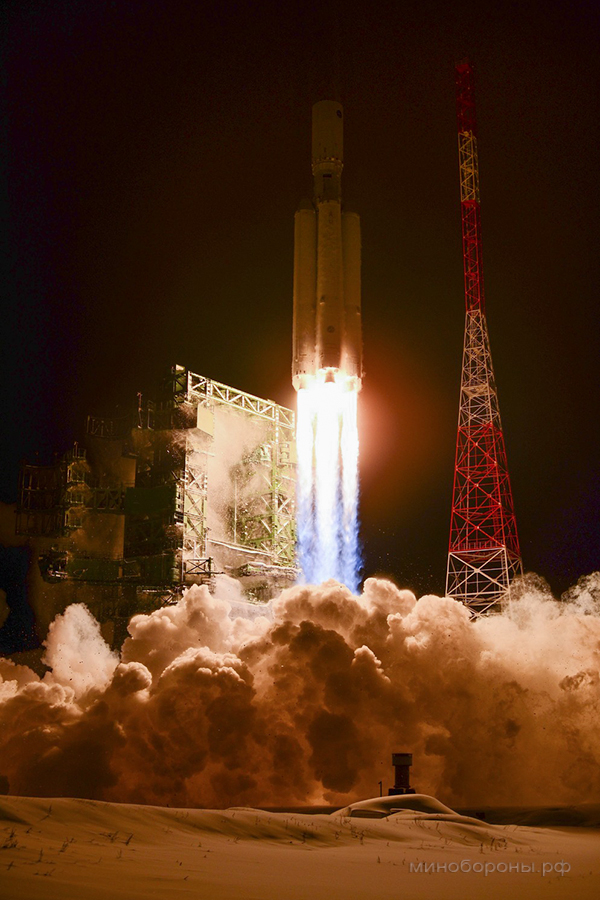
Angara-A5 liftoff.
Credit: Ministry of Defence of the Russian Federation
Russia has launched its new heavy-weight-class launch vehicle – the Angara-A5.
Liftoff took place on December 23 from the Plesetsk cosmodrome in north-west Russia.
The Angara rocket series consists of light, middle, and heavy weight types of boosters.
The Angara-A5 rocket can hurl spacecraft up to 24 tons into a low Earth orbit and up to 4 tons into a geostationary orbit. The Angara-A5 uses non-toxic fuels: oxygen and kerosene.
Initial word is that the booster did lob into orbit a dummy spacecraft. A Briz-M upper stage is to boost the dummy spacecraft into geostationary orbit.
Last July, a lighter version of the Angara was test flown on a suborbital trajectory.
The family of boosters is being produced by the Khrunichev State Research and Production Center.
Video of launch available here:
https://www.youtube.com/watch?v=BsQOpD4TIZM
Note: For a Russian video on the suborbital test of the Angara, go to:
https://www.youtube.com/watch?v=WegrjmrP6MU
 Posted in
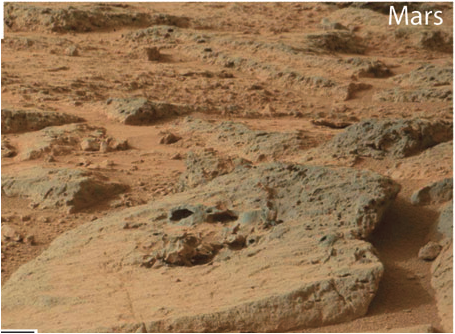
Curiosity rover Mastcam photograph of a plateau in the < 3.7 Ga
Gillespie Lake Member, Mars.
Credit: NASA/JPL-Caltech/MSSS
Photographs from NASA’s Curiosity Mars rover clearly show sediment deposits resembling those found in modern evaporite (salty) settings at Portsmouth Island, N.C., and Bahar Alouane, Tunisia (Africa); in playa lake sediments cropping out of the Mediterranean coast in Tunisia; and in Archean salt deposits of the Pongola Supergroup in South Africa and the Dresser Formation in Australia.
Yes, a picture is worth a thousand words…and in this case it adds up to a 24-page research paper in the Astrobiology journal.
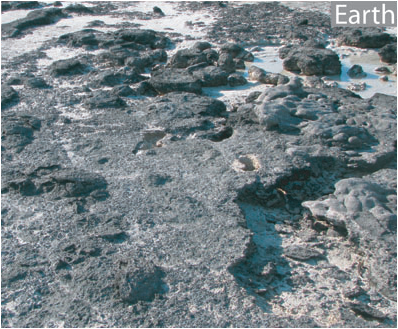
Microbial terrestrial erosional remnant photographed at a modern
site at Carbla Point, Western Australia.
Courtesy: Nora Noffke
Nora Noffke, in the Department of Ocean, Earth and Atmospheric Sciences at Old Dominion University in Norfolk, Virginia reports that: “Sandstone beds of the <3.7 Ga (billion year old) Gillespie Lake Member on Mars have been interpreted as evidence of an ancient playa lake environment. On Earth, such environments have been sites of colonization by microbial mats from the early Archean to the present time.”
Noffke explains that terrestrial microbial mats in playa lake environments form microbialites known as microbially induced sedimentary structures (MISS). On Mars, three lithofacies of the Gillespie Lake Member sandstone display centimeter- to meter-scale structures similar in macroscopic morphology to terrestrial MISS.
Geological evidence
As a geobiologist, Noffke has in the past produced sedimentary evidence that prokaryote biofilms existed on Earth billions of years ago. Now she is focusing efforts on showing that similar colonies of bacterial life may have existed on Mars at about the same time.
Noffke reported last year that the structures found in Australia might also provide scientists with clues about geologic evidence of microbial life that exists, or might have existed, on Mars.
Although Mars today is much colder than Earth and seems only to have water in ice and vapor forms, scientists believe that it must have been a very different place 3.7 billion years ago – warmer, wetter and with a much thicker atmosphere.
Past climate of Mars
Why the climate then was more hospitable to life is puzzling, but perhaps could have been caused by volcanoes or large asteroid impacts.
Still, she acknowledges that any remote analysis of imagery has its drawbacks.
“Without any evidence for life on Mars detected in returned rock samples, reconstructing microbial ecosystems on the Red Planet is pure speculation,” she writes.
One section of the journal article examines possibilities that the structures shown in the NASA photos could be also caused by “abiotic” – non-life – processes such as weathering.
Hypothesis
The Astrobiology article suggests a hypothesis that the structures seen on the Mars images may be ancient MISS; the preliminary evidence presented in her report may be sound enough to warrant more investigation by NASA.
Noffke calls for the Curiosity mission and other astrobiology-focused missions to Mars to dedicate specific photography and data collection assignments to the search for MISS. In her research paper, she proposes a strategy for detecting, identifying, confirming, and differentiating possible MISS.
“The sedimentary structures in the Gillespie Lake Member, Mars, constitute a promising set of potential biosignatures that compel further analyses by Mars rovers, including future sample return missions from Mars,” Noffke concludes.
Check out this impressive “Hypothesis Article” – “Ancient Sedimentary Structures in the <3.7 Ga Gillespie Lake Member, Mars, that Compare in Macroscopic Morphology, Spatial Associations, and Temporal Succession with Terrestrial Microbialities” – by going to:

Credit: CMSA
The European Space Agency (ESA) has agreed to work with the China Manned Space Agency on human spaceflight activities. ESA is also investigating partnering with Russia on two robotic Moon landing missions.
In a December 11 meeting in Beijing, Wang Zhaoyao, Director of the China Manned Space Agency (CMSA) and Jean-Jacques Dordain, Director of ESA, signed an agreement to work together in the human spaceflight arena.
According to the CMSA, Dordain said “he is willing to continue to promote China into participating in the multilateral cooperation on the International Space Station.”
ESA will further deepen the bilateral cooperation and exchanges in the field of manned spaceflight based on the cooperation agreement, according to CMSA.
Cooperation areas
Under the ESA/CMSA agreement, three potential cooperation areas are included:
n implementation of joint scientific experiments and studies in different fields by utilizing in-orbit infrastructures(such as the International Space Station and the Chinese Space Station) and ground facilities, including space life and physical sciences, microgravity research, space biology and medicine, and technology research;
n astronaut selection, training, medical operations and astronaut flights;
n space infrastructure cooperation in human exploration of Low Earth Orbit (LEO) and beyond.
Next steps
Both parties will jointly organize meetings and workshops; identify research programs, exchange information and data, and conduct concrete cooperation on the exchanges of personnel and facilities.
In addition, a Human Spaceflight Consultation Committee will be established to assess the status of the cooperation, examine proposals for conducting specific cooperative activities and make recommendations for implementation.
Credit: Roscosmos
Russia’s lunar agenda
On December 2, member states of ESA approved, and provided the needed funds, for ESA to study robotic missions for the exploration of the Moon.
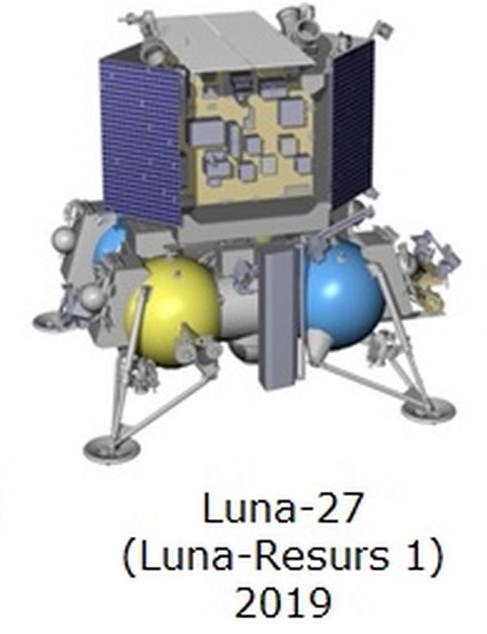
Being eyed is for ESA to engage with the Russian Federal Space Agency – Roscosmos — on the Luna-Resource Lander (Luna 27) and also a Lunar Sample Return, on tap to travel to the Moon in 2019 and early 2020s, respectively.

Credit: Warner Bros. Pictures and Paramount Pictures
You’ve seen the movie, or it’s on your holiday to-do list.
But just how hard is interstellar flight?
Harold White is Advanced Propulsion Theme Lead for the NASA Engineering Directorate at the NASA Johnson Space Center.
In a video, White discusses a couple of advanced propulsion concepts that may one day be useful for crafting an interstellar mission.
White spoke recently at the NASA Ames Research Director’s Colloquium – part of the Center’s 75th anniversary celebration.
Put on your star goggles and take a look at:

NASA’s Orion spacecraft is lowered gently to the Pacific Ocean under its three massive main parachutes at 11:29 am EST on Dec. 5, 2014. Orion launched on its first test flight at 7:05 am and over the course of two orbits and 4.5 hours, traveled 3,600 miles above Earth to test systems critical to human deep space exploration.
Photo credit: NASA/James Blair
A new video backed by ethereal music shows NASA’s Orion capsule returning from space, through Earth’s atmosphere, and provides viewers a taste of what the vehicle experienced during its Dec. 5 flight test.
The video begins 10 minutes before Orion’s 11:29 a.m. EST splashdown in the Pacific Ocean.
Peak heating from the friction caused by the atmosphere rubbing against Orion’s heat shield can be seen, and the video goes on to show the deployment of Orion’s parachutes and the craft’s splashdown.
Be onboard Orion at:
Credit: U.S. Air Force
SpaceNews military space reporter Mike Gruss interviews Gen. John Hyten, who took over as commander of U.S. Air Force Space Command in August.
This 36-minute video, recorded Dec. 16 at the Pentagon, focuses on Hyten’s vision for the service’s space operations.
•How Space Command will approach the automatic budget cuts known as sequestration
•How the Air Force will move forward on a new rocket engine to replace the Russian-made RD-180
•When the service will unveil its next-generation programs and capabilities
•When status of SpaceX’s certification efforts
•How he envisions the Defense Department managing satellite communication capabilities
Go to:

Book Review: The Art of Space – The History of Space Art, From the Earliest Visions to the Graphics of the Modern Era by Ron Miller; Zenith Press/Quarto Publishing Group, Minneapolis, Minnesota; $35.00 (hardcover); September 2014.
This is an impressive gathering of artwork, drawn together by Ron Miller, artist extraordinaire. The book is an eye-catching work showing how astronomy and space travel has been represented in a variety of media over the past two centuries.
The book is divided into 5 sections: Planets & Moons, Stars & Galaxies, Spaceships & Space Stations, Space Colonies & Cities; and Aliens. Each section is rich with both artwork, but also an opening text and informative captions.
As Miller notes: “The advent of space exploration enabled some artists to create space paintings of unprecedented accuracy, and it enabled others to abandon realism entirely, leaving them free to explore the impact of space on humanity in other ways.”
That sweep of accuracy to castle in the sky sketches is the fuel that has powered generations to embrace space exploration, the beauty of adventure, and ponder the strangeness of the unfamiliar.
The reader will enjoy some spotlighted space artists of the past and present, from Chesley Bonestell, several astronaut/cosmonaut artists, to the works of Don Davis and Pat Rawlings.
In its concluding pages, The Art of Space has a helpful “Further Resources” page that includes artists’ websites and also where to see space art.
The book includes two nicely written forewords by Carolyn Porco, the Cassini Imaging Team Leader at the Space Science Institute, and Dan Durda, a gifted artist and space scientist at Southwest Research Institute.
As Durda explains: “Art and exploration have been long and intimate partners, each inspiring the other through history as we expanded the frontiers of new lands and pressed the boundaries of human activity with novel technologies.”
You’ll find Miller’s book an excellent read and a visual feast – a volume that is an inspirational bridge between art and exploration.
For more information on this book, go to:
http://www.qbookshop.net/products/214437/9780760346563/The-Art-of-Space.html
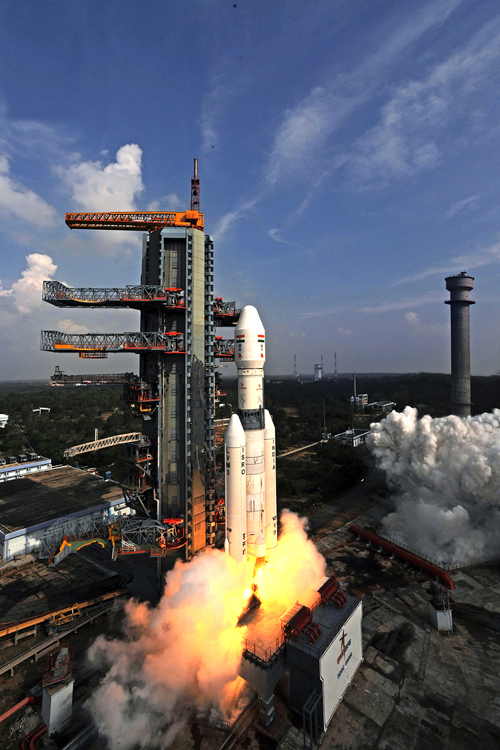
Liftoff of India’s next generation booster – GSLV Mk-III.
Credit: ISRO
India’s next generation booster – GSLV Mk-III – flew successfully on its first experimental flight.
The rocket departed the Satish Dhawan Space Centre SHAR, Sriharikota on December 18.
The suborbital shot had a two-fold agenda:
— Test the vehicle performance during its critical atmospheric phase of its flight carrying a non-functional cryogenic upper stage.
— Fly the over four ton (3,775 kg) Crew Module Atmospheric Re-entry Experiment (CARE) – to a height of over 75 miles (126 km).
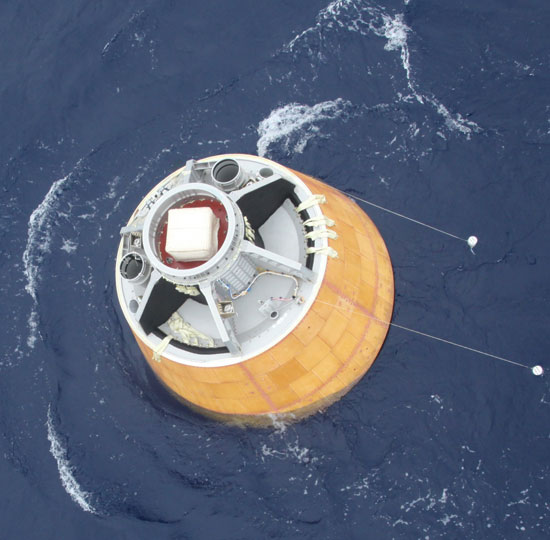
Bobbing in the Bay of Bengal – India’s Crew Module Atmospheric Re-entry Experiment (CARE)
Credit: ISRO
The CARE separated from the upper stage of rocket and re-entered the atmosphere, plopping down in the Bay of Bengal under its parachutes.
The flight lasted about 20 minutes 43 seconds, from lift-off to splashdown.
Go to this website to see the impressive test flight:

China’s recent robotic circumlunar test flight snapped this image of the Moon with Earth in the distance.
Credit: Chinese Academy of Sciences
Even before the first launch of China’s Long March 5, rocket builders in that country are eyeing the Long March 9 – a super-heavy booster reportedly intended to support human missions to the Moon.
Li Tongyu, head of aerospace products at the China Academy of Launch Vehicle Technology, is quoted in the State-owned China Daily, that Long March 9 “will mostly be determined by a host of factors, including the government’s space plan and the nation’s overall industrial capability, as well as its engine’s development.”
The Long March 9’s diameter and height, Li said, will be far larger than those of the Long March 5 – and a brand new engine will provide greater thrust.
The China Daily story also carries comments by Li Jinghong, deputy chief designer of the Long March 3A at the academy, stating that estimates show the Long March 5 would have to use four launches to fulfill a manned mission to the moon while the Long March 9 will need only one. In addition, the senior engineer said that manned lunar missions will not be the sole use of the Long March 9, suggesting that other deep-space exploration projects will also need the super-heavy launcher.
Deputy chief designer Li said that the diameter of the Long March 9 should be 8 to 10 meters. Weight of the booster is anticipated to be at least 3,000 metric tons, he said.
An earlier report by China News Service, said that Liang Xiaohong, deputy head of the China Academy of Launch Vehicle Technology, has indicated that the Long March 9 is planned to have a maximum payload of 130 tons and its first launch will take place around 2028.

Credit: NASA
Here’s a video that highlights key moments in space exploration, from humanity’s early fascination with stars to recent work in private space tourism.
A Brief History of Space Exploration was shown at Sony Pictures Studios in Culver City, California on November 13, 2014 as part of the kickoff to RAND’s biennial Politics Aside event.
Take a look at:
http://www.rand.org/multimedia/video/2014/11/21/history-space-exploration.html
Bonus viewing:
Matt Miller, columnist, author, and host of the radio program Left, Right and Center moderated a panel, which included Simonetta Di Pippo, Director of the United Nations Office for Outer Space Affairs; George Whitesides, CEO of Virgin Galactic; and NASA astronaut Cady Coleman.
Topics ranged from the future of commercial space exploration and the feasibility of humans visiting Mars, to policy questions such us the militarization of space and the importance of space sustainability.
To drop in on the conversation, go to:
http://www.rand.org/blog/2014/11/space-talk-launches-politics-aside.html

