Author Archive
 Author:
  March 9th, 2025
Image credit: Firefly Aerospace
The Firefly Aerospace Blue Ghost lander is approaching lunar noon – with the lunar day shooting up to 250°F (121°C).
Firefly Aerospace reports that Blue Ghost that landed on March 2 has begun planned power cycling to keep the lander as cool as possible.
“With eight payloads’ objectives already complete, we aim to continue operating our two remaining payloads throughout these power cycles,” the Blue Ghost team reports. “We’ll gradually get back to full power once the surface temperatures start to cool down again. Stay tuned for more!”
Blue Ghost landed near a volcanic featured called Mons Latreille within Mare Crisium, and is set to operate for 14 Earth days, or roughly one lunar day.

Photo of the LISTER prototype – about the size of a shoebox. When integrated into the Blue Ghost lander, the right side points down.
Image credit: Honeybee Robotics
Thermal probe
One experiment underway is the Lunar Instrumentation for Subsurface Thermal Exploration with Rapidity, or LISTER. It is the deepest-reaching robotic planetary subsurface thermal probe.
LISTER is one of 10 NASA payloads aboard the Blue Ghost Mission 1 lander as part of the agency’s Commercial Lunar Payload Services (CLPS) initiative.
LISTER’s pneumatic drill is designed to go as deep as three meters (9 feet). Every half meter, the drilling system will pause so that a thermal probe can gauge the temperature of the Moon.

Image captures LISTER in operation on the Moon.
Image credit: Firefly Aerospace/NASA Marshall Space Flight Center/Inside Outer Space screengrab
Drill tip details
Texas Tech University in Lubbock and Honeybee Robotics, a Blue Origin company of Altadena, California, jointly developed LISTER. The payload is managed by the Planetary Missions Program Office at NASA’s Marshall Space Flight Center in Huntsville, Alabama.
LISTER is using ultra pure nitrogen (N2) gas to excavate and coiled tubing to push the drill tip down, reports Kris Zacny, Vice President, Exploration Systems at Honeybee Robotics. “We are at one meter [roughly 3 feet] depth now and could resume next week,” he explains.
In viewing video of LISTER, sparks can be seen, identified by Zacny as either reflection from the Sun or arcing as the instrument disturbs highly charged regolith and provides atmosphere for arcing to occur.
To watch the drill in action, go to this NASA Marshall Space Flight Center issued video at:
 Posted in

Wait-a-Minute!
Image credit: Barbara David
There is increasing angst in the ranks of NASA space explorers about the overall future health and vitality of the agency.
For example, The Planetary Society recently put out a 911 emergency dispatch about reported cuts to NASA that “would amount to an ‘extinction event’ for space science and exploration.
“The Planetary Society is deeply alarmed by reports that the White House will propose a 50% cut to NASA’s science activities in the upcoming agency budget request.”

Trump’s pick to run NASA
It’s a wait-a-minute moment given President Trump’s pick to run NASA – Jared Isaacman, an American entrepreneur, philanthropist and commander of two SpaceX Dragon capsule sojourns into Earth orbit.

Piloting his way to NASA, Jared Isaacman.
Image credit: Jared Isaacman
Back in early December 2024, Isaacman “X-tolled” President Trump’s nomination to serve as the next Administrator of NASA. “Having been fortunate to see our amazing planet from space, I am passionate about America leading the most incredible adventure in human history,” he posted.
A February 18 communiqué from the nominee had him flying himself back to Washington, D.C. to “continue NASA confirmation prep” that night. “I am grateful to President Trump for this chance to give back to the nation that enabled me to live the American dream.”

Image credit: White House
Work in progress
Meanwhile, the ongoing steps taken by President Trump’s administration to transform and reduce in size the federal workforce is work in progress.
The topsy-turvy action plan includes the work of the Department of Government Efficiency (DOGE), an advisory group to modernize and perk up the effectiveness of the federal government. DOGE is led by billionaire Elon Musk, the SpaceX chief rocketeer, with DOGE seen by some as controversial and confusing.
NASA’s Acting Administrator, Janet Petro, has requested space agency employees “to lean into this opportunity” as the DOGE seeks to maximize efficiencies. She is a former director of NASA’s John F. Kennedy Space Center, Florida.

Image credit: NASA
Travel allowance
So Isaacman’s confirmation to get decision-making underway at NASA appears to be urgent.
SpaceX Starships exploding, Artemis rebooting of the Moon plans pending, Mars sample return decision-making, Earth climate change investigation, as well as other NASA agenda items in flux – things are stacking up.
On March 12, U.S. Senator Ted Cruz (R-Texas), Chairman of the Senate Committee on Commerce, Science, and Transportation, will convene a full committee Executive Session to consider nominations and legislation – but as of this writing, an appearance by Isaacman is not listed as there’s need to hold a nomination hearing before voting on whether to confirm him.
Go to:
https://www.commerce.senate.gov/2025/3/executive-session-7
In that upcoming Executive Session, along with other lawmaker Acts — such as a Sea Turtle Rescue Assistance and Rehabilitation Act of 2025 and a Romance Scam Prevention Act — Cruz is to back his Astronaut Ground Travel Support Act. That legislation would provide transportation of government astronauts before they receive medical clearance to drive.
Perhaps the Act might have a proviso to move Isaacman into NASA’s driver’s seat in short-order?

Wait-a-Minute!
Image credit: Barbara David

Extendable mast on the top deck of Blue Ghost lander. Image credit: Firefly Aerospace/Inside Outer Space screengrab
The Firefly Aerospace Blue Ghost Moon lander has deployed electrodes on the lunar surface, an experiment to study the deep interior of the Moon.
Shortly after its March 2 landing, Blue Ghost deployed four tethered Lunar Magnetotelluric Sounder (LMS) electrodes, developed by Southwest Research Institute (SwRI).
The LMS experiment is designed to probe the structure and composition of the Moon’s interior to depths up to 700 miles or two-thirds of the lunar radius.
Extendable mast
The LMS magnetometer was deployed from the Blue Ghost top deck via an extendable 8-foot mast to reduce interference from the lander. The LMS instrument ejected cables with electrodes at 90-degree angles to each other at distances up to 60 feet.
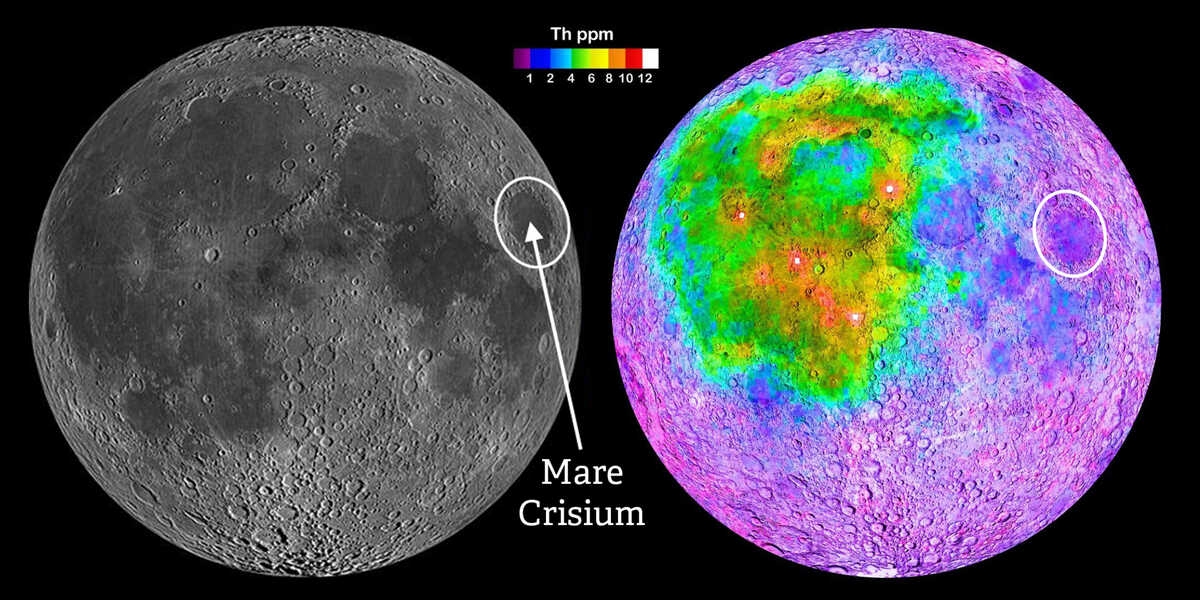
From within the Mare Crisium impact basin, the SwRI-led Lunar Magnetotelluric Sounder (LMS) may provide the first geophysical measurements representative of the bulk of the Moon. Most of the Apollo missions landed in the region of linked maria to the west (left image), whose crust was later shown to be compositionally distinct (right image) as exemplified by the concentration of the element thorium. Mare Crisium provides a smooth landing site on the near side of the Moon outside of this anomalous region.
Image credit: NASA
“For more than 50 years, scientists have used magnetotellurics on Earth for a wide variety of purposes,” said SwRI’s Robert Grimm, principal investigator of LMS.
Those purposes include finding oil, water, geothermal and mineral resources, as well as to understand geologic processes such as the growth of continents, Grimm advised. Now on the Moon, the LMS instrument is the first extraterrestrial application of magnetotellurics, he said.
“Yarn ball” of cable
“The five individual subsystems of LMS, together with connecting cables, weigh about 14 pounds and consume about 11 watts of power,” Grimm said in a SwRI statement. “While stowed, each electrode is surrounded by a ‘yarn ball’ of cable, so the assembly is roughly spherical and the size of a softball.”
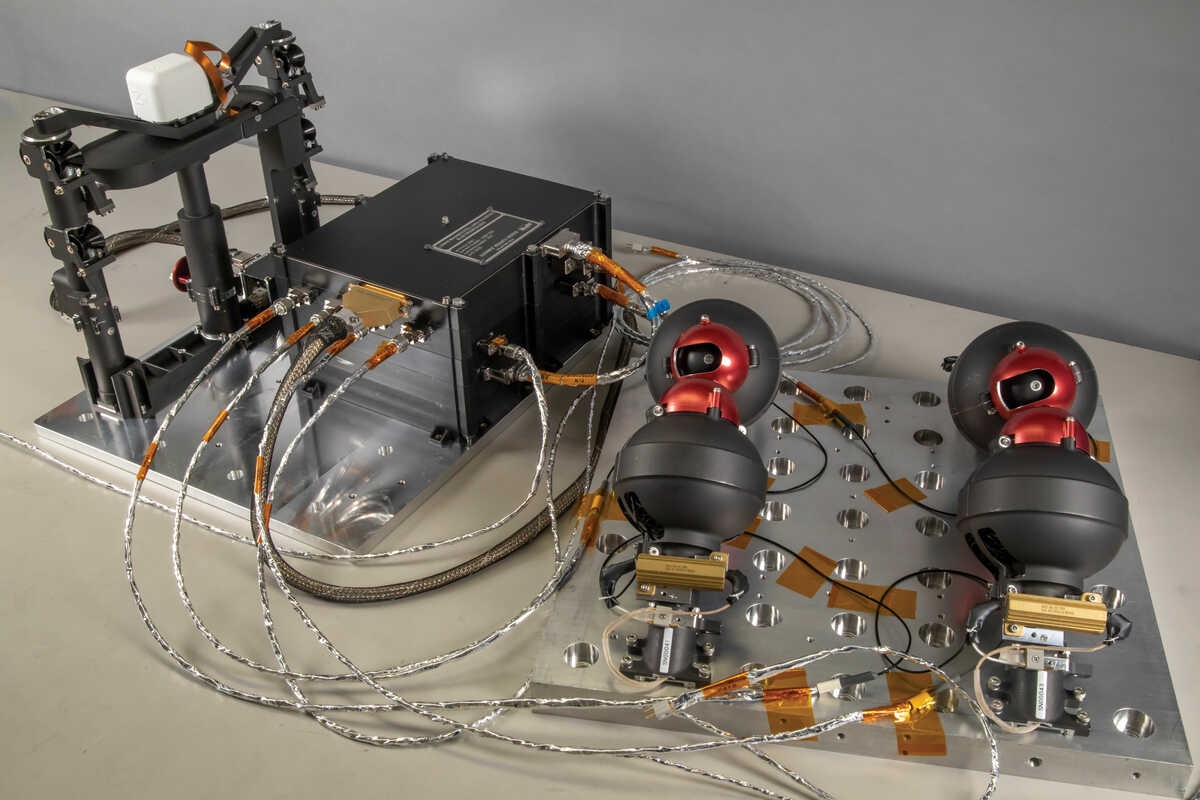
The LMS instrument for the Mare Crisium lander mission, which includes (from left) a magnetometer, a central electronics box and four spring-launched electrodes.
Image credit: SwRI
The LMS payload was funded for delivery to the lunar surface through NASA’s Commercial Lunar Payload Services (CLPS) initiative.
SwRI designed the instrument, built the electronics box and leads the science investigation. NASA’s Goddard Space Flight Center provided the LMS magnetometer to measure the magnetic fields, and Heliospace Corporation provided the magnetometer mast and four electrodes used to measure the electrical fields.
To view a video of the Lunar Magnetotelluric Sounder Deployment, go to:
https://youtu.be/mjsT99ergfA?si=RaVpJnxTcdF32q1O
To watch an informative SwRI video about the LMS instrument, what it does, how it works, click here at:

The U.S. Space Force’s X-37B Orbital Test Vehicle Mission Seven successfully landed at Vandenberg Space Force Base, Calif., March 7, 2025. The X-37B landed at Vandenberg SFB to exercise the service’s ability to recover the spaceplane across multiple sites.
Image credit: U.S. Space Force courtesy photo
That hush-hush flight of the X-37B Orbital Test Vehicle-7 (OTV-7) has come to full stop – landing at Vandenberg Space Force Base, California on March 7 at 02:22 a.m. Easter Standard Time.
This seventh mission of the space plane program remained on-orbit for over 434 days. It was launched to a highly elliptical high Earth orbit aboard a Falcon Heavy rocket back on December 28, 2023.
In a U.S. Space Force posted release, the landing of the automated spacecraft at Vandenberg Space Force Base spotlights its rapid ability to launch and recover its systems across multiple sites.

Artist rendering of the X-37B performing an aerobraking maneuver using the drag of Earth’s atmosphere.
Image credit: Boeing Space
Highly elliptical orbit
X-37B’s Mission 7 was the first launch on a SpaceX Falcon Heavy Rocket to a highly elliptical orbit. After aerobraking to a low Earth orbit and completing its test and experimentation objectives, the space plane successfully performed its deorbit and landing procedures.
As did the previous (OTV-6) space plane trek, OTV-7 also involved a service module that expanded the capabilities of the spacecraft.

OTV-6 was the first mission to introduce a service module that expanded the capabilities of the spacecraft.
Image credit: Staff Sgt. Adam Shanks
Aerobraking breakthrough
“The successful completion of the novel aerobraking maneuver demonstrated the agile and flexible capabilities the X-37B provides the United States Space Force,” according to the statement issued by the Secretary of the Air Force Public Affairs.
The aerobraking technique entails use of atmospheric drag over the course of multiple passes to change orbits while expending minimal fuel.
“While on orbit, Mission 7 accomplished a range of test and experimentation objectives intended to demonstrate the X-37B’s robust maneuver capability while helping characterize the space domain through the testing of space domain awareness technology experiments,” the statement notes.

Image credit: Boeing/Inside Outer Space screengrab
Flight roster
Here’s a listing of previous flights of the space plane:
OTV-1: launched on April 22, 2010 and landed on December 3, 2010, spending over 224 days on orbit.
OTV-2: launched on March 5, 2011 and landed on June 16, 2012, spending over 468 days on orbit.
OTV-3: launched on December 11, 2012 and landed on October 17, 2014, spending over 674 days on-orbit.
OTV-4: launched on May 20, 2015 and landed on May 7, 2015, spending nearly 718 days on-orbit.
OTV-5: launched on September 7, 2017 and landed on October 27, 2019, spending nearly 780 days on-orbit.
OTV-6: Launched on May 17, 2020 and landed on November 12, 2022, circling Earth for 908 days.

Image credit: Boeing/Inside Outer Space Screengrab
First use technologies
The builder of the vehicle, Boeing, has previously noted that the X-37B makes use of several “first use in space” technologies including:
— Avionics designed to automate all de-orbit and landing functions.
— Flight controls and brakes using all electro-mechanical actuation; no hydraulics on board.
— Use of a lighter composite structure, rather than traditional aluminum.
— New generation high-temperature wing leading-edge tiles and toughened uni-piece fibrous refractory oxidation-resistant ceramic (TUFROC) tiles and advanced conformal reusable insulation (CRI) blankets.

Image credit: Boeing/Inside Outer Space screengrab
New chapter
In its earlier missions, OTV-1, OTV-2, and OTV-3 touched down at Vandenberg Air Force Base, California. That changed with the OTV-4, OTV-5, and OTV-6 missions landing at Kennedy Space Center, Florida.
Commenting on Mission 7’s achievements, the X-37B Program Director, Lt. Col. Blaine Stewart stated in a post-landing comment: “Mission 7’s operation in a new orbital regime, its novel aerobraking maneuver, and its testing of space domain awareness experiments have written an exciting new chapter in the X-37B program. Considered together, they mark a significant milestone in the ongoing development of the U.S. Space Force’s dynamic mission capability.”

An onboard camera captured the X-37B and Earth during its OTV-7 flight, during which it also performed an aerobraking maneuver for the first time. Image credit: U.S. Space Force

Firefly Aerospace’s Blue Ghost lander safely touched down in the eastern part of the Moon’s Mare Crisium.
Image credit: ASU/NASA GSFC
The Firefly Aerospace Blue Ghost lunar lander continues to check off operations of its science experiments.
Blue Ghost successfully landed in Mare Crisium on March 2 and is now operating payloads for a complete lunar day (about 14 Earth days).
Firefly Aerospace reports that eight out of ten NASA-sponsored payloads have met their mission objectives – “with more action to come.”

Image credit: Firefly Aerospace
Science activities
Those reported science activities on the Moon are:
Surface Access Arm deployment of the Lunar PlanetVac (LPV): Honeybee Robotics, a Blue Origin company
Electrodynamic Dust Shield (EDS): NASA Kennedy Space Center
Next Generation Lunar Retroreflector (NGLR): University of Maryland
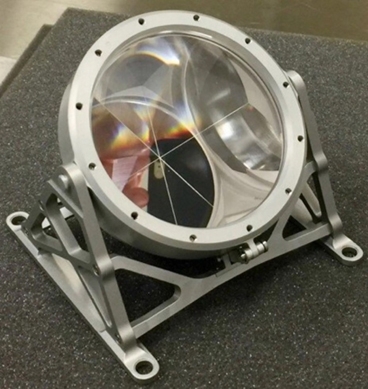
A Next Generation Lunar Retroreflector (NGLR) sits on an adjustable multidirectional mount.
Image credit: International Laser Ranging Service
Regolith Adherence Characterization (RAC): Aegis Aerospace
Radiation Tolerant Computer (RadPC): Montana State University
Lunar GNSS Receiver Experiment (LuGRE): Italian Space Agency (ASI); NASA Goddard Space Flight Center
Lunar Instrumentation for Subsurface Thermal Exploration with Rapidity (LISTER): Texas Tech University
Stereo CAmera for Lunar Plume-Surface Studies (SCALPSS): NASA Langley Research
In a video, the Lunar PlanetVac is shown successfully collecting, transferring, and sorting lunar soil from the Moon using pressurized nitrogen gas.
Go to: https://youtu.be/5drBYiUCCsg?si=TVuWcbyRomBkqmi4
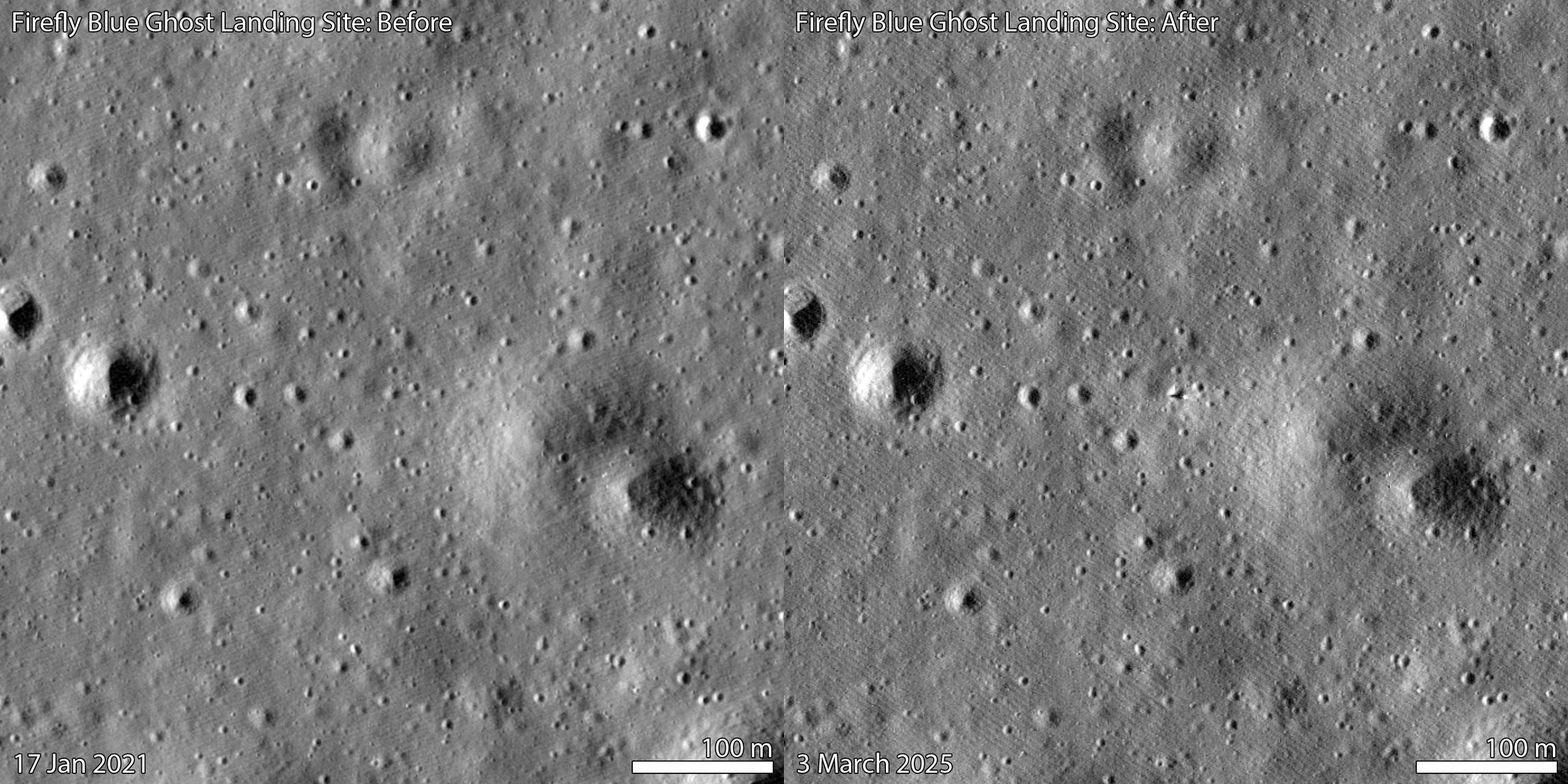
Also, before-and-after image blink emphasizes the Blue Ghost engine plume disturbance of the surface. Images taken by NASA’s Lunar Reconnaissance Orbiter (LRO).
Image credit: NASA/GSFC/Arizona State University
Go to: https://www.lroc.asu.edu/ckeditor_assets/pictures/1493/content_FireflyBlink_v2.gif

Intuitive Machines IM-2 lunar lander within SpaceX Falcon 9 payload fairing.
Image credit: SpaceX
The latest lander to touch down on the Moon is the Intuitive Machine IM-2 mission. However, its status appears not to be optimal, apparently tipped over on landing.
On March 6, the Athena lander made its way down to attempt a landing in Mons Mouton, a lunar plateau near the Moon’s South Pole.
The effort is part of NASA’s CLPS (Commercial Lunar Payload Services) initiative and the space agency’s Artemis campaign to establish a long-term lunar presence.

Intuitive Machines (IM-2), a Nova-C lunar lander dubbed Athena is to investigate the Moon’s south pole. Onboard the lander is the Polar Resources Ice Mining Experiment-1 (PRIME-1), a NASA experiment designed to search for water ice on the Moon.
Image credit: Intuitive Machines
Troubled landing
“We don’t believe we’re in the correct attitude,” said Steve Altemus, co-founder, President, and Chief Executive Officer of Intuitive Machines. The precise location of the lander is not known, due to a spacecraft diversion, in automated mode, from its planned landing site.
While making an evident troubled landing, the craft is power charging, with up and down links operating.
A full assessment of what happened with Athena is still to come – and imagery from the lander itself on the surface are on tap. Furthermore, NASA’s Lunar Reconnaissance Orbiter is on schedule in a few days to snag over-flight imagery in the area, to scout for the lander’s true locale.

IM-2 mission controllers.
Image credit: Intuitive Machines/Inside Outer Space screengrab
Conflicting data
While IM-2 teams are dealing with conflicting data, the onboard inertial measurement hardware is saying the lander is on its side. The craft came down outside of an intended 50-meter landing zone.
It is presently unclear what orientation Athena is in; what A,B,C,or D side of the probe is facing up is unknown.
Depending on figuring out the lander’s orientation will enable, perhaps, some onboard experiments to be performed. Once the lander’s attitude is known, IM-2 team members and NASA will set priorities for work ahead, putting that into a mission package.
One issue revealed is that the lander’s laser altimeters were “noisy,” more than anticipated, and remained noisy all the way to the Athena’s touchdown.

Steve Altemus, co-founder, President, and Chief Executive Officer of Intuitive Machines, details Athena’s condition at press briefing.
Image credit: Intuitive Machines/Inside Outer Space screengrab
Replay of earlier mission?
In a bit of a retro-replay, the landing seems similar to the IM-1 mission of the group’s Odysseus lunar lander. That $118 million IM-1 spacecraft was victorious in February 2024 in becoming the first U.S.-built probe to make a lunar touchdown since the Apollo 17 human-carrying moon trek over 50 years earlier.
However, it too was not a glitch-free ride to its intended destination, Malapert A, near the moon’s south pole.
Odysseus’ laser rangefinders did not function, threatening its landing.
Coming in hot
Thanks to a rapid response team at the company, other onboard navigation instrumentation was quickly repurposed to get the craft down to under a mile from its pre-planned landing area.

Back in 2024., Steve Altemus, chief executive officer and co-founder, Intuitive Machines uses model to describe IM-1’s attitude on the Moon’s surface.
But the six-legged lander came in hot.
The IM-1 mission arrived with a higher downward and horizontal speed than designed for, hitting harder and skidded across sloping terrain, snapping off some of its landing gear in the process.
Meanwhile the Odysseus engine was still firing. And when the engine quieted down the lander tipped over to roughly 30 degrees off the surface. That cock-eyed landing reduced the sunlight reaching its solar panels and also compromised several antennas that made transmission to and from the moon “off-nominal” in space speak.
For IM-2 press conference replay, go to:
Intuitive Machines-2 Lunar Landing News Conference
Image credit: Firefly Aerospace
Firefly Aerospace reports that their Blue Ghost Moon lander is engaged in surface operations of select NASA payloads.
Those operations include the deployment of the Lunar PlanetVac and sampling lunar regolith, deploying the Electrodynamic Dust Shield and demonstrating dust mitigation, capturing images from the Stereo CAmera for Lunar Plume-Surface Studies (SCALPSS).

Image credit: Firefly Aerospace

I think I’m going to hurl! Considerable plume interaction with the lunar surface.
Image credit: Firefly Aerospace
Rocket plume
SCALPSS is provided by NASA’s Langley Research Center and uses stereo imaging photogrammetry to capture the impact of the lander’s rocket plume on lunar regolith as the craft descended.
Indeed, landing imagery taken by Blue Ghost shows material being tossed into the air from the spacecraft’s plume.
One object is shown being flung into the air, impacting the lunar surface a distance away.
Go to landing video at:
https://youtu.be/NpHhEybJdxg?si=6_aeMSVSySDn6o_M

Lunar PlanetVac deployed by Blue Ghost.
Image credit: Firefly Aerospace
Blast of gas
The Lunar PlanetVac is to showcase pneumatic sample collection of lunar regolith by collecting and sorting regolith within its sample collection chamber. Upon deployment to the surface, PlanetVac fires a blast of gas into the lunar surface. That action lofts lunar surface material into a collection chamber for visual (camera) inspection.
PlanetVac is a device developed by Honeybee Robotics (Blue Origin).

Image credit: U.S. Capitol
The ongoing steps taken by President Donald Trump’s administration to transform and reduce in size the federal workforce is a work in progress. The topsy-turvy action plan is already impacting the space science and exploration community.
The shake-up includes the President Trump-okayed establishment of the Department of Government Efficiency (DOGE), an advisory group to modernize and perk up the effectiveness of the federal government.
Playing DOGE ball
Billionaire Elon Musk, the SpaceX founder and CEO of Tesla, is heading the controversial and confusing DOGE undertaking, with buyouts and out-the-door firings of employees to attain objectives.

What? Me Worry
Image credit: Elon Musk by Walter Isaacson/Simon & Schuster
How does this play out for space exploration?
Go to my new Sky and Telescope piece – “Federal Shake-up: Impacts on Space Science and U.S. Leadership” – at:
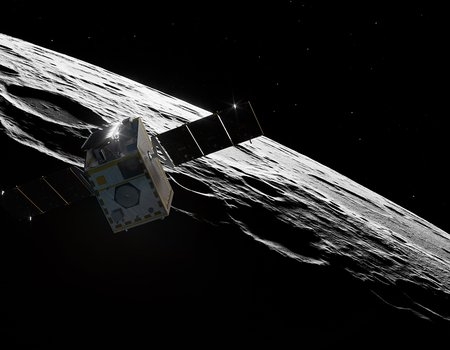
Artwork depicts on-duty Lunar Trailblazer. Image credit: Lockheed Martin
A water-scouting Moon orbiter has been in trouble since its deployment February 26 as a ride share payload atop a SpaceX Falcon 9 booster.
Ground controllers for the NASA/Caltech-led Lunar Trailblazer have valiantly been trying to re-establish communications with the small satellite.
“Based on telemetry before the loss of signal last week and ground-based radar data collected March 2, the team believes the spacecraft is spinning slowly in a low-power state,” explained NASA is a statement.
The team will continue to monitor for signals “should the spacecraft orientation change to where the solar panels receive more sunlight, increasing their output to support higher-power operations and communication,” said NASA.
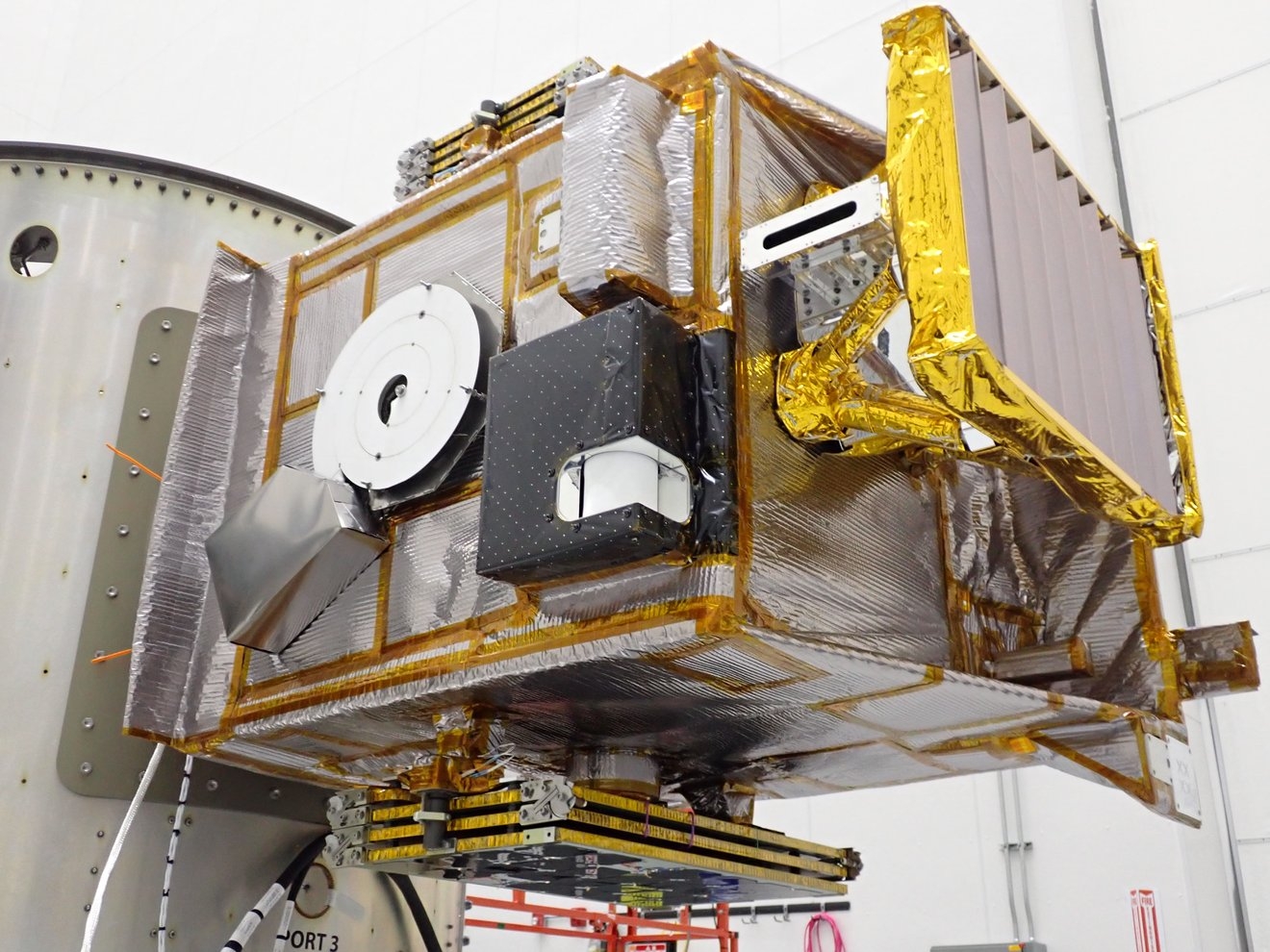
NASA’s Lunar Trailblazer is seen at SpaceX’s payload processing facility within NASA’s Kennedy Space Center in Florida. Fueled and attached to an adaptor used for secondary payloads, the small satellite rode along with another Moon mission, the Intuitive Machines’ IM-2 lander due to make a lunar touchdown this week.
Image credit: SpaceX
Precluded TCMs
NASA’s Deep Space Network is in use, along with ground-based observatories to better understand Lunar Trailblazer’s orientation.
But Lunar Trailblazer’s woes have also precluded the execution of post-launch trajectory correction maneuvers, or TCMs – small thruster operations to adjust the small spacecraft’s flight path.
Ideally, future TCMs would put the probe into its planned science orbit around the Moon.
“The team is now working to define alternative TCM strategies that could be used after reacquiring communications and establishing normal spacecraft functionality,” the NASA statement points out. “These alternative TCM strategies may be able to place Lunar Trailblazer in lunar orbit and allow it to complete some of its science objectives.”

Image credit: Lunar Trailblazer Team
Patrol mode
Lunar Trailblazer is designed to circuit the Moon in patrol mode to detect signatures of ice in reflected light, pinpointing the locales of ice or water trapped in rock at the Moon’s surface.
Mission operators at Caltech’s Lunar Trailblazer in Pasadena, California, did establish communications with the small satellite as expected following deployment.
However, the team subsequently received engineering data indicating intermittent power system issues. They lost communication with the spacecraft Thursday morning at about 4:30 a.m. Pacific Standard Time.
Several hours later, the spacecraft turned on its transmitter.

Reporter Leonard David in Lockheed Martin clean room gets up-close view of Lunar Trailblazer before launch.
Image credit: Barbara David
Curio platform
Lunar Trailblazer was developed and built by Lockheed Martin, with the aerospace firm also integrating the craft’s science instruments.
The spacecraft weighs a modest 440 pounds (200 kilograms) and measures 11.5 feet (3.5 meters) wide when its solar panels are fully deployed.
“We’ve been working closely with our partners at NASA JPL and Caltech throughout the mission,” said Lockheed Martin in a statement provided to Inside Outer Space. “Our spacecraft team onsite and our mission operations team in Denver are advising the Caltech-led flight operations team with solutions. We’re dedicated to the health and safety of Lunar Trailblazer and its mission.”
Lunar Trailblazer utilized the aerospace company’s new Curio platform. Curio is a scalable smallsat spacecraft architecture, designed to aid deep-space exploration and to probe scientific questions in a cost-efficient way.
Higher risk posture
In a NASA-provided statement to Inside Outer Space, the space agency-approved life cycle cost for the mission is price-tagged at $94.1 million.
Lunar Trailblazer was a selection of NASA’s SIMPLEx (Small Innovative Missions for Planetary Exploration) competition.
“To maintain the lower overall cost, SIMPLEx missions have a higher risk posture and less-stringent requirements for oversight and management,” NASA explains. “This higher risk acceptance bolsters NASA’s portfolio of targeted science missions designed to test pioneering technologies.”
For more information on this eagerly-awaited mission, go to my pre-launch Space.com story – “SpaceX to launch water-hunting moon probe ‘Lunar Trailblazer’ on Feb. 26” — at:
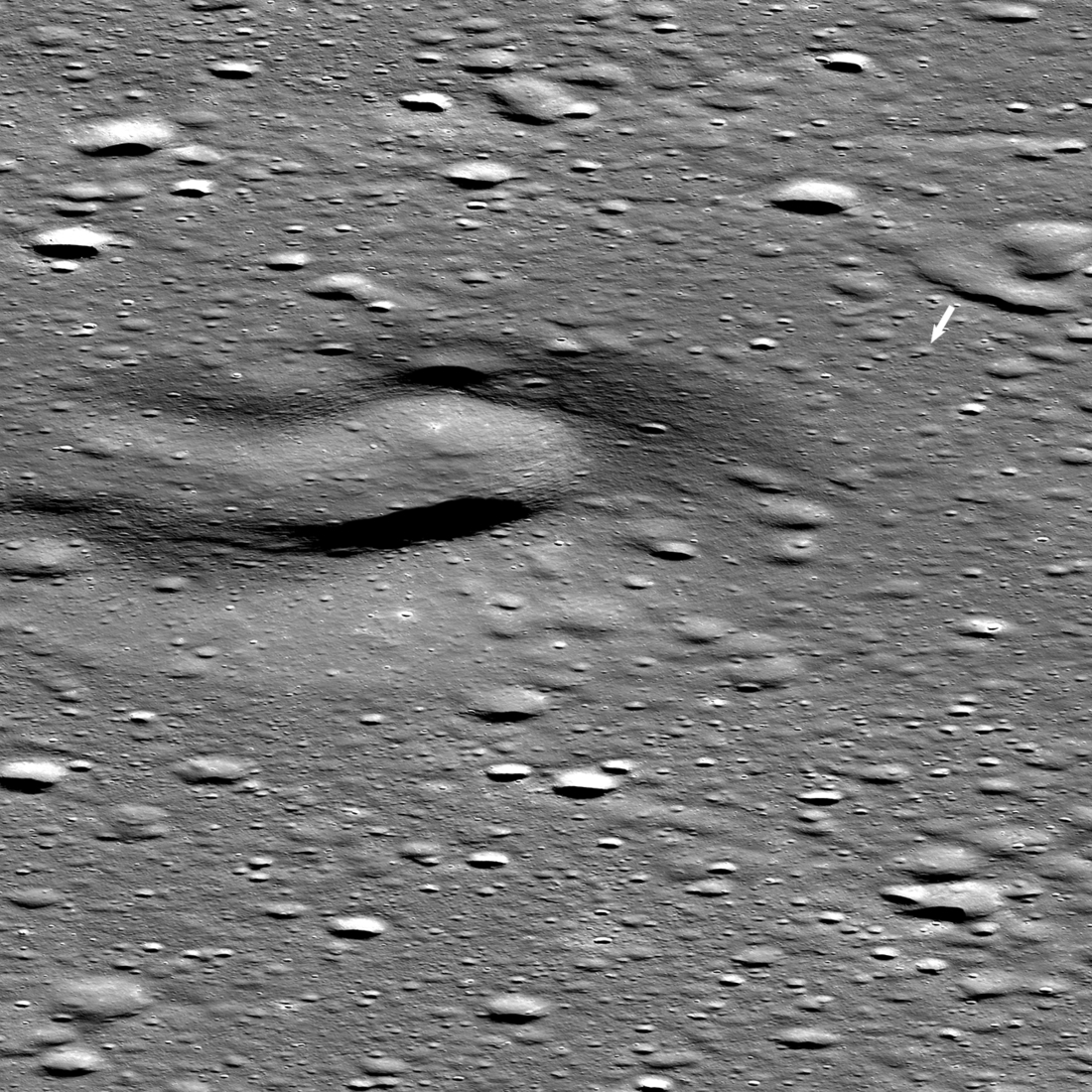
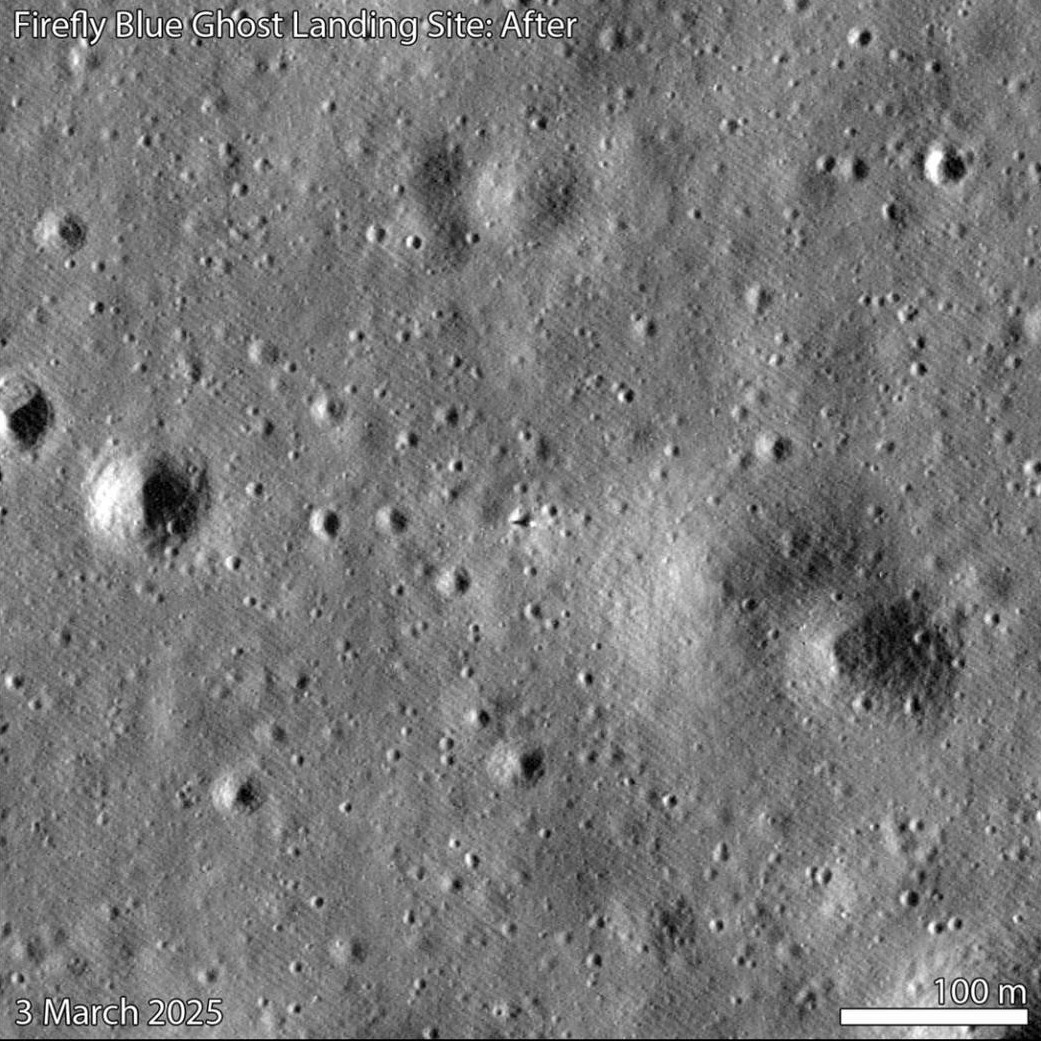
The Firefly Blue Ghost lunar lander set down on the Moon March 2nd. The landing site (arrow) is about 4,000 meters from the center of Mons Latreille, a large volcanic cone.
Image credit: NASA/GSFC/Arizona State University
The sharp-shooting camera system onboard NASA’s Lunar Reconnaissance Orbiter (LRO) has spotted the landing locale of the commercial Blue Ghost lander.
Firefly Aerospace’s Blue Ghost lander safely touched down in the eastern part of the Moon’s Mare Crisium at 19 degrees north and 62 degrees east reports Mark Robinson, leader of the LROC system.

NASA’s Lunar Reconnaissance Orbiter (LRO).
Credit: NASA’s Goddard Space Flight Center Conceptual Image Lab
The Lunar Reconnaissance Orbiter Camera, or LROC, is a system of three cameras mounted on the Lunar Reconnaissance Orbiter (LRO) that capture high resolution black and white images and moderate resolution multi-spectral images of the lunar surface.
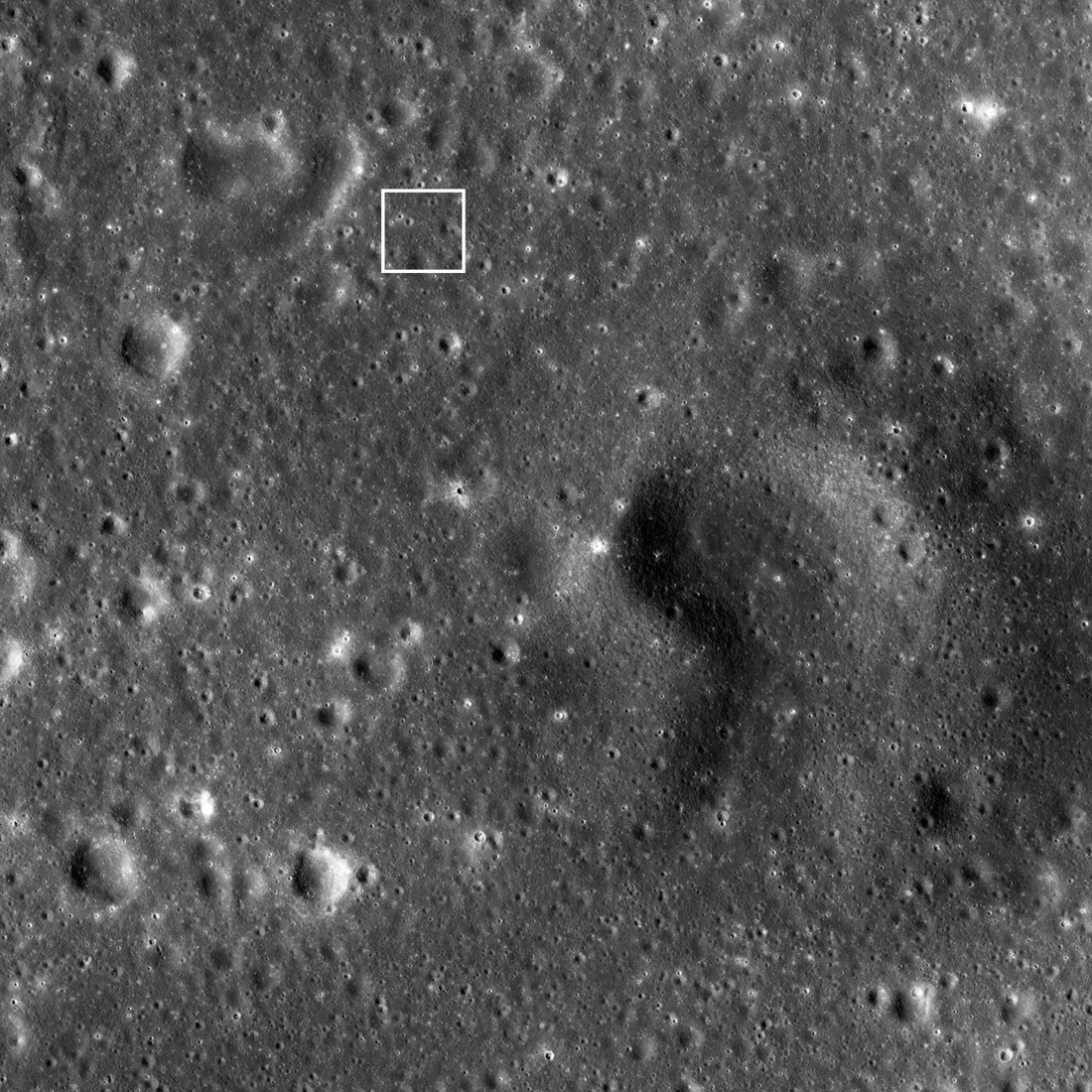
Blue Ghost landing region (white box) is 220 meters wide). North is up.
Image credit: NASA/GSFC/Arizona State University
Impact basin
Mare Crisium is an impact basin formed about four billion years ago when an asteroid roughly 40 kilometers in size struck the northeastern part of the Moon’s near side.
Earlier visitors
Blue Ghost is not alone in reaching this region.
In 1969, the former Soviet Union probe, Luna 15, crash-landed in Mare Crisium.
In November 1974, Luna 23, landed there but tipped over. That attempt to rocket samples from the area was followed in August 1976 by Luna 24 that successfully returned 170 grams of lunar material to Earth.
Firefly Aerospace’s Blue Ghost lander safely touched down in the eastern part of the Moon’s Mare Crisium.
Image credit: ASU/NASA GSFC
To inspect the LRO imagery on your own, go to:
https://www.lroc.asu.edu/images/1400


