Author Archive
 Author:
  March 15th, 2025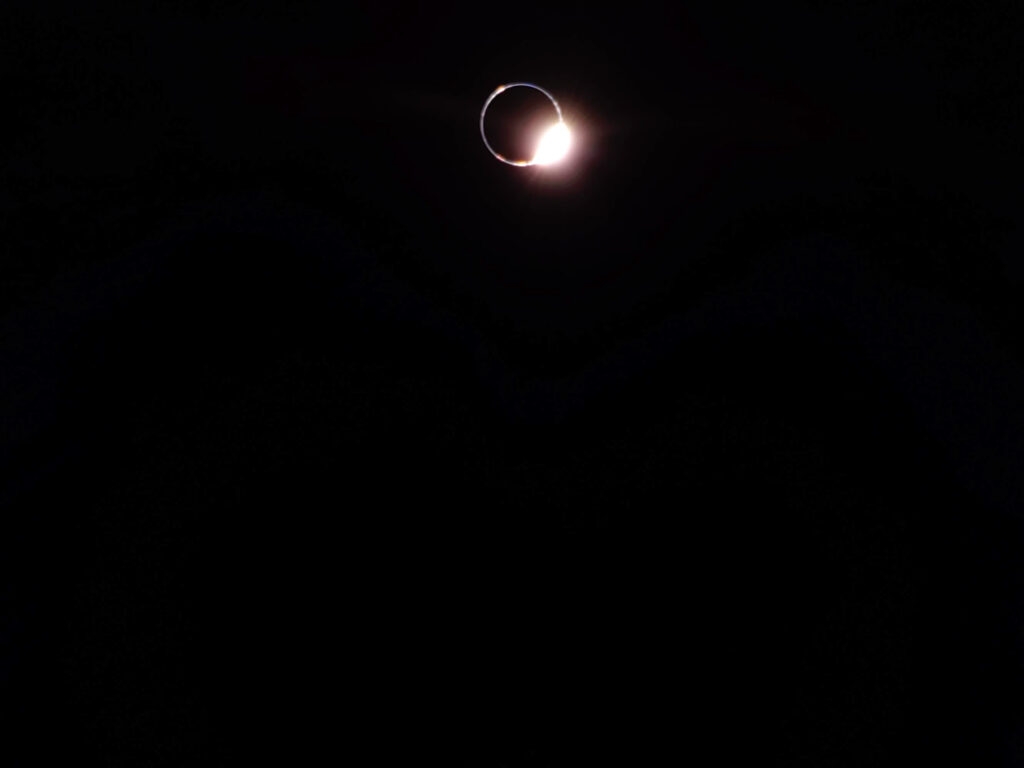
Image credit: Firefly Aerospace
That recent eclipse many viewed here on Earth was also witnessed by the Firefly Aerospace Blue Ghost Moon lander.
Blue Ghost captured imagery during the totality of the solar eclipse. The images were taken from the lander’s top deck camera taken using different exposure settings.

Image credit: Firefly Aerospace
Red hue
They were stitched together, revealing a red hue. That color is a result of sunlight refracting through the Earth’s atmosphere as the Sun is blocked by our planet, casting a shadow on the lunar surface.
The glowing ring of the eclipse is again seen on Blue Ghost’s solar panel. You can also spot Mercury (left) and Venus (right) just above the eclipse – all captured from the probe’s landing site in the Moon’s Mare Crisium.
Go to video clip at:
https://live.staticflickr.com/video/54387002075/5ab573a3b6/1080p.mp4?

Blue Ghost X-band antenna (left), the Lunar Environment heliospheric X-ray Imager (center), and the Lunar Magnetotelluric Sounder mast (right). Image credit: Firefly Aerospace
 Posted in

SpaceX Transporter-8 liftoff.
Image credit: SpaceX
The Federal Aviation Administration (FAA) posted today for public review a Draft Environmental Assessment (EA).
This document analyzes the SpaceX proposal to increase Falcon 9 operations from 50 to up to 120 per year from Space Launch Complex 40 at the Cape Canaveral Space Force Station in Florida.
The Draft EA also reviews the construction of a first-stage booster landing zone at the site with up to 34 landings per year.
A virtual public meeting will be held on April 16 and the public comment period closes on April 24, 2025.
To view the Draft EA, go to:
https://www.faa.gov/space/stakeholder_engagement/SpaceX_Falcon_SLC_40_EA
Image credit: Firefly Aerospace
The Firefly Aerospace Blue Ghost Moon lander got a first look at the solar eclipse from the Moon around 12:30 am Central Daylight (Texas) Time.
In a photo released by the group, you can see the glowing ring of light emerge in the reflection of the lunar lander’s solar panel as Earth began to block the sun.

Image credit: Firefly Aerospace
More to come
The photo taken was taken from the lander’s top deck and also shows its X-band antenna (left), the Lunar Environment heliospheric X-ray Imager (center), and the Lunar Magnetotelluric Sounder mast (right).
More imagery is forthcoming when the Blue Ghost X-band antenna warms up from the cold temperatures faced in the darkness of totality.
Stay tuned for more images!

Image credit:
Firefly Aerospace
Call it “Operation Solar Eclipse”… but on the Moon!
That’s what Firefly Aerospace has dubbed it, making use of their recently landed Blue Ghost lunar lander.
On March 14, Blue Ghost will witness a rare eclipse from the Moon.
“This marks the first time in history a commercial company will be actively operating on the Moon and able to observe a total solar eclipse where the Earth blocks the sun and casts a shadow on the lunar surface,” explains the company.

Firefly Aerospace’s Blue Ghost lander safely touched down in the eastern part of the Moon’s Mare Crisium.
Image credit: ASU/NASA GSFC
Totality
The eclipse will last nearly 5 hours starting at 12 am Central Standard (Texas) Time through 4:52 am CST at Firefly’s landing site in Mare Crisium.
That time period includes roughly 2 hours and 16 minutes of totality, starting at 1:18 am CST.
“Although not a mission requirement, Firefly hopes to image the eclipse and potentially operate NASA instruments to measure changes in the lunar environment from our unique vantage point on the Moon,” adds a company update.
Glowing ring of sunlight
Blue Ghost will witness a glowing ring of sunlight when the Earth blocks the Sun above the Moon’s horizon.
“This ring may also appear red as the sunlight refracts through the Earth’s atmosphere. Firefly aims to capture this with a wide-lens camera on Blue Ghost’s top deck,” they explain, “so the glowing ring will likely appear fairly small in the distance, similar to the size of Earth captured below by Blue Ghost upon landing on the Moon.”

Image credit: Firefly Aerospace
Capturing this footage means that the Blue Ghost lander needs to rely on its batteries for power – rather than its solar panels. While a challenge, “we hope to capture this incredible phenomenon and share it with the world. Stay tuned!”
Also, check out this newly issued video showing the Blue Ghost landing and its plume interaction with the lunar surface at: https://youtu.be/emebSgs1f2w

On the prowl at Jezero Crater, NASA’s Mars Perseverance rover is loaded with scientific equipment.
Image credit: NASA/JPL-Caltech/MSSS
The case for the detection of a potential biosignature on Mars will be made today during this week’s Lunar and Planetary Science Conference.
Since its landing in February 2021, the Perseverance rover has explored and sampled igneous and sedimentary rocks in Jezero Crater. Its mission is to characterize early Martian geological processes and habitability and search for biosignatures.

Artist’s illustration of NASA’s Perseverance rover on Mars.
Image credit: NASA/JPL-Caltech
Distinct outcrops
Upon entering Neretva Vallis, NASA’s Perseverance rover has investigated a set of distinct mudstone and conglomerate outcrops. Collectively, these outcrops are called the Bright Angel formation.
Dozens of researchers from around the world are listed in the paper to be detailed today, led by Joel Hurowitz, an associate professor at Stony Brook University’s Department of Geosciences.
“We report on measurements from these rocks and describe the discovery of a potential biosignature,” Hurowitz and colleagues explain.
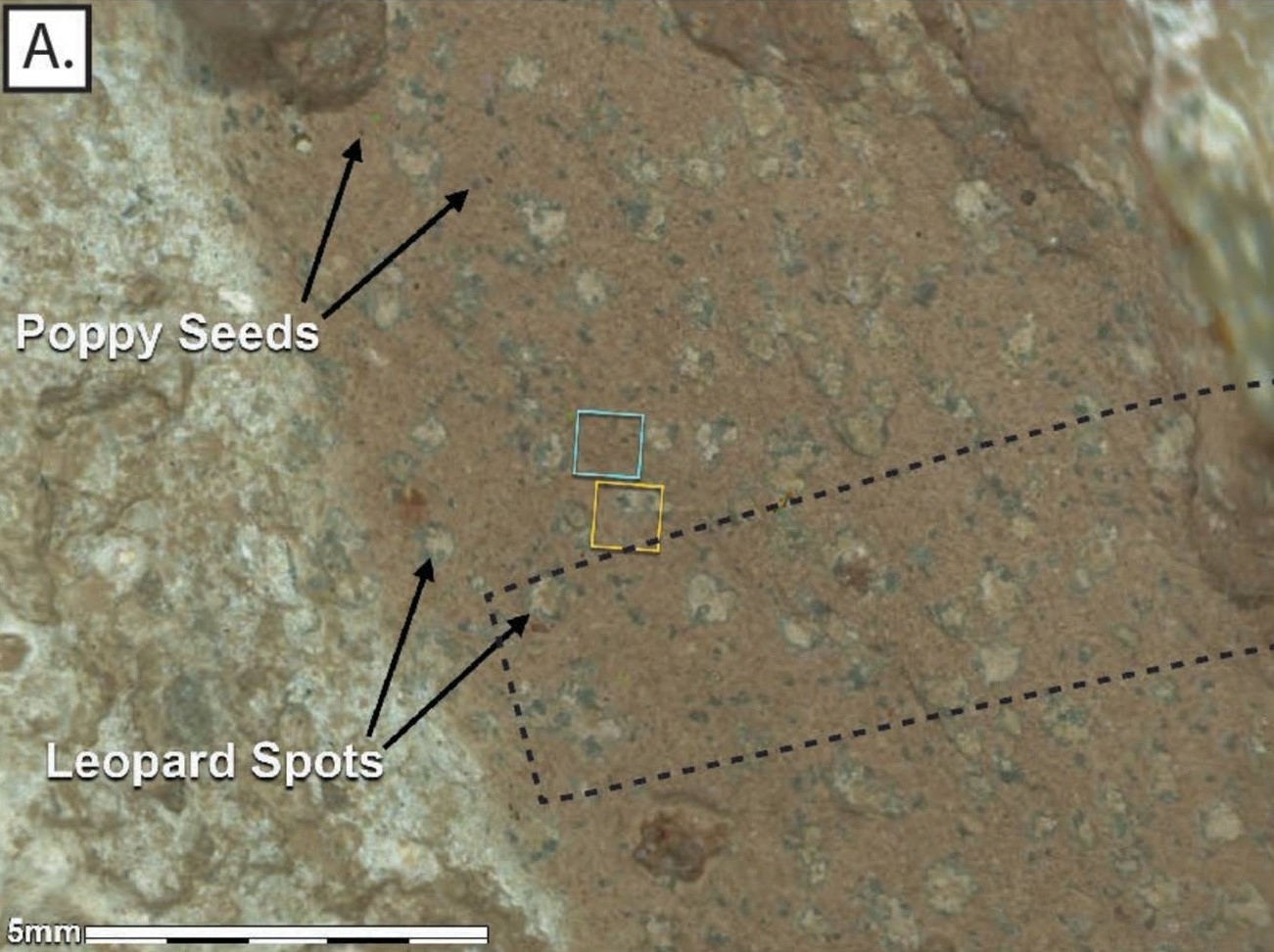
Informally named ‘Leopard Spots,” the features have been appraised by the Perseverance rover. An analysis by the robot’s Planetary Instrument for X-ray Lithochemistry( PIXL) reveals that poppy seeds and leopard spot rims are enriched in ferrous iron and phosphorous,
while leopard spot cores are enriched in iron and sulfur.
Image credit: Joel Hurowitz, et al.
Microbial respiration
The researchers flag the finding of “poppy seeds and leopard spots” as potential biosignatures in material investigated by the Perseverance rover.
“On Earth, such organic matter mediated mineral forming reactions are often driven by, or are closely associated with, microbial respiration of organic matter,” the research team explains.
Additionally, models of the reaction chemistry that formed these features are consistent with a microbially mediated process, they report.
Closer examination
Given that the robot has collected a wide range of specimens at Jezero Crater, the hope is that a future Mars sample return mission can whisk them back to Earth.

Image credit: NASA/JPL-Caltech
“Analysis of the core sample collected from this unit using high-sensitivity instrumentation on Earth will enable tests to assess the biogenicity of the minerals, organics, and textures it contains,” Hurowitz and colleagues report.
The paper – “The detection of a potential biosignature by the Perseverance rover on Mars” – is on tap for discussion at the Lunar and Planetary Science Conference, underway this week in The Woodlands, Texas and held by the Lunar and Planetary Institute (LPI).
For the research paper overview, go to:
That NASA/Caltech Lunar Trailblazer spacecraft deployed February 26 is officially a no-go for its intended mission of looking for water-ice on the Moon.
A new JPL report has stated that efforts to reestablish communications with NASA’s Lunar Trailblazer have continued since mission operators lost contact with the small satellite one day after launch on a SpaceX Falcon 9 as a rideshare payload.
Listen up
“The team continues to send commands to the spacecraft via NASA’s Deep Space Network (DSN), while other radio ground stations are volunteering time to ‘listen’ for a signal from Lunar Trailblazer and track the spacecraft as it moves farther from Earth,” a NASA posting notes.
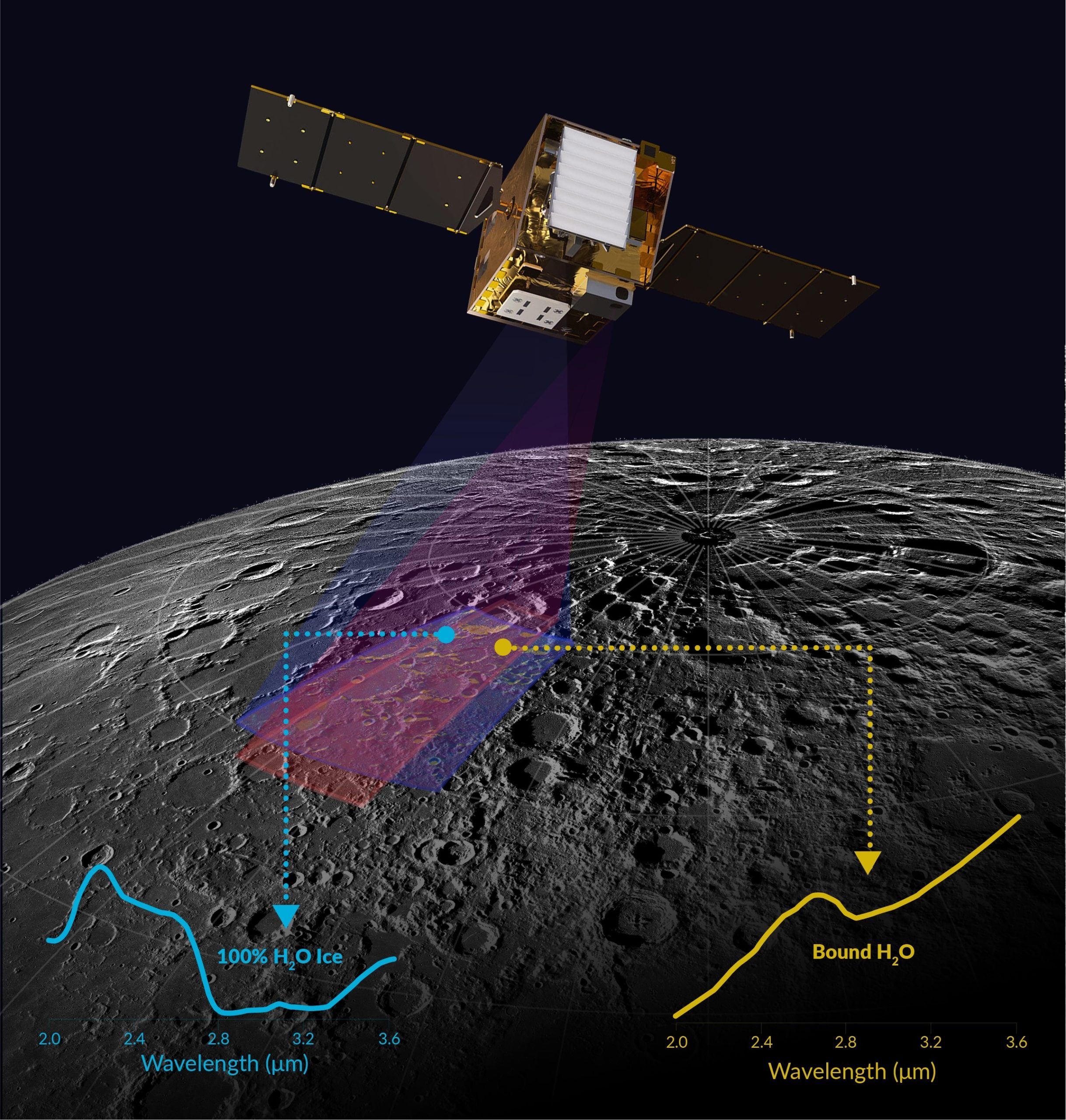
Science instruments onboard Lunar Trailblazer smallsat probe for lunar water.
Image credit: Jasper Miura, Lockheed Martin
Lunar Trailblazer’s orientation and rotation is being assessed while engineers also are using testbeds to study the spacecraft’s behavior during boot-up and recovery options from a low power state.
The downer of news: “While Lunar Trailblazer’s prime science mission is no longer possible, NASA is assessing whether there are mission options for the future,” explained a JPL release.
The mission is managed by NASA’s Jet Propulsion Laboratory and its science investigation is led by Caltech, which manages JPL for NASA.

Captured by astronaut Don Pettit aboard the International Space Station (ISS), this long-exposure photograph showcases Earth’s city lights, the upper atmosphere’s airglow, and streaked stars. The bright flashes at the center are reflections of sunlight from SpaceX’s Starlink satellites in low-Earth orbit.
Image credit: NASA
The ongoing human attack on Earth’s atmosphere is resulting in climate change according to a majority of the scientific community. That alteration, in part, involves increasing greenhouse gas emissions.
A new study by researchers report that this change will reduce the atmosphere’s ability to “burn up” space clutter.
MIT aerospace engineers have found that greenhouse gas emissions are changing the environment of near-Earth space in ways that, over time, will reduce the number of satellites that can sustainably operate there.
The new research has been published in Nature Sustainability.
Thermosphere contraction
Carbon dioxide and other greenhouse gases can cause the upper atmosphere to shrink. Of special interest is the thermosphere because when the thermosphere contracts, the decreasing density reduces atmospheric drag.
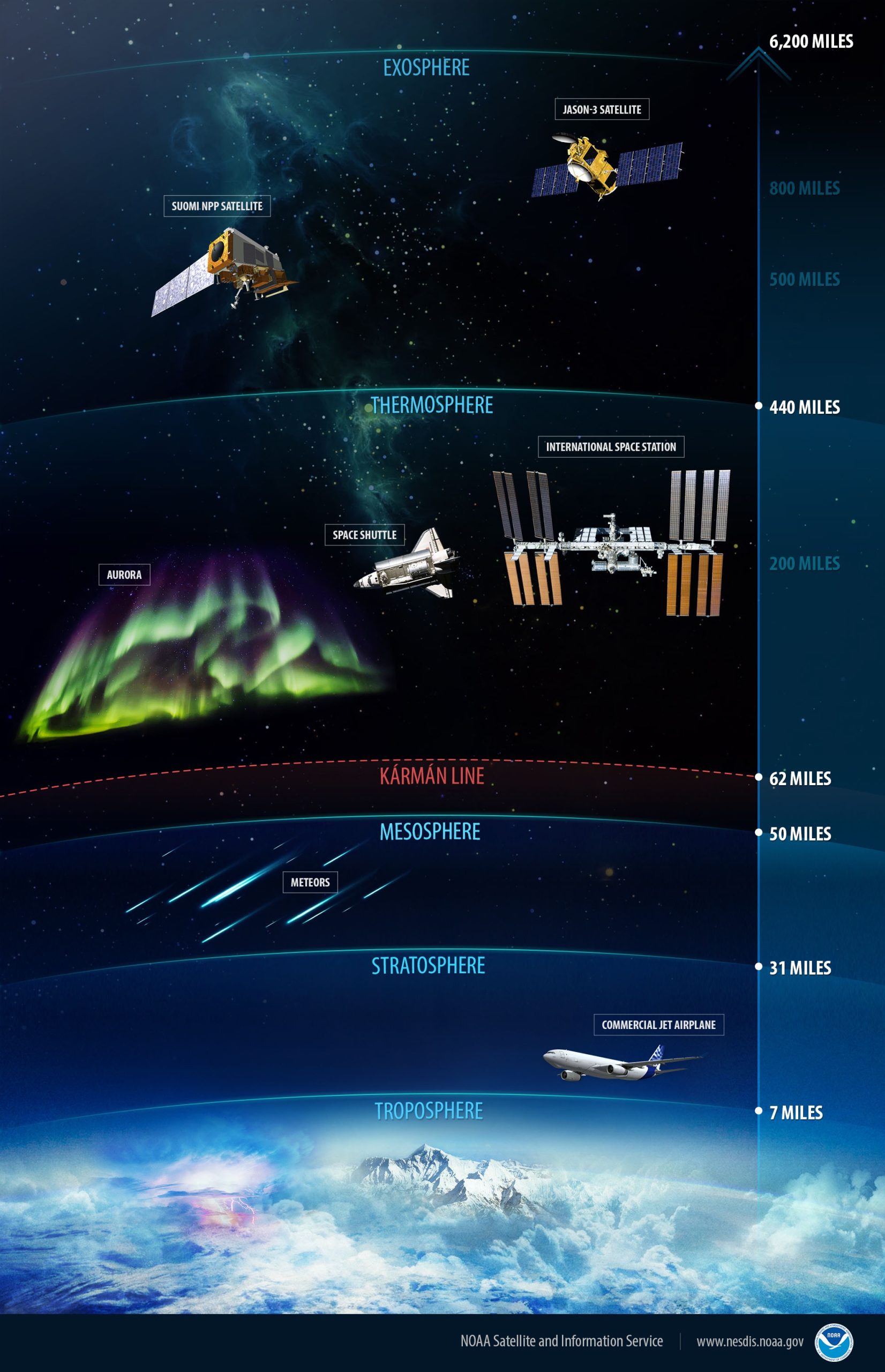
Image credit: NOAA
That reduction in atmospheric drag affects the force that pulls satellites and other space riff-raff down to altitudes where they encounter air molecules, causing reentry into Earth’s atmosphere.
Less drag therefore means extended lifetimes for space junk, which will litter sought-after regions for decades and increase the potential for collisions in orbit, the research team points out.
Fragile state
“The upper atmosphere is in a fragile state as climate change disrupts the status quo,” explains William Parker, a graduate student in MIT’s Department of Aeronautics and Astronautics (AeroAstro) and lead author of the work.
“At the same time, there’s been a massive increase in the number of satellites launched, especially for delivering broadband internet from space,” Parker adds. “If we don’t manage this activity carefully and work to reduce our emissions, space could become too crowded, leading to more collisions and debris,” he states in a MIT research statement release.

Falcon 9 booster topped with sixty Starlink satellites.
Credit: SpaceX
Enter the megaconstellation
Says study member Richard Linares, associate professor in MIT’s AeroAstro department: “Our behavior with greenhouse gases here on Earth over the past 100 years is having an effect on how we operate satellites over the next 100 years.”
Enter the megaconstellation, a new trend, Linares notes, “and we’re showing that because of climate change, we’re going to have a reduced capacity in orbit.” Furthermore, in local regions, “we’re close to approaching this capacity value today.”
Observes Parker: “We rely on the atmosphere to clean up our debris. If the atmosphere is changing, then the debris environment will change too.”
Their research work includes co-author Matthew Brown of the University of Birmingham.
“We show the long-term outlook on orbital debris is critically dependent on curbing our greenhouse gas emissions,” says Parker.

In-orbit explosions can be related to the mixing of residual fuel that remain in tanks or fuel lines once a rocket stage or satellite is discarded in Earth orbit. The resulting explosion can destroy the object and spread its mass across numerous fragments with a wide spectrum of masses and imparted speeds.
Credit: ESA
Over-utilized
Considering the recent, rapid expansion in the number of satellites in low Earth orbit, the study team points out that understanding environmental variability and its impact on sustainable operations is necessary to prevent over-exploitation of the region.
“On-orbit satellite failures, explosions and collisions have contributed to a large population of non-maneuverable and often non-trackable debris objects. Meanwhile, decreasing launch costs and maturing satellite technology have created conditions favorable for rapid commercialization across orbital regimes, especially in LEO [Low Earth Orbit],” Parker and his fellow researchers state.
“If no governance action is taken to manage the occupation of Earth’s orbit, the environment will very likely become over-utilized, diminishing the orbital resource and limiting future access,” the study team observes. “Any realistic projection of the orbital debris environment should consider that fragmentation events (collisions, explosions, anti-satellite weapon tests and so on) will occur.”
This research is supported, in part, by the U.S. National Science Foundation, the U.S. Air Force, and the U.K. Natural Environment Research Council.
To read the research paper – “Greenhouse gases reduce the satellite carrying capacity of low Earth orbit” – go to:

Intuitive Machines IM-2 lunar lander within SpaceX Falcon 9 payload fairing.
Image credit: SpaceX
The latest lander to touch down on the Moon is the Intuitive Machine IM-2 mission, called Athena. But the craft tipped over on landing that lead to loss of the spacecraft and fulfilling operational, and full use of its load of payloads.
New imagery from NASA’s Lunar Reconnaissance Orbiter depicts the landing site terrain and locale of the lost to the Moon commercial spacecraft.

Rest in peace IM-2. Image credit: NASA/GSFC/Arizona State University

The IM-2 Athena lander hit the surface faster than intended and ended up on its side within a 65-foot dimater (20-meters) crater.
Image credit: NASA/GSFC/Arizona State University

Tipped over Athena Moon lander.
Image credit: Intuitive Machines
Two for two troubles
On March 6, the Athena lander made its way down to attempt a landing in Mons Mouton, a lunar plateau near the Moon’s South Pole.
The effort is part of NASA’s CLPS (Commercial Lunar Payload Services) initiative and the space agency’s Artemis campaign to establish a long-term lunar presence.
But in a bit of a retro-replay, the IM-2 botched landing seems similar to the IM-1 mission of the group’s Odysseus lunar lander last year.
Coming in hot
The $118 million IM-1 Odysseus spacecraft was victorious in February 2024 in becoming the first U.S.-built probe to make a lunar touchdown since the Apollo 17 human-carrying moon trek over 50 years earlier.
However, it too was not a glitch-free ride to its intended destination, Malapert A, near the Moon’s south pole.
That six-legged lander came in hot.
The IM-1 mission arrived with a higher downward and horizontal speed than designed for, hitting harder, skidding across sloping terrain, snapping off some of its landing gear in the process.
The IM-1 mission also tipped over, resulting in less-than-optimal success.
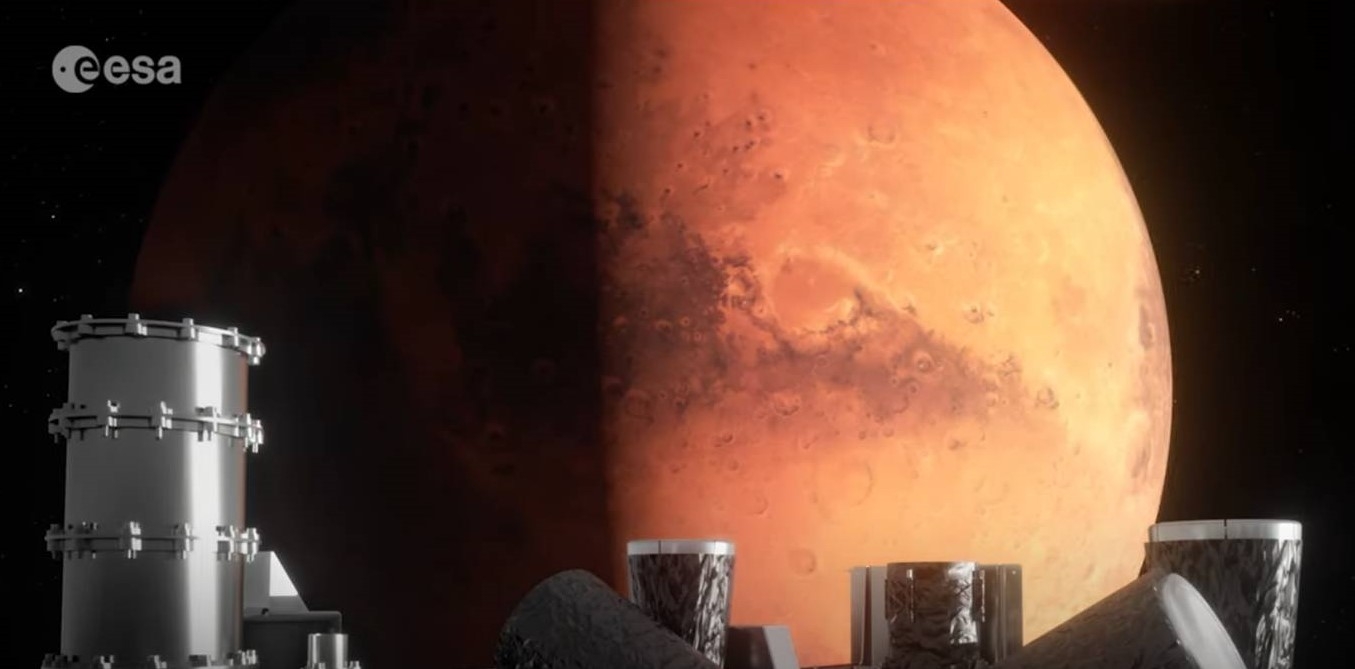
Image credit: ESA/Inside Outer Space screengrab
Tune in to a spacecraft flyby of Mars!
The European Space Agency’s Hera probe needs a gravity assist to get to its final destination.
This livestream event will feature releases of images as the spacecraft slips by the surface of Mars – and also zoom by Deimos, the smaller of the two moons circling the Red Planet. Hera will also image Mars’s larger moon, Phobos, as it begins to move away from Mars.
The broadcast will involve ESA astronaut Alexander Gerst, as well as Andy Weir, science fiction author of The Martian and Project Hail Mary, as well as a surprise special guest.
To lend an eye to this flyby and release of imagery, the event is slated for Thursday March 13, starting at 11:50 Central Europe Time.
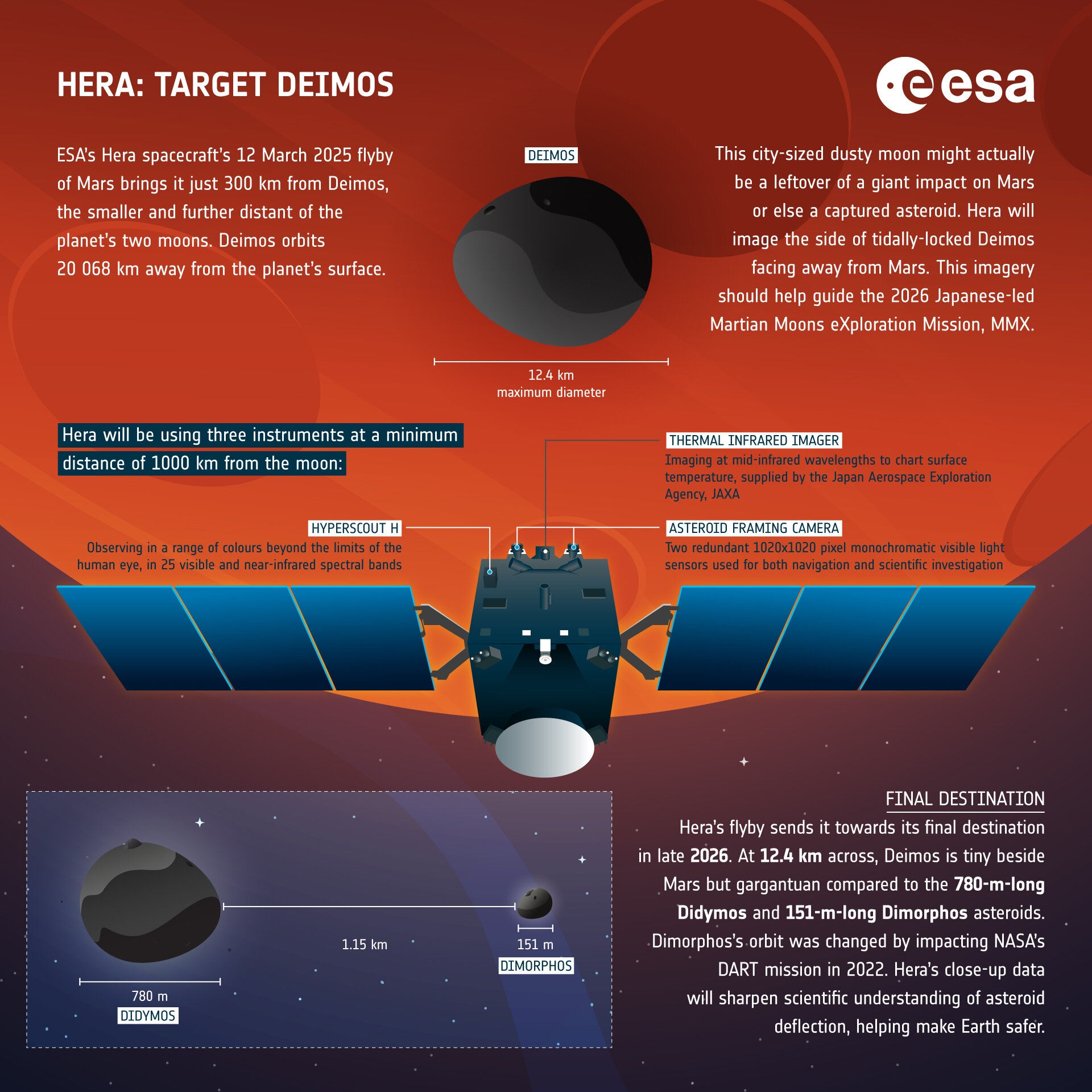
Image credit: ESA
Destination Dimorphos
Launched on October 7, 2024, Hera is to visit the first asteroid to have had its orbit altered by human action.
By gathering close-up data about the Dimorphos asteroid, which was impacted by NASA’s DART spacecraft in 2022, Hera’s mission is to sharpen asteroid deflection into a well understood and potentially repeatable technique.
Hera will reach the Didymos asteroid and its Dimorphos moonlet in December 2026.
For more information on this unique event, go to:
Here’s the website to check in on images from Hera’s Mars flyby, the official broadcast, at:

The Age of Disclosure is a documentary that features 34 senior members of the U.S. Government, military, and intelligence community.
At the heart of this film is the prospect of an 80 year cover-up of the existence of non-human intelligent life.
Spotlighted are Congressional hearings on Unidentified Anomalous Phenomena (UAP, aka UFOs). This documentary points to a secret war amongst major nations to reverse engineer technology of non-human origin.
The film provides a behind-the-scenes look at those at the forefront of the bi-partisan disclosure effort.

Image credit: Ken Bye Voice of VR Podcast/Inside Outer Space screengrab
Produced and directed by Dan Farah, The Age of Disclosure was premiered during this month’s 2025 South By Southwest (SXSW) Film Festival in Austin, Texas.
The official Trailer can be viewed at:
https://www.youtube.com/watch?v=DkU7ZqbADRs
Also, go to this video from SXSW courtesy of Ken Bye of the Voice of VR Podcast that features key personalities from the documentary at:
https://www.youtube.com/watch?v=Y1_u_w4kgcM
Lastly, read this review — ‘The Age of Disclosure’ Review: A Documentary Claims to Offer Proof that Alien Spaceships Are Visiting Us. But Does It Really? – at:

