Author Archive
 Author:
  July 30th, 2016
Scene from “Mars,” a National Geographic Channel miniseries due to air in November.
Credit: National Geographic, Imagine,RadicalMedia,Robert Viglasky
The global event series MARS, produced by Brian Grazer and Ron Howard, is landing on the TV watch list, premiering on the National Geographic Channel in 171 countries and 45 languages this November.
National Geographic will extend the MARS storytelling in an unprecedented cross-platform effort, including a six-part digital companion prequel series.
As part of rollout activities, I am pleased to have authored the companion standalone book for National Geographic: “MARS: Our Future on the Red Planet,” on sale October 25.

Credit: National Geographic
You’ll find scenes from the miniseries in the book, along with some 200 color images that underscore the technical, physiological, psychological, sociological, political, biological, cultural and ethical issues that confront the human reach to the Red Planet.
Present day future
MARS, the TV miniseries, is set both in the future and in the present day. This six-part series tells the story from the vantage point of a fictitious crewed mission in 2033.
MARS envisions the future of space travel funded through a corporate-public partnership of two fictional organizations:
- The Mars Mission Corporation (MMC), a consortium of aerospace corporations formed in 2022 and headquartered in London that builds and manages the technological hardware for the Mars program.
- The International Mars Science Foundation (IMSF), which was created by a coalition of space-faring nations to carry out a mission to Mars.
The scripted portion focuses on Earth’s first crewed mission to MARS aboard the spacecraft Daedalus. Its maiden voyage in 2033 is crewed by a carefully selected international crew of six uniquely qualified astronauts.

Miniseries features international crew destined for Mars.
Credit: National Geographic, Imagine,RadicalMedia
Multi-planet species?
The MARS miniseries – as does the companion book — showcases a collection of interviews with the top scientific minds currently working to overcome the many obstacles that stand in the way of eventual human missions to Mars.
Among those interviewed is Elon Musk, chief rocketeer at SpaceX:
“The future of humanity is fundamentally going to bifurcate along one of two directions: either we’re going to become a multi-planet species and a spacefaring civilization, or we’re going to be stuck on one planet until some eventual extinction event. In order for me to be excited and inspired about the future, it’s got to be the first option,” Musk says in the series.
Resources
To view a July 29th trailer for National Geographic Channel’s global event series MARS, premiering in November, go to:
https://www.youtube.com/watch?v=cwUB0GYjHN0
Before MARS premiers, there will be an extensive digital virtual-reality experience available at:
For more information on the book – Mars: Our Future on the Red Planet — to be released October 25th, go to:
https://shop.nationalgeographic.com/product/books/books/new-books/mars
Also go to Amazon at:
 Posted in

Special salute to Apollo 11’s 47th anniversary held at the Kennedy Space Center, Star Trek’s George Takei and moonwalker, Buzz Aldrin.
Credit: Rob Varnas
KENNEDY SPACE CENTER, Florida – A convergence of reality and science fiction took center stage here July 23 during a salute to the 47th anniversary of the Apollo 11 moon landing and the 50th anniversary of the iconic Star Trek television show and follow-on franchise.
An audience of some 250 people took part in the evening event; a scene dominated by a huge Saturn 5 booster perched overhead. The occasion raised funds for Aldrin’s ShareSpace Foundation – a nonprofit organization dedicated to inspiring children to be passionate regarding science, technology, engineering, arts and math.
The Apollo 11 anniversary gala was hosted by George Takei, best known for his portrayal of Mr. Sulu in the acclaimed television and film series Star Trek.
Apply warp speed and view my new Space.com story on the event. Go to:
George Takei, William Shatner Help NASA Celebrate Apollo 11 Anniversary
July 29, 2016 07:00 am ET
http://www.space.com/33585-star-trek-apollo-11-anniversary-event.html
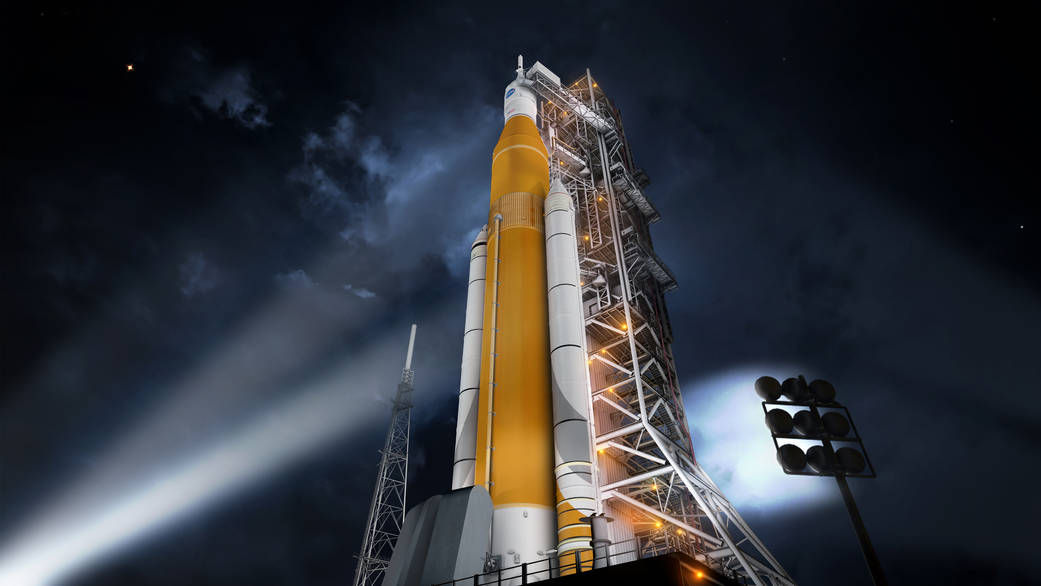
Space Launch System.
Credit: NASA
The U.S. Government Accountability Office (GAO) has issued two new reports on the overall status of NASA’s Space Launch System and the space agency’s next piloted program, Orion.
What GAO found in summary is that the SLS has resolved some technical issues and matured its design since GAO’s July 2015 report, but pressure remains on the program’s limited cost and schedule reserves.
This pressure, in turn, threatens its committed November 2018 launch readiness goal, the GAO reported.
Software: substantial risk
In reviewing the Orion program, what GAO found the project has overcome several technical challenges and made design changes to the crew capsule to reduce risk.

NASA’s Orion spacecraft headed outward to Mars.
Credit: Lockheed Martin
Known challenges, however, remain—such as development of the service module and the crew capsule heat shield, among others—that could cause cost increases and schedule delays as the program undergoes integration and test.
“Technical challenges are inherent in complex programs such as Orion, but if not carefully managed, they could result in cost overruns and schedule delays. For example, the program has identified software development as an area of substantial risk with a potential cost impact of more than $90 million and which may result in schedule delays,” the GAO report explains.
Resources
Reports:
NASA Human Space Exploration: Opportunity Nears to Reassess Launch Vehicle and Ground Systems Cost and Schedule: GAO-16-612, July 27.
- Report: http://www.gao.gov/products/GAO-16-612
- Highlights: http://www.gao.gov/assets/680/678693.pdf
- Podcast: http://www.gao.gov/multimedia/podcasts/678379
Orion Multi-Purpose Crew Vehicle: Action Needed to Improve Visibility into Cost, Schedule, and Capacity to Resolve Technical Challenges: GAO-16-620, July 27.
- Report: http://www.gao.gov/products/GAO-16-620
- Highlights: http://www.gao.gov/assets/680/678705.pdf
- Podcast: http://www.gao.gov/multimedia/podcasts/678379
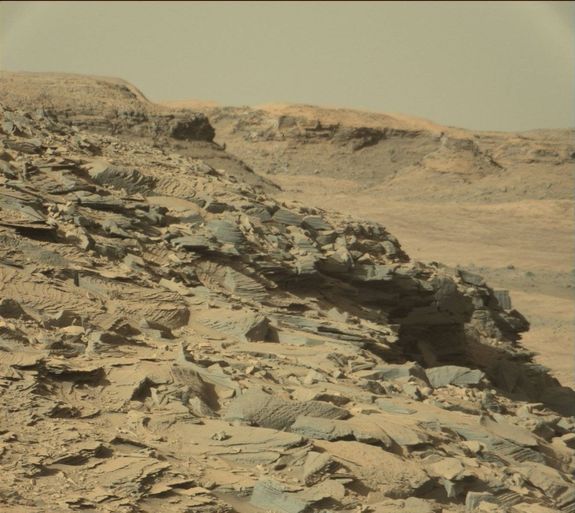
Taming a resource-rich Mars can assure that future inhabitants live long and prosper. This image taken by NASA’s Curiosity Mars rover: Mastcam Right image taken on Sol 1301, April 3, 2016.
Credit: NASA/JPL-Caltech/MSSS
A NASA technical memorandum has taken a detailed look at the prospect of putting in place a sustainable colony of people on the Red Planet. Such a settlement can be safe, affordable, and nurture independence of residents on Mars from Earth.
The document is titled Frontier In-Situ Resource Utilization for Enabling Sustained Human Presence on Mars, authored by Robert Moses and Dennis Bushnell of NASA’s Langley Research Center in Hampton, Virginia.
Massive resources
“There are massive resources on Mars obtainable from the atmosphere and extracted from the regolith which are capable of supporting human colonization,” the report explains. Using Martian resources, existing technologies could supply water, oxygen, fuel, and building materials, they write, “to relax the dependence on Earth during the buildup of a colony on Mars.”
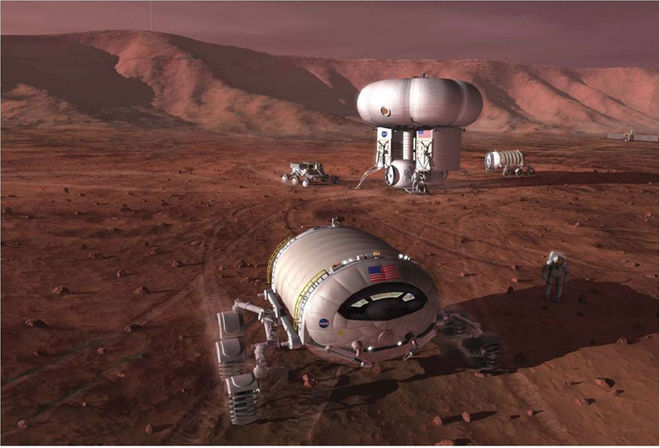
Early pioneering of Mars is expected to provide a gateway for developing the means to sustain a colony of people.
Credit: NASA/Pat Rawlings
Check out my new Space.com story on this important and wide-ranging paper. Go to:
Mars Colonists Must ꞌLive Off the Landꞌ: NASA Report
July 27, 2016/07:30am ET

Curiosity Mars Hand Lens Imager (MAHLI) image taken on July 24, 2016, Sol 1410.
Credit: NASA/JPL-Caltech/MSSS
NASA’s Curiosity Mars rover is now in Sol 1412.
Last weekend the rover made good progress, driving almost 223 feet (68 meters).
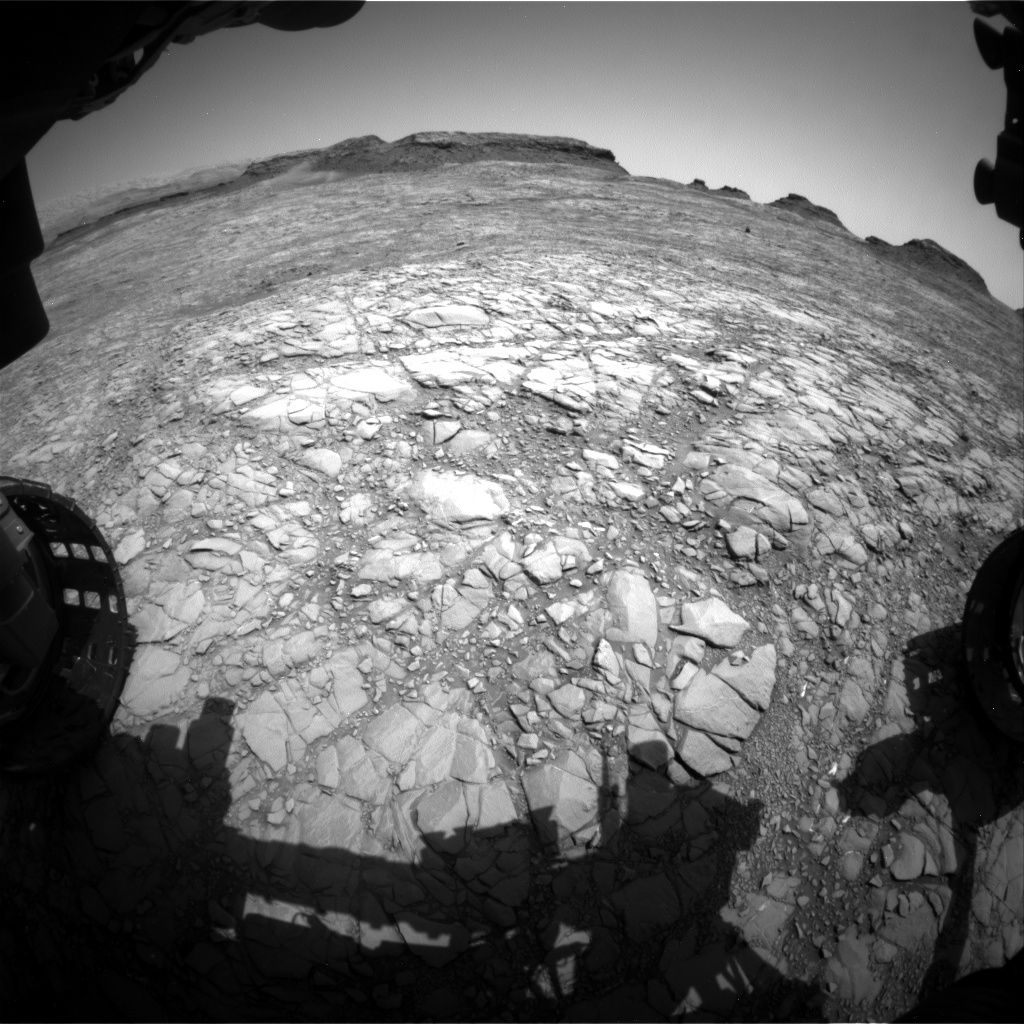
Image taken by Curiosity’s Front Hazcam Left B on Sol 1411, July 25, 2016.
Credit: NASA/JPL-Caltech
Before the drive, Curiosity’s Chemistry and Camera (ChemCam) and Mastcam were to observe bedrock targets “Jamba” and “Huambo” and the Right Mastcam was on tap to acquire a 3-image mosaic of a small depression called “Mungo.”
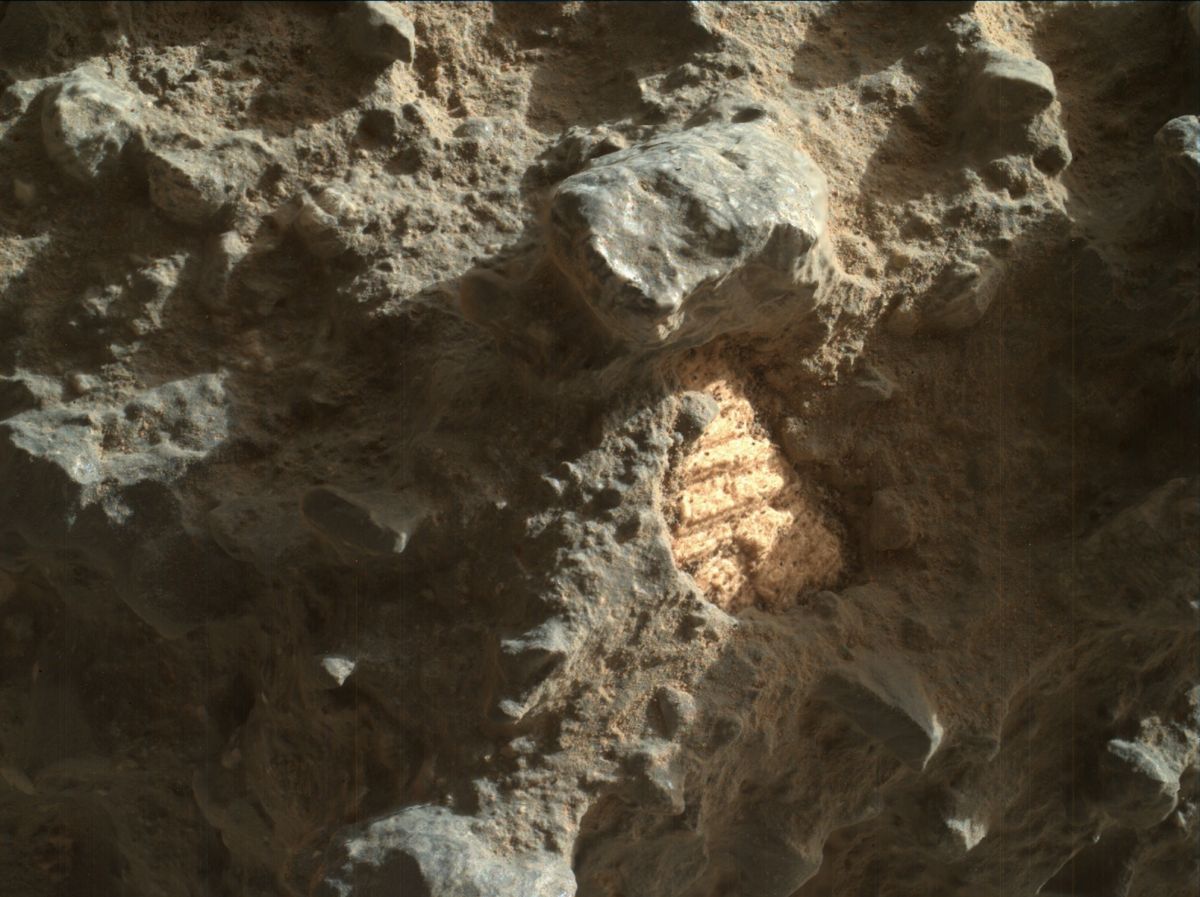
Curiosity Mars Hand Lens Imager (MAHLI) image taken on July 26, 2016, Sol 1411.
Credit: NASA/JPL-Caltech/MSSS
Atmospheric dustiness
After acquiring the post-drive imaging needed to plan future mobility, ChemCam was slated to use special software to autonomously select a new target for a Laser Induced Breakdown Spectroscopy (LIBS) raster.
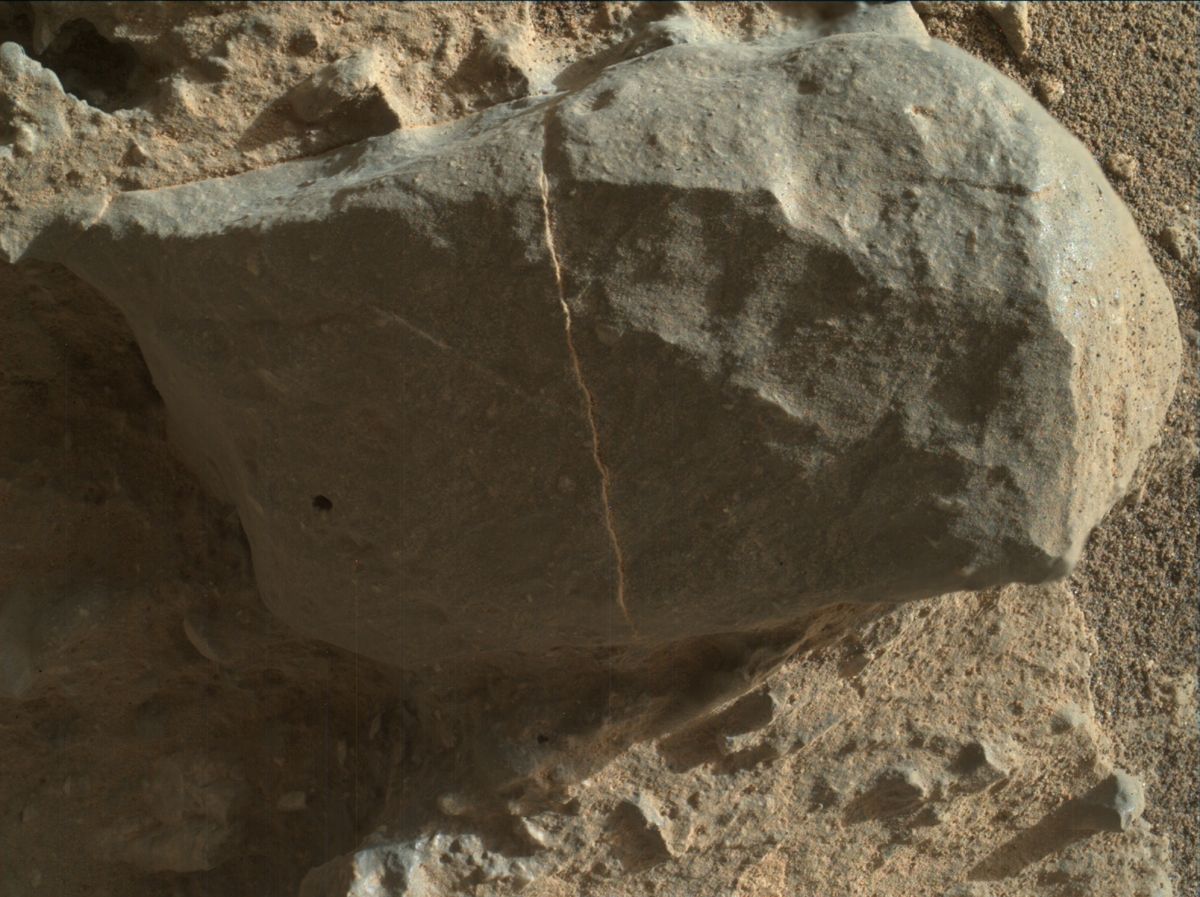
Curiosity Mars Hand Lens Imager (MAHLI) image taken on July 26, 2016, Sol 1411.
Credit: NASA/JPL-Caltech/MSSS
According to Ken Herkenhoff of the USGS Astrogeology Science Center in Flagstaff, Arizona, the robot’s Navcam was set to search for clouds and dust devils, and its Mastcam would measure the dustiness of the atmosphere. The dust measurements will be repeated at noon and mid-afternoon to look for changes during the day.
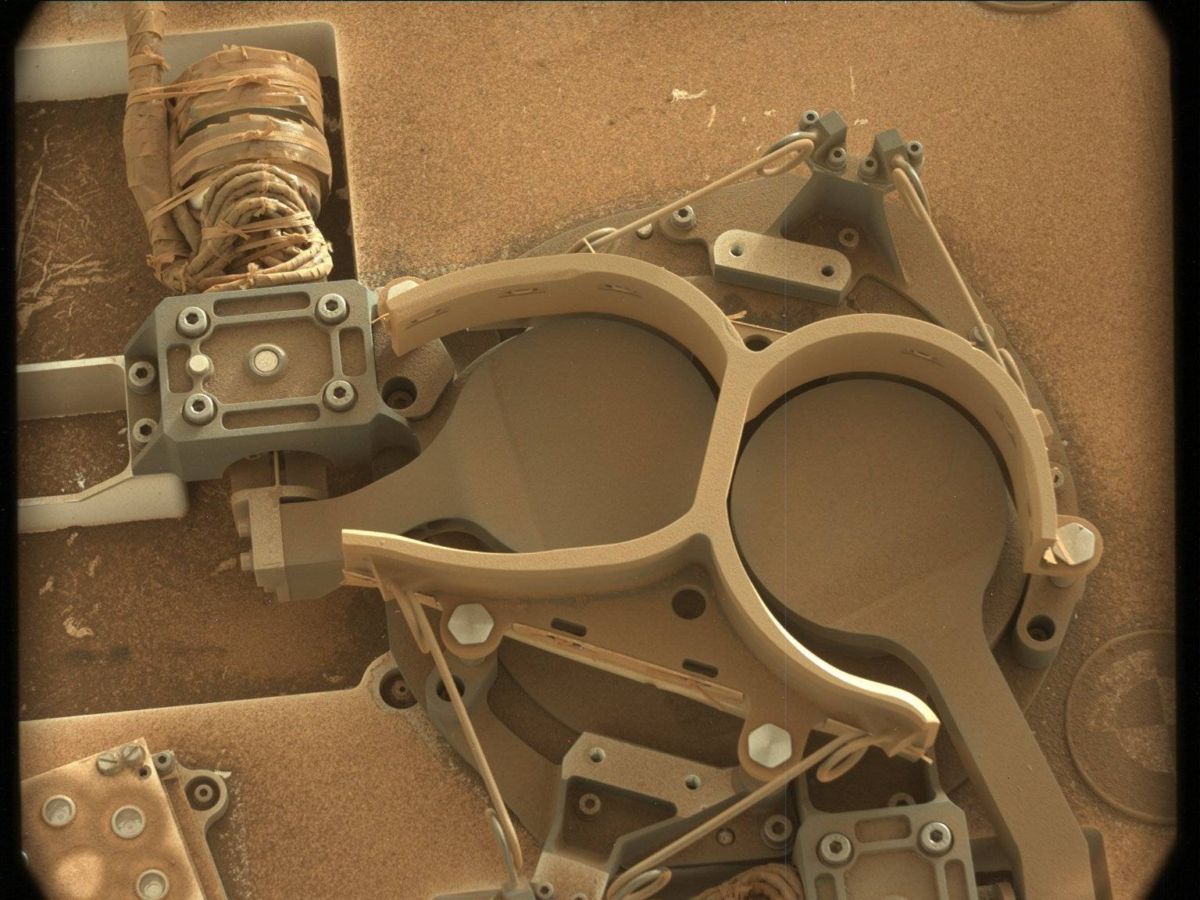
Dusty environment of Mars. Curiosity Mastcam Left image taken on Sol 1409, July 24, 2016.
Credit: NASA/JPL-Caltech/MSSS
Also on tap, Curiosity’s Right Mastcam was to acquire a 14-image mosaic of the Murray Buttes.
Dates of planned rover activities are subject to change due to a variety of factors related to the Martian environment, communication relays and rover status.
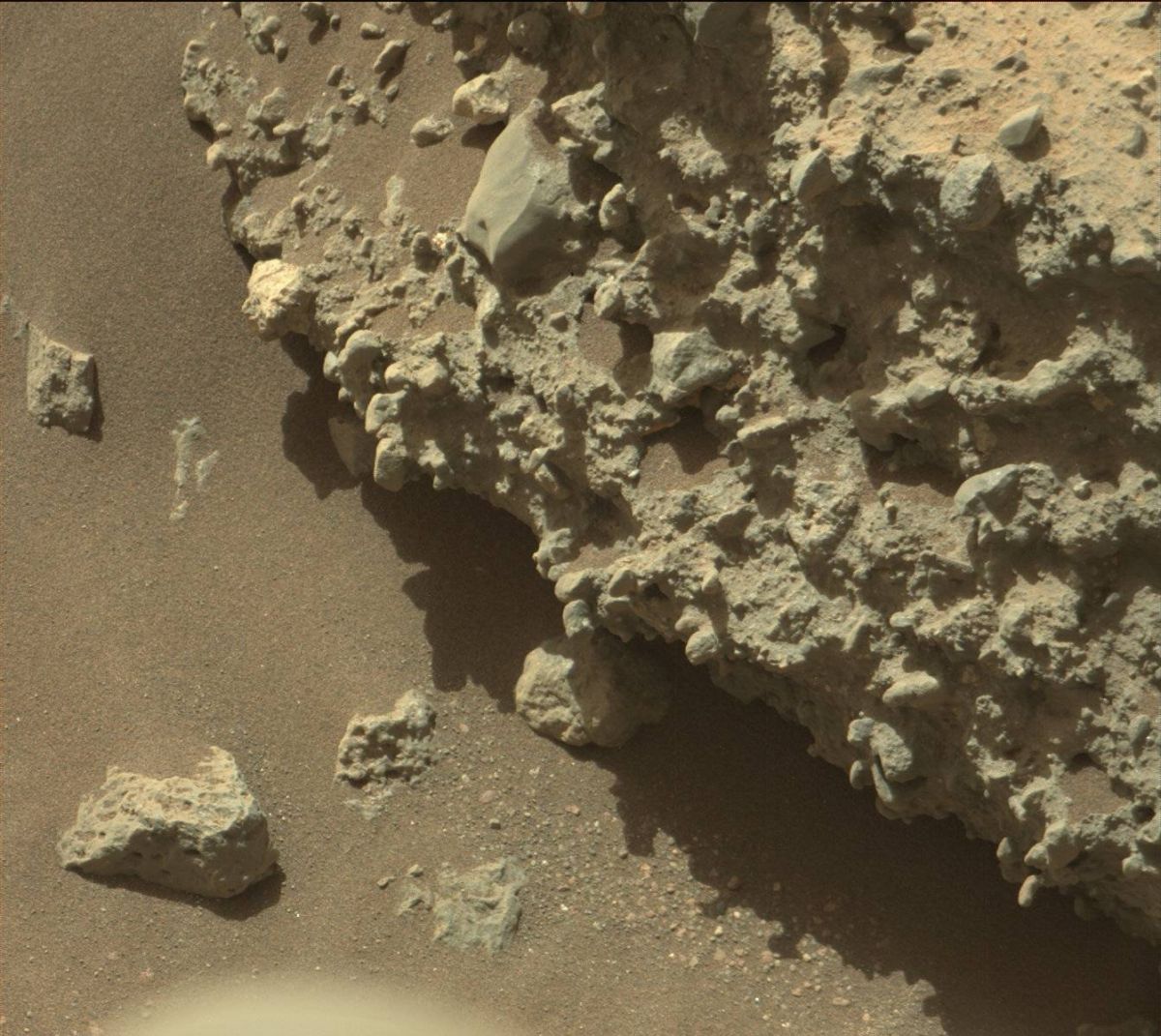
Curiosity Mastcam Right image taken on Sol 1407, July 21, 2016.
Credit: NASA/JPL-Caltech/MSSS
Now in Sol 1409, NASA’s Curiosity Mars rover has focused its observations on a blocky deposit dubbed “Bimbe.”
Other targets over the weekend that are under scrutiny with rover instruments are “Seeis”, “Seeheim”, “Wilhelmstal”, “Oranjemund” , “Funda” and “Zambezi”.

Curiosity Navcam Left B image taken on Sol 1407, July 21, 2016.
Credit: NASA/JPL-Caltech
Drive planned
On Sol 1410, the rover’s Chemistry & Camera (ChemCam) has an observation of the target “Mariental” with support from Mastcam.
“After that, we drive and do the usual post-drive imaging,” explains Ryan Anderson, a planetary scientist at the USGS Astrogeology Science Center in Flagstaff, Arizona.
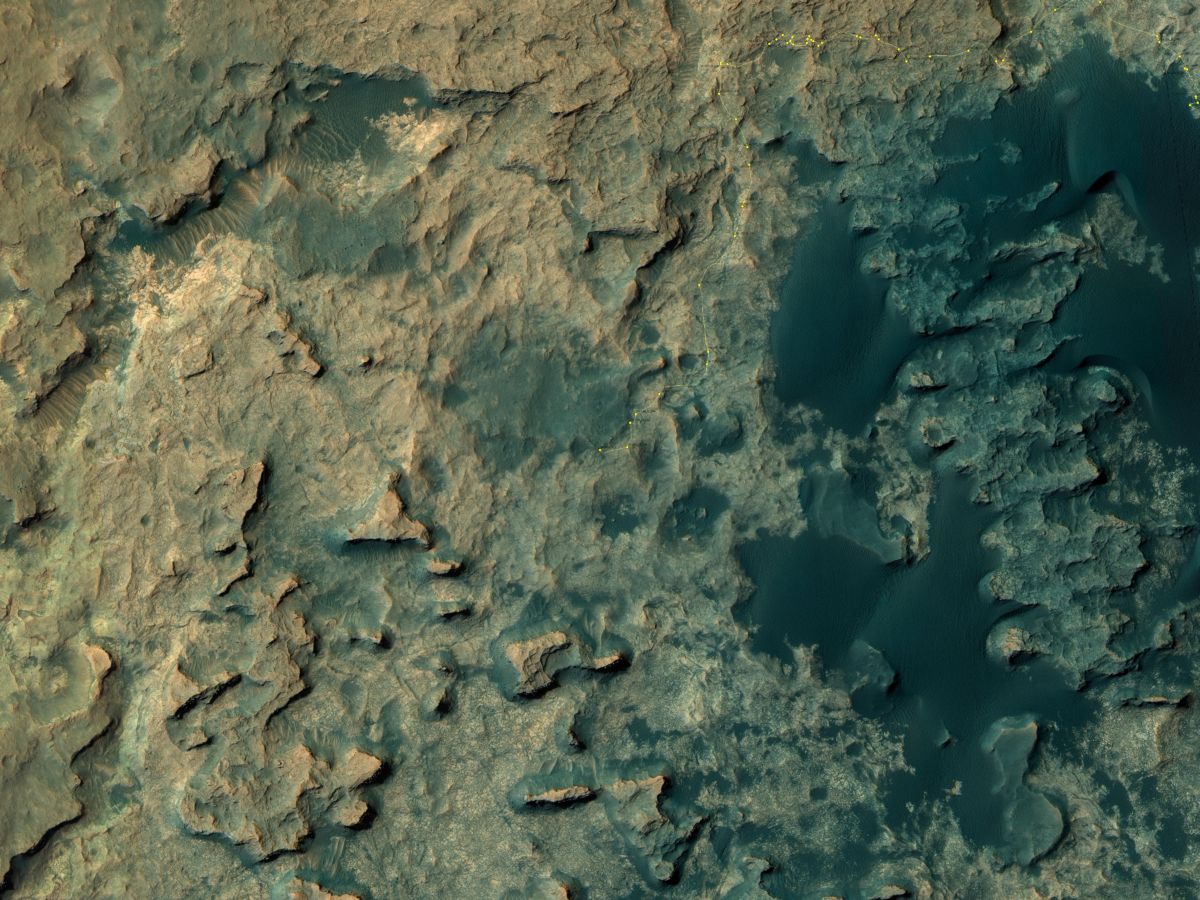
The base image from the map is from the High Resolution Imaging Science Experiment Camera (HiRISE) in NASA’s Mars Reconnaissance Orbiter.
Credit: NASA/JPL-Caltech/Univ. of Arizona
Rover deck deposits
On Sol 1411, the rover’s Mastcam has an observation of the rover deck to watch for dust and sand that end up on top of the rover, Anderson adds.
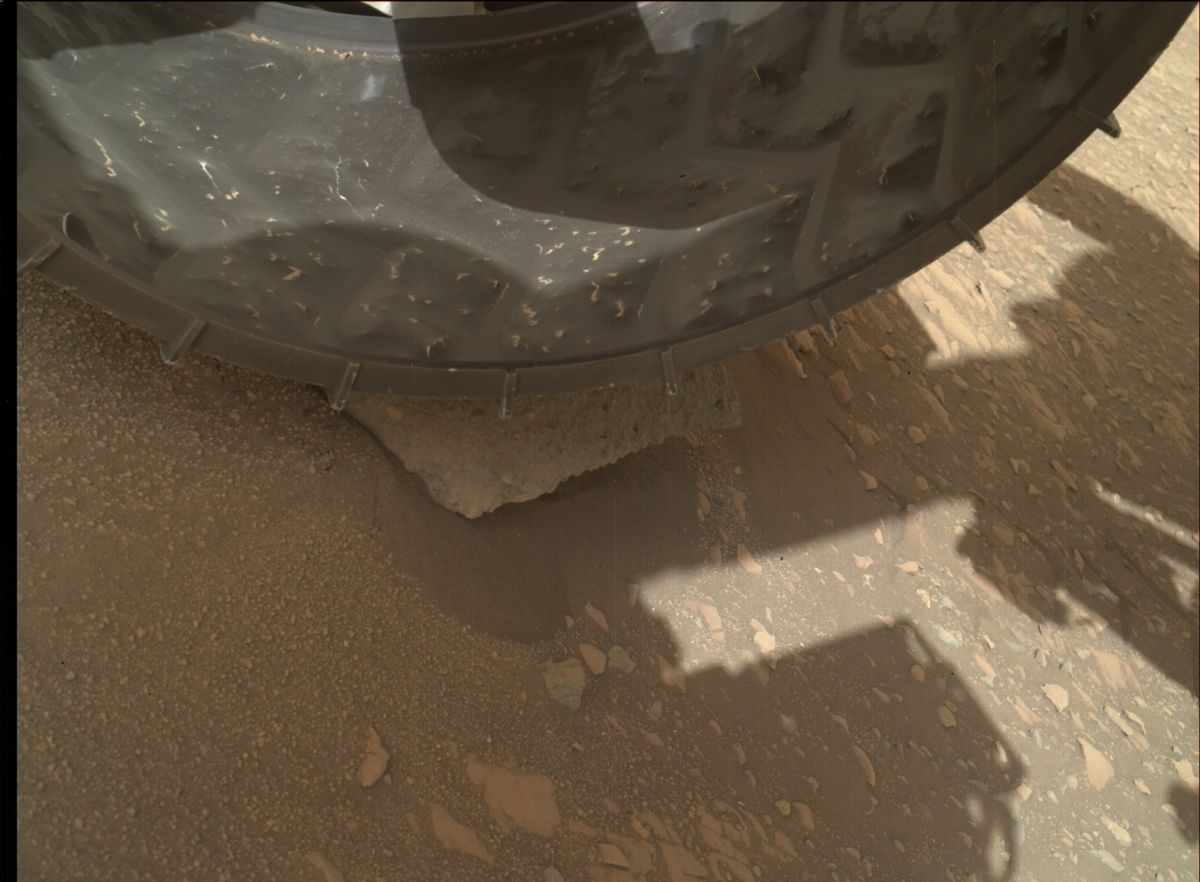
Wheel atop rock. Mars rover Curiosity acquired this image using its Mars Hand Lens Imager (MAHLI) on July 21, 2016, Sol 1407.
Credit: NASA/JPL-Caltech/MSSS
Dates of planned rover activities are subject to change due to a variety of factors related to the martian environment, communication relays and rover status.
New map
Meanwhile, a new map has been released showing the route driven by NASA’s Mars rover Curiosity through the 1405 Martian day, or sol, of the rover’s mission on Mars (July, 20, 2016).
Numbering of the dots along the line indicate the sol number of each drive. North is up.

NASA’s Mars rover Curiosity acquired this image using its Mars Hand Lens Imager (MAHLI) on July 21, 2016, Sol 1407.
Credit: NASA/JPL-Caltech/MSSS
From Sol 1401 to Sol 1405, Curiosity had driven a straight line distance of about 89.50 feet (27.28 meters).
Since touching down in Bradbury Landing in August 2012, Curiosity has driven 8.31 miles (13.37 kilometers).

Graphic above by Danielle Futselaar is the famous Drake Equation, representing the full spectrum of science undertaken at the SETI Institute. Wherever you are on Earth, the Drake Equation represents all explorations of our lives, and life beyond our home planet.
Credit: Danielle Futselaar/SETI Institute
There are new developments in the Search for Extraterrestrial Intelligence, or SETI for short.
In the SETI business, two game-changers are notable, explains Jill Tarter, Director, Center of SETI Research and the Bernard M. Oliver Chair for SETI.

Jill Tarter, Director, Center of SETI Research and the Bernard M. Oliver Chair for SETI.
Credit: SETI Institute
“I’ve spent my professional life searching for alien life. Over the span of my career, I’ve seen our equipment change dramatically, from custom built microchips and signal processors we had to design and build ourselves to the enterprise servers that run our search algorithms today,” Tarter explains in a newly issued communiqué from SETI central.
Those two game-changers are:
- The discovery that there are more planets than stars in the Milky Way; and
- The evidence of life thriving in the most extreme environments here on Earth.
More bio-friendly
“The universe appears to be a lot more bio-friendly to life than we once thought,” Tarter observes. “Now we want to find out if any of that potentially habitable real estate is actually inhabited.”
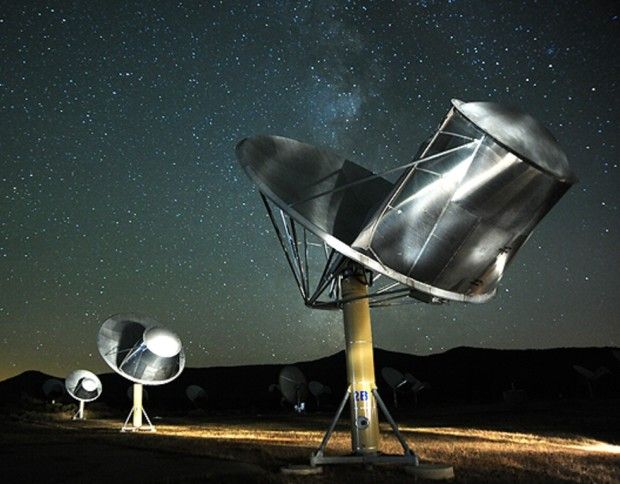
Giving a listen for other star folk, the Allen Telescope Array in California.
Credit: SETI Institute
Tarter underscores that SETI is a unique exploratory science that began in 1984 in partnership with NASA.
“Since 1993, however, we’ve had to rely on private sources of funding to continue this search that costs us $590,000 annually to cover staff and basic equipment. We need to raise $70,000 this summer to stay on track,” Tarter explains.
Campaign for SETI
The SETI Institute’s Allen Telescope Array scans the sky for signals 365 days a year.

Credit: SETI Institute
“It is the only facility that searches for SETI signals in near real time and thus it can better filter out interference from our own technologies,” Tarter points out. “Our tools are improving daily, but we need your help to keep them scanning the skies,” Tarter adds, “because it’s a pretty big search out there with so many exoplanets having the potential for life, and so many different types of signals to examine.”
To learn more about the campaign, go to:
https://teamseti.org/vid-donate-2?erid=1373805&trid=f81b6d67-4b24-4cc7-a7eb-763a917bfaa6
Also, tune into this informative You Tube video on SETI at:
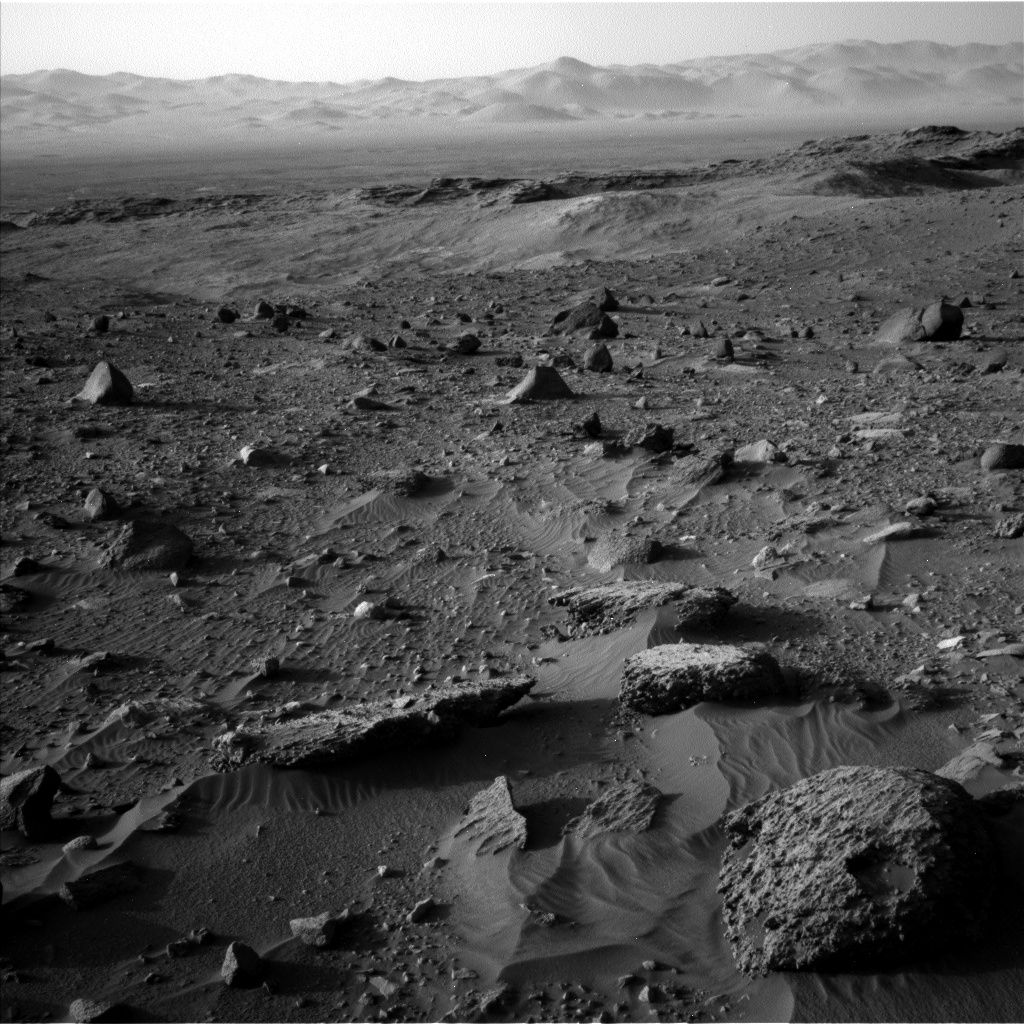
Curiosity Navcam Left B image taken on Sol 1405, July 19, 2016.
Credit: NASA/JPL-Caltech
New imagery has become available of NASA’s Mars Curiosity, busily at work on the Red Planet.
The rover is now in Sol 1406.

Curiosity used its Mars Hand Lens Imager (MAHLI) to acquire this up-close image on Sol 1405, July 19, 2016. MAHLI is located on the turret at the end of the rover’s robotic arm.
Credit: NASA/JPL-Caltech/MSSS
The rover landed in Mars’ Gale Crater in August 2012.
NASA recently approved an additional two-year extension, beginning Oct. 1, 2016, for the Mars Science Laboratory Project, which developed and operates Curiosity.

Curiosity Front Hazcam Left B image taken on Sol 1403, July 17, 2016.
Credit: NASA/JPL-Caltech
Well suited for life?
During its first year on Mars, the robot and science teams achieved a major goal by determining that — more than 3 billion years ago — the region offered fresh-water lakes and rivers with environmental conditions well-suited to supporting microbial life – if life has ever existed on Mars.
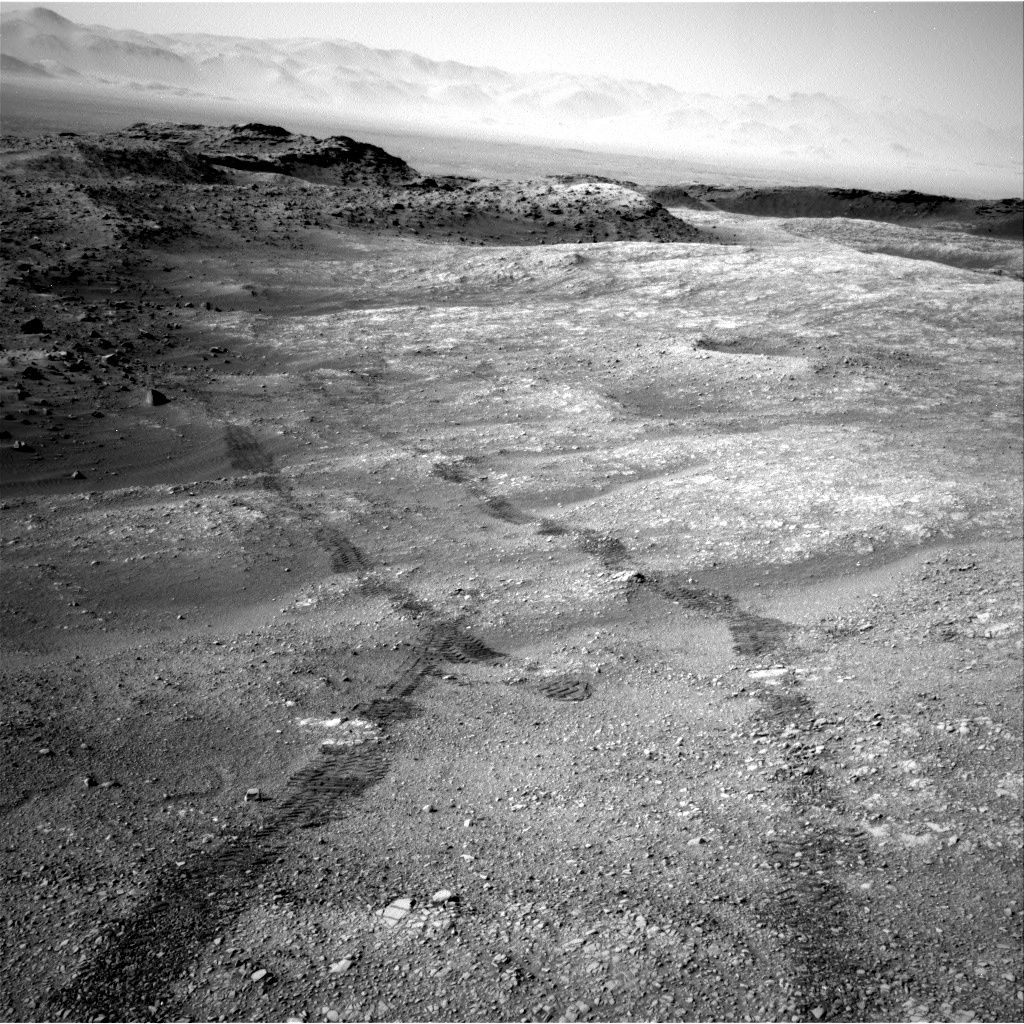
Curiosity Navcam Right B image taken on Sol 1401, July 15, 2016.
Credit: NASA/JPL-Caltech
In continuing its investigations, Curiosity continues to gather more data in regards to ancient wet environments on Mars and how and when they evolved to drier and less habitable conditions.
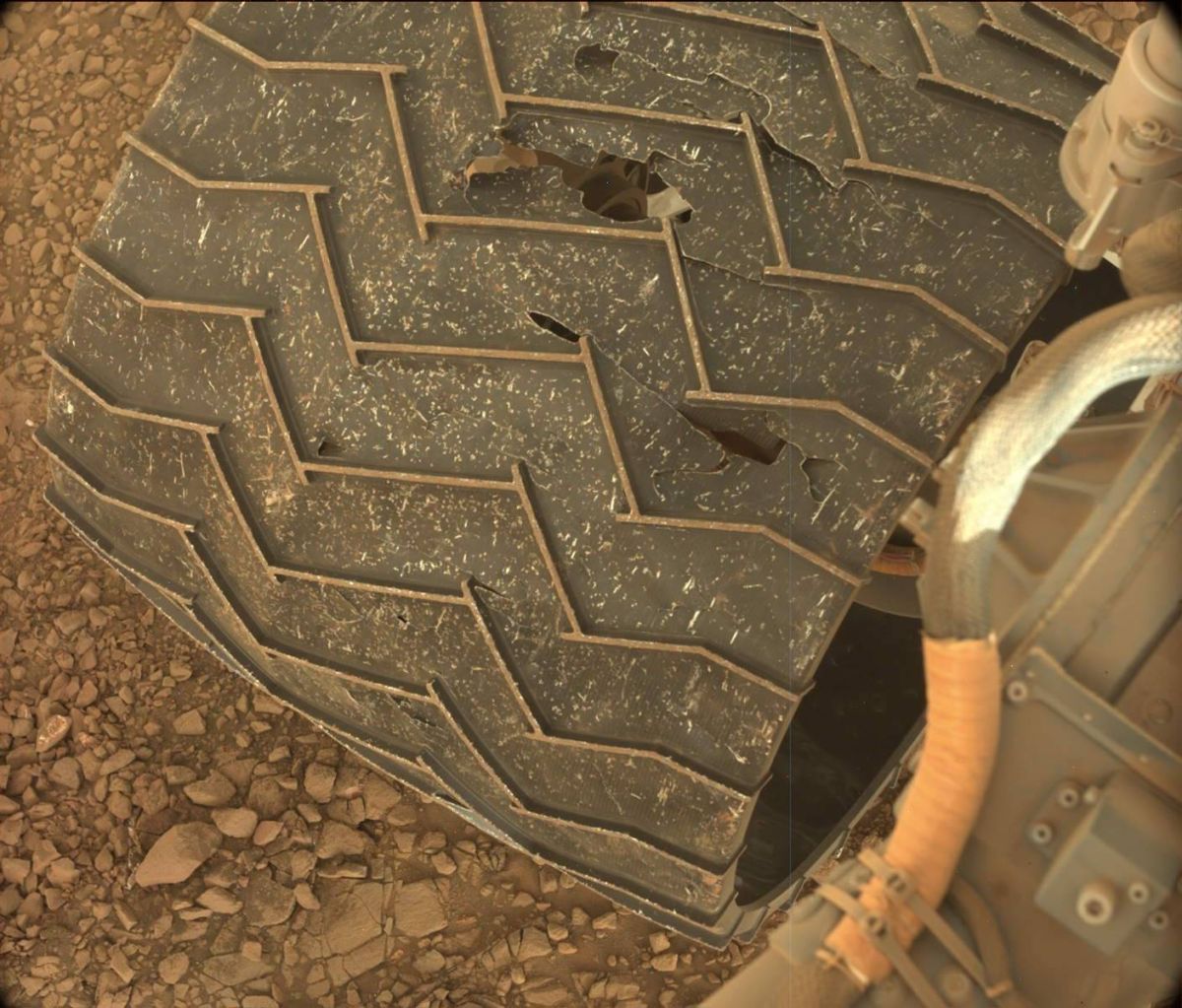
Curiosity Mastcam Left image of rover wheel damage, taken on Sol 1403 July 17, 2016.
Credit: NASA/JPL-Caltech/MSSS

Credit: Viking Mars Missions Education & Preservation Project (VMMEPP).
Four decades ago, NASA’s Viking Mars program scored nail-biting, back-to-back successes by becoming the first U.S. robotic missions to land safe and sound on the Red Planet and return images of the Martian landscape.
It was a momentous moment in time.
Like today’s robotic explorers, but decades ago, Viking scientists packed up their troubles, cares and woes to ask: Is there life on Mars?
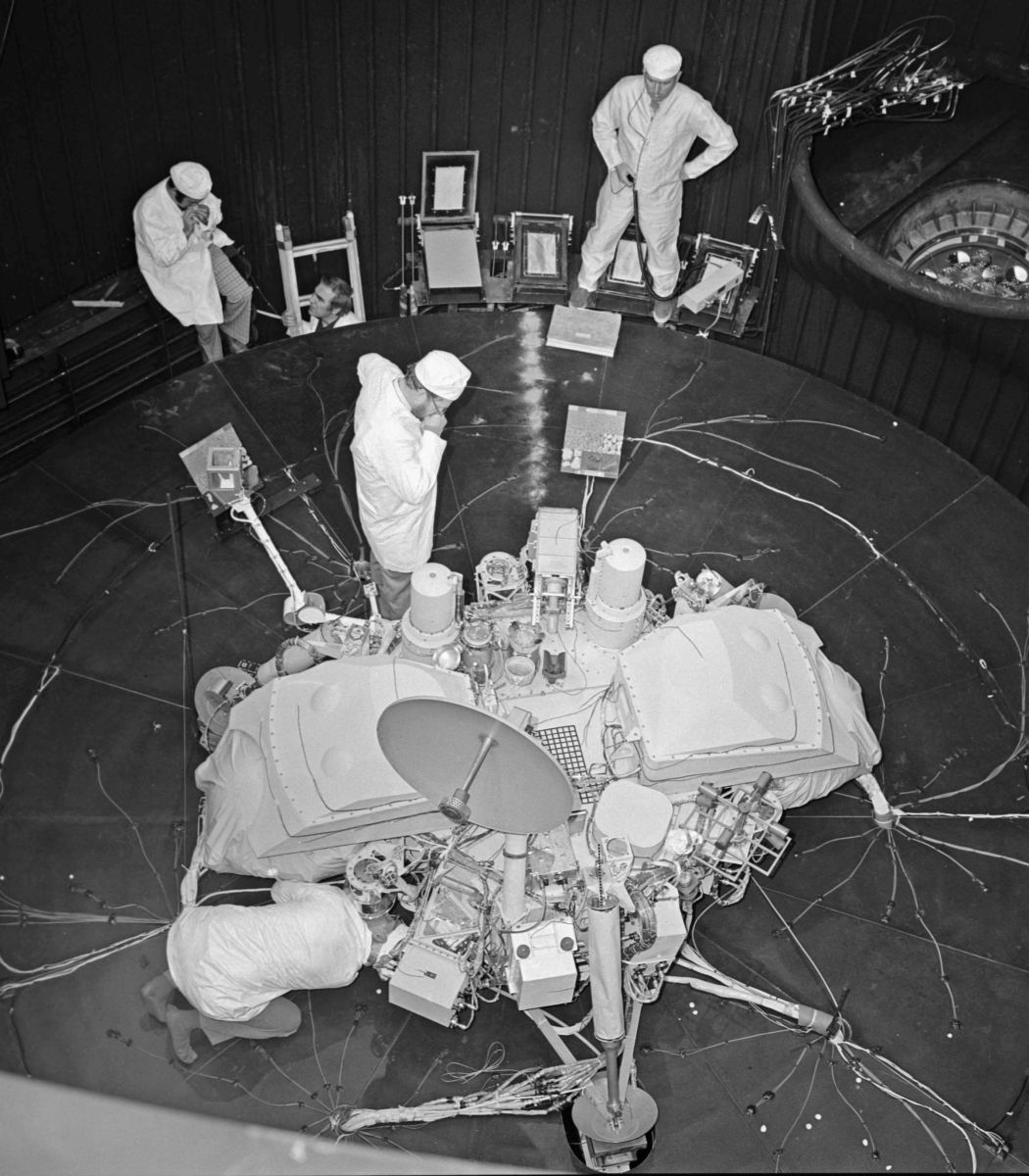
NASA’s two Viking landers were designed and built by Martin Marietta (now Lockheed Martin) at its facility near Denver. This image shows some Martin Marietta employees in a Viking lander test center.
Credit: Lockheed Martin
Twins to Mars
Twin spacecraft missions — each consisting of a lander and an orbiter – made their way to Mars and into the history books.
The Viking 1 lander stretched its legs down into the terrain of Chryse Planitia on July 20, 1976, with the Viking 2 lander touching down months later at Utopia Planitia on September 3.

Veterans of Viking: July 16 event at the Wings Over the Rockies Air & Space Museum in Denver, Colorado, organized by the Viking Mars Missions Education & Preservation Project and sponsored by Lockheed Martin in partnership with The Space Foundation and the museum.
Credit: Barbara David
Personal sagas
Viking-era scientists, engineers and former student interns recently joined together in a special salute to the past and share personal sagas about their daring, individual encounters with the Red Planet.

The first photo from the surface of Mars shows one of the Viking 1 lander’s footpads.
Credit: NASA/JPL
To read the full story, go to my new Space.com story:
Viking on Mars, 40 Years Later: Reflections on Pioneering the Red Planet
www.space.com/33481-viking-mars-landing-40-years-anniversary.html

USAF Gen. John Hyten, the head of Air Force Space Command, at 31st National Space Symposium held in Colorado Springs.
Credit: The Space Foundation
More details have been issued by the U.S. Air Force on a Space Mission Force or SMF.
The objective is to prepare and present space forces as a ready force capable of operating in a “contested, degraded and operationally-limited environment.”
According to the Air Force in a press statement, the SMF “will be the new standard for space operators to increase preparedness to operate their weapon systems and respond to the increasing threats to those same systems.”
Ready spacecrew
An SMF White Paper, dated June 29th, has been authored by General John E. Hyten, commander of Air Force Space Command. “The Space Mission Force construct is really quite simple; we are revamping our crews to respond appropriately to threats in a dynamic environment,” he said.
One key element of the SMF is that it establishes the Ready Spacecrew Program.
That initiative enhances training to create a force capable of performing combatant commander-directed missions in the face of dynamic and varied threats.
“The Ready Spacecrew Program will maintain foundational skills and, more importantly, will build new skills and emphasize innovation, decision making at the lowest levels and development and use of tactics to counter space threats,” notes the Air Force statement.

Artist’s view of the Missile Defense Agency’s Space Tracking and Surveillance System-Demonstrator (STSS-D) spacecraft tracking objects in space.
Photo credit: Northrop Grumman Corporation
No longer a sanctuary
The 50th Space Wing was the first wing to implement the Space Mission Force construct and begin rotations, which started on Feb. 1, 2016.
The 21st Space Wing implemented SMF on July 1, 2016 and the 460th Space Wing will transition to the SMF construct next year.
“Space as a global commons is vital to commerce and is an essential element of Joint Warfare and global stability,” Hyten explains in the White Paper. “Space is no longer a sanctuary where the United States or our allies and partners operate with impunity.”
In the White Paper, Hyten adds that the United States faces current and future challenges in space that demand an immediate change in how we organize, train, equip and employ our forces.
“Our Nation and our Air Force demand the presentation of expertly trained and professionally led spacecrews, capable of accomplishing their missions under combat conditions. I expect nothing less,” the general concludes in the White Paper.
For a copy of the SMF White Paper, go to:

