Author Archive
 Author:
  September 19th, 2016
Credit: IAC

Credit: SpaceX
The upcoming International Astronautical Congress (IAC) — to be held in Guadalajara, Mexico September 26-30 — has announced that, for the first time in IAC history, all Plenary Events are to be live broadcasted.
For those eagerly awaiting the talk by SpaceX’s Elon Musk, his one-hour talk “Making Humans a Multiplanetary Species” will air on Tuesday, September 27th at 13:30 – 14:30 (local time in Guadalajara).
Architectures for colonizing Mars
Musk will discuss the long-term technical challenges that need to be solved to support the creation of a permanent, self-sustaining human presence on Mars. The technical presentation will focus on potential architectures for colonizing the Red Planet that industry, government and the scientific community can collaborate on in the years ahead.

SpaceX Red Dragon on Mars.
Credit: SpaceX
Webcast resources
To tune in on the Musk presentation and other key Plenary Event discussions, go to:
Also, for a listing of all upcoming Plenary Event topics go to:
http://www.iafastro.org/events/iac/iac2016/plenary-programme/
 Posted in

Mars Hand Lens Imager (MAHLI), located on the turret at the end of the rover’s robotic arm, took this image on September 19, 2016, Sol 1465.
Credit: NASA/JPL-Caltech/MSSS
Now in Sol 1465, Curiosity’s Mars survey work is ongoing, with new imagery showing success for the robot’s drilling activities.
The drill target is “Quela.”
Incoming Curiosity imagery also points to what appears to be assembly of yet another “selfie” – a Mars mosaic that shows the current whereabouts of Curiosity and its surrounding terrain.

Curiosity Front Hazcam Right B image taken on Sol 1465, September 19, 2016.
Credit: NASA/JPL-Caltech
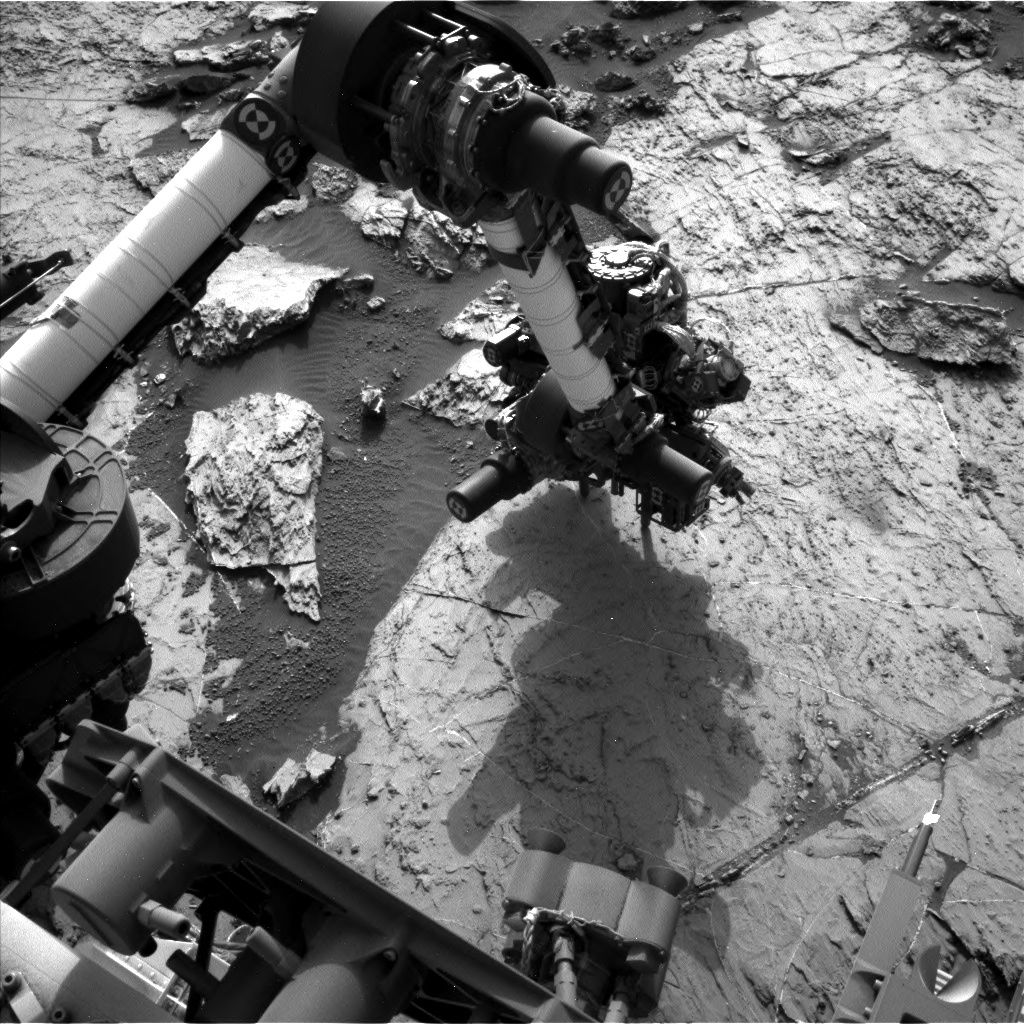
Curiosity Navcam Left B image taken on Sol 1464 September 18, 2016.
Credit: NASA/JPL-Caltech

Mars Hand Lens Imager (MAHLI), located on the turret at the end of the rover’s robotic arm, took this image on September 18, 2016, Sol 1464.
Credit: NASA/JPL-Caltech/MSSS
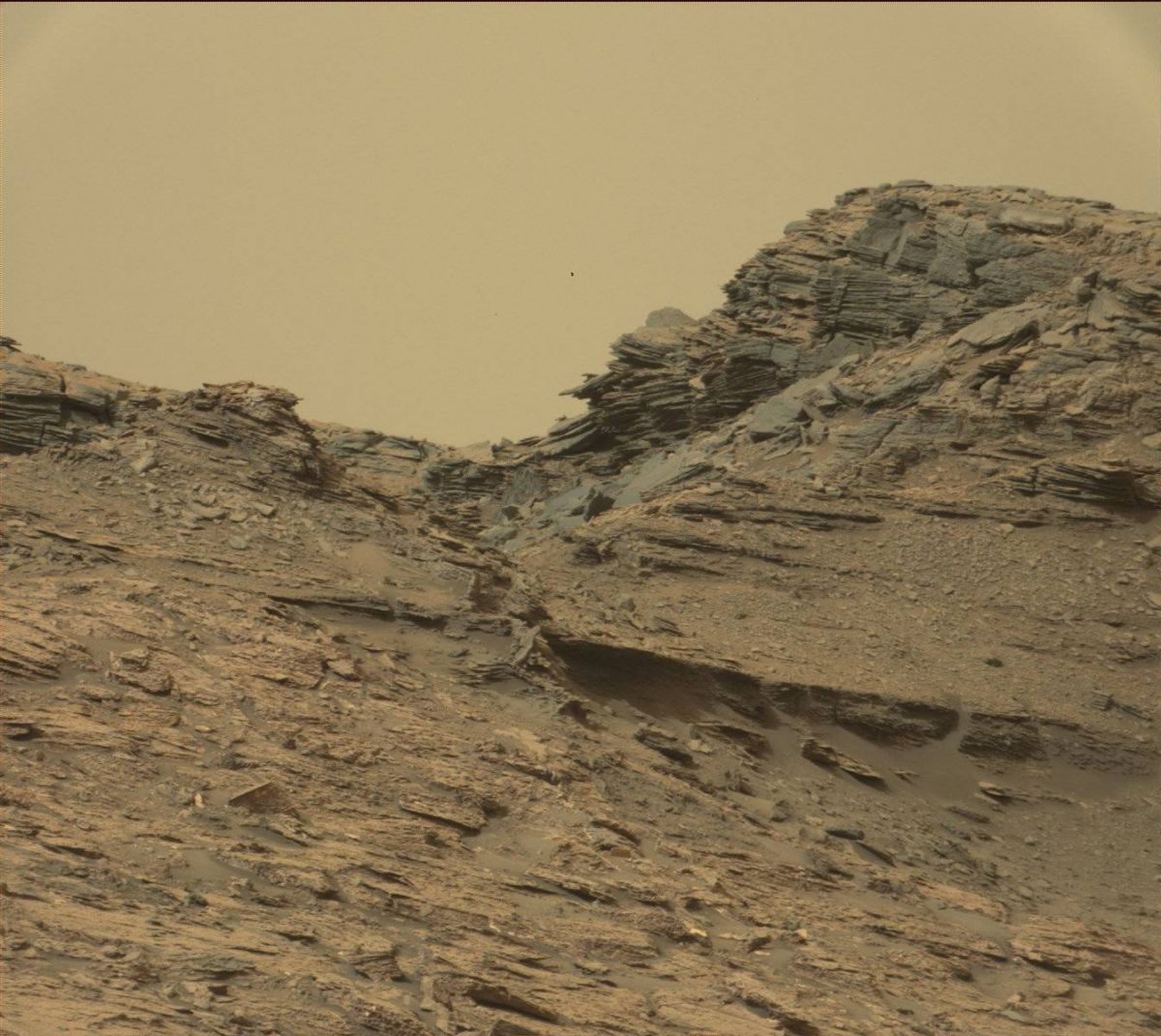
Curiosity Mastcam Right image taken on Sol 1463, September 17, 2016.
Credit: NASA/JPL-Caltech/MSSS

Mars Hand Lens Imager (MAHLI) taken on September 17, 2016, Sol 1463.
Credit: NASA/JPL-Caltech/MSSS
Now in Sol 1464, Curiosity’s Mars roving continues, although late last week the robot’s drilling activities did not complete as expected. The intended drill target is “Quela.”

Mars Hand Lens Imager (MAHLI) image taken on September 17, 2016, Sol 1463.
Credit: NASA/JPL-Caltech/MSSS
Given the drill issues, the plan focused on trying to understand and troubleshoot the problem while also doing remote sensing, reports Ryan Anderson, a planetary scientist at the USGS Astrogeology Science Center in Flagstaff, Arizona.
Nearby butte
The plan as scripted called for starting off with Mastcam multispectral observations of the target “Ekunha” on the nearby butte.
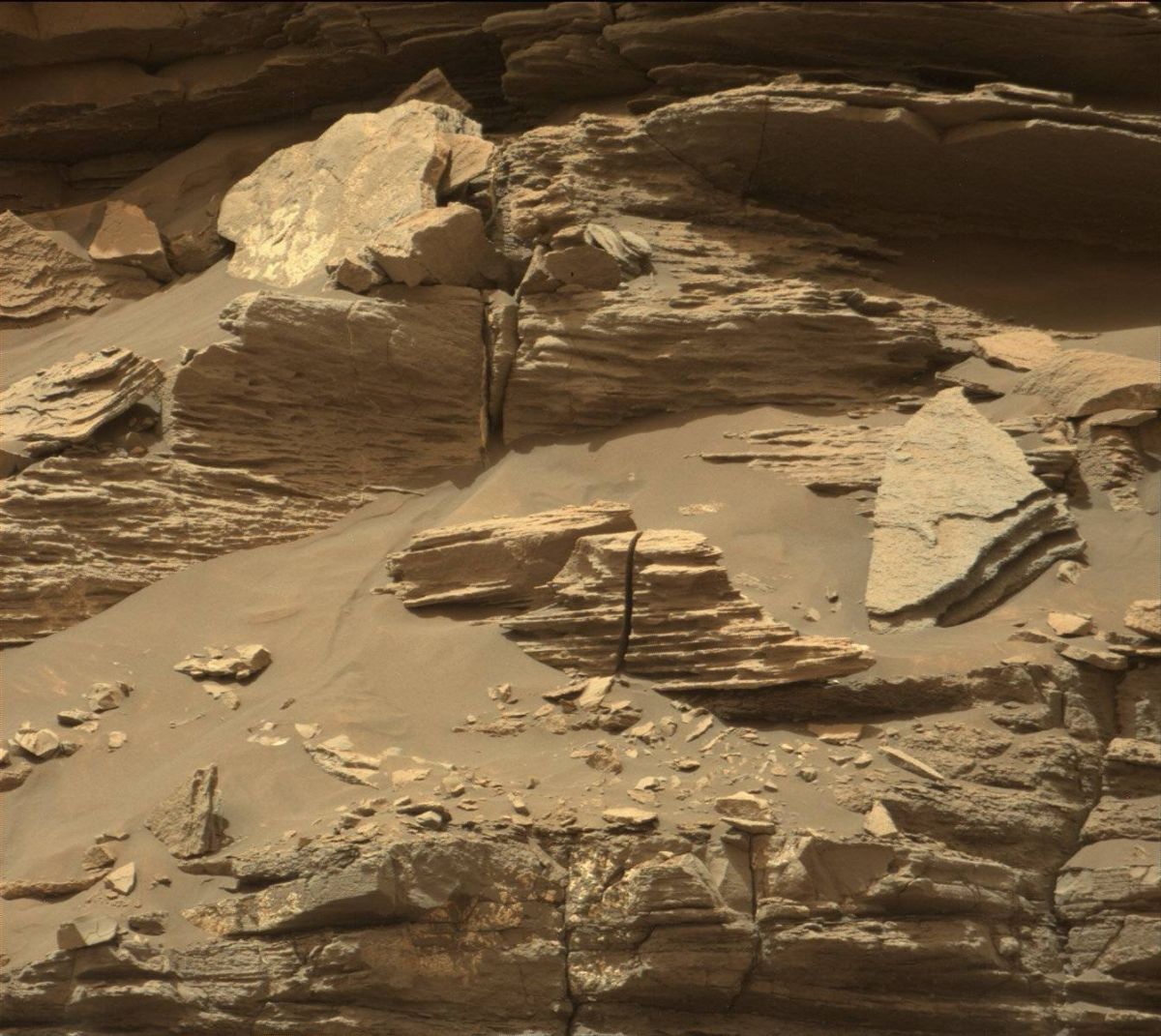
Curiosity Mastcam Right image taken on Sol 1462, September 16, 2016.
Credit: NASA/JPL-Caltech/MSSS
Chemistry & Camera (ChemCam) work was slated to analyze the targets “Cuasa” and “Cuimba”, and then Mastcam was to document those targets and take an 8×3 mosaic of the butte, along with a change detection observation at “Goantagab.”
Also on tap, the robot’s Mastcam was to create a mosaic of the target “Karasburg” to help with planning contact science, and then in the morning of Sol 1463 Mastcam was producing another mosaic of the nearby butte, under different lighting, and Navcam was to acquire an atmospheric measurement.
Sunlight scattering
“Throughout the whole plan, there are also a number of joint Navcam and Mastcam photometry observations of the same location at different times of day to help understand how sunlight scatters off the surface,” Anderson reports.

Curiosity Navcam Left B image taken on Sol 1463, September 17, 2016.
Credit: NASA/JPL-Caltech
A quick survey of incoming Curiosity imagery points to assembly of yet another “selfie” that shows the current whereabouts of the Mars machinery and its surrounding terrain.

Credit: CSU
China’s second space lab Tiangong-2 has blasted off at Jiuquan Satellite Launch Center in northwest China’s Gansu Province.
Wu Ping, deputy director of China Manned Space Engineering Office, explains:
“The main purpose of launching Tiangong-2 space lab is to receive the visit of the Shenzhou 11 manned spacecraft and to accomplish a medium-term stay of the astronauts. It will test relevant technologies on the astronauts’ long-term living, health and work conditions,” Wu said.

Tiangong-2 satellite deployer.
Credit: CSU
The Tiangong-2 space lab will receive the visit of the Tianzhou-1 cargo ship and examine and verify the technology of in-orbit propellant replenishing. While carrying out the space medical and treatment research, space science experiments and application of space technology, the Tiangong-2 space lab will also help test and verify the in-orbit maintenance and the technology of space station, Wu said.
Critical phase
The launch of the space lab is deemed as the critical phase of China’s manned space flight, with the space lab serving as a prototype module of the future space station of the country.

Credit: CCTV
China’s space laboratory accommodates more than 50 scientific instruments to conduct more than ten projects in-orbit, explains the Technology and Engineering Center for Space Utilization (CSU).
On behalf of the Chinese Academy of Sciences (CAS), CSU has participated China’s Manned Space Program (CMSP), acting as an organizer, coordinator and integrator of the Space Utilization System of CMSP. Institutes and universities inside and outside CAS have been involved in the Space Utilization System.

Credit: CCTV America
Experiment list
As noted by the CSU, among the experiments on the Tiangong-2 Space Lab:
- Space Cold Atom Clock
- Multiple Materials Experiment
- Interferometric Imaging Radar Altimeter
- Gamma-Ray Burst Polarimeter
- Higher Plant Flowering and Seed-setting in Space
- Multi-angle Polarization and Wide Band Spectral Imager
- Space-to-Earth Quantum Key Distribution
- Multiband Limb Imaging Ultra-Violet Spectrometer System
Tiangong-2 also carries a system to deploy a small satellite in orbit to evaluate technologies for “concomitant flying.”

Credit: CSU
The new space lab is viewed as a stepping stone to a larger Chinese space station that will be built around 2020, and will support larger scale space utilization with human-tending on a long-term basis.

Unveiling of “the Mars rock” at 1996 NASA press conference.
Credit: NASA/Bill Ingalls
Back in 1996, I had the inside scoop about a rock from outer space.
The claim of biogenic evidence for the rock star that is meteorite ALH84001 – possible indication of long-gone, fossil bacteria and chemical traces that might have come from bacteria on Mars.
For a reflective view on this saga, go to my new SpaceNews article describing the event:
http://www.spacenewsmag.com/feature/remembering-a-big-scoop-%E2%80%A8about-a-small-rock/

Meteoritic Mother of Invention: The Mars rock, ALH84001.
Credit: NASA
Over the years, the speculative view that the Mars meteorite was a carrier of possible Martian fossils is still under dispute.

Electron microscope studies revealed chain structures in meteorite fragment ALH84001.
Credit: NASA

China’s soon-to-be-lofted space lab module – Tiangong-2.
Credit: CCTV
Preparations are in full swing in China for the soon-to-launch second space lab, Tiangong-2, atop its carrier booster – the CZ-2F.
A joint drill has just been completed at the Jiuquan Satellite Launch Center in northwest China.
Xu Peng, head of command and control station at the Jiuquan Satellite Launch Center explains that “today’s joint drill mainly aims to make sure all systems match, coordinate and stay accurate and compatibly.”
Launch complex embraces Tiangong-2, atop its carrier booster – the CZ-2F.
Credit: CCTV-Plus
Simulated flight
As reported by CCTV-Plus, the drill lasted three and a half hours. The launch exercise featured a simulated flight of the carrier rocket. All six systems including the control room, the experiment system and the rocket system, participated in the drill procedures. The simulated flight went through various procedures that will be conducted in 580 seconds before the launch.
Chinese space officials have said that the Tiangong-2 will be put into space between September 15 – 20th. Before launch day, more tests will be carried out at the center.
Day or nighttime takeoff?
“We are performing functional test of the system, which aims to check whether products on the rocket and all functions of the cable system are working normally after the rocket was transferred from the technical area to the launch pad,” adds Tan Hongyi, director of the CZ-2F carrier rocket system.

Launch crews complete a mock-run of the launch of China’s second space lab.
Credit: CCTV-Plus
Whether the launch will occur in the daytime or at night has not been decided, but ground technicians are ensuring the proper functioning of a lighting system at the launch complex.
Space station technologies
Tiangong-2 serves as a lab in space for testing systems and processes for mid-term space stays and refueling. It will also be involved in experiments on aerospace medicine, space sciences, in-orbit maintenance and space station technologies.

Artist’s concept of the Tiangong-1 in Earth orbit. A Tiangong-2 is being readied for liftoff between September 15-20.
Credit: CMSA
After the successful orbiting of Tiangong-2, a two-person Shenzhou 11 crew will link up with the space lab in October for an expected month in Earth orbit. The all-male crew has not yet been named.
China’s first space lab, the still-orbiting Tiangong-1, was launched in September 2011 and ended its data service earlier this year. It was visited by Shenzhou-8, Shenzhou-9 and Shenzhou-10 spacecraft.
For video showing the just-concluded simulation of launching Tiangong-2, go to:
http://pv.news.cctvplus.com/2016/0911/8031873_Preview_1473599765994.mp4
http://pv.news.cctvplus.com/2016/0911/8031865_Preview_1473588907911.mp4
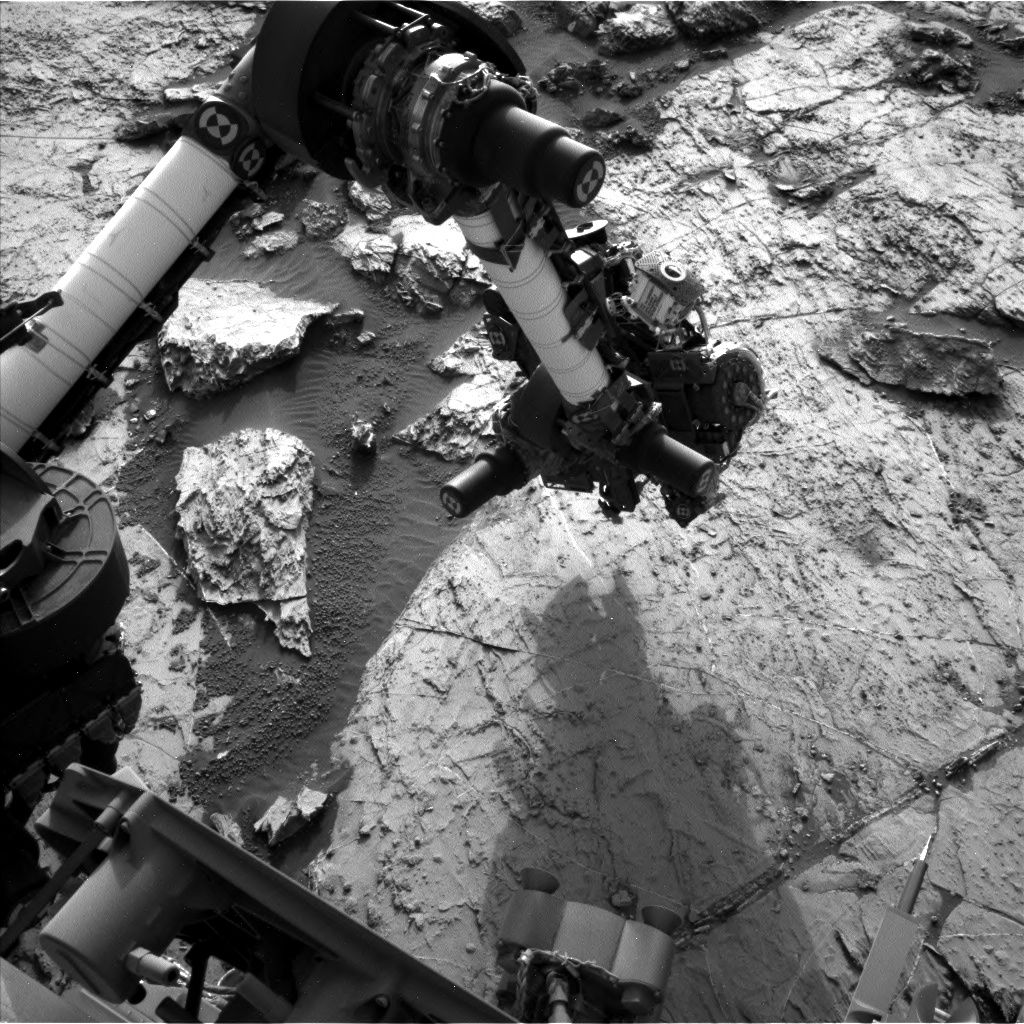
Curiosity Navcam Left B image taken on Sol 1457, September 11, 2016.
Credit: NASA/JPL-Caltech
NASA’s Mars rover Curiosity is at work on Sol 1457 today.
According to Ryan Anderson, a planetary scientist at the USGS Astrogeology Science Center in Flagstaff, Arizona, Curiosity is now parked at the next drill site, called “Quela”. This site is right at the base of one of the Murray Buttes.
The Sol 1456 plan, as scripted, was to start with a Mastcam atmospheric observation, followed by use of the rover’s Chemistry & Camera (ChemCam) and Mastcam of “Quela” along with a Mastcam mosaic of the workspace.
After that, samples of “Marimba” were to be dropped off in the Sample Analysis at Mars (SAM) Instrument Suite for analysis.
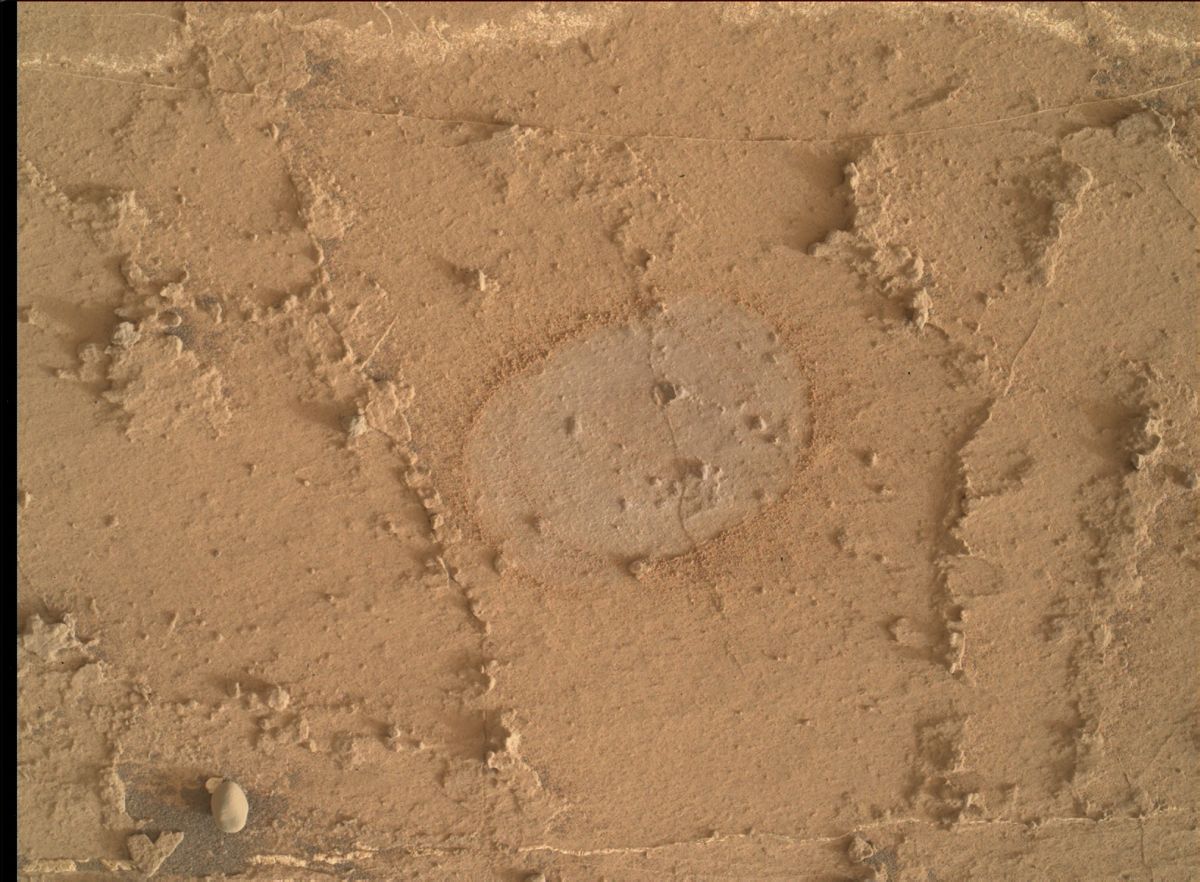
Image taken by Mars Hand Lens Imager (MAHLI) — located on the turret at the end of the rover’s robotic arm — on Sol 1457, September 11, 2016.
Credit: NASA/JPL-Caltech/MSSS
Big brush off
On Sol 1457, Curiosity’s Mastcam has another atmospheric opacity (tau) observation, and then the rover dumps out the remaining Marimba sample, taking images of the sample.
Curiosity has brushed off the dust on the Quela target, with Mars Hand Lens Imager (MAHLI) images snapped before and after. The rover’s Alpha Particle X-Ray Spectrometer (APXS) slated to conduct and an overnight analysis.
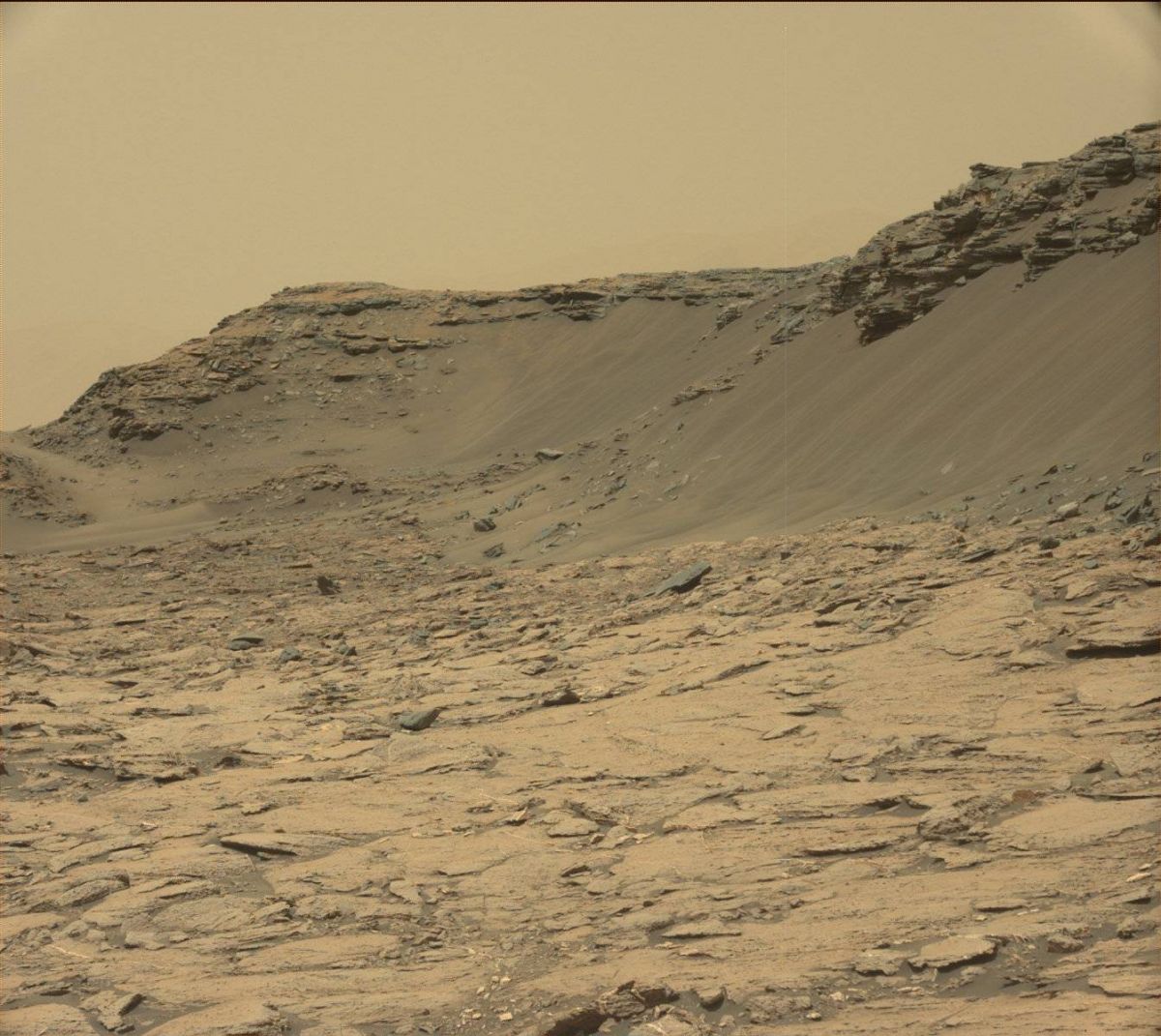
Curiosity Mastcam Left image taken on Sol 1455, September 9, 2016.
Credit: NASA/JPL-Caltech/MSSS
Fallen rocks
In the morning on Sol 1458, the plan calls for use of Navcam, Mastcam, and ChemCam to take a series of atmospheric observations. These will be followed by Mastcam multispectral observations of the Marimba dump pile, and another ChemCam passive sky and Mastcam tau.
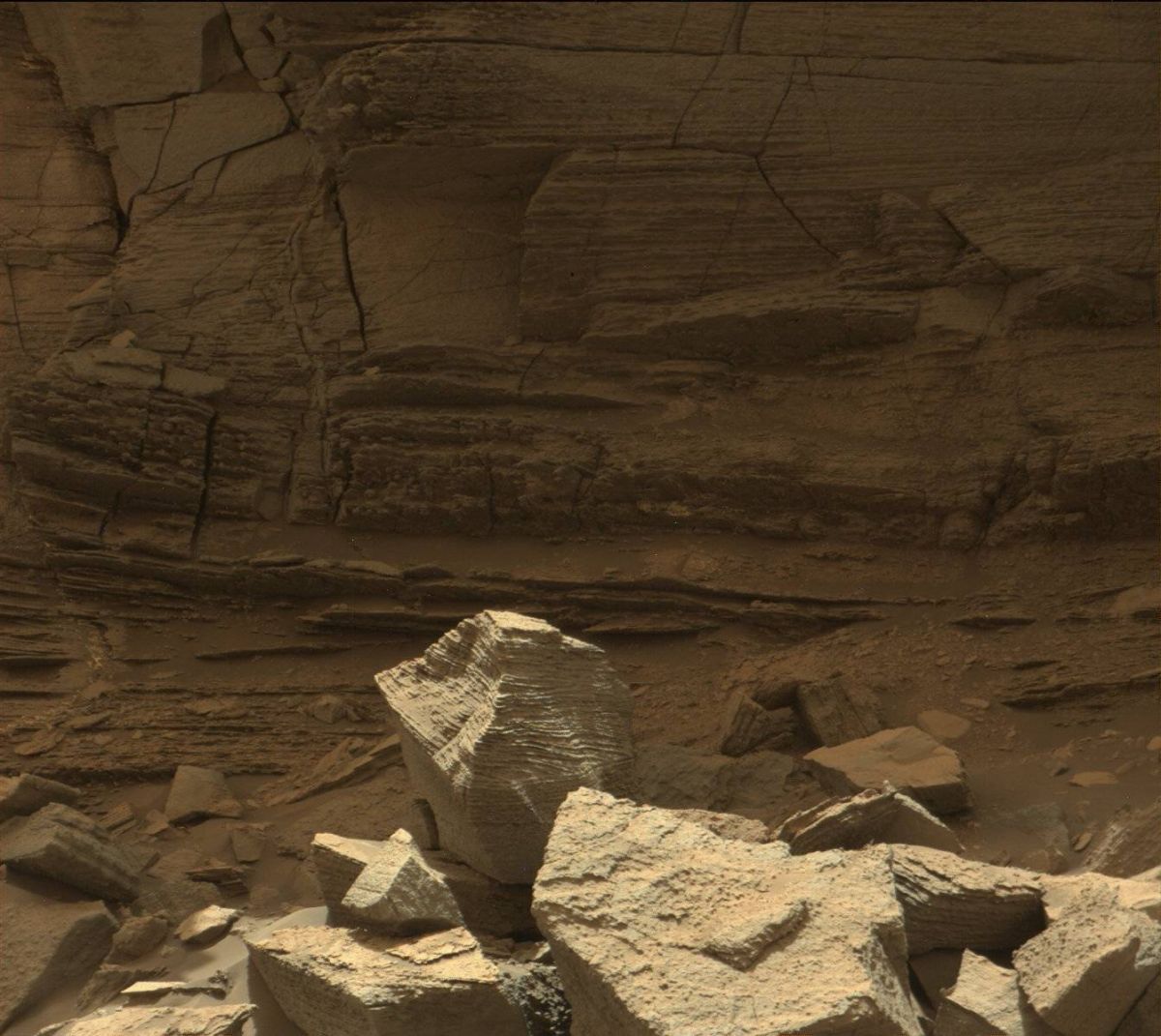
Curiosity Mastcam Right image taken on Sol 1454, September 8, 2016.
Credit: NASA/JPL-Caltech/MSSS
ChemCam is also slated to analyze a block of Stimson material called “Uutapi.”
Mastcam is also on tap to document Uutapi and take a mosaic of some other blocks of rock that have fallen off the butte, collectively called “Cuimba,” Anderson reports.
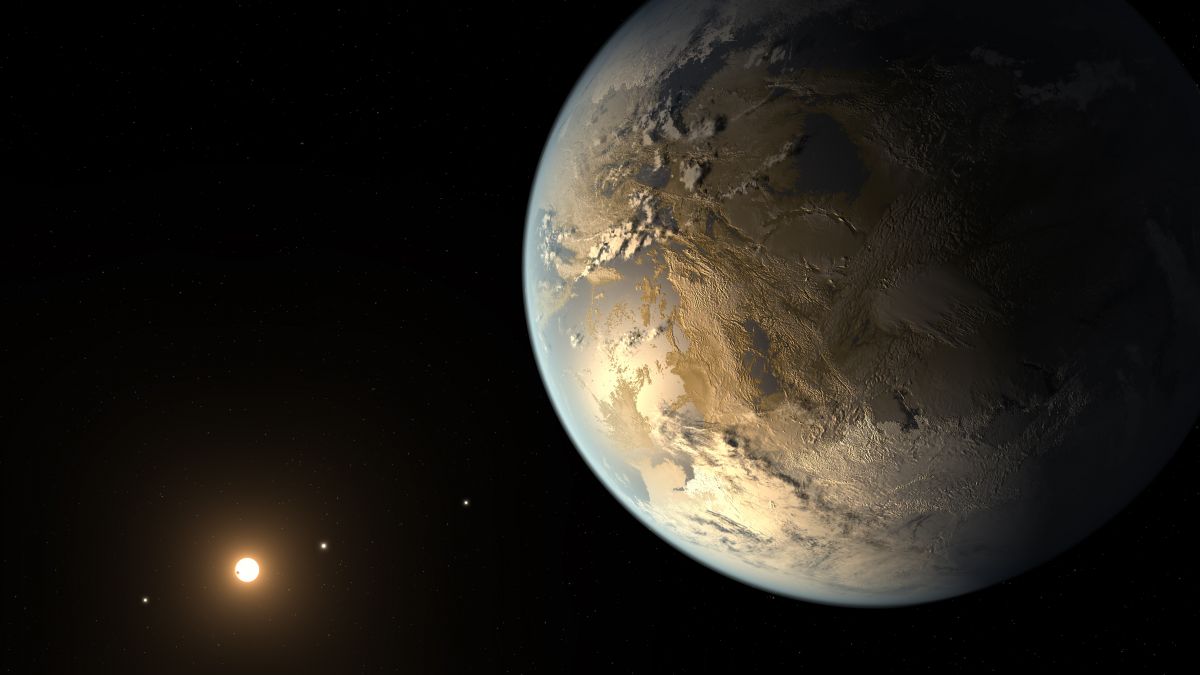
Target shooting? The Genesis Project is declared as a new venue for interstellar missions and for the unfolding of life in our galactic surroundings.
Credit: NASA/Kepler Mission
Several thousand planets outside our solar system have been found – but why not seed a candidate world with microbial life forms dispatched from Earth.
That’s on the mind of Claudius Gros of the Institute for Theoretical Physics, Goethe University in Frankfurt, Germany. An interstellar mission loaded with bacteria and unicellular eukaryotes alike, a bio payload that characterized Earth prior to what’s called the “Cambrian Explosion.” That is, around 530 million years ago, a wide variety of animals burst onto the evolutionary scene.
Robotic microcraft
Gros dubs it the “Genesis project” – robotic microcraft equipped with an on-board gene laboratory for the in situ synthesis of the microbes. But how best to actually prove that a world is uninhabited and is a clear choice for being on the receiving end of the Genesis project?
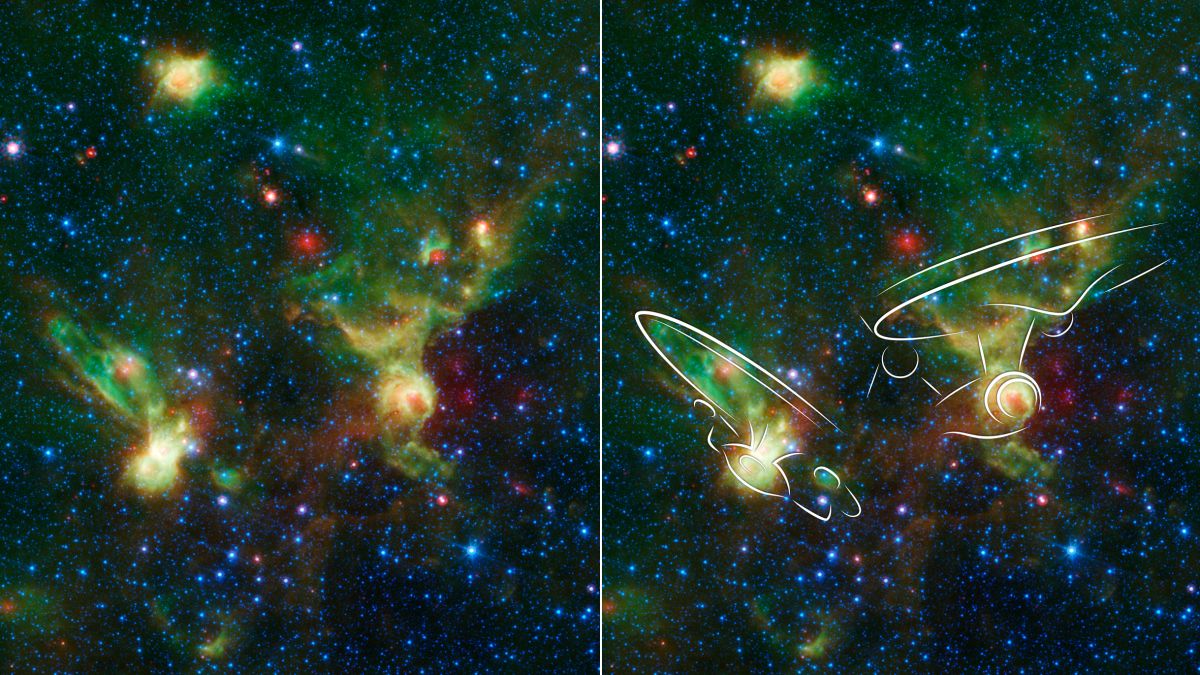
Credits: NASA/JPL-Caltech

Claudius Gros of the Institute for Theoretical Physics, Goethe University.
Credit: Claudius Gros
That final decision to go ahead must be taken autonomously by the microcraft’s on-board artificial intelligence. “This may seem an imprudent strategy nowadays, but possibly not so in a few decades,” Gros writes in an essay published in the journal, Astrophysics and Space Science.
Transiently habitable worlds
“Our galaxy is expected in particular to teem with planets which are in part habitable, but for which the clement conditions do not last long enough for higher life forms to evolve on their own,” Gros explains.
A directed energy spacecraft could be launched and then slowed by magnetic sails at targeted, “transiently habitable” worlds.
“We hence believe that the Genesis project opens a new venue for interstellar missions and for the unfolding of life in our galactic surroundings,” Gros concludes.
Read his essay, Developing Ecospheres on Transiently Habitable Planets:
The Genesis Project at:
http://arxiv.org/pdf/1608.06087v2.pdf

Curiosity Front Hazcam Right B image taken on Sol 1455, September 9, 2016.
Credit: NASA/JPL-Caltech
The Curiosity Mars rover is in Sol 1456, photo facing the Murray Buttes region of lower Mount Sharp.
The Martian buttes and mesas rising above the surface are eroded remnants of ancient sandstone that originated when winds deposited sand after lower Mount Sharp had formed.

Curiosity Mastcam Right image taken on Sol 1454, September 8, 2016.
Credit: NASA/JPL-Caltech/MSSS
According to a NASA Jet Propulsion Laboratory release today: “The new images represent Curiosity’s last stop in the Murray Buttes, where the rover has been driving for just over one month. As of this week, Curiosity has exited these buttes toward the south, driving up to the base of the final butte on its way out. In this location, the rover began its latest drilling campaign (on Sept. 9). After this drilling is completed, Curiosity will continue farther south and higher up Mount Sharp, leaving behind these spectacular formations.”
Road map
Curiosity landed near Mount Sharp in 2012.
A newly issued road map for the rover shows the route driven by Curiosity through the 1452 Martian day, or sol, of the rover’s mission on Mars (September, 06, 2016).

The base image from the map is from the High Resolution Imaging Science Experiment Camera (HiRISE) in NASA’s Mars Reconnaissance Orbiter.
Image Credit: NASA/JPL-Caltech/Univ. of Arizona
Numbering of the dots along the line indicate the sol number of each drive.
North is up.
From Sol 1448 to Sol 1452, Curiosity had driven a straight line distance of about 129.24 feet (39.39 meters).
Since touching down in August 2012, the wheeled Mars machinery has driven 8.76 miles (14.10 kilometers).

Curiosity Mastcam Right image taken on Sol 1454, September 8, 2016.
Credit: NASA/JPL-Caltech/MSSS

Frame grab Image of Tiangong-2 via CCTV/GB Times
China’s next space laboratory — Tiangong-2 – is being prepared for liftoff at northwest China’s Jiuquan Satellite Launch Center.
The launch of the un-crewed space module is set to occur between September 15 – September 20th, according to a CCTV-Plus report.
Final prep stage
Tiangong-2 atop its Long March booster was rolled out from an assembly building along a 1.5-kilometer-long seamless rail track, with the rocket being covered by the tower on the launch site.
“In the final preparing stage, further tests and installation work will be carried out, as the components like stabilizing fin for rocket booster has not been installed yet,” explains the video report.
Piloted Shenzhou-11
As China’s second orbiting space lab, Tiangong-2 is a part of the Project 921-2 space station program, with the goal of creating a third generation space station.

China’s Shenzhou-11 piloted spacecraft in testing.
Credit: CCTV/framegrab via GBTimes.
In October, two still unnamed Shenzhou-11 male pilots are to link up with the Tiangong-2. They would stay onboard the module for 30-days.
Next year, the Tiangong-2 is to be visited by China’s first refueling and cargo vessel, Tianzhou-1. Due for liftoff in the first half of next year, the unpiloted ferry vehicle would be launched via a Long March 7 rocket from the new Wenchang spaceport.

China’s 60-ton medium-size space station is depicted in this artwork.
Credit: CNSA
Modular space station
All this action is prelude to China’s progression to a larger, 60-ton modular space station for the 2020s.
The core module for the Chinese space station — Tianhe-1 — is reportedly due for launch in 2018, hurled into orbit by China’s heavy-lift Long March 5 booster. That rocket is set to make its maiden flight next month, departing from Wenchang.
Take a look at launch preparations for Tiangong-2 by going to:
http://pv.news.cctvplus.com/2016/0909/8031710_Preview_1473418271593.mp4

