Author Archive
 Author:
  October 14th, 2017
Curiosity Navcam Left B image taken on Sol 1843, October 12, 2017.
Credit: NASA/JPL-Caltech
NASA’s Curiosity Mars rover, now in Sol 1845, has been playing a “game of inches,” reports Michelle Minitti, a planetary geologist at Framework in Silver Spring, Maryland.
“There’s a line in the halftime scene of the movie ‘Any Given Sunday’ that ‘life’s this game of inches…the margin for error is so small.’ The same is true on Mars,” Minitti explains.
Rock obstacle
On Sol 1843, Curiosity began a drive with a turn to the right. But the robot’s right rear wheel encountered a small ridge – a few inches of rock offering just enough resistance to cause the rover to stop the drive and wait for further instructions.
“The unexpected obstacle gave Curiosity a fourth planning sol at this location which the team used to add to their collection of bedrock measurements from the workspace,” Minitti adds.

Curiosity Navcam Left B image taken on Sol 1843, October 12, 2017.
Credit: NASA/JPL-Caltech
Workspace targets
The “Bulawayo” target offered one of the least-dusty surfaces in the workspace, a gray, finely-layered and vertical rock face that made a tempting target for Curiosity’s Chemistry & Camera (ChemCam) device.
ChemCam also laser shot “Bushveld,” a wind-sculpted expanse of bedrock dotted with small, resistant features.
Not far from Bushveld, and adjacent to Sol 1838’s “Duitschland” target, both the Mars Hand Lens Imager (MAHLI) and the rover’s Alpha Particle X-Ray Spectrometer (APXS) studied bedrock target “Stormberg.”

Curiosity Navcam Left B image taken on Sol 1843, October 12, 2017.
Credit: NASA/JPL-Caltech
Chemical differences
“Having APXS analyses from both Stormberg and Duitschland in close proximity,” Minitti points out, “provides the opportunity to tease out small chemical differences between the targets.”
After Curiosity frees itself from the obstacle by the right rear wheel, the plan calls for a roughly 65 feet (20 meters) drive continuing up the “Vera Rubin Ridge.”
Post-drive, the plan calls for the rover to acquire an automatically-targeted ChemCam analysis and a third Chemistry & Mineralogy X-Ray Diffraction/X-Ray Fluorescence Instrument (CheMin) integration of the “Ogunquit Beach” sand sample.

Curiosity Mastcam Left photo acquired on Sol 1843, October 12, 2017.
Credit: NASA/JPL-Caltech/MSSS
“Each CheMin integration brings the mineralogy of the Ogunquit Beach sample into sharper and sharper focus,” Minitti adds.
Dust devil, cloud movies
The majority of the environmental monitoring observations also happen post-drive, including acquisition of mid-afternoon dust devil and cloud movies and a Dynamic Albedo of Neutrons (DAN) active measurement.
Minitti concludes: “Here’s hoping the inches break our way this weekend!”
 Posted in

Credit: Lujendra Ojha, et al.
New research suggests that recurring slope lineae (RSL) on Mars might be causing landslides, and/or the landslides are being sparked by ice-clouds.
RSL are dark, fingerlike features that creep down steep Martian slopes in warm weather and continue to puzzle scientists.
“Seasonal Slumps in Juventae Chasma, Mars” has been published in the American Geophysical Union’s Journal of Geophysical Research – Planets, new work led by Lujendra Ojha in the Department of Earth and Planetary Sciences at the Johns Hopkins University, Baltimore, Maryland.
Seasonal slumps
Ojha and his colleagues have detected dark topographic slumps several meters wide, tens of meters in length and up to a meter in depth on the slopes of Juventae Chasma in Valles Marineris.
These slumps usually originate near the terminal points of RSL. Near their initiation points, the slumps have topographic depressions due to the removal of materials; near their lowermost reaches, new materials are deposited in lobes.
Over the course of three Mars years, ten active slumps have been observed in that area, all of which formed in or near the same season.

Credit: Lujendra Ojha, et al.
Onboard the Mars Reconnaissance Orbiter (MRO), the spacecraft’s Mars Color Imager (MARCI) show low-altitude atmospheric obscurations confined within the topography of the Valles Marineris and Juventae Chasma in the seasons when the slumps form.
Water ice
In one instance, data from the MRO’s Compact Reconnaissance Imaging Spectrometer for Mars (CRISM) and MARCI show evidence of water ice in the atmospheric obscuration – likely due to the formation of a low-level afternoon cloud above a dust storm, or mixing of condensate clouds with a diffuse dust cloud, the research team reports.

Mars Reconnaissance Orbiter
Credit: NASA
“The presence of atmospheric obscurations with H2O ice near times when the slumps form is intriguing, but no direct evidence currently exists to support that they aid in slump formation,” they report.
Further monitoring of this site, the investigators conclude, will help establish if RSL and/or atmospheric events play a role in the creation of contemporary slumps.
The research paper is available here at:
http://onlinelibrary.wiley.com/doi/10.1002/2017JE005375/abstract

Credit: OneWeb
The respected space consulting firm, Euroconsult, reports that 300 satellites with a mass over 50 kilograms will be launched on average each year by 2026 for government agencies and commercial organizations worldwide.
This onslaught into the heavens is “a new paradigm” in the space industry with small satellites and mega constellations of spacecraft – a threefold increase over the past decade.
Small satellites
“The space industry is undergoing a massive change in volume as cubesats/nanosats and the large constellations of small satellites have begun to revolutionize satellite design, testing and production, and launch as well, as illustrated by OneWeb,” said Rachel Villain, Principal Advisor at Euroconsult and editor of the report, Satellites to be Built & Launched by 2026.
Villain adds, however, “it remains to be seen how these new satellite concepts will incentivize demand for satellite services on Earth through lower costs, especially considering that, ultimately, the cost of ownership for satellite services also includes a large investment on the ground.”

Credit: OneWeb
Billions and billions…of dollars
The 3,000 satellites over 50 kilograms to be launched over 2017–2026 should represent a market of $304 billion for the space industry in terms of building and launching, an average of $30 billion per year (up 25% over past decade), explains a Euroconsult press statement. A price decrease is visible in this core market of the space industry, driven by 23 commercial constellations launching a total of 1,800 small satellites (of which about 1,000 for OneWeb) into low or medium Earth orbits for communications or Earth observation.
According to Euroconsult, over three quarters of the future space market remains with Governments; the 1,000 satellites to be launched for civilian and military agencies in 60 countries will represent a market of $239 billion.
Government market
Governments dominate the space industry as established space countries replace and expand their in-orbit satellite systems, and more countries acquire their first operational satellite systems, usually for communications, Earth observation and imagery intelligence.
Over 85% of the government market will remain concentrated in the 10 countries with an established space industry (the U.S., Russia, China, Japan, India and the top five European countries). Still, the other 50 countries engaged in space activities will launch almost 200 satellites, twice the number they launched over the past 10 years. Over half of these 200 satellites will be procured from foreign manufacturers as domestic industry capabilities develop in these countries.

Credit: Euroconsult
Commercial sector
In the commercial space sector, Euroconsult believes that about 2,000 satellites will be launched over the decade, of which about half solely for OneWeb. Almost two-thirds of the commercial space market of $65 billion will remain concentrated in geostationary orbit, the destination of 150 new satellites for communications and broadcasting services.
The 1,800 satellites to be launched into non-geostationary orbits for the 23 constellations to collect or transport data should represent a market of $2 billion per year on average over the decade.
For more information on the report and other studies, go to:
Credit: Felix & Paul Studios
The latest project from Emmy Award-winning Felix & Paul Studios, Space Explorers lets you reach new heights through the power of VR.
Created in partnership with NASA, the experience follows their astronauts as they prepare to launch into space—and its coming to Gear VR and Rift in early 2018.

Credit: Felix & Paul Studios
Go to this trailer at:
To explore their previous works, go to:

Image composition of the European Southern Observatories (ESO).
Credit: ESO/M. Kornmesser
The European Southern Observatory (ESO) has announced it will hold a press conference on October 16, 2017 at 16:00 CEST [14:00 UTC], at its headquarters in Garching, Germany, to present “groundbreaking observations of an astronomical phenomenon that has never been witnessed before.” This is an “unprecedented discovery” the ESO statement notes.
To keep eye and ear out for this ESO announcement, go to:

Curiosity Navcam Left B image acquired on Sol 1839, October 8, 2017.
Credit: NASA/JPL-Caltech
NASA’s Curiosity Mars rover is now in Sol 1841.
Mark Salvatore, a planetary geologist from the University of Michigan in Dearborn, reports that a communications snafu has created an irksome problem in the rover’s performing of scientific duties.
“When you take a step back and think about all of the things that must go right in order to perform scientific investigations on the surface of Mars, it’s hard to believe that we ever get things accomplished! It also means that seemingly minor issues can lead to significant delays and complications when it comes to developing science plans, commanding the rover, and gathering the collected data,” Salvatore notes. “Today was one of those instances when a seemingly minor issue here on Earth significantly influenced our abilities on Mars.”

Curiosity Front Hazcam Right B image taken on Sol 1840, October 9, 2017.
Credit: NASA/JPL-Caltech
Disruption
The problem occurred when communications and data transfer was disrupted between Jet Propulsion Laboratory and the team that commands the majority of the high resolution cameras, including the robot’s Mastcam, MAHLI, and MARDI. The disruption took place as the science team was gathering to select targets of interest and to populate a block of time dedicated to science with observations and analyses.

Curiosity Rear Hazcam Right B image acquired on Sol 1840, October 9, 2017.
Credit: NASA/JPL-Caltech
Salvatore adds that “this often happens to me when I’m trying to watch my New York Mets play baseball, so I know just how frustrating it can be!”
Scientists are in a “restricted” planning mode this week, so the science plan will cover two Mars days.
Two targets
That plan calls for Curiosity to analyze two targets in front of the rover, “Bokkeveld” and “Buffalo Spring,” using the Chemistry and Camera (ChemCam) active laser system to assess the makeup of these two targets.
“Buffalo Spring has a nodular texture, not unlike some interesting targets observed on Vera Rubin Ridge over the last few weeks. Bokkeveld is a “typical” bedrock target, which will help us to understand just how different Buffalo Spring is relative to more typical basaltic targets,” Salvatore points out.
Drill diagnostics
Curiosity will undergo additional drill diagnostics to assess all of the engineering work to get the drill capabilities back to the science team.

Curiosity Mars Hand Lens Imager (MAHLI), located on the turret at the end of the rover’s robotic arm, acquired this image on Sol 1838, October 7, 2017.
Credit: NASA/JPL-Caltech/MSSS
Also on tap is using the robot’s Navcam cameras to identify and monitor local clouds. Then the ChemCam will make an automated measurement of a nearby rocky target as well as its titanium calibration target. Curiosity’s Navcam cameras will image the surroundings and search for local dust devils.
No driving
The rover’s Chemistry & Mineralogy X-Ray Diffraction/X-Ray Fluorescence Instrument (CheMin) is slated to be programmed to perform a second analysis on the previously collected Ogunquit Beach sediment sample and retrieve the data the following day, Salvatore adds.

Curiosity Mastcam Left image taken on Sol 1839, October 8, 2017.
Credit: NASA/JPL-Caltech/MSSS
There is no drive scheduled during the rover’s two-day plan. Therefore, the science team will have the same view on Wednesday as they do today. “Hopefully on Wednesday,” Salvatore concludes, “we will be able to utilize all of the imaging capabilities of the rover, finish analyzing the local surroundings, and continue to make forward progress towards the top of Vera Rubin Ridge!”

Credit: SpaceX
Two new space reports have been issued by the U.S. Government Accountability Office (GAO), one on nuclear power and future spacecraft missions. The other focuses on moving the FAA Office of Commercial Space Transportation.
DOE Could Improve Planning and Communication Related to Plutonium-238 and Radioisotope Power Systems Production Challenges looks at NASA’s dependency on the Department of Energy to supply Pu-238 for space missions. NASA may not have sufficient Pu-238 to support future missions or will have to delay such missions until more Pu-238 is provided.

Radioisotope Power System for the Curiosity Rover at Kennedy Space Center.
Credit: NASA
Federal Aviation Administration: Stakeholders’ Perspectives on Potentially Moving the Office of Commercial Space Transportation focuses on stakeholder and official perspectives on moving this office and what they perceive could occur as a result of such a move, for example, on communication and coordination, regulations and resources.
For copies of these GAO reports, go to:
1)
Federal Aviation Administration: Stakeholders’ Perspectives on Potentially Moving the Office of Commercial Space Transportation
GAO-18-96, October 5
Report: http://www.gao.gov/products/GAO-18-96
Highlights: http://www.gao.gov/assets/690/687589.pdf
2)
DOE Could Improve Planning and Communication Related to Plutonium-238 and Radioisotope Power Systems Production Challenges
GAO-17-673, September 8
Report: http://www.gao.gov/assets/690/687031.pdf
Highlights: http://www.gao.gov/products/GAO-17-673
Credit: CIA
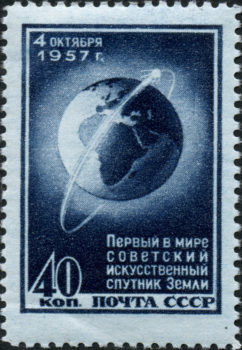
On October 4, 1957, the Soviet Union successfully launched the Sputnik-1 earth satellite into space—an achievement that stunned the American public and press, but not the U.S. policy and intelligence communities.
The Central Intelligence Agency (CIA) reported the advancements that led to this landmark launch to President Eisenhower, providing him with the strategic advantage to guide the U.S. response.
Intelligence and analysis
On the 60th anniversary of Sputnik’s first launch, the CIA has released a collection of previously classified documents on the Sputnik program.

Credit: S.P. Korolev Rocket and Space Corporation/Energia
The collection includes CIA’s intelligence and analysis of Sputniks-1, -2, and -3 and the Soviet ballistic missile program from 1955 to the early 1960s.
Encompassing 59 documents and 440 pages, the release provides new information to the public, to include memoranda and reports the CIA provided to President Eisenhower, on the Soviet Union’s early space and missile programs.
The entire collection is available here:
https://www.cia.gov/library/readingroom/collection/intelligence-warning-1957-launch-sputnik

Book Review: International Space Station: Architecture Beyond Earth by David Nixon, CIRCA Press, 2017, 400-pages +, $75.00 hardcover.
This is an incredible gift of a book that tells the history of the International Space Station, through the lens of its architectural design. Written by David Nixon, an architect with a particular interest in designing for space exploration, this impressive volume is the result of seven years of research.
As detailed in the book, In 1984 President Ronald Reagan kick-started the space station effort in 1984. Broken down into time chunks, this work describes the station’s evolution: Diversity and vision (1984-1988; Ambition and grandeur (1984-1988); Crisis and resolution (1989-1993; Anticipation and preparation (1994-1998); and Endurance and achievement (1999-2011).
“The International Space Station is the most ambitious habitat contrived by mankind to support its existence beyond Earth,” Nixon writes. It has become of vital importance to enable humanity’s leap across the solar system.

Credit: David Nixon
While modular infrastructure is one thing, the political, diplomatic, and financial glue needed to hold the facility together is also explained in the book. The author has pieced together an impressive portrait of the inner and outer workings of the ISS. The reader will not go wrong here by reading this volume and gaining a full appreciation of the orbital outpost’s conception, development and then assembly in Earth orbit. ISS is an incredible engineering feat, a story well researched and documented by Nixon.
“This book is a starting point,” the author writes, “and I hope that it will stimulate others into delving more deeply into the station’s fascinating story before the trail begins to grow cold.” While the mega-project’s life may be secure until 2024, the author notes its future after that is murky, perhaps headed for a deep, destructive dive into the Earth’s atmosphere and scattered into ocean waters.
NASA astronaut, Nicole Stott, a resident aboard the sprawling facility, offers her thoughts in a nicely written “A home in space” essay early in the book.

Credit: NASA
There are many fascinating twists and turns in this great book – made that way by a variety of architectures considered over early planning years. All those decision points are nicely detailed by Nixon – adding to the value of this volume.
I’m not aware of any book on the ISS that comes close to what Nixon offers here. After reading his words and eyeing some 250 color and 150 black and white illustrations, you’ll see the ISS in a different light as it crosses the night sky!
By the way, hat’s off to CIRCA for publishing this book. CIRCA is a new press, founded in London by David Jenkins, who over the past twenty-five years has conceived and edited critically acclaimed books on architecture and design for some of the world’s leading publishers.
For more information on this unique book, go to:
https://circapress.com/books/architecture/international-space-station/david-nixon

Curiosity Front Hazcam Right B image acquired on Sol 1836, October 5, 2017.
Credit: NASA/JPL-Caltech
Deep into Sol 1836, NASA’s Curiosity Mars rover ran into uplink issues due to a Deep Space Network technical problem.
Reports Abigail Fraeman, a planetary geologist at NASA/JPL in Pasadena, California, Mars researchers worked hard to generate what they affectionately dubbed a “Frankenplan.”
That plan is defined as a schedule in which one mashes elements that were already prepared (the contact science hoped for on sol 1835) with new elements (a drive).
“We were able to pull this off because we were planning two sols today (1836-1837) instead of the one sol we planned yesterday,” Fraeman adds.
Vertical exposure
The plan on sol 1836 is to start with a remote sensing block that has the rover’s Chemistry and Camera (LIBS) observations of targets “Ecca” and “Lucknow.”
“These are the same targets we had planned to do contact science on yesterday. We are also taking Mastcam mosaics of target “Limpopo” and a nice vertical exposure that we may visit in the future,” Fraeman adds.
Mars scientists additionally managed to fit in a Mastcam tau observation and a Mastcam multispectral observation of an area named “Hotazel.” We will use the multispectral observation to document the spectral properties of the terrain in front of us.

Curiosity Mastcam Left photo taken on Sol 183, October 3, 2017.
Credit: NASA/JPL-Caltech/MSSS
Bedrock properties
After finishing the remote sensing science block, researchers will repeat contact science that they had planned. The purpose of these contact science measurements is to document the properties of the bedrock on this middle plateau on Vera Rubin Ridge. “We will also squeeze in one more Mastcam tau measurement and a crater rim extinction image before the sun sets,” Fraeman explains.
“Our main activity on sol 1837,” Fraeman concludes, “is a drive to the east to continue on our exploration of Vera Rubin Ridge. We will collect a Mastcam multispectral observation of the brushed targets Ecca and Lucknow before we drive away. Whew!”

