Author Archive
 Author:
  December 15th, 2017
Credit: Blue Origin/Screen Grab
Chief rocketeer for Blue Origin, Jeff Bezos, has released a full video of Mannequin Skywalker’s ride to space, from liftoff to landing.
“Unlike him, you’ll be able to get out of your seat during the zero gee part of the flight. And ignore the pinging sound – it’s just from one of the experiments on this flight,” Bezos tweeted.
Large windows
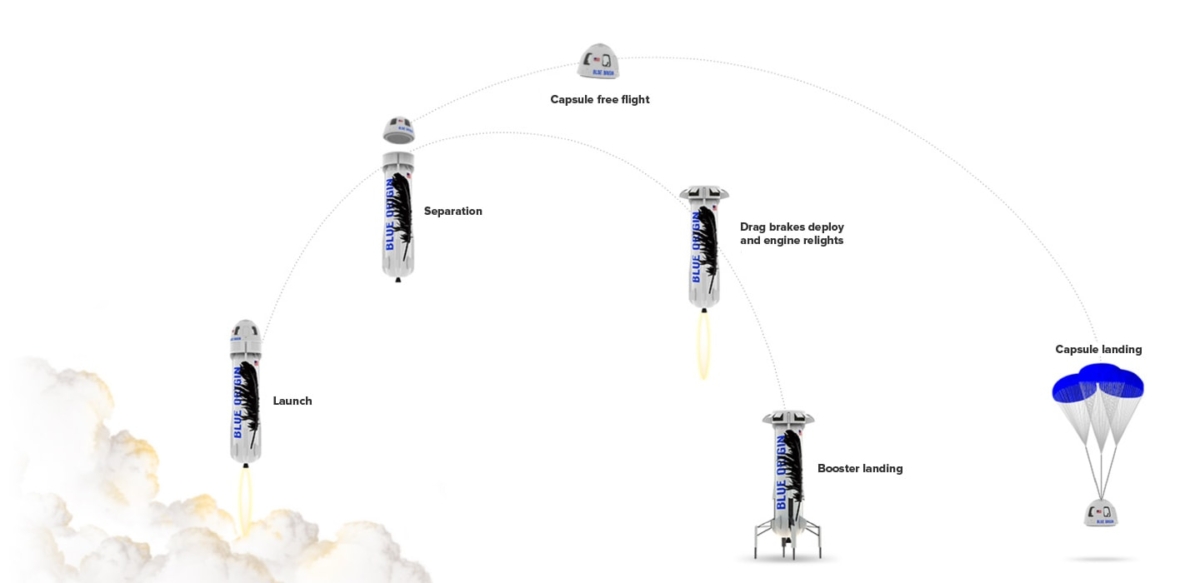
Onboard camera view of the mannequin sent to space comes from inside Blue Origin’s Crew Capsule 2.0 – a vehicle that has the largest windows in space, the company states. The impressive video also includes sound from inside the vessel.
Blue Origin launched the capsule atop its New Shepard for the 7th time and for the first time in 2017.
The last launch of the rocket (booster / capsule configuration) was in 2016.
Credit: Blue Origin
Weightless somersaults
Designated as M7 (Mission 7), the recent flight took place on December 12, 2017 and featured the next-generation booster and the Crew Capsule 2.0’s on its maiden flight.
The New Shepard reusable rocket was also carrying 12 commercial, research and education payloads with the booster reaching an altitude of 325,000 feet (99 kilometers) while the Crew Capsule 2.0 reached an apogee of 326,000 feet (98 kilometers).

Nearing touchdown….
Credit: Blue Origin/Screen Grab
Blue Origin is testing the capsule and booster to support suborbital space tourism. The New Shepard capsule’s interior offers over 10 times the room Alan Shepard had on his Mercury flight in May 1961. It seats six astronauts and is large enough for you to float freely and turn weightless somersaults.

Landing!
Credit: Blue Origin/Screen Grab
To watch the video, go to:
 Posted in

U.S. President Donald Trump holds up the Space Policy Directive – 1 after signing it, directing NASA to return to the Moon, alongside members of the Senate, Congress, NASA, and commercial space companies in the Roosevelt room of the White House in Washington, Monday, Dec. 11, 2017.
Credit: NASA/Aubrey Gemignani
An assessment of U.S. President Trump’s new Space Policy Directive-1 has been issued by Steven Aftergood in his Secrecy News report published by the Federation of American Scientists.
“President Trump created an entire new category of presidential directives to present his guidance for the U.S. space program,” Aftergood notes.
Trump’s new Space Policy Directive 1 was signed on December 11 and published in the Federal Register today.
Moon swoon
President Donald Trump is sending astronauts back to the Moon, proclaimed an enthused NASA public affairs in a news release.
“But the directive itself does no such thing. Instead, it makes modest editorial adjustments to the 2010 National Space Policy that was issued by President Obama and adopted in Presidential Decision Directive 4,” Aftergood adds.
Obama’s policy had stated:
“Set far-reaching exploration milestones. By 2025, begin crewed missions beyond the moon, including sending humans to an asteroid. By the mid-2030s, send humans to orbit Mars and return them safely to Earth.”

President Barack Obama delivers a speech at the Operations and Checkout Building at NASA Kennedy Space Center in Cape Canaveral, Fla. on Thursday, April 15, 2010. Obama visited Kennedy Space Center to deliver remarks on a new course the Administration is charting for NASA and the future of U.S. leadership in human space flight.
Credit: NASA/Bill Ingalls
Deletion, replacement
“Trump’s new SPD-1 orders the deletion and replacement of that one paragraph,” Aftergood advises, with the following text:
“Lead an innovative and sustainable program of exploration with commercial and international partners to enable human expansion across the solar system and to bring back to Earth new knowledge and opportunities. Beginning with missions beyond low-Earth orbit, the United States will lead the return of humans to the Moon for long-term exploration and utilization, followed by human missions to Mars and other destinations.”

Earth’s Moon as seen from the International Space Station taken by ESA British astronaut, Tim Peake.
Credit: NASA/ESA
New resources?
At a White House signing ceremony on December 11, President Trump said that “This directive will ensure America’s space program once again leads and inspires all of humanity.”
But it’s hard to see how that could be so, Aftergood explains. “The Trump directive does not (and cannot) allocate any new resources to support a return to the Moon, and it does not modify existing authorities or current legislative proposals,” he notes.
Aftergood concludes: “Interestingly, it also does not modify the many other provisions of Obama’s 14-page space policy, including requirements ‘to enhance U.S. global climate change research’ and ‘climate monitoring.’ Unless and until they are modified or revoked, those provisions remain in effect.”
For a space trip down memory lane, go to the U.S. Space Policy from June 2010 as scripted by the Obama administration at:

Deep space architecture.
Credit: NASA
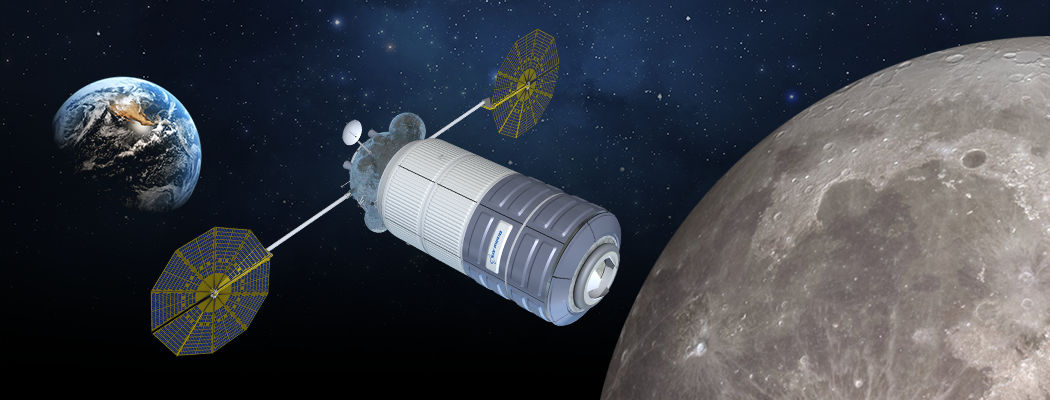
Thales Alenia Space has signed a trio of contracts with U.S. companies to help shape NASA’s Deep Space Gateway and Deep Space Transport projects.
The work is being done under the framework of the Next Space Technologies for Exploration Partnerships (NextSTEP-2) activities with Boeing, Lockheed Martin and Orbital–ATK.
Deep space infrastructure
Thales Alenia Space support to the U.S. partner’s activities in NextSTEP is primarily focused on the definition of a key core element of the cislunar infrastructure, i.e. the Habitat Module, but with potential additional contributions in terms of general Deep Space Gateway architecture and other composing elements, such as a potential airlock.
Thales Alenia Space is drawing upon its track record of work, including ISS Pressurized Modules, both permanently operative in orbit like the Nodes or used to support ISS cargo logistic like the Cygnus resupply vehicle.
Credit: Orbital -ATK
This new support includes overall module configuration to layout, structures, micrometeoroid and radiation protection, as well as thermal control.
Proving ground
“Based on a public-private partnership model, the next step for human spaceflight is the development of deep space exploration capabilities to expand architectures to support more extensive missions in the proving ground around and beyond cis-lunar space and then towards deep space and, ultimately, Mars,” explains a Thales Alenia Space press statement.

Curiosity Navcam Left B image acquired on Sol 1903, December 13, 2017.
Credit: NASA/JPL-Caltech
Just wrapping up Sol 1903 operations, NASA’s Curiosity Mars rover has been scooting about on Vera Rubin Ridge.
The robot has been focusing on the rocks that make up the ridge, measuring their chemistry and imaging their structure to try and understand the origin of this prominent feature in Gale crater reports Michelle Minitti, a planetary geologist for Framework in Silver Spring, Maryland.
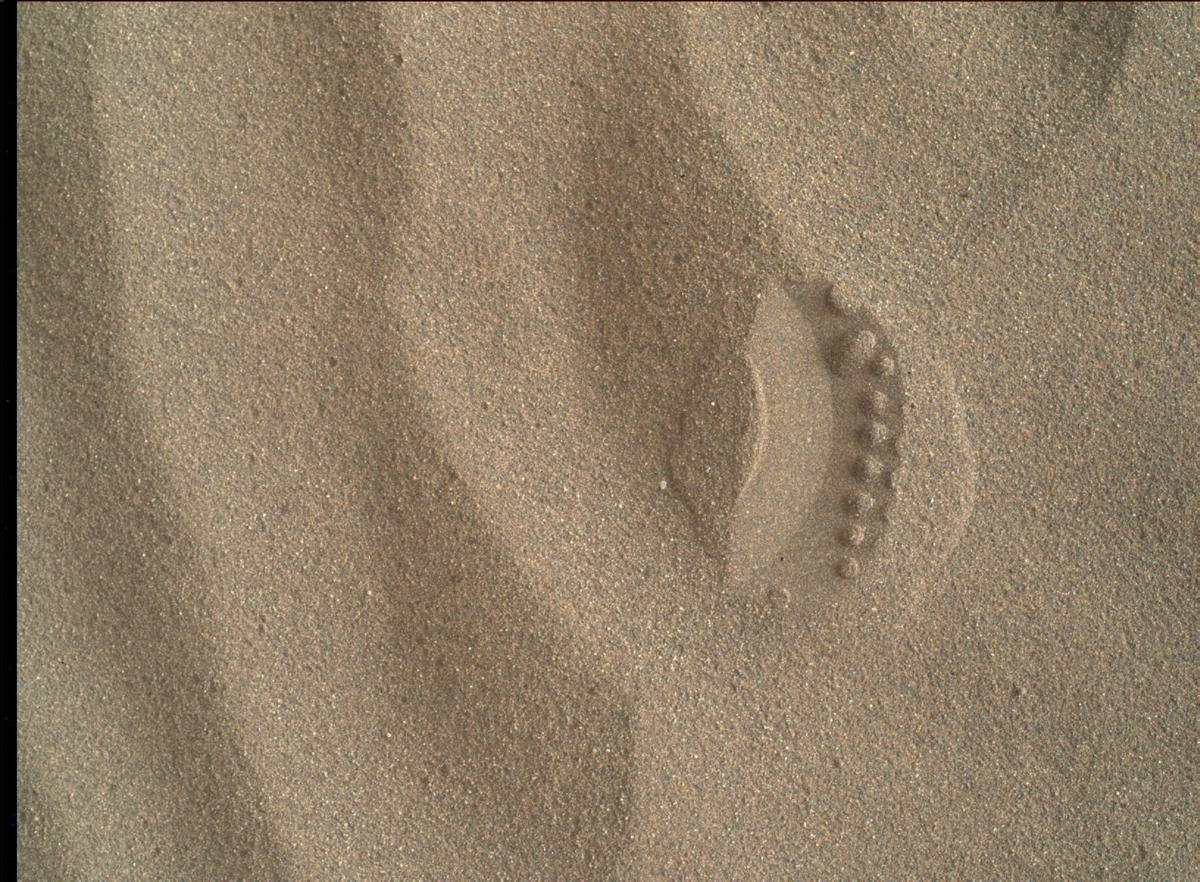
Laser shots across the sand. Curiosity Mars Hand Lens Imager (MAHLI) photo taken on Sol 1902, December 12, 2017.
Credit: NASA/JPL-Caltech/MSSS
Sand deposits
Sand has been the focus of Curiosity’s attention lately. Small depressions gather sand as the wind blows along the ridge, and the rover science team wanted to measure the chemistry and grain size of such a Vera Rubin Ridge sand deposit to understand their similarities (or differences) to those of the Bagnold dune sands, Minitti adds.
The Mars Hand Lens Imager (MAHLI) and the robot’s Alpha Particle X-Ray Spectrometer (APXS) were deployed on two targets, “Goatfell” and “Eilean Dubh.”
The former is along the crest of a sand ripple, and the latter avoids ripple crests to provide the largest contrast to Goatfell,” Minitti notes.
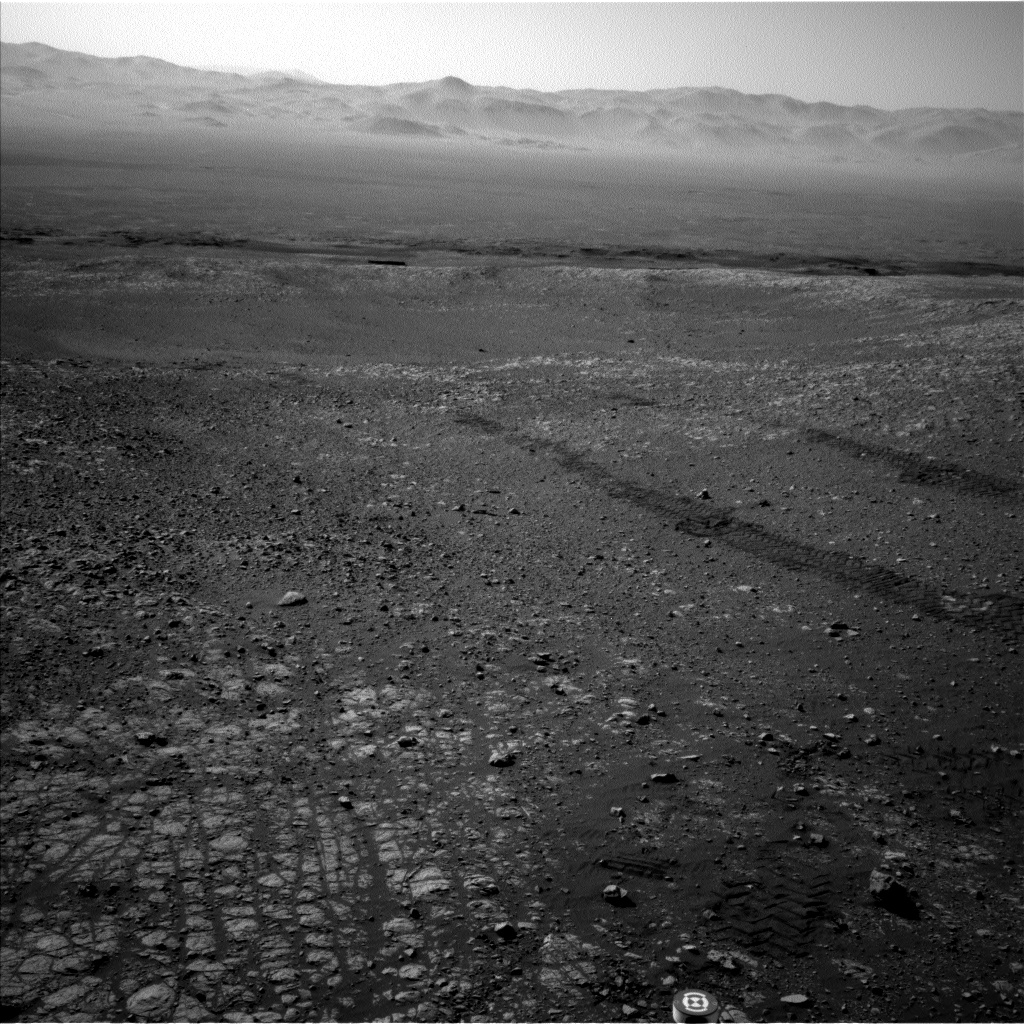
Curiosity Navcam Left B image taken on Sol 1902, December 12, 2017.
Credit: NASA/JPL-Caltech
Bedrock chemistry
Curiosity Chemistry and Camera (ChemCam) instruments was to raster across another ripple crest at “Stonehaven,” and Mastcam will acquire a multispectral observation at “Corrie” that covers the ripple crests targeted by ChemCam, MAHLI and APXS.

Curiosity Mastcam Left photo taken on Sol 1901, December 12, 2017.
Credit: NASA/JPL-Caltech/MSSS
“The Vera Rubin Ridge rocks did not go without attention despite the comprehensive sand observations. ChemCam will measure bedrock chemistry at “Arran,” and the chemistry of one of the gray cobbles scattered throughout the workspace at “Trotternish.” Targets “Coll” and “Yell” mark a contact between two different rock types on the ridge,” Minitti points out.
Curiosity’s Mastcam mosaics across these targets will provide detailed insight into the nature of the contact.
360 degree mosaics
The rover’s Mastcam was also slated to image “Hoy,” a small, bumpy rock that shares similarities with the target “Moffat” imaged during the rover’s last stop.
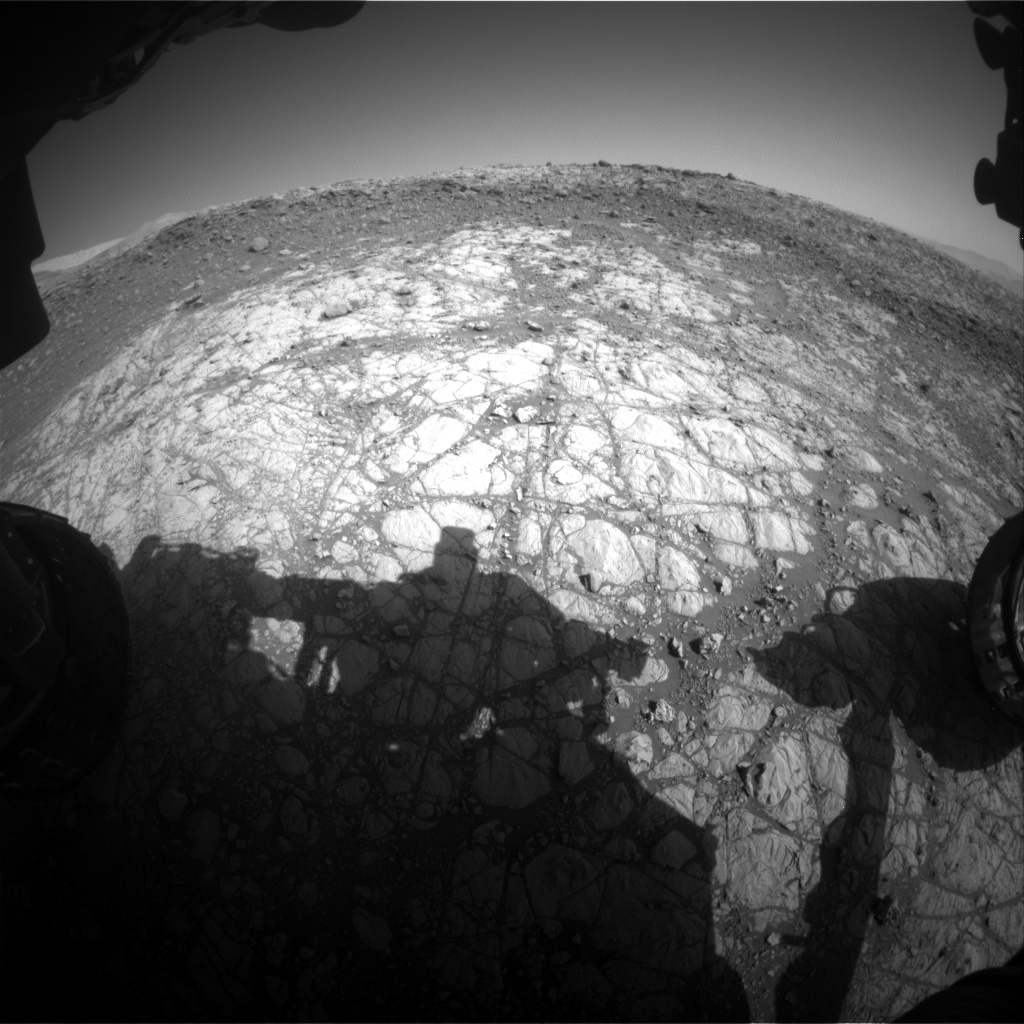
Curiosity Front Hazcam Left B image acquired on Sol 1903, December 13, 2017.
Credit: NASA/JPL-Caltech
“All of the plan’s targets will be recorded for posterity in one of our systematic Mastcam 360 degree mosaics,” Minitti explains, including Curiosity’s drive target, a stretch of bedrock roughly 16-feet (5 meters) away with unique color characteristics as viewed from orbit.
Also planned were environmental observations by the rover, including dust measurements at three different times of day, early morning searches for clouds looking above the rover and across the horizon.
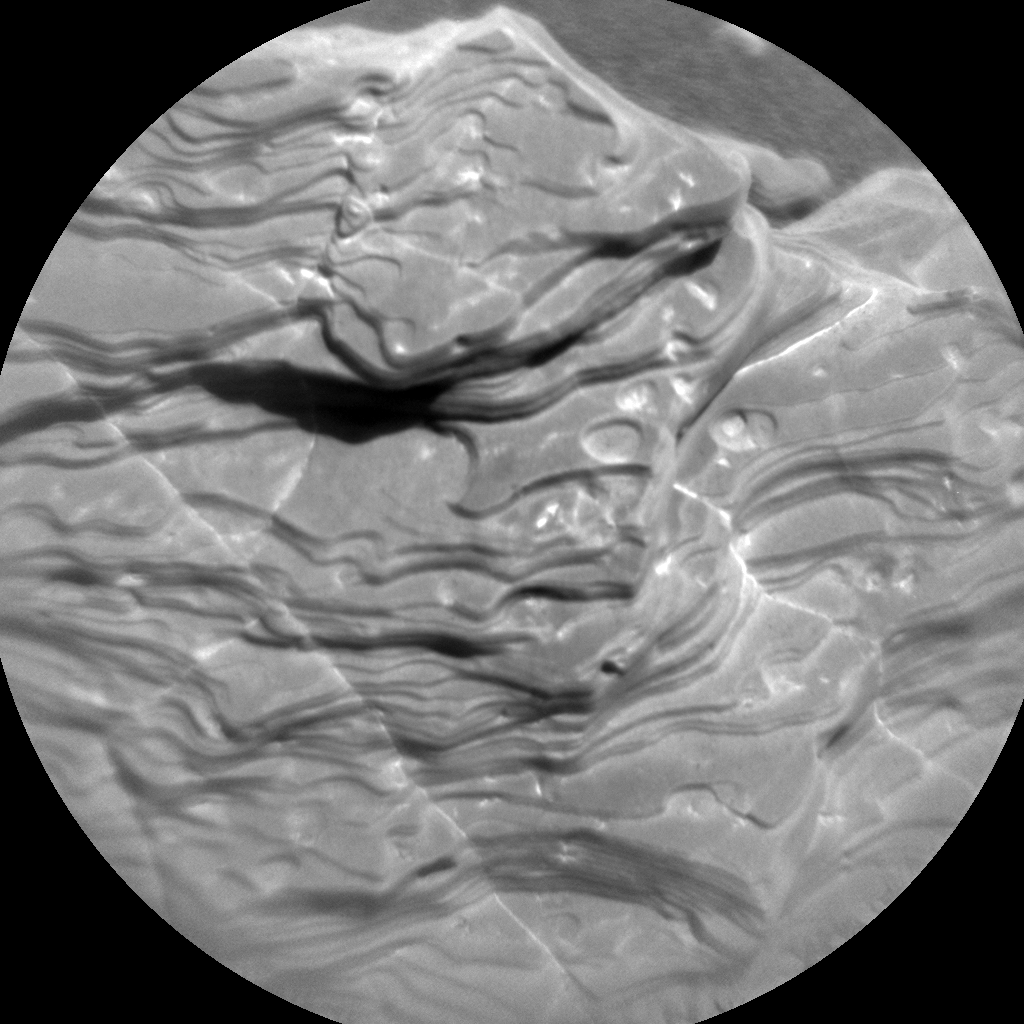
Curiosity ChemCam Remote Micro-Imager photo taken on Sol 1903, December 13, 2017.
Credit: NASA/JPL-Caltech/LANL
Radiation Assessment Detector (RAD), Dynamic Albedo of Neutrons (DAN) and Rover Environmental Monitoring Station (REMS) measurements were also on the schedule.
Traverse map
A Curiosity’s traverse map through Sol 1901 has been issued. This map shows the route driven by NASA’s Mars rover Curiosity through the 1901 Martian day, or sol, of the rover’s mission on Mars (December 11, 2017).

Credit: NASA/JPL-Caltech/Univ. of Arizona
Numbering of the dots along the line indicate the sol number of each drive. North is up. The scale bar is 1 kilometer (~0.62 mile).
From Sol 1896 to Sol 1901, Curiosity had driven a straight line distance of about 87.25 feet (26.59 meters), bringing the rover’s total odometry for the mission to 11.11 miles (17.88 kilometers).
The base image from the map is from the High Resolution Imaging Science Experiment Camera (HiRISE) in NASA’s Mars Reconnaissance Orbiter.

Talking exoplanets? Better watch what you say advises Elizabeth Tasker, solar system scientist.
Credit: Barbara David
The fine art of exoplanet detection is on the upswing, perhaps at the cusp of a watershed moment in detecting life on other worlds. Ground and space-based telescopes have been busy plumbing the depths of space to find and confirm over 3,500 planets are circling their parent stars. For sure, that number is destined to grow.
Indeed, the discovery of extrasolar planets with similar radii and mass to the Earth has opened the door to scientific debate about the probability that such worlds may well be habitable.
Cautionary flags
Revelations like these stir up overtones of “most habitable” planet or “Earth’s twin” and spark lots of headlines in the last few years. However, the reality is that we have no way to quantitatively assess a planet’s ability to support life.
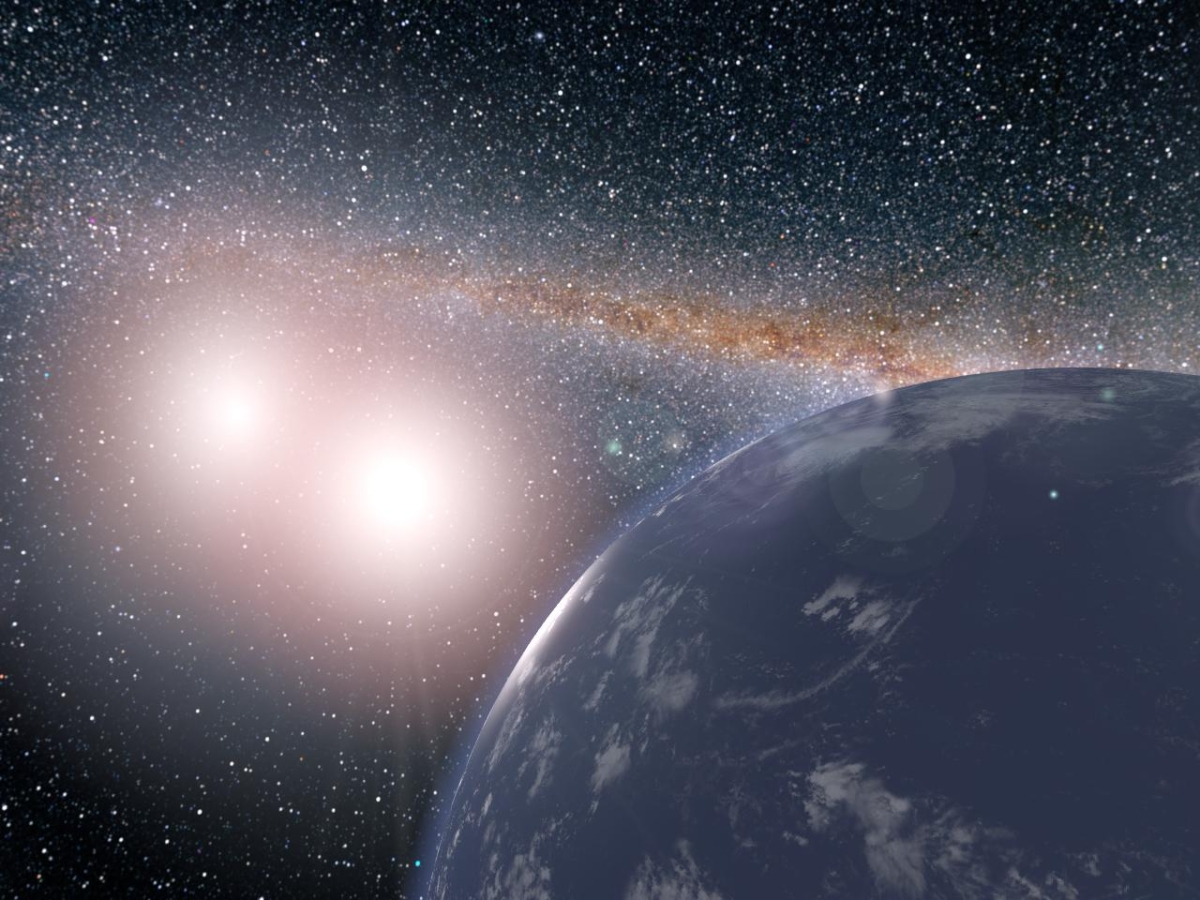
A hypothetical planet covered in water around the binary star system of Kepler-35A and B is depicted in this artist’s view.
Credit: NASA/JPL-Caltech
That is one of several cautionary flags tossed into the air by Elizabeth Tasker, an associate professor in the Department of Solar System Sciences for the Japan Aerospace Exploration Agency and its Institute of Space and Astronautical Science.
What’s her beef? Check out my new Space.com story at:
Earth-Like Planet? Not So Fast — Scientist Says to Watch Your Words
By Leonard David, Space.com’s Space Insider Columnist
December 13, 2017 07:30am ET
https://www.space.com/39075-habitable-alien-planet-watch-your-words.html
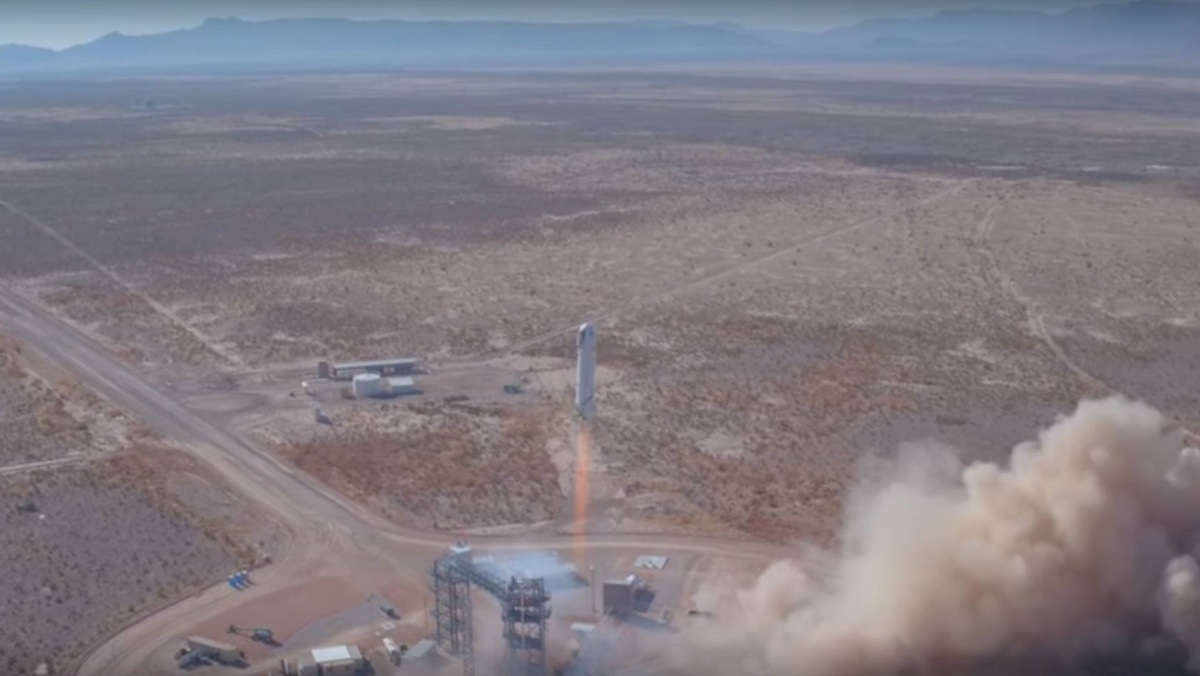
New Shepard liftoff.
Credit: Blue Orign/Screenshot
Blue Origin’s New Shepard flew again for the seventh time December 12 from Blue Origin’s West Texas Launch Site.
Video at:
Known as Mission 7 (M7), the flight featured the next-generation booster and the first flight of Crew Capsule 2.0.
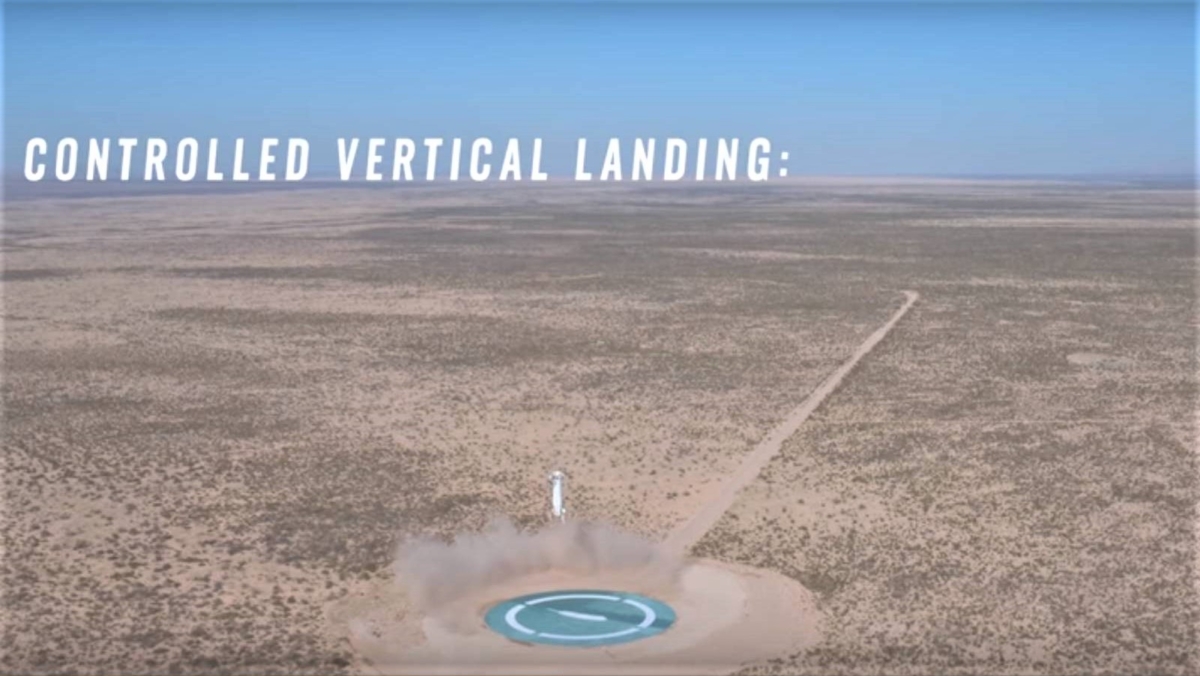
New Shepard landing.
Credit: Blue Orign/Screenshot
Crew Capsule 2.0 features large windows, measuring 2.4 feet wide, 3.6 feet tall.
Onboard payloads
M7 also included 12 commercial, research and education payloads onboard.
Crew Capsule 2.0 reached an apogee of 322,405 feet AGL/326,075 feet MSL (98.27 kilometers AGL/99.39 kilometers MSL).

Capsule landing.
Credit: Blue Orign/Screenshot
The booster reached an apogee of 322,032 feet AGL/325,702 feet MSL (98.16 kilometers AGL/99.27 kilometers MSL).
NanoRacks payload integration
It was the third flight in which NanoRacks has managed customer payload integration.
Notably, one full Blue Origin payload locker in which NanoRacks integrated on this mission is for Orbital Medicine, in collaboration with Purdue University Aerospace Engineering. Their experiment, “Thoracic PARG” is demonstrating a new medical technology for managing collapsed lungs in microgravity or other extreme environments, according to a NanoRacks press statement.
T-cells, genes
In a statement from Embry-Riddle’s Daytona Beach Campus, one experiment carried within the capsule assessed how microgravity impacts the cellular processes of T-cells or T-lymphocytes, which develop from stem cells in the bone marrow and are key to the immune system.
The second Embry-Riddle payload was designed to study how microgravity affects genes that play a role in tumor growth.
Embry-Riddle’s two experiments were part of 12 commercial, research and educational payloads onboard the first flight of Crew Capsule 2.0.
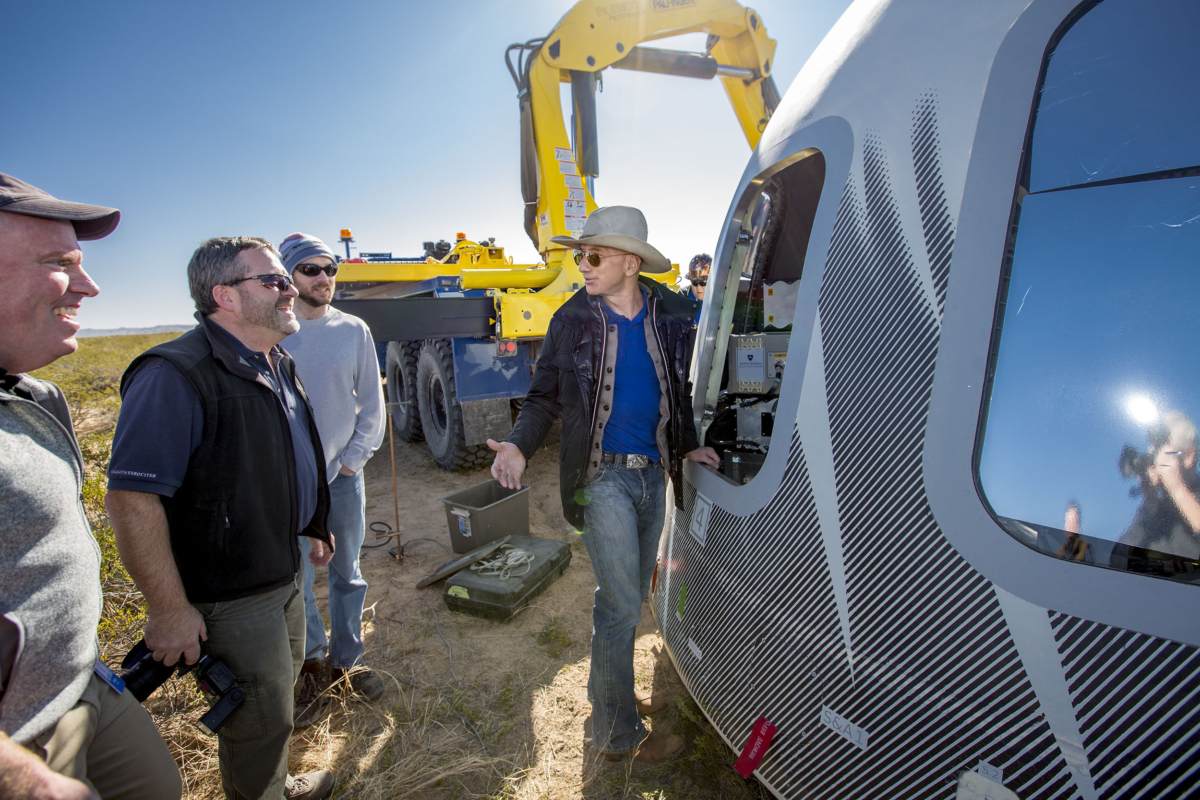
Blue Origin’s chief rocketeer, Jeff Bezos, (right) discusses capsule payloads with team members.
Credit: Blue Origin
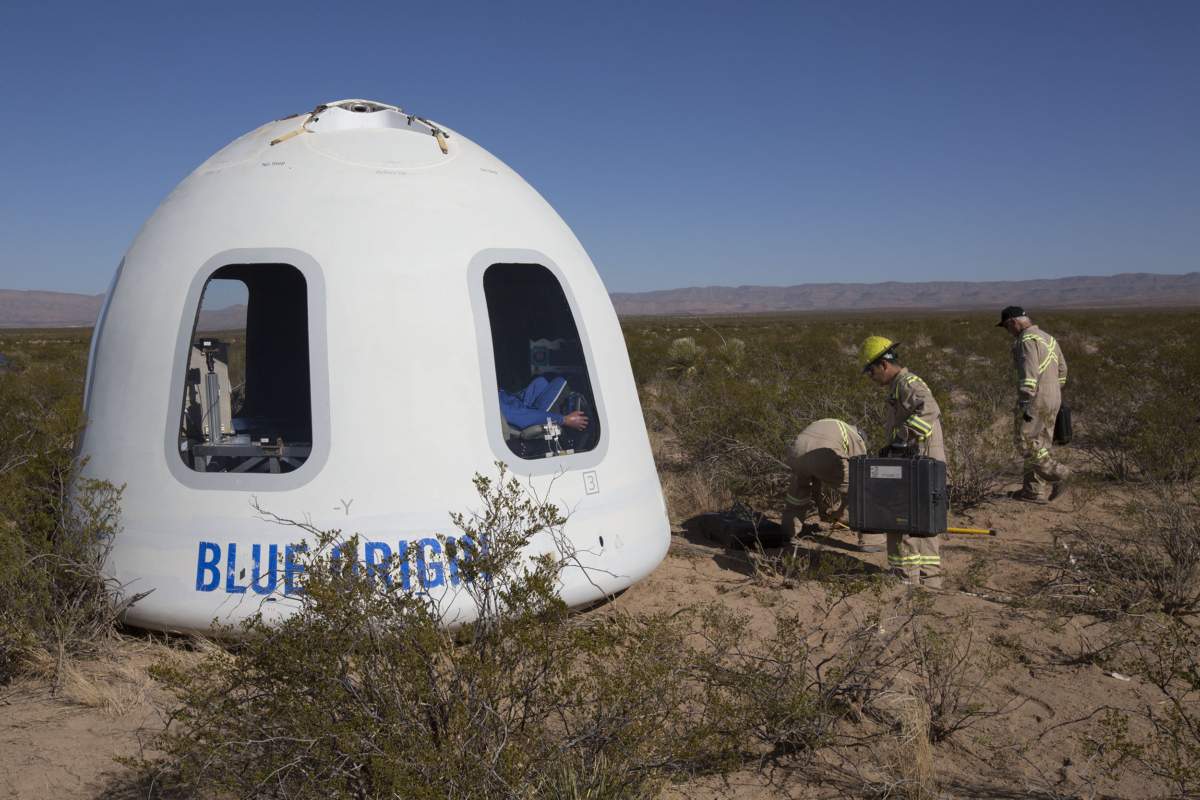
Capsule closeup.
Credit: Blue Origin
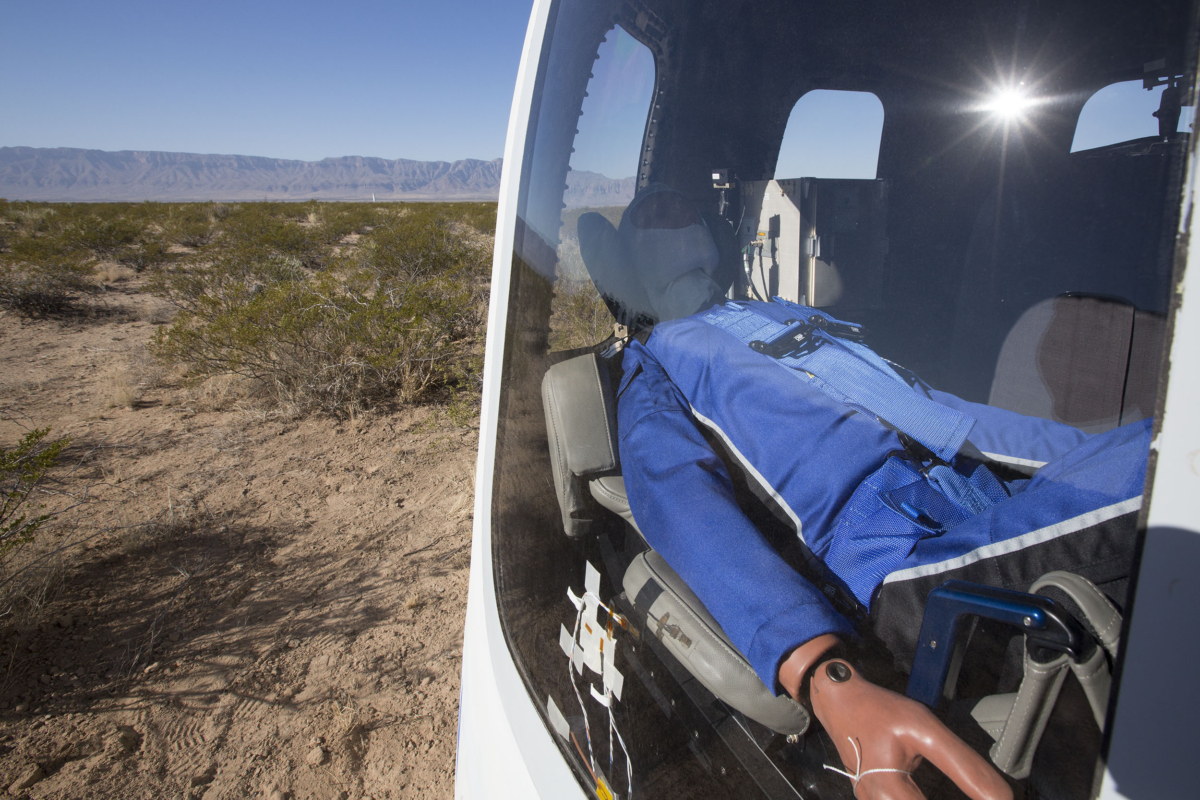
“Mannequin Skywalker” instrumented test dummy made the suborbital journey.
Credit: Blue Origin

U.S. President Donald Trump, speaks before signing the Space Policy Directive – 1, directing NASA to return to the Moon, in the Roosevelt room of the White House in Washington, Monday, Dec. 11, 2017.
Credit: NASA/Aubrey Gemignani
U.S. President Donald Trump has put pen to paper in signing the Space Policy Directive – 1 – placing NASA on the pathway for a return to the Moon.
The event took place in the Roosevelt room of the White House in Washington, Monday, December 11, 2017.
U.S. President Donald Trump holds up the Space Policy Directive – 1 after signing it, directing NASA to return to the Moon, alongside members of the Senate, Congress, NASA, and commercial space companies in the Roosevelt room of the White House in Washington, Monday, Dec. 11, 2017.
Credit: NASA/Aubrey Gemignani
Wanted: funds, political will
“This could turn out to be a historic step towards sending Americans once again, after 45 years and counting, away from their home planet,” explains John Logsdon, Professor Emeritus of Political Science and International Affairs for the Space Policy Institute, Elliott School of International Affairs at George Washington University.

Apollo 17’s Jack Schmitt presents U.S. President Trump a moonwalker figurine. Apollo 11’s Buzz Aldrin views the scene as does Peggy Whitson, the only female astronaut reaching a total of 665 days over the course of three long-duration missions.
Credit: Screenshot/Inside Outer Space
“The words are all good words, and incorporating them into the formally-stated National Space Policy is significant,” Logsdon tells Inside Outer Space. “But a policy is only as good as its implementation. I hope the White House follows through with the funds and political will to make this happen, and that the Congress can agree to what should be a non-partisan return to space exploration.”
Wait and see
Remarks James Vedda of the Aerospace Corporation’s Center for Space Policy & Strategy in Arlington, Virginia: “Trump and his spokespeople have been talking about this in very general terms for a year, so the only real news here is that they finally put it in writing in an official document – again, in very general terms.”
As others have noted, Vedda adds let’s wait and see what’s in the Fiscal Year ‘19 budget request to support this activity.
“The fact that the administration did this with a simple amendment to the previous administration’s National Space Policy may indicate that there are no plans to completely replace that policy, at least not in the near term,” Vedda advises Inside Outer Space.

Ivanka Trump, advisor to President Donald Trump, touches a sample from the Moon that former astronaut Jack Schmitt, left, collected during the Apollo 17 mission, just after President Trump signed Space Policy Directive – 1, directing NASA to return to the moon, in the Roosevelt room of the White House in Washington, Monday, Dec. 11, 2017. Under glass, lunar sample 70215 with Schmitt noting to Ivanka Trump the size of the boulder it came from.
Credit: NASA/Aubrey Gemignani
Memorandum, remarks
For related documents go to:
Presidential Memorandum on Reinvigorating America’s Human Space Exploration Program
Remarks By President Trump and Vice President Pence at Signing Ceremony for Space Policy Directive – 1
President Donald J. Trump Will Make America a Leader in Space Exploration Again
Video of signing ceremony can be viewed at:
President Trump Participates in a Signing Ceremony for Space Policy Directive – 1
Tech Insider has published a very informative video focused on comparing SpaceX’s Falcon Heavy and Big Falcon Rocket, Blue Origin’s New Glenn, and NASA’s Space Launch System.
NASA’s Saturn V rocket was the pinnacle of technology during the Apollo era. More than 40 years after its final flight, it’s still the world’s most powerful rocket. But that’s finally about to change.
NASA, SpaceX, and Blue Origin are developing their most impressive rockets yet. Here’s how America’s monster rockets of the future measure up to NASA’s moon rocket
Saturn V – 363 feet tall
Falcon Heavy – 229 feet tall
BFR – 348 feet tall
SLS – 365 feet tall
New Glenn Rocket – 326 feet tall
At peak performance, the Saturn V could lift 310,000 pounds to orbit. That’s equivalent to the weight of 33 African elephants respectively (avg. African elephant weighs 9500 pounds.)
Some of these payloads are subject to change, but here’s an estimate of how much each rocket can carry to space.
Saturn V – 310,000 lbs (33 elephants)
Falcon Heavy – 119,000 lbs (12.5 elephants)
SLS – 286,000 lbs (30 elephants)
BFR – 330,000 lbs (34 elephants)
New Glenn Rocket – 99,210 lbs (10 elephants)
The Falcon Heavy will be the first rocket since Saturn V capable of sending humans to the Moon, though it won’t be quite as powerful. Blue Origin’s New Glenn rocket will compete with SpaceX for commercial satellite launches.
But the real monsters of the group are NASA’s Space Launch System and SpaceX’s Big Falcon Rocket. Both will out power the Saturn V and are designed to eventually launch humans to Mars.

Credit: Tech Insider
Now, let’s check out the true test of a rocket’s power — its thrust.
Saturn V – 7.6 million pounds (42 Boeing 747s)
Falcon Heavy – 5.1 million pounds (28 Boeing 747s)
SLS – 9.2 million pounds (51 Boeings)
BFR – 11.8 million pounds (66 Boeings)
New Glenn – 3.85 million pounds (21 Boeings)
The Saturn V generated 7.6 million pounds of thrust at liftoff
That’s equivalent to the same propulsive power as 42 Boeing 747s
(referring to Boeing 747-400 model, which has 4 engines that produce 44,700 lbs of thrust each)
Roaring to life
Before the decade is up, we can expect to see at least a couple of these rockets roar to life for the first time.
SpaceX’s Falcon Heavy is scheduled for its maiden voyage in early 2018. NASA’s SLS will likely take flight two years later in June 2020, and we can hope to see New Glenn launch by 2020.
The era of monster rockets is fast approaching. Can you hear the engines, yet?
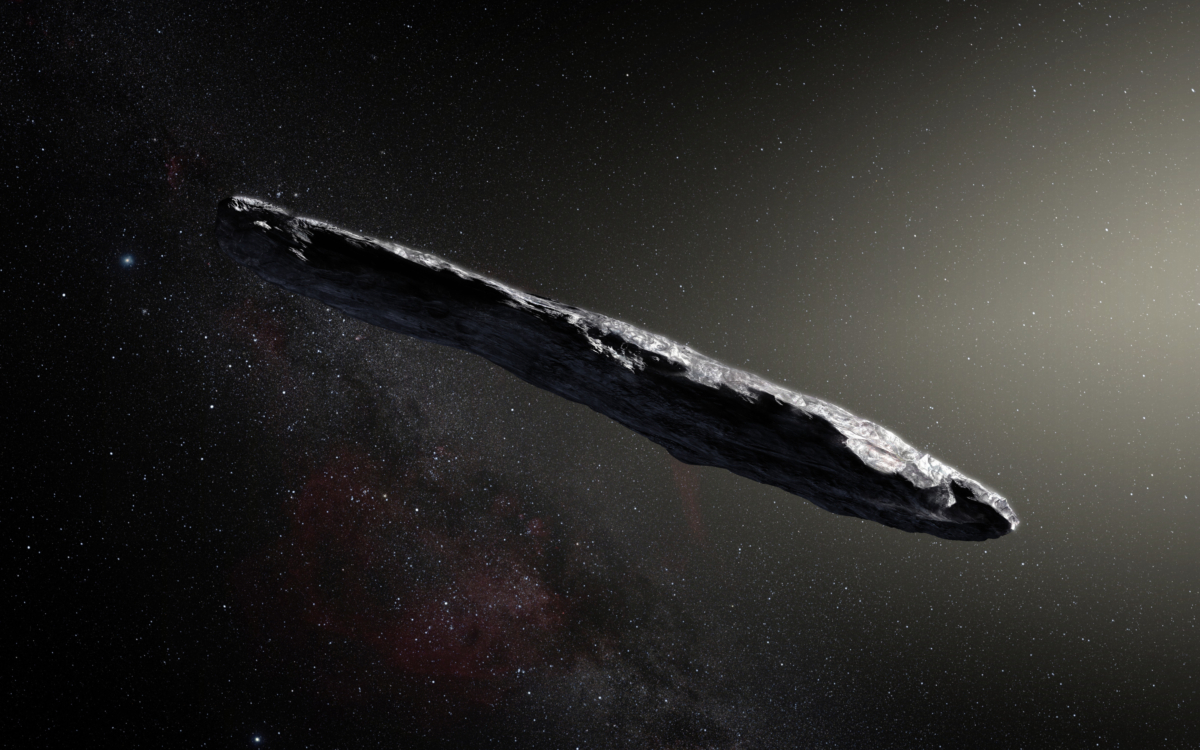
Artist’s impression of the interstellar asteroid `Oumuamua
Credit: ESO/M. Kornmesser
Anybody onboard ‘Oumuanmua – the mysterious interloper that was spotted hurtling through our solar system?
The Green Bank Telescope is tuning in on the odd cigar-shaped object to find out.
Cigar/needle shape
“Researchers working on long-distance space transportation have previously suggested that a cigar or needle shape is the most likely architecture for an interstellar spacecraft, since this would minimize friction and damage from interstellar gas and dust,” suggests Breakthrough Listen, the global astronomical program searching for evidence of civilizations beyond Earth.
In a statement today, the group announced plans to explore the possibility that ‘Oumuamua could be an artifact. “While a natural origin is more likely,” they add that there is currently no consensus on what the origin of the object might have been.
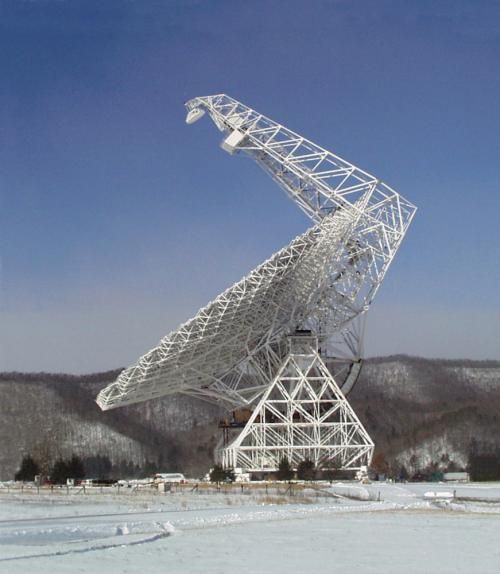
Credit: GBT Green Bank Observatory
Observation campaign
Listen’s observation campaign will begin on Wednesday, December 13 at 3:00 pm ET. Using the Robert C. Byrd Green Bank Telescope in Virginia, it will continue to observe ‘Oumuamua across four radio bands, from 1 to 12 GHz. Its first phase of observations will last a total of 10 hours, divided into four “epochs” based on the object’s period of rotation.
Even if no signal or other evidence of extraterrestrial technology is heard, Listen observations will cover portions of the radio spectrum in which the object has not yet been observed, and could provide important information about the possibility of water/ice, or the chemistry of a coma (gaseous envelope), neither of which have yet been identified.
Unprecedented sensitivites
“‘Oumuamua’s presence within our solar system affords Breakthrough Listen an opportunity to reach unprecedented sensitivities to possible artificial transmitters and demonstrate our ability to track nearby, fast-moving objects,” said Listen’s Andrew Siemion, Director of Berkeley SETI Research Center. “Whether this object turns out to be artificial or natural, it’s a great target for Listen.”
‘Oumuamua is now about 2 astronomical units (AU) away, or twice the distance between Earth and the Sun. This is closer by a factor of 50-70 than the most distant human artifact, the Voyager I spacecraft. At this distance, it would take under a minute for the Green Bank instrument to detect an omnidirectional transmitter with the power of a cellphone.
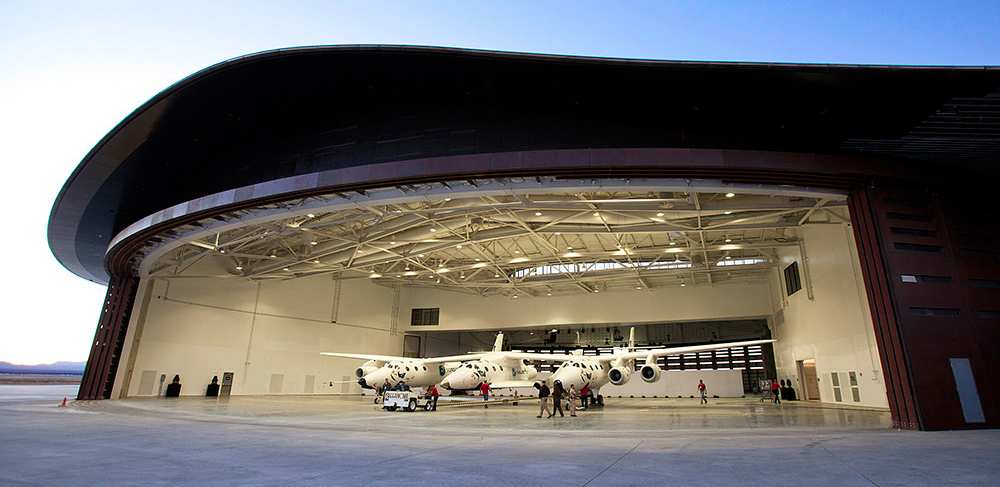
Richard Branson’s WhiteKnightTwo/SpaceShipTwo launch system at New Mexico’s Spaceport America.
Credit: Virgin Galactic
An investigative series of articles takes a look at New Mexico’s Spaceport America.
The Spaceport America site is to become the departure spot for the Richard Branson-backed SpaceShipTwo commercial operation to propel customers to the suborbital heights.

Sir Richard Branson, founder of Virgin Galactic takes flight. Will public space travel?
Credit: Virgin Galactic
An in-depth set of articles and an interview about Spaceport America’s future has been made available by Heath Haussamen at NMPolitics.net on December 5, 2017.
Go to:
http://nmpolitics.net/index/series/spaceport-america/
http://nmpolitics.net/index/2017/12/an-in-depth-interview-about-spaceport-americas-future/

