Author Archive
 Author:
  February 17th, 2018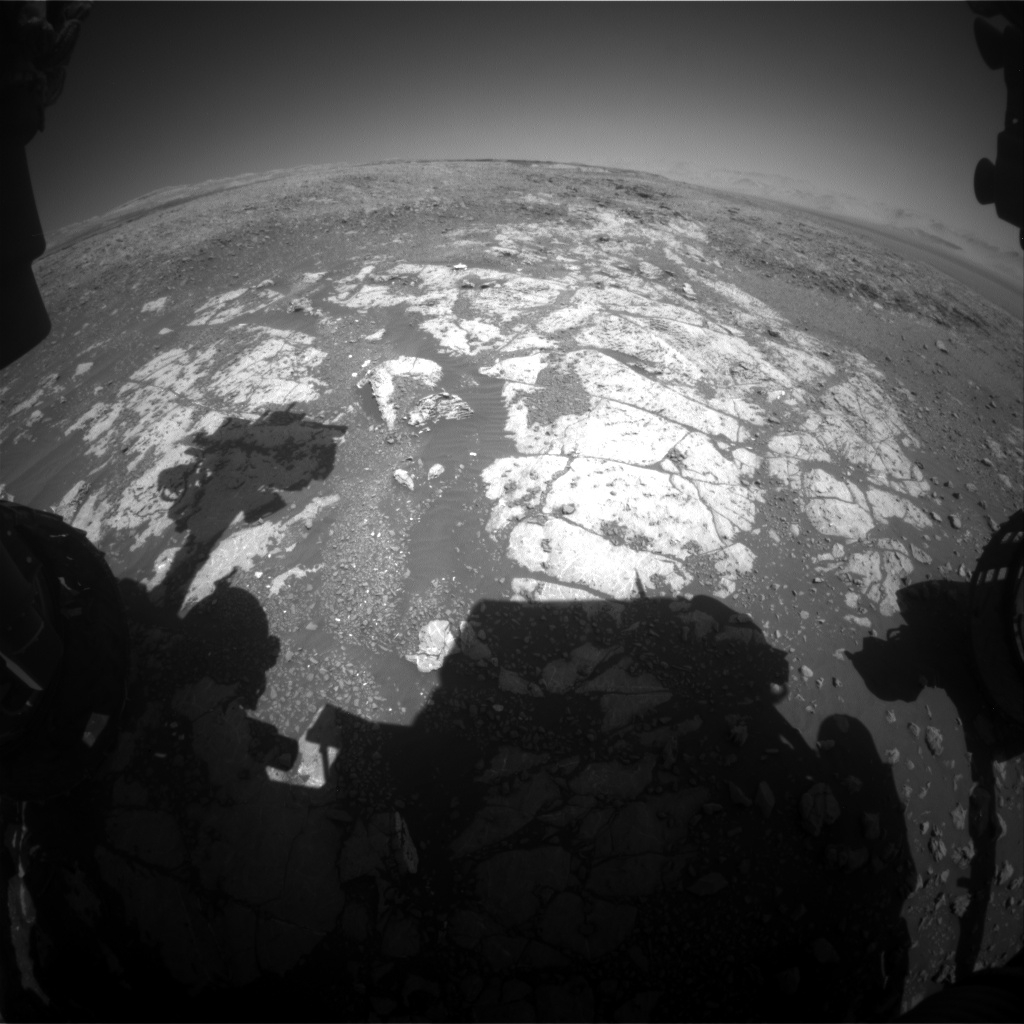
Curiosity Front Hazcam Left B image taken on Sol 1967, February 17, 2018.
Credit: NASA/JPL-Caltech
Closing out Sol 1967 duties, NASA’s Curiosity Mars rover has accomplished several newsworthy tasks.
“We got lots of good news this morning,” reports Ken Herkenhoff, a planetary geologist at the USGS in Flagstaff, Arizona.
Firstly, the rover’s Dust Removal Tool brushed off a potential drill target successfully. Also done, Herkenhoff adds, was the analysis by the Sample Analysis at Mars (SAM) Instrument Suite of the Ogunquit Beach sample, “and the rover is healthy and ready for more!”
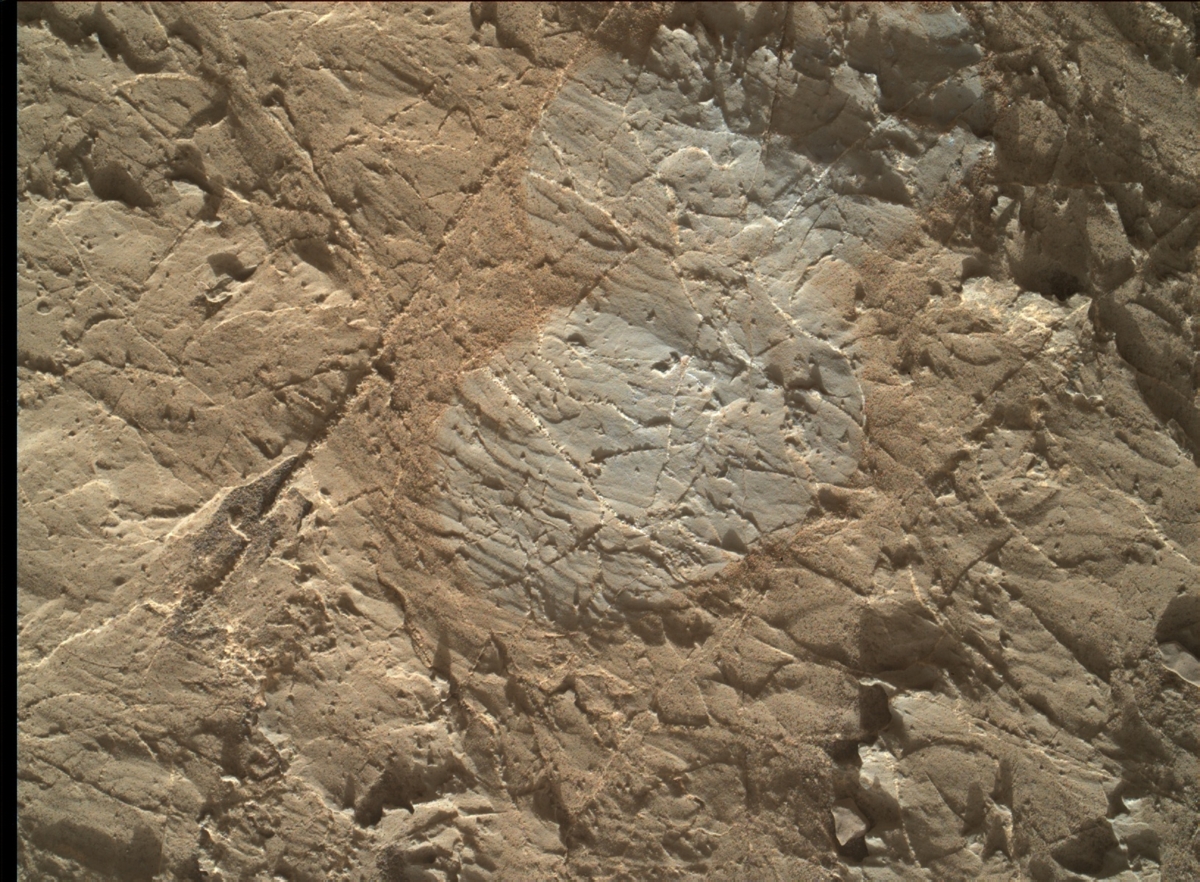
Potential drilling site.
Curiosity Mars Hand Lens Imager (MAHLI) acquired this photo on Sol 1966, February 16, 2018.
Credit: NASA/JPL-Caltech/MSSS
Testing new drilling technique
Curiosity’s weekend plan is focused on dumping the last of the Ogunquit Beach sand out of the robot’s Collection and Handling for Interior Martian Rock Analysis (CHIMRA) device. That is necessary before researchers can test the new feed-extended drilling technique.

Brush off on Mars. Curiosity Mastcam Right photo taken on Sol 1966, February 16, 2018.
Credit: NASA/JPL-Caltech/MSSS
But first, on Sol 1968, Navcam will perform a sky survey and search for clouds, as this is the cloudy season on Mars, Herkenhoff notes. Then the rover’s Chemistry and Camera (ChemCam) and Right Mastcam will observe bedrock targets “Smoo Cave” and “St. Andrews” to sample the nearby chemical diversity.
Sieved, un-sieved samples
Sol 1969 will be a busy day for Curiosity, starting with more ChemCam and Right Mastcam bedrock observations, this time of “Yesnaby” and “Dingwall.”
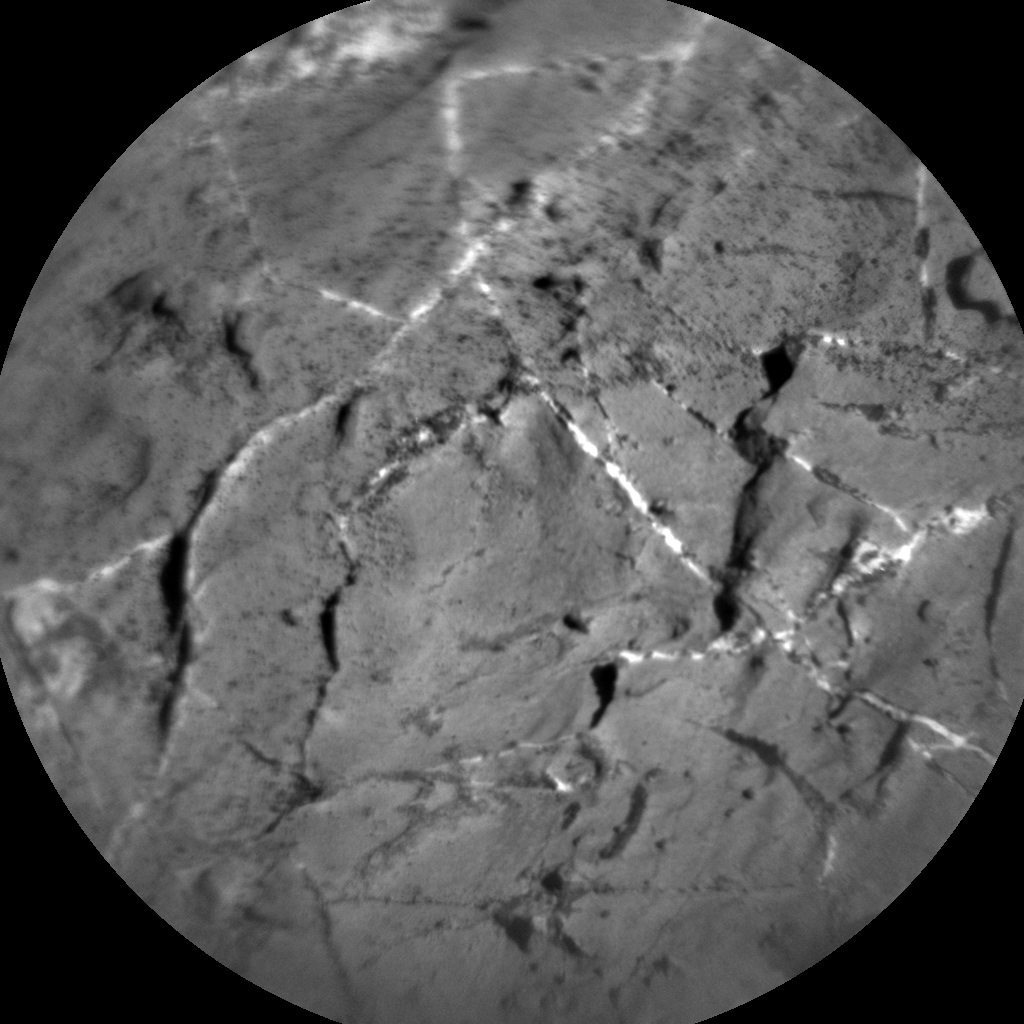
Curiosity ChemCam Remote Micro-Imager photo acquired on Sol 1965, February 15, 2018.
Credit: NASA/JPL-Caltech/LANL
On the plan, the rover’s robotic arm will get to work, taking Mars Hand Lens Imager (MAHLI) images of the locations where the samples will be dumped, followed by dumping of sieved and un-sieved samples in those two locations, Herkenhoff explains.
CHIMRA will be cleaned out, with MAHLI then tasked to take images of each dump pile from 25 and 5 centimeters above them.
Finally, the Alpha Particle X-Ray Spectrometer (APXS) will be placed over the pile of sieved material for an overnight integration.
Dump piles
The next morning, on Sol 1970, APXS will be retracted so that MAHLI can take another image of sieved material, to see whether and where APXS touched it.
Following this task, the rover’s arm will be moved out of the way for Mastcam and ChemCam passive spectral observations of the dump piles, and taking ChemCam Laser-Induced Breakdown Spectroscopy (LIBS) measurements (with Right Mastcam documentation) of red clasts named “Fladda.”
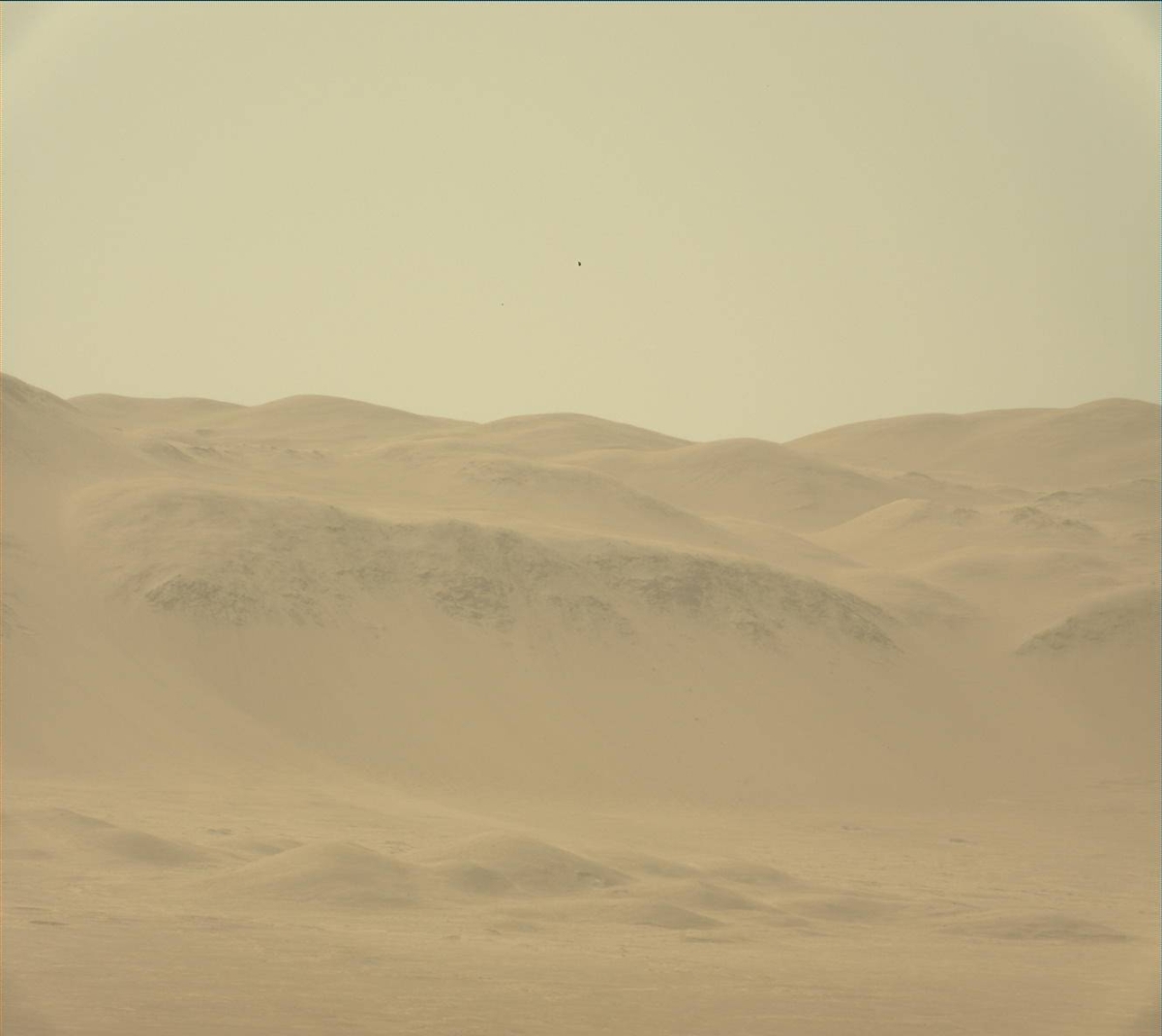
Curiosity Mastcam Right image acquired on Sol 1965. February 15, 2018.
Credit: NASA/JPL-Caltech/MSSS
Holiday weekend
Just after sunrise on Sol 1971, Mastcam and Navcam will measure the amount of dust in the atmosphere, and Navcam will search for clouds and perform another sky survey.
“This plan will get Curiosity through the holiday weekend, and tactical planning will resume Tuesday morning,” Herkenhoff concludes.
 Posted in

Recently flown suborbital Blue Origin crew capsule 2.0 features large windows that measure 2.4 feet wide, 3.6 feet tall.
Credit: Blue Origin
Passenger flight on rocket-for-hire flings to the edge of space is near at hand.
One big draw that adds to the bragging rights for space travelers is the view from high above. Rubbernecking tourists will have face time with space, snagging perspective and images to travelogue their voyages.
Life-changing views
One major ticket-for-sale vendor set to give rocket riders a suborbital space cruise is Jeff Bezos of Amazon.com fame and fortune, along with his team at Blue Origin, based in Seattle, Washington.
“Our New Shepard capsule features the largest windows in spaceflight history. These windows make up a third of the capsule, immersing you in the vastness of space and life-changing views of our blue planet,” explains the firm.

Alan Shepard prepares to board his Freedom 7 suborbital capsule complete with portholes for viewing, later changed to a trapezoid-shaped window. For spacecraft builders, putting in windows was once viewed as offensive to an engineer’s sense of structural integrity and design elegance.
Credit: NASA
Porthole vision
As suborbital spacecraft go, Blue Origin’s windows are clearly a far cry from America’s first human suborbital traveler, Alan Shepard and his Freedom 7 Mercury capsule flight in May 1961. He was provided two six-inch circular portholes.

ISS024-E-014263 (11 Sept. 2010) — NASA astronaut Tracy Caldwell Dyson, Expedition 24 flight engineer, looks through a window in the Cupola of the International Space Station. A blue and white part of Earth and the blackness of space are visible through the windows.
Then there’s the International Space Station’s Cupola that provides crew members a 360° view around the orbiting complex through six trapezoid-shaped windows and one large circular viewing port.
For more information on windows in space, go to my new Space.com story at:
Window Wars in Space: Quest for the ‘Big View’ High Above Earth
February 16, 2018 06:43am ET
https://www.space.com/39691-window-sizes-spacecraft-blue-origin-virgin-galactic.html

Credit: HP Mars Home Planet
The ultimate goal: Have one million people from Earth, living, working and moving around on Mars.
Join Hewlett-Packard’s Mars Home Planet for a chance to win prizes, collaborate with the world’s leading visionaries, and earn a chance to have your design included in the ultimate Mars VR Experience.
Transportation, infrastructure
In short, call it the “Urbanization” of the Red Planet. Specifically, how best to create transportation and infrastructure solutions for Mars?
How to avoid planning and implementation issues on this future home for humanity? What could be done differently if we could start from scratch?
Powered by HP ZBook Workstations and NVIDIA® Quadro® graphics, entrants can imagine, create and experience the environment for a sophisticated civilization on Mars.

Credit: HP Mars Home Planet
Bring it to life
Think about a cool or innovative design in your area of interest or expertise, and bring it to life with your favorite Autodesk 3D software and HP Z Workstations. Autodesk software and HP Z Workstations are recommended but not required to enter.
NOTE: Deadline date – February 26!
For detailed information on this innovative and expansive activity, go to:
https://launchforth.io/hpmars/

Earlier this week, Daniel Coats, Director of National Intelligence, presented the United States Intelligence Community’s 2018 assessment of threats to US national security.
In the Coats statement for the record, that unclassified worldwide threat assessment included a section on “Space and Counterspace.”
Here is that section of the report:
Antisatellite efforts
Continued global space industry expansion will further extend space-enabled capabilities and space situational awareness to nation-state, nonstate, and commercial space actors in the coming years, enabled by the increased availability of technology, private-sector investment, and growing international partnerships for shared production and operation. All actors will increasingly have access to space-derived information services, such as imagery, weather, communications, and positioning, navigation, and timing for intelligence, military, scientific, or business purposes. Foreign countries—particularly China and Russia—will continue to expand their space-based reconnaissance, communications, and navigation systems in terms of the numbers of satellites, the breadth of their capability, and the applications for use.
Operational forces
Both Russia and China continue to pursue antisatellite (ASAT) weapons as a means to reduce US and allied military effectiveness. Russia and China aim to have nondestructive and destructive counterspace weapons available for use during a potential future conflict. We assess that, if a future conflict were to occur involving Russia or China, either country would justify attacks against US and allied satellites as necessary to offset any perceived US military advantage derived from military, civil, or commercial space systems. Military reforms in both countries in the past few years indicate an increased focus on establishing operational forces designed to integrate attacks against space systems and services with military operations in other domains.

Anti-satellite painting by William K. Hartmann
Directed-energy weapons
Russian and Chinese destructive ASAT weapons probably will reach initial operational capability in the next few years. China’s PLA has formed military units and begun initial operational training with counterspace capabilities that it has been developing, such as ground-launched ASAT missiles. Russia probably has a similar class of system in development. Both countries are also advancing directed-energy weapons technologies for the purpose of fielding ASAT weapons that could blind or damage sensitive space-based optical sensors, such as those used for remote sensing or missile defense.
“Experimental” satellites
Of particular concern, Russia and China continue to launch “experimental” satellites that conduct sophisticated on-orbit activities, at least some of which are intended to advance counterspace capabilities. Some technologies with peaceful applications—such as satellite inspection, refueling, and repair—can also be used against adversary spacecraft.
Russia and China continue to publicly and diplomatically promote international agreements on the nonweaponization of space and “no first placement” of weapons in space. However, many classes of weapons would not be addressed by such proposals, allowing them to continue their pursuit of space warfare capabilities while publicly maintaining that space must be a peaceful domain.
Go to the full assessment at:
https://www.dni.gov/files/documents/Newsroom/Testimonies/2018-ATA—Unclassified-SSCI.pdf
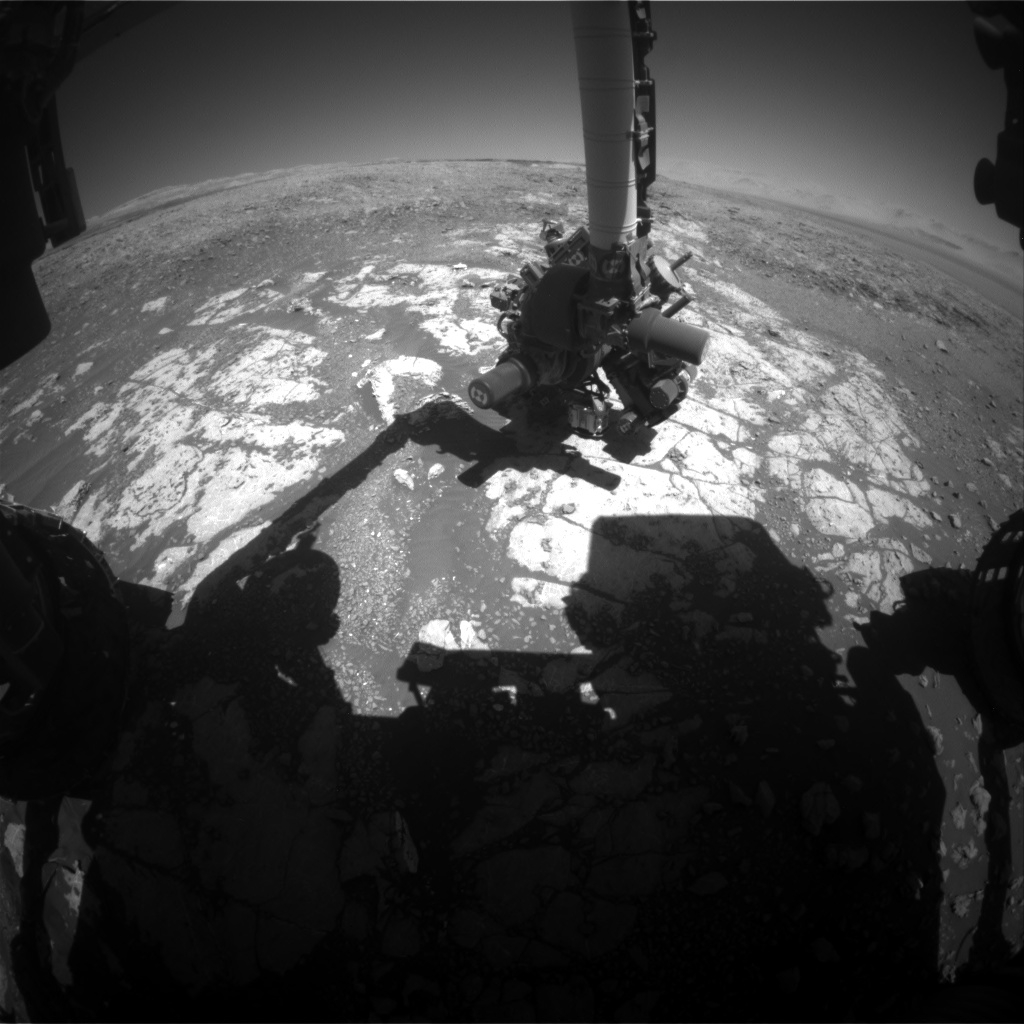
Curiosity Front Hazcam Left B image taken on Sol 1964, February 14, 2018.
Credit: NASA/JPL-Caltech
Now deep into Sol 1965 operations, the NASA Curiosity Mars rover is checking out a site where the robot will restart drilling duties.
Mark Salvatore, a planetary geologist from the University of Michigan in Dearborn, reports that plans for the rover have been “a bit on the thin side.”
The reason is that Curiosity’s power allotment is being dedicated to activities associated with the Sample Analysis at Mars (SAM) instrument. “As a result, Curiosity only has about 50 minutes to make observations and measurements of the surrounding workspace,” Salvatore adds, “but the team did a great job in packing it full of great observations!”
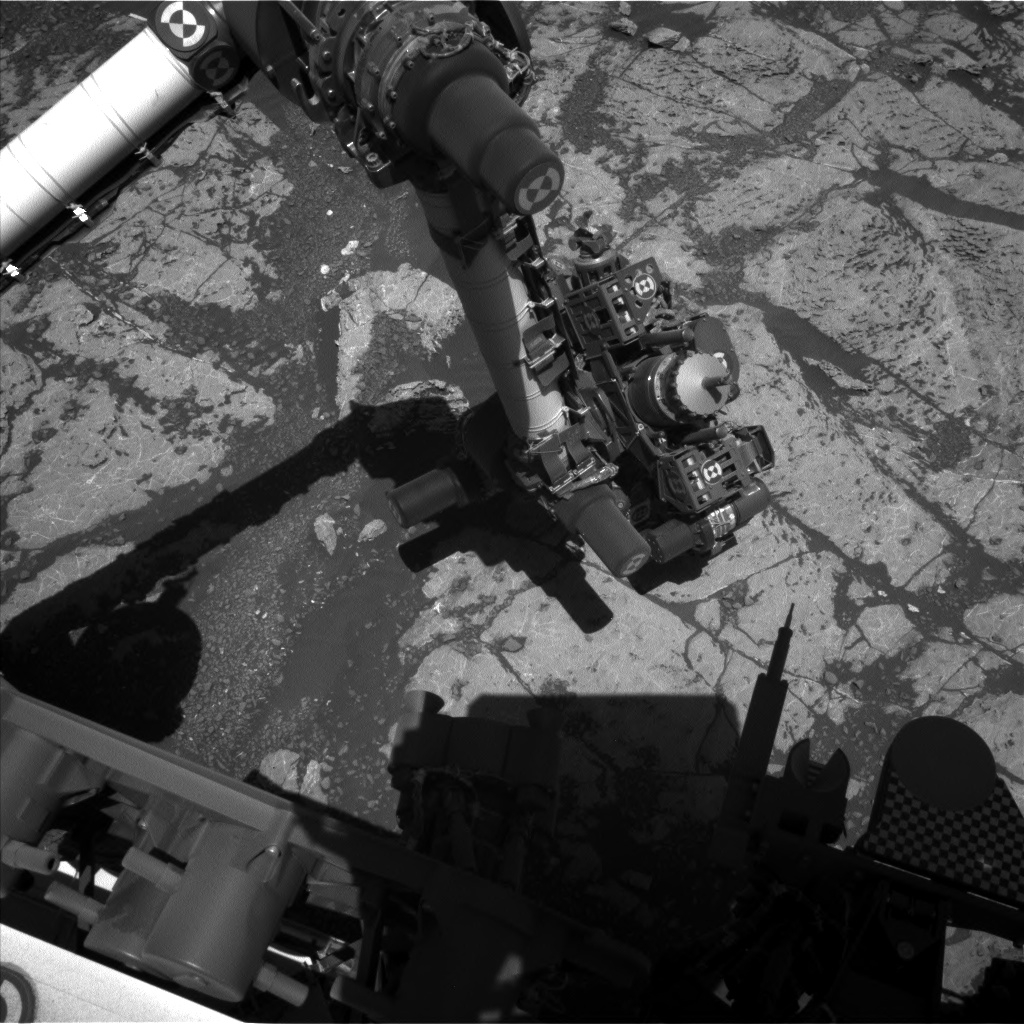
Curiosity Navcam Left B image acquired on Sol 1964, Feburary 14, 2018.
Credit: NASA/JPL-Caltech
Safe to drill
A to-do list of Sol 1964 tasks included: Mastcam’s multispectral imaging capabilities to image a recently brushed and analyzed target named “Newmachar,” followed by a calibration image, and then two additional multispectral observations of two vein targets named “St. Kilda” and “Benbecula.”
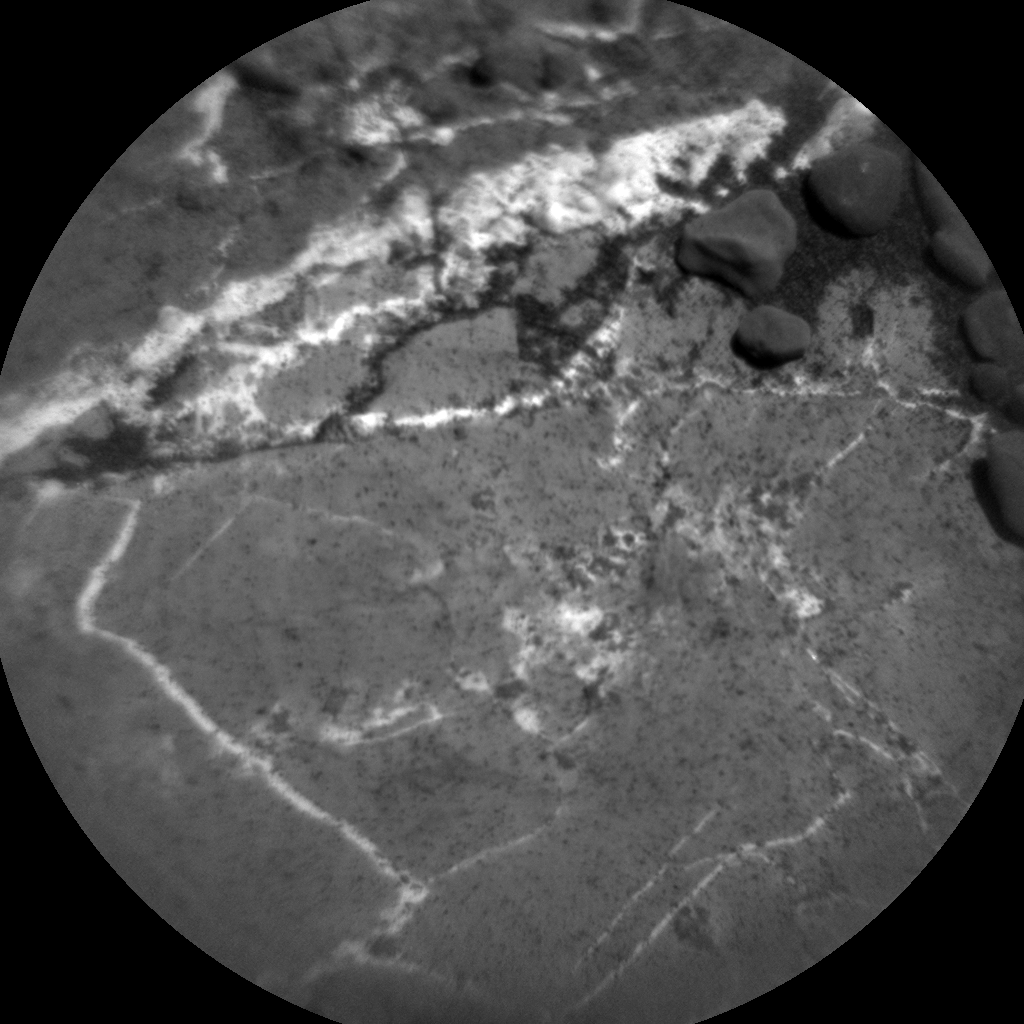
Curiosity ChemCam Remote Micro-Imager photo taken on Sol 1964, February 14, 2018.
Credit: NASA/JPL-Caltech/LANL
Salvatore notes that Mastcam was slated to then perform some additional stereo imaging to assess the rover’s workspace “and to acquire enough data for the rover engineers to determine whether this area is safe for our first use of the drill since the Fall of 2016!”
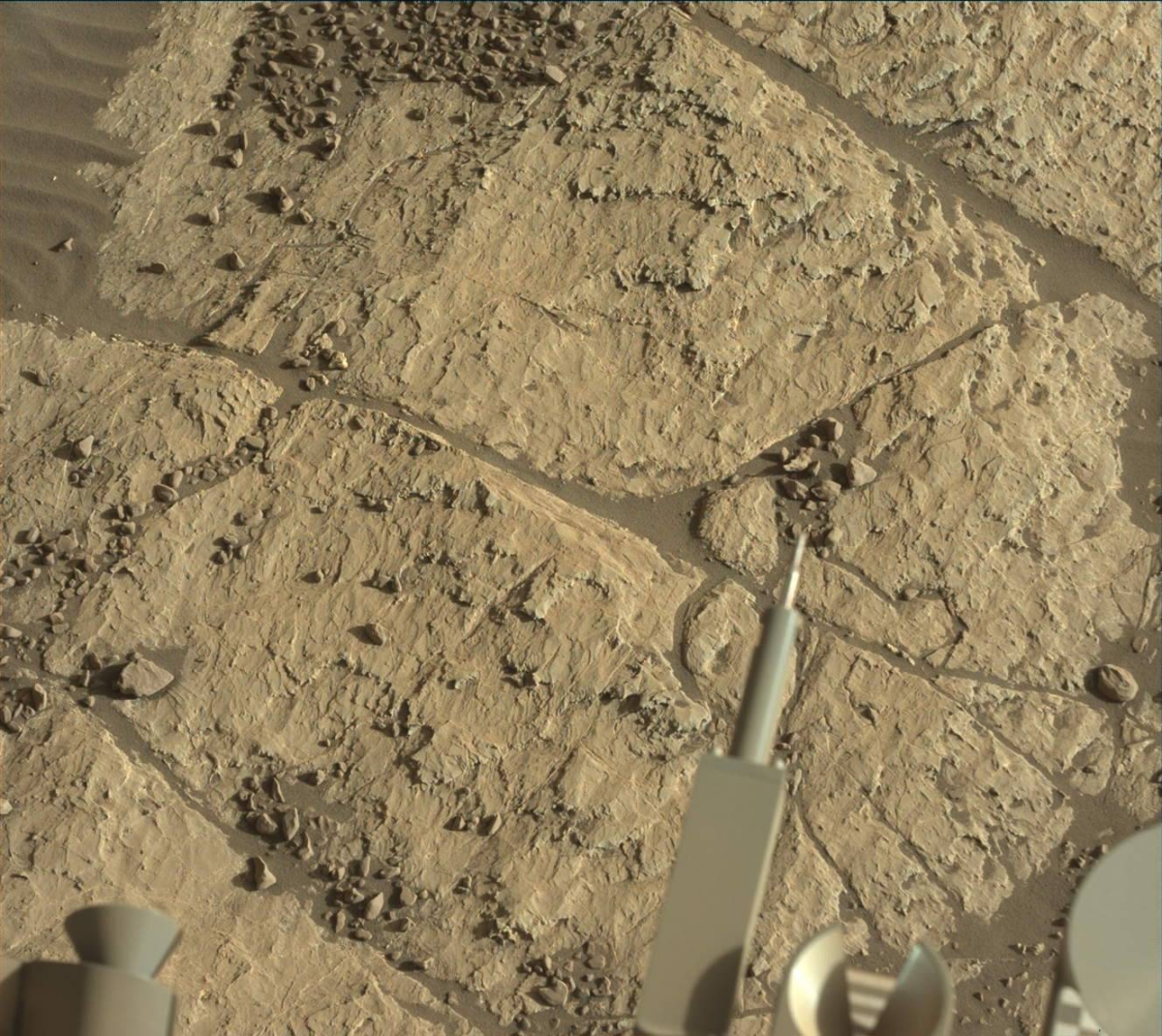
Curiosity Mastcam Left image taken on Sol 1963, February 13, 2018.
Credit: NASA/JPL-Caltech/MSSS
Workspace workout
Following these engineer-requested Mastcam mosaics, Curiosity was scheduled to also use the Chemistry and Camera (ChemCam) Remote Micro-Imager (RMI) high-resolution camera to investigate some interesting targets in our workspace,” Salvatore concludes.
Credit: NASA/JPL-Caltech/Univ. of Arizona
Road map
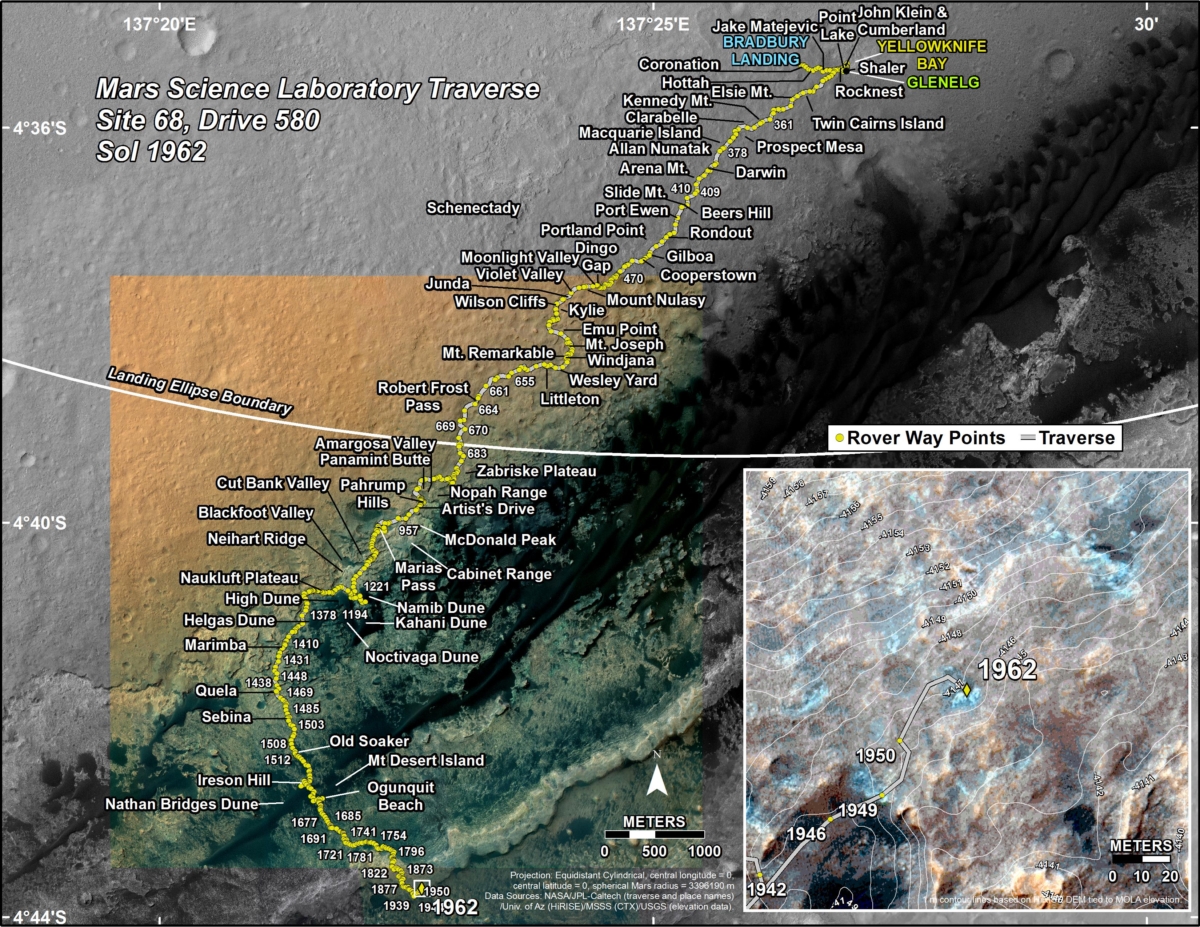
Meanwhile, a new Curiosity traverse map through Sol 1962 has been issued.
The map shows the route driven by NASA’s Mars rover Curiosity through the 1962 Martian day, or sol, of the rover’s mission on Mars (February 12, 2018).
Numbering of the dots along the line indicate the sol number of each drive. North is up. The scale bar is 1 kilometer (~0.62 mile).
From Sol 1950 to Sol 1962, Curiosity had driven a straight line distance of about 96.32 feet (29.36 meters), bringing the rover’s total odometry for the mission to 11.31 miles (18.20 kilometers).
The base image from the map is from the High Resolution Imaging Science Experiment Camera (HiRISE) in NASA’s Mars Reconnaissance Orbiter.

Credit: SpaceX
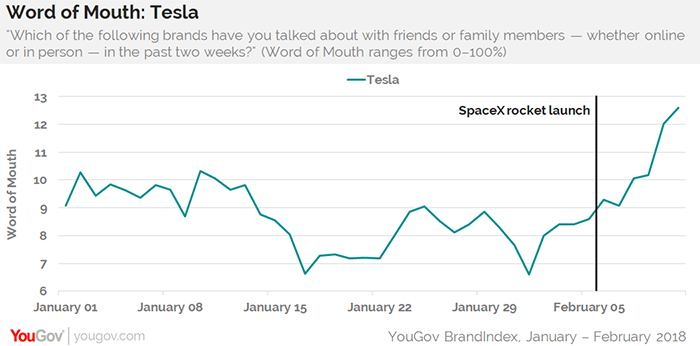
Hurling into space the red Tesla Roadster’s via the SpaceX Falcon Heavy rocket boosted talk about the car brand, but didn’t budge potential sales metrics, according to YouGov BrandIndex. The group measures public perception of thousands of brands across dozens of sectors.
According to London-based YouGov BrandIndex, Tesla’s Word of Mouth score started rising several days before the huge booster’s liftoff, when 7 percent of Americans aged 18 and over said they spoke about the car brand with family or friends in the past two weeks.
Furthermore, by the launch date, February 6, that percentage increased to 9 percent, and by this past Sunday, it climbed another four percentage points to 13 percent.

Credit: SpaceX
Other metrics
Three other metrics rose for Tesla, but to smaller degrees:
- Impression (“Do you have a positive or negative impression of this car maker?”)
- Quality (“Does this car maker represent good or poor quality?”), and
- Buzz (“If you’ve heard anything about the brand in the last two weeks, through advertising, news, or word of mouth, was it positive or negative?”).
Credit: YouGov BrandIndex
Word of mouth surge
“Tesla’s Word of Mouth surge, however, barely moved its Purchase Consideration score, a meter for potential sales,” the marketing group explains in a story written by Ted Marzilli.
“Purchase Consideration actually dropped one percentage point following the SpaceX launch – from 9 percent of consumers reporting that they’d consider buying a Tesla when next shopping for a car to 8 percent – before climbing back to pre-launch numbers.”
Between January 1 and February 11, 2018, YouGov BrandIndex conducted approximately 3,300 interviews to generate this report, with a Margin of Error = ±3 percent.

Virgin Spaceship Unity is unveiled in Mojave, California February 19th, 2016. VSS Unity is the first vehicle to be manufactured by The Spaceship Company, Virgin Galactic’s wholly owned manufacturing arm, and is the second vehicle of its design ever constructed. VSS Unity was unveiled in FAITH (Final Assembly Integration Test Hangar), the Mojave-based home of manufacturing and testing for Virgin Galactic’s human space flight program.
Credit: Mark Greenberg/Virgin Galactic
Discover the possibilities of space through a new innovative web experience created by Microsoft Edge and Virgin Galactic.
“The website is built to create a deeper connection between the global population and space travel by demonstrating how space exploration, research and transportation has the potential to improve life for everyone,” according to a press statement.

Virgin Spaceship Unity (VSS Unity) touches down after flying freely for the first time after being released from Virgin Mothership Eve (VMS Eve) on December 3, 2016 in the Mojave Desert.
Credit: Virgin Galactic
Website story
The website tells the story of Virgin Galactic and a new wave of astronauts as they pioneer space access for all.
“It also honors the beginning of a new era, where spaceflight discoveries are open to more people than ever before with modern web technologies, making that vision accessible through Microsoft Edge.”
To check out the new website, go to:
Curiosity Mastcam Left image taken on Sol 1962, February 12, 2018.
Credit: NASA/JPL-Caltech/MSSS
NASA’s Curiosity Mars rover is performing Sol 1964 activities.
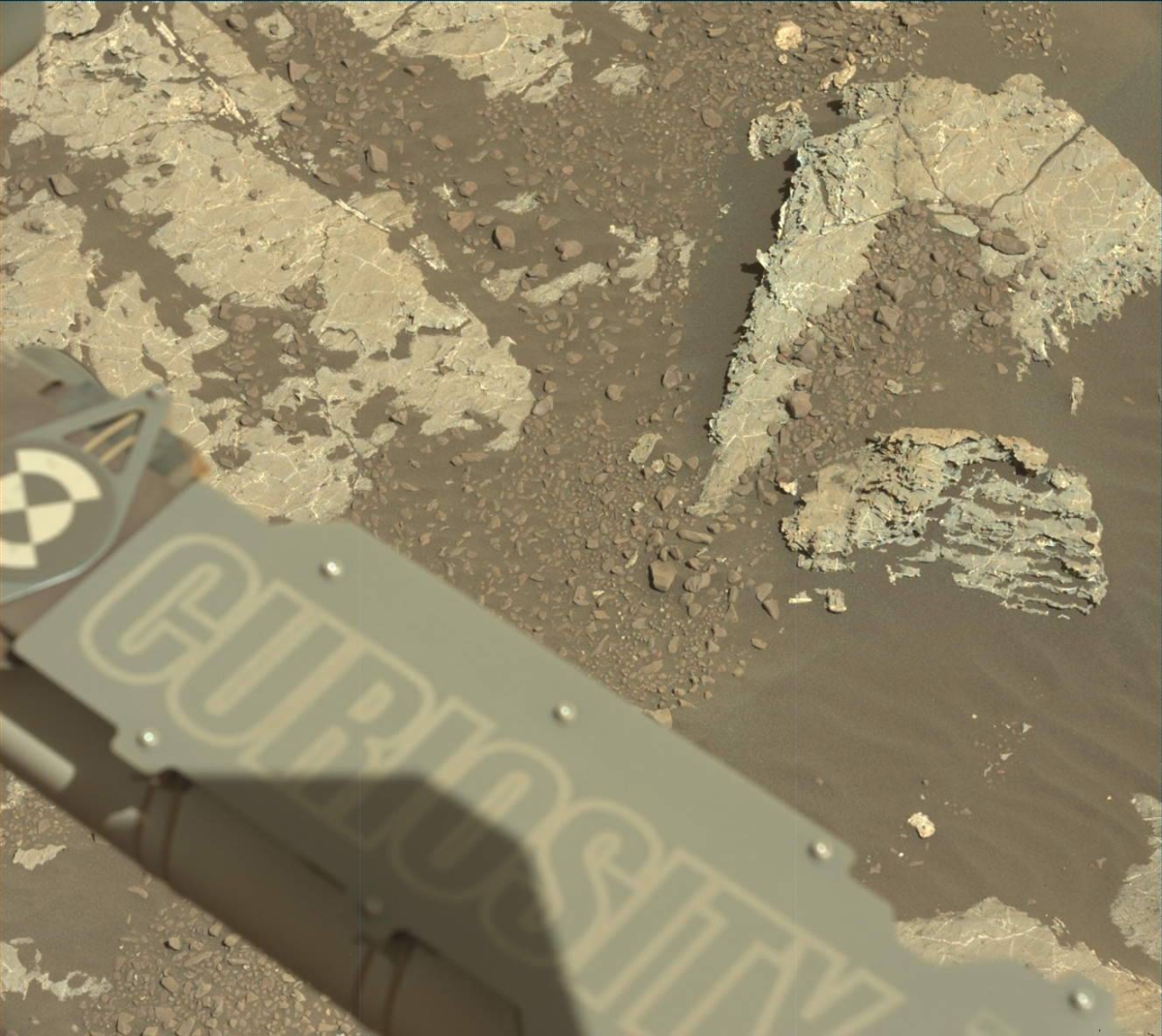
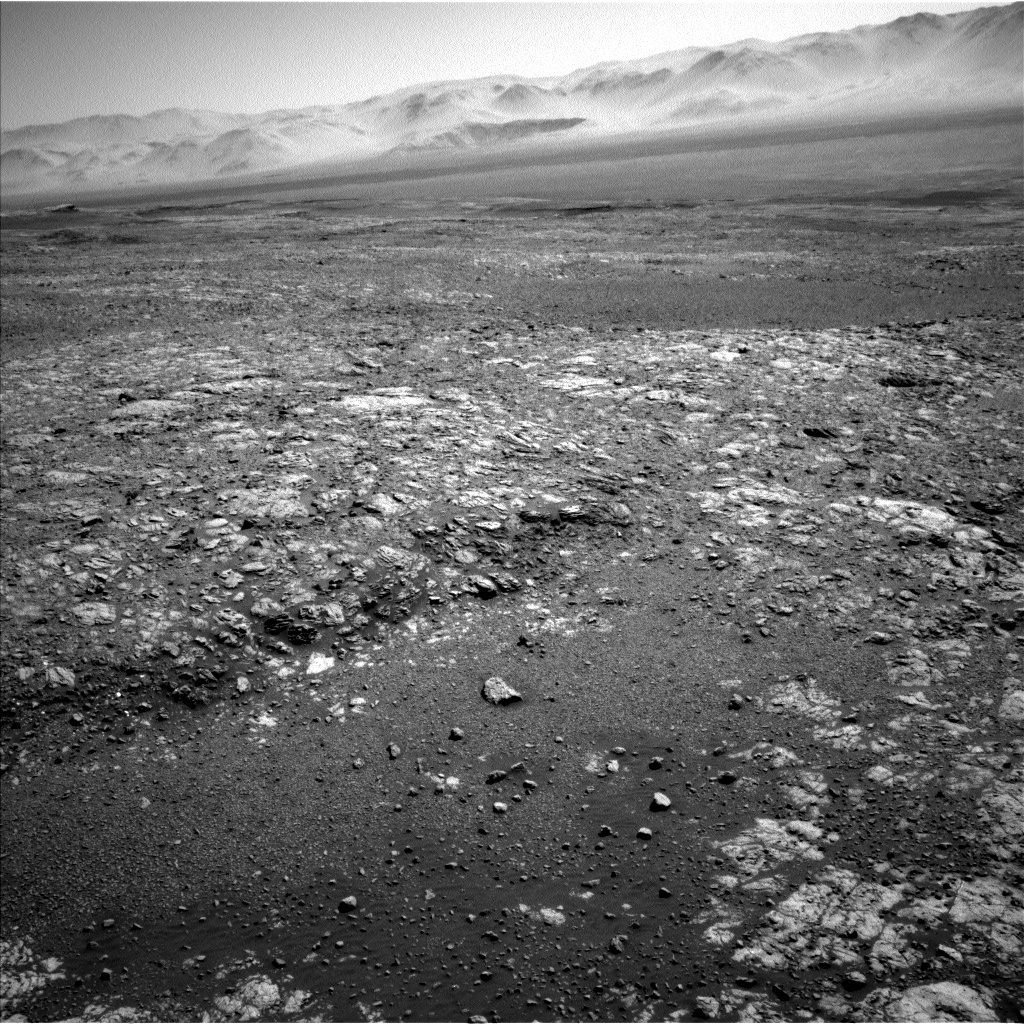
Over last weekend Curiosity drove roughly 170 feet (52 meters) to the northeast to another patch of gray bedrock.
“The team is interested in characterizing the gray bedrock to determine if we might want to drill here,” reports Lauren Edgar, a planetary geologist at the USGS in Flagstaff, Arizona. “But before we can think about drilling again, we need to wrap up our analyses of the cached Ogunquit Beach sample.”
Power-hungry activity
This means that there is need for preconditioning of the Sample Analysis at Mars (SAM) Instrument Suite which is a very power-hungry activity. “That also means that there’s not a lot of power for other science activities,” Edgar notes, “but we did manage to squeeze in a few contact science activities.”
The one sol plan that was scripted starts with the SAM preconditioning activity, which heats up a sample cup in order to prepare for solid sample analysis.
Curiosity Navcam Left B photo acquired on Sol 1962, Februry 12, 2018.
Credit: NASA/JPL-Caltech
Dust removal
In the afternoon, the rover was slated to use its Dust Removal Tool (DRT) to clear a fresh patch of gray bedrock to analyze with the robot’s Mars Hand Lens Imager (MAHLI) and use the Alpha Particle X-Ray Spectrometer (APXS) at the target “Newmachar,” followed by MAHLI imaging of the target “Yesnaby” to investigate a dark gray vein.
Additional workspace imaging to supplement the current coverage is also planned.
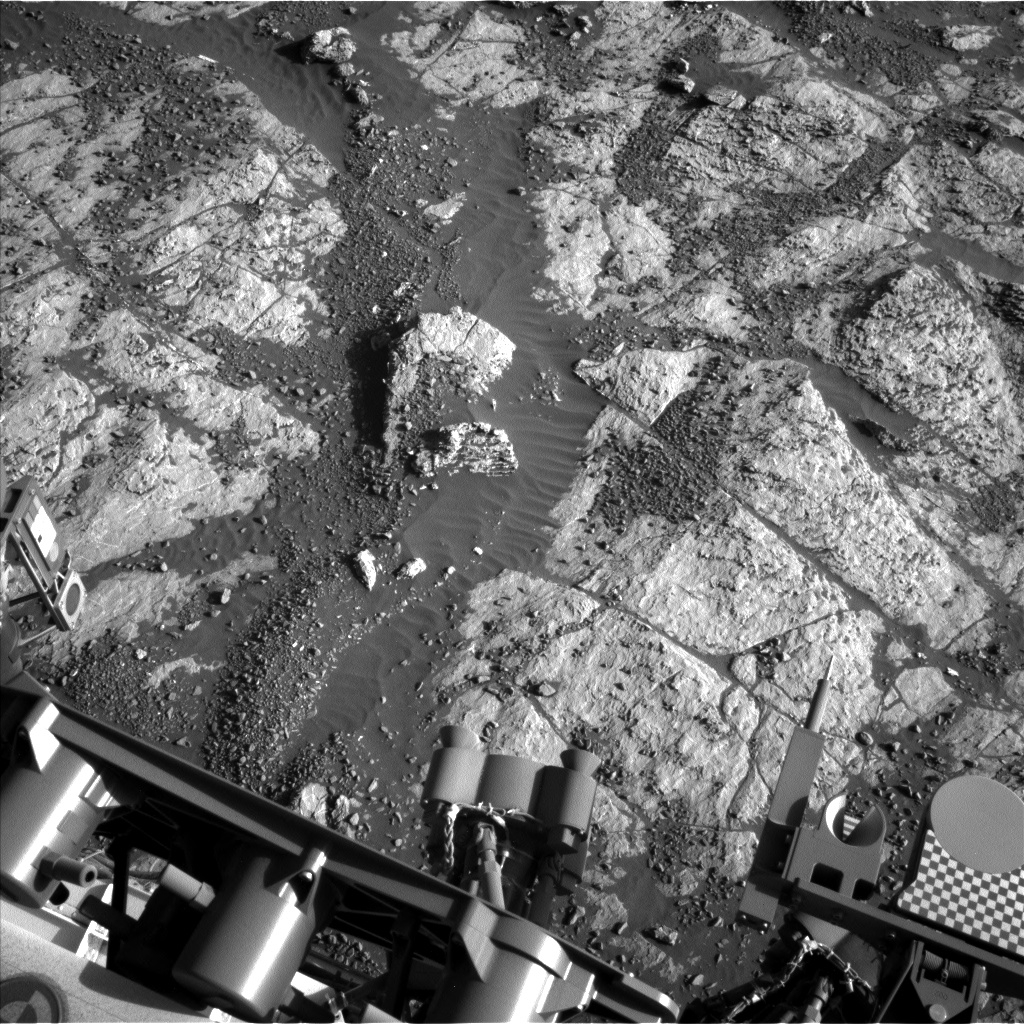
Curiosity Navcam Left B image acquired on Sol 1963, February 13, 2018.
Credit: NASA/JPL-Caltech
Drill again!
The plan also includes routine Dynamic Albedo of Neutrons (DAN) passive and Rover Environmental Monitoring Station (REMS) activities.
“While it was a relatively light plan in terms of science, it’s exciting to think about being able to drill again,” Edgar concludes, “so we’re looking forward to accomplishing the SAM analyses!”

Credit: NASA
President Trump’s Fiscal Year 2019 budget request for NASA is $19.9 billion.
“It reflects the Administration’s confidence that through NASA leadership, America will lead the way back to the Moon and take the next giant leap from where we made that first small step nearly 50 years ago,” explains NASA Acting Administrator Robert Lightfoot.
This budget codifies the President’s Space Policy Directive-1, which charges NASA to “lead an innovative and sustainable campaign of exploration that will lead the return of humans to the Moon for long-term exploration and use followed by human missions to Mars and other destinations.”
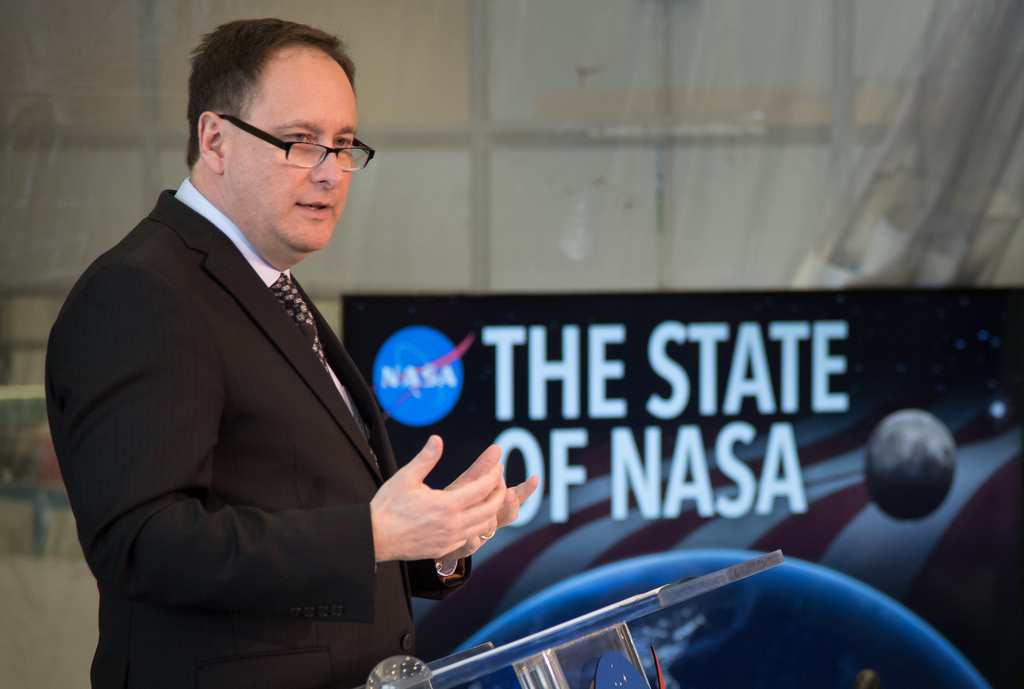
Acting NASA Administrator Robert Lightfoot discusses the fiscal year 2019 budget proposal during a State of NASA address Monday, Feb. 12, 2018 at NASA’s Marshall Space Flight Center in Huntsville, Alabama. Credit: NASA/Bill Ingalls

Notional Deep Space Gateway.
Credit: NASA
Lunar Orbital Platform-Gateway
“This budget also proposes we develop new opportunities on and around the Moon,” Lightfoot adds. “We will begin to build the in-space infrastructure for long-term exploration development of our nearest neighbor,” by launching the power and propulsion element to orbit the Moon in 2022 “as the foundation of a Lunar Orbital Platform-Gateway. This will give us a strategic presence in the lunar vicinity that will drive our activity with commercial and international partners and help us further explore the Moon and its resources and translate that experience toward human missions to Mars.”
Further, drawing on the interests and capabilities of NASA’s industry and international partners, the space agency intends to develop progressively complex robotic missions to the surface of the Moon with scientific and exploration objectives in advance of human return there, Lightfoot explains.

International Space Station.
Credit: NASA
Space station/commercial sector
Lightfoot also notes that this budget proposes for NASA to ramp up efforts to transition low-Earth activities to the commercial sector and end direct federal government support of the ISS in 2025 and begin relying on commercial partners for our low Earth orbit research and technology demonstration requirements.
To view: “Budget Documents, Strategic Plans and Performance Reports” go to:
https://www.nasa.gov/news/budget/index.html
and to view a NASA video, go to:

Credit: Paradox Interactive/Haemimont Games
“Colonize Mars and discover its secrets, with minimal casualties.”
That’s an opening premise behind Surviving Mars, a sci-fi settlement builder all about colonizing Mars and surviving the process.
- Choose a space agency for resources and financial support before determining a location for your colony.
- Build domes and infrastructure, research new possibilities and utilize drones to unlock more elaborate ways to shape and expand your settlement.
- Cultivate your own food, mine minerals or just relax by the bar after a hard day’s work.
- Most important of all, though, is keeping your colonists alive. Not an easy task on a strange new planet.
Management strategy game
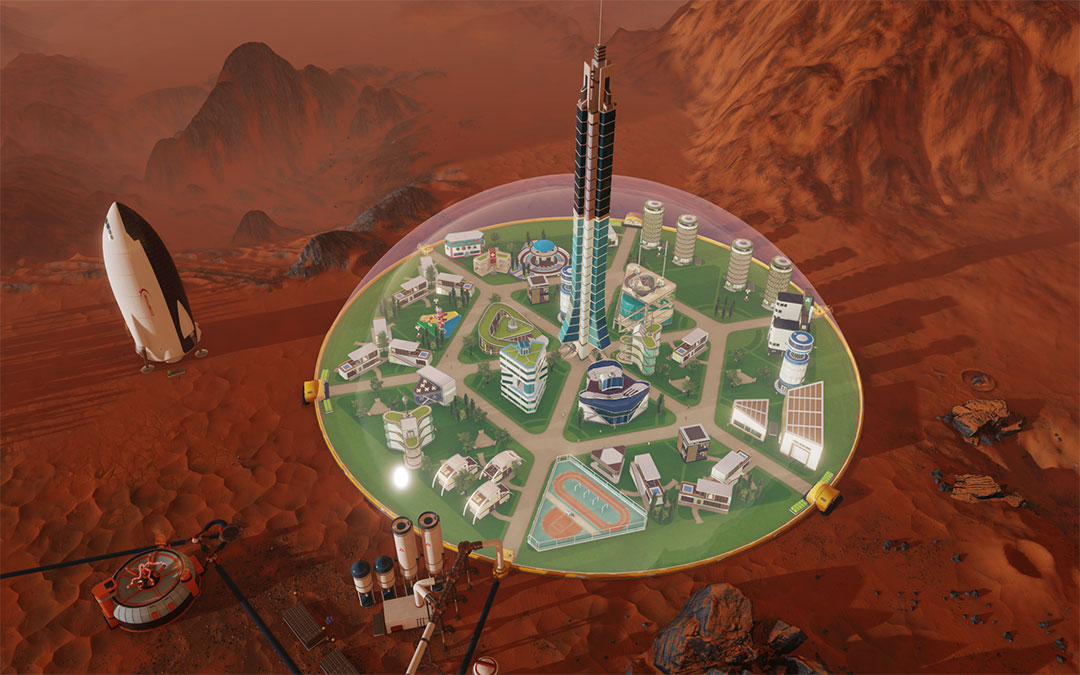
Credit: Paradox Interactive/Haemimont Games
Paradox Interactive, a publisher of games, has announced that Surviving Mars, the upcoming management strategy game from Haemimont Games, will launch for all systems on March 15, 2018.
Surviving Mars will put players in charge of planning, designing, and maintaining a sustainable colony on the red planet, and players will be able to undertake this mission on the Xbox One, on the PlayStation®4 console, and on Linux, MacOS, and Windows PCs.
This game will be available starting at a suggested retail price of $39.99 on all platforms.
Resources
For more information, go to:
https://www.survivingmars.com/
https://www.youtube.com/watch?v=u3swV4JJKAc
For a review of this product, go to:
“Let’s Try: Surviving Mars — Sci-Fi City Builder!”

