Author Archive
 Author:
  March 6th, 2018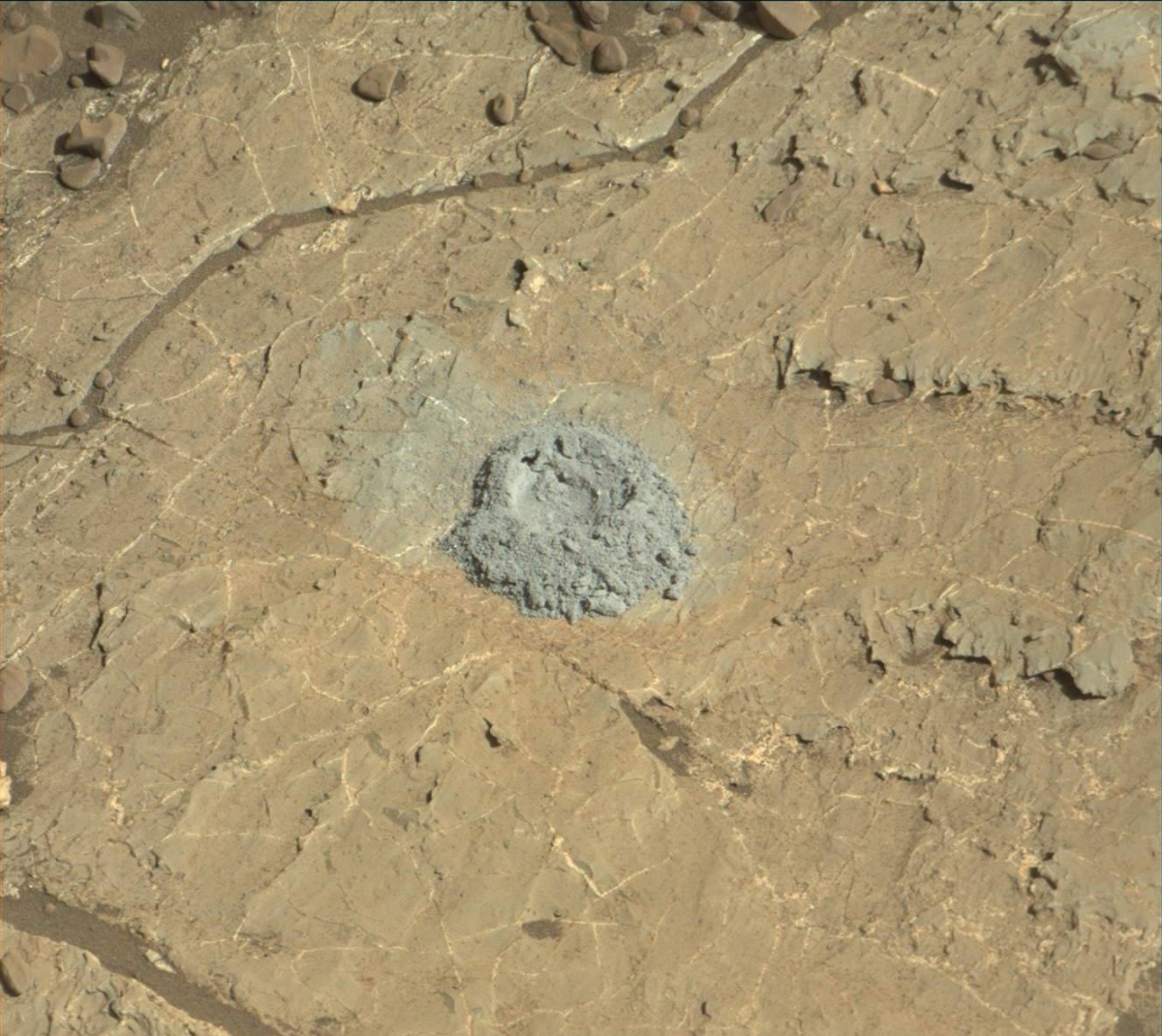
Curiosity Mastcam Right image taken on Sol 1979, March 1, 2018.
Credit: NASA/JPL-Caltech/MSSS
“Vera Rubin Ridge is as hard as a rock!”
That’s the call from Scott Guzewich, an atmospheric scientist at NASA’s Goddard Space Flight Center in Greenbelt, Maryland.
“After two drilling attempts, Curiosity’s drill was not able to dig into the bedrock sufficiently to collect a sample of rock at this location,” Guzewich reports.
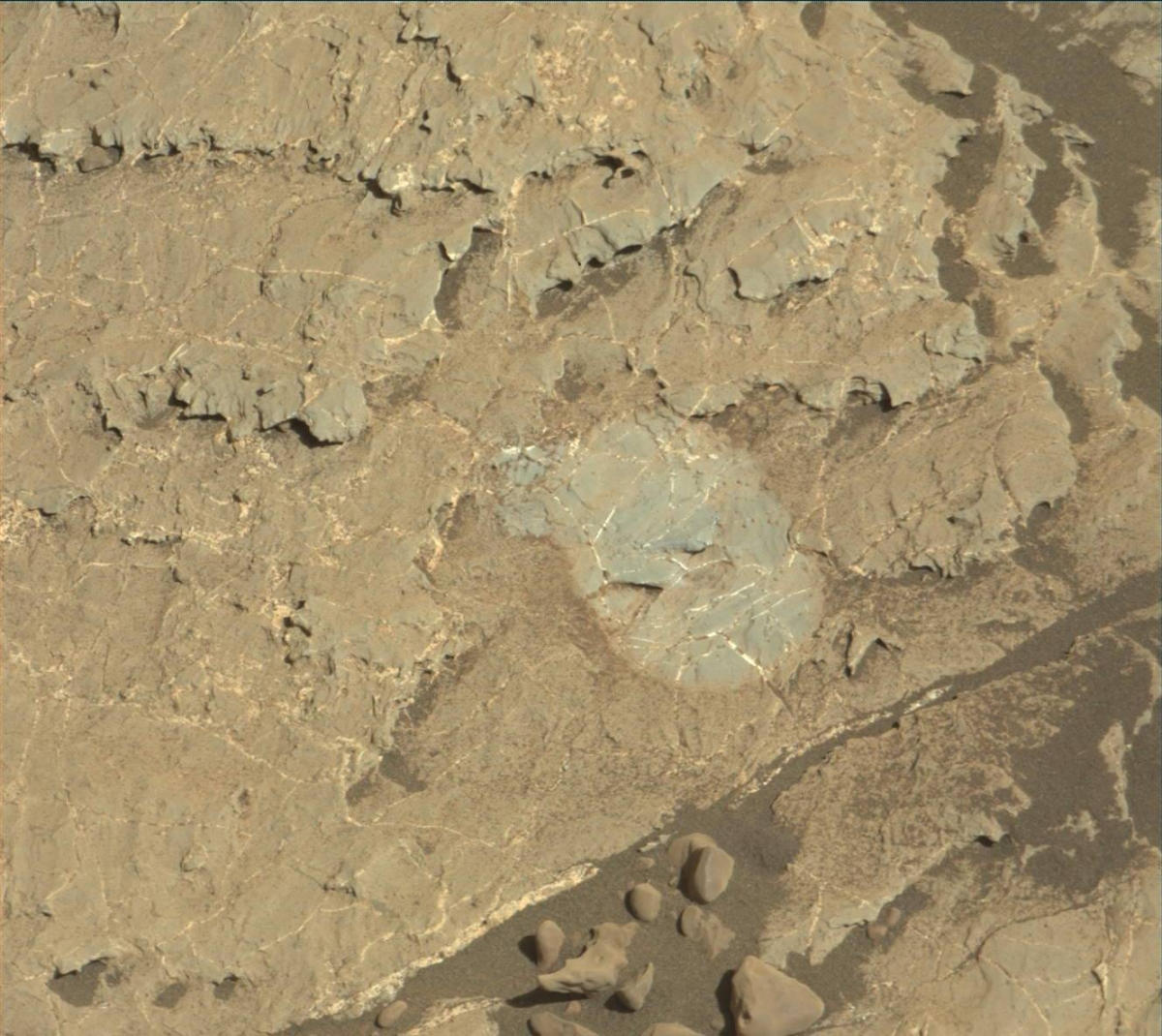
Curiosity Mastcam Right photo acquired on Sol 1980, March 3, 2018.
Credit: NASA/JPL-Caltech/MSSS
Engineers for the robot are continuing to refine the rover’s new drilling method. “In the future, this might include adding percussion, which could enable drilling into harder rock,” Guzewich adds.
Drill tailings
Curiosity is currently carrying out Sol 1984 science duties.
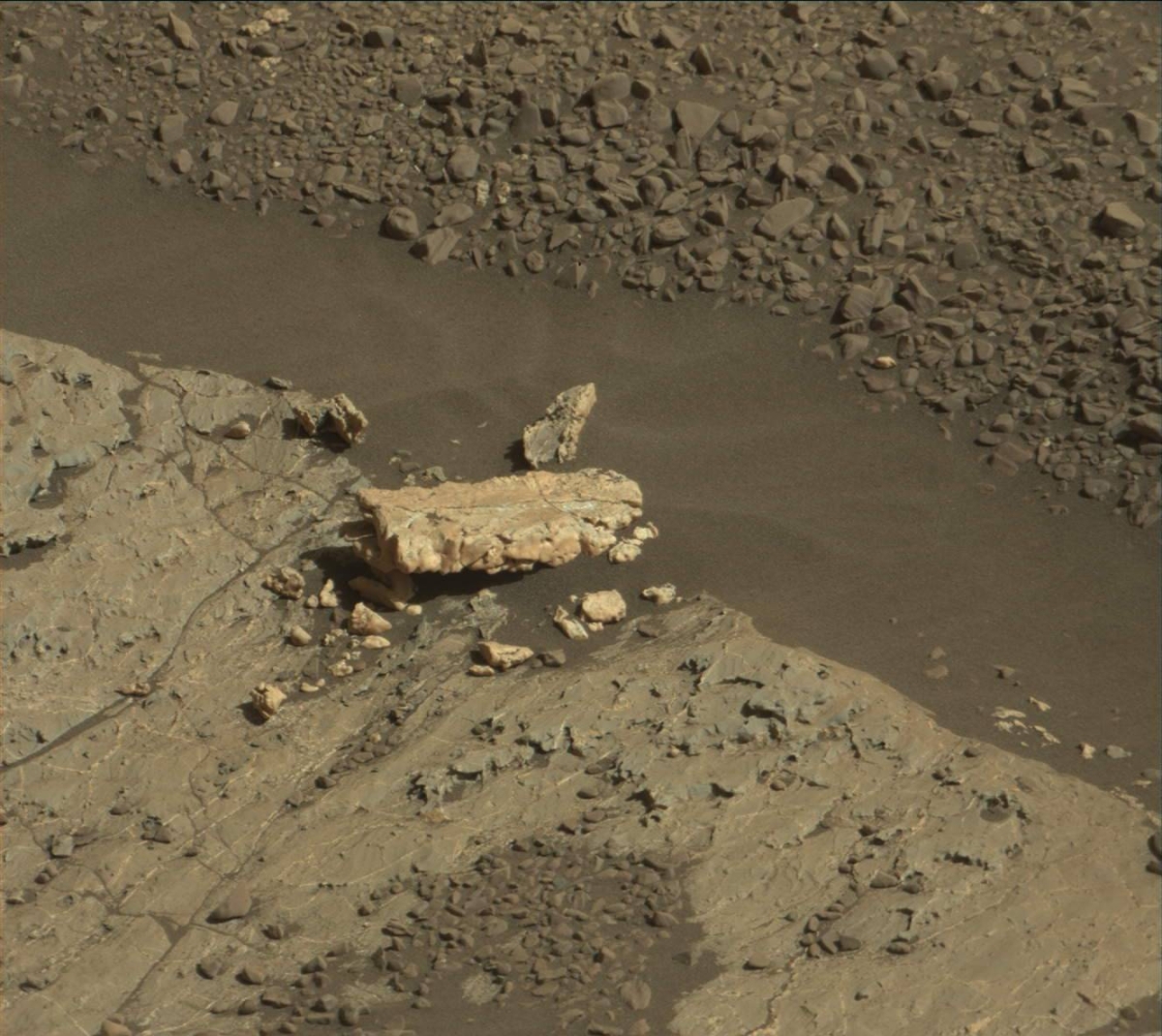
Curiosity Mastcam Right image taken on Sol 1981, March 3, 2018.
Credit: NASA/JPL-Caltech/MSSS
Meanwhile, the Curiosity science team scoped out a series of Mastcam and Chemistry and Camera (ChemCam) “passive” observations that included scans by the instrument’s laser-induced breakdown spectroscopy (LIBS) device of the attempted drill hole at “Lake Orcadie 2.”
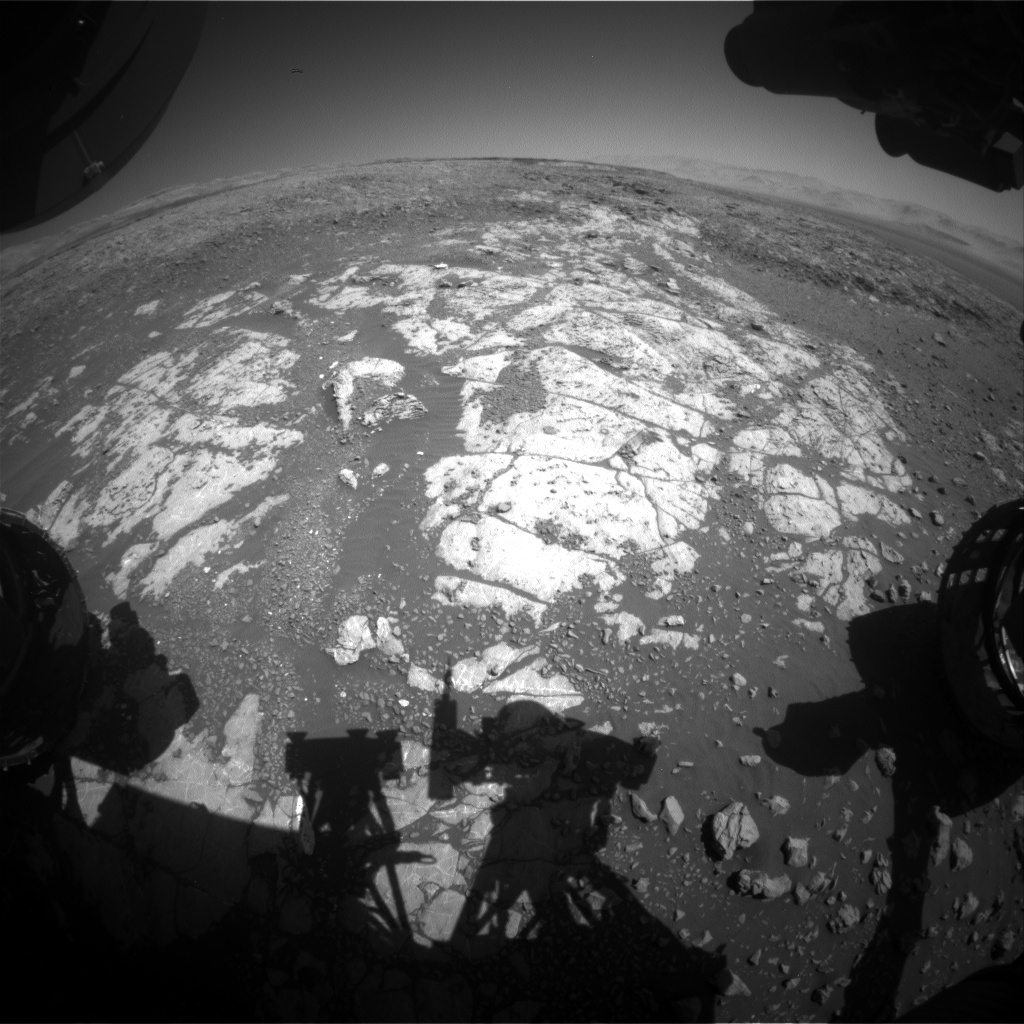
Curiosity Front Hazcam Right B image taken on Sol 1983, March 5, 2018.
Credit: NASA/JPL-Caltech
In addition, the plan called for contact science on the drill “tailings” (the powdered bits of rock ground up by the drill) with the rover’s Mars Hand Lens Imager (MAHLI) and Alpha Particle X-Ray Spectrometer (APXS).
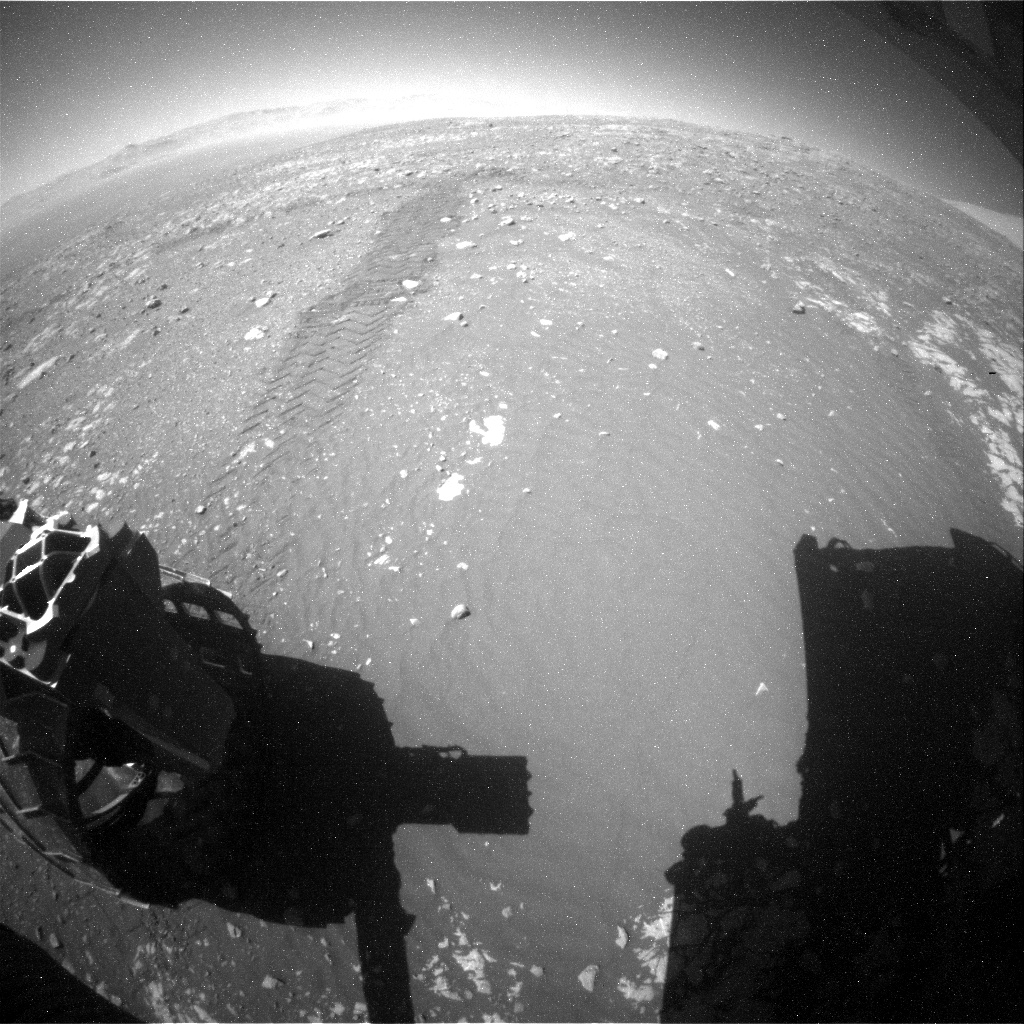
Curiosity Rear Hazcam Right B photo acquired on Sol 1983, March 5, 2018.
Credit: NASA/JPL-Caltech
“A ChemCam passive observation uses the instrument’s ability to detect different wavelengths of light to get a sense of a rock’s composition without using the laser to vaporize tiny bits of the rock surface,” Guzewich points out.
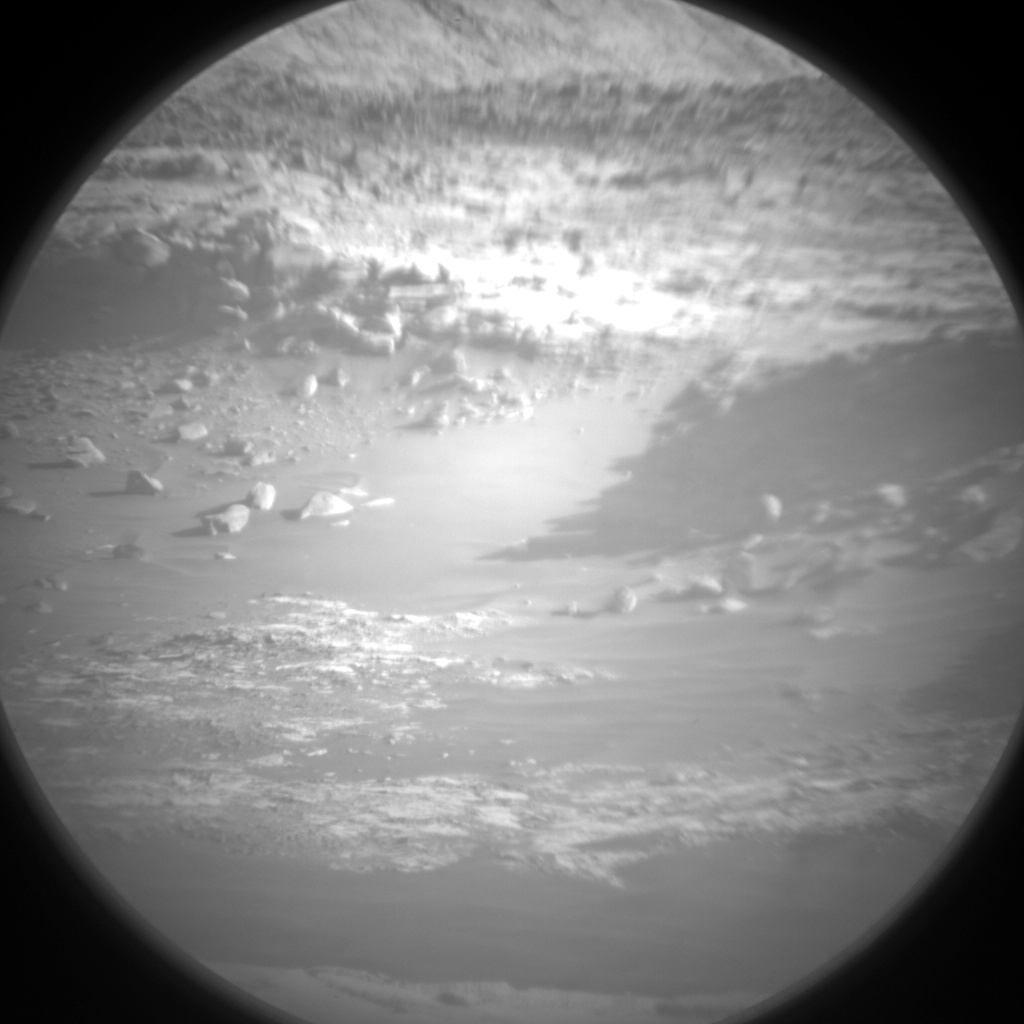
Curiosity ChemCam Remote Micro-Imager photo acquired on Sol 1981, March 3, 2018.
Credit: NASA/JPL-Caltech/LANL
The team also planned another trick with ChemCam, Guzewich concludes: taking long-distance image sequences of Peace Vallis on the far side of Gale Crater and a portion of the clay unit that represents part of Curiosity’s future agenda.
 Posted in

Artist’s view of the James Webb Space Telescope (JWST) in space, up and operating tackling a full agenda of space science conquests.
Credit: Northrop Grumman
The U.S. Government Accountability Office (GAO) has issued JAMES WEBB SPACE TELESCOPE: Integration and Test Challenges Have Delayed Launch and Threaten to Push Costs Over Cap.
The James Webb Space Telescope, the planned successor to the Hubble Telescope, is one of NASA’s most complex and expensive projects.
NASA recently announced that JWST’s launch would be delayed several months, from October 2018 to no later than June 2019, because components of the telescope are taking longer to integrate than planned.
Delayed again
Based on the amount of work NASA has to complete before JWST is ready to launch, the GAO report explains that it’s likely the launch date will be delayed again. If that happens, the project will be at risk of exceeding the $8 billion cost cap set by Congress.
The project’s Standing Review Board will conduct an independent review of JWST’s schedule status in early 2018 to determine if the June 2019 launch window can be met.

JWST’s combined science instruments and optical element recently completed 100 days of thermal vacuum testing inside NASA Johnson Space Center’s Chamber A. Engineers are seen by the hardware shortly after it emerged from the huge test facility on December 1, 2017.
Credit: NASA/Chris Gunn
To read the GAO Highlights Page on this new JWST report, go to:
https://www.gao.gov/assets/700/690412.pdf
The Full Report can be found at:
https://www.gao.gov/assets/700/690413.pdf
Too big to fail?
Take a look at my new Scientific American story for details about the JWST:
Is the James Webb Space Telescope “Too Big to Fail?”
Backers of NASA’s next great observatory contemplate its worst-case scenarios
By Leonard David on December 29, 2017
https://www.scientificamerican.com/article/is-the-james-webb-space-telescope-too-big-to-fail/
For a video look at JWST, go to Northrop Grumman overview published on Jan 24, 2017 at:
https://www.youtube.com/watch?v=v6ihVeEoUdo
Witness testimony
Lastly, a U.S. House of Representatives Space Subcommittee hearing, “NASA’s Next Four Large Telescopes, was held on Wednesday, December 6, 2017 with witnesses spotlighting the JWST and other space telescope projects:
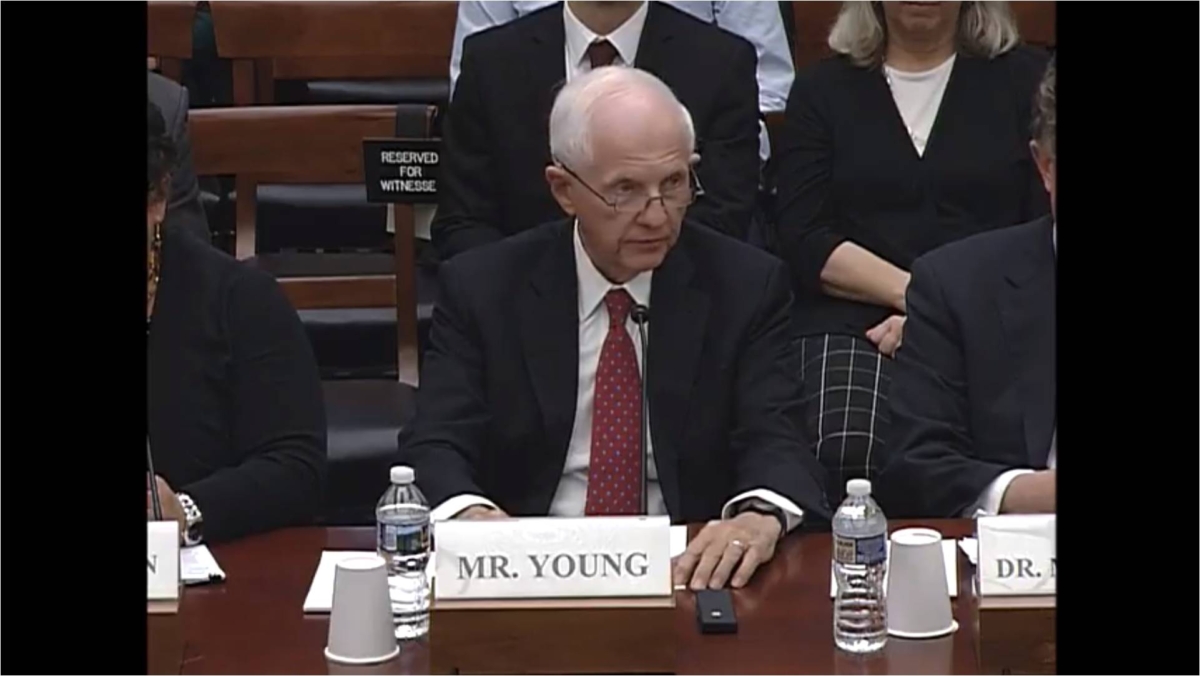
“The current assessment of JWST’s status is
that integration and test will take significantly longer than
planned. The result is a launch schedule delay and the
consumption of most of the remaining funding reserves. In my
opinion, the launch date and required funding cannot be
determined until a new plan is thoughtfully developed and
verified by independent review.” – Thomas Young
Credit: Inside Outer Space
— Thomas Zurbuchen, Associate Administrator, Science Mission Directorate, National Aeronautics and Space Administration
— Cristina Chaplain, Director, Acquisition and Sourcing Management, U.S. Government Accountability Office
— Thomas Young, Former Director, Goddard Space Flight Center, NASA; Former President and Chief Operating Officer, Martin Marietta Corporation
— Matt Mountain, President, Association of Universities for Research in Astronomy
— Chris McKee, Professor Emeritus of Astronomy, Physics, University of California, Berkeley, on behalf of the National Academies of Sciences, Engineering and Medicine
To view that hearing, go to:
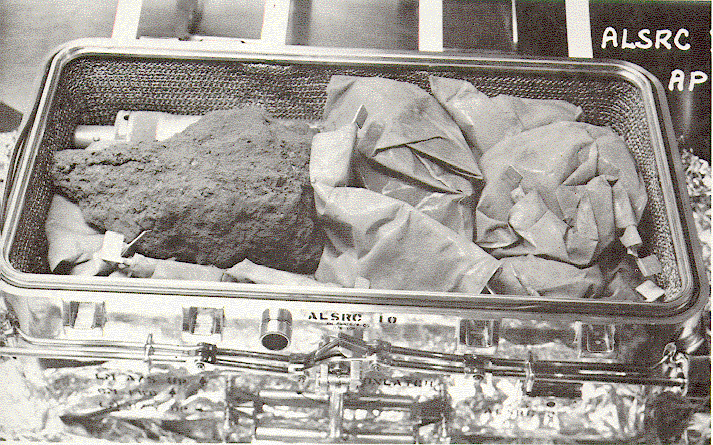
One of the Apollo 16 sample boxes being opened in the Lunar Receiving Laboratory on Earth. The box contains a large rock and many small sample bags.
Credit: NASA/Johnson Space Center
Apollo moonwalkers between 1969 and 1972 brought back to Earth a total of nine containers of lunar materials that were sealed on the lunar surface. Two of the larger sealed samples were collected from Apollo 17.
Three sealed samples from Apollo 15, 16, and 17 remain unopened.
According to several key lunar researchers, now is the right time to consider opening at least one of the still sealed sample containers.
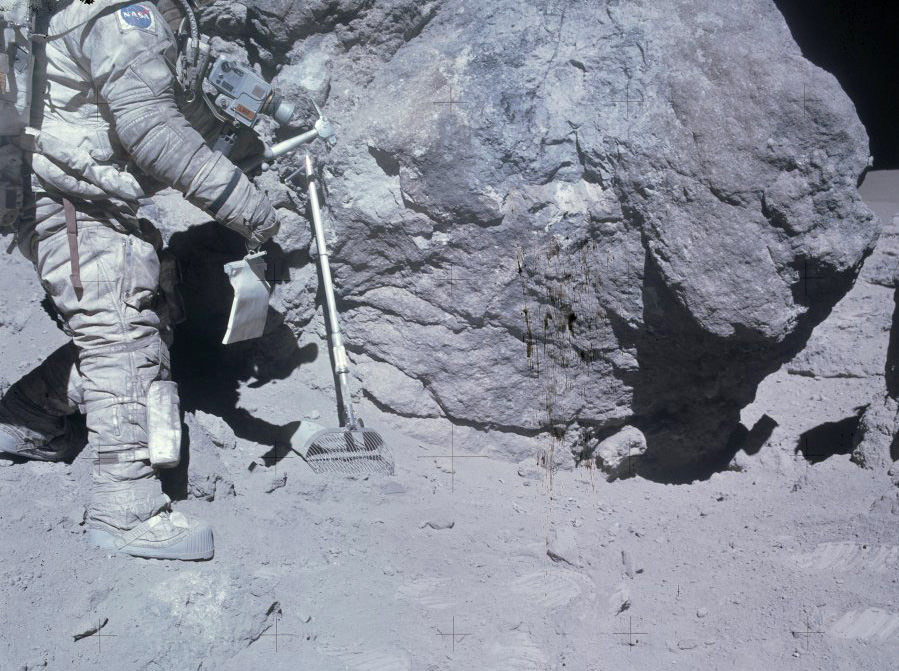
Apollo 16 astronaut Charlie Duke collects lunar samples during moon walk.
Credit: NASA/Johnson Space Center
Pristine and unstudied
Apollo’s set of unopened samples contain pristine and unstudied lunar material.
Moreover, given that the total sample mass within the unopened containers of moon specimens exceeds projected masses returned by future robotic missions, each of the unopened samples should be treated as an individual lunar mission, lunar experts contend.

Apollo 17 mission in December 1972 surveyed the Taurus-Littrow highlands and valley area. This site was picked as a location where rocks both older and younger than those previously returned from other Apollo missions might be found.
Credit: NASA/Johnson Space Center
For more information on this idea, please go to my new Space.com story at:
Should We Open Some Sealed Apollo Moon Samples?
March 5, 2018 07:15am ET
https://www.space.com/39870-should-we-open-sealed-apollo-moon-samples.html
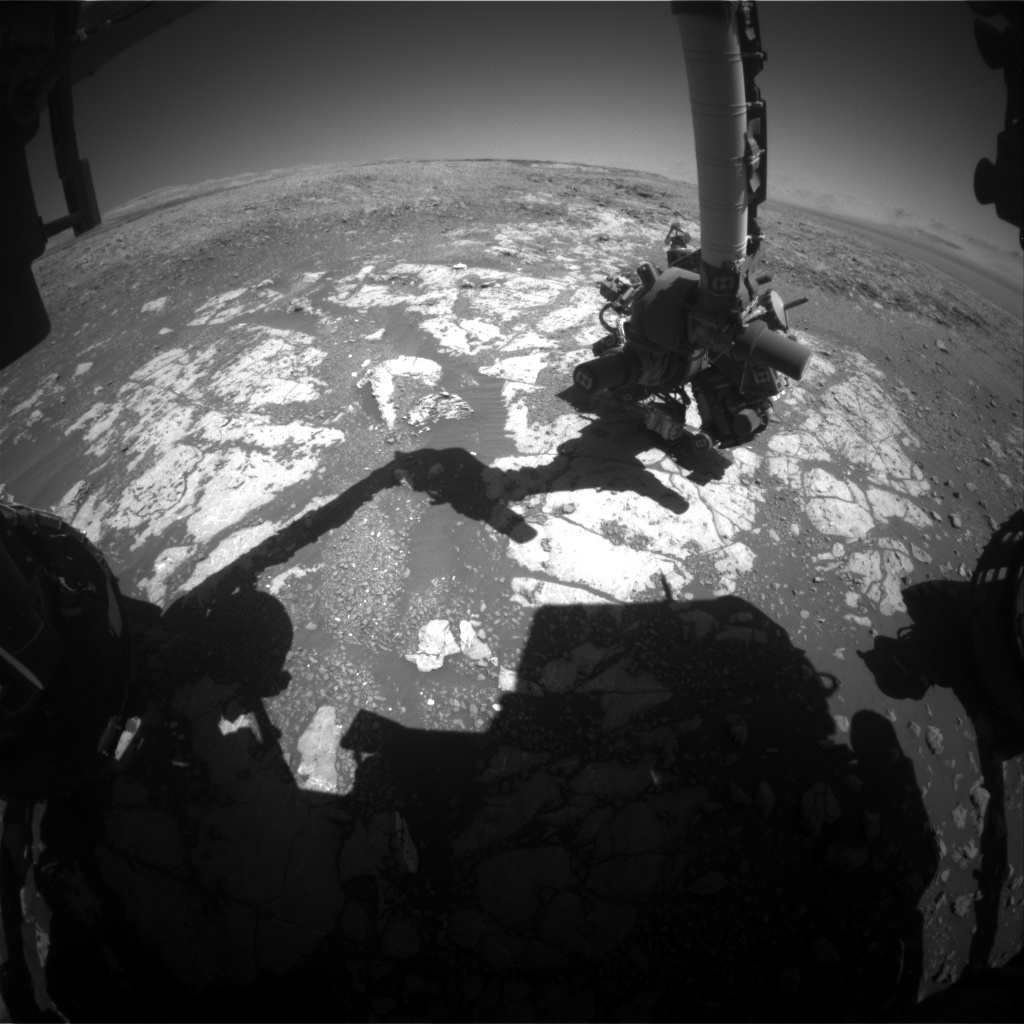
Curiosity Front Hazcam Left B image taken on Sol 1980, March 2, 2018.
Credit: NASA/JPL-Caltech
NASA’s Curiosity Mars rover is now carrying out Sol 1982 science duties.
The Red Planet robot is getting back in gear in terms of reactivating drilling operations reports Ken Herkenhoff, a planetary geologist at the USGS in Flagstaff, Arizona.
Feed-extended drilling
“All of the data returned for the second drill target, called “Lake Orcadie 2,” support the decision to attempt to acquire sample at that location using ‘feed-extended’ drilling,” Herkenhoff notes. “So the weekend plan is focused on drilling, which is planned for the second sol (1982).”
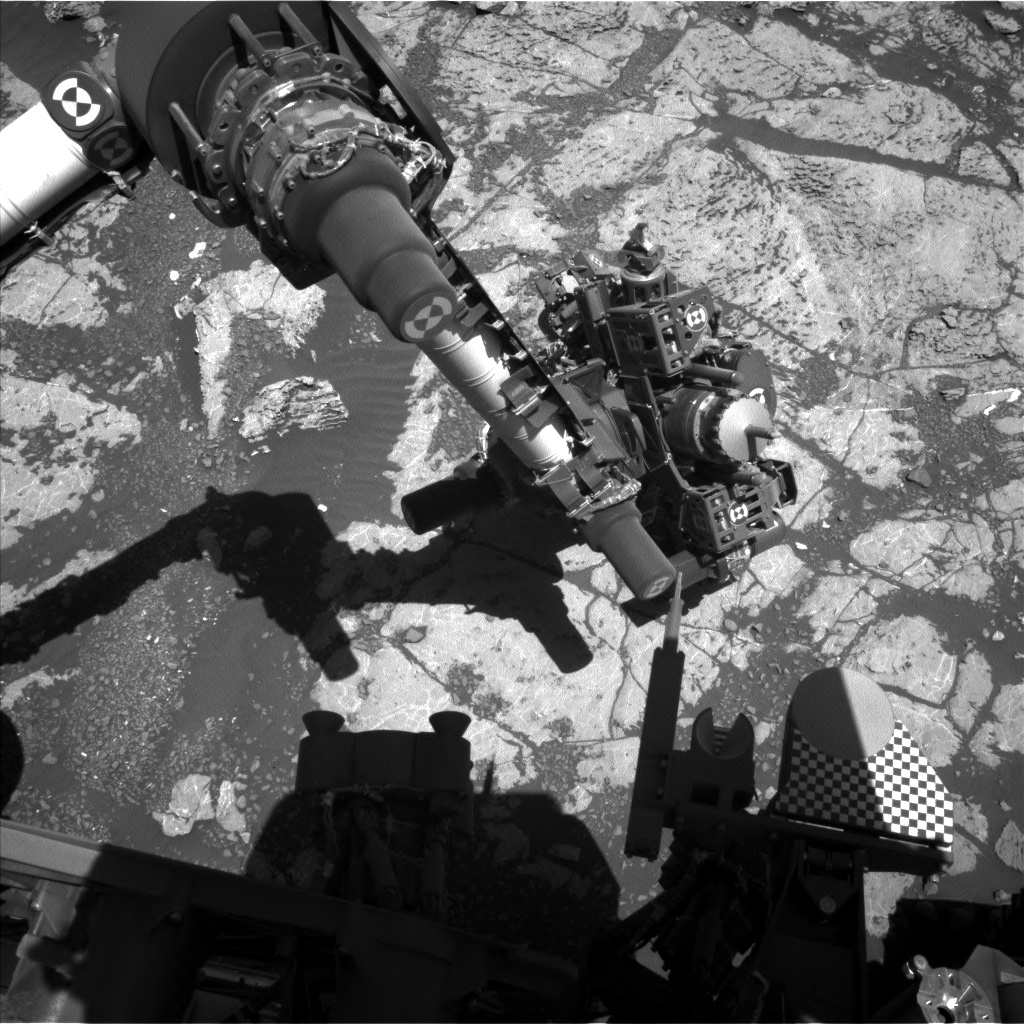
Curiosity Navcam Left B photo taken on Sol 1980, March 2, 2018.
Credit: NASA/JPL-Caltech
But first, on Sol 1981, the rover’s Chemistry and Camera (ChemCam) and Right Mastcam were to observe a potential location for dropping sample in the future as well as observe targets named “Ben Nevis” and “Moray.”
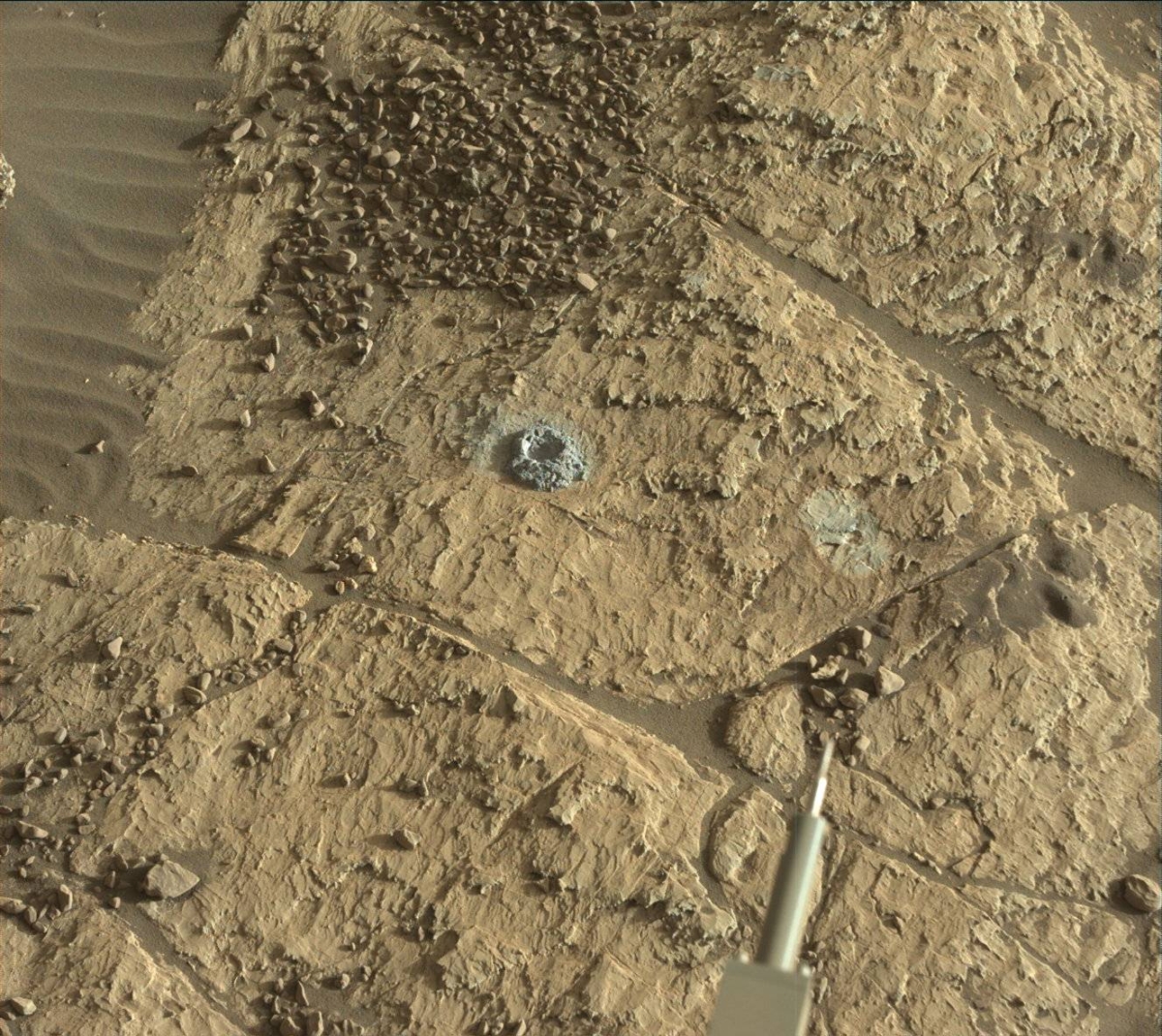
Curiosity Mastcam Left image acquired on Sol 1979, March 1, 2018.
Credit: NASA/JPL-Caltech/MSSS
Alluvial fan mosaics
“Mastcam will then measure dust in the atmosphere and Navcam will search for dust devils. Later that afternoon, Right Mastcam will look for changes in the sieved and unsieved Ogunquit Beach dump piles,” Herkenhoff adds, and the ChemCam Remote Micro-Imager (RMI) and Right Mastcam will acquire mosaics of the alluvial fan near the north rim of Gale Crater.
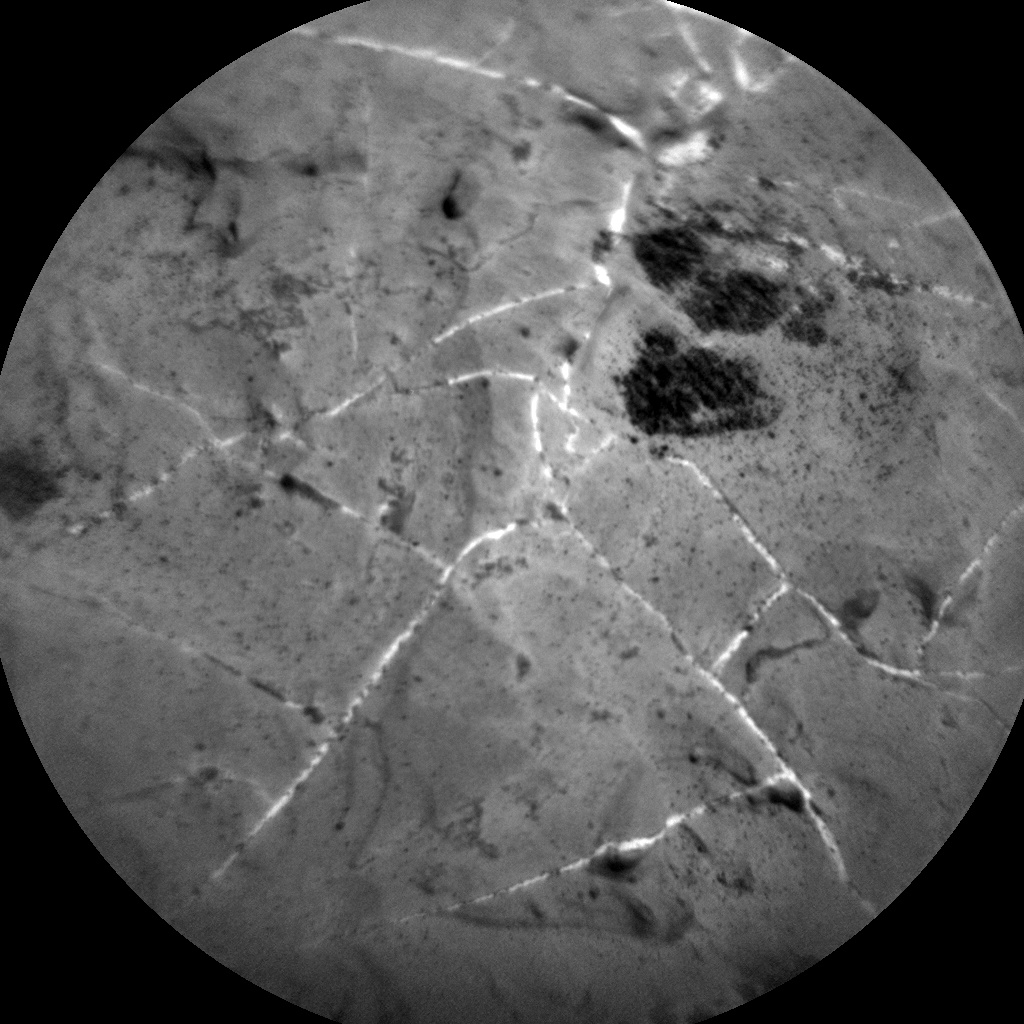
Curiosity ChemCam Remote Micro-Imager photo taken on Sol 1981, March 3, 2018.
Credit: NASA/JPL-Caltech/LANL
Argon measurement
Overnight, the robot’s Alpha Particle X-Ray Spectrometer (APXS) will integrate on air rather than surface materials to measure the amount of argon in the atmosphere, which is known to vary seasonally, based on older Mars Exploration Rover (MER) APXS data.
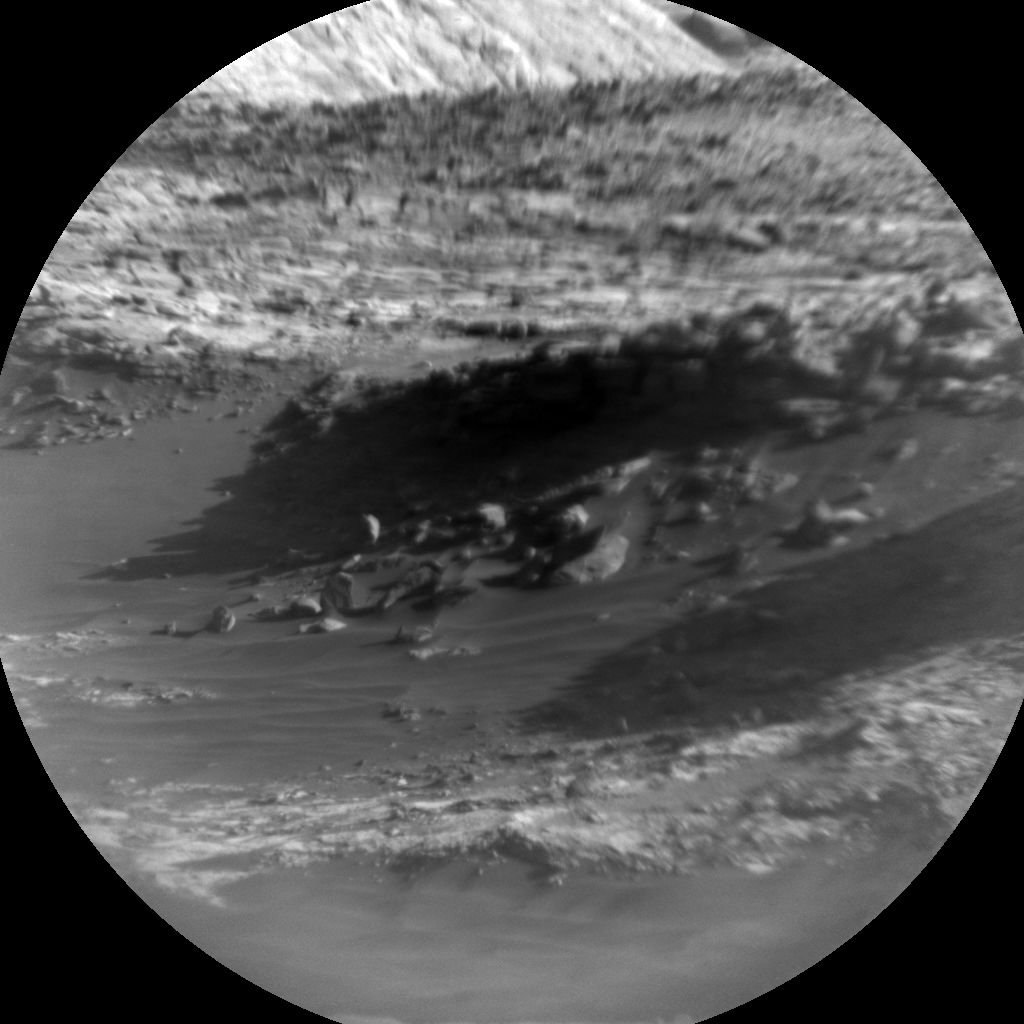
Curiosity ChemCam Remote Micro-Imager photo taken on Sol 1981, March 3, 2018.
Credit: NASA/JPL-Caltech/LANL
The feed-extended drilling dominates the Sol 1982 plan, with only Rover Environmental Monitoring Station (REMS) and Dynamic Albedo of Neutrons (DAN) activities running in parallel.
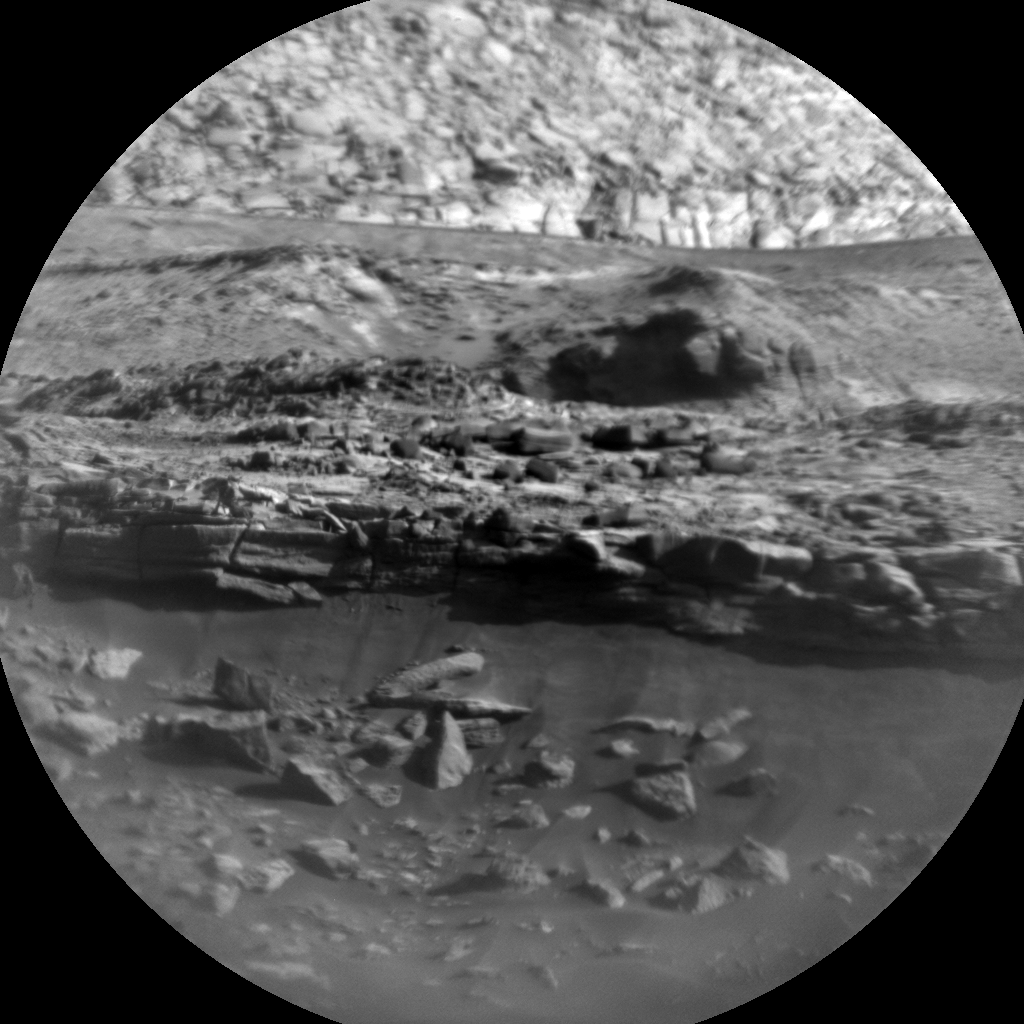
Curiosity ChemCam Remote Micro-Imager photo taken on Sol 1981, March 3, 2018.
Credit: NASA/JPL-Caltech/LANL
“The drill will be retracted from the hole, and Mastcam will take pictures of the hole and the drill bit on Sol 1983. Then the rover will sleep in preparation for more work on Monday,” Herkenhoff points out. “Of course we are all hoping that the drilling goes well…we’re looking forward to studying the drill hole and sample!”
Troubleshooting
After more than a year without the use of the Curiosity Mars rover’s drill, engineers have devised a workaround and tested it for the first time on the Red Planet. More testing of the drill method is planned for the future. The new drill method produced a hole on February 26 in a target named Lake Orcadie. The hole marks the first operation of the rover’s drill since a motor problem began acting up more than a year ago.
For an informative video on Curiosity’s workaround drill method, go to:

Curiosity Front Hazcam Left B image acquired on Sol 1972, February 22, 2018.
Credit: NASA/JPL-Caltech
NASA’s Curiosity Mars rover is now in Sol 1977.
“After a successful drill preload test, Curiosity was primed to drill for the first time in about a year,” reports Christopher Edwards, a planetary geologist at Northern Arizona University in Flagstaff.
“Unfortunately, due to a light downlink from the Mars Odyssey spacecraft, we didn’t get all the images down needed to safely carry out the drill activity in this weekend’s plan,” Edwards added. “Instead, we’ll push the drill activity out until we get the needed images down to help ensure it will complete successfully! Until then the view of the arm preload activity provides tantalizing hints of great things to come.”

Curiosity Mastcam Left photo taken on Sol 1974, February 24, 2018.
Credit: NASA/JPL-Caltech/MSSS
Backup science plans
Edwards pointed out that just because researchers couldn’t carry out the drill activity as planned, that doesn’t mean the team would let the rover sit idle. “In fact, quite the opposite,” he said.
The science operations team started planning backup science activities. The team decided to carry out activities on two contact science targets with the Mars Hand Lens Imager (MAHLI) as well as carry out Alpha Particle X-Ray Spectrometer (APXS) chemistry.
The targets — dubbed “Rockall” and “Benbecula” — will continue to help Mars scientists characterize the composition and fine-scale textures of the bedrock around the rover’s upcoming drill location.

Curiosity ChemCam Remote Micro-Imager photo taken on Sol 1971, February 21, 2018.
Credit: NASA/JPL-Caltech/LANL
Bedrock variability
“These activities will provide valuable geologic context to the drill and help assess the variability of the bedrock in this area,” Edwards explains. A slew of Chemistry & Camera (ChemCam) and rover Mastcam images are also being acquired to further this goal.

Mars Hand Lens Imager (MAHLI), located on the turret at the end of the rover’s robotic arm, produced this image on Sol 1974, February 24, 2018.
Credit: NASA/JPL-Caltech/MSSS
“It won’t be long until the other instruments inside the rover body get to sample the fantastic geology of the Vera Rubin Ridge,” Edwards concludes. “Stay tuned this coming week for the results of the drill activities. The science team can’t wait!”

Credit: CSPS
Two new space policy papers have been released by the Center for Space Policy and Strategy (CSPS) under the rubric of The Aerospace Corporation.
Reconfigurable space fleets
The first paper, On-Orbit Assembly of Space Assets: A Path to Affordable and Adaptable Space Infrastructure, surveys the new on-orbit assembly paradigm and provides a roadmap toward reconfigurable space fleets. The authors discuss how the ability to build and reconfigure spacecraft on-orbit could overcome key limits imposed by building spacecraft on the ground and then launching them to orbit.

Credit: CSPS
Insurance market
The second paper, Assurance through Insurance and On-orbit Servicing, examines the interplay between on-orbit servicing and the satellite insurance market. This paper analyzes how repairing and upgrading components via on-orbit servicing could potentially revolutionize how satellites operate in space.

Credit: CSPS
To read these informative papers, go to
http://aerospace.wpengine.netdna-cdn.com/wp-content/uploads/2018/02/OnOrbitAssembly.pdf
http://aerospace.wpengine.netdna-cdn.com/wp-content/uploads/2018/02/OnOrbitServicing.pdf
The new reports were briefed during the first meeting of a newly formed Senior Advisory Council for The Aerospace Corporation’s Center for Space Policy and Strategy.

Credit: CSPS
Handpicked members
Explained Steve Isakowitz, Aerospace president and CEO, the new Council’s support and guidance will prove vital in efforts to shape the future of the space enterprise.
The newly established council works as strategic advisers to the CSPS research agenda and reviews individual projects. The current members are:
Vice Adm. Manson Brown, USCG (Ret.)
Carissa Bryce Christensen
The Honorable Madelyn Creedon
Adm. Cecil Haney, USN (Ret.)
Lt. Gen. Larry James, USAF (Ret.)
Maj. Gen. Susan Mashiko, USAF (Ret.)
Col. Pamela Melroy, USAF (Ret.)
“We’re honored to have these luminaries supporting CSPS, who were each handpicked to offer us insights across the spectrum of space activity,” said Jamie Morin, the executive director of the Center in a press statement.
To read other publications that explore the technology, policy, and economic aspects of current developments in space, go to:

Credit: International UFO Congress
An exclusive interview of Luis Elizondo, the former head of a secret Pentagon project to investigate Unidentified Flying Objects (UFOs), provides more detail about the work of the Advanced Aerial Threat Identification Program (AATIP).
Elizondo’s video was aired at the recently held 2018 International UFO Congress in Scottsdale, Arizona. The International UFO Congress was established in 1991 and is held annually.
To The Stars Academy filmed the interview.
Controversy and debate
In a press statement, International UFO Congress organizer Alejandro Rojas said: “We’re delighted that Luis Elizondo agreed to give us this exclusive interview, answering numerous questions that have been submitted by UFO researchers, and shining a light on matters that were previously hidden from the public. I think this interview will generate huge interest, controversy, and debate.”
“This is a story that will keep on giving,” Rojas told Inside Outer Space. “UFO researchers, and writers like myself have discovered that the U.S. government still takes this issue seriously, despite claiming otherwise. Now that it has been revealed that there is an ongoing project to investigate these unidentified objects, we know where to look for files regarding their investigation,” he said.

Luis Elizondo, the former intelligence officer who ran the secretive Advanced Aviation Threat Identification Program speaks out on earlier CNN interview.
Credit: CNN/screen grab
Notion of aliens
Rojas said that this is a topic that fascinates the public, and apparently, government officials as well.
“Hopefully, this can help make the topic be taken more seriously, which Elizondo has said is his goal, and we can tackle the challenge these cases pose by conducting serious investigations,” Rojas added. “Even if these cases prove to be misidentifications, we can get past the notion that there is something silly about investigating unidentified craft in our skies just because we are uncomfortable with the notion of aliens.”
Resources
For background on this story, go to my Space.com story:
UFO Legacy: What Impact Will Revelation of Secret Government Program Have?
To view the Elizondo video, go to:

If the Moon has enough water, and if it’s reasonably convenient to access, future explorers might be able to use it as a resource.
Credit: NASA/GSFCCredit: NASA/GSFC
The Earth’s Moon may offer more water than previously thought – a resource that is widely distributed across the surface and is not confined to a particular region or type of terrain.
Tapping that lunar water could help sustain future Moon explorers, using it as drinking water or processing the water into hydrogen and oxygen for rocket fuel or oxygen to breathe.
Orbiter data
Remote-sensing data from lunar orbiters have revealed spectral features consistent with the presence of OH or H2O on the lunar surface.
“We find that it doesn’t matter what time of day or which latitude we look at, the signal indicating water always seems to be present,” said Joshua Bandfield, a senior research scientist with the Space Science Institute in Boulder, Colorado, and lead author of the new study published in Nature Geoscience. “The presence of water doesn’t appear to depend on the composition of the surface,” he explains, “and the water sticks around.”

NASA’s Lunar Reconnaissance Orbiter (LRO)..
Credit: NASA/Goddard Science Visualization Studio (SVS)
Bandfield and colleagues came up with a new way to incorporate temperature information, creating a detailed model from measurements made by the Diviner instrument on NASA’s Lunar Reconnaissance Orbiter, or LRO.
The team applied this temperature model to data gathered earlier by the Moon Mineralogy Mapper (M3), a U.S.-supplied visible and infrared spectrometer that flew on India’s Chandrayaan-1 lunar orbiter.
Scientific instruments
Chandrayaan-1 in Sanskrit (language of Ancient India) means “Moon Craft.” It was India’s first mission to Moon, launched on October 22, 2008 and carried 11 scientific instruments built in India, USA, UK, Germany, Sweden and Bulgaria. The satellite made more than 3400 orbits around the moon and the mission was concluded when the communication with the spacecraft was lost on August 29, 2009.

Moon Mineralogy Mapper (M3), a U.S.-supplied visible and infrared spectrometer that flew on India’s Chandrayaan-1 lunar orbiter.
Credit: NASA/JPL
The Diviner Lunar Radiometer Experiment is one of seven instruments aboard NASA’s still operating LRO which was launched on June 18, 2009. It is the first instrument to create detailed day and night surface temperature maps of the Moon.
Reactive relative
Regardless of the specific composition or formation mechanism, the researchers have concluded that OH/H2O can be present on the Moon under thermal conditions “more wide-ranging than previously recognized.”
According to a NASA statement: “The new finding of widespread and relatively immobile water suggests that it may be present primarily as OH, a more reactive relative of H2O that is made of one oxygen atom and one hydrogen atom. OH, also called hydroxyl, doesn’t stay on its own for long, preferring to attack molecules or attach itself chemically to them. Hydroxyl would therefore have to be extracted from minerals in order to be used.”
The water appears to be present day and night, though it’s not necessarily easily accessible.

Access to the Moon’s resources could help sustain future human exploration.
Credit: ESA – AOES Medialab
What’s the source?
Remaining a head scratcher is what the findings suggest about the source of the Moon’s water. The new results point toward OH and/or H2O being created by solar wind hitting the lunar surface.
However, the research team doesn’t rule out that OH and/or H2O could come from the Moon itself, slowly released from deep inside minerals where it has been locked since the Moon was formed.
The paper in Nature Geoscience is available at:

Credit: NASA
NASA has begun shaping its return to the Moon strategy – a Lunar Discovery and Exploration program. Among key elements of the plan is to stage sample return missions, as well as dot the Moon with mobile rovers and stationary landers.
Viewing the Moon as a resource-rich, readily accessible target for future United States efforts, space agency planners want to encourage industry participation to expand the economic sphere to cis-lunar space, as well as leverage investments in commercial lunar landers.
NASA’s evolving lunar ambitions were outlined during last week’s Planetary Science Advisory Committee Meeting, held February 21-23 at the space agency’s headquarters in Washington, D.C.

Credit: NASA
Robust but credible capability
From a scientific view three important new concepts are being eyed as part of a new phase of lunar exploration. These are:
- The Lunar Volatile Cycle
- The Origin of the Moon
- Lunar Tectonism and Seismicity
The Lunar Exploration Analysis Group (LEAG) has been central in formulating a Moon manifesto of sorts. LEAG was established in 2004 to support NASA in providing analysis of scientific, technical, commercial, and operational issues in support of lunar exploration objectives and of their implications for lunar architecture planning and activity prioritization.

Credit: NASA

Credit: NASA
To address new and a myriad of other questions regarding the Moon requires a robust lunar exploration program, LEAG points out, a credible capability that takes advantages of new technologies and commercial paradigms to produce a regular cadence of landed missions – and profound new discoveries.

Private sector Moon rover.
Credit: Carnegie Mellon/Mark Maxwell
Cis-lunar gateway
As part of the fiscal year 2019 budget proposal, NASA is planning to build the Lunar Orbital Platform-Gateway in the 2020s. The power and propulsion element is the initial component of the gateway, and is targeted to launch in 2022.
Under Next Space Technologies for Exploration Partnerships, or NextSTEP, five companies are completing four-month studies on affordable ways to develop the power and propulsion element.

Early concept of Deep Space Gateway, now called the Lunar Orbital Platform-Gateway
Credit: NASA
“The Lunar Orbital Platform-Gateway will give us a strategic presence in cislunar space. It will drive our activity with commercial and international partners and help us explore the Moon and its resources,” said William Gerstenmaier, associate administrator, Human Exploration and Operations Mission Directorate, at NASA Headquarters in Washington. “We will ultimately translate that experience toward human missions to Mars,” he explained in a recent NASA statement on the rationale behind the gateway.

Artist’s view of Tiangong space lab
Credit: CMSE
The European Space Agency (ESA) has issued a new reentry window forecast for China’s Tiangong-1 space lab.
The current estimated reentry of the 8.5 ton spacecraft is now roughly March 24 to roughly April 19, noting that this prediction is highly variable.

Map showing the area between 42.8 degrees North and 42.8 degrees South latitude (in green), over which Tiangong-1 could reenter. Graph at left shows population density.
Credit: ESA CC BY-SA IGO 3.0
According to the Space Debris Office at ESA’s European Space Operations Center (ESOC) in Darmstadt, Germany: “Reentry will take place anywhere between 43ºN and 43ºS (e.g. Spain, France, Portugal, Greece, etc.). Areas outside of these latitudes can be excluded. At no time will a precise time/location prediction from ESA be possible.”

Credit: ESA
Due to the orbital inclination of the Tiangong-1, approximately 42.8 degrees, and the likely uncontrolled nature of the reentry, the final impact point can be anywhere on Earth between 42.8 degrees North and 42.8 degrees South in latitude.

Credit: ESA
Tiangong-1 is the first space station built by China and lofted in late September 2011.
The first Chinese orbital docking occurred between Tiangong-1 and an unpiloted Shenzhou spacecraft on November 2, 2011. Two piloted missions were completed to visit Tiangong-1: Shenzhou 9 and Shenzhou 10.

