Author Archive
 Author:
  March 11th, 2018
Credit: SXSW 2018/screengrab
Elon Musk sits with film director and friend Jonathan Nolan to answer questions from the audience at SXSW 2018, an event being held in Austin, Texas.
The SpaceX chief rocketeer addresses his moves on the Moon and Mars, governance of the first Mars colony, along with concerns about the future of artificial intelligence, the Earth’s energy balance, and his view of the “Dark Ages” that loom large in his future.
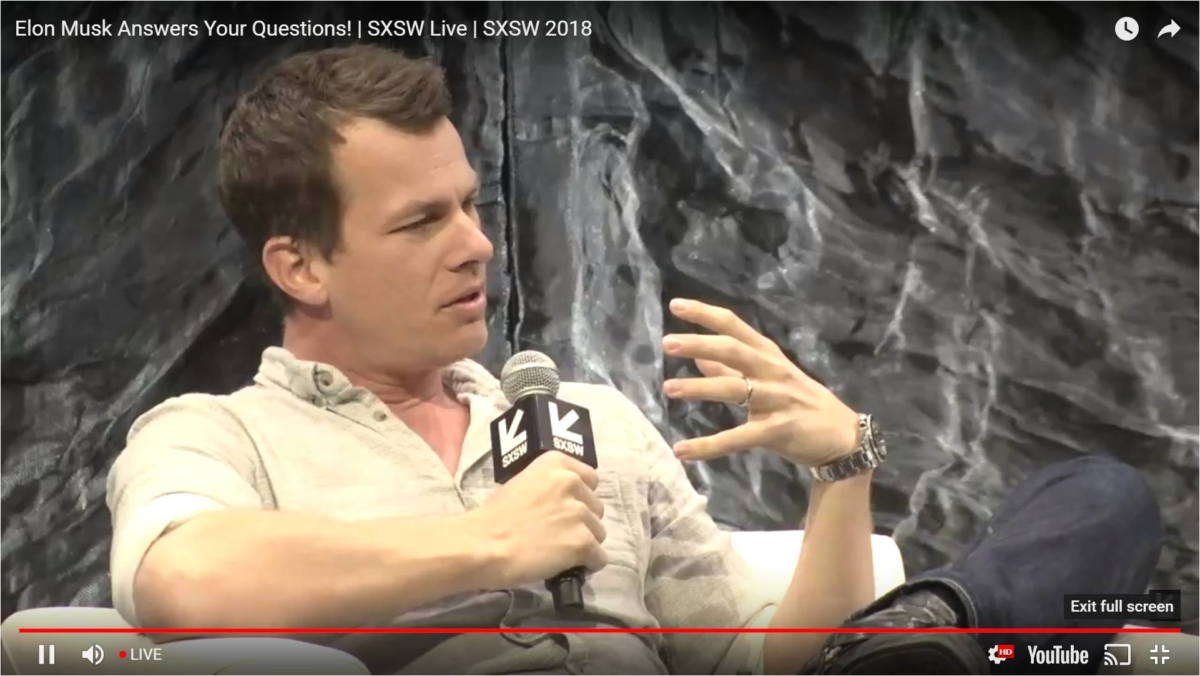
Film director Jonathan Nolan poses question to Elon Musk during SXSW 2018, an event being held in Austin, Texas. Credit: SXSW 2018/screengrab
Musk sees a multi-planet species as necessary to re-migrate to a ravaged Earth in the future.
Elon reveals that SpaceX is now busy at work and is making progress on the firm’s interplanetary transport vehicle, the BFR, that could well see test hops by mid next year, he explains.
Musk is joined by his brother Kimbal Musk that also includes singing of the Three Amigos- Bar Scene (My Little Buttercup).

Musk is joined by his brother Kimbal Musk that also includes singing of the Three Amigos- Bar Scene (My Little Buttercup). in SXSW 2018 event.
Credit: SXSW 2018/screengrab
This video is available at:
 Posted in
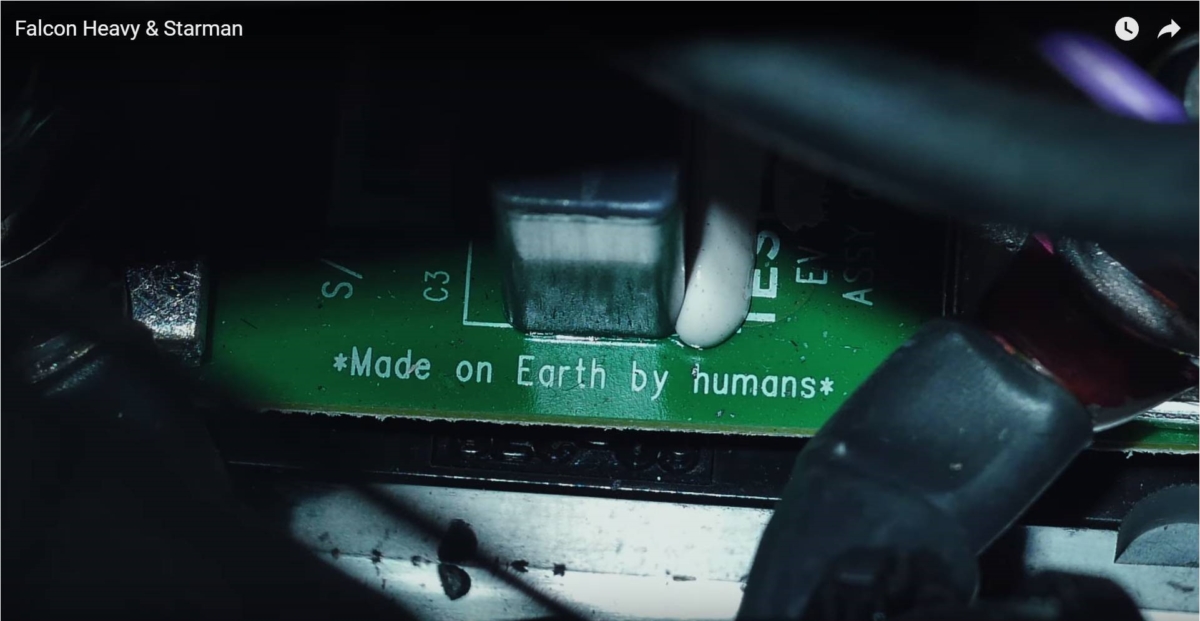
Credit: SpaceX/Screengrab
“Life cannot just be about solving one sad problem after another. There need to be things that inspire you, that make you glad to wake up in the morning and be part of humanity. That is why we did it. We did for you.”
When Falcon Heavy lifted off, it became the most powerful operational rocket in the world by a factor of two. With the ability to lift into orbit nearly 64 metric tons (141,000 lb)—a mass greater than a 737 jetliner loaded with passengers, crew, luggage and fuel–Falcon Heavy can lift more than twice the payload of the next closest operational vehicle, the Delta IV Heavy, at one-third the cost.

Credit: SpaceX/Screengrab
Following liftoff, the two side boosters separated from the center core and returned to landing site for future reuse. The video shows the close-call landing of core booster on drone ship.
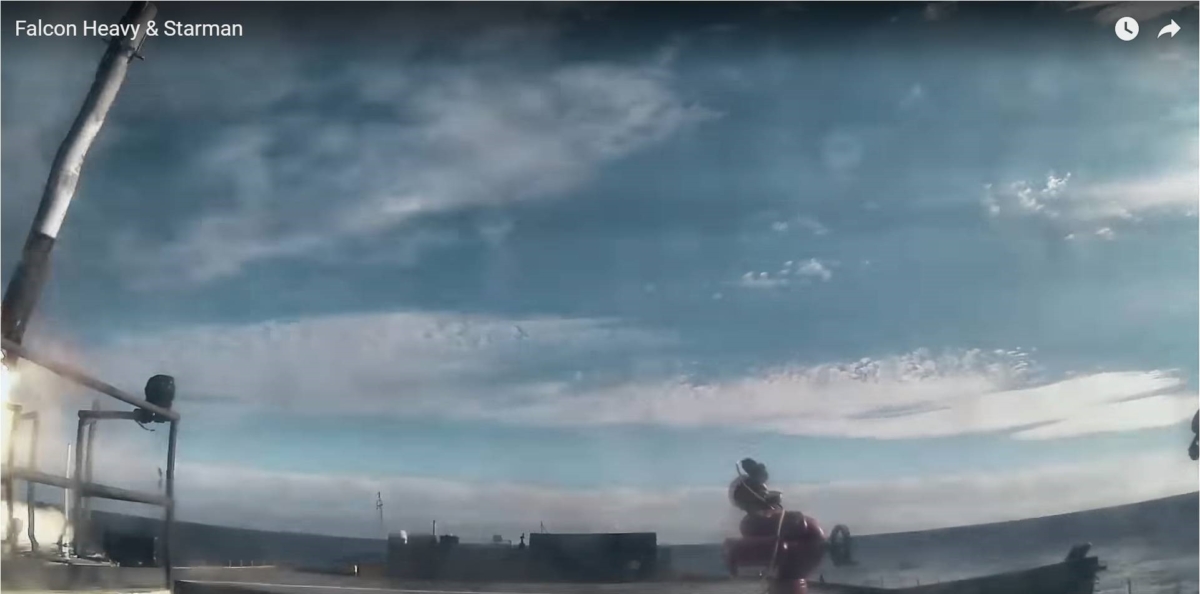
Credit: SpaceX/Screengrab
Falcon Heavy put a Tesla Roadster and its passenger, Starman, into orbit around the sun. At max velocity Starman and the Roadster will travel 11 km/s (7mi/s) and travel 400 million km (250 million mi) from Earth.
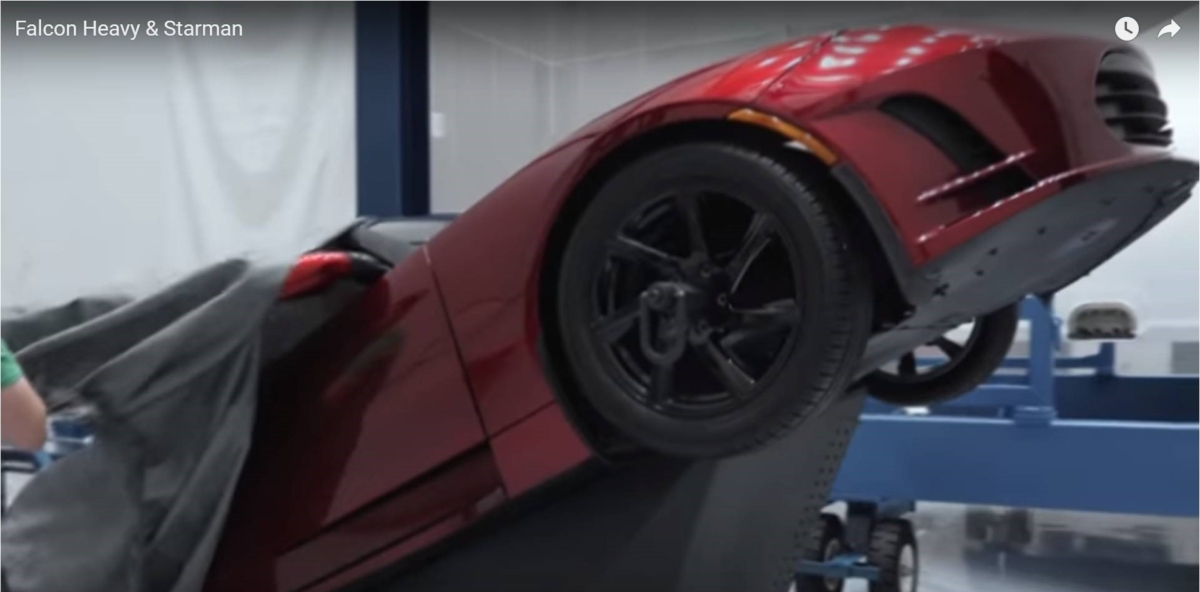
Credit: SpaceX/Screengrab
The video was made by HBO series Westworld co-creators, Jonathan Nolan and Lisa Joy and was shown during the SWSW 2018 festival being held in Austin, Texas.
Go to this video at:

The Earth Gazers: On Seeing Ourselves by Christopher Potter, Pegasus Books, 2018; 400 pages; $28.95 hardcover.
This is a very readable and enjoyable volume, one that provides an appealing perspective concerning those space travelers who peered through windows to take in the view of Earth from the vacuum void.
Divided into three parts, the book’s chapters take the reader on a historical arc, anchored with details about visionary aerospace pioneers, Charles Lindbergh, Robert Goddard and Wernher von Braun, then underscores the pioneering Apollo astronauts and the resulting impact on humankind.
We are reminded in the book of astronomer Fred Hoyle’s prescient thought in 1948: “Once a photograph of the Earth, taken from the outside, is available…a new idea as powerful as any in history will be let loose.”
What I found enlightening is Potter’s coverage of atheist Madalyn Murray O’Hair. It was O’Hair that filed a lawsuit with NASA in regard to the Apollo 8 crew reading from Genesis as they circled the Moon. The case was rejected by the U.S. Supreme Court for lack of jurisdiction.
In many ways, this book is a wakeup and recall call, perhaps underscored by the author’s dedication of the volume: “To my father, who woke me up to watch the first moonwalk. I wish I had shown more enthusiasm at the time.”
Potter himself, toward the book’s end, comes to grips with the call of space exploration. “There is something utopian about all our visions of space exploration, and something both dispiriting and fantastical about the motivation for space travel that tells us that we must find another home because we will at some point have to give up this one…”
The reader will find a sizable, descriptive helping of past space exploits and the history behind them, and more to the point, how these transcendent experiences have helped shape the space sagas yet to play out.
For more information about this book, go to:
http://www.pegasusbooks.com/books/the-earth-gazers-9781681776361-hardcover

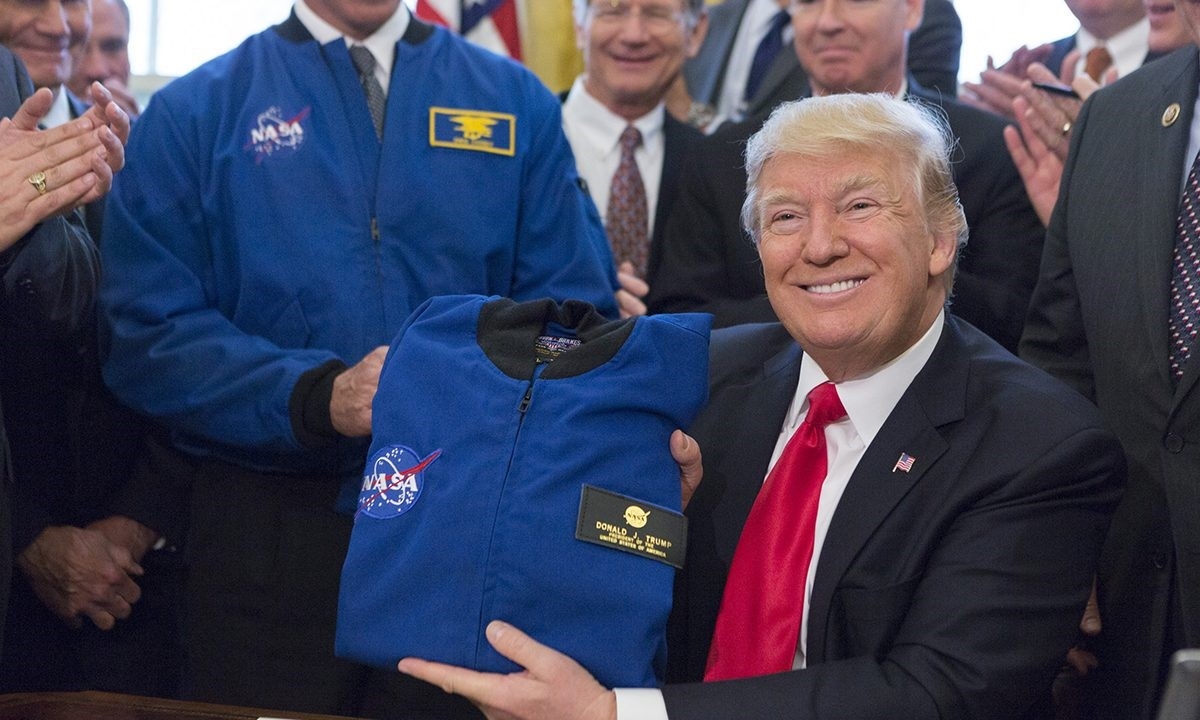
U.S. Vice President Pence briefs President Trump on the National Space Council.
Credit: White House
Vice President Mike Pence Briefed U.S. President Trump and the Cabinet on March 8 regarding the National Space Council – led by Pence.
“This Administration is leading in space,” Pence tweeted, “by bringing together private sector & federal gov’t – huge advances! We’ll continue to strengthen national security & unleash innovation, which creates high-paying jobs in America. #space.”
Credit: White House
White House science & technology
Since President Trump’s inauguration, the White House Office of Science and Technology Policy (OSTP) has built a robust team of over 50 staff members, including a corps of scientists and engineers, policymakers, and academics to advise the President on science and technology (S&T), support the President’s agenda, and ensure that S&T efforts across the Executive Branch are effectively coordinated.
OSTP advisors
OSTP policy advisors are providing expert advice and developing policies on a wide range of topics, including space and aeronautics, advanced manufacturing, artificial intelligence, autonomous systems, biotechnology, cybersecurity, digital economy, disaster preparedness, healthcare, infectious diseases, information technology, medicine, nanotechnology, nuclear energy, ocean science, quantum information sciences, and telecommunications, among others.
Credit: White House/OSTP
Report
A newly issued White House document provides a selection of the S&T achievements by the Trump Administration to date, including space program agenda items.
View the full report here:
https://www.whitehouse.gov/wp-content/uploads/2018/03/Administration-2017-ST-Highlights.pdf
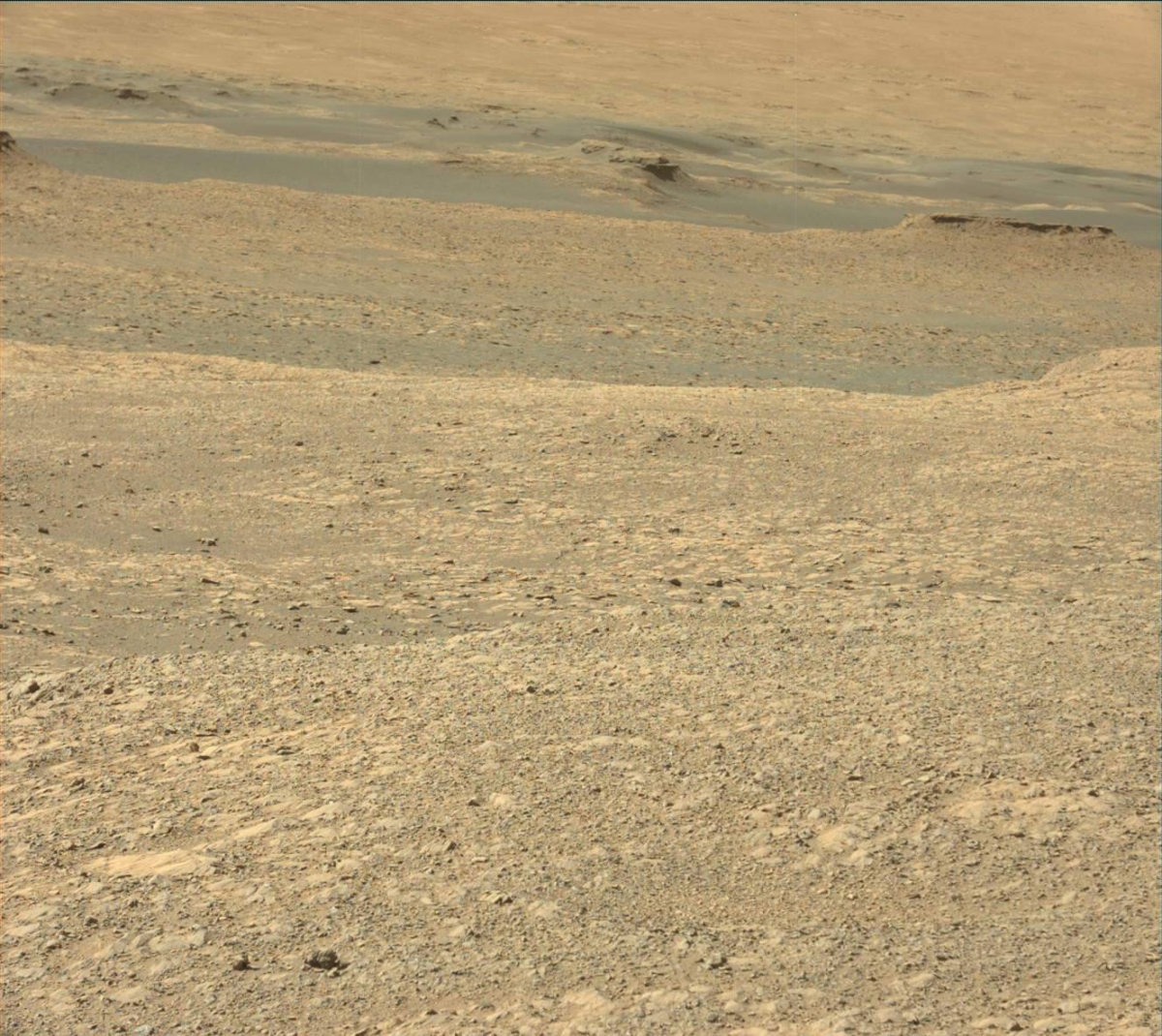
Curioisty Mastcam Left image acquired on Sol 1985, March 7, 2018.
Credit: NASA/JPL-Caltech/MSSS
Seasons make a big difference for Mars vistas, reports Roger Wiens, Curiosity’s Chemistry and Camera (ChemCam) principal investigator and geochemist at Los Alamos National Laboratory in New Mexico. The Red Planet is halfway between winter solstice and spring equinox in the southern hemisphere where the robot now resides.
“The atmosphere around the globe is the clearest in southern winter. Once spring starts, turbulence increases and dust storms begin,” Wiens points out.
Curiosity is now performing Sol 1987 science tasks.
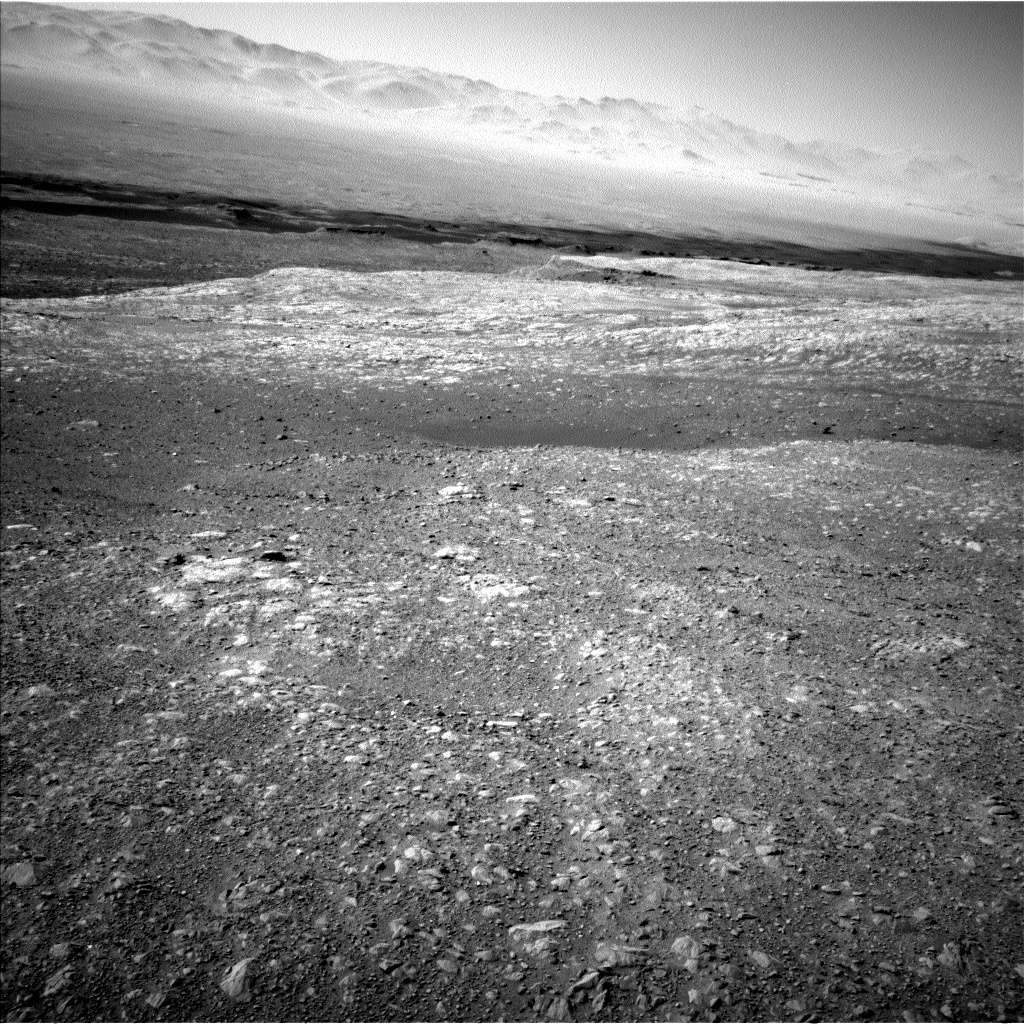
Curiosity Navcam Left B photo taken on Sol 1986, March 8, 2018.
Credit: NASA/JPL-Caltech
Clear skies
Curiosity science teams are taking advantage of the clear skies to take long-distance ChemCam Remote Micro Imager (RMI) telescope mosaics of the terrain on Mt. Sharp and on the crater rim.
“We are especially interested in a Mt. Sharp unit characterized by features that look like yardangs, which are typically wind-sculpted elongated features in a landscape that is experiencing erosion,” Wiens adds. “We’re also very interested in the apparent fluvial channels seen descending from the crater rim.”
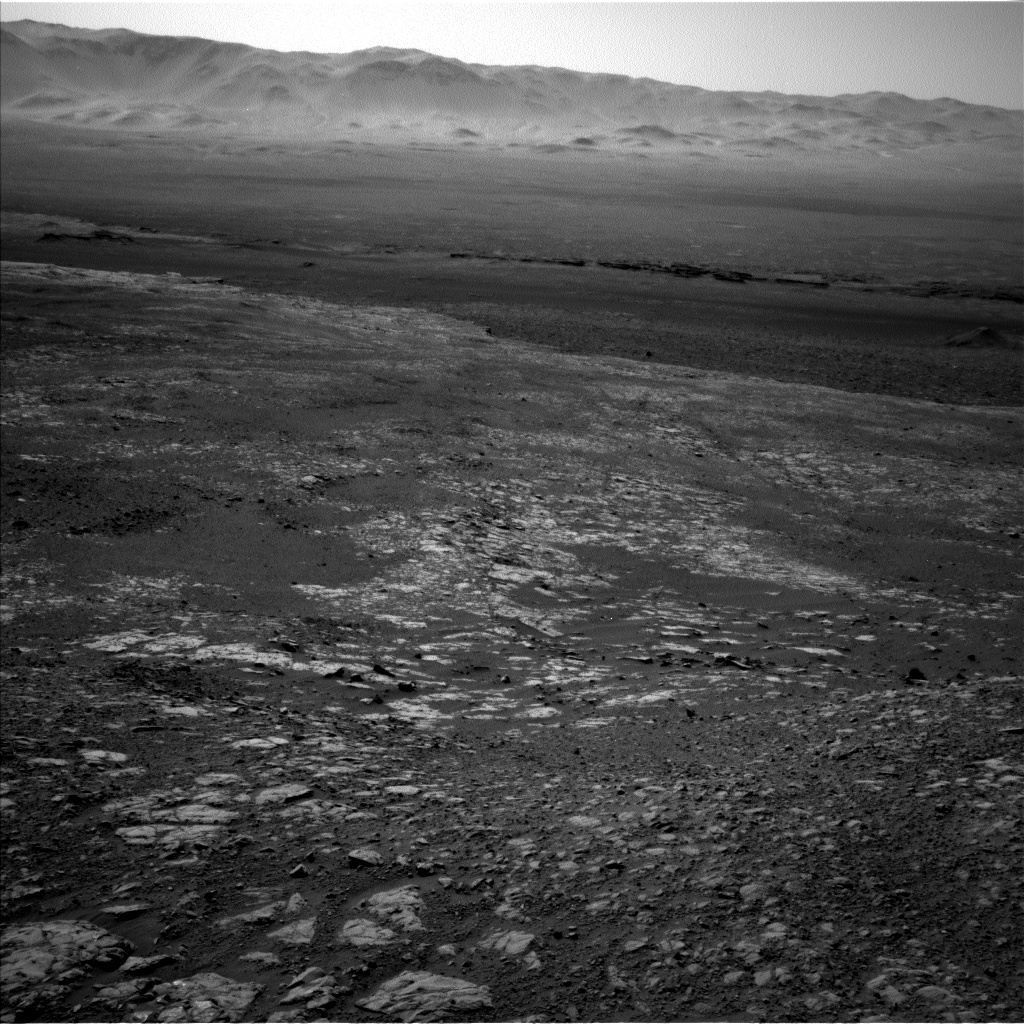
Curioisty Navcam Left B image acquired on Sol 1985, March 7, 2018.
Credit: NASA/JPL-Caltech
The rover’s Navcam has already been used to image at least two channels.
“We are curious…when was the last time that water flowed down these channels? Was it steady flow, or catastrophic? Is there evidence of snow and ice,” Wiens questions, “or was the water more likely delivered as rain?”
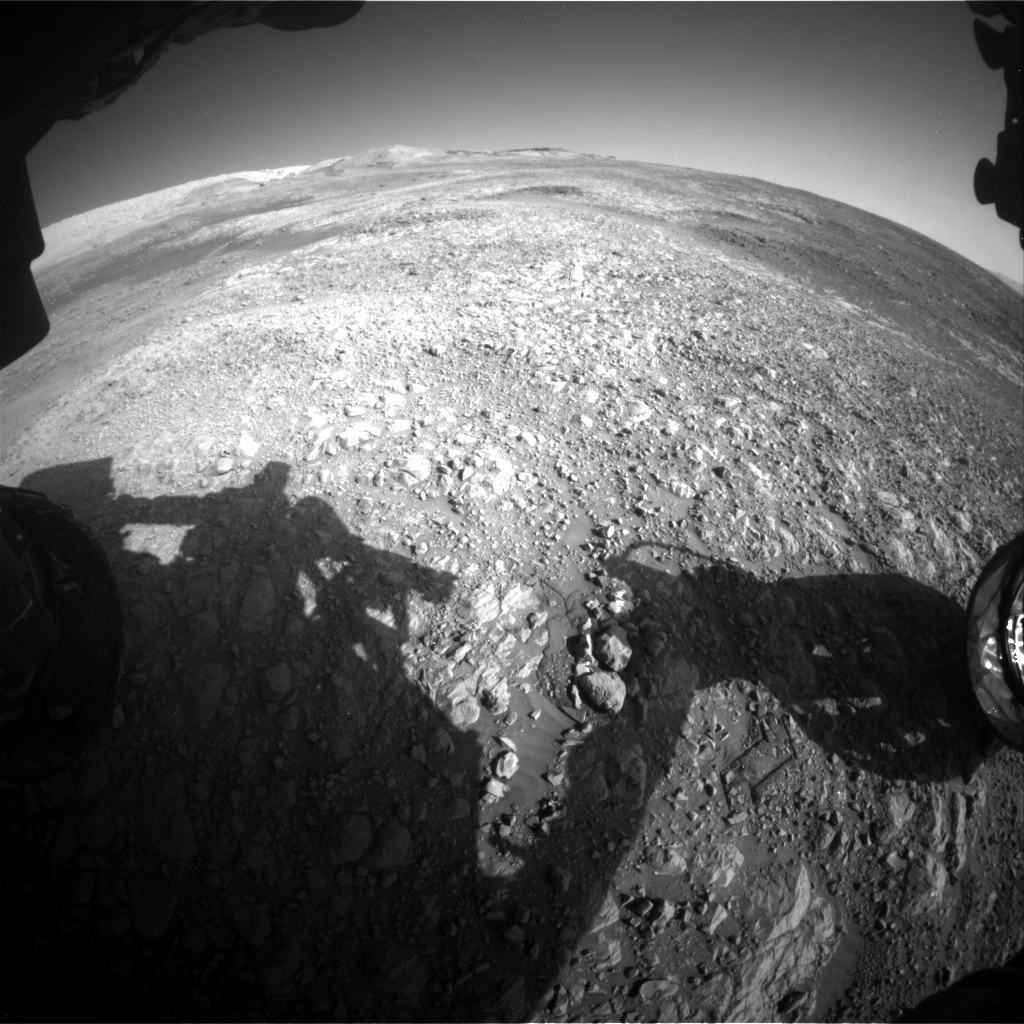
Curiosity Front Hazcam Left B photo taken on Sol 1986, March 8, 2018.
Credit: NASA/JPL-Caltech
Gravel underfoot
Under clear skies, Curiosity has recently driven close to 100 feet (30 meters) and is now stationed on a gravelly patch of ground.
“The rover is heading northeast along the top of Vera Rubin Ridge. With only gravel underfoot, the arm instrument teams decided to forgo contact science at this location,” Wiens explains.
On the plan is for the robot to use ChemCam and Mastcam to observe small bedrock targets “Sgurr nan Gilean” and “Braemar.” Mastcam will use optical filters to observe the latter target.
Slight downhill drive
After a planned long northerly and slightly downhill drive aiming for nearly 270 feet (82 meters), Curiosity is slated to image the surroundings, done by Hazcam, Navcam, and Mastcam. It will include a Mastcam clast survey.
Also on the plan, the Autonomous Exploration for Gathering Increased Science (AEGIS) software will use the Navcam images to pick a target for ChemCam investigation.
On the second sol of this plan ChemCam will take long-distance images of the yardang unit on Mt. Sharp and of the Peace Vallis area.
Navcam will take several movies to look for dust devils and thin clouds. The rover’s Dynamic Albedo of Neutrons (DAN), Radiation Assessment Detector (RAD), and Rover Environmental Monitoring Station (REMS) will also take data.
Credit: NASA/JPL-Caltech/Univ. of Arizona
New traverse map
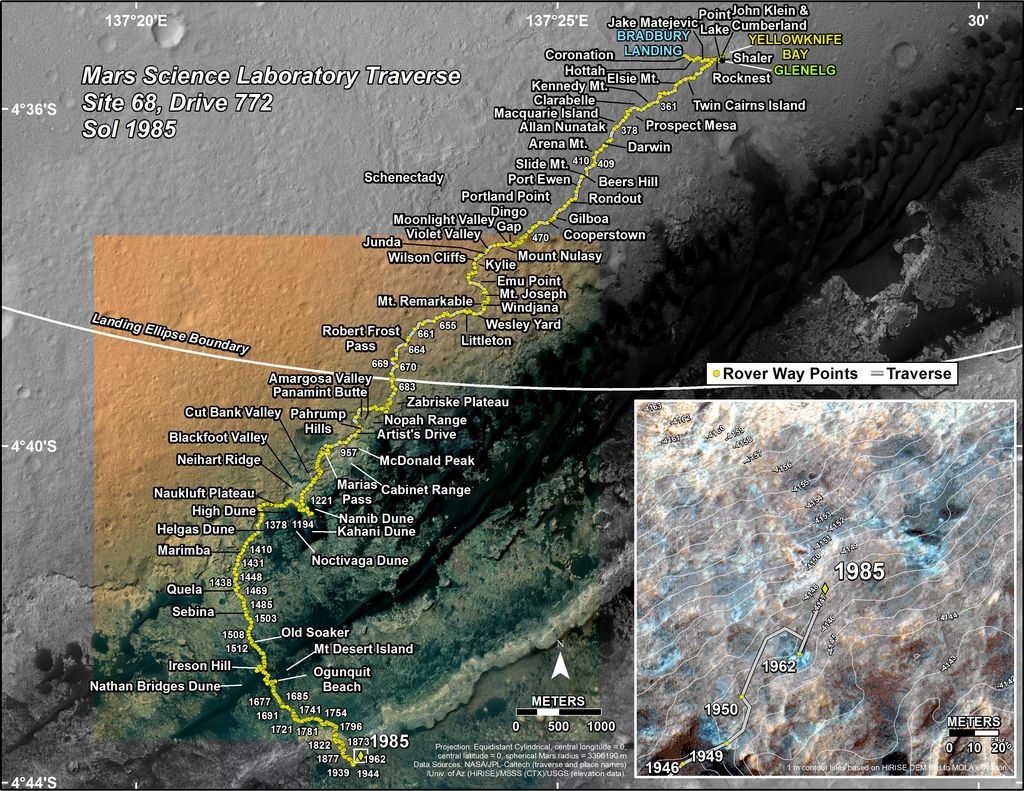
Meanwhile, a new map has been issued that shows the route driven by NASA’s Mars rover Curiosity through the 1985 Martian day, or sol, of the rover’s mission as of March 8, 2018.
Numbering of the dots along the line indicate the sol number of each drive. North is up. The scale bar is 1 kilometer (~0.62 mile).
From Sol 1962 to Sol 1985, Curiosity had driven a straight line distance of about 93.78 feet (28.59 meters), bringing the rover’s total odometry for the mission that began in August 2012 to 11.33 miles (18.23 kilometers).
The base image from the map is from the High Resolution Imaging Science Experiment Camera (HiRISE) in NASA’s Mars Reconnaissance Orbiter.

Credit: CMSA
A third edition of the Global Exploration Roadmap has been issued, a report that includes a step-by-step explanation of China’s future space station objectives for the 2020s.
The newly issued Roadmap outlines the interests of 14 space agencies that belong to the ISECG, a group that includes the China National Space Administration.
Two phases
As cited in the ISECG 2018 report:
In September 2010, the Chinese government approved the implementation of their space station project.
China’s Space Station project is organized in two phases:
- the first phase includes the Space Laboratory;
- the second phase includes construction of a Space Station.
The Tiangong 2 Space Laboratory was launched in September 2016. Then, the Shenzhou-11 crewed spacecraft and cargo spacecraft docked with the lab.

Credit: CMS
Core, specialized modules
The China Space Station consists of a core module and two specialized modules with the complex having an orbital inclination of 42 degrees and an altitude of approximately 547-724 miles (340-450 kilometers), explains the ISECG report.
China’s space station has a design life of 10 years with the ability to extend service life through maintenance.
After the construction is completed, two or three astronauts will live and work continuously for long durations, with the station supporting a maximum of six people during periods of crew rotation.
The station is equipped with an external robotic arm and other equipment to support station construction, maintenance and operations.

Deployed micro-satellite monitored the combined Tiangong-2/Shenzhou-11 vehicles.
Credit: CCTV
Sub-phases
China’s Space Station phase is divided into three sub-phases.
In the key technical verification phase, the test core module is launched and multiple pilot and cargo spacecraft launches test the core module to validate astronaut long-term presence, regenerative life support systems, flexible solar wing and drive mechanism, and overall control of a large flexible structure and space station assembly.
Following this key technical verification phase, the two specialized modules are launched completing the construction phase.
During this period, a number of Shenzhou crewed and cargo spacecraft will be launched to support the completion of construction tasks and carry out scientific and technological experiments simultaneously.
When the Space Station construction tasks are completed, the operations phase begins.

The Tianhe core module for China’s Space Station undergoes ground testing.
Credit: CCTV/Screengrab
Research and exploration activities
The astronaut crew will conduct long-duration missions to conduct scientific and technological research and exploration activities.
On the basis of the existing three-module configuration, an additional docking interface is available with the capability of docking an additional permanent element.
China’s Space Station can accommodate other countries’ spacecraft access that meets the standards of China’s space station and can also be equipped with an external experimental platform and experimental equipment.
As explained in the ISECG report, additional modules may be added to the Chinese Space Station in the future.
International cooperation
The main scientific research and application directions of the Chinese Space Station are:
- space medicine,
- space life science and biotechnology,
- microgravity fluid physics,
- space material science,
- microgravity basic physics,
- space astronomy and astrophysics,
- space environment and space physics,
- aerospace components,
- space geosciences and applications,
- space-based information technology,
- new aerospace technologies and applications.

Credit: CMSE/Wei Yan Juan

International cooperation, the ISECG report explains, can be based on module level cooperation, on other countries’ spacecraft visits, on astronaut joint flights, and on cooperation in space science and space applications research.
To read this China update within the 2018 ISECG report, go to pg. 13:
https://www.globalspaceexploration.org/wordpress/wp-content/isecg/GER_2018_small_mobile.pdf

Credit: ISECG
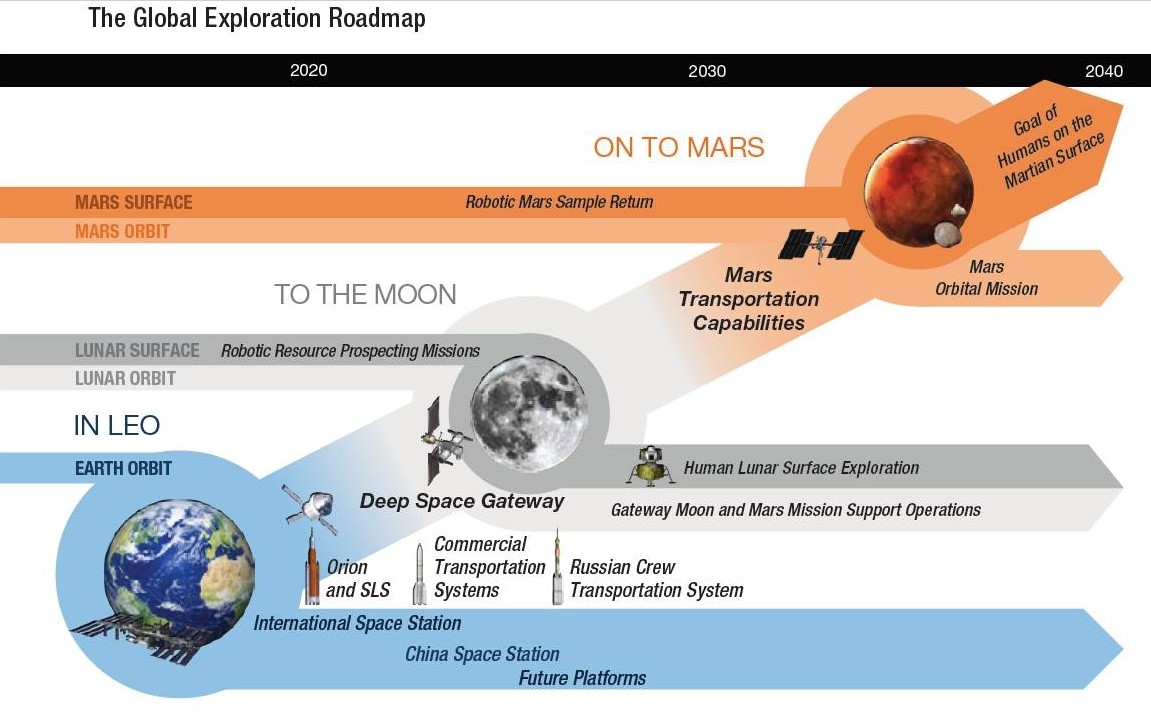
Agencies participating in the International Space Exploration Coordination Group (ISECG) are advancing a long-range international exploration strategy to expand human presence into the Solar System, which begins with the International Space Station, proceeds to the Moon, and leads to human missions to explore Mars.
A third edition of the Global Exploration Roadmap has been issued, following the first roadmap released in September 2011 and updated in August 2013.
Credit: ISECG
This new iteration includes updated agency plans and programs and aims to “facilitate stakeholder engagement within countries and across space agencies to realize human and robotic exploration of destinations where humans may one day live and work,” according to the ISECG.
Agency plans
This third edition of the Global Exploration Roadmap, first released in September 2011 and updated in August 2013, includes updated agency plans and programs and aims to facilitate stakeholder engagement within countries and across space agencies to realize human and robotic exploration of destinations where humans may one day live and work.
This new edition of the Global Exploration Roadmap reaffirms the interest of 14 space agencies to expand human presence into the Solar System, with the surface of Mars as a “common driving goal.”

Credit: ISECG
Coordinated effort
The report reflects a coordinated international effort to prepare for space exploration missions beginning with the International Space Station (ISS) and continuing to the lunar vicinity, the lunar surface, then on to Mars.
The expanded group of agencies within the ISECG spotlights the growing interest in space exploration and the importance of cooperation to realize individual and common goals and objectives.
To read this highly informative 2018 report, go to:
https://www.globalspaceexploration.org/wordpress/wp-content/isecg/GER_2018_small_mobile.pdf

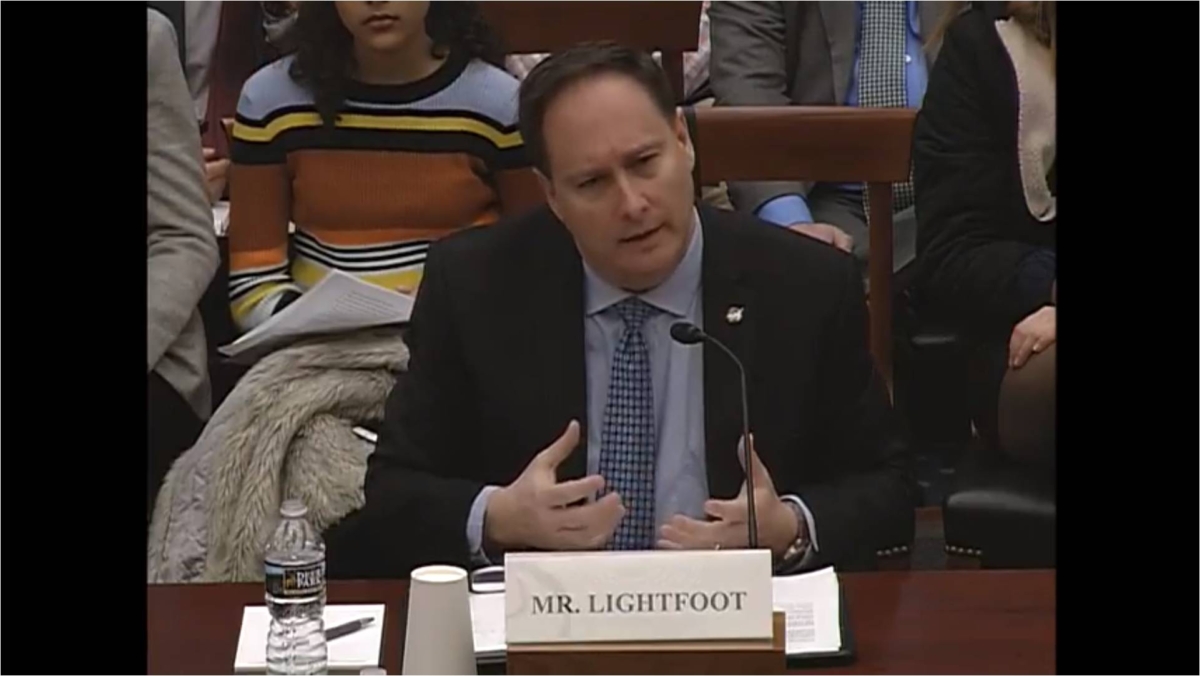
A House Subcommittee on Space carried out a hearing on March 7: An Overview of the NASA Budget for Fiscal Year 2019
The sole witness was NASA’s Robert Lightfoot, Jr., Acting Administrator.
Moon: proving ground
In an opening Statement Space Subcommittee Chairman Brian Babin (R-Texas) noted that Mars has been, and will remain, the first interplanetary destination for humanity.
“And along the way, NASA has been encouraged to carry out any mission necessary, including cis-lunar activities, to advance future interplanetary exploration,” Chairman Babin said.

“There are many benefits to this strategy. The moon offers a proving ground closer to home for advancing the technologies necessary for deep space exploration. The opportunities for commercial and international participation could greatly enhance a lunar mission. And the more frequent operational cadence will better prepare astronauts, mission crews and the commercial partners for future missions.” Babin noted.
Range of questions

Subcommittee members served up a wide range of questions for NASA’s Lightfoot on Moon and Mars exploration plans to a variety of topics, including the James Webb Space Telescope and other future missions, including the space agency’s plans for fending off asteroids.
To view a video of the hearing, go to:
The written testimony of NASA’s Lightfoot is available at:
The full opening statement by Babin is posted at:
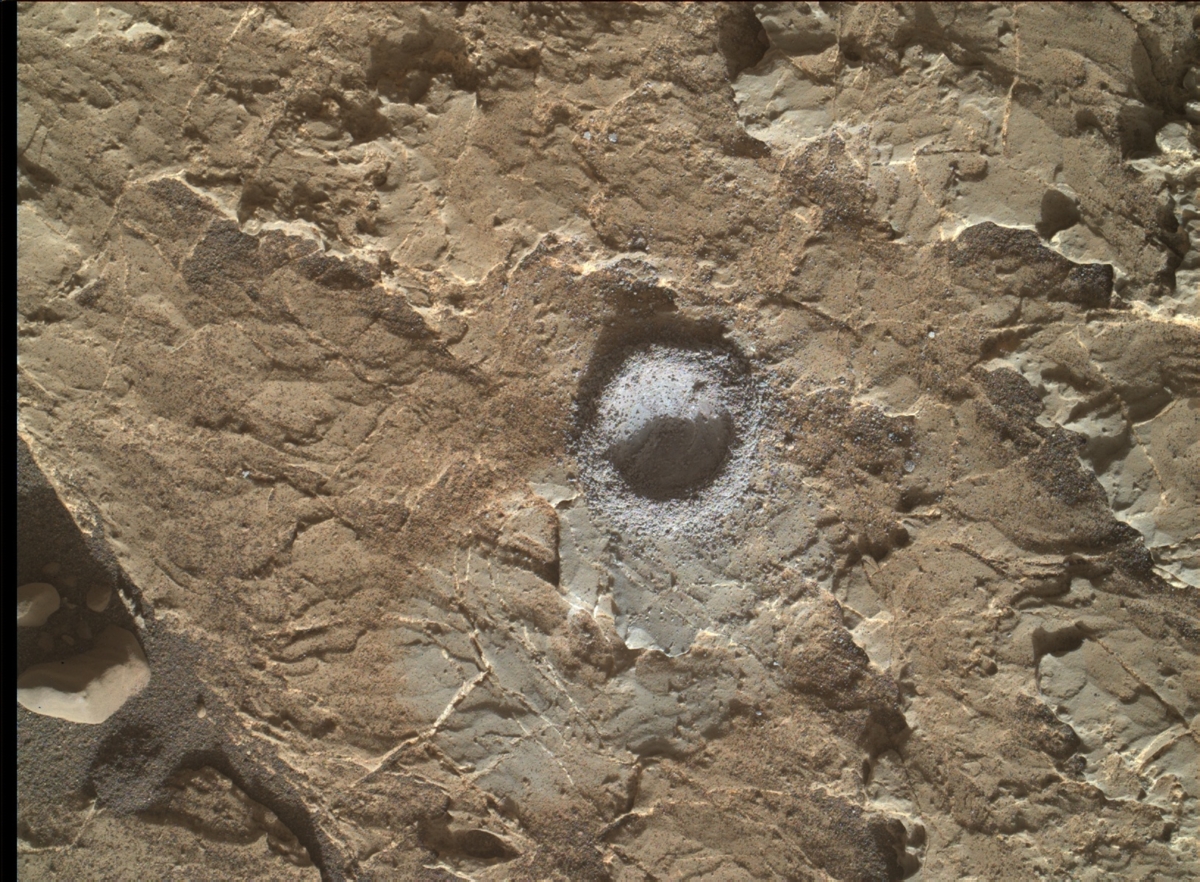
Curiosity Mars Hand Lens Imager (MAHLI) photo produced on Sol 1984, March 6, 2018.
Credit: NASA/JPL-Caltech/MSSS
Just how hard is a rock and any way to tell ahead of drilling?
That’s the question raised by Roger Wiens, a geochemist at Los Alamos National Laboratory (LANL) in Los Alamos, New Mexico.
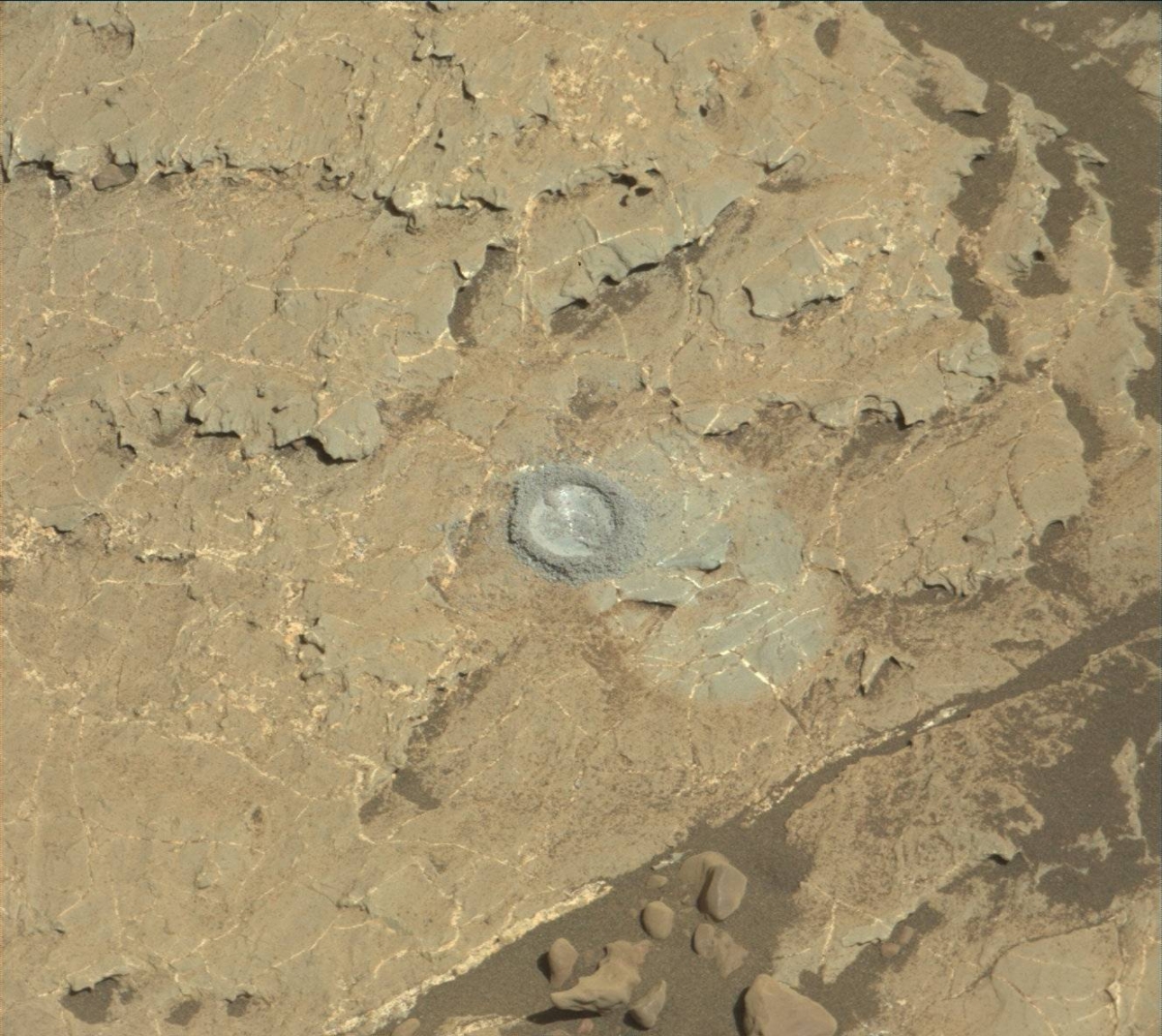
Curiosity Mastcam Right image taken on Sol 1983, March 5, 2018.
Credit: NASA/JPL-Caltech/MSSS
“Last week when the first Vera Rubin Ridge drill-hole attempts turned out to be too shallow at ‘Lake Orcadie’ discussion in the team turned to the question of: “How hard is that rock? Is there a way to know before starting the drill hole how hard the rock will be, so we can anticipate whether Curiosity’s new drill technique will be successful?”
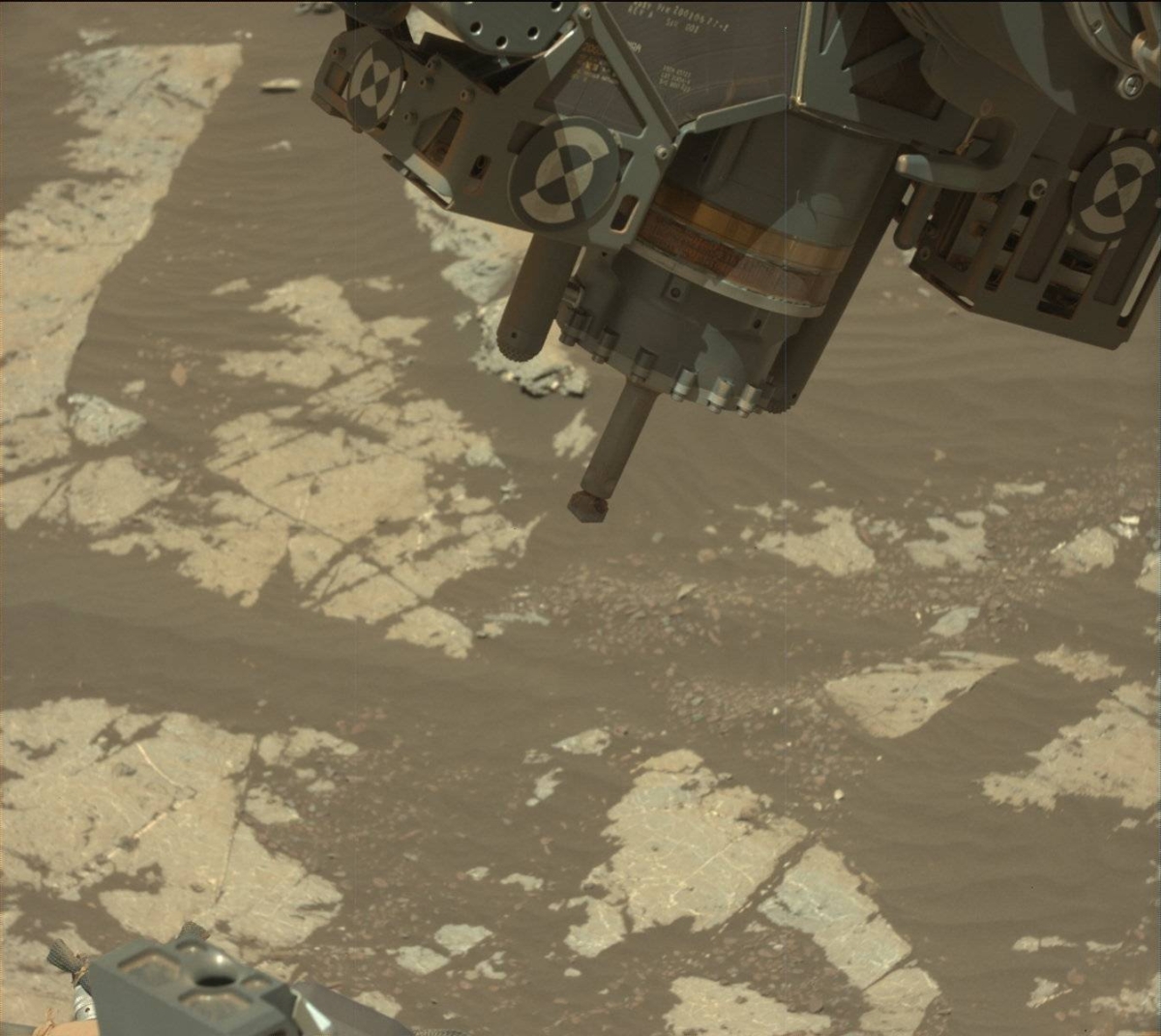
Curiosity Mastcam Left photo taken on Sol 1983, March 5, 2018.
Credit: NASA/JPL-Caltech/MSSS
Several indicators
Wiens reports that the rover team has several indicators of rock hardness:
a) retention of natural features such as craters,
b) the imprints of wheel marks on the rocks, when we see them,
c) scratch marks from the Dust Removal Tool (DRT) brush, and
d) laser pits from the rover’s Chemistry and Camera (ChemCam) instrument.
This turns out to be a lot of data, especially from ChemCam and the robot’s Mars Hand Lens Imager (MAHLI).
Mineral hardness scales
“However, no one has yet made a quantitative study of rock hardness vs. apparent laser pit depth or brush scratches,” Wiens adds. “The problem is that other factors can affect how deep the pit or scratches look in our images, especially including lighting angle and rock texture and color, but also, for the laser, the distance from the rover and the focus quality. Even so, a study to determine apparent laser pit depth or scratch depth vs. hardness may be useful.”
The classic Mohs mineral hardness scale, Wiens points out, was developed over 200 years ago, based on ten readily available minerals ranging from talc (hardness of 1) to diamond (hardness of 10).
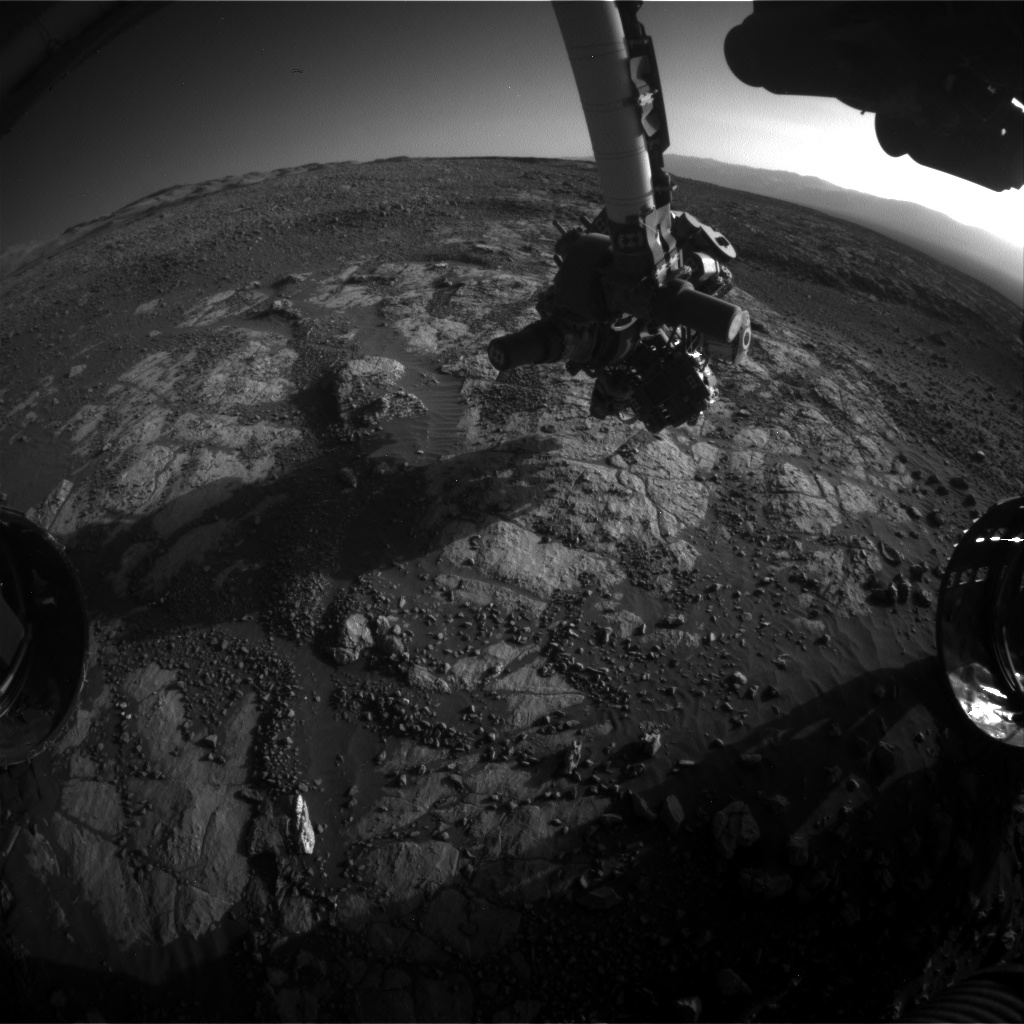
Curiosity Front Hazcam Right B image acquired on Sol 1984, March 6, 2018.
Credit: NASA/JPL-Caltech
“It is still used because of its simplicity…you can buy a kit with each of the representative minerals and try using them to scratch the mineral that you want to test. However, for quantitative measurements, most studies use the Vickers scale, which was defined 100 years ago and is reported in kilogram per square millimeter. It is traditionally measured by the size of the indentation left from a diamond tip with a given force applied,” Wiens says.
Back to driving
Meanwhile, back on Mars, Curiosity is now performing Sol 1985 tasks.
The robot is slated to drive away from it current hard-rock location, with the first drive since Sol 1962, planned to go backwards for almost 100 feet (30 meters) in a northeasterly direction.
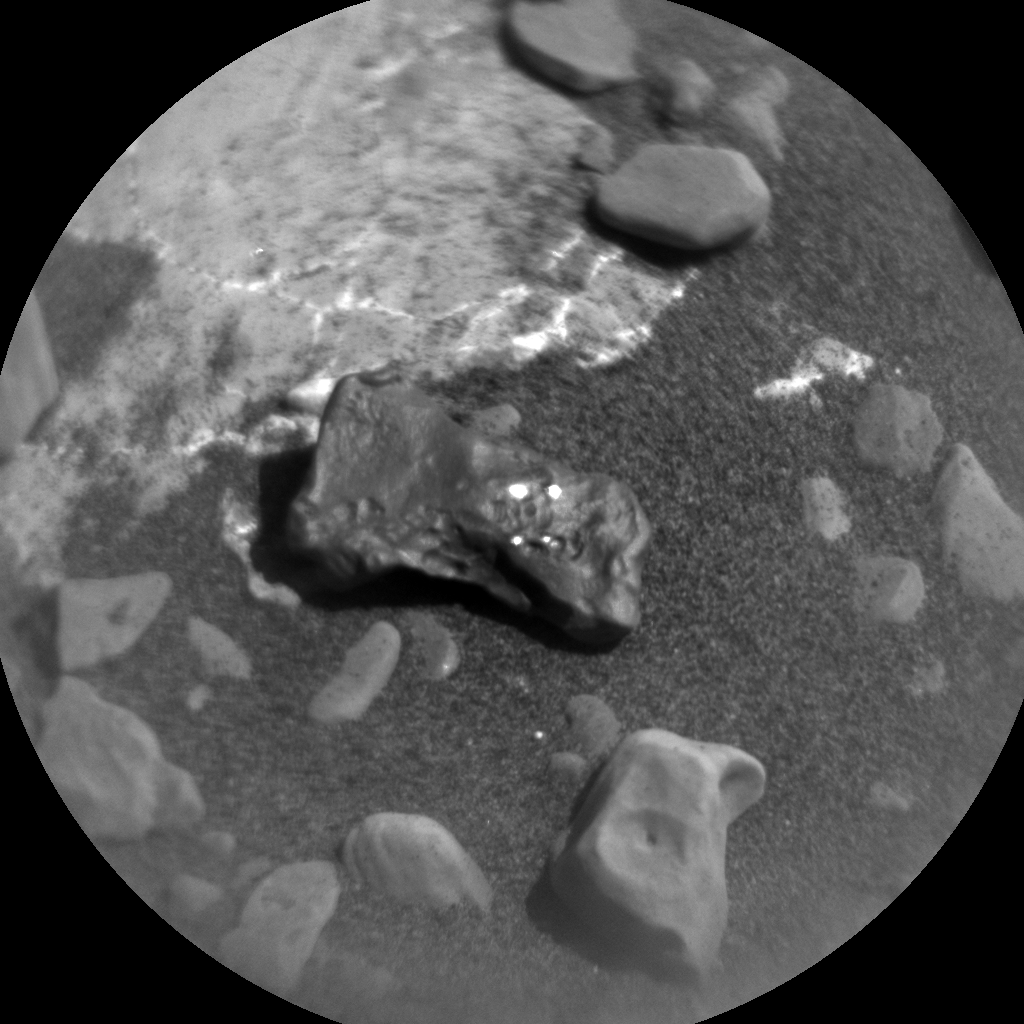
Curiosity’s Chemistry and Camera (ChemCam) Remote Micro-Imager took this photo of meteorite, “Ben Nevis_2” – a small iron clast with four bright glints, which are sunlight reflections off the metal made bare by previous ChemCam laser shots. Image taken on March 3, 2018, Sol 1981.
Credit: NASA/JPL-Caltech/LANL
Meteorite observations
“Prior to leaving this site, ChemCam and Mastcam will make one more observation each of a meteorite, “Ben Nevis_2” – a small iron clast with four bright glints, which are sunlight reflections off the metal made bare by previous ChemCam laser shots,” Wiens reports.
Also on the plan, Curiosity’s Mastcam will make crater rim extinction and basic tau (atmospheric visibility) observations. After the drive Mastcam, Hazcam, and Navcam will document the new rover surroundings.
Mt. Sharp mosaic
Navcam will take a zenith movie and a 360 degree observation. Mastcam will also take a clast survey image, and ChemCam will take a remote micro-imager (RMI) mosaic of the Yardang portion of Mt. Sharp.
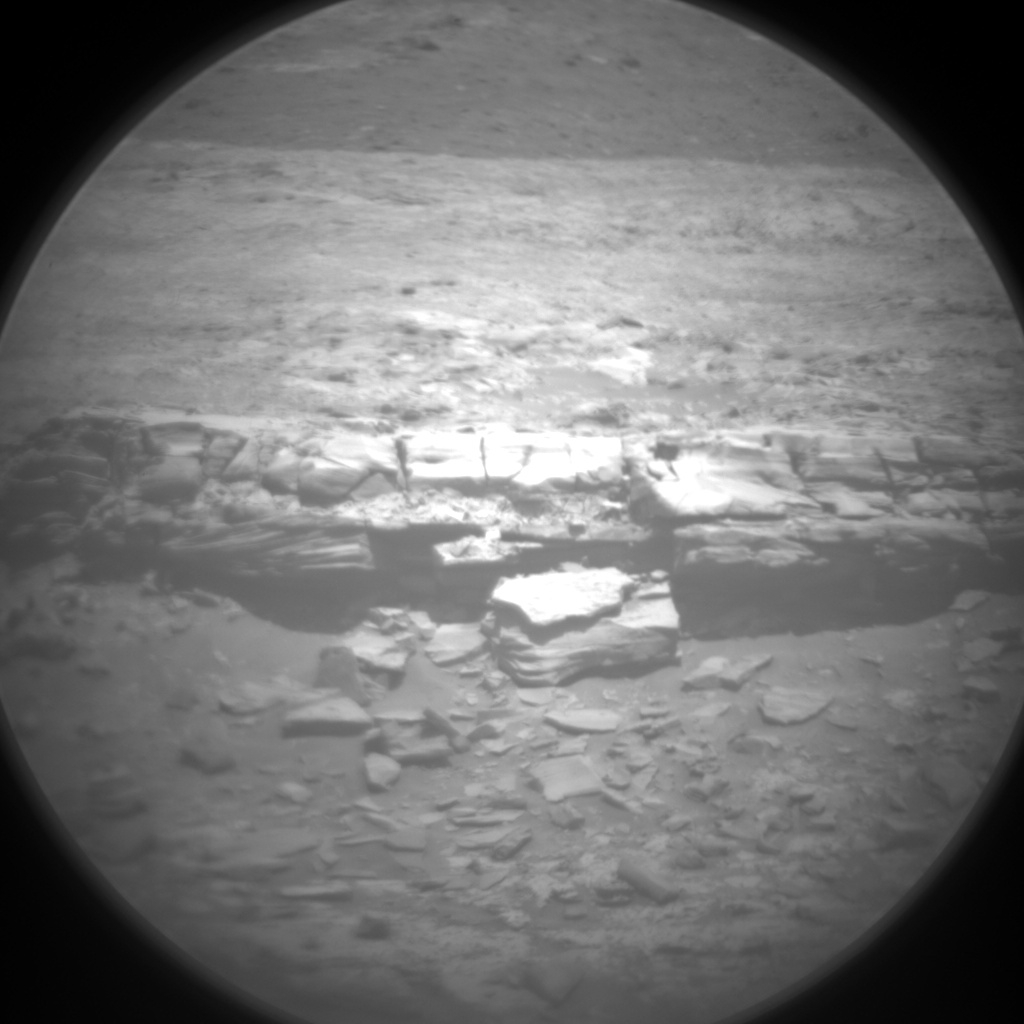
ChemCam Remote Micro-Imager photo taken on Sol 1984, March 6, 2018.
Credit: NASA/JPL-Caltech/LANL
Wiens says that use of and will use Autonomous Exploration for Gathering Increased Science (AEGIS) software to select an outcrop target near the rover for chemical analysis.
Lastly, the rover’s Dynamic Albedo of Neutrons (DAN), Mars Descent Imager (MARDI), Radiation Assessment Detector (RAD), and Rover Environmental Monitoring Station (REMS) will also take data.

Credit: ASU/Emerge
Welcome to Luna City, a bustling metropolis on the Moon in the year 2175.
Arizona State University (ASU) in Tempe is offering an off-world experience via Emerge – a free art, science and technology festival that explores the future in evocative ways through an annual public event.
Emerge will transform the state-of-the-art Galvin Playhouse on ASU’s Tempe campus into a rich, immersive experience grounded in space-science research and the inspirational vision of the group’s Writer at Large, Kim Stanley Robinson.
Hear, touch and play
According to the Luna City website, come see, hear, touch and play the future in their unfolding story of human habitation beyond Planet Earth!
“Luna City’s singular history and authentic reality is a synthesis of art and space science, your gateway into a complex vision of a human future lived in a place separate from yet intimately connected with our own.”
This immersive experience is available March 17-18.

Credit: NASA
Commonplace commons
In this 2018 festival ideas about “habitat” are explored, in the form of an immersive visit to a Moon habitation, Luna City.
The intent of the effort is to curate a set of experiences that create a rich multi-threaded texture of the alien-yet-familiar world of human life
in Luna City in the year 2175, a life in which living in space and on other planets has become commonplace.
For more information on this event, a guided tour of a Luna City neighborhood, as well as a live podcast recording by Eric Molinsky, host of Imaginary Worlds, and a presentation from Writer At Large, Kim Stanley Robinson, go to:

