Author Archive
 Author:
  March 29th, 2018
MVP patch
Credit: Techshot
Next week, SpaceX is scheduled to launch the 14th Commercial Resupply Services flight to the International Space Station (ISS) via the Dragon spacecraft on a Falcon 9 rocket.
On board this flight will be a number of payloads, including the Multi-use Variable-gravity Platform, or MVP for short.
MVP, with its ability to provide fractional artificial gravity, some experiments are expected to help scientists understand more about how much gravity is enough to maintain crew health in space, on the Moon and on Mars.

Prototype Techshot MVP with door detached and two internal carousels partially removed.
Credit: Techshot
Commercially operated facility
Developed by Techshot of Greenville, Indiana, the MVP is a permanent, commercially operated facility onboard the ISS capable of producing artificial gravity in space.
This new research tool in space, spinning at varying gravity levels, can involve a wide variety of sample types – such as tissue chips, plants, fish, cells, protein crystals, worms and flies.
Roughly, the size of a microwave oven, MVP hosts six separate “experiment modules” on each of two internal carousels.

Prototype drosophila_experiment module
Credit: Techshot
Up to 2g
This new research platform is equipped with temperature, light cycle, and humidity control, video feed from inside the hardware, and the two identical and independently-controlled centrifuges that can generate artificial gravity from .1 to 2g.
Experiment modules launch separately in cargo resupply vehicles and are installed by the crew in MVP once they reach the station. Each is customized to accommodate the sample type and experiment protocol of a given research campaign.
Fruit fly flavored
The first experiment launching on the upcoming SpaceX CRS-14 will focus on Drosophila melanogaster (fruit flies). Known as MVP-Fly-01, this first campaign using the system will be conducted for a research team at NASA Ames Research Center in Mountain View, California.

Credit: NASA Ames
The MVP payload is sponsored by the ISS National Laboratory (managed by the Center for the Advancement of Science in Space) focusing on life sciences, biotech, and new facilities to engage further utilization of the ISS National Laboratory.
With NASA’s renewed focus on a return to the Moon, scientists need to better understand how much gravity is enough for human crews to remain healthy while living on the lunar surface. Research using the commercially developed, owned and operated Techshot Multi-use Variable-g Platform (MVP) is expected to help answer that question.
Go to this informative video at:
https://www.youtube.com/watch?time_continue=13&v=2AVvglUaa2g
 Posted in
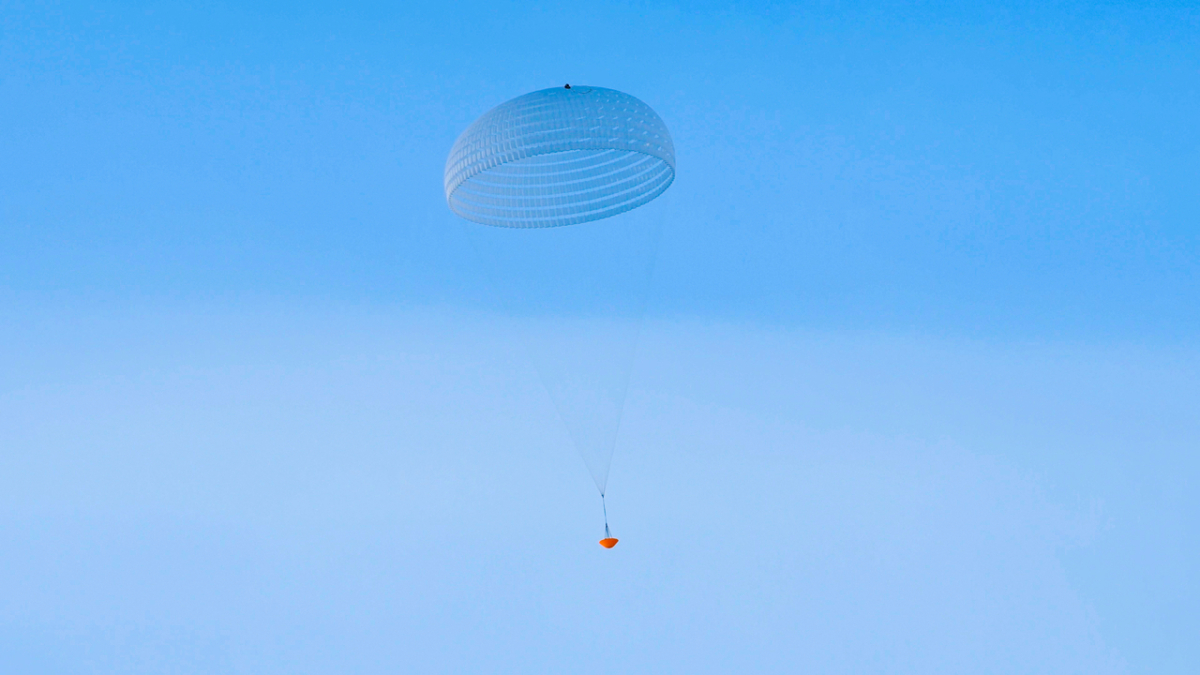
ExoMars parachute inflation.
Credit: ESA/I.Barel
The largest parachute ever to fly on a Mars mission is undergoing a series of tests for the European Space Agency’s ExoMars mission.
ESA’s ExoMars is due for launch in July 2020, with arrival at Mars in March 2021.
Inflation factor
The latest test was conducted in sub-zero conditions in Kiruna, Sweden earlier this month. The test focused on the deployment and inflation of the 115 feet (35 meters)-wide parachute, which will be the largest to fly on Mars.

Credit: ESA
The test demonstrated the deployment and inflation of the parachute with its 112 lines connected to a drop test vehicle, via the deployment of a smaller pilot chute. The assembly was lofted high above the ground with a helicopter, and the sequence initiated after the vehicle was released. About 12 seconds after the pilot chute was inflated, the second parachute release was triggered.
GoPro cameras on the test vehicle looked up at the parachute inflation, and onboard equipment sent telemetry in real time as it descended in about two and a half minutes to the ground.

Artist’s impression of the ExoMars 2020 rover and Russia’s stationary surface platform in background.
Credit:
ESA/ATG medialab
First of its kind
The ExoMars rover will be the first of its kind to drill below the surface and determine if evidence of life is buried underground, protected from the destructive radiation that strikes the surface of the Red Planet today.
A carrier module will transport the rover and a science platform to Mars within a single aeroshell. A descent module will separate from the carrier shortly before reaching the atmosphere, whereupon a heatshield, parachutes, thrusters and damping systems will reduce the speed, delivering them safely to the surface.
Program support
The ExoMars program is a joint endeavor between ESA and Russia’s Roscosmos.
The low-altitude test of the large parachute manufactured by Arescosmo was carried out by Vorticity Ltd at the Swedish Space Corporation Esrange facility. The test was performed under supervision of Thales Alenia Space France as responsible for the Parachute Assembly System, Thales Alenia Space Italy as the ExoMars Prime contractor, and ESA.
To view ESA video on the parachute testing, go to:
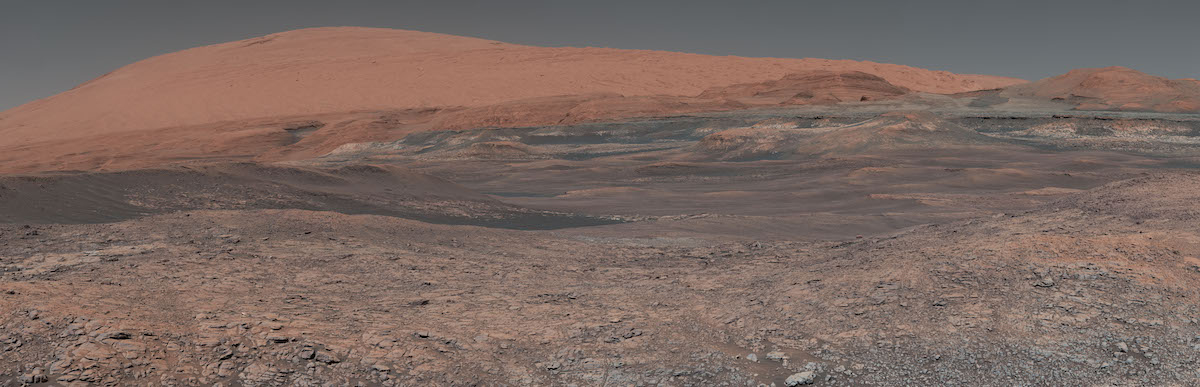
This mosaic taken by NASA’s Mars Curiosity rover looks uphill at Mount Sharp, which Curiosity has been climbing. Spanning the center of the image is an area with clay-bearing rocks that scientists are eager to explore; it could shed additional light on the role of water in creating Mount Sharp.
Credit: NASA/JPL-Caltech/MSSS
NASA’s Mars Curiosity rover is just starting to perform Sol 2006 science tasks.
“Squarely in the red,” explains Christopher Edwards, a planetary geologist from Northern Arizona University in Flagstaff, saying the rover in a special spot.
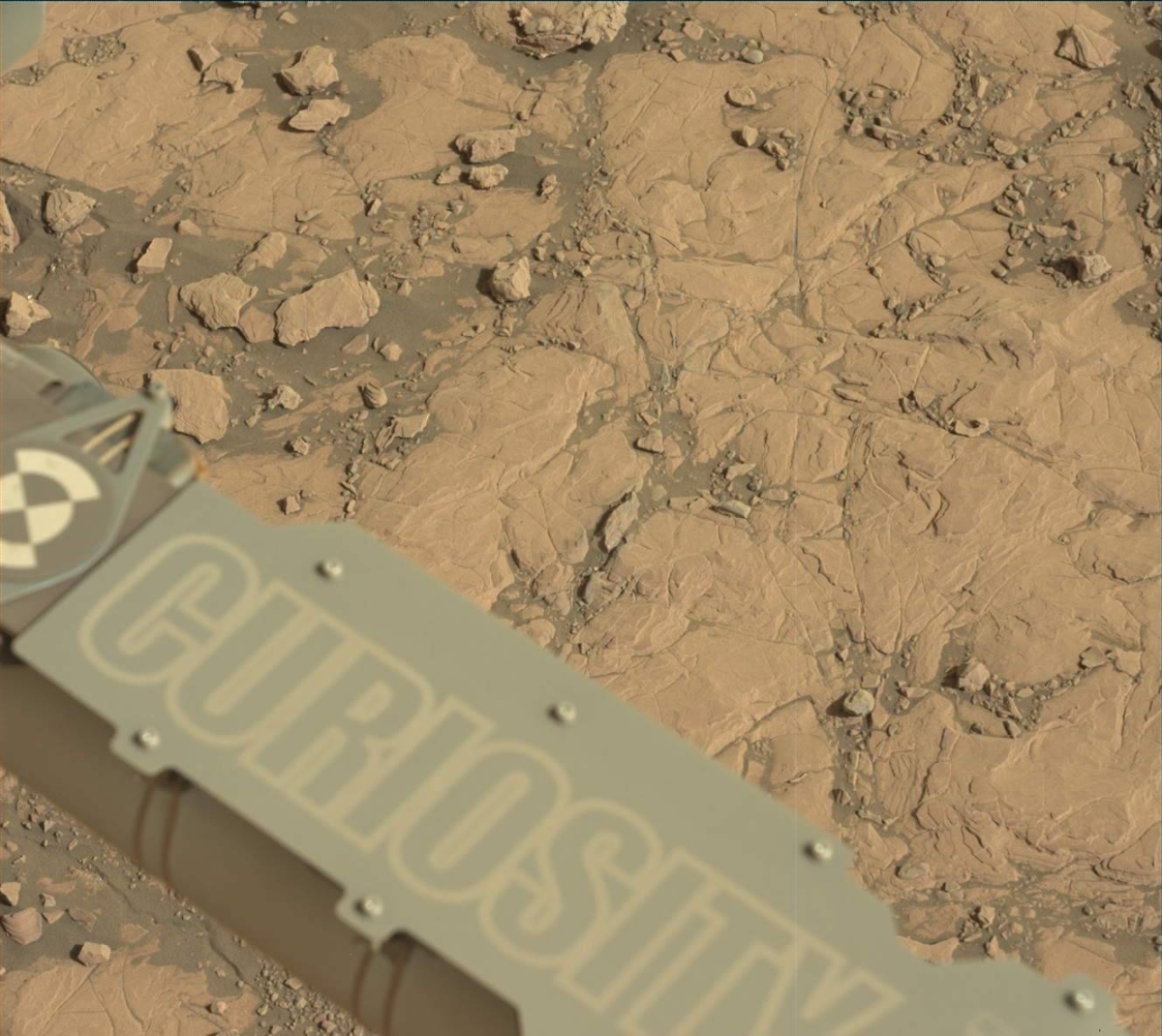
Curiosity Mastcam Left image taken on Sol 2004, March 27, 2018.
Credit: NASA/JPL-Caltech/MSSS
Scouting for hematite
After the robot completed a drive of nearly 180 (55 meters) drive, “Curiosity found itself sitting right in the middle of the strongest spectral detection of hematite identified along its path up Mt. Sharp,” reports Edwards.
“This strong spectral signature” is viewed both from orbit, where it was originally identified in the Mars Reconnaissance Orbiter’s Compact Reconnaissance Imaging Spectrometer data, and at ground level in the rover’s Mastcam multispectral data, Edwards observes.
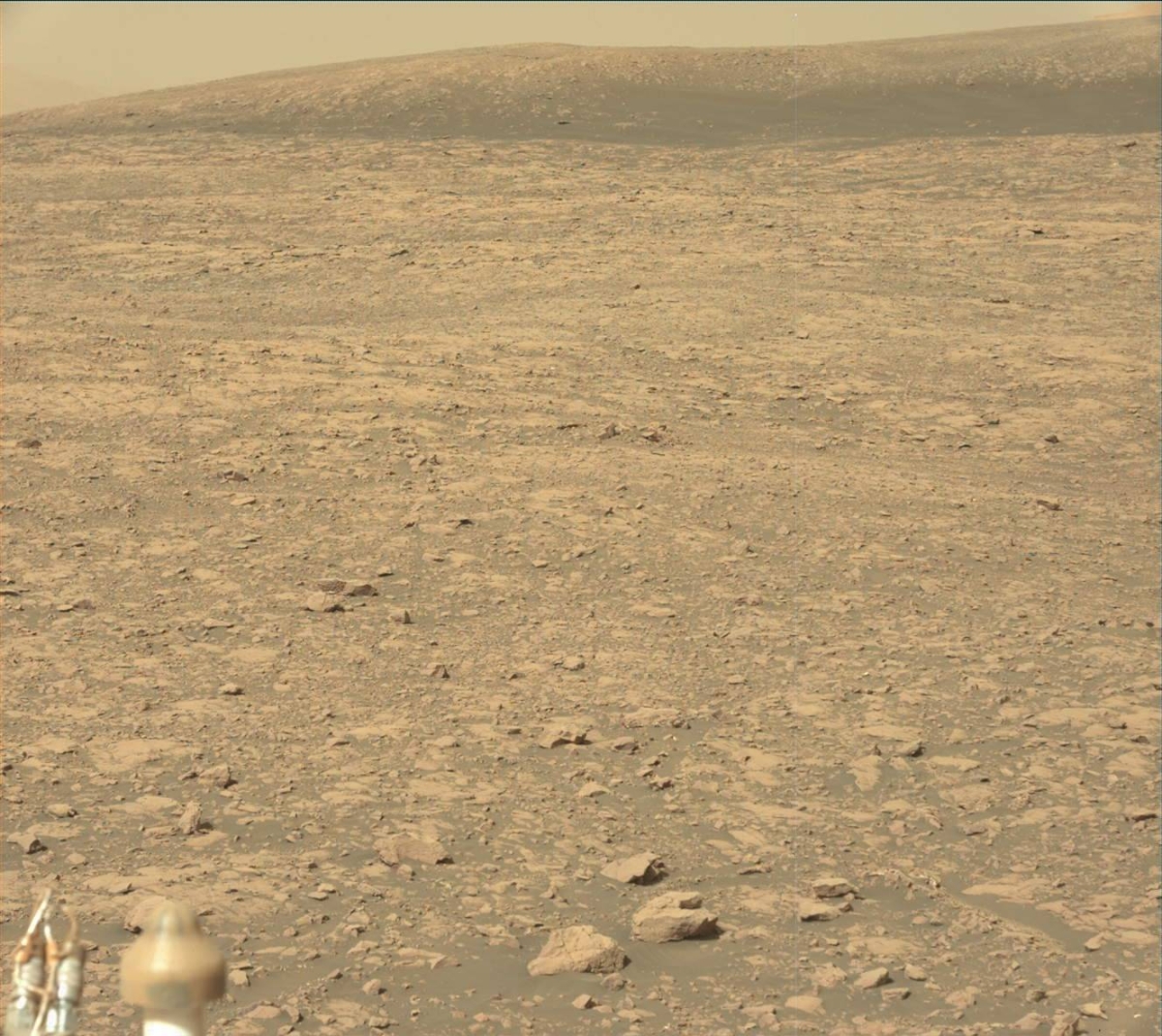
Curiosity Mastcam Left photo acquired on Sol 2004, March 27, 2018.
Credit: NASA/JPL-Caltech/MSSS
Current parking lot
“While Curiosity has definitely visited some areas that have the spectral fingerprint of hematite in previous sols, this is by far the best example we’ve seen over the mission,” Edwards adds. The rover science team is still trying to figure out “how this mineral formed and why we’re finding it where we are.”
Curiosity’s current parking spot will likely prove key to unraveling the geologic history of the Vera Rubin Ridge, when combined with other data acquired in Gale Crater, Edwards points out.
The rover has been busy and the science team now has a fabulous workspace to examine, Edwards notes.
Unique experiment
Two contact science targets (“Stranraer” and “Murchison”) were chosen to help examine the variability in chemistry related to different targets identified in color Mastcam data.
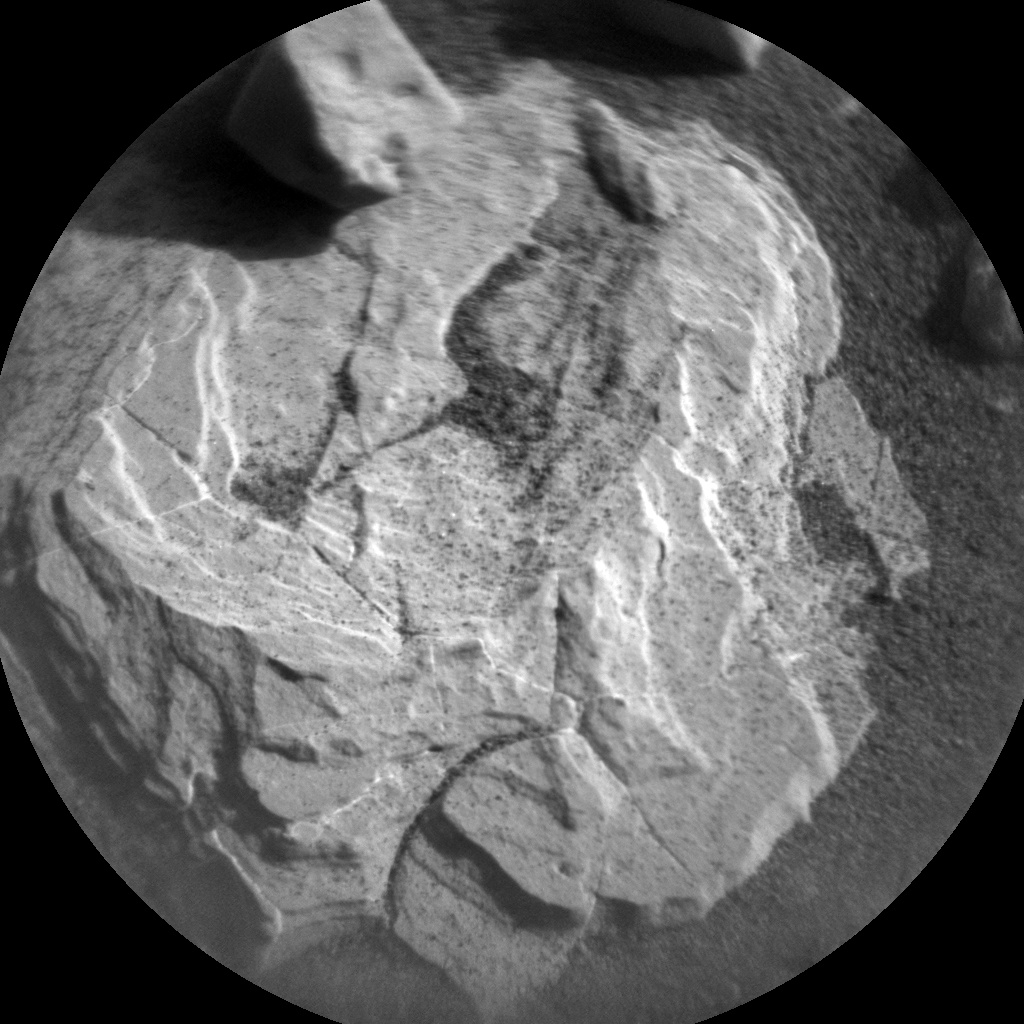
Curiosity ChemCam Remote Micro-Imager photo taken on Sol 2004, March 27, 2018.
Credit: NASA/JPL-Caltech/LANL
“For example, the Murchison target appears to be darker red than some of the other rocks like the Stranraer target. A unique experiment with Mastcam was designed to characterize the light scattering properties of the unit by taking 7 different observations over the course of the day,” Edwards reports.
Lastly, Curiosity’s Mastcam is slated to observe how the same spot on the surface changes its reflectivity properties with changing illumination, Edwards concludes, with the goal of providing insights into the nature of the hematite itself.
Credit: NASA/JPL-Caltech/Univ. of Arizona
New road map
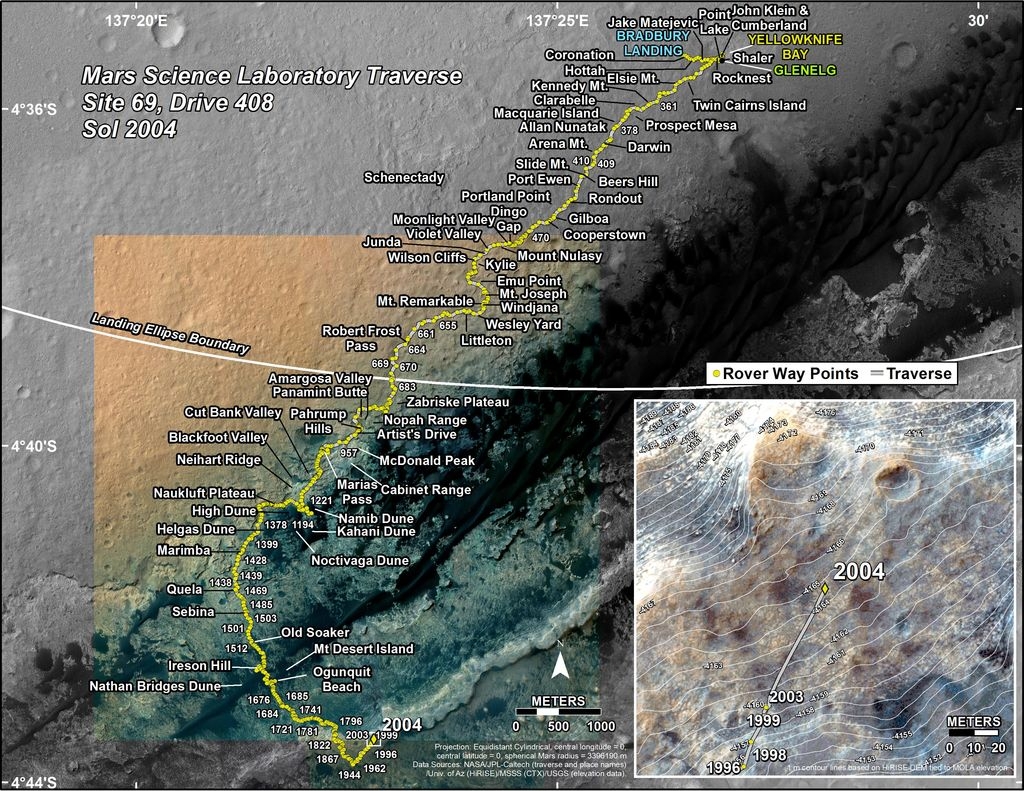
Meanwhile, a new traverse map for Curiosity’s whereabouts has been issued, through Sol 2004.
The map shows the route driven by NASA’s Mars rover Curiosity through the 2004 Martian day, or sol, of the rover’s mission on Mars (March 28, 2018).
Numbering of the dots along the line indicate the sol number of each drive. North is up. The scale bar is 1 kilometer (~0.62 mile).
From Sol 2003 to Sol 2004, Curiosity had driven a straight line distance of about 178.15 feet (54.30 meters), bringing the rover’s total odometry for the mission to 11.51 miles (18.53 kilometers).
The base image from the map is from the High Resolution Imaging Science Experiment Camera (HiRISE) in NASA’s Mars Reconnaissance Orbiter.
Credit: The Aerospace Corporation/CORDS
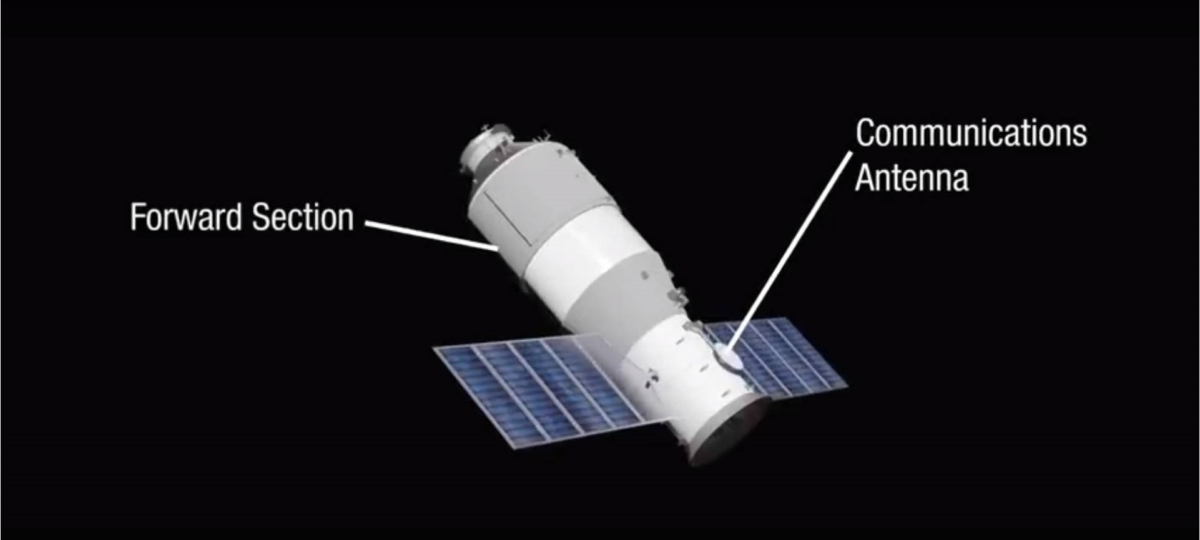
China’s Tiangong-1 space lab is headed for an uncontrolled and destructive nose-dive into Earth’s atmosphere. Latest reentry forecast provided by ESA’s Space Debris Office, in Darmstadt, Germany, updated March 27, 2018:
The current estimated reentry window runs from the morning of March 31 to the early morning of April 2 (in UTC time), with ESA’s office noting this is highly variable.
Heavenly Palace – 1
Launched atop a CZ-2F booster from the Jiuquan Satellite Launch Center on September 29, 2011, the 8.5 ton Tiangong-1 – meaning “Heavenly Palace 1″ – served as China’s first space station and was used as a target vehicle for three rendezvous and docking missions between November 2011 and June 2013.
For several years, Tiangong-1 underwent switches in its flying mode, orbit maintenance maneuvers, and other activities.
According to the China Manned Space Engineering Office (CMSE) the space lab in left-alone mode was outfitted with payloads such as Earth observation instrumentation and space environment detectors.
For more information, go to my new Space.com story at:

Tiangong-1 churned out “hyperspectral” imaging products, collecting information from across the electromagnetic spectrum.
Credit: Technology and Engineering Center for Space Utilization
China’s Doomed Space Station Did Some Science Work, Too
https://www.space.com/40108-china-space-station-tiangong-1-science-work.html
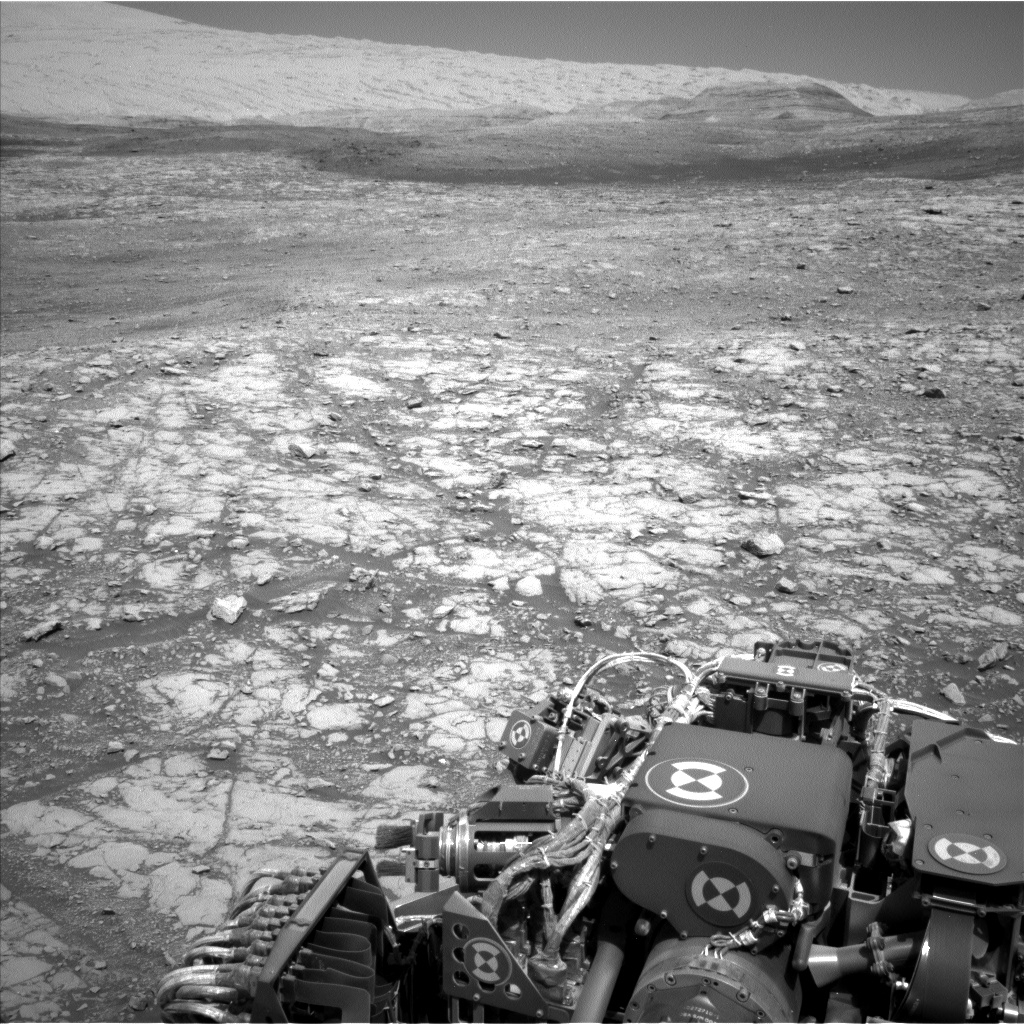
Curiosity Navcam Left B image taken on Sol 2004, March 27, 2018.
Credit: NASA/JPL-Caltech
NASA’s Curiosity Mars rover is now performing Sol 2005 duties.
Reports Abigail Fraeman, a planetary geologist at NASA/JPL in Pasadena, California: A weekend drive stopped after just a few meters due to a high current warning from Curiosity’s right middle wheel.
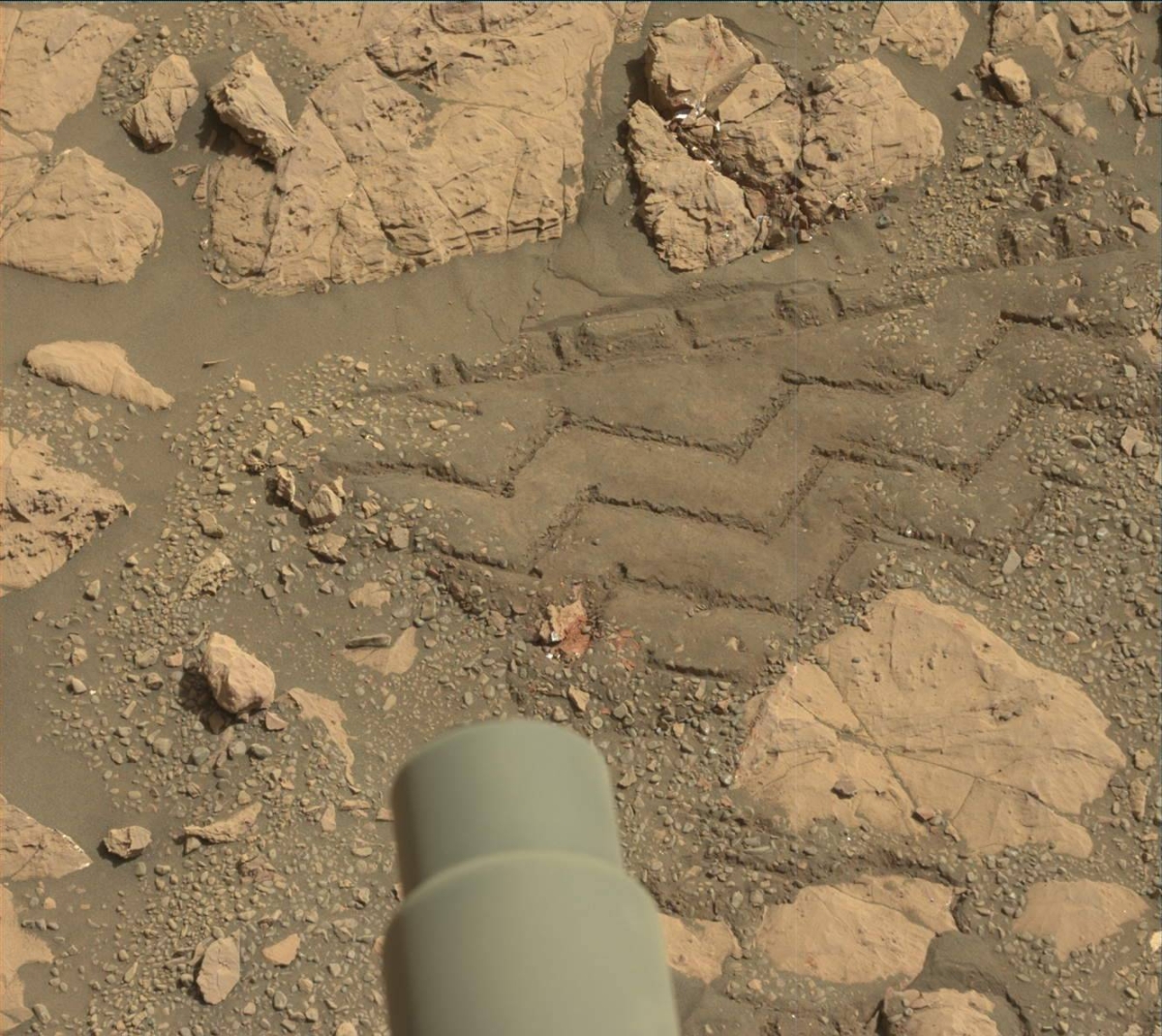
Curiosity Mastcam Left photo acquired on Sol 2003, March 26, 2018.
Credit: NASA/JPL-Caltech/MSSS
“We were able to assess all of the drive data this morning and decided there wasn’t any real risk to the vehicle. Instead, we just got unlucky because the combination of a small rock and the rover orientation made the middle wheel work a little harder than normal, and this tripped the limit warning,” Fraeman adds. “These things happen occasionally when you are autonomously driving a MINI-cooper sized rover on an entirely different planet!”
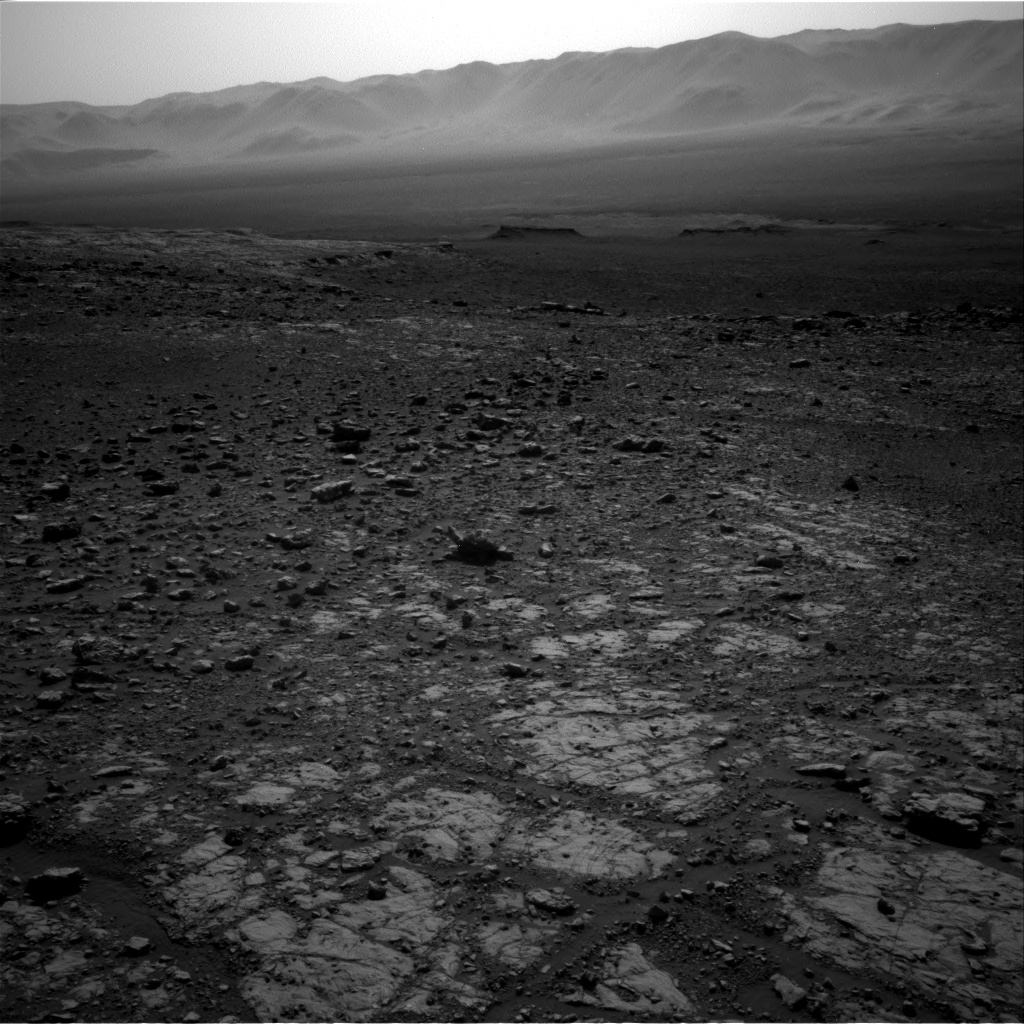
Curiosity Navcam Right B image acquired on Sol 2004, March 27, 2018.
Credit: NASA/JPL-Caltech
Next drive
A new plan was scripted featuring a rover drive that was planned for the weekend.
“We will start by backing up from the area where the weekend drive faulted out, and then continue along our original planned path from the weekend,” Fraeman explained.
Curiosity planning included a very short science block before the drive.
Brick-red rock
Also on tap, investigation of a brick-red rock, “Mousa,” that was turned up by the rover’s wheel using the rover’s Chemistry and Camera (ChemCam) and Mastcam multispectral data.
Additionally, the plan called for taking a high resolution Mastcam image of a rock with an interesting texture named “Duncansby Head.”
After the robot’s drive, on the to-do list is taking post-drive images and use of the AEGIS software, or Autonomous Exploration for Gathering Increased Science.
Concludes Fraeman: “We are headed to the area on the [Vera Rubin] ridge where we see the clearest orbital signature of hematite. I wonder if the bright red rocks at our feet are an indicator of things to come?”
Credit: NASA/JPL-Caltech/Univ. of Arizona
Road map
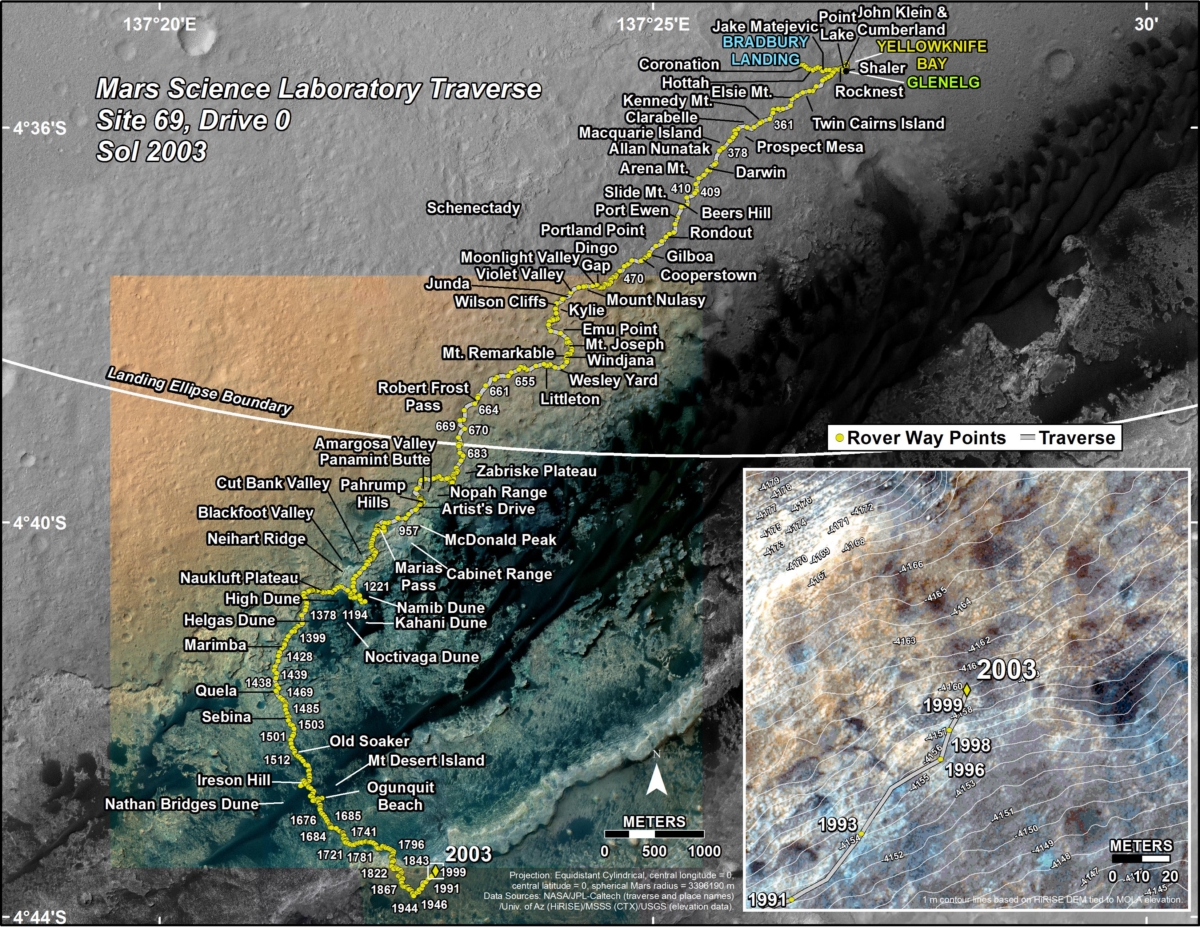
Meanwhile, a new Curiosity traverse map has been issued through Sol 2003.
The map shows the route driven by Curiosity through the 2003 Martian day, or sol, of the rover’s mission on Mars (March 26, 2018).
Numbering of the dots along the line indicate the sol number of each drive. North is up. The scale bar is 1 kilometer (~0.62 mile).
From Sol 1999 to Sol 2003, Curiosity had driven a straight line distance of about 0.37 feet (0.11 meters), bringing the rover’s total odometry for the mission to 11.48 miles (18.47 kilometers).
The base image from the map is from the High Resolution Imaging Science Experiment Camera (HiRISE) in NASA’s Mars Reconnaissance Orbiter.
Credit: OSTP
The White House Office of Science and Technology Policy (OSTP) has released a new report: Protecting & Preserving Apollo Program Lunar Landing Sites & Artifacts.

Credit: NASA
Recommendations
— The National Aeronautics and Space Administration, the Department of State, and other interested Departments and Agencies, with guidance from the National Space Council, should strategically look for opportunities to leverage lunar missions by and with other Governments and commercial entities to assist in preserving and protecting Apollo lunar artifacts. This effort should also include investigating opportunities to partner on missions with various entities to observe the effect of the lunar environment on different materials used in Apollo lunar artifacts and the artifacts of other States.
— The National Aeronautics and Space Administration, in coordination with the United States Department of State and other interested Departments and Agencies and with guidance from the National Space Council, and other relevant U.S. entities should continue discussions regarding lunar heritage site preservation with foreign space agencies, as appropriate. This effort should include discussion of rights and responsibilities in the 1967 Outer Space Treaty as well as opportunities and challenges shared by space-faring and emerging space countries. Fora for these discussions include the annual International Astronautical Congress, future International Space Exploration fora, the International Space Exploration Coordination Group, the United Nations Committee on the Peaceful Uses of Outer Space, and other multilateral and bilateral meetings.
— The United States Department of State, the National Aeronautics and Space Administration, and other interested Departments and Agencies, with guidance from the National Space Council, and other relevant U.S. entities should investigate the feasibility of working with the international community to develop non-binding best practices for preserving and protecting lunar artifacts on a “reciprocal, transparent, and mutually beneficial” basis.
— The National Aeronautics and Space Administration, Department of State, and other interested Departments and Agencies, with guidance from the National Space Council, and other relevant U.S. public and private entities, should discuss the pros and cons of beginning international dialogue on the best ways to mitigate risks presented by future human and robotic exploration to the lunar artifacts of the United States and other countries.
The report is available at:
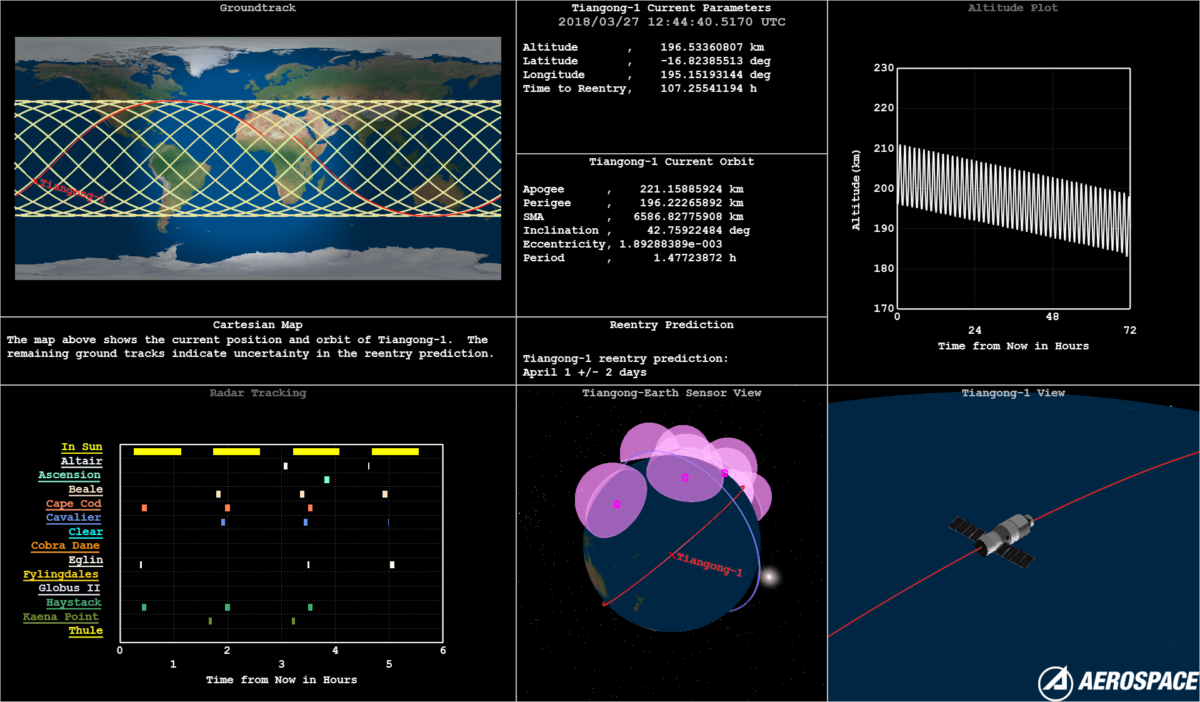
Credit: The Aerospace Corporation/CORDS
The Aerospace Corporation’s Center for Orbital and Reentry Debris Studies (CORDS) is making available a reentry dashboard specific to the upcoming fall of China’s Tiangong-1 space lab.
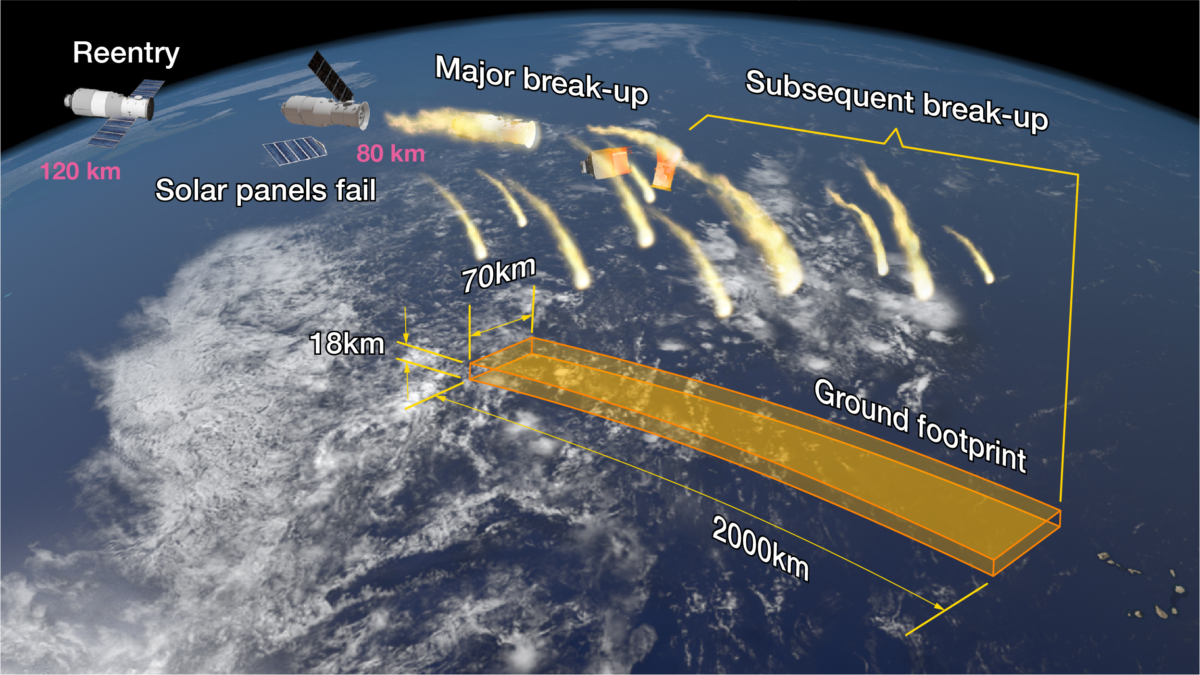
Credit: The Aerospace Corporation/CORDS
Tiangong-1 is now currently predicted to reenter the Earth’s atmosphere around April 1st, plus or minus 2 Days. This prediction was performed by The Aerospace Corporation/CORDS on March 26.
To use the dashboard, go to:
http://www.aerospace.org/cords/reentry-predictions/tiangong-1-reentry/
Note: (Click on image to view full-size image. Image updated every few minutes. You may need to click on the image and hit refresh in your browser to see the latest image.)
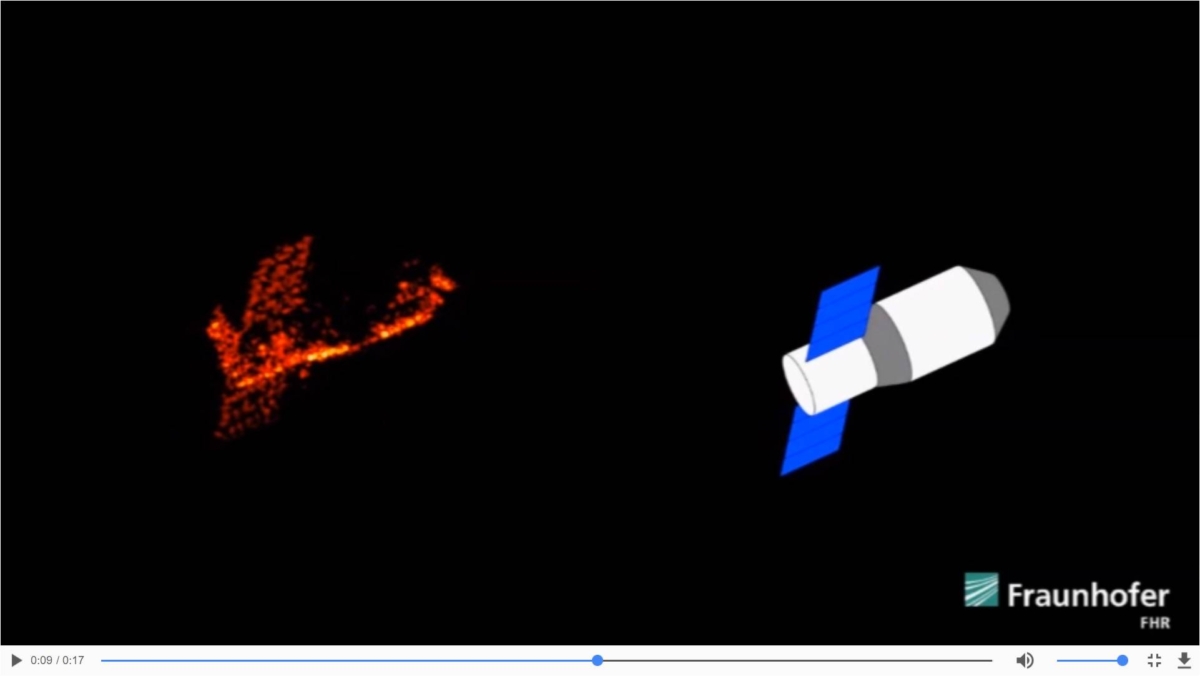
Credit: Fraunhofer FHR
Radar love
Meanwhile, radar specialists at the Fraunhofer FHR in Wachtberg near Bonn, Germany have been monitoring China’s soon-to-reenter Tiangong-1 space lab for a number of weeks with their TIRA (Tracking and Imaging Radar) system. It’s one of the most powerful space observation radars in the world. They are supporting the German Space Situational Awareness Center (WRLageZ) and the European Space Agency with their re-entry forecasts.
Just released radar imagery indicates the Tiangong-1’s rotation speed has increased.
Go to this video view at:
https://mobile.twitter.com/Fraunhofer_FHRe/status/978616595609157635/video/1

Artist’s view of the James Webb Space Telescope (JWST) in space, up and operating tackling a full agenda of space science conquests.
Credit: Northrop Grumman
NASA is hosting a media teleconference on the status of the James Webb Space Telescope (JWST) at 11:30 a.m. EDT Tuesday, March 27.
This update is expected to provide new information regarding delays in launching JWST – what will be the world’s premier infrared space observatory and the largest astronomical science telescope ever built for in-space duties. It is slated to be lofted by Europe’s Ariane-5 booster.
Audio of the call will stream live at this site:
Integration delays
NASA has previously announced that JWST’s launch would be delayed several months, from October 2018 to no later than June 2019, because components of the telescope are taking longer to integrate than planned.

JWST’s combined science instruments and optical element recently completed 100 days of thermal vacuum testing inside NASA Johnson Space Center’s Chamber A. Engineers are seen by the hardware shortly after it emerged from the huge test facility on December 1, 2017.
Credit: NASA/Chris Gunn
Based on the amount of work NASA has to complete before JWST is ready to launch, it’s likely the launch date will be delayed again. If that happens, the project will be at risk of exceeding the $8 billion cost cap set by Congress.
The project’s Standing Review Board recently conducted an independent review of JWST’s schedule status in early 2018 to determine if the June 2019 launch window can be met.
Briefing participants
The briefing participants are:
Acting NASA Administrator Robert Lightfoot; Associate Administrator of NASA’s Science Mission Directorate (SMD) Thomas Zurbuchen; and Deputy Associate Administrator of SMD, Dennis Andrucyk.
Background resources
To read a recent Government Accountability Office (GAO) review of JWST, go to this Highlights Page at:
https://www.gao.gov/assets/700/690412.pdf
The Full Report can be found at:
https://www.gao.gov/assets/700/690413.pdf
Also, take a look at my Scientific American story for details about the JWST:
Is the James Webb Space Telescope “Too Big to Fail?” – Backers of NASA’s next great observatory contemplate its worst-case scenarios
https://www.scientificamerican.com/article/is-the-james-webb-space-telescope-too-big-to-fail/
For a video look at JWST, go to the Northrop Grumman overview published on Jan 24, 2017 at:

Vehicle overview: Falcon 1, Falcon 9, Falcon Heavy and BFR.
Credit: SpaceX
Elon Musk, CEO and Lead Designer at SpaceX, presents the updated design for the Big Falcon Rocket (BFR), in a summary article published in New Space, a peer-reviewed journal from Mary Ann Liebert, Inc., publishers.
The article is available free on the New Space website.
The article is a summary of Musk’s presentation at the 68th International Astronautical Congress.
Business case
Musk not only provides details on the BFR’s updated design but, importantly, presents a plan for how to pay for it. He describes the development of a huge carbon fiber tank that is capable of holding the cryogenic liquid oxygen needed to fuel the rocket, and the key to the SpaceX business case, how on orbit refueling will take place.
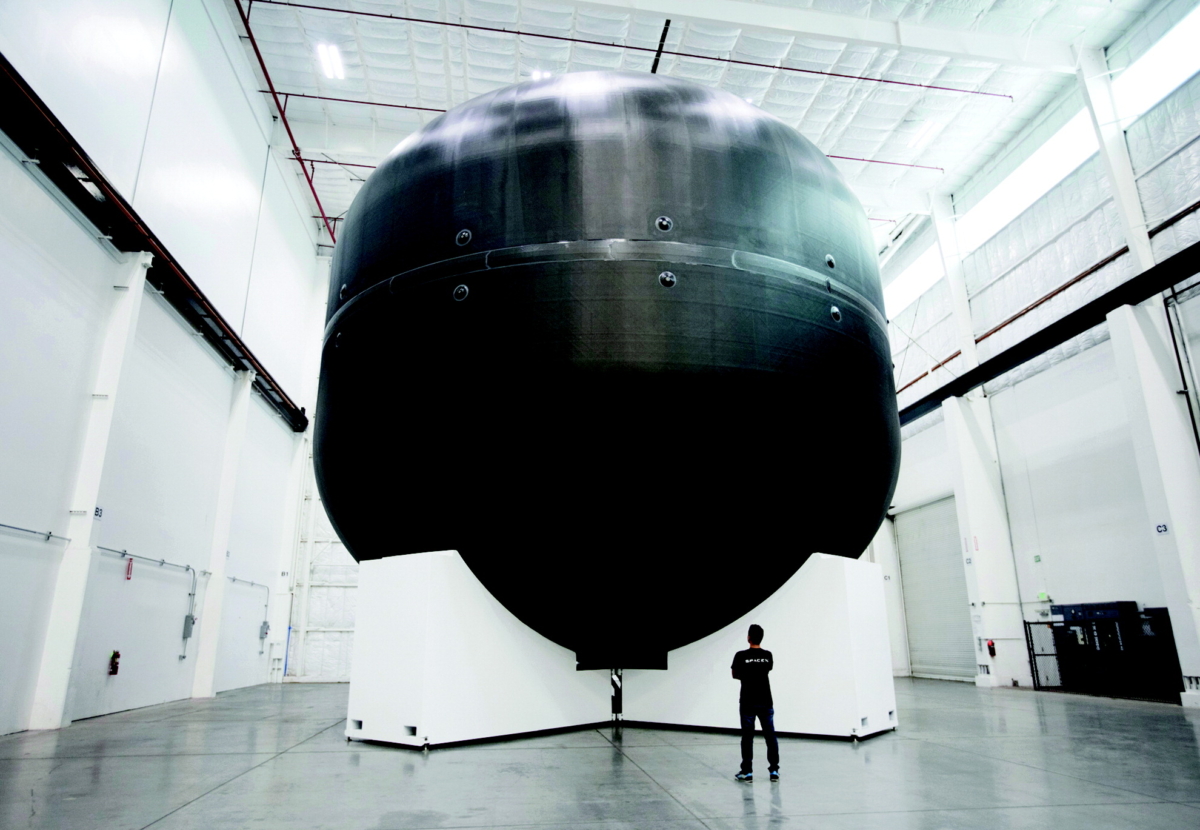
Deep cryo liquid oxygen tank developed by SpaceX.
Credit: SpaceX
The article also reports on progress toward perfecting propulsive landing and achieving rendezvous and docking. Included is information on the changes to the vehicle as its design has evolved, and the dramatic differences in payload capabilities between previous and current versions of the vehicle and BFR designs.
Near-term science goals

BFR engines.
Credit: SpaceX
“Elon’s description of the Big Falcon Rocket, along with the stunning recent success of the Falcon 9 Heavy indicates just how far SpaceX has come in establishing the elements needed to dramatically lower the cost for deep space exploration,” says Editor-in-Chief Scott Hubbard, Stanford University.
“I look forward to seeing SpaceX contribute to human exploration as well as near-term science goals like the Mars Sample Return,” Hubbard adds in a statement.
To read “Making Life Multi-Planetary,” go to:
https://www.liebertpub.com/doi/pdf/10.1089/space.2018.29013.emu

U.S. President Donald Trump holds up the Space Policy Directive – 1 after signing it, directing NASA to return to the Moon, alongside members of the Senate, Congress, NASA, and commercial space companies in the Roosevelt room of the White House in Washington, Monday, Dec. 11, 2017.
Credit: NASA/Aubrey Gemignani
President Donald J. Trump has unveiled an “America First” National Space Strategy.
Under the rubric of “Infrastructure and Technology” the Fact Sheet was issued on: March 23, 2018.
“Our travels beyond the Earth propel scientific discoveries that improve our lives in countless ways here, right here, at home: powering vast new industry, spurring incredible new technology, and providing the space security we need to protect the American people.” – President Donald J. Trump
As outlined in the Fact Sheet, there are four pillars for a unified approach. “President Donald J. Trump’s new National Space Strategy drives a whole-of-government approach to United States leadership in space, in close partnership with the private sector and our allies, and is based on four essential pillars.
To read the White House Fact Sheet, go to:

