Author Archive
 Author:
  April 4th, 2018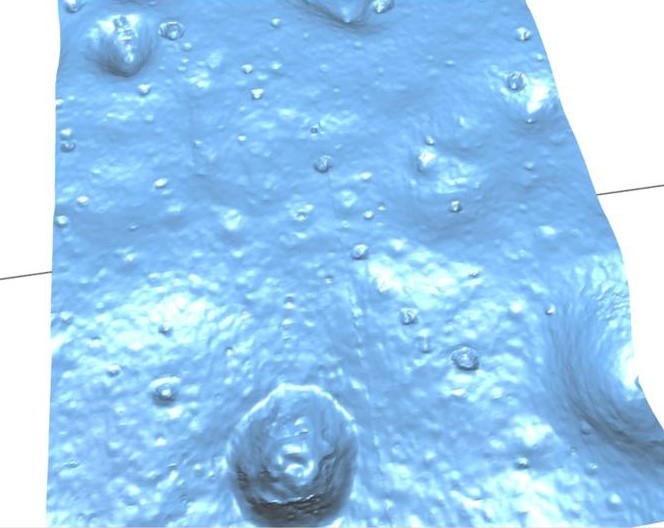
Apollo 11’s Eagle lunar lander touched down near the center of this model and its remaining descent stage can be seen and felt as a bump.
Credit: Jacob Richardson/NASA GSFC
3D print-ready models for every Apollo landing spot have been created for education outreach, data visualization, and scientific research.

Apollo 11 landing site.
Credit: NASA
Jacob Richardson, a planetary volcanologist at NASA’s Goddard Space Flight Center in Greenbelt, Maryland, has created the models.
Elevated fun
“I primarily print elevation models that show the real shape of a region of a planet or moon using real topographic data acquired from space or with laser mapping surveys that I’ve been a part of,” Richardson explains. “I’ve put models for every Apollo landing site… and the crust model of Mare Orientale up on my website.”

Jacob Richardson, a planetary volcanologist at NASA’s Goddard Space Flight Center in Greenbelt, Maryland.
Credit: Jacob Richardson
Also on the website is Ina D, the largest of the irregular mare patches on the Moon.
You can view each model and get more information about them at:
 Posted in
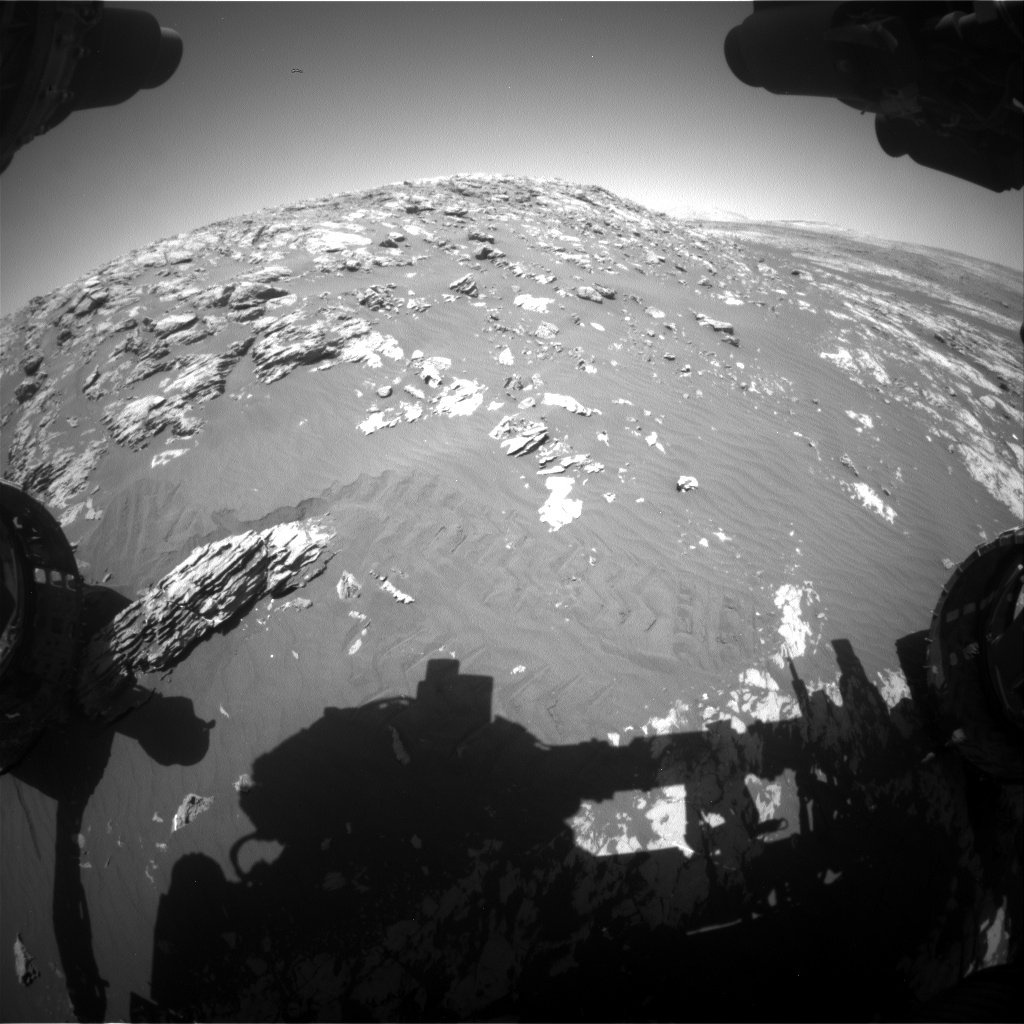
Curiosity Front Hazcam Right B image acquired on Sol 2011, April 3, 2018.
Credit: NASA/JPL-Caltech
“After the weekend drive, the [Curiosity] rover ended up in a spot that was a little too unstable to pass the Slip Risk Assessment Process (SRAP),” reports Ryan Anderson, a planetary geologist at the USGS in Flagstaff, Arizona.
Anderson adds that this means that there is a slight chance that the rover’s footing might shift if the robotic arm is extended, which is not ideal for the safety of Curiosity’s contact science instruments.
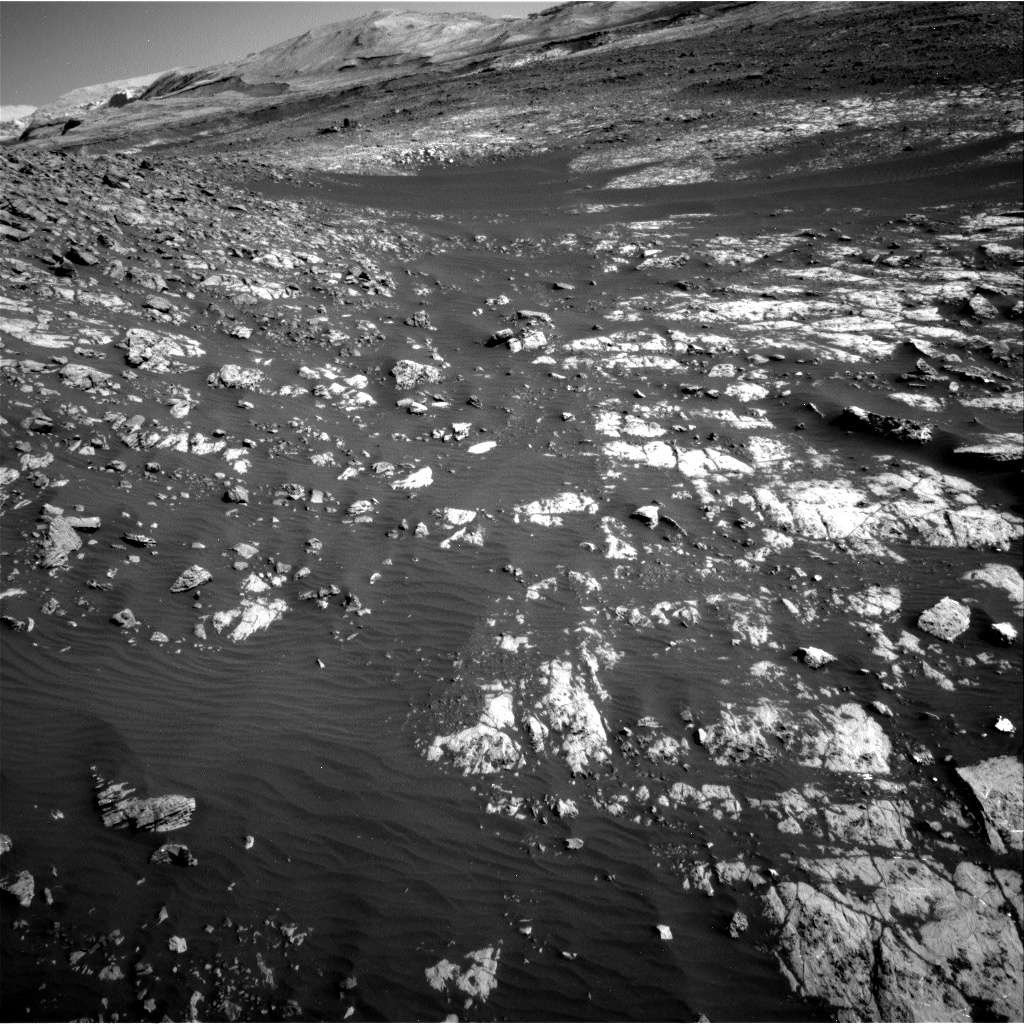
Curiosity Navcam Right B photo taken on Sol 2009, April 1, 2018.
Credit: NASA/JPL-Caltech
Making tracks
The Mars robot is now in Sol 2011 and the plan as scripted makes no use of the rover’s arm and instead focuses on remote sensing. “Take only pictures, leave only wheel tracks,” notes Anderson.
The rover is slated to start off with two Chemistry and Camera (ChemCam) Remote Micro-Imager (RMI) mosaics of the Peace Vallis alluvial fan on the crater floor.
“The air is clear right now, but is expected to get dusty later this season,” Anderson explains, “so it is important to get these very long distance images while we can.”
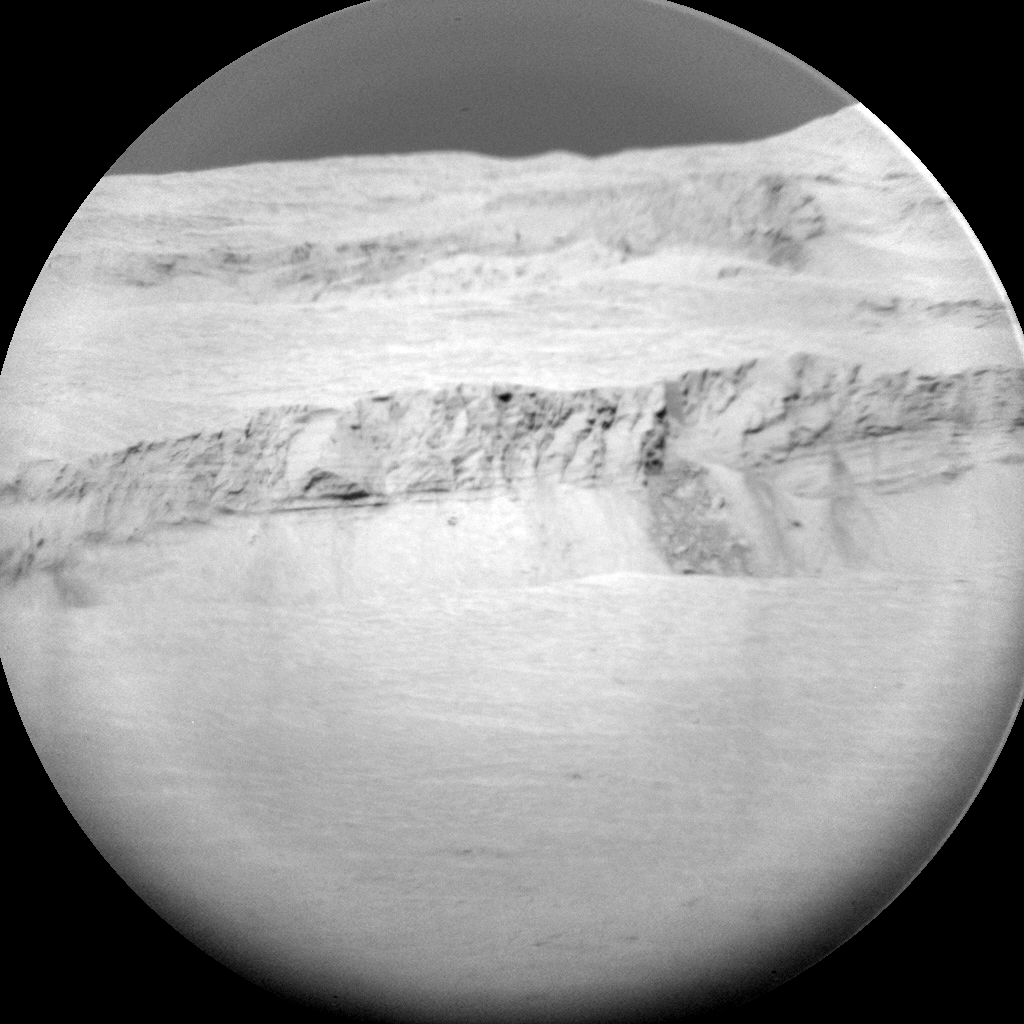
Curiosity ChemCam Remote Micro-Imager photo acquired on Sol 2010, April 2, 2018.
Credit: NASA/JPL-Caltech/LANL
Drive ahead
Next, ChemCam will measure the chemistry of the targets “Morven”, “Insch”, and “Pabay.” The rover’s Mastcam then will take four mosaics: two that cover the three ChemCam targets, and two more looking for changes in the bedrock at other locations. Navcam will then finish up, watching for dust devils and clouds around midday and in the late afternoon.
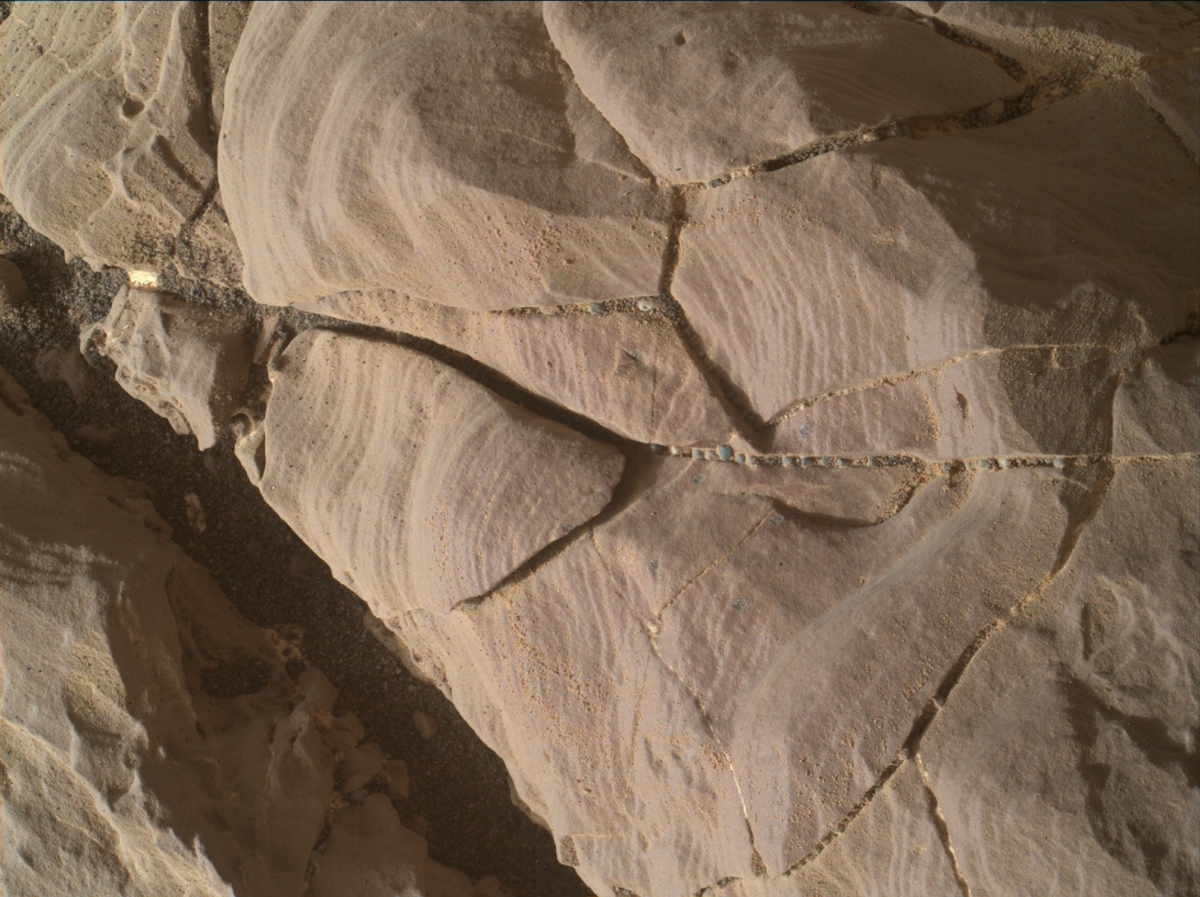
Curiosity Mars Hand Lens Imager (MAHLI) photo produced on Sol 2008, April 1, 2018.
Credit: NASA/JPL-Caltech/MSSS
“The plan is to wrap up observations at this location in the Sol 2012 plan and then drive to the southeast,” Anderson concludes.
New traverse map
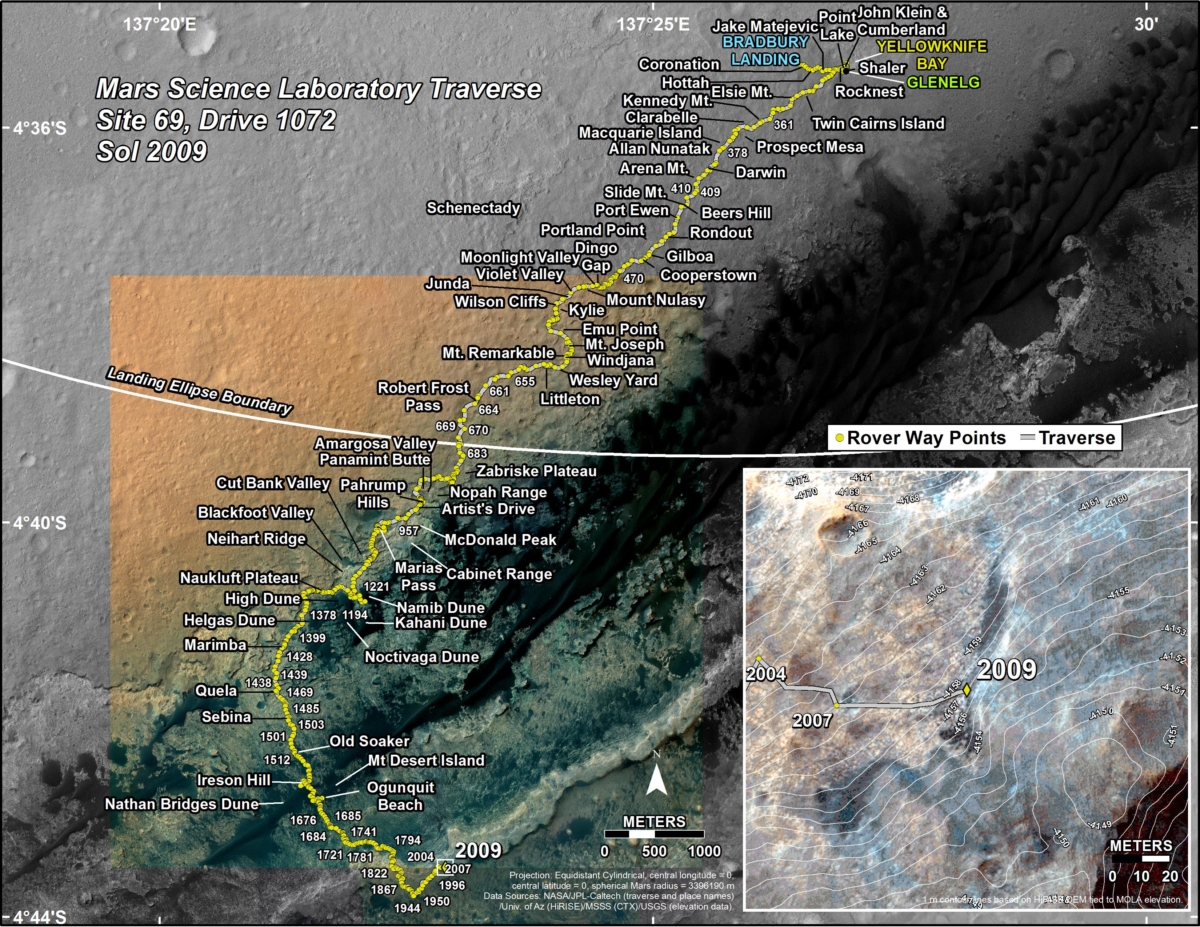
Meanwhile, a new Curiosity traverse map through Sol 2009 has been issued.
The map shows the route driven by NASA’s Mars rover Curiosity through the 2009 Martian day, or sol, of the rover’s mission on Mars (April 02, 2018).
Numbering of the dots along the line indicate the sol number of each drive. North is up. The scale bar is 1 kilometer (~0.62 mile).
Credit: NASA/JPL-Caltech/Univ. of Arizona
From Sol 2007 to Sol 2009, Curiosity had driven a straight line distance of about 149.72 feet (45.63 meters), bringing the rover’s total odometry for the mission to 11.56 miles (18.61 kilometers).
The base image from the map is from the High Resolution Imaging Science Experiment Camera (HiRISE) in NASA’s Mars Reconnaissance Orbiter.

Credit: CGTN/screengrab
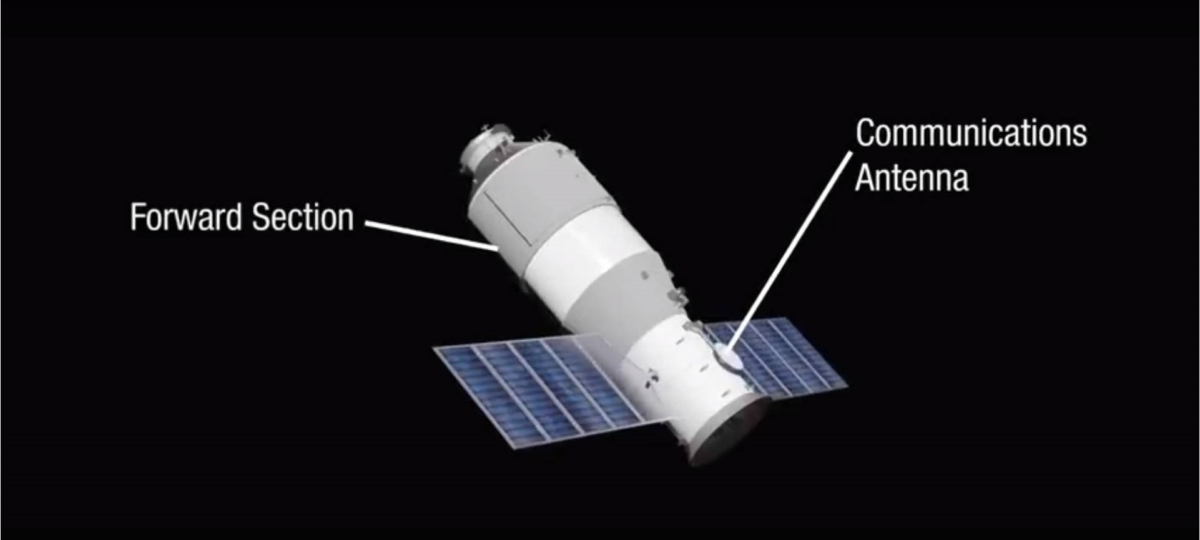
The core module of China’s space station — “Tianhe-1” — was unveiled at Tianjin Aerospace Town in north China last Saturday and spotlighted on the China Global Television Network, or CGTN.
Tianhe-1 is the main control cabin of China’s space station and holds habitable living quarters and working space for a crew of three astronauts, who will manage guidance, navigation and control for the entire space station.

Credit: CGTN/screengrab
The module also contains a non-habitable service section and a docking hub.
In debuting the Tianhe-1 core module, also on display by engineers from China Aerospace Science and Technology Corporation (CASC) was a robotic arm. Space robotic arms, it was noted, can be of great help to astronauts when it comes to grabbing, holding and moving objects.

Credit: CGTN/screengrab
Station components
In early March this year, CASC said that the Tianhe-1 module would be launched on board a new-generation Long March-5 heavyweight carrier rocket in 2018. Following that launch, a series of boosts of other components of the space station are planned, including two space labs that will dock with the core module – in the next four years or so.
As reported by China Central Television (CCTV), the complete space station will consist of one core module and two experiment modules, each weighing over 20 tons, and can be joined with two manned spacecraft and one cargo spacecraft.

Credit: CCTV/screengrab
Post-2024, only working station
The average age of the current development team of China’s space station project is around 35, explained Zhu Guangchen, deputy chief designer of the space station.
The China News Service reported last week that the Astronaut Center of China in Beijing is moving forward on astronaut training for constructing the country’s space station, including underwater exercises and survival training in the desert,
“It is possible that China’s space station will be the only working station after 2024 when the [International Space Station] ISS is expected to retire and China will take a dominant position in conducting space experiments,” said Jiao Weixin, a space science professor at Peking University, in a story appearing in China’s Global Times on Sunday.
To view the CGTN video regarding the unveiling of the Tianhe-1 module, go to:
https://news.cgtn.com/news/33637a4e316b7a6333566d54/share_p.html

Credit: PublicAffairs
The Space Barons: Elon Musk, Jeff Bezos, and the Quest to Colonize the Cosmos by Christian Davenport, PublicAffairs, New York 2018; 320 pages, hardcover, $28.00.
Christian Davenport is a staff writer at the Washington Post covering the space and defense industries for the financial desk, joining the Post in 2000.
You’ll find a very enjoyable, behind-the-scenes look at the well-heeled, big-buck billionaire entrepreneurs who are reshaping the commercial space program. Space Barons, of the likes of Elon Musk of SpaceX and Amazon.com leader, Jeff Bezos, along with Richard Branson and Paul Allen-are taking innovative tactics to reshape and rekindle private space activities.
Davenport has used his sharp-eyed, journalistic talents to tell a compelling story about a “new Space Age” – one that is being propelled by the dollars of the world’s richest people to curb governmental monopoly of utilizing space. The volume also portrays the rivalry between space startups, as well as how they are upsetting the established aerospace community: old space, versus new space.
As the author notes, “Musk, the brash hare, was blazing a trail for others to follow, while Bezos, the secretive and slow tortoise, who was content to take it step by step in a race that was only just beginning.”
The book is divided into three parts, including a tell-all timeline that runs from September 2000 to September 2017 showing the growth of entrepreneurial space progress – and failure. In the book’s notes section you’ll also find useful resources for each part of the book.
This is a must-read volume that is not only well-written but offers a treasure-trove of facts that underscore the trans-formative times we live in…as private sector space reshapes low Earth orbit, a return to the Moon, planting humans on Mars and setting sail for destinations beyond.
For more information about this book, go to:
https://www.publicaffairsbooks.com/titles/christian-davenport/the-space-barons/9781610398299/
Special bonus!
Wednesday, April 4, 5:30 pm – 6:30 pm Eastern Time
The Aerospace Security Project at the Center for Strategic and International Studies (CSIS) invites you to a discussion with Christian Davenport speaking on The Quest to Colonize the Cosmos: How Billionaires are Changing the Space Industry.
The event is being held at CSIS Headquarters, 1616 Rhode Island Ave NW, Washington, D.C. and will be available via webcast live from this page:
https://www.csis.org/events/quest-colonize-cosmos-how-billionaires-are-changing-space-industry

Credit: NASA
Robert Zubrin, president of Pioneer Astronautics and the Mars Society has scripted a “Moon Direct” master plan.
The Moon is “now within reach.” Zubrin explains in an op-ed that appeared in the March 26, 2018 issue of SpaceNews magazine. “We won’t just be getting a local outpost: we’ll be getting complete global access to an entire world,” he writes.

Credit: Robert Zubrin/SpaceNews
Foundation booster
Zubrin’s view is that the SpaceX Falcon Heavy rocket, which made its debut February 6, is the foundation of the Moon Direct master plan for affordably returning humans to the Moon within four years.

Early concept of Deep Space Gateway. Should it be deep-sixed?
Credit: NASA
Never shy on targeting NASA, Zubrin explains that the space agency’s lunar orbiting space station dubbed the Deep Space Gateway is a boondoggle with a price tag of several tens of billions of dollars. The Gateway serves no useful purpose whatsoever, he believes, except perhaps to provide a launch manifest for NASA’s big booster, the Space Launch System.
“If you want to get to the Moon, you need to go to the Moon,” Zubrin concludes. “We now have it in our power to do so. Let’s seize the time.”
To read the entire SpaceNews op ed, go to:
http://spacenews.com/op-ed-moon-direct-how-to-build-a-moonbase-in-four-years/
Credit: The Aerospace Corporation/CORDS
Round and round it goes – when and where it stops nobody knows.
China’s Tiangong – 1 space lab is in its last laps around Earth.

Credit: The Aerospace Corporation/CORDS
The latest reentry forecast provided by European Space Agency’s Space Debris Office in Darmstadt, Germany has issued a March 31 update.
The space debris team at ESA has adapted their reentry forecast over the last 24 hours “to take into consideration the conditions of low solar activity. New data received overnight gave further confirmation that the forecast window is moving to later on 1 April,” the ESA office explains.

Map showing the area between 42.8 degrees North and 42.8 degrees South latitude (in green), over which Tiangong-1 could reenter. Graph at left shows population density.
Credit: ESA CC BY-SA IGO 3.0
The team now are forecasting a window centered around 23:25 UTC on April 1 (01:25 CEST 2 April), and running from the afternoon of April 1 to the early morning on April 2. This remains highly variable.
Similarly, The Aerospace Corporation’s Tiangong-1 is currently predicted to reenter the Earth’s atmosphere around April 1st, 2018 20:30 UTC ± 8 hours.
This prediction was performed March 31 by The Aerospace Corporation’s Center for Orbital and Reentry Debris Studies (CORDS).
China to UN
In a “Note verbale” dated March 16, 2018 from the Permanent Mission of China to the United Nations (Vienna), it says “on the basis of further calculation and review, most structural parts of Tiangong-1 will burn up on re-entry. The probability of damage to aviation activities and human life and facilities on Earth is extremely low.”

Credit: The Aerospace Corporation/CORDS
Overhead pass-time
Meanwhile, sky watchers are reporting observations of the doomed Chinese spacecraft.
Thomas Dorman is a satellite tracker from Tahlequah, Oklahoma. He has been documenting flyovers of the spacecraft using telescopes, binoculars, video and still cameras, a DVD recorder, a computer and other gear since the space lab’s launch back in September 2011.
“I was able to spot Tiangong-1 this morning,” he advised Inside Outer Space. The vehicle was caught on video, he added, under poor conditions of high clouds and wind.
Dorman reports: “It was zipping right along! No ablation observed!” Caught on video, the station was around 14 seconds early based on orbit prediction data. The bright star also observed is Polaris.
To view his video, used with permission, go to:
Resources
BTW: Dorman was early in flagging the fall of Tiangong-1.
Go to my June 10, 2016 Space.com story:
When Will China’s ‘Heavenly Palace’ Space Lab Fall Back to Earth?
http://www.space.com/33140-china-tiangong-1-space-lab-falling-to-earth.html
To keep your own eye on the reentry of Tiangong-1, one popular and easy-to-use website:
Also, go to this informative video by China’s CGTN:
https://www.youtube.com/watch?v=CZSDifvYWdE&feature=youtu.be
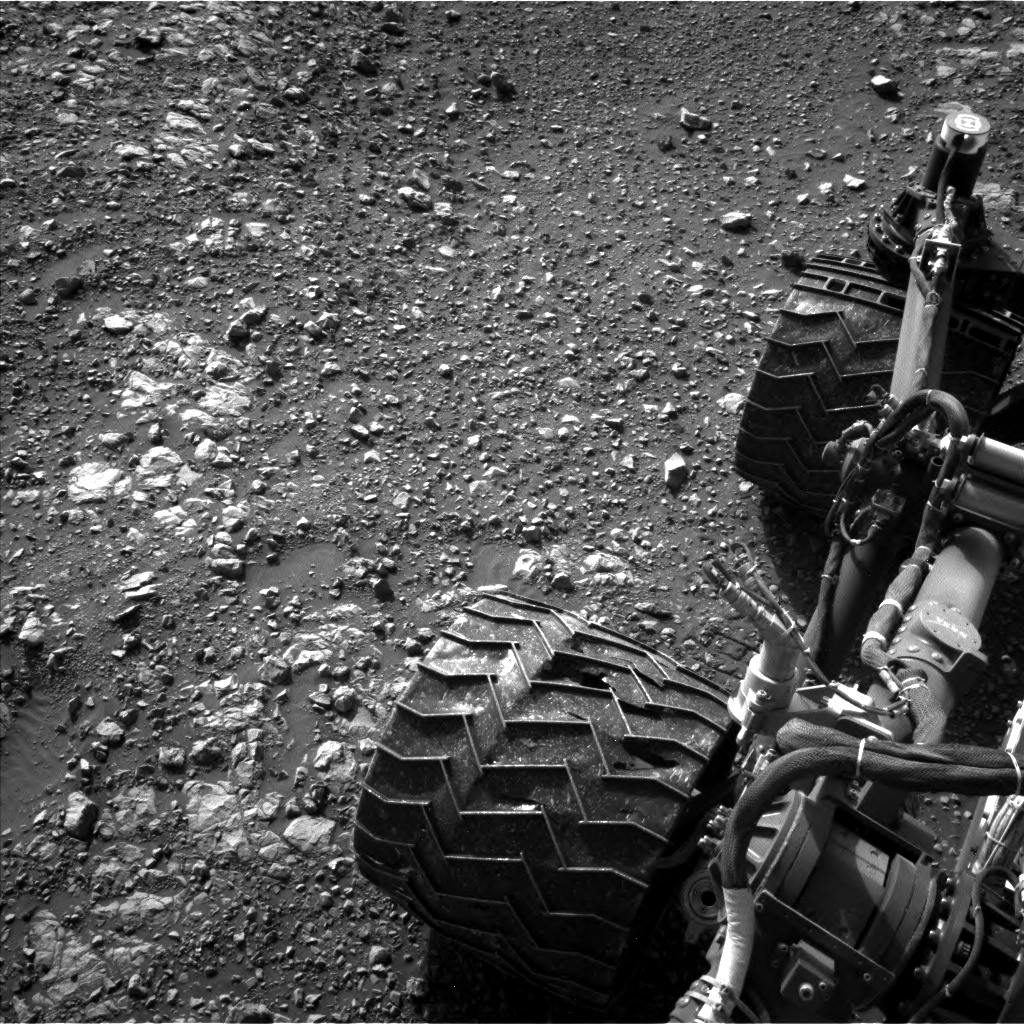
Curiosity Navcam Left B photo taken on Sol 2007, March 30, 2018.
Credit: NASA/JPL-Caltech
NASA’s Curiosity Mars rover is now performing Sol 2008 science duties, exploring variations in composition, texture, and color of its surroundings reports Lauren Edgar, a planetary geologist at the USGS in Flagstaff, Arizona.
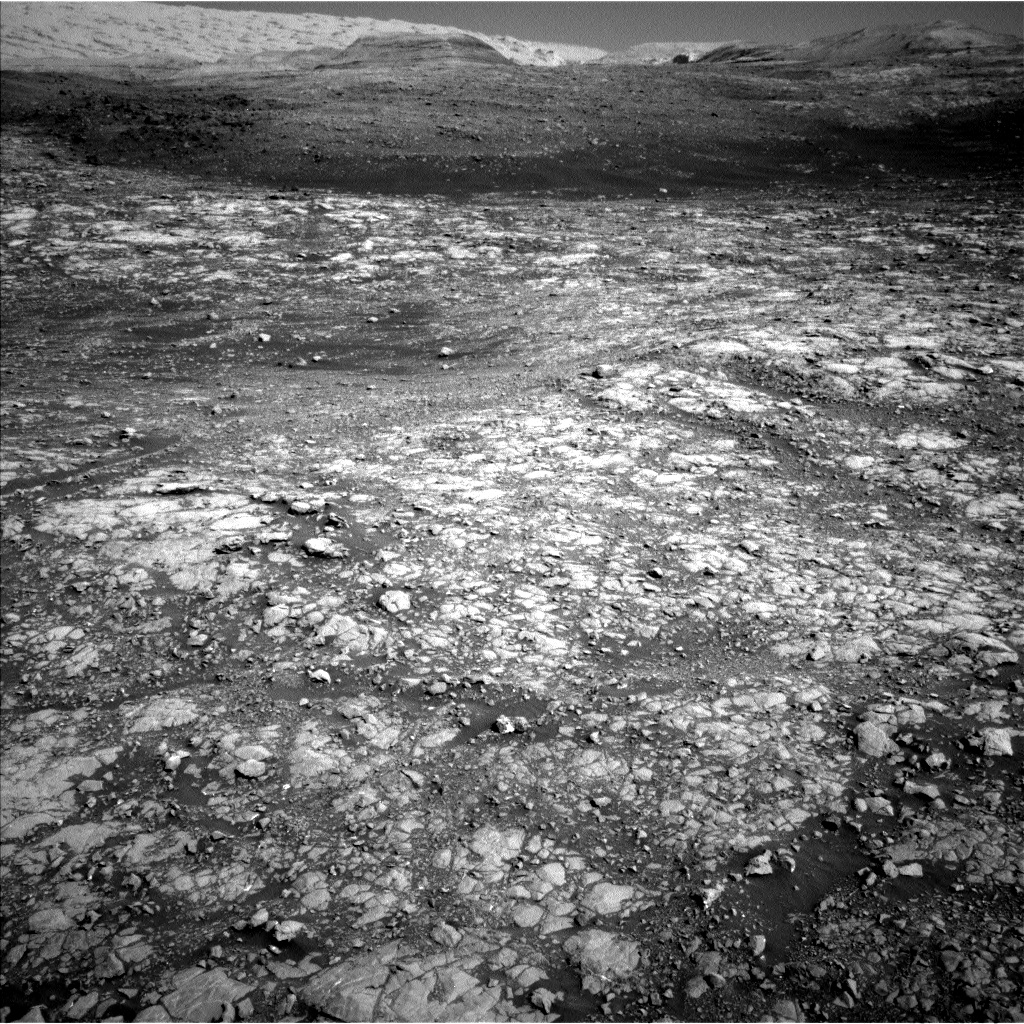
Curiosity Navcam Left B image acquired on Sol 2007, March 30, 2018.
Credit: NASA/JPL-Caltech
Curiosity recently drove 115 feet (35 meters) to the southeast, “which set us up for some great contact science on the rim of a small impact crater,” Edgar adds.
The robot is working its way toward Region 13 on Vera Rubin Ridge and investigating changes in bedrock composition, texture, and color.
Scientific weekend
A 3-sol plan (Sol 2008-2010) has been scripted with a lot of great science for the weekend, Edgar notes.
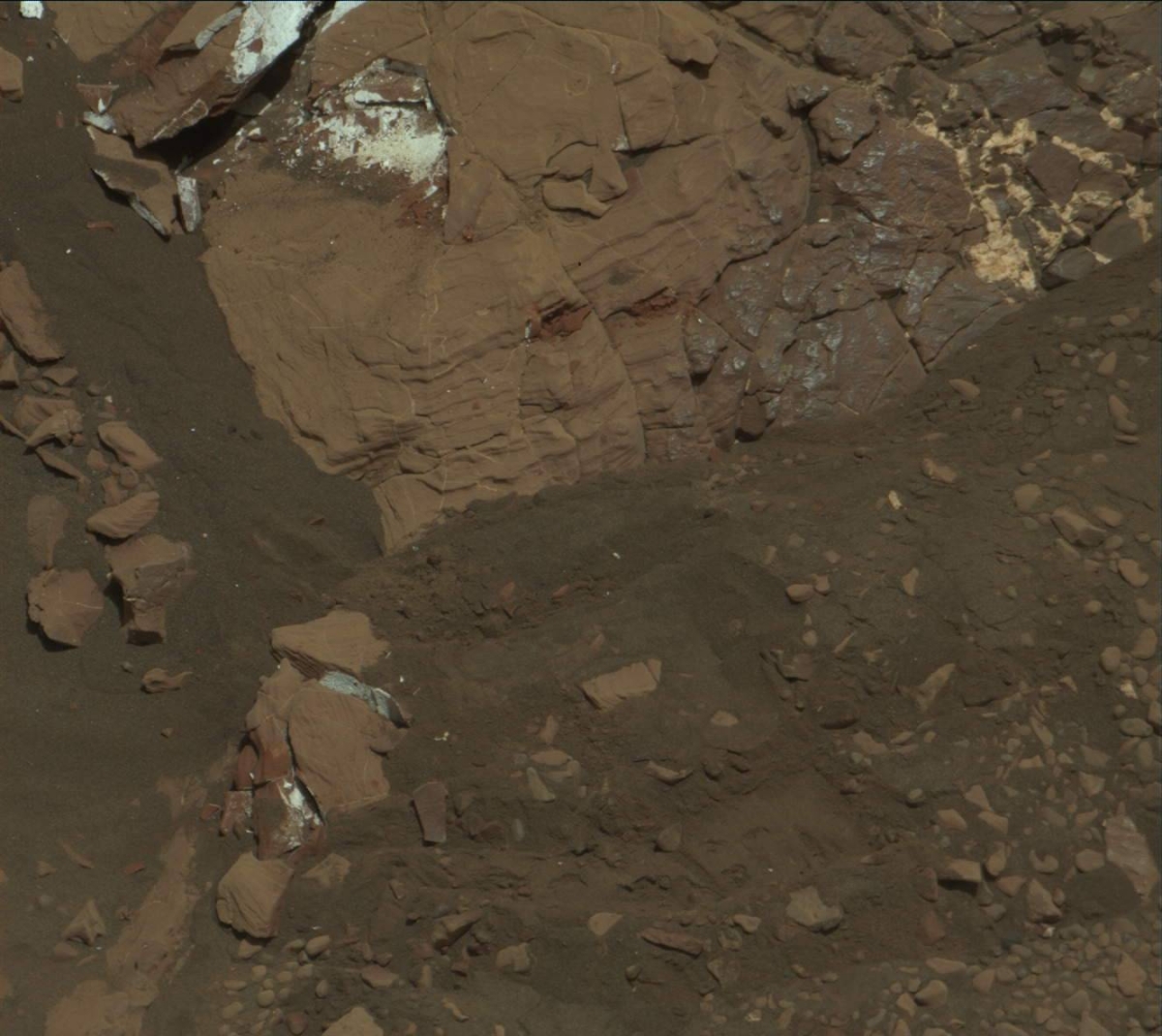
Curiosity Mastcam Right image taken on Sol 2006, March 29, 2018.
Credit: NASA/JPL-Caltech/MSSS
The first sol kicks off with Chemistry and Camera (ChemCam) observations of “Beinn Dearg Mhor,” “Dun Caan,” and “Dalbeattie” to look for changes in chemistry within the red bedrock in the rover’s workspace.
Curiosity will then acquire Mastcam documentation of those targets as well as a mosaic to characterize a sandy trough on the floor of the small crater at “Saxa Vord.”
Hematite signature
Also in the plan is carrying out contact science (including Dust Removal Tool (DRT), Mars Hand Lens Imager (MAHLI), and Alpha Particle X-Ray Spectrometer (APXS) on the targets “Lanark” and “Dun Caan” and some overnight APXS integrations.
“These observations will help to compare orbital observations to surface characteristics, particularly as we move through an area with a high hematite signature in orbital spectroscopic data,” Edgar reports.
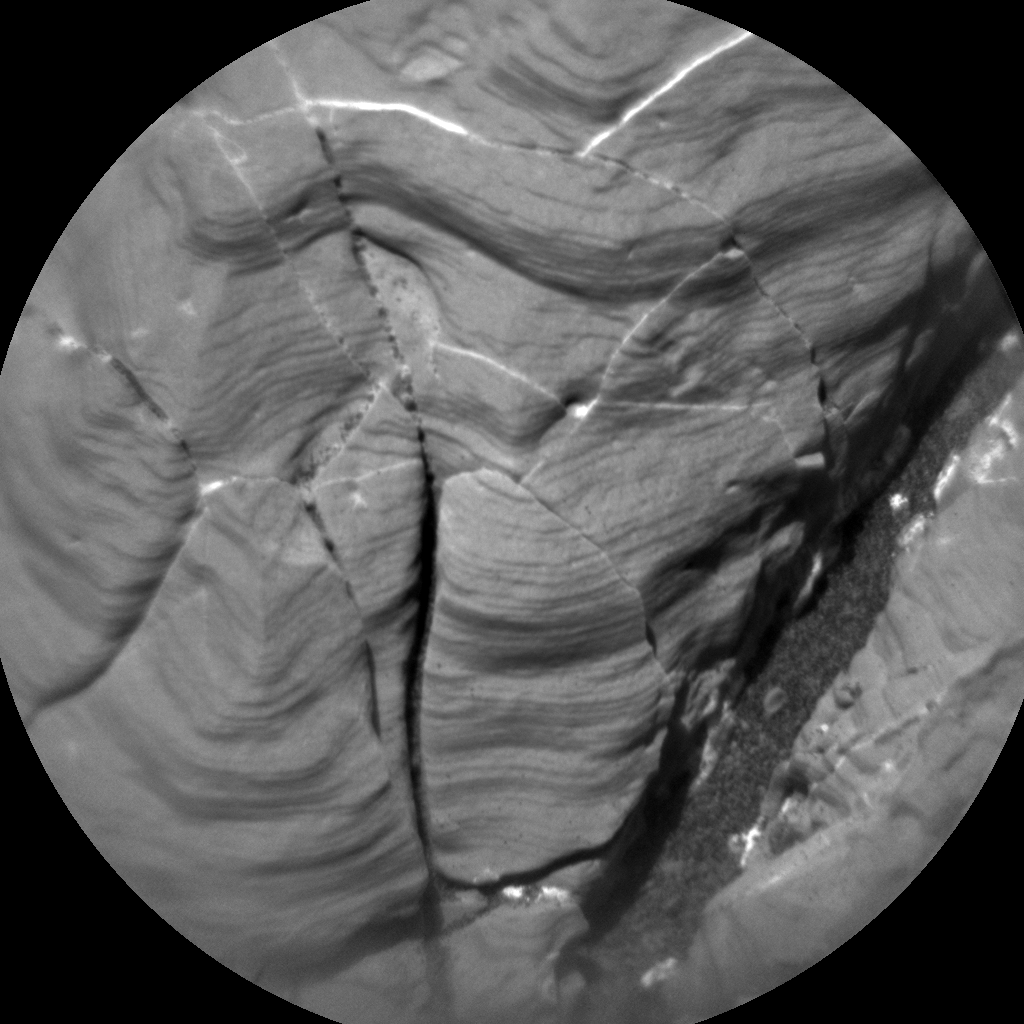
Curiosity ChemCam Remote Micro-Imager photo taken on Sol 2008, March 31, 2018.
Credit: NASA/JPL-Caltech/LANL
Drive to southeast
On the second sol, Curiosity will acquire Mastcam multispectral observations of the DRT target “Lanark,” and the stratigraphy exposed in the wall of the small crater at the target “Stac Fada.”
“After completing science activities at this location,” Edgar continues, “Curiosity will drive to the southeast to investigate variations in color and sedimentary structures.”

Curiosity Mars Hand Lens Imager (MAHLI) photo produced on Sol 2005, March 28, 2018.
Credit: NASA/JPL-Caltech/MSSS
Mt. Sharp shots
On the third sol, the plan calls for an early science block for environmental monitoring activities. Later in the afternoon Curiosity will acquire long distance images using the Remote Micro-Imager (RMI) to characterize the yardangs and stratigraphy exposed higher on the slope of Mt. Sharp. Yardangs are sharp ridges formed by wind erosion.
Also on tap is acquiring several additional Navcam and Mastcam images to monitor atmospheric opacity, clouds, and scattering properties, Edgar concludes. “It’s going to be a busy weekend on Mars!”
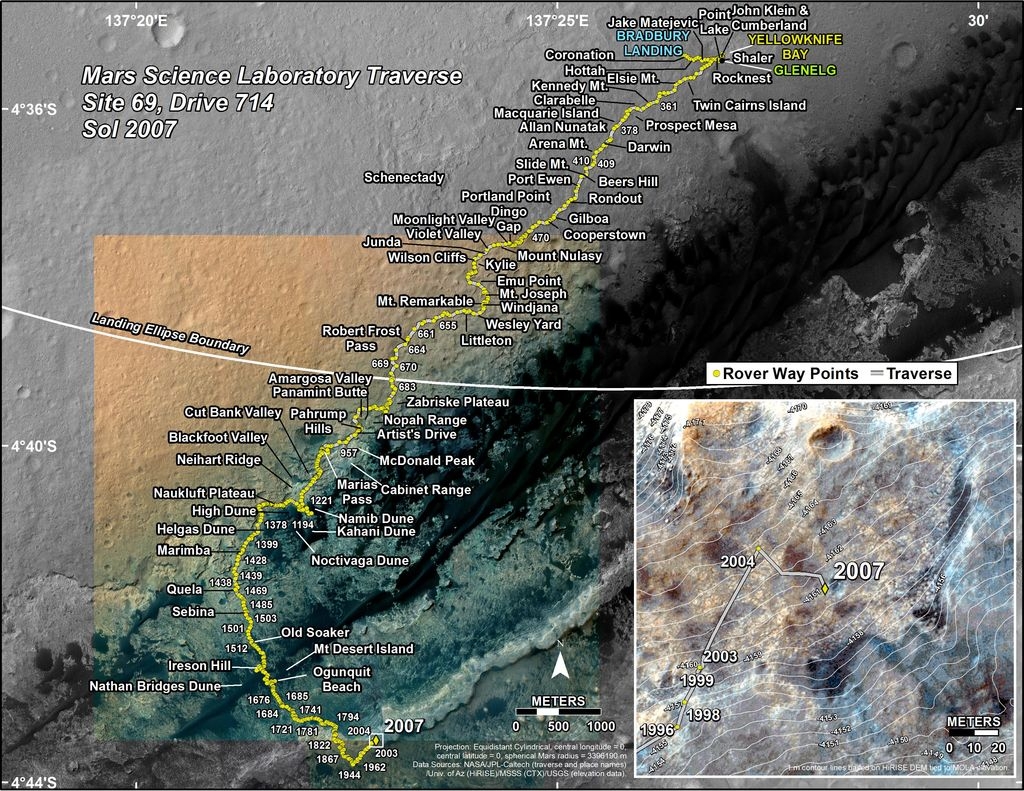
Credit: NASA/JPL-Caltech/Univ. of Arizona
Traverse map
A new Curiosity traverse map shows the rover’s movement through Sol 2007.
The map shows the route driven by Curiosity through the 2007 Martian day, or sol, of the rover’s mission on Mars (March 30, 2018).
Numbering of the dots along the line indicate the sol number of each drive. North is up. The scale bar is 1 kilometer (~0.62 mile).
From Sol 2004 to Sol 2007, Curiosity had driven a straight line distance of about 103.75 feet (31.62 meters), bringing the rover’s total odometry for the mission to 11.54 miles (18.56 kilometers).
The base image from the map is from the High Resolution Imaging Science Experiment Camera (HiRISE) in NASA’s Mars Reconnaissance Orbiter.
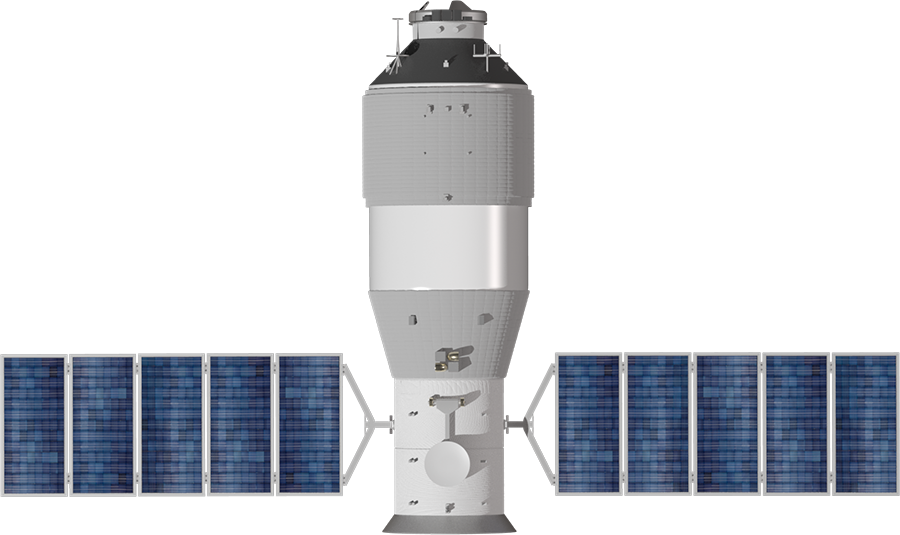
Credit: The Aerospace Corporation/CORDS
The latest reentry forecast for the plunge of China’s Tiangong-1 space lab has been provided by the European Space Agency’s Space Debris Office in Darmstadt, Germany.
The current estimated reentry window runs from the night of March 31 to the late evening of April 1 (in UTC time), noting this is highly variable.
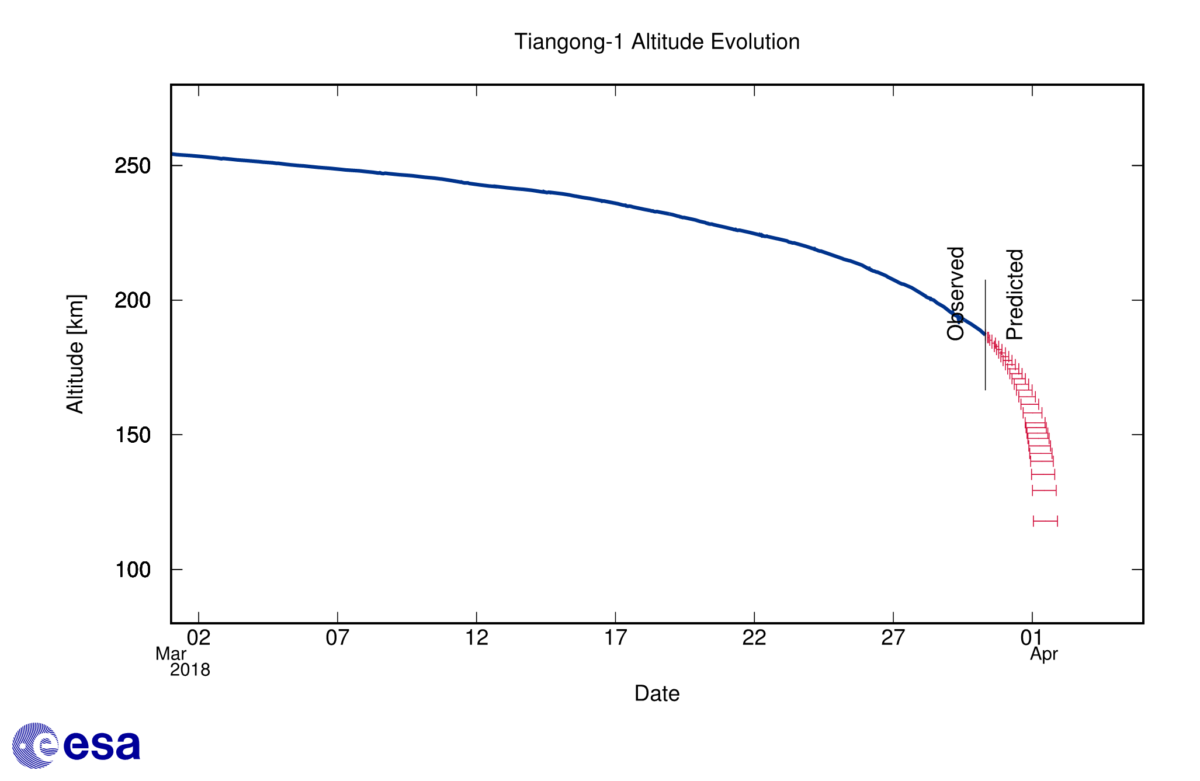
Credit: ESA
Noticeable change
“Today’s new forecast is a noticeable change from that of yesterday, and is due to solar activity,” the ESA office explains. One of the main reasons why it is so difficult to make an accurate reentry prediction, materialized during the last 24 hours, the notices adds.
“A high-speed stream of particles from the Sun, which was expected to reach Earth and influence our planet’s geomagnetic field, did, in fact, not have any effect, and calmer space weather around Earth and its atmosphere is now expected in the coming days.”
The density of the upper atmosphere, through which Tiangong-1 is moving, did not increase as predicted — which would have dragged the spacecraft down sooner — and hence the ESA Space Debris Office has adjusted the predicted decay rate.
Still uncertain
This implies that the new (and still uncertain) reentry window has shifted to later in the day on 1 April.
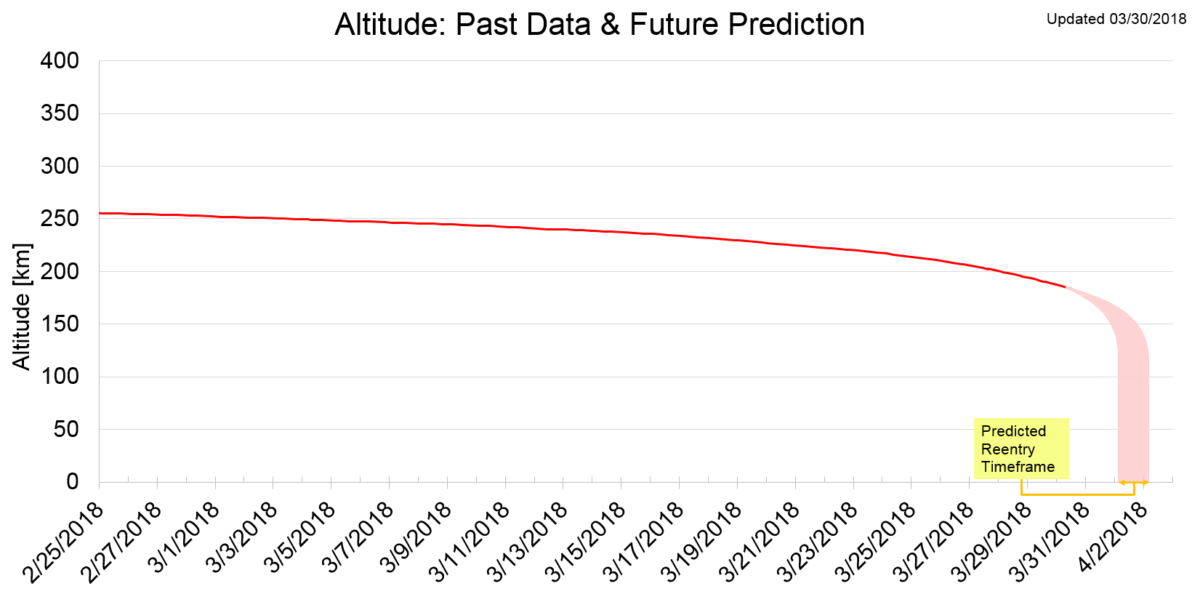
Credit: The Aerospace Corporation/CORDS
Similarly, The Aerospace Corporation’s Center for Orbital and Reentry Debris Studies (CORDS) explains today that Tiangong-1 is currently predicted to reenter the Earth’s atmosphere around April 1st, 2018 15:15 UTC, plus or minus 14 hours.

A composite image of the planet Venus as seen by the Japanese probe Akatsuki. The clouds of Venus could have environmental conditions conducive to microbial life.
Credit: JAXA
Nobody likes to have their life adrift.
But on Venus, the clouds of that hellish world could be a niche for extraterrestrial microbial life.
An international team of researchers led by planetary scientist Sanjay Limaye of the University of Wisconsin–Madison’s Space Science and Engineering Center lays out a case that the hunt for life beyond Earth should also include the clouds of Venus.
Limaye carries out his research as a NASA participating scientist in the Japan Aerospace Exploration Agency’s Akatsuki mission to Venus.
Dark patches
“Venus shows some episodic dark, sulfuric rich patches, with contrasts up to 30–40 percent in the ultraviolet, and muted in longer wavelengths. These patches persist for days, changing their shape and contrasts continuously and appear to be scale dependent,” says Limaye in a university press statement.
The particles that make up the dark patches have almost the same dimensions as some bacteria on Earth, although the instruments that have sampled Venus’ atmosphere to date are incapable of distinguishing between materials of an organic or inorganic nature.
The patches could be something akin to the algae blooms that occur routinely in the lakes and oceans of Earth, only these would need to be sustained in the Venusian atmosphere.

Proposed VAMP, or Venus Atmospheric Maneuverable Platform, is a craft that flies like a plane but floats like a blimp and could stay aloft in the planet’s cloud layer for up to a year gathering data and samples.
Credit: Northrop Grumman
Russian mission
The Wisconsin scientist and his colleagues are hopeful that an exobiological research chapter can be opened at Venus. There are ongoing discussions about possible NASA participation in Russia’s Roscosmos Venera-D mission, now slated for the late 2020s.
Current plans for Venera-D might include an orbiter, a lander and a NASA-contributed surface station and maneuverable aerial platform.
This new research and speculation can be found in a paper published online today in the journal Astrobiology.
Go to:
Venus’ Spectral Signatures and the Potential for Life in the Clouds

The Commercial Space Race is About to Accelerate
View an interactive live, streaming panel discussion: Lift Off the Page: The Commercial Space Race on Monday, April 9, at 7 p.m. (EDT), presented by the Embry–Riddle Alumni Association.
Tourists, space mining
Space experts predict that within the next year, tourists will travel into space and companies will begin planning to build hotels in orbit.
In the next few years, space–mining companies will launch their first exploratory missions to asteroids to search for and extract structural and precious metals and gather ice for fueling stations in space.
As early as 2022, telecom companies will have thousands of new, small satellites in low earth orbit that will provide global phone, internet and imaging services that will blanket the globe, providing greater speeds and uninterrupted service.
By 2025, aircraft will become operational that can travel at speeds exceeding Mach 3 (2,300 mph), paving the way for suborbital and orbital point-to-point transportation all over the world.
These topics and more will be discussed during the event.
Expert panel
Participants include:
Space law authority Dr. Diane Howard, an assistant professor in spaceflight operations at Embry-Riddle and executive secretary of the International Institute of Space Law.
Dr. Moriba Jah, an associate professor at the University of Texas at Austin and expert in astrodynamics-based space domain awareness.
Dr. Sonya A.H. McMullen, an assistant professor at Embry-Riddle’s College of Aeronautics, who served as a Space and Missile Operations Officer in the U.S. Air Force.
Location
Daytona Beach Campus and streaming live online.
All registrants will receive a link to join the discussion online.
For more information and how to register, go to:

