Author Archive
 Author:
  April 9th, 2018
Credit: NASA
Take a virtual tour of the Moon in all-new 4K resolution, thanks to data provided by NASA’s Lunar Reconnaissance Orbiter (LRO) spacecraft.
This visualization moves around the near side, far side, north and south poles, highlighting interesting features, sites, and information gathered on the lunar terrain.
Music Provided By Killer Tracks: “Never Looking Back” – Frederick Wiedmann. “Flying over Turmoil” – Benjamin Krause & Scott Goodman.
This video comes courtesy of the NASA Goddard Space Flight Center’s Scientific Visualization Studio.
Go to: https://www.youtube.com/watch?time_continue=28&v=nr5Pj6GQL2o
 Posted in
Credit: GAO
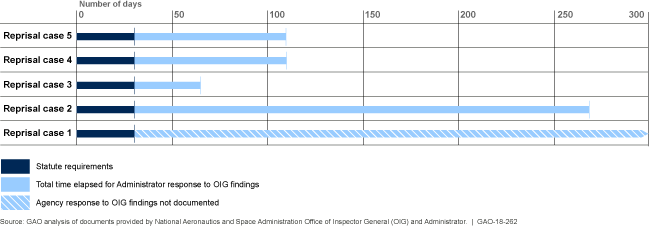
Hey all you space whistleblowers out there – suck in the new United States Government Accountability Office (GAO) report: NASA Contractor Whistleblowers – Steps Taken to Implement Program but Improvements to Timeliness and Guidance Needed.
Fulfilling its duty
The GAO notes that NASA relies on contractor employees to fulfill its mission—and these employees are legally protected from reprisal, such as demotion or firing, for whistleblowing.
The question: Is the agency fulfilling its duty to investigate reprisal complaints from these employees in a timely manner?

Credit: NASA
30-day clock ticking in a timely manner?
Since 2008, NASA has not made a final determination of whether or not a reprisal occurred in the required 30-day time frame, nor has the agency evaluated its process for reviewing those complaints in a timely manner.
The GAO has recommended that NASA take steps to ensure that it meets its 30-day time frame.
NASA agreed with the recommendations and plans to develop a documented process to ensure it reviews reprisal complaints in a timely manner and clarify guidance as appropriate, among other things.
For the GAO Highlights page, go to:
https://www.gao.gov/assets/700/690532.pdf
To access the full GAO report, go to:

Credit: CSIS
A discussion with Christian Davenport, author of The Space Barons: Elon Musk, Jeff Bezos, and the Quest to Colonize the Cosmos.
This event was held on Wednesday, April 4, 2018, staged by The Aerospace Security Project at the Center for Strategic and International Studies (CSIS) in Washington, D.C.

Credit: PublicAffairs
Billionaire entrepreneurs
The Space Barons is the story of a group of billionaire entrepreneurs who are pouring their fortunes into the epic resurrection of the American space program.
Nearly a half-century after Neil Armstrong walked on the moon, these Space Barons-most notably Elon Musk and Jeff Bezos, along with Richard Branson and Paul Allen-are using Silicon Valley-style innovation to dramatically lower the cost of space travel, and send humans even further than NASA has gone.

Space entrepreneur, Jeff Bezos.
Credit: Blue Origin
Biggest disruption
These entrepreneurs have founded some of the biggest brands in the world-Amazon, Microsoft, Virgin, Tesla, PayPal-and upended industry after industry. Now they are pursuing the biggest disruption of all: space.

Sir Richard Branson, founder of Virgin Galactic takes flight. Will public space travel?
Credit: Virgin Galactic
Based on years of reporting and exclusive interviews with all four billionaires, this authoritative account is a dramatic tale of risk and high adventure, the birth of a new Space Age, fueled by some of the world’s richest men as they struggle to end governments’ monopoly on the cosmos.

SpaceX’s Elon Musk has a visionary space agenda for Mars.
Credit: Rob Varnas
Hard-charging startups
The Space Barons is also a story of rivalry-hard-charging startups warring with established contractors, and the personal clashes of the leaders of this new space movement, particularly Musk and Bezos, as they aim for the moon and Mars and beyond.
To watch this informative interview with author Christian Davenport, conducted by Todd Harrison, Director, Defense Budget Analysis, Director, Aerospace Security Project and Senior Fellow, International Security Program, go to:

Curiosity Navcam Left B image acquired on Sol 2014, April 6, 2018.
Credit: NASA/JPL-Caltech
NASA’s Curiosity Mars rover is now performing Sol 2015 duties.
The rover has wheeled into a candy store of sorts, reports Michelle Minitti, a planetary geologist at Framework in Silver Spring, Maryland.
“Like Harry Potter in Honeydukes or Charlie in the Chocolate Factory, Curiosity rolled up to the proverbial candy store today,” Minitti adds, wondering “where to begin?!”

Curiosity Navcam Left B image acquired on Sol 2014, April 6, 2018.
Credit: NASA/JPL-Caltech
Picking favorites
“The variety of rock types in the workspace, the likes of which had not been seen for many hundreds of sols, made picking favorites a challenge,” Minitti explains.
The job of surveying the variety was made easier by the opportunities to get four targets with a combination of Mars Hand Lens Imager (MAHLI), Alpha Particle X-Ray Spectrometer (APXS) and the rover’s Chemistry and Camera (ChemCam).
MAHLI and APXS will image and analyze, respectively, the two large, gray blocks near the rover, “Staffa” and “Tyndrum.”

Curiosity Mastcam Left photo taken on Sol 2013, April 5, 2018.
Credit: NASA/JPL-Caltech/MSSS
Bright white rock
MAHLI and ChemCam will image and shoot, respectively, the targets “Askival,” a bright white rock positioned above Tyndrum, and “Hopeman,” a lumpy rock which might be a conglomerate, Minitti adds.
The robot’s Mastcam will cover much of the workspace taking imagery to get more detailed views of all the lithologies present, and will add multispectral observations over Hopeman, Askival and Tyndrum.
Embarrassment of riches
“The atmosphere also got plenty of attention,” Minitti says, with mid- and late-day dust devil movies, early morning and late day cloud and dust observations, and an APXS Argon analysis.

Curiosity Navcam Left B image acquired on Sol 2014, April 6, 2018.
Credit: NASA/JPL-Caltech
“Even with the embarrassment of riches in the weekend plan, the science team could not resist another shopping spree here,” Minitti concludes. “The weekend drive will pull us around the right side of the workspace to access some of the rocks that were not reachable from today’s parking spot. Stay tuned for more fun next week!”
New and different
Curiosity is exploring something new and different, explains Lauren Edgar, a planetary geologist at the USGS in Flagstaff, Arizona: “For much of the last year, Curiosity has been exploring fine-grained rocks along Vera Rubin Ridge, and investigating red and gray color variations. Recently, something else caught our eye: dark cobbles and boulders exposed in patches.”

Curiosity Front Hazcam Left B image acquired on Sol 2014, April 6, 2018.
Credit: NASA/JPL-Caltech
Edgar adds that the rover has surveyed some similar blocky deposits earlier in the mission, “but it’s definitely been a while.”
These interesting rocks, Edgar points out, led the science team to decide to spend the weekend at a patch of these dark blocky deposits.

Curiosity Navcam Left B image taken on Sol 2014, April 6, 2018.
Credit: NASA/JPL-Caltech
Erosional history
After Curiosity’s drive of roughly 60 feet (18 meters), the plan calls for taking post-drive imaging to prepare for contact science in the weekend plan, and we’ll acquire an overnight APXS atmospheric observation.
“I’m looking forward to learning more about these blocky deposits,” Edgar concludes, “and how they relate to the depositional and erosional history preserved at Vera Rubin Ridge!”

Credit: Boeing/screengrab
The U.S. Air Force X-37B mini-space plane has winged past 200 days of flight performing secretive duties during the program’s fifth flight.
Labeled the Orbital Test Vehicle (OTV-5), the robotic spacecraft was hurled into Earth orbit on September 7 of last year atop a SpaceX Falcon 9 booster from Launch Complex 39A at NASA’s Kennedy Space Center in Florida.
For more details on this current mission, go to my new Space.com story:
Secretive X-37B Military Space Plane Wings Past 200 Days in Orbit
April 6, 2018 05:17pm ET
https://www.space.com/40227-x-37b-space-plane-200-days-in-orbit-otv5.html
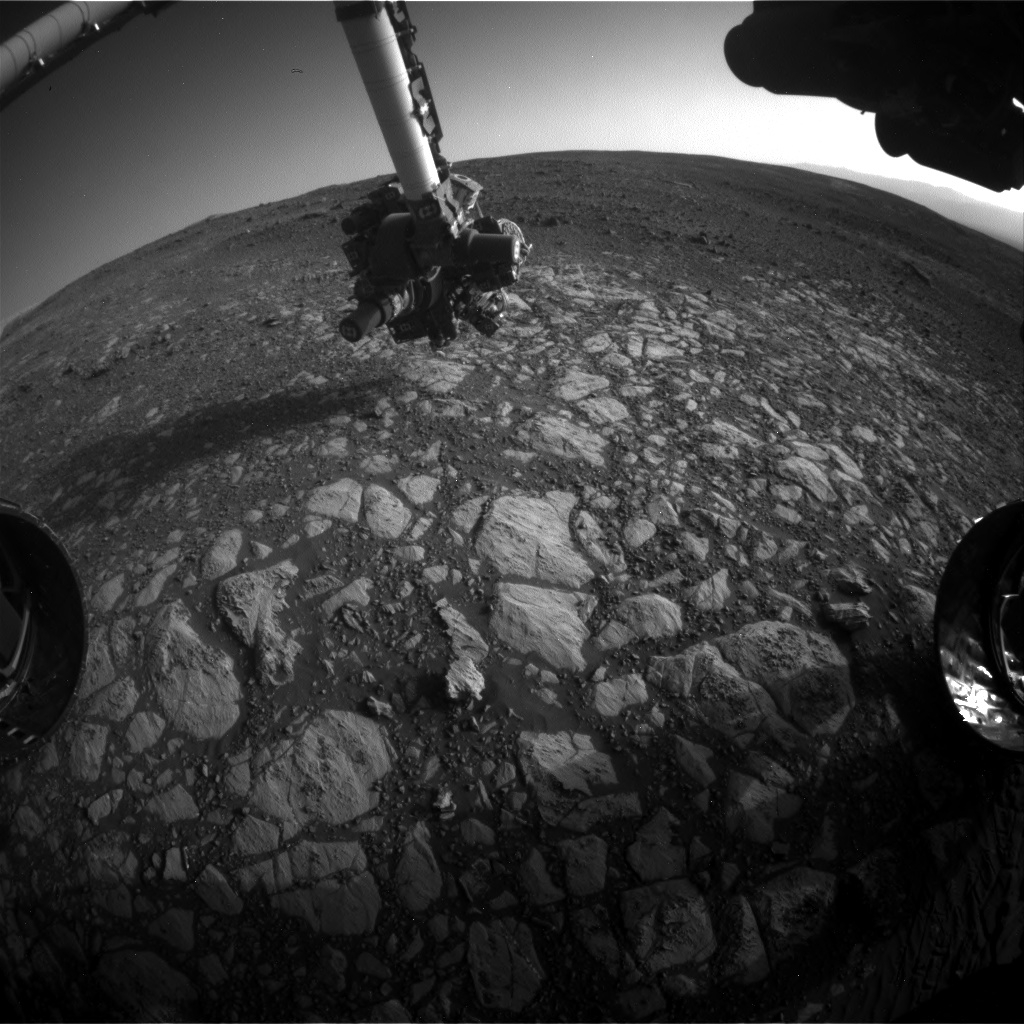
Curiosity Front Hazcam Right B image acquired on Sol 2013, April 5, 2018.
Credit: NASA/JPL-Caltech
Now in Sol 2014, NASA’s Mars Curiosity rover recently completed a drive of 125 feet (38 meters) reaching a location that researchers call Region 13 of Vera Rubin Ridge.
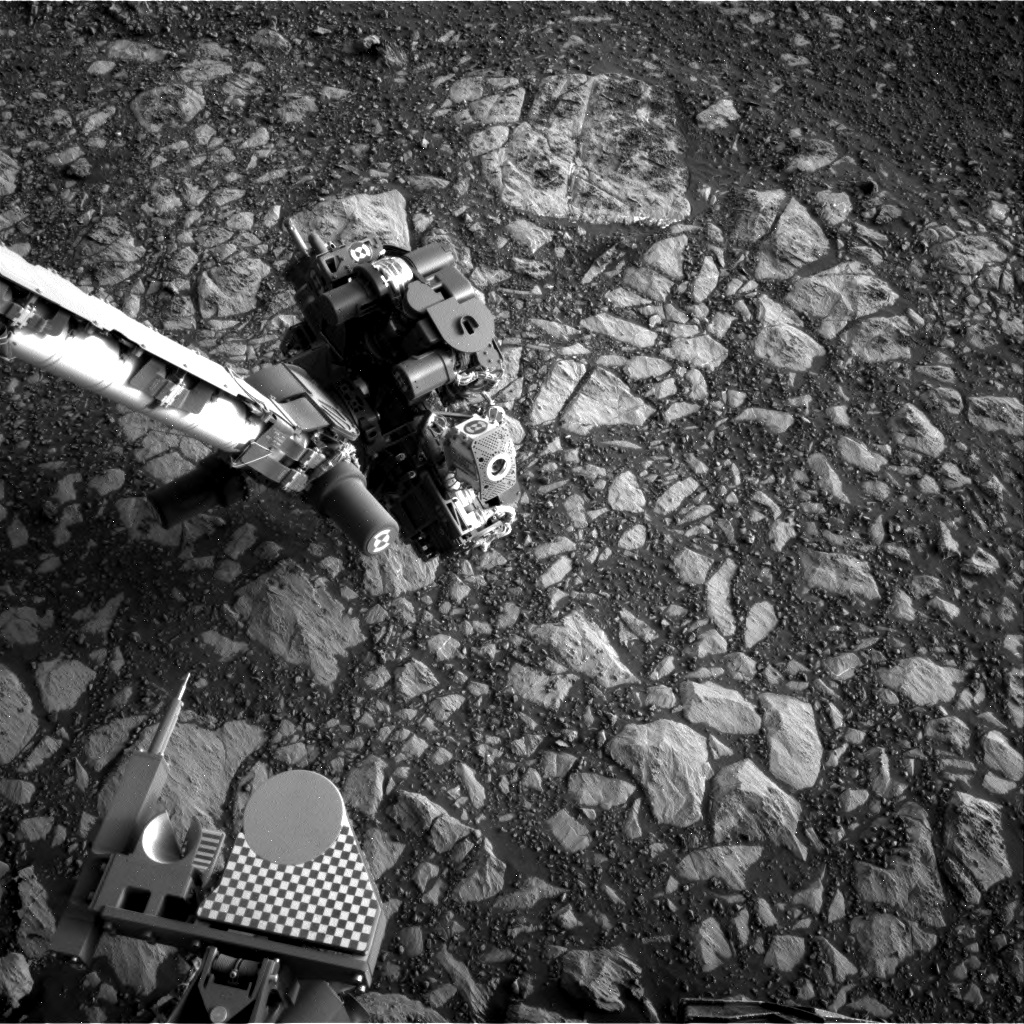
Curiosity Navcam Right B image taken on Sol 2013, April 5, 2018.
Credit: NASA/JPL-Caltech
Reports Roger Wiens, a geochemist at the Los Alamos National Laboratory in New Mexico: That spot has been subdivided into separate nearby sites, with the current one as B1, still near the edge of the hematite “hotspot” identified from orbit by the Compact Reconnaissance Imaging Spectrometer for Mars (CRISM) instrument on the Mars Reconnaissance Orbiter.
Float rocks
“Curiosity is flirting with the boundary of the mapped “Biwabik” quadrangle; pretty soon we will drive into it for a while and start using target names from northern Minnesota,” Wiens points out. “The Biwabik name was selected because of the city’s connection with the Mesabi Range, which contains large deposits of Precambrian iron ore.”
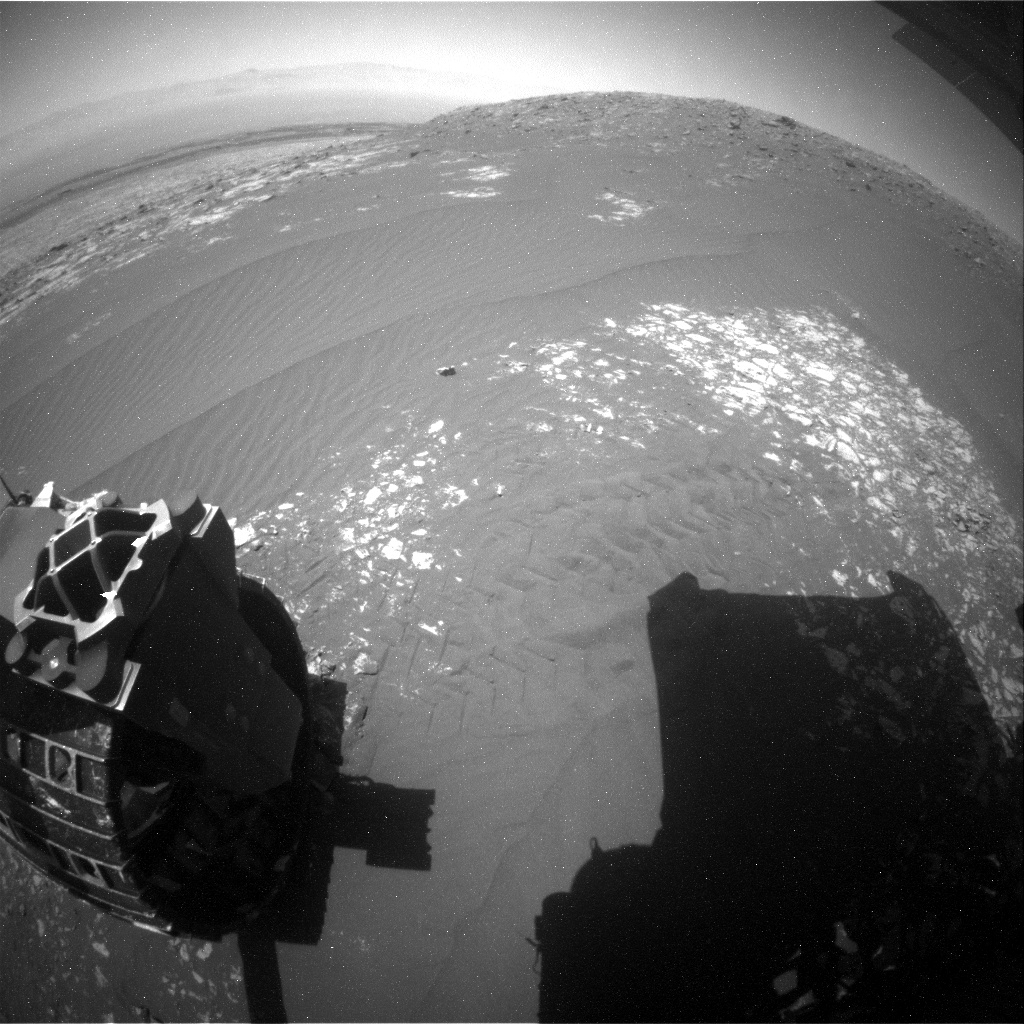
Curiosity Rear Hazcam Left B image taken on Sol 2013, April 5, 2018.
Credit: NASA/JPL-Caltech
The rover is back into the “Torridon” quad with Scottish names, a quad that Curiosity has been exploring most of the sols in the last several weeks. “The team is intrigued to see some fields of dark, blocky float rocks nearby,” Wiens adds.
Science duties
Curiosity’s planned science duties include Chemistry and Camera (ChemCam), Mastcam, Mars Hand Lens Imager (MAHLI), and Alpha Particle X-Ray Spectrometer (APXS) observations on “Lingarabay” and “Kinloch”.
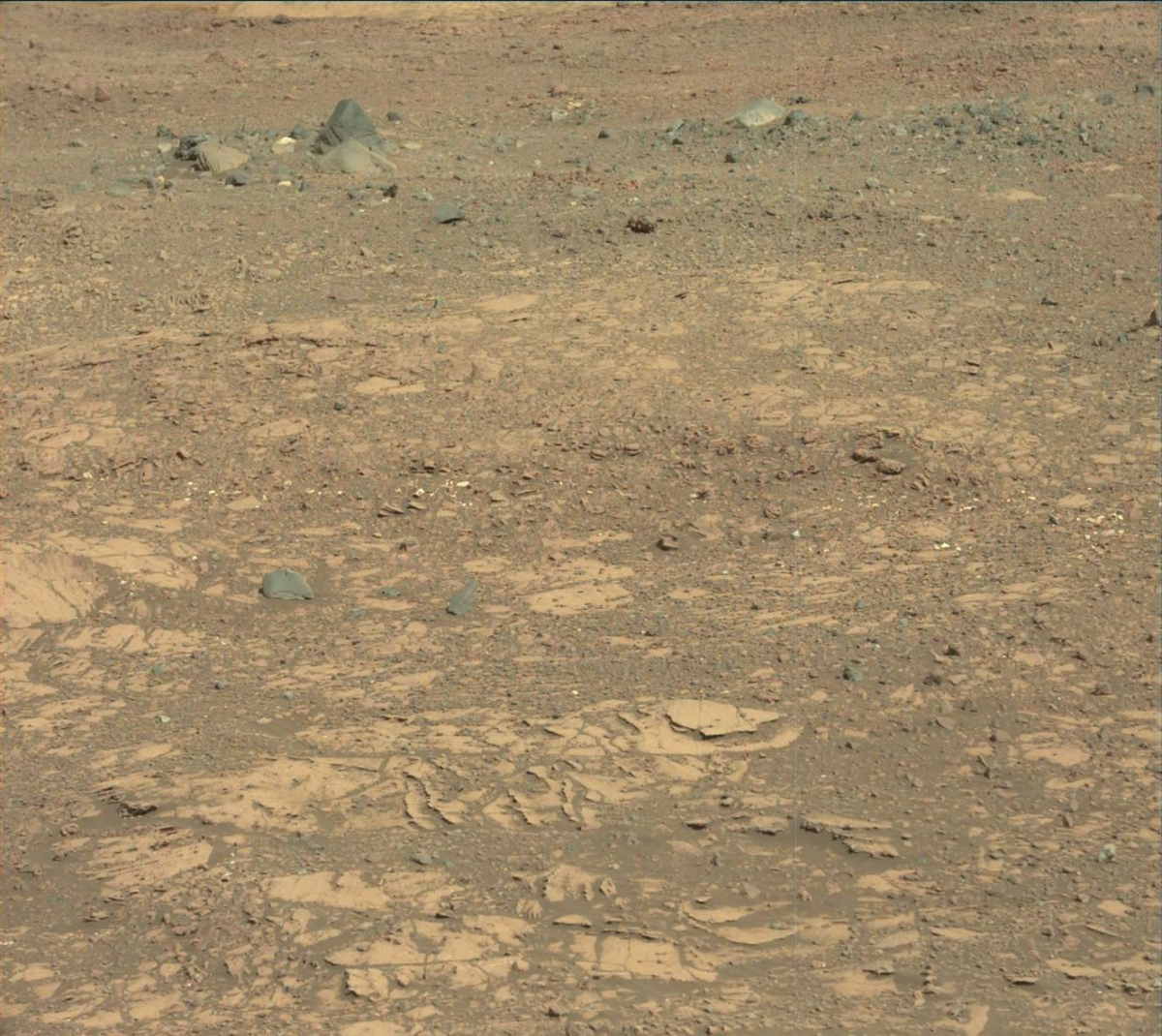
Curiosity Mastcam Left image acquired on Sol 2012, April 4, 2018.
Credit: NASA/JPL-Caltech/MSSS
The robot’s Dust Removal Tool will be used on the first of the two targets, which will be an overnight APXS target.
MAHLI’s observation distances will be 25 centimeters and 5 centimeters. Mastcam’s right-side camera will stay busy, with a 5×1 mosaic on the “hematite hotspot”, a 2×1 on “Galloway”, a 5×1 on “Foula”, a 5×1 on “Suilven” (targeting grain sizes along a ripple crest) and a single image on “Arrochar.”
Additional measurements, Wiens adds, include Dynamic Albedo of Neutrons (DAN) passive, Rover Environmental Monitoring Station (REMS) and Radiation Assessment Detector (RAD) acquisitions, Mastcam sun tau measurement, crater rim extinction, and calibration target observations as well as the rover making a drive direction 4×1 observation.

Curiosity Mars Hand Lens Imager (MAHLI) produced this image on Sol 2013, April 5, 2018.
Credit: NASA/JPL-Caltech/MSSS
Robot inhabitants
Wiens provided some interesting factoids: “Mars is the only known planet inhabited exclusively by active robots. It has been this way for over fourteen Earth years, with a cumulative total of twenty-six Earth years of roving by four vehicles. Together these rovers have logged over 70 kilometers of distance, well over half of that by the Opportunity rover. (Curiosity will likely hit the 20 kilometer mark later this year).
Credit: NASA/JPL-Caltech/Univ. of Arizona
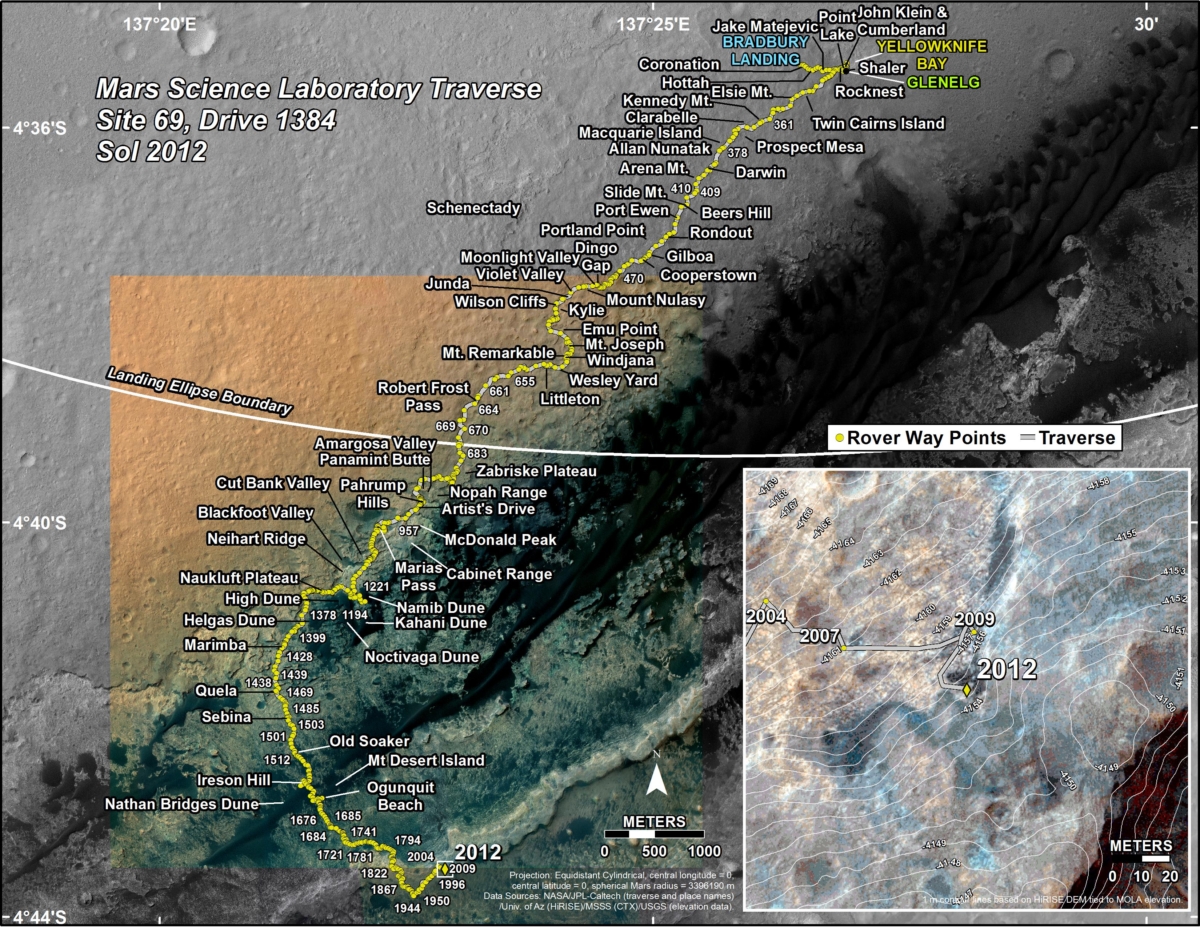
Updated traverse map
A new Curiosity’s traverse map through Sol 2012 has been issued.
The map shows the route driven by NASA’s Mars rover Curiosity through the 2012 Martian day, or sol, of the rover’s mission on Mars (April 04, 2018).
Numbering of the dots along the line indicate the sol number of each drive. North is up. The scale bar is 1 kilometer (~0.62 mile).
From Sol 2009 to Sol 2012, Curiosity had driven a straight line distance of about 66.38 feet (20.23 meters), bringing the rover’s total odometry for the mission to 11.59 miles (18.65 kilometers).
The base image from the map is from the High Resolution Imaging Science Experiment Camera (HiRISE) in NASA’s Mars Reconnaissance Orbiter.

Credit: Virgin Galactic/screengrab
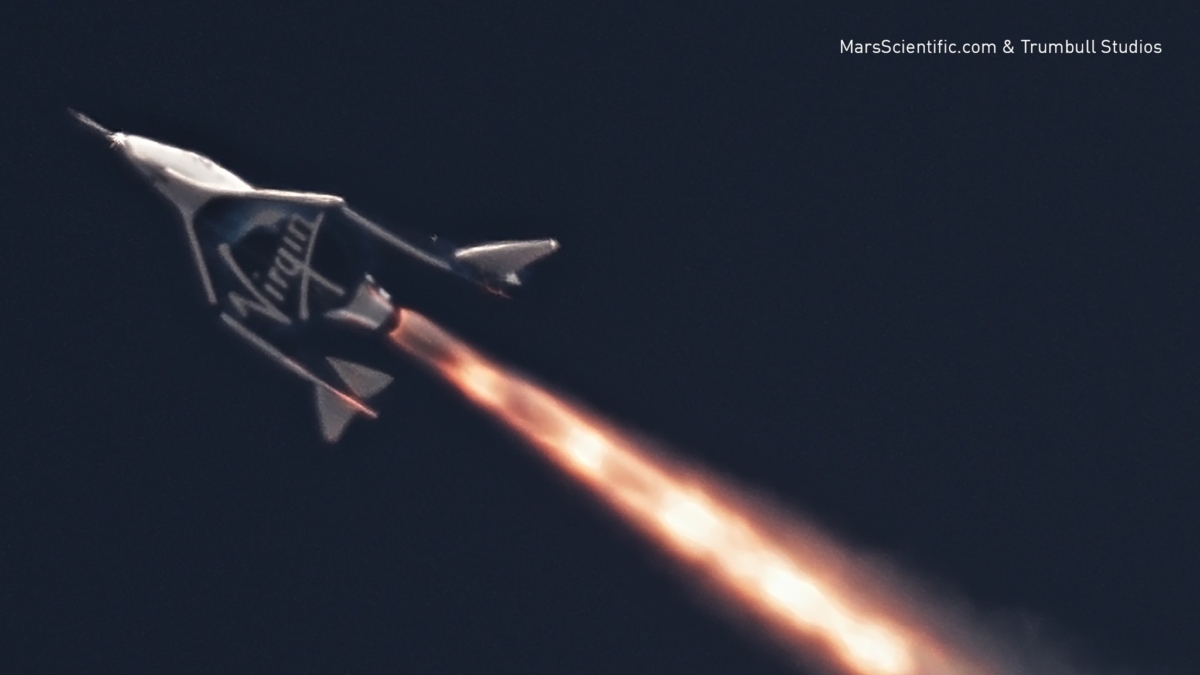
Virgin Galactic has released a video showcasing yesterday’s SpaceShipTwo VSS Unity completing its first supersonic, rocket-powered flight.
Once released from the carrier aircraft, Unity’s rocket motor was brought to life and the pilots aimed the spaceship upwards into an 80 degree climb, accelerating to Mach 1.87 during the 30 seconds of rocket burn.

Credit: Virgin Galactic/screengrab
In VSS Unity’s cockpit: Mark “Forger” and David Mackay.
To view the video from the April 5 flight, go to:
Also, published on Apr 6, 2018, view the experience the first rocket-powered, supersonic flight through the eyes of Virgin Galactic Chief Pilot, Dave Mackay at:
Credit: Virgin Galactic
A major step forward is being declared by Virgin Galactic today as SpaceShipTwo VSS Unity safely and successfully completed its first supersonic, rocket-powered flight.
The flight came after two years of extensive ground and atmospheric testing.
The passing of this milestone, Virgin Galactic adds, marks the start of the final portion of Unity’s flight test program.

Practicing liftoff of commercial space travel, Virgin Galactic visionary, Richard Branson.
Credit: Jack Brockway
Clean release
VSS Unity took off this morning into clear Mojave skies at 8:02 am with Mark “Forger” Stucky and Dave Mackay in the cockpit, attached to the WhiteKnightTwo carrier aircraft, VMS Eve, piloted today by Mike Masucci and Nicola Pecile.
“The mated vehicles climbed to a launch altitude of around 46,500 feet over the Sierra Nevada Mountains and while pointing back at Mojave, Eve executed a clean release of Unity,” Virgin Galactic noted in a press statement.
“After a few seconds, Unity’s rocket motor was brought to life and the pilots aimed the spaceship upwards into an 80 degree climb, accelerating to Mach 1.87 during the 30 seconds of rocket burn. The hybrid (nitrous oxide / HTPB compound) rocket motor, which was designed, built and tested by The Spaceship Company, powered Unity today through the transonic range and into supersonic flight for the first time.”

Virgin Spaceship Unity is unveiled in Mojave, California February 19th, 2016. VSS Unity is the first vehicle to be manufactured by The Spaceship Company, Virgin Galactic’s wholly owned manufacturing arm, and is the second vehicle of its design ever constructed. VSS Unity was unveiled in FAITH (Final Assembly Integration Test Hangar), the Mojave-based home of manufacturing and testing for Virgin Galactic’s human space flight program.
Credit: Mark Greenberg/Virgin Galactic
Feathered flight
On rocket shutdown, Unity continued an upwards coast to an apogee of 84,271 feet before readying for the downhill return.
At that point the SpaceShipTwo pilots raised the vehicle’s tail booms to a 60 degree angle to the fuselage, into the “feathered” configuration. “This unique design feature, which is key to a reliable and repeatable re-entry capability for a winged vehicle, incorporates the additional safety mechanisms adopted after the 2014 VSS Enterprise test flight accident,” Virgin Galactic reports. That powered flight led to a destructive breakup of the vehicle, killing one of the two pilots on Oct. 31, 2014.
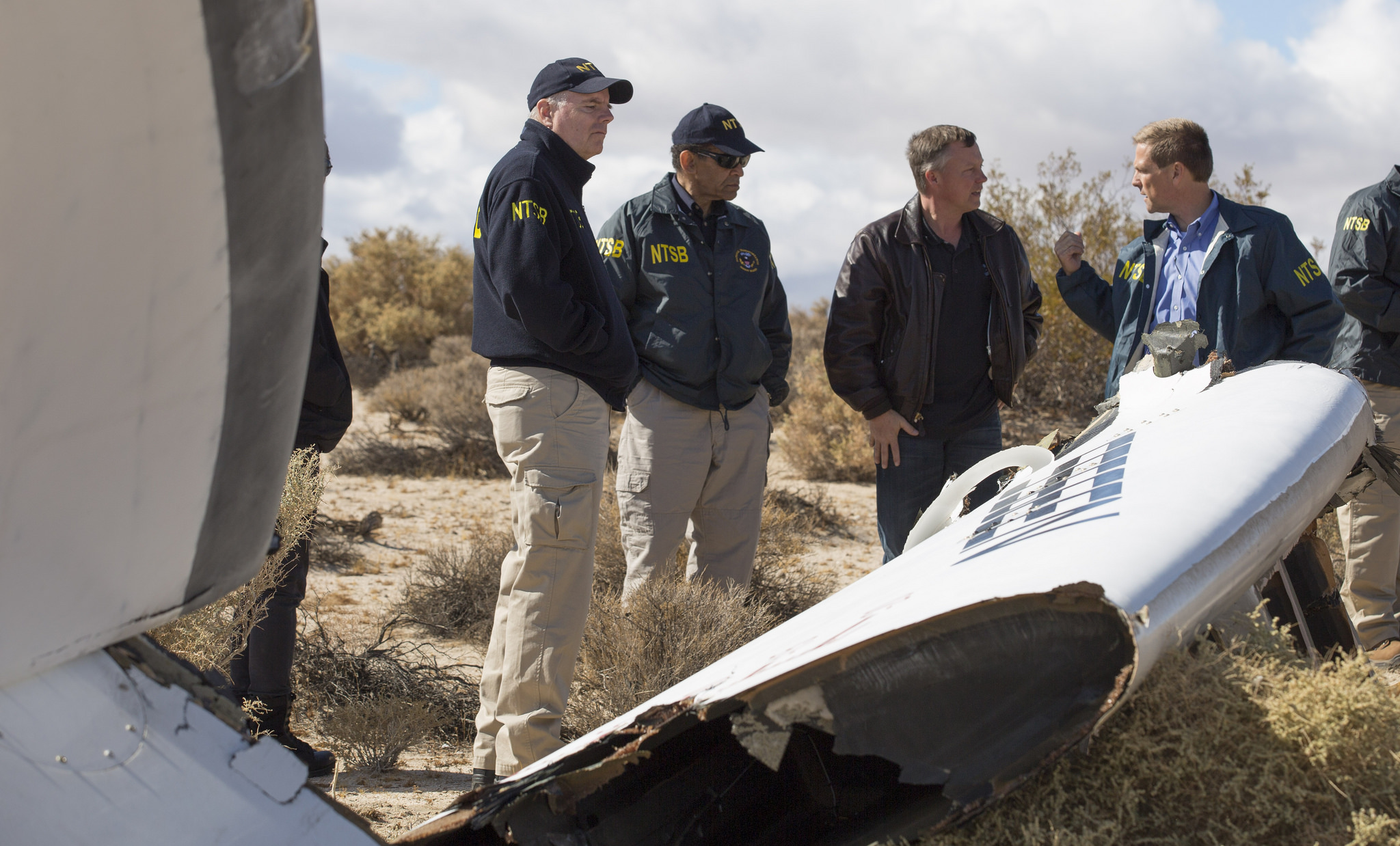
Virgin Galactic pilot Todd Ericson and NTSB investigators at SpaceShipTwo accident site.
Credit: NTSB
At around 50,000 feet, the tail-booms were lowered again and, while jettisoning the remaining oxidizer, Unity turned towards Mojave for the glide home and a smooth runway landing.
Explains Virgin Galactic: “The flight has generated valuable data on flight, motor and vehicle performance which our engineers will be reviewing.”
Today’s flight also marks a key moment for the test flight program, entering now the phase of powered flight and the expansion to full duration rocket burns.
Credit: Kang/UAH
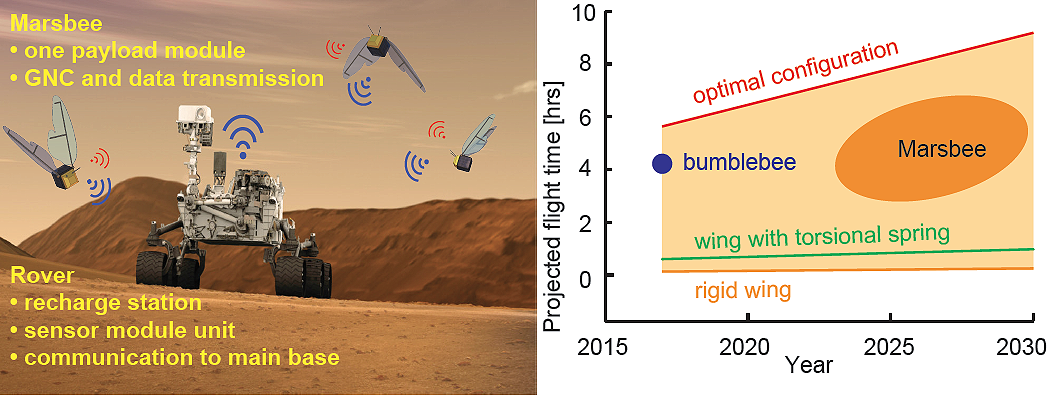
A recent NASA Innovative Advanced Concepts (NIAC) award is focused on letting loose on Mars a swarm of flapping flyers.
“Flying on Mars is challenging because of the ultra-low density in the Martian atmosphere. Our preliminary work shows that bioinspired aerodynamic mechanisms can help in generating sufficient lift to fly on Mars,” explains Chang-kwon Kang, an assistant professor of mechanical and aerospace engineering at The University of Alabama in Huntsville (UAH).
UAH researchers will numerically model, analyze, and optimize a flapping flyer for Martian atmospheric conditions. They will work in tandem with Japanese colleagues that will develop and test a micro-flapping robot that is uniquely designed and constructed for the low-density atmosphere on Mars.
Flapping wing flyers
Kang’s winning NIAC proposal, entitled “Marsbee – Swarm of Flapping Wing Flyers for Enhanced Mars Exploration,” seeks to increase the set of possible exploration and science missions on Mars by investigating the feasibility of flapping-wing aerospace architectures in a Martian environment.

Credit: NASA
At its center is the Marsbee, a robotic bumble-bee-sized flapping-wing flyer whose large cicada-like wings have the ability to generate sufficient lift to hover in the Martian atmosphere. Integrated with sensors and wireless communication devices, these flyers would work in a swarm, with a mobile base serving as their recharging station and a main communication center.
Micro-air vehicle
Given the NIAC Phase I award, researchers want to determine the wing design, motion, and weight that can hover with optimal power in Mars’ atmospheric conditions and to assess the hummingbird micro-air vehicle – one of only a few robotic flappers in the world that can fly on Earth – in Mars conditions.
Should the team go on to receive a Phase II award, the goal will be to build on this research by addressing the maneuverability, wind gust rejection, takeoff/landing, power implications, remote sensing, and mission optimization of the Marsbees.
“Our long-term overarching goal is to develop swarms of Marsbees that can help with the human exploration on Mars,” Kang says in a UAH press statement.
Credit: Rocket Lab
U.S. orbital launch provider Rocket Lab will open a 14-day launch window this month to conduct the company’s first fully commercial launch.
The mission is named “It’s Business Time” and includes manifested payloads for Spire Global and GeoOptics Inc., built by Tyvak Nano-Satellite Systems.
Launch window
The 14-day “It’s Business Time” launch window will open on Friday April 20, 2018 NZT. During this time a four-hour launch window will open daily from 12:30 p.m. NZST (00:30 UTC).
Rocket Lab’s New Zealand launch site.
Credit: Rocket Lab
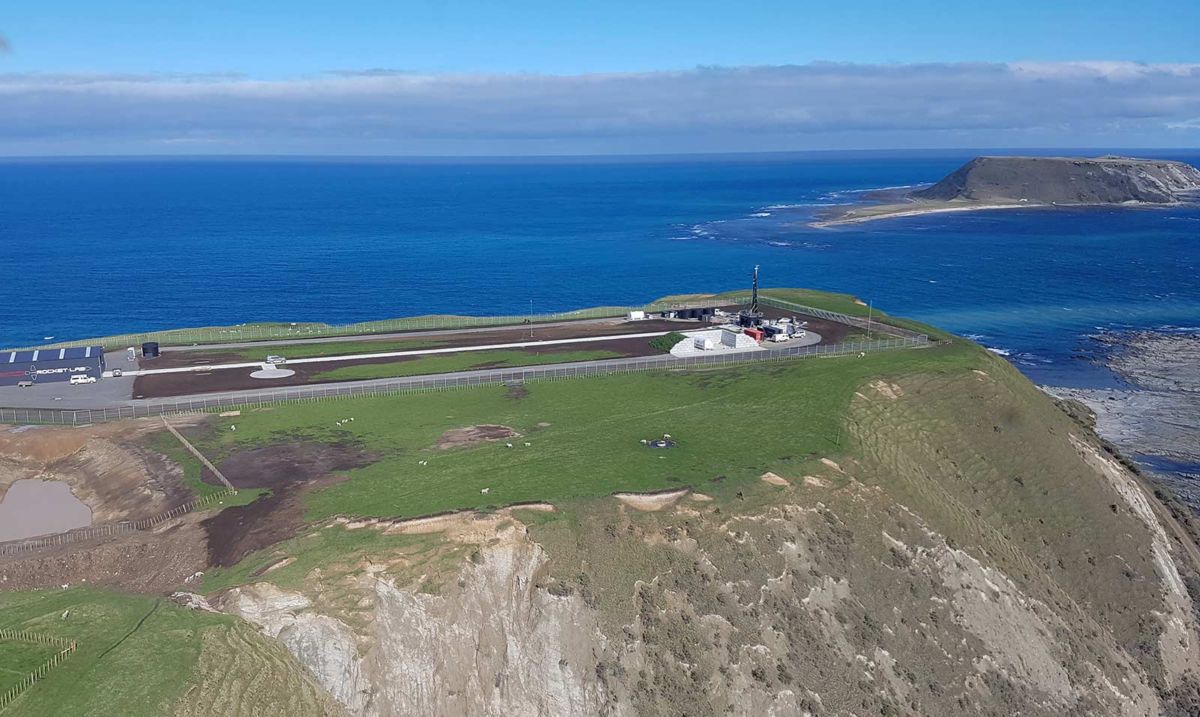
“It’s Business Time” will launch from Rocket Lab Launch Complex 1 in New Zealand “marks the fastest transition a private launch provider has made from test program to fully commercial flights,” according to a company press statement.
Launch frequency
Rocket Lab’s January 21, 2018 launch “Still Testing” successfully deployed an Earth-imaging satellite for Planet and circularized the orbit of two weather and AIS ship tracking satellites for Spire Global using Rocket Lab’s in-house designed and built kick stage.
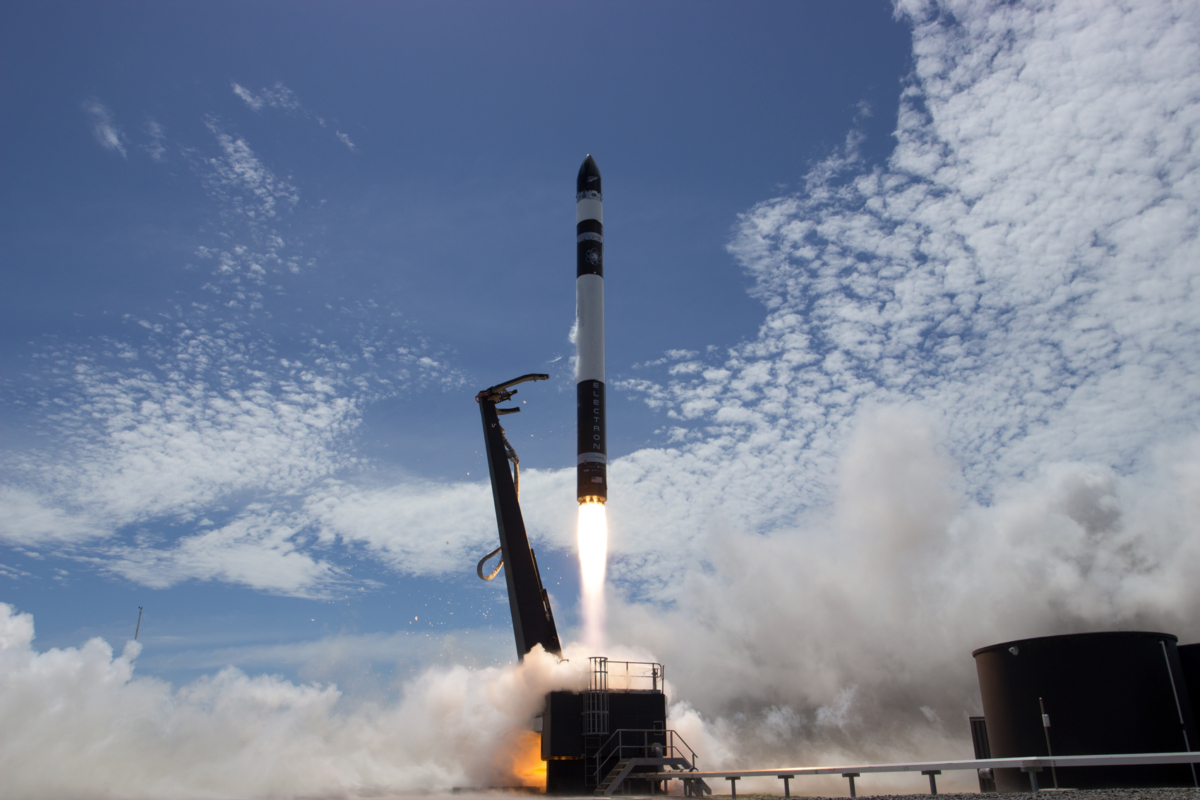
Rocket Lab’s “Still Testing” booster departs New Zealand pad, heading to Earth orbit.
Credit: Rocket Lab
Rocket Lab’s key goal is to achieve an unprecedented launch frequency thanks to a vertically integrated vehicle manufacturing process that enables Rocket Lab to roll an Electron vehicle off the production line every week.
Rocket Lab has rapidly scaled production of the Electron launch vehicle across its three-acre headquarters and production facility in Huntington Beach, California. The company will produce 100 3D printed Rutherford engines this year to support a monthly launch cadence by the end of 2018.
Rocket Lab has posted this video at:

