Author Archive
 Author:
  May 11th, 2018
Credit: NASA
Over a span of 20 years, the vision of an international orbiting outpost—one with continuous human presence, measuring the size of a football field, and orbiting the Earth every 90 minutes—became a reality.
The International Space Station (ISS) has been labeled an engineering miracle – a facility that also expresses vision, leadership, perseverance, political support, and funding.
The ISS enables world-class scientific research, forges pathfinders for future exploration travel, and unites 15 international partners working together with common goals to keep the ISS viable.
The ISS is part of NASA’s ongoing, deliberate, step-by-step approach for expanding the boundaries associated with human spaceflight exploration that will return humans to the Moon and eventually to inhabiting Mars.
A new NASA book – available for free as an e-book – is titled: The International Space Station: Operating an Outpost in the New Frontier. Robert Dempsey is the Executive Editor of this informative book.

International Space Station.
Credit: NASA
Real time, continuous
In the book’s preface, Dempsey explains: “This is an unusual book. Half the chapters are devoted to operations, meaning what we do in real time during a mission. For the International Space Station, real time is continuous 365 days a year, 24 hours a day. These chapters will describe different operational aspects of “flight control.” However to get the full context, the remaining chapters will provide technical descriptions of the primary space station systems. Although not strictly required to understand the operations, they are intended to provide more information for proper context.
Chapters include: Living and Working in Space and on the Ground; Debris Avoidance—Navigating the Occasionally Unfriendly Skies of Low-Earth Orbit; When Major Anomalies Occur; as well as Vital Visiting Vehicles—Keeping the Remote Outpost Crewed and Operating.
The 400-page book brings together the collective knowledge of the 10 space station flight directors who authored it, drawing on their combined 45,000 hours of experience at the helm of mission control. In addition to Dempsey, they are Dina Contella, David Korth, Michael Lammers, Courtenay McMillan, Emily Nelson, Royce Renfrew, Brian Smith, Scott Stover and Ed Van Cise.
This new NASA e-book is available at:
https://www.nasa.gov/sites/default/files/atoms/files/iss-operating_an_outpost-tagged.pdf
 Posted in

Notional design of Lunar Orbital Platform-Gateway.
Credit: Lockheed Martin
NASA’s Exploration Campaign calls for establishment of U.S. preeminence in cislunar space through the operations and the deployment of a U.S.-led Lunar Orbital Platform-Gateway.
Together with the Space Launch System (SLS) and the Orion spacecraft, the Gateway has been deemed central to advancing and sustaining human space exploration goals. NASA sees it as a unifying single stepping off point in creating architecture for human cislunar operations, lunar surface access and missions to Mars.
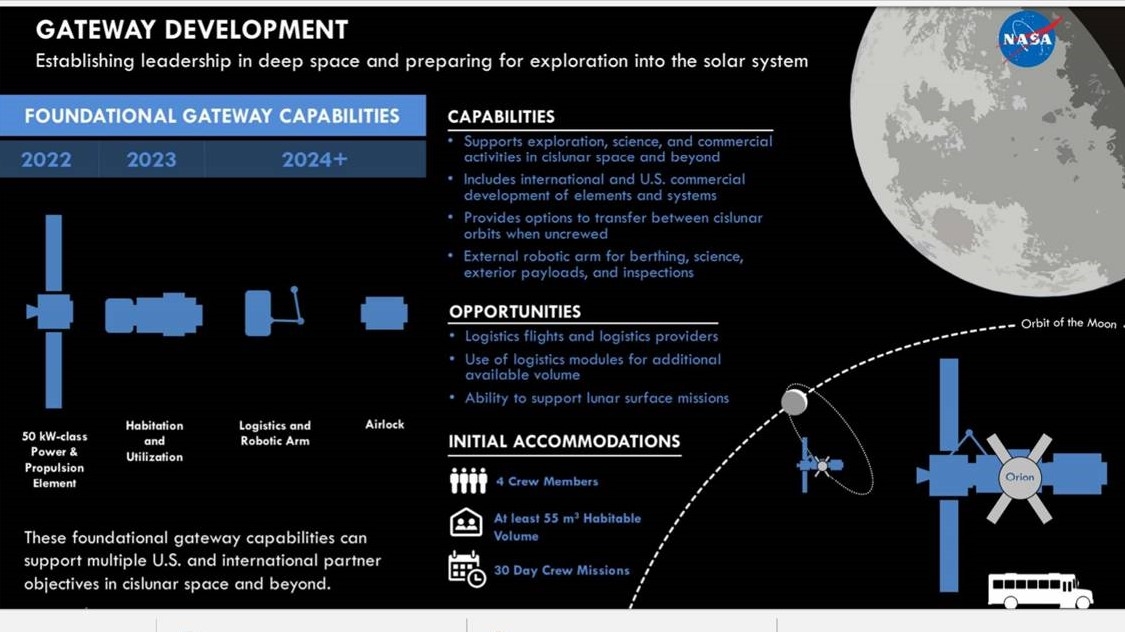
Credit: NASA
Directive 1
The gateway is necessary to achieving the exploration campaign goals set forth by the White House Space Policy Directive 1.
NASA has published a memorandum outlining the agency’s plans to collaboratively build the Gateway.
This document is available at:
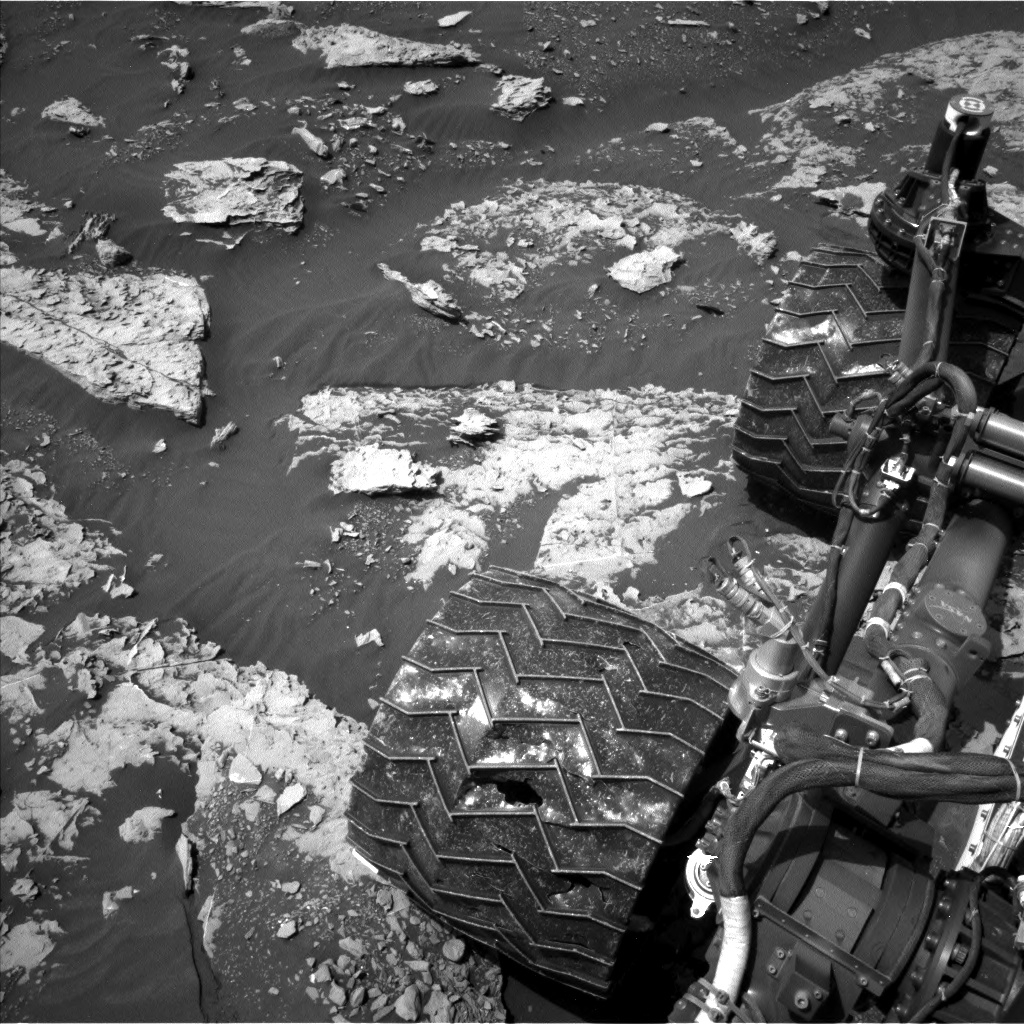
Curiosity Navcam Left B image taken on Sol 2047, May 10, 2018.
Credit: NASA/JPL-Caltech
NASA’s Curiosity Mars rover is now in Sol 2048 after completing a successful bump, a short drive that was slated for Sol 2046, reports Ken Herkenhoff, a planetary geologist at the USGS in Flagstaff, Arizona.
The robot is now in a good position for contact science on a couple of bright blocks in front of the Mars machinery.
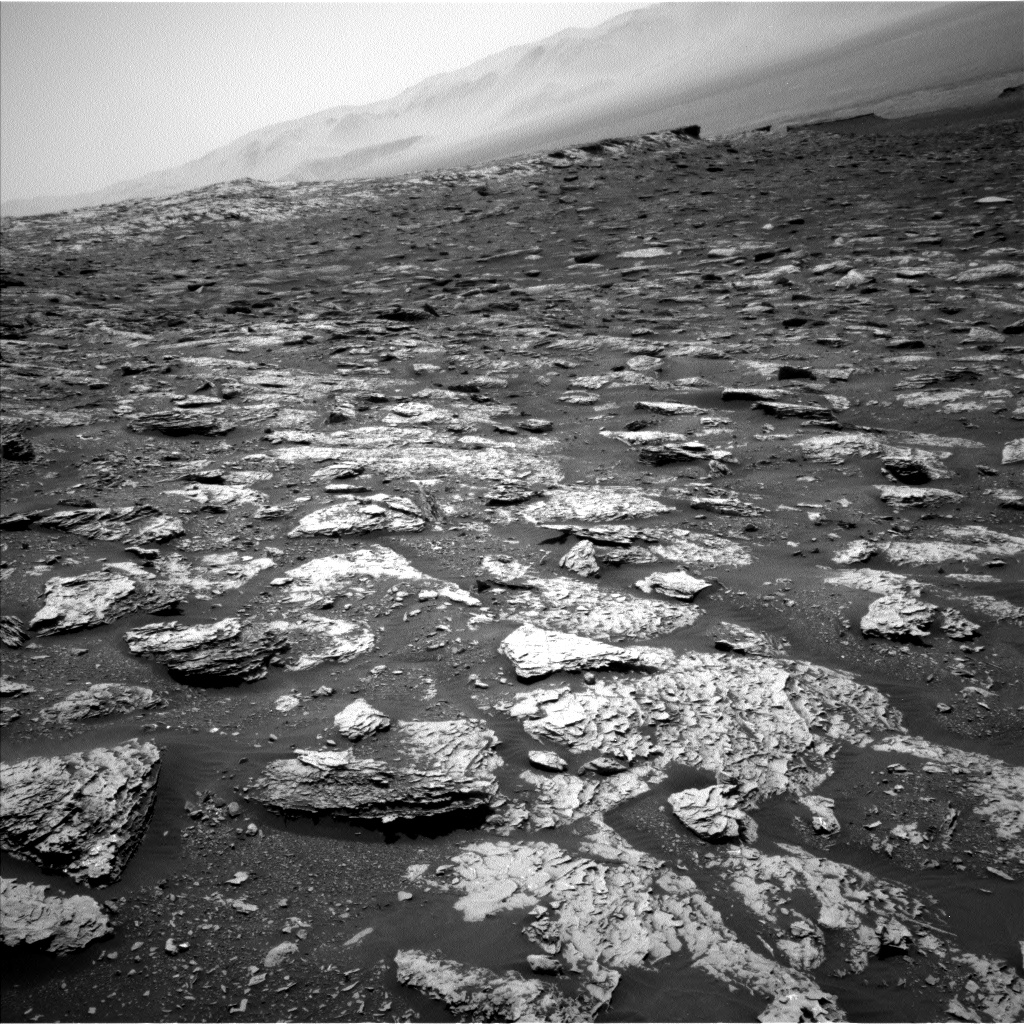
Curiosity Navcam Left B image acquired on Sol 2047, May 10, 2018.
Credit: NASA/JPL-Caltech
Two targets
The current plan, Herkenhoff explains, calls for Curiosity to brush two targets on the larger block, named “Bilbert” and “Giants Range,” before Mars Hand Lens Imager (MAHLI) images them and the Alpha Particle X-Ray Spectrometer (APXS) measures their chemistry at night.
Before the arm activities, the Chemistry and Camera (ChemCam) will shoot its laser at Giants Range and targets “Vermillion” and “Lac La Croix” on nearby blocks.

Curiosity Navcam Left B image taken on Sol 2047, May 10, 2018.
Credit: NASA/JPL-Caltech
Contact science
“Because the stowed arm partly blocks our view of the part of the arm workspace closest to the rover, we’ll acquire a Navcam stereo pair and a single Left Mastcam color image of that area after the arm is deployed,” Herkenhoff adds. “These images will be useful in planning more contact science this weekend.”

Curiosity Navcam Left B photo acquired on Sol 2047, May 10, 2018.
Credit: NASA/JPL-Caltech
NASA’s Curiosity Mars rover is carrying out Sol 2047 duties.
Reports Scott Guzewich, an atmospheric scientist at NASA/Goddard Space Flight Center in Greenbelt, Maryland: “In Curiosity-speak, a ‘bump’ is a short drive the rover performs to better position itself for a particular science investigation…often contact science with the rover’s arm.” A recent plan included such a bump to reach a suitable target for contact science, but unfortunately the drive did not execute.
A new plan is aimed to recover this drive and reach a target for contact science in the next plan.

Curiosity Front Hazcam Right B image taken on Sol 2047, May 10, 2018.
Credit: NASA/JPL-Caltech
Bedrock plates, tilted rocks
Curiosity is at a spot where the ground is full of bedrock plates and tilted rocks, one of which Curiosity is standing on, Guzewich adds, which prevented contact science at the current location.
“Curiosity will continue to head northward away from the ridge to find a target suitable for drilling,” Guzewich notes.

Curiosity Mastcam Right image acquired on Sol 2046, May 9, 2018.
Credit: NASA/JPL-Caltech/MSSS
The science plan now being carried was necessarily limited and will include post-drive imaging, a dust devil movie, and routine Rover Environmental Monitoring Station (REMS) and Dynamic Albedo of Neutrons (DAN) environmental monitoring, Guzewich reports.

NASA Mars 2020 rover is designed to collect samples, store the specimens in tubes, then deposit the tubes on the surface for later pick-up.
Credit: NASA/ESA
The move is on to pull together a robotic sample return from Mars mission. A new video details how such an undertaking would be staged. It would require at least three missions from Earth and one never-been-done-before rocket launch from Mars.
A first mission already being built is NASA’s 2020 Mars Rover. This robot is set to collect surface samples in pen-sized canisters as it explores the Red Planet. Up to 31 canisters will be filled and readied for a later pickup.

A small fetch rover would pick up soil samples for delivery to a Mars Ascent Vehicle.
Credit: NASA/ESA
A second mission with a small fetch rover would land nearby and retrieve the samples in a Martian search-and-rescue operation. This rover would bring the samples back to its lander and place them in a Mars Ascent Vehicle – a small rocket to launch the football-sized container into Mars orbit.

Mars Ascent Vehicle lifts off from Mars carrying soil samples.
Credit: NASA/ESA
A third launch from Earth would provide a spacecraft sent to orbit Mars and rendezvous with the sample container.
Once the samples are safely collected and loaded into an Earth entry vehicle, the spacecraft would return to Earth, release the vehicle to land in the United States, where the samples will be retrieved and placed in quarantine for detailed analysis by a team of international scientists.

Mars Ascent Vehicle heads for orbit.
Credit: NASA/ESA

Orbiter would capture the capsule containing Mars samples for delivery back to Earth.
Credit: NASA/ESA
Take a look at this informative video from NASA/ESA:
http://www.esa.int/spaceinvideos/Videos/2018/05/Mars_sample_return
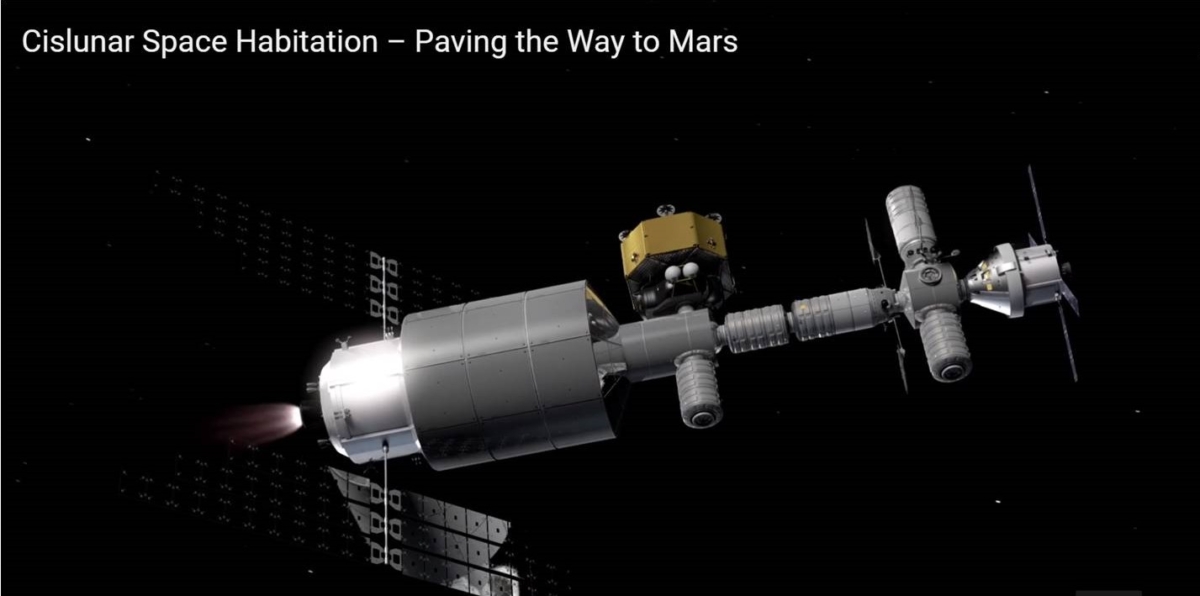
Credit: Orbital/ATK
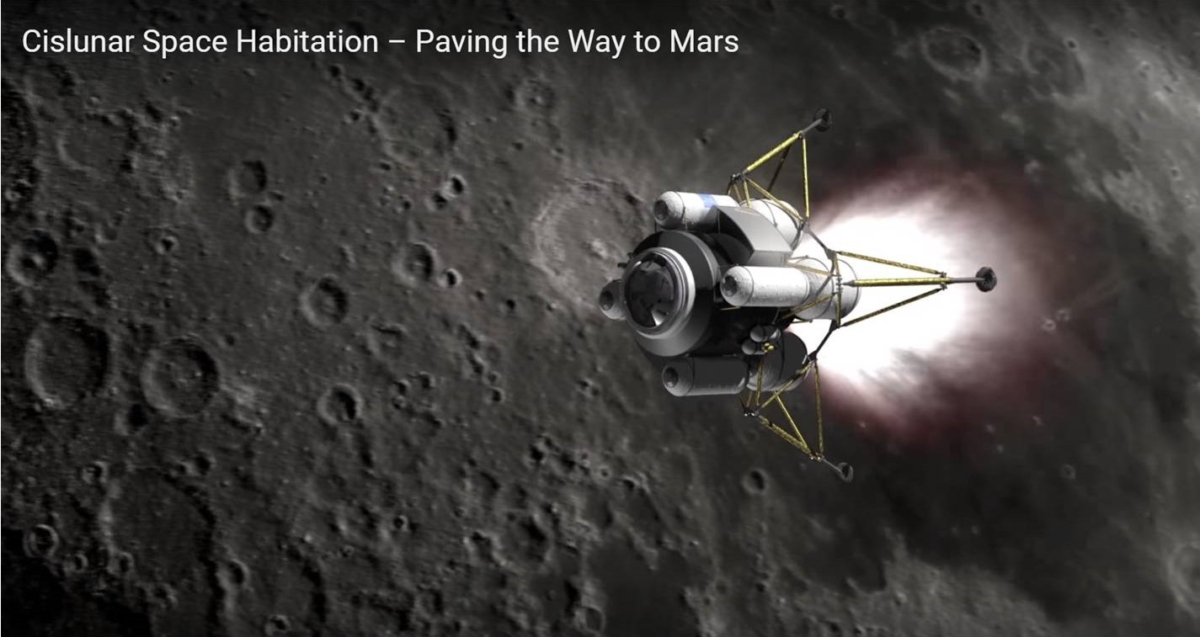
Orbital ATK has released a new video showing its vision for the next step toward human space missions employing its Cygnus advanced maneuvering spacecraft as a human habitat in cislunar space, the region between the Moon and Earth.
In the early 2020s, Orbital ATK says it would launch the initial habitat on NASA’s Space Launch System (SLS) rocket.
Featuring a modular design, the habitat would serve both as a destination for crewed missions and as an unmanned testbed to prove-out the technologies needed for long-duration human space missions.
Credit: Orbital/ATK
The habitat is also envisioned as a base for lunar missions by international partners or commercial ventures. With additional habitation and propulsion modules, the habitat could be outfitted for a Mars pathfinder mission.
Go to the video at:

NASA/commercial return to the Moon.
Photo Credit: NASA/GSFC
A House Commerce-Justice-Science (CJS) Appropriations Subcommittee bill provides a record $21.5 billion for NASA. That bill released late yesterday “fully funds the requested amounts for robotic and human exploration of the Moon, including $504.2 million for the lunar orbital platform; $116.5 million for advanced lunar and surface capabilities; $218 million for planetary science, including rovers and science instruments.”
“The FY 2019 House Commerce-Justice-Science Appropriations bill firmly sets America on a course back to the surface of the Moon for the first time since 1972 with its full funding of the Lunar Discovery and Exploration program in Science Mission Directorate and Advanced Cislunar and Surface Capabilities in the Advanced Exploration Systems office,” said Astrobotic’s CEO John Thornton.

Peregrine lunar lander.
Credit: Astrobotics
“These approaches will build on NASA’s ongoing work with Lunar CATALYST partners to provide small robotic lander capabilities as early as 2020 on Astrobotic’s first Peregrine mission to the Moon, which will launch on the ULA Atlas V,” Thornton said in a company statement.
Lunar providers
Yesterday NASA held an “Industry Day” for its Commercial Lunar Payload Services program, in which NASA will partner with commercial lunar providers to deliver NASA payloads to the surface on at-least annual cadence.

Notional Gateway.
Credit: NASA
Also, NASA recently closed its Request for Information for Medium Lander capabilities. This RFI was another important signal that NASA is moving out on a methodical and highly capable lunar program.
Astrobotic Technology Inc. is based in Pittsburgh, Pennsylvania and is a lunar logistics company that delivers payloads to the Moon for companies, governments, universities, non-profit organizations, and individuals.
Credit: Bryan Versteeg
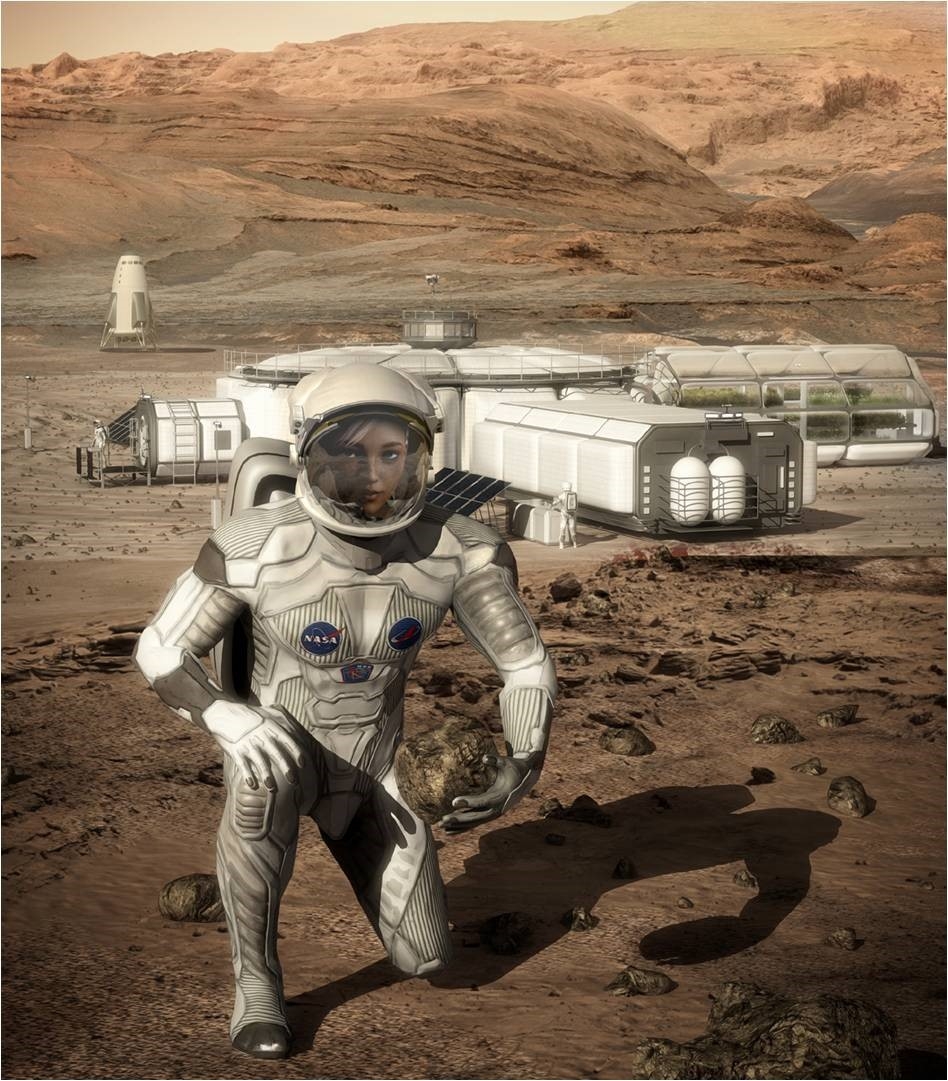
A new and excellent report has been issued by Explore Mars, Inc.
The Humans to Mars Report (H2MR) is an annual publication that presents a snapshot of current progress in mission architectures, science, domestic and international policy, human factors, and public perception regarding human missions to Mars – and highlights progress and challenges from year to year.

Credit: James Vaughan
Current facts
As explained by Chris Carberry, the group’s Chief Executive Officer and Artemis Westenberg, President, “H2MR provides stakeholders and policy makers with an invaluable resource to assist them in making decisions that are based on current facts rather than on the dated information and speculation that sometimes tends to persist in the public arena where Mars is concerned.”
While recently there has been some shift in emphasis in United States near-term space policy, by charting a return to the Moon, “the goal of human missions to Mars in the 2030s still maintains broad-based bi-partisan support, with unwavering support coming from NASA, Congress, and industry,” the report states.

Credit: Bryan Versteeg
Mars by 2033
“As always, through the publication of the Humans to Mars Report, Explore Mars is not discounting the prospect of human exploration of other destinations in the solar system. In fact, we embrace them, as long as they do not significantly delay human missions to Mars. We view Mars as a critical destination that will enable the exploration and development of space – and we firmly believe that humanity should set the goal of landing humans on the surface of Mars by 2033.”
To access this report, go to:
https://www.exploremars.org/wp-content/uploads/2016/12/H2MR_18_Web.pdf
Also, don’t forget to tune into the currently in progress Humans to Mars meeting in Washington, D.C. Go to the agenda at:
Curiosity Navcam Left B image taken on Sol 2045, May 8, 2018.
Credit: NASA/JPL-Caltech
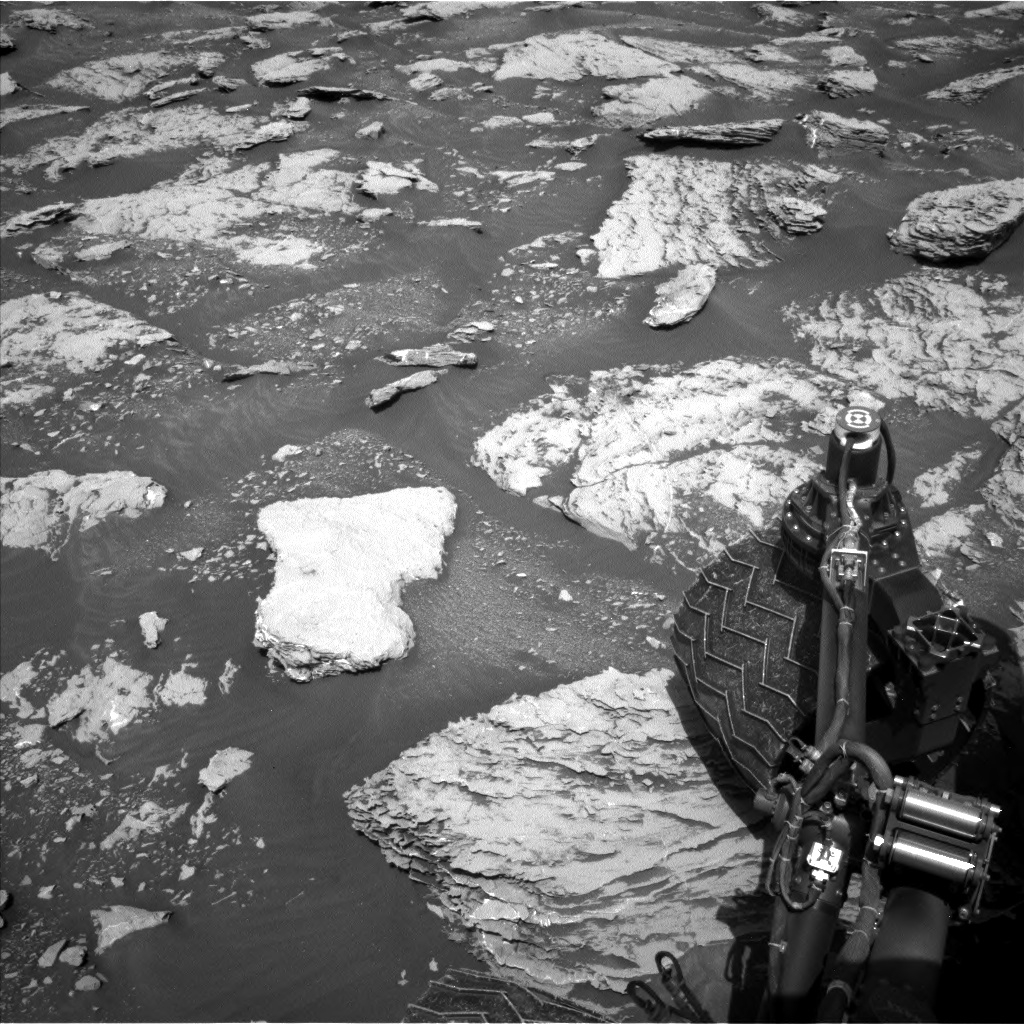
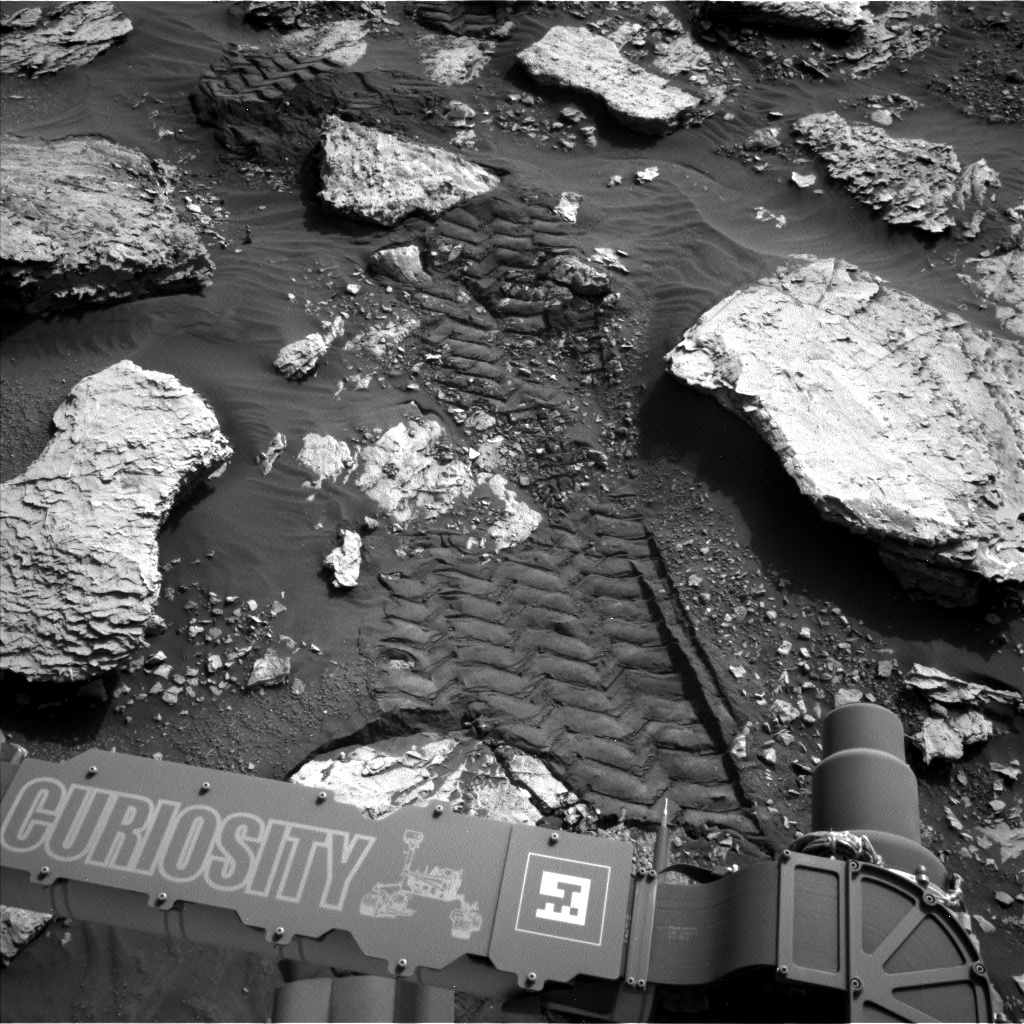
Mark Salvatore, a planetary geologist at the University of Michigan in Dearborn, reports Curiosity has had a stroke of bad luck. The issue prevented the science team from performing pre-planned rover science.
“About half-way through planning this work, the science team got news that the rover was not only sitting at a rather steep angle, roughly 17 degrees relative to horizontal, but that one of the wheels was also propped up on a loose rock.”
Curiosity Navcam Left B image acquired on Sol 2045, May 8, 2018.
Credit: NASA/JPL-Caltech
In order to play it safe and to minimize any risk that the robot would lose its balance when the arm was extended to perform many of these analyses, Salvatore adds that the rover planners and the science team decided to forego any arm activities.
Unnecessary risks
Instead, the plan now calls for only a short science investigation and to “bump” to a nearby rock to try again for a full surface characterization.
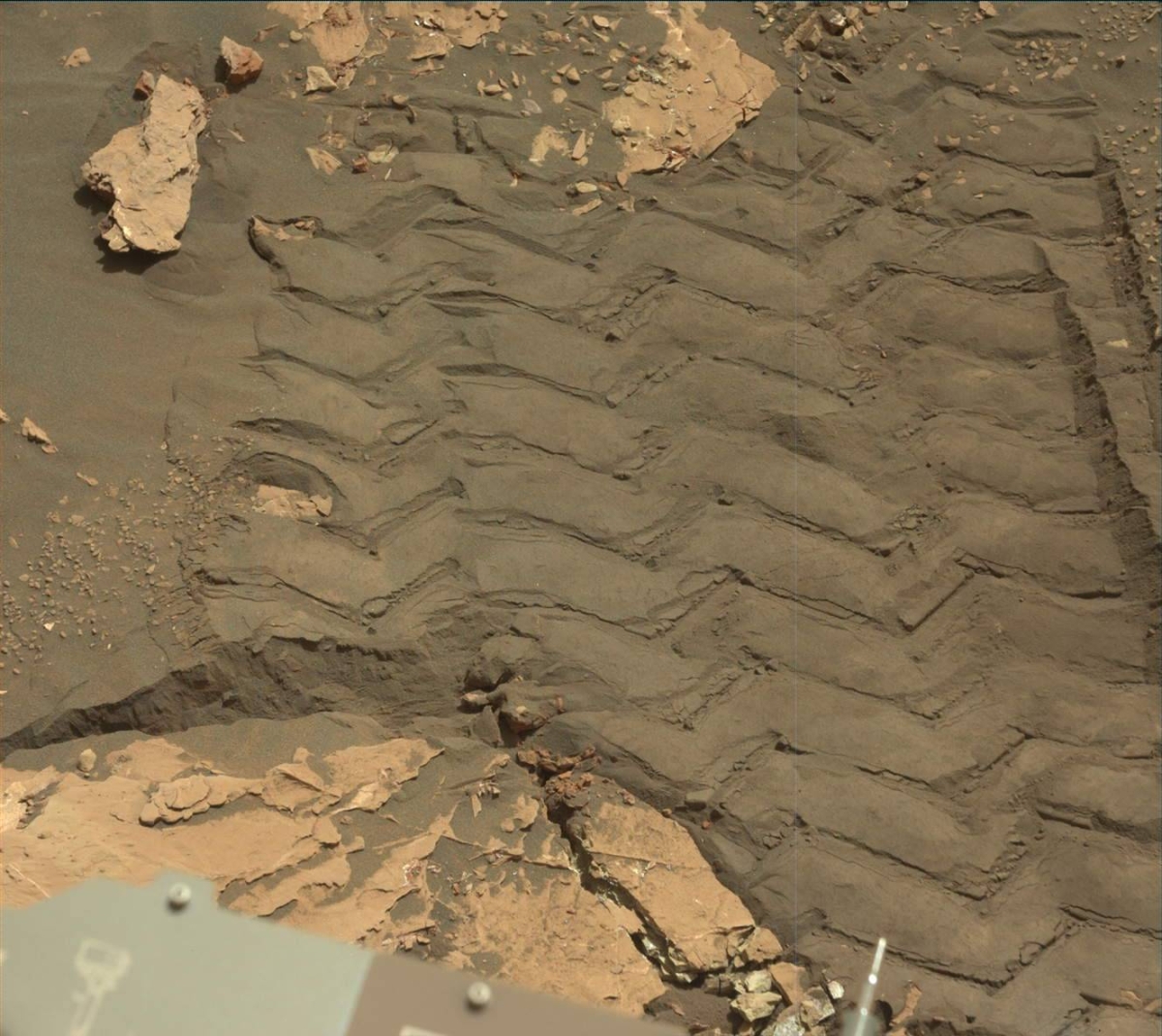
Curiosity Mastcam Left image acquired on Sol 2045, May 8, 2018.
Credit: NASA/JPL-Caltech/MSSS
“While these decisions are momentarily disappointing, they are relatively frequent and necessary to ensure that Curiosity will be able to perform her job many years into the future,” Salvatore explains. “We certainly don’t want to take any unnecessary risks!”
Ridge work
As Curiosity continues to descend the Vera Rubin Ridge (VRR), Salvatore notes that the science team is doing their best to characterize, for a second time, all of the structural, chemical, and spectral variations originally seen as the robot climbed up the ridge.
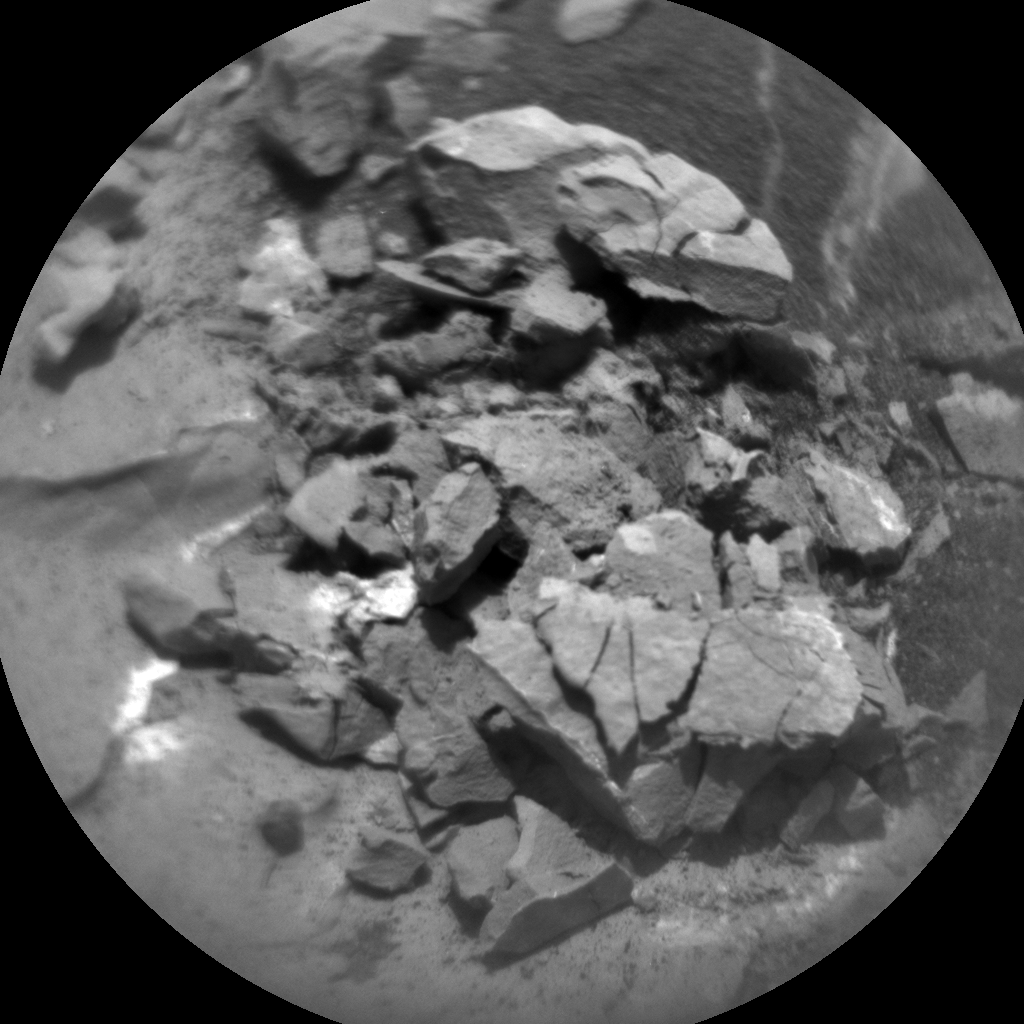
Curiosity ChemCam Remote Micro-Imager photo taken on Sol 2046, May 9, 2018.
Credit: NASA/JPL-Caltech/LANL
A recent drive brought Curiosity from the “Pettegrove Point” member of the VRR into the “Blunts Point” member, which is just below the ridge itself.
Drive ahead
Prior to the steep angle issue, the science team was planning to spend a full day at this location to perform remote science investigations, to brush off a rock surface, to analyze the surface’s chemistry, and to take some high-resolution oblique images to characterize the layering observed in the sides of the rocks.
So, instead of the plethora of science activities originally planned, Curiosity will instead only make a handful of measurements before pivoting and driving a few meters away to the next location for a renewed attempt at surface science.
Ground breaking news
New planning had Curiosity using the Chemistry and Camera (ChemCam) instrument’s laser-induced breakdown spectrometer to measure “Grand Lake,” a block of the Blunts Point member that appears to have the typical properties seen earlier in the mission, as well as “Mud Lake,” which is a piece of bedrock broken by Curiosity’s wheels that revealed a bright brick-red color on its inside.
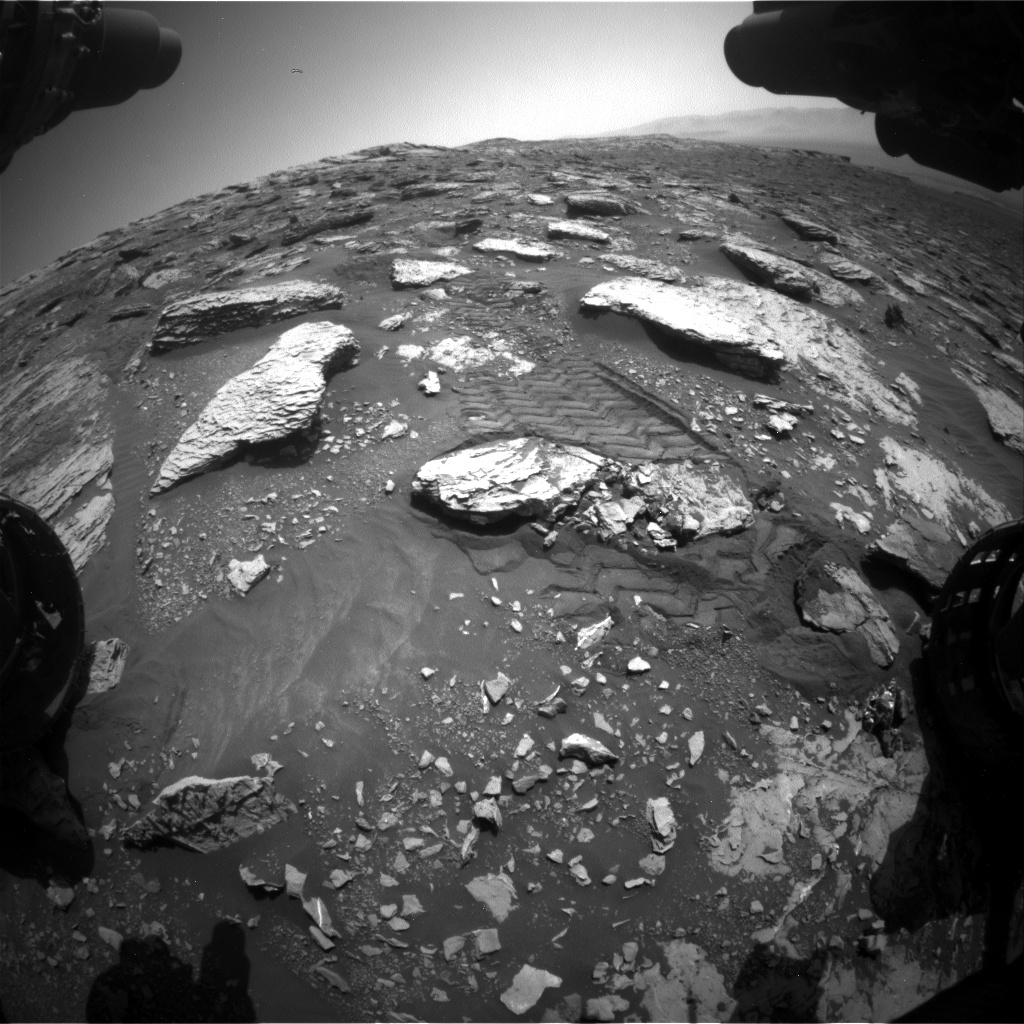
Ground breaking news: Curiosity’s wheels drove over rock, cracking it and revealing a bright brick-red color on its inside. Photo taken by
Front Hazcam Right B Sol 2045 May 8, 2018
Credit: NASA/JPL-Caltech
Salvatore says that the rover’s Mastcam is slated to follow up with documentation images as well as a multispectral image of Mud Lake to see what sort of spectral and mineralogical variations are the cause of the bright red coloration.
Curiosity will also perform several environmental monitoring measurements, including a search for dust devils and an atmospheric opacity observation. Following her short drive, Curiosity will then perform standard post-drive imaging in order to get ready for upcoming surface analyses, Salvatore reports.
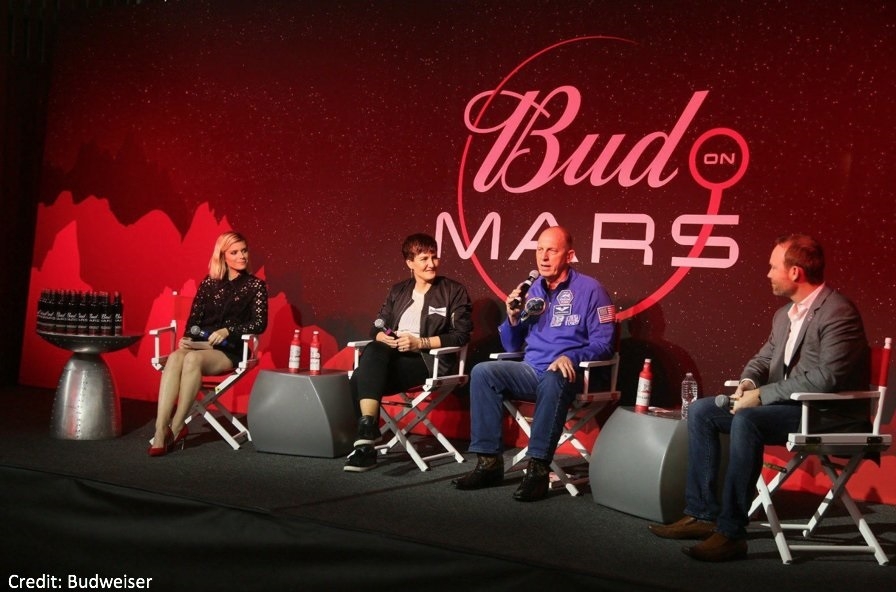
Credit: Budweiser
Reaching Mars is the ultimate dream for humankind. And we’re up for the journey.
That’s why Budweiser’s on a mission to become the first beer on Mars. #ThisBudsForYou
Budweiser is celebrating its commitment to being the first beer on Mars through a just-released two minute tribute film. According to the company:
- At Budweiser, we believe that space exploration isn’t just about discovering something new, but also discovering humanity – which we know beer is an important factor of.
- The video is narrated by retired Astronaut Clay Anderson, who was an astronaut for 15 years spending a total of 167 days in space, and was also a key player in Budweiser’s initial announcement at SXSW 2017.
- Since the initial announcement in March 2017, we’ve made our first few steps to creating a micro-gravity beer including sending barley, one of our main ingredients, to space.
Credit: Budweiser
Go to this new video at:
https://www.youtube.com/watch?v=6onY7e38AR0&feature=youtu.be
For more information on this Budweiser Mars campaign, go to:
https://www.space.com/39049-mars-beer-budweiser-american-poll.html

