Author Archive
 Author:
  July 17th, 2018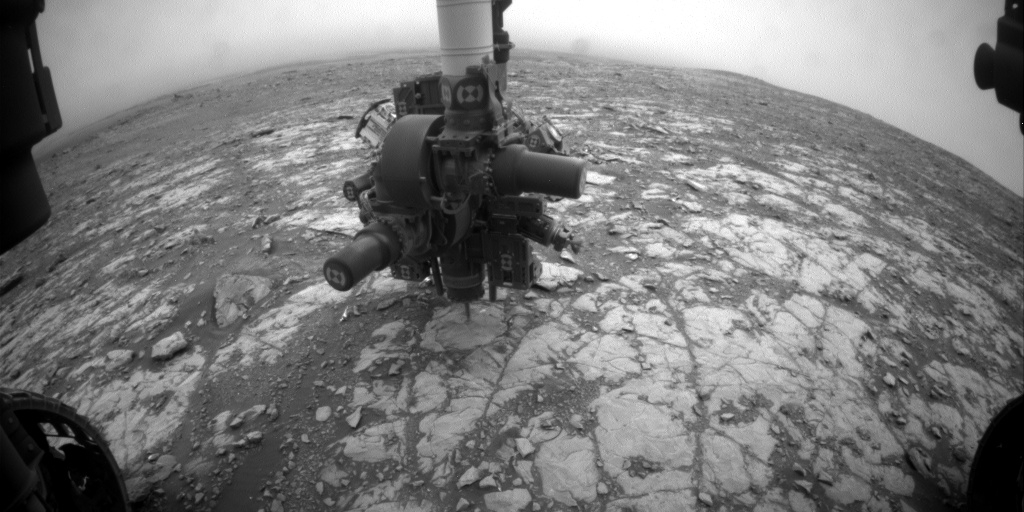
Curiosity Front Hazcam Left B image acquired on Sol 2112, July 16, 2018.
Credit: NASA/JPL-Caltech
NASA’s Curiosity Mars rover is carrying out Sol 2113 science tasks after being thwarted in performing new drilling in a selected target.
“Hard as a rock,” reports Lauren Edgar, planetary geologist at the USGS in Flagstaff, Arizona. “Unfortunately, we found out this morning that the ‘Voyageurs’ drill target was a much harder rock than expected. While our drill plan executed perfectly, our bit stopped short of the full depth we need for sampling. The engineers are still evaluating the data to better understand the target,” Edgar adds.
Longer-term strategy
The Curiosity science team is coming up with a new plan, and also thinking about a longer-term strategy. “Ultimately, we decided to focus on contact science and documenting the mini drill hole in today’s plan,” Edgar notes.
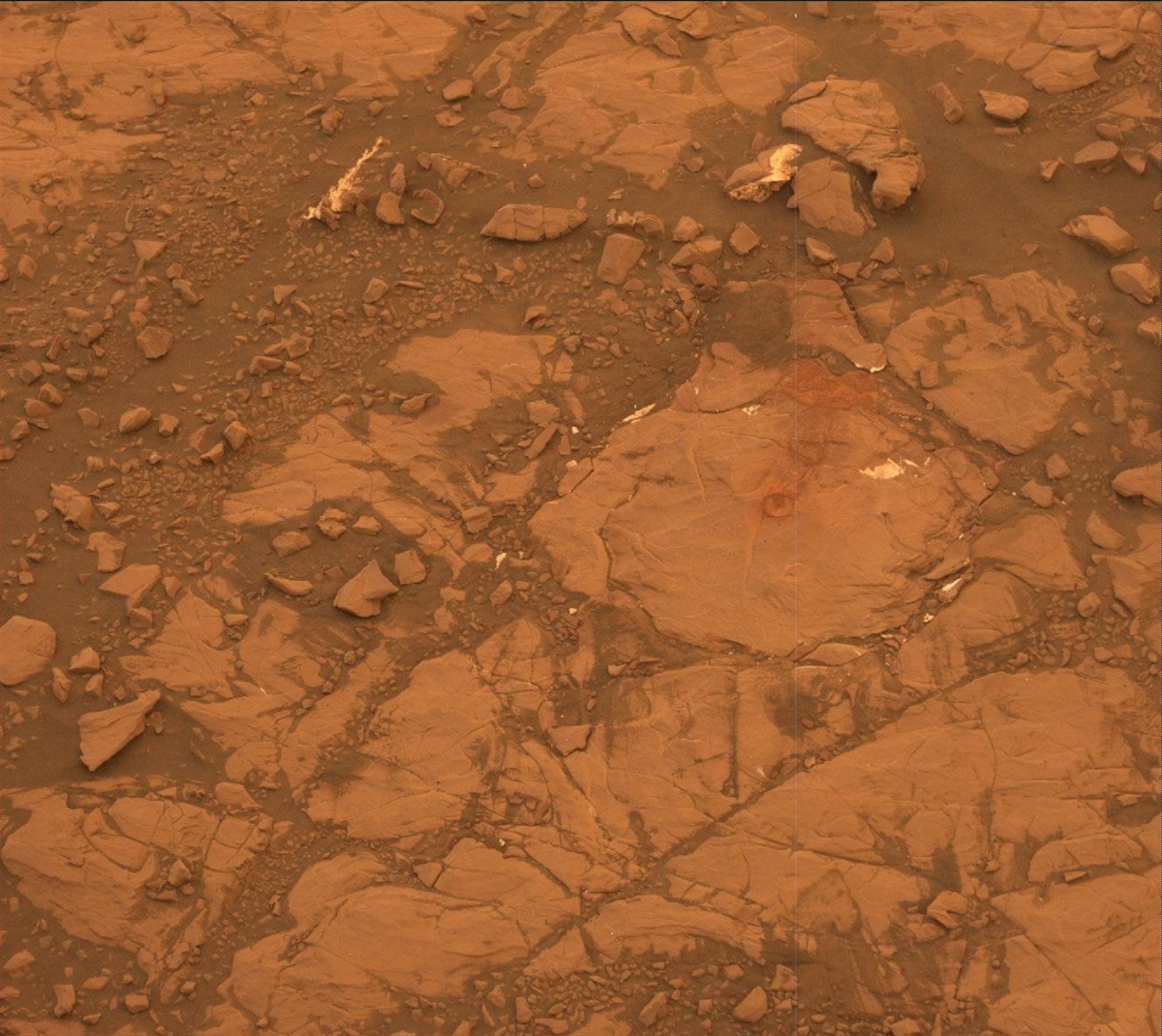
New drill hole captured in this Curiosity Mastcam Left image acquired on Sol 2112, July 16, 2018.
Credit: NASA/JPL-Caltech/MSSS
The new plan involves several Navcam observations to monitor atmospheric opacity during the ongoing dust storm. Also on tap is use of the rover’s Mastcam in change detection observations mode to characterize the movement of sand.
These observations will be followed by several Chemistry and Camera (ChemCam) scans to assess the diversity of color and composition in nearby bedrock.
Additionally, ChemCam Remote Micro-Imager (RMI) imagery of the “Voyageurs” target will be taken to help with targeting the drill hole with ChemCam in a follow-on plan.
Drill hole inspection
A few more environmental monitoring activities are part of the plan, including a Navcam line-of-sight image, Mastcam tau, and crater rim extinction observation, Edgar adds. “Then Curiosity will image the drill chuck, drill bit, and turret, to monitor our tools.”
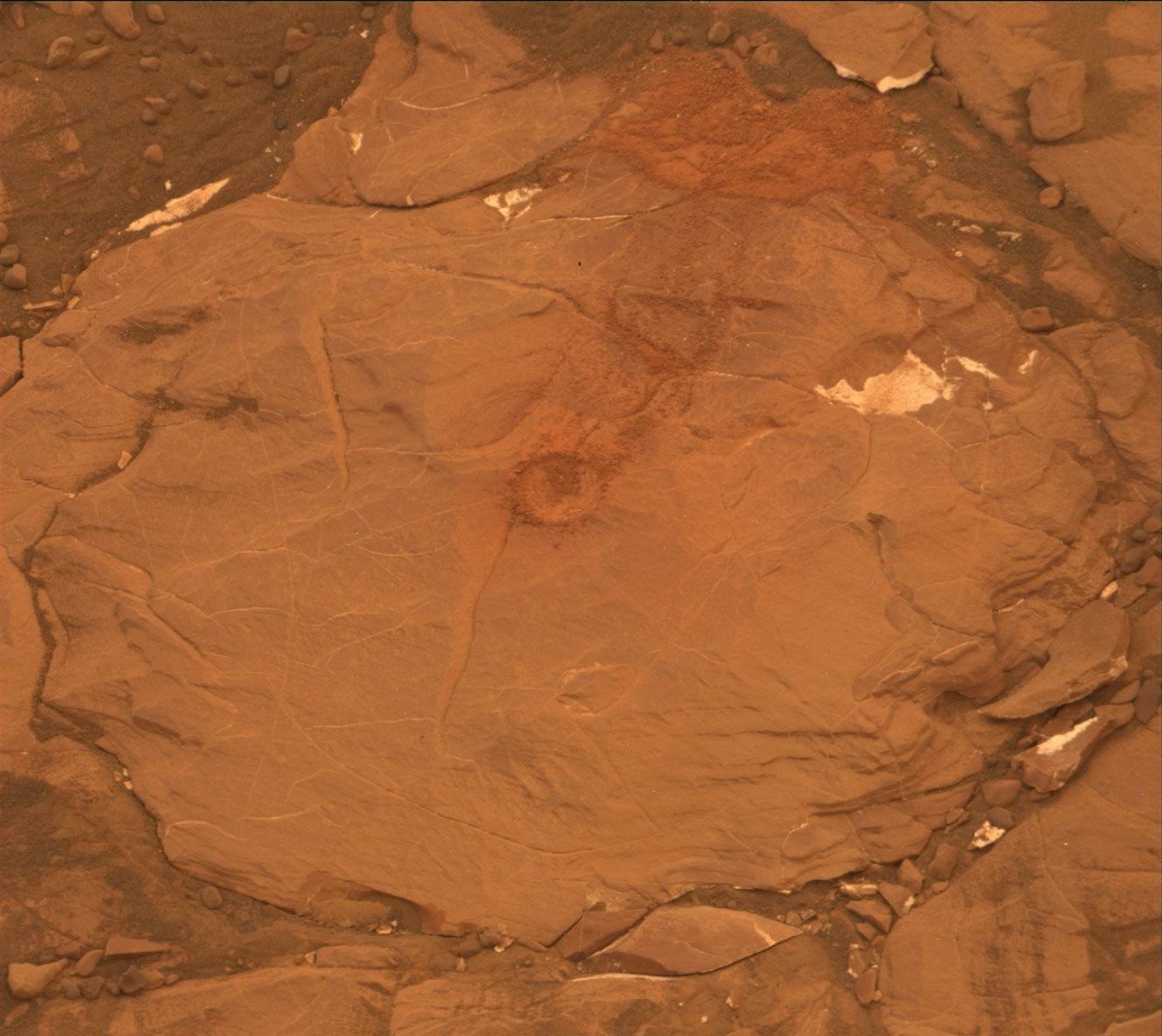
Drill hole in view in this photo taken by Curiosity Mastcam Right camera on Sol 2112, July 16, 2018.
Credit: NASA/JPL-Caltech/MSSS
An evening Alpha Particle X-Ray Spectrometer (APXS) integration on the drill tailings is scheduled, and overnight a longer APXS integration on the drill hole is slated.
Summing up, Edgar concludes: “Today is a reminder that it’s hard to operate a rover and drill on another planet, but I’m hopeful that we’ll find a way to sample this part of the ridge!”
 Posted in
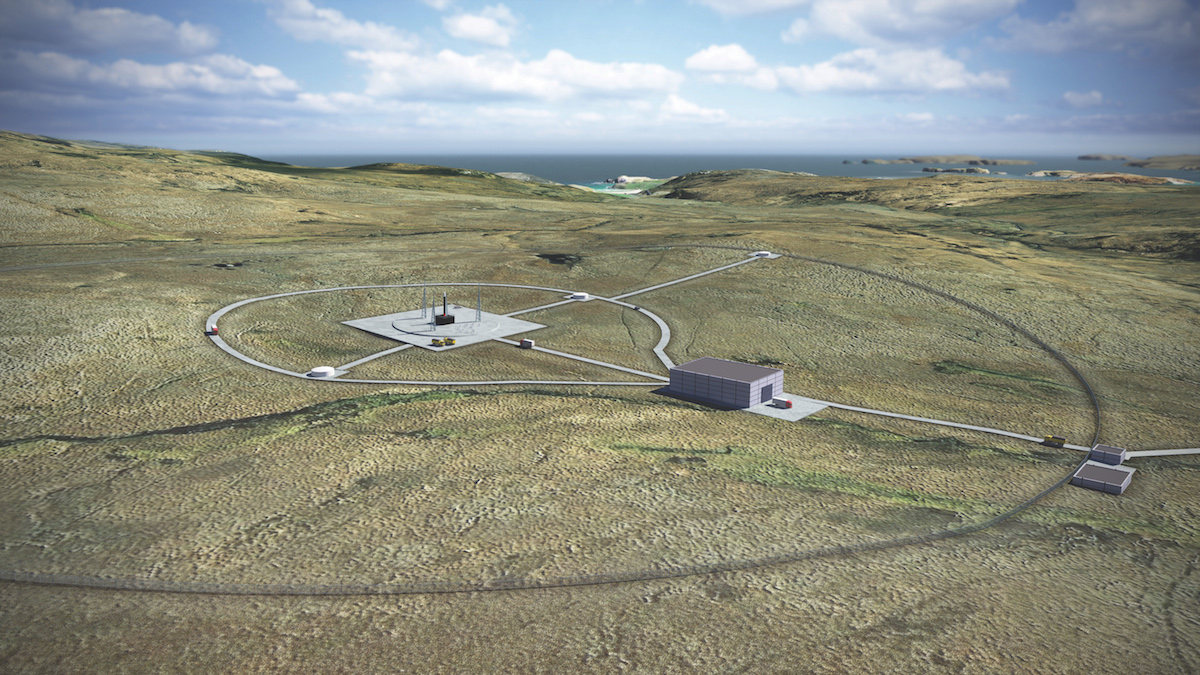
Artist impression of spaceport.
Credit: Perfect Circle PV
The UK Space Agency has awarded a contract to Lockheed Martin to develop the UK’s first spaceport in Sutherland, on the north coast of Scotland.
Pegged at $31 million total, the two contract deal has Lockheed Martin establishing vertical launch operations in Sutherland, Scotland and to develop innovative technologies in Reading, Berkshire with support from two UK Space Agency grants.
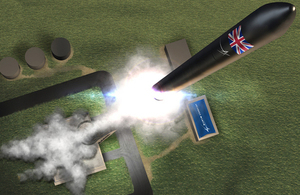
Artist’s impression of vertical launch from UK spaceport.
Credit: Lockheed Martin.
Prime time rocket
A further $7 million will go to Orbex, a UK-based spaceflight company, to build an innovative new rocket dubbed Prime for launch from Sutherland, as well as $3 million to Highlands and Islands Enterprise to develop the spaceport. The spaceport could see rocket lift-offs from the early 2020s.
With its high northern inclination, the UK is a geographically strategic location for launch, and the north of Scotland is well-placed to reach highly sought-after satellite orbits such as polar and near-polar orbit.
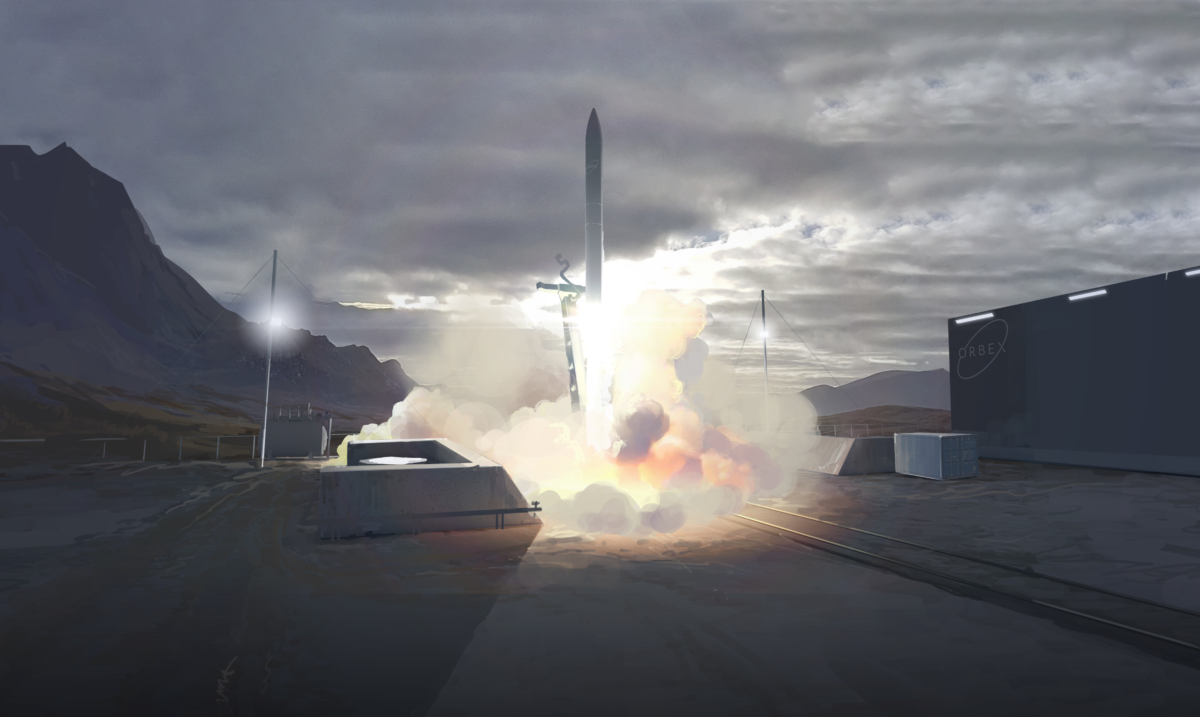
Credit: Orbex/Anders Bøggild
The Prime booster would deliver small satellites into Earth’s orbit using a single renewable fuel, bio-propane engine that cuts carbon emissions by 90% compared to hydrocarbon fuels, according to a press statement.
According to Orbex, Prime uses a novel zero-shock staging system called Magic, which leaves zero orbital debris. It also features a novel reusability concept, with an innovative new low mass recovery and reflight system.
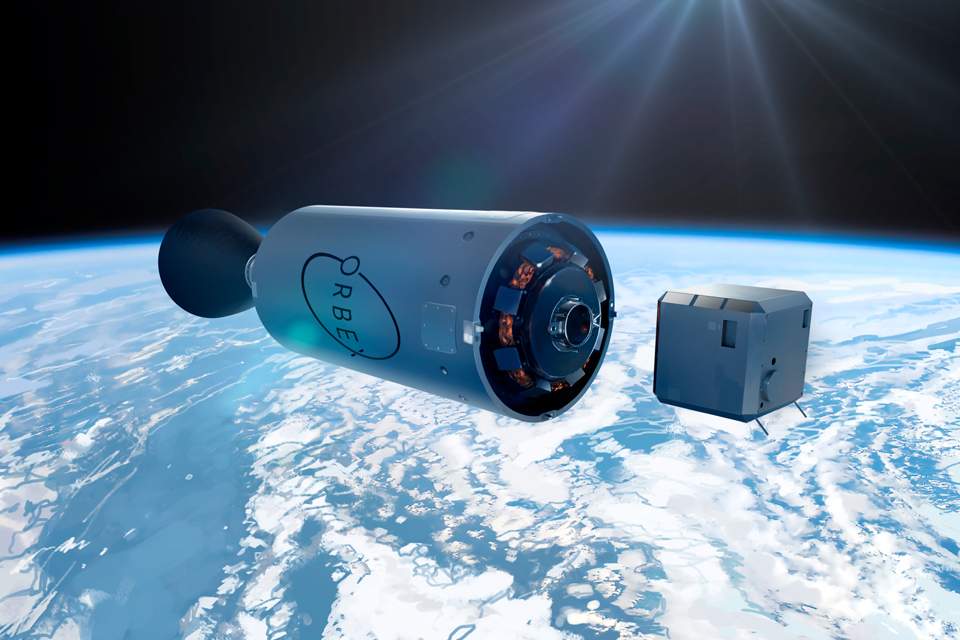
Credit: Orbex/Anders Bøggild
One-stop-shop
The UK Space Agency announced at the Farnborough International Airshow a total of $41 million in government grants to establish the UK’s first spaceport in Sutherland.
A number of sites across the UK are developing their spaceport plans. Sites such as Newquay, Glasgow Prestwick and Snowdonia will be boosted by a new $3 million strategic development fund to grow their sub-orbital flight, satellite launch and spaceplane ambitions.
The announcement to develop launch capability is being viewed as Europe’s first one-stop-shop for building, launching and operating satellites.
For more detail, go to this press statement at:
https://www.gov.uk/government/news/lockheed-martin-and-orbex-to-launch-uk-into-new-space-age
For more information on Orbex, go to:
Also go to this video at:

Chelyabinsk sky rendering is a reconstruction of the asteroid that exploded over Chelyabinsk, Russia on Feb. 15, 2013.
Credit: Sandia National Laboratories.
The consequences of incoming space objects plowing into Earth’s atmosphere and resulting human injuries are being spotlighted during the upcoming 81st Annual Meeting of The Meteoritical Society, being held July 22-27 in Moscow, Russia.
The entry of the roughly 65-foot (20-meter) sized meteoroid at Chelyabinsk on February 15, 2013, stands out from other fireballs for its magnitude and the large zone of destruction on the ground caused by its airburst.
That’s the word from researcher Anna P. Kartashova of the Institute of Astronomy within the Russian Academy of Sciences. In a paper by Kartashova and colleagues to be presented at the scientific gathering, the Chelyabinsk event was extremely well documented. The observational database includes photos, video, infrasound, seismic data and more – including eyewitness accounts of the airburst that provide information not recorded by instrumental devices.
Type of injuries
“According to the interviews conducted via the internet, respondents had cuts or bruises, reported sunburn, hurt their eyes, mentioned retina burns (no official verification), were briefly stunned by the shockwave, or reported a brain injury in the form of a concussion or headache,” Kartashova and colleagues report.
In-person and phone interviews, along with internet surveys add up to about 3,000 accounts being collected. “They provide information about sensations of heat, smells, sounds, the occurrence of sunburn, and the type of injuries sustained,” Kartashova and collaborators explain.
The Chelyabinsk event proved that the meteoroid, previously not classified as hazardous under Asteroid/Comet Hazardous classification, “can cause significant damage” and a “significant number of injuries” if the impact occurs near a populated area, the research team concludes.

Earth has been on the receiving end of several incoming objects resulting in human injury.
Credit: NASA
Tunguska impact
Peter Jenniskens of the SETI Institute in Mountain View, California has led a look back in time, documenting the Tunguska event in Siberia on June 30, 1908.
“The eye witness accounts of the Tunguska event at various distances from the epicenter confirm a more significant impact than the recent Chelyabinsk airburst event, with more dramatic consequences,” Jenniskens and his fellow researchers report.

Credit: NASA/JPL
Even though Tunguska impact was in a sparsely populated region, Jenniskens and colleagues say there is strong evidence in the written record of at least three casualties from this event.
Epicenter effects
Recorded eye witness reports were mostly collected long after the event in 1921-1930, 1938, 1959-1969 and many accounts retell the stories of other people.
Scattered in the region were local reindeer nomads, Evenks – the most numerous and widely strewn of the many small ethnic groups of northern Siberia.
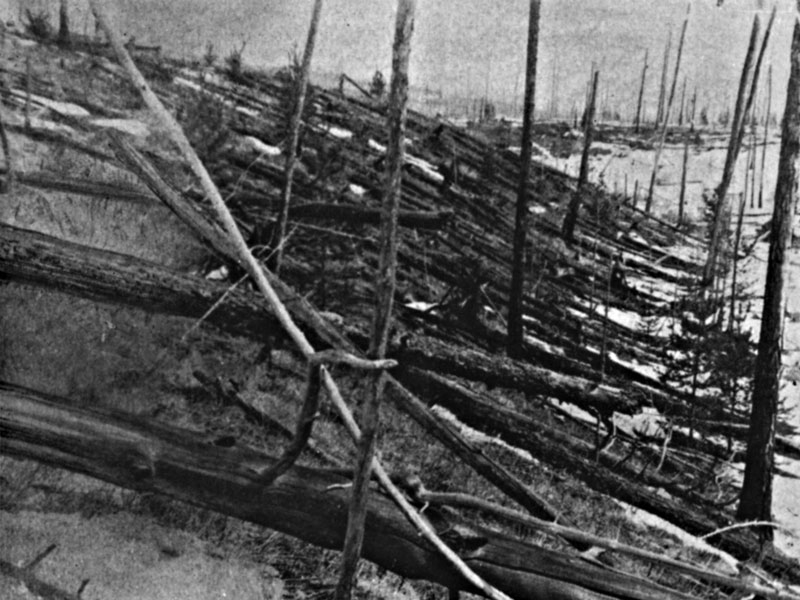
Credit: Leonid Kulik Expedition, Wikipedia
The trading post Vanavara was located at about 40 miles (65 kilometers) from the epicenter of the event.
Eyewitness reports that contained information on injuries were extracted from a catalogue of eyewitness accounts. The locations of reported injuries are only approximately known, mainly in the region up to 186–310 miles (300-500 kilometers from the epicenter.
Stress and panic
Furthest from the event, injuries were mainly in the form of signs of stress and panic, sometimes accompanied by reports of objects falling from high places (bench, roof, Russian stove).
About 50 eyewitness reports describe events in locations closer than 80 miles (130 kilometers) from the blast.
“More serious injuries occurred there,” the Jenniskens-led paper notes. “The injuries mentioned include concussions, being stunned or fainting, a broken arm, burns, aphasia and blindness. Concussion and fainting were the most often mentioned. Fainting could be long lasting, up to two days,” Jenniskens and colleagues say.
Rare opportunities
The effect of thermal radiation from nuclear explosions is often used in radiation hazard assessments. However, the Jenniskens-led paper adds that the spectral dependence of radiation emitted during an asteroid impact can be different from the spectral radiation emitted by a nuclear explosion.
“Therefore, all theoretical approaches to risk assessment should be verified by observations, and the Chelyabinsk and Tunguska events provide rare opportunities to do so,” Jenniskens and his fellow scientists conclude.

Earth’s Moon as seen from the International Space Station.
Credit: NASA/ESA
Why should we be warming up to ultra-cold lunar ice?
Permanently shadowed craters at the polar regions of the Moon are eyed as repositories of water ice. That resource can be converted to oxygen, water, and rocket fuel.
Exploiting these stores of water ice is a big plus to assure humans not only can survive and thrive on the Moon, but also turn a profit.

Newly developed extraction technique for the Moon, thermal mining, makes use of mirrors to exploit sun-shy, water ice-laden polar craters.
Credit: School of Mines/Dreyer, Williams, Sowers
Economic resource
Experts gathered last month for a Space Resources Roundtable, held at the Colorado School of Mines in Golden, Colorado.
A key objective discussed in the gathering is to characterize lunar ice as an economic resource.

Image details water ice mining at Shackleton crater on the Moon.
Credit: School of Mines/Dreyer, Williams, Sowers
To do so, however, more data is needed about lunar ice deposits, its distribution, concentration, quantity, disposition, depth, geotechnical properties and any other characteristics necessary to design and develop extraction and processing systems.
For more information on the future of Moon mining, go to my new Space.com story at:
Mining Moon Ice: Prospecting Plans Starting to Take Shape
July 13, 2018 04:04pm ET
https://www.space.com/41164-mining-moon-water-plans-take-shape.html
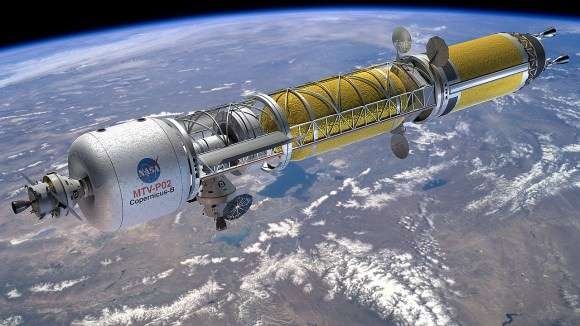
Artist’s concept of a Bimodal Nuclear Thermal Rocket in low Earth orbit.
Credit: NASA
The nuclear power sector is seeing resurgence in innovation, supported by new policies and emerging technologies.
BWX Technologies, Inc. (BWXT) is a major supplier of nuclear components and fuel to the U.S. government. As such, BWXT envisions a path forward in two of the U.S. government’s top priorities: space exploration and national security.
Compact nuclear reactor
BWXT is currently building a compact nuclear reactor for use by expeditionary crews on Mars and possibly even explore Jupiter’s moons by 2024.
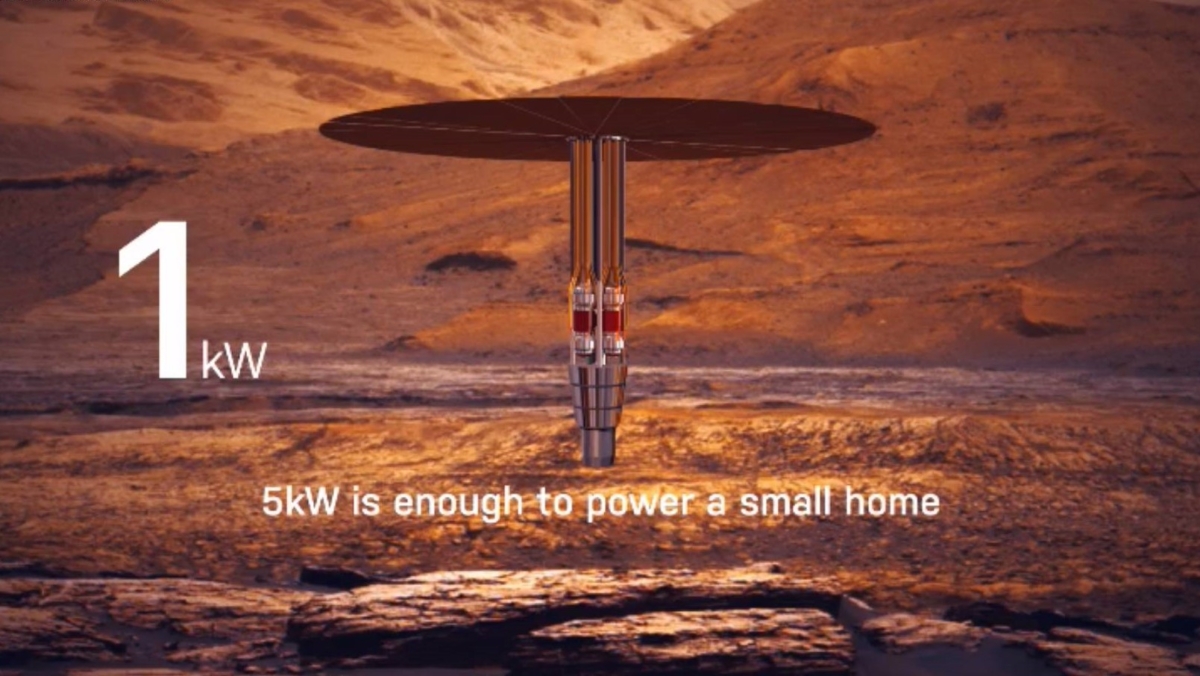
Credit: LANL/NASA
Revolutions in nuclear reactors come at the optimal time as the great power competition evolves into space, according to BWXT.
Go to this story by Rathna Muralidharan — a program director at the Lexington Institute — with a focus on global security. Written for RealClearEnergy at:
For more information on BWXT go to their website at:
https://www.bwxt.com/what-we-do/nuclear-thermal-propulsion-ntp
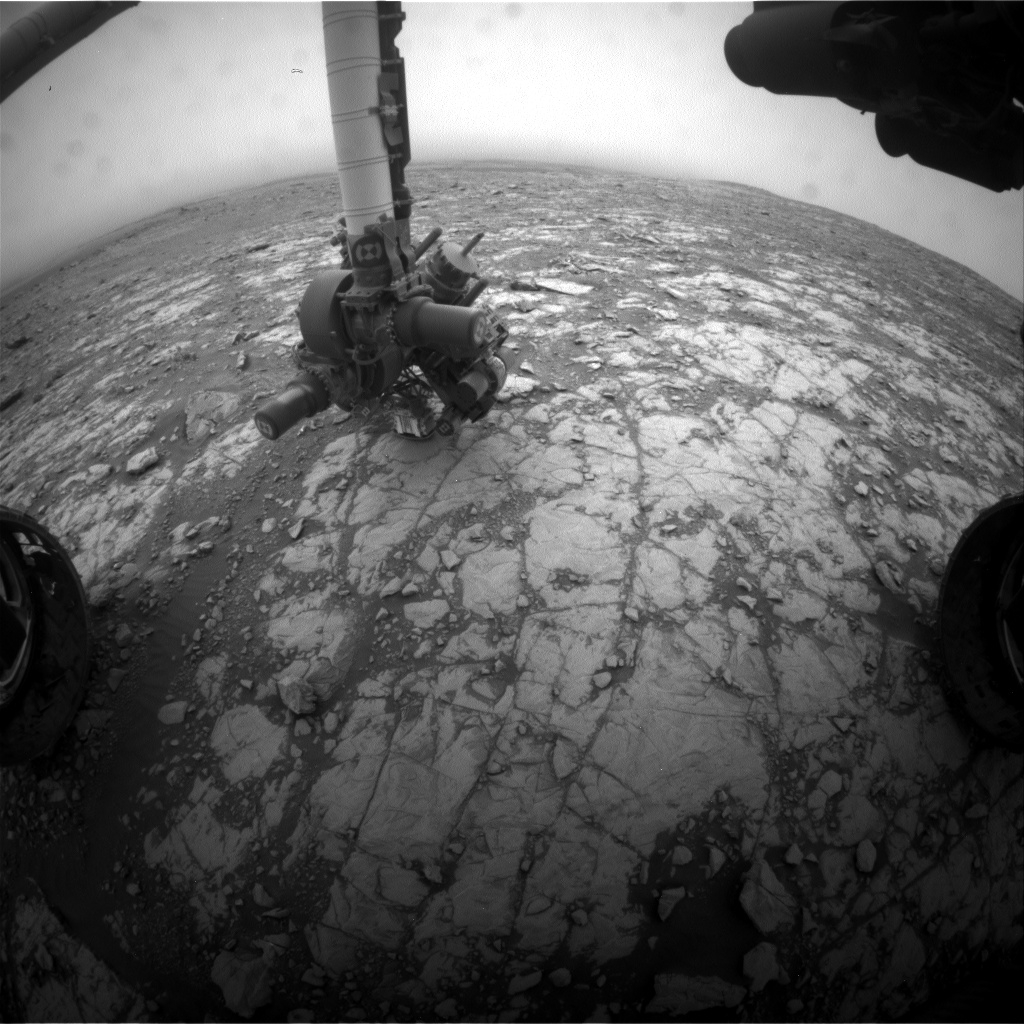
Curiosity Front Hazcam Right B photo acquired on Sol 2109, July 13, 2018.
Credit: NASA/JPL-Caltech
NASA’s Curiosity Mars rover is wrapping up Sol 2109 duties on Vera Rubin Ridge.
Abigail Fraeman, a planetary geologist at NASA/JPL in Pasadena, California, notes one of the most significant aspects of Vera Rubin Ridge is the signature of the mineral hematite (Fe2O3).
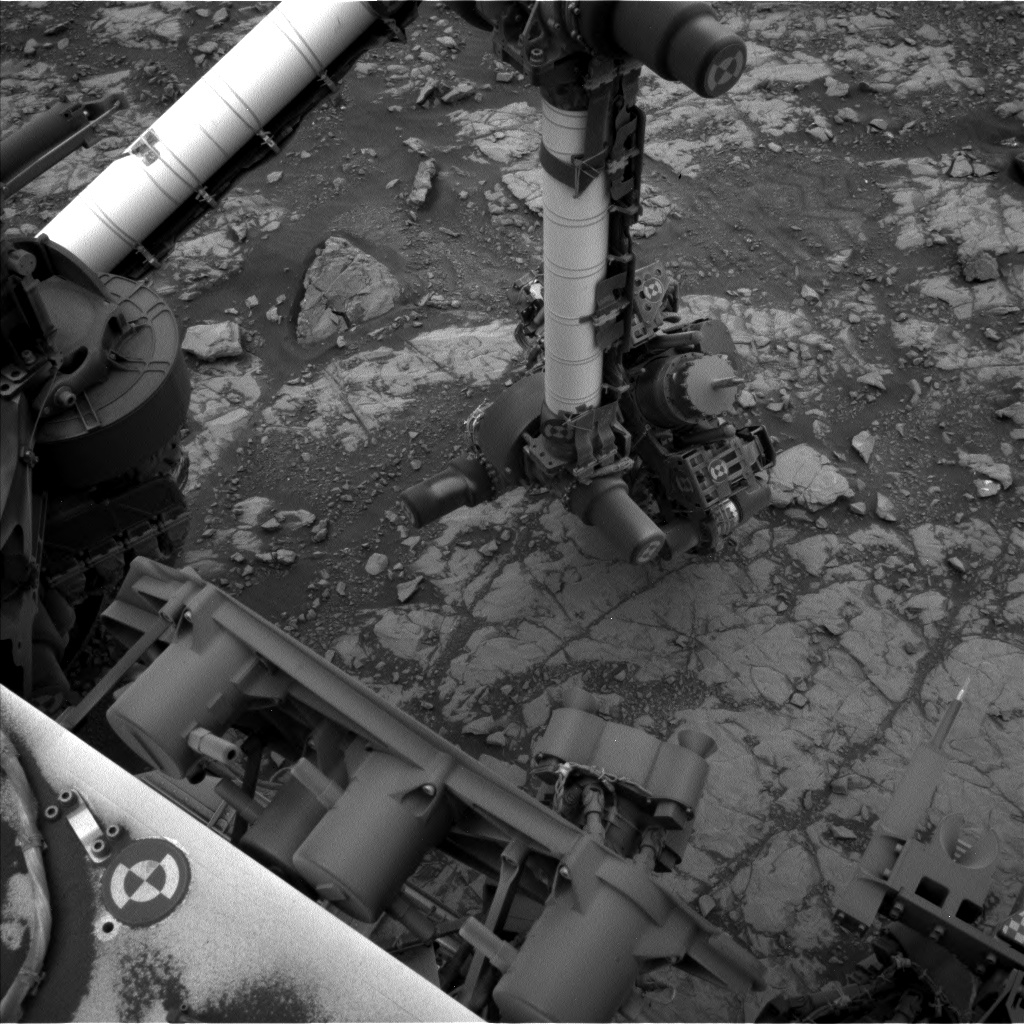
Curiosity Navcam Left B image taken on Sol 2109, July 13, 2018.
Credit: NASA/JPL-Caltech
Fraeman recalls that she and many collaborators spent the winter and spring of 2012 — the time between launch of Curiosity and its landing — working out the geological implications of this discovery as best as possible using orbital data.
Poised to drill
“Almost 2100 sols and countless exciting discoveries later, Curiosity is now poised to drill at the exact spot we first detected the strongest hematite signature over seven years ago,” Fraeman reports. “We’ve named the new drill target ‘Voyageurs’ after a National Park in northern Minnesota. I love this name because it reminds me we truly are a team of voyagers, participating in a mission of exploration and discovery.”
The data collected from this upcoming sample will help Mars researchers better understand the environments that shaped Mt. Sharp over time. On a personal level, it will allow Fraeman to test some of the hypotheses she first started to formulate as a graduate student back in 2012.
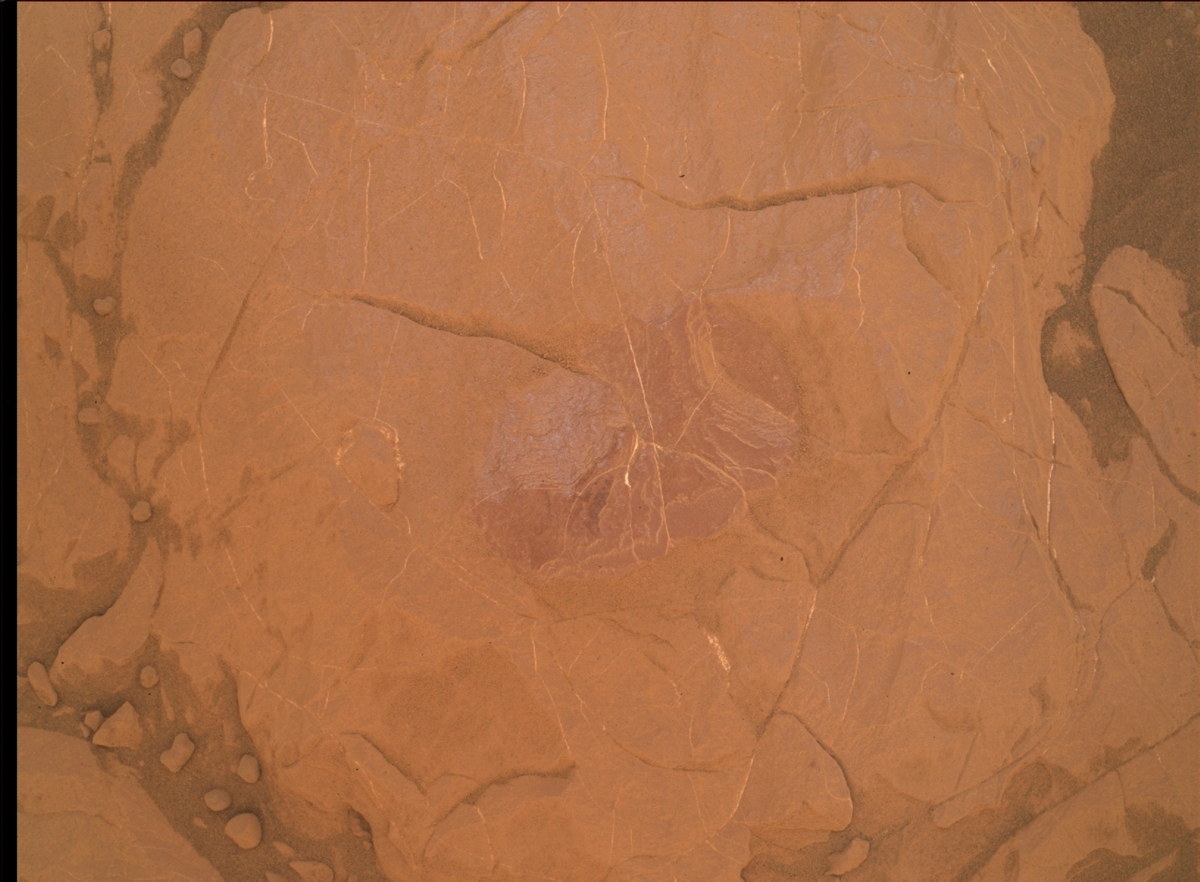
Curiosity Mars Hand Lens Imager (MAHLI) produced on Sol 2109, July 13, 2018.
Credit: NASA/JPL-Caltech/MSSS
Drilling campaign
Sol 2109 will be the first sol of our drilling campaign at Voyageurs – very close to the former target “Stranraer” that the rover examined back around sol 2004.
The main focus of the current plan will be contact science of the site, including use of Curiosity’s Dust Removal Tool, its Mars Hand Lens Imager (MAHLI), and observations by the Alpha Particle X-Ray Spectrometer (APXS).
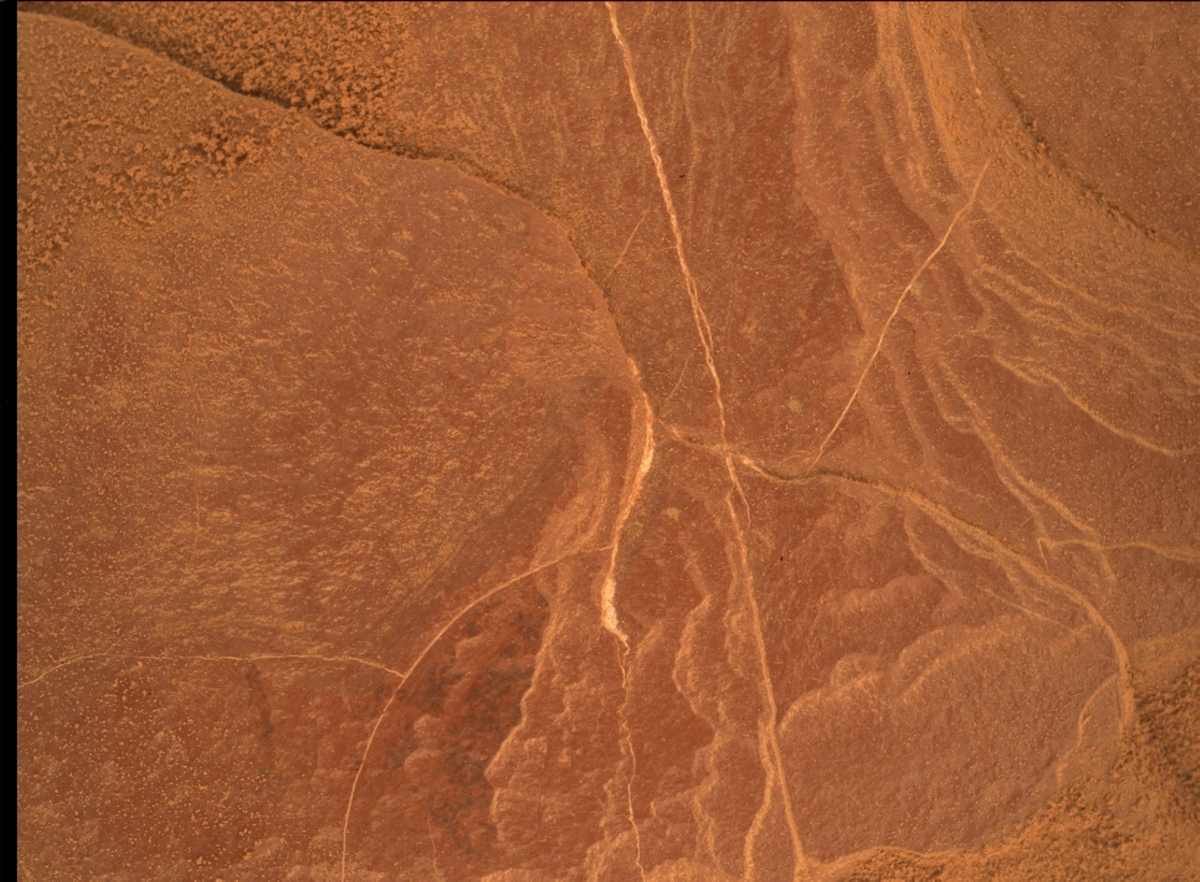
Curiosity Mars Hand Lens Imager (MAHLI) produced on Sol 2109, July 13, 2018.
Credit: NASA/JPL-Caltech/MSSS
Also on tap is taking a Mastcam documentation of a recent Autonomous Exploration for Gathering Increased Science (AEGIS) target and do some Chemistry and Camera (ChemCam) calibration activities.
“As always, we will continue to take environmental science observations to monitor the ongoing dust storm,” Fraeman concludes. “As you can imagine, I am quite anxious and excited to see what we find!”
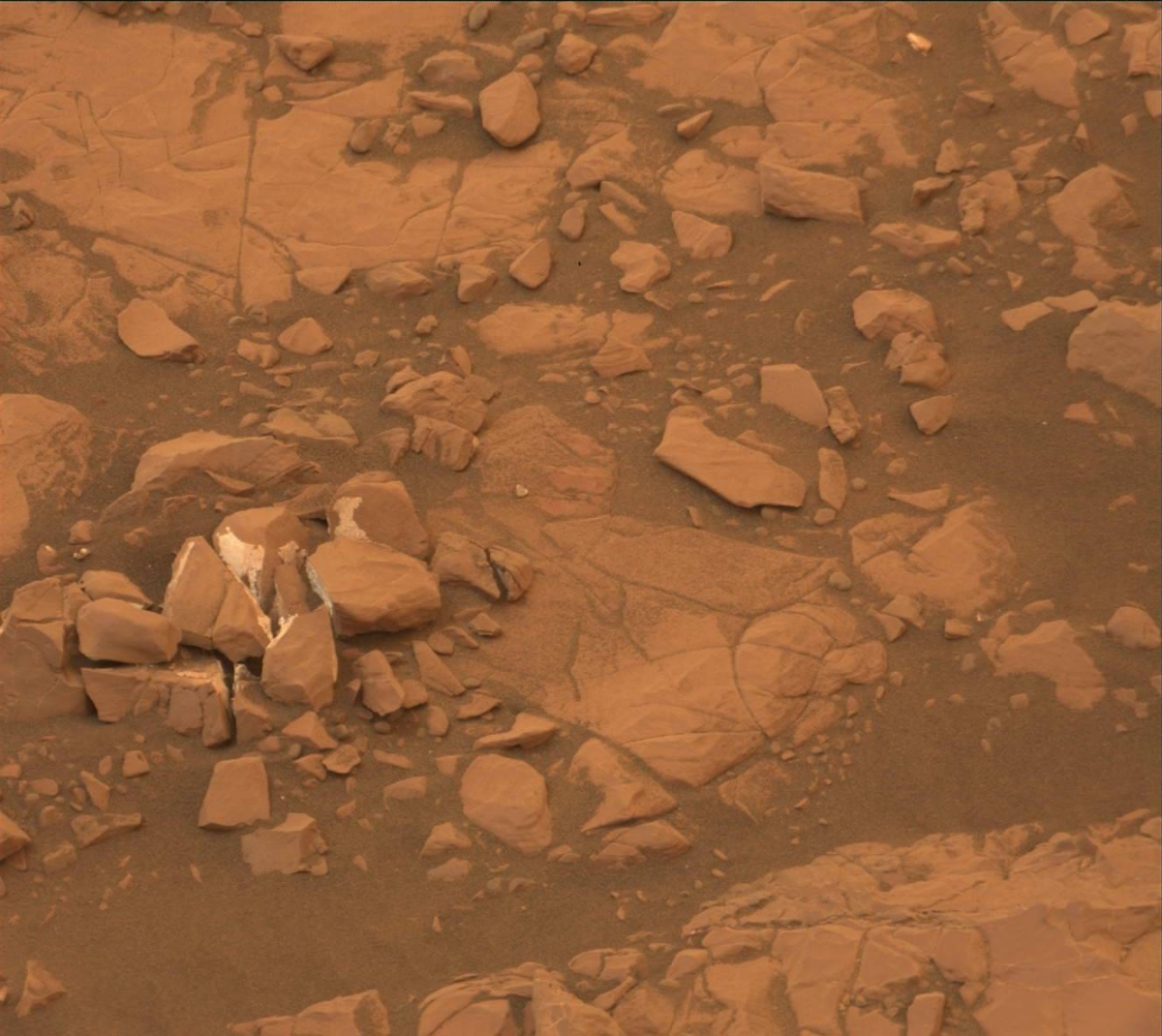
Curiosity Mastcam Right image taken on Sol 2108, July 12, 2018.
Credit: NASA/JPL-Caltech/MSSS
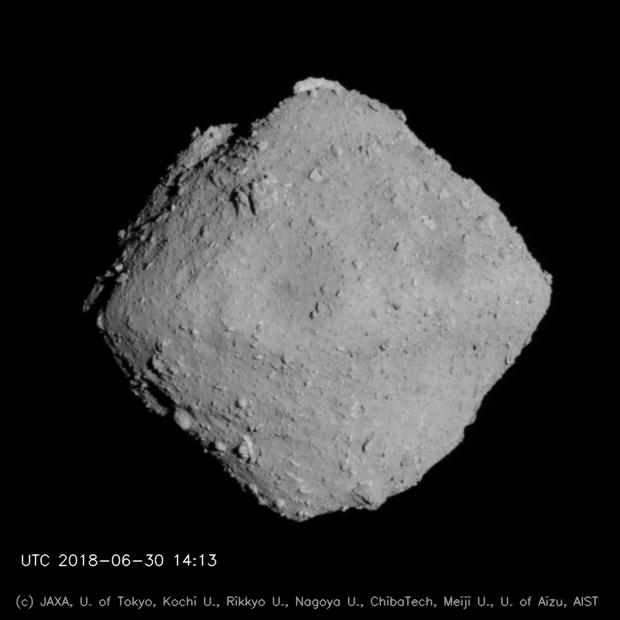
Credit: JAXA, University of Tokyo & collaborators
The Japanese space probe Hayabusa2 is in “home position” at 12 miles (20 kilometers) away from asteroid Ryugu.
Hayabusa2 has been confirming instrument operations in preparation for future observations. New images have shown the results of part of this rehearsal observation, notes the Japan Aerospace and Exploration Agency (JAXA).
As the asteroid has rotated, Hayabusa2 imagery almost reveals back-to-back sides of the object.
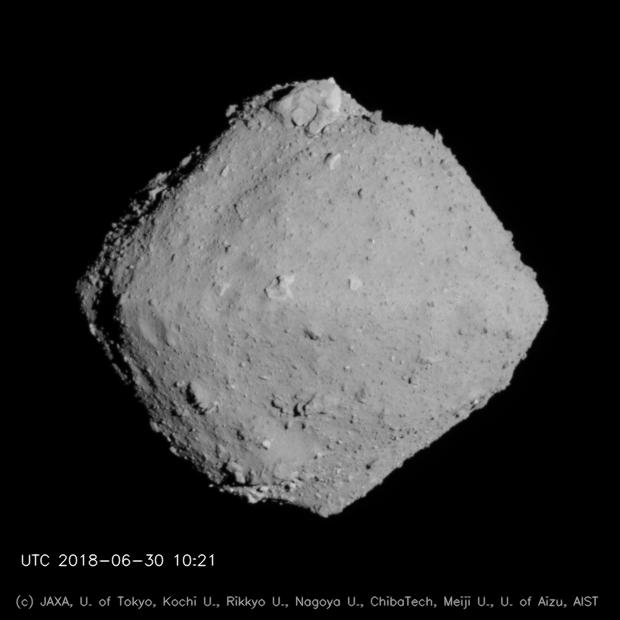
Credit: JAXA, University of Tokyo & collaborators
Surface scout
Meanwhile, first signals have been received from the Mobile Asteroid Surface Scout (MASCOT), an asteroid lander soon to be deployed onto the space rock. The team at the German Aerospace Center (Deutsches Zentrum für Luft- und Raumfahrt; DLR) MASCOT Control Center in Cologne received the first signals from the German-French asteroid lander.
“Now begins the period of intensive landing preparations, because we can only intervene to a limited extent during the landing,” says MASCOT Ground Segment and Operations Manager Christian Krause from the DLR Microgravity User Support Center.
Landing sequences
Since the launch of Hayabusa2 on December 3, 2014, the researchers have, together with JAXA, been working through and refining the landing sequences and instrument calibrations with a ground model. For the most part, they have had to work without much information about the asteroid and make broad assumptions about the surface conditions and reflectivity which they can now adapt and refine, explains a DLR press statement. MASCOT is targeted for an October deployment.
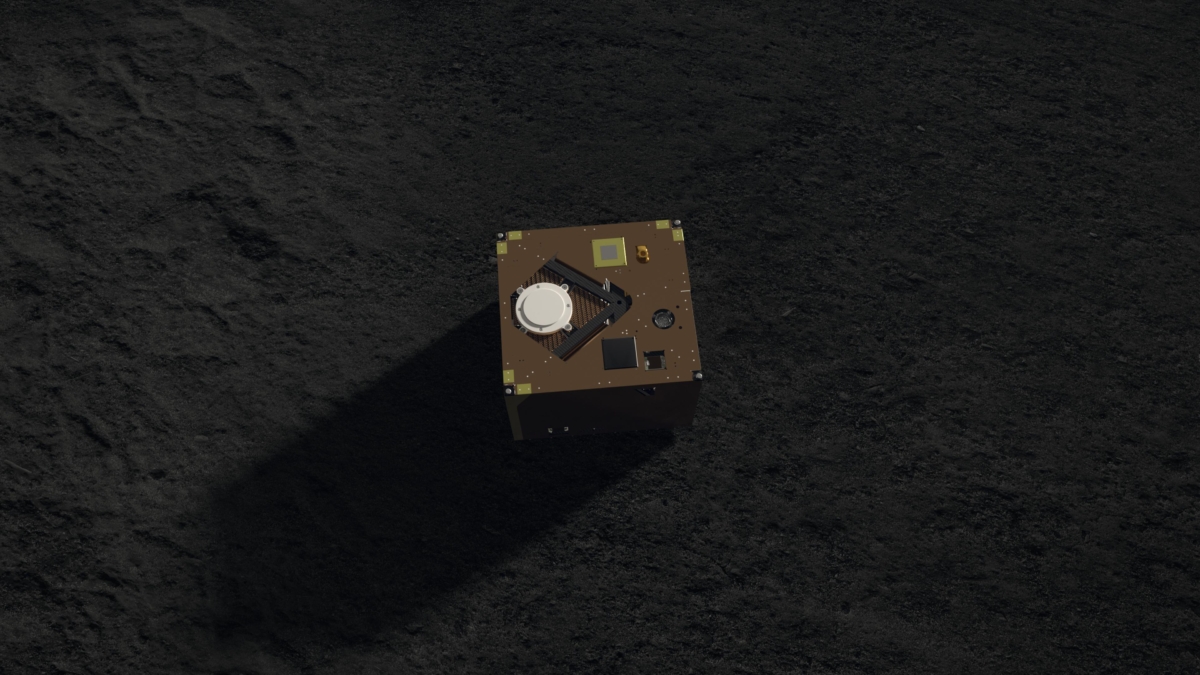
Artwork shows MASCOT jumper on asteroid’s surface.
Credit: German Aerospace Center (Deutsches Zentrum für Luft- und Raumfahrt; DLR)
Four instruments are installed inside the 30 × 30 × 20 centimeter lander. It weighs only 22 pounds (10 kilograms).
Jumping maneuvers
The mineralogical and geological composition of the asteroid surface will be investigated and the surface temperature and magnetic field of the asteroid determined by means of a radiometer and a camera from DLR, a spectrometer from the Institut d’Astrophysique Spatiale and a magnetometer from TU Braunschweig.
MASCOT will receive the necessary kinetic energy for its “jumping” maneuvers on the asteroid’s surface via a built-in swing arm. Programmed “jumps” of up to 230 feet (70 meters) are slated in order to perform measurements at various points on the asteroid’s surface.
The ambitious Hayabussa2 project involves 18 months of asteroid study, including touch-and-go landings to snag samples of the object for return to Earth.
For more information on this impressive and record-setting mission, go to:
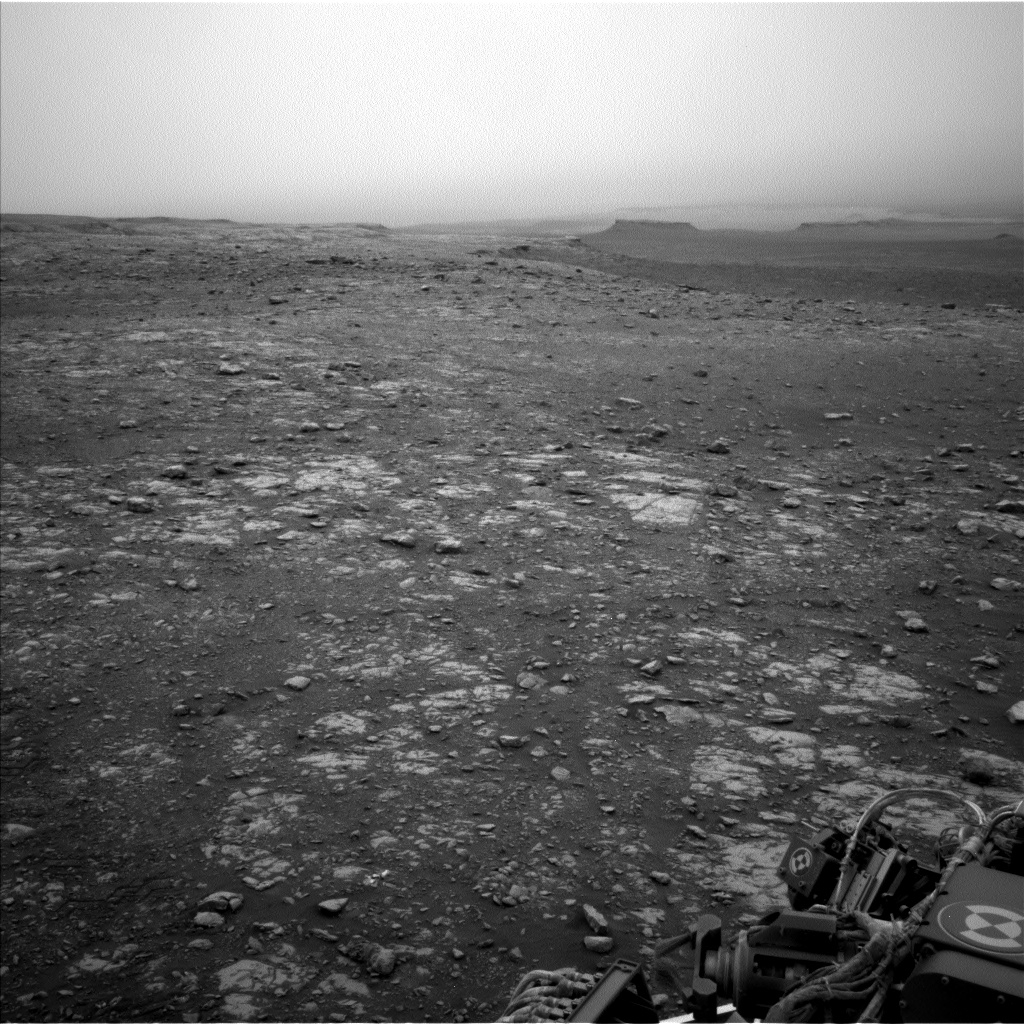
Curiosity Navcam Left B image acquired on Sol 2107, July 11, 2018.
Credit: NASA/JPL-Caltech
Now in Sol 2108, NASA’s Curiosity rover is headed for another drill session on the Red Planet.
“After being out of commission for over a year, Curiosity’s drill is making not just a comeback, but a strong one, with imminent plans for a second drill hole within the span of 60 sols,” reports Roger Wiens, a geochemist at Los Alamos National Laboratory in New Mexico.
Rapid turn-around
The rover is heading back to a place it visited on Sol 2005, looking to drill near target Stranraer.
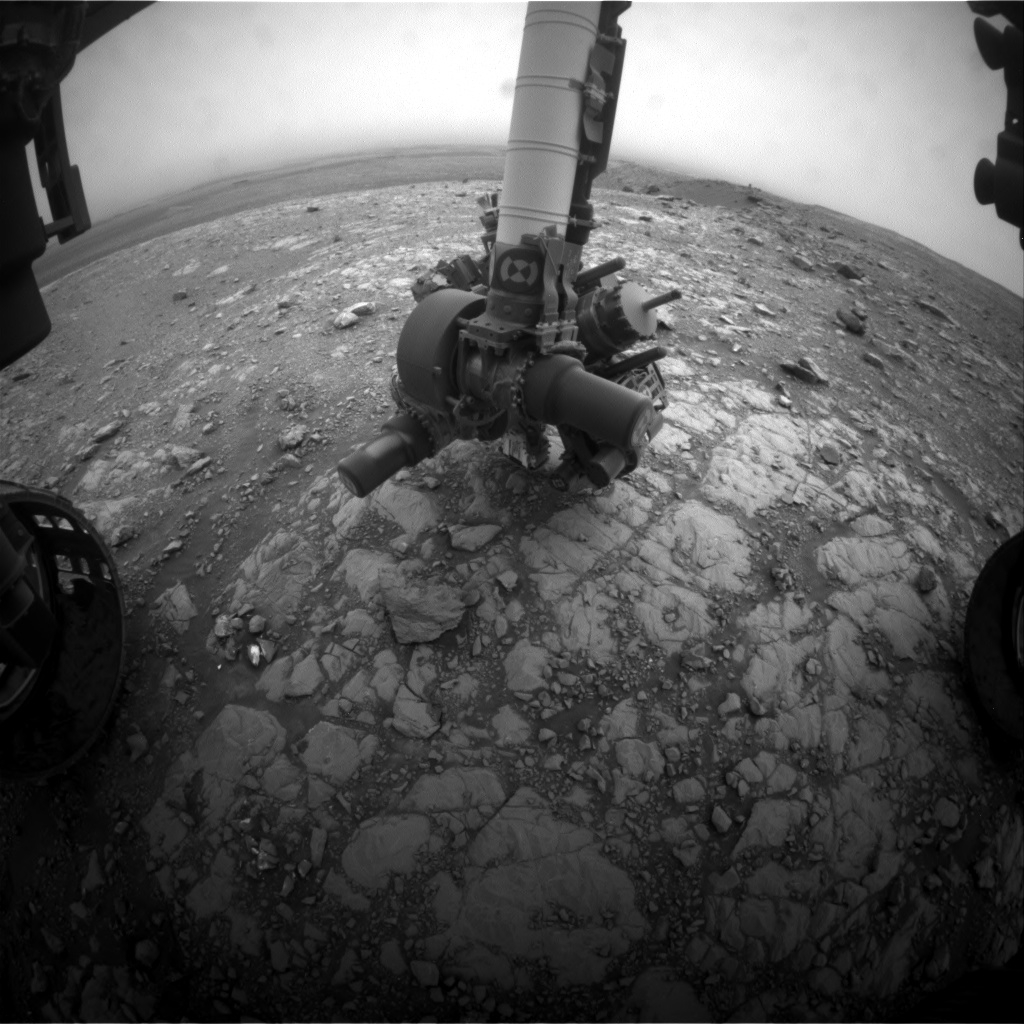
Curiosity Front Hazcam Left B image taken on Sol 2107, July 10, 2018.
Credit: NASA/JPL-Caltech
Wiens explains that Curiosity has been climbing back up Vera Rubin Ridge from drill target Duluth, which was drilled on Sol 2057 at the base of the ridge.
“If the rover succeeds with another drill target within the next few sols, it will be quite a rapid turn-around. Previous instances when drill holes were made within rapid succession include the combination of Mojave and Telegraph Peak (sols 882 and 908) at Pahrump; the trio of Lubango, Okoruso, and Oudam on Naukluft Plateau between sols 1320 and 1361; and Quela and Sebina between sols 1464 and 1495,” Wiens points out.
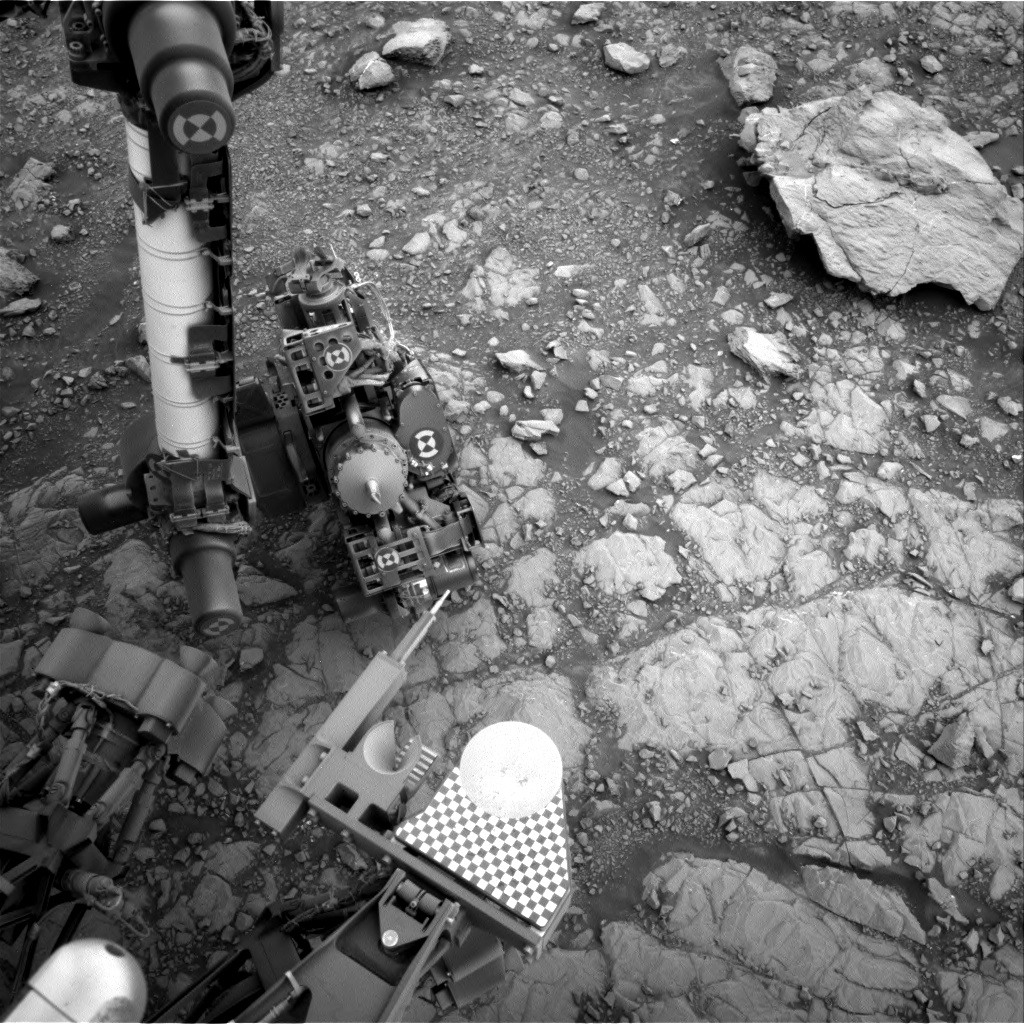
Curiosity Navcam Right B photo taken on Sol 2107, July 10, 2018.
Credit: NASA/JPL-Caltech
Other targets
Curiosity still has about 20 feet (six meters) to go to the area around Stranraer, so a short spurt of a drive is on tap.
The robot’s Chemistry and Camera (ChemCam) are set to analyze targets “Fort Francis and “Icarus Lake.”
The rover’s Alpha Particle X-Ray Spectrometer (APXS) and Mars Hand Lens Imager (MAHLI) are slated to analyze a dark rock named “Orr.”
Crater rim viewing
After the drive, Navcam will take images of the region in front of the rover, and the onboard computer will select a new target for ChemCam to shoot.
Mastcam will take an image for the clast survey, and will check the sky conditions with a tau measurement and a view out to the crater rim (if it shows up through the dusty air).
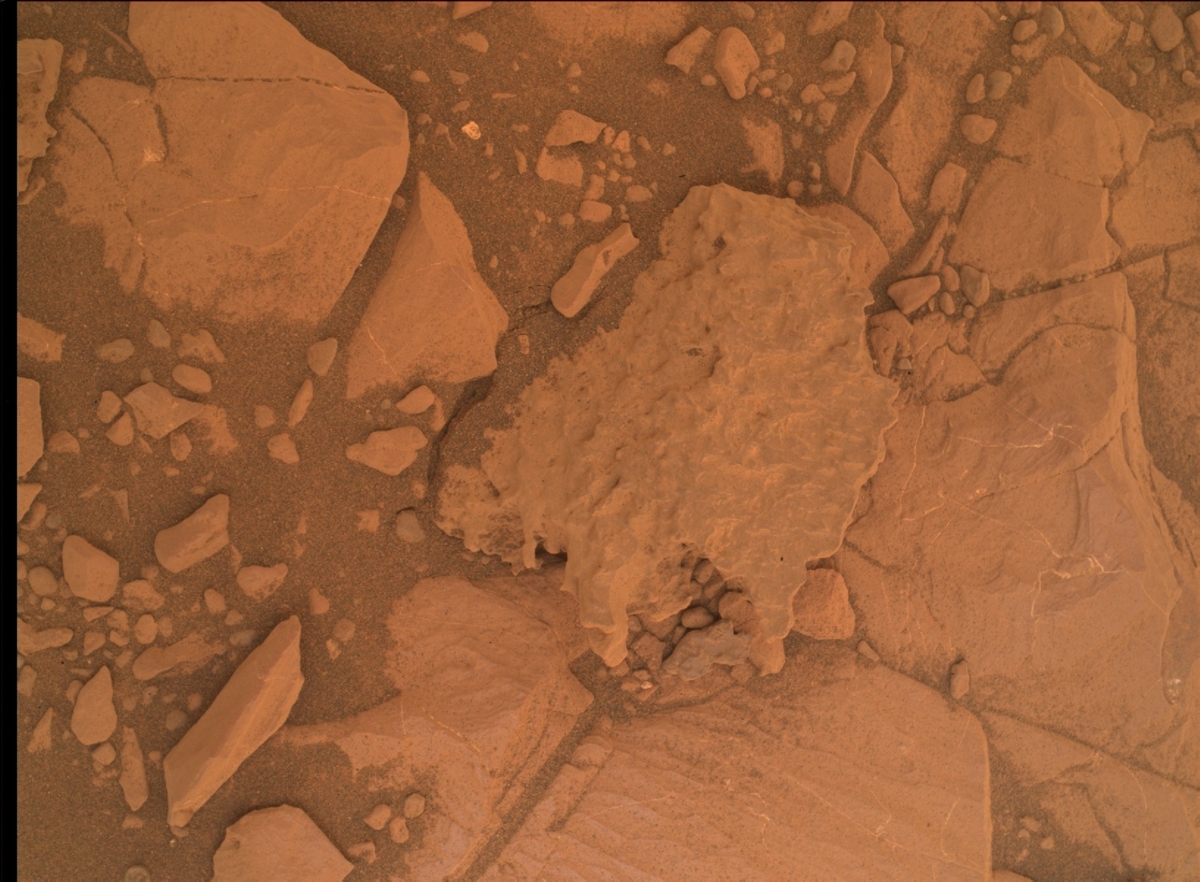
Curiosity Mars Hand Lens Imager (MAHLI) photo produced on Sol 2107, July 10, 2018.
Credit: NASA/JPL-Caltech/MSSS
Curiosity’s Radiation Assessment Detector (RAD), Rover Environmental Monitoring Station (REMS), and the Dynamic Albedo of Neutrons (DAN) are scheduled to get data, including a DAN Active measurement, and the rover’s Mars Descent Imager (MARDI) is set to take an image of the ground beneath the rover, Wiens concludes.

Credit: Blue Origin

Rocketeer Jeff Bezos and his commercial rocket firm, Blue Origin.
Credit: Blue Origin
Thanks to the first commercial tweet from space, New Mexcio-based Solstar is taking a next step in building infrastructure for the Internet of Things (IOT) in space.
On April 29th, Solstar demonstrated the first commercial internet and Wi-Fi service in space, funded entirely by private investment. The Solstar payload flew on Blue Origin’s eighth test flight of the New Shepard rocket from Blue’s West Texas launch site.
“Solstar is choosing to crowdfund this stage of its development to open up this opportunity to as many people as possible, democratizing access to space by allowing everyone to choose to take a stake in their own future,” explains Solstar Founder and CEO, M. Brian Barnett.
According to a company press statement, Solstar will be conducting a second test of its patent-pending technology on board another New Shepard flight in the future.
For more information, go to:
https://wefunder.com/solstar.space.company
On April 29th, 2018, Solstar demonstrated the first ever commercial WiFi service in space. Go to this video at:
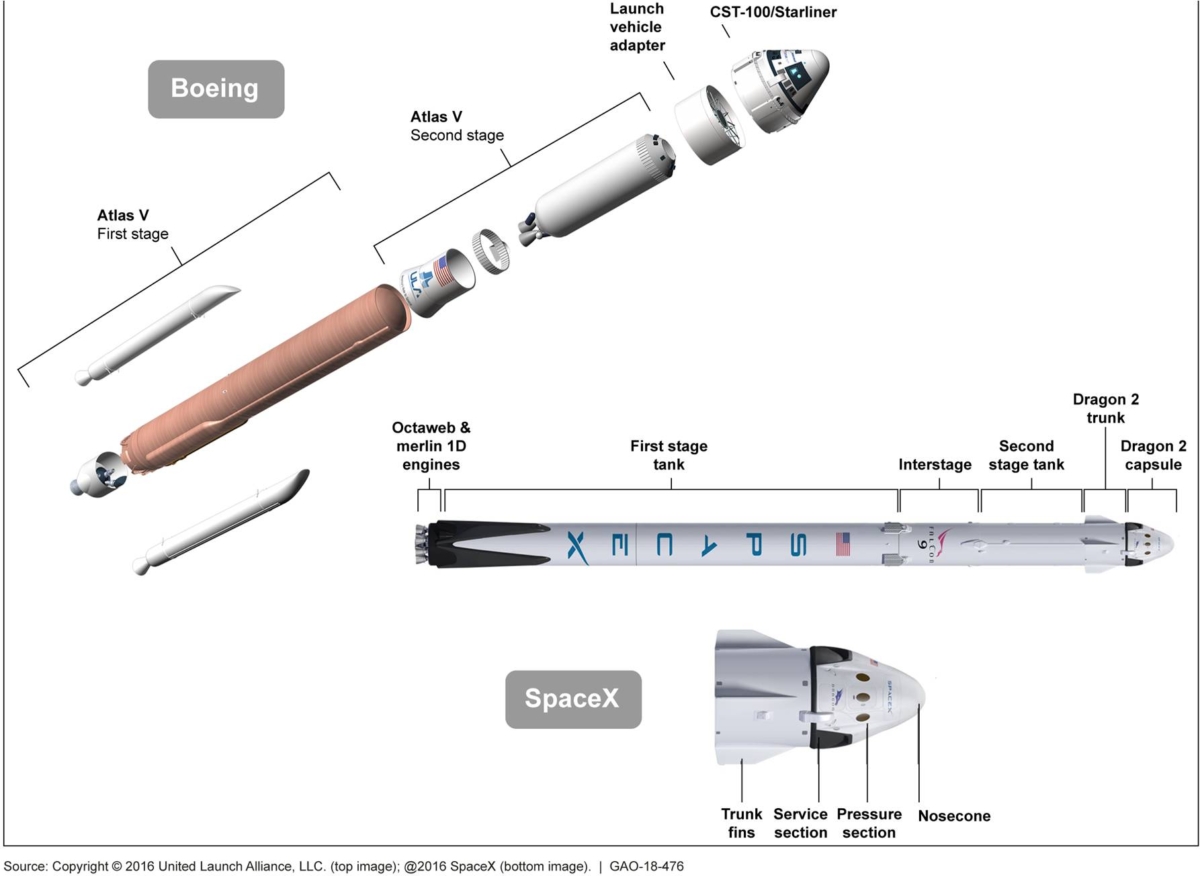
The United States Government Accountability Office (GAO) issued today an assessment of NASA’s Commercial Crew Program.
NASA has contracted with two companies — Boeing and SpaceX — to develop vehicles to transport astronauts to the International Space Station. Neither is expected to be ready until 2019.
Before any missions happen, the GAO reports, NASA will have to certify that both contractors’ vehicles are safe for human spaceflight.
Loss of crew metric
One way that NASA will assess safety is the loss of crew metric, which captures the probability of a crew member’s death or disability.
However, NASA doesn’t have a consistent approach for calculating this metric, so results can vary based on who within NASA is conducting the analysis.
The GAO has recommended that NASA clarify how it will assess loss of crew.
A one-page Highlights Page of this report is available at:
https://www.gao.gov/assets/700/693036.pdf
For the July 2018 full report — NASA COMMERCIAL CREW PROGRAM: Plan Needed to Ensure Uninterrupted Access to the International Space Station – go to:

