Author Archive
 Author:
  July 20th, 2018
Credit: CNSA
Today is “Moon Day” that commemorates the first human landing on the Moon by America on July 20, 1969.
To mark the occasion, China Plus/Xinhua has published a Moon Day special that salutes China’s burgeoning lunar exploration program. China Plus is the official English website of China Radio International.
To view this informative look, go to:
http://chinaplus.cri.cn/news/china/9/20180720/159762.html
China’s robotic lunar exploration program started in 2004. It is named after the Chinese moon goddess, Chang’e.

Credit: CNSA
 Posted in

Curiosity Navcam Left B photo acquired on Sol 2116, July 20, 2018.
Credit: NASA/JPL-Caltech
NASA’s Curiosity Mars rover is now performing Sol 2116 duties.
Reports Ken Herkenhoff, a planetary geologist for the USGS in Flagstaff, Arizona: “The Sol 2115 wheel imaging went well, and we received the images needed to plan a drive back to ‘Sgurr of Eigg,’ near the Sol 1999 rover position.”

Curiosity Front Hazcam Right B image acquired on Sol 2116, July 20, 2018.
Credit: NASA/JPL-Caltech
On the plan is a drive of over 160 feet (50 meters) during Sol 2116, along with time for continued atmospheric and other scientific observations.
Autonomous exploration
Before the drive, Herkenhoff adds, the Right Mastcam will image the Chemistry and Camera (ChemCam) target selected by Autonomous Exploration for Gathering Increased Science (AEGIS) software on Sol 2115 and Navcam will monitor the opacity of the atmosphere.

Curiosity Mastcam Left photo taken on Sol 2115, July 19, 2018.
Credit: NASA/JPL-Caltech/MSSS
After the drive and the standard post-drive imaging needed to plan weekend activities, Mastcam will measure the atmospheric opacity and ChemCam will observe another target selected by AEGIS.
Measuring dust and wind
Early in the morning of Sol 2117, Mastcam and Navcam will again monitor opacity, and Navcam will look for clouds overhead and near the horizon to measure wind velocity.
“Earth and Mars are getting closer to each other this month, and by the end of this month Mars will be closer to Earth than it has been since 2003! Mars is visible low in the southeast after evening twilight,” Herkenhoff advises. If you have a good telescope, you can monitor the progress of the global dust storm that is being intensely studied from spacecraft orbiting Mars as well as by Curiosity.
New road map

Credit: NASA/JPL-Caltech/Univ. of Arizona
Meanwhile, a new Curiosity rover location map for Sol 2115 has been issued.

Curiosity Mastcam Left photo taken on Sol 2115, July 19, 2018.
Credit: NASA/JPL-Caltech/MSSS
The map shows the route driven by NASA’s Mars rover Curiosity through the 2115 Martian day, or sol, of the rover’s mission on Mars (July 19, 2018).
Numbering of the dots along the line indicate the sol number of each drive. North is up.
From Sol 2108 to Sol 2115, Curiosity had driven a straight line distance of about 3.89 feet (1.19 meters).
Since touching down in Bradbury Landing in August 2012, Curiosity has driven 12.05 miles (19.39 kilometers).
The base image from the map is from the High Resolution Imaging Science Experiment Camera (HiRISE) in NASA’s Mars Reconnaissance Orbiter.

Curiosity Mastcam Left photo taken on Sol 2115, July 19, 2018.
Credit: NASA/JPL-Caltech/MSSS
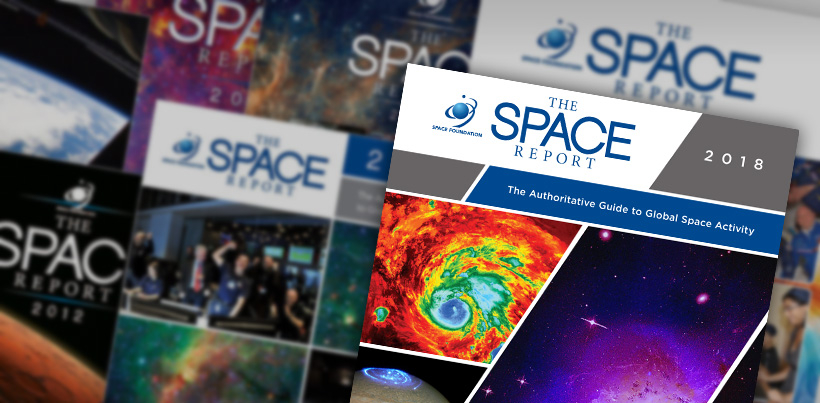
Credit: The Space Foundation
The Space Foundation today released the findings of its publication The Space Report 2018: The Authoritative Guide to Global Space Activity.
The findings in the 2018 report revealed that in 2017, the global space economy totaled $383.5 billion worldwide. Also, during 2017:
- Seven countries/agencies spent more than $1 billion on space
- The U.S. share of global governmental space spending was 57 percent
- There was a 7 percent increase in the number of orbital launch attempts worldwide
- The U.S. share of global orbital launch activities was 33 percent
- There was a 100 percent increase in the total number of spacecraft deployed and a 200 percent increase in the number of commercial spacecraft deployed
- The U.S. share of global spacecraft deployed was 65 percent
For more information on The Space Report 2018: The Authoritative Guide to Global Space Activity, go to:
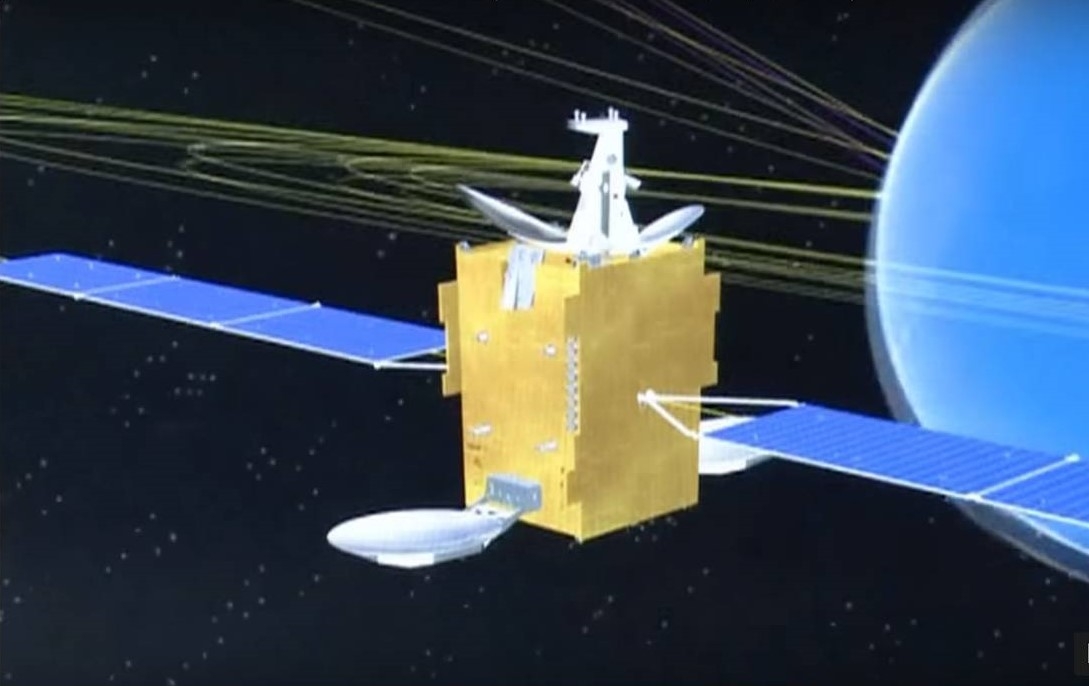
China’s Zhongxing-9A is a possible satellite to apply new in-orbit satellite transport vehicle technology, extending the lifetime of the telecommunications spacecraft. Credit: CCTV/Screengrab
Select Chinese satellites are to get a re-boost according to China’s Science and Technology Daily. The vehicle would use a robotic arm to dock with the spacecraft, and then carry the satellite to maintain its original orbit.
Simpler, efficient option
The vehicle is being developed by an academy affiliated to the China Aerospace Science and Industry Corporation, noted today by the state-run Xinhua news agency.
Hu Di, the chief designer of the vehicle, said compared with foreign research that focuses on refueling satellites that have run out of fuel, their option is much simpler and efficient, according to Xinhua.
Candidate satellite
The satellite transport vehicle will reportedly take about two years to complete.
One Chinese satellite is listed to possibly be boosted by the carrier craft.
Last year, China’s communications satellite Zhongxing-9A failed to enter the preset orbit after launch.
Ground controllers were able to nudge that spacecraft to a correct orbit – but that space maneuvering took two weeks and used large gulps of fuel, shortening the satellite’s working life.
Orbit adjustments
Zhongxing-9A communications satellite (Chinasat-9A was launched by a Long March-3B rocket on June 18, 2017, but abnormal performance during the third phase failed to deliver the satellite as planned. After conducting 10 orbit adjustments with its onboard thrusters, Zhongxing-9A reach its preset orbit.
Zhongxing-9A is the first Chinese-made satellite for live radio and television broadcasts.
Hu’s team has listed Zhongxing-9A as a potential satellite on which to apply the new in-orbit satellite transport vehicle technology.
Go to this China Central Television video showing launch and final positioning of Zhongxing-9A at:
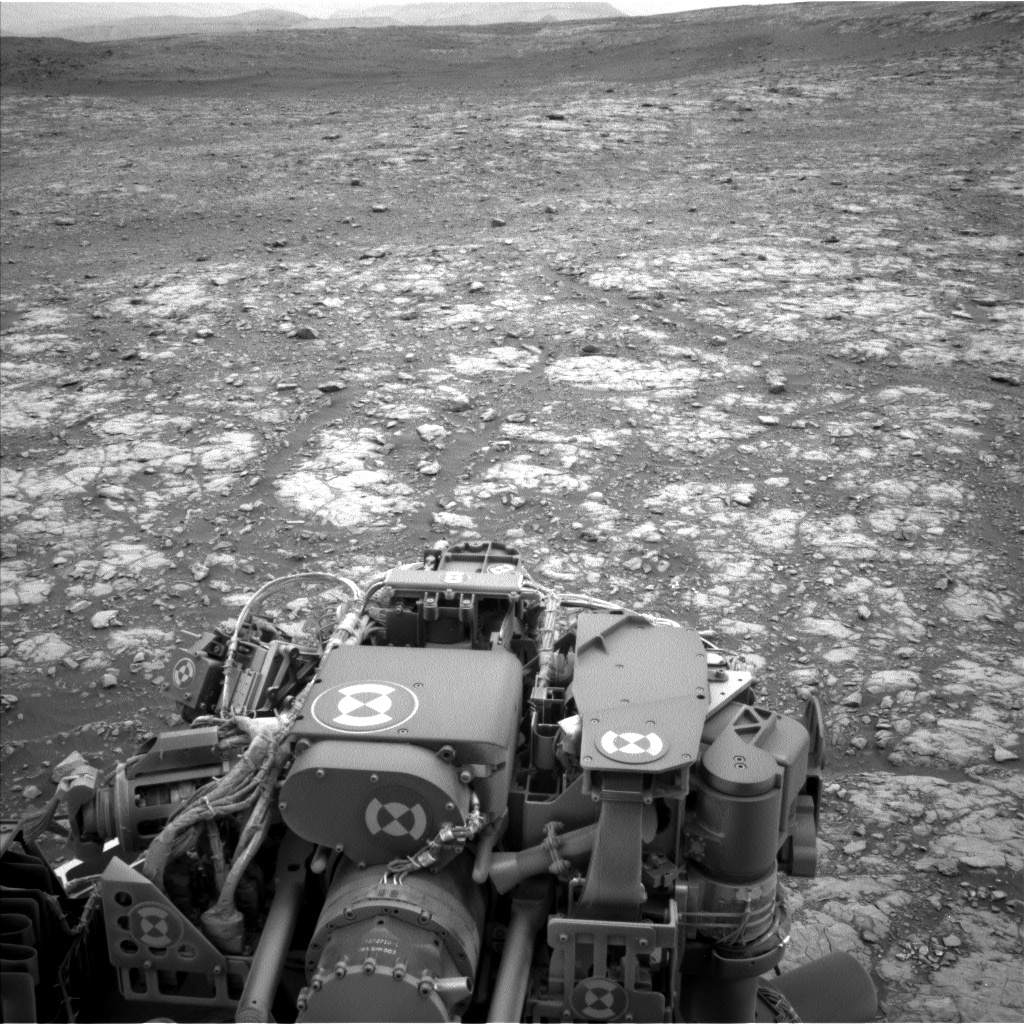
Curiosity Navcam Left B image taken on Sol 2115, July 19, 2018.
Credit: NASA/JPL-Caltech
NASA’s Curiosity Mars rover is now performing Sol 2115 duties with a priority to image the rover’s wheels. Acquisition of those images is needed to plan a drive back to the Sol 1999 location, where the robot may start another drilling campaign.
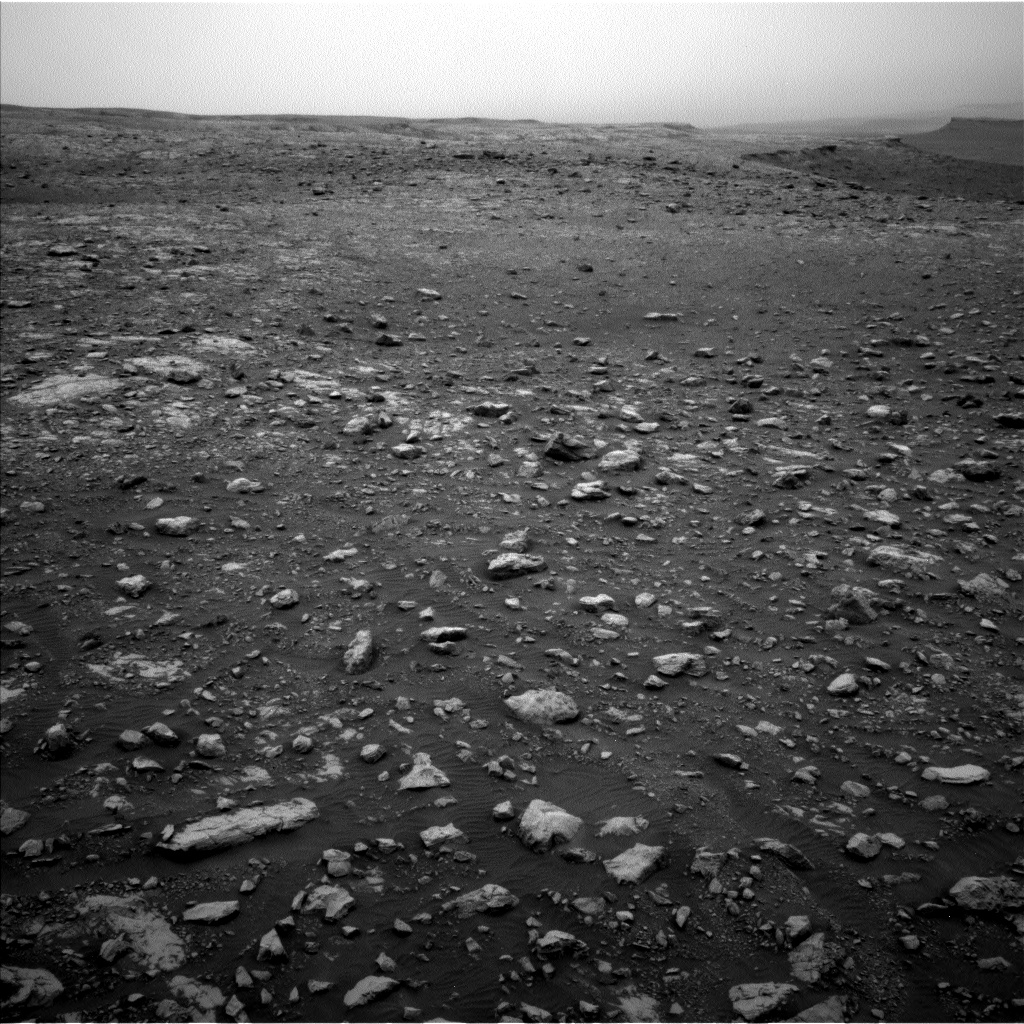
Curiosity Navcam Left B image taken on Sol 2115, July 19, 2018.
Credit: NASA/JPL-Caltech
Ken Herkenhoff, a planetary geologist at the USGS in Flagstaff, Arizona, reports that the Mars Hand Lens Imager (MAHLI) photos of the wheels taken on Sol 2114 with the dust cover closed show that there is enough dust on the cover to make it difficult to see the wheels.
So a different approach to wheel imaging was planned for Sol 2115.
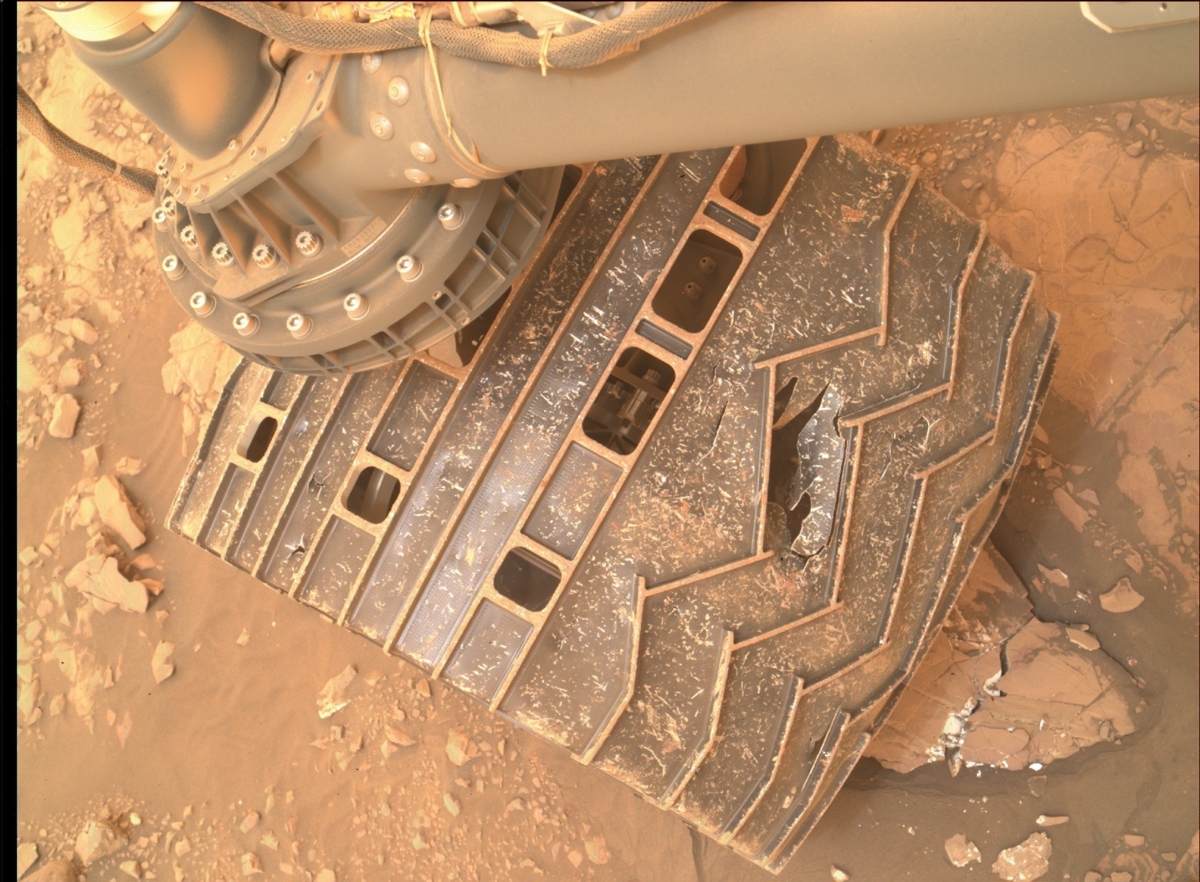
Curiosity Mars Hand Lens Imager (MAHLI) image acquired on Sol 2115, July 19, 2018.
Credit: NASA/JPL-Caltech/MSSS
Left side looks
To minimize the risk of dust contamination of MAHLI’s optics while the cover is open, MAHLI will image only the wheels on the left side of the rover from above the wheels – keeping MAHLI pointing downward while the dust cover is open.
The wheels on the right side of the rover will be imaged by the left Mastcam rather than MAHLI.
Next drive
“Then the rover will turn in place to allow imaging in the direction of the next drive, toward the southwest,” Herkenhoff adds. “After acquiring the standard post-drive data, Mastcam will observe the Sun and crater rim to continue the monitoring of the dust opacity over Gale Crater.”
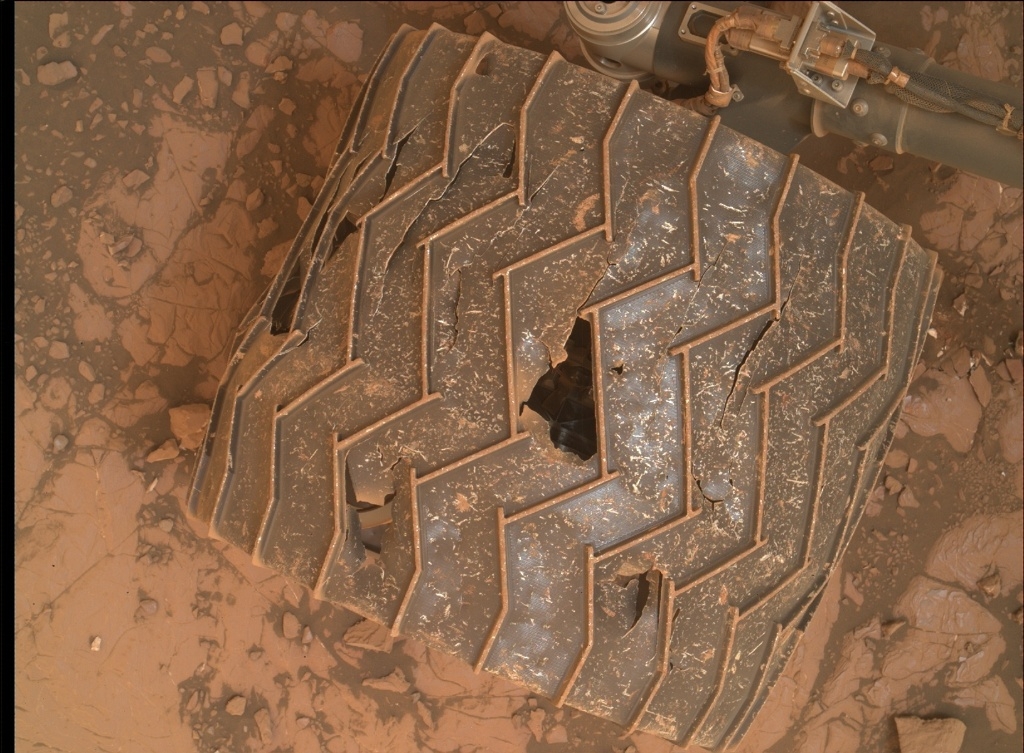
Curiosity Mars Hand Lens Imager (MAHLI) image acquired on Sol 2115, July 19, 2018.
Credit: NASA/JPL-Caltech/MSSS
These observations will be repeated twice early in the morning on Sol 2116 to look for short-term changes in opacity.
In addition, the robot’s Chemistry and Camera (ChemCam) will use the Autonomous Exploration for Gathering Increased Science (AEGIS) software to autonomously select a bedrock target for a 3×3 Laser Induced Breakdown Spectroscopy (LIBS) raster, Herkenhoff concludes.
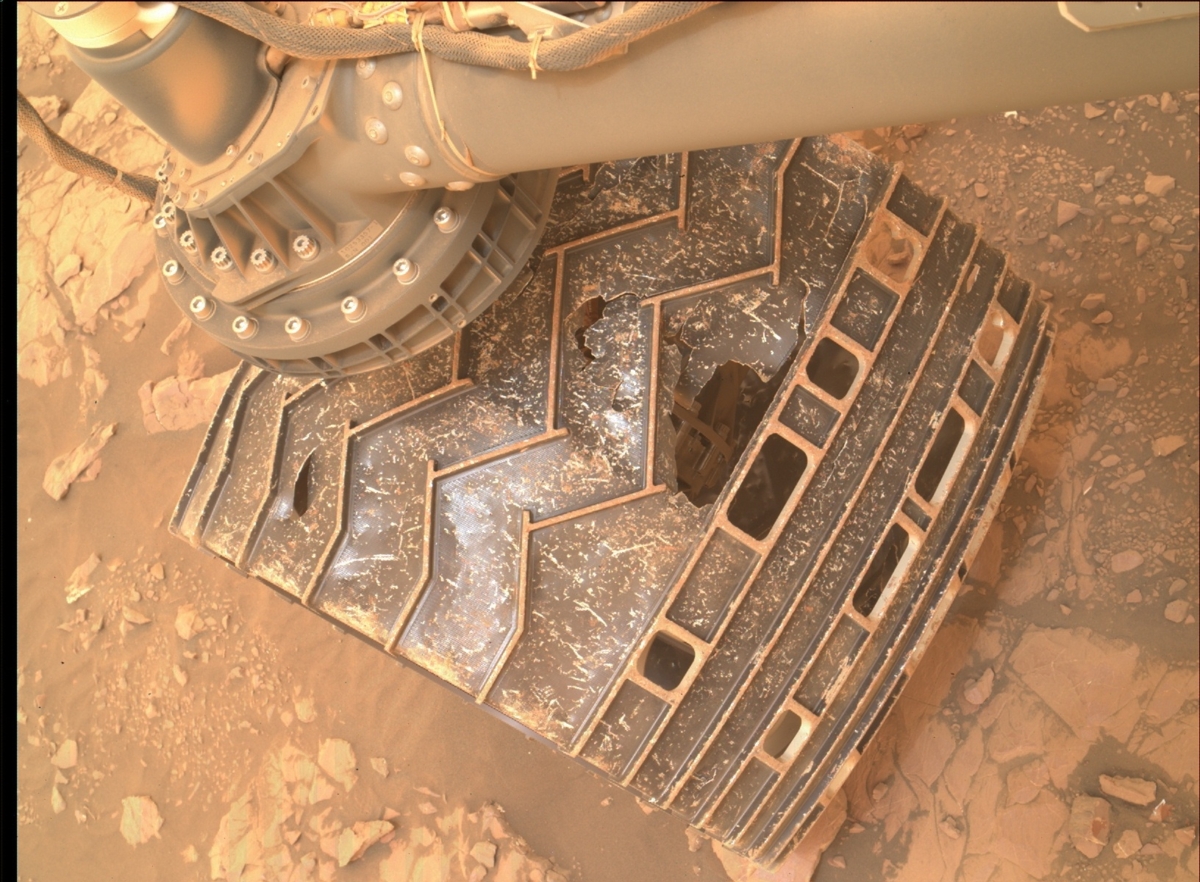
Curiosity Mars Hand Lens Imager (MAHLI) image acquired on Sol 2115, July 19, 2018.
Credit: NASA/JPL-Caltech/MSSS
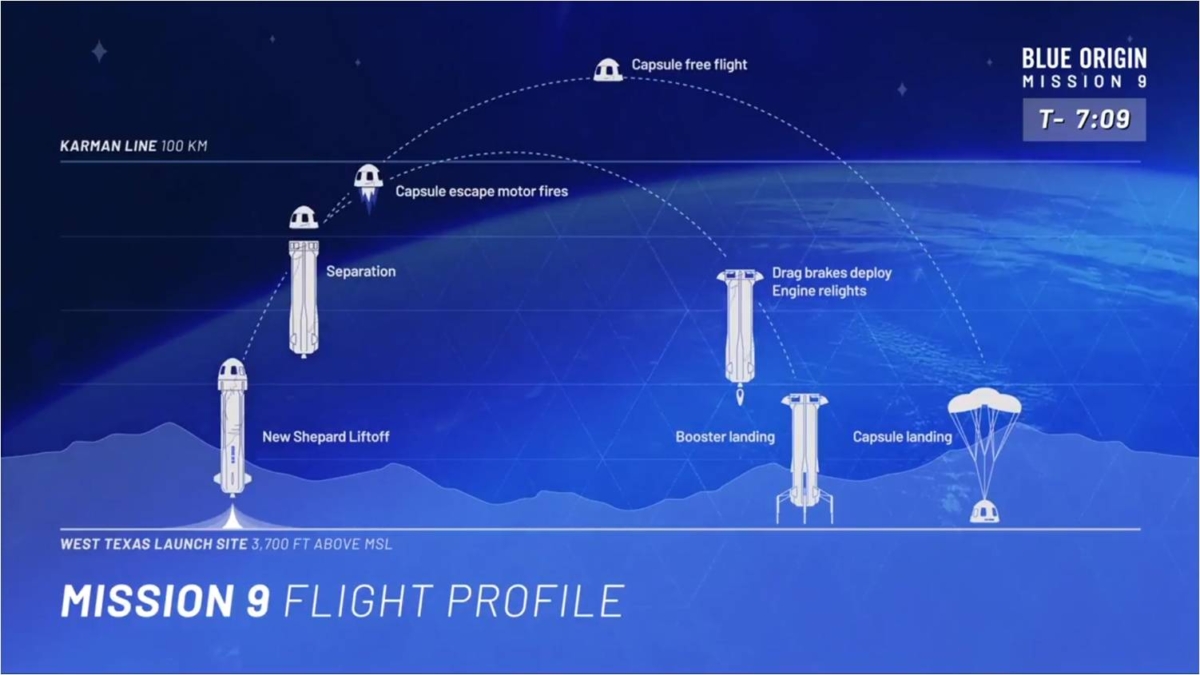
Credit: Blue Origin/Screengrab
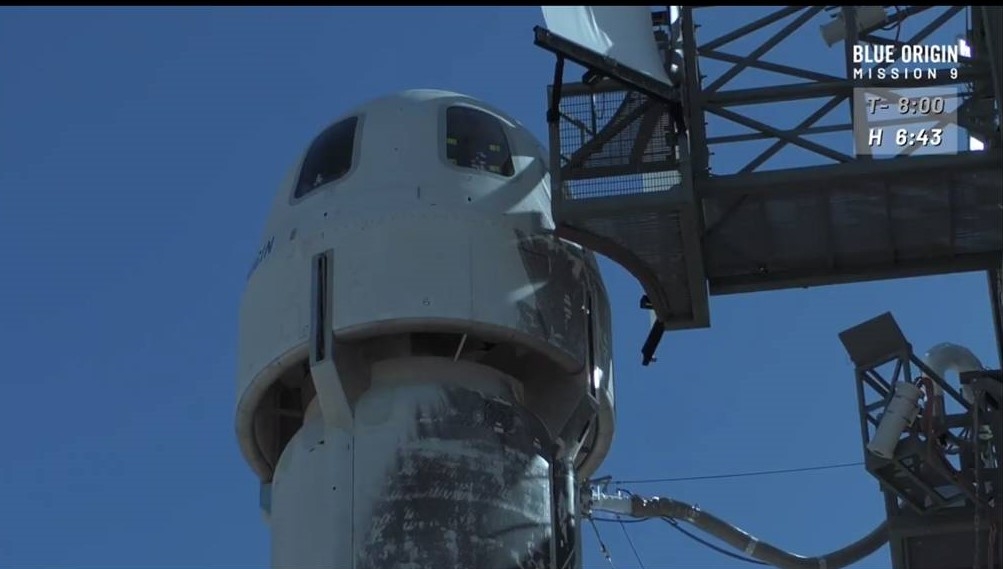
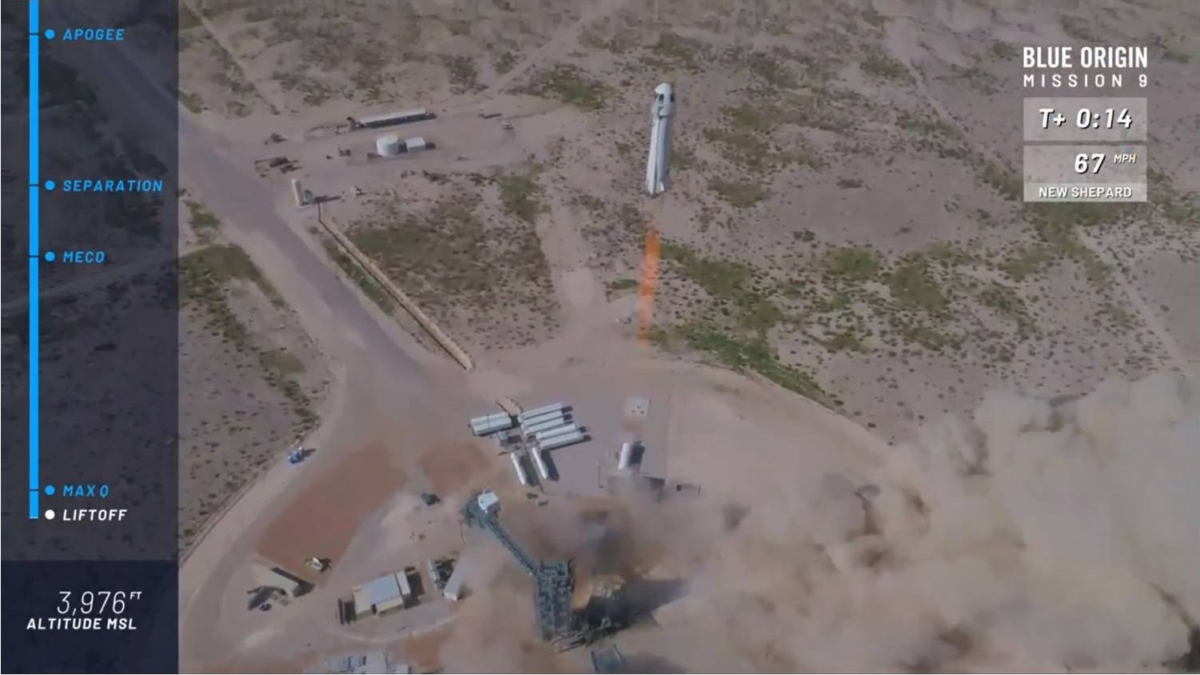
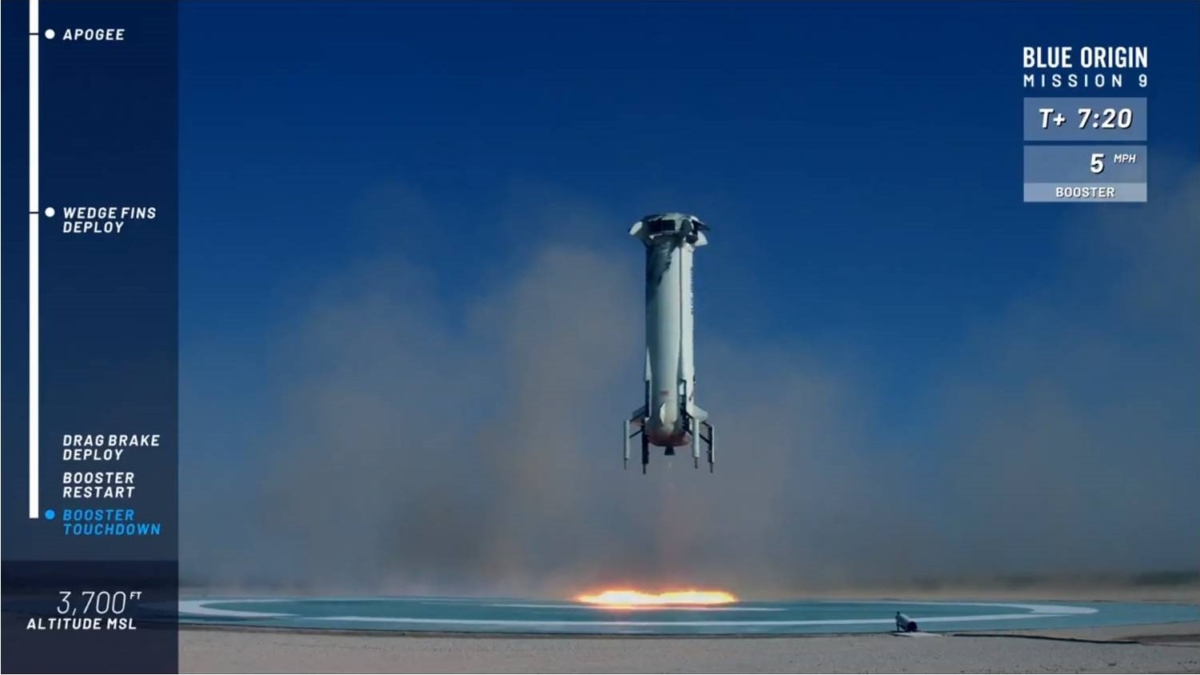
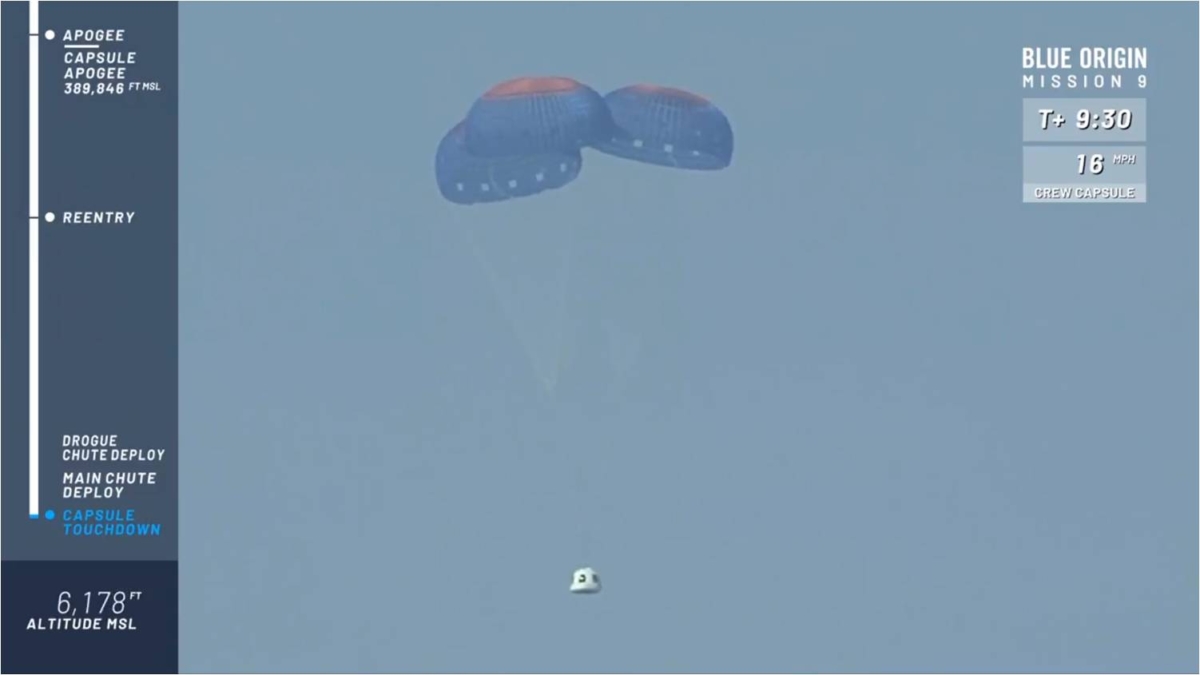
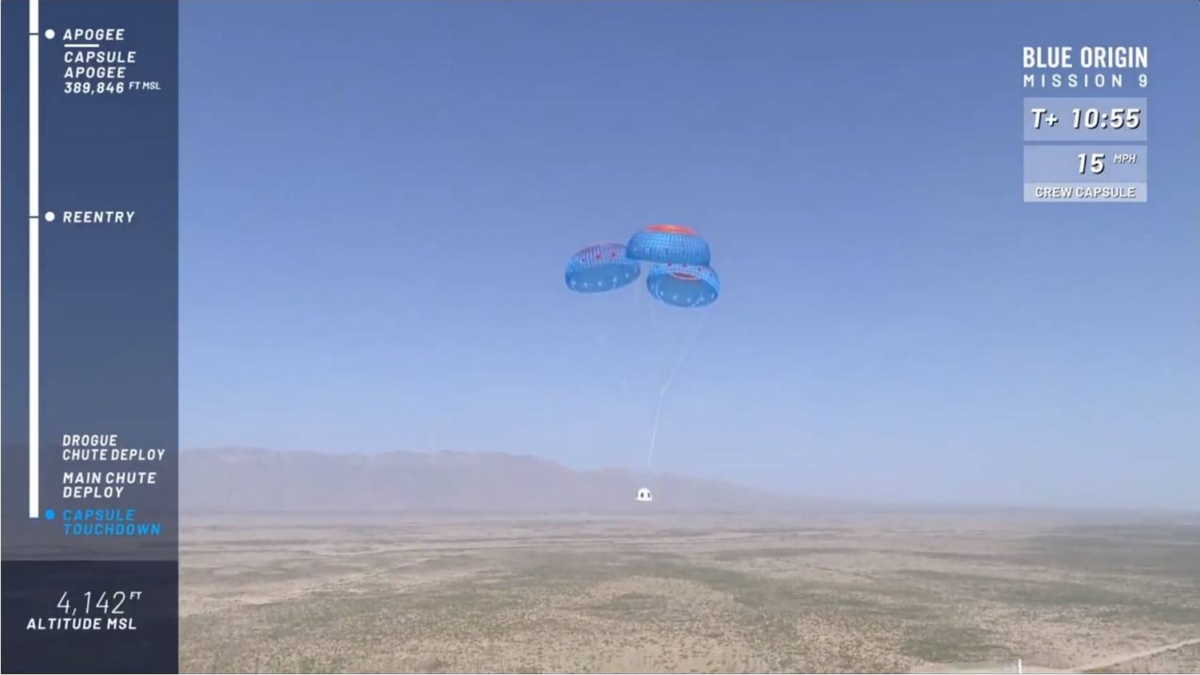
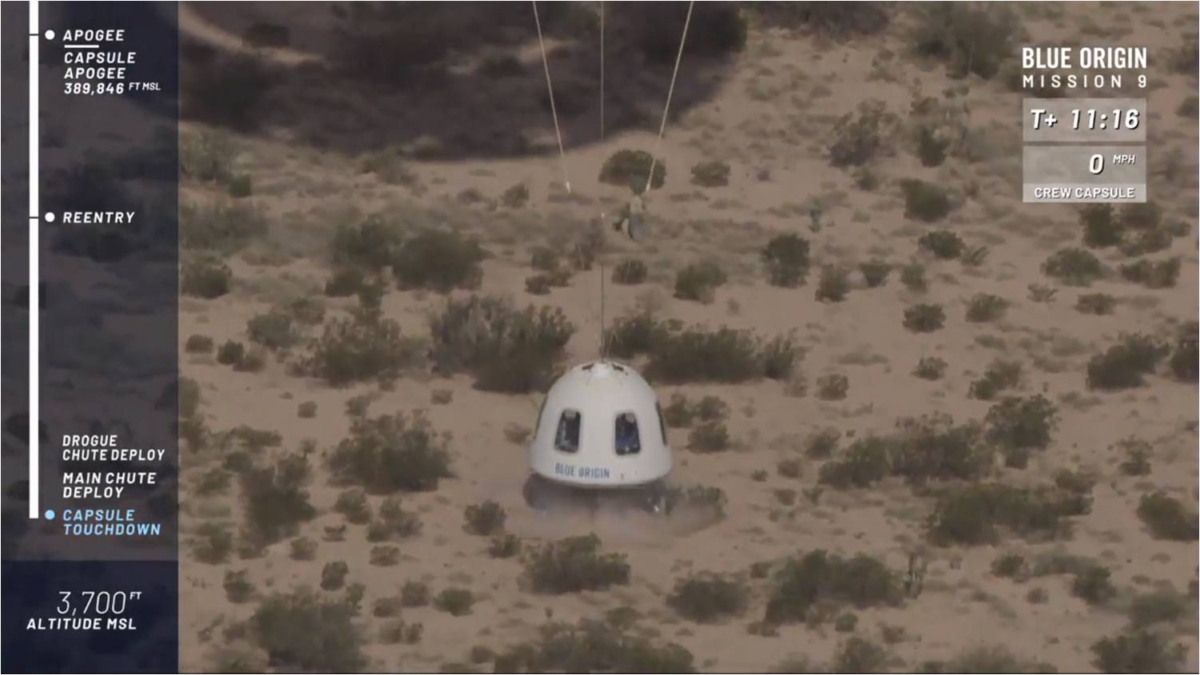
Blue Origin’s New Shepard vehicle successfully flew today, a step closer to providing pay-for-ticket human space travel on suborbital treks.
Exhilarating ride
As posted by Blue Origin: “During this mission, known as Mission 9 (M9), the escape motor was fired shortly after booster separation. The Crew Capsule was pushed hard by the escape test and we stressed the rocket to test that astronauts can get away from an anomaly at any time during flight. The mission was a success for both the booster and capsule. Most importantly, astronauts would have had an exhilarating ride and safe landing.”
Credit: Blue Origin/Screengrab
“This isn’t the first time we’ve done this type of extreme testing on New Shepard. In October of 2012, we simulated a booster failure on the launch pad and had a successful escape. Then in October of 2016, we simulated a booster failure in-flight at Max Q, which is the most physically strenuous point in the flight for the rocket, and had a completely successful escape of the capsule.”
“This test on M9 allowed us to finally characterize escape motor performance in the near-vacuum of space and guarantee that we can safely return our astronauts in any phase of flight.”
Credit: Blue Origin/Screengrab
Customers
On today’s Mission 9, a third round of payload customers from commercial companies, universities and space agencies shared the cabin with Blue Origin’s Mannequin Skywalker for their flight to
Here is a selection of customers that flew on Mission 9:
Schmitt Space Communicator Xperimental (SC1-x) by Solstar (Santa Fe, NM), developed with private funding and with support from NASA’s Flight Opportunities Program. On New Shepard Mission 8, Solstar demonstrated the first commercial WiFi in space. On this reflight, they will take advantage of the Crew Capsule’s high altitude escape and continue testing WiFi access throughout the flight.
Credit: Blue Origin/Screengrab
GAGa (Granular Anisotropic Gases) is from Otto-von-Guericke University (Magdeburg, Germany) with end-to-end service provider OLYMPIASPACE (Darmstadt, Germany) and funding from the German space agency, DLR. The GAGa payload investigates the statistics of granular gases, dilute collections of solid grains that interact by random collisions. Data from GAGa on New Shepard Mission 9 will help validate existing theoretical models and contribute to understanding the dynamics of related systems like avalanches and cosmic dust clouds.
Credit: Blue Origin/Screengrab
Suborbital Flight Experiment Monitor-2 (SFEM-2) is from NASA Johnson Space Center (Houston, TX). SFEM-2 was first flown on Mission 8 of New Shepard, and will collect additional data on Mission 9. The experiment will record vehicle conditions including cabin pressure, temperature, CO2, acoustic conditions, and acceleration.
Condensed Droplet Experiment for NASA in Sub-Orbital Spaceflight (ConDENSS) from Purdue University (West Lafayette, IN), funded through NASA Flight Opportunities Program. ConDENSS will examine the behavior of small droplets of water in order to support the development of small and efficient heat transfer systems for spaceflight. These systems, called phase change heat transfer systems, provide more uniform surface temperatures and higher power capacities.
APL Electromagnetic Field Experiment by Johns Hopkins University Applied Physics Laboratory (APL), funded through NASA Flight Opportunities Program. This experiment marks the first flight of the JANUS 2.1 platform with sensors to monitor magnetic fields and ambient pressure inside the vehicle. Previous versions of JANUS were flown on New Shepard Missions 6 and 7.
Credit: Blue Origin/Screengrab
Vibration Isolation Platform Data Logger by Controlled Dynamics, funded through NASA Flight Opportunities Program. VIP DL is a technology demo for an active stabilization platform that aims to allow the most sensitive payloads flying on New Shepard to be isolated from ambient vibrations, allowing for even higher precision microgravity studies.
mu Space-1 by mu Space Corporation (Bangkok, Thailand). The first of Blue Origin’s New Glenn customers to purchase a slot on New Shepard, mu Space’s payload includes an assortment of scientific and medical items, several textile materials they plan to use on their future space suit and apparel, and other special articles for their community partners.
Credit: Blue Origin/Screengrab
Blue Origin “Fly My Stuff” is tagged as a special addition to the Mission 9 payload manifest and is a suite of payloads from Blue Origin employees as a part of the group’s internal “Fly My Stuff” program.
Rover drill checkup. Curiosity Mastcam Right image taken on Sol 2113, July 17, 2018.
Credit: NASA/JPL-Caltech/MSSS
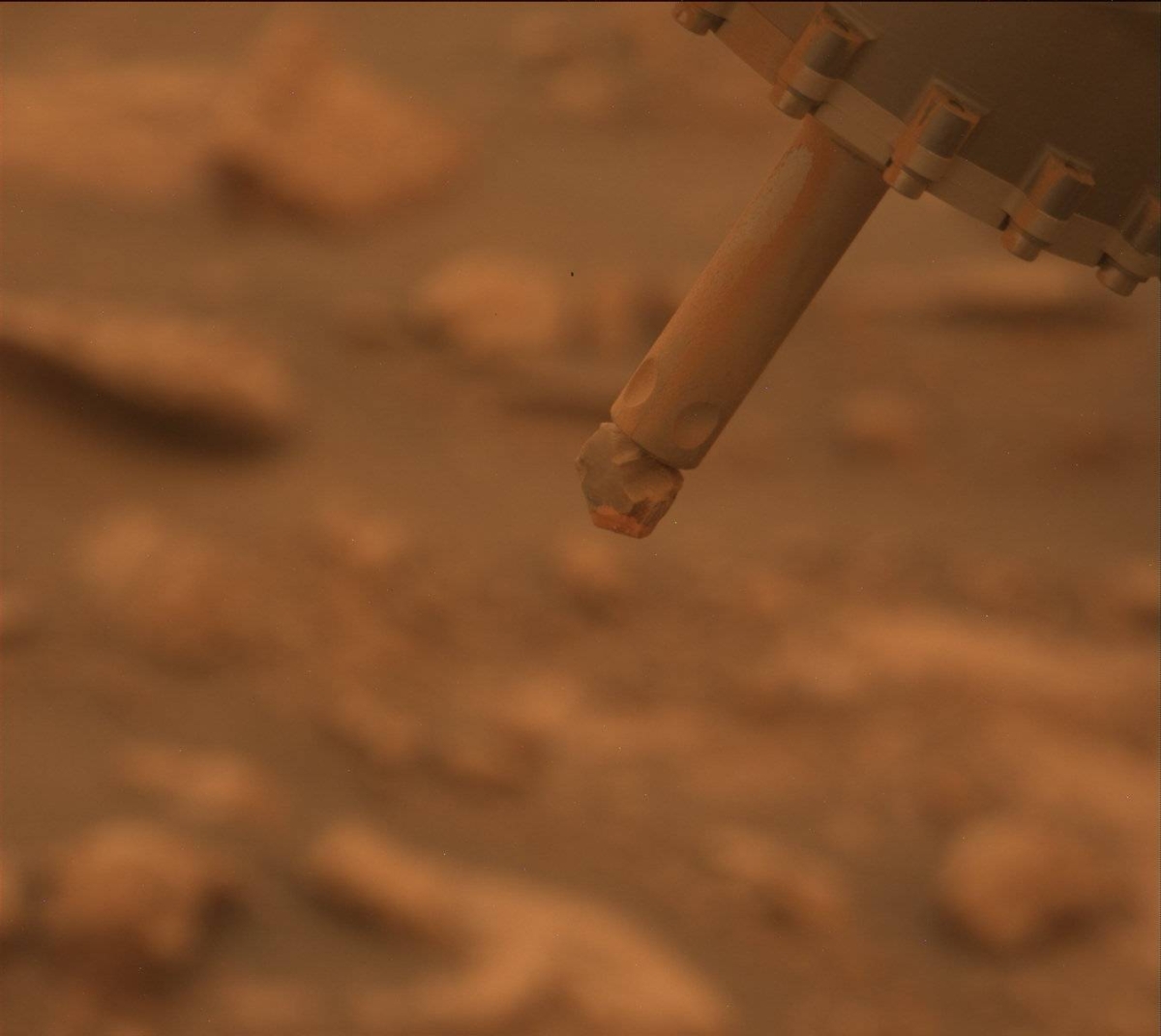
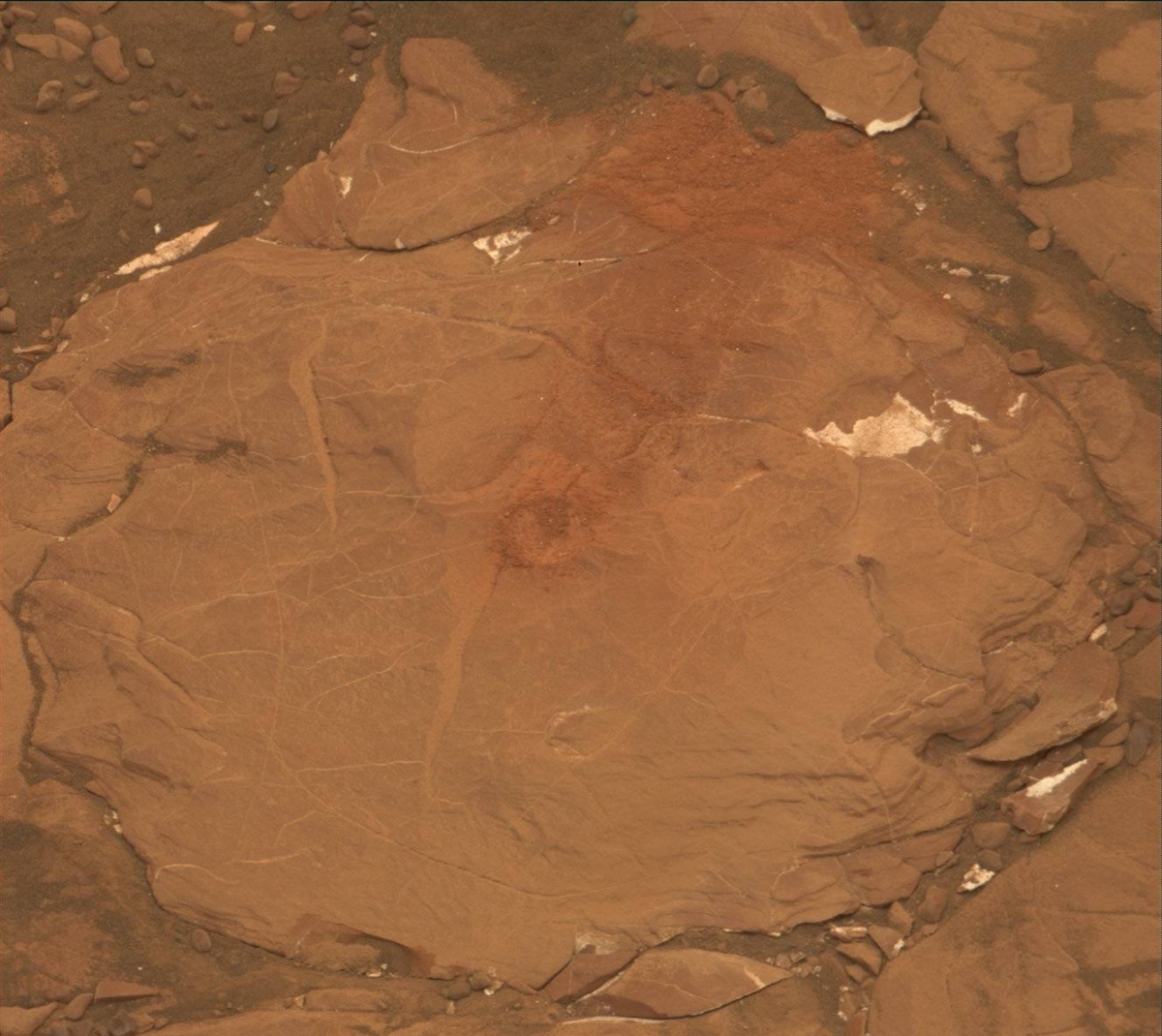
NASA’s Curiosity Mars rover is engaged in Sol 2114 duties, finishing up at the Voyageurs drill site.
Reports Mark Salvatore, a planetary geologist at the University of Michigan in Dearborn: “After our attempt to drill the Voyageurs target did not reach sufficient depth due to the impressive hardness of the rock, the team is beginning to finish up its activities at this location before heading a bit further uphill to find a more suitable (i.e., softer) drill target.”
Hardest yet observed
Salvatore notes that all evidence suggests that this rock target is one of the hardest yet observed in Gale crater, a property that may be indicative of this entire section of the Vera Rubin Ridge.
“To a geologist, variations in rock hardness could indicate several different physical and chemical properties about a rock,” Salvatore adds. “It is important for us to further characterize and understand why this rock unit is so much harder than the underlying rocks within the Murray formation.”
Voyageurs drill site. Curiosity Mastcam Right image taken on Sol 2113, July 17, 2018.
Credit: NASA/JPL-Caltech/MSSS
Formation mechanisms
Salvatore speculates, could this increased hardness be related to changes in water chemistry as the sedimentary rocks were being deposited? Or, could this increased hardness be due to subsequent cementation as iron-rich water was injected into the previously deposited sedimentary rocks?
“In order to address these possible formation mechanisms (and countless others), we must continue to gather data on the physical, chemical, and mineralogical properties of this portion of the Vera Rubin Ridge,” Salvatore explains.
New plans
A new set of Curiosity activities contain a combination of scientific investigations and engineering activities.
The plan starts with a short imaging science block where Mastcam will be used to acquire images of the surrounding landscape to search for short-term changes to the surface, including sand migration and changes to dust cover.
The robot’s Navcam will also be used to investigate the atmospheric dust content and to search for nearby dust devils.
Following this block of observations, Curiosity will use the Mars Hand Lens Imager (MAHLI) high-resolution camera to investigate the shallow Voyageurs drill hole and to image the rover wheels with its dust cover closed (to avoid dirtying the camera lens).
Drill hole documentation
“After a short nap and a data uplink to the Mars Reconnaissance Orbiter as it passes overhead,” Salvatore says that Curiosity is slated to embark on another block of science activities. This second suite will include Mastcam images of the dusty atmosphere, a Chemistry and Camera (ChemCam) laser-induced breakdown spectroscopy (LIBS) chemical analysis of the Voyageurs drill hole, a LIBS measurements of the ChemCam calibration target, and a follow-up Mastcam documentation image of the drill hole.
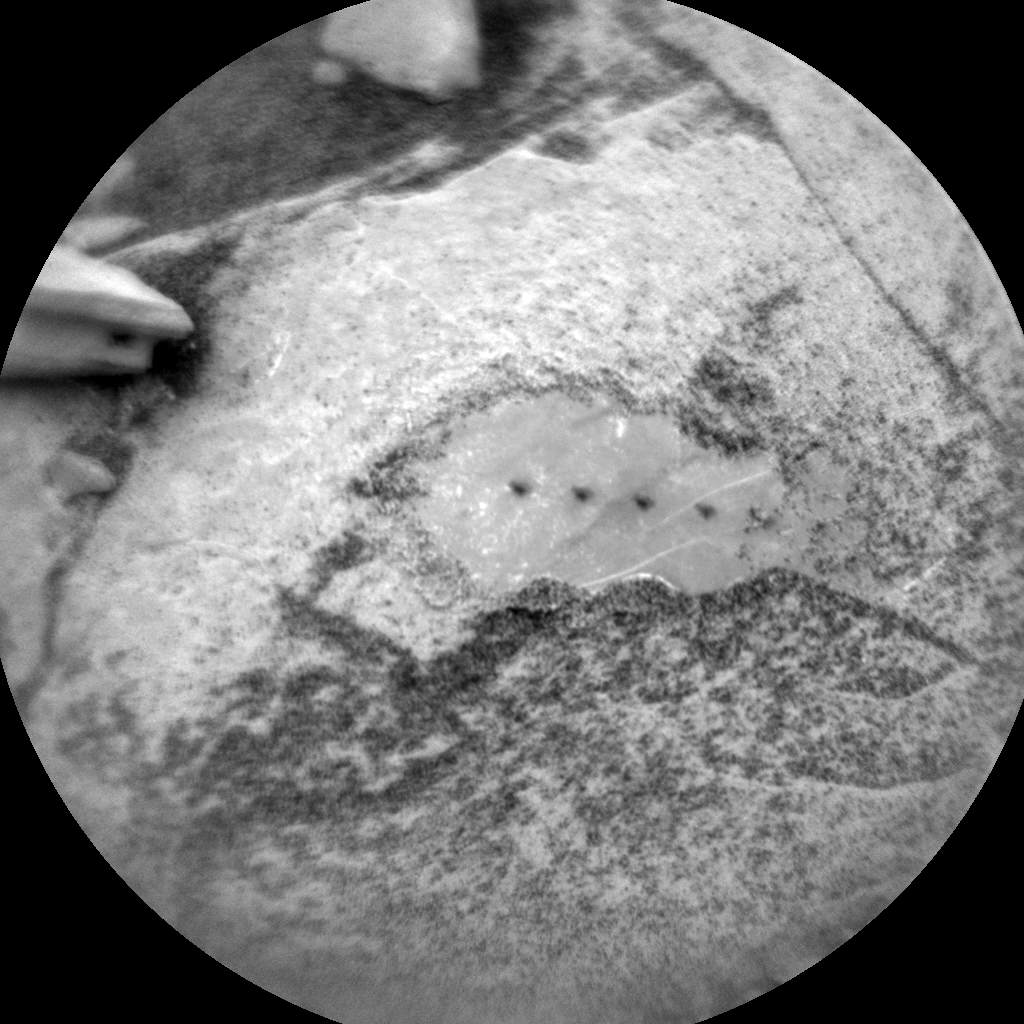
Laser shots. Curiosity ChemCam Remote Micro-Imager photo acquired on Sol 2113, July 17, 2018
Credit: NASA/JPL-Caltech/LANL
This will conclude the sol 2114 science activities.
Deluge of discussions
The team first had to deal with the realization that the drill activities at the Voyageurs target did not penetrate deep enough into the target to acquire materials for analysis onboard the rover.
“While disappointing, the information gathered about the rock properties and drill activities led to a deluge of productive scientific discussions about how to proceed and what these observations tell us about the geologic environment that Curiosity is investigating,” Salvatore reports.
Scientists and engineers can collectively turn a “frustrating sigh into a gasp of excitement” as researchers think about next observations and what more they have to learn about this interesting and foreign environment, Salvatore concludes.

Rocketeer Jeff Bezos and his commercial rocket firm, Blue Origin.
Credit: Blue Origin
Launch tomorrow of the New Shepard is slated for 9:00 am CT / 14:00 UTC. Live webcast begins at T-20 minutes on http://BlueOrigin.com
On Mission 9 a third round of payload customers from commercial companies, universities and space agencies will share the cabin with Blue Origin’s Mannequin Skywalker for their flight to space.

Ready for re-flight – Blue Origin’s Mannequin Skywalker
Credit: Blue Origin/Screen Grab
Customers
Here is a selection of customers slated to fly on Mission 9:
Schmitt Space Communicator Xperimental (SC1-x) by Solstar (Santa Fe, NM), developed with private funding and with support from NASA’s Flight Opportunities Program. On New Shepard Mission 8, Solstar demonstrated the first commercial WiFi in space. On this reflight, they will take advantage of the Crew Capsule’s high altitude escape and continue testing WiFi access throughout the flight.
GAGa (Granular Anisotropic Gases) is from Otto-von-Guericke University (Magdeburg, Germany) with end-to-end service provider OLYMPIASPACE (Darmstadt, Germany) and funding from the German space agency, DLR. The GAGa payload investigates the statistics of granular gases, dilute collections of solid grains that interact by random collisions. Data from GAGa on New Shepard Mission 9 will help validate existing theoretical models and contribute to understanding the dynamics of related systems like avalanches and cosmic dust clouds.
Suborbital Flight Experiment Monitor-2 (SFEM-2) is from NASA Johnson Space Center (Houston, TX). SFEM-2 was first flown on Mission 8 of New Shepard, and will collect additional data on Mission 9. The experiment will record vehicle conditions including cabin pressure, temperature, CO2, acoustic conditions, and acceleration.
Condensed Droplet Experiment for NASA in Sub-Orbital Spaceflight (ConDENSS) from Purdue University (West Lafayette, IN), funded through NASA Flight Opportunities Program. ConDENSS will examine the behavior of small droplets of water in order to support the development of small and efficient heat transfer systems for spaceflight. These systems, called phase change heat transfer systems, provide more uniform surface temperatures and higher power capacities.
APL Electromagnetic Field Experiment by Johns Hopkins University Applied Physics Laboratory (APL), funded through NASA Flight Opportunities Program. This experiment marks the first flight of the JANUS 2.1 platform with sensors to monitor magnetic fields and ambient pressure inside the vehicle. Previous versions of JANUS were flown on New Shepard Missions 6 and 7.
Vibration Isolation Platform Data Logger by Controlled Dynamics, funded through NASA Flight Opportunities Program. VIP DL is a technology demo for an active stabilization platform that aims to allow the most sensitive payloads flying on New Shepard to be isolated from ambient vibrations, allowing for even higher precision microgravity studies.
mu Space-1 by mu Space Corporation (Bangkok, Thailand). The first of Blue Origin’s New Glenn customers to purchase a slot on New Shepard, mu Space’s payload includes an assortment of scientific and medical items, several textile materials they plan to use on their future space suit and apparel, and other special articles for their community partners.
Blue Origin “Fly My Stuff” is tagged as a special addition to the Mission 9 payload manifest and is a suite of payloads from Blue Origin employees as a part of the group’s internal “Fly My Stuff” program.

Blue Origin’s crew capsule – a suborbital six-seater craft.
Credit: Blue Origin

NASA Curiosity rover on the Red Planet prowl since August 2012 and assessing the habitability of Mars.
Credit: NASA/JPL-Caltech/MSSS
Back in June, NASA held a press meeting to detail new findings from the space agency’s Curiosity Mars rover.
The Mars machinery had found new evidence preserved in rocks on Mars that suggests the planet could have supported ancient life, as well as new evidence in the Martian atmosphere that relates to the search for current life on the Red Planet. While not necessarily evidence of life itself, these findings are a good sign for future missions exploring the planet’s surface and subsurface.
“Are there signs of life on Mars?” said Michael Meyer, lead scientist for NASA’s Mars Exploration Program, at NASA Headquarters. “We don’t know, but these results tell us we are on the right track.”

History-making Viking Mars landers touched down on the Red Planet in 1976.
Credit: NASA
Critical review
A critique of that NASA announcement and related scientific papers has been written by former Viking experimenters. After landing in 1976, the two Viking craft carried out dedicated life-detection investigations.
Gilbert V. Levin was the leader of the Viking Labeled Release (LR) Life Detection Experiment and Patricia Ann Straat was a Viking co-experimenter.
Writing a Forum article in the journal Astrobiology, the two scientists note that the June 7, 2018, NASA news conference and two related papers in Science regarding the findings of organic molecules and methane on Mars “are exciting for the possibility of both ancient and current life on Mars.”
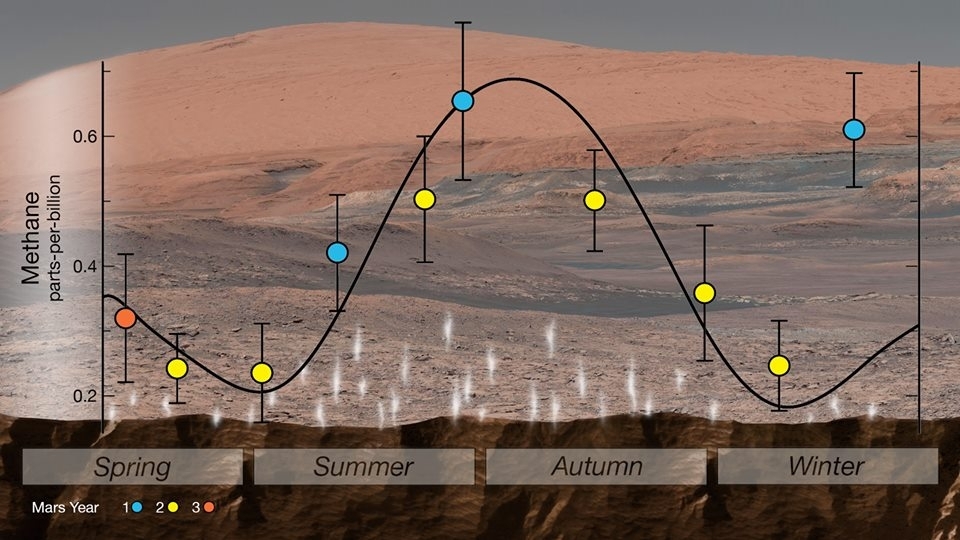
NASA’s Curiosity rover used an instrument called SAM (Sample Analysis at Mars) to detect seasonal changes in atmospheric methane in Gale Crater. The methane signal has been observed for nearly three Martian years (nearly six Earth years), peaking each summer.
Credit: NASA/JPL-Caltech
Indication of current life
That said, Levin and Straat write: “While ostensibly contending they are seeking life, each finding pointing in that direction seems to be immediately contra-indicated by the finders and in all of NASA’s releases and supported scientific publications.”
For instance, the paper on methane in the atmosphere of Mars did provide important new information, they add. That is, monitoring the localized seasonal cycling of atmospheric methane, with substantial and repetitive amplitudes over the three Martian years (six Earth years).
But while acknowledging that almost all methane in Earth’s atmosphere is of biological origin, the authors of that paper propose an abiotic scenario “to explain away this strong indication of current life,” Levin and Straat point out. “On the other hand, this new result makes a possible biological source proposed to explain the cyclical methane on Mars even more tantalizing,” the Viking scientists add.
Strong evidence
NASA has not dispatched another life-detection experiment to Mars since the 1976 Viking mission Labeled Release (LR) experiment, Levin and Straat write, despite that experiment obtaining “strong evidence” for current microbial life on the Red Planet.

Credit: NASA/Ben Clark
“At that time, this evidence was overridden by the presumed lack of liquid water and the failure of the Viking GCMS [Gas Chromatograph Mass Spectrometer] to find any organic matter. Both have now been found,” Levin and Straat point out.
“In the 41 years since Viking, none of the many attempts to explain away the LR results nonbiologically has withstood scientific scrutiny, so no barrier remains to preclude the possibility of extant microbial life on Mars, or that the LR experiment detected it,” Levin and Straat conclude.
Go to this NASA June 7, 2018 release regarding Curiosity’s findings at:
https://mars.nasa.gov/news/8347/nasa-finds-ancient-organic-material-mysterious-methane-on-mars/
“Comments on the June 7, 2018, NASA News Release and Papers” by Gilbert V. Levin and Patricia Ann Straat has been published online: July 16, 2018 in Astrobiology at:
Credit: Astrobotic
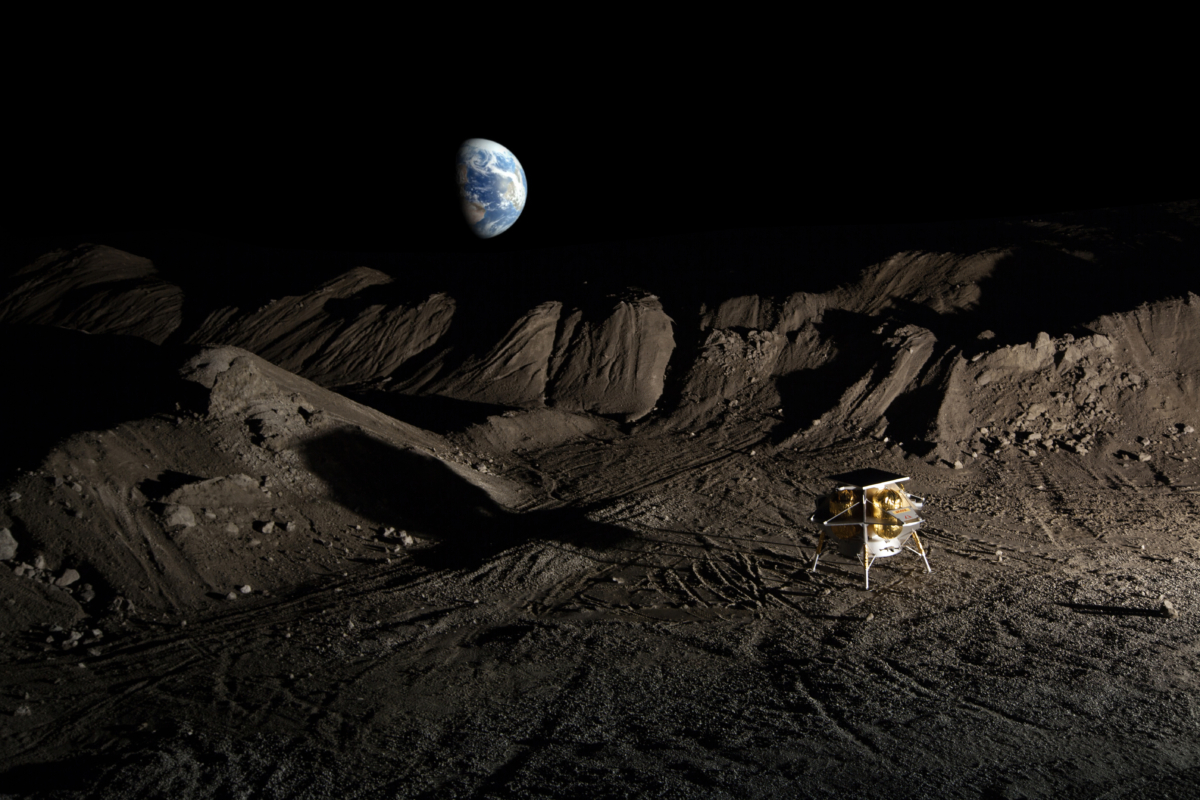
Astrobotic’s Peregrine lunar lander is to soft land on the Moon courtesy of propulsion provider, Dynetics of Huntsville, Alabama.
The Pittsburgh, Pennsylvania-based Astrobotic plans to start delivering customer payloads once a year starting in 2020.
In a multi-mission deal announced today, Dynetics will integrate Peregrine’s main engines and attitude control thrusters, controller electronics, tanks, and feed system into a single system that performs all propulsive maneuvers from cruise to soft landing on the Moon.
Astrobotic-Dynetics agreement
According to an Astrobotic press statement, the Dynetics-led system will feature a propellant with a next-generation oxidizer called MON-25, which has a higher nitric oxide content to provide better thermal capability to operate more efficiently in deep space environments than previous oxidizers.
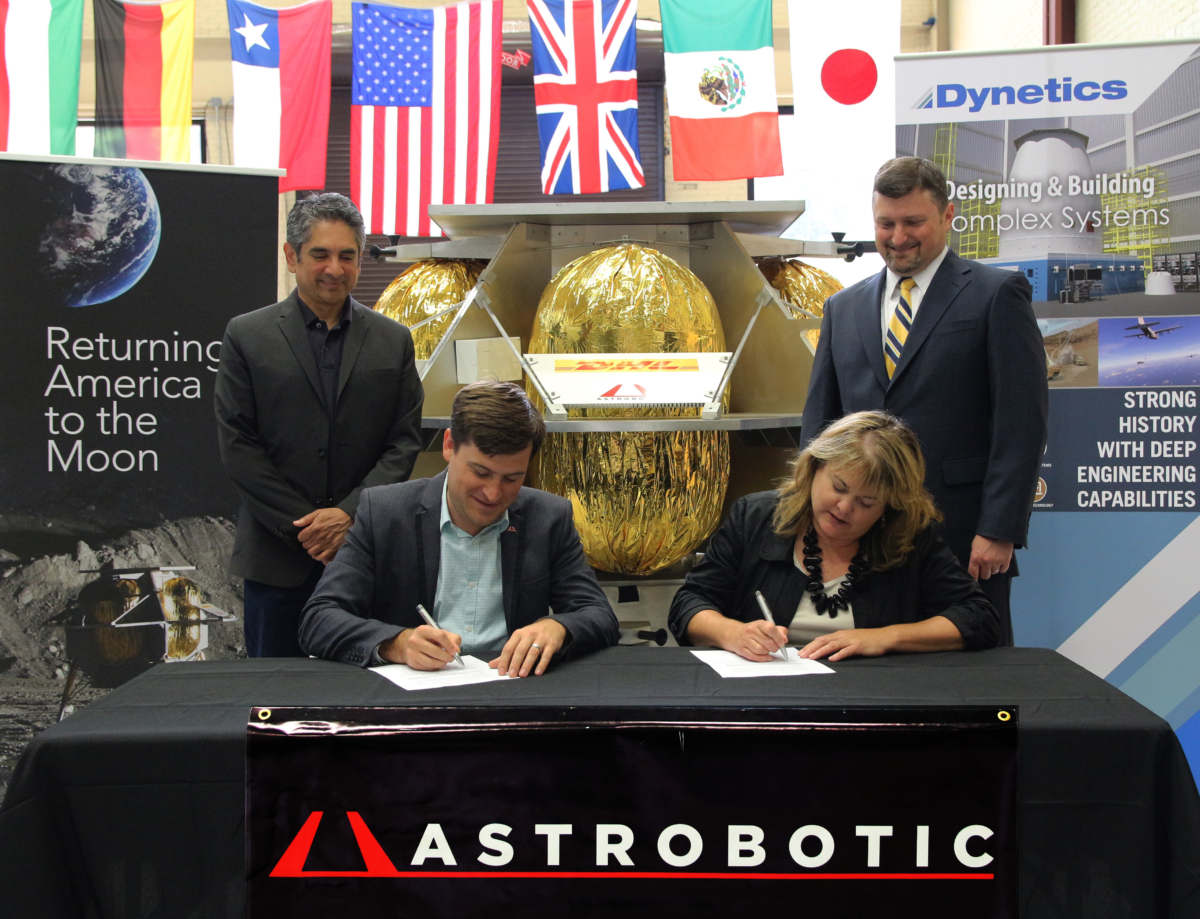
Astrobotic CEO John Thornton and Dynetics Space Division Manager Kim Doering sign the Peregrine Propulsion Teaming Agreement at Astrobotic’s Spacecraft High Bay in Pittsburgh, Pennsylvania.
Credit: Astrobotic
Dynetics will procure the engines from Simi Valley, California-based Frontier Aerospace, which is under contract with NASA to qualify the engines for lunar missions.
The new Astrobotic-Dynetics agreement is geared to support a dependable, low-cost manifest of missions that enables companies, governments, universities, and nonprofits to plan their campaigns of science, exploration, and commerce on the Moon.
Customer payloads
The Astrobotic lunar lander is designed to accommodate multiple customer payloads on a single flight, price-tagged at $1.2 million per kilogram.
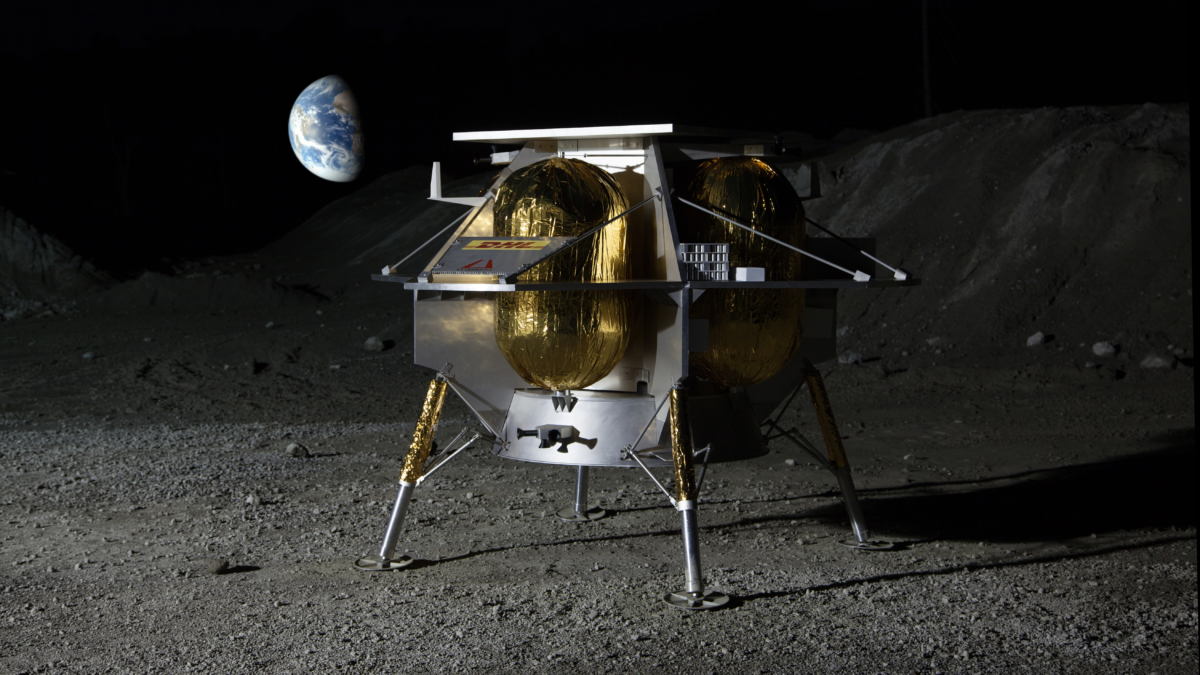
Credit: Astrobotic
Founded in 2007, Astrobotic is an official partner with NASA through the Lunar CATALYST program, has 26 prior and ongoing NASA contracts, a commercial partnership with Airbus DS, a corporate sponsorship with DHL, 12 deals for its first mission to the Moon, and 130 customer payloads in the pipeline for upcoming missions.
A video depicting a Peregrine lander touching down on the Moon can be viewed at:

