Author Archive
 Author:
  October 13th, 2018
Air Force space plane in Earth orbit for over 400 days.
Credit: Boeing

The U.S. Air Force’s X-37B Orbital Test Vehicle 4 is seen after landing at NASA ‘s Kennedy Space Center Shuttle Landing Facility in Florida on May 7, 2017.
Credit: U.S. Air Force courtesy photo
The hush-hush mission of a U.S. Air Force X-37B mini-space plane has winged past 400 days of flight.
This mission – tagged as Orbital Test Vehicle (OTV-5) — was rocketed into Earth orbit on September 7, 2017 atop a SpaceX Falcon 9 booster from Launch Complex 39A at NASA’s Kennedy Space Center in Florida.
The robotic winged drone is carrying out secretive duties during the program’s fifth flight.
Flight duration
Each X-37B/OTV mission has set a new flight-duration record for the program:
OTV-1 began April 22, 2010, and concluded on Dec. 3, 2010, after 224 days in orbit.
OTV-2 began March 5, 2011, and concluded on June 16, 2012, after 468 days on orbit.
OTV-3 chalked up nearly 675 days in orbit before finally coming down on Oct. 17, 2014.
OTV-4 conducted on-orbit experiments for 718 days during its mission, extending the total number of days spent in space for the OTV program at that point to 2,085 days.

Asets-II payload logo.
Credit: AFRL
What’s up?
On this latest clandestine mission of the space plane, all that’s known according to Air Force officials is that one payload flying on OTV-5 is the Advanced Structurally Embedded Thermal Spreader, or ASETS-II.
Developed by the U.S. Air Force Research Laboratory (AFRL), this cargo is testing experimental electronics and oscillating heat pipes for long duration stints in the space environment. According to AFRL, the three primary science objectives are to measure the initial on-orbit thermal performance, to measure long duration thermal performance, and to assess any lifetime degradation.

The X-37B Orbital Test Vehicle mission 4 (OTV-4), the Air Force’s unmanned, reusable space plane, landed at NASA’s Kennedy Space Center Shuttle Landing Facility May 7, 2017.
Credit: USAF
Landing site
When the space plane will land is unknown. The last Air Force’s X-37B Orbital Test Vehicle mission touched down at NASA’s Kennedy Space Center Shuttle Landing Facility May 7, 2017 – a first for the program. All prior missions had ended with a tarmac touchdown at Vandenberg Air Force Base in California.
Several website postings say that the sixth mission, X-37B OTV-6, is planned for 2019 on a United Launch Alliance Atlas-5(501) rocket. Launch would be from Cape Canaveral Air Force Station’s Space Launch Complex-41.

Credit: Illustration by Giuseppe De Chiara
Reusable vehicles
The classified X-37B program “fleet” consists of two known reusable vehicles, both of which were built by Boeing. The X-37B Orbital Test Vehicle was built at several Boeing locations in Southern California, including Huntington Beach, Seal Beach and El Segundo. The program transitioned to the U.S. Air Force in 2004 after earlier funded research efforts by Boeing, NASA and the Defense Advanced Research Projects Agency.
Looking like a miniature version of NASA’s now-retired space shuttle orbiter, the military space plane is 29 feet (8.8 meters) long and 9.6 feet (2.9 m) tall, with a wingspan of nearly 15 feet (4.6 m). The X-37B space plane has a payload bay of 7 feet (2.1 meters) by 4 feet (1.2 meters), a bay that can be outfitted with a robotic arm. X-37B has a launch weight of 11,000 lbs. (4,990 kilograms) and is powered on orbit by gallium-arsenide solar cells with lithium-ion batteries.
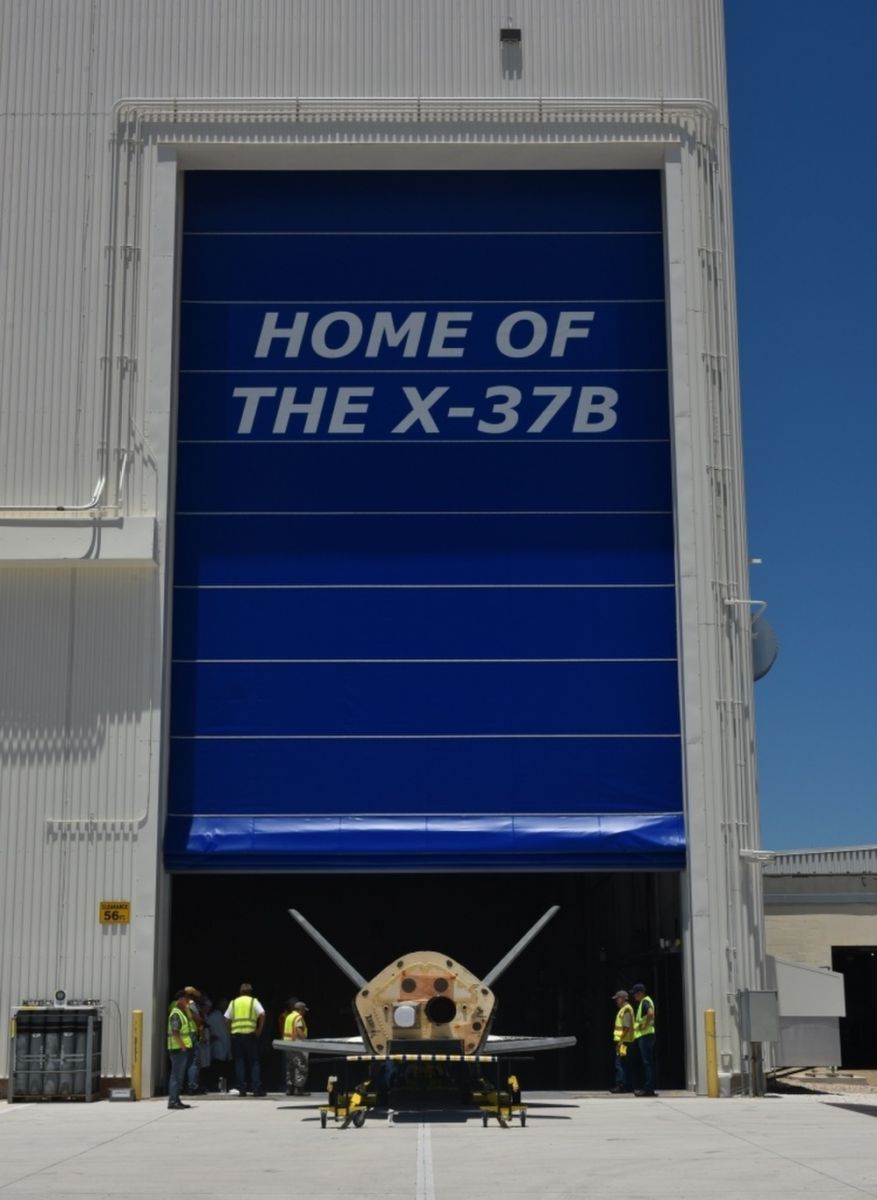
Back to hangar for another flight day. U.S. Air Force X-37B/OTV-4 is rolled into facility after its May 7 landing at Kennedy Space Center.
Credit: Michael Martin/SAF
On-orbit duties
The missions of the X-37B space planes are carried out under the auspices of the Air Force Rapid Capabilities Office, and mission control for OTV flights are handled by the 3rd Space Experimentation Squadron at Schriever Air Force Base in Colorado. This squadron oversees operations of the X-37B Orbital Test Vehicle.
This Schriever Air Force Base unit is billed as the Air Force Space Command’s premier organization for space-based demonstrations, pathfinders and experiment testing, gathering information on objects high above Earth and carrying out other intelligence-gathering duties.
And that may be a signal as to what the robotic craft is doing — both looking down at Earth and upward.
Repeating ground tracks
Ted Molczan, a Toronto-based satellite analyst, told Inside Outer Space that OTV 5’s orbit at the start of August was about 197 miles (317 kilometers) high, inclined 54.5 deg to the equator. Its ground track repeated nearly every five days, after 78 revolutions.
“Maneuvers on August 18 and 21 raised its orbit by 45 miles (74 kilometers) which caused its ground track to exactly repeat every three days, after 46 revolutions. It was still in that orbit when last observed, on September 8, by Alberto Rango, from Rome, Italy,” Molczan added.
“Repeating ground tracks are very common,” Molczan said, “especially for spacecraft that observe the Earth. I do not know why OTV has repeating ground tracks,” he concluded.
 Posted in
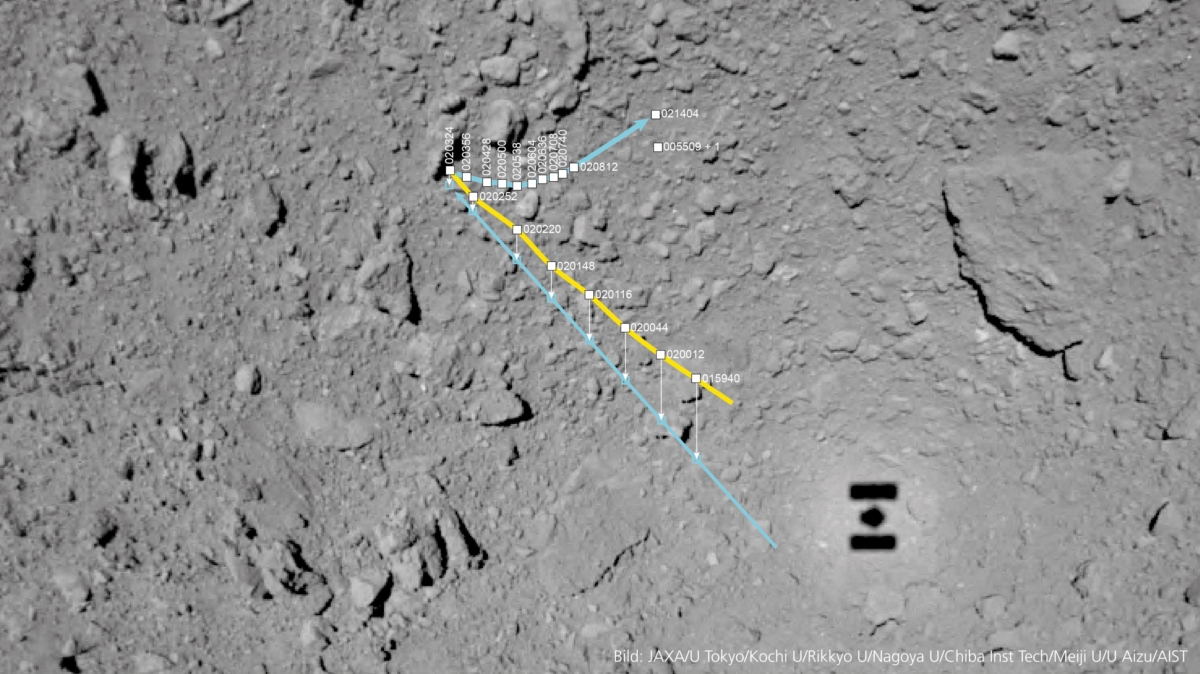
Numerous boulders, many rocks, no dust – that’s the report from operators of the MASCOT lander deployed from its mother probe, the Japan Aerospace Exploration Agency’s Hayabusa2 mission to the near-Earth asteroid Ryugu.
MASCOT is space shorthand for Mobile Asteroid Surface Scout.
Never before in the history of space has a body of the Solar System been explored in this way.
Ryugu is a C-type asteroid – a carbon-rich representative of the oldest bodies of the four-and-a-half-billion year-old Solar System.
Gentle impact
On October 3, after six minutes of free fall, a gentle impact on the asteroid and then 11 minutes of rebounding until coming to rest – that’s the journey of MASCOT.
Some 17 hours of scientific exploration followed this first ‘stroll’ on the space rock.
The lander was commanded and controlled from the MASCOT Control Centre at the German Aerospace Center (Deutsches Zentrum für Luft- und Raumfahrt; DLR) site in Cologne in the presence of scientific teams from Germany, France and Japan.
The German-French lander MASCOT on board Hayabusa2 was developed by the German Aerospace Center (Deutsches Zentrum für Luft- und Raumfahrt; DLR) and built in close cooperation with the French space agency CNES (Centre National d’Etudes Spatiales).
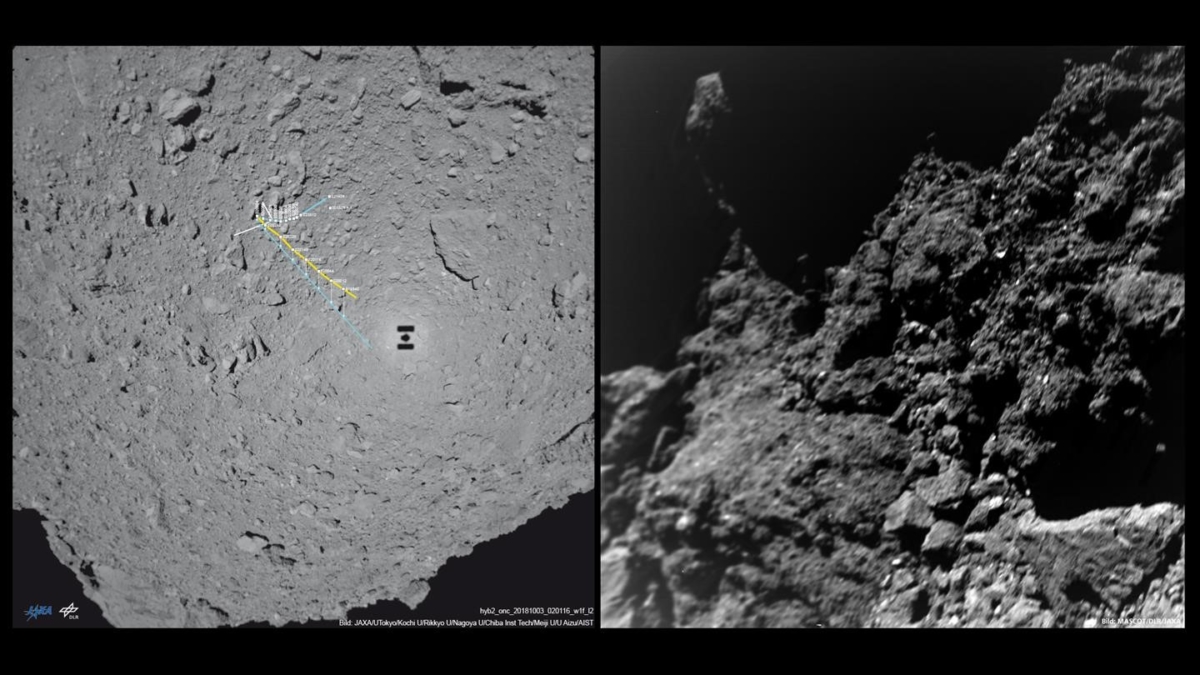
Photo (right) taken after first contact with asteroid.
Credit: JAXA/U Tokyo/Kochi U/Rikkyo U/Nagoya U/Chiba Inst Tech/Jeiji U/U Aizu/AIST (links); MASCOT/DLR/JAXA (rechts).
Pathway charted
It has now been possible to precisely trace MASCOT’s path on Ryugu’s surface on the basis of image data from the Japanese Hayabusa2 space probe and the lander’s images and data.
On the surface, MASCOT moved through the activation of a tungsten swing arm accelerated and decelerated by a motor. This made it possible for MASCOT to be repositioned to the ‘correct’ side or even perform hops across the asteroid’s surface.
During the mission, the team named MASCOT’s landing site (MA-9) ‘Alice’s Wonderland’, after the book by Lewis Carroll (1832-1898).
Jump and Mini-move
After the first impact, MASCOT smoothly bounced off a large block, touched the ground about eight times, and then found itself in a resting position unfavorable for taking on-the-spot measurements.
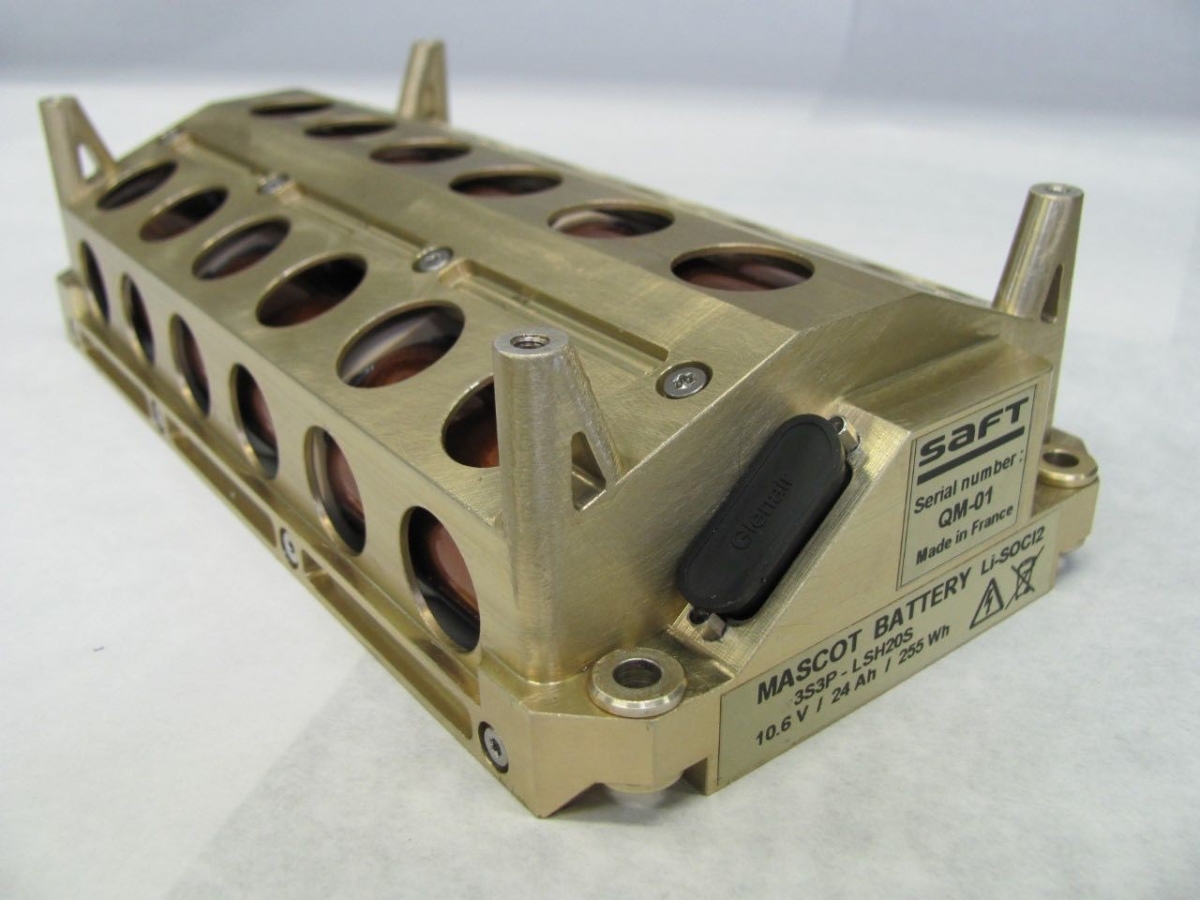
The MASCOT battery powered up after four years on standby during its trip from Earth to the asteroid.
Credit: Saft
After commanding and executing a specially prepared correction maneuver, MASCOT came to a second halt. The exact location of this second position is still being determined.
There, the lander completed detailed measurements during one asteroid day and night. This was followed by a small ‘mini-move’ to provide the MicrOmega spectrometer with even better conditions for measuring the composition of the asteroid material.
Finally, MASCOT was set in motion one last time for a bigger jump. At the last location it carried out some more measurements before the third night on the asteroid began, and contact with Hayabusa2 was lost as the spaceship had moved out of line of sight. Its onboard battery depleted, MASCOT’s 17 hours and 7 minutes on Ryugu was over.
Note: Story based on DLR press statement.

Credit: NASA/MSFC
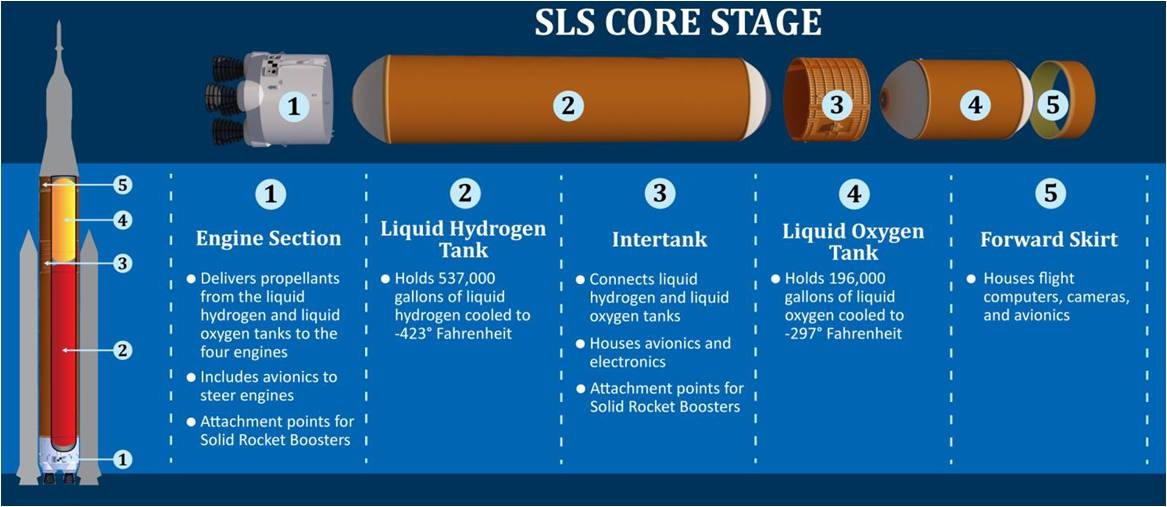
Originally, the first uncrewed mission of the combined Space Launch System (SLS)/Orion system known as Exploration Mission-1 (EM-1) had a launch readiness date of December 2017,
The first crewed mission of the system known as Exploration Mission-2 (EM-2) was projected to launch in mid-2021.
Launch slips
However, a new NASA Office of Inspector General (OIG) report has found, due to continued production delays with the SLS Core Stage and upcoming critical testing and integration activities, current NASA schedules indicate launch dates of mid-2020 and mid-2022, respectively.
With $5.3 billion expended as of August 2018 out of $6.2 billion allocated for the Boeing Stages contract, NASA expects Boeing to reach the contract’s value by early 2019—nearly 3 years before the contract is supposed to end—without final delivery of a single Core Stage or EUS.
Wanted: increase in funding
As a result, the OIG report explains that the SLS Program will require a major increase in funding and renegotiation of the Boeing Stages contract to meet current launch readiness dates for the two Core Stages and EUS.
The OIG report concludes that, in support of NASA’s goal of manned space flight beyond low Earth orbit, the Agency has been working since 2010 to develop a heavy-lift rocket. “As of August 2018, NASA has spent $11.9 billion on the SLS, but will require significant additional funding to complete the first Core Stage—more than 3 years later than initially planned and at double the anticipated cost.”
Credit: NASA OIG
Boeing: poor performance
“In addition to Boeing’s poor performance, we found a number of unacceptable procurement practices by NASA officials at Marshall that added to contract cost and schedule issues. These practices included not tracking the costs of specific deliverables for each Core Stage and EUS, contracting officers exceeding their warrants, paying significant award fees despite contractor poor performance, and the lack of an approved plan for future Core Stage production. We question nearly $64 million in award fees provided to Boeing since 2012 for the “very good” and “excellent” performance ratings it received while the SLS Program was experiencing substantial cost increases, technical issues, and schedule delays. Without significant corrective action, NASA’s efforts to build its first two Core Stages and the EUS will cost significantly more and take considerably longer than anticipated.”

This artist’s rendering shows a NASA concept of a Europa lander mission.
Credit: NASA/JPL-Caltech/M. Carroll
Europa mission jeopardized
Given that NASA officials estimate needing 52 months of lead time from issuing a contract to delivery, the OIG reports that “the earliest a third Core Stage can be produced is 2023, jeopardizing planned launch dates for future missions that require the rocket, including EM-2 and potentially a science mission to Europa, one of Jupiter’s moons, in 2022.”
Go to this October 10, 2018 report – “NASA’s Management of the Space Launch System Stages Contract” – at:
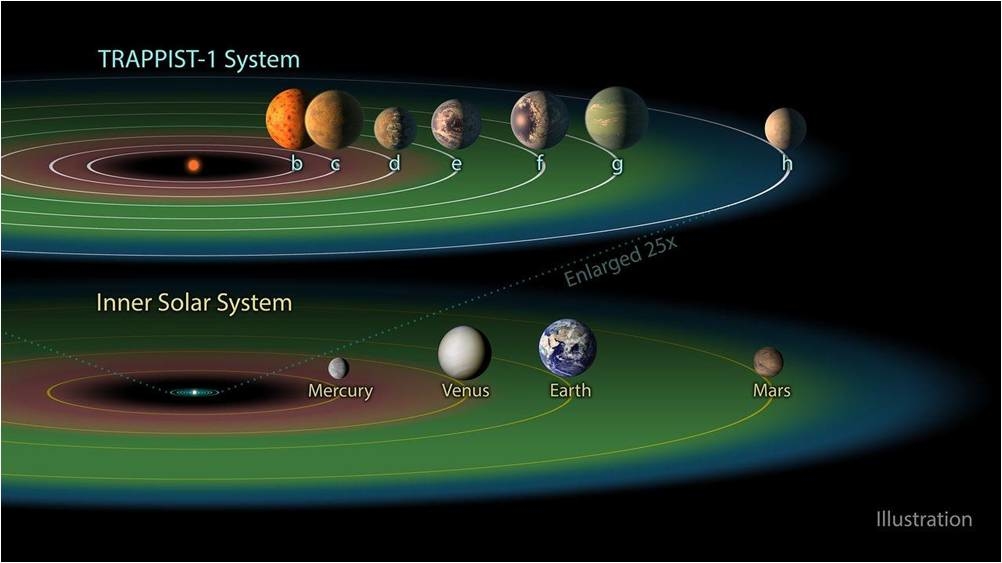
Illustration of the seven planets orbiting the TRAPPIST-1 ultra-cool low mass star. Planets e, f, and g orbit in the suspected habitable zone (green) based on the spectral type and modeling of the system. Note: the size of the planets is greatly exaggerated compared to their orbital
radii and that the radial dimension of the TRAPPIST-1 system has been enlarged by a factor of 25. In
other words, the entire TRAPPIST-1 system would fit well inside the orbit of Mercury.
SOURCE: NASA/JPL-Caltech
A new report issued today has recommended that NASA should support research on a broader range of biosignatures and environments, and incorporate the field of astrobiology into all stages of future exploratory missions.
“An Astrobiology Strategy for the Search for Life in the Universe” is a Congressionally mandated report from the National Academies of Sciences, Engineering, and Medicine.
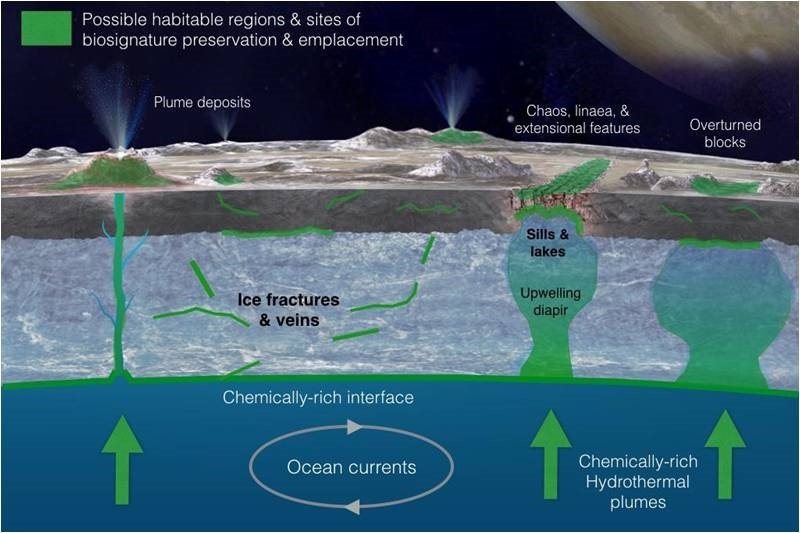
Europan environments that may harbor life or preserve biosignature. A variety of geologic and geophysical processes, including ocean currents governed by tides, rotation, and heat exchange, are required to drive water from the subsurface to the surface and govern how any exchange operates.
SOURCE: Kevin Hand, Jet Propulsion Laboratory, “On the Habitability of Ocean Worlds,” presentation
to the Workshop on Searching for Life across Space and Time, December 5, 2016.
Novel biosignatures
The blue-ribbon committee found that the lines of evidence now used to look for current and past life on Earth and beyond, called biosignatures, needs expansion.
Also, recommended is investigating novel “agnostic” biosignatures – signs of life that are not tied to a particular metabolism or molecular “blueprint,” or other characteristics of life as we currently know it.
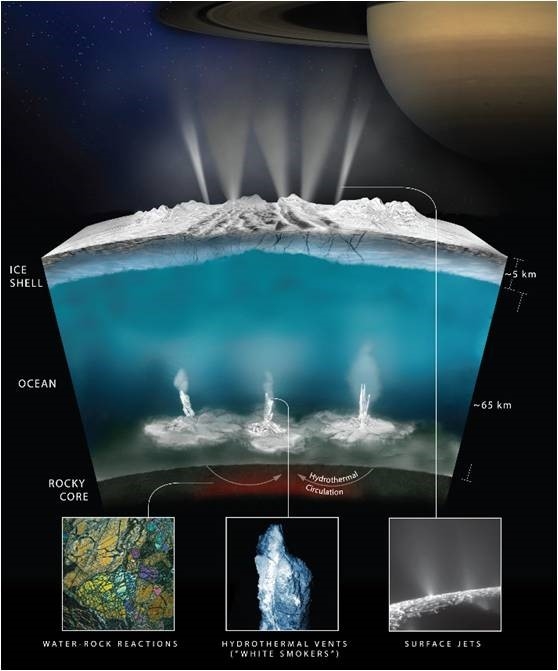
Chemical evidence consistent with serpentinization and water-rock interactions on Enceladus and known hydrothermal activity make Enceladus a key target for astrobiology exploration.
Sampling the moon’s plumes would help to establish if life exists there now.
SOURCE: NASA/JPLCaltech/
Southwest Research Institute
Diversity of life
The report explains that NASA should focus on research and exploration of possible life below the surface of a planet in light of recent advances that have demonstrated the breadth and diversity of life below Earth’s surface, the nature of fluids beneath the surface of Mars, and the likelihood of life-sustaining geological processes in planets and moons with subsurface oceans.
A renewed focus on how to seek signs of subsurface life will inform astrobiology investigations of other rocky planets or moons, ocean or icy worlds, and beyond to exoplanets.
Life detection technologies
The report emphasizes the need for NASA to ramp up efforts in developing mission-ready life detection technologies to advance the search for life. Highlighted is implementing technologies in near-term ground- and space-based direct imaging missions that can suppress the light from stars.
Flagged in the NASA-sponsored report is, so far, planning, implementation, and operations of planetary exploration missions with astrobiological objectives have tended to be more strongly defined by geological perspectives than by astrobiology-focused strategies.
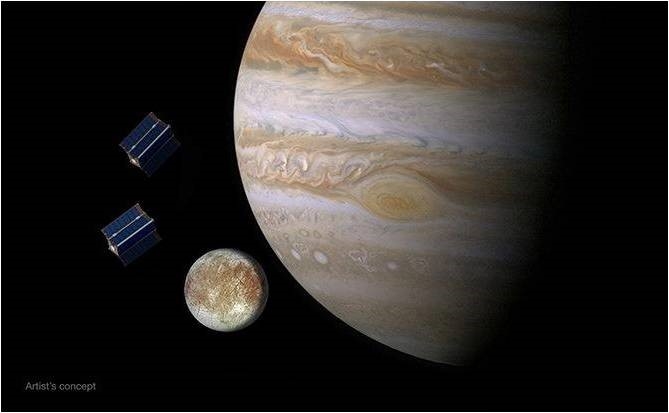
Artist rendition of CubeSats at Europa. These twin CubeSats are currently in a feasibility
study to be included with the NASA Europa Clipper mission.
SOURCE: NASA/JPL
Private-sector space missions
Within its nearly 200 pages, the report notes that the burgeoning space economy and possibility of private-sector robotic and human missions to Mars pose challenges to compliance with articles VI and IX of the Outer Space Treaty.
“These challenges are complicated by the absence of a regulatory body in the U.S. with authority to authorize and supervise private-sector activities beyond low-Earth orbit,” the report states.
Planetary protection issues
The recent transfer of NASA’s Office of Planetary Protection (OPP) from the Science Mission Directorate to the Office of Safety and Mission Assurance is generally regarded as a positive change, the report adds.
“However, the move has had some negative consequences,” the report observes. The disestablishment of the Planetary Protection Subcommittee of the NASA Advisory Council has deprived the OPP of its primary internal source of independent scientific and technical advice. “Further, the long-term future of the Planetary Protection research and analysis program, long underfunded and offered only intermittently in recent years, remains unclear.”
The report — “An Astrobiology Strategy for the Search for Life in the Universe” – is available at:
https://www.nap.edu/catalog/25252/an-astrobiology-strategy-for-the-search-for-life-in-the-universe
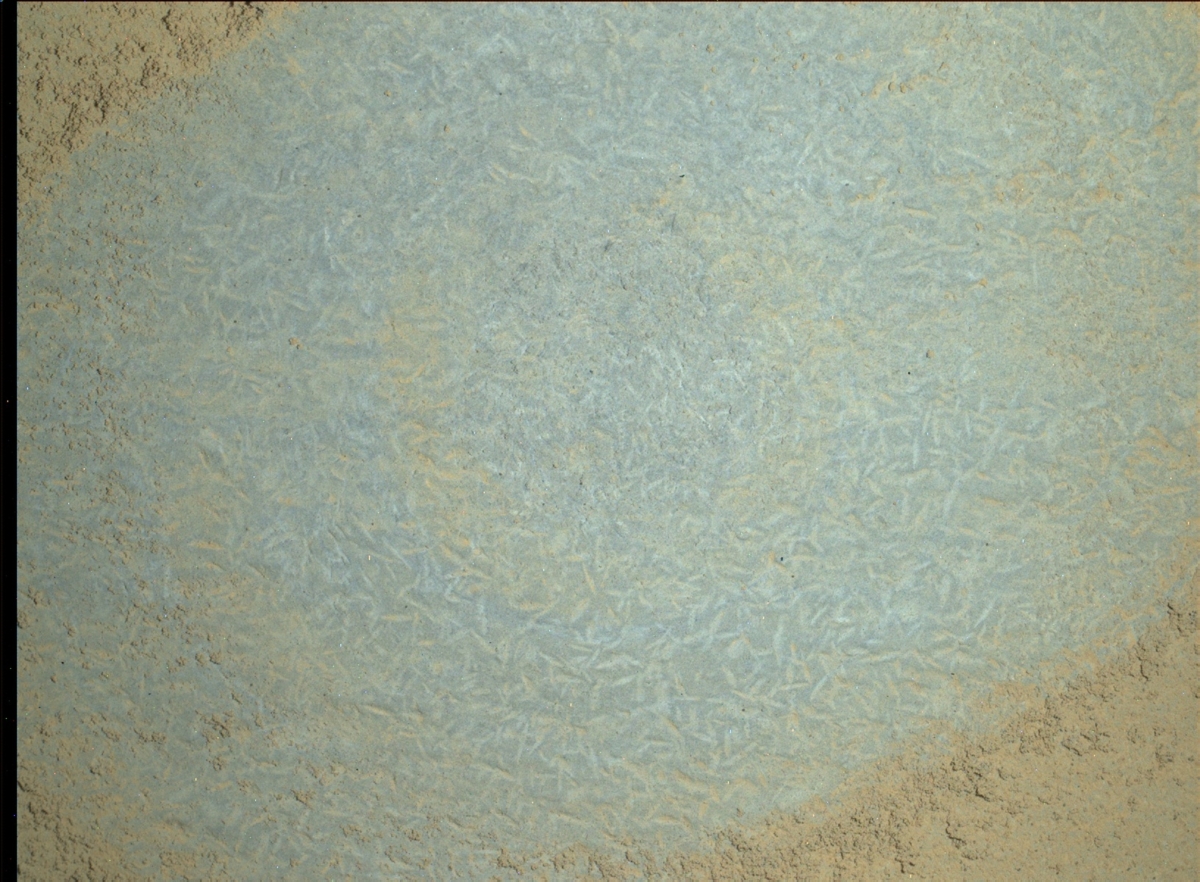
Curiosity acquired this image using its Mars Hand Lens Imager (MAHLI), located on the turret at the end of the rover’s robotic arm, on November 15, 2014, Sol 809.
Credit: NASA/JPL-Caltech/MSSS
NASA’s Curiosity rover is now in Sol 2196. Due to a rover glitch – still being worked on by engineers – no images have been relayed back to Earth since Sol 2172 on September 15th – nearly a month.
“As Curiosity continues to mend, I’ve been looking forward to our next drill sample of gray rock,” Fraeman reports. “Some interesting features we’ve seen on Vera Rubin Ridge are small ‘swallowtail crystals’ often associated with the boundary between gray and red rocks on the ridge top.”
Geologic clues
Fraeman has been thinking about these features, and reflecting on past results from Curiosity when the robot was just beginning to explore Mt. Sharp at the Pahrump Hills region. Back on sol 809, after the robot brushed away the dust on target “Mojave,” the team was surprised and excited to discover hundreds of millimeter-sized, rice-shaped crystals on its face.
“These crystals are geologic clues to what happened in the past,” Fraeman points out. “What were these unique features made of? How and when did they form?”
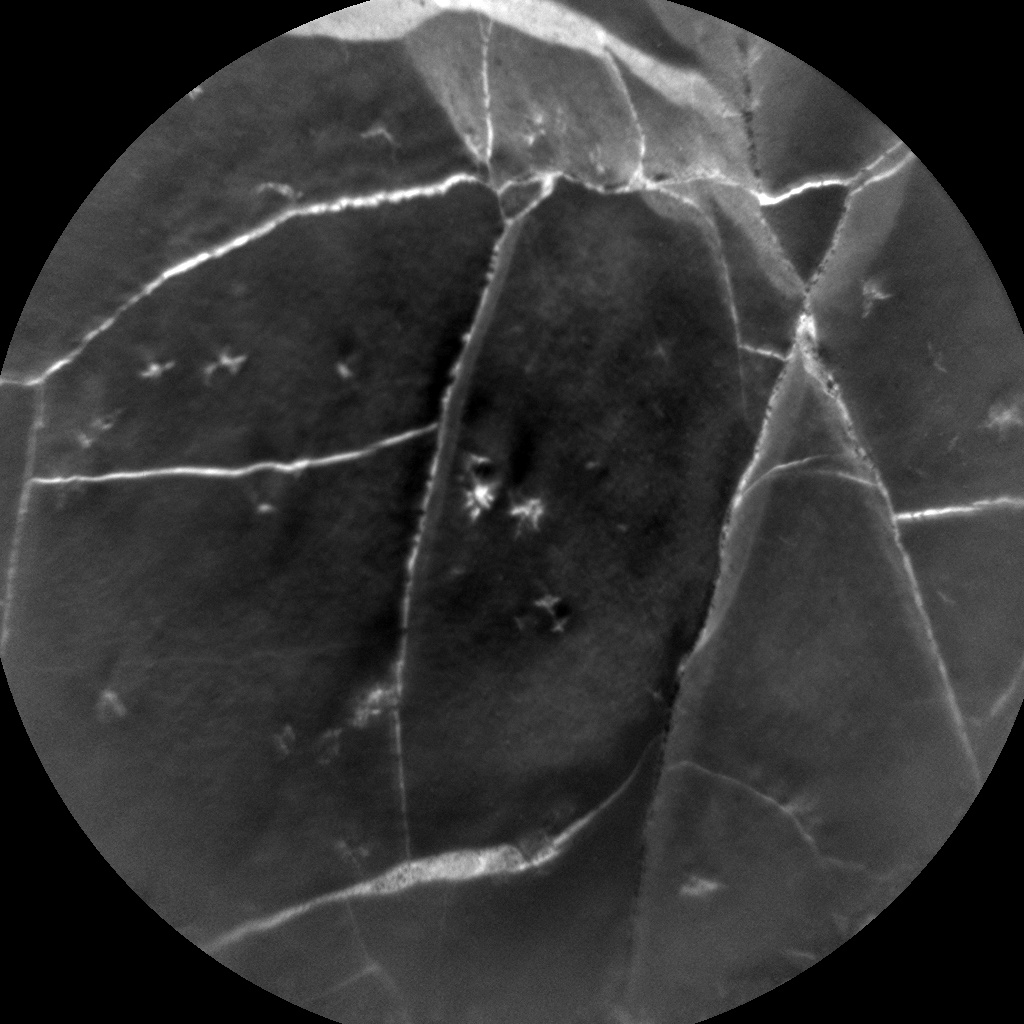
Swallowtail crystals close to drill attempt at “Inverness.” This image was taken by Chemistry and Camera (ChemCam) Remote Micro-Imager onboard NASA’s Mars rover Curiosity on Sol 2163, September 6, 2018.
Credit: NASA/JPL-Caltech/LANL
New paper
Curiosity scientist Linda Kah and colleagues address these questions in a new paper available in the journal Terra Nova titled “Syndepositional precipitation of calcium sulfate in Gale Crater, Mars.”
That paper can be found here at:
https://onlinelibrary.wiley.com/doi/full/10.1111/ter.12359
Sizes, shapes, orientations
For this study, Kah and colleagues carefully studied the sizes, shapes, and orientations of the unusual crystals at Mojave and several nearby targets. They integrated these findings with the geologic setting, chemistry, and mineralogy of the Pahrump Hills area to infer the presence of shallow, salty, and sometimes ephemeral waters during this period in Gale’s history.
Kah and co-authors explain that the crystal shapes are distinctive of gypsum salts that precipitate in lake, playa, and near-shore ocean environments.
“Interestingly, Curiosity did not detect any large differences in the composition of rocks containing crystals versus nearby, non-crystal-containing rocks,” Fraeman notes. “This result suggests the calcium sulfate that originally formed the crystals had either been dissolved at a later time and/or that the crystals had incorporated a lot of the original rocks around within them when they formed.”
The shapes, sizes, and orientation of crystals give clues to how they grow.
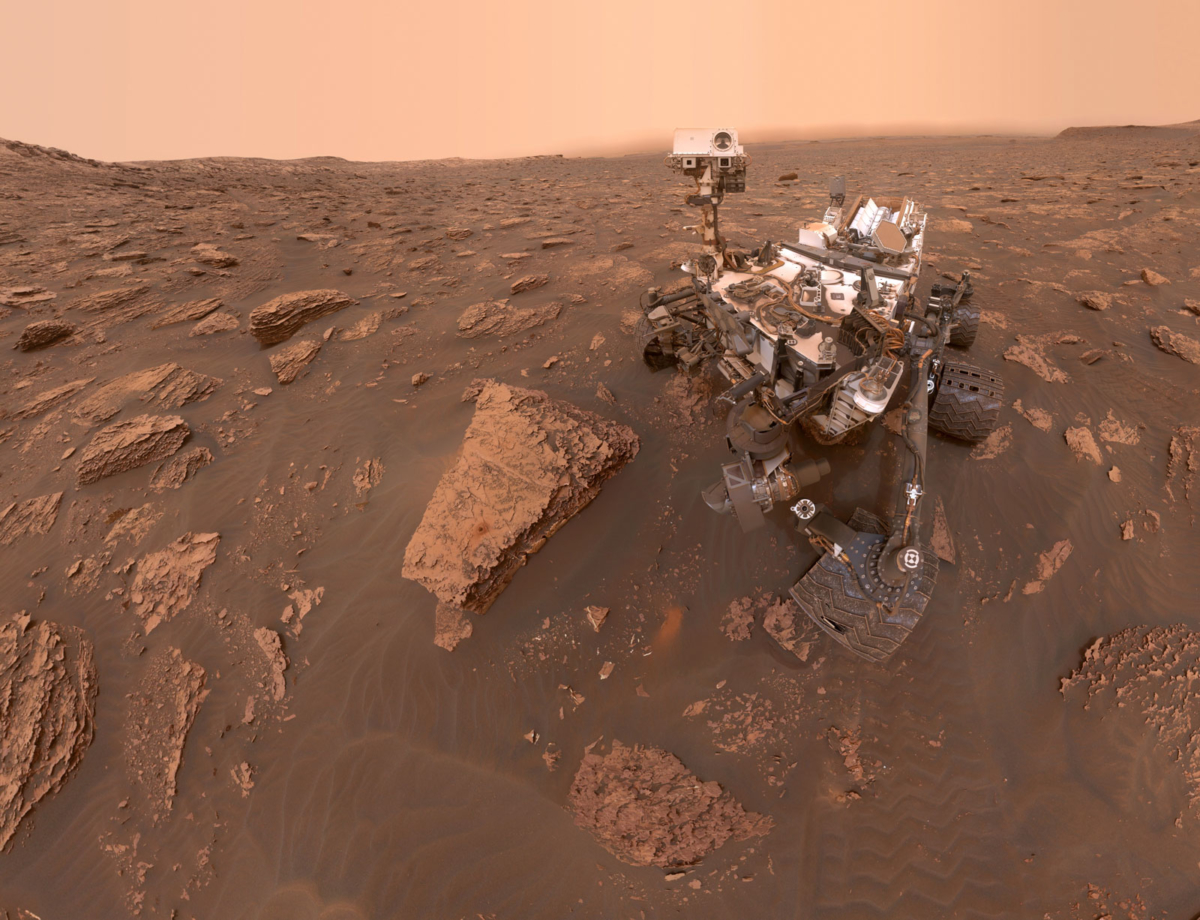
Curiosity Mars rover – on the prowl since August 2012.
Credit: NASA/JPL-Caltech/MSSS
Swallowtail crystals
Kah and co-authors showed the crystals at Pahrump were randomly oriented and occurred between and within cemented layers.
“Combined with the crystals’ elongated shapes, this suggests that they grew at the interface between loose, water-logged sediment and either shallow water or air,” Fraeman says. “Interestingly, small amounts of organic (carbon-bearing) material can cause crystals to have shapes similar to those observed at Mojave, which is consistent with Curiosity findings of organic material in the Mojave drill sample.”
In conclusion, Fraeman says that the swallowtail crystals on Vera Rubin Ridge are also known shapes of gypsum crystals. “Why are these crystals so different in form from what we saw back at Mojave? What does this all tell us about ancient environments at Gale Crater?”

Credit: NASEM
Just how lonely are we in the universe…or how crowded is it?
Astrobiology, the study of the origins of life in the universe and the search for life on other worlds, is a highly interdisciplinary quest.
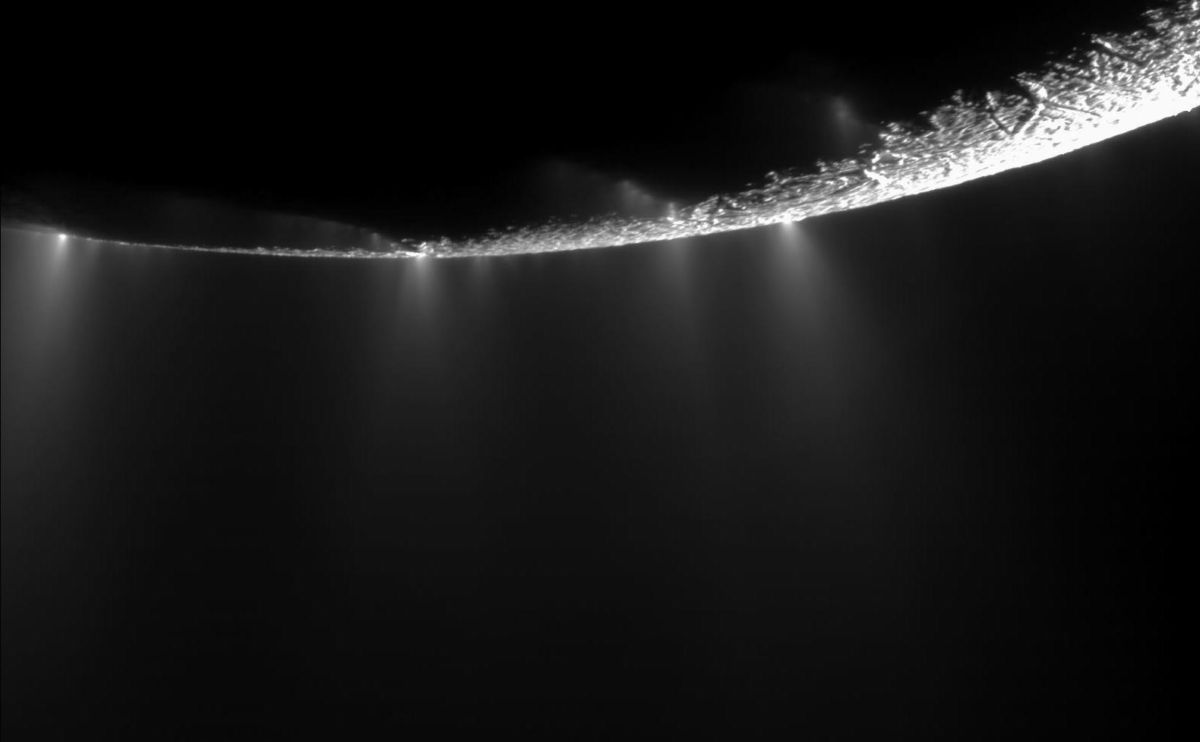
Narrow jets of gas and icy particles erupt from the south polar region of Enceladus, contributing to the moon’s giant plume. A cycle of activity in these small-scale jets may be periodically lofting extra particles into space, causing the overall plume to brighten dramatically.
Credits: NASA/JPL/Space Science Institute
It’s a rapidly changing field at the intersection of biology, chemistry, geology, planetary science, and physics.
Recent scientific advances have opened new doors for astrobiological inquiry and at the request of NASA and Congress, the National Academies of Sciences, Engineering, and Medicine (NASEM) appointed a committee to develop a future research strategy for the field of astrobiology.
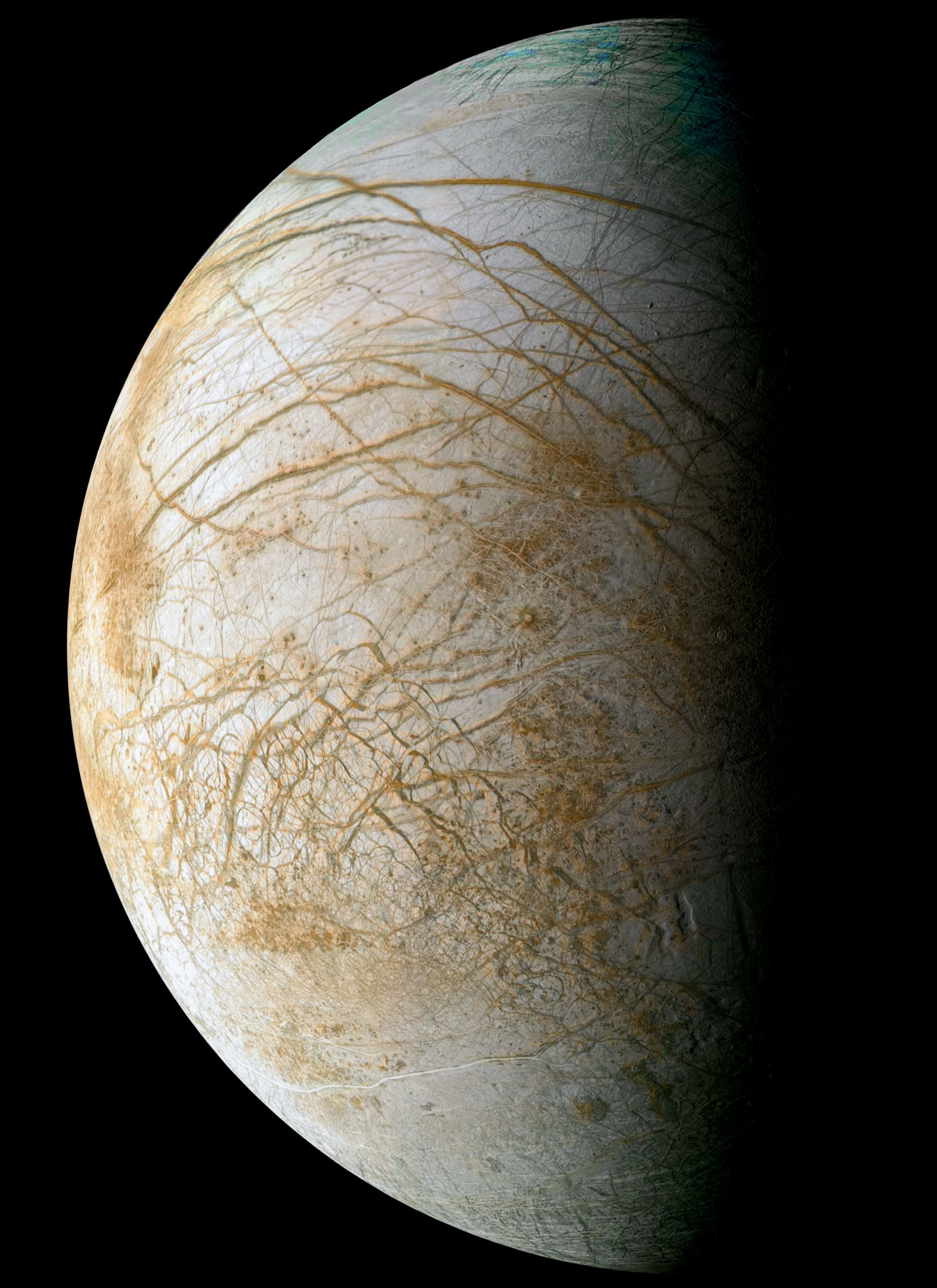
Jupiter’s Europa could be site for water…and life?
Credit: NASA/JPL/Ted Stryk
Briefing event
Wed, October 10, 2018
11:00 AM – 12:00 PM EDT
To join in on this public briefing event and webcast in which committee chair Barbara Sherwood Lollar and committee member Alan Boss will discuss the report’s recommendations and take questions from the audience.
The strategy will outline scientific questions, challenges, and opportunities in the search for signs of extraterrestrial life both within and outside the Solar System. This new strategy updates a previous strategy released in 2015.
Combined with the Exoplanet Science Strategy the National Academies released last month, the astrobiology strategy will inform the upcoming astronomy and astrophysics decadal survey and, ultimately, the planning of future NASA science missions.
Go to:

Credit: National Geographic
The hardest thing about living on Mars… is us.
National Geographic’s Mars (Season 2) starts on November 12th.
Go to this new video trailer at:
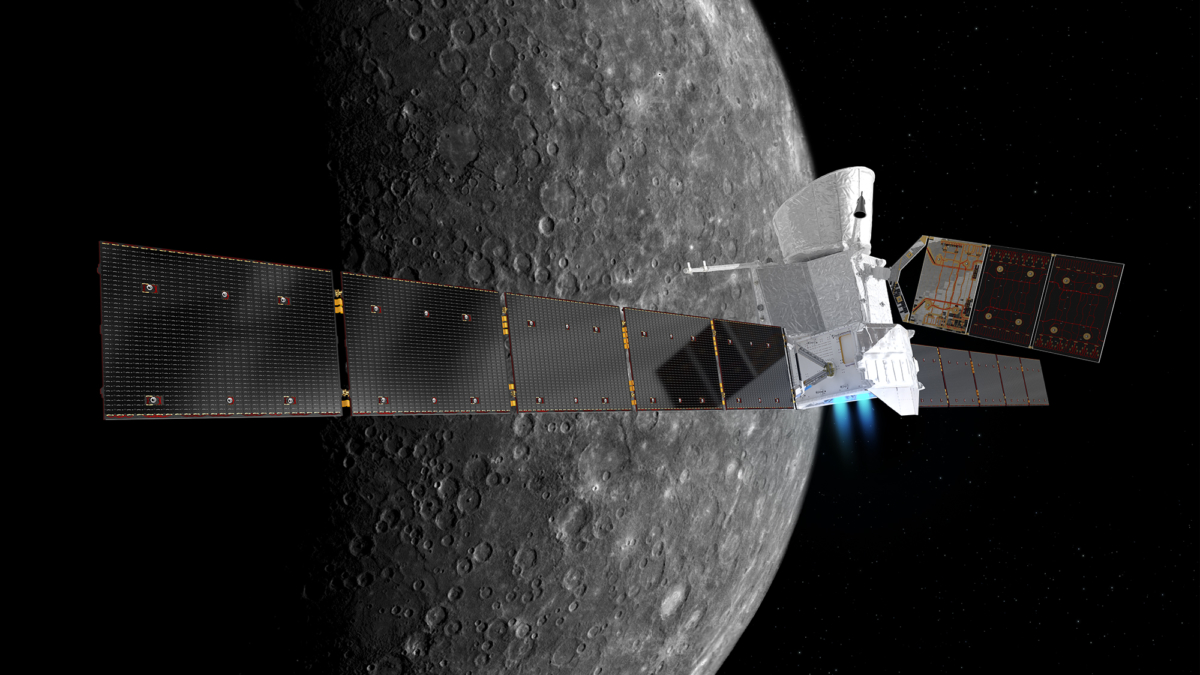
Artist’s impression of the BepiColombo spacecraft in cruise configuration, with Mercury in the background. The Mercury Transfer Module is shown with ion thrusters firing, and with its solar wings extended. The solar array of the Mercury Planetary Orbiter in the middle is seen extending to the top. The Mercury Magnetospheric Orbiter is hidden inside the sunshield in this orientation.
Credit: ESA/ATG medialab; Mercury: NASA/JPL
The European Space Agency’s BepiColombo mission to Mercury is scheduled to launch aboard an Ariane 5 from Europe’s Spaceport in Kourou, French Guiana on October 20.
BepiColombo is a joint endeavor between ESA and the Japan Aerospace Exploration Agency, JAXA. It’s an ambitious seven-year flight as the mission will make one flyby of Earth, two at Venus, and six at Mercury, before entering orbit.
Two orbiters
The mission comprises two science orbiters: ESA’s Mercury Planetary Orbiter (MPO, or ‘Bepi’) and JAXA’s Mercury Magnetospheric Orbiter (MMO, or ‘Mio’). Once at Mercury, the two orbiters will operate from different orbits to provide the most detailed study of the innermost planet date, from its interior to surface features, to its interaction with the solar wind.
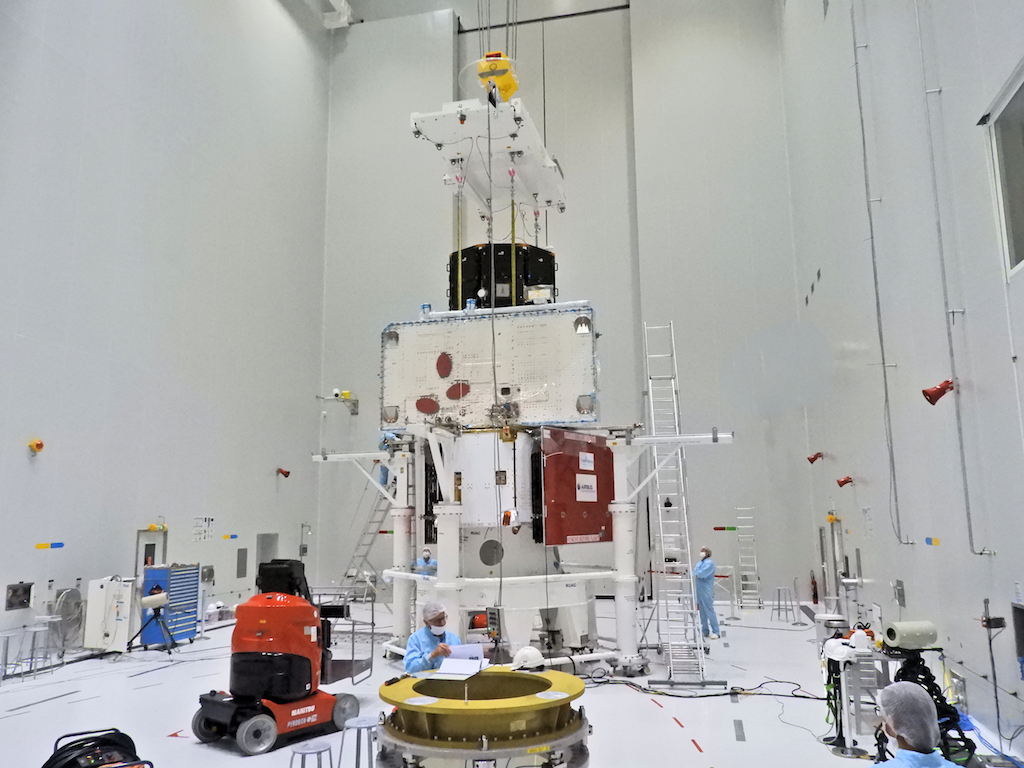
The BepiColombo spacecraft ‘stack’ is complete. ESA’s Mercury Transfer Module sits at the bottom, its two arrays folded for launch. It will use a combination of solar electric propulsion, chemical propulsion, and nine gravity assist flybys over seven years to deliver the two science orbiters to Mercury. On top is JAXA’s eight-sided Mercury Magnetospheric Orbiter. The sunshield that will protect the module during the cruise phase will be added about a week before launch.
Credit: ESA–B.Guillaume
The ESA-built Mercury Transfer Module (MTM) will carry the orbiters to Mercury using a combination of solar electric propulsion and gravity assist flybys.
Cruise phase science
BepiColombo is the first European mission to Mercury, the smallest and least explored planet in the inner Solar System.
The orbiters will be able to operate some of their instruments during the cruise phase, affording unique opportunities to collect scientifically valuable data at Venus, for example.
BepiColombo builds upon the discoveries and questions raised by NASA’s Messenger mission, which orbited the planet between 2011 and 2015, to provide the best understanding of the Solar System’s innermost planet to date.
Curiosity Mars rover – on the prowl since August 2012.
Credit: NASA/JPL-Caltech/MSSS
NASA’s Curiosity Mars rover is now in Sol 2193.
The last images from the Mars machinery reached Earth back on Sol 2172, September 15th.
Engineers continue to wrestle with a glitch that prevents Curiosity from sending science and engineering data stored in its memory.
According to the Jet Propulsion Laboratory, the robot remains in its normal mode “and is otherwise healthy and responsive,” reported Ashwin Vasavada, the Mars Science Laboratory’s project scientist at JPL back on September 19th.
Geological crime scene
Meanwhile, in a new geological update from Susanne Schwenzer, a planetary geologist at The Open University in the United Kingdom: “Geology…it’s like investigating a crime scene.”
“Sometimes planetary geology is like forensics,” Schwenzer says. “We are presented with a crime scene: Something broke down the original igneous rock, and made all those clays, veins and hematite nodules. We know this something was a fluid, but in order to find out exactly what has happened, we need to examine all the evidence we have.”
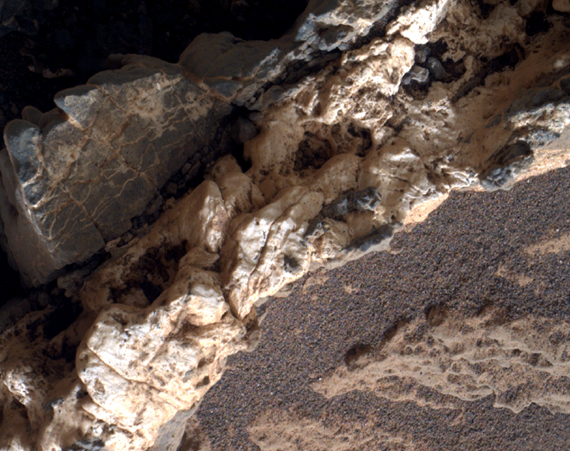
This view from the Mars Hand Lens Imager (MAHLI) on the arm of NASA’s Curiosity Mars rover shows a combination of dark and light material within a mineral vein at a site called “Garden City” on lower Mount Sharp. The image was taken on April 4, 2015, and covers an area roughly 1 inch wide.
Credit: NASA/JPL-Caltech/MSSS
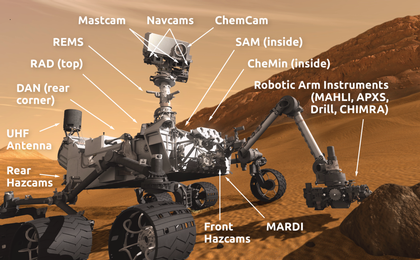
That often starts with investigating the Curiosity images, and in great detail. Mastcam images for the geologic context, then Remote Micro Imager (RMI) photos and/or the Mars Hand Lens Imager (MAHLI) for the close-up details. But what about the chemistry?
Minerals with water
“We are a small team here in the UK, specializing in what is called “thermochemical modelling.” Thermochemical modelling uses mathematical equations that are based on known reactions of minerals with water,” Schwenzer explains. “The models combine many thousands of such reactions into equations, which can be solved iteratively to arrive at a reaction path for a known rock composition. And once we determine what reacted and how, we can also infer which chemical elements remained in the water because they were not included in the reaction products.”
In other words, Schwenzer adds, scientists can find out how the chemical elements are distributed between the fluid and the newly forming minerals. “Some of our French and American colleagues use this method too, and we always have great discussions to advance our work.”
Clays and veins
All the data — images and chemistry from Chemistry and Camera (ChemCam) and the Alpha Particle X-Ray Spectrometer (APXS) – is studied, and where available also mineralogy from the rover’s Chemistry & Mineralogy X-Ray Diffraction/X-Ray Fluorescence Instrument (CheMin).
“That’s the evidence at our crime scene,” Schwenzer adds. “But who broke the rock and left all those clays and white veins?”
We know it is “the fluid,” and the modelling allows us to find out what temperature and composition this fluid might have had, Schwenzer points out. “For example, we have looked at the veins Curiosity found very early in the mission – at Yellowknife Bay. They were very pure calcium-sulfate, especially compared to what Curiosity measured later at Garden City and now at Vera Rubin Ridge.”
Credit: NASA/JPL
A clue
The purity of the calcium-sulfate at Yellowknife Bay provided a clue:
“If we model a typical Yellowknife Bay rock with all chemical elements in the proportions available in this rock to react with water, then we will get veins that have more than just calcium-sulfate. We would therefore expect veins that have other minerals such as iron oxides and quartz,” Schwenzer reports.
But the veins at Yellowknife Bay did not have any of those additional minerals.
“Therefore, we concluded that they must have come from water selectively dissolving a pre-existing mixed-mineralogy layer,” Schwenzer says. “The dissolution of this pre-existing layer would have left the less soluble minerals – quartz, iron oxides – behind while transporting the calcium and sulfate. This would have allowed the formation of a very pure calcium-sulfate, which is what was observed! But how does that help us at Vera Rubin Ridge?”
Ongoing investigation
Curiosity is positioned now to investigate a very complex area, which has clearly seen the interaction of rocks with fluids.
“There are veins much more complex than the ones at Yellowknife Bay, and in addition there are iron nodules, crystal moulds and color changes,” Schwenzer notes. “We, the modellers, are working hard to understand how the fluid changed to produce all this new evidence… more later, as investigators rarely talk about ongoing investigations, right?”

Credit: 30th Space Wing
A SpaceX Falcon 9 rocket carrying the SAOCOM 1A satellite from California’s Vandenberg Air Force Base’s Space Launch Complex-4 is scheduled for Sunday, Oct. 7, at 7:21 p.m. Pacific Daylight Time.
SpaceX is attempting the secondary mission of landing the first stage of the Falcon 9 rocket at Landing Zone 4, which was previously called SLC-4W, at Vandenberg Air Force Base. This will be SpaceX’s first land landing attempt at Vandenberg Air Force Base.
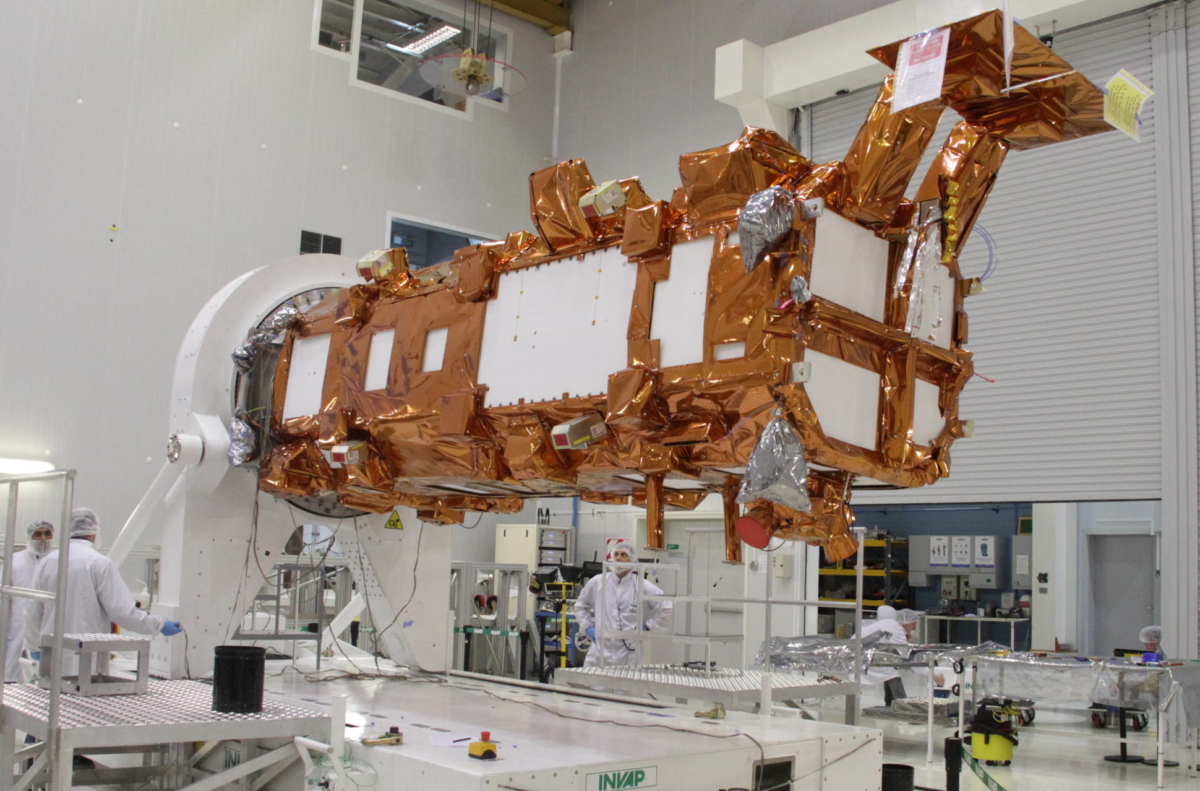
SAOCOM 1A satellite
Credit: CONAE
SAOCOM (Satélite Argentino de Observación COn Microondas) is a spacecraft of the Argentine Space Agency, CONAE. This Argentine Microwaves Observation Satellite is the first of a planned Earth observation satellite constellation.
Boom town
As for the Falcon 9 booster stage come back at Landing Zone 4:
“Local residents may see the first stage of the Falcon 9 returning to Vandenberg AFB, including multiple engine burns associated with the landing,” according to 30th Space Wing Public Affairs.

Credit: 30th Space Wing
“During the landing attempt residents from Santa Barbara, Ventura and San Luis Obispo counties may hear one or more sonic booms. A sonic boom is the sound associated with the shock waves from an aircraft or vehicle traveling faster than the speed of sound. Sonic booms generate a sound similar to an explosion or a clap of thunder. The sonic boom experienced will depend on weather conditions and other factors.”

