Author Archive
 Author:
  October 23rd, 2018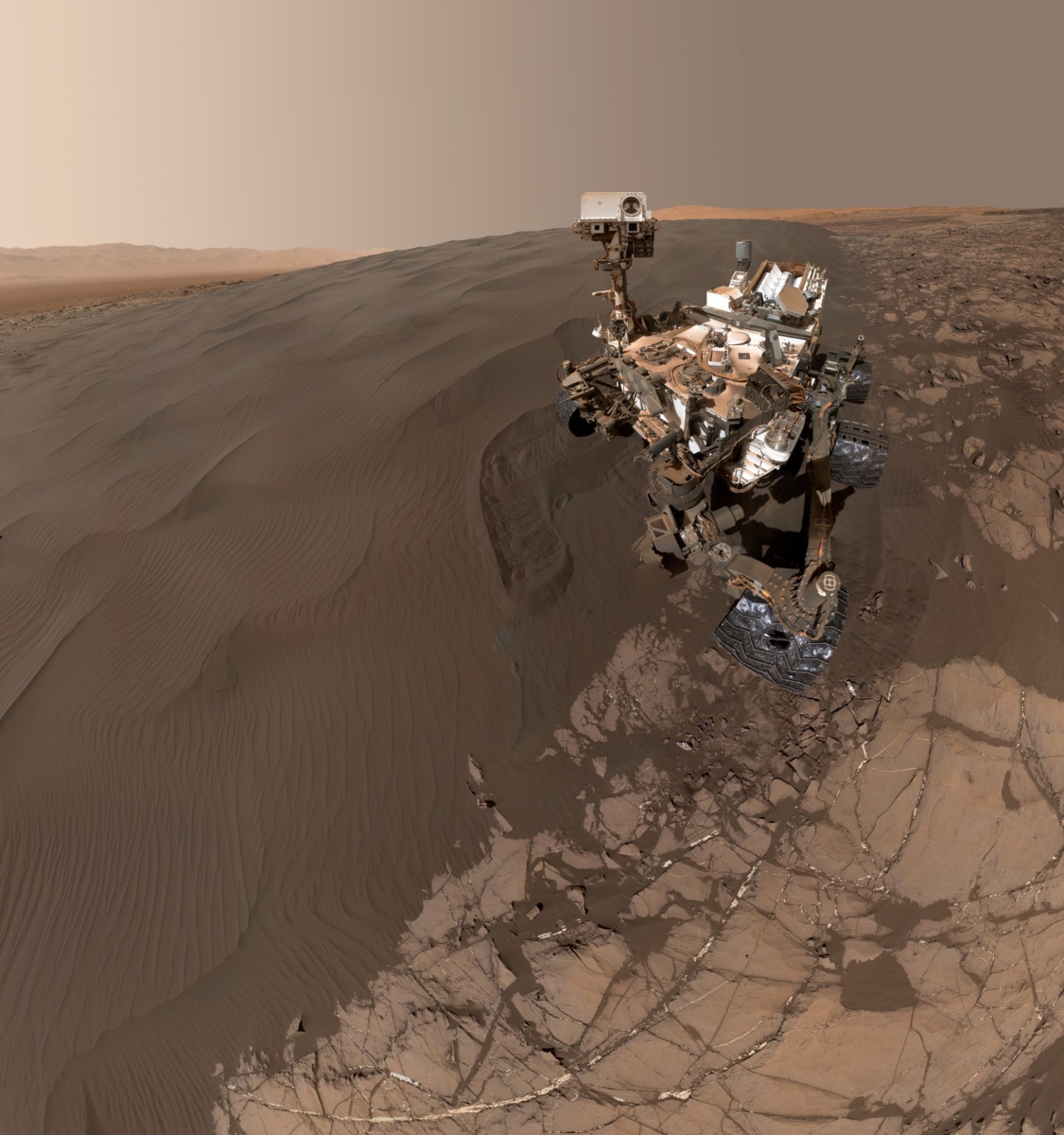
Self-portrait of NASA’s Curiosity Mars rover from January 19, 2016 shows the vehicle at “Namib Dune,” where the rover’s activities included scuffing into the dune with a wheel and scooping samples of sand for laboratory analysis.
Credit: NASA/JPL-Caltech/MSSS
NASA’s Curiosity Mars rover is now performing Sol 2209 duties. Engineering trouble-shooting continues regarding the robot’s memory that prevents the machine from sending much of gathered science and engineering data.
Recapping the rover’s earlier dune exploration, Catherine O’Connell, a planetary geologist at the University of New Brunswick, Fredericton, New Brunswick in Canada, reports: As Curiosity continues on its journey up Mount Sharp (the mound in the center of Gale crater), rocks encountered by the robot contain evidence for changing environmental conditions.
The fine-grained mudstones of the Murray formation show that lakes were present in the past, whilst the sandstones of the Stimson formation are evidence for ancient dune fields.
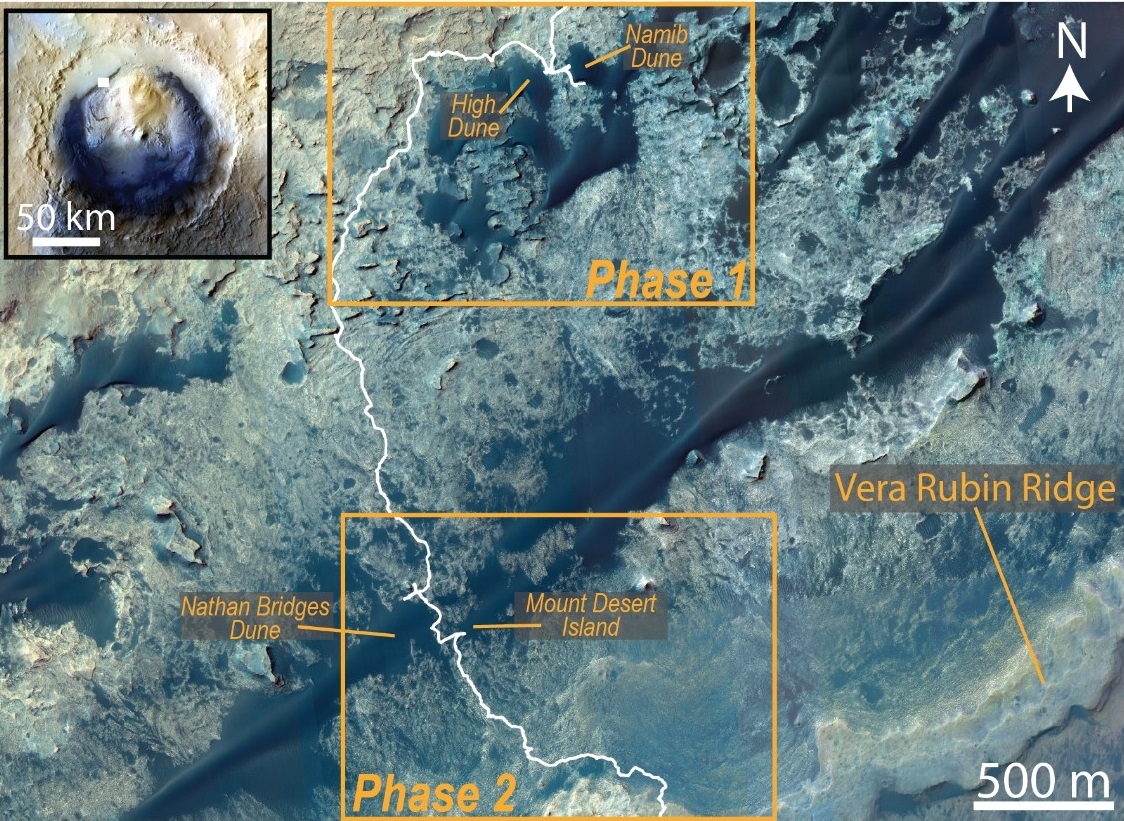
Curiosity’s traverse (white line) and two-phase investigation of the Bagnold Dunes. Inset shows the study location (white rectangle) within Gale crater.
Credit: after Lapotre and Rampe, 2018
Active dune system
“During 2015-2017, we crossed the Bagnold dune field, a (22-mile) 35-kilometer long by 1-2 kilometers wide dune field that wraps around the northwest side of Mount Sharp. This was the first time that scientists have explored an active dune system on another planet,” O’Connell says.
In the Martian fall/winter, the rover investigated two “barchans” dunes, O’Connell adds. Barchan dunes are crescent shaped and are formed by winds blowing in one direction, and when sediment supply is limited.
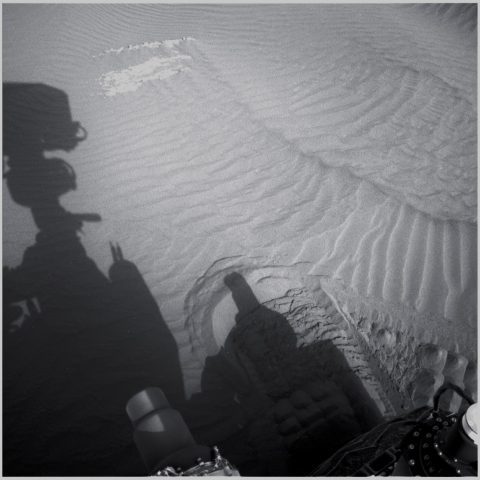
Curiosity’s shadow over potential sampling targets.
Credit: NASA/JPL/Caltech/MSSS-480×480
Blowing winds
Later on, during the Martian summer, Curiosity examined a linear dune. Linear dunes are formed by winds blowing in two directions, with more abundant sediment supply, and can be very long (on Earth, they can reach 160 miles in length e.g., Namib Sand Sea, Namibia).
“Curiosity lived up to her official name ‘Mars Science Laboratory’ for both parts of the campaign, utilizing almost every scientific instrument on board, plus the engineering cameras (Navcam and Hazcam) to collect observations and measurements,” O’Connell points out.
Grain size, motion
As the rover traversed the dune field and at each stop, scientists observed the physical properties of the sand dunes, such as grain size, rates of grain motion, and the overall bedform morphologies, using the robot’s Mars Hand Lens Imager (MAHLI), the Chemistry and Camera (ChemCam) instrument, Mars Descent Imager (MARDI) as well as the Mastcam, Navcam, and the Rover Environmental Monitoring Station (REMS).
“We observed differences in wind activity levels, with lower wind and less movement of sand during the fall/winter than during the summer,” O’Connell says.
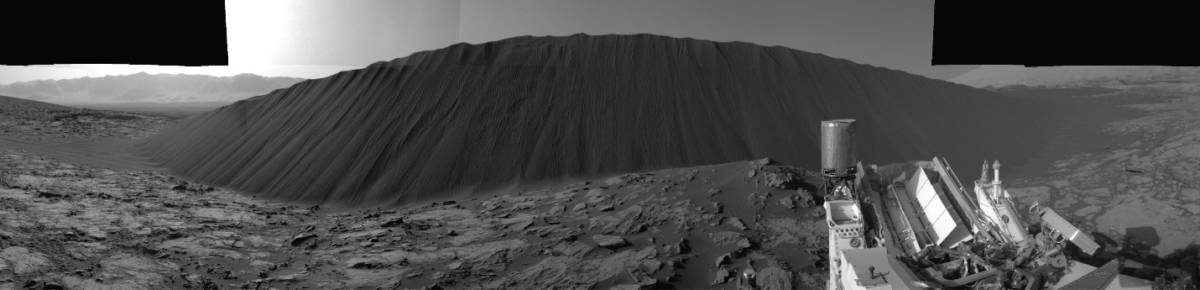
Mosaic of Mast Camera (Mastcam) images showing the downwind face (stoss) of Namib Dune, acquired on sol 1196 during Phase 1 of the science campaign. Credit: NASA/JPL-Caltech/MSSS
Dust content
Dust content — indicated by sulphur, chlorine and zinc levels – were measured by the robot’s Alpha Particle X-Ray Spectrometer (APXS). Higher concentrations mean higher dust content, indicating that observed activity levels were higher in the linear dunes which were investigated during the summer (higher winds, less dust settling) and lower in the barchan dunes, which were investigated during the fall/winter.
Also determined were chemical composition, mineralogy and volatile content of sands using APXS, ChemCam, the Chemistry & Mineralogy X-Ray Diffraction/X-Ray Fluorescence Instrument (CheMin), Dynamic Albedo of Neutrons (DAN) instrument and the Sample Analysis at Mars (SAM) Instrument Suite.
“My role as a member of the APXS operations team involved evaluating the composition of samples analyzed, comparing between the barchan and linear dunes, as well as sands previously analyzed by the Opportunity rover (at Meridiani Planum) and Spirit (at Gusev Crater),” O’Connell adds.
Subtle variations
The basaltic Bagnold sands show subtle variations in mineralogy and chemistry, both between the barchan and linear dunes, but also depending on location within a dune.
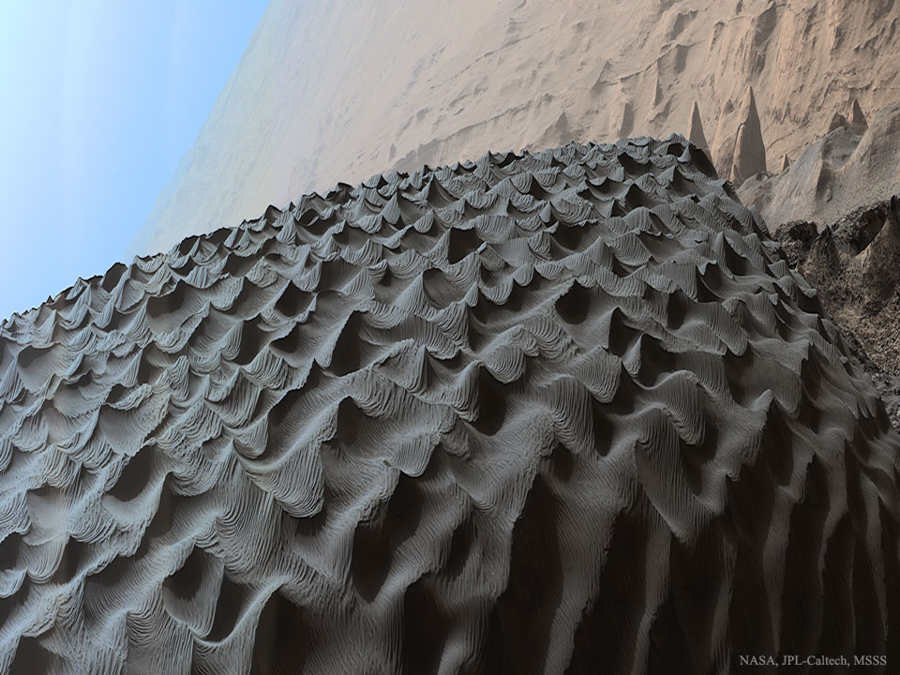
Dark dunes on Mars.
Credit: NASA/JPL-Caltech/MSSS
For example, ripple crests were often more coarse-grained and enriched in magnesium and nickel, whilst off-crest sands within the linear dunes were enriched in chromium. These variations may reflect sorting processes, or minor enrichments from local bedrock sources.
“Our journey through the Bagnold Dunes,” O’Connell concludes, “has helped advanced our understanding of how winds shape modern Martian landscapes, and the properties of windblown materials, in the form of both the active Bagnold dunes and in ancient Martian dunes now preserved as rock in units such as the Stimson formation at Gale crater.”
For more information, go to this October 17, 2018 scientific paper, “Seeing Mars in a Grain of Sand” by Lapotre, M. G. A. in American Geophysical Union’s Eos publication:
 Posted in

National Geographic’s Space Atlas combines updated maps, lavish photographs, and elegant illustrations to chart the solar system, the universe, and beyond. For space enthusiasts, science lovers, and star gazers, here is the newly revised edition of National Geographic’s enduring guide to space, with a new introduction by American hero Buzz Aldrin.
In this guided tour of our planetary neighborhood, the Milky Way and other galaxies, and beyond, detailed maps and fascinating imagery from recent space missions partner with clear, authoritative scientific information.
Starting with the Sun and moving outward into space, acclaimed science writer and physicist James Trefil illuminates each planet, the most important moons, significant asteroids, and other objects in our solar system. Looking beyond, he explains what we know about the Milky Way and other galaxies–and how we know it, with clear explanations of the basics of astrophysics, including dark matter and gravitational waves.
For this new edition, and to celebrate the 50th anniversary of his moonwalk, astronaut and American hero Buzz Aldrin offers a new special section on Earth’s Moon and its essential role in space exploration past and future.
Note: Truth in advertising – I helped on this informative book, working with Buzz Aldrin on his detailing of the Apollo 11 mission and its aftermath – LD
For more information, go to:
https://shop.nationalgeographic.com/collections/books-space/products/space-atlas-second-edition

NASA’s Mars 2020 rover on the prowl and geared to collect and cache samples for future return to Earth.
Image Credit: NASA/JPL-Caltech
Now being assembled at NASA’s Jet Propulsion Laboratory is the Mars 2020 rover, the most complex piece of machinery to ever make a ballistic beeline for the Red Planet. The multi-tasked, hypothesis-driven wheeled robot is set to make landfall in February 2021, but where?
Convened last week was an international group grope of sorts that saw several hundred Mars scientists meet in a hotel ballroom just north of Los Angeles for two-and-a-half days of deliberation – at times taking on something akin to a polite, scientific-based geological and astrobiological food fight.
What happened at the gathering and why…and what was the outcome?
Check out the answer in my new Scientific American story at:
Credit: Studio Roosegaarde
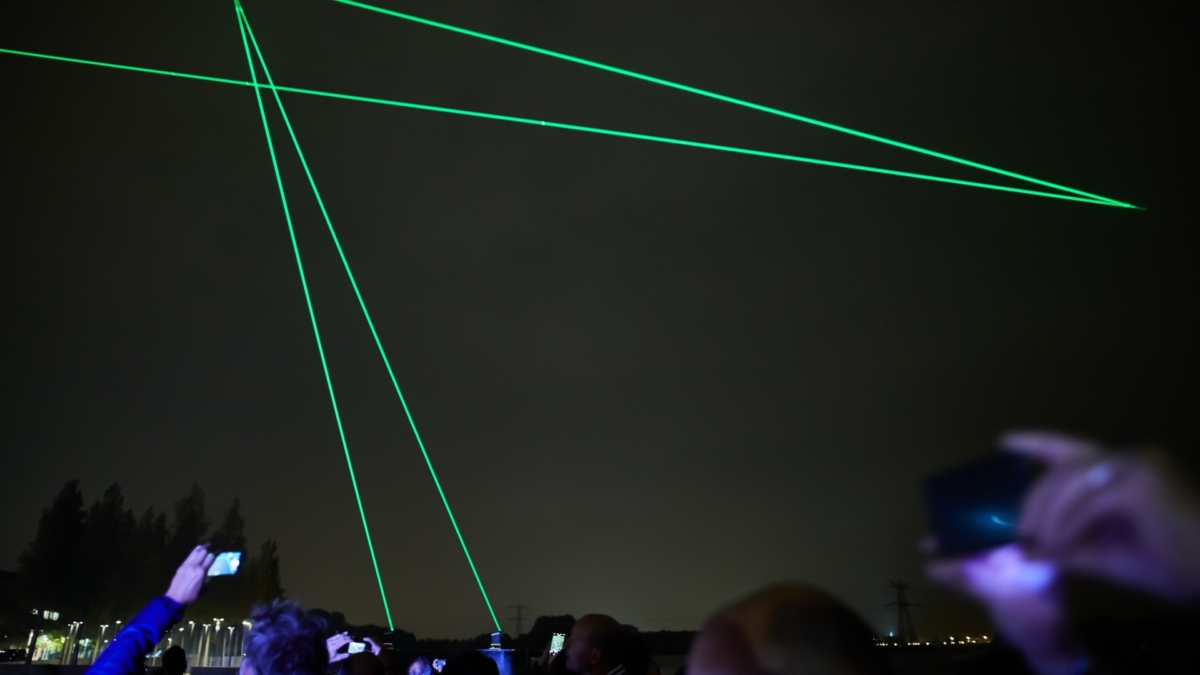
“Space waste is the smog of our universe,” explains Dutch artist and innovator Daan Roosegaarde.
Studio Roosegaarde, located in Almere, The Netherlands, has initiated a new, two phase large-scale project: Space Waste Lab.
Credit: Studio Roosegaarde
Viewing the issue
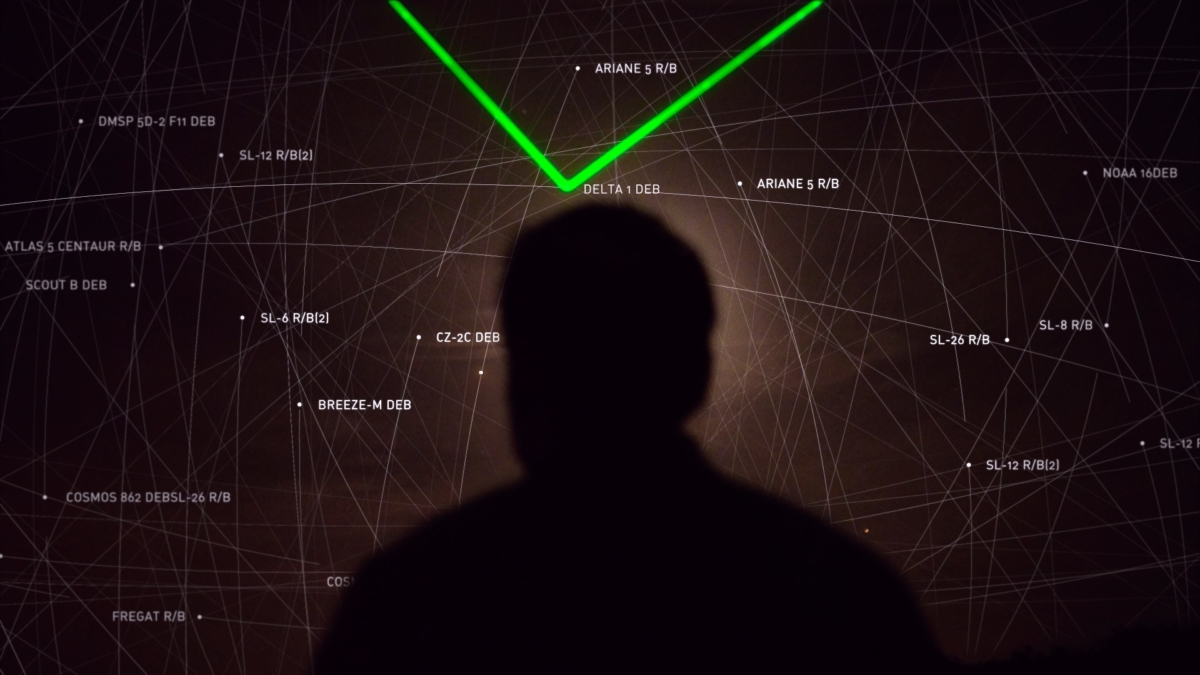
Phase 1 starts with a unique large outdoor Space Waste Lab Performance using LEDs and real-time tracking information to visualize orbital debris circling Earth.
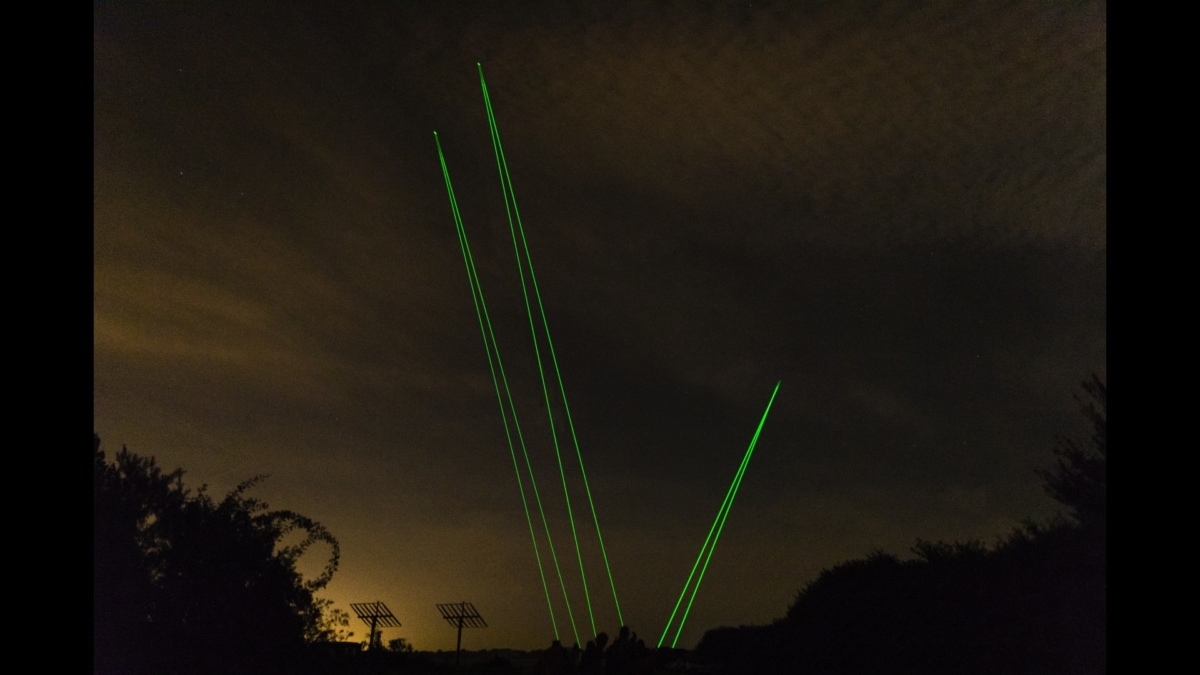
Special designed software and camera technology developed in the last year enables the Space Waste Lab Performance to work, in compliance with strict safety and aviation regulations. The vertical lines of lights highlight space waste crossing above the heads of viewers.
Credit: Studio Roosegaarde
To enhance the sky watching visual experience, the surrounding environment is darkened by shutting down streetlights and commercial signs. An indoor exhibition consists of a real piece of space waste accompanied by an education program.
Phase 2 is a multi-year program to capture space waste and “upcycle” it into sustainable products.
Technologists and artists
The living lab is supported by European Space Agency (ESA) space experts to create a new perspective on space waste.
Explains ESA’s Franco Ongaro, Director of Technology, Engineering and Quality (D/TEC), and Head of ESTEC in Noordwijk, the Netherlands. “I’m a strong believer in cooperation between technologists and artists. We believe in what we do as a service to society, but we are often unable to communicate its worth effectively enough.”
Artists not only communicate vision and feelings to the public, Ongaro says. “This cooperation is all the more important when dealing with issues like space debris, which may one day impact our future, and our ability to draw maximum benefits from space. We need to speak in different ways, to convey not just the dry technological aspects aspect of technology, but the emotions involved in the struggle to preserve this environment for future generations.”
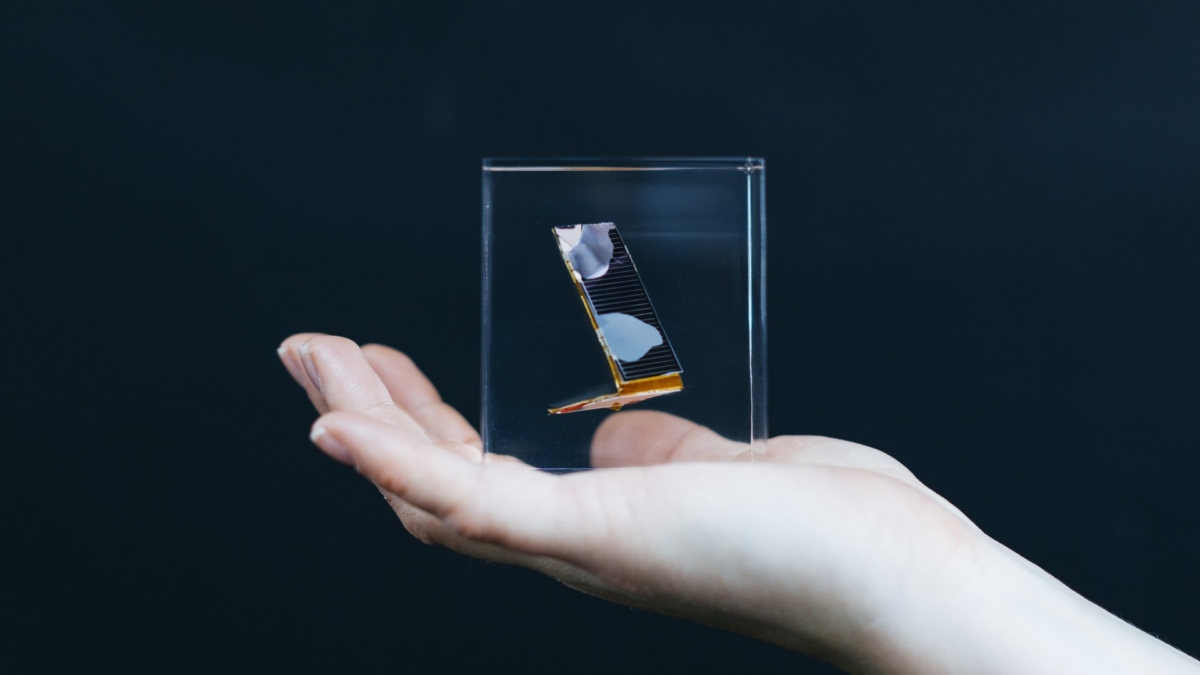
Space waste
Credit: Studio Roosegaarde
Source material
As noted by the Space Waste Lab, there are more than 29.000 objects larger than 10 centimeters circuiting the Earth. “It is space waste; parts of broken rockets and satellites. This waste can damage our current satellites, with collisions creating more space waste and disturbing our digital communications.”
Artist Roosegaarde adds: “We need to look at space in a better way. What is space waste, how can we fix it, and what is its potential? Can we use space waste as a source material to 3D print houses on the Moon, or use it to create artificial falling stars opposed to polluting fireworks?”

Dutch artist and innovator Daan Roosegaarde.
Credit: Studio Roosegaarde
Clean space
The Space Waste Lab is a part of Roosegaarde’s larger vision for “Schoonheid,” a Dutch word meaning both beauty and cleanliness, as in clean space, clean air, clean water, and clean energy.
From early October until mid-January 2018, the Space Waste Lab can be visited.
The live Space Waste Lab Performance can be viewed this year after sunset on November 10, December 7, 8 and January 18, 19 of next year.
For more information on this innovative look at orbital debris, go to:
https://www.studioroosegaarde.net/project/spacewaste-lab
Go to this informative video at:
https://www.facebook.com/DaanRoosegaarde/videos/1074871129342531/?t=39
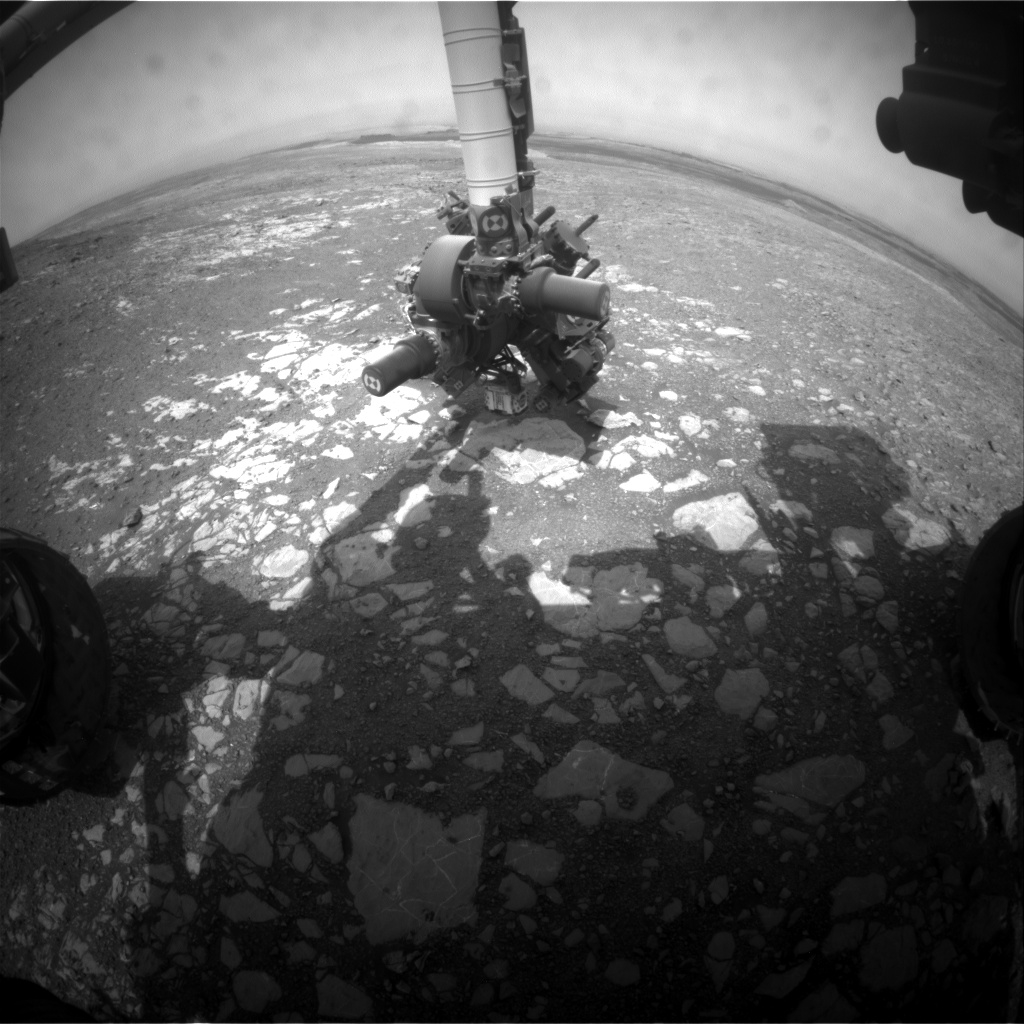
Curiosity Front Hazcam Left A image acquired back on Sol 2199, October 13, 2018.
Credit: NASA/JPL-Caltech
Now in Sol 2205, word about NASA’s balky Curiosity Mars robot is that rover science is back…well, sort of.
Sarah Lamm, a planetary geologist at the Los Alamos National Laboratory in New Mexico reports that the rover team is excited that science operations are starting to resume.
The last images from the Mars machinery were taken on October 13, 2018.
Anomaly work continues
“The real fright was when Curiosity had an anomaly on Sol 2172 which affected its memory,” Lamm says. “Since then, the engineering team has continued to diagnose the anomaly and plan the recovery, including taking the first images with the A-side engineering cameras that haven’t been used since 2013! Thanks to our hard-working engineers, Curiosity is ready for limited science operations while the anomaly work continues.”
Lamm adds that Curiosity has been at the (sadly) unsuccessful “Inverness” drill site since the anomaly. “Curiosity is still exploring the gray Jura member on Vera Rubin Ridge.”
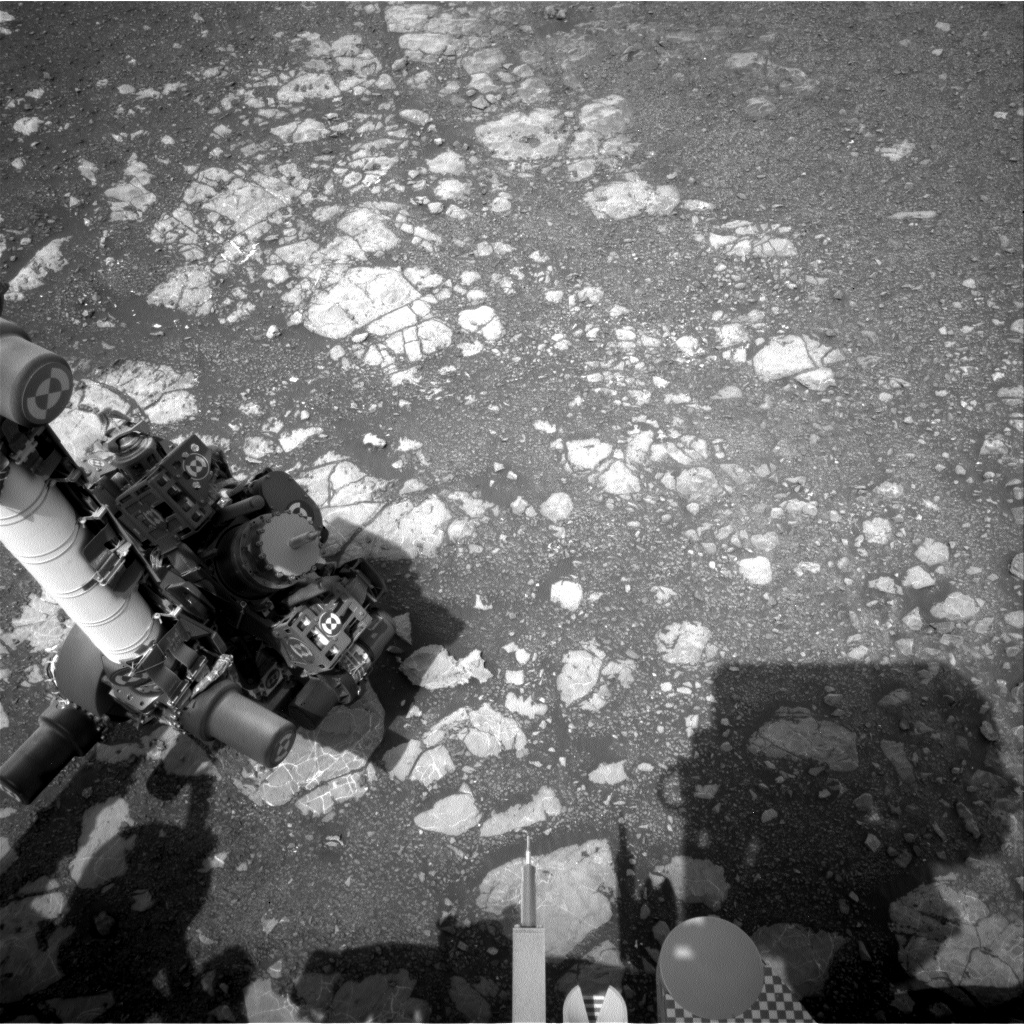
Curiosity Navcam Left A photo taken back on Sol 2199. October 13, 2018.
Credit: NASA/JPL-Caltech
Data collecting
The uplink plan for Sol 2204 called for active and passive use of the robot’s Radiation Assessment Detector (RAD), the Dynamic Albedo of Neutrons (DAN) and the Rover Environmental Monitoring Station (REMS).
RAD detects high-energy radiation on the Martian surface.
“RAD’s data will help shape future human mission to Mars by letting us know how much shielding from radiation future Mars astronauts will need to protect them,” Lamm explains. “REMS is Curiosity’s weather station. REMS can measure pressure, humidity, ultraviolet radiation, and temperature. DAN (Dynamic Albedo of Neutrons) detects neutrons that be used to measure the amount of hydrogen and other elements in the subsurface.”

Experimental rocket engine to collect beamed microwave energy to heat propellants to plasma temperatures.
Credit: Penn State
The use of beamed microwave energy to launch space vehicles off the surface of Earth is getting a fresh look.
Penn State College of Engineering has been awarded funds to develop and use a facility over three years to study the concept. The Air Force Office of Scientific Research (AFOSR) is backing the work.
Two awards
According to a Penn State press statement: The funding consists of two separate awards, with the first being $396,865 provided by the Defense University Research Instrumentation Program, which funds large-scale equipment acquisition by universities. This award will be used to acquire a five-foot diameter by eight-foot-long high-vacuum chamber to simulate both high altitudes and the space environment.
The funding also provides for the acquisition of a high-power microwave source and related microwave and optical diagnostic equipment.
The second award of $426,913 from AFOSR is to utilize the facility to examine the feasibility of beaming microwave power to a space vehicle, where it is focused to heat either an on-board propellant or ingested surrounding air to create a plasma with temperatures higher than can be achieved with current chemical propulsion methods.
Experimental site
“Since the microwave source is located on the ground and not on the space vehicle, it is powered by the commercial electrical grid, allowing a large amount of energy to be transmitted to the space vehicle without any weight penalty for the vehicle,” the Penn State statement explains.
Experiments will also be conducted at the Air Force Research Laboratory in Albuquerque, New Mexico, where a multimillion-dollar 100-kilowatt, 95-gigahertz microwave source is located.
“If this concept proves viable, it has the potential to drastically reduce the cost of placing spacecraft into Earth’s orbit, something which has both governmental and commercial applications,” said Michael Micci, professor of aerospace engineering at Penn State.

Au natural: Earth’s Moon as seen from the International Space Station.
Credit: NASA/ESA
Human-made moons to reflect sunlight to Earth are on the table according to a Chinese researcher.
A trio of the artificial moons would be lofted in 2022, placed in space to divide the 360-degree orbital plane, thereby illuminating an area on the planet 24/7.
Shine a light on me
The idea is espoused by Wu Chunfeng, head of Tianfu New District System Science Research Institute in Chengdu, Southwest China’s Sichuan province, and advanced in China’s Science and Technology Daily.
Wu’s vision is that reflected sunlight can cover an area of 3,600 square kilometers to 6,400 square kilometers, and the illumination intensity is expected to be eight times of natural moonlight.
Mock moon
In a story carried by Ecns.cn, the official English-language website of China News Service, Wu said the mock Moon is expected to be placed in an orbit within 310 miles (500 kilometers) from Earth.
The Ecns.cn posting explains that the moonlight can be adjusted in light intensity and the area on Earth illuminated can be controlled within scores of meters.
“Using man-made moon to illuminate an area 50 square kilometers can save 1.2 billion yuan of electric charge,” Wu explains in the article. “It can also illuminate blackout areas when natural disasters such as earthquake happen.”
Credit: U.S. Mint
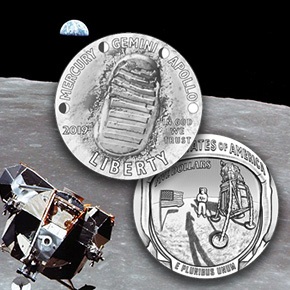
Next July’s celebration of the 50th anniversary of the Apollo 11 Moon landing in July 1969 — a venture that cost U.S. taxpayers $25 billion in then-year dollars — is now a four-coin program: a curved $5 gold coin, a curved $1 silver coin, a curved half-dollar clad coin, and a curved 5 ounce $1 silver proof coin.
That’s the word from the U.S. Mint.
As required by the Public Law, the Mint invited American artists to design a common front of the coin image that is emblematic of the United States Space Program leading up to the first manned Moon landing. The Secretary of the Treasury selected the design from a juried competition.
Steps to the moon
Gary Cooper of Belfast, Maine created the winning design in the Apollo 11 Commemorative Coin Design Competition. The “obverse” design was selected from entries in a juried competition as required by the authorizing legislation, Public Law 114-282.
The winning design by features the inscriptions “MERCURY,” “GEMINI,” and “APOLLO”— separated by phases of the Moon—and a footprint on the lunar surface. The design represents the efforts of the United States space program leading up to the first manned Moon landing.
Iconic reflection
The “reverse” design is by Mint Sculptor-Engraver Phebe Hemphill. It features a representation of a close-up of the iconic ‘Buzz Aldrin on the Moon’ photograph taken July 20, 1969, showing just the visor and part of the helmet of astronaut Buzz Aldrin. The reflection in Aldrin’s helmet includes astronaut Neil Armstrong, the United States flag, and the lunar lander.

Mint Sculptor-Engraver Phebe Hemphill
Credit: U.S. Mint
Prices for the coins include surcharges of $35 for each gold coin, $10 for each silver coin, $5 for each half dollar clad coin and $50 for each five ounce proof silver dollar coin, which the law authorizes to be paid as follows: one-half to the Smithsonian Institution’s National Air and Space Museum’s “Destination Moon” exhibit, one-quarter to the Astronauts Memorial Foundation, and one-quarter to the Astronaut Scholarship Foundation.
For more information, go to:
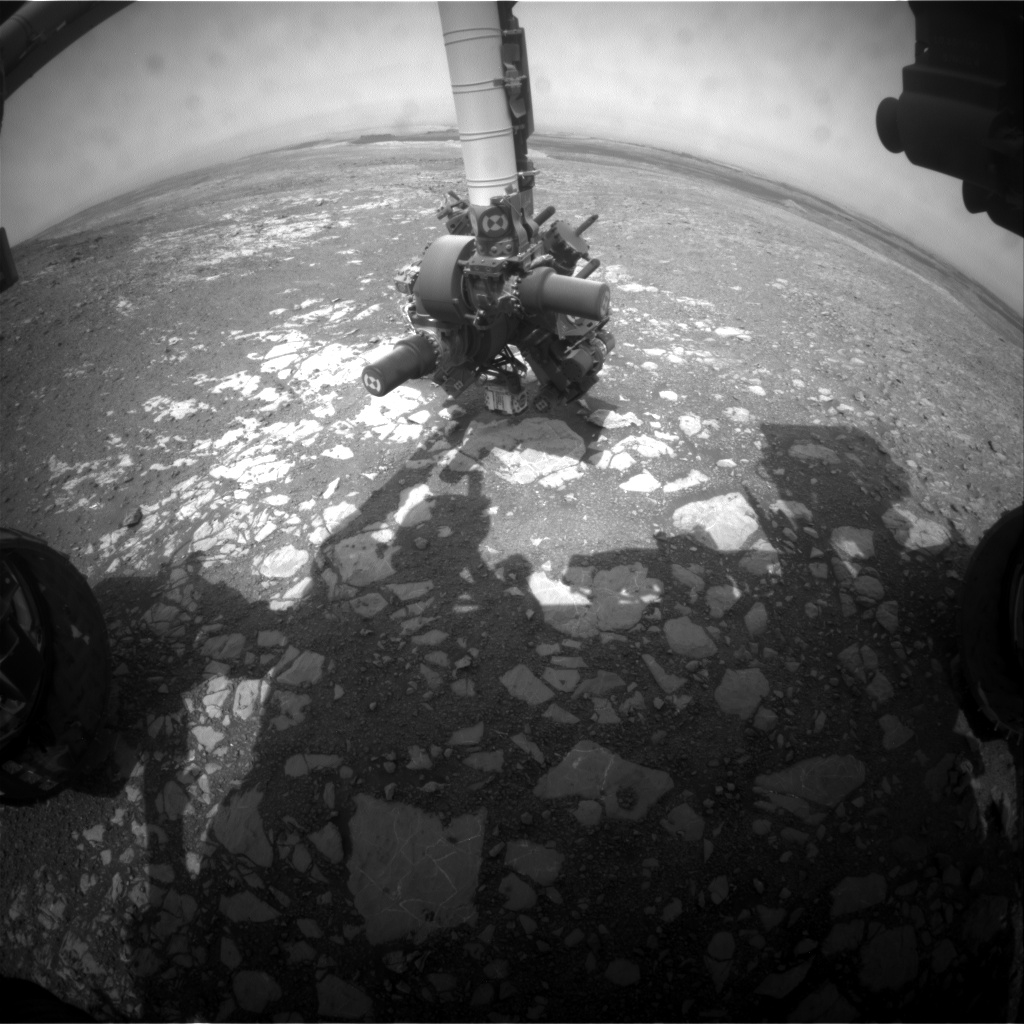
Curiosity Front Hazcam Left A image taken on Sol 2199, October 13, 2018.
Credit: NASA/JPL-Caltech
Following almost a month of not relaying imagery, NASA’s Curiosity rover is back on line, delivering a limited number of photos from Vera Rubin Ridge.
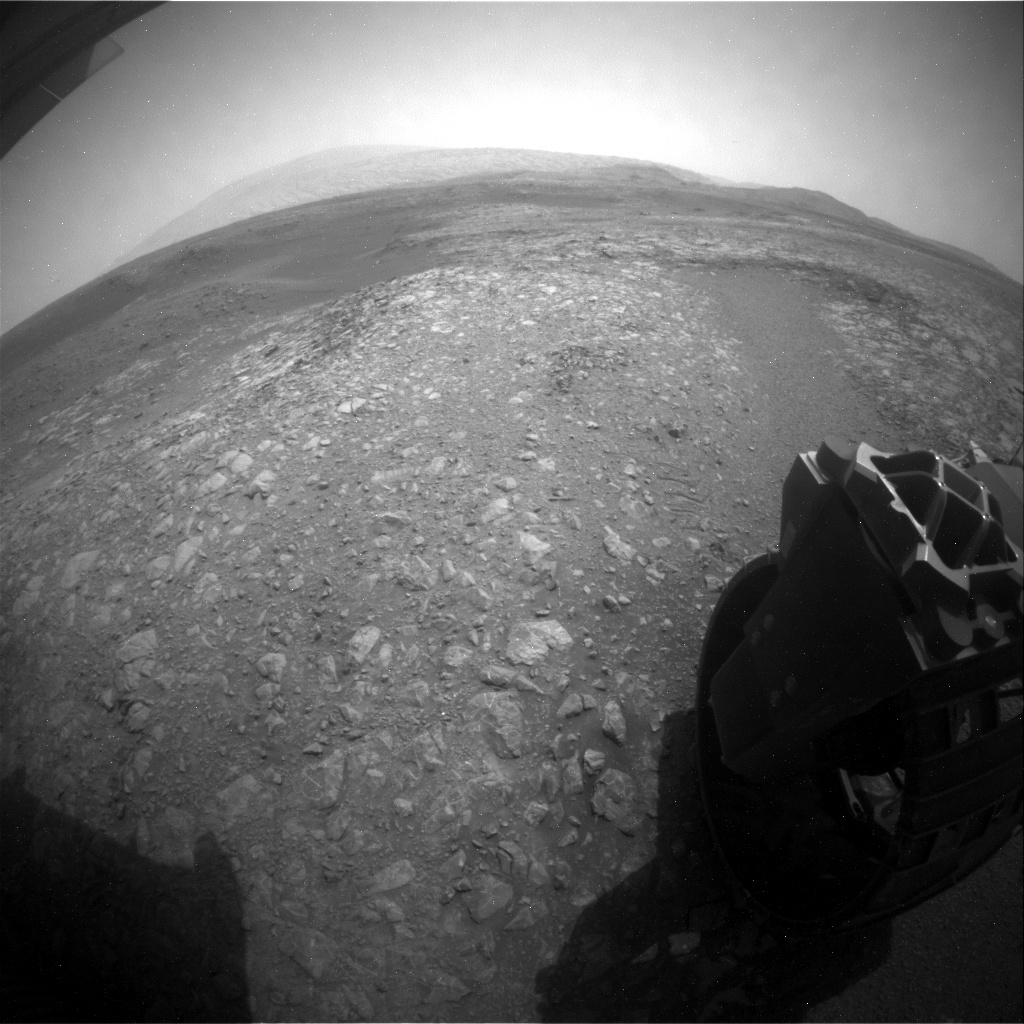
Curiosity Rear Hazcam Right A photo acquired on Sol 2199, October 13, 2018.
Credit: NASA/JPL-Caltech
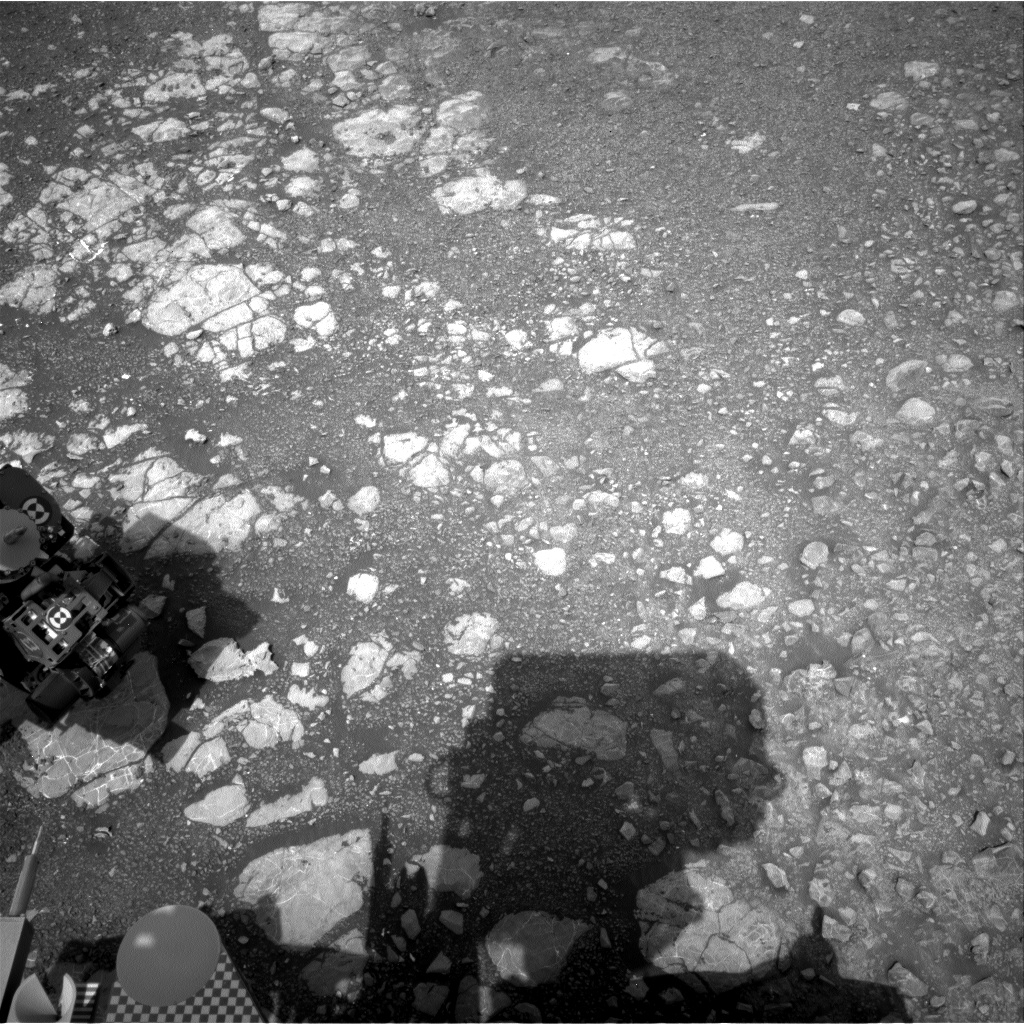
Navcam Right A image acquired on Sol 2199, October 13, 2018.
Credit: NASA/JPL-Caltech
The robot is now in Sol 2200. Due to a rover glitch no imagery had been relayed back to Earth since Sol 2172 on September 15th.
As of this posting, Curiosity’s Chemistry & Camera (ChemCam), Mars Descent Imager (MARDI), Mars Hand Lens Imager (MAHLI) and the Mast Camera (Mastcam) have not, as yet, produced imagery.
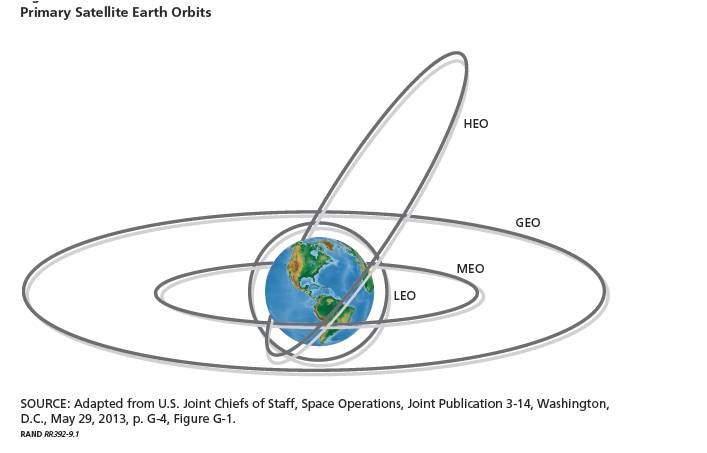
From RAND report: The U.S.-China Military Scorecard: Forces, Geography, and the Evolving Balance of Power 1996–2017.
Space war games are being played out by the Air Force Space Command by way of the 12th Schriever Wargame at Maxwell Air Force Base, Alabama.
Initiated on October 11, 2018, the Schriever Wargame scenario, set in the year 2028, will explore critical space issues and investigate the integration activities of multiple agencies associated with space systems and services.
The Schriever Wargame 2018 (SW 18) will include international partners from Australia, Canada, France, Germany, Japan, New Zealand, and the United Kingdom.
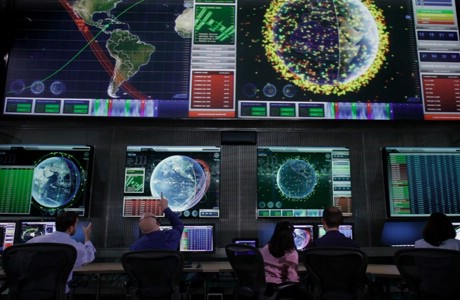
What’s up in space and what is that spacecraft doing?
Credit: Lockheed Martin
Objectives
The objectives of the Wargame are centered on:
1) Examining how international partner capabilities can deter an adversary from extending or escalating a conflict into space;
2) Gaining insight into resiliency, deterrence, and warfighting through international partner synchronization of space and cyberspace operations;
3) Exploring various combined command and control (C2) frameworks to employ and defend air, space and cyberspace capabilities in support of global and geographic / regional operations;
4) Identifying the strategic and operational contributions of space and cyberspace in a multi-domain conflict; and
5) Exploring partnerships framed by a whole of governments approach (International, Civil, Commercial) to combined space and cyberspace operations.

Credit: U.S. Air Force
Scenarios
According to an Air Force statement, the 18 scenario Schriever Wargame depicts a notional peer space and cyberspace competitor seeking to achieve strategic goals by exploiting those domains.
It will include a global scenario with the focus of effort towards the U.S. Indo-Pacific Command (USINDOPACOM) Area of Responsibility. The scenario will also include a full spectrum of threats across diverse operating environments to challenge civilian and military leaders, planners and space system operators, as well as the capabilities they employ.
U.S/international partners
The Schriever Wargame Team to carry out the gamming learning is done on behalf of Air Force Space Command, headquartered in Colorado Springs, Colorado.
Roughly 350 military and civilian experts from more than 27 commands and agencies around the country, as well as seven international partners, will participate in the Wargame.
U.S. commands and agencies participating in Schriever Wargame 2018 include: Air Force Space Command, Army Space and Missile Defense Command, Naval Fleet Cyber Command, the National Reconnaissance Office, Executive Agent for Space Staff, Air Combat Command, Office of the Secretary of Defense, USINDOPACOM, U.S. Strategic Command, U.S. Special Operations Command, U.S. Northern Command, the Intelligence Community, National Aeronautics and Space Administration, Office of Homeland Security, Department of Transportation, Department of State and Department of Commerce.

