Author Archive
 Author:
  April 7th, 2019
Credit: SpaceIL/IAI/Screengrab Inside Outer Space
Israel’s Beresheet Moon lander is nearing the moment of truth, projected to land on the Moon at about 11 p.m. Israel time on April 11.
That time may change due to final maneuvers, but in achieving a controlled landing on the Moon, Israel moves into the lunar elite column of capable countries that have plopped surviving hardware down on the Moon. Israel would follow the Soviet Union, the United States, and China.
The Moon lander is on an “excellent” track, according to controllers.
Now awaiting its fate, Beresheet is circling the Moon. SpaceIL and Israel Aerospace Industries (IAI) will conduct a series of intense spacecraft maneuvers in preparation for the landing.
Beresheet on Monday morning, April 8, performed a maneuver as it entered ever-tighter orbits around the Moon. Over the next three days, additional maneuvers will turn the spacecraft’s current elliptic orbit into a circular orbit 125 miles (200 kilometers) (125 miles) away from the lunar surface.

Projected landing area on Moon by Israel’s Beresheet spacecraft. Credit: Aharonson, et al.
Projected landing site
SpaceIL’s spacecraft will land on a site within Mare Serenitatis, on the northern hemisphere of the Moon. This site has magnetic anomalies to be explored by a magnetometer device taking measurements as part of the lander’s scientific experiments.
According to Oded Aharonson of the Weizmann Institute of Science, Rehovot, Israel, in addition to a suite of cameras, the mission has integrated a scientific payload consisting of a small Lunar Retroreflector Array (LRA) provided by NASA Goddard Space Flight Center. Also on Beresheet, a magnetometer provided by the University of California, Los Angeles.

Integrated on Israeli lunar lander, a NASA scientific payload consisting of a small Lunar Retroreflector Array (LRA).
Credit: NASA/Goddard Space Flight Center
Science mission
In a paper presented at the 50th Lunar and Planetary Science Conference (LPSC) last month – The Science Mission of the SpaceIL Lunar Lander – lead author, Aharonson spotlighted Beresheet’s science mission: detailed characterization of the landing site, measuring the crustal magnetic anomalies to constrain their possible origin and longevity of the lunar dynamo, and localization of the lander using ranging via the NASA-provided LRA.
Beresheet’s targeted landing site is located in the northeastern part of Mare Serenitatis and West of the main Posidonius crater – the area of the three optional landing sites, a primary site and two backups.

Credit: SpaceIL/Israel Aerospace Industries
“We plan to use these data to associate the anomalies with geologic features on the surface, and thus probe the genesis of the remnant magnetization,” the LPSC paper explains. “A relation between magnetization and local wrinkle ridges would be consistent with the hypothesis that the Serenitatis mare are uniformly magnetized with an intensity higher than typical Apollo mare basalts but only producing surface fields at physical breaks where the field lines can emerge due to edge effects.”
Also onboard the lunar lander is an experiment — smaller than a computer mouse — that could enable spot-on touch downs of future robotic and human-carrying landers, the Lunar Retroreflector Array (LRA).
For more information on the NASA LRA, visit my recent Space.com story at:
NASA’s Piggyback Experiment on Israeli Moon Lander Could Aid Future Lunar Touchdowns
https://www.space.com/israel-moon-lander-nasa-instrument.html
 Posted in

Mars 2020 rover.
Credit:
NASA/JPL-Caltech
NASA’s Mars 2020 rover is coming together, headed for its launch window: July 17 – Aug. 5, 2020. If all goes well, the mega-machine will touch down on the Red Planet on Feb. 18, 2021.
Once firmly planted on Mars, one onboard experiment promises to help prepare for human exploration of that faraway world.
MOXIE stands for Mars Oxygen In-Situ Resource Utilization Experiment, demonstrating a way that future explorers might produce oxygen from the Martian atmosphere for propellant and for breathing.

Breathe easy! MOXIE is carefully placed within chassis of Mars 2020 rover.
Credit:
NASA/JPL-Caltech
Installation
Last month, members of NASA’s Mars 2020 project installed the car-battery-sized MOXIE into the chassis of the rover.
MOXIE will collect carbon dioxide (CO2) from the Martian atmosphere and electrochemically split the carbon dioxide molecules into oxygen and carbon monoxide molecules. The oxygen is then analyzed for purity before being vented back out to the Martian atmosphere along with the carbon monoxide and other exhaust products.

Credit:
NASA/JPL-Caltech
Suck it up
The atmosphere of Mars is mostly CO2. Demonstration of the capability for extracting oxygen from it, under Martian environmental conditions, will be a critical step toward how humans on Mars will use the Red Planet’s natural resources. Oxygen can be used in the rocket propulsion to launch homeward from Mars, as well as for breathing.
Approximately two hours of oxygen (O2) production per experiment will be scheduled intermittently over the duration of the Mars 2020 rover mission. MOXIE’s oxygen production rate will be about 10 grams per hour – about 0.022 pounds per hour.

Mars ship.
Credit: National Geographic TV
Future oxygen generators that support human missions on Mars must be about 100 times larger than MOXIE. Indeed, to launch off of Mars, human explorers need about 33 to 50 tons (30 to 45 metric tons) of fuel.
“When we send humans to Mars, we will want them to return safely, and to do that they need a rocket to lift off the planet. Liquid oxygen propellant is something we could make there and not have to bring with us. One idea would be to bring an empty oxygen tank and fill it up on Mars,” says Michael Hecht, Principal Investigator of the experiment from the Massachusetts Institute of Technology, Cambridge.
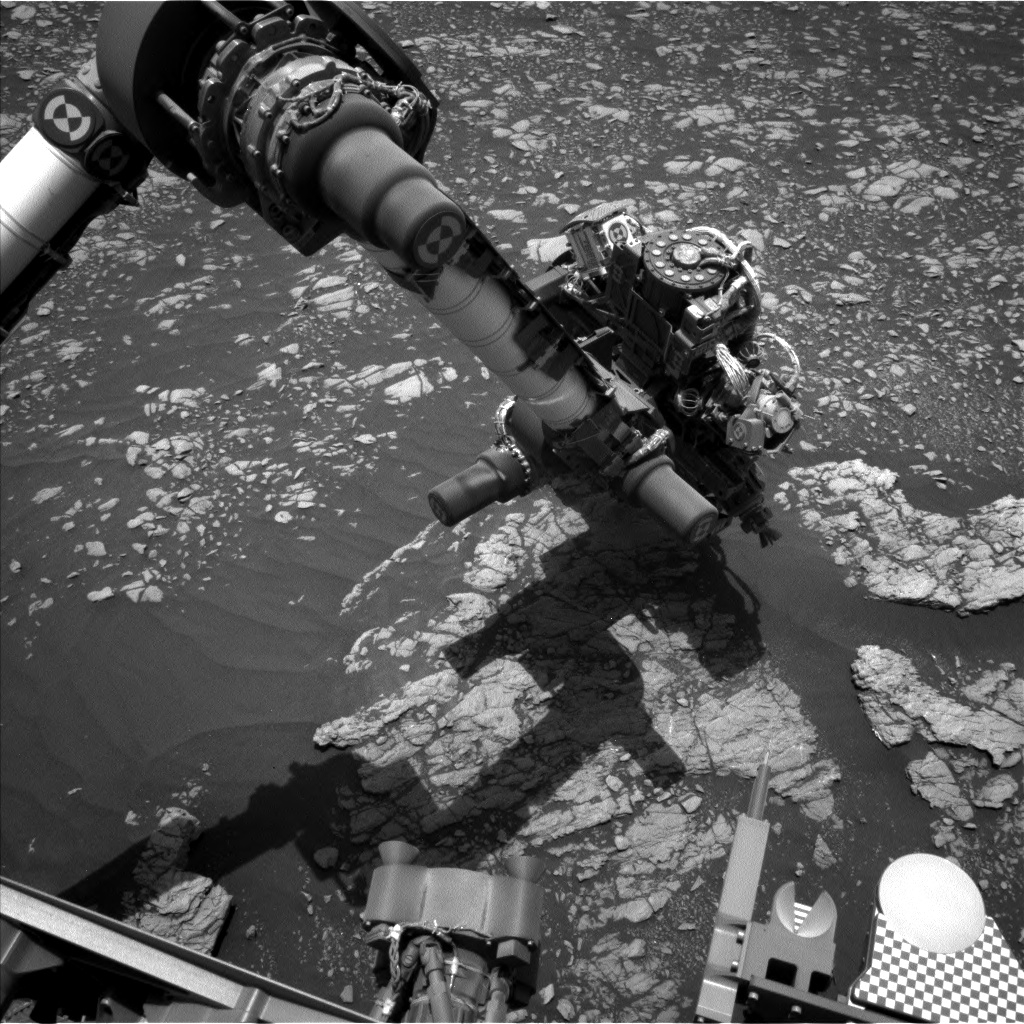
Curiosity Navcam Left B photo taken on Sol 2368, April 5, 2019.
Credit: NASA/JPL-Caltech
NASA’s Curiosity Mars rover is now performing Sol 2369 duties.
Friday marked the conclusion of the Mars Science Laboratory (MSL) Science Team Meeting, held at Goddard Space Flight Center in Greenbelt, Maryland.

Curiosity Front Hazcam Right B image taken on Sol 2368, April 5, 2019.
Credit: NASA/JPL-Caltech
“These meetings are where scientists and engineers can come together to discuss the ongoing activities associated with the Curiosity rover. They’re always productive opportunities to discuss strategies for analyzing previously collected data as well as strategies for investigating the terrain ahead of the rover,” reports Mark Salvatore, a planetary geologist from the University of Michigan in Dearborn, Michigan.

Curiosity Navcam Right B image acquired on Sol 2368, April 5, 2019.
Credit: NASA/JPL-Caltech
Target selected
After significant discussion among the science team as well as analysis of the compositional data that came down recently from both the Alpha Particle X-Ray Spectrometer (APXS) and Chemistry and Camera (ChemCam) instruments, the team has decided to proceed with drilling the “Aberlady” target.
“The additional compositional analyses confirmed that the composition of this target looks comparable to other targets within the clay-bearing unit,” Salvatore notes. “So, with the team coming to this consensus, today marks the planning of Day 1 of our typical drill cadence, complete with a pre-load drill test to monitor and examine the drill’s performance prior to actual drilling into the target.”

Curiosity Mastcam Right photo taken on Sol 2367, April 4, 2019.
Credit: NASA/JPL-Caltech/MSSS
Atmospheric argon
These activities are preceded by a 1.5 hour science block, which will focus primarily on additional ChemCam compositional analyses and Mastcam color and multispectral imaging of the workspace, Salvatore adds.

Laser dots seen by Curiosity ChemCam Remote Micro-Imager photo acquired on Sol 2369, April 6, 2019.
Credit: NASA/JPL-Caltech/LANL
The plan calls for the rover’s APXS to begin a series of two integrations.
“However, instead of placing the sensor head on the martian surface to investigate the compositions of rocks and sediments, APXS will turn her sensor skywards to measure seasonal changes in atmospheric argon,” Salvatore points out. “These activities will set us up nicely to continue with the drill campaign, hopefully resulting in a full drill effort sometime this weekend.”
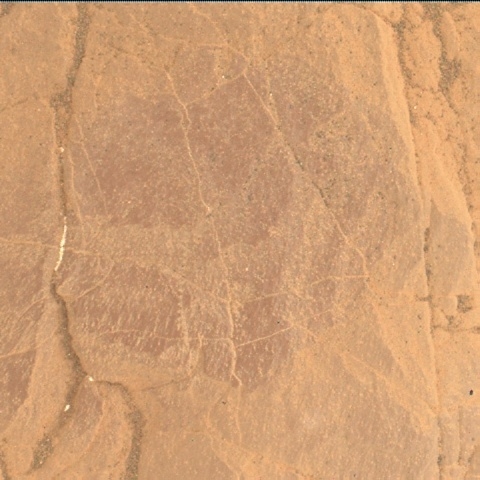
Curiosity Mars Hand Lens Imager (MAHLI) image produced on Sol 2368, April 5, 2019. MAHLI is located on the turret at the end of the rover’s robotic arm.
Credit: NASA/JPL-Caltech/MSSS
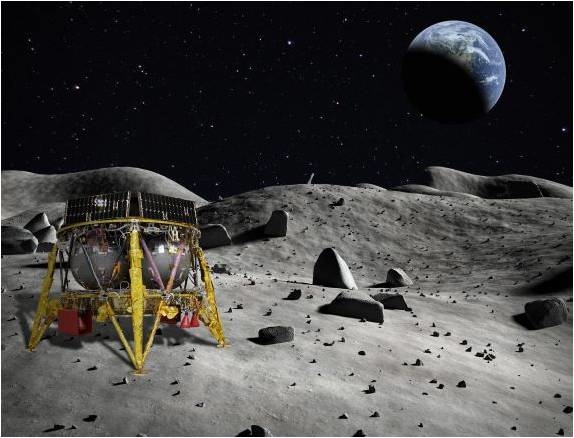
Credit: SpaceIL and Israel Aerospace Industries (IAI)
Israel’s Beresheet lunar lander entered lunar orbit yesterday and is on an “excellent” track, according to overnight data from the SpaceIL and Israel Aerospace Industries (IAI) engineering teams at their control room in Yehud, Israel.
Beresheet is scheduled to land on the Moon at about 11 p.m. Israel time on April 11th. However, a more definite time will be announced in the next few days.

A picture taken by Beresheet – the farside of the Moon during the maneuver at a height of 470 kilometers from the Moon. Photo credit: Eliran Avital
Delicate maneuvers
During the coming week, SpaceIL and IAI will conduct a series of maneuvers with the spacecraft in preparation for the attempted landing.
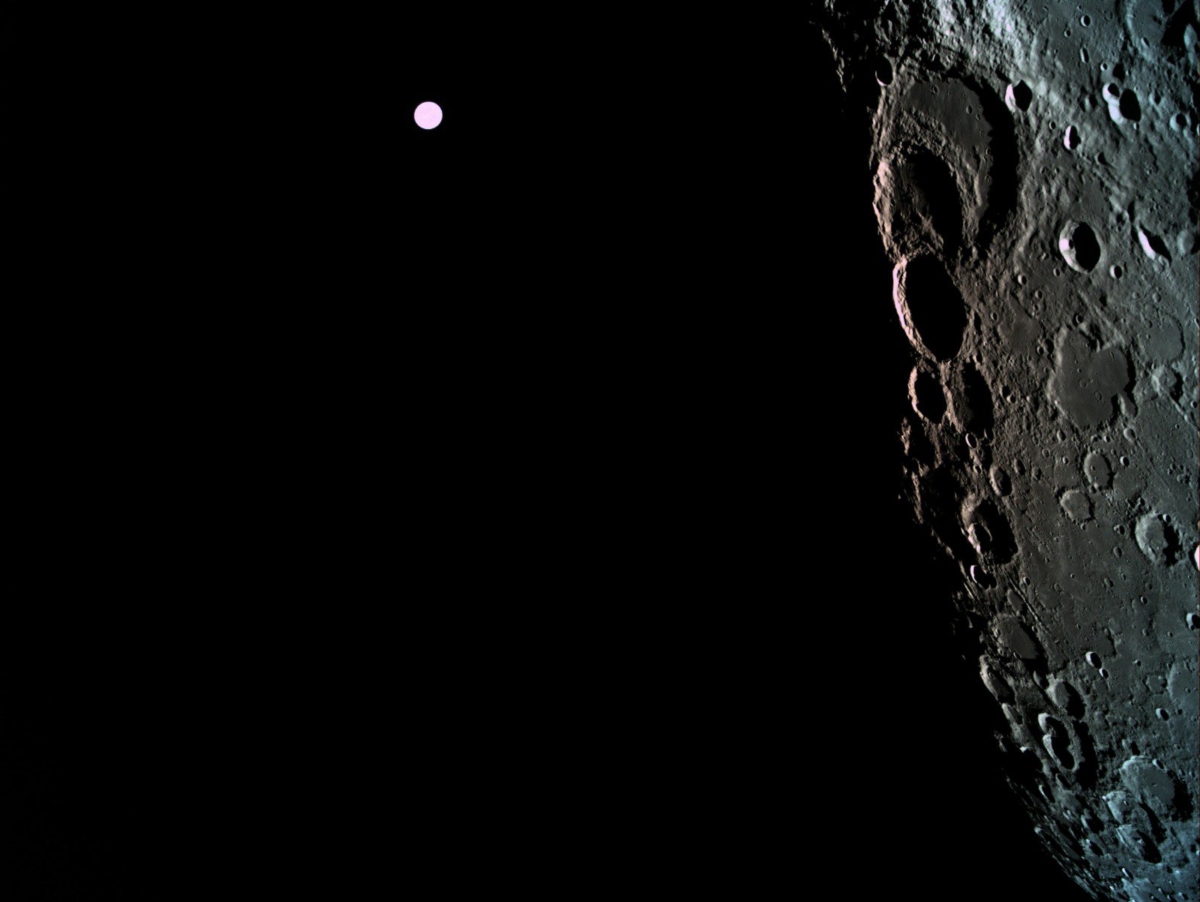
Israeli spacecraft captured this picture of the farside of the Moon with Earth in the background – also at 470 kilometers from the lunar surface.
Photo credit: Eliran Avital
Yesterday, during the critical lunar capture maneuver, Beresheet provided pictures of the Moon’s farside while activating its engines.
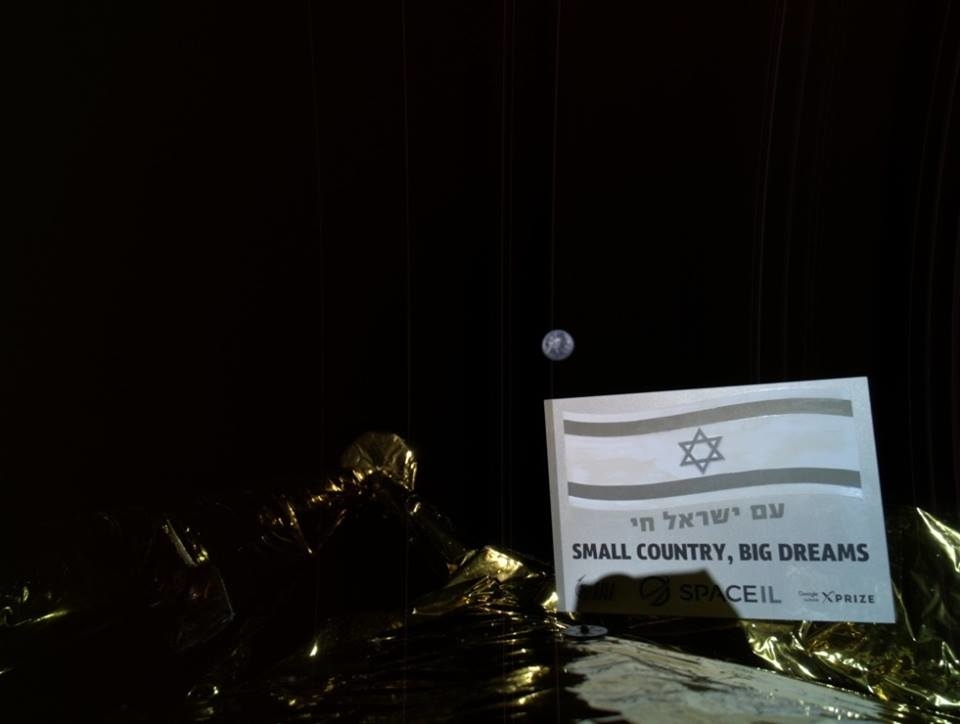
Credit: SpaceIL/Israel Aerospace Industries
A critical lunar orbit capture took place successfully! Israel’s Beresheet lunar lander is now entering an elliptical course around the Moon, with the closest point 500 kilometers to the lunar surface and the farthest point 10,000 kilometers.
With this maneuver, Israel accomplished another historic goal by becoming the seventh nation ever to enter the Moon’s orbit.
Target time
One week from today, SpaceIL and Israel Aerospace Industries (IAI) will conduct more lunar maneuvers as the spacecraft approaches a targeted April 11 landing.
Credit: SpaceIL/Israel Aerospace Industries
At 5:18 p.m. Israel time the spacecraft’s engine activated for six minutes, and reduced its speed by 1,000 km/hour, from 8,500 km/hour to 7,500 km/hour, relative to the Moon’s velocity.
The maneuver was conducted with full communication between Beresheet’s control room in Israel and the spacecraft, and signals in real time match the correct course.

Credit: SpaceIL/Israel Aerospace Industries
More maneuvers
In the coming week, with expected intense engineering activities, many more maneuvers will take Beresheet from an elliptical to a round orbit, at a height of 200 kilometers from the Moon.
The maneuvers will aim to reduce the spacecraft’s distance from the Moon and reach the optimal point to conduct an autonomic landing in the Sea of Serenity in the evening Israel time, April 11.
Beresheet basics:
— The spacecraft has performed seven maneuvers
— Beresheet has traveled 5.5 million km (over 3.4 million miles) in its orbits and will travel one million more while orbiting the Moon
— The spacecraft made 12.5 Earth orbits, including seven at an altitude of 70,000 km (nearly 44,000 miles), two at an altitude of 131,000 km (nearly 814,000 miles), two at an altitude of 265,000 km (nearly 165,000 miles) and 1.5 at 420,000 km (over 260,000 miles)
— The craft has used 80 kg (176 pounds) of fuel so far
— Beresheet has experienced two challenges, which the engineering team has been able to overcome: one with it’s star trackers, which were blinded by the sun more than expected, and the other involving undesirable restarts of the mission computer
— The Israeli spacecraft Moon lander was launched on February 22 from Cape Canaveral, Florida, on a SpaceX Falcon 9 rocket as a secondary payload alongside two satellites
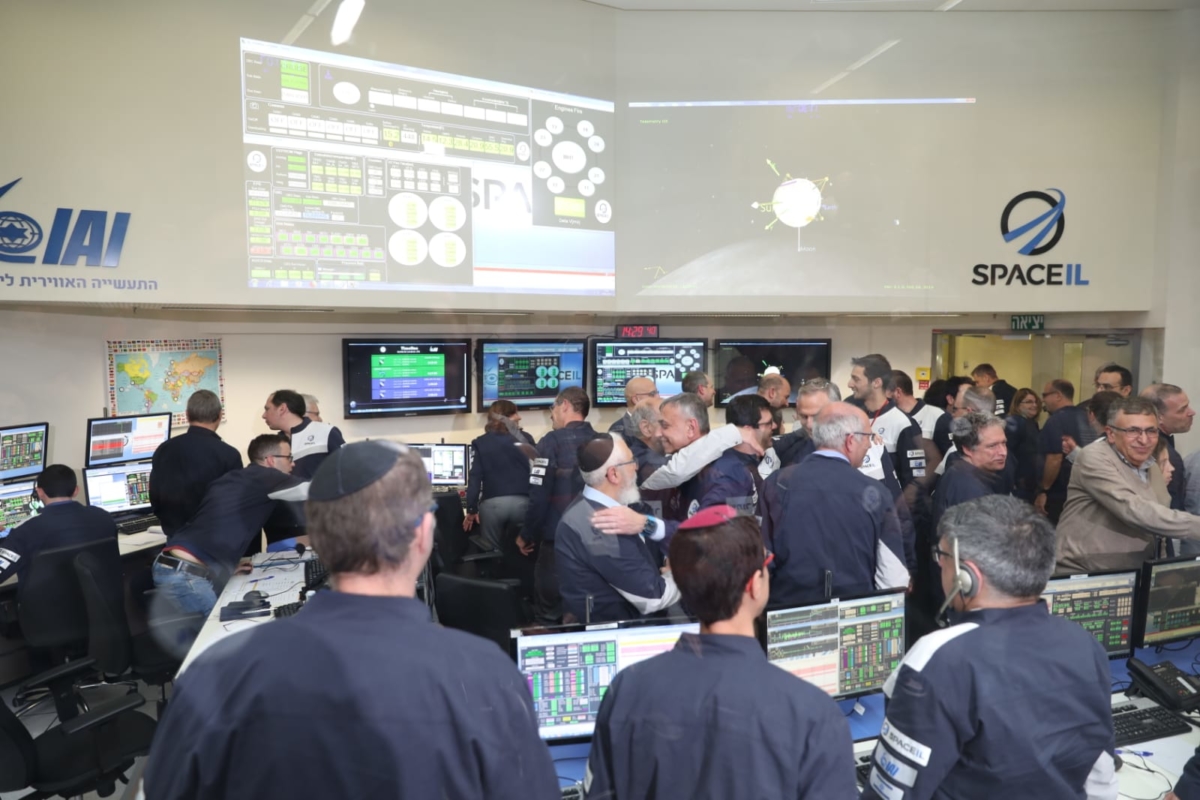
SpaceIL and IAI engineering teams in the control room after the maneuver.
Credit: SpaceIL/IAI
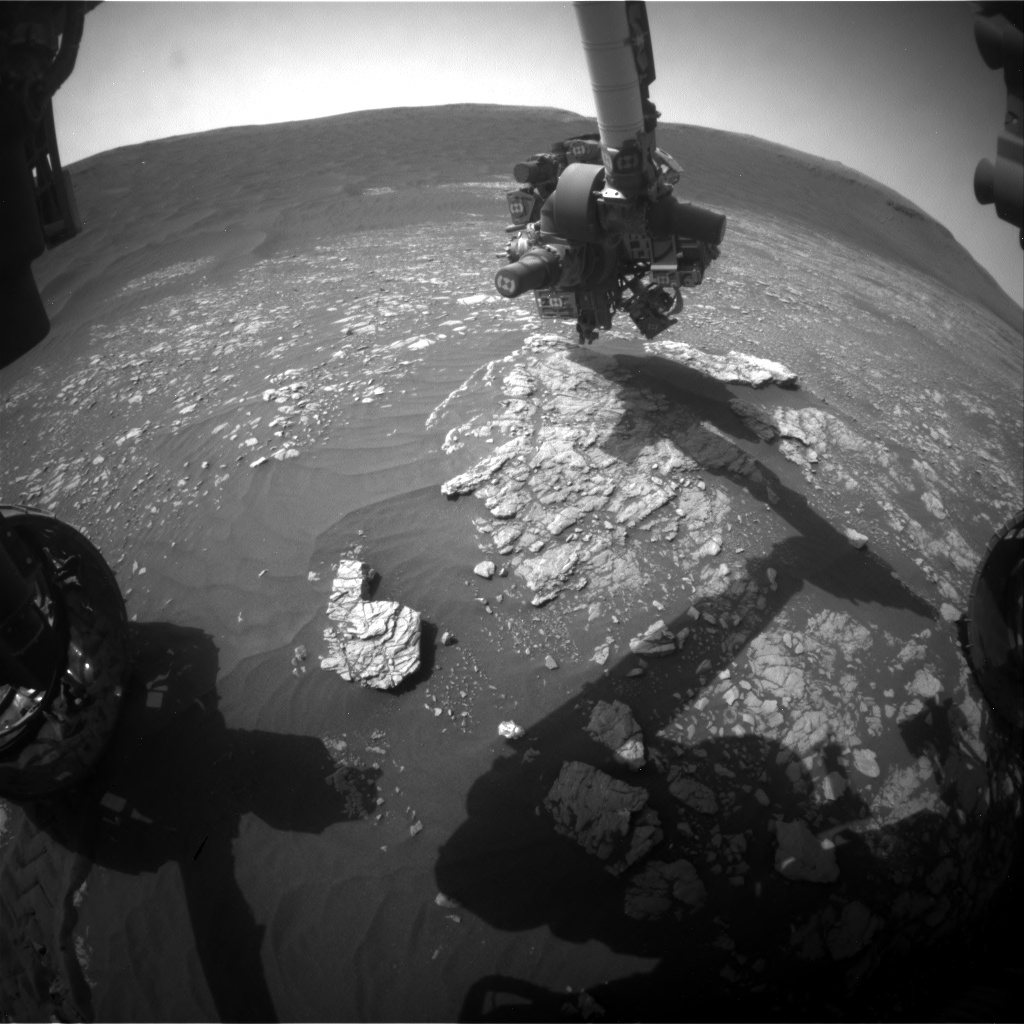
Curiosity Front Hazcam Left B image taken on Sol 2367, April 4, 2019.
Credit: NASA/JPL-Caltech
NASA’s Curiosity Mars rover is performing Sol 2367 tasks.
“Our short drive on Monday was successful, bringing two candidate drill targets into closer, clearer view, reports Michelle Minitti, a planetary geologist at Framework in Silver Spring, Maryland.
The prime candidate “Aberlady” appeared to have the same color, structure and texture as the Sol 2365 contact science target “Longannet.”

Prime drilling candidate “Aberlady” as seen in this Curiosity Mastcam Left image acquired on Sol 2365, April 2, 2019.
Credit: NASA/JPL-Caltech/MSSS
All in the family
Curiosity Mars Hand Lens Imager (MAHLI) and Alpha Particle X-Ray Spectrometer (APXS) observations from Longannet, and Chemistry and Camera (ChemCam) observation of the Sol 2365 “Tartan” target, chosen because of its resemblance to Longannet, all fell in family with the range of lithologies we have observed in the clay-bearing unit, Minitti explains.
“That gave the science team confidence that Aberlady was worthy of our first drilling efforts in the clay-bearing unit,” Minitti adds. “However, because it is such an important decision, the science team elected to dedicate today to triaging Aberlady’s structure, texture and chemistry just to be sure.”

Curiosity Mars Hand Lens Imager (MAHLI) photo produced on Sol 2367, April 4, 2019. MAHLI is located on the turret at the end of the rover’s robotic arm.
Credit: NASA/JPL-Caltech/MSSS

Curiosity Navcam Left B image acquired on Sol 2367, April 4, 2019.
Credit: NASA/JPL-Caltech
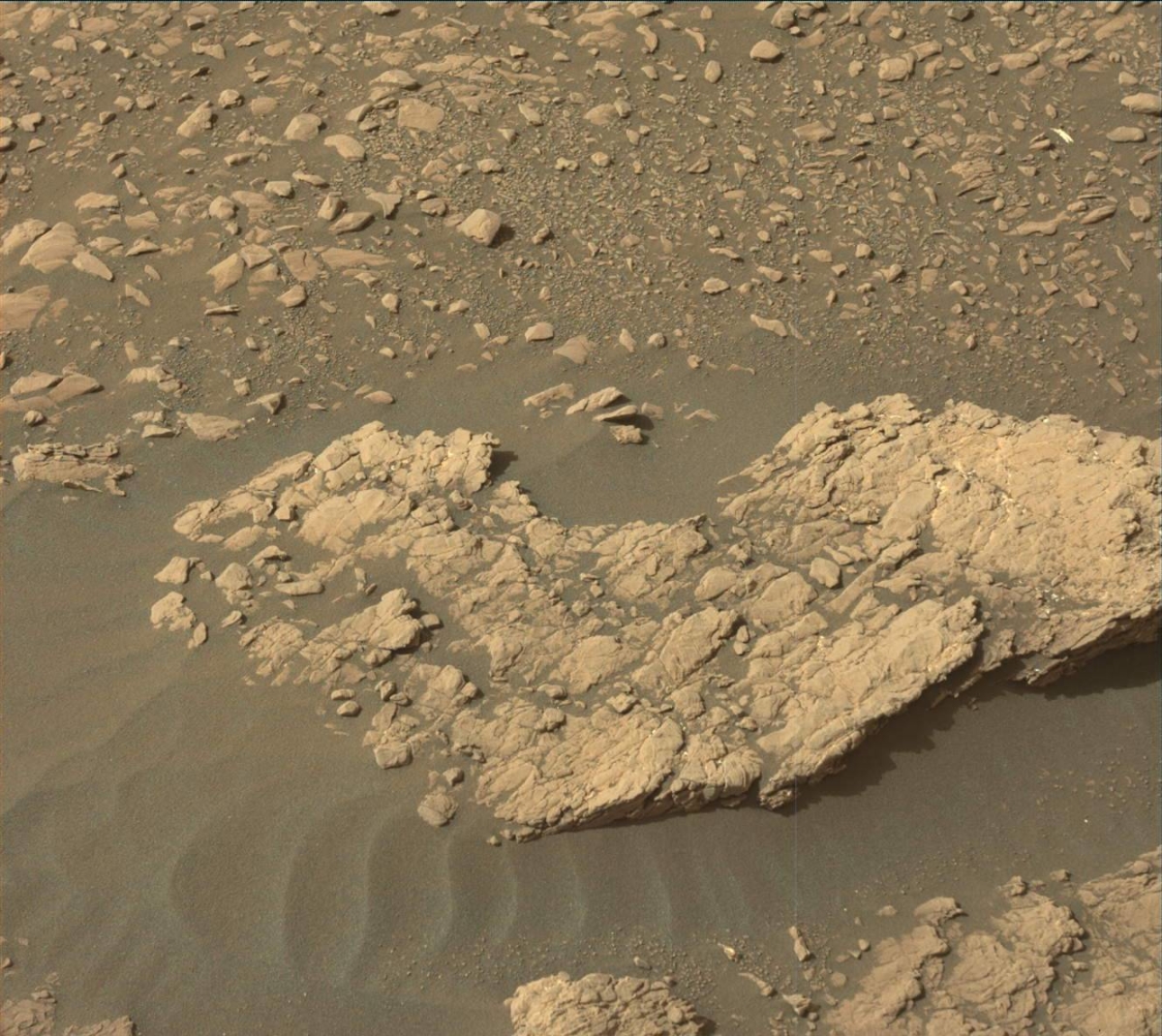
Curiosity Mastcam Left image acquired on Sol 2365, April 2, 2019.
Credit: NASA/JPL-Caltech/MSSS
Go/no-go drilling decision
Minitti reports that Mars team members crammed in as many science observations on Aberlady as possible before the communication pass that will bring us data before planning tomorrow.
“These included chemistry measurements from APXS and ChemCam, and images of texture and grain size from MAHLI,” Minitti concludes. “With these data in hand tomorrow morning, the team will be able to make the go/no-go decision about drilling. What will Aberlady reveal? Stay tuned!”

Credit: SpaceIL/Israel Aerospace Industries
The engineering teams of SpaceIL and Israel Aerospace Industries (IAI) tomorrow will perform the most critical maneuver yet in Beresheet’s journey to the Moon.

Credit: SpaceIL/Israel Aerospace Industries
Lunar orbit insertion, or “Lunar Capture,” allows the spacecraft to enter the Moon’s gravity and begin orbiting prior to landing.
The maneuver will be performed tomorrow April 4, at 5:15 p.m. Israel time (10:15 a.m. ET)
Beresheet has been circling Earth in elliptical orbits and has performed several maneuvers in order to send it higher and further away.
Meeting the Moon
Earlier this week, Beresheet passed its closest point to Earth for the last time, at 1,700 kilometers (1,056 miles), and continued to its meeting point with the Moon at a range of 400,000 kilometers (248,548 miles).
Credit: SpaceIL/Israel Aerospace Industries
Unlike maneuvers Beresheet has performed so far, when its engines were operated to accelerate the craft, the current engine operation is meant to slow the spacecraft’s velocity, so it is captured by lunar gravity.
The braking will reduce Beresheet’s velocity relative to the Moon from 8,500 km/h (5,281 mph) to 7,500 km/h (4,660 mph).
Spacecraft risks
If the slowdown does not take place as planned, the spacecraft risks leaving Earth’s gravity while missing the Moon’s gravity and will enter a different and undesirable orbit in the solar system. This would bring the mission to an end.
A successful maneuver will position the spacecraft on an elliptical orbit around the Moon, in which the nearest point (perilune) is 500 km (310 miles) away from the Moon, while the farthest one (apolune) is 10,000 km (6,213 miles) away.
Credit: SpaceIL/Israel Aerospace Industries
Landing approach
In the week following the capture, the SpaceIl and IAI teams will perform several maneuvers to reduce the orbits around the Moon from an elliptical to a round orbit 200 km (124 miles) above the Moon.
Unlike the long Earth orbits, the first lunar orbits will last 14 hours.
As Beresheet approaches landing, each lunar orbit will last only two hours. These maneuvers are meant to lower the spacecraft’s altitude and reach the optimal point for autonomous landing in the Moon’s Sea of Serenity the evening of April 11.
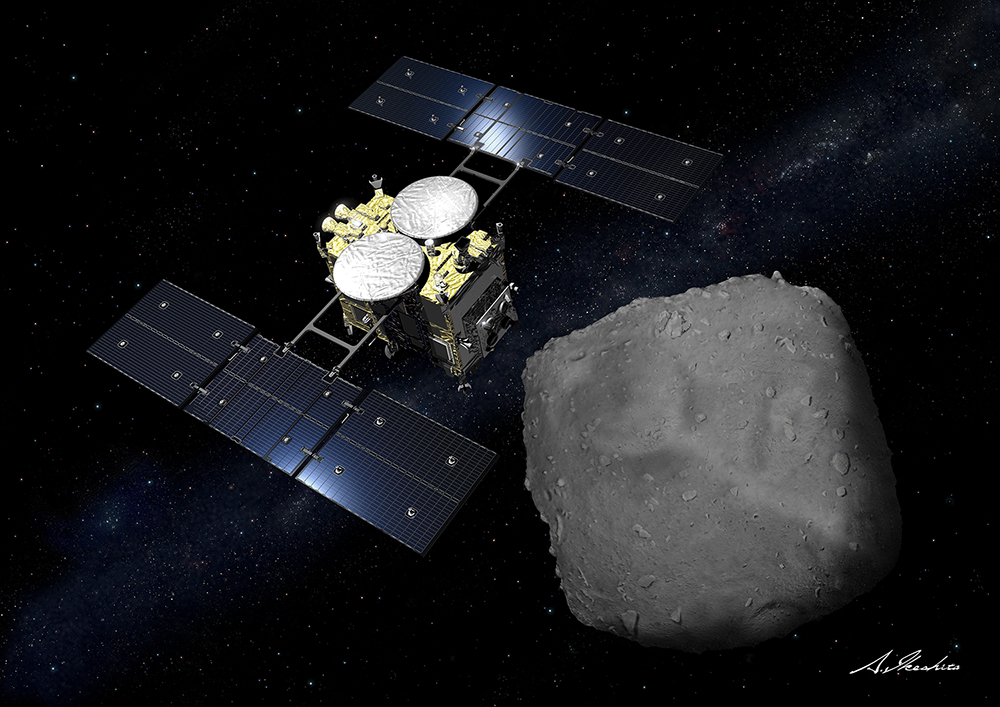
Credit: Akihiro Ikeshita
Japan’s Hayabusa2 spacecraft is ready to create an artificial crater on the surface of asteroid Ryugu.
On April 5 (JST), the Small Carry-on Impactor (SCI) — a 4.4 pound (2 kilogram) copper lump called “Liner” will be dropped to the surface of the asteroid at a velocity of 2 km per second to make an artificial crater.

SCI pyrotechnics – A conical shape structure filled with explosives. The “Liner” will be ejected forward at a high speed by explosive power.
Credit: JAXA
The intent is to collect information about the interior of the asteroid by examining crater formation and the artificially generated crater.

Credit: JAXA, University of Tokyo, Kochi University, Rikkyo University, Nagoya University, Chiba Institute, Meiji University, University of Aizu, AIST
Deployable camera
The SCI impact experiment will be observed by a Deployable CAMera 3-D at a distance of roughly one kilometer from the impact point, and the time evolution of the ejecta curtain will be observed by this camera to confirm the impact point on the asteroid’s surface.

Credit: JAXA
After SCI separation, an onboard timer triggers the explosion. Meanwhile, Hayabusa-2 is to maneuver away from the space rock, spending more than two weeks away from the asteroid, positioning itself at a safe distance to avoid ejecta floating around the asteroid.

Credit: JAXA
Subsurface sampling
According to Hayabusa2 officials, at a later date, touchdown at or around the generated crater will be attempted as will possible collection of the subsurface material.
However, if the condition of the surface of Ryugu is dangerous for touchdown, the touchdown will not be attempted.
To watch the fireworks, tune into the Hayabusa2 Small Carry-on Impactor (SCI) control room via live broadcast:
JAXATV: http://fanfun.jaxa.jp/jaxatv/detail/14343.html
YouTube: https://www.youtube.com/watch?v=bv2ykuJDcBo
English: https://youtu.be/Lh4iFyMRWZg
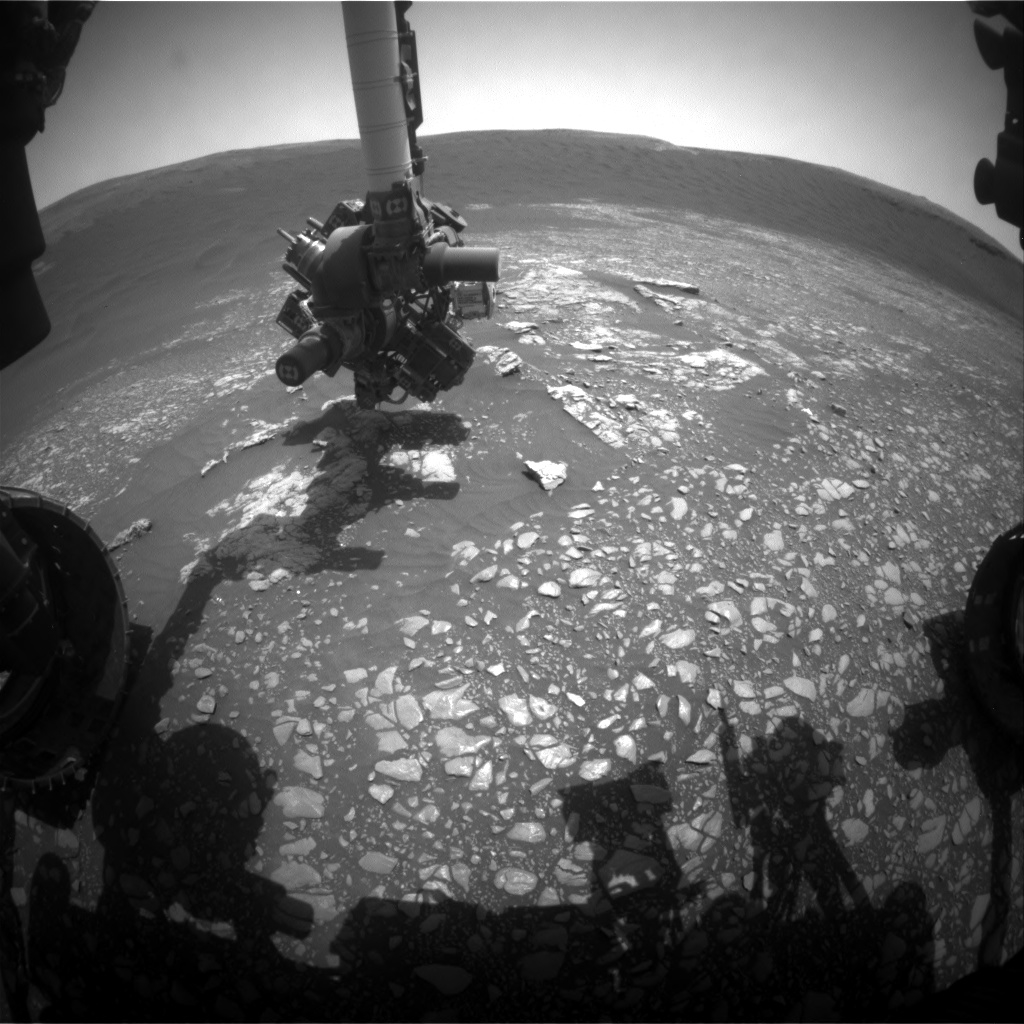
Curiosity Front Hazcam Left B photo taken on Sol 2365, April 2, 2019.
Credit: NASA/JPL-Caltech
NASA’s Curiosity Mars rover is wrapping up Sol 2365 tasks.
Ashley Stroupe, a mission operations engineer at NASA/JPL in Pasadena, California reports that Curiosity is getting close to the area in which the robot will next drill.
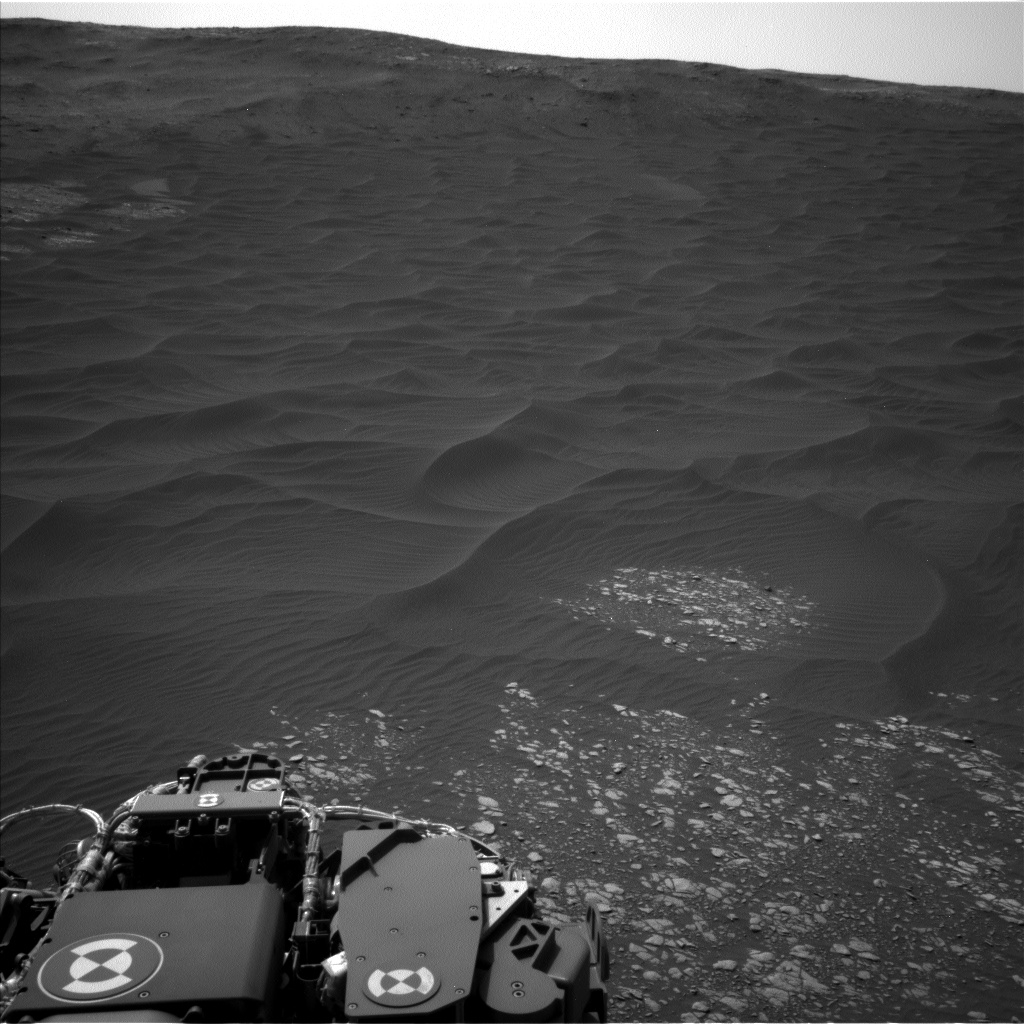
Curiosity Navcam Left B image acquired on Sol 2365, April 2, 2019.
Credit: NASA/JPL-Caltech
But before heading off, scientists are taking a number of images using the Chemistry and Camera (ChemCam) and Mastcam of the local features – including some close-by small sand ripples and pebbles in the rover’s workspace in order to help understand the relationship.
Also being performed is contact science with the Mars Hand Lens Imager (MAHLI) and Alpha Particle X-Ray Spectrometer (APXS) on two small targets, Maud and Ardnamurchan; Maud will be partially “cleaned” by ChemCam so APXS might have a better view despite the target being too small to brush.
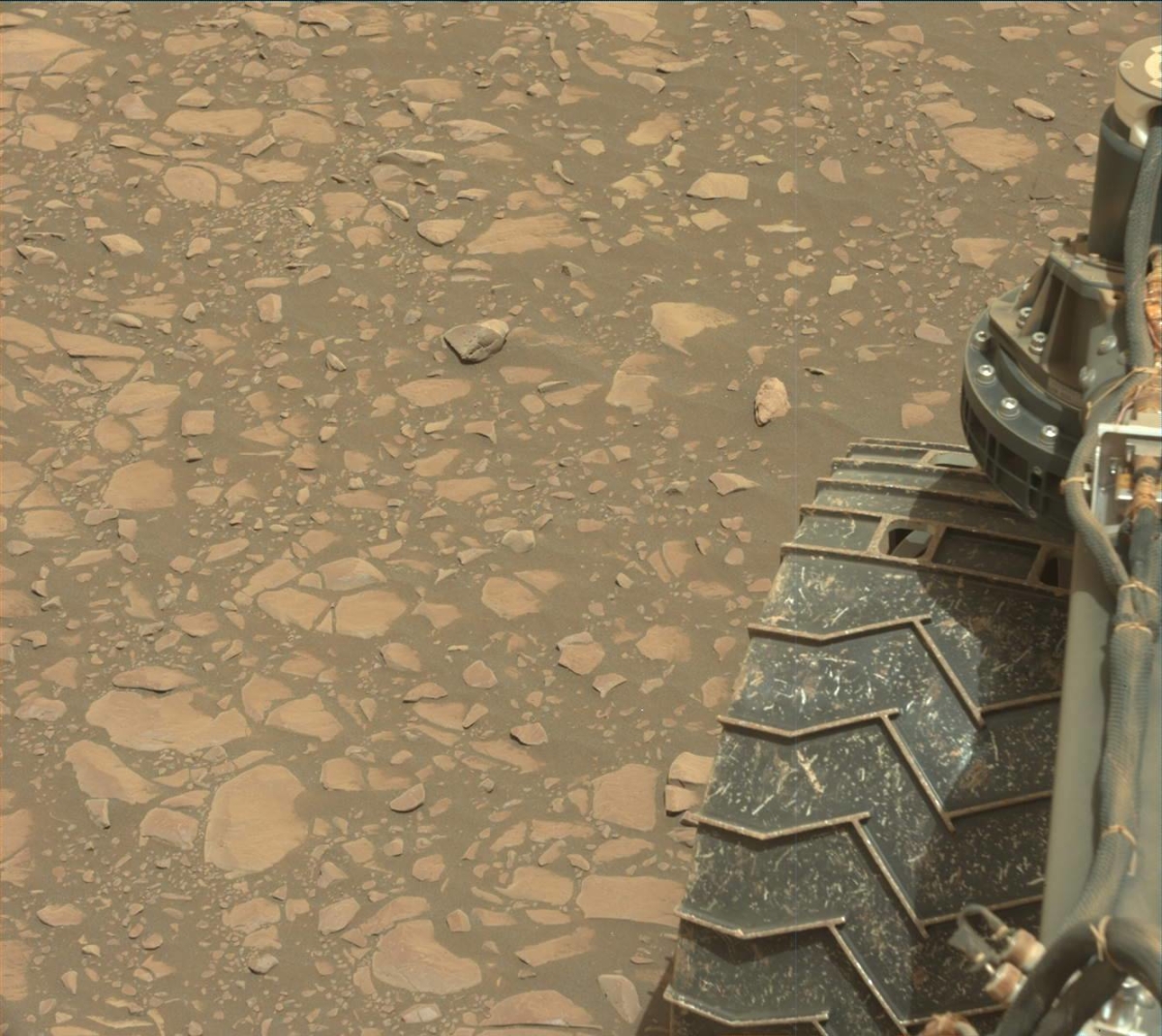
Curiosity Mastcam Left photo taken on Sol 2364, April 1, 2019.
Credit: NASA/JPL-Caltech/MSSS
Windy period
“We also continue our atmospheric studies, as we seem to be in a fairly windy period, including a dust devil movie and a tau measurement,” Stroupe adds.
“On the second sol of our plan, Curiosity will drive past a nearby patch of sand ripples,” Stroupe explains, where the robot will stop for mid-drive imaging.
Also planned is a drive of about 98 feet (30 meters) to a promising bedrock target on the other side of the sandy patch, Stroupe says.
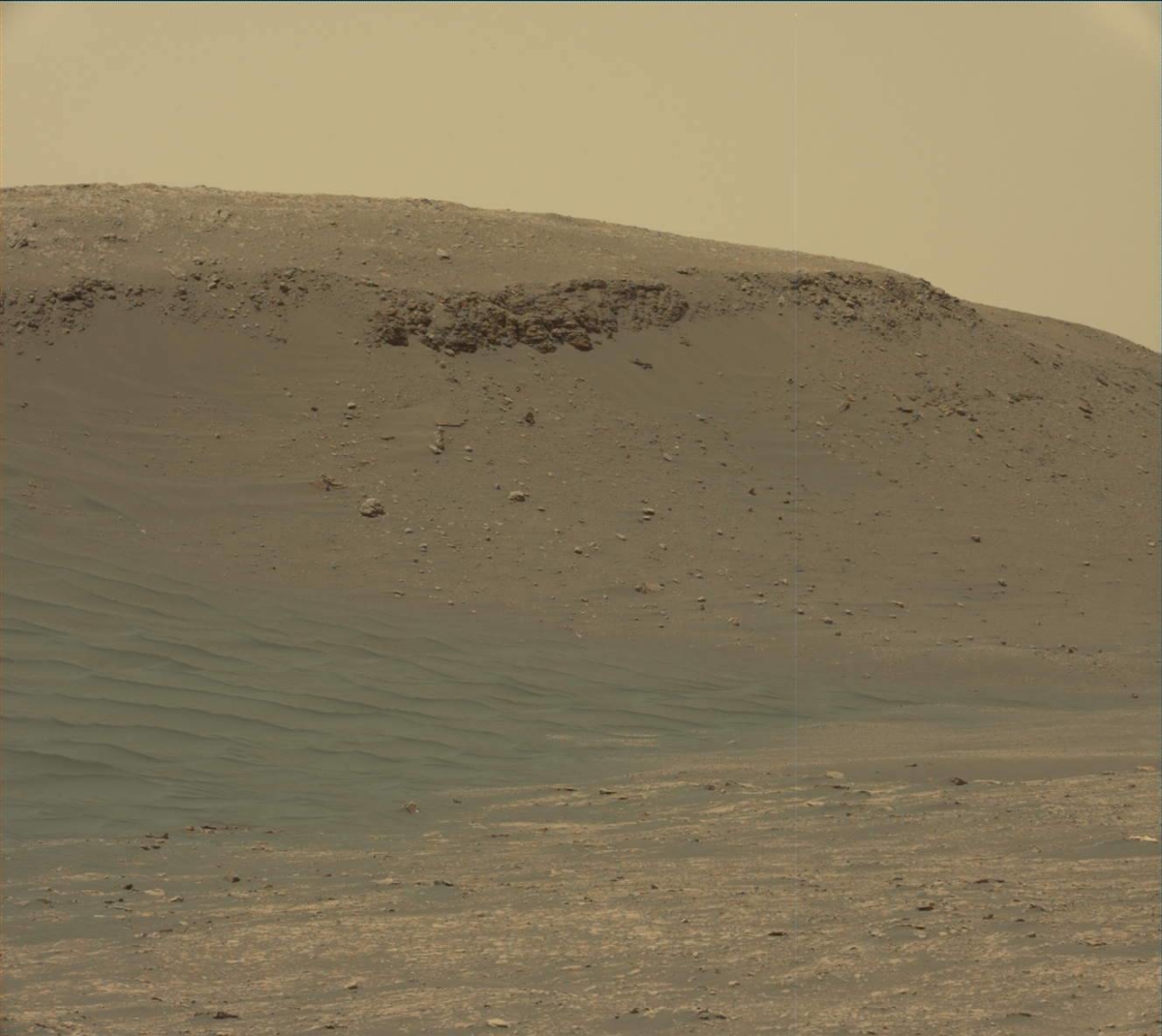
Curiosity Mastcam Left photo taken on Sol 2364, April 1, 2019.
Credit: NASA/JPL-Caltech/MSSS
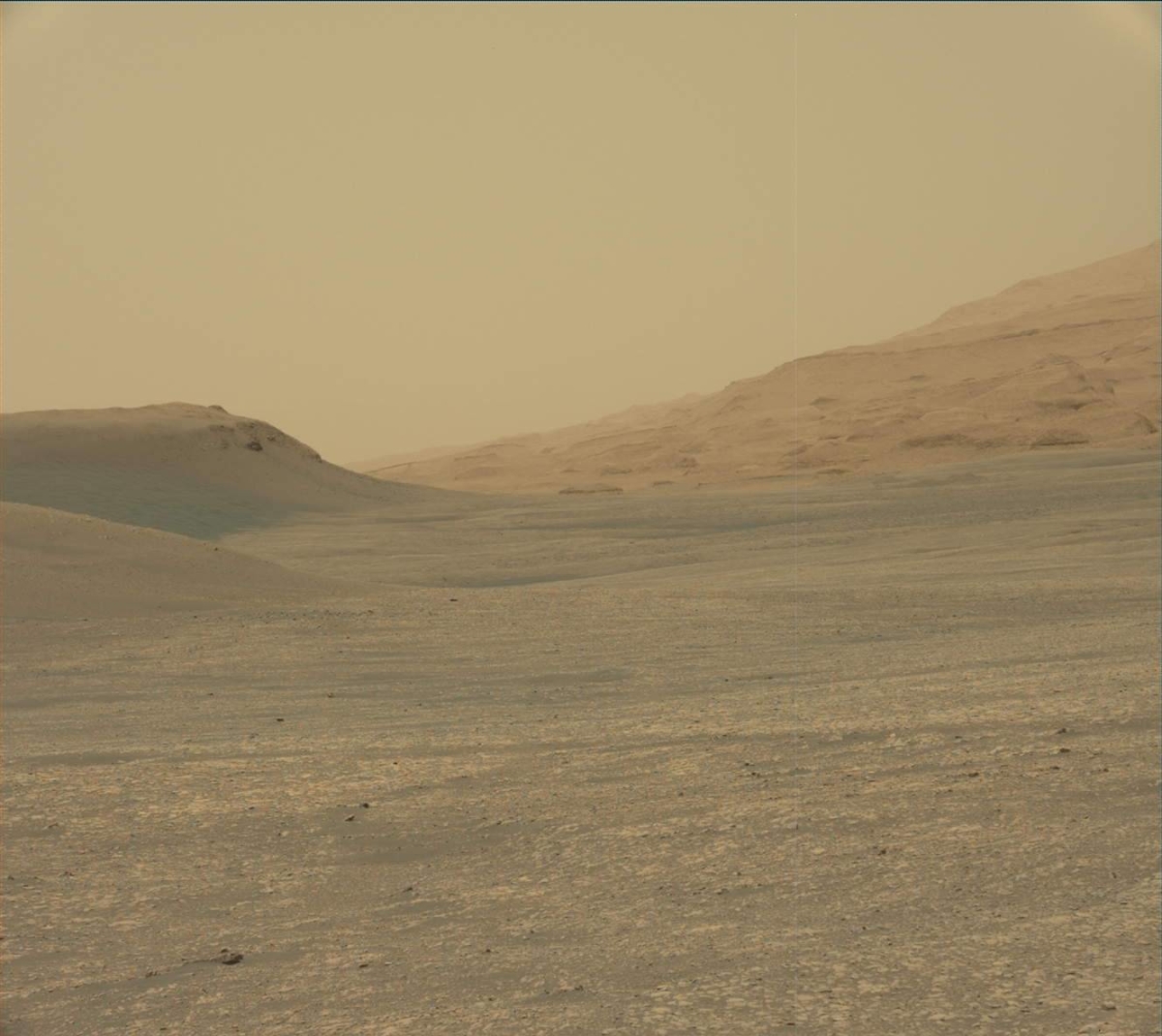
Curiosity Mastcam Left photo taken on Sol 2364, April 1, 2019.
Credit: NASA/JPL-Caltech/MSSS
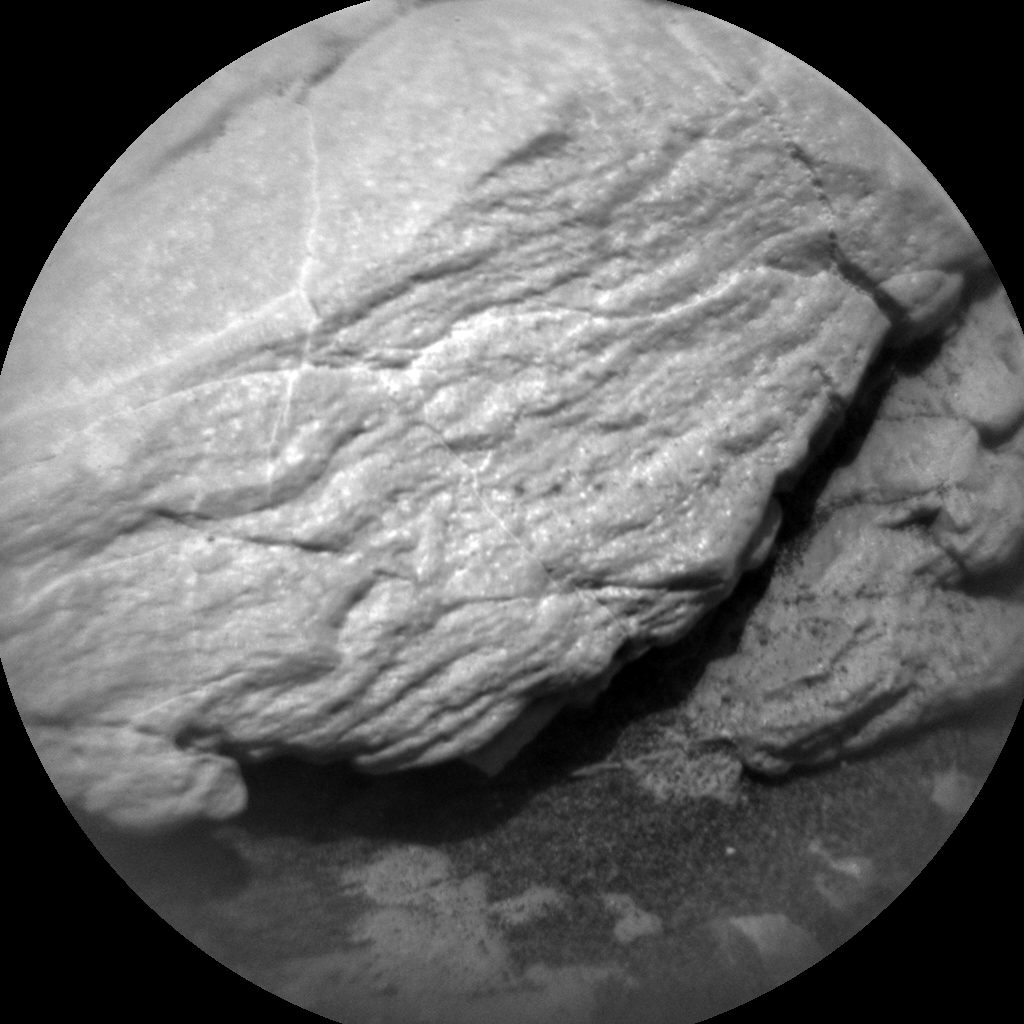
ChemCam Remote Micro-Imager photo acquired on Sol 2365, April 2, 2019.
Credit: NASA/JPL-Caltech/LANL
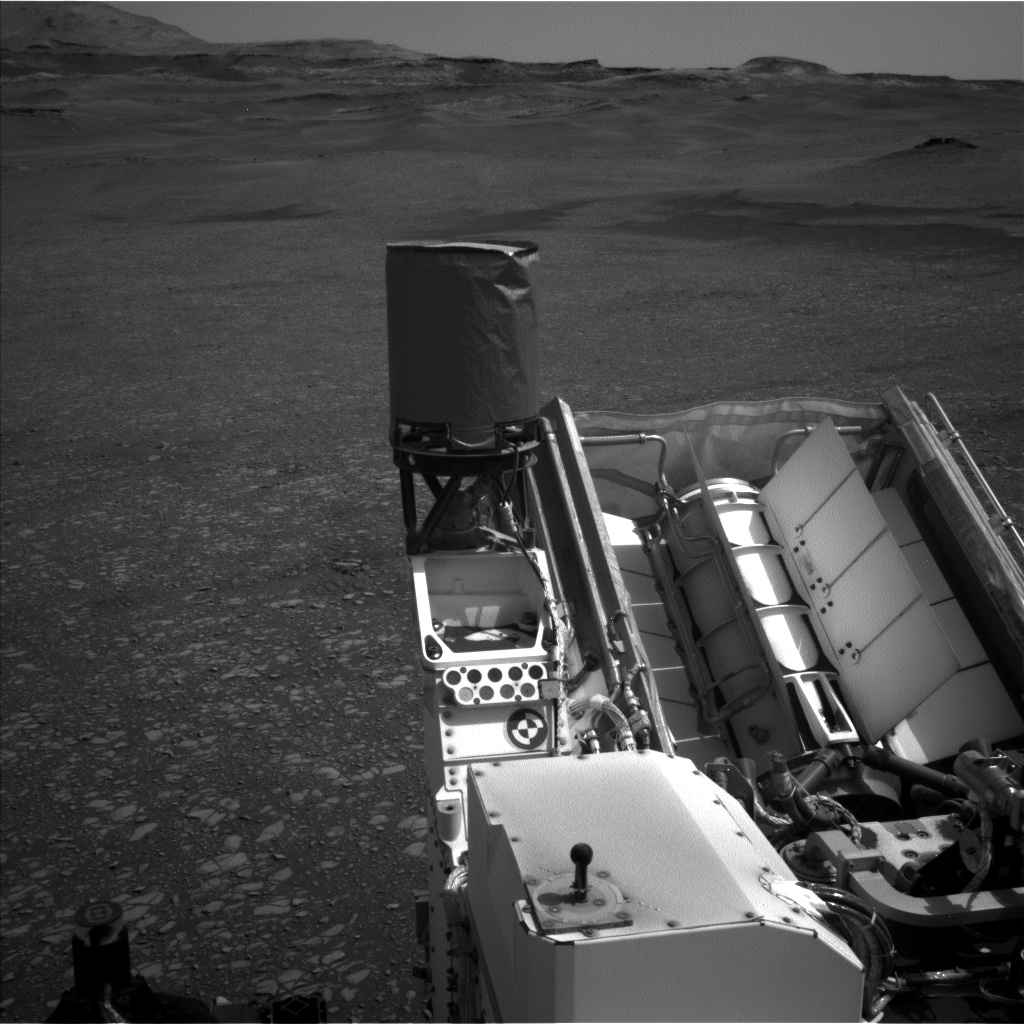
Curiosity Navcam Left B image acquired on Sol 2365, April 2, 2019.
Credit: NASA/JPL-Caltech
Featureless terrain
“Visual Odometry, to track our slip while driving, continues to be challenging due to the relatively featureless terrain, but the Rover Planners continue to improve their ability to find pointing that performs well,” Stroupe concludes. “At the end of this drive, we hope to start being able to select candidate drill targets and start developing our path forward toward drilling.”

ArcMap snapshot.
Credit: Giuranna, et al.
A life-indicating gas on Mars – methane – has been independently confirmed.
The research has been led by Marco Giuranna of the Istituto di Astrofisica e Planetologia Spaziali in Rome, Italy.
The paper — Independent confirmation of a methane spike on Mars and a source region east of Gale Crater – has been published in Nature Geoscience.
Reports of methane detection in the Martian atmosphere have been intensely debated. The presence of methane could enhance habitability and may even be a signature of life. However, no detection has been confirmed with independent measurements.

ESA’s Mars Express in orbit around the Red Planet.
Credit: ESA/AOES Medialab
Firm detection
Giuranna and colleagues report a firm detection of 15.5 ± 2.5 ppb by volume of methane in the Martian atmosphere above Gale Crater on June 16, 2013, by the Planetary Fourier Spectrometer onboard the European Space Agency’s Mars Express.
That detection came one day after an on-the-spot observation of a methane spike by NASA’s Curiosity rover.

NASA Curiosity rover on the Red Planet prowl since August 2012 and assessing the habitability of Mars.
Credit: NASA/JPL-Caltech/MSSS
“Methane was not detected in other orbital passages. The detection uses improved observational geometry, as well as more sophisticated data treatment and analysis, and constitutes a contemporaneous, independent detection of methane,” they report.

Credit: Giuranna et al., Nature Geoscience, 2019
Potential source region
An independent geological analysis points to a potential source region east of Gale Crater. In that location, faults of Aeolis Mensae may extend into proposed shallow ice of the Medusae Fossae Formation and episodically release gas trapped below or within the ice.
“Our identification of a probable release location will provide focus for future investigations into the origin of methane on Mars,” the international research team concludes.
While methane could be an indicator of microbial life, abiotic (non-biological) processes cannot be ruled out, Giuranna notes.
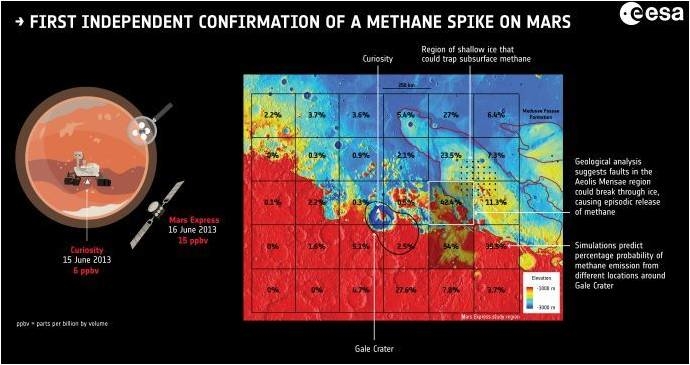
Mars Express matches methane spike measured by Curiosity
Credit: ESA/Giuranna et al (2019)
The study — Independent confirmation of a methane spike on Mars and a source region east of Gale Crater — is reported in Nature Geoscience this week and can be found here:

